




Abstract
With the changing demographics of student and staff populations, evolving legal frameworks and political resistance there is a pressing need to assess how higher education leadership approaches equity, diversity, and inclusion (EDI). This paper provides a systematic review of English-language literature on higher education leadership for EDI from 2000 to 2024, covering a total of 68 works, including 38 journal articles, 25 book chapters, and five theses. Our review highlights the progress made in higher education leadership for EDI scholarship while acknowledging the presence of disparities concerning authorship, the focused region of the papers, and methodological preferences. The review identifies leadership challenges and synthesizes some effective leadership styles, leadership strategies and leadership development strategies for promoting EDI as well as how leaders adjust EDI strategies against various pressures but also argues that their relevance and effectiveness are unknown in wider contexts. Nevertheless, by understanding the trends presented in the review and addressing existing limitations in research, higher education policy makers, leaders and scholars can contribute to the promotion of effective leadership practices on a global scale. The review also emphasizes the importance of ongoing research, including in the underrepresented regions, and cross-regional collaboration to build a more comprehensive knowledgebase.
Introduction
Diversity is a growing phenomenon in many higher education institutes (HEIs) around the world due to the massification and internationalization of higher education. It is characterized by the increasing participation of minoritized and international students as well as the recruitment of minoritized and international staff. HEI leaders are confronted with the issue of how to respond to this diversity and in response we see such concepts as “equity” and “inclusion” emerge as part of strategic planning. Yet these terms emerged in an historical context, and they are used not only in relation to HEIs but across educational contexts and into the world of business. This has resulted in misunderstandings and multiple meanings depending largely on these contexts (Gube and Arat, 2024). It is important, therefore, to understand how these terms have become part of educational and social discourse prior to assessing how HEI leaders have responded to the diversity in their institutions.
The promulgation of Universal Declaration of Human Rights by the United Nations (1948) has laid the foundation of earlier thinking around diversity embedded in the notion of equality for all and protection against discrimination. Martinez (2022) traced the origins of modern thinking about diversity to the United States and President Kennedy's creation of the Committee on Equal Opportunity. The purpose of this Committee was to “ensure that employers receiving federal funds implement employment practices and hiring procedures free of racial bias” (p.405). Kennedy's successor, President Lyndon Johnson cemented this idea into law with the Civil Rights Act. Yet as he did so he recognized that more was needed (Martinez, 2022): You do not take a man who for years has been hobbled by chains and liberate him, bring him up to the starting line of a race and then say, “you are free to compete with all the others,” and still justly believe you have been completely fair…. (p. 406)
Johnson was referring particularly to the US context where Black citizens had experienced systemic racism. But his comment suggested more generally that while the legal solution mandating anti-discrimination practices was important, it was not sufficient. Martinez's (2022) response was to call not just for legal prohibitions but a greater focus on moral considerations when responding to diversity.
Thus, equal opportunity, interpreted as providing a legal foundation for anti-discrimination practices, becomes the first step in ensuring the same measure of fairness is applied to everyone. But as Johnson argued, more is needed to overcome systemic and historic issues of unfairness. Many have argued for the importance of ensuring diverse population feel included in the organization to which they belong, that they are able to develop a sense of belonging, share equitably in the benefits available and have their voices heard in decisions made that affect them (Ely and Thomas, 2020; Lingras et al., 2023). These values may not be the subject to legislation. Rather, they reflect an ethical stance to historic and current disadvantages. What is more, concerns have moved to include in addition to race, gender, ethnicity, class, ableism, sexuality, plus other diversity and their intersecting characteristics (Ahmed, 2012; Crenshaw, 1989).
Currently, however, we are at a point in time when these broader and more equitable responses to diversity are under attack due to political pressures, institutional inertia and structural biases. In the US, there is legal and institutional resistance against EDI initiatives (Feder, 2024). Laws have been enacted to ban EDI activities in higher education institutes in states such as Florida, Texas, and Utah. This structural attack undoes work carried out over the past six decades extending support towards minoritized students and staff. Additionally, the resistance against EDI or related ideas is not only confined to the US, as seen in organized political campaigns critiquing critical race theory (CRT), which has well-traveled through the United Kingdom and Australia (Barnes et al., 2025).
While EDI in higher education has been prominent in some countries in the Global North for some times, it is also gaining momentum in the Global South such as Asia in recent years (Gube and Arat, 2024). The role of higher education leaders in promoting EDI is understandably crucial (Esen, 2021). Nevertheless, how leaders deal with the above complexities related to EDI is less known. There is a pressing need to assess how leadership approaches EDI with the changing demographics of student and staff populations, evolving legal frameworks and political pressures. A knowledge base about how leaders adopt adaptive strategies, navigate political challenges, and foster an inclusive culture is imperative if EDI is to advance in HEIs. This systematic review of literature on higher education leadership for EDI covering the period of 25 years from 2000 to 2024 is a response towards that direction. It is particularly concerned with how higher education leaders have responded to EDI priorities over time and how well they are dealing with new political pressures.
Informed by the frameworks adopted for similar studies (Hallinger and Bryant, 2013; Walker and Qian, 2015), our review attempts to answer the following four research questions:
Who is writing articles about higher education leadership for EDI, what is the focus of their geographical regions, and when are they writing? What types of papers have been published between 2000 and 2024? What research methods have scholars used to study higher education leadership for EDI? What key findings have emerged in relation to leadership challenges, leadership styles, and leadership strategies, and leadership development strategies for promoting EDI in higher education? How do higher education leaders adjust their EDI strategies against various pressures?
This review is important for several reasons. First, it offers valuable insights into trends in authorship and geographical focus, highlighting the dominance of the Global North and limited contributions from the Global South to higher education leadership for EDI scholarship. Second, there is currently no comprehensive review that synthesizes how leadership can address various EDI related issues. Most existing studies focus on individual cases (Leoste et al., 2021; Rodríguez-Abitia et al., 2020) rather than providing a holistic understanding of leadership challenges, leadership styles, leadership strategies and leadership development strategies to navigate complexities. This review aims to bridge that gap. With an aim to promote EDI, it synthesizes important evidence concerning what particular challenges leaders encounter, what leadership styles are useful and how leaders can integrate evidence-based strategies and actions, plan for development strategies, and adjust their EDI strategies against various pressures. Third, the early 2000s and onwards marked a period of significant global educational reforms aimed at promoting EDI, which continue to shape policies and practices today. A review of the literature from this period allow us to track the evolution of these reforms with a specific focus on higher education leadership practices for advancing EDI (Tószegi, 2022). Fourth, societal and political activism such as the global movements for racial justice have prompted renewed discussions about the role of higher education in fostering inclusive and equitable environments (Copeland and Tarver, 2020; Matthews et al., 2021). Fifth, this systematic review provides an important direction for potential future research areas including types of research.
The remainder of this paper consists of four sections. The first section explains the conceptual framework. The next section outlines and illustrates the methodology used in the study. The following section reports the results and answers the four research questions. The final section provides a discussion and the implications of the findings for higher education policy and leadership for further advancing EDI and suggests future research directions.
Conceptual framework
Equity refers to eliminating existing inequalities within social and educational systems, providing each member with the necessary support and resources to reach their full potential (Bhowmik, Walker and Bryant, 2023). Equity ensures that all members have equitable access to opportunities and resources regardless of their backgrounds (Nivet, 2008). In the context of higher education, equity involves addressing structural inequalities by creating formal channels and committees to champion EDI initiatives so as to ensure that all members of the institution have the support needed to thrive (Lingras et al., 2023).
Diversity encompasses individual and group differences in terms of race, ethnicity, gender, religion, language, sexual orientation, socioeconomic status, dis/ability and other characteristics (Tan, 2019). Diversity is an asset that brings significant cognitive, emotional, social, and educational benefits to all members, and exposure to diverse perspectives and experiences fosters higher level of critical thinking, creativity, problem solving skills, and better psycho-social wellbeing (Bhowmik et al., 2023; Wells et al., 2016). In the context of higher education, diversity involves actively creating spaces and opportunities for minoritized groups, ensuring that diverse perspectives are included in decision-making processes, and addressing the unique challenges faced by these groups (Lingras et al., 2023).
Inclusion is about creating an environment where all individuals feel welcomed, respected, and valued, enabling them to fully participate and feel a sense of belonging (McCleary-Gaddy, 2019). The goal of inclusive education is to eliminate exclusive practices and create a culture that welcomes and supports every member, promoting participation and success for all (Bhowmik et al., 2023). In the context of higher education, inclusion involves the creation of committees that serve as vehicles for advancing EDI efforts, ensuring that all members of the academic community are not only represented but also have the opportunity to contribute to and benefit from these initiatives (Lingras et al., 2023).
Collectively, the importance of EDI in higher education extends far beyond mere implementation of policy. EDI principles are essential not only for creating a fair and just educational environment but also for enhancing the overall quality of education (Zhao et al., 2024). When EDI is effectively implemented, it leads to a more dynamic and innovative environment where all members can thrive (Fuentes et al., 2021; Zhao et al., 2024).
However, many universities are traditionally influenced by the neoliberal agenda and business practices, prioritizing efficiencies and productivity over EDI (Giroux, 2014). In addition, political, legal, and institutional resistance, and organized political campaigns critiquing EDI are on the rise in recent years (Barnes et al., 2025; Feder, 2024), indicating the normativity of EDI is under attack at least in some parts of the world. It is possible that EDI initiatives can be symbolic or tokenistic instead of deeply embedded to transform structural inequalities (Ahmed, 2012). Moreover, a lack of intersectional perspective can lead to a missed understanding of compounded marginalization (Ahmed, 2012; Crenshaw, 1989). These are where the roles of leaders are crucial, especially to integrate EDI in their institutional settings and cultures (Esen, 2021).
Existing literature suggests that a reformist perspective on higher education leadership embedded in a social justice orientation for advancing inclusion and progressiveness as well as a pragmatist perspective focusing on effective leadership capabilities, skills and competences are congruent with the ideals of EDI (Macfarlane et al., 2024). Shared leadership (e.g., Bolden et al., 2015; Goksoy, 2016), distributed leadership (e.g., Sewerin and Holmberg, 2017), collective leadership (e.g., Gentle and Forman, 2014),servant leadership (e.g., Abbas et al., 2020), and effective leadership (e.g., McCaffery, 2018) are imperative in these perspectives. This indicates the traditional notion of “hero” leaders is de-emphasized, and the leadership practices carried out by many people at all levels to serve the minoritized groups are emphasized. Thus, distributed leadership is accentuated, highlighting that leadership practices are meant to work better in promoting EDI when they are distributed or shared.
Nevertheless, the normative understanding about distributed leadership that it is causally linked to collaboration, or the decision making in it is a democratic process, lack empirical evidence (Jones, 2014). Also, little is known about how distributed leadership originating from the Global North adapts itself in the Global South. Moreover, the existing body of higher education leadership literature is dominated by the Global North (Macfarlane et al., 2024). The nexus between the distinctive contexts of the Global South and the higher education leadership is less explored. Since many countries in the Global South have colonial heritages, a postcolonial or decolonial perspective to higher education leadership will help further develop a more critical understanding of the area.
Methodology
We followed the PRISMA framework (Page et al., 2021) for conducting a systematic review of literature related to higher education leadership for EDI from 2000 to 2024. This is a widely used method to review studies systematically with a common focus (e.g., Gümüş et al., 2021a, 2021b). Using this method, scholars reanalyze and interpret studies to produce new insights (Thomas and Harden, 2008). In order to provide a transparent, complete, and accurate account we explain below how we conducted the review and what we did step-by-step (Page et al., 2021).
Identification of sources
We conducted a comprehensive literature search using multiple databases, including EBSCOhost, ERIC, ProQuest, and Google Scholar. We searched for peer-reviewed journal articles, books, book chapters, and theses published between 2000 and 2024. The search was performed using Boolean logic, applying the following keywords: “higher education leadership” OR “educational leadership” AND “equity, diversity and inclusion.”
Inclusion Criteria:
Peer-reviewed journal articles, books, book chapters, and theses. Publications focused on leadership in higher education for EDI. Sources available in English. Both empirical studies (quantitative, qualitative, or mixed methods) and non-empirical works (including conceptual and review papers) were included.
Exclusion Criteria:
Non-peer reviewed conference papers, reports, or gray literature. Articles that did not focus explicitly on higher education leadership for EDI.
A total of 108 works were initially identified through database searching. After removing 40 duplicates and applying the inclusion and exclusion criteria, we included 68 works for detailed review: 38 journal articles, 25 book chapters, and five theses.
Following PRISMA standards, we documented the entire process in a flow diagram (see Figure 1). This diagram illustrates the number of articles identified, screened, and included at each stage of the review process, ensuring transparency in how we selected the final corpus.
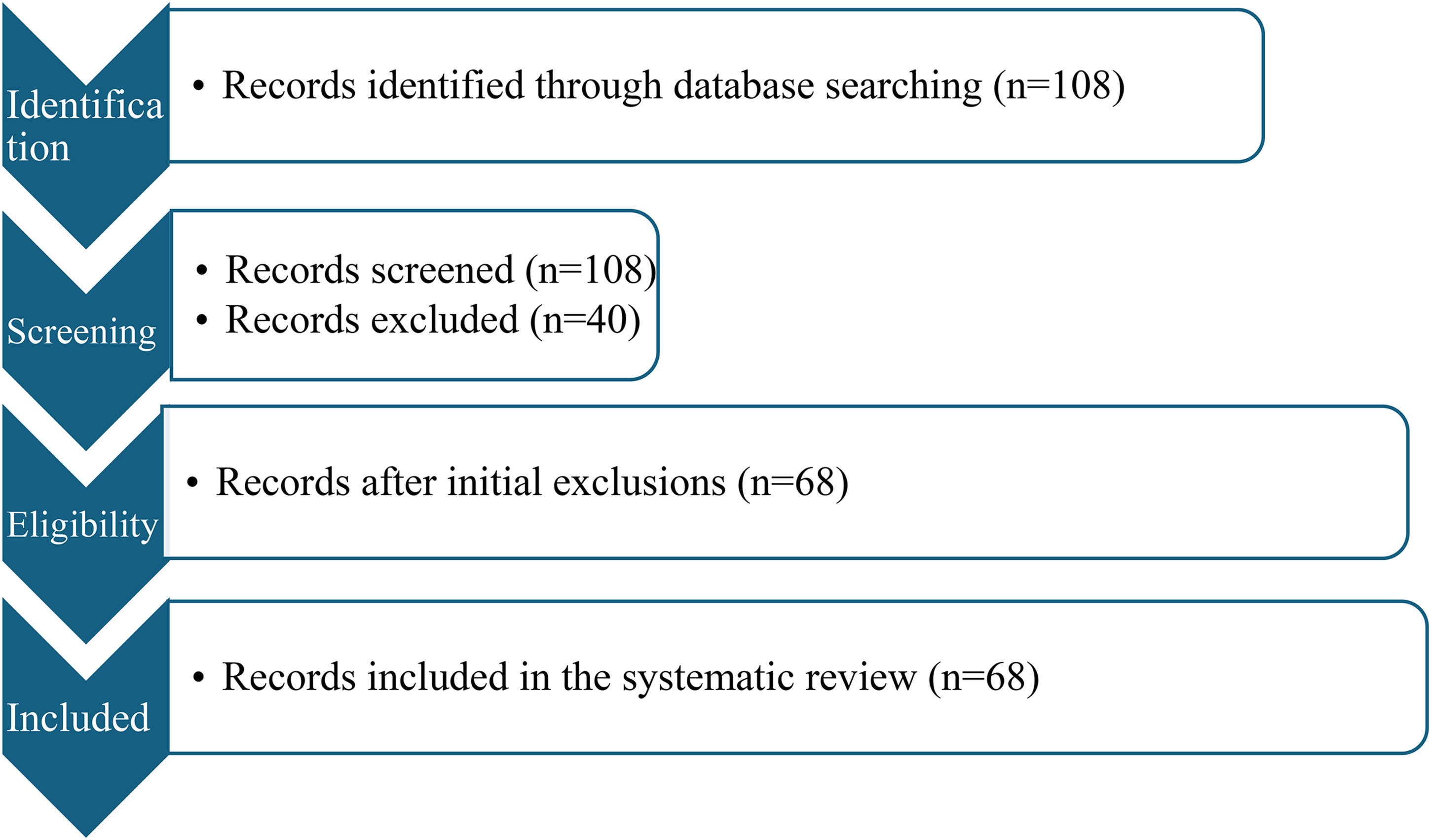
PRISMA flow diagram for study selection process.
Screening and eligibility
After the identification stage, we followed the PRISMA guidelines to screen all identified articles by title and abstract. We excluded any articles that did not directly address higher education leadership for EDI. The remaining sources were downloaded in full-text form for further eligibility checks.
At this stage, we assessed the full text of each article based on its relevance to the research questions. Articles that met all the criteria were included in the final corpus for in-depth analysis.
Quality appraisal of included studies
To enhance the methodological rigor and credibility of this review, all included studies were critically appraised using the Joanna Briggs Institute (JBI) Critical Appraisal Tools (Joanna Briggs Institute, 2020). The JBI critical appraisal tools provide a systematic and transparent method for appraising the quality of diverse research designs, including qualitative, quantitative, mixed-methods, systematic reviews, and conceptual papers, and ensure that the evidence synthesis is grounded in methodologically robust and credible sources. Each checklist comprises between 8 and 11 items, focusing on core aspects such as the congruence between the research question and methodology, appropriateness of data collection and analysis, ethical considerations, and the logical coherence of conclusions.
Following the JBI guidance, each criterion marked as “Yes” was scored as 1 point, while “No” and “Unclear” were scored as 0 points. The total score was then converted into a percentage to indicate the overall quality level of each study. Studies were classified into three categories: ≥80% as High quality; 50–79% as moderate quality; and <50% as Low quality. Our included studies were independently reviewed by two assessors, and any discrepancies were resolved through discussion to ensure inter-rater reliability. Among 68 studies, 34 studies (50.0%) were appraised as high quality; 29 studies (42.6%) were assessed as moderate quality; and only 5 studies (7.4%) were classified as low quality.
Data extraction
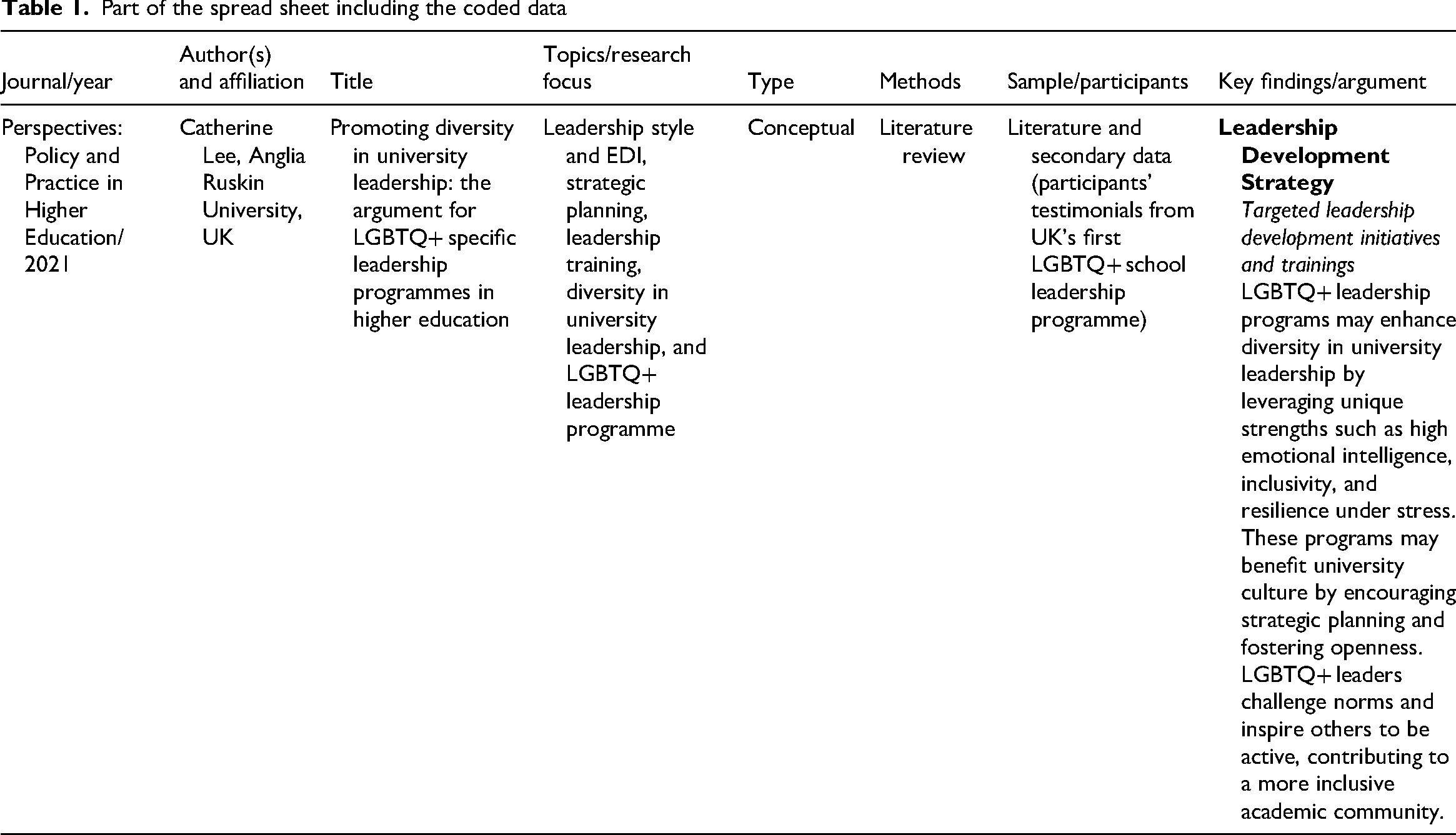
For each of the 68 included studies, we extracted data using a standardized extraction sheet. We organized the extracted data in a spreadsheet for systematic analysis. A sample is given in Table 1.
Part of the spread sheet including the coded data
Data analysis
To address the research questions, our data analysis involved categorizing the reviewed studies by authors and their affiliations, publication years, types (e.g., empirical, review, and conceptual), and research methods (qualitative, quantitative, and mixed methods). We examined publication patterns from 2000 to 2024, identifying trends in authorship and geographic distribution to understand the global development of EDI research in higher education leadership. The data analysis also included thematic analysis (Braun and Clarke, 2006) of leadership challenges, leadership styles, and evolution of leadership strategies and leadership development strategies related to EDI highlighting key findings and recurring themes across studies. Additionally, we also traced leadership responses to legal and political challenges, providing insights into how strategies varied by region and adapted to different political contexts.
Thematic analysis entailed coding of the extracted key findings. An abductive approach was used for coding that enabled equal and parallel engagement with both deductive and inductive methods (Thompson, 2022). Thus, both literature and key terms/phrases from the extracted key findings informed the coding.
The second author initially coded the extracted key findings, and then the first author examined them. There was agreement between them in most cases. In cases of disagreement, a thorough discussion took place, and a consensus was established. Then the third author and the fourth author also checked the coding, and no further disagreement arose. The entire coding process was completed over a number of meetings and back-and-forth communications.
Results
This section reports the results emerging from the reviewed papers in relation to authorship, the focus of the geographical regions, and the time of publications; types of papers and research methods; leadership challenges; leadership styles; leadership strategies; leadership development strategies; and the ways in which higher education leaders adjust EDI strategies against various pressures.
Authorship, the focus of the geographical regions, and the time of publications
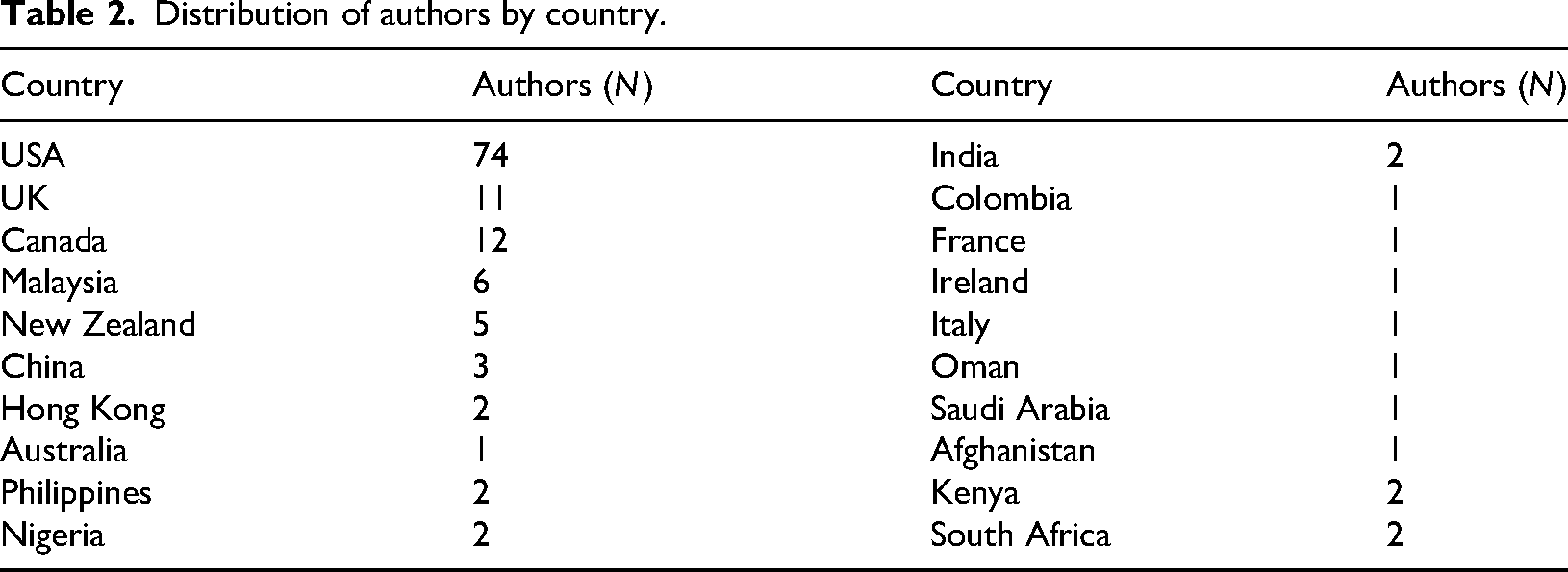
An analysis of Tables 2 and 3 provides insights into the authorship distribution and geographical focus of research on higher education leadership for EDI. The Table 2 shows that the majority of authors contributing to this field are from the United States (74 authors), the United Kingdom (11 authors), Canada (12 authors), and New Zealand (5 authors) indicating that EDI research is primarily driven by scholars from the Global North. Additional contributions came from Malaysia (6), China (3), and South Africa (2), highlighting limited level of engagement by scholars from the Global South.
Distribution of authors by country.
Geographical focus.
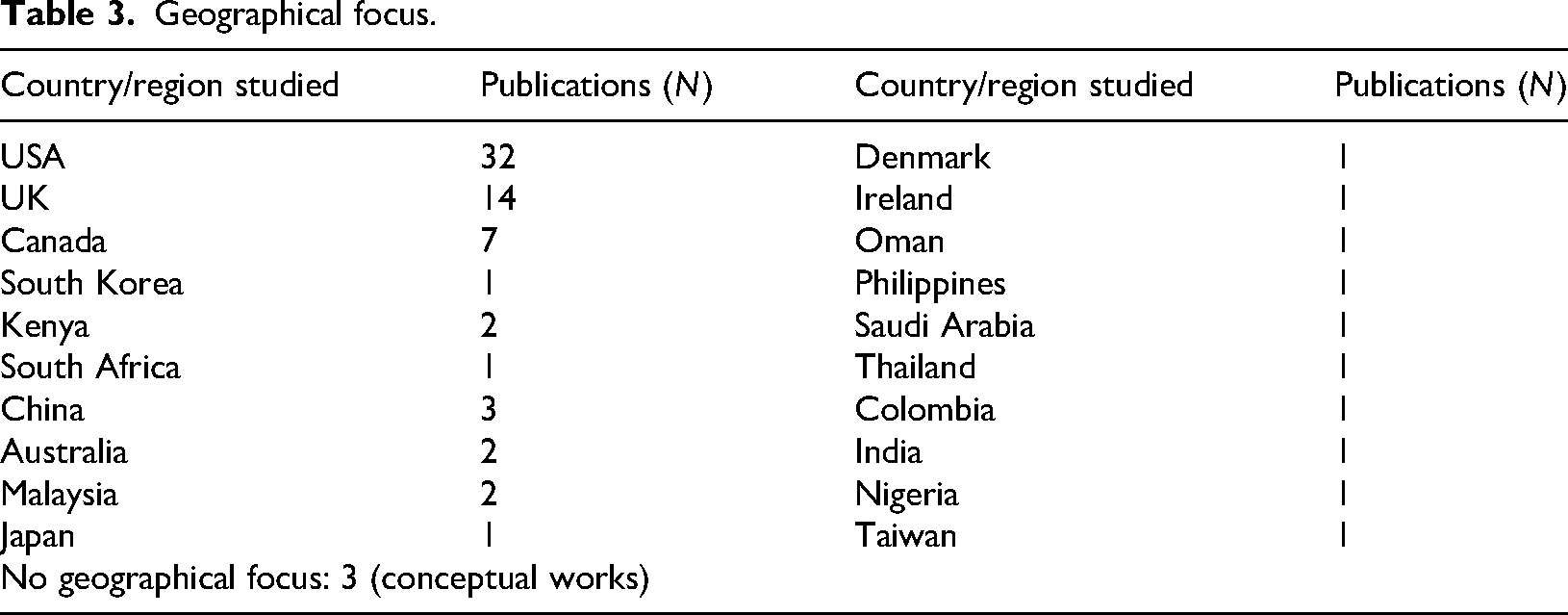
The distribution of geographical focus of the publications on higher education leadership for EDI, as illustrated in Table 3, revealed a marked Global North centric focus. The United States (32) and the United Kingdom (14) dominated scholarly discourse, followed by Canada (7) and Australia (2), underscoring the disproportionate influence of Anglophone nations in shaping the field. This trend aligns with broader patterns in higher education research, where institutions in these regions frequently serve as epistemic centers. While there is some representation from Global South contexts, contributions remain relatively sparse. A limited number of studies originate from Asia, including China with three publications, Malaysia with two, and few other countries each contributing one.
An analysis of the publication years (Figure 2) reveals a notable upward trend in the number of articles written on higher education leadership for EDI over the past decade. Between 2011 and 2016, the number of articles remained relatively low, with only sporadic contributions each year. However, 2017 marked a turning point with a sharp rise to 14 works, indicating a growing academic interest in EDI-related issues. This notable increase in 2017 can be attributed to the publication of an edited book having 13 book chapters. The following year, 2018, saw a significant drop, but from 2019 to 2023, the number of publications remained stable, averaging around 8 articles per year. A slight increase was observed in 2024, suggesting a renewed interest in the topic. The data suggests a shift in academic discourse, potentially influenced by broader social movements such as the Black Lives Matter movement and heightened discussions around systemic inequalities.
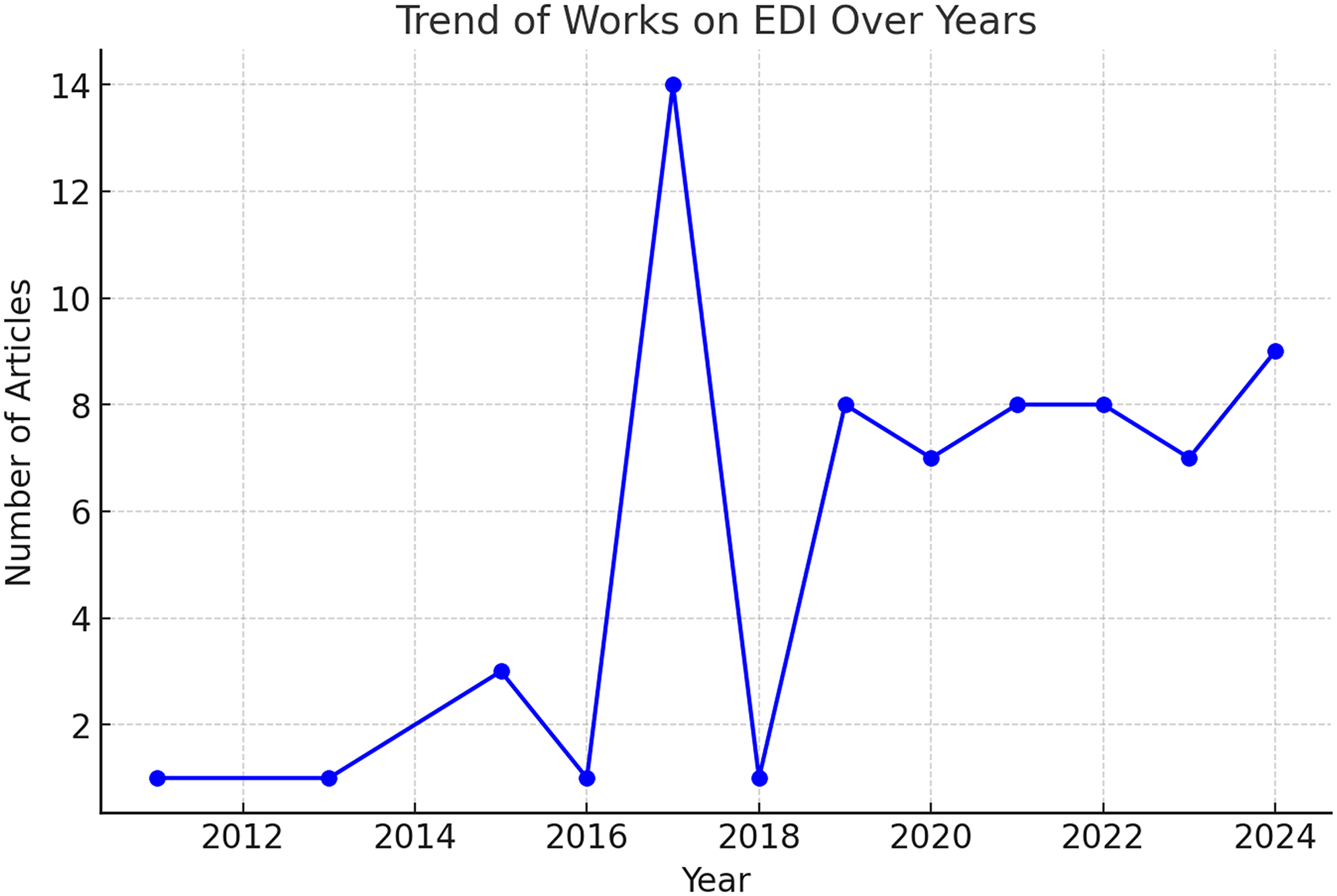
Publications on higher education leadership for EDI over the years.
Types of papers and research methods
We grouped the articles, book chapters and theses into three categories according to their types, namely, empirical, conceptual and review studies. Table 4 shows that two-thirds (66%) of the papers on EDI and higher education leadership are empirical studies. Empirical studies explored data-driven methods to analyze and improve leadership practices related to EDI through case studies, interviews, and mixed-method approaches (Frierson, 2019; McCullum et al., 2023). Conceptual papers represent one-fourth (25%) of the total number of papers. Most of the conceptual papers focused on the theoretical frameworks surrounding leadership and diversity, with topics such as the promotion of inclusive leadership models and the critical analysis of diversity in educational institutions (e.g., Barnett, 2020; Madsen, 2015). There are six research review articles representing 9% of the total articles (e.g., Bunn, 2023; Ramachandran and Sujathamalini, 2024).
Types and methods of studies on EDI and higher education leadership.
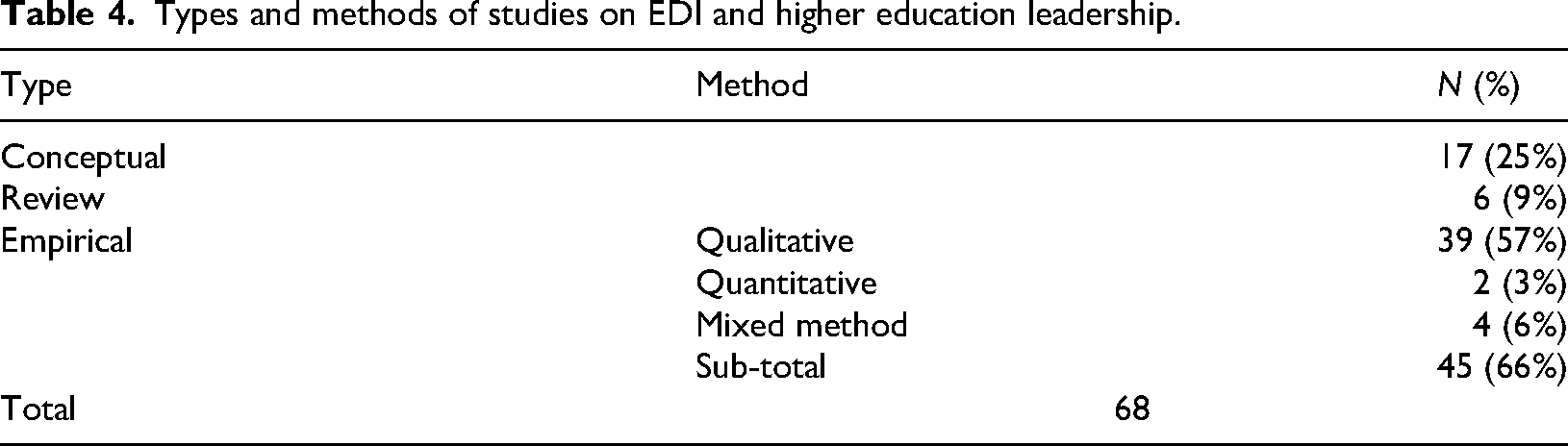
Among the empirical studies, our sample reflected an overall preference for qualitative methodologies, with 57% of the total studies adopting this approach. Many of these studies employed case study designs and used interviews to gather data, focusing on how leadership practices promote EDI (Arday, 2018; Frierson, 2019; McCullum et al., 2023). These interviews predominantly involved educational leaders and administrators, although a few studies also included faculty members and students as participants (Dewidar et al., 2022; Highton, 2023).
In the quantitative studies (3%), the dominant method was conducting surveys, with participants often including educational leaders (Gasman et al., 2015) or other stakeholders such as faculty members or staff (Zhao et al., 2024). The mixed-method studies (6%) combined surveys with interviews, offering a more comprehensive exploration of leadership for EDI initiatives.
Leadership challenges
A recurring theme across the papers is that higher education leaders frequently encounter challenges when aligning organizational goals with EDI policy mandates. Lee (2021) highlighted how HEIs often face the challenge of balancing traditional academic priorities with the increasing demand for more inclusive and equitable environments. This tension is particularly evident in the implementation of EDI strategies, where leaders must reconcile longstanding institutional norms with the expectations of modern EDI policies.
Moreover, traditional university leadership and management are increasingly influenced by the neoliberal agenda and business practices (Giroux, 2014). Efficiencies and productivity are prioritized over a broader inclusion agenda. This creates an obstruction in promoting and advancing the ideals of EDI.
Furthermore, traditional institutional culture also poses some challenges in implementing EDI policies. Over the years, institutional policies require being adapted, renegotiated, and reinterpreted based on the evolving socio-political climate and organizational needs (Poole and Todd-Diaz, 2023; Tamtik and Guenter, 2020). Maintaining this requires a persistent commitment to EDI by the leaders. Scott (2020) argued that the successful implementation of EDI policies is largely contingent on the willingness of leadership to integrate EDI values and principles into the institution's broader strategic goals.
Leadership styles
Leadership styles refer to the approaches leaders adopt to articulate and implement visions and influence others with their actions and behaviors (Northouse, 2021). The selected articles highlighted distinctive leadership styles from traditional approaches in promoting EDI. For example, leaders who adopt intersectional leadership demonstrate a greater sensitivity to the overlapping identities of individuals, such as race, gender, socioeconomic background and others. This sensitivity is crucial in addressing the unique challenges faced by groups with multiple marginalizations, ensuring that policies and initiatives are tailored to meet diverse needs (Messer, 2023).
Another example is the application of servant leadership, where leaders focus on empowering others, particularly those from underrepresented backgrounds, by prioritizing their needs and creating inclusive environments where all voices are valued. This approach has proven effective in building a sense of belonging within institutions (Haynes-Mendez and Nolan, 2021). Similarly, adaptive leadership stands out during crises, as leaders must navigate institutional challenges while ensuring that inclusivity remains a priority. These leadership styles reflect the growing need for flexibility, responsiveness, and collaboration in fostering a culture of diversity and inclusion (Russell et al., 2021).
While these leadership styles appear diverse, it is important to note that many researchers observed meaningful continuities between them and more traditional leadership styles in higher education. Such findings align with existing literature (McCullum et al., 2023) that suggests leadership styles can be consistent across institutions, while the way leaders apply these styles varies based on the contextual needs of their organizations. Thus, the differences in diverse leadership styles often relate to the unique combinations, sequencing, or emphasis on EDI priorities.
Leadership strategies and leadership development strategies
Leadership strategies encompass the techniques and practices that leaders employ to achieve organizational goals by articulating and implementing compelling visions and effectively influencing others (Northouse, 2021). Leadership development strategies are systematic approaches designed to enhance both human and social capital by expanding the collective capacity of institutional members to learn, collaborate, and assume leadership responsibilities within complex, adaptive systems (Day, 2000). The papers discussing leadership strategies and leadership development strategies contribute to understanding of how higher education leaders can foster EDI within their institutions.
We classify the strategies into three categories: structural, cultural, and symbolic. The leadership strategies concerning structure include embedding EDI principles in the core mission and operations of HEIs, recruiting and empowering staff from minoritized backgrounds, managing and regulating EDI commitments, and establishing clear accountability measures for diversity initiatives. The leadership development strategies regarding structure are targeted leadership development initiatives and trainings. The leadership strategies concerning culture include mentoring, creating professional learning communities, and adopting an intersectionality approach. Mentoring is also a leadership development strategy related to culture. The leadership strategies concerning symbolic include advocating for structural changes and implementing diversity councils. However, our review could not identify any leadership development strategies related to symbolic.
It is worth noting that the strategies categorized as structural, cultural, and symbolic are not mutually exclusive but overlap somewhat. For example, leadership strategies such as embedding EDI principles in the core mission and operations of HEIs, advocating for structural changes, and implementing diversity councils can be categorized as both structural and symbolic.
Structural
Many studies argued that deliberate and sustained efforts are required from higher education leaders to create a culture of equity and inclusion (Hamilton, 2020; Showunmi, 2020). Inclusive leaders embed EDI principles into the core mission and operations of HEIs (Mader et al., 2013). They integrate EDI to create an inclusive environment where all members feel valued and supported (Kezar and Eckel, 2008). Leadership in this context is not just about setting policies or enforcing regulations; leaders have to play a crucial role by setting a clear vision that fosters a shared understanding of EDI principles across the institution, ensuring that diverse perspectives are adequately represented in decision-making processes to create more inclusive policies and practices (Kezar, 2008).
Another effective leadership strategy is active recruitment of underrepresented groups into leadership positions. This effort is necessary for overcoming systemic barriers that have historically marginalized certain groups, such as women and ethnic minorities, in leadership roles (Gasman et al., 2015; Poole and Todd-Diaz, 2023).
Scott (2020) emphasized managing and regulating EDI commitments as a crucial aspect of maintaining institutional accountability for diversity goals, ensuring that leadership is held responsible for sustained progress. Inclusive leaders allocate resources and establish accountability mechanisms to prioritize and fully support EDI initiatives (Kezar, 2008). Establishing clear accountability measures for various EDI initiatives is another key strategy for inclusive leaders to uphold and advance EDI (Frierson, 2019; Lee, 2021).
In terms of leadership development strategies, there is an increasing focus on integrating targeted leadership development initiatives and trainings that address the unique needs of underrepresented groups while embedding EDI as a core principle of institutional culture. Such initiatives and trainings aim to develop skills and capacities among leaders to deal with various EDI related issues. For example, the Minority Political Leadership Institute (MPLI) offers a transformative model for leadership development, equipping leaders to address racial equity through immersive learning, legislative analysis, and community-centered initiatives (Douglas-Glenn et al., 2021). In addition, LGBTQ+ leadership programs, utilizes leaders’ lived experiences of marginalization and identity negotiation cultivating resilience, emotional intelligence, and cultural insight—key components of inclusive and authentic leadership (Lee, 2021). Furthermore, initiative like “Q-Forward” addresses the lack of leadership training for LGBTQ+ health trainees, building critical skills and improving outcomes (Solotke et al., 2020).
Cultural
Mentoring, as discussed by McCullum et al. (2023), is a powerful tool for supporting and empowering underrepresented groups in higher education. The creation of professional learning communities, as highlighted by Guignard and Shepard (2023), facilitates continuous professional growth, enabling leaders to share best practices and cultivate inclusive teaching environments.
During times of crisis, leaders have also been tasked with maintaining inclusive excellence, ensuring that diversity and inclusion are not compromised. Inclusive leaders also possess cultural intelligence and challenge the status quo to drive continuous progress in EDI (Ahmed, 2012).
Over time, leadership strategies have evolved to include more intersectional approaches, recognizing that individuals may experience aggregated challenges due to multiple marginalized identities, such as socio-economic status, ethnicity, gender, sexual orientation and others. Applying intersectionality framework helps in understanding and tackling compounded discrimination, ultimately promoting a more equitable environment (Ahmed, 2012). This approach enables educational leaders to address the unique challenges arising from intersecting identities, allowing for the development of more targeted and inclusive policies that foster genuine institutional change and a fairer environment.
Mentoring is also a pivotal tool for embedding EDI in leadership development, fostering systemic change by enhancing leaders’ understanding of diverse perspectives and building collaborative support systems (McCullum et al., 2023). LGBTQ+ leadership program, the UK's first LGBTQ+ leadership initiative in higher education, highlights the importance of mentoring, networking, and authenticity in leadership, leveraging unique experiences to enhance effectiveness (Lee and Burman, 2026).
Symbolic
Studies have shown that fostering inclusive leadership is not solely the responsibility of individual leaders but requires institutional support and strategic planning. Leaders must advocate for structural changes within their institutions, and take initiatives such as the implementation of diversity councils (Frierson, 2019; Lee, 2021). Such institutional efforts contribute to a more sustainable and system-wide approach to EDI, ensuring that it becomes embedded within the fabric of institutional operations rather than being viewed as an add-on or separate initiative.
Overall, the strategies discussed above help overcome systemic barriers, ensure greater representation of diverse groups in leadership roles, promote a truly inclusive environment, and create a leadership development pathway which is supportive of EDI.
The ways in which higher education leaders adjust EDI strategies against various pressures
Higher education leaders adjust their EDI strategies to align with the political pressures and legal frameworks of the specific country or region in which they operate. The effectiveness of adjusted EDI strategies varies by region and hinges on institutional commitment and leadership adaptability. We classify the strategies into two categories: alignment and compliance, and pragmatic and subtle.
Alignment and compliance
Tamtik and Guenter (2019) discuss how Canadian universities have adapted their EDI strategies in response to federal and provincial policies that emphasize diversity as a national priority. In such regions, leaders focus on aligning institutional goals with government-mandated diversity benchmarks, while also ensuring compliance with local laws concerning anti-discrimination and inclusivity. In supportive legal environments like Canada, aligning EDI strategies with government policies enhances effectiveness, as institutions receive legal and financial backing, leading to comprehensive diversity programs and higher minority representation (Tamtik and Guenter, 2019).
Pragmatic and subtle
In more politically conservative regions, such as parts of the United States, Russell et al. (2021) found that higher education leaders may adopt more subtle or indirect approaches to EDI to navigate political opposition. In these cases, leaders tend to emphasize the economic and organizational benefits of diversity, such as enhanced innovation and productivity, rather than focusing on social justice narratives. This adjustment allows leaders to promote inclusivity while mitigating potential backlash from politically sensitive stakeholders.
The effectiveness of adjusted strategies is more limited in regions such as the United States, where currently political pressures challenge EDI efforts. Russell et al. (2021) suggested that while framing EDI in economic terms can gain political support, it may fail to address deeper inequalities. Similarly, Scott (2020) noted that in areas where legal frameworks restrict affirmative action, indirect strategies like mentoring offer positive outcomes but may not significantly improve overall diversity. Success in the US context depends on leaders balancing legal compliance and a genuine commitment to fostering inclusivity despite political constraints.
Discussion, implications, and future research directions
This section discusses the findings with respect to higher education leadership for EDI discourse. It also indicates the implications of the findings and underscores the opportunities for future research.
The findings highlight that a significant proportion of higher education leadership for EDI research originates from the Global North including North America and Europe (mainly the United Kingdom). These regions have a historical and policy-driven focus on diversity, stemming from civil rights movements in the United States which influenced university to integrate EDI into their leadership and campus cultures (Kezar and Eckel, 2008), and comprehensive diversity frameworks in Canada and the United Kingdom, where proactive, policy-driven efforts have institutionalized EDI principles within higher education (Ahmed, 2012; Tamtik and Guenter, 2019). As such, universities in these countries have taken proactive steps to embed EDI principles within their academic culture. Moreover, universities in these countries play a pivotal role in supporting research initiatives that prioritize EDI. For instance, the University of Toronto aligns its EDI focus with federal and provincial diversity policies, providing dedicated offices and funding for diversity-related research (Tamtik and Guenter, 2019), while UK institutions, for example University College London, systematically institutionalizes diversity policies and support EDI research through specialized centers (Ahmed, 2012).
In contrast, the findings revealed that the contributions from the Global South, including Asia, Africa and Latin America remain relatively limited. Such limited contributions to higher education leadership for EDI research are influenced by various factors. The issues may not be seen as a priority yet in these regions. Lack of cultural and political sensitivities may limit the exploration in these regions, reducing opportunities for related studies (Shaw, 2000). Additionally, language barriers hinder researchers in non-English-speaking countries, as publishing in English is essential for international visibility. This may pose challenges for scholars in non-English speaking regions, where language disparities create a gap in global scholarly communication (Cerejo, 2014; Luo and Hyland, 2019). Furthermore, EDI initiatives by HEIs in some regions may take different names (i.e., quota system). Addressing these barriers through cross-cultural partnerships including research, and enhanced language support could amplify diverse voices in EDI globally.
The marked increase in higher education leadership for EDI publication starting around 2019 aligns with significant global events, such as the raise of the Black Lives Matter Movement (BLM), which brought renewed attention to systemic inequality and social justice, catalyzing critical research on racial justice across multiple fields (Bonaparte, 2020; Strong et al., 2023). Yet, we shall have to wait for some years to know how the recent political and legal changes (e.g., in the United States) are going to affect higher education leadership for EDI research in the future.
Most of the studies relied on qualitative methodologies, focusing on in-depth explorations of leadership strategies, policies, and inclusive practices. This approach allows researchers to capture complex, context-specific issues that are difficult to measure quantitatively (Hamilton and Finley, 2019; Klenke, 2016). Through methods and techniques like interviews, case studies, and thematic analyses, researchers gained valuable insights into the strategies leaders used to address EDI challenges within institutions. While this qualitative emphasis offers important depth, it also indicates a research gap—namely, the lack of large-scale quantitative studies that could provide broader, generalizable findings. In addition, more studies with mixed-methods approach, combining qualitative depth with quantitative breadth, are also recommended for a more comprehensive understanding of higher education leadership for EDI (Curry et al., 2009; Pringle and Booysen, 2018). Moreover, future research should incorporate methodological innovations such as qualitative comparative analysis (QCA) and analyzing cross-national datasets to progress the field further.
Aligning organizational goals with EDI policy, along with traditional institutional cultures, was found to be the most pressing leadership challenges in the successful implementation of EDI policies and practices. In terms of leadership styles, intersectional leadership, servant leadership and adaptive leadership were suggested to be supportive of EDI. However, other leadership styles were also effective as long as they were responsive to institutions’ unique EDI contexts and priorities.
A number of leadership strategies and leadership development strategies concerning structural, cultural and symbolic were effective for promoting EDI in the universities. They yield tangible benefits including enhanced leadership competencies, increased job satisfaction, and improved career advancement opportunities for underrepresented groups. For instance, mentoring not only provides essential guidance and support for professional growth but also helps build a more inclusive leadership pipeline by facilitating the career progression of women leaders (McCullum et al., 2023; Odhiambo, 2011). During challenging times, higher education leaders in less conservative contexts adopted alignment and compliance approach by aligning their EDI strategies with the government policies, whereas the leaders in more conservative contexts adopted pragmatic and subtle approach by employing the narrative of economic and organizational benefits of diversity. As these strategies are mainly reported from the US, Canadian and UK higher education contexts, their relevance and effectiveness in other higher education contexts is unknown.
The findings of the paper are useful for policy makers and higher education leaders in making strategic decisions about resource allocation by identifying which leadership strategies are the most effective in advancing EDI. This includes investing in evidence-based initiatives such as recruiting and empowering staff from minoritized backgrounds, mentoring, the development of accountability structures, professional learning communities, adopting an intersectionality approach, and targeted leadership initiatives and trainings. Strategic investment in these areas enables institutions to embed EDI into the core fabric of university operations, rather than treating it as a peripheral or standalone initiative.
As a concrete example, the findings of our review can be utilized by HEIs to develop a policy brief as their leadership strategies and leadership development strategies for EDI. This must take into account the unique EDI context of the HEIs. In light of our findings, the policy brief can map out what leadership strategies and leadership development strategies are already in place and what other strategies should be aimed at embedding and how. For example, some higher education institutions in the Global North may have EDI initiatives but are not mainstreamed. They must embed accountability mechanisms to make the initiatives beyond symbolic.
Another example is that effective leadership strategies and leadership development strategies can be used by policymakers in the Global South for building a leadership pipeline that is supportive of EDI. For instance, people from minoritized backgrounds can be recruited and empowered if the institutions lack their representation and/or true inclusion. Targeted leadership development initiatives and trainings will help develop essential knowledge, skills, and dispositions among the aspiring leaders. And mentoring will provide continuous guidance and support for professional growth. Together, they will ensure an EDI supportive leadership pipeline.
We believe that the findings of this review contribute to higher education leadership for EDI scholarship. Specifically, the findings expand the understandings of reformist and pragmatist perspectives of higher education leadership research (Macfarlane et al., 2024) by synthesizing leadership strategies and leadership development strategies for promoting and advancing EDI. The findings are also helpful to identify the areas and types of research that need to be conducted in the future to develop a more comprehensive knowledge base. There are two important gaps or limitations. The first limitation lies in the dynamic nature of EDI itself, which is constantly evolving in response to social and political changes. The reviewed studies, conducted at different times, capture snapshots of specific EDI practices but may lack continuity in addressing the ongoing transformations within institutional and social frameworks. For instance, while some recent studies discuss shifts in leadership strategies to adapt to new diversity policies, few studies address how these policies continuously reshape leadership roles and EDI priorities in response to recent global movements such as Black Lives Matter. Consequently, there is a need for longitudinal studies that can better capture the fluidity and evolving complexities within EDI practices over time.
The second limitation concerns the geographic concentration of studies, primarily in the Global North including North American and European contexts, which presents challenges in generalizing the findings. The EDI experiences of leaders in the United States, Canada, and the United Kingdom, who have access to established diversity frameworks, may differ significantly from those in regions where EDI is less institutionalized. Leaders in the Global South, such as Asia, Africa and Latin America, often face unique challenges due to distinct cultural and political landscapes, as well as limited resources. For example, studies from US institutions often assume a baseline level of institutional support for EDI initiatives, which may not reflect the realities in under-resourced institutions across different parts of the world. This geographic disparity suggests that more research is needed to understand higher education leadership for EDI in diverse global contexts. Some comparative studies within and between the countries in the Global South and the Global North will provide strong evidence to further deepen our understanding of how contexts affect leaders’ EDI implementation in different countries.
One priority research area for HEIs in the Global South would be to understand the leadership and policy challenges in promoting and advancing EDI in their contexts and what institutional supports are needed to overcome such challenges. This research should include a balanced mixture of quantitative and qualitative methods. In the Global North (e.g., in the US), future studies should prioritize exploring how recent legislation against EDI may influence future leadership practices in HEIs as well as research agenda on higher education leadership for EDI. Also, how such legislation is affecting the scholars who do EDI related research. More research like these from the Global South and the Global North will help understand which EDI strategies remain valuable under varying economic or political conditions, offering foresight for future EDI efforts (Coertjens et al., 2013; Middlehurst et al., 2009).
We also need more and in-depth studies across a range of other areas if the knowledge base is to mature. For example, an influential leadership strategy is recruiting and empowering staff from minority backgrounds. Studies underscore the need for educational leaders to grasp how identities influence their diverse work environments (Núñez, 2014; Sibbett, 2020). Future studies should continue to explore how leaders’ marginalized, intersecting, or non-marginalized identities affect their experiences and capacities to create inclusive environments.
Footnotes
Ethical approval
The present study was approved by ethics committee at The Education University of Hong Kong and was conducted in accordance with the ethical standards in the 1964 Declaration of Helsinki and its later amendments.
Funding
The authors disclosed receipt of the following financial support for the research, authorship, and/or publication of this article: The research reported here was supported by the following projects: CRAC funded VIRC-FEHD project from The Education University of Hong Kong (Project Number: 04A47); General Research Fund (GRF) project from the Research Grants Council of the Hong Kong Special Administrative Region, China (Project number: EdUHK 18613725). The views presented are those of the authors and not the funding body.
Declaration of conflicting interests
The authors declared no potential conflicts of interest with respect to the research, authorship, and/or publication of this article.
Data availability statement
Data for this study are not publicly available, but will be available upon request. The full study list and the coding schema can be obtained from the corresponding author by emailing mbhowmik@eduhk.hk.
