



Abstract
Conventional assessment of overactive bladder syndrome uses invasive pressure-measuring catheters to detect bladder contractions (urodynamics). We hypothesised that bladder shape changes detected and measured using transabdominal ultrasound scan could provide a non-invasive and clinically useful alternative investigation of bladder contractions. This feasibility study evaluated a novel transabdominal ultrasound scan bladder shape test during conventional urodynamics and physiological bladder filling. The aim was to initially evaluate and refine a non-invasive approach for detecting and quantifying bladder shape changes associated with involuntary bladder contractions. To develop measurement techniques and characterise bladder shape changes during bladder filling, healthy female volunteers (n=20) and women with overactive bladder symptoms who had previously undergone urodynamics (n=30) completed symptom questionnaires and bladder diaries. The bladder shape test protocol included consumption of 1 l water before undergoing serial transabdominal ultrasound scan imaging of the bladder during physiological bladder filling and during episodes of urgency. In a further group of women with overactive bladder (n=22), serial transabdominal ultrasound scan images were captured during urodynamics so that shape changes occurring with bladder contractions could be characterised. In both healthy volunteers and women with overactive bladder, the transverse view of the bladder provided the most reliable plane to characterise and measure bladder shape changes. A sphericity index derived from the ratio between maximum inscribed and minimum circumscribed ellipses (πac2(inner)/πac2(outer)) offered a reliable and reproducible measurement system. Of participants undergoing transabdominal ultrasound scan during urodynamics, there were significant measurable differences in sphericity index between patients with bladder contractions (n=12) and patients with acontractile bladders (p < 0.001). Bladder shape changes detected during physiological filling and urodynamics have provided preliminary evidence to support further research into bladder shape test as a non-invasive diagnostic tool to identify involuntary bladder contractions in patients with overactive bladder syndrome.
Introduction
Medical imaging to detect or describe variations in the geometry and shape of organs and viscera in order to detect or describe abnormalities of form and function is well established in a number of areas of medicine, including gastroenterology, cardiology and obstetrics. 1 We hypothesised that bladder shape changes associated with involuntary contractions of the detrusor muscle might be detected using transabdominal ultrasound scan (TA-USS). This could itself form the basis of a novel diagnostic test for detecting involuntary contractions associated with overactive bladder (OAB) syndrome and urgency incontinence.
OAB is a clinical syndrome defined as urinary urgency, usually accompanied by frequency and nocturia, with or without urgency urinary incontinence, in the absence of a urinary tract infection or other obvious pathology.2,3
The detection of involuntary bladder contractions currently relies on invasive internal pressure measurement, commonly termed ‘urodynamics’. This is an invasive test involving the placement of pressure measurement catheters, usually via the urethra into the bladder and via the anal canal into the rectum. 4 In its normal healthy state, the bladder remains acontractile throughout filling and is compliant, meaning that there is minimal or zero increase in pressure as it fills. During urodynamics, the bladder is filled via a pressure-measuring catheter with water or contrast medium, using a mechanical pump. Abdominal pressure is measured via a rectal catheter introduced anally. Differences between pressure measurements in the bladder and the abdomen are used to detect involuntary detrusor contractions, termed ‘detrusor overactivity’ when detected during urodynamics. Patients often report urodynamics as being uncomfortable and undignified, 5 and the test carries a risk of introducing urinary tract infection. 6 Furthermore, there are significant issues relating to the sensitivity of urodynamics in the detection of abnormal bladder contractions in the context of OAB, with up to half of patients with severe OAB symptoms having no bladder contractions detected at urodynamics.7–9
Variations in bladder shape have been observed in association with detrusor overactivity during video-urodynamics, when fluoroscopic images are captured during filling with contrast medium.10,11 At one extreme, women with neuropathic OAB have been observed to have tense, spherical or dome-shaped bladders with trabeculations – ‘fir tree’ or ‘Christmas tree’ bladder. 11 In women with normal detrusor muscle function, the bladder outline appears relaxed and acontractile, following the contours of the pelvis when assessed by cystography. 10
We hypothesised that bladder shape changes measured by serial TA-USS may offer a non-invasive method of identifying involuntary, abnormal bladder contractions during filling. The aims of this feasibility study were to evaluate a potential bladder shape test (BlaST) using TA-USS for the detection of involuntary bladder contractions. This includes evaluating different approaches to scanning and measuring shape changes in this context, as well as evaluating patients' views on this novel test.
Methods
National ethical approval was obtained (IRAS ID: 173975). Three phases of this feasibility study were undertaken.
Twenty healthy volunteers underwent TA-USS during natural filling
Evaluating normal bladder shape assessment using TA-USS Comparing different approaches to the assessment of bladder shape using TA-USS Twenty-two women with OAB symptoms underwent TA-USS during urodynamics
Evaluating bladder shape changes during involuntary bladder contractions Comparing different approaches to the assessment of bladder shape during bladder contractions Development of measurement techniques Thirty symptomatic women, as defined below, underwent TA-USS during natural filling
Evaluating bladder shape assessment indicative of involuntary bladder contractions using TA-USS Applying measurement techniques developed during phase 2 Assessing patient acceptability compared with urodynamics
BlaST protocol
A portable Philips Purewave CX50 Ultrasound machine was used for all studies (Royal Philips, Netherlands).
For the natural filling phases of a BlaST protocol, following initial void and urinalysis, participants consumed 1 l water over 30 minutes. Serial TA-USS images in two planes (transverse and longitudinal) were captured to assess bladder shape. Four individual sets of TA-USS measurements of bladder width (a), depth (b) and height (c) were taken at baseline and then at 30, 60 and 90 minutes during physiological bladder filling and also during any episodes of reported urinary urgency (urgent sensation to pass urine). The position of the ultrasound probe for capturing these images is presented in supplementary file 1. In phases 1 and 3, all participants were asked to complete validated symptom questionnaires (ICIQ-OABq and ePAQ-PF)12,13 and a three-day frequency volume chart.
When obtaining transverse views of the bladder, the pubic symphysis was used as a reference point and the ultrasound probe placed 2 cm cephalad to its superior border. The transducer was placed initially in the transverse plane and positioned cephalad allowing identification and measurement of the point of maximum bladder width (measurement a) and image capture. Longitudinal images were captured by rotating the ultrasound probe into the sagittal plane, positioning the probe to identify and centre the most anterior section of the bladder. A second image was captured and calipers used to measure bladder depth (measurement b).
Bladder height (measurement c) was calculated using the same image for bladder depth. The calliper was placed so that the maximum cephalo-caudal diameter was achieved by intersecting through the midline of b. All scanned images in all studies were uploaded to a password protected computer, with the study number. No personalised patient identifiable data were recorded. The studies ended at 90 minutes or if the participant needed to void and was unable to delay. At the end of the study, voided volume was measured.
Phase 1: Bladder shape in asymptomatic women during natural filling
In order to gain an understanding of bladder geometry during natural bladder filling serial TA-USS images were captured during physiological bladder filling in 20 healthy female volunteers using the BlaST protocol. No patients with body mass index greater than 35 were included in this part of the study.
Phase 2: Identifying bladder contractions during urodynamics
A free-flow assessment was undertaken, residual urine measured, and bladder and rectal lines placed. Filling cystometry at 50 ml/minute was then undertaken according to International Continence Society standards for good urodynamic practice. 4 TA-USS images in the transverse plane were captured every 50–100 ml of artificial filling and during episodes of urgency and bladder contractions (detrusor overactivity) detected via the measurement of increases in detrusor pressure during the urodynamics test. The body mass index cut off for women in this phase of the study was 35.
Phase 3: Bladder shape in women with OAB during natural filling
In order to gain an understanding of bladder geometry during natural bladder filling in women with OAB, serial TA-USS images were captured during physiological bladder filling (as per the BlaST protocol) in 30 women with OAB symptoms. This phase included three groups of 10 female patients, all of whom had previously undergone urodynamics: (Group 1) previous urodynamic finding of detrusor overactivity in women with significant OAB symptoms, (Group 2) previous urodynamics showing absence of detrusor overactivity in women with significant OAB symptoms, (Group 3) previous urodynamic findings of no detrusor overactivity in women with no significant OAB symptoms. The body mass index cut off was 35.
Measurement techniques: Bladder sphericity index
Three different mathematical techniques to quantify bladder shape changes were explored. These techniques were termed ‘bladder sphericity index’ as they aimed to measure how rounded the bladder became during a bladder contraction. For patients in phase 2 of the feasibility study, bivariate analysis of volume and the final technique for bladder sphericity index was assessed between the patients with bladder contractions (detrusor overactivity or DO) and those with acontractile bladders. A Mann–Whitney test was performed to evaluate the difference in the univariate parameter and therefore evaluate the differences in bladder sphericity index between the contractile and acontractile groups.
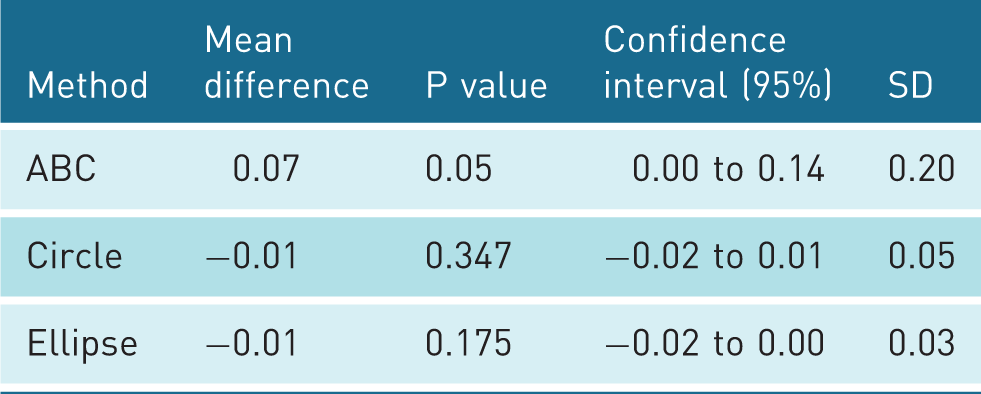
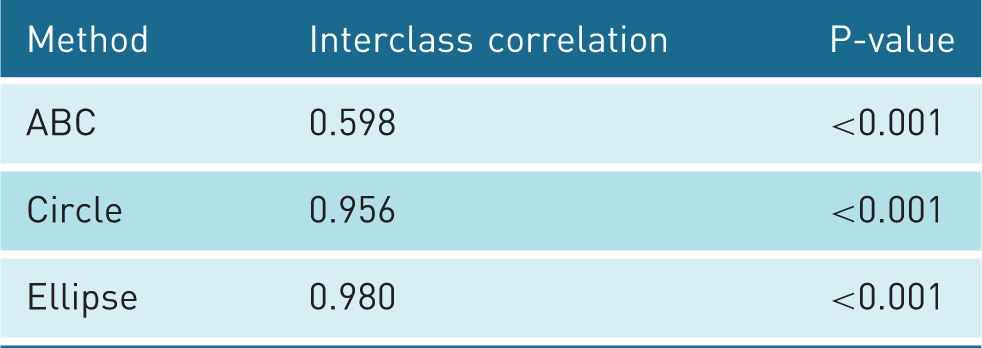
For the natural filling study in patients with different degrees of OAB symptoms (phase 3), inter-observer reliability was assessed for two different clinicians each using the same three techniques to measure the bladder sphericity index. Differences in observations were assessed using paired t-test and creation of a Bland–Altman plot and calculation of intra-class correlation co-efficient. Intra-observer reliability was assessed for the same parameters with the same observer repeating the same measurements four weeks after the first analysis, blinded to previous results and analyses.
Patient acceptability of BlaST compared with urodynamics
At the conclusion of phase 3, all 30 patients were asked to complete a patient acceptability questionnaire (author's own). This aimed to both explore patient acceptability of urodynamics and TA-USS assessment of BlaST, and identify specific issues relating to the BlaST.
Results
Phase 1: BlaST protocol assessing bladder shape in healthy volunteers
Of the 20 healthy volunteers recruited, one was excluded due to the presence of significant lower urinary tract symptoms recorded in ICI-Q 12 and ePAQ. 13 All remaining volunteers had ePAQ-PF domain scores of zero for pain, voiding, OAB, stress urinary incontinence and quality of life in the urinary dimension of the instrument, indicating absence of OAB symptoms. ICIQ-OABq scores were universally low with the highest score being 5 (out of a potential maximum of 16). The average BMI of the healthy volunteers was 22 and the average age was 21, all were nulliparous. Four sets of three images were captured in each participant, as per the BlaST protocol.
In the transverse plane the bladder was observed to be rectangular in outline with rounded corners and a uterine indentation in the posterior midline (Figure 1). This shape remained throughout natural filling. The bladder shape images recorded demonstrated that throughout filling, the height of the bladder (c) underwent the greatest change, compared with width (a) and depth (b). Three independent t-tests were used to assess which of the three measurement (a, b or c) showed the greatest intra-observer variation. Bladder height (c) was the least reproducible measurement with a mean of 7.84% variation compared with 0.30% for bladder width (a) and 2.67% for bladder depth (b). The transverse plane was therefore found to be the most reliable and reproducible image in this context.
Scan sequence showing bladder in the transverse plane at 30–40 minute intervals during natural filling in a healthy female volunteer. The bladder remains relaxed, following the contours of the pelvis with a posterior indentation from the uterus.
Phase 2: TA-USS assessment of bladder contractions during urodynamics
Of the 22 women with OAB symptoms undergoing urodynamics, 12 had measured increases in detrusor pressure consistent with bladder contractions (detrusor overactivity) during filling. Associated bladder shape changes associated with these contractions were contemporaneously visualised using TA-USS in the transverse plane during the urodynamic test itself; subjectively the bladder appeared to change from being rectangular in outline following the contours of the pelvis, to a more ellipsoid shape (Figure 2).
Scan sequence showing bladder in the transverse plane in a patient with moderate OAB symptoms during natural filling. The bladder becomes more ellipsoid throughout filling and then changes rapidly between the second and third image (within 5 minutes) to become significantly more ellipsoid which was associated with severe urinary urgency.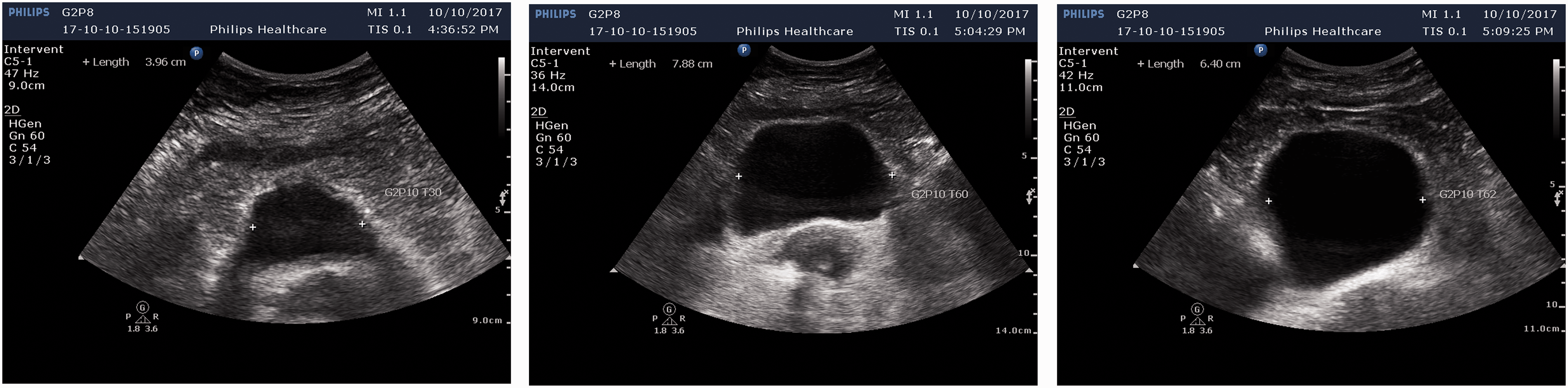
Phase 3: BlaST protocol assessing bladder shape in women with OAB
Using the prototype BlaST protocol, 12 patients in groups 1 and 2 with ePAQ-PF impact score of moderate to severe bother for OAB (indicating moderate symptoms of OAB) had episodes when their bladders became more ellipsoid. This was in comparison to with those with absent or mild bother for OAB, in whom these shape changes were not observed (Figure 3).
Scan sequence showing bladder in the transverse plane over 8 minutes (times shown) during invasive urodynamics for investigation of OAB. At 1002 a detrusor contraction occurs, the bladder then relaxes at 1004.
Development of a bladder sphericity index
Three different approaches to the objective assessment of bladder shape during filling were evaluated in terms of reliability and reproducibility.
The first technique used was to divide bladder height (c) by bladder width (a) measurement (c/a). Correlation between increasing bladder sphericity using this technique and bladder filling estimated using the a, b, c measurements was strongly positive (r = 0.916 (p<0.005)) in the group of 20 healthy volunteers. However, having found bladder height and depth to be consistently unreliable when measured by different sonographers and the changes in height and depth probably representing a function of bladder compliance, a technique using images captured in the transverse plane was developed.
Bladder sphericity using ‘minimum zone reference circles’ represents an adaptation of an industrial engineering technique to measure the roundness of metal rods and cylinders.
14
Images captured in the transverse plane displaying the maximum bladder width were used for this purpose. The outline of the bladder was drawn using the ‘scribble’ drawing function in Microsoft PowerPoint (Figure 4). Two circles were then drawn inside and outside of the bladder positioned as follows: (1) minimum circumscribed circle, this was the smallest circle that could fully enclose the bladder outline and (2) maximum inscribed circle, the largest circle that could fit completely inside the bladder outline (Figure 4). A ‘sphericity index’ was then calculated using the formula Demonstration of the ellipse method to calculate bladder sphericity using minimum circumscribed and maximum inscribed ellipses.
A further refinement of this minimum zone reference circles approach arose from the observation that a number of bladder contractions detected during urodynamics resulted in the bladder adopting a distinctly oval or ellipsoid shape (Figure 3). When applying the minimal zone reference circles approach described above, the bladder outline may in fact become less rounded in profile, which might result in the failure to detect a contraction. Therefore, an approach using minimum zone reference ellipses was evaluated. Two best-fitting ellipses were drawn inside and outside of the bladder outline. A new sphericity index using the best-fitting ellipse method was derived using the formula
In phase 2 (22 patients undergoing invasive urodynamics), bivariate analysis of bladder volume (measured accurately from amount of contrast media infused via pump into the bladder during urodynamics at the time each image was captured) and ellipticity index were assessed between images captured during episodes of detrusor overactivity (bladder contractions) (n=12) and images captured in the acontractile group (n=10). Bladder volume and sphericity index were standardised for these 22 patients, so that the mean was equal to zero and the standard deviation equal to 1. A univariate parameter was created as the sum of the standardised volume and sphericity index. Mann–Whitney test was performed to evaluate the difference of the univariate parameter and showed a significant difference between the two groups – acontractile and detrusor overactivity (p < 0.001).
Inter-observer variation for different bladder sphericity methods
Intra-observer variation for different bladder sphericity methods
Patient acceptability of BlaST
All 30 patients in phase 3 completed a Patient Acceptability Questionnaire (Supplementary file 3), all of whom had undergone urodynamic investigation followed by BlaST, at a median interval of 56 days. Of the 30 women completing the questionnaire, 24 provided free-text comments relating to their experiences and views of the two tests.
Of these 30 patients, 26 (87%) reported strong preference for BlaST, three patients (11%) reported slight preference for BlaST and one patient had no real preference for either test (4%). No patients expressed a preference for urodynamics over BlaST. Analysis of free-text comments recorded by the questionnaire identified different negative and positive themes relating to the two investigations (Supplementary file 4). Urodynamics was associated with mainly negative themes, including discomfort, embarrassment, pain and the invasive nature of the test. BlaST was associated with a negative theme regarding its duration and positive themes including comfort, lack of embarrassment and ease.
Discussion
The primary aim of this feasibility study was to assess the use of TA-USS in evaluating bladder shape during filling and to detect shape changes associated with bladder contractions, representing a potentially non-invasive novel test for the detection of involuntary detrusor contractions. The main findings are that measurable bladder shape changes occur during both bladder filling and during episodes of detrusor contractions and that TA-USS offers a non-invasive approach to detect and measure these bladder shape changes.
Clinicians undertaking X-ray video cystography using contrast medium during urodynamics are already aware that the bladder can vary in shape and outline.10,15 The bladder can appear relaxed, following the normal contours of the pelvis (Figure 1) or more rounded, pear-shaped or fir-tree shaped. 11 Mathematical modelling has previously been used to try and make sense of bladder shape as it fills and empties; however, the clinical application of these methods to-date has been limited. 16 Often, for reasons of mathematical simplicity, a spherical model of the bladder is used, 16 although in other studies, bladder shape has been subdivided into ellipsoid, triangular and cuboid. 17 In vitro experiments investigating the effects of bladder shape change on bladder mechanics are difficult to undertake due to other mechanical properties that vary with shape, such as stiffness and mass.18–20 In the present study, the transverse view of the bladder was found to provide reliable and reproducible 2D image for bladder shape measurement, which was best achieved using an analysis of internal and external ellipses of best fit.
This study found that measurements collected and used to assess bladder shape using TA-USS, when evaluated by observers are subject to a degree of variability, which was particularly evident when simple measurements of bladder height, width and depth were used. When viewing the bladder in the transverse plane, bladder shape changes associated with pressure rises with involuntary detrusor contractions during urodynamics were clearly seen when the shape of the bladder in transverse view was observed to change substantially and measurably with bladder contractions (Figure 2). Of the approaches evaluated, the best-fitting ellipse method appeared to be best able to more completely include the bladder outline and therefore more reliably reflect this this change in shape.
This study also demonstrated that when a bladder contraction (detrusor overactivity) was detected during urodynamics, the bladder changed from a more rectangular outline (following the contours of the pelvis) to adopt a more ellipsoid shape when viewed in the transverse plane (Figure 3). This was also observed when rises in detrusor pressure were relatively low or subtle. Following a detrusor contraction, the bladder was also seen to return to a more rectangular shape (Figure 3). These changes seen on BlaST may therefore be clinically useful as part of assessments for patients with OAB.
The intermittent sampling of BlaST compared with continuous monitoring of pressure during filling cystometry may also impact adversely on the sensitivity of the test in detecting bladder contractions, which are typically phasic in nature; they may last minutes, or sometimes only a few seconds. Indeed, during this feasibility study, bladder shape changes may not have been sensitively detected by the current BlaST protocol as each image was taken 30 minutes apart. However, conventional urodynamics is itself acknowledged as having significant limitations in the investigation of OAB. These include sensitivity,7–9 the invasive nature of the test, 5 cost 5 and, if screening cystography is used, radiation exposure. 21
For patients unable or unwilling to undergo conventional urodynamics, or for those in whom urodynamics prove to be normal, an alternative test of lower urinary tract structure and function using TA-USS assessment of bladder shape could be of significant value, especially where invasive treatments for OAB syndrome such as intra-detrusor botulinum toxin injections or sacral nerve stimulation are being considered. Conversely, urodynamics might be reserved for patients in whom BlaST had failed to reach a diagnosis or understanding of the underlying pathophysiology of lower urinary tract symptoms. The BlaST protocol evaluated in this study represents a prototype for a novel ‘urodynamic’ modality for the assessment of bladder contractions (detrusor overactivity). Further work will be required to evaluate the accuracy of BlaST in different groups, including women of different ages, symptom profiles, parity, anterior vaginal wall prolapse, raised BMI and previous hysterectomy. In patients with uterine enlargement (e.g. due to large fibroids) or those with high body mass index, the value of undertaking TA-USS assessment of bladder shape may be more challenging. An enlarged uterus may distort bladder shape and the increased thickness of the abdominal wall in patients with raised BMI results in attenuation of the sound waves leading to reduced image quality.
Patient acceptability survey data suggest that BlaST may be more acceptable to patients than urodynamics, though the cohort was not randomised and may have been subject to recall bias, 22 as well as favouring ‘the new test’. The questionnaire used was also not psychometrically validated. However, all patients who expressed a preference for either urodynamics or TA-USS preferred TA-USS. A simple thematic content analysis showed that comments in relation to urodynamic assessment were generally negative, whereas comments on TA-USS revealed generally positive themes (Supplementary file 4). Participant free-text responses to the TA-USS BlaST included ‘easy’, ‘comfortable’ and ‘non-invasive’. This initial positive feedback suggests that there are no obvious acceptability issues regarding the use of a TA-USS BlaST and mirrors the positive patient acceptability findings for ultrasound assessment in the BUS study 23 where the ultrasound measurement of bladder wall thickness was unsuccessfully evaluated as a measure of OAB.5,24,25
Further refinement and research is required relating to the BlaST protocol itself. This is likely to include more frequent sampling, with images in the transverse plane both at regular time points and during patient triggered events such as urgency, urgency incontinence or pain. The use of provocative manoeuvres also needs to be incorporated as used in conventional urodynamics, usually includes the use of provocative manoeuvres or ‘stress tests’ 4 aiming to reproduce patient symptomatology and pathophysiology. These include cough, forced expiration, listening to running water and cold-water hand-washing, none of which were performed during BlaST in this study but warrant inclusion and evaluation in subsequent research. Women who underwent TA-USS during natural bladder filling in phases 1 and 3 did so whilst wearing the everyday clothes in which they had attended. They could immediately use a toilet if they experienced urgency, this is in contrast to conventional urodynamics, where the patient's movement is somewhat restricted by invasive catheters; although this is likely to increase detection of bladder contractions in this context. If provocative manoeuvres are introduced, the likelihood for leakage during the study will increase and therefore gowns or an absorbent pad should be worn.
The development of a clinic schedule allowing several patients to be assessed simultaneously during physiological filling may also be required in order for BlaST to be cost effective and practical in its clinical application. Further methods for rapidly assessing and measuring bladder shape also need development; the current requirement for a hand-sketched bladder outline, prior to constructing internal and external ellipses of best fit by an observer will require refinement. This will likely include automation using computer algorithms in order to reduce potential for bias and speed up this process.
In conclusion, this feasibility study suggests that bladder shape can be assessed effectively and simply using TA-USS and this modality can be used to demonstrate bladder shape changes occurring during bladder filling and bladder contractions. The modality appears to be relatively acceptable to patients. Further research is clearly required to refine the BlaST techniques, both for assessing and quantifying bladder shape changes, leading to automated objective measurement algorithms.
Supplemental Material
Supplemental Material1 - Supplemental material for Evaluation of bladder shape using transabdominal ultrasound: Feasibility of a novel approach for the detection of involuntary detrusor contractions
Supplemental material, Supplemental Material1 for Evaluation of bladder shape using transabdominal ultrasound: Feasibility of a novel approach for the detection of involuntary detrusor contractions by Thomas Gray, Luned Phillips, Weiguang Li, Charlotte Buchanan, Patrick Campbell, Andrew Farkas, Shahram Abdi and Stephen Radley in Ultrasound
Supplemental Material
Supplemental Material2 - Supplemental material for Evaluation of bladder shape using transabdominal ultrasound: Feasibility of a novel approach for the detection of involuntary detrusor contractions
Supplemental material, Supplemental Material2 for Evaluation of bladder shape using transabdominal ultrasound: Feasibility of a novel approach for the detection of involuntary detrusor contractions by Thomas Gray, Luned Phillips, Weiguang Li, Charlotte Buchanan, Patrick Campbell, Andrew Farkas, Shahram Abdi and Stephen Radley in Ultrasound
Supplemental Material
Supplemental Material3 - Supplemental material for Evaluation of bladder shape using transabdominal ultrasound: Feasibility of a novel approach for the detection of involuntary detrusor contractions
Supplemental material, Supplemental Material3 for Evaluation of bladder shape using transabdominal ultrasound: Feasibility of a novel approach for the detection of involuntary detrusor contractions by Thomas Gray, Luned Phillips, Weiguang Li, Charlotte Buchanan, Patrick Campbell, Andrew Farkas, Shahram Abdi and Stephen Radley in Ultrasound
Supplemental Material
Supplemental Material4 - Supplemental material for Evaluation of bladder shape using transabdominal ultrasound: Feasibility of a novel approach for the detection of involuntary detrusor contractions
Supplemental material, Supplemental Material4 for Evaluation of bladder shape using transabdominal ultrasound: Feasibility of a novel approach for the detection of involuntary detrusor contractions by Thomas Gray, Luned Phillips, Weiguang Li, Charlotte Buchanan, Patrick Campbell, Andrew Farkas, Shahram Abdi and Stephen Radley in Ultrasound
Footnotes
Declaration of Conflicting Interests
The author(s) declared following potential conflicts of interest with respect to the research, authorship, and/or publication of this article: Stephen Radley is a director and shareholder of ePAQ systems limited, an NHS spin-out technology company ( ). The other authors declare they have no conflicts of interest.
Funding
The author(s) disclosed receipt of the following financial support for the research, authorship, and/or publication of this article: Sheffield Teaching Hospitals NHS Foundation Trust, Jessop Wing Small Grant Scheme award of £3000.
Ethics Approval
North East Yorks Research Ethics Committee, REC number: 15/NE/0417
Guarantor
TG
Contributors
TG: project development, data collection, management and analysis; manuscript writing. LP: data collection and analysis, manuscript editing. CB: data collection and analysis, manuscript editing. WL: statistical analysis, manuscript editing. PC: project development, data collection, management and analysis, manuscript editing. AF: project development, data collection and analysis, manuscript editing. SA: ultrasound calibration and guidance on image capture, project development and study design, manuscript editing. SR: BlaST concept, project development, study design and manuscript editing.
Acknowledgements
The authors would like to acknowledge the role of Jessica Oscroft in collecting data for the study undertaken in healthy volunteers.
References
Supplementary Material
Please find the following supplemental material available below.
For Open Access articles published under a Creative Commons License, all supplemental material carries the same license as the article it is associated with.
For non-Open Access articles published, all supplemental material carries a non-exclusive license, and permission requests for re-use of supplemental material or any part of supplemental material shall be sent directly to the copyright owner as specified in the copyright notice associated with the article.
