



Abstract
This paper examines followers’ conceptualizations of the ideal business department leader within private universities. Using an internet survey of 273 faculty members and 31 department leaders from 59 private, non-ivy league universities, this paper examines how faculty members and department leaders conceptualize the ideal leader in terms of abilities and traits, and investigates the measures by which they define departmental success. A principal components analysis is utilized to identify the underlying cognitive framework of these abilities, traits, and success measures from both the faculty member and department leader perspective. The results indicate that faculty members desire equity rather than personalized treatment, and the measures by which business faculty and administrators define departmental success reflect the best interests of the institution in which they are employed. Implications of these findings and directions for future research are discussed.
Effective leadership in academic departments is essential to generating a sustainable competitive advantage in institutes of higher education. In addition, the authority and power bestowed on leaders in academia provide them with the means of setting the tone and ethical atmosphere of the organization (White and Lean, 2008). Department leaders play an intimate role in the success of academic institutions as they are accountable for a vast array of responsibilities such as administrative tasks, managing resources, implementing a strategic vision, representing the department to internal and external stakeholders, securing resources for the growth and sustainability of the department, and building a collegial environment to facilitate faculty productivity (Collinson and Collinson, 2009). Therefore, the retention and promotion of quality administrators is an essential part of university success. However, approximately 25% of department leaders need to be replaced each year (Symonds, 2009), indicating that a substantial amount of ambiguity surrounds how followers’ conceptualize the ideal attributes of an academic department leader. Furthermore, Bryman (2007: 693) indicates that “surprisingly little systematic research has been conducted on the question of which forms of leadership are associated with departmental effectiveness.” Thus, research attention is needed to identify how faculty department members conceptualize the ideal academic leader and how that leader is associated with departmental effectiveness.
Bligh, Kohles, and Meindl (2004: 562) indicate that “there is nearly universal consensus that leadership is a function of leaders and followers embedded in a rich web of negotiated meanings and contextual variables.” According to the social constructionist perspective of leadership, leaders emerge through a social process in which both leaders and followers influence one another’s self-concept, thereby influencing the behaviors and social processes exhibited by each party (Lord et al., 1999). However, Lord et al. (1999) indicate that followers have been underexplored in leadership research, even though they represent a significant source of variance in the emergence of leaders, as well as the amount of influence a leader has over followers. Furthermore, a large gap still exists in the leadership literature regarding the self-concepts of leaders and followers. While many facets of the self-concept have been shown to be central to psychological processes such as judgments of others (Catrambone and Markus, 1987) or affective reactions (Higgins, 1989; Linville, 1987), little research has examined the cognitive, affective, and socially based implications of the self literature (Lord et al., 1999).
One perspective from the self literature that holds merit in filling this gap is the cognitive-attribution approach, which was developed to explain the relationship between perceptions of leadership and performance (Lord and Maher, 1993). This approach maintains that perceptions of leadership are based on the traits of the leader (i.e. recognition-based processing) (Lord et al., 1986) and the outcomes of events (i.e. inference-based processing) (Calder, 1977; Ensari and Murphy, 2003; Meindl and Ehrlich, 1987). Recognition-based processing involves categorizing individuals as leaders or followers based on the number of characteristics s/he maintains which are consistent with the leader or follower prototype held in memory. Prototypes (i.e. abstract representations of the features which most closely represent a particular category) are triggered by stimuli in the environment and accessed from long-term memory (Mischel, 1979).
Inference-based processing involves attributing the outcomes of salient events to the characteristics of the leader (Ensari and Murphy, 2003; Lord and Maher, 1993; Meindl and Ehrlich, 1987; Phillips and Lord, 1981). For instance, “group outcomes tend to be attributed to leadership rather than to external influences” (Shondrick et al., 2010: 960). Furthermore, leaders are perceived as more charismatic when the firm’s performance increases (e.g. Ensari and Murphy, 2003), while organizational failures are often attributed to poor leadership and “these failures can detract from the executives’ perceived leadership qualities” (Ensari and Murphy, 2003: 53; see also Lord and Maher, 1993). Thus, the way followers define departmental success is likely to influence the characteristics they look for in their leaders. For instance, if followers define success as change and growth in the department, then they would likely value transformational leaders over transactional leaders. The cognitive-attribution approach is used in the current study to fill the identified gaps in the cognitive, affective, and socially based implications of the self literature.
Therefore, the purpose of this research is twofold. First, this study investigates the characteristics and abilities that define effective leadership from both leader and follower perspectives to identify how they conceptualize the ideal leader of an academic business department (i.e. recognition-based processing). Second, this study identifies the measures by which leaders and followers evaluate a leader’s effectiveness (i.e. inference-based processing). To accomplish these purposes, this study (1) examines the underlying cognitive framework which forms department members’ perceptions of effective leadership and (2) examines the success measures by which leaders and followers define departmental success. Specifically, this study analyzes the implicit leadership theory-based conceptualizations of the ideal department leader from the perspective of 273 faculty members and 31 department leaders from 59 private, non-ivy league universities across the United States. By analyzing how leaders and followers define the characteristics of the ideal leader and the measures by which they define departmental success, this research seeks to shed light on how individual cognition, affect, and socially based perceptions of the self influence their implicit leadership theories.
The general outline of this research is consistent with Trocchia and Andrus’ (2003) research in which they examined the perceived characteristics and abilities of effective marketing department heads, as well as the success measures utilized for evaluating department leader effectiveness at public universities. Trocchia and Andrus (2003) found that faculty members desire equitable treatment and respect from the department head and seek department heads who exhibit integrity, honesty, and fairness. Trocchia and Andrus (2003) also found that the most important measures of a marketing department’s success were: (1) a positive climate for research and teaching, and (2) a collegial working environment that has a defined strategic direction.
The current research extends the research of Trocchia and Andrus (2003) in several ways. First, this research applies a relevant theoretical framework (i.e. implicit leadership theory) to inform our understanding of why business academicians maintain their particular perspectives. Second, the sample used in the current study contains responses from all academic disciplines typically contained within a business school rather than limiting the scope to a single discipline. Third, the sample in the current research examines the perceptions from faculty members at private universities, which serves to assess the generalizability of Trocchia and Andrus’ (2003) findings in public universities. Fourth, the sample in this research contains responses from faculty members, department heads, and deans, rather than strictly faculty members, to account for the perspectives of subordinates, incumbents, and superiors.
The contribution this research proposes to make resides in several areas. First, identifying the characteristics and abilities desired in a department head by both faculty members and department leaders will reflect the desired attributes of subordinates (faculty members), incumbents (department heads), and superiors (deans). Second, this research can assist in the department head selection process, as it will provide a template of the qualities a department head should maintain. Selecting the best candidate for the department head position will likely increase job satisfaction, improve leadership effectiveness, and reduce turnover within the position. Third, this research provides an effective benchmark by which current department heads and department leader aspirants can evaluate their own characteristics and abilities to determine if they are truly fit for the position. Finally, the measures by which faculty members and department leaders define departmental success can be used to define the most important tasks for which the department head is responsible, and identify which successes are attributed to the leadership of the department.
The structure of this paper is as follows. First, implicit leadership theories (ILTs) are utilized to articulate why the identification of desired abilities and traits is useful for improving business school leadership and reducing department head turnover. Second, ILTs are utilized to explain why academics in private business schools define success in the manner that they do. Third, the abilities, characteristics, and success measures are empirically examined to determine their perceived order of importance. Fourth, a principal component analysis (PCA) is conducted to identify the underlying cognitive framework of business department members’ perceptions of effective leadership. Fifth, a discussion of the results is presented to summarize the findings, followed by managerial implications logically inferred from these findings. Finally, practical implications and directions for future research are discussed in the concluding remarks.
Literature review and theoretical framework
Extant empirical research on leadership effectiveness in higher education is surprisingly limited (Barge and Musambira, 1992; Bryman, 2007; Gomes and Knowles, 1999; Harris et al., 2004). Through a comprehensive review of literature on leader effectiveness in an academic department, Bryman (2007) found 13 leader behaviors which emerged as critical for departmental effectiveness. These include having a clear strategic vision, communicating the strategic direction to the faculty, arranging the department to achieve the strategic vision, being considerate, treating faculty and staff fairly, being trustworthy, having personal integrity, engaging in participative decision making, acting as a role model, creating a collegial work environment, providing feedback, advancing the department’s cause with constituencies, facilitating scholarship and research through resource acquisition and allocation, and enhancing the department’s reputation through academic appointments (Bryman, 2007). However, most research on the topic contained anecdotal reflections that did not maintain a sound theoretical foundation or empirical support for these contentions. Thus, the current study applies the theoretical foundation of implicit leadership theories (ILTs) to the study of leadership effectiveness in higher education to determine the characteristics faculty members desire in a leader, and how these internal conceptualizations are reflected in the measures by which faculty define departmental effectiveness.
The perceptual nature of this research necessitates the utilization of implicit leadership theories (ILTs) to identify the abilities and characteristics of the ideal department leader. ILTs are trait-based knowledge structures with multiple dimensions that guide sensemaking and behavioral encoding (Epitropaki and Martin, 2004; Offerman et al., 1994). In other words, ILTs are based on followers’ perceptions of leaders, and reflect what followers believe a leader should look like in terms of abilities and characteristics.
Leadership and followership theories are constructed through a dynamic social process (Meindl, 1995) in which followers’ perceptions of leaders are just as important as leaders’ perceptions of followers (Shondrick and Lord, 2010). Implicit theories are utilized by leaders and followers to assist in behavioral sensemaking, define the respective roles each party fills, and form a social structure in which interaction occurs (Shondrick and Lord, 2010). In the formation of ILTs, individuals form cognitive categories that influence how they perceive and interact with others (Shondrick and Lord, 2010). According to Rosch and Mervis (1975), each cognitive category is based on a prototype that embodies all of the characteristics associated with that category. The degree to which others align with a particular categorical prototype, from the perspective of the focal individual, influences the strength of association that person will maintain with the particular category (i.e. recognition-based processing). In other words, if person A exhibits characteristics that align with the “leader” category in person B’s conceptualization, person B will perceive and interact with person A in a leader–follower manner. As a result, perceptions of the ideal leader are influenced by interactions with actual leaders and the context in which the perception is formed.
Interactions with actual leaders not only influence the ILTs formed in the minds of followers, but also followers’ working self-concepts (Lord et al., 1999). The self-concept of followers represents a substantial source of variance in the leadership process which strongly influences follower behavior and reactions to leaders (Lord et al., 1999). The levels at which the self-concept can be formed are the individual level, the interpersonal level, and the group or collective level (Brewer and Gardner, 1996) and each respective level elicits a unique approach to the leadership process. These levels are not, however, separate and unrelated constructs, but rather points on a continuum as a locus of self-definition from I to We. Lord et al. (1999) maintain that while individuals may exhibit one or two of these self-concepts, it is highly unlikely they could simultaneously exhibit all three.
If individuals define themselves at the individual level, they will compare themselves to others in terms of traits in an effort to differentiate themselves from others (Brewer and Gardner, 1996). At the individual level, self-worth is based on interpersonal comparisons and individuals are motivated by self-enhancement (Lord et al., 1999). Egocentric biases are exhibited by individuals who define themselves at the individual level as evidenced by an over-emphasis on their contribution to a project (Ross and Sicoly, 1979). Leaders and followers who maintain a self-concept at the individual level will likely be less concerned with the success of the group, and more focused on personal gain. Also, they will desire more personalized attention and recognition based on their relationship with leaders. As a result, if business department members define their self-concept at the individual level, they will desire the leader to exhibit qualities that focus on individual accomplishments rather than group performance and will evaluate him or her in this manner. If this is the case among business academicians at private universities, then the results should reveal an egocentric perspective such as the desire for recognition of individual achievements.
At the interpersonal level, individuals derive their self-concept from their relations with others (i.e. peer–peer, leader–subordinate) and mutual benefits, as well as interdependent self-definitions become more prominent (Brewer and Gardner, 1996). Self-worth at the interpersonal level is a product of appropriate role behaviors such as being a good colleague, subordinate, or leader (Lord et al., 1999). Since the interpersonal level self-concept is located in the center of the locus of self-definition continuum, it contains similarities with both the individual level and group level extremes of the continuum. Similar to the interpersonal level, individuals who define their self-concept at the interpersonal level derive a significant amount of personal value from the relationships they individually maintain with leaders and peers which is consistent with LMX theory. However, at the same time, individuals who define themselves at the interpersonal level do not act with self-serving motives, but rather seek the advancement of the group as a whole. Therefore, in an academic setting, defining one’s self-concept at the interpersonal level would be revealed by a desire for collegiality and a quality interpersonal atmosphere within the department, as well as a desire for equity and fair treatment among faculty members.
According to Lord, Brown, and Freiberg (1999), if an individual forms his/her identity at the group level, a group prototype is used as the foundation for intergroup comparisons and the individual is internally defined by his/her affiliation with the group. Deriving one’s identity from this level causes a general concern for the welfare of the group to be exhibited by the individual to a greater extent than personal gain. Furthermore, when the self is defined at the group level, procedural justice and equitable treatment will have strong effects on subordinate behavior and attitudes. Similarly, Hogg et al. (2005) indicate that individuals who maintain a collective identity typically desire equity from leaders rather than personalized treatment based on the strength of a particular leader–follower relationship. Therefore, if business academicians define their self-concept at the group level, their responses will reveal a strong desire for equity among all department members in regards to both abilities and traits desired in an effective department leader.
Given the above discussion of the levels of self-concept, this research seeks to identify the level(s) at which business school faculty and administrators define their self-concept(s). Due to the exploratory nature of this research, formal hypotheses are not posited, but the following research questions are proposed: Research question 1 (RQ1): At what level or levels do business academicians define their self-concepts? Research question 1a (RQ1a): Do business academicians at private universities define their self-concept at the individual level, as evidenced by a strong desire for personalized attention and recognition? Research question 1b (RQ1b): Do business academicians at private universities define their self-concept at the interpersonal level, as evidenced by the strong desire for collegiality and equitable treatment? Research question 1c (RQ1c): Do business academicians at private universities define their self-concept at the group level, as evidenced by the strong desire for equity among faculty members from the leadership of the department?
Departmental success measures
ILTs are not only influenced by interactions with previous and current leaders, but also the context in which they are formed (Shondrick and Lord, 2010). In his review of leadership research in higher education, Bryman (2007) indicated that examinations of the implications of context and situational diversity on leadership effectiveness are practically non-existent in current literature. However, context has been found to be an important variable in the study of leadership. For example, Bryman, Stephens, and Campo (1996) found that among British police officers, charismatic leadership, one of the most prominent predictors of effective leadership at the time, was much less important than other characteristics such as instrumental leadership. Furthermore, Antonakis, Avolio, and Sivasubramaniam (2003) found that the Multifactor Leadership Questionnaire (MLQ), one of the most widely used survey instruments used to assess leadership styles, did not maintain sufficient construct validity when tested with nonhomogeneous samples. Antonakis et al. (2003: 283) indicate that “leaders may operationalize or enact their behaviors differently depending on context” and propose that future research examine how “raters view the same leadership behaviors differently depending on the context in which those behaviors are embedded.”
House and Aditya (1997) recommended that context be included in our theoretical models and measures of leadership to examine the frequency of leadership behaviors. Altogether, a substantial amount of research underscores the importance of context in leadership research, and this study examines the extent to which context influences perceptions of success in an academic department. In an effort to identify if perceptions of leadership reflect the context in which the respondents operate, the ways in which business faculty members and administrators define departmental success are examined (i.e. inference-based processing). This will not only identify the influence of context on perceptions of success, but will also provide insight into how department leaders can facilitate effective performance and gain the support of followers as well as superiors.
ILTs represent cognitive schemas which specify the characteristics and behaviors expected from leaders (Epitropaki and Martin, 2004). These cognitive frameworks create a basis from which organizational members interpret and evaluate leadership behaviors (Poole et al., 1989; Weick, 1995). According to the cognitive-attribution approach, individuals attribute the outcomes of events to the characteristics of the leader (Ensari and Murphy, 2003; Lord and Maher, 1993; Meindl and Ehrlich, 1987; Phillips and Lord, 1981). Thus, the measures by which leaders and followers define departmental success provide an indication of the qualities they desire in a leader. Furthermore, understanding how department members define success will facilitate the leader’s future performance by focusing his or her efforts on the tasks which are valued in that particular context.
Due to the context-specificity of ILT-based conceptualizations, business faculty and administrators are likely to conceptualize departmental success in a manner that reflects the best interests of the institution. Private schools typically receive very little federal or state assistance and as a result, must obtain funds from other sources. The primary sources of income for private universities are student tuition and alumni donations. Since it is in the best interest of the institution to maximize these sources of funding, the reward structures for employees will likely reflect these two areas. As a result, student satisfaction and teaching quality will be highly emphasized. However, the school must also be highly active in both the academic and non-academic environment to bring notoriety to the university and to generate funds from alumni. Therefore, research and service are also likely to be critical departmental success measures in the minds of faculty and administrators at private universities. Due to the balanced demands of research, service, and teaching within private universities, the measures by which business department members define departmental success will likely reflect a balanced focus. Stated formally: Research question 2 (RQ2): Do the measures by which members of an academic business department at private universities define departmental success reflect a balanced focus of teaching, service, and research due to the reward system based on the best interests of the institution in which they are employed?
Method
Survey design
The survey of abilities, characteristics, and success measures was obtained from Trocchia and Andrus (2003) and was adapted to apply to private universities. The items in Trocchia and Andrus’ (2003) scale were developed through extensive qualitative analysis including a series of pretests with business school faculty members, as well as a content analysis of literature on academic leadership. Trocchia and Andrus’ (2003) full scale included 31 ability items, 15 characteristics items, and 25 success measure items. For a full overview of the questionnaire design and pretests, see Trocchia and Andrus (2003). The current study measured the abilities and characteristics of effective academic department leaders on a Likert-type seven-point scale ranging from “strongly disagree” (0) to “strongly agree” (7). The measures of departmental success were also assessed on a Likert seven-point scale with responses ranging from “no influence” (0) to “high influence” (7).
The sample was limited to AACSB-accredited private universities within the US to ensure that the reward systems and responsibilities were similar among the respondents. The publishing requirements associated with AACSB accreditation ensure that the responsibilities of business department members are similar across universities. Furthermore, teaching and service are primary functions within the academic profession, regardless of university affiliation.
Analytical procedures
This study proceeds in a manner consistent with Trocchia and Andrus (2003), but measured on a unique sample. First, the mean weights and standard deviations identify the level of importance each ability, characteristic, and success measure maintains in the minds of business school faculty and administrators at four-year private, non-ivy league universities. Next, a principal component analysis (PCA) identifies the underlying cognitive categories behind department members’ perceptions of effective leadership. Finally, a multivariate analysis of variance (MANOVA), followed by Scheffe comparison tests, elucidate the relationship between the demographic variables and the components pertaining to business school department leaders.
Sample design and data collection
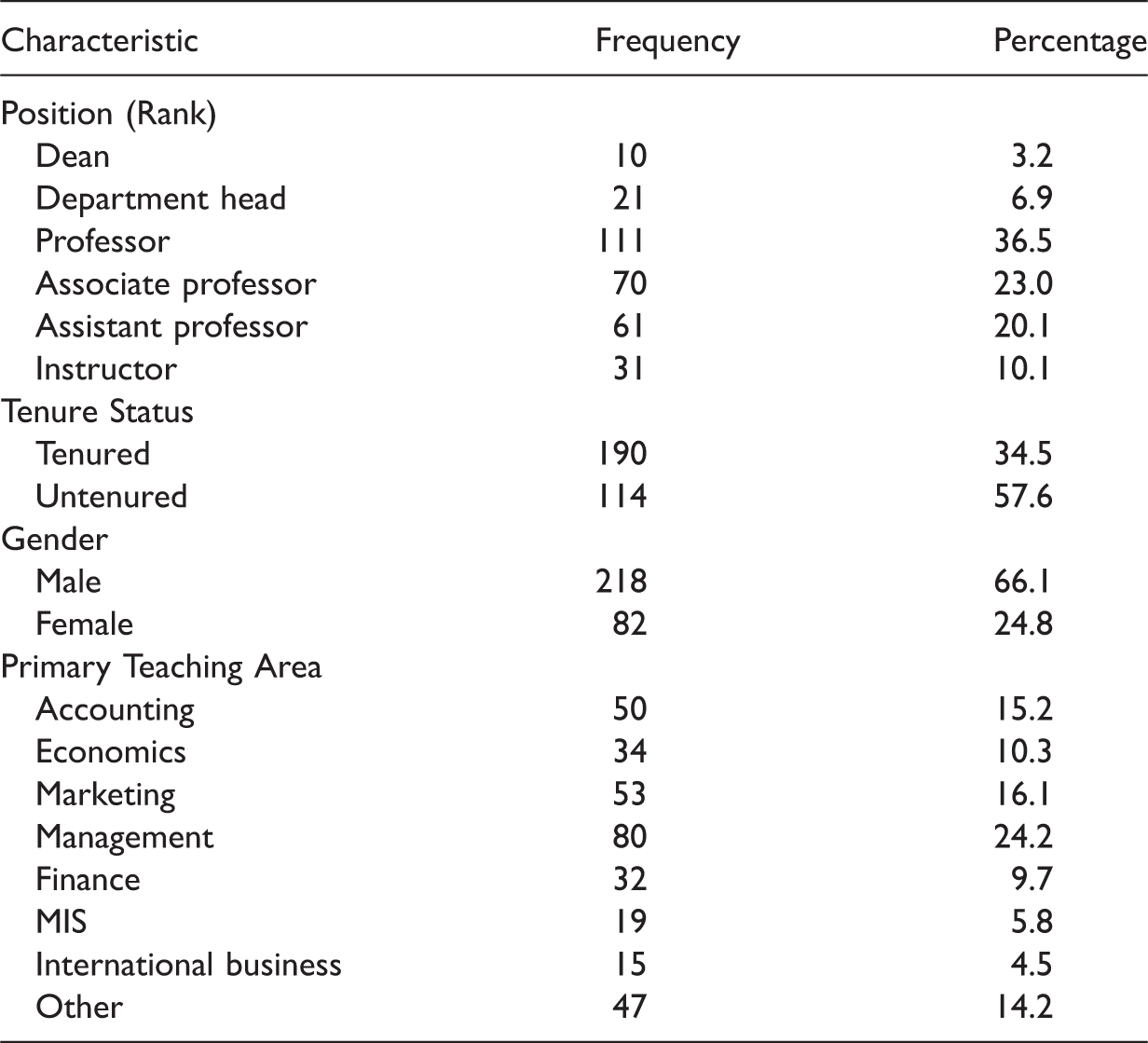
Six hundred and forty two e-mails were sent out with a hotlink to the survey so the respondents could easily access it. The e-mail addresses of these academicians were obtained from the faculty directory pages of the websites of private, non-ivy league four-year institutions. Part-time faculty members and area coordinators were not surveyed. Forty-three e-mails were returned as addresses were no longer in use. The remaining 599 messages were successfully delivered, and 304 academicians completed the survey, resulting in a response rate of 50.8%. The final sample consisted of 273 faculty members and 31 department leaders employed by 59 private colleges and universities throughout the US. Names were not included in the survey to ensure confidentiality in the respondents’ answers. The results were not used to evaluate a specific department head or faculty member, but rather to gain an understanding of the perceived attributes of the ideal department leader in private colleges and universities.
Profile of respondents.
Results
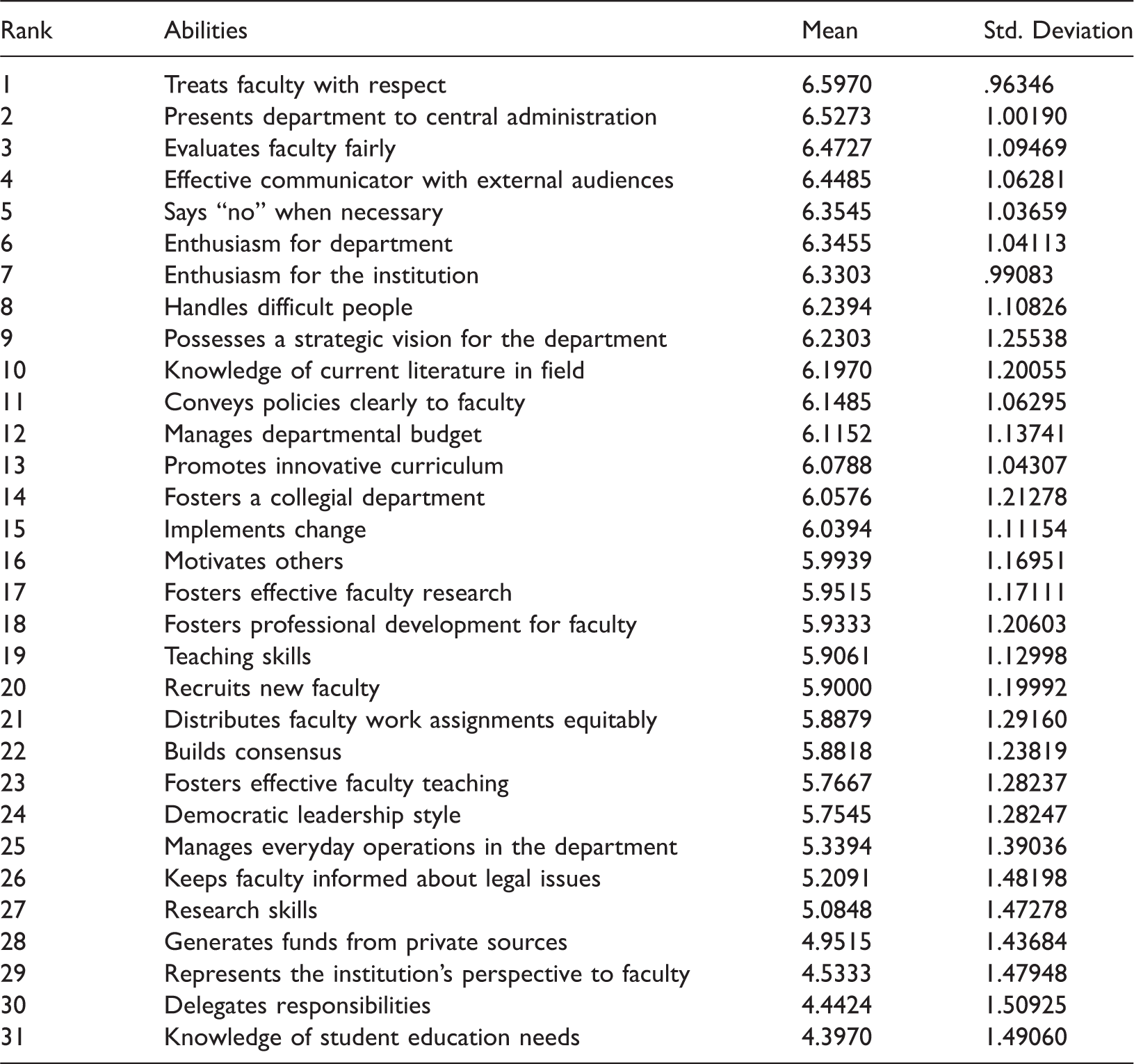
Means and standard deviations for business school department head abilities.
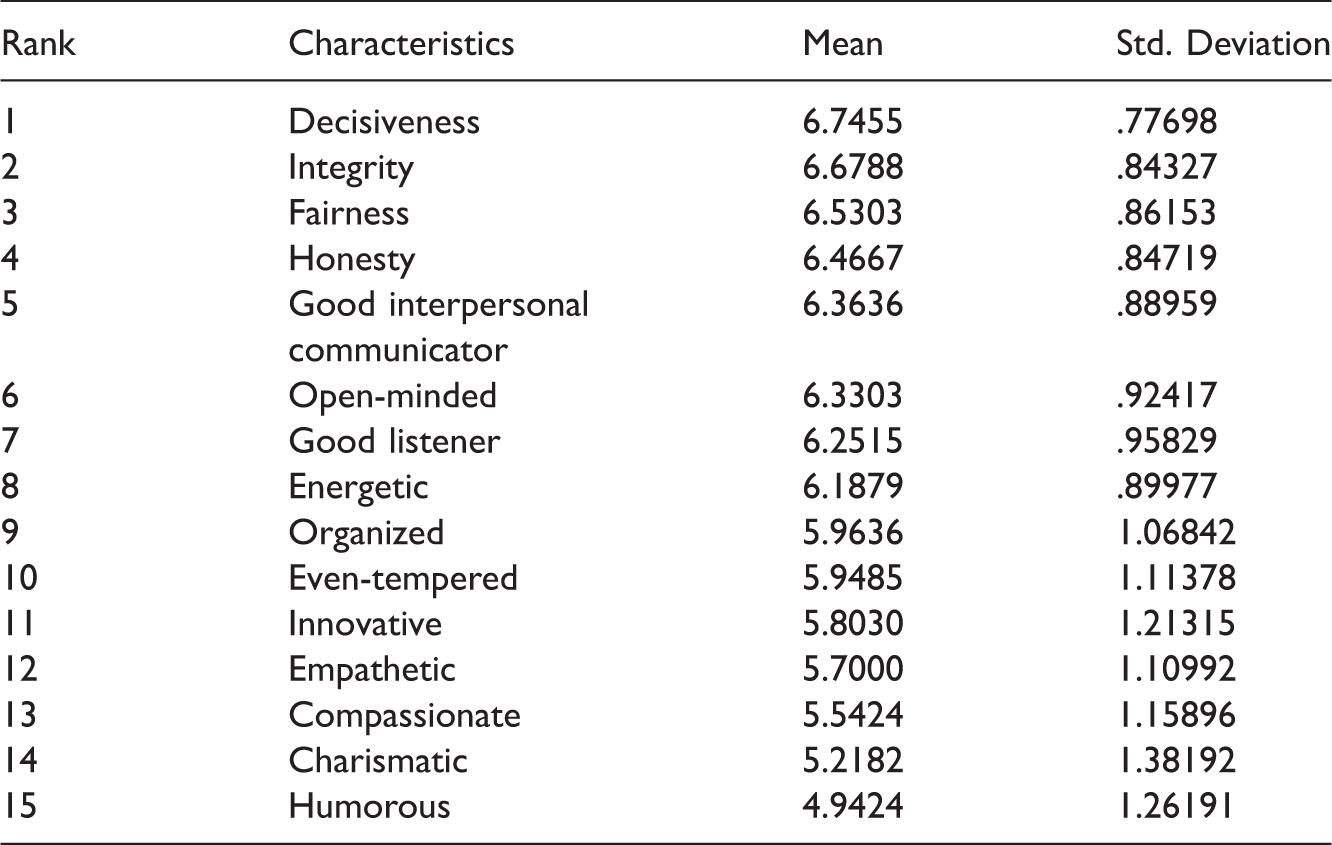
Means and standard deviation for business school department head characteristics.
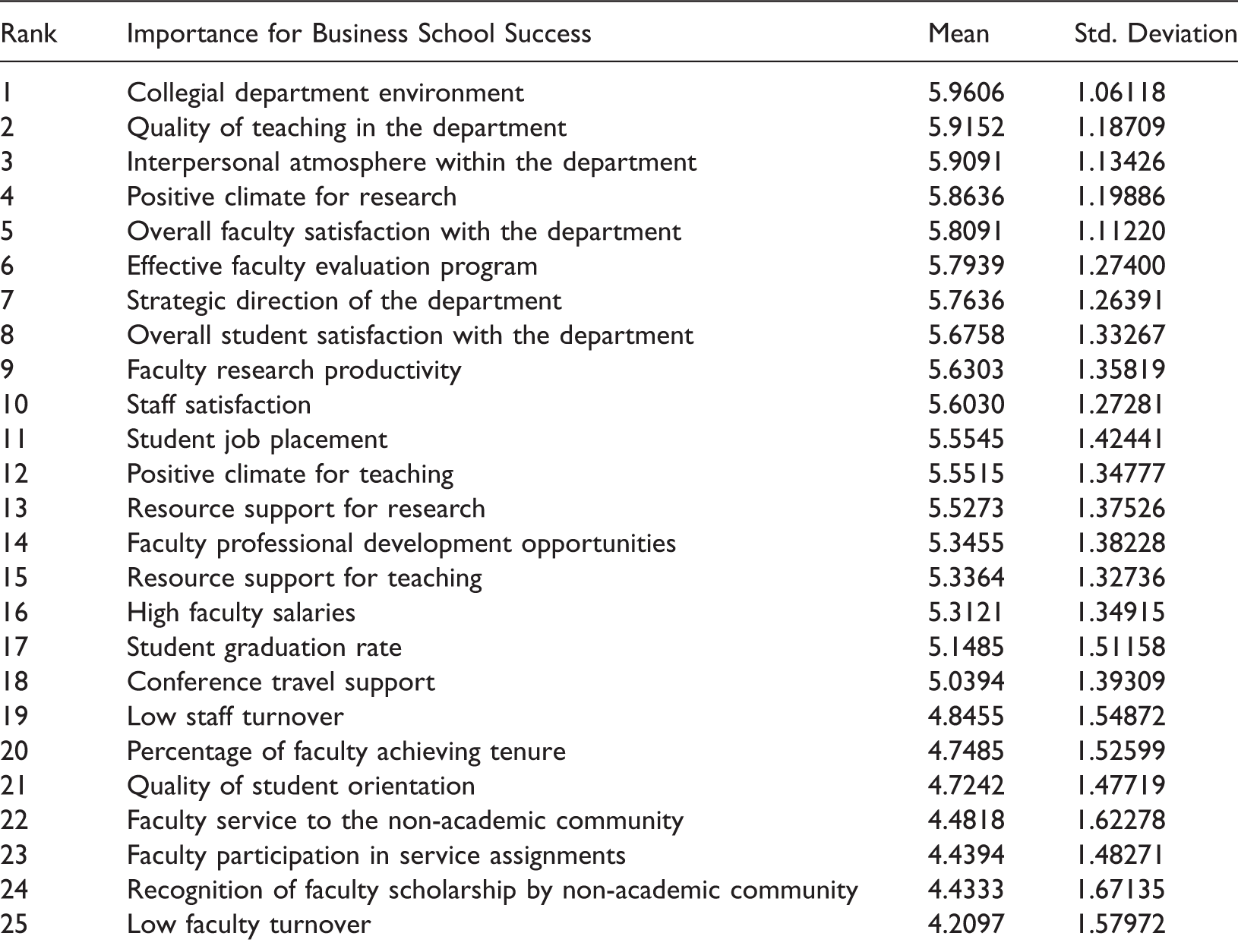
Means and standard deviations for perceived importance for business school success.
Perceived importance of department leader abilities
This portion of the survey identifies what private university business academicians believe to be the most important abilities required to be effective in the department head position. All abilities evaluated by the faculty respondents were rated positively as indicated by mean ratings above 3.5 on a seven-point scale. Consistent with Trocchia and Andrus (2003), the top five abilities, characteristics, and success measures are discussed in order of importance by mean weight. The five most highly desired department leader abilities were (1) “treats faculty with respect,” (2) “presents department to central administration,” (3) “evaluates faculty fairly,” (4) “effective communicator with external audiences,” (5) “says ‘no’ when necessary.” With regard to the level at which these responses indicate business academicians define their self-concept, these department leader abilities most closely align with the interpersonal level (abilities 1, 4, and 5) and group level (abilities 2 and 3). Abilities 1, 4, and 5 are closely related to interpersonal communication skills and abilities 2 and 3 reflect a desire for the advancement of the department as a whole and equitable treatment in evaluations. As none of these abilities reflect a desire for personalized recognition or attention, these results indicate that business department members do not define their self-concept at the individual level (RQ1a), but do define their self-concept at the interpersonal level (RQ1b) and the group level (RQ1c).
Four of these five abilities correspond with the top five abilities desired by faculty members at public universities as found in Trocchia and Andrus (2003). However, “effective communicator with external audiences” was ranked much lower (19 out of 31) in Trocchia and Andrus’ (2003) article. A likely cause of this difference is the reliance of private schools on funding from alumni and community support.
The five department head abilities perceived to be least vital of the 31 listed were: (27) “research skills,” (28) “generates funds from private sources,” (29) “represents the institution's perspective to faculty,” (30) “delegates responsibilities,” and (31) “knowledge of student education needs.” Interestingly, only two of these (27 and 28) coincided with Trocchia and Andrus (2003). The department head in private universities is responsible for creating an environment where others can conduct research, rather than doing the research themselves. These abilities facilitate effective management and allow faculty members to be productive in their individual disciplines. The end result is a stronger, more successful academic department.
Characteristic rankings
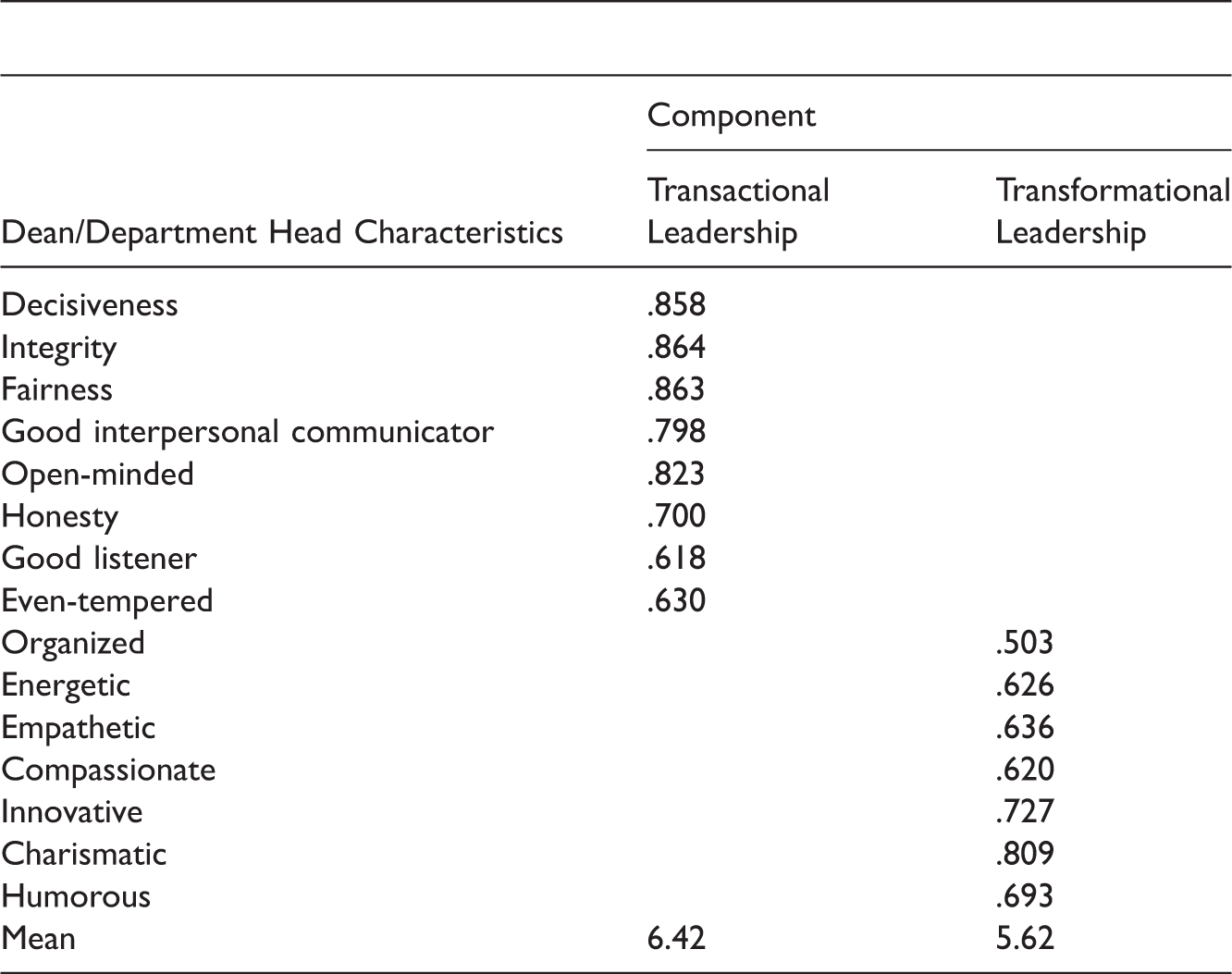
The most vital characteristics for a department head from the faculty member and department leader perspective were: (1) “decisiveness,” (2) “integrity,” (3) “fairness,” (4) “honesty,” and (5) “good interpersonal communicator.” These findings are presented in Table 3. Similar to the abilities, these characteristic rankings indicate that business faculty and leaders at private universities define their self-concept at the interpersonal level (i.e. characteristic 5) (RQ1b) and the group level (characteristics 2, 3, and 4) (RQ1c). These characteristics are most closely related to equitable treatment among all faculty members and effective interpersonal skills, which indicates that faculty at private universities do not define their self-concept at the individual level (RQ1a).
The five characteristics of the dean/department head that were least important for effectiveness, according to respondents, were (11) “innovative,” (12) “empathetic,” (13) “compassionate,” (14) “charismatic,” and (15) “humorous.” It appears that the characteristics that are typically associated with a transactional leader are more highly valued in a private university business school than those that are typically associated with a charismatic leader as outlined by Kuhnert and Lewis (1987).
Perceived importance of success measures
Respondents were asked to rate the importance of a number of items on the success of the business school to determine how business department members define departmental success. The five most important business school success measures were (1) “collegial department environment,” (2) “quality of teaching in the department,” (3) “interpersonal atmosphere within the department,” (4) “positive climate for research,” and (5) “overall faculty satisfaction with the department.” These success measures indicate that academic business faculty and administrators define their self-concept at the interpersonal level (success measures 1, 3, and 4) and group level (success measure 5). Success measures 1, 3, and 4 reflect a desire for a supportive work environment to facilitate productive careers. Success measure 2 supports one of the central missions of the school and success measure 5 reflects a concern for the satisfaction of the entire group of faculty members. These results indicate that faculty members at private universities define their self-concept at the interpersonal (RQ1b) and group levels (RQ1c), but not at the individual level (RQ1a).
The five departmental success measures that were perceived to be least important were (21) “quality of student orientation,” (22) “faculty service to the non-academic community,” (23) “faculty participation in service assignments,” (24) “recognition of faculty scholarship by the non-academic community,” and (25) “low faculty turnover.” The second to least important success measure (i.e. number 24) was “recognition of faculty scholarship by the non-academic community,” which would be indicative of an individual self-concept. Since this success measure is rated as one of the least important, it provides further evidence for the finding that, on average, business faculty and administration define themselves at the interpersonal or group level.
The results from the success measure rankings also indicate that business school faculty and administrators at private universities desire a balanced focus of scholarship between teaching (success measure 2) and research (success measure 4), but not service (success measure 22), which answers RQ2. These findings indicate that business academicians measure departmental success by the quality of teaching and research within the business school, but not by “faculty service to the non-academic community.” Anecdotally, this makes logical sense due to the fact that the typical tenure and promotion system in academia is primarily concerned with teaching and research rather than service to the profession. These measures can assist department heads looking to improve their own performance, and can also be utilized by central administration to evaluate current department leaders and facilitate the advancement of their institution.
Principal components analysis
The underlying structure of the three sets of variables (school of business department head characteristics, abilities, and departmental success measures) was examined through principal components analyses after the individual item analysis identified the most critical variables of an effective business school leader. The analysis was conducted in order to reduce the number of variables for the subsequent multivariate analysis of variance identifying response variation based on participant characteristics. Examination of the rotated component loadings using varimax rotation suggested the appropriate number of components for the three sets of variables. Items on components with a loading of .50 or greater and with a cross loading of no more than .40 or greater were included in the analysis (Hair et al., 1998). Five components were uncovered for department head abilities, two components for characteristics, and five components for departmental success measures. A panel of faculty members not affiliated with any of the sampled institutions was asked to review the components to identify common themes and name the components.
Abilities
Principal components analysis of department head abilities.
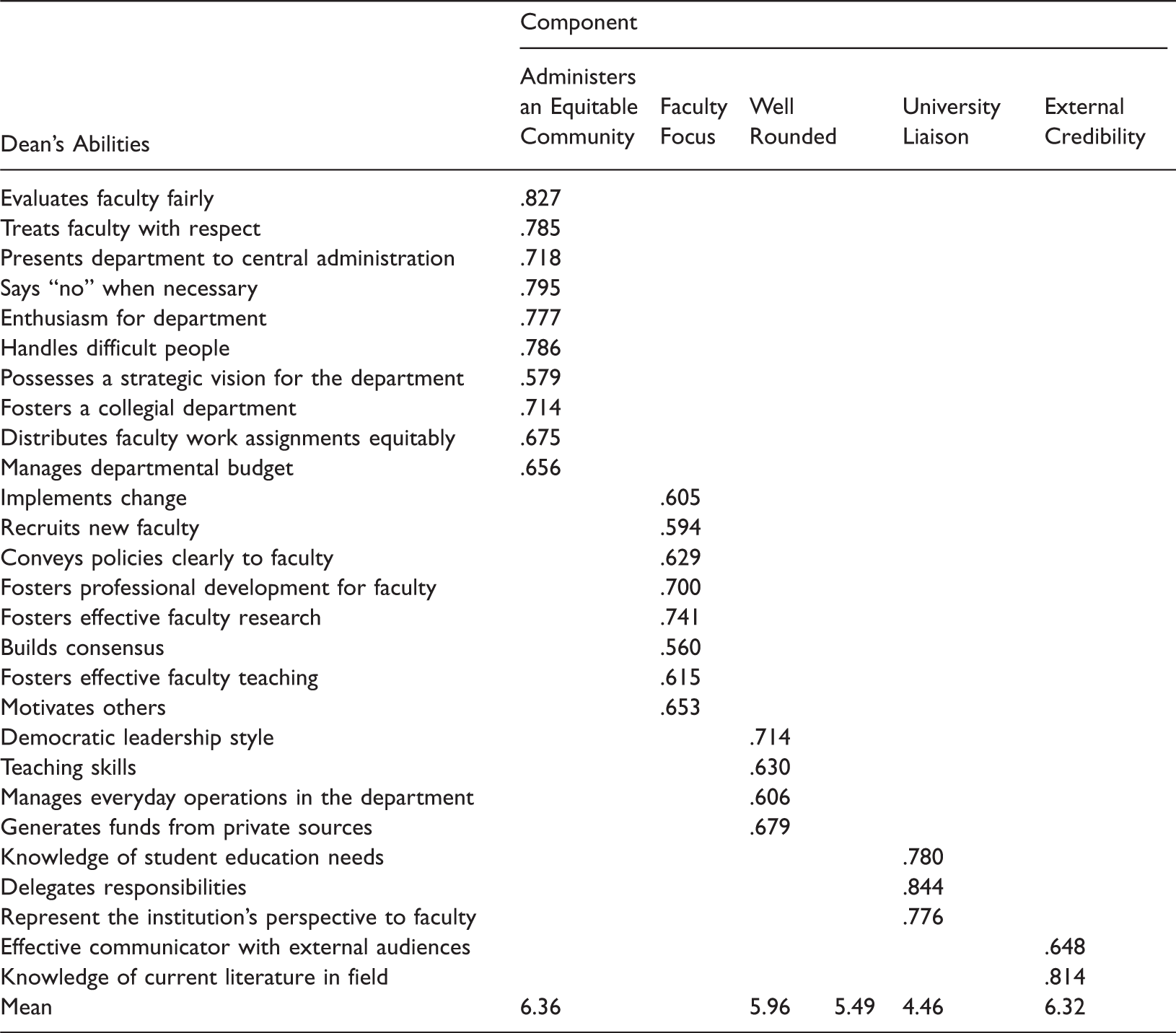
The third most crucial component in the department head abilities was faculty focus (M = 5.96), which reflects the importance of moving the school of business toward meaningful goals. These include implementing change, recruiting faculty, professional development, facilitating research and teaching, building consensus, and motivating others. The fourth most important component was well rounded (M = 5.49), which emphasizes excellence in teaching, administration, fund-generation, and democratic leadership style. The fifth and final abilities component was university liaison (M = 4.46), which involves delegating responsibilities, knowing student education needs, and representing the institution’s perspective to the faculty.
Characteristics
Principal components analysis of department head characteristics.
Success measures
Principal components analysis of business school success factors.
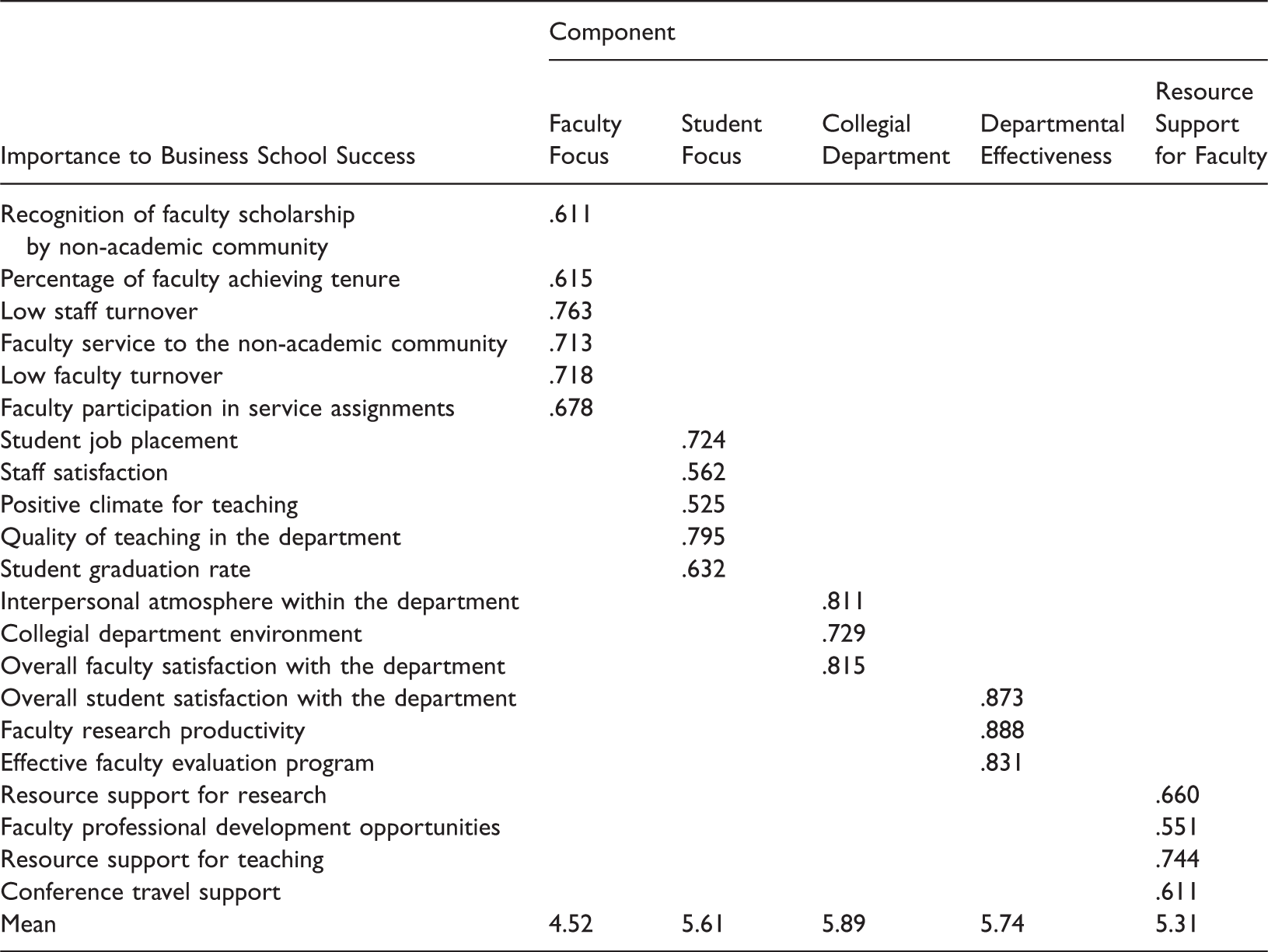
The third most important department success component was student focus (M = 5.61) and contains items such as student graduation rate, student job placement, positive climate for teaching, and quality of teaching in the department, all of which are focused on students at the university. The fourth most crucial measure of departmental success was resource support for faculty (M = 5.31), which is characterized by the importance of a department leader securing resources for conference travel, teaching, research, and professional development. The fifth and final component was faculty focus (M = 4.52), which emphasized measures of success such as percentage of faculty achieving tenure, faculty service to the non-academic community, faculty participation in service assignments, recognition of faculty scholarship by the non-academic community, and low faculty turnover. Overall, the success measures indicated that faculty at private universities define their self-concept at the interpersonal (RQ1b) and group level (RQ1c), but not the individual level (RQ1a), and desire a balanced focus between teaching and research, but not service (RQ2).
Variance in opinions between demographic groups
Multivariate analysis of variance (MANOVA), followed by Scheffe comparison tests, were conducted in order to assess the relationship between the demographic variables and the components pertaining to business school department leaders. The demographic variables included the respondent’s academic rank (instructor, assistant professor, associate professor, professor, department head, or dean), primary teaching area (accounting, economics, marketing, management, finance, MIS, international business, and other), tenure status, gender, and highest degree earned. The following discussion will center on department head abilities, characteristics, and items that are important to business school success.
With regard to the abilities components, administers an equitable community and university liaison were not identified as being significantly different on any of the classification components. Faculty focus was viewed as more important by females (M = 6.16) than by males (M = 6.39, p < .01). Well rounded was viewed differently by faculty rank. Instructors ranked this more important (M = 5.88) than did professors (M = 5.25, p < .05). The well rounded component was also viewed differently by tenured and untenured faculty members. Untenured (M = 5.69) faculty members viewed this as more important than tenured (M = 5.39, p < .02) faculty members. Females (M = 5.77) also viewed this component as more important than did males (M = 5.40, p < .01). Results revealed that that the abilities component labeled external credibility was viewed as more important by faculty members at AACSB schools (M = 6.39) than those from non-AACSB schools (M = 5.93, p < .01). Deans and department heads (M = 6.50) also viewed external credibility as more important than did instructors (M = 6.03, p < .03).
With regard to the ideal characteristics of a business school department head, transactional leadership was viewed as significantly more important by female faculty members (M = 6.62) than by male faculty members (M = 6.39, p < .01). There were no significant differences in the transformational leadership component.
The third set of questions focused on faculty members’ perceptions of issues that influence the success of the Business Department. Component one, faculty focus was viewed as being more important by female faculty members (M = 4.85) than by male faculty (M = 4.43, p < .05). Component 2, student focus was viewed by female faculty members (M = 5.95) as more important than it was by male faculty members (M = 5.59, p < .05). When looking at teaching areas, management faculty members (M = 5.87) viewed student focus as more important than economics and finance faculty members did (M = 5.33, p < .05). Those individuals holding a masters degree (M = 6.04) as their highest degree viewed student focus as more important than individuals holding the doctorate (M = 5.64, p < .05).
Component 3 collegial department was viewed by assistant professors and associate professors (M = 6.10) as more important than by deans and department heads (M = 5.51, p < .05). Female faculty members (M = 6.28) viewed collegial department as more important than their male counterparts (M = 5.90, p < .05). When looking at faculty rank, departmental effectiveness (component 4) was thought to be more important by assistant professors and associate professors (M = 5.96) than by deans and department heads (M = 5.48, p < .05). Accounting and finance faculty members (M = 5.95) viewed departmental effectiveness as more important than MIS faculty members (M = 5.75, p < .05). Female faculty members (M = 6.13) viewed departmental effectiveness as more important than male faculty members (M = 5.73, p < .05). Individuals with a doctorate degree viewed departmental effectiveness as more important (M = 5.96) than faculty members with a masters as a highest degree(M = 5.17, p < .05).
When looking at teaching area, resource support for faculty (component 5) was viewed as more important by accounting faculty (M = 5.89) than by finance and economics faculty members (M = 5.34, p < .05). Incongruence was also present when looking at gender and faculty development. Female faculty members (M = 5.65) view faculty development as more important than male faculty members (M = 5.26, p < .05).
Summary
This research examines implicit leadership theory-based conceptualizations of the ideal department leader abilities and characteristics, as well as the measures by which business academicians define departmental success. The identification of the level(s) at which business faculty and administrators define their self-concept assists in the examination of their underlying ILTs by revealing how they evaluate the effectiveness of a department head. Specifically, this research utilizes the mean weights of the attributes that were identified as the most important abilities, characteristics, and success measures for a department leader in a private school setting. Consistent with Trocchia and Andrus (2003), the current study conducts a principal components analysis to identify the underlying cognitive framework that reveals the structure of the ILTs maintained by business academicians at private universities throughout the USA. The PCA analysis is followed by a MANOVA and subsequent Scheffe comparison tests to identify if there is significant variance between the demographic groups.
The results indicate that business faculty and administrators define their self-concept at the interpersonal and group levels as evidenced by their desire for a supportive and collegial work environment in which equitable justice is administered by the department leader. Furthermore, business academicians at private universities primarily evaluate the success of the business department based on the quality of teaching and research that is conducted, whereas faculty service has little influence on the success of a business school. Altogether the current study extends prior research as it incorporates an explanatory theory, measures perceptions from all of the major business disciplines rather than a particular discipline, investigates the generalizability of the findings of prior research, and takes into account the perspectives of subordinates, incumbents, and superiors in the identification of the ideal department leader abilities, characteristics, and measures of departmental success.
Discussion and implications
The current study underscores the importance of planning, organizing, leading, and controlling an academic business department in an equitable manner. As evidenced by the faculty focus component in both the abilities and success measures PCA, business academicians desire a leader that is primarily concerned with the best interests of his or her subordinates. It is important to note that 82.7% of the sample were subordinates, which likely influenced the results of the analysis. However, due to the influence followers have on leadership effectiveness, this is likely the most important group of perceptions to analyze. It is also important to note the clear component structure of department head characteristics (i.e. Table 6). This PCA indicates that both faculty members and department leaders desire that department heads are capable of efficiently managing the day-to-day affairs of the department as well as effectively leading the department in a method of continual improvement.
The contribution this research proposes to make resides in several areas. First, identifying the level at which business academicians define their self-concept provides insight into the appropriate reward and governance structures that should be utilized. At private universities, business academics define their self-concept at the interpersonal and group level rather than the individual level. Therefore, focusing on the quality of the interpersonal climate of the department and the advancement of the department as a whole would be more effective than drawing attention to specific individuals for personal accomplishments. For example, implementing a reward structure that rewards cooperation between faculty members on research and teaching assignments would likely be a valuable policy to both advance the careers of individual faculty members while drawing favorable attention to the business school as a whole.
Second, we hope this research can aid in the department head selection process at private universities as it provides insight into the qualities academic business department members desire in a department leader. While the exact template of the ideal leader likely varies between universities due to disparate demands, foci, and departmental resources, it is our hope that this research takes the first step in identifying the context-specific conceptualizations of the ideal department leader. Improving the department head selection process would likely result in increased job satisfaction, improved leadership effectiveness, and reduced turnover within the position. Third, the findings of this research could be used as a benchmark by which current and aspiring department leaders can evaluate their own characteristics and abilities to determine if they are truly fit for the position. Finally, the measures by which faculty members and department leaders define departmental success will hopefully be valuable in identifying the most important tasks for which the department head is responsible and clarifying which of these successes are typically attributed to the leadership within the department.
Limitations and future research
The current research was limited in that while it identified how business department members define departmental success, it did not specify which departmental successes are attributed to the leadership of the department or which are seen as out of his or her control. Future research should examine this to determine the basis on which the leader is evaluated. In other words, one must understand what the leader is expected to accomplish before evaluating whether or not he or she is successful in the leadership position. According to attribution theory, individuals attribute causal relationships to situations as well as the behavior people exhibit (Kelley, 1967). In order to understand why a particular outcome occurred, individuals attempt to identify the components that caused the outcome. Leaders are typically viewed as having an impact on outcomes (Meindl, 1995), so the successes or failures experienced by a group, such as a business department, are often attributed to the quality of leadership within the group. Therefore, the items that are perceived as under the control of the department leader should be examined to determine where their efforts should be directed.
This research also was limited in the measurement of actual leadership styles and strictly focused on perceived leadership qualities. Future research should examine various types of leadership styles (i.e. authoritative, values-driven, results-focused, etc.) and compare them with actual departmental outcomes to determine if there is a particular style that is more effective at reaching goals or creating a collegial environment. It would also be interesting to examine perceptions of a leader’s effectiveness before and after a departmental outcome is achieved. Attributions of causality can only be applied after an outcome is experienced and research has shown that knowledge of performance outcomes exerts influence on descriptions of prior behaviors (Staw, 1975). The influence of a group’s performance on the perception of a leader’s behavior is called the performance cue effect (PCE) and substantial support for the effect has been established in organizational literature (e.g. Binning and Lord, 1980; Mitchell et al., 1977; Rush et al., 1981; Rush, Thomas et al., 1977). When the leader’s influence on group performance is perceptually salient, PCEs increase, which causes the outcomes attributed to the leader to increase (Phillips and Lord, 1981).
Finally, future research should examine the perceived abilities, characteristics, and success measures of a department leader over time. One could make the case that the perceptions of the ideal leader reflect the responsibilities associated with the job-role the individual maintains. For example, soon after a promotion to department head, the individual may still maintain a faculty member perspective, but over time may adapt and take on a department leader perspective simply because he or she has different responsibilities and interests associated with the position.
Conclusion
The uncertainty that surrounds the future of private universities demands effective leadership within academic departments and in administration. However, the current turnover rate of 25% per year (Symonds, 2009) indicates that quality leaders may be hard to find. There are no good workers or good employers, only good matches between the two, and there is a best match for each person and each position (Jovanovic, 1979). Knowledge, skills, and abilities (KSAs) are heterogeneous across individuals, but the requirements for the department head position are relatively the same. Therefore, identifying the individuals who maintain the KSAs needed in the department head position should facilitate effective performance, increase departmental satisfaction, and reduce turnover.
By examining the perceptions of over 300 academicians currently in the profession, this research captures the ideal abilities and characteristics of an academic business department leader, as well as the measures by which faculty members and administrators define departmental success. These findings can assist with identifying the best candidate for leading an academic department and aid in the professional development of currently operating department heads in improving their effectiveness. This research aims to fill the gap that exists in the cognitive, affective, and socially based implications of the self literature. Due to the uncertainty of future events in any organization, the best chance for survival is to equip organizations with leaders who will not be satisfied with mediocrity, but will raise the bar of expectations, administer equitable justice, and fulfill their commitment to the institutions in which they serve.