




Abstract
How are images used in the aim of governing migration? This article probes this question through the example of the International Organization for Migration’s (IOM) information campaigns (ICs) in Cameroon, through which it seeks to ‘manage the perception’ of potential illegal(ized) migrants to the European Union (EU). Taking the self-reflexive perspective of a filmmaker who has documented migrants’ rights violations in several projects and is thus struck by the use of imagery of suffering migrants as a deterrent, I first draw a comparison with the practice of colonial educational cinema, which I argue bares many similarities with the IOM’s ICs. Second, I inscribe them within broader trends in migration management, which have in common a simultaneous spatial expansion beyond the EU’s boundaries and a broadening of the domains they attempt to shape. I then attend to the particular ‘media dispositif’ the IOM constitutes in its campaign in Cameroon and question the actual effects of its campaigns.
Keywords
Introduction
Over the last 10 years, I have been producing films and videos relating to the politics of migration in Europe and at its borders. These have aimed to represent the human consequences of the current migration regime in a way that might contribute to challenge current policies of exclusion. In 2007, however, my practice encountered a moment of deep crisis after I came across the International Organization for Migration’s (IOM) ‘information campaigns’ (ICs), in which they produced fictionalized representations of the conditions of precariousness, exclusion and death that I had documented myself. Here, however, the aim was not to denounce the migration regime that leads to these conditions, but to dissuade potential migrants from coming to Europe – to contribute to ‘migration management’ through ‘perception management’, to use the IOM’s own terminology. Images of suffering migrants had thus become tools to govern their mobility. This led me both to question the effects of my own cinematic practice and to try to understand the rationale of the IOM’s campaigns, their mode of operation and effects. In short, through this research, I operated a shift from producing images of migration to inquiring into the migration of images of the suffering of migrants and into the way images were being used in the governmentality of migration.
In what follows, I will offer a brief overview of my previous films to underline why I was so struck by the IOM’s campaigns. I will then take two steps back to contextualize them. First, I will draw a comparison with the practice of colonial educational cinema, which, I will argue, bears many similarities with the IOM’s ICs and serves to reveal their characteristics. Second, I will inscribe the IOM’s ICs within broader trends in migration management, which have in common a simultaneous spatial expansion beyond the European Union’s (EU) boundaries and a broadening of the domains they attempt to shape. With these elements of contextualization, we will be in a better position to understand the rationale and characteristics of the IOM’s ICs, which, I will argue, aim to inscribe in potential migrants’ subjectivities the borders the EU fails to control on the ground.
Images of migrants’ suffering: Migrating from critical migration videos to campaigns of deterrence
I produced my first video, NEM–NEE (Figure 1), in 2004. 1 It documented the situation of rejected asylum seekers in Switzerland and was mainly shot in the city of Solothurn. Six months before we started filming, a change in asylum laws had effectively illegalized anyone whose asylum demand the Swiss authorities refused to consider – the ‘NEM’. The political aim of the legislation had been clearly stated in several government reports: to not only deprive asylum seekers of access to social aid, but to actually make these people ‘disappear here or elsewhere’ (Kopf, 2010). If the strategy of the Swiss authorities was to illegalize the so-called NEM and make them invisible, in shooting this film ours was to make their condition as visible as possible. On a cold October day, they showed me their strategies of survival. Left without shelter or resources, they slept in toilets or forests and were constantly harassed by the police and even the local population. The video material we produced was handed to the European Rapporteur on Human Rights towards his report on Switzerland. The video was also widely screened by non-governmental organizations (NGOs) in most Swiss cities. The film was further sent to all representatives in the Swiss national parliament and was screened at the United Nations’ Council for Human Rights in Geneva. As such, this film participated in a wide campaign that aimed to uncover the effects of the new legislation and demanded the Swiss authorities change their policy.

Still from NEM–NEE (Heller, 2005), depicting the precarious condition of rejected asylum seekers in Switzerland.
My next film, Crossroads at the Edge of Worlds (Figure 2) (Heller, 2006), on transit migrants in Morocco, was produced in the framework of the Maghreb Connections art and research project directed by Ursula Biemann. Here, a slightly more complex approach was adopted, in that in addition to documenting migrants’ rights violations, the film attempted to displace existing representations of migration, for example, by showing the complexity of migration routes in the region and the transnational social network formed by transit migrants, which can in no way be associated with a simple ‘invasion’. 2 The climax of the film occurs in the scenes showing the interception and destruction of migrants’ boats by the Moroccan military in Southern Morocco before they could even embark on them towards the Canary Islands. The images of boats set ablaze provided a striking image of the condition of migrants attempting to cross over to Europe through the Maghreb: they remained trapped between the sea and the desert and exposed to extreme forms of state violence. Crossroads was circulated internationally within several exhibitions and film festivals.
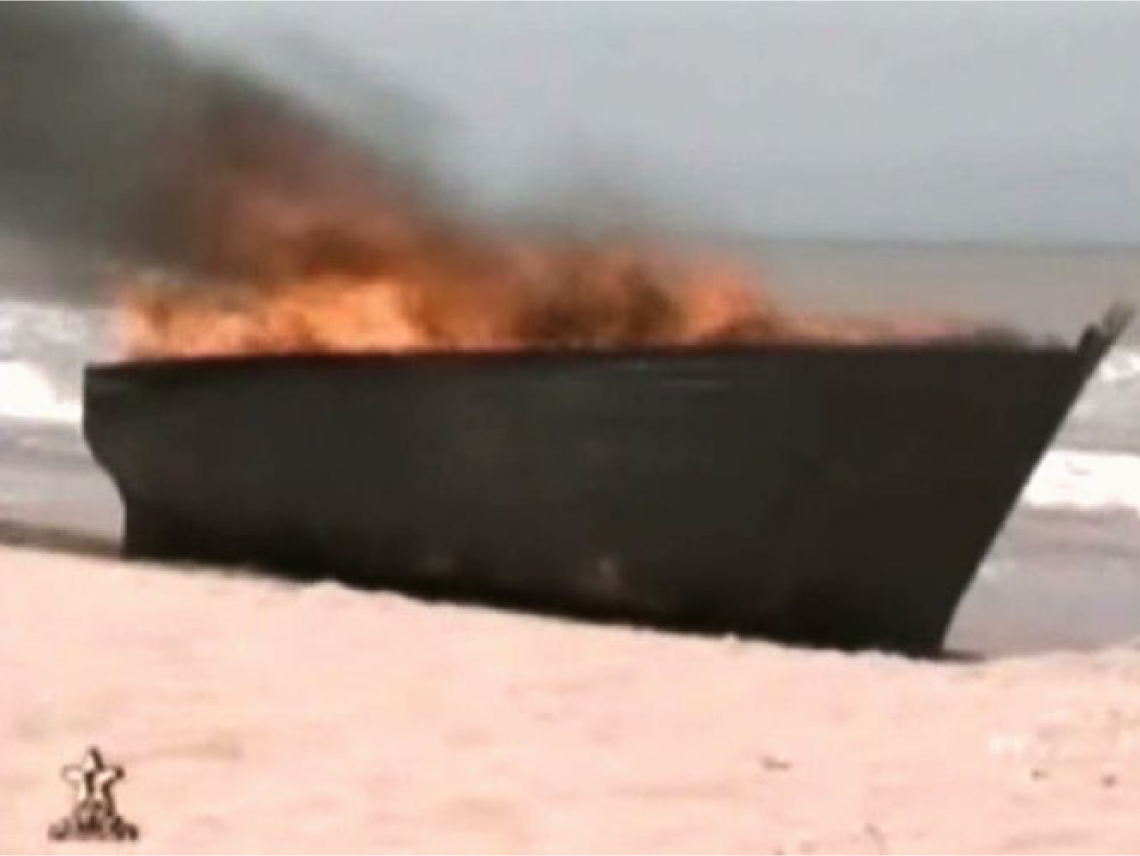
Still from Crossroads at the Edge of Worlds (Heller, 2006), showing a migrant’s boat being set ablaze by the Moroccan authorities.
If I describe these videos, it is not to publicize my work, but, rather, because they are in many ways exemplary of current ‘migration films’, which often revolve around the strategy of ‘mobilizing shame’: by unveiling conditions of exclusion and precariousness that are generally hidden, they hope to contribute to force the authorities to change their practices (Keenan, 2004; McLagan, 2007). Generally based on testimonies by precariously placed migrants concerning their dire condition both in Europe and at its margins, they are grounded in the belief that if these voices are heard and the political conditions that lead to them grasped by the public, this will lead to mobilization and, eventually, change in policy. 3 It is precisely this assumption that the IOM’s ICs challenge, demonstrating how, on the contrary, representations of suffering can be used to forward the very policies that produce precariousness and exclusion in the first place.
In July 2007, the Swiss newspaper, Le Temps, revealed that Switzerland had been funding the IOM’s ICs in Cameroon for US$150,000 – with an additional €5000 granted by the European Commission (De Graffenried, 2007, 2008 ). Soon the video clip that was the main component of the campaign was made available on the website of the Swiss German populist newspaper, Der Blick, where it was framed by the title, ‘This is how we scare Africans’ (Moser and Odermatt, 2007). The clip of a duration of 1 minute and 48 seconds depicts a young man calling his father in Cameroon from a phone booth on a rainy night in an unidentified Western city. While he assures his father that he is well, lives in a comfortable flat-share and has started his studies, we see flashes of his “reality”: his begging on the streets and being chased by the police. The dire reality of the young man not only contrasts with his lies but also with the comfortable, warmly lit middle-class living room in which we see his father sitting. The clip ends with the slogan ‘Leaving is not always living: don’t believe everything you hear’ (Figures 3 and 4). The campaign thus created a fictionalized representation of the very same inhumane living conditions I had documented and criticized in my video, NEM–NEE. Among the other elements accompanying the IOM’s clip (which I will detail further on) was a poster showing in the background a sinking fishing boat of the type used by illegalised migrants, and in the foreground a boot washed ashore on a sandy beach as the only remains of the boat’s passengers. The slogan on the poster deplores the deaths of migrants attempting to cross the EU’s maritime borders and, as the video shows, urges migrants to remain in Cameroon (Figure 5).

Video still from the IOM’s clip for the prevention of irregular migration in Cameroon, 2007, showing the comfortable environment in which the migrant’s father lives.
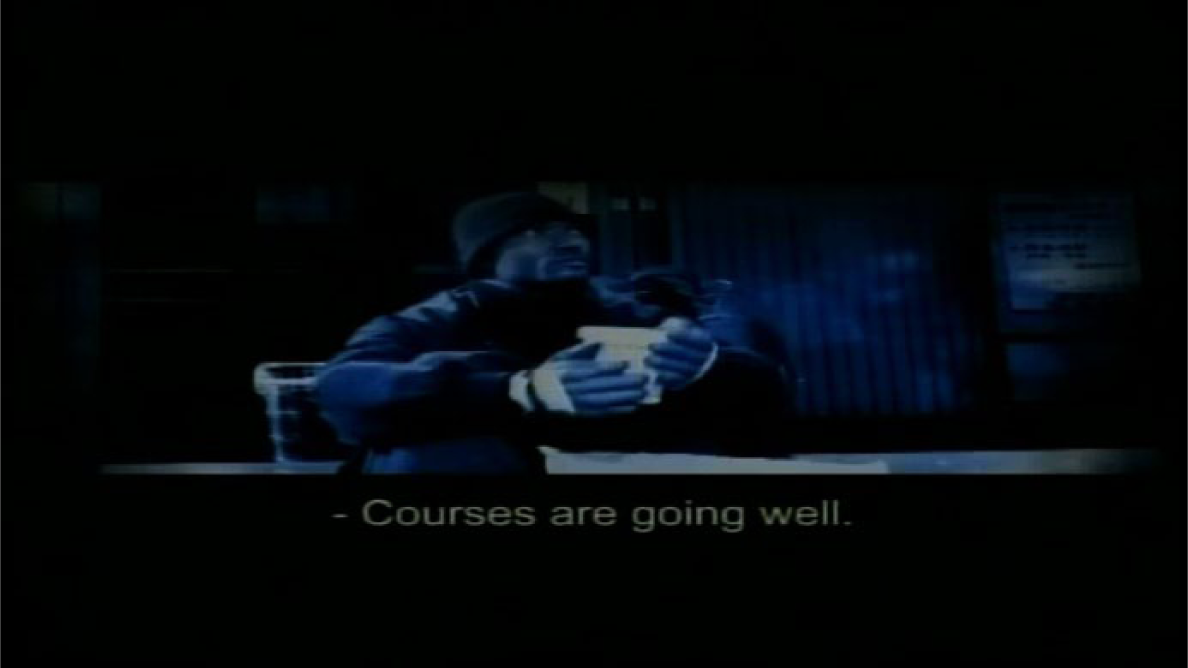
Video still from the IOM’s clip for the prevention of irregular migration in Cameroon, 2007, showing the ‘reality’ of the migrants’ precarious condition in contrast to the life as a student he describes to his father.

Poster of the IOM’s campaign for the prevention of irregular migration in Cameroon, 2007.
Images depicting both the precariousness of migrants in Europe and the risk of death at Europe’s frontier, which I had denounced in my films, were thus being used as deterrent representations geared at potential migrants. 4 The shocking spectacle of the suffering of migrants was used not to denounce, but to justify and deepen the migration regime that produced it in the first place, all the while covering it with a humanitarian varnish. ‘This is what will happen to you if you migrate to Europe’, ‘Don’t do it’, said the inverted slogans addressed to the excluded of globalization. But how precisely did these images contribute to migration management? In what follows, I seek to answer this question, starting by drawing a comparison with the historical practice of colonial educational cinema.
Shaping irrational subjectivities: Colonial precedents of educational cinema
Why would colonial cinema be of use to this inquiry? I believe that there are several levels of similarity that may shed a revealing light on the IOM’s ICs. Like the IOM’s migration management, the modalities of rule of colonial regimes blended to indiscernibility control and violence, on the one hand, and caring and improving, on the other (Mbembe, 2001: 31). The violence of colonization was legitimized by its self-proclaimed civilizing mission: raising the backward natives to the level of human beings, among others through education, and here cinema was central. In Signal and Noise (2008), anthropologist Brian Larkin provides a fascinating reconstruction of the deployment of cinema in the British colonies as of the 1920s, focusing particularly on Nigeria. 5 There, William Sellers, a health officer in the Nigerian government, started using films to illustrate health lectures. In 1939, a Colonial Film Unit was founded – with Sellers as director – and, by the end of the war, 20 mobile cinema trucks were equipped and over two million Nigerians were seeing mobile cinema each year. It is worth underlining a few characteristics of the practice of colonial cinema that echo with those of the IOM’s ICs.
First, although Africans were perceived as naturally inferior, it was nonetheless considered that by training them, they could produce modern rational subjects. The mobile film units showed documentaries, newsreels and fiction films, instructing the audiences in ‘modern’ modes of health, farming and civic participation, as opposed to ‘traditional’ practices. As I will show, this echoes the IOM’s belief that the migrants leave their countries based on ill-informed and irrational decisions and that, with better information on risks provided to them, they will not leave.
Second, the mobile film unit quickly formed a pattern of film distribution involving a complex of different media (Larkin, 2008: 84). The work of the mobile cinema started as soon as it arrived in a village, town or neighbourhood: the van would drive around announcing the night’s performance from loudspeakers and distribute leaflets. The crew would also meet the local elite before the projection, educating them so that they could in turn educate their people. The screenings were accompanied by speeches and more leaflets. Educational colonial cinema was thus a practice that comprised, but was not restricted to, the projection of the film itself. It was composed of multiple media forming what Larkin (2008) calls a ‘technological complex’ (p. 74) and which we might refer to within a Foucauldian conceptual framework as a ‘media dispositif’: a network of media practices designed to forward practices of governmentality. 6 The practice of each distinct media and their assemblage was carefully thought out in order to maximize the desired effect: educating backward audiences. Similarly, as we will see, the IOM’s video clip is but one element within a carefully planned assemblage of different media forms and networks, and the organization also relies on local actors to disseminate its message.
Finally, Larkin shows the agency the ‘natives’ retained within this practice. He mentions, for instance, the report on mobile cinema by British anthropologist Peter Morton-Williams, who noticed that the prevalence of educational documentaries and the slowness of their rhythm in order to accommodate African minds were often greeted critically by the audience, with shouts such as ‘where is Charlie!’, for they would have preferred the latest Charlie Chaplin movie (Larkin, 2008: 95). Unintended bursts of laughter were also recorded. This will be an important reminder for us that one should not assume that the IOM’s media governmentality actually succeeds in its planned effects since the perceptions it seeks to manage are far from docile. While I trace no direct link between colonial educational cinema and the IOM’s ICs, placing it as a historical reference will be useful to identify the contours of the IOM’s practice.
From integrated border management to perception management
It is now necessary to sketch current tendencies in migration management so as to understand how the IOM’s ICs operate within them. The tendencies in the management of the EU’s borders over the last 20 years have been well charted by a number of scholars. Simultaneously – or one might say consubstantially – to the emergence of a European citizenship and of freedom of movement for EU nationals, we have witnessed the increasing denial of the legal right to reside and work in the EU to non-EU nationals, particularly those constructed as radically other and deprived of economic resources. While ‘unwanted’ migration has continued despite legal denial, various forms of control have been deployed both within and without the borders of the EU. The state borders’ functions of selection and control have expanded without the legal borders of the EU through military patrols of member-states and of Frontex – the European border agency – and through the subcontracting of migration control activities to neighbouring countries – such as those of the Maghreb. The borders of the EU are thus not restricted to a juridical line, but operate within an expanding zone – both inward and outward – with no clearly defined limit. They come into being wherever their function of sorting is exercised. 7
This expansive logic was further heightened when the increasing importance of clandestine entries at the beginning of the new millennia led to new shifts within migration management. To respond to the failure of border controls, as of 2005, the concept of the ‘Global Approach’ to migration management was adopted by the EU and, as of 2008, that of ‘Integrated Border Management’ (Casas-Cortes et al., 2012; Pécoud and Geiger, 2010, 2012). Through these approaches, the attempt was no longer only to control the movement of people, but also to shape the wider processes that condition migration itself – such as wars, economic development and, as we will see, perception. This shift has thus entailed on the one hand a further expansion of migration management in space to encompass countries of ‘origin’ and ‘transit’, thus reaching a scale which is at least potentially global, and on the other it has led to a ‘globalization’ in terms of the processes that may come under the concern of migration management. In this shift, non-governmental and intergovernmental actors – such as the IOM – have had a crucial role to play in terms of enabling operations outside of national borders and in a wide range of fields (Kalm, 2012).
Set up in the aftermath of World War II, in 1951, the IOM’s main purpose was to find new homes for those who had been uprooted by the war. Today, the IOM has emerged as the next-to-largest intergovernmental organization in the field of migration after the United Nations High Commissioner for Refugees (UNHCR). As of January 2014, the IOM had 155 member-states, with a further 11 states as observers. It has more than 400 field locations and 7000 staff members who work on more than 2800 projects all over the world. While the IOM’s migration management activities are extremely wide and it is difficult to summarize them, Fabian Georgi and Susanne Schatral usefully distinguish five main areas of activities: (1) those directly supporting the movements of emigrants, migrant workers and refugees, such as resettlements and overseas job placements; (2) those building up the capacities of states for migration control; (3) activities directly implemented by the IOM itself, from the running of detention camps to assisted ‘voluntary returns’ and ICs; (4) humanitarian emergency operations after natural disasters and wars and (5) discursive practices resulting in a wide variety of publications and conferences (Georgi and Schatral, 2012). Through these activities, the IOM claims ‘to promote humane and orderly migration for the benefit of all’. However, and as this list of activities should suffice to indicate, this is a highly ambivalent mission: while it is states that constitute the IOM and fund its activities, it is clearly the imperative of ‘order’ that prevails over that of humanity.
The IOM’s ICs must be understood within the policy shift sketched out above, as a way to manage potential migration by shaping their perception and behaviour before they actually cross the legal boundaries of the EU. The first ICs were launched after the fall of the Berlin wall and in the hope of preventing a massive inflow from Eastern countries. From Romania (1992–1996) and Albania (1992–1995), ICs expanded to the Philippines (1997–1999), Vietnam (1998–1999) and Ukraine (1998). There has been an increase in ICs since 2000, accompanied by a shift in geographic focus towards Africa. In all these instances, the IOM operates as a service provider, establishing campaigns in response to the requests emanating mainly from Western states (Nieuwenhuys and Pécoud, 2007: 1677).
But why try to influence migrants’ perception, one might ask. The section dedicated to ‘managing perception’ on the IOM’s website is illuminating. Here, we read that ‘the decision to migrate is not entirely rational in the straightforward sense of evaluating pros and cons and then making a decision. It is governed by personal beliefs and desires, hearsay, wishful thinking, and stereotypes’.
8
The IOM thus considers that migration is irreducible to economic and political ‘push and pull factors’ and views subjectivity as a key factor in shaping this process. In response to the inaccurate beliefs and irrational decisions that the IOM believes dictate the decision to migrate, the IOM’s aim is to ‘provide migrants information as to legislations, thus allowing them to take an informed decision in function of possibilities and risks’. But the ambivalence that lies at the heart of its mission can also be found at work here. Immediately after describing its campaigns as aiming to enable ‘rational’ decisions for the betterment of migrants, the website states the extent to which they are geared towards the interest of the states: Governments can use mass information as a migration management tool to increase the impact of law-enforcement measures or of legislation. For example, legislated disincentives to irregular migration, whether through repatriation of illegal migrants or restrictive immigration measures, only serve their deterrent purpose to the extent that they are understood and recognized by prospective migrants.
As such, while the IOM claims to be ‘saving lives’ by making migrants aware of the risks involved, it also contributes to developing the very repressive regime that threatens those it attempts to ‘save’ in the first place. In the eloquent words of Antoine Pécoud (2008), the IOM ultimately attempts to ‘erect, in the minds of migrants, the territorial borders the EU has not succeeded in controlling on the ground’.
The IOM’s ‘media dispositif’ in Cameroon
We are now in a position to understand the rationale of the IOM’s ICs and may further attempt to understand the way they operate on the ground. ICs in West Africa operate according to a regional plan to combat irregular migration, defined in 2006 (IOM, 2006). Although they are adapted to local contexts, their stages and main messages are essentially the same. Laurentiu Ciobanica, IOM’s head of mass information activities, outlined these in an interview included in my video, Perception Management (2009) (Figure 6): There are fundamentally three stages. First, there is a preliminary research stage. We conduct research on what we call audience profiles. What we try to ascertain are demographics and psychographics: where the migrants come from, their social and economic background, but also what they think, what their perceptions and motivations are regarding migration. Once we have all this information in place, we analyse it and design the appropriate information materials and activities. So we decide on campaign slogans, main messages, what channels we will be using targeting whom? This is the second, relatively short phase of product design. Then we do a testing of these messages on migrant audiences, and then there is the implementation stage proper. In a graded scale, we would like to have an impact on information levels, then move on to perceptions, then attitudes, and ultimately try to influence, for the better, the behaviour of migrants.
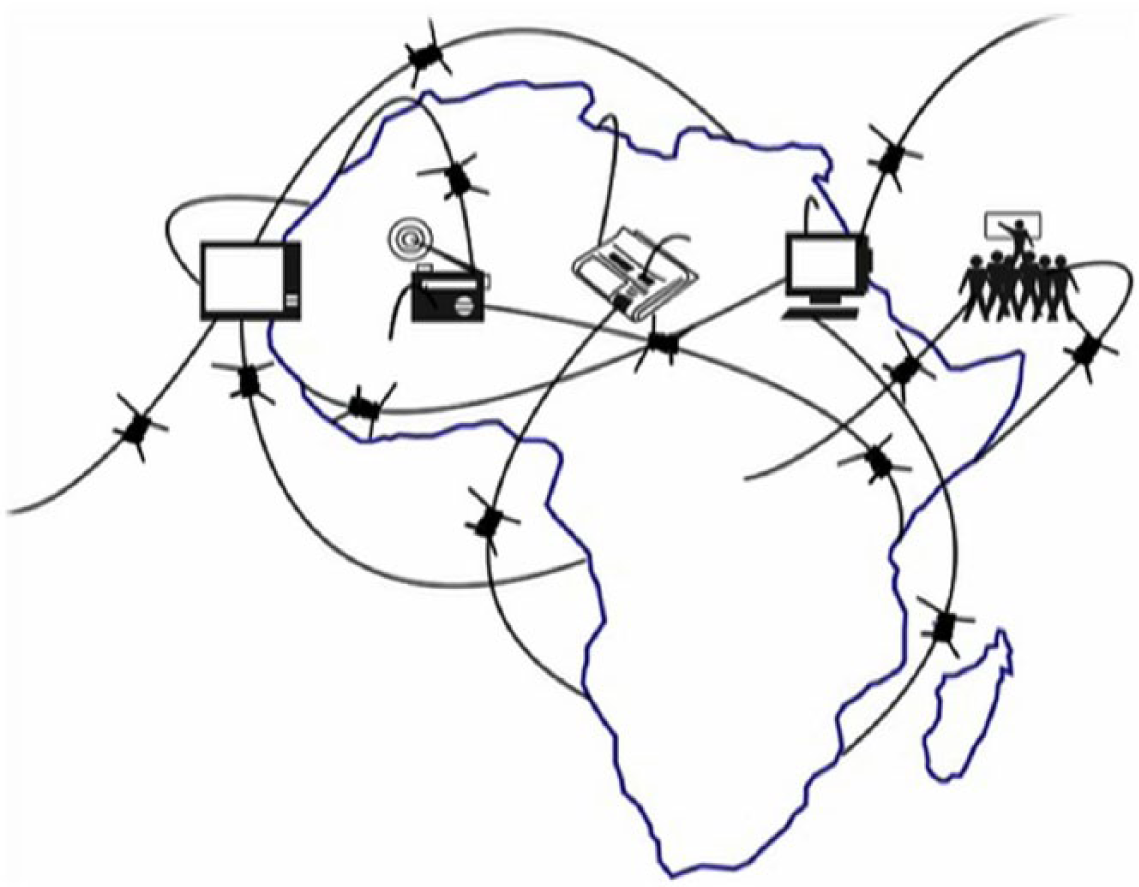
Graphic of the IOM’s media dispositif. Still from Perception Management (Heller, 2009).
In Cameroon, the 2007 campaign on which I focus here lasted 12 weeks.
9
During the first ‘research phase’, the IOM found that it was mostly the youth who emigrated. It decided to focus on specific cities – Yaoundé and Douala, but also smaller cities such as Bafoussam, Bamenda and Buéa. Laurent De Boeck, at the time acting as deputy regional representative of IOM Dakar and whom I also interviewed for my video, summarized his findings as to potential migrants’ perceptions: People believe it is easy to come to Europe, to gain direct access to a job, a beautiful car, a big garden, and being able to return money easily every month and entertain the entire family. And those people can then pay quite a lot of money to those smugglers, those networks, to get on boats, or to get on buses to cross the desert or the sea.
These perceptions, Ciobanica argued, are mostly formed through informal networks: Overall we found out that information is gathered by potential migrants where ever available, but first and foremost through informal networks. Migrants, diasporas, acquaintances. Then there is the large field of the mass media. Then official sources. Migrants collect data from all these networks, and in the measure of possible, we try to enlist the help of all these networks in our ICs.
This research into population, perceptions and media consumption patterns determined in turn the main messages of the campaign (which were essentially the same as for other West African countries): (1) the deadly dangers of irregular migration, (2) the possibilities of succeeding in one’s life in Cameroon and (3) the alternative of legal migration (Robert and Freudiger, 2009: 55). The multiplicity of information sources oriented the IOM towards what it refers to as a ‘media mix’ – what I rather call a media dispositif - ranging from video clips screened on national TV to debates in schools. In Cameroon, as elsewhere, the IOM relied on local communication agencies to do the actual product design, here the Douala-based communication agency MW Marketing Services (Robert and Freudiger, 2009: 55).
Following a short testing phase to which I will return below, the third ‘implementation’ phase was conducted. The video clip, which was the central element of the mass media outreach in Cameroon, was broadcast during 10 days (from 3 to 13 December 2007), just before and after the evening news on the national TV (CRTV) (Robert and Freudiger, 2009: 57). The clip aimed to produce an electroshock. By opposing the son’s ‘lies’ to stark images of ‘reality’, and using a ‘flash’ effect in the editing, it was supposed to wake Africans from their dream fantasy. The mass media outreach also involved radio debates and announcements, billboards throughout the city, and articles in newspapers were also used to target the well-educated youth.
But if mass media were used for their wide outreach capacity, they are not sufficiently accessible and trusted by IOM’s target populations and, as such, ‘you have to move through the informal’, as Ciobanica explained. The IOM thus printed leaflets and handbooks distributed in cybercafés and by local NGOs, consulates or schools. It also organized awareness-raising performances in educational institutions (Figures 7). These consisted in inviting NGOs or failed migrants to ‘inform’ the youth of the dangers of ‘irregular migration’. The IOM thus infiltrated both media and human networks, mobilizing a complex media dispositif reminiscent of the multiple and interwoven media deployed by the colonial film unit for its educational activities.
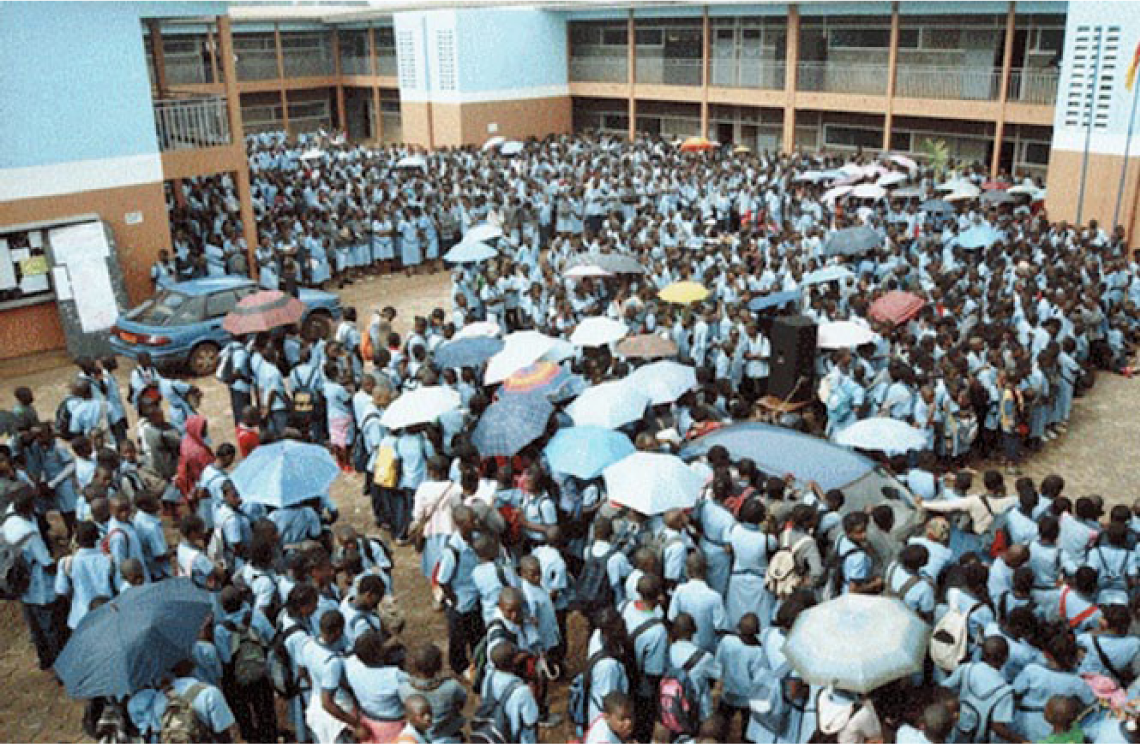
Awareness-raising performance in a school in Cameroon (IOM, 2007).
What remains outside of Ciobanica’s tripartite phase description is the phase of evaluation of the ICs’ effects. In Cameroon, there was none, and this appears to be the case elsewhere as well. In an interview, Odile Robert of the OIM in Berne (Switzerland) explained, It is not possible for us to evaluate the real impact of this campaign. One would need to produce a comparative analysis of the understanding of the phenomena of migration before and after the campaign, which was not planned, and the effective result residing in any case in the impossible comparison of the number of clandestine departures … (Robert and Freudiger, 2009: 58)
The actual effects of these campaigns are probably quite limited. In a context in which information circulates through multiple different networks, which vary in scale from the local to the global, controlling information – let alone its reception – seems an impossible task. While I have not had the chance to lead interviews with IOM audiences, Moise Merlin Mabouna, a director from Cameroon living in Berlin at the time, reported to me that his friends had seen the IOM’s clip projected during the halftime of a football game. He recounted they burst into laughter and exclaimed, ‘These whites are crazy if they think this will be enough to stop us from leaving!’ Odile Robert similarly recalls being troubled by the laughter observed in public during the test phase of the clip (Robert and Freudiger, 2009: 59). These bursts of laughter, which also startled the observers of colonial education cinema, should be sufficient to hint at critical viewing and agency, for laughter has been long used by West African populations as a form of resistance to the propaganda of their authoritarian regimes – colonial and postcolonial (Mbembe, 2001).
If laughter points to the limits of ‘managing perception’, one should also question the very assumption that, should perception of danger be altered, migrants would not leave. In a detailed research led through sustained interviews of aspiring migrants in Senegal, Jørgen Carling and Maria Hernandez Carretero found that people leave despite being well aware of the risks of migrating across the sea, but that risk information is filtered through the prism of life opportunities. With the economic situation for the youth already amounting to a form of social death, they prefer taking their chance at seeking a better life elsewhere, even at the risk of their lives (Carling and Hernandez Carretero, 2012). It is thus highly unlikely that any amount of information will change migrants’ behaviour should these social conditions fail to change in the first place. While this itself is unlikely to occur in the immediate term, the only solution to prevent the deaths of migrants at sea and the conditions of illegality, precariousness, exclusion and exploitation they face on European soil is to grant migrants visas so that they may migrate legally. This, however, is not on the EU’s or the IOM’s agendas.
Conclusion
In this conclusion, I would like to come back to some of my initial questions as a aesthetic practitioner. The use of images of suffering as a tool to govern the desires of migrants should lead to important questions for politically engaged aesthetic practitioners. If oppression increasingly comes cloaked in the language of human rights and development, does this mean that we should no longer denounce the violation of the rights and lives of migrants? My answer would clearly be ‘no’. But we do need to think strategically. If we ‘uncover’ that which is already put on display by the state itself, we risk at best being ineffective, at worst becoming complicit, despite ourselves, in the spectacle of power.
In the collaborative project, ‘Forensic Oceanography’, I have been involved in since 2011 and which aims to document the violations of migrants’ rights at sea and understand the conditions that lead to them, we have developed the concept of ‘disobedient gaze’ to guide our practice. While state agencies attempt to shed light on acts of clandestine mobility, but leave the violations they commit in the shadows, our aim must be the opposite: to redirect the light of surveillance towards the act of policing itself (Heller and Pezzani, 2014). However, the line that divides the gaze of policing and that of a critical right to look at the sea is blurred and always moving, and, as the example of the IOM’s campaigns demonstrates, one needs to be alert to ambivalences and unintended complicities.
But while documenting violations and death is an important aim, it still fails to prevent these incidents from occurring in the first place. While crossing the maritime boundaries of the EU remains fraught with risk, should one not, as the IOM attempts to do, inform migrants to dissuade them from risking their lives? I have shown how such an endeavour has little chance of succeeding in the light of the unchanged social, economic and political conditions of the populations that resort to clandestine migration, all the more so when such information is disseminated by mistrusted international organizations and governments. However, recently, I have collaborated with the organizations, Boats4People, the Forum Tunisien des Droits Economiques et Sociaux (FTDES) and WatchTheMed, in drafting a flyer addressed to potential migrants titled ‘Risks, rights and safety at sea’. 10 It makes two important shifts in relation to the IOM’s practice: first, it does not consider migrants as irrational actors whose perception one should manage, but as equal subjects whom one may address based on the knowledge of the risks they take at sea; second, while the flyer does inform migrants on these dangers, it takes the starting point that many people will leave despite knowing them and, as such, it provides migrants with information as to key security measures and their rights at sea. This information will not make their crossing safe – only visas allowing them to embark on safe transport means would do that – but might save their lives. This is not the panacea, but such information is certainly less complicit with the EU’s deadly migration regime and has more chance of actually helping save lives than the IOM’s campaigns.
Footnotes
Funding
This research received no specific grant from any funding agency in the public, commercial or not-for-profit sectors.