




Abstract
Frame building has been described as the flow of frames from political actors to journalists and, thus, to news articles. One influence factor to be considered in the area of framing is media input, which consists of materials that political actors send to newsrooms to facilitate their work while influencing the news. To find out to what extent the government’s frames for the Merida Initiative influenced news frames, we identified the issue-specific frames of the initiative, measured their presence in newspapers and media input, and conducted eight cross-lagged correlation analyses. On seven occasions, the correlation went above the baseline. For this reason, it was concluded that the salience of frames in media input had a significant role in the salience of frames in news.
Introduction
Frame building is defined by Hänggli (2012) as the process in which the frames of political actors are passed to journalists and, thereafter, to media content. This is a part of framing research which has been relatively neglected – at least in comparison with other framing research, such as frame analysis and frame setting in individuals. In this area of framing research, many relevant influential factors on news frames can be considered. One of these factors is the media input – alternatively called information subsidies (Berkowitz and Adams, 1990). Media input consists of all the materials, such as press releases, press conferences, interviews and statements, which political actors deliver to newsrooms to facilitate their work and, at the same time, influence their news frames.
Since the 1970s, media scholars have documented the prominence of governmental sources in news media; in particular, Sigal (cited by Shoemaker and Reese, 1996) found that government sources accounted for three quarters of all news sources in The Washington Post and The New York Times. This has been proved to be no different in Latin American contexts, where Echeverría-Victoria (2012) documented the primacy of governmental sources in Mexican news coverage of poverty. Inside government, the most important news influencer is usually the president or prime minister (Glazier and Boydstun, 2012).
In this article, we go further by inferring the influence of government frames (as found in their media input) in the news frames for a controversial issue (the Merida Initiative). To accomplish this, a measure of causality had to be applied; in this case, cross-lagged correlations were calculated to formally infer causality from media input frames to news frames.
Frame building as part of the framing process
Framing theory describes the process of framing through which the selection or the position of a piece of information presented to a public or an individual renders a differential in their attitudes or behaviour with regard to an issue. In spite of plenty of evidence for effects related to framing and their relevant role in the formation of public opinion, the development of an agreement between communication studies scholars about the conceptual definition of a frame has been difficult. Nonetheless, different definitions posited by authors have coincided in describing frames as the result of selection or emphasis. Entman’s (1993) definition posits that To frame is to select some aspects of a perceived reality and make them more salient in a communicating text, in such a way as to promote a particular problem definition, causal interpretation, moral evaluation, and/or treatment recommendation for the item described. (p. 52)
Meanwhile, for De Vreese (2005), ‘a frame is an emphasis in salience of different aspects of a topic’ (p. 53). Scheufele (1999) and, later, De Vreese (2005) argued that framing should be described as a comprehensive process. Their theoretical framework distinguished different stages of a broad framing process (the ‘model of framing as an integrated process’), which comprises (1) the construction of frames (frame building), (2) the establishment of frames (frame setting) and (3) the consequences of framing at the individual and societal levels (De Vreese, 2005). These stages are located in three research objects: news production, news content, and individuals in their attitudes; forms of behaviour; and ways of processing information.
Scheufele (1999) classifies framing research into two categories: (1) one that studies the frames in communication as a dependent variable (the independent variables being all the organizational and contextual factors influencing the presence of frames) and (2) one that studies the frames in the audience (frames in thought) as a dependent variable (influenced by the way the media frame issues).
The first category of framing research is called frame building. Hänggli (2012) defines frame building as the study of the flow of frames from political actors to journalists, in which frames in mediated communication (i.e. frames in news content) are the dependent variable. 1 Authors including Hänggli (2012), Dimitrova and Kostadinova (2013), Bolsen (2010), Snow et al. (2007) and Borah (2011) agree that this has been a neglected area of the integrated model of framing. As evidence of the latter, Borah (2011) found, after a systematic analysis of literature, that just 2.3 per cent of the framing articles published between 1997 and 2007 focused on the frame-building process.
Much of the research on frame building has focused on election campaigns (Castelló and Montagut, 2011). Examples of these studies are Hänggli and Kriesi (2012), Lengauer and Höller (2013) and Dimitrova and Kostadinova (2013). However, frame-building studies focused on specific issues can also be found, such as energy conservation (Bolsen, 2010) and biotechnology (Nisbet and Lewenstein, 2002) in the United States, impunity in public affairs (Zhou and Moy, 2007) and language policy (Kee et al., 2012).
As for types of research designs, we can find studies of frame building that are either longitudinal (Bolsen, 2010; Dimitrova and Kostadinova, 2013; Kim et al., 2010; Nisbet and Lewenstein, 2002) or comparative (Dimitrova and Strömbäck, 2012; Sheafer and Gabay, 2009; Snow et al., 2007). Longitudinal studies analyse representative samples of several years of media coverage (usually between 5 and 20 years), which make it possible to observe changes in the frames; these changes can be attributed to contextual or organizational variables. Comparative studies analyse representative samples of journalistic coverage for shorter periods (from days to several months) in various media. The decision of which media to compare depends precisely on the independent variables chosen; examples of variables include the country of origin, political orientation of newspapers and type of newspaper.
Most frame-building studies are quantitative because they often have explanatory research questions. However, there can also be mixed research designs (in which triangulation is performed to verify the assumptions) or qualitative designs (in which the study explores new variables). Examples of qualitative frame-building studies include De Vreese (2003), Kothari (2010), Castelló and Montagut (2011), Marland (2012) and Parmelee (2013).
Media input as an influence on news frames
The focus on variables relating to political actors arises from considering media content as a kind of arena where different political groups face each other and try to impose a discourse or their interpretation of a problem (Hänggli, 2012). From this point of view, ‘it is political actors who introduce the most important frames into the public discourse’ (Hänggli, 2012: 3). One factor of this kind is the frequency of frames in the media input released by political groups, also called ‘promoted frames’ by Hänggli (2012). The term media input refers to documents of public communication such as press releases, advertisements, announcements, speeches, and so on, created by organizations or political actors and aimed primarily at media organizations to encourage and facilitate the coverage of issues of interest to these actors as well as to spread and promote their point of view on an issue.
According to Hänggli (2012), the frequency of frames in media input influences the frequency of the same frames in the media content. Hänggli (2012) analysed the frames in the media input of advocacy groups and government as well as the frames in news stories. Her findings showed that the power of the organization influences the presence of promoted frames in news stories, while the frequency with which the organization promotes frames in the media input affects the frequency of frames in news stories.
Bolsen (2010) also analysed public service announcements from the government. This study found that the impact of the frames in public service announcements in news frames is subordinated to contextual events – at least in the domestic coverage of energy crises in the United States.
The influence of the president or head of government as a source is attested to by academics and practitioners (e.g. Entman, 2003, 2007). Hänggli (2012) referred to the role of president or prime minister in frame salience in her ‘multiplication hypothesis’ (p. 14); in this study, it was concluded that the presidency has a special role in the frequency of frames: ‘the minister’s frames are met with higher response by the media than the messages of the other actors’.
Glazier and Boydstun (2012) go further by developing a series of hypotheses about the relationship between news frames and presidential frames. These are based on the identification of the different incentives that influence the president and media organizations and end up producing, according to these authors, patterns and cycles of alignment between both types of frames.
With reference to the American media system, Glazier and Boydstun (2012) note as the first incentive of the president, the objective of being re-elected (or, at least, concerns about his or her succession), which leads the presidential office to launch positive frames and focus on issues that favour the president. The second incentive of the president is to launch consistent messages to ensure that the central message reaches the audience. This is in contrast to media organizations, which have, first, incentives to launch negative news, and, then, incentives to continuously launch new messages with different frames to elicit in the audience feelings of both novelty and objectivity.
According to Glazier and Boydstun (2012), the president launches frames with the previously mentioned characteristics before an event or crisis, regardless of factors such as the level of popular support, the presence of critique by political elite or the development of events. Again, media organizations act differently to the president on these occasions: according to Glazier and Boydstun (2012), the media are much more sensitive to the factors mentioned. One reason for this is the lucrative nature of media companies. For Glazier and Boydstun (2012), this makes them follow what the elite and the public say, to ‘stay in line with the public’s mood’ (p. 433). One consequence of this is that it is difficult for the media to spread critical news in the absence of elite criticism (Glazier and Boydstun, 2012). This notion about how journalists use contact with their sources to ‘index’ the climate of opinion of the political elite and decide whether an opinion is or is not important is rooted in the indexing hypothesis posited by Bennett (1990).
Using this theoretical framework, Glazier and Boydstun (2012) tested three hypotheses: (1) presidential frames and news frames follow different dynamics; (2) the president focuses solely on favourable frames, while media organizations launch a wider variety of frames; and (3) the alignment between presidential frames and news frames decreases as the crisis passes.
As with the presidential factor, literature and practitioners point out how the power of the political organization affects the level of attention that the media pays to the issues promoted, as well as the fact that governmental organizations are the most favoured in this regard (Bennett, 1990; Entman, 2007). Hänggli (2012) labels this idea as the ‘power bias hypothesis’ (p. 3).
The president and the federal government as a news source in Mexico
The above-mentioned features of the relationship between media and political actors may also apply in the Mexican context, the object of study in this article. In this regard, referencing his experience as a foreign journalist in Mexico, Lichfield (2000) stated that Mexican journalism is affected by declarationitis, that is, an excess of news items based solely or primarily on statements made by officials. For Márquez (2012), this is ‘a reporting practice that ponders the fragment of speech over its context, research or verification process’, which ‘predominantly favors official sources and their speeches and verbal actions [because they are assumed] as a natural element of news’ (p. 98). According to Márquez (2012), this practice, typical of Mexican journalism before the political alternation starting in 2000, continues today even though, in their discourse, journalists show greater attachment to liberal journalistic values.
As suggested by Dresser and Fuentes-Beráin (1998), with regard to government officials, Mexican journalists particularly value what is said in Los Pinos, which is the name of the official residence of the president of the republic. This is explained by the characteristics of Mexican presidentialism, in which the president has broad powers, established both formally and informally. Prior to the political alternation that started in the 2000s, in Mexico, a single-party regime prevailed: There was a single candidate registered in the 1976 presidential election and it was not until the political reform of 1977 that left-wing parties were legally incorporated into the national political spectrum. After its use as a political slogan in the 1910 Mexican Revolution, an important feature of the Mexican political system had been the principle of non-re-election of the president and all popularly elected officials. As Lawson (2002) explains it, politicians who coveted positions of power within the public administration only had to be members of the official party, wait for their turn to be candidates and remain loyal to their leaders. Thus, although there was no re-election, the – informal – faculty that allowed the Mexican president to choose the next presidential candidate from his party (the infamous dedazo) was well known. This candidate would undoubtedly be – within this non-competitive electoral system – the president’s successor.
There was also a control of media content from the presidency and from the interior ministry, by force and through more subtle mechanisms of influence in news production, such as the granting of broadcasting licences and the governmental purchasing of advertising, which is often the main – in some cases, the only – source of revenue for media organizations in the country.
Even with the increase of independence in Mexican media towards the end of the 20th century, governmental news sources still tended to predominate in the content. Echeverría-Victoria (2012) found that the government was the most common news source, in a sample of news stories about poverty that included contents from the newspapers, El Diario de Yucatán, La Jornada, El Universal, El Norte, La Voz de Michoacán, El Pulso and Síntesis. Also, news items based on governmental sources tended to be news briefs instead of feature articles, suggesting that sources of this kind appear in the content as a result of ingrained routines. Meanwhile, Rodelo (2013) reported that there were more news stories featuring state actors than news stories featuring civil society actors in the coverage of the 2011 discussion of the National Security Act.
Context of the study
Violence related to organized crime escalated in Mexico during the presidency of Felipe Calderon (2006–2012). His government took the war on drugs as a theme, and early on, the international cooperation project called the Merida Initiative was promoted both in Mexico and the United States and was eventually implemented.
The Merida Initiative is a series of international aid contributions from the United States to Mexico and other central American countries affected by drug violence. It provided assistance in kind, consisting primarily of vehicles, training, intelligence and equipment, all for the purpose of helping the fight against organized crime in these countries (Secretaría de Relaciones Exteriores, 2007). In a period when violent events began to capture the attention of the Mexican media (Hernández-Ramírez and Rodelo, 2010), the Merida Initiative was a news issue that included definitions of the security problem in Mexico, discussions about ways to fight drug trafficking in Mexico, debate about the risks and benefits of the United States’ involvement and arguments about possible interventions. Critics of the project frequently evoked its resemblance to Plan Colombia and the violation of Mexican national sovereignty by allowing greater American involvement in the issue of combating drug trafficking. Meanwhile, the project’s promoters considered overcoming the historical mutual distrust between both countries as being essential to this kind of bilateral cooperation.
Few studies have dealt with the media coverage and framing of drug trafficking in Mexico. For instance, Rodelo (2014) identified the main topics of news items regarding drug trafficking and organized crime in the Mexican media, also recognizing the prominence of episodic acts of violence and/or crime. This emphasis was also found in the framing of cannabis in Spanish newspapers (Ballesteros et al., 2015), as episodic stories prevailed over thematic items.
In a frame analysis of news coverage of the Merida Initiative, Rodelo and Muñiz (2016) inductively identified four issue-specific frames: (1) expenses for combat, which highlights the monetary costs and the characteristics of the interventions proposed in the initiative; (2) shared responsibility, which stresses the thesis of acknowledging responsibilities and working bilaterally to combat drug trafficking and terrorism; (3) risks for the nation, calling attention to the threats to Mexican sovereignty and Merida’s resemblance to the flawed Plan Colombia; and (4) rights and infringements, which alludes to human rights abuses, the ‘collateral damage’ and other detrimental effects of the war on drugs. The role of the government in the diffusion of news frames, however, remains unexplored. Therefore, taking the issue of the promotion and adoption of the Merida Initiative as our case study, we proposed the following research question:
Method
Content analysis of news items
The sample of news stories included content from three newspapers with different political orientations: El Universal (n = 230), La Jornada (n = 282) and Reforma (n = 244) published between March 2007 and June 2008. The news items were gathered using the phrases ‘Iniciativa Mérida’, ‘Plan Mérida’, ‘Plan México’ and ‘Iniciativa Regional de Seguridad’ in the Emerging Markets Information Service database and on La Jornada’s website.
The news stories about the Merida Initiative were content analysed using a codebook based on the method proposed by Matthes and Kohring (2008). This method operationalizes the definition of frame provided by Entman (1993) by taking into account the four possible elements emphasized in a frame: (1) a problem definition, (2) a causal interpretation, (3) a moral evaluation or (4) a recommendation. Thus, several items were designed for each one of these frame elements, trying to exhaust all the possible options for the Merida Initiative issue. All items were dichotomous. For example, one of the items to measure the definition of the problem was, ‘Is the resemblance (or lack of it) between the Merida Initiative and the Plan Colombia mentioned in the story? (1 = yes, 0 = no).’
Thirteen undergraduate students participated in the coding and data capture. Intercoder reliability was measured in a random sub-sample consisting of 10 per cent of the units of analysis and was also coded by students. The average per cent agreement was .90 and the average Cohen’s kappa was .68. According to Neuendorf (2011), for nominal variables (as in this study), most authors consider results of kappa above .60 to be acceptable.
Content analysis of media input
The sample of government media input included materials such as press releases and conference and interview transcriptions on the subject of the Merida Initiative published between May 2007 and June 2008. They were gathered by searching for the string (‘Plan (Mexico OR Merida)’ OR ‘Iniciativa Mérida’) on the websites of the Office of the President of the Republic (Presidencia de la República) and the Secretary of State (Secretaría de Relaciones Exteriores). 2 The unit of analysis was the paragraph (n = 117).
The media input was content analysed with the same codebook used in the analysis of news stories. The coding was done by three assistants at the Laboratory of Public Communication (Lacop). To measure intercoder reliability, the same three coders analysed a random sub-sample of 21 per cent of the units (taking care not to assign to the coders units already analysed by them). The results obtained had an average per cent agreement of .98 and an average kappa of .92.
Identification of frames in the samples of news stories and media input
A principal components analysis (PCA) using 26 variables was conducted on the sample of news stories after making sure the two necessary criteria for this test were met: Kaiser–Mayer–Olkin (KMO) index = 0.690 (the recommended value is 0.7) and a significant Bartlett’s sphericity test value (p < .001). The method of the PCA was by varimax rotation with Kaiser normalization. Four factors were required a priori, following a previous analysis that identified four issue-specific frames in the same sample by conducting a hierarchical cluster analysis using Ward’s method (Rodelo and Muñiz, 2016).
The results of the PCA are presented in Table 1. The rotated components matrix omits values lower than .27 and the items representing each frame are underlined. The four components (frames) explain 36.4 per cent of the variance. The frames were named (1) expenses for combat, (2) risks for the nation, (3) shared responsibility and (4) rights and infringements.
Principal components analysis of news stories (n = 756).

Source: Rodelo & Muñiz.
Values below 0.270 were omitted. The variables representing each of the frames are in bold.
Once the four news frames were inductively identified and their presence in news items scored, the presence of the same four frames in the media input was also scored. Cronbach’s alpha scores were calculated to determine the internal consistence of each frame scale in the news stories and media input samples (Table 2): For news stories, expenses for combat had a score of .745; risks for the nation, .668; shared responsibility, .641; and rights and infringements, .492. Meanwhile, for media input, expenses for combat had a score of .699; risks for the nation, .506; shared responsibility, .688; and rights and infringements, .609. Literature suggests .5 as the minimum value of alpha (Gliem and Gliem, 2003). Therefore, due to the low internal consistence of rights and infringements in the news stories sample, and risks for the nation in the media input sample, results derived from their use must be taken with caution. The four scales were used to obtain metric values indicating the strength of the presence of the four issue-specific frames in each news story (n = 756) and of the government’s media input (n = 117). After scoring the frames’ presence in news stories and media input, the next step was to analyse the relationship between the frames found in both sources.
Internal consistency of the four frame scales in samples of news stories and media input.
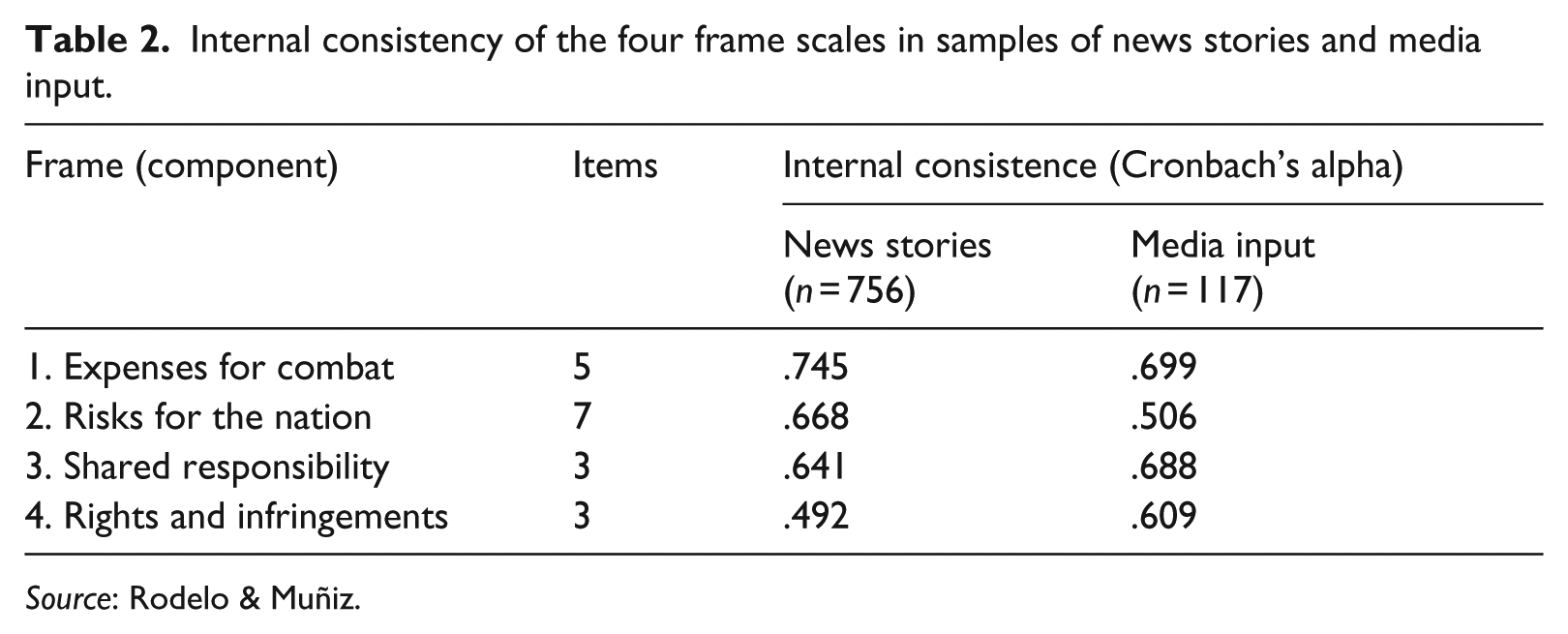
Source: Rodelo & Muñiz.
Results
After identifying the issue-specific frames of the Merida Initiative, we measured their presence at eight different moments, both in the newspapers’ content and in the media input. These eight moments were selected because there were releases of information subsidies about the Merida Initiative by the federal government in those days and because there was enough data to document the frames in newspapers and media input after the media input release. Two moments occurred in October 2007 (22 and 29), two in April 2008 (22 and 29), two in May 2008 (8 and 15), and two in June 2008 (2 and 9). The design adopted assumed that the frames in the media input released in ‘Time 1’ could have an effect in the frames appearing in the news stories in ‘Time 2’ (the next 2 days) – for example, in the analysis of 22 October 2007, ‘Time 1’ is 21 to 22 October, and ‘Time 2’ is 23 to 24 October.
With these data series, we conducted eight cross-lagged correlation analyses. Cross-lagged correlations can be used to infer causal relationships between variables: A relatively high correlation between values of an X variable ‘before’ and a Y variable ‘after’ (X1Y2) supplies one of the requirements for inferring causality: temporality (Clegg et al., 1977).
The cross-lagged correlation X1Y2 must surpass a baseline to be considered high enough and, thus, leads to the conclusion that the independent X variable (presence of frames in media input) influenced the dependent Y variable (presence of frames in newspapers) during the analysed period (Figure 1). Because of the available data, the cross-lagged correlations analyses were designed to only evaluate the influence from media input frames to news frames, and not vice versa.
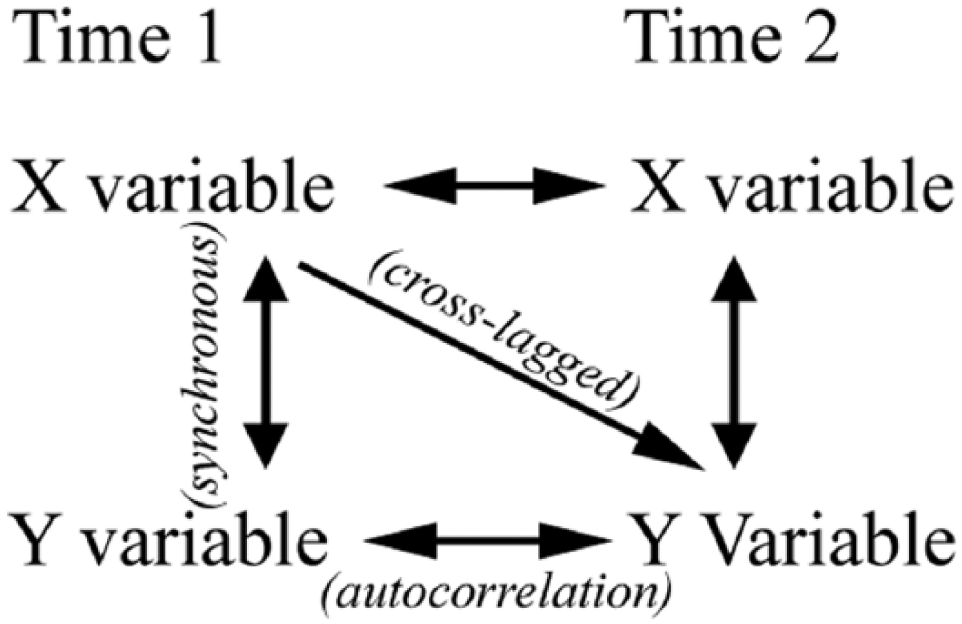
Design of cross-lagged correlations.
Lopez-Escobar et al. (1998) defined the Roselle–Campbell baseline as ‘the level of correlation to be expected on the basis of the autocorrelations and synchronous correlations alone’ (p. 233). Its equation is
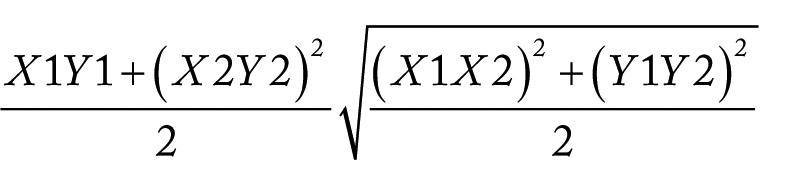
which produces a score between −1 and 1 (Qian, 2009).
The data entered into the analysis is showed in the Appendix 1. The metric values measure the presence of four issue-specific frames in media input (X) and news stories (Y) in 2 times: before (‘Time 1’) and after (‘Time 2’) the release of the information subsidy. From these data, synchronous correlations (X1Y1 and X2Y2), autocorrelations (X1X2 and Y1Y2) and cross-lagged correlations (X1Y2 and Y1X2) were calculated so as to be able to compare X1Y2 and the baseline (see diagram of the design in Figure 1). Kendall’s tau-b coefficient was used to calculate the correlations.
As depicted in the Appendix 1, the four issue-specific frames of the Merida Initiative identified in the sample appeared in both media input frames and newspaper frames at the 8 times analysed. The most resonant frame in the government’s media input across the eight moments was the ‘shared responsibility’ frame, followed by ‘expenses for combat’. ‘Shared responsibility’ stresses the need for a bilateral collaboration effort between Mexico and the United States by acknowledging both countries’ responsibilities; meanwhile, ‘expenses for combat’, as its name implies, focuses on describing the military spending and the nature of the – mostly – punitive remedies proposed. In contrast, newspapers highlighted different Merida Initiative frames in the ‘before’ time (‘Time 1’) across the eight moments.
The results of the eight cross-lagged correlation analyses performed are shown in Figure 2. As mentioned before, to infer causality, the cross-lagged correlations had to surpass the Roselle–Campbell baselines, also specified in Figure 2. In those cases, cross-lagged correlations were highlighted in bold numbers.
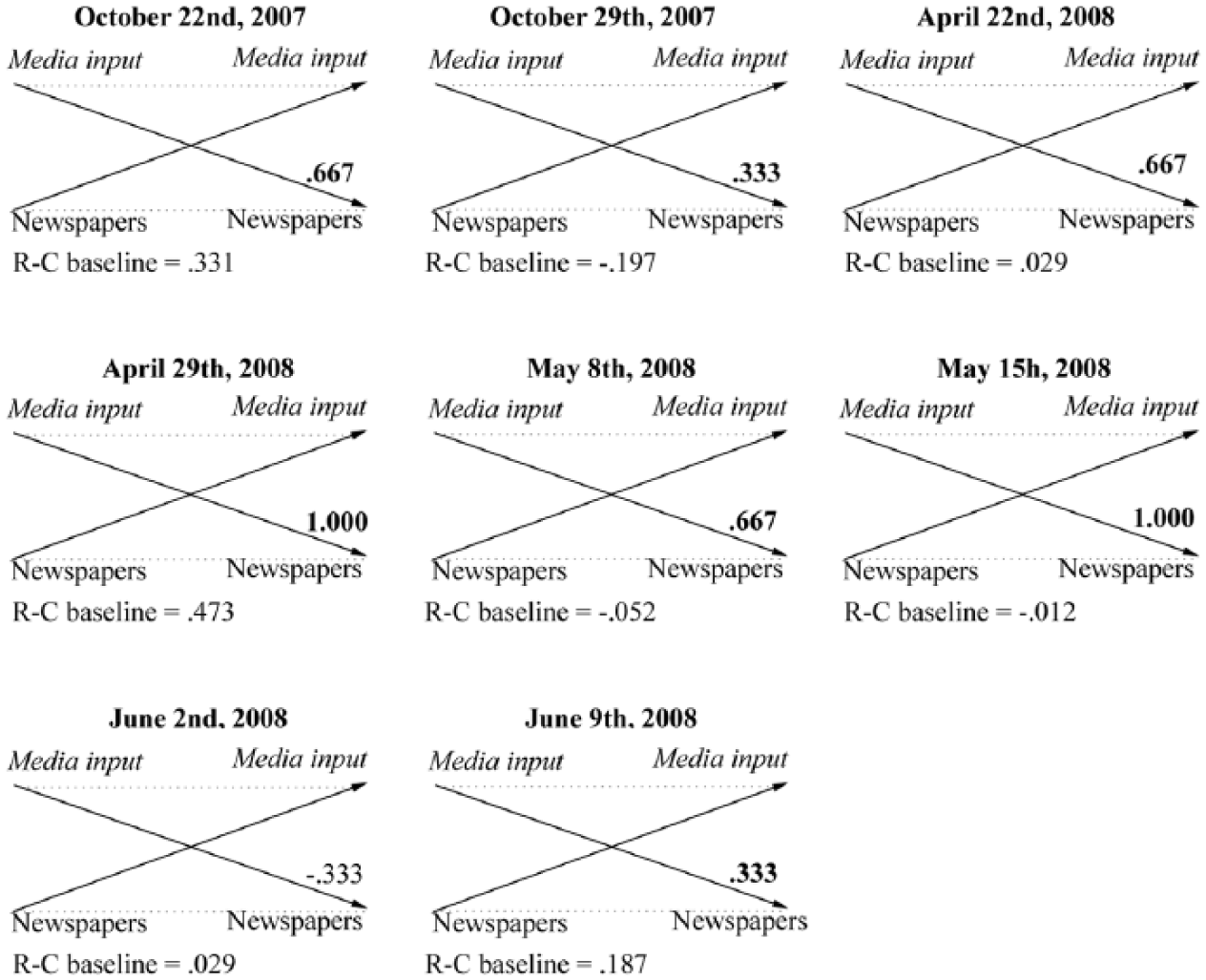
The results of the eight cross-lagged correlation analyses performed.
The answer to the research question (‘To what extent did the federal government’s frames for the Merida Initiative influence the frames in newspapers?’) is that at the eight moments analysed, on seven occasions, the cross-lagged correlations went above the Roselle–Campbell baseline, showing that, at these moments, the newspapers replicated the same Merida Initiative frames highlighted in the government’s media input (and neglected those least present) in the 2 days following the media input release. The two greater cross-lagged correlations (29 April and 15 May 2008) reached a tau-b coefficient of 1.0. The only moment when the cross-lagged correlation (tau-b = −.333) did not surpass the baseline (.29) was on 2 June 2008. In short, on seven out of eight occasions, an immediate influence of the government’s media input frames over news frames can be inferred.
Conclusion
The four issue-specific frames of the Merida Initiative were present in newspaper stories on all eight occasions. The frame most associated with the government’s policy towards the Merida Initiative – shared responsibility – was not particularly prevalent in the newspapers before the launch of information subsidies (‘Time 1’). Instead, all four Merida Initiative frames were highlighted by the newspapers at ‘Time 1’ on different dates. It was after the release of the government’s media input that shared responsibility arose in the newspapers’ content while the presence of frames critical of the initiative – risks for the nation and rights and infringements – declined. This is clearly consistent with Glazier and Boydstun (2012), who asserted that presidents, in general, focus solely on favourable frames, while media organizations launch a wider variety of frames.
The cross-lagged correlation design allows us to conclude that the salience of the governmental frames in the media input for the Merida Initiative influenced the salience of newspaper frames about the initiative at most of the moments analysed. These results are in line with Hänggli’s (2012) assertions about the presence of news frames being influenced by the organization’s power and the frequency of news frames being influenced by the frequency of frames in the organization’s media input.
The fact that effects were not inferred at all eight moments brought into the analysis drives us to describe the influence of government information subsidies as significant but certainly not unlimited. This has to be highlighted because the government’s power to promote frames in the mainstream media is frequently overemphasized in public discourse, as is the presumed homogeneity of news information. However, further research is still needed to (1) test the hypothesis that presidential frames are met with a greater response from the media than the messages of other actors, (2) describe how much greater the response influenced by the presidential source is in comparison with those influenced by different governmental and non-governmental sources and, finally, (3) associate these differences in response with factors such as the size of the organization and the amount of resources at its disposal.
The information subsidies published on the Internet by the Mexican government are only the visible part of an integrated communication effort including other public relations tactics – some of them possibly unethical – in an unbalanced relationship between a powerful source and relatively weak media in which structural sources of media control come into play – such as the government’s spending on advertising. Nevertheless, the results reported in this article are a starting point for understanding the influence of the government in media framing. As stated before, there is a lack of quantitative studies that focus on the role of information subsidies on frame building; any such work relies heavily on the pioneering study authored by Hänggli (2012). Similarly, there is still a shortage of studies documenting news frames and frame-building processes in Latin American journalism. Accordingly, this article aims to contribute to filling this gap in the literature.
Footnotes
Appendix
Presence of frames in media input and newspapers during and after the release of eight different inputs.

| Media input of 22 October 2007 | ||||
|---|---|---|---|---|
| Media input | Newspapers | |||
| Time 1 | Time 2 | Time 1 | Time 2 | |
| Expenses for combat | 1.8 | 0.6 | 5.6 | 28.6 |
| Risks for the nation | 0.1 | 0.1 | 0.7 | 9.7 |
| Shared responsibility | 1.7 | 1.7 | 4 | 15.0 |
| Rights and injuries | 0.0 | 0.0 | 1.7 | 13.0 |
| N | 3 | 4 | 8 | 55 |
| Media input of 29 October 2007 | ||||
| Media input | Newspapers | |||
| Time 1 | Time 2 | Time 1 | Time 2 | |
| Expenses for combat | 0.6 | 1.2 | 3.4 | 7.4 |
| Risks for the nation | 0.1 | 0.3 | 5.6 | 6.0 |
| Shared responsibility | 1.7 | 3.3 | 2.0 | 6 |
| Rights and infringements | 0.0 | 0.0 | 5.3 | 3.6 |
| N | 4 | 8 | 16 | 21 |
| Media input of 22 April 2008 | ||||
| Media input | Newspapers | |||
| Time 1 | Time 2 | Time 1 | Time 2 | |
| Expenses for combat | 6.0 | 0.6 | 2.8 | 1 |
| Risks for the nation | 2.0 | 0.3 | 0.7 | 0.9 |
| Shared responsibility | 9.7 | 1.7 | 2.3 | 1.3 |
| Rights and infringements | 4.7 | 1.0 | 3.0 | 0.3 |
| N | 14 | 3 | 8 | 3 |
| Media input of 29 April 2008 | ||||
| Media input | Newspapers | |||
| Time 1 | Time 2 | Time 1 | Time 2 | |
| Expenses for combat | 6.0 | 0.6 | 1.8 | 1.4 |
| Risks for the nation | 2.0 | 0.3 | 0.9 | 0.4 |
| Shared responsibility | 9.7 | 1.7 | 3.3 | 1.7 |
| Rights and infringements | 4.7 | 1.0 | 2.3 | 1.3 |
| N | 14 | 3 | 9 | 6 |
| Media input of 8 May 2008 | ||||
| Media input | Newspapers | |||
| Time 1 | Time 2 | Time 1 | Time 2 | |
| Expenses for combat | 0.8 | 0.8 | 1.6 | 1.4 |
| Risks for the nation | 0.4 | 0.3 | 1.0 | 0.1 |
| Shared responsibility | 1.7 | 2.7 | 0.7 | 1.3 |
| Rights and infringements | 0.7 | 0.0 | 3.0 | 0.7 |
| N | 4 | 5 | 7 | 7 |
| Media input of 15 May 2008 | ||||
| Media input | Newspapers | |||
| Time 1 | Time 2 | Time 1 | Time 2 | |
| Expenses for combat | 0.8 | 0.8 | 3 | 2.2 |
| Risks for the nation | 0.3 | 1.3 | 0.9 | 0.4 |
| Shared responsibility | 2.7 | 4.0 | 1.7 | 2.3 |
| Rights and infringements | 0.0 | 1.7 | 3 | 0.3 |
| N | 5 | 12 | 9 | 6 |
| Media input of 2 June 2008 | ||||
| Media input | Newspapers | |||
| Time 1 | Time 2 | Time 1 | Time 2 | |
| Expenses for combat | 0.8 | 0.2 | 4.8 | 8.4 |
| Risks for the nation | 1.3 | 0.1 | 3.9 | 14.1 |
| Shared responsibility | 4.0 | 4.3 | 4.3 | 7.7 |
| Rights and infringements | 1.7 | 0.7 | 3.7 | 11.6 |
| N | 12 | 6 | 11 | 38 |
| Media input of 9 June 2008 | ||||
| Media input | Newspapers | |||
| Time 1 | Time 2 | Time 1 | Time 2 | |
| Expenses for combat | 0.2 | 0.2 | 5.8 | 5 |
| Risks for the nation | 0.1 | 0.0 | 6.9 | 1.6 |
| Shared responsibility | 4.3 | 1.3 | 9.7 | 5.0 |
| Rights and infringements | 0.7 | 0.0 | 7.3 | 4.6 |
| N | 6 | 2 | 29 | 17 |
Source: Rodelo & Muñiz.
Funding
The author(s) disclosed receipt of the following financial support for the research, authorship, and/or publication of this article: This study was carried out thanks to a grant provided by the National Council of Science and Technology (Conacyt). We also appreciate the support provided by the Political Communication Laboratory (Lacop) of the Faculty of Political Science and Public Administration of the Autonomous University of Nuevo Leon.
