




Abstract
New academic researchers need resources to effectively learn how to conduct inclusive research and meaningfully engage co-researchers with intellectual and developmental disabilities. This rapid review aims to address: What online resources are available in 2024 for new academic researchers seeking to learn about inclusive research methods and what is the quality of those resources based on a set of criteria for assessing quality in inclusive research? A search of the literature was conducted. In total, 11 resources were included. A checklist with 11 items was developed to assess the quality of these resources. Results suggest a range of checklist criteria met among the resources. Among the 11 checklist items, some were consistently met while others were frequently overlooked. This study brings to light a need for addressing how senior academic researchers make resources for complex research methods available to others. Additionally, it demonstrates the importance of developing comprehensive, self-paced training with implementation support.
Keywords
Introduction
Inclusive research empowers persons with intellectual disabilities typically excluded from research to contribute their experiences to studies, addressing issues relevant to them and fostering social change (Walmsley et al., 2018). This approach emerged from an emancipatory movement that wants to ensure that research is conducted with the individuals who are impacted by the research questions (Johnson and Walmsley, 2003). Key components of inclusive research involve individuals with intellectual disabilities having ownership of research questions, feeling like the research is authentic and has an impact on their lives, collaborating in the research process, having control over outcomes, and accessing research materials (Johnson and Walmsley, 2003; Nind, 2016).
Involving individuals with intellectual disabilities in the research process as co-researchers is an effective way to access knowledge that may otherwise be unreachable (Walmsley, 2001; Walmsley et al., 2018). Involving co-researchers with lived experience significantly benefits academic researchers by making participants feel more comfortable during data collection, deepening the meaning of themes in the data analysis process, enhancing the validity of research results and reducing researcher bias (Chouinard and Cousins, 2009; Frankena et al., 2015; O'Brien et al., 2014; Vlot-van Anrooij et al., 2022). People with intellectual and developmental disabilities can contribute their lived experience as co-researchers and provide useful perspectives that the academic researcher does not have. Co-researchers with intellectual disabilities also experience multiple benefits, such as meaningful occupation, opportunities for skill development, empowerment, building friendships, feeling valued, and increased confidence (Nind and Vinha, 2014; St. John et al., 2018; Williams and Simons, 2005).
Despite the well-known benefits of inclusive research, resources for learning how to use these methods and meaningfully engage co-researchers are lacking (Garratt et al., 2022; Ghaderi et al., 2023). The Cochrane Effective Practice and Organisation of Care Group (EPOC) defines educational resources as guidelines, audiovisual resources, electronic publications, and educational computer programs (Wensing et al., 2013, as cited in Cochrane Effective Practice and Organisation of Care Review Group, 2002). This definition will be applied throughout the paper to support the rationale for including various resources. The limited guidance in the literature is challenging for new academic researchers in the field. This is particularly challenging for graduate students who may struggle to replicate studies and adopt inclusive methodologies. These challenges include effectively involving co-researchers with intellectual and developmental disabilities, managing confidentiality threats, using appropriate terminology, not being patronizing, ensuring levels of inclusion, and adhering to authorship standards (Cobigo et al., 2019; Garcia-Lee et al., 2024; Hewitt et al., 2023; Riches et al., 2020; Strnadová and Walmsley, 2018; van Den Bogaard et al., 2024). In addition, academic researchers engaging in inclusive research with co-researchers with intellectual and developmental disabilities must address population-specific ethical considerations and make sure there is enough time and funding for their unique needs and contributions (Ghaderi et al., 2023; Walsh et al., 2024).
While experienced and senior academic researchers may be well-versed in inclusive research practices, new academic researchers need resources to effectively learn how to conduct inclusive research and engage co-researchers with intellectual and developmental disabilities. This prompted us to learn if there are any resources for academic researchers on inclusive research with co-researchers with intellectual and developmental disabilities available online in 2024. It is important to specify that although resources for co-researchers are essential (St. John et al., 2018), this review focuses only on resources for academic researchers. When searching for the availability of these resources, it is crucial to also investigate their quality. To our knowledge, there is no checklist for determining the quality of an inclusive research study but one may be derived from Ghaderi et al.’s (2023) scoping review on how co-researchers with intellectual and developmental disabilities are included in research. This review suggested that many important elements are often missed or overlooked in inclusive research publications. For instance, inclusive research involving co-researchers with intellectual or developmental disabilities often lacks detailed and information in the following areas (Ghaderi et al., 2023): • methodological detail and consistency in roles and titles; • strategies used to recruit co-researchers with disabilities; • rationale for excluding co-researchers with disabilities from certain phases of the research; • involvement of co-researchers at each step of the research process or reasons for exclusion and; • reporting on the level of support needs of the co-researchers.
Overall, this rapid review aims to provide an appraisal of the quality of available resources for academic researchers on inclusive research with co-researchers with intellectual and developmental disabilities. We asked the following research question: What resources are available online in 2024 for new academic researchers to learn about conducting inclusive research methods? What is the quality of available resources based on the criteria proposed by Ghaderi et al. (2023)?
Methods
Graduate students looking for resources on conducting inclusive research and effectively engaging co-researchers with intellectual and developmental disabilities initiated this review. A rapid review approach was used to achieve the study’s aim of finding resources available in 2024 in a timely manner. Rapid reviews are a type of knowledge synthesis aimed at generating evidence in a resource-effective way (Hamel et al., 2021). Unlike comprehensive systematic reviews which can take years to complete (Ganann et al., 2010; Khangura et al., 2012), rapid reviews are well-known to quickly produce information (Khangura et al., 2012). This approach is particularly advantageous for informing current graduate students and new academic researchers about the current state of available resources in 2024. It provides a snapshot of available resources that will have immediate practical implications. Evidence to support inclusive research practices is likely to evolve quickly and this review’s timeline ensures that new academic researchers are well-informed with the current state of knowledge regarding inclusive research resources.
Search strategy
A search was conducted in May 2024 using scientific databases to identify peer-reviewed sources and internet search engines to locate grey literature. Additional resources were identified through the author’s knowledge of authoritative sources in intellectual and developmental disabilities. The literature search was stopped when a point of saturation was reached and no new relevant resources were found despite extensive searching.
Scientific databases
Scientific database searches included Google Scholar, Web of Science and Scholars Portal. These databases were purposefully selected for their institutional and open access as well as their potential to inform the research question. Keywords were used to create search strings within the databases. The initial search terms used in Google Scholar were (“Intellectual disabilities” OR “Developmental disabilities” OR “intellectual and developmental disabilities”) AND (“Inclusive research” OR “Participatory research” OR “Patient-oriented research” OR “Inclusive evaluation” OR “Collaborative research” OR “Emancipatory research”) AND (“Resource” OR “Guideline” OR “Training” OR “Workshop” OR “Course”). This search string was adjusted for Web of Science and Scholars Portal based on their search capabilities.
Search engines
The search engines used to identify grey literature for this study included Google and Duck Go. The initial search terms used on Google were the same as those used on Google Scholar (see above). Google was selected due to its powerful search engine function, especially when searching for grey literature (Deakin University, 2021). Steps were taken to avoid bias in the search results such as using the search engine in incognito mode to prevent tracking or history influence. Bias was further prevented with Duck Go. Duck Go was used as a second search engine to validate the results as it does not track search history or create user profiles based on online activity.
Selection criteria
A total of 28 resources in the English language were identified using the search strategy through a purposeful sampling method to select resources relevant to the research aim (Sandelowski, 2000). For the purpose of this study, resources include any guidelines, audiovisual resources, electronic publications, and educational computer programs intended to help academic researchers conduct inclusive research with co-researchers with intellectual and developmental disabilities. The relevant resources were identified through three different approaches by a single reviewer and included: scientific database searching (n = 2), search engine searching (n = 21), and other sources (n = 5) (See Figure 1). The sources were transferred into an Excel sheet where a charting process was used to document the organization or author, the type of resource and the title. After removing duplicates (n = 3), 25 resources were assessed for eligibility based on inclusion criteria. The inclusion criteria comprised of: (1) publication type: online resources on inclusive research with co-researchers with intellectual and developmental disabilities for academic researchers such as guidelines, audiovisual resources, electronic publications, and educational computer programs (2) publication date: all years but available to academic researchers in 2024; (3) publication language: English; (4) publication source: peer-reviewed journals, gray literature, authoritative sources, or reputable organizations in the field of intellectual and developmental disabilities. PRISMA flow diagram.
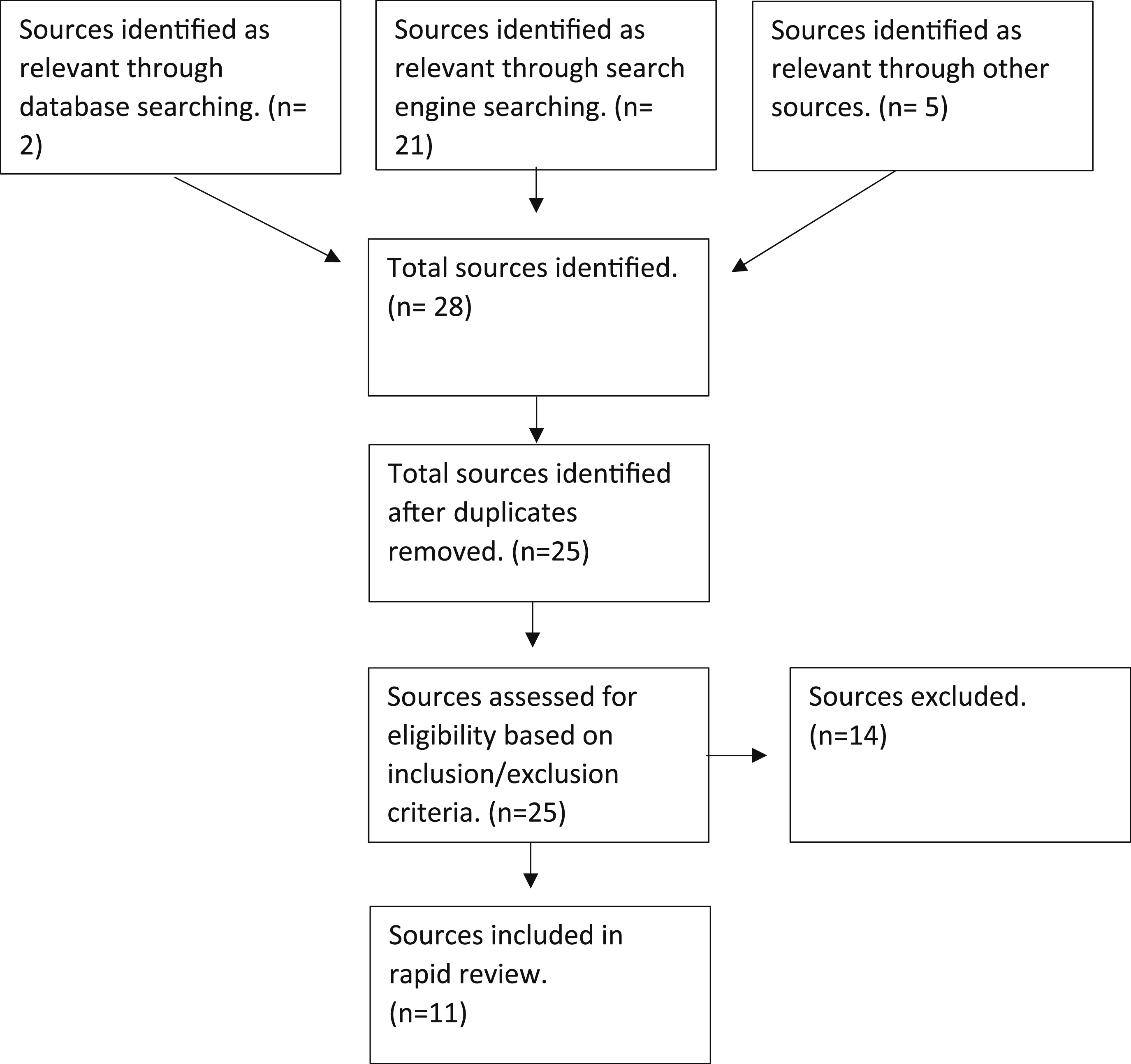
Specific publication dates are not listed because the inclusion criteria require the resource to be available in 2024, not necessarily published in 2024. Ultimately, 14 resources were excluded, and 11 resources were included in the rapid review based on the inclusion criteria.
Checklist development
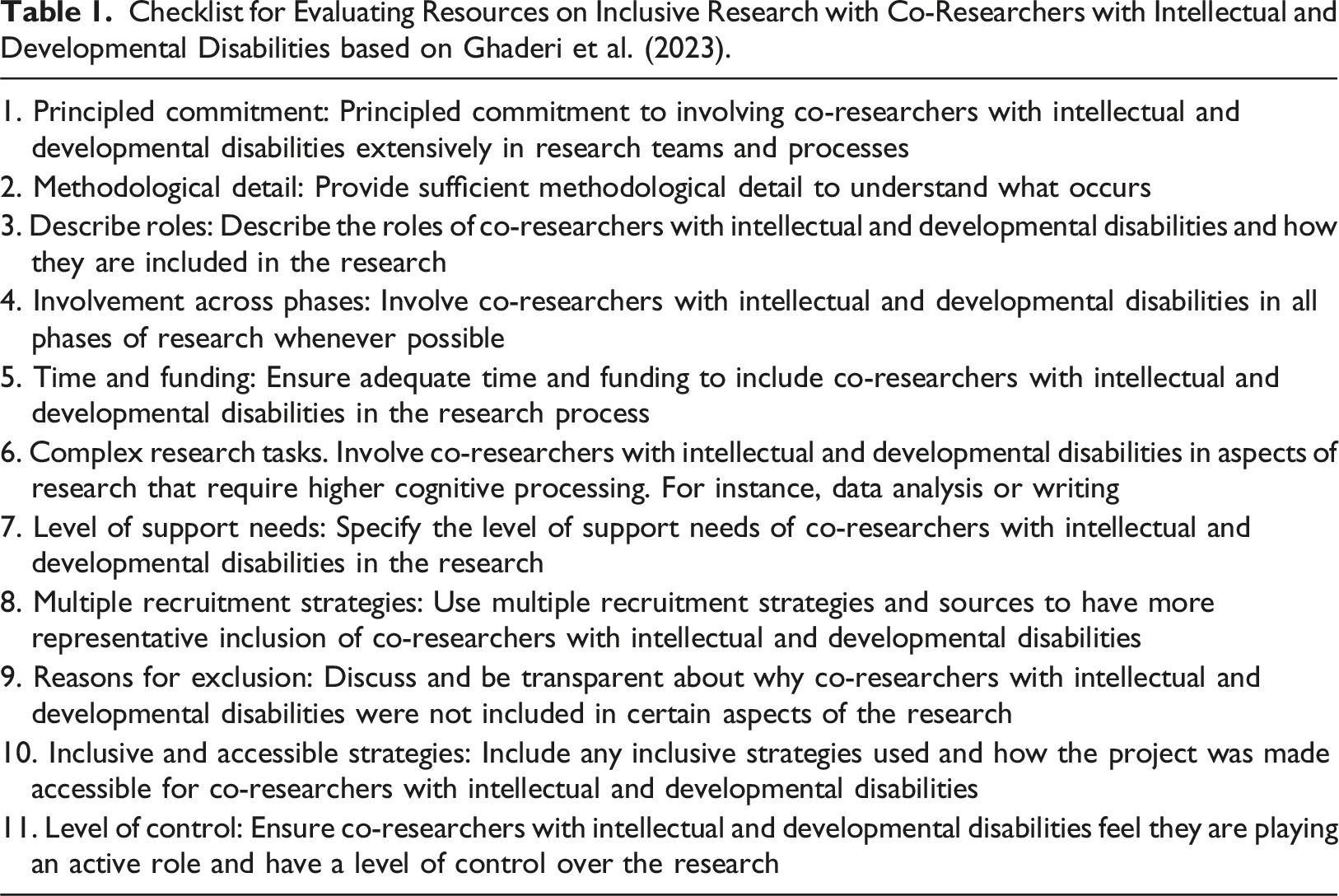
Checklist for Evaluating Resources on Inclusive Research with Co-Researchers with Intellectual and Developmental Disabilities based on Ghaderi et al. (2023).
Data analysis
We used a qualitative descriptive method to provide a detailed summary of how resources align with the checklist for assessing inclusive research resources, as outlined by Ghaderi et al. (2023). The focus was on clear and direct descriptions of the resources rather than on interpreting or finding hidden meanings in the language used (Sandelowski, 2000). By focusing on straightforward descriptions and using clear understandable language, we generated a comprehensive summary of how well the resources meet the criteria on our checklist (Sandelowski, 2000).
Data extraction
Next, a data extraction table was used to organize and analyze the data (Dobbins, 2017). The presence of the checklist item was marked using an “X” symbol. Each matrix row represented the different resources while each column represented the specific checklist items.
The second author was involved in data extraction. Each resource was assigned a score out of 11 demonstrating how well it meets the checklist criteria. Additionally, each checklist item received a score out of 11 demonstrating how many resources met that criterion. These scores were further analyzed to provide a comprehensive picture of the quality of the online resources included in the study.
Data extraction: Application of the checklist
The various resources were evaluated against the checklist provided in Table 1. Sections that fit the criteria were marked onto an excel sheet with an “X”. If a section met the criteria for multiple points of the checklist, all relevant checklist items were selected. Videos were watched multiple times with closed captioning and the time stamps were recorded alongside an “X” for the sections that fit the checklist criteria. (1) (2) (3) (4) (5) (6) (7) (8) (9) (10) (11)
Findings
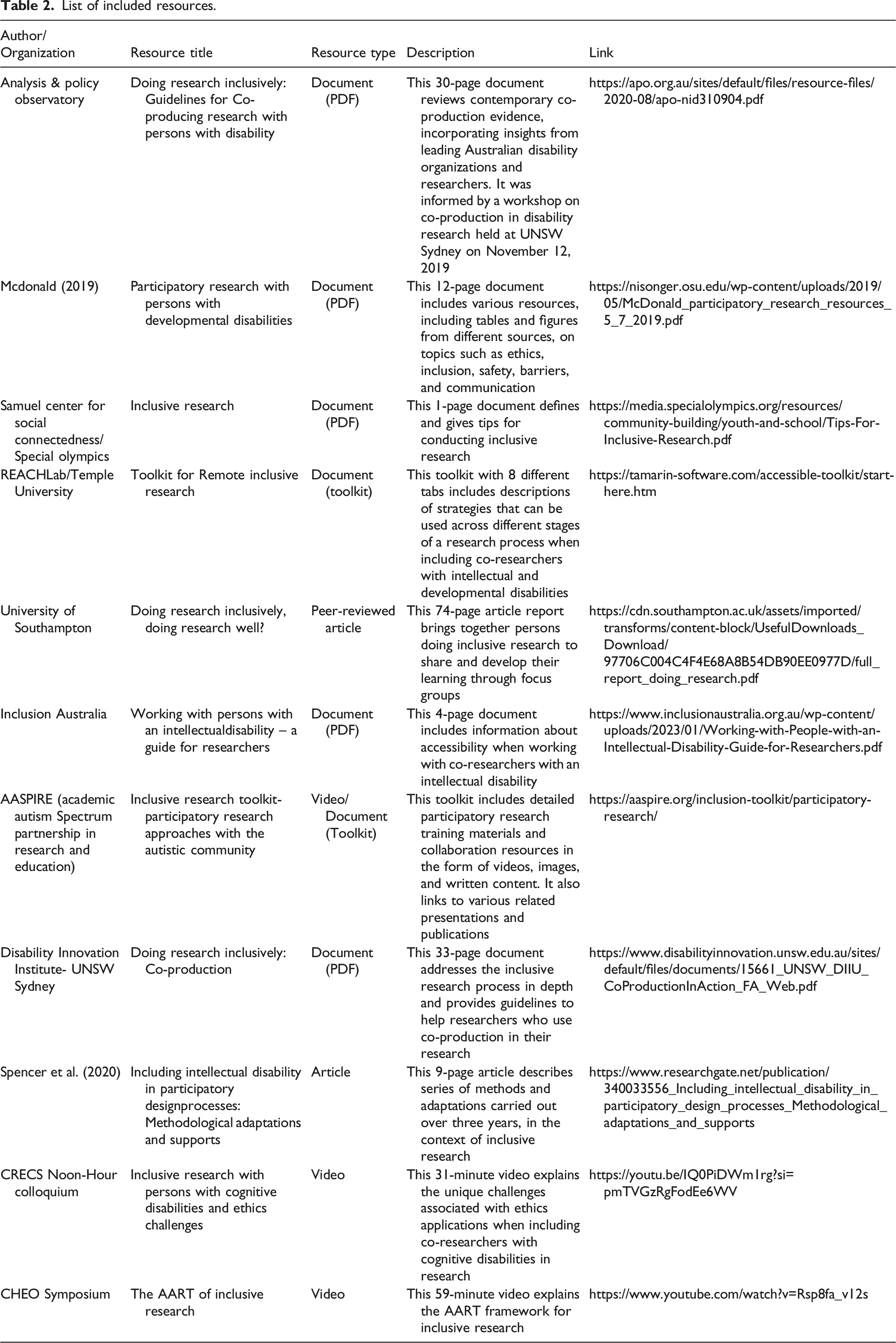
List of included resources.
Checklist evaluation
The findings suggest a range of checklist criteria met among the different authors and organizations, with some meeting most or all of the criteria and others falling short in several areas (See Table 3). In this review scores on the checklist were classified into four categories: 1. Perfect scores are those that achieve 11 out of 11 (first tier), 2. high scores range from 9 to 10 (second tier), 3. moderate scores range from 6 to 8 (third tier), 4. and low scores are those below 5 (last tier). Summary of checklist items met per resource and resources meeting each checklist item.
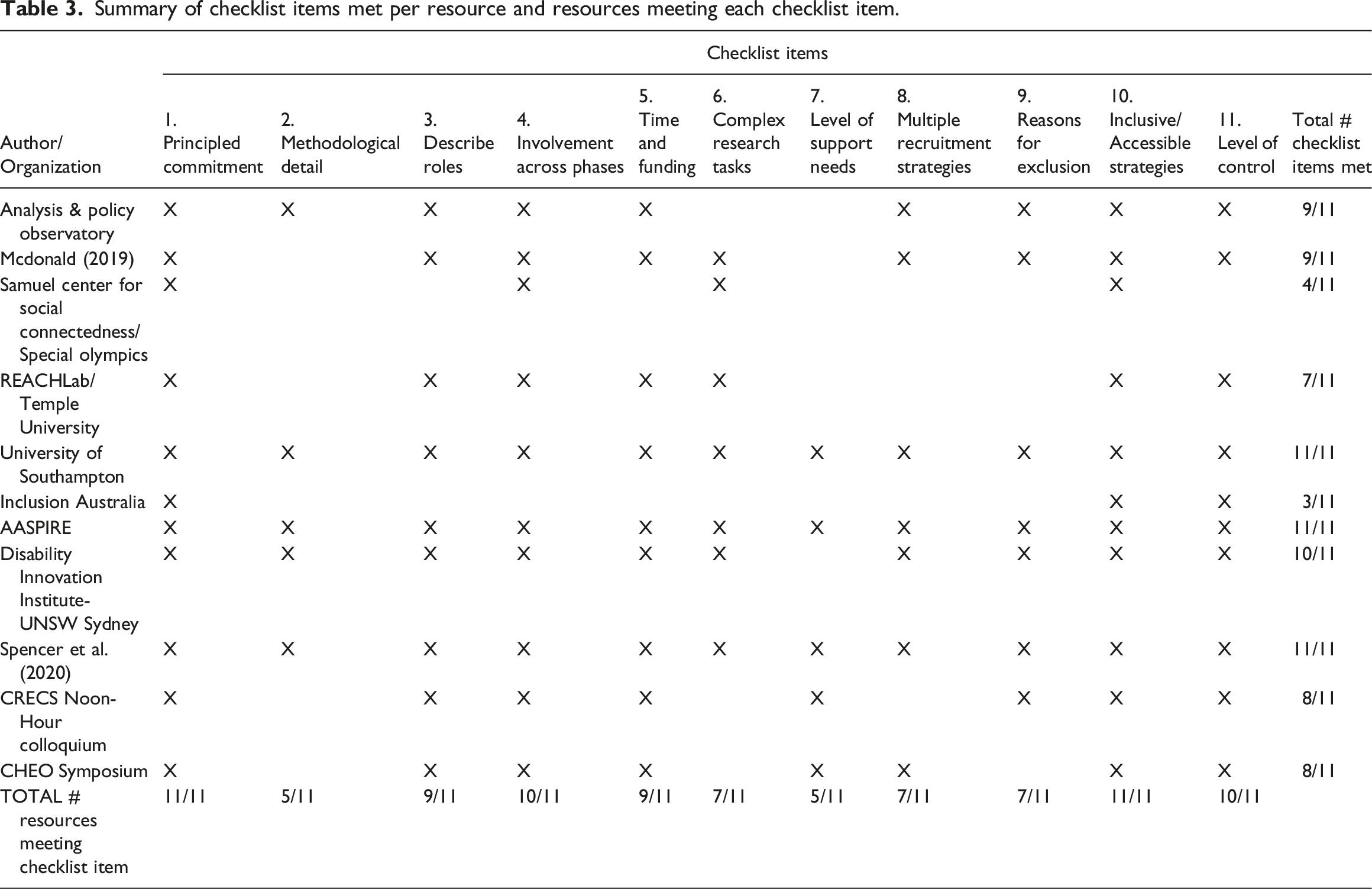
Overall, the average score for the resources is approximately 8 out of 11. The highest checklist score was met by AASPIRE, Spencer et al. (2020) and the University of Southampton who all reached 11 out of 11 checklist items. Not far behind the Disability Innovation Institute - UNSW Sydney, Analysis & Policy Observatory and Mcdonald (2019) achieved high scores, meeting 9-10 out of 11 checklist items. Furthermore, the moderate range which ranged from 6-8 included the CRECS Noon-Hour Colloquium, CHEO Symposium and REACH Lab/ Temple University. Lastly, the resources with the lowest checklist scores were the Samuel Center for Social Connectedness/Special Olympics and Inclusion Australia meeting 3-4 out of the 11 checklist items.
Duration and format
The 11 selected resources varied in both duration and format from short 1-page documents to videos and comprehensive toolkits. The resources with perfect scores were detailed and comprehensive. AASPIRE offers a multi-format toolkit and Spencer et al. (2020) a focused, in-depth article. This suggests that a perfect score is linked to thorough resources (e.g., long length or multiple formats). Similarly, the second tier of high scores (9-10 out of 11) included three resources that were presented in a document format. Each of these resources provided extensive information and ranged from 12 to 33 pages for academic researchers to explore. It’s notable that among the six document resources included in this review, the ones that had the highest scores were also the longest. In contrast, the resources with the lowest scores (3-4 out of 11 items met) were the shortest and under 5 pages in length. This highlights a trend where shorter less detailed resources score lower on the checklist criteria. However, this is not true for the resources that were exclusively videos. They both fell under the moderate range but varied greatly in the duration of the videos. For instance, the 31-minute video reached the same amount of checklist points as the 59-minute-long video. Despite this difference, both videos were considered long and detailed and met 8 out of 11 points demonstrating their value. Overall, this demonstrates the value of several different formats to share information with academic researchers conducting inclusive research with co-researchers with intellectual and developmental disabilities.
Findings across checklist items
In addition to understanding the quality of the resources included in this review, it was crucial to examine which checklist items were consistently met or overlooked. To begin, the two checklist items “principled commitment” and “inclusive/accessible strategies” were present in all the resources. Overall, this indicates that these checklist items are well-known and widely used in inclusive research resources. Additionally, 10 out of 11 resources commonly included the checklist items “involvement across phases” and “level of control”, highlighting their relevance. On the other hand, the importance of “time and funding”, “role descriptions”, and “complex research tasks” were moderately covered, appearing in 7 to 9 out of the 11 resources.
Incomplete coverage of key checklist items
A significant concern is that 2 out of 11 specific checklist items were met only in 5 of the 11 resources. This indicates that “methodological detail” and “level of support needs” are the least frequently addressed in the resources. Interestingly, both of these checklist items relate to specifying enough detail regarding methodological detail and the level of support needs of co-researchers with intellectual and developmental disabilities involved in research. The 5 resources that did mention “methodological details” had high scores on the checklist items and provided a guide on how to conduct an inclusive project from start to finish. Lastly, the checklist item “level of support needs” was only mentioned in the resources that had a perfect score (11 out of 11) and on the checklist and in two videos in the moderate range (6-8 out of 11). This means that none of the three resources in the second tier of high scores (9-10 out of 11) or lowest tier of scores (3-4 out of 11) mentioned “level of support needs”.
Discussion
This rapid review assessed the quality of available resources for new academic researchers on conducting inclusive research and effectively engaging co-researchers with intellectual and developmental disabilities. A limited number of resources were identified. The evaluation based on the checklist created from the criteria proposed by Ghaderi et al. (2023) revealed that while some resources achieved perfect scores (e.g., AASPIRE, Spencer et al. (2020), and the University of Southampton) others varied greatly. The average score on the checklist was 8 out of 11, with some resources scoring as low as 3 out of 11. Overall, higher checklist scores were associated with long and detailed resources, with comprehensive toolkits and longer resources scoring higher on the checklist. Importantly, the review found that all resources consistently met the checklist items “principled commitment” and “inclusive/accessible strategies.” Authors often took a social justice approach when discussing inclusive research (Nind, 2014). This approach supports the social model of disability and the idea that exclusion happens due to poorly designed environments rather than individual impairments (Loewen and Pollard, 2010). This perspective helps explain why the two checklist criteria related to disability justice were frequently met. Additionally, since accessible strategies are fundamental to the integrity of inclusive research (Johnson and Walmsley, 2003; Walmsley et al., 2018), it was expected that most of the resources would discuss this checklist point. In contrast, items like “time and funding,” “role descriptions,” and “complex research tasks” were only moderately covered. The checklist items “methodological detail” and “level of support needs” were the least frequently addressed in the resources.
Strength of the resources
There were several strengths among the 11 resources included in this review. Firstly, the resources from AASPIRE and The Reachlab/Temple University stood out for being detailed toolkits with different learning components. Next, The Samuel Center for Social Connectedness/Special Olympics provided easy-to-follow content with a colourful infographic. In addition, many resources such as the ones from Analysis and Policy Observatory, Macdonald (2019), the Disability Innovation Institute Sydney, Inclusion Australia, AASPIRE, Spencer et al. (2020), and the University of South Hampton had engaging visuals from tables and charts to pictures to help the reader. Moreover, the University of Southampton and the CHEO Symposium both provided clear examples of using inclusive research in the real world. Finally, the perspectives from co-researchers and experienced academic researchers shared in the CRECS Noon Hour Colloquium and CHEO Symposium added valuable insights for the listener. Overall, the resources in this review emphasized the importance of including people with intellectual and developmental disabilities as co-researchers and facilitating this inclusion.
Implications
There are few resources available for learning inclusive research methods and uncertainty about whether academic researchers learn about them from other researchers, formal education, or other sources. Inclusive research methods are also not widely offered in university methods courses (O’Brien et al., 2022). In higher education, educators teaching research methods may not be skilled in inclusive research methods, since teaching positions are assigned for many other factors, like availability and seniority (Wagner et al., 2011). Additionally, regardless of their level of expertise, research method educators need resources to support their teaching. An issue in the access to resources includes unclear copyright concerns (Brent et al., 2012), which may partly explain the difficulties highlighted in this paper when it comes to finding quality relevant resources. The lack of available resources on inclusive research methods limits their implementation. In turn, failing to implement inclusive practices hinders their validity and impact.
Access to quality resources is crucial for new academic researchers conducting inclusive research because it ensures they have the knowledge and skills to meaningfully engage co-researchers with intellectual and developmental disabilities. Without these resources, new academic researchers may struggle to use inclusive methods. This can lead to apprehension and ineffective research engagement of co-researchers with intellectual and developmental disabilities. These gaps may also hinder the growth of disability justice, empowerment, and the right of persons with intellectual and developmental disabilities to not only participate in but also lead research about themselves (“nothing about us without us”). Building on this need, this study extends the previous literature by applying the work of Ghaderi et al. (2023) to evaluate the quality of online resources available in 2024. While Ghaderi et al. (2023) identified the key criteria for evaluating inclusive research resources, this review assessed how well the current resources meet those criteria. This provides new academic researchers valuable insights on the current availability and quality of resources and allows them to make informed decisions about which ones to use to guide their work.
However, the fact that certain areas of the checklist (such as methodological detail) were less well-covered in the existing resources is problematic. There is wide consensus on the value of criteria such as principled commitment (Johnson and Walmsley, 2003; Walmsley et al., 2018), but the lack of methodological details in the resources suggests there is variability in the methodological process in inclusive research projects. Methodological details must be provided by those offering inclusive research resources so that inclusive methods can be more formally conceptualized. Given the value and complexity of inclusive research (Zaagsma et al., 2022), there is a need for comprehensive formal training aimed specifically at academically-trained researchers. This is especially important in educational disciplines that have a history of stigmatizing people with intellectual and developmental disabilities in academic research (e.g., medical and health sciences; Iacono and Carling-Jenkins, 2012; National Council on Disability, 2024). This training should also address the practical challenges associated with implementing inclusive research practices (Garcia-Lee et al., 2024; Hewitt et al., 2023; Riches et al., 2020; Strnadová and Walmsley, 2018; van Den Bogaard et al., 2024).
Need for formal implementation support
This study brings to light the gap between the current available resources and practical implementation. Despite some resources in this review meeting all the checklist criteria, new academic researchers are still left with the challenge of implementing the content into their own research. Therefore, it is crucial to focus on how effectively the content learned from the resources can be practically implemented. Implementation science advocates for learning methods that go further than passive learning from experts (e.g., reading materials) to include an active learning component (Freeman et al., 2014). Even the most comprehensive and high-quality resources in this review were missing an active learning component that would have helped new academic researchers apply what they learned. Some examples of active learning components include online tests and quizzes, interactive online games, readings from hyperlinks and problem-solving assignments with real-world situations (Phillips, 2005). From an educational perspective, research suggests that this type of learning positively impacts learning experience and transitions to real-world experiences (Price et al., 2015; Theobald et al., 2020). Similar benefits of active learning were found in the context of learning research methods in the social sciences (Lewthwaite and Nind, 2016). Consequently, there is a need for a training that offers self-paced learning with implementation support for new academic researchers to build on the currently available resources. This would help in informing best practices in inclusive research and ensuring that inclusive research is conducted with rigor and consistency. Senior academic researchers who are proficient in inclusive research methods should develop and make available this type of training which does not currently exist. Moreover, this would support knowledge mobilization to new academic researchers in the growing field of inclusive research methods.
Limitations
There are certain limitations of this research should be considered when interpreting the findings. First, the literature search for this review was concluded in May 2024 meaning that any new resources published after that time were not included. However, this study reflected the real-time experience of graduate students and new academic researchers searching for inclusive research resources helping to capture the real-world challenge in this context. Next, the authors acknowledge the challenge of identifying all existing resources relating to including co-researchers with intellectual and developmental disabilities. For example, while some book chapters may contain relevant guidelines for new researchers, they were not included in this review based on the definition of educational resources borrowed from Wensing et al. (2013). As noted on Page 3, the Cochrane Effective Practice and Organisation of Care Group (EPOC) defines educational resources as including guidelines, audiovisual resources, electronic publications, and educational computer programs (Wensing et al., 2013, as cited in EPOC, 2002). Next, the term learning disabilities is often used in the United Kingdom to describe individuals with intellectual and developmental disabilities (Walmsley et al., 2018). With this in mind, there is a possibility that some resources were missed or overlooked because of incorrect titles. Additionally, some resources might have been restricted geographically or institutionally, required member access or not been listed in the databases used. Lastly, some resources for academic researchers may have been available in languages other than English that were not included in this review.
Conclusion
This rapid review offers practical insights to new and senior academic researchers in the field of inclusive research. As of 2024, there were few resources available online for new academic researchers to learn about doing inclusive research and effectively engaging co-researchers with intellectual and developmental disabilities. While some were high-quality based on the checklist created from the criteria proposed by Ghaderi et al. (2023), others fell short in meeting key checklist points. Future studies should explore how academic researchers make resources available to others to identify best practices for resource dissemination. Next, it is important to investigate how inclusive research methods impact research processes and outcomes. Lastly, while this study analyzed the presence of quality criteria in the resources, future research should look at these criteria in greater depth, including how they are discussed. This will help better understand their significance and overall quality. Nevertheless, the existing knowledge base offers insights into the quality of resources available for new academic researchers and highlights the need for comprehensive training with practical implementation components.
Footnotes
Author contributions
Audrey Hodgins: Methodology, Formal Analysis, Writing - Original Draft, Visualization. Melanie Beres: Validation, Investigation, Data curation. Munazza Tahir: Conceptualization, Project administration, Writing - Review & Editing. Virginie Cobigo: Writing - Review & Editing, Supervision.
Declaration of conflicting interest
The authors declared no potential conflicts of interest concerning the research, authorship, and/or publication of this article.
Funding
The authors received no financial support for the research, authorship, and/or publication of this article.

Data Availability Statement
Data sharing is not applicable to this article as no datasets were generated or analyzed during the current study.