Abstract

Reading this paper reminds me of my personal experience of working in a war zone. In May 2006, aged 43, I never imagined I would be deployed as an individual augmentee into a war-torn county not knowing anyone at all. I undertook a pre-operational training course which updates you in your combat military skills. On the final night exercise our teams were attacked by pretend insurgence! It was scary as it was so realistic, yet great fun and confidence building putting all that we had learnt into practice. Little did I know a week later I would utilise these skills as one of our journeys in Iraq was by road!
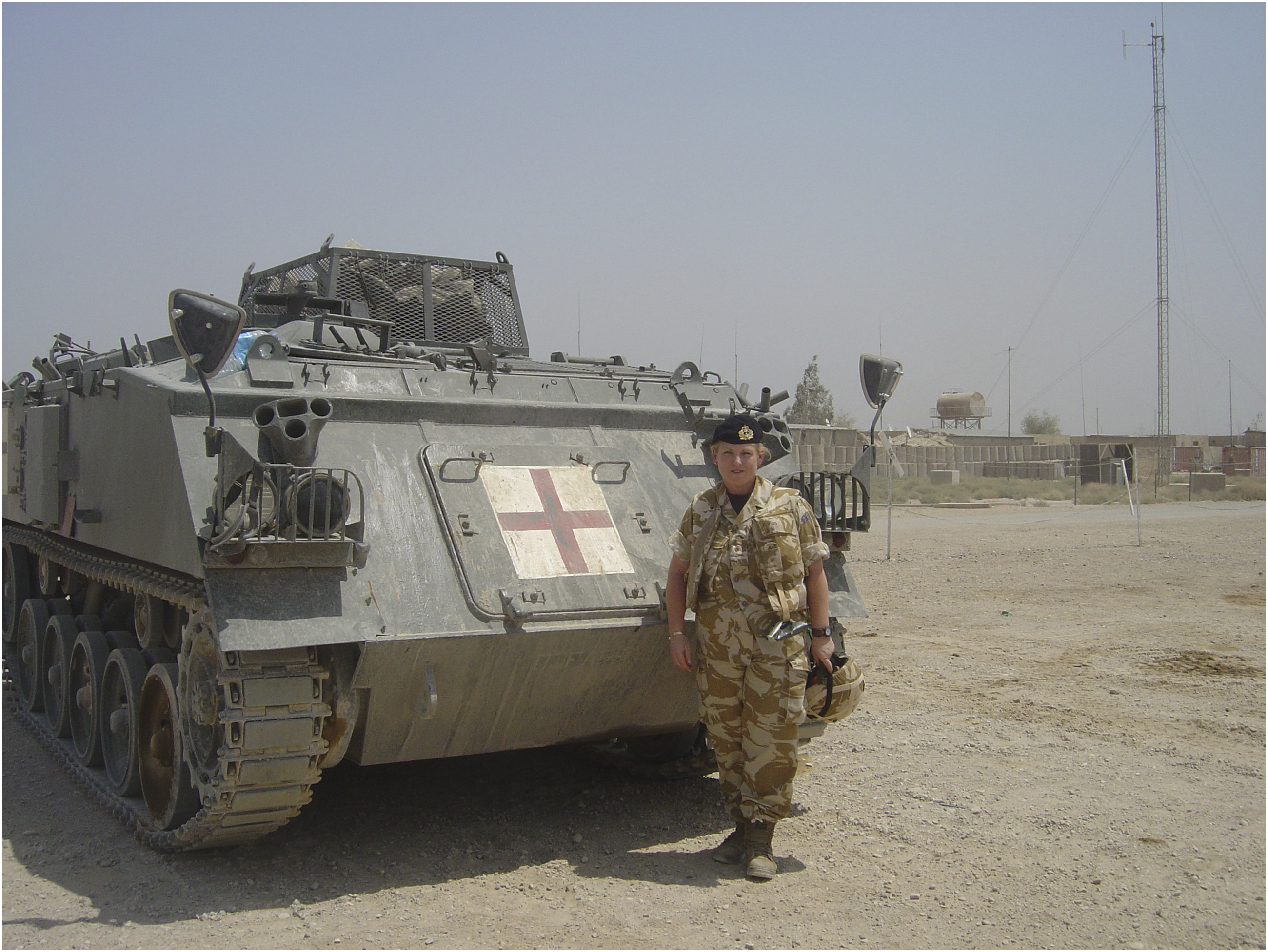
I arrived into Al-Amarah by helicopter and then escorted in the pitch black into a hot overcrowded warrior-tank at 3.30a.m. The whole atmosphere and environment was very different from Shiabah, where I had spent the previous 2 weeks. The terrain was 10° hotter, windy, and dry with lots of green plantation.
After the arrival briefing in the operational room, we were updated on what had been happening over the past 3 months. The true horrors of this war and the reality of what I was about to experience really began to set in.
We had two General Practitioners, two Registered Nurses, and then 10 combat medical technicians to cover a 16 bedded ward, four trauma bays and Primary Care centre. After a quick introduction to the running of the Camp Abu Naji and the Medical Centre my duties commenced.
Within a couple of days of my arrival the first trauma case arrived………a mortar attack hit one of the improvised explosive device teams who was on the toilet at the time! He had shrapnel penetrate right into his left scapulae. But, somehow, he managed during the raid, to get back to his accommodation 18 feet away. His colleagues then put him onto a cot bed and ran with him 800 yards to the medical centre.
Time just went in a flash and before we knew it our causality was being transferred down to Shiabah British Military Hospital. It certainly brought home to all, how proficient our clinical skills had to be as we did not have the facilities of any laboratory to do blood tests or X-ray investigations. We only had ‘role two’ contents of prepacked module supplies of drugs and equipment to function.
The best thing about Al Amarah was that it was a close community with the main Battle Group troops - the Queen’s Dragoon Guard and 1 Prince of Wales Royal Welsh all eating in the dining hall together. Living and working alongside your patients, unlike at the hospital in Shiabah, meant you could see how they were progressing, I certainly got great satisfaction giving continuity of care.
Overall the deployment was a positive life changing experience. The camaraderie was second to none, it was both an honour and pleasure to serve my country in Iraq as a primary care advanced nurse practitioner in the Royal Naval reserves (Figure 1). The experience I learnt enabled me to go forward to later serve in Afghanistan 5 years later. Eileen Munson in Al Amarah Iraq summer 2006.