




Abstract
Education is a protective factor against child labor; however, COVID-19 school closures threatened educational attainment and increased child labor. In this 2-year longitudinal study in rural Côte d’Ivoire, we investigated children’s (N = 955, Mage = 10.45) learning outcomes, educational resource use, and agricultural work pre-, during, and post-COVID-19 school closures. The number of children participating in agricultural work increased during school closures and persisted once schools reopened. However, children randomized to an educational technology (EdTech) intervention (Allô Alphabet) and children who reported receiving family tutoring during school closures were more likely to report reduced agricultural work. Children working in cocoa agriculture during school closures showed poorer reading scores the following year; however, reading scores marginally improved for children who used EdTech during school closures. Results are discussed in terms of negative COVID-19 impacts and the positive role of educational resources on the attainment of the United Nations Sustainable Development Goals in Côte d’Ivoire.
Keywords
Introduction
The COVID-19 pandemic has undermined the progress made on achieving the United Nations’ Sustainable Development Goals (SDGs), particularly in regions where poverty, child labor, and low learning outcomes are prevalent (Min and Perucci, 2020; United Nations, 2015). Specifically, SDG 4 (ensuring inclusive and equitable quality education and promoting lifelong learning opportunities for all) and SDG 8.7 (eradicating child labor by its targeted deadline of 2025) are far from being met. Moreover, widespread school closures have been linked to reduced learning outcomes and increased child labor (International Labor Organization (ILO) and United Nations Children’s Fund (UNICEF), 2021; Jakubowski et al., 2023), further undermining progress towards SDG 4 and 8.7.
In Côte d’Ivoire, the government implemented emergency health measures and closed public schools between March 16 and May 10, 2020 due to the COVID-19 pandemic (see Supplementary Materials for details). While school closures were an important pandemic response, child protection experts raised concerns that school closures may contribute to an increase in child labor(International Labor Organization ILO and United Nations Children’s Fund UNICEF, 2021). Côte d’Ivoire has been the world’s largest cocoa producer since 1977 (African Development Fund, 2018). The Ivorian cocoa sector is characterized by small household farming, where household financial insecurity, opportunity for income-generating activities via household-led cocoa farming, and the availability of working-age children have put children at high risk of engaging in child labor (UNICEF, 2019). As child labor is a widespread problem in Côte d'Ivoire (see Child Labor versus Work below for detailed discussion of the differences between child labor and child work; Andvig et al., 2001; Child Labor Cocoa Coordinating Group [CLCCG], 2020, International Cocoa Initiative [ICI], 2022, The United Nations Educational, Scientific and Cultural Organization [UNESCO] Institute for Statistics [UIS], 2018; Institut National de la Statistique [INS], 2005; Jacquemin, 2006). Economic instability and lack of access to school, both negatively impacted by the COVID-19 pandemic, are well-established predictors of children’s participation in child labor (Centre ivoirien de recherches économiques et sociales (CIRES) Cellule d’Analyse de Politiques Économiques, 2023; Naeem et al., 2011; Ray, 2002). For example, past long-term school closures, such as those caused by the Ebola epidemic, resulted in increases in child labor in West Africa (Risso-Gill and Finnegan, 2015; Smith, 2021). In order to address this global situation caused by COVID-19, additional approaches to supporting children’s learning and preventing child labor are needed (Min, 2021).
When schools closed worldwide due to the COVID-19 pandemic, children lost access to education—a protective factor against child labor—pushing many into work. The relationship between education and child labor is complex. It is generally understood that children’s participation in labor disrupts involvement in education, leading to negative learning and academic outcomes (Boutin and Jouvin, 2022). Conversely, a growing body of evidence shows that access to quality education is associated with reduced rates of child labor (International Cocoa Initiative (ICI), 2019; International Labor Organization (ILO), 2017b; Schlemmer, 2002; Wortsman et al., 2024a). This link between education and child labor suggests that access to educational resources during school closures may mitigate an increase in child labor (ILO, 2020). When formal schooling is unavailable, supplemental educational resources can help bridge the gap by providing additional and/or tailored support to vulnerable learners (e.g., those who lost access to education, have limited economic resources to support private education, and children with low academic scores or learning difficulties; El Bouwab, 2021). Learning loss during normal periods of school closure (i.e., summer break) is a well-documented phenomenon. There is limited research in sub-Saharan Africa (SSA) on educational resources being able to support this learning loss. For example, Slade et al. (2017) examined learning loss after “grade-transition break” (i.e., the period after one grade ends and before another grade starts) and found average reduction of 0.38 standard deviations across measures of reading and reading-related language skills. Additionally, Slade et al. (2017) show that a literacy intervention that trained and supported teachers and provided additional literacy materials to 10,704 Malawi students going from grades 1 to 2 and 2 to 3 between 2013 to 2016 did not improve literacy scores, and worse, the economic realities pressuring out-of-school children to work limited potential benefits of the intervention.
Educational technology (EdTech) has been increasingly introduced to support learning, particularly as an at-home resource for learners that families leveraged during school closures. In response to the COVID-19 school closures, we explored if and how supplementary educational resources, including EdTech, may have mitigated against an increase in child labor and supported the learning in children in rural Côte d’Ivoire. We leverage a longitudinal randomized control trial of Allô Alphabet, an experimental EdTech developed to support literacy learning at home for primary-school children in rural Côte d’Ivoire between 2019 and 2021 (Madaio et al., 2019a, 2019b; Jasińska et al., in preparation). The occurrence of COVID-19 mid-way through the Allô Alphabet study provided the opportunity to examine the impacts of COVID-19 school closures on child labor and learning as well as explore how supplemental educational resource use during school closures (i.e., the Allô Alphabet platform, as well as additional family support for learning at home) related to child labor and learning. In this longitudinal study, we examined the associations between COVID-19 school closures, children’s educational resource use during school closures, children’s cocoa-related work activities, and learning outcomes. We compared children’s cocoa-related work activities and learning outcomes pre-, during, and post-COVID-19 school closures. Additionally, we examined whether educational resource use during school closures (e.g., using EdTech at home, receiving support from parents, older siblings, and tutors for learning) may mitigate any increase in cocoa-related work activities associated with school closures. We focused on EdTech as a complementary option to traditional educational support. EdTech is becoming more relevant in an increasingly technologically advanced world. However, EdTech options, and research on the effectiveness of EdTech in low- and middle-income countries (LMICs) across the Majority World is limited (Evans and Mendez Acosta, 2021). Existing research on COVID-19 and educational impacts predominantly comes from high-income countries in the Minority World, despite the fact that LMICs in the Majority World have the largest burden of the global learning crisis. Given the existing educational issues enhanced by COVID-19, and gap in research, exploring the role of EdTech in providing education in LMICs during school closures is critical.
Child labor in Côte d’Ivoire
In Côte d’Ivoire, agriculture is the primary economic sector, with a significant emphasis on cocoa farming. The industry is predominantly comprised of informal workers consisting of small household farmers and their families (Andvig et al., 2001; Jacquemin, 2006). The National Institute of Statistics in Côte d'Ivoire (INS, 2005) indicated that, nationally, 22% of children aged 5 to 17 were economically occupied in the agricultural sector. In cocoa-growing regions in the south of Côte d'Ivoire, 78% of the one million children in small cocoa farming households are economically active (African Development Fund, 2018). Approximately 38% of these children face hazardous working conditions (Sadhu et al., 2020).
The most common form of child work in Côte d’Ivoire is non-hazardous agricultural cocoa work on a family farm (UNICEF, 2019). Importantly, in many rural areas in Africa, child work is a means of developing vocational skills, socialization, and transmission of intergenerational knowledge (Ango et al., 2022). Distinguishing between hazardous child labor, child labor, and child work has important implications for research and providing solutions, yet it is hard to distinguish under Ivorian work-related norms and the lack of reporting infrastructure (Abdullah et al., 2022).
Child labor versus work
It is important to differentiate between hazardous labor, child labor, and child work. Not all working children are child laborers, and not all child labor is hazardous. The definition of child labor is internationally bounded by three United Nations conventions around two context-sensitive elements: age and the nature, duration and conditions of productive activities performed by the child. 1 This definition is further defined by the System of National Accounts (SNA) as encompassing (i) any economically active child under the age of 12; (ii) children 12–14, engaged in productive activities outside permissible light work; (iii) children aged 17 and younger engaged in “hazardous” activities (those affecting the child’s safety, physical, and mental development) or the “worst forms of child labor” (e.g., commercial sexual exploitation and armed conflict; International Labor Organization ILO, 2018). Child work can help develop life-skills and knowledge, and is distinguished from child labor when the work does not interfere with their education and enjoyment of rights. On the other hand, child work can become child labor if the work falls within the SNA boundary; depriving children of their childhood, their potential and their dignity, and is harmful to physical and mental development (International Labor Organization ILO, 2017a). Further, work can be deemed hazardous if it meets one or more of the following categories: (1) land clearing, (2) carrying heavy loads, (3) exposure to agro-chemicals, (4) sharp tool use, (5) long working hours, or (6) work between 7 p.m. and 7 a.m. or during school/business hours (Sadhu et al., 2020).
Education and child labor
School enrollment rates of cocoa farming families estimate that 80% of children who attend school also engage in some form of cocoa agricultural work (Sadhu et al., 2020). Child labor that occurs during school hours decreases school attendance (Ango et al., 2022; Jensen and Nielsen, 1997; Kruger, 2007). Child labor is also related to late school enrollment and higher rates of school dropout (Canagarajah and Nielsen, 2001; Wortsman et al., 2024b). Studies by UNESCO (Lanoue, 2003; UNESCO UIS, 2015) on SSA and Côte d’Ivoire found that up to a third of children will start school late (i.e., older than age 6). Children who are older for their grade are more likely to do poorly in school, dropout, and participate in child labor (Gubbels et al., 2019; Kuepie et al., 2015; Oruko et al., 2015; Rosati and Rossi, 2003; Whitehead et al., 2024; Wortsman et al., 2024b).
To combat low enrollment rates, Côte d’Ivoire mandated compulsory school enrollment in 2015. Consequently, enrollment has been improving (World Bank, 2023). For example, in 2019 Cote d’Ivoire’s enrollment rate was 94%, up from 77% in 2011 (World Bank, 2023). However, only 74% of children actually complete primary school in Côte d’Ivoire, the remaining 26% may have never entered school or may have dropped out (UNESCO, 2022; Wortsman et al., 2024b). Low SES, low attendance, and poor school quality have been linked to drop out rates and threaten school completion (Ampiah and Adu-Yeboah, 2009; Kuepie et al., 2015; Wortsman et al., 2024b). Importantly, child labor and schooling are not mutually exclusive. For every child laborer who has reached compulsory school age but is excluded from schooling, two others struggle to balance the concurrent demands of school and work (Canagarajah and Nielsen, 2001; International Labor Organization (ILO) and United Nations Children’s Fund (UNICEF), 2021; Sangli et al., 2022).
Child labor has negative consequences for learning, academic outcomes, and child well-being (Ibrahim et al., 2019; ICI, 2022; ILO, 2022; UNESCO, 2020). Currently, Côte d'Ivoire’s high rates of child labor are paired with an alarmingly high level of illiteracy; as 82% of Ivorian 10-year-olds and 53% of the entire population over the age of 15, are illiterate (Azevedo et al., 2021; UNESCO UIS, 2018). The physical effects of working long hours, including poor growth and malnutrition, have compounding negative effects on the overall well-being and learning of child laborers (Ibrahim et al., 2019). The direct impacts of missing school, as well as the indirect impairments to physical and mental well-being, leave little to no room for educational activities beyond school (i.e., homework and revision) and attentive learning in class (Guarcello et al., 2008). School attendance and educational activities are compromised in favor of work, or learning is inefficient because the negative effects of work hinder learning.
Education may also support positive outcomes by acting as a protective factor against child labor. Without access to quality education, participation in child labor increases (Ango et al., 2022; Canagarajah and Nielsen, 2001; Mohammed, 2023). In Ghana and Côte d’Ivoire, child labor rates are lower in communities with a school, and child labor rates increase with increased distance to the nearest school (ICI, 2019, 2022). School quality is also an important factor; children in Côte d’Ivoire who attended higher quality schools had a lower probability of working on a cocoa plantation relative to peers attending lower quality schools (Wortsman et al., 2024a). In Ghana, teachers protect against child labor involvement by encouraging parents to keep children in school and prioritize school-related work over labor (Mohammed, 2023). In Burkina Faso, a 5-year program providing educational support (i.e., awareness raising and social protection, increasing access to education, and strengthening institutional capacity and policies) lowered child labor rates by 35.59% (United States Department of Labor, 2017).
Poverty, Child labor, and education during the COVID-19 pandemic
Because poverty is a primary driver of child labor, economic shocks (e.g., cocoa price changes, climate change, pandemics) can exacerbate child labor rates and hinder access to education (Canagarajah & Nielsen, 2001; Cogneau & Jedwab, 2012; ICI, 2020). Households whose income decreased during a cocoa price drop crisis in 1990 experienced an increase in child labor and a decrease in school enrollment (Cogneau and Jedwab, 2012; ICI, 2020). Child labor is an expected response against the widespread school closures and economic instability caused by the COVID-19 pandemic (International labor Organization (ILO), 2020, International Labor Organization (ILO) and United Nations Children’s Fund (UNICEF), 2021).
The COVID-19 pandemic both exacerbated an underlying risk factor for child labor—poverty—and removed one of the protective factors against child labor—education (Ango et al., 2022; ICI, 2019, 2020). In Côte d’Ivoire, schools were closed due to the COVID-19 pandemic for several weeks between March 2020 and May 2020, resuming in September 2020 after the summer break. The Ivorian Ministry of Education followed the OECD’s recommendations, making remote learning services available, and advising students to access educational materials via internet, television, radio, and SMS (Reimers et al., 2020). In particular, the Ivorian government launched “My School at Home” (Mon école à la maison), a distance learning service that provided prerecorded video and audio content for pre-primary, primary, and secondary students in accordance with their national curriculum (UNICEF, 2023). However, in Côte d’Ivoire, remote learning services were not widely accessible. Approximately half of the population lives in rural communities (47%); less than half of that rural population has access to electricity (45.2%), and even fewer have access to the internet (Global System for Mobile Communications [GSMA], 2017; World Bank, 2020). Without these essential components, children and families were left, in practice, without access to schooling. Indeed, in a scoping literature review of distance learning for SSA primary school students during COVID-19 closures, Wawire et al. (2023) found that most SSA countries emphasized multimodal distance learning solutions (i.e., radio instruction, television programs, mobile apps, electronic textbooks, and e-learning portals). They found most distance learning solutions were inaccessible to the marginalized populations due to a lack of resources and that “those lacking access to interventions consequently exhibited a greater magnitude of learning loss and were at-risk of lagging further behind their peers” (Wawire et al., 2023).
The COVID-19 pandemic was not an isolated incident: school closures due to epidemics, political turmoil, conflict, or teacher strikes/absenteeism are not uncommon in Côte d’Ivoire and other regions of SSA (Kizilcec et al., 2021; Verwimp and Van Bavel, 2014; Villegas et al., 2021). Evidence from previous school closure periods in West Africa (e.g., the 2013–2016 Ebola pandemic) indicates that children from lower socioeconomic status (SES) households and resource-poor areas face increased financial and familial pressure to work (Risso-Gill and Finnegan, 2015; Smith, 2021). The increases in child labor during the Ebola outbreak in West Africa, linked to school closures, had long-lasting negative effects on children’s academic outcomes and resulted in the highest rates of school dropouts post-pandemic (Smith, 2021).
When schools—a protective factor against child labor—are closed, educational resources, including family or external tutoring and/or EdTech can potentially fill the gap and support learning outcomes (Kizilcec et al., 2021; Madaio et al., 2020a). In other words, EdTech can accomplish what distance learning seeks to do: provide students with learning activities while schools are closed. Due to the design and focus on particular skills, EdTech may effectively complement or substitute for existing learning activities (Evans and Mendez Acosta, 2021). Kizilcec et al. (2021) found that families relied on EdTech platforms to supplement education during school closures due to political turmoil in Kenya and teacher strikes in Côte d’Ivoire. Indeed, there is strong parental support for using educational resources, including EdTech, in Côte d’Ivoire (Madaio et al., 2019a).
Current study
Our study aimed to investigate the links between children’s use of educational resources, including EdTech, child cocoa agricultural work, and learning outcomes during and in the aftermath of COVID-19 school closures. Although there is a growing body of evidence suggesting education is a protective factor against child labor, little work has explored whether educational resources, including EdTech, during school closures may replicate the protection that schools typically provide against child labor. Here, we examined children’s cocoa agricultural work pre-, during, and post-COVID-19 school closures. We further investigated children’s use of educational resources during school closures, including family reading support, private tutoring, and an EdTech application, Allô Alphabet, designed for low-literacy environments.
Allô Alphabet is an interactive voice response (IVR) system designed to provide literacy support to children and parents using simple mobile phones (which are widely used and accessible in rural regions; Jasińska and Guei, 2022; Madaio et al., 2020a). Madaio et al. (2019a, 2019b) developed and implemented Allô Alphabet, to support the literacy development of Ivorian children in rural cocoa farming communities. Allô Alphabet leveraged ubiquitous availability of mobile phones along with parents’ desires to help and enabled them to do so via interactive voice responses despite low adult literacy levels, unlike many EdTech which are often designed solely for the child, rely on literate parents, or depend on high-tech devices and access to data (i.e., computers or smartphones). Children call Allô Alphabet via a simple mobile phone and receive voice- and text-based reading lessons that build decoding skills (Madaio et al., 2019b).
Prior to the COVID-19 pandemic, a randomized control trial of Allô Alphabet was underway to investigate how simple, accessible technologies support literacy development in rural Côte d’Ivoire (Madaio et al., 2020b; Jasińska et al., in preparation). Children in the treatment group were given a phone with a SIM card to access Allô Alphabet, given training on how to use the system, and instructed to use Allô Alphabet five days a week for two years. This ongoing study revealed that the extent of Allô Alphabet usage positively predicted improvements in literacy over the two years (Jasińska et al., in preparation). Leveraging the same dataset, we focused on child cocoa agricultural work and examined whether and how children’s use of EdTech and other educational resources (family reading support and private tutoring) during Côte d’Ivoire’s COVID-19 school closures predicted agricultural work and learning outcomes. We asked three research questions: (1) Were COVID-19 school closures associated with increased child cocoa agricultural work in rural settings? (2) How did children’s literacy skills change between 2019 and 2021? Were COVID-19 school closures associated with learning loss? (3) How did educational resources used during school closures relate to child cocoa agricultural work during school closures and children’s learning outcomes after schools reopened?
To address these research questions, we examined (1) child cocoa agricultural work pre- (Fall 2019), during (Fall 2020), and post- (Spring 2021) COVID-19 school closures, (2) children’s use of educational resources, relying on child reports of educational activities during school closures and randomization to the Allô Alphabet literacy intervention, and (3) children’s learning outcomes (pre- and post-COVID-19 school closures), specifically focusing on literacy skills. We hypothesized that educational resource use during school closures, or lack thereof, would be related to child cocoa agricultural work and that children’s academic outcomes would be related to both cocoa agricultural work and use of educational resources. To that end, we predicted an increase in children’s agricultural work during COVID-19 school closures and that educational resource use during school closures would be associated with lower levels of child agricultural work. We further predicted that children who reported educational resources use and lower levels of cocoa agricultural work will have better literacy scores following the COVID-19 school closures. Lastly, we explored the impact of school closures on growth in literacy skills over two academic years (2019–2020—school closures due to COVID-19; 2020–2021—schools fully open).
In order to meet SDG 8.7, it is imperative that detriments to progress be mitigated and potential consequences of the pandemic be explored. If education can be supplemented by additional resources (i.e., family support, tutoring, and EdTech), it may provide a critical protective factor against child labor particularly during periods of heightened risk (Guarcello et al., 2008; ICI, 2019; Jasińska and Guei, 2022; Madaio et al., 2019a; Wortsman et al., 2024). The findings of this study may therefore provide insights on solutions and policies that are needed to address the cycle of poverty, poor educational quality, child labor, and their intersections, as well as support children’s learning recovery in the aftermath of the pandemic.
Methods
Participants
955 primary-school children between the ages of 8 and 14 years from 8 rural communities and 32 schools in the La Mé region of Southern Côte d’Ivoire participated in the study (Ngirls = 465, Mage = 10.45, SDage = 1.28; Nboys = 489, Mage = 10.79, SDage = 1.24). La Mé is a rural and agricultural cocoa-producing region. Children were enrolled in a 2-year pre-registered randomized-control trial (RCT) impact evaluation of an EdTech intervention, Allô Alphabet (Madaio et al., 2020b), aimed at supporting literacy development in rural school children who work in cocoa agriculture (Nintervention = 614; Ncontrol = 340). Children were enrolled in CM1 (the equivalent of fifth grade) in Fall 2019. In Spring 2021, 835 children were enrolled in CM2 (the equivalent of sixth grade) and 108 children were repeating CM1 (grade data was missing for 11 children). Children with psychological disorders and physical, auditory, or visual impairments were excluded. It is uncommon for schools to screen for or keep records of children with developmental or neurological disorders in rural Côte d’Ivoire. Children who markedly suffer from such conditions rarely attend school. Therefore, no children were excluded due to these criteria. The study was approved by the University of Toronto Research Ethics Board, the Ivorian Ministry of Education, and Comité de Gestion d'Ecoles (COGES; the parent-teacher group in Côte d'Ivoire).
Measures
Children were assessed prior to the COVID-19 pandemic (Time 1: Fall 2019) at the start of the 2019–2020 academic year (Y1) and after schools re-opened (Time 2: Fall 2020 and Time 3: Spring 2021) in the 2020–2021 academic year (Y2). See Figure 1 for data collection timeline. Data collection timeline.
At Time 1 (Fall 2019), children completed a battery measuring child agricultural work and literacy skills. At Time 2 (Fall 2020), our team implemented a remote phone-based literacy assessment to reduce potential for COVID-19 transmission to the interior of the country. Only a brief literacy assessment was conducted with a subset of children (n = 690) and no other data were collected (see Sobers et al., [2023] for details of the remote phone-based data collection). At Time 3 (Spring 2021), children completed a battery measuring child agricultural work and literacy skills. At Time 3, children were also asked to report retrospectively about their experiences during the period of school closures (March–May 2020). Due to lockdown and travel restrictions, we did not interview children between March and May 2020.
Background questionnaire
A background questionnaire was administered pre-school closures (Time 1). The questionnaire included demographic and socioeconomic information including child basic demographics (i.e., age), literacy status of other family members, and family SES. Family SES was measured using a 15-item household inventory (e.g., children were asked to indicate whether their homes had running water, electricity, etc.) that accompanies the RTI International (2015) Early Grade Reading Assessment (EGRA) and has been previously used with primary-school children in Côte d’Ivoire (Jasińska et al., 2022a; 2022b; Khan et al., 2024; Wortsman et al., 2024a). See Supplementary Materials for discussion of household inventories as SES in low-resource contexts.
Post-school reopening (Time 3), children were asked about the effects of the pandemic and school closures on their activities (e.g., whether time spent studying or playing or doing household chores increased, decreased, or remained the same), agricultural work (e.g., whether time spent working on a cocoa plantation increased, decreased, or remained the same), and where they spent their time (e.g., mostly at home, mostly in the field) during school closures. Children were also asked about the pandemic generally (e.g., whether they understood why schools were closed and whether they followed COVID-19 protocols).
Child cocoa agricultural work
Tulane University's (2015) Survey Research on Child Labor in West African Cocoa Growing Areas, which has previously been used in Côte d’Ivoire (Lichand and Wolf, 2025; Wortsman et al., 2024a), was administered pre-school closures (Time 1) and after schools reopened (Time 3) as a measure of children’s cocoa agricultural work. The survey categorizes work activities into economic, domestic, and agricultural (cocoa). Children provided “yes/no” responses to whether they had engaged in cocoa agricultural activities in the last 12 months.
Cocoa agricultural activities including land preparation (e.g., clearing fields, felling and chopping trees, burning, digging tree stumps, and cutting stakes), planting (e.g., planting seedlings, aligning and planting stakes, and preparing/digging/planting nurseries), farm maintenance activities (weeding, using agrochemicals, transporting water, maintaining and pruning cocoa trees), harvesting (e.g., plucking pods, gathering and heading pods, and breaking cocoa pods), and post-harvest activities (e.g., fermenting and transporting cocoa beans, and drying the cocoa beans).
Post-school reopening, children were also asked to retrospectively report changes in their work responsibilities during school closures (i.e., whether the amount of time spent working in the fields increased, decreased, or stayed the same).
Educational resource use
Children completed a questionnaire about the forms of educational support they received during COVID-19 school closures at Time 3. The questionnaire asked whether children used EdTech resources during school closures; child-reported EdTech usage was corroborated with log data recorded in the Allô Alphabet platform. The questionnaire also asked whether children received any tutoring from family (parents, siblings) or a hired tutor. Our earlier work in Côte d’Ivoire found that parents in rural communities commonly hired private tutors for their children (Madaio et al., 2019a).
Literacy assessments
Children’s literacy skills in French were assessed pre-school closures (Time 1) and post-school reopening (Time 2 using remote phone-based assessment and Time 3 in person) using the French language Early Grade Reading Assessment (EGRA), a widely used measure of literacy skill in Majority World contexts. The French language EGRA has been previously used with Ivorian primary-school children (Ball et al., 2022; Brice et al., 2024; Jasińska, Akpe, et al., 2022; Jasińska, Zinszer, et al., 2022; Sobers et al., 2023; Whitehead et al., 2024; Zinszer et al., 2023a, 2023b) and in other Francophone West African countries (Senegal, Mali). The EGRA consisted of grapheme (e.g., oi, ch, T), word (e.g., ami, été), and pseudoword (e.g., doupé, zode) reading subtasks (Gove and Wetterberg, 2011; RTI International, 2015). Children were asked to read the items quickly and audibly for each subtask (100 graphemes, 50 words, 50 pseudowords; short passage) with each item only being used once. Graphemes were unigrams (e.g., “a”) and bigrams (e.g., “ch”) that constitute single orthographic units in French. Words were familiar words, confirmed by native speakers of Ivorian French. Pseudowords were mono- or disyllabic strings that conformed to French syllabic and phonotactic structure, but do not exist in French. The maximum time to complete each subtask was 60 seconds. The subtask was terminated if the first ten items (grapheme) or first five times (word, pseudoword, passage) in each subtask were read incorrectly (Gove and Wetterberg, 2011; RTI International, 2015). After reading the short passage, children answered 6 comprehension questions. Each subtask began with practice with example items where participants were provided with feedback and scaffolding.
Procedure
Children were interviewed and completed assessments one-on-one during school hours with trained researchers pre-COVID-19 school closures (Time 1: Fall 2019) and post-COVID-19 school reopening (Time 3: Spring 2021). Children also completed a remote phone-based literacy assessment (Time 2: Fall 2020). Post-school reopening, children were asked questions about their experiences during COVID-19-related school closures (Spring 2020). Data were collected in accordance with ethical guidelines and approval from the Ivorian Ministry of Education and COGES. All study procedures were conducted by researchers who spoke Ivorian French and the local languages of the community. All researchers had at minimum a Bachelor’s degree in a relevant field (e.g., psychology, education, and sociology), and many were graduate-level students at the time of assessment. Prior to beginning work in the communities, the research team presented and discussed the study with community leaders (village chiefs, school administration, parents’ organizations). Informed consent was verbally obtained from village chiefs, elders, and community members following culturally appropriate procedures (see Jasińska and Guei [2018] for details about informed consent procedures for low-literacy rural communities in Côte d’Ivoire). Children were compensated with small gifts (e.g., book, school supplies). Research Electronic Data Capture (REDCap), an online data collection platform, was used for the collection and maintenance of data (Harris et al., 2009; 2019).
Data analysis
All data analysis was done in R (R Core Team, 2023); see Supplementary Materials for specific packages used.
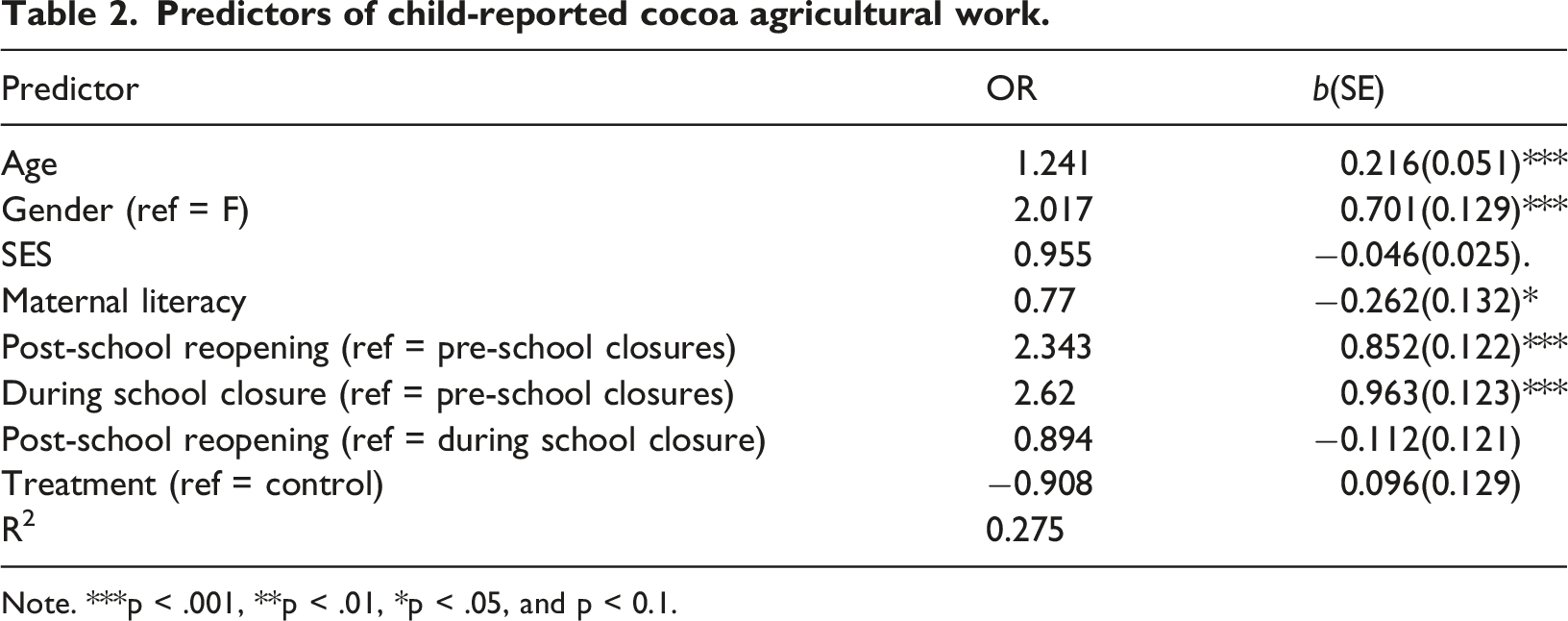
To address our first research question, whether COVID-19 school closures are linked to increased child cocoa agricultural work in rural settings, we conducted a χ2 test comparing the proportion of children who reported working in cocoa agricultural pre-, during, and post-school closures, and a multilevel logistic regression predicting child-reported cocoa agricultural work by age, gender, SES, maternal literacy, and time (pre-, during, post-school closures), with a random intercept for school.
To address our second research question regarding whether COVID-19 school closures were linked to learning loss, we conducted longitudinal analyses of literacy outcomes (letter reading, word reading, pseudoword reading, passage comprehension, passage reading) measured before COVID-19 school closures at Time 1 (in person) and after schools reopened at Time 2 (remote) and Time 3 (in person). Model fit of linear and non-linear models was compared using likelihood ratio tests (LRTs) for each literacy outcome (letter reading, word reading, pseudoword reading, passage comprehension, passage reading) and the better fitting model was retained (see Supplementary Materials for additional details). Linear and non-linear mixed-effects growth models were estimated for each literacy subtest, with time, treatment, time × treatment, age, gender, and SES as fixed effects, and random intercepts for child and school.
Note: Time 2 was a subset of children assessed via phone due to COVID-19 travel restrictions (see Sobers et al., 2023 for details). Literacy descriptives are based on subtest-specific complete-case samples. Children were included for a given literacy outcome if they had data at all three time points for that subtest.
To address our third research question regarding how educational resources use during school closures relates to child cocoa agricultural work and children’s learning outcomes, we first conducted a multilevel multinomial regression predicting increase, decrease, or no change in cocoa agricultural work by age, gender, SES, pre-COVID-19 cocoa agricultural work, family/tutor educational resources, and EdTech educational resources or Allô Alphabet intervention assignment with a random intercept for school. Two models were evaluated: Model 1 included child-reported EdTech educational resource use during school closures (“EdTech educational resources”); Model 2 included Allô Alphabet intervention assignment (treatment vs. control). Both predictors were not included in the same model given that children assigned to the Allô Alphabet treatment condition had access to an EdTech intervention and therefore reported higher EdTech educational resource use; however, both models were conducted given that children assigned to treatment may not have used the intervention.
To address how educational resources use during school closures related to children’s learning outcomes, we conducted a multilevel linear regression to predict literacy scores post-school reopening by age, gender, SES, family/tutor educational resources, EdTech educational resources, and cocoa agricultural work during closures with a random intercept for school. A composite literacy score of letter, word, and pseudoword reading was computed and used in this analysis as passage comprehension scores were low (Time 1 passage comprehension floor effect = 72.4%, skew = 1.81). Pseudo-R2 or R2 values were computed for all models. We treat the coefficient on treatment assignment (Allô Alphabet) as causal due to randomization at the school level; all other predictors (e.g., self-reported EdTech use, family/tutor support, and work during closures) are interpreted as associational.
Results
Descriptive results
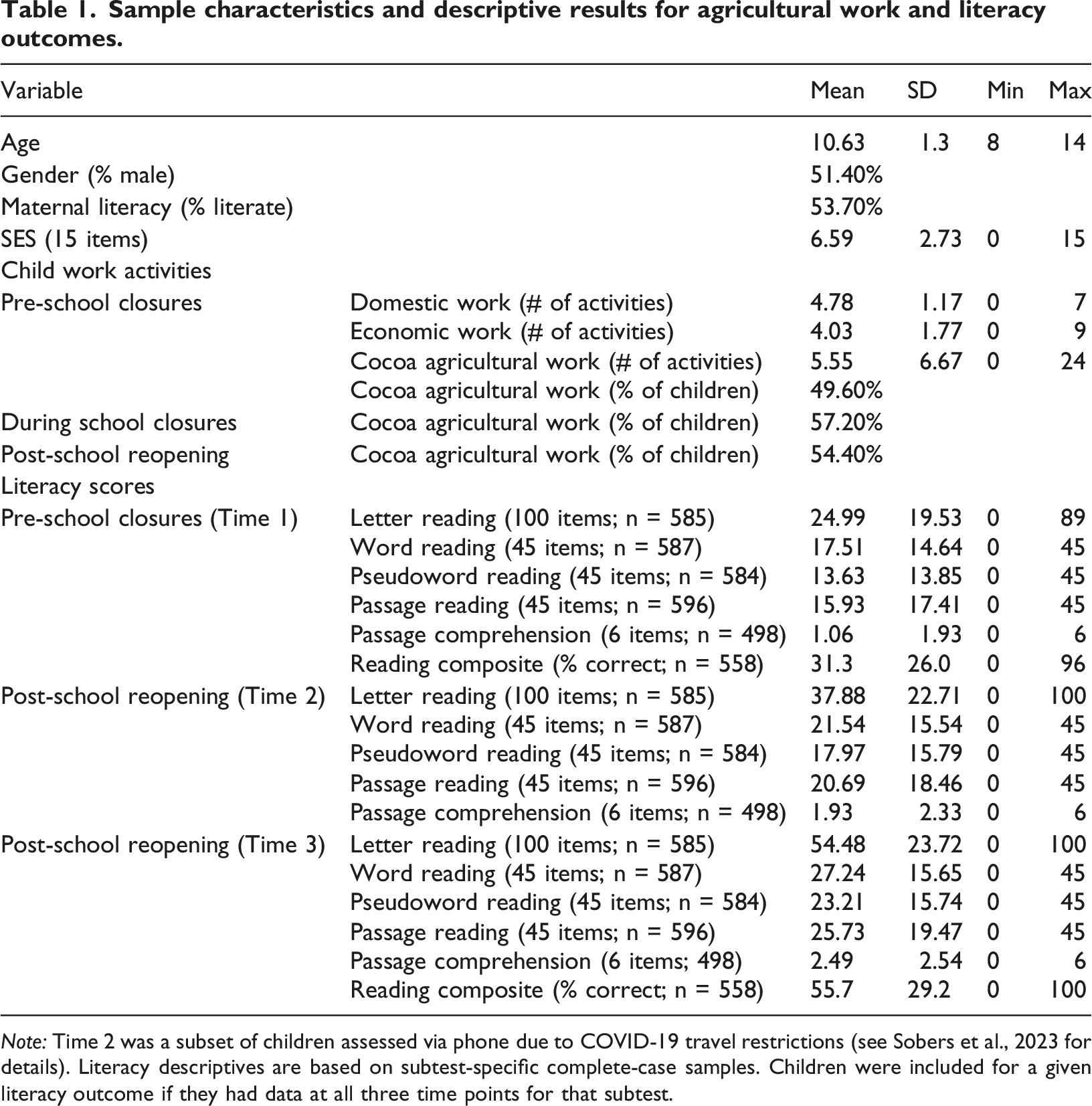
Descriptive results are shown in Table 1. The majority of children knew that their school was closed due to the COVID-19 pandemic (88%), were aware that COVID-19 was a disease (72%), and practiced protective measures (87%; see Figure 2).
Children’s educational activities during school closures
Children reported that school closures reduced their well-being (e.g., playtime, study time, availability of study space, and food security) but increased parental tutoring (see Figure 2). About 50% of children reported doing some educational activities during school closures, including schoolbook exercises, lesson review, and reading, with their parents, siblings, or a tutor. Children who reported doing schoolbook exercises, lesson review, and reading with their parents, siblings, or a tutor were more likely to have a literate mother (b(SE) = .601(.217), z = 2.77, p = .006).
The control and treatment groups were tested for equivalence at Time 1, and the treatment group was found to have lower scores in French language and literacy, and higher rates of participation in child cocoa agricultural work. As the focus of the current paper is not the intervention impact per se, the full analysis of Time 1 equivalence can be found in Jasińska et al. (in preparation). The table of Time 1 equivalence on the measures reported on in this study can also be found in the supplementary materials of this paper. However, as the differences were all in the opposite direction to the effects reported in this study, they, if anything, bolster the conclusions.
Research Question 1: Were COVID-19 school closures associated with increased child cocoa agricultural work?
Number of children reporting working in cocoa agriculture
Pre-school closures, 49% of children reported working in cocoa agriculture. During school closures and at post-school reopening, the number of children reporting working in cocoa agriculture increased to 57% and 54%, respectively (ꭓ2(2, N = 954) = 12.116, p = .002). Post-hoc chi-squared tests showed that the number of children reporting working in cocoa agriculture was significantly higher at post-school reopening and during school closures relative to pre-school closures (pre- vs. post-school closure: FDR-adjusted p = .04; pre- vs. during school closure FDR-adjusted p = .002), but the difference observed between post-school reopening and during school closures was not significant (post vs. during school closure FDR-adjusted p = .229).
Note. ***p < .001, **p < .01, *p < .05, and p < 0.1.
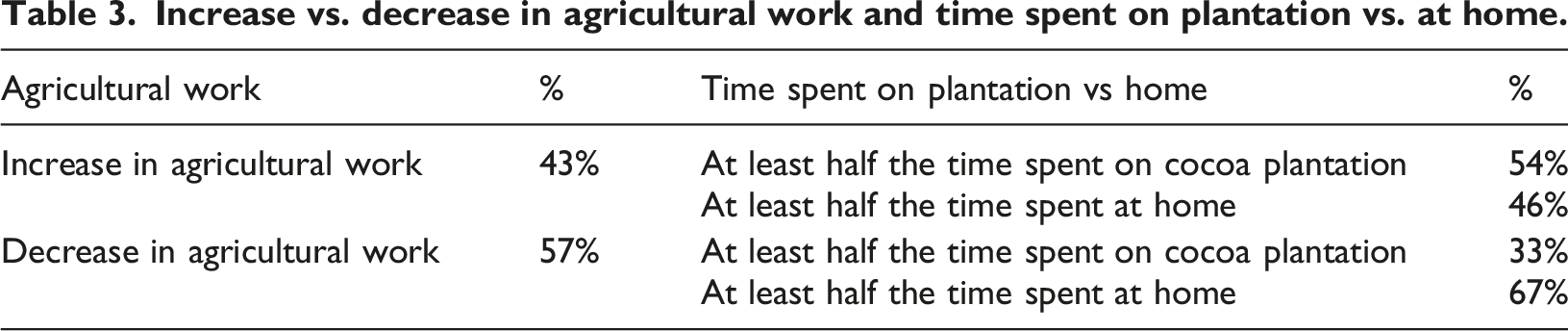
Number of children reporting increase in cocoa agricultural work during school closures
Research Question 2: How did children’s literacy skills change between 2019 and 2021? Were COVID-19 school closures associated with learning loss?
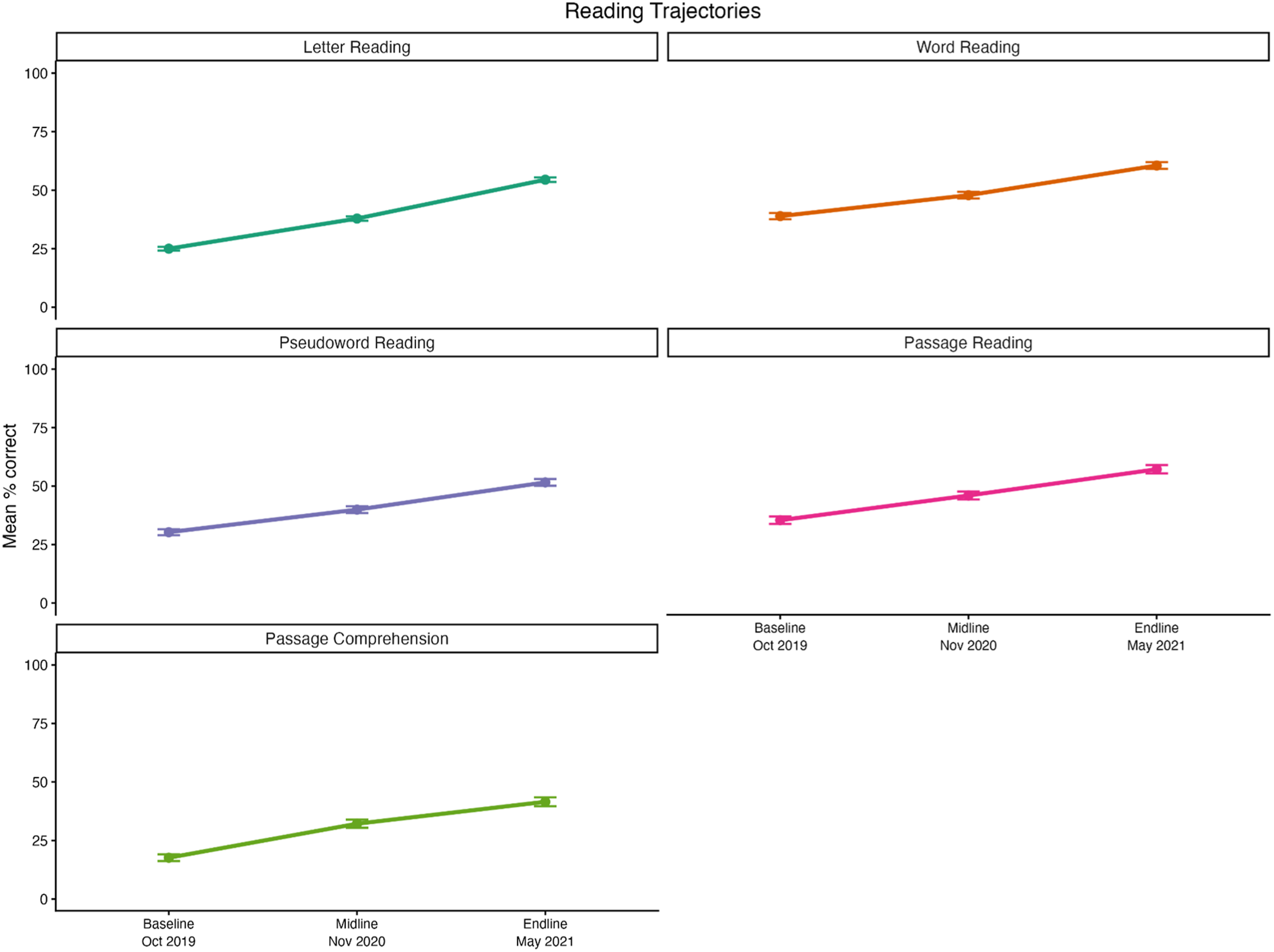
Across all literacy outcomes, scores improved from Time 1 to Time 3 among children with complete data at all three time points for the respective literacy subtest (n = 498–596; see Figure 3 and Table 1). This pattern indicates improvement over time, although the magnitude of growth varied across subtests and between time intervals. For example, mean letter reading scores rose from 24.99 (SD = 19.53) at Time 1 to 37.88 (SD = 22.71) at Time 2 and 54.48 (SD = 23.72) at Time 3, representing an overall increase of 118.0%. For four of the five subtests, percentage gains were larger from Time 1 to Time 2 than from Time 2 to Time 3. Passage comprehension showed the same pattern, with larger percent gains from Time 1 to Time 2 (82.1%) than from Time 2 to Time 3 (29.0%). Similar patterns were observed for pseudoword reading (31.8% vs. 29.2%) and passage reading (29.9% vs. 24.4%). Word reading was the exception, showing slightly larger percentage gains from Time 2 to Time 3 (26.5%) than from Time 1 to Time 2 (23.0%), though the overall percent gain remained substantial (55.6%).
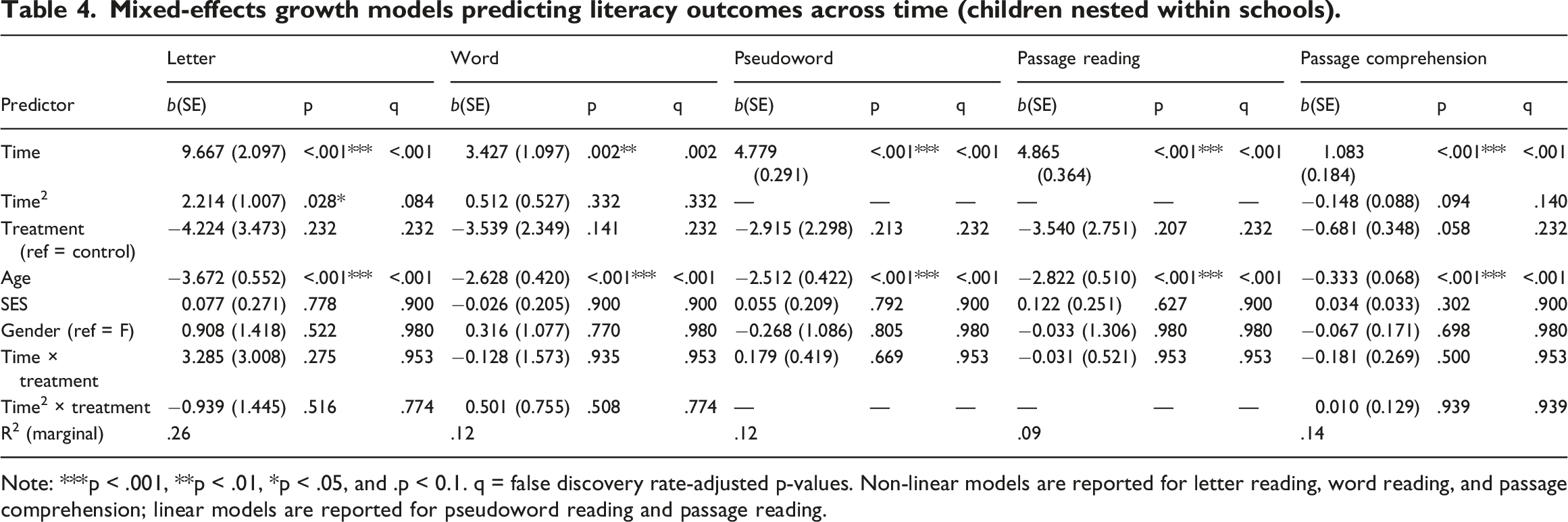
Note: ***p < .001, **p < .01, *p < .05, and .p < 0.1. q = false discovery rate-adjusted p-values. Non-linear models are reported for letter reading, word reading, and passage comprehension; linear models are reported for pseudoword reading and passage reading.
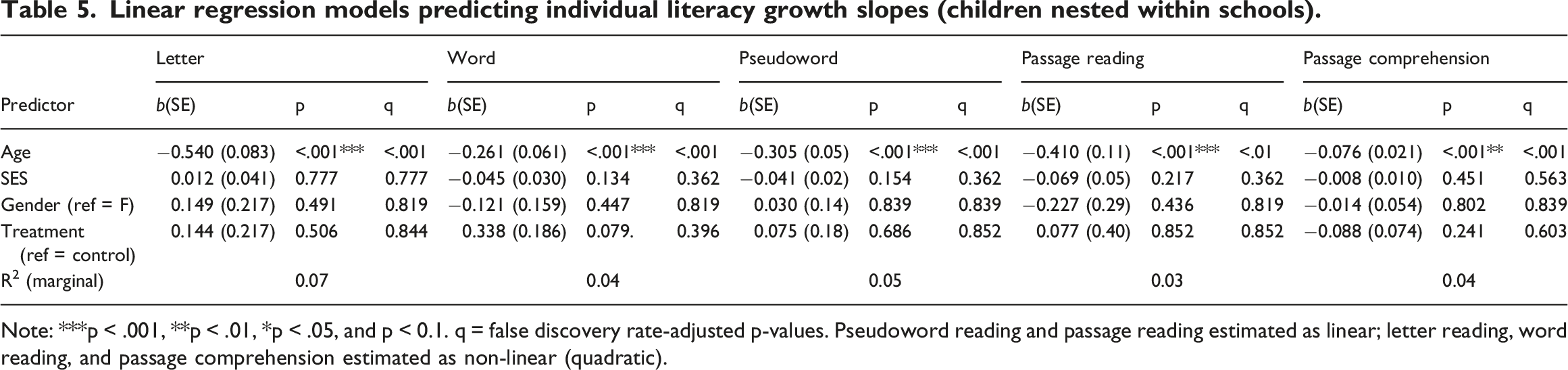
Note: ***p < .001, **p < .01, *p < .05, and p < 0.1. q = false discovery rate-adjusted p-values. Pseudoword reading and passage reading estimated as linear; letter reading, word reading, and passage comprehension estimated as non-linear (quadratic).
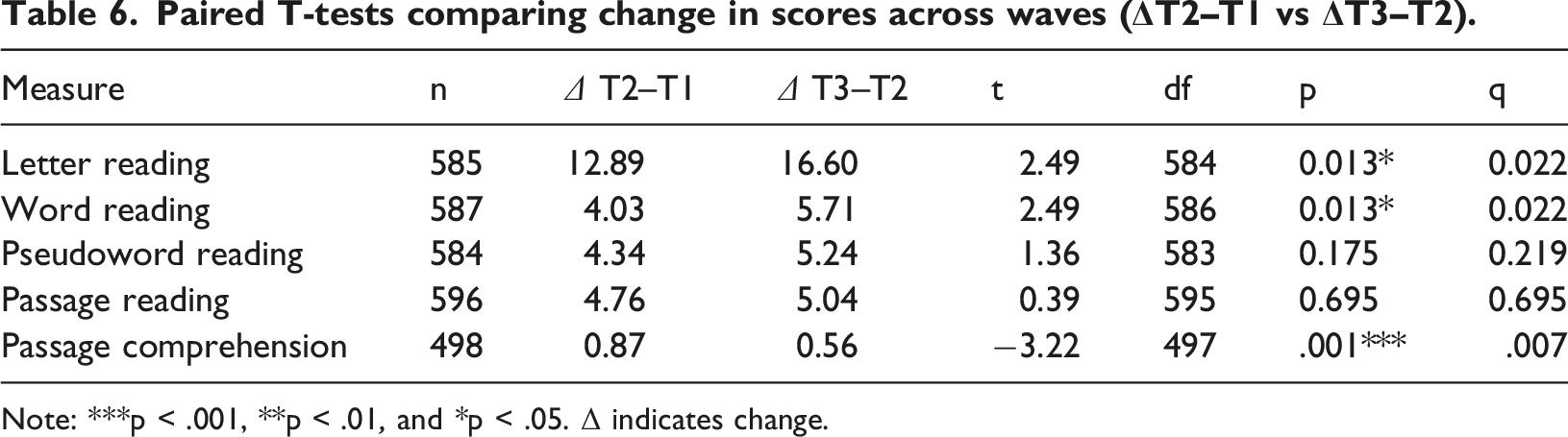
Note: ***p < .001, **p < .01, and *p < .05. Δ indicates change.
Research Question 3: How did educational resources use during school closures relate to child cocoa agricultural work during school closures and children’s learning outcomes?
Children’s educational activities during school closures and cocoa agricultural work
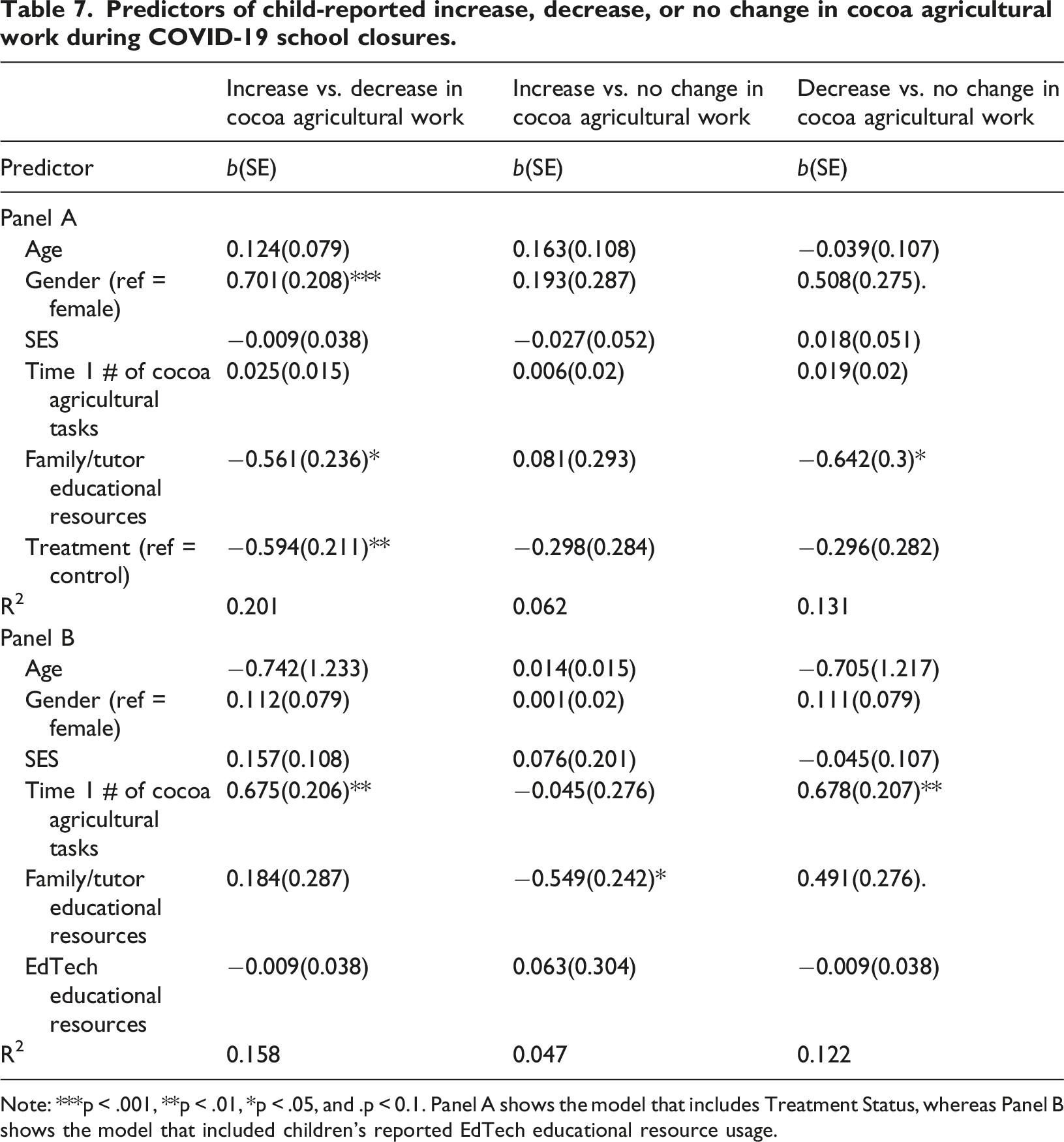
Note: ***p < .001, **p < .01, *p < .05, and .p < 0.1. Panel A shows the model that includes Treatment Status, whereas Panel B shows the model that included children’s reported EdTech educational resource usage.
Children who self-report using EdTech resources during school closures also had higher recorded EdTech usage, as indicated by the log data from the Allô Alphabet platform, indicating that children’s self-reported educational activities during school closures were overall accurate. Relative to children who did not report using EdTech resources during school closures, children who self-report using EdTech resources completed a marginally significantly greater number of Allô Alphabet literacy exercises between March 16 and May 10, 2020—the period when Ivorian schools were closed (self-reported EdTech users: M = 7.52, SD = 19.2; non-EdTech users: M = 4.60, SD = 11.18; t(363) = -2.018, p = .054). We note that 3% of children were recorded as having completed Allô Alphabet exercises between March and May 2020, but had reported not using the platform during their interview post-school reopening.
Children’s access to educational resources, child cocoa agricultural work, and academic outcomes
Predictors of children’s literacy scores at time 3.
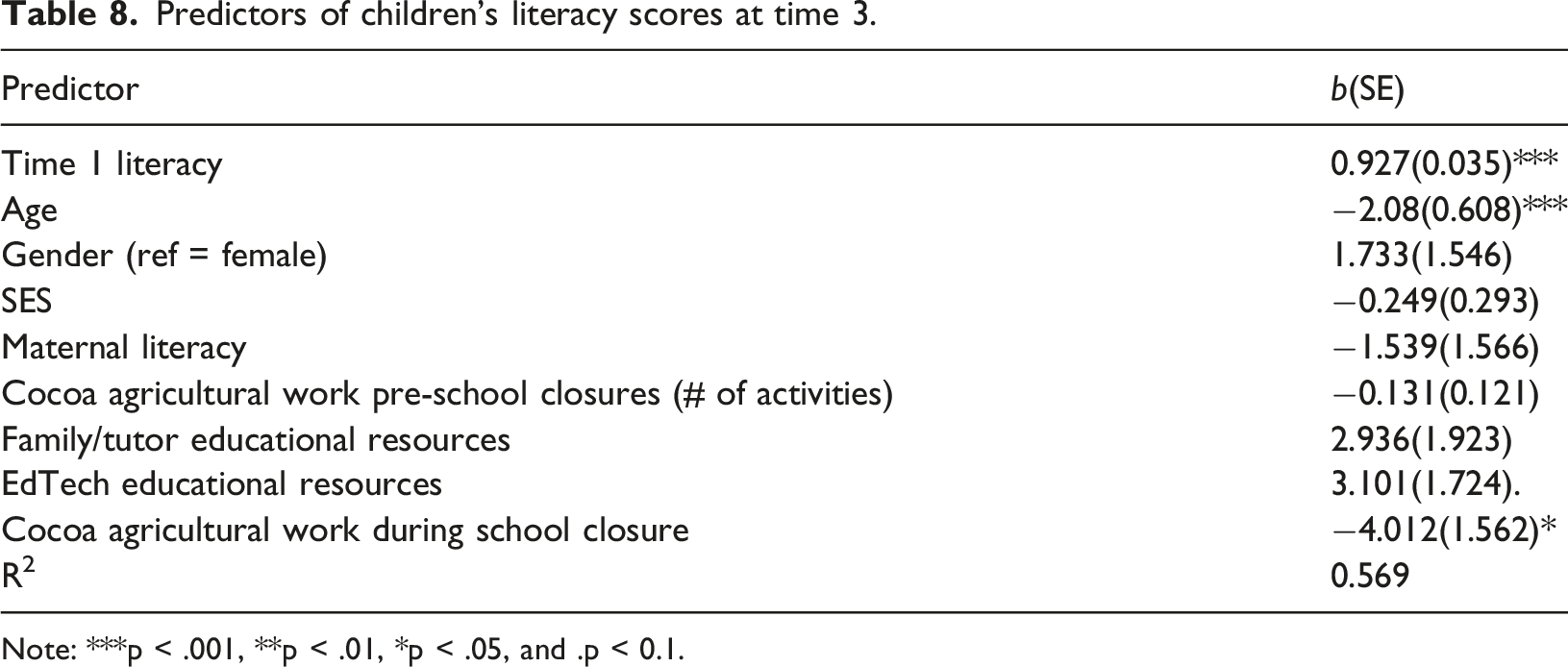
Note: ***p < .001, **p < .01, *p < .05, and .p < 0.1.
Discussion
In this two-year longitudinal study, we examined (1) whether COVID-19 school closures were associated with increased child cocoa agricultural work and (2) literacy outcomes in rural settings, and (3) whether educational resource use, including EdTech, during school closures was related to child cocoa agricultural work and children’s learning outcomes. As predicted, we found that COVID-19 school closures were associated with a significant increase in the number of children reporting involvement in cocoa agricultural work. Overall literacy scores increased over the study period, albeit literacy gains were significantly lower during the 2019–2020 academic year when COVID-19 school closures occurred relative to the 2020–2021 academic year that remained uninterrupted in Côte d’Ivoire. Random assignment to receive access to the Allô Alphabet EdTech intervention (relative to control group) as well as family and tutor educational resources use during school closures increased the likelihood that children reported a decrease in agricultural work during school closures. Importantly, cocoa agricultural work during school closures was associated with lower literacy scores the following year, while access to EdTech was marginally linked to better literacy scores once children resumed schooling regardless of reported agricultural work activity.
COVID-19 school closures and children’s agricultural work
Previous research has shown that COVID-19 school closures reduced students’ average daily learning time and exacerbated inequalities in home learning environments (Grewenig et al., 2021). However, research regarding the impact of COVID-19 on educational outcomes has predominantly come from high-income Minority World countries, where children typically received some form of continuing education from their school systems via online learning. In contrast, in many LMICs in the Majority World such as Côte d’Ivoire, students did not, and most often could not, access education when school closures took effect. Corroborating previous work on the relation between access to education, poverty, and child labor (Ango et al., 2022; Canagarajah and Nielsen, 2001; Mohammed, 2023; United States Department of Labor, 2017), we found that during COVID-19 school closures, the number of children who reported working in cocoa agriculture significantly increased and persisted even once schools reopened. These findings are in line with estimates that the COVID-19 pandemic would lead to increases in child labor (International labor Organization (ILO), 2020, International Labor Organization (ILO) and United Nations Children’s Fund (UNICEF), 2021), and previous work demonstrating links between school closures and higher rates of children participating in economic activities and labor (Elston et al., 2017; Villegas et al., 2021).
Other studies from SSA show that families from lower SES backgrounds may be more likely to involve their children in economic work (Enebe et al., 2021; Vadivel et al., 2023). Not surprisingly, we found that children with more risk factors (lower SES backgrounds, maternal illiteracy) were more likely to engage in cocoa agricultural work during school closures. Boys were more likely to report being involved in cocoa agriculture and to report an increase in agricultural work relative to girls. Our results align with previous research showing that boys had more reduced learning time and more frequently replaced learning time with detrimental activities during COVID-19 school closures (Grewenig et al., 2021) and findings of child work trends in SSA that show the amount of domestic work is higher for girls while boys are more likely to work outside home (Canagarajah and Coulombe, 1999; Dumas and Lambert, 2005; Ilahi, 2001). Still, considering gender is relevant to combatting child labor as domestic work is considered to be a hidden form of child labor because it is unpaid and often goes unreported (e.g., Gibbons et al., 2005; Webbink et al., 2012). Despite differences in type of work, gender had no significant effect on Time 3 literacy. In many contexts, girls are disproportionately affected during crises due to increased domestic responsibilities, reduced access to schooling, or heightened vulnerability to dropout (UNESCO, 2020). The absence of meaningful gender disparities in literacy growth suggests that pandemic-related learning loss and recovery operated similarly for boys and girls in this sample. Rather than exacerbating gender gaps, the disruption appears to have produced broadly shared setbacks.
COVID-19 school closures and children’s literacy outcomes over time
Overall literacy skills improved across the study period; however, growth was smaller during the 2019–2020 academic year (with the exception of passage comprehension) when children’s schooling was disrupted by the COVID-19 pandemic in comparison to the 2020–2021 academic year that was uninterrupted. This pattern is consistent with the widespread instructional disruption caused by the COVID-19 pandemic, during which school closures, reduced contact hours, and limited access to learning materials altered typical learning trajectories (Angrist et al., 2021). School closures were relatively short in Côte d'Ivoire; schools were closed on March 25, 2020, partially reopened on May 6, 2020, and the subsequent academic year resumed in full in September 2020. Potential learning losses may have been mitigated by the relatively short period of school closures. However, high rates of student absenteeism and lower quality education undermine learning gains even when schools are fully open. Additionally, we found that older children showed less growth in literacy over the study period. Many older students in low-resource settings are “over-age for grade” due to late school entry, interruptions in schooling, or grade repetition, factors consistently associated with weaker foundational literacy and numeracy skills. Existing research shows that children who are over-age for their grade show poorer literacy skills (Jasińska et al., 2024; Whitehead et al., 2024).
Educational resources use during COVID-19 school closures, child agricultural work, and learning outcomes
About 50% of the children reported doing some educational activity (i.e., receiving support from a family member or tutor or using EdTech) during school closures. Our hypothesis that children’s use of educational resources was related to a reduction in child agricultural work during the COVID-19 period of school closures and positive learning outcomes was supported; children enrolled in the Allô Alphabet intervention and children who reported family support or tutoring during school closures were more likely to report a decrease in agricultural work during school closures. This finding is in line with a growing body of research that has established a link between access to quality education and lower rates of child labor (ICI, 2019; Wortsman et al., 2024a). Further, this finding supports previous work on the potential of supplemental educational resources such as EdTech during school closures (Kizilcec et al., 2021) and has implications beyond the COVID-19 pandemic given that school closures due to epidemics, civil unrest, or teacher strikes are not uncommon across SSA (Abadzi 2009; Kizilcec et al., 2021). Within Côte d’Ivoire, and the broader context of SSA, school closures coupled with the lack of electricity and internet to support distance learning in rural areas (GSMA, 2017; World Bank, 2023) can render access to quality education scarce. Children are less likely to enter the labor force at a young age when they have access to quality schooling (Ango et al., 2022; Canagarajah and Nielsen, 2001; Mohammed, 2023).
Working in cocoa agriculture during school closures was significantly associated with poorer literacy skills one year later (post-school reopening). Importantly, the negative link between working in cocoa agriculture during school closures and literacy held even when controlling for Time 1 literacy skills and child cocoa agricultural work at the start of the previous school year (pre-school closures). It is well understood that children enter school with widely different literacy abilities impacted by SES and other risk factors that are outside of schools (Lonigan and Shananhan, 2009; Stanovich, 2009; Waldfogel, 2012). Often referred to as the “Matthew Effect,” the model predicts that initial literacy gaps widen for children who face incipient experiences or difficulties with reading and writing, creating a rich-get-richer and poor-get-poorer achievement gap. Greater attention is now being paid to how out-of-school inequalities are contributing to literacy gaps and the role of the Matthew Effect. Research points to the interrelated roles of parents, home environment, and provision of reading materials as critical factors (Lonigan and Shananhan, 2009; Stanovich, 2009; Waldfogel, 2012). In the context of COVID-19 school closures that exacerbate an existing learning crisis among Ivorian children (Jasińska et al., 2023), the Matthew Effect paints a desperate picture for already vulnerable children. Predictably, we found children who had poor literacy scores prior to the pandemic showed significantly poorer scores after the school closures, suggesting educational disparities may be widening.
Interestingly, EdTech use during school closures was marginally associated with better literacy outcomes. Several meta-analyses of educational intervention in SSA have found that investments in instructional technologies had the largest impact on children’s learning outcomes in comparison to other investments, including nutritional and health interventions, reducing class sizes, or cash transfers conditional on school attendance (Castillo et al., 2022; Conn, 2017; Jasińska & Guei, 2022; McEwan, 2015). Allô Alphabet was designed to supplement schooling, rather than replace it, suggesting that even in the best case, usage during school closures is likely insufficient to meaningfully increase literacy skills (Kizilcec et al., 2021). In our related work, we report the impact of Allô Alphabet use over two academic years on literacy skills (Jasińska et al., in preparation). Children who utilized Allô Alphabet more showed a significantly greater increase in literacy skills; a 10% increase in the number of literacy activities completed translated to more than half a standard deviation greater increase in performance in literacy tasks over the two years of the intervention (Jasińska et al., in preparation). Although the effect of EdTech use during school closures on literacy outcomes was marginal, these findings add to the evidence that educational resources, including EdTech, can potentially provide some support when schooling is unavailable. This is particularly relevant in Majority World contexts like Côte d’Ivoire, which can face frequent school closures beyond COVID-19, and for vulnerable populations, such as child laborers, who have limited access to school. Additionally, access to Allô Alphabet in the 2020–2021 academic year may have also boosted learning recovery after potential learning loss due to school closures in the preceding academic year. For example, Lichand and Doria (2024) showed that remedial education programs implemented in the aftermath of the pandemic boosted learning recovery in Brazil.
Importantly, Allô Alphabet was designed for all families regardless of parental literacy level. Previous research on educational resource usage in Africa found that illiterate mothers were less able to directly support their child (i.e., read with them and lesson review; Lloyd and Blanc, 1996; Namatende-Sakwa et al., 2022), and children’s participation in educational activities has been linked to their home environment and parental literacy (Jasińska et al., 2022; Madaio et al., 2019a). While illiterate mothers were less able to support their children with traditional educational resources, children used EdTech despite the high prevalence of maternal illiteracy in our sample. Promisingly, this underscores EdTech’s potential in contexts where maternal literacy is low or where there are fewer traditional education supports available and is in line with previous findings that Allô Alphabet is an effective self-directed educational resource (Madaio et al., 2020a; Jasińska et al., in preparation).
Limitations and future directions
A limitation of our work is related to children’s conception of work and our timing of data collection. Children were asked about changes in their work-related activities; however, we did not obtain a detailed report of children’s activities and cannot definitively state whether or not children worked in a range that would qualify it as child labor (i.e., excess hours). We asked children about changes in their child cocoa activities pre-, during, and post-school closures; however, these times were all at different points in the year. Depending on the cocoa harvest season, fluctuations in the amount of work may influence children’s responses. For example, the large cocoa harvest takes place each fall—a period when children’s agricultural workload would be highest. Bøås and Huser’s (2006) report on child cocoa agricultural work in Côte d’Ivoire and Ghana found that Fall (September) is the main cocoa-harvesting period and most time-consuming. These findings align with previous research on child cocoa production in SSA that found a significant increase of hazardous work and absence from school during cocoa-harvesting seasons (Luckstead et al., 2019; Tulane, 2015). Similarly, Angula (2024) found that in rural Colombian farming regions students miss school during harvesting seasons. Policy from Ghana, prohibiting children to be withdrawn from school during the harvesting season (Tulane, 2015), speaks to the strength of the economic pulls from children’s education.
We asked children about cocoa agricultural work during school closures which took place in the spring, which would suggest that the number of children reporting agricultural work would decrease. In fact, we found the opposite pattern, suggesting children’s agricultural work increased despite the overall lower demands associated with the non-harvest season. While we observed an increase in agricultural work during school closures relative to pre-COVID-19 pandemic, agricultural work did not significantly decrease once children resumed schooling. Additional research needs to be done to investigate parental decisions and post-pandemic economic needs to understand why agricultural work did not decrease once children resumed schooling. Persistent agricultural work after schools reopened may be due to the proclivity for older children in SSA to work International Labor Organization (ILO), 2017a; United Nations Population Fund (UNFPA) and Population Reference Bureau (PRB), 2012. A study by Diallo (2002) shows that in general the older a child gets the greater their physiology and physical fitness, making them more suitable and likely to work. Indeed, the children in this study were almost two years older post-school reopening relative to the start of the study and may explain, at least in part, the greater number of children reporting working. While this age-related increase in work is expected, the number of children who reported working in cocoa agriculture post-school reopening was numerically lower than the number who reported working during school closures, although non-statistically significant. This suggests that the increase in work reported during school closures is likely attributed to school closures rather than age-related increases in work.
Relatedly, reports of child agricultural work during COVID-19 school closures were all retrospective, which likely introduced errors as well as limited direct comparisons between the two other time points (collected in person). While there was no possibility to assess children’s agricultural work directly during the period of school closures (i.e., due to global travel restrictions, and without significantly increasing risk of COVID-19 transmission in communities with limited health infrastructure), this remains an important limitation of the work and our conclusions remain cautious. Children’s self-report of agricultural work has been shown to be reliable and valid within this population; children are less likely to report with social-desirability bias than their parents, and when compared to certifier data in previous studies children’s self-reported data was more accurate than parent report (Lichand and Wolf, 2025). While the participants of our study are likely child laborers given the average age (under 11 years old) combined with the temporal and physical demands of cocoa agricultural work, measuring child labor (i.e., precise amount of hours worked) was beyond the scope of this study. Therefore, we refer to the children’s agricultural activities as work. Therefore, while this study applies to child work, it also has implications for child labor.
Further studies should also investigate how educational resources can best be used to help reduce child labor and combat the learning crisis. There is still very limited research on access to quality education as a protective measure against child labor. Our study found that about 50% of children used some type of educational resource during school closures, meaning only half are receiving any potential academic and protective benefits. Research into factors that predict use of educational resources may provide additional insights into how to best leverage educational resources for children in this context.
Conclusion
Child labor exists within a complex cycle of poverty, cultural norms, and access to quality education (Ango et al., 2022; Canagarajah and Nielsen, 2001; ICI, 2019; Jensen and Nielsen, 1997; Kruger, 2007; Mohammed, 2023). Families from lower SES backgrounds may be more likely to involve their children in economic work and have less access to educational resources both contributing to lower academic outcomes (Enebe et al., 2021; Vadivel et al., 2023). Thus, during COVID-19 school closures, children from lower SES backgrounds may be more likely to face a dual-negative impact of working more and having less educational resources to support learning. School disruptions in SSA are common either due to teacher strikes, natural disasters, or epidemics (i.e., Ebola and Malaria), and COVID-19 was not the first time that students experienced a break from traditional schooling (Kizilcec et al., 2021). Our findings suggest that the COVID-19 school closures were associated with increased rates of agricultural work and decreased learning outcomes. However, educational resources, including family tutoring and access to EdTech, may help mitigate these negative effects, as their use was associated with decreased agricultural work.
Our longitudinal study investigated COVID-19 school closures and whether using educational resources (i.e., family and tutoring support, EdTech—Allô Alphabet) mitigated negative impacts of school closures on the resurgence of child labor and learning outcomes in agricultural regions dominated by cocoa production, pre-, during, and post-COVID-19 pandemic. The results show that school closures were significantly associated with an increase in child cocoa agricultural work that persisted even once schools reopened. In vulnerable communities, school closures may fuel a surge in child labor. Cocoa agricultural work during school closures was strongly associated with poorer learning outcomes, even after controlling for Time 1 literacy and agricultural work. However, educational resource use during school closures was linked to marginally higher literacy skills.
Children growing up in impoverished communities (i.e., vulnerable background and lower education) are most at risk of child labor and becoming entrenched in the poverty cycle. Educational resources designed for low-literacy, low-SES families may provide a solution. Investing in high-quality educational supports is an equitable and productive use of resources, especially in a context of limited resources, as it may help protect against child labor (Wortsman et al., 2024a) and can provide needed support during extended periods of school closures. This investment is likely to lead to better educational outcomes and in turn increase intergenerational access to education and resources, potentially disrupting the negative cycle between education, child labor, and poverty (OECD, 2012). These findings are not limited to the COVID-19 school closures but are applicable for other school disruptions and closures which occur frequently in SSA (Kizilcec et al., 2021). Our findings are relevant to the United Nations Target 8.7, eradicating child labor (United Nations, 2015) by furthering our understanding of the drivers and protective factors of child labor. Achieving SDGs requires hand-in-hand strategies that target multiple SDGs simultaneously (United Nations, 2015). It is necessary to invest in quality education, including educational resources, otherwise the all too common school disruptions risk hindering child learning, surging participation in child labor, and entrenching children poverty.
Supplemental material
Supplemental material - Educational resource use during COVID-19 school closures, child cocoa agricultural work, and learning outcomes in rural Côte d’Ivoire
Supplemental material for Educational resource use during COVID-19 school closures, child cocoa agricultural work, and learning outcomes in rural Côte d’Ivoire by Joshua Lim, A. Micaela Ostry, Yomna Elshabrawy, Stephanie Brogno, Nana N’Goh, Hermann Akpé, Fabrice Tanoh, Henry Brice, Amy Ogan, and Kaja K. Jasińska in Research in Comparative and International Education.
Footnotes
Acknowledgments
This work was funded by the Jacobs Foundation through a research grant (PIs: Jasińska, K. K., Ogan, A.). We would like to thank the Ivorian Ministry of Education for their support of our research efforts as well as for the exchanges and information meetings that took place during the project. Our thanks also go out to the Transforming Education in Cocoa Communities (TRECC) program for their support. Finally, we are exceptionally grateful to the families and children who participated in this study, and extend a special thanks to the village chiefs and elders, school principals and teachers, and members of the Comité de Gestion des Établissements Scolaires (COGES).

Ethical considerations
The study was approved by the University of Toronto Research Ethics Board (Protocol #39740), the Ivorian Ministry of Education, and Comité de Gestion d'Ecoles (COGES; the parent-teacher group in Côte d'Ivoire).
Funding
This work was funded by the Jacobs Foundation through a research grant (PIs: K. Jasińska, A. Ogan) and a science capacity building grant to support Ivorian scholars (2015-1184; PI: K. Jasińska; Allô Alphabet).
Declaration of conflicting interests
The authors declared no potential conflicts of interest with respect to the research, authorship, and/or publication of this article.
Significance statement
The COVID-19-pandemic-related school closures were associated with an increase in child work in rural Côte d’Ivoire. Assignment to an educational technology intervention developed for low-literacy and low SES environments during school closures resulted in decreased child agricultural work during school closures. Child agricultural work during school closures was associated with poorer learning outcomes after schools reopened.
Supplemental material
Supplemental material for this article is available online.
Note
Author biographies
References
Supplementary Material
Please find the following supplemental material available below.
For Open Access articles published under a Creative Commons License, all supplemental material carries the same license as the article it is associated with.
For non-Open Access articles published, all supplemental material carries a non-exclusive license, and permission requests for re-use of supplemental material or any part of supplemental material shall be sent directly to the copyright owner as specified in the copyright notice associated with the article.
