



Abstract
Finkel, Rusbult, Kumashiro, and Hannon (2002, Study 1) demonstrated a causal link between subjective commitment to a relationship and how people responded to hypothetical betrayals of that relationship. Participants primed to think about their commitment to their partner (high commitment) reacted to the betrayals with reduced exit and neglect responses relative to those primed to think about their independence from their partner (low commitment). The priming manipulation did not affect constructive voice and loyalty responses. Although other studies have demonstrated a correlation between subjective commitment and responses to betrayal, this study provides the only experimental evidence that inducing changes to subjective commitment can causally affect forgiveness responses. This Registered Replication Report (RRR) meta-analytically combines the results of 16 new direct replications of the original study, all of which followed a standardized, vetted, and preregistered protocol. The results showed little effect of the priming manipulation on the forgiveness outcome measures, but it also did not observe an effect of priming on subjective commitment, so the manipulation did not work as it had in the original study. We discuss possible explanations for the discrepancy between the findings from this RRR and the original study.
Even in the closest relationships, people sometimes betray their partner’s trust. Such betrayals introduce stress, and the way partners handle such threats to their relationship can have lasting consequences. Offering forgiveness can be more constructive than blaming or retaliating. What motivates partners to forgive?
Many studies report an association between relationship commitment and willingness to forgive transgressions (e.g., Cann & Baucom, 2004; Fehr, Gelfand, & Nag, 2010; Karremans, Van Lange, Ouwerkerk, & Kluwer, 2003; McCullough et al., 1998; Tsang, McCullough, & Fincham, 2006). As with any correlation, though, disentangling the direction of causality can be challenging. Using interdependence theory as a guiding framework, Finkel, Rusbult, Kumashiro, and Hannon (2002) provided one of the only experiments addressing the causal relationship between commitment and responses to betrayal. They used a priming task to experimentally manipulate commitment (low or high) and then assessed forgiveness responses.
In Study 1 of their article, the focus of this Registered Replication Report (RRR) project, participants were primed by writing responses to open-ended prompts that guided them to think about either their dependence and commitment to their partner (high commitment) or their independence and lack of commitment to their partner (low commitment). High commitment prompts included five items such as “Describe two ways in which you feel that your life has become ‘linked to’ your partner” and low commitment prompts used items such as “Describe two ways in which you are independent of your partner.” Then, in an ostensibly unrelated study, participants read descriptions of 12 hypothetical betrayals committed by their partner and indicated how they would react. These potential reactions corresponded to four response tendencies: exit, voice, loyalty, and neglect (Rusbult, 1993; Rusbult, Zembrodt, & Gunn, 1982).
The four possible reactions to the hypothetical betrayals differ along two dimensions (Rusbult, 1993; Rusbult et al., 1982): constructive/destructive and active/passive. Exit responses are actively destructive: People deliberately respond in a way that harms the relationship, such as trying to get even with their partner. Neglect responses are passively destructive: People respond in a way that weakens the relationship rather than actively addressing the betrayal, such as giving their partner the “cold shoulder.” Voice responses are actively constructive: People respond in a way that benefits the relationship, such as discussing the betrayal with their partner to understand why it happened. Loyalty responses are passively constructive: People respond by waiting for the situation to improve, such as by maintaining the view that their partner is a good person or believing that their partner’s behavior was unintentional.
Finkel et al. (2002) predicted that participants exposed to a high-commitment prime would exhibit greater forgiveness, reacting to betrayal with “lesser exit and neglect along with greater voice and loyalty” (p. 960) than would those exposed to a low-commitment prime. They observed the predicted effects for exit and neglect responses, but not for voice and loyalty responses. The effect of the commitment prime on exit and neglect responses builds on earlier correlational research, showing that increased commitment may help partners to respond to betrayals of trust in less destructive ways.
This highly cited paper serves as a cornerstone for the theoretical importance of relationship commitment as a predictor of relationship outcomes, including forgiveness. The findings have important implications for the theoretical understanding of forgiveness and, assuming the self-report response measures predict actual responses to betrayal, for practical implications such as couple therapy. No direct replications of this study have been published. This RRR is designed to provide a direct replication of this influential finding and to provide a more precise estimate of the size of the effect of this commitment prime on how people report that they would respond to betrayals from a romantic partner.
The authors of the original study noted the need for replication of the pattern in which the prime affected negative responses (exit and neglect tendencies) but not positive responses (voice and loyalty), especially given that they had originally predicted effects for all four measures. They explained: “. . .to the extent these results are replicated in future work. . .such findings suggest that commitment exerts its motivational effects precisely where such effects are most critical”—on the inhibition of “potentially devastating destructive impulses”—and speculated that it may be “. . .less important that close partners enact constructive behaviors. . .” (Finkel et al., 2002, p. 970).
In this project, 16 labs completed independent, preregistered direct replications of the original study, all following the same vetted protocol. The primary analysis specified in the protocol involved testing the influence of commitment prime (high vs. low) on exit and neglect forgiveness (outcomes that showed an effect in the original study); auxiliary analyses tested the influence of commitment on voice and loyalty forgiveness (outcomes that, despite Finkel et al.’s hypotheses, did not show an effect in the original study). 1 The meta-analytic results of these separate analyses are presented in the Results section.
Protocol Development and Requirements
Cheung, Campbell, and LeBel proposed this RRR project and developed the protocol in consultation with Eli Finkel, the lead author of the original study. Finkel provided all of his original materials and reviewed the protocol and scripts. The protocol is available on the OSF project page for this RRR project (https://osf.io/s3hfr/).
Perspectives on Psychological Science publicly announced a call for laboratories interested in participating in this replication project on March 2, 2015. The deadline for laboratories to submit their application to participate was March 23, 2015. A total of 21 labs applied to join the replication project, and 16 labs from 5 countries completed the study.
Each lab preregistered a detailed plan for implementing the approved protocol prior to conducting their study, and the editor reviewed each plan to ensure that it met the requirements of the protocol. These preregistered implementation plans are linked from the OSF project page. Labs noted any deviations from the standard protocol in their preregistration, and they noted any departures from their preregistration that occurred during data collection on their OSF page. All of the researchers involved in conducting replications as part of this project are coauthors on this report.
Participants
Each study tested a minimum of 50 participants in each prime condition, with approximately the same proportion of men and women in each condition (each study included between 20% and 80% women). As in the original study, participants were recruited exclusively from undergraduate psychology participant pools or from an equivalent population recruited in other ways. All participants were 18–24 years old, with an average age of approximately 18–21 years. Participants were required to be currently involved in a dating relationship of at least 1 month in duration (see Table 1 for demographic information about each laboratory’s sample).
Demographic Information for Participating Labs

Note: RRR = Registered Replication Report.
Testing setting
Participants were tested in-person either individually or in small groups, and those tested in groups could not see the responses of other participants. Each testing station was set up so that participants could complete both the paper-and-pencil and computer-based components of the study. Each participating laboratory uploaded photographs of their testing setting to their OSF page. The person conducting the experiment had to be at least 20 years old and needed to have experience collecting experimental psychology data and interacting with participants. Assignment of participants to conditions was randomized by the experimental script so that the experimenter could remain blind to the condition assignment.
Materials
In the original study, all of the questionnaires were administered using paper and pencils rather than computers. For the RRR protocol, the commitment prime was administered using a paper-and-pencil questionnaire, but the forgiveness measures were collected via a computer-based Qualtrics (www.qualtrics.com) survey. The original study used verbal debriefing to assess suspicions about the link between the prime and the forgiveness measures. The RRR study instead used a 6-item, computer-based funnel debriefing questionnaire as a more systematic way to test for suspicion. All study materials are available from https://osf.io/s3hfr/.
Data collection
When the subject pool required a description, the study was described as being about the participant’s dating relationship. If participants had broken up with their partner since signing up for the study, they were instructed to describe their most recent dating relationship. R scripts (R Development Core Team, 2008) were used to generate a randomized order of condition assignments for men and for women. These scripts ensured that approximately equal numbers of people were assigned to each condition and that similar proportion of men and women were assigned to each condition (https://osf.io/s3hfr/).
As in the original study, the experimenter told participants that they would be participating in two separate studies (so that they would be unaware of the link between the commitment prime and the forgiveness measures). The use of paper-and-pencil responses for the commitment prime and computerized presentation for the forgiveness survey reinforced this cover story. Participants were told that the primary study would take only 20 minutes and were asked to help the experimenter’s mentor or supervisor with his or her research program by first filling out a short open-ended questionnaire (the commitment prime). The cover page of the questionnaire was placed face up, and it consisted of a letter from the experimenter’s mentor or supervisor. The letter included a description of the purpose of and instructions for the questionnaire, as well as an expression of gratitude to the participant. The commitment prime questionnaire was on the back of this letter. The items in the priming questionnaire appear in Table 2.
Priming Items for Each Commitment Prime Condition

After they completed the priming questionnaire, participants turned it over and proceeded to the computer questionnaire. Participants read descriptions of 12 hypothetical betrayals committed by their partner (e.g., “Your partner talks to friends about private issues in your relationship”; “Your partner makes fun of you when you talk about your deepest fears”) and indicated how likely they would be to react in a variety of ways using a 9-point rating scale from 0 (not at all likely to react this way) to 8 (extremely likely to react this way). The various reactions contributed to exit, voice, loyalty, and neglect index scores, with one item assessing each tendency in response to each scenario. Table 3 shows the list of scenarios and the response items corresponding to each forgiveness measure.
List of Scenarios and the Response Items Corresponding to Each Forgiveness Measure
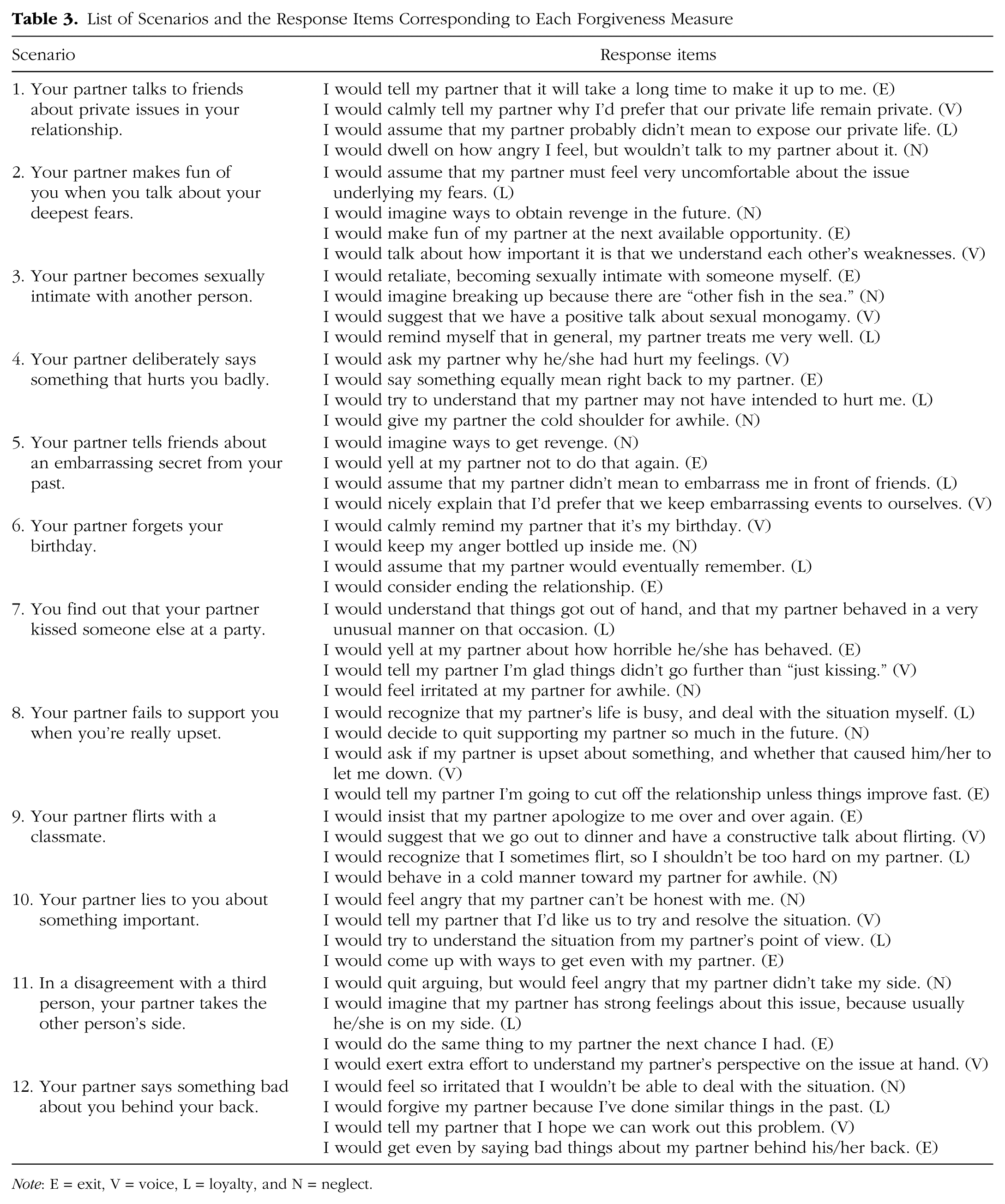
Note: E = exit, V = voice, L = loyalty, and N = neglect.
Following these forgiveness items, participants completed two other measures: the 7-item subjective commitment subscale of the Investment Model Scale (Rusbult, Martz, & Agnew, 1998) to assess their commitment to their partner and the 40-item Balanced Inventory of Desirable Responding (Paulhus, 1984) to assess self-deception (20 items) and impression management (20 items). For the subjective commitment scale, participants indicated the extent to which they agreed with statements like “I want our relationship to last for a very long time” or “I am committed to maintaining my relationship with my partner” using a 9-point rating scale from 0 (do not agree at all) to 8 (agree completely). A single commitment score was calculated for each participant by reverse coding 1 item and then averaging the scores across the 7 items, with higher scores representing greater subjective commitment. For the self-deception and impression management scales, participants responded using a 7-point rating scale ranging from 1 (do not agree at all) to 7 (agree completely) to items like “I am fully in control of my own fate” or “I am a completely rational person.” Indices of self-deception and impression management were calculated following Paulhus’ scoring key: The negatively keyed items were reverse scored (10 items for each scale), and then extreme scores (i.e., a 6 or 7) were recoded to a value of 1 and all other scores were recoded to 0. Thus, the number of 1s for each scale corresponded to the number of extreme responses, and the sum of these recoded scores for each scale could range from 0 to 20, with higher scores representing greater self-reported self-deception and impression management.
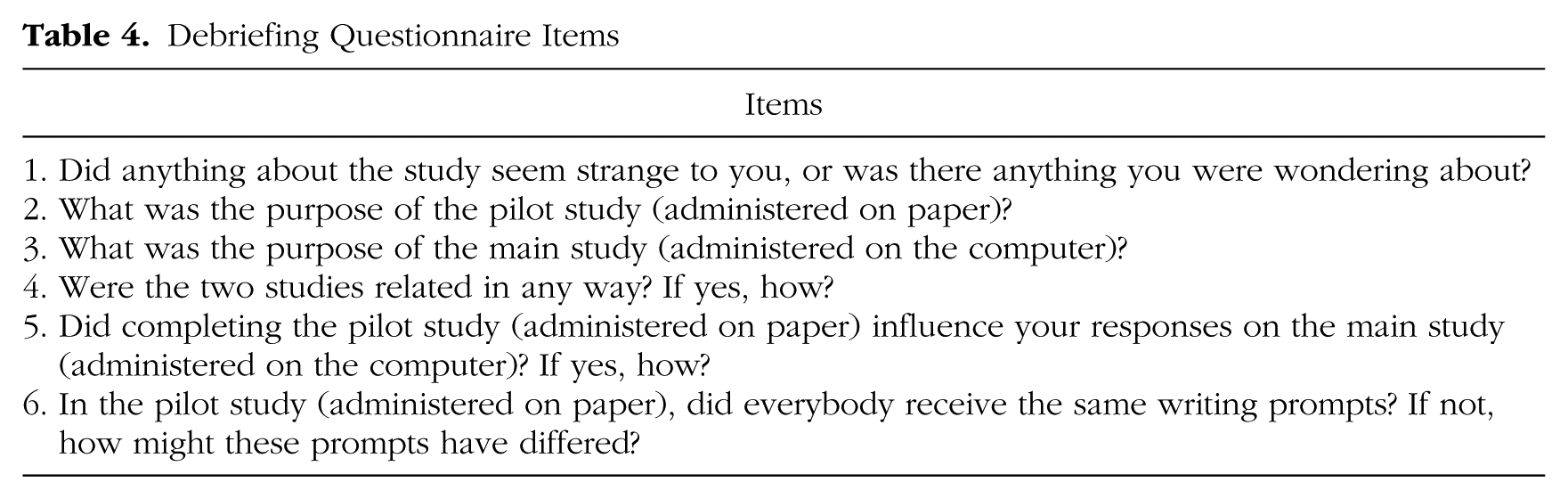
Next, participants provided their age and gender, the current status of their relationship, how long they had been involved with their partner, the exclusivity of their relationship, how often they saw their partner, and how far away their partner lived at that time. Finally, participants completed a 6-item funnel debriefing questionnaire to assess whether they believed that the priming and forgiveness tasks were related and whether they realized that other study participants had received different primes (see Table 4). After participants were debriefed, the experimenter entered the priming condition and name of the lab into the Qualtrics survey to ensure that the prime and forgiveness measures were linked in the data file.
Debriefing Questionnaire Items
Stopping rules and exclusions
As part of the OSF preregistration, each lab indicated its stopping rule to end data collection, and the editor approved these procedures prior to pre-registration. The rules were designed to ensure that each lab would meet the minimum data collection requirements for the protocol and that the decision to end data collection would not be influenced by the results of the study.
Data from participants were excluded from analyses for any of the following reasons: participants were not in the required age range (18–24 years old), participants were not currently involved in a romantic relationship, participants did not follow instructions, participants did not complete all tasks, participants were aware of the different conditions of the study or suspected that the two studies were part of the same study (based on responses from the funnel debriefing questionnaire), or the experimenter did not administer the instructions or tasks correctly.
We created a set of guidelines for two levels of data exclusions due to the number of open-ended questions during the debriefing portion of the study. The first level of exclusions included cases that clearly met the criteria outlined in the protocol, and the second level of exclusions included cases that required judgment calls, such as participants indicating that the two studies may be related because they both look at dating relationships. The analyses reported here correspond to the first level of exclusions. An equivalent set of analyses taking the second level of exclusions into account is available on the OSF project page.
Results
The goal of an RRR is to provide a precise measure of the size of an effect by combining the results of multiple, independently conducted direct replications. The results of all studies are included regardless of their outcome, providing an unbiased meta-analysis of the effect. The analysis does not focus on null-hypothesis significance testing. Instead, we report the meta-analytic effect size for each outcome measure, along with the confidence interval around that effect size. Each individual laboratory was provided with an R script to analyze their data in a way that is consistent with the preregistered protocol. The script is available on the main OSF project page, and each laboratory’s results are available on their OSF project page, linked from the main project page.
The output of the script—following the preregistered plan—includes a measure of the overall effect, ignoring gender, on subjective commitment (manipulation check), and the primary outcomes that showed a priming effect in the original study (i.e., exit and neglect measures). It also provides the results for the voice and loyalty measures that, despite Finkel et al.’s hypotheses, did not show a differential effect of high and low commitment primes in the original study. Additional analyses provided on the OSF project page consist of models that include impression management and self-deception as covariates and a mediation analysis of the effect of subjective commitment for all four outcome measures. The analysis plan for the individual lab analyses was preregistered in the official protocol. These R scripts were written by Edison Choe and reviewed by Courtney Soderberg at the Center for Open Science. We verified the accuracy of the scripts by reproducing the original statistical results reported by Finkel et al. (2002) from their raw data.
A separate R script, using the same analysis functions, was written to conduct the meta-analysis across labs. The scripts provide meta-analyses for the subjective commitment manipulation check as well as for the two outcome measures that showed a priming difference in the original study (exit, neglect) and the two that did not (voice, loyalty). For each outcome measure, we provide a forest plot showing the overall difference between high and low commitment primes in each laboratory result (see Figs. 1–5). At the top of each forest plot we show the original result from Finkel et al. (2002), and below the forest plot we provide the results of a random-effects meta-analysis across laboratories for that measure (the meta-analysis does not include the original Finkel et al. result). Below that meta-analytic result, we also provide meta-analyses for a model that includes gender as a moderator and a model that includes gender as a moderator and impression management and self-deception as covariates. Forest plots corresponding to all of the reported meta-analytic results are available on OSF, and Table 5 reports both the reliabilities of each outcome measure and the meta-analytic correlations between outcome measures.

Forest plot of the effect of the commitment prime manipulation on subjective commitment, with negative effects indicating lower scores for participants in the high commitment prime condition than the low commitment condition (high–low). The figure also shows the meta-analytic effect of the commitment prime on subjective commitment when gender was included as a moderator and when gender was included as a moderator and impression management and self-deception were included as covariates. The data are listed in alphabetical order by the name of the first author from each replicating team. For each team, the figure shows the mean subjective commitment score for the high and low commitment prime condition and a forest plot of the raw mean difference score. Bigger effect size markers indicate that the study has greater weight in the meta-analysis, where the weight is the inverse of the standard error. The High–Low column provides the values used in the forest plot.
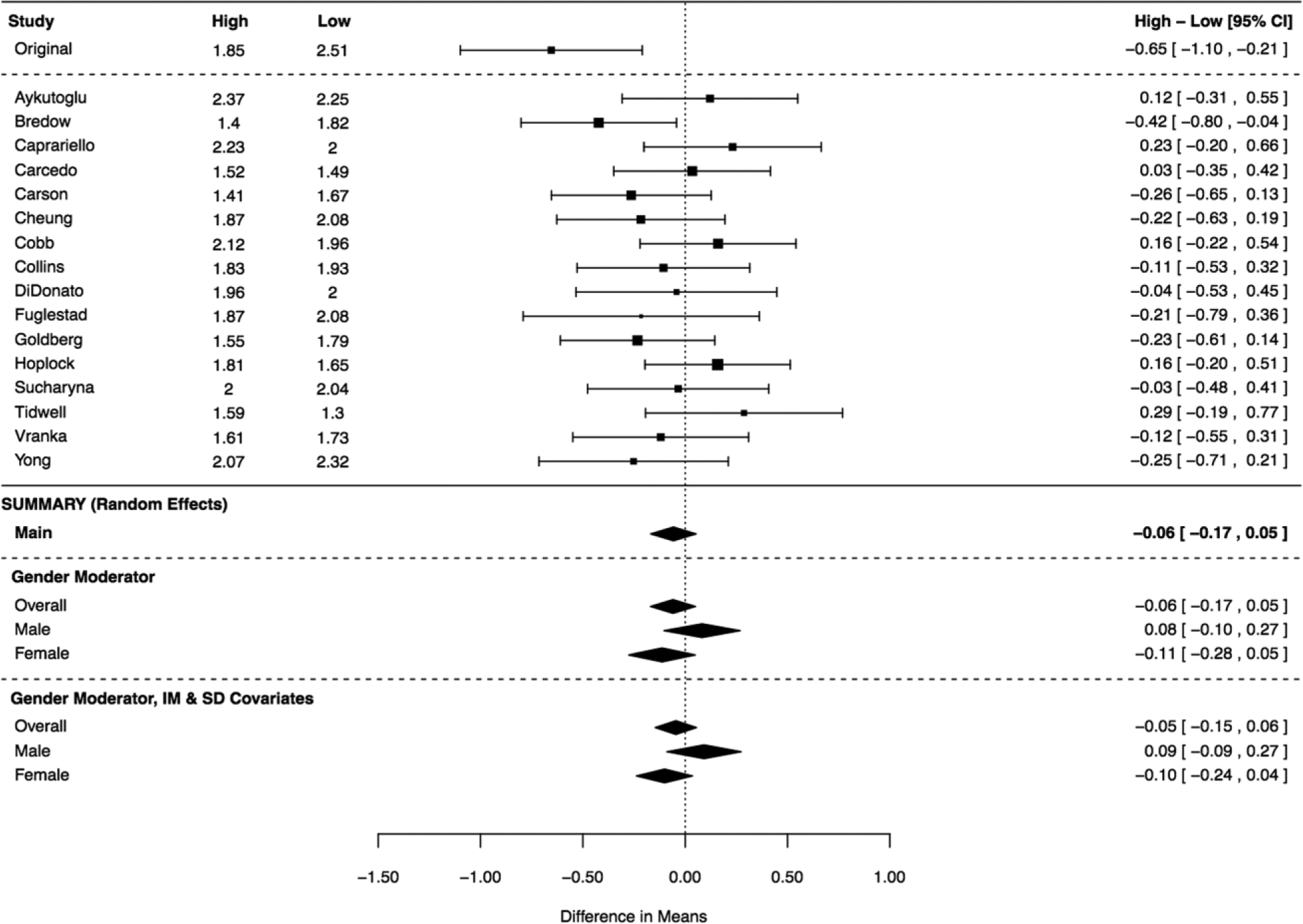
Forest plot of the effect of the commitment prime manipulation on exit, with negative effects indicating lower scores for participants in the high commitment prime condition than the low commitment condition (high–low). The figure also shows the meta-analytic effect of the commitment prime on exit when gender was included as a moderator and when impression management and self-deception were included as covariates. The data are listed in alphabetical order by the name of the first author from each replicating team. For each team, the figure shows the mean exit score for the high and low commitment prime condition and a forest plot of the raw mean difference score. Bigger effect size markers indicate that the study has greater weight in the meta-analysis, where the weight is the inverse of the standard error. The High–Low column provides the values used in the forest plot.
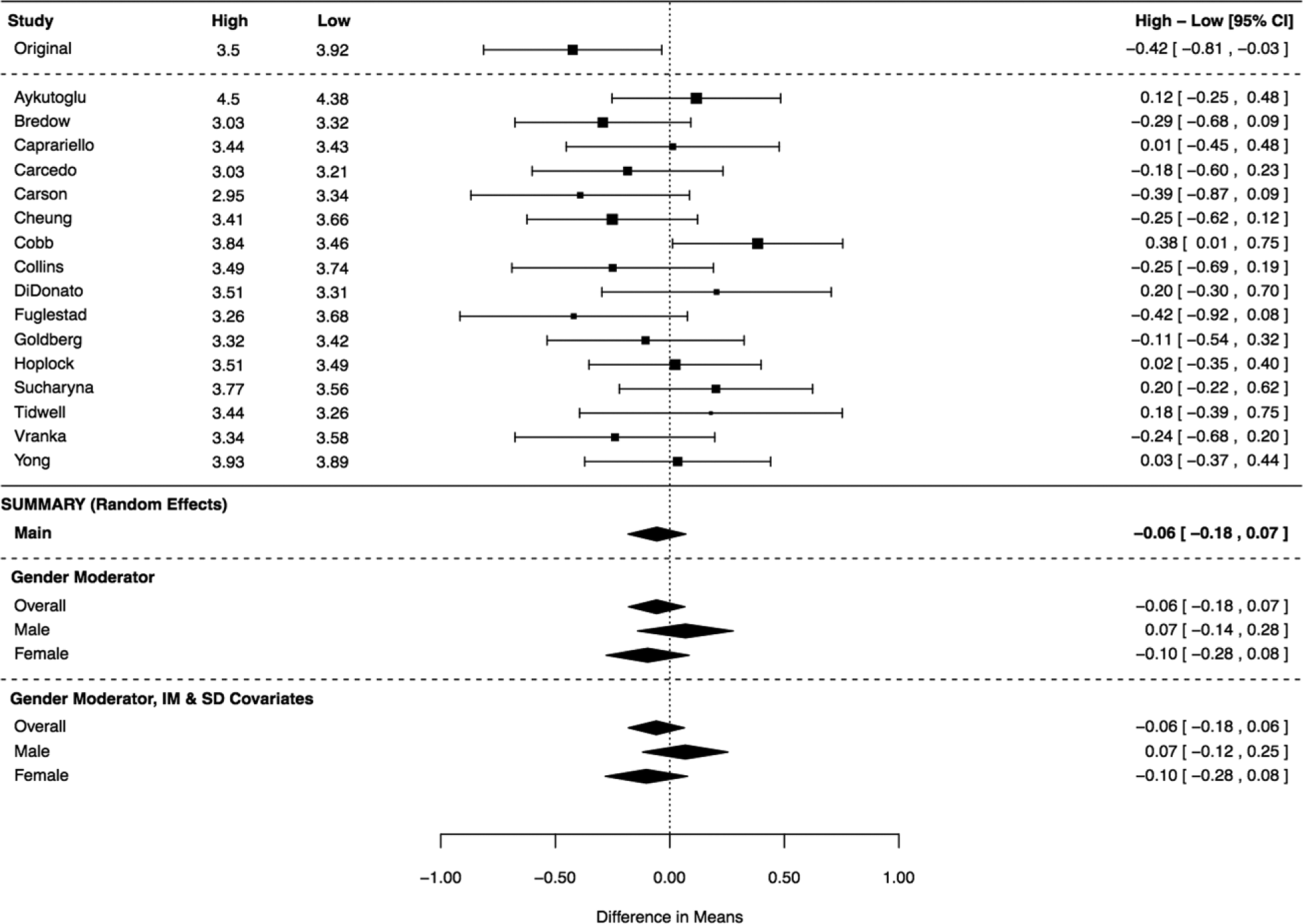
Forest plot of the effect of the commitment prime manipulation on neglect, with negative effects indicating lower scores for participants in the high commitment prime condition than the low commitment condition (high–low). The figure also shows the meta-analytic effect of the commitment prime on neglect when gender was included as a moderator and when impression management and self-deception were included as covariates. The data are listed in alphabetical order by the name of the first author from each replicating team. For each team, the figure shows the mean neglect score for the high and low commitment prime condition and a forest plot of the raw mean difference score. Bigger effect size markers indicate that the study has greater weight in the meta-analysis, where the weight is the inverse of the standard error. The High–Low column provides the values used in the forest plot.
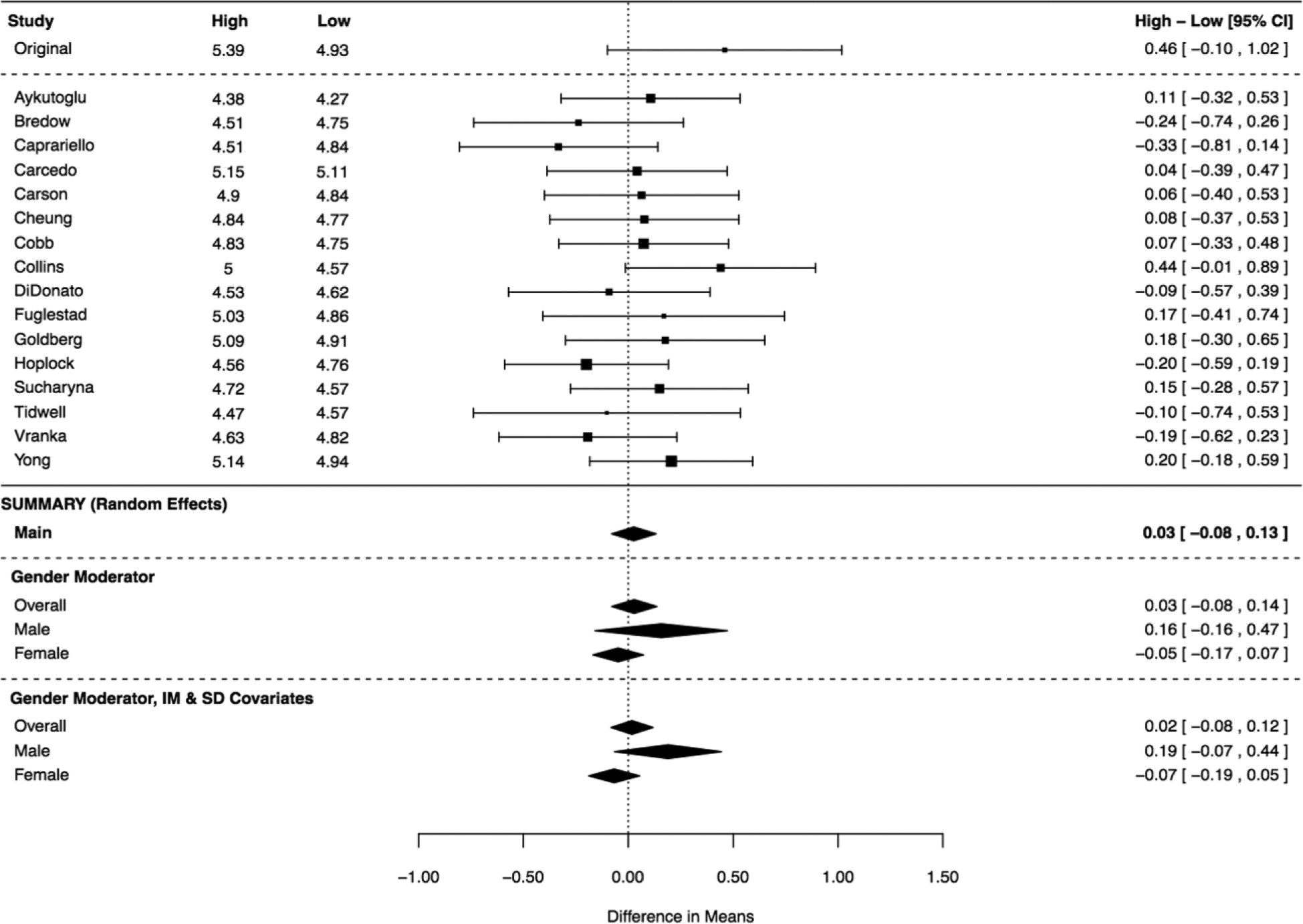
Forest plot of the effect of the commitment prime manipulation on voice, with negative effects indicating lower scores for participants in the high commitment prime condition than the low commitment condition (high–low). The figure also shows the meta-analytic effect of the commitment prime on voice when gender was included as a moderator and when impression management and self-deception were included as covariates. The data are listed in alphabetical order by the name of the first author from each replicating team. For each team, the figure shows the mean voice score for the high and low commitment prime condition and a forest plot of the raw mean difference score. Bigger effect size markers indicate that the study has greater weight in the meta-analysis, where the weight is the inverse of the standard error. The High–Low column provides the values used in the forest plot.
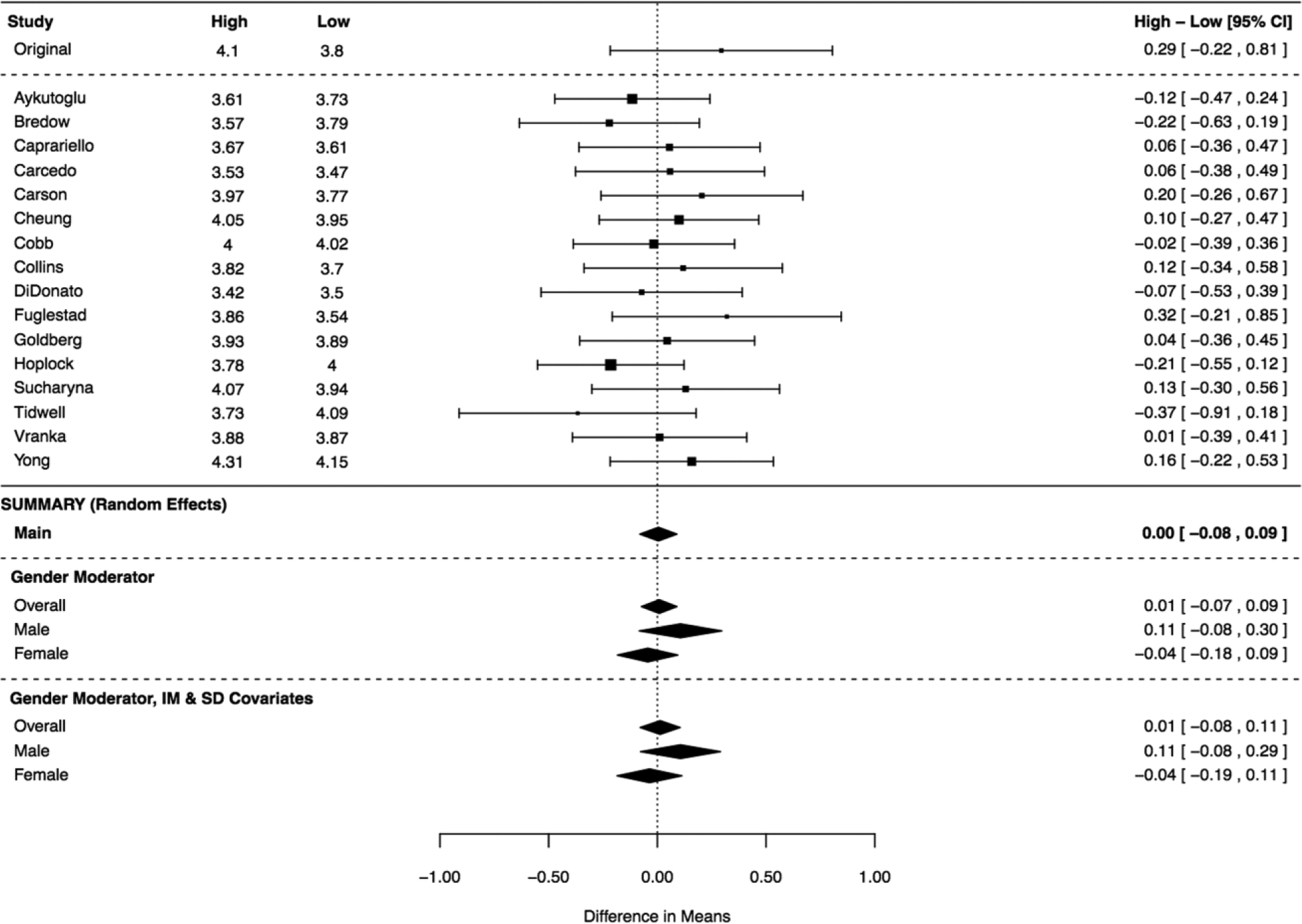
Forest plot of the effect of the commitment prime manipulation on loyalty, with negative effects indicating lower scores for participants in the high commitment prime condition than the low commitment condition (high–low). The figure also shows the meta-analytic effect of the commitment prime on loyalty when gender was included as a moderator and when impression management and self-deception were included as covariates. The data are listed in alphabetical order by the name of the first author from each replicating team. For each team, the figure shows the mean loyalty score for the high and low commitment prime condition and a forest plot of the raw mean difference score. Bigger effect size markers indicate that the study has greater weight in the meta-analysis, where the weight is the inverse of the standard error. The High–Low column provides the values used in the forest plot.
Correlation Matrix for Subjective Commitment and the Four Outcome Measures
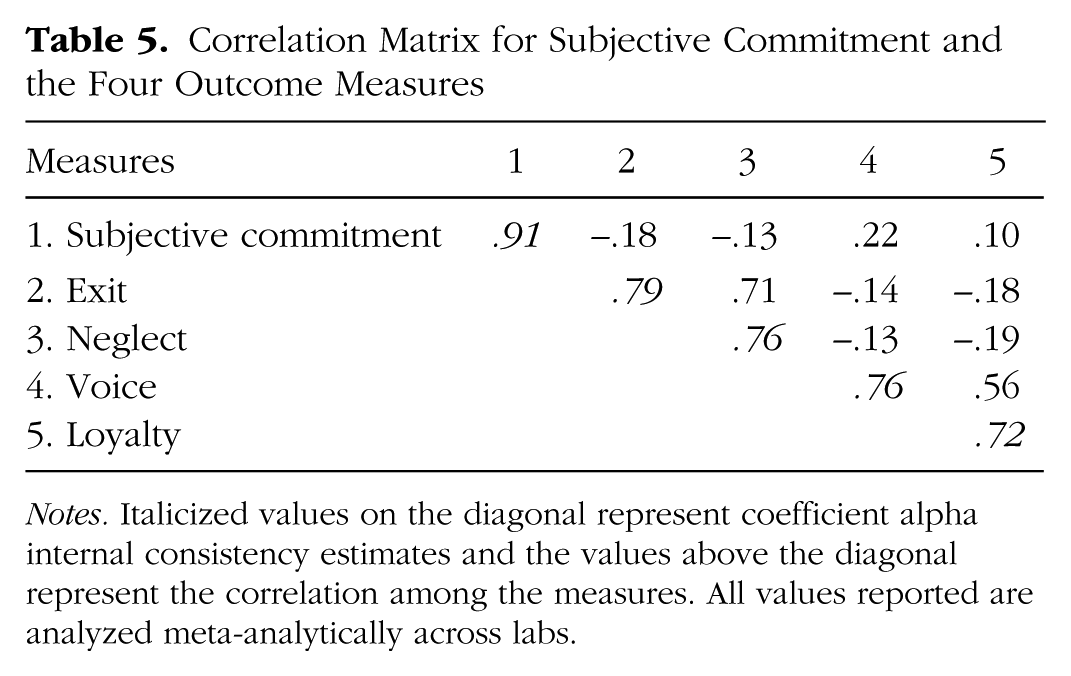
Notes. Italicized values on the diagonal represent coefficient alpha internal consistency estimates and the values above the diagonal represent the correlation among the measures. All values reported are analyzed meta-analytically across labs.
The purpose of an RRR is to evaluate—in a confirmatory manner—the size of an effect observed in an original study. Although Finkel et al. (2002) predicted effects of priming on all four outcome measures, they only observed significant effects for exit and neglect. If the RRR precisely replicated the results of the original study, it would observe a similarly sized difference for exit and neglect, and a similar lack of a difference for voice and loyalty. Given that only exit and neglect showed effects in the original study, those measures are the primary focus of the replication effort.
We note, though, that the original study predicted effects for all four outcome measures. And other patterns of results could support the broader theory. For example, if all four outcome measures produced effects in the directions hypothesized by Finkel et al. (negative for exit and neglect, positive for voice and loyalty), such a pattern would differ from the results of the original study, but it would be consistent with the predictions made for the original study.
Manipulation check: Subjective commitment
In the original study, subjective commitment ratings were 1.33 points higher (statistically significant) in the high commitment than in the low commitment prime condition. Our meta-analysis showed an average difference of .02 points (95% confidence interval: −.07 to .10) between the two priming conditions (see Fig. 1). The difference between the high and low prime conditions ranged from −.21 to .29 across the included studies. The variability in the effect size among the studies (i.e., heterogeneity) was consistent with what would be expected by chance (τ = 0, I2 = 0%, H2 = 1.00, Q15 = 5.35, p = .989).
Figure 1 shows that the overall effect of the priming condition on subjective commitment was not substantially moderated by gender. Figure 1 also shows the meta-analytic effect of the difference between high and low priming conditions in a model that includes both gender as a moderator and self-deception and impression management as covariates. The pattern in the model including covariates did not differ substantially from the model without the covariates.
Overall, across the 16 labs, there was no evidence that the commitment prime manipulation influenced subjective commitment.
Exit forgiveness
In the original study, exit ratings were .65 points lower (statistically significant) in the high commitment prime condition than in the low commitment prime condition. Our meta-analysis yielded a difference of −.06 points (95% confidence interval: −.17 to .05) with similar ratings of exit for the low and high commitment prime conditions (see Fig. 2). The difference between the high and low prime conditions ranged from −.42 to .29 across the included studies. The variability in the effect size among the studies (i.e., heterogeneity) was consistent with what would be expected by chance (τ = 0.0380, I2 = 3.06%, H2 = 1.03, Q15 = 14.39, p = .496).
The overall effect of the priming condition on exit forgiveness was not substantially moderated by gender as shown in Figure 2. Figure 2 also shows the meta-analytic effect of the difference between high and low priming conditions in a model that includes both gender as a moderator and self-deception and impression management as covariates. The pattern in the model including covariates did not differ substantially from the model without the covariates.
In sum, across the 16 independent labs, there was a lack of evidence that priming commitment decreased exit forgiveness.
Neglect forgiveness
The findings from the original study showed that neglect ratings were .42 points lower (statistically significant) in the high commitment prime condition than in the low commitment prime condition. Our meta-analysis yielded a difference of −.06 points (95% confidence interval: −.18 to .07) with similar ratings of neglect for the low and high commitment prime conditions (see Fig. 3). The difference between the high and low prime conditions ranged from −.42 to .38 across the included studies. The variability in the effect size among the studies (i.e., heterogeneity) was consistent with what would be expected by chance (τ = 0.1052, I2 = 19.09%, H2 = 1.24, Q15 = 18.09, p = .258).
The overall effect of the priming condition on neglect forgiveness was not substantially moderated by gender as shown in Figure 3. Figure 3 also displays the meta-analytic effect of the difference between high and low priming conditions in a model that includes both gender as a moderator and self-deception and impression management as covariates. The pattern in the model including covariates did not differ substantially from the model without the covariates.
The findings from these studies show that there was no effect of the commitment prime manipulation on neglect forgiveness.
Voice forgiveness
In the original study, voice ratings were .46 points higher (not statistically significant) in the high commitment prime condition than in the low commitment prime condition. Our meta-analysis yielded a difference of .03 points (95% confidence interval: −.08 to .13) with similar ratings of voice for the low and high commitment prime conditions (see Fig. 4). The difference between the high and low prime conditions ranged from −.33 to .44 across the included studies. The variability in the effect size among the studies (i.e., heterogeneity) was consistent with what would be expected by chance (τ = 0, I2 = 0%, H2 = 1.00, Q15 = 11.19, p = .739).
The overall effect of the priming condition on voice forgiveness was not substantially moderated by gender as shown in Figure 4. Figure 4 also displays the meta-analytic effect of the difference between high and low priming conditions in a model that includes both gender as a moderator and self-deception and impression management as covariates. The pattern in the model including covariates did not differ substantially from the model without the covariates.
Overall, the findings from these studies show that there was no effect of the commitment manipulation prime on voice forgiveness.
Loyalty forgiveness
In the original study, loyalty ratings were .29 points higher (not statistically significant) in the high commitment prime condition than in the low commitment prime condition. Our meta-analysis yielded a difference of .00 points (95% confidence interval: −.08 to .09) with similar ratings of loyalty for the low and high commitment prime conditions (see Fig. 5). The difference between the high and low prime conditions ranged from −.37 to .32 across the included studies. The variability in the effect size among the studies (i.e., heterogeneity) was consistent with what would be expected by chance (τ = 0, I2 = 0%, H2 = 1.00, Q15 = 8.81, p = .887).
The overall effect of the priming condition on loyalty forgiveness was not substantially moderated by gender as shown in Figure 5. Figure 5 also shows the meta-analytic effect of the difference between high and low priming conditions in a model that includes both gender as a moderator and self-deception and impression management as covariates. The pattern in the model including covariates did not differ substantially from the model without the covariates.
Overall, the findings from these studies show that there was no effect of the commitment prime manipulation on loyalty forgiveness.
Exploratory analyses
Given that the commitment prime manipulation was not effective across the studies, exploratory analyses examined whether there was a correlation between subjective commitment and each of the four response tendencies. The original study reported a negative correlation between subjective commitment and each of the destructive responses—exit (r = −.30, p < .01) and neglect (r = −.29, p < .01). Similarly, in the RRR, greater subjective commitment was associated with less exit and neglect forgiveness (see Table 5).
The original study did not report the correlation between subjective commitment and the constructive responses, but we should expect those correlations to be positive. As expected, in the RRR, greater subjective commitment was associated with more pro-relationship responses, with subjective commitment positively correlated with both voice and loyalty (see Table 5).
General Discussion
The results of this large-scale, multilab direct replication of Study 1 of Finkel et al. (2002) are not consistent with the original result that a high commitment prime leads to greater subjective commitment or less exit and neglect forgiveness responses than a low commitment prime. For both exit and neglect, most labs reported an effect of the commitment prime that was close to zero, with some labs (6 for exit, 8 for neglect) finding effects that were numerically in the opposite direction. For both exit and neglect, the meta-analytic effect remained near zero when including gender as a moderator and when including impression management and self-deception as covariates.
Although Finkel et al. (2002) had predicted an effect of the commitment prime on constructive responses (voice and loyalty), they did not observe those effects. The results from this RRR are consistent with that original result. Most labs found effects of the commitment prime on both voice and loyalty that were close to zero. And, the meta-analytic effect remained near zero when including gender as a moderator and when including impression management and self-deception as covariates.
One reason why the results from this RRR might have differed from the original study is due to the failure of the manipulation check. In the original study, participants in the high-commitment prime condition rated their subjective commitment 1.33 points higher on average (on a 9-point Likert scale) than did those in the low-commitment prime condition. In contrast, none of the RRR studies observed an effect of the priming condition on subjective commitment, with a meta-analytic effect near zero and little heterogeneity across labs. Given that the priming manipulation did not yield different subjective commitment between the conditions, it is not surprising that we failed to replicate the pattern of findings for the target outcomes (exit and neglect).
It is unclear why the RRR studies observed no effect of priming on subjective commitment when the original study observed a large effect. Given the straightforward nature of the priming manipulation and the consistency of the RRR results across settings, it seems unlikely that the difference resulted from extreme context sensitivity or from cohort effects (i.e., changes in the population between 2002 and 2015).
The findings from this RRR provide no evidence for (or against) the causal role of commitment in the forgiveness process. Although many studies have observed a correlation between subjective commitment and forgiveness (e.g., Cann & Baucom, 2004; Fehr et al., 2010; Karremans et al., 2003; McCullough et al., 1998; Tsang et al., 2006), Finkel et al. (2002) was the clearest evidence for a causal role. This RRR did not find a causal effect of subjective commitment on forgiveness. But, it also found the commitment priming manipulation to be ineffective in changing subjective commitment. The failure of the commitment priming manipulation to induce a change in subjective commitment leaves open the possibility that a different manipulation might reveal a causal effect of subjective commitment on forgiveness. Future research should use other manipulations of relationship commitment as well as more sensitive experimental designs (e.g., a Highly-Repeated Within-Person; see Molenaar & Campbell, 2009; Whitsett & Shoda, 2014) that measure the causal influence of commitment on the forgiveness process within rather than across individuals. Such within-person designs can also reveal heterogeneity across people in how commitment influences forgiveness.
Footnotes
Appendix—Participating Laboratories
Irene Cheung, Huron University College at The University of Western Ontario
Lorne Campbell, The University of Western Ontario
Etienne P. LeBel, Berkeley Initiative for Transparency in the Social Sciences (BITSS), University of California, Berkeley
A total of 160 students (high commitment n = 80; low commitment n = 80) were recruited from the introductory psychology subject pool at the University of Western Ontario. Participants were tested in groups of 1 to 4 at a time using the provided materials, following the official protocol. All participants were compensated with course credit.
Bülent Aykutoğlu, Middle East Technical University
Elçin Gündoğdu-Aktürk, Middle East Technical University
Ahmet Uysal, Middle East Technical University
A total of 142 students (high commitment n = 72; low commitment n = 70) were recruited from the psychology subject pool at Middle East Technical University in Turkey. After exclusions, there were 107 participants (high commitment n = 55; low commitment n = 52). Participants were tested in groups of 1 to 2 at a time using the provided materials. Our study materials were translated into Turkish, but in all other respects, we followed the official protocol. Our preregistered plan specified that minimum sample size would exceed 100 (50 per condition) after exclusions, however, we were unable to recruit enough people to meet our target sample size for one condition, so we recruited 9 more participants.
Carrie A. Bredow, Hope College
Lindsey M. Root Luna, Hope College
A total of 160 students (high commitment n = 81; low commitment n = 79) were recruited from the psychology participant pool at Hope College. Participants were tested in groups of 1 to 4 at a time using the provided materials. We followed the official protocol in all respects.
Peter A. Caprariello, Stony Brook University
A total of 127 students were recruited from the business subject pool at Stony Brook University (high commitment n = 64; low commitment n = 62; condition information for 1 participant was missing due to experimenter error). Participants were tested individually using the provided materials. We deviated from the official protocol in one respect: At the end of the study, experimenters entered conditions by code (e.g., “A” or “B”) instead of by label (e.g., “high commitment prime”). One participant, for whom condition information was missing, was suspected to have completed the study twice, and both entries for this individual were excluded from analyses. All participants were compensated with course credit.
Rodrigo J. Carcedo, University of Salamanca
Noelia Fernández-Rouco, University of Cantabria
A total of 100 students (high commitment n = 50; low commitment n = 50) were recruited from the psychology subject pool at University of Salamanca. Participants were tested individually or in small groups no bigger than 10 at a time using the provided materials. Our study materials were translated into Spanish, but we followed the official protocol in all other respects. All participants took part in this study voluntarily. They did not receive any kind of compensation.
Kevin J. Carson, The University of Texas at Dallas
Conrad A. Corretti, The University of Texas at Dallas
Heidi S. Kane, The University of Texas at Dallas
Robert A. Ackerman, The University of Texas at Dallas
A total of 201 students (high commitment n = 101; low commitment n = 100) were recruited from the psychology subject pool at the University of Texas at Dallas. Participants were tested in groups of 1 to 4 at a time using the provided materials. Deviating from the official protocol, this replication attempt was a joint effort by two separate labs (i.e., the PAIR Lab and the Close Relationships and Health Lab) at the University of Texas at Dallas. In addition, because two of the researchers were faculty, we modified a portion of the script from the cover story to make it more believable to participants (instead of saying “one of my professors” when referencing the ostensibly unconnected study, we changed it to “one of our colleagues.”). On our application, we had said we would screen the demographics of our sample midway through data collection, and if we found that our sample was older, we would restrict future participants to be between the ages of 18 to 19. We further said that we would pursue the same strategy to ensure that our gender breakdown matches what is required by the protocol. Because we were concerned that sticking with this exact plan could hurt our chances of collecting enough people for the study, we asked the editor if we could deviate from this protocol. With the editor’s approval (who was blind to the actual data), we restricted the age range of participants to 18 to 21 years. In addition, we modified the posting of study sessions so that a smaller proportion of the time slots (or openings with those time slots) were available for women.
Rebecca J. Cobb, Simon Fraser University
Jennifer C. Pink, Simon Fraser University
Roanne D. Millman, Simon Fraser University
Jill M. Logan, Simon Fraser University
Of the 176 students who were recruited from the psychology subject pool at Simon Fraser University, 173 allowed their data to be included in the study (high commitment n = 89; low commitment n = 84). Participants were tested in small groups (range n = 1–9) using the provided materials and were compensated for their time with course credit. We followed the official protocol as instructed.
Nancy L. Collins, University of California, Santa Barbara
Jeffrey D. Bowen, University of California, Santa Barbara
Lauren A. Winczewski, University of California, Santa Barbara
Christopher Bromberg, University of California, Santa Barbara
A total of 102 students (high commitment n = 52; low commitment n = 50) were recruited from the psychology subject pool at the University of California, Santa Barbara. Participants were tested in groups of 1 to 6 at a time using the provided materials, and were compensated with course credit. Although our preregistered plan specified that we would obtain equal numbers of men and women, our final sample was composed of more women than men (77 women, 25 men). However, within gender groups, equal numbers of participants were assigned to the high and low (H/L) commitment conditions (men: n = 13/12; women: n = 39/38). Based on the exclusion criteria provided, no participants were excluded from data analysis.
Theresa E. DiDonato, Loyola University Maryland
Frank D. Golom, Loyola University Maryland
A total of 105 students currently in romantic relationships (high commitment n = 57; low commitment n = 48) were recruited from the psychology department’s participant pool at Loyola University Maryland. Participants were tested one or two at a time using the provided materials, following the official protocol. Although we attempted to recruit males who were also in relationships, this proved more difficult than expected: Our preregistered plan was to recruit 20%−80% females, and our final sample had 82% females (n = 86) with only 18% males (n = 19).
Paul T. Fuglestad, University of North Florida
Christopher T. Leone, University of North Florida
John S. Kim, Lesley University
A total of 124 students (high commitment n = 61; low commitment n = 63) were recruited from the psychology participant pool at the University of North Florida. Participants were tested in groups of 1 to 4 at a time using the provided materials. In all respects we followed the official protocol. Although our preregistered plan specified that participants would be compensated with course credit, we were unable to recruit enough men to meet our target sample size with that method. As a result, one man participated in exchange for $5 and 10 men participated in exchange for $10.
Rebecca M. Goldberg, Mississippi State University
H. Colleen Sinclair, Mississippi State University
Taylor Ritchey, Mississippi State University
Chelsea Ellithorpe, Mississippi State University
A total of 111 students (high commitment n = 57; low commitment n = 56) were recruited from Mississippi State University. Participants were tested in groups of 1 to 4 at a time using the provided materials. Participants were compensated in the form of course participation credit if in the subject pool or $15 if not. Official protocol was followed during the administration of this study and there was no deviation from the preregistered plan.
Lisa B. Hoplock, University of Victoria
Danu Anthony Stinson, University of Victoria
A total of 209 students (high commitment n = 103; low commitment n = 105; unknown condition due to computer error n = 1) were recruited from the psychology subject pool at the University of Victoria. Participants were tested in groups of 1 to 6 at a time using the provided materials. We followed the official protocol. Participants were compensated with course credit.
Tamara A. Sucharyna, University of Manitoba
Marian M. Morry, University of Manitoba
A total of 187 students, (high commitment n = 97; low commitment n = 90) were recruited from the psychology subject pool at the University of Manitoba. We followed the official protocol in all respects. Participants were tested in groups of 1 to 10 at a time in a computer lab using the provided materials. Participants were compensated with course credit.
Natasha D Tidwell, Fort Lewis College
Sue Kraus, Fort Lewis College
A total of 101 students (high commitment n = 51; low commitment n = 50) were recruited from lower division psychology courses at Fort Lewis College. Participants were tested in groups of 1 to 10 at a time using the provided materials. We do not have a traditional subject pool, so participants were recruited verbally in classes; in all other respects, we followed the official protocol.
Marek Vranka, Charles University in Prague
Štěpán Bahník, University of Würzburg
Petr Houdek, University of Economics, Prague
A total of 162 students (high commitment n = 81; low commitment n = 81) were recruited from the student subject pool of the PLESS laboratory. Participants were tested in groups of 6 to 15 at a time using the provided materials. Our study materials were translated into Czech. Due to logistic reasons, we distributed prime questionnaires after participants were seated and we wrote down IDs on the prime questionnaires after the participants left. In all other respects, we followed the official protocol. We did not deviate from our preregistered plan in any way.
Jose C. Yong, Singapore Management University
Norman P. Li, Singapore Management University
A total of 120 students (high commitment n = 61; low commitment n = 59) were recruited from the psychology subject pool at Singapore Management University. Participants were tested in groups of 1 to 8 at a time using the provided materials. The official protocol was followed precisely. Although our preregistered plan specified that participants would be compensated with course credit, we were unable to recruit enough people to meet our target sample size. Therefore, 81 participants participated in exchange for $10.
Declaration of Conflicting Interests
The authors declared that they had no conflicts of interest with respect to their authorship or the publication of this article.