



Abstract
Research on well-being has exploded in recent years to more than 55,000 relevant publications annually, making it difficult for psychologists—including key communicators such as textbook authors—to stay current with this field. Moreover, well-being is a daily concern among policymakers and members of the general public. Well-being science is relevant to the lives of students—illustrating the diverse methods used in the behavioral sciences, presenting highly replicated findings, and demonstrating the diversity of individuals and cultures. Therefore, in this article, we present eight major findings that teachers and authors should seriously consider in their coverage of this field. These topics include processes such as adaptation, influences such as income, the benefits of well-being, and cultural and societal diversity in well-being and its causes. We also examine how much these topics were covered in 15 of the most popular introductory psychology textbooks. Although some topics such as social relationships and well-being were discussed in nearly all textbooks, others were less frequently covered, including the validity of self-reported well-being, the effects of spending on happiness, and the impact of culture and society on well-being. We aim to ensure more complete coverage of this important area in psychology courses.
Subjective well-being (or happiness) is a topic that is worthy of consideration as a major addition to the canon of content taught in psychology. This is partly because the science of subjective well-being is now well established, at least partly because it is a topic of nearly universal interest. Indeed, Yale’s course on happiness was the highest enrolled in that institution’s three-century history (Shimer, 2018), reflecting student appetite for this topic. Likewise, of 15 common topics found in introductory psychology courses, students from regional, community, and technical colleges rated “stress/health psychology” as the second most important topic (McCann et al., 2016). Perhaps, in response to trends in student interest, some publishers have begun including short sections on well-being in textbooks (e.g., Myers & DeWall, 2016).
Coverage of well-being science is especially important in the context of guidelines from the American Psychological Association (APA, 2013) for learning objectives in the teaching of undergraduate psychology. These include (a) knowledge base, (b) scientific inquiry and critical thinking, (c) ethical and social responsibility in a diverse world, (d) communication, and (e) professional development. Teaching subjective well-being offers an opportunity to promote each of these. For example, professional development includes building career skills that overlap with core well-being topics such as self-regulation and adaptability (Richmond et al., 2021). Further, well-being is a cross-cutting theme that is consistent with the APA Introductory Psychology Initiative in that it is about applying psychological principles to create positive change at the individual and community levels (Gurung & Neufeld, 2021).
Moreover, there appears to be a need for well-being education. In a sample of 123 course syllabi from 95 institutions, researchers found that sociocultural awareness, values, and personal development accounted for 15% or less of the stated course learning objectives, respectively (Homa et al., 2013). This is especially worrisome in an era marked by concerns over academic engagement and rising levels of student ill-being (Lipson et al., 2019). This presents a critical opportunity for the teaching of psychology. In one survey, people who took psychology courses had significantly better knowledge of the field than did those who had not taken such courses (Landrum et al., 2019). This suggests the real possibility that teaching about happiness in particular can improve people’s knowledge and sophistication of thinking about the topic.
At its heart, well-being is a field that spans psychology. It includes the study of emotion, personality, cognition, development, social relationships, and virtually every other area of psychology. As a result, it can be woven into existing course material or treated as a stand-alone topic. It can be used to teach scientific literacy and the importance of cultural diversity while being deeply relevant to learners regardless of their background. By learners, we are referring not only to traditional university students but also to members of the general public who are increasingly gaining access to psychology content through new platforms such as massive open online courses (MOOCs). For example, approximately 112,000 people from more than 200 countries enrolled in a MOOC on the science of happiness at the University of California, Berkeley (Clay, 2015). Although the specific reasons why large numbers of learners have enrolled in happiness courses deserves more study, the popularity of the topic is difficult to deny and further heightens the importance of communicating reliable findings. Public understanding of well-being science is critical for efforts by local and national governments to integrate well-being indicators into the policymaking process (Dolan & White, 2007; Exton & Shinwell, 2018). Such measures can help identify groups that require policy intervention and evaluate the effectiveness of new and existing policies. However, the legitimacy of such policy uses requires not only a strong scientific foundation but also support from the very people at whom those policies are directed.
Textbook authors and psychology instructors choose what coverage to give topics, but they typically have neither the time nor the sweep of expertise to critically evaluate what findings are important in each area. This is certainly true of well-being: Its growth expanded from fewer than 100 articles annually in the 1980s to extremely large numbers of publications now. As of June 30, 2021, the terms “happiness” or “subjective well-being” were mentioned in more than 2.9 million publications; 55,000 have been added annually since 1990. 1 This literature includes multiple fronts of inquiry across different areas of psychology and other disciplines from economics to anthropology. As noted by Kaslow (2015), those who communicate psychology research to a wider audience are sometimes accused of highlighting findings that are provocative but not necessarily supported by rigorous research.
Here we present a possible solution for navigating this academic territory: We are experts on the topic of well-being and have collectively published 600 academic articles and more than a dozen books, and we have been cited a quarter of a million times. We describe a list of topics related to well-being that we believe should be considered for coverage in a wide range of psychology courses. We also suggest that this approach to the coverage of subjective well-being might be a model for groups of experts to recommend coverage of other fields as well.
Overview of Eight Well-Being Research Findings
We present eight major findings from the field of subjective well-being, evaluate their level of support, and provide recommendations for where and how these findings can be included in textbooks and taught in a psychology curriculum. We used the following criteria to select these topics:
Research evidence. We emphasize findings that have been replicated across laboratories, methods, and cultures. As much as possible, we rely on meta-analyses, existing reviews, and large-scale international studies to establish the broad support and replicability of a finding.
Interest and relevance. The topics we cover relate in important ways to people’s lives.
Deep understanding. The topics give a broader understanding of human experience and diversity as well as the diverse methods used in the behavioral sciences.
The major findings we present are as follows:
Well-being involves more than happy feelings.
Well-being can be validly measured.
Income influences well-being up to a point.
High-quality relationships are essential for well-being.
Genes and personality influence well-being.
People adapt to many circumstances, but it takes time.
Culture and society influence well-being.
There are benefits to experiencing well-being (beyond feeling good).
We believe these broad findings about well-being are important and should be covered in psychology courses. Some instructors might want more nuance and depth than we have provided here or to include other findings on well-being. We refer them to the Handbook of Well-Being (Diener, Oishi, & Tay, 2018) and to an in-depth review by Diener, Lucas and Oishi (2018). We also include a list of discussion questions and activities that instructors may consider to deepen learners’ understanding of these findings (see the Supplemental Material available online).
Well-Being Is More Than Feeling Happy
Feeling happy is a basic state that is commonly understood across many languages, cultures, and age groups. Because of this, well-being scholars often find it difficult not to use the term “happiness” when introducing research in this area to a broader audience (Diener & Biswas-Diener, 2008; Layard, 2005; Lyubomirsky, 2007; Seligman, 2002). Every year, the media follows suit, reporting on the happiest countries in the world, thanks in part to the annual World Happiness Report. Referring to well-being as happiness is a powerful communication tool that draws interest from the public, but it also risks a narrow view of how scientists think about and study well-being. Some may think of happiness primarily as a short-term mood or emotion (e.g., “Happiness is fleeting”). However, a large body of research indicates that there are many ways that people can experience and evaluate their lives positively and that the various components of well-being are empirically distinct (Tov, 2018).
Feelings are one element of well-being. Researchers are interested not only in a wide range of pleasant emotions but also in the experience of unpleasant emotions. In daily life, people tend to experience some mixture of positive and negative affect (Tov & Lee, 2016). Large-scale analyses across many countries suggest that pleasant and unpleasant feelings are consistently distinguishable from each other (Busseri, 2018; Fors & Kulin, 2016; Kuppens et al., 2006). Moreover, they have distinct correlates. For example, failing to meet basic needs (e.g., for food and shelter) strongly correlates with negative but not positive affect in most regions around the world (Tay & Diener, 2011). An important implication is that pleasant and unpleasant feelings capture different aspects of a person’s well-being.
Well-being also consists of judgments about how satisfied people are with their lives. Such evaluations are referred to as cognitive well-being because they rely on mental information such as standards for comparison. The closer people’s lives are to their ideal, for example, the more likely they are to be satisfied. Although correlated, affect and cognitive evaluations of one’s life are distinct (Busseri, 2018; Fors & Kulin, 2016; Lucas et al., 1996). There is emerging evidence that judgments such as life satisfaction tend to be associated with the broad conditions of one’s life, whereas affective well-being tends to be associated with reactions to specific daily events (Eid & Diener, 2004; Luhmann et al., 2012; Schimmack et al., 2008). This may partly explain why the top countries in life satisfaction tend to be the wealthiest, but the top countries on affective well-being are more diverse in terms of region and wealth (Tov & Au, 2013). Later, we discuss cultural variation in the correlates of well-being under the theme of cultural and societal influences.
Some scholars make a further distinction between hedonic well-being and eudemonic well-being (Ryan & Deci, 2001). Whereas hedonic well-being comprises pleasure and positive feelings, eudemonic well-being refers to a variety of experiences such as meaning, growth, and authenticity (Huta & Waterman, 2014; Vittersø, 2016). A central theme of eudemonic well-being is the fulfillment of one’s potential—which can involve challenging oneself or developing one’s talents. The contrast between eudemonic and hedonic well-being highlights the fact that people do not always choose to do what “feels good” in the moment but, instead, sometimes choose worthwhile pursuits such as contributing to society or completing unpleasant but important tasks.
Hedonic and eudemonic well-being are strongly correlated with each other (Disabato et al., 2016; Joshanloo, 2016; Linley et al., 2009; Longo et al., 2016) and may have a bidirectional causal relationship. Leading a meaningful life, for example, can be a source of positive emotions, but positive emotions can also make life feel more meaningful (King et al., 2016). In sum, one need not choose between hedonic and eudemonic well-being, and strongly favoring one or the other might be a philosophical rather than empirical matter.
Understanding that well-being involves more than feeling happy has important implications for learners. First, because there are different components of well-being, there is not a single resource or activity that makes people happy in the broad sense of well-being. Some experiences may enhance pleasure, whereas others enhance judgments of life or eudemonic well-being. Second, many people who are satisfied with their lives or experience frequent positive affect may still experience negative affect to varying degrees. Thus, being happy does not entail eliminating negative experiences from one’s life. There is also an opportunity to build scientific literacy: When the popular media report on the happiest countries or the latest research on what makes people happy, learners can be more critical of such reports by asking exactly how happiness was assessed. In seeking to understand others, learners can appreciate that individuals may experience happiness in differing ways.
Well-Being Can Be Validly Measured
The notion that people can accurately report their own level of well-being and that this topic can be understood numerically may seem doubtful to many. Schwarz and Strack (1999) suggested that judgments of global well-being are largely constructed from information that happens to be on a person’s mind and is deemed relevant. If so, how could we trust people’s evaluation of their lives when it might fluctuate from one moment to the next?
Subsequent research suggested that self-reports of well-being may not be as fickle as previously argued. For example, life-satisfaction judgments have very high test–retest correlations (r
Scientists have also gone beyond self-report when measuring well-being. For example, informant reports of a person’s well-being (made by his or her friends or family members) correlate significantly with self-reports (Schneider & Schimmack, 2009). The memory of positive experiences (how many are recalled and how interconnected they are) is associated with self-reported well-being (Robinson & Kirkeby, 2005; Sandvik et al., 1993; Seidlitz & Diener, 1993). Other non-self-report measures show some convergence with self-reports (Scollon, 2018), which helps us have confidence in the validity of these measures. Thus, although well-being measures are imperfect, they are valid enough to yield useful and consistent information.
The question about how to best assess well-being is a potential opportunity to teach learners about research methods and basic psychometrics. They can experience survey research by taking any number of widely available well-being measures. In addition, learners should be aware of real-world applications of such measures. For example, well-being indicators are collected by governments around the world to inform and evaluate policy (Exton & Shinwell, 2018). Leaders of organizations can examine well-being at work as one metric of organizational success and productivity. Awareness of practical applications of well-being measures underscores the importance of scrutinizing their validity.
Income Influences Well-Being but Only up to a Point
A common debate is whether money makes people happy. The question arises because there are contrasting beliefs about this issue, ranging from “money can’t buy happiness” to “money is the key to happiness.” Although people might prefer a “yes” or “no” answer to the question, extensive reviews of this literature suggest that such a simple response is impossible (Diener & Biswas-Diener, 2002; Tay et al., 2018).
There is strong evidence that money can boost subjective well-being. Differences in average happiness between rich and poor nations are large (Diener & Biswas-Diener, 2002).
Indeed, Diener et al. (2010) reported that the correlation between per capita income in countries and their average levels of life satisfaction was r = .83. Beyond cross-sectional correlations, Stevenson and Wolfers (2008) reported that as nations’ incomes increased, their well-being tended to do so as well. At the societal level, richer nations are better able to provide freedom, transparent and noncorrupt services, and relative peace to their citizens (Helliwell et al., 2019). At the individual level, these findings may reflect the fact that money helps people obtain things they need, such as food and shelter, but it can also help people cope with problems (Diener, Tay, & Oishi, 2013). For example, Kahneman and Deaton (2010) reported in a representative sample of almost half a million Americans that low income exacerbated the negative effects of misfortunes such as divorce, ill health, and loneliness. The COVID-19 pandemic has underscored the vulnerabilities faced by low-income individuals—many of whom are marginalized and lack access to decent work (Blustein et al., 2019; Kantamneni, 2020), have low-paying jobs that do not allow them to work from home, and live in crowded environments—all factors that make physical distancing difficult and increase the risk of infection (Mena et al., 2021).
Revealing the causal connection of more money to well-being are large lottery studies showing that lottery winners are happier than similar individuals who bought lottery tickets but did not win (Gardner & Oswald, 2007; Lindqvist et al., 2020; Smith & Razzell, 1975). These studies notwithstanding, there are also data showing that more money does not invariably equal more happiness. An important and replicated finding is that there is a “declining marginal utility” of more money for happiness. As a person earns higher and higher incomes, it often requires more and more money to affect happiness (Diener et al., 1993). Figure 1 presents the declining effects of income on three types of subjective well-being. These data are drawn from the Gallup representative poll of the United States from 2008 to 2016 of about 1.5 million respondents. Most people seem to be able to achieve happy experiences with a moderate income, and not much improvement is evident after earning about 40,000 dollars a year, although specific income thresholds vary by geography. The incomes shown in the figure do not indicate as much declining marginal utility for life satisfaction; however, Jebb and colleagues (2018) showed that at some point in many world regions people do not get a boost in life satisfaction from more income. Indeed, in several regions, income beyond the point of satiation is related to less well-being.
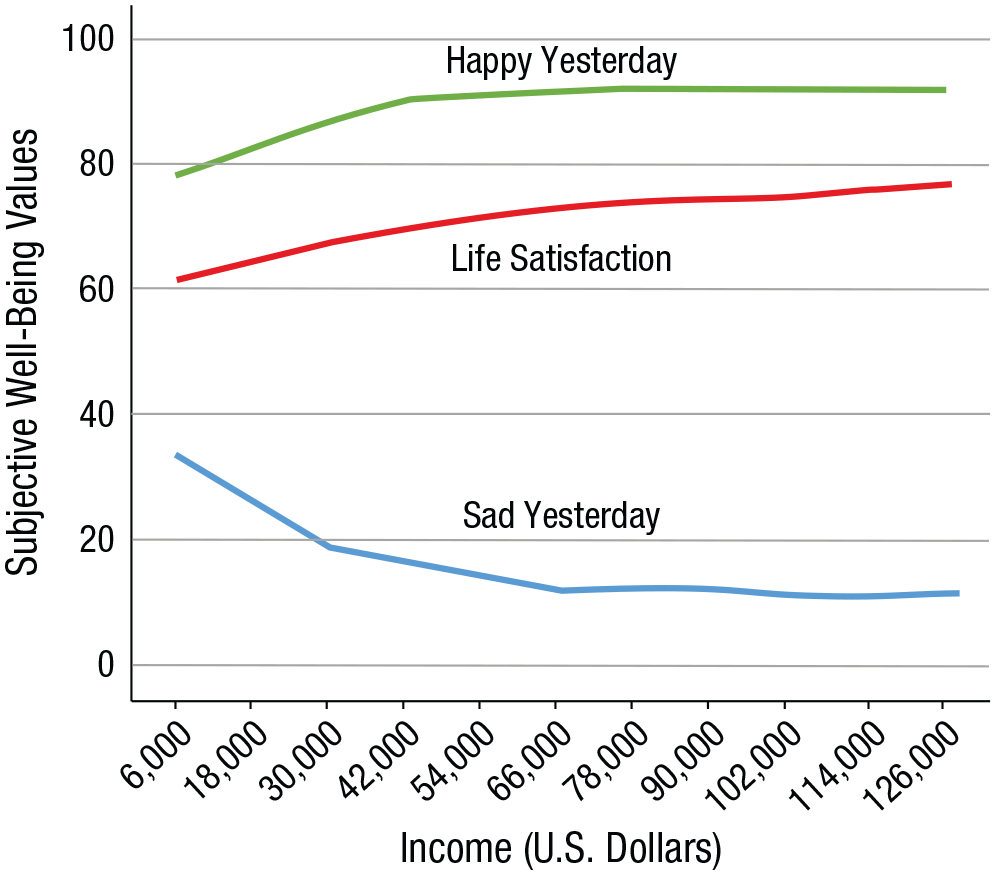
Declining marginal effects of income on subjective well-being. Subjective well-being is plotted as a function of income, separately for three types of well-being.
Aside from the amount of income, how it is spent also influences well-being. Spending money on others can enhance positive affect (Aknin et al., 2020; Dunn et al., 2008), as can spending money on experiences rather than materials (Lee et al., 2018; Van Boven & Gilovich, 2003). On the other hand, materialism—placing higher importance on money than on other values such as relationships—tends to relate to less well-being (Dittmar et al., 2014).
Students are generally fascinated by this topic. Issues such as income, income equality, meaningful work, and how money is spent are all relevant to daily student life. Learners might also ask themselves whether pursuing a career that will be unpleasant but earns a high income is truly the road to happiness. They can also learn that income aspirations can outstrip even rising income so that people are dissatisfied despite having more than ever before (Graham & Pettinato, 2006). One issue that may concern learners is how student debt affects happiness. Although declining marginal utility illustrates how well-being does not always rise at high income levels, it consistently declines at lower income levels. Debt repayment reduces discretionary income, and higher levels of debt are associated with greater financial worry during college (Tay et al., 2017) and lower well-being after graduating from college (Walsemann et al., 2015). The majority of U.S. graduates believe their college education was worth the cost except among those with more than $50,000 in debt (Gallup, Inc., 2015).
Students do not have control over the cost of their college tuition, but they may benefit from learning how spending money can influence their happiness. For example, although experiential purchases tend to promote happiness more than material purchases, this difference may apply only when people feel they have adequate resources and not when they feel as if their resources are limited (Lee et al., 2018). In contrast, even small amounts of prosocial spending can boost happiness, and the effects are observed in cultures as diverse as Canada and Uganda (Aknin et al., 2013; Dunn et al., 2008). In addition, people whose purchases are more aligned with their personality tend to report higher life satisfaction (Matz et al., 2016). Instructors can engage students in deeper discussions of these findings to motivate them to think more about their purchase decisions. That said, it is important to note that the problem of rising student debt is complex and requires action from government, education, and business sectors. The negative effects that student debt has on long-term well-being brings its human impact into sharper focus and adds to the urgency of finding solutions. Hence, not only students but also administrators, business leaders, and other members of the public can benefit from learning about the science of well-being.
High-Quality Relationships Are Essential for Well-Being
If there is a “secret to happiness,” some argue that it can be found in social relationships (Argyle, 2001). This is because social relationships have myriad benefits—from producing positive feelings to offering social support in times of need. The desire to socially connect with others may be a basic human need. When this need for relatedness is met, feelings of happiness result (Reis et al., 2000). In a study of the happiest and least happy university students, for example, having high-quality relationships appeared to distinguish the two groups; nearly all of the high-happiness students reported better relationships with family, friends, and romantic partners (Diener & Seligman, 2002). Even peers of the students agreed that the high-happiness group had good relationships, providing convergent support for this conclusion.
In every major world region, perceived social support is associated with subjective well-being (Tay & Diener, 2011). According to a global sample, individuals who report the greatest happiness feel respected by others and that there are people they can count on in times of need (Diener, Seligman, et al., 2018). Very happy individuals also spend more hours of their day with friends or family. Socializing with others is among those daily activities that bring people the most positive feelings (Kahneman et al., 2004)—but only up to a point; beyond 3 hr a day of social contact, there are no additional benefits in terms of happiness (Kushlev et al., 2018). The generally pleasant experience of socializing and the rewards of social support occur for those in a variety of relational contexts: among married people (Coombs, 1991; Diener et al., 2000; Jebb et al., 2018) and among single people, who may even develop more diverse social networks (DePaulo, 2018). In other words, feelings of support and social connection may underlie the benefits of social relationships for subjective well-being and can be enjoyed by people of any relationship status. Moreover, although high-quality social relationships can be enduring sources of well-being, even interactions we have with casual acquaintances and strangers can boost our well-being in the short term (Epley & Schroeder, 2014; Sandstrom & Dunn, 2014).
Other people can offer us support in times of need, buffer the adverse effects of negative experiences, and provide social capital (Helliwell et al., 2018). However, the sheer number of other people in one’s life is not a precise indicator that one’s social needs are met (Baumeister & Leary, 1995; Greitemeyer et al., 2014). Instead, it is the experience of one’s relationships that is most predictive of well-being. In other words, it is more important for a person to have a few close and supportive relationships than it is to have many superficial relationships.
The COVID-19 pandemic has highlighted the importance of social relationships for well-being because controlling the spread of COVID-19 has involved behaviors such as physically distancing from others and reducing social contact for extended periods of time. Individuals with larger social networks during the pandemic’s initial lockdown period reported less stress and worry (Nitschke et al., 2021), and those who felt high levels of social support reported fewer symptoms of depression (Sommerlad et al., 2021).
This aspect of well-being research will feel very relevant to learners. Everyone has relationships of one type or another and so will have personal experience and insight into the ways that their social ties affect their own happiness. This area of research is a fruitful springboard for discussing loneliness, social-networking technologies, bullying, divorce, and other social topics. For example, learners can consider whether interactions on social-network sites are similar to or different from those that occur offline and how this affects their well-being. Learners can also explore the differences in the types and numbers of relationships that fulfill their needs. Another topic for discussion is why some relationships are among the most rewarding aspects of life whereas others can be quite aversive. Although the conclusion that social relationships enhance well-being may be intuitive, considering the reasons for the reverse direction, in which quality relationships follow from happiness, offers additional grounds for reflection.
Genes and Personality Influence Well-Being
Are people simply born happy or unhappy? To what extent do genes influence well-being? One way scientists have attempted to investigate this issue is by comparing identical twins (who share 100% of their genes) with fraternal twins (who share only about 50%). If there are genetic influences on well-being, identical twins should have more similar levels of well-being than fraternal twins. Early studies provided support for this (Tellegen et al., 1988), even showing that identical twins raised apart were more similar to each other than fraternal twins who were raised together (Lykken & Tellegen, 1996). Meta-analyses have suggested substantial heritability effects; as much as 30% to 41% of the variation in well-being is attributable to genetic sources (Bartels, 2015; Nes & Røysamb, 2015). This might suggest that each person has a baseline level of well-being and that daily events influence shifts above and below this baseline. However, this does not imply that a single “happiness gene” confers happiness to those who possess it or that happiness is unchangeable. The extent to which genes influence well-being can depend on life circumstances such as age, finances, or marital status (Bartels, 2015; Røysamb & Nes, 2018).
There is evidence that the genetic components underlying well-being are also linked to personality traits such as extraversion and neuroticism (Hahn et al., 2013; Røysamb et al., 2018; Weiss et al., 2008). This may partly account for the robust finding that people who are extraverted and/or low on neuroticism often report higher levels of well-being (Anglim et al., 2020; DeNeve & Cooper, 1998; Steel et al., 2008). An important limitation is that genetic studies of well-being have been conducted primarily on North American and European populations. Even among this limited set of countries, heritability estimates of well-being show significant heterogeneity across samples (Nes & Røysamb, 2015). This could be due to differences among well-being measures and respondent characteristics; in addition, societal and cultural factors could influence how genes are expressed. More diverse samples would enable a better understanding of cross-national variation in heritability estimates in the future.
This topic is important to a general understanding of psychology because it focuses on the fundamental question of personality stability and change. It is a starting point for discussing individual differences in well-being and cultivating an awareness that people can differ in the situations and experiences that make them happy. It is also an opportunity to discuss the relative influences of genetics, environmental conditions, and personal choices and behaviors as they influence well-being. Concepts such as gene-environment interaction (Røysamb & Nes, 2018) can help students think more critically about genetic influences on well-being and personality more generally.
People Adapt to Many Circumstances, but It Takes Time
People want a good income, supportive social relationships, good health, meaningful work, and enjoyable pastimes. There is a general assumption that having these will yield happiness. One reason to believe that life circumstances may not adequately explain happy lives is a phenomenon known as adaptation: Although new good things might make us happy, and new bad things might make us unhappy, these immediate reactions often wear off rather quickly.
Many longitudinal studies have now followed people’s well-being over years and examined their adaptation after good and bad events occur. People usually react more strongly when events first occur, but over time, their well-being returns toward previous levels (Diener et al., 2006; Frederick & Loewenstein, 1999; Lucas, 2007; Luhmann et al., 2012; Sheldon & Lucas, 2014). This adaptation appears to be partial in some circumstances and complete in others. For example, when people are fired from their jobs they often have lower life satisfaction for many years to come and even after they obtain another job (Clark et al., 2001; Lucas et al., 2004). Likewise, widowhood, divorce, or a severe disability are often followed by long-term declines in life satisfaction. Nonetheless, in most of these cases, people do show resilience—they tend to bounce back toward earlier levels of well-being (Lucas, 2007; Oswald & Powdthavee, 2008). Adaptation also applies to positive events. Married people, for example, show a boost in happiness around the time of their wedding but then on average return over time to their former levels of well-being (Anusic et al., 2014a, 2014b; Lucas et al., 2003; Yap et al., 2012).
The process of adaptation presents two challenges: how to speed adjustment to bad events and how to slow or stop adaptation to good events. According to a new perspective with growing empirical support, people may be able to overcome their predispositions, combat adaptation, and become happier through intentional behavior—how people choose to spend their time and resources each day (Lyubomirsky & Layous, 2013; White et al., 2019). Three meta-analyses with thousands of participants across dozens of interventions have concluded that people’s well-being can be raised through the practice of positive activities, although effect sizes vary (Bolier et al., 2013; Sin & Lyubomirsky, 2009; White et al., 2019). The strongest evidence for beneficial effects exists for positive activities, such as engaging in acts of kindness, writing and delivering a letter of gratitude to someone, and imagining and writing about one’s best possible self (for a review, see Quoidbach et al., 2015).
The natural process of adaptation can help learners understand reactions to many daily life events. Adaptation is what allows us to take risks such as getting a job, moving across the country, or moving in with a romantic partner. Because of adaptation to good events, we never have maximum happiness for a long time, and new events and undertakings can thus boost our current happiness. Adaptation is also the psychological mechanism that helps us bounce back from tough times. Despite the helpfulness of adaptation for effective functioning, it also limits the happiness we get from simply obtaining the life circumstances that we desire. This topic is a natural point of entry to discuss happiness interventions, folk theories of happiness, and aspirations and expectations for the future.
Culture and Society Influence Well-Being
Countries differ substantially in their levels of well-being. For example, the average life satisfaction of Denmark is 2.5 standard deviations higher than that of Togo (Geerling & Diener, 2018). This could be due to objective living conditions, sociopolitical and economic systems, and cultural values and practices. As mentioned previously, income can exert a strong influence on well-being, especially as nations move out of poverty. In addition, cross-national studies have suggested that life satisfaction is higher in countries that enact stronger income redistribution policies (Cheung, 2018; Oishi et al., 2012). Relatedly, gender differences in job satisfaction are smaller in countries with greater gender equality (Batz-Barbarich et al., 2018). Other systemic factors such as corruption and perceived discrimination can reduce well-being over time (Helliwell et al., 2019; Schmitt et al., 2014; Tay et al., 2014), whereas increases in social tolerance and freedom at the nation level predict increases in well-being (Inglehart et al., 2008). Impressive evidence that national conditions affect well-being is the finding that immigrants to Canada and the United Kingdom from nations with very low well-being attain similarly high levels of life satisfaction as those in their new countries of residence (Helliwell et al., 2018).
Cultural norms are an important influence on well-being. Culture can affect overall levels of happiness, how it is defined and experienced, and the factors that shape it. One cultural dimension that has been commonly studied is individualism-collectivism (Hofstede, 2001; Triandis, 1995). Individualist societies (e.g., Canada, Australia, Germany) tend to value independence and personal freedom. Collectivist societies (e.g., Japan, Taiwan, Colombia) tend to value conformity and obligation to others. On average, individualist societies report higher levels of national well-being than collectivist societies (Diener et al., 1995; Fischer & Boer, 2011; Steel et al., 2018). These effects are independent of economic development, suggesting a unique role of cultural values and beliefs in shaping well-being.
The specific correlates of well-being vary by culture. For example, self-esteem tends to be more predictive of well-being in individualist than in collectivist cultures (Diener & Diener, 1995; Kang et al., 2003; Kwan et al., 1997; Park & Huebner, 2005). Another variable that shows distinct cultural patterns is self-consistency. In individualist cultures, self-consistency is valued as a sign that one is authentic (Church et al., 2014; English & Chen, 2011; Suh, 2002). By contrast, collectivist cultures emphasize a self that is defined by relationships; a person’s feelings and behaviors are expected to shift according to the social context (Tsai et al., 2007). Thus, self-inconsistency is less of a threat to well-being in collectivist cultures.
The importance of social context for collectivists means that they are more likely to use cultural norms when determining their own well-being, asking, in essence, “Should I feel happy given my current situation?” (Markus & Kitayama, 1991; Tsai, 2007). Individualists, by contrast, are more likely to pay attention to their feelings and to weigh these in their satisfaction judgments (Kuppens et al., 2008; Suh et al., 1998). Moreover, people who endorse individualistic values are more likely to also value high-arousal positive emotions such as joy, pride, and enthusiasm (Tamir et al., 2016; Tsai et al., 2006). These emotions tend to be emphasized on commonly used measures of affective well-being (e.g., Watson et al., 1988), and so researchers must be careful that non-Western norms for emotions such as feeling calm and at peace are also measured.
A close fit between one’s personality and one’s social environment is associated with greater well-being (Assouline & Meir, 1987). Imagine an extravert living in an “introverted country”—where her compatriots are generally perceived to be low on extraversion. Such a person might find it difficult to socialize when others are less receptive to her behavior. In two cross-national data sets, Fulmer and her colleagues (2010) found that extraverts living in extraverted countries reported higher levels of life satisfaction and positive emotion than those living in less extraverted countries. Likewise, religious people tend to be happier in religious societies, but this advantage is not apparent in more secular societies (Diener et al., 2011; Gebauer et al., 2020). Thus, fitting in with one’s culture can be helpful to a person’s well-being.
Although cultures vary in the factors that contribute to happiness, most people are in fact above neutral in emotional well-being—they tend to experience more positive than negative affect (Diener & Diener, 1996). Researchers have extended these findings to other populations. For example, Biswas-Diener et al. (2005) found that the American Amish, the Kenyan Masai, and the Greenlandic Inuit were all above neutral in their levels of subjective well-being. However, in a large sample from 166 nations, Diener, Diener, et al. (2018) found that for people who had multiple difficult conditions in their lives—for example, having recently been assaulted or having gone hungry—most were not happy. Thus, people do tend to be at least mildly happy unless something clearly negative is happening in their lives.
Culture- and societal-level effects suggest that well-being judgments are not strictly personal but are influenced by societal norms. Greater awareness of the systemic factors that influence well-being can help students connect current events and social issues to the welfare of other people in their own society and around the world. Learners can also reflect on how their own cultural upbringing and identity influences the factors they consider important for their own well-being. This is also an opportunity for learners to develop increased cultural literacy and to discuss issues of cultural sensitivity, diversity, and inclusivity. This topic has the unique potential to be applied to cultural aspects of clinical psychology and to cultural issues as they relate to measurement and research methods. Apart from cultural differences, the finding that most people are happy in terms of emotional well-being can lead to a discussion of what universals there might be in the causes of happiness versus culture-specific causes. Another topic relevant to current political debates is the amount of immigration that is desirable because immigrants can become happier if they move to a happier society.
There Are Benefits to Experiencing Well-Being
One of the most unexpected findings of the science of happiness is that subjective well-being is beneficial for other important outcomes. A growing body of research now suggests that being happy not only feels good but also that it may also be beneficial for outcomes such as health and longevity (Diener, Pressman, et al., 2017), work engagement and career success (Lyubomirsky et al., 2005; Walsh et al., 2018), and supportive social relationships (Kansky & Diener, 2017). These findings further highlight how critical it is to tackle the systemic and structural factors that impede well-being discussed above. Although individuals can take steps to improve their well-being on their own (Heintzelman et al., 2020; Lyubomirsky & Layous, 2013; Quoidbach et al., 2015), individual action must be combined with policies that tackle inequities and inequality at the societal level (cf. Diener, Lucas & Oishi, 2018; Oishi et al., 2018). The policy relevance of well-being is thus bolstered by recognizing the role that it plays in the health, work life, and social relationships of individuals and the communities of which they are part.
Physical health
Well-being is associated—often causally—with better health (Boehm, 2018; Diener, Pressman, et al., 2017). In one study, participants were exposed to a virus, and those with a more positive emotional style were half as likely to develop cold or flu symptoms (Cohen et al., 2006). By measuring well-being before infecting participants, the researchers in this study ensured that the observed association between well-being and health could not be due to the effect on well-being of getting sick. Beyond short-term immune function, meta-analyses of longitudinal studies suggest that well-being predicts long-term cardiovascular health (Howell et al., 2007) and even longevity (Chida & Steptoe, 2008). Indeed, well-being influences health through multiple mechanisms—from the more proximal, physiological mechanisms, such as immune, endocrine, and cardiovascular function, to more distal, behavioral mechanisms, such as exercise and nutrition (Diener, Heintzelman, et al., 2017). Experimental evidence from randomized controlled trials suggests that treatment for depression modestly improved self-rated physical health (O’Neil et al., 2011). Another source of evidence suggestive of a long-term causal effect of well-being on health comes from prospective longitudinal studies (Diener & Chan, 2011). In the famous nun study (Danner et al., 2001), for example, nuns who expressed the most positive emotions in essays written when they were in their early 20s had half the rate of mortality of the unhappiest nuns at the age of 85. By assessing well-being in early life—before most nuns had developed health issues that can affect their well-being—this study again suggests a causal effect of well-being on health.
Work success
Although it makes intuitive sense that happiness might follow work success, it is less obvious that happiness can cause work success. In one longitudinal study, people who were more cheerful at the beginning of college earned more money 19 years later than did their less cheerful counterparts (Diener et al., 2002). These findings have been replicated several times (e.g., Graham et al., 2004; Marks & Fleming, 1999). One reason happy people might be better poised for career success is that they work harder (Krekel et al., 2019; Oswald et al., 2015). Happier people also receive higher customer and supervisor evaluations, take fewer sick days, and are more likely to engage in positive organizational citizenship behaviors (Lyubomirsky et al., 2005). An intervention designed to raise subjective well-being has been shown to reduce sick days (Kushlev, Heintzelman, et al., 2020).
Supportive social relationships
Longitudinal, experimental, experience-sampling, and cross-cultural evidence suggests that positive affect leads to better relationships (Moore et al., 2018). In one longitudinal study, for example, positive affect at age 14 predicted lower conflict with one’s romantic partner a decade later—as reported by the participants and their partners alike (Kansky et al., 2016). A person’s life satisfaction while still single predicts how likely they are to get married (Lucas et al., 2003) and how likely they are to become divorced (Luhmann & Eid, 2009). In an experience-sampling study following 30,000 participants over a month, feeling happy predicted investing time in social interactions (Elmer, 2021; Quoidbach et al., 2019).
In addition to the beneficial outcomes of well-being described above, there is also evidence for other desirable effects of well-being on outcomes, such as resilience (bouncing back from stress and bad events; Ong et al., 2006; Shen et al., 2017; Tugade & Fredrickson, 2004) and better citizenship (Kushlev, Drummond, et al., 2020).
Teaching about the benefits of happiness is sure to disabuse learners of misconceptions of happiness as a self-centered and selfish pursuit. Learners may be surprised to discover that in most jobs that they will end up having, their well-being can make the organization more productive and profitable (Krekel et al., 2019). Learners can thus benefit from realizing that happiness can be beneficial to themselves and others. This topic is also a good opportunity to teach students about the difficulty of establishing causality over the long term. Indeed, the benefits of well-being are still subject to controversy—in part, because the direction of causality goes both ways. If better health leads to more happiness, how can we know if happiness leads to better health? To complicate matters, it is difficult to experimentally manipulate subjective well-being to isolate its long-term effects on other outcomes. No single study, therefore, can control for all third factors. Thus, we must rely on convergent evidence across multiple studies, samples, and methodologies to infer whether subjective well-being has causal benefits.
Content Analysis of Introductory Psychology Textbooks
To what extent are students of psychology already learning about the findings that we have highlighted? We identified the top 15 introductory psychology textbooks on the basis of rankings from Open Syllabus and Amazon.com. Whereas Amazon.com rankings are based primarily on U.S. sales, the Open Syllabus 2.5 database contains 7.2 million syllabi (Karaganis, 2021) from universities around the world (largely from 1996 to 2018). To strengthen the currency of our analysis, we obtained the most recent edition of each textbook available. Ten of the fifteen books we analyzed were published in 2018 or later. A list of the 15 textbooks appears in the Appendix. (For more details on our methodology, please refer to the Supplemental Material.)
We developed a coding scheme by decomposing the eight thematic well-being findings into more specific subcategories (see Table 1). For each book, three research assistants skimmed any sections on health, stress, and well-being and extracted relevant excerpts. All textbooks were digitized, and additional excerpts were extracted by searching for specific terms (e.g., well-being, happiness, satisfaction). Because our emphasis was on everyday subjective well-being, we did not examine chapters on psychopathology. However, excerpts from these chapters were included if they emerged through our search procedure. Three coders rated the relevance of each excerpt to the findings in Table 1, and those with an average score of 3 or higher (on a 4-point scale) were classified as at least “somewhat relevant” to the given finding. Interrater agreement was acceptable for most subcategories (intraclass correlation coefficients ≥ .70), and those that were lower tended to be for categories with few relevant excerpts.
Coverage of Key Well-Being Findings in Top Introductory Psychology Textbooks
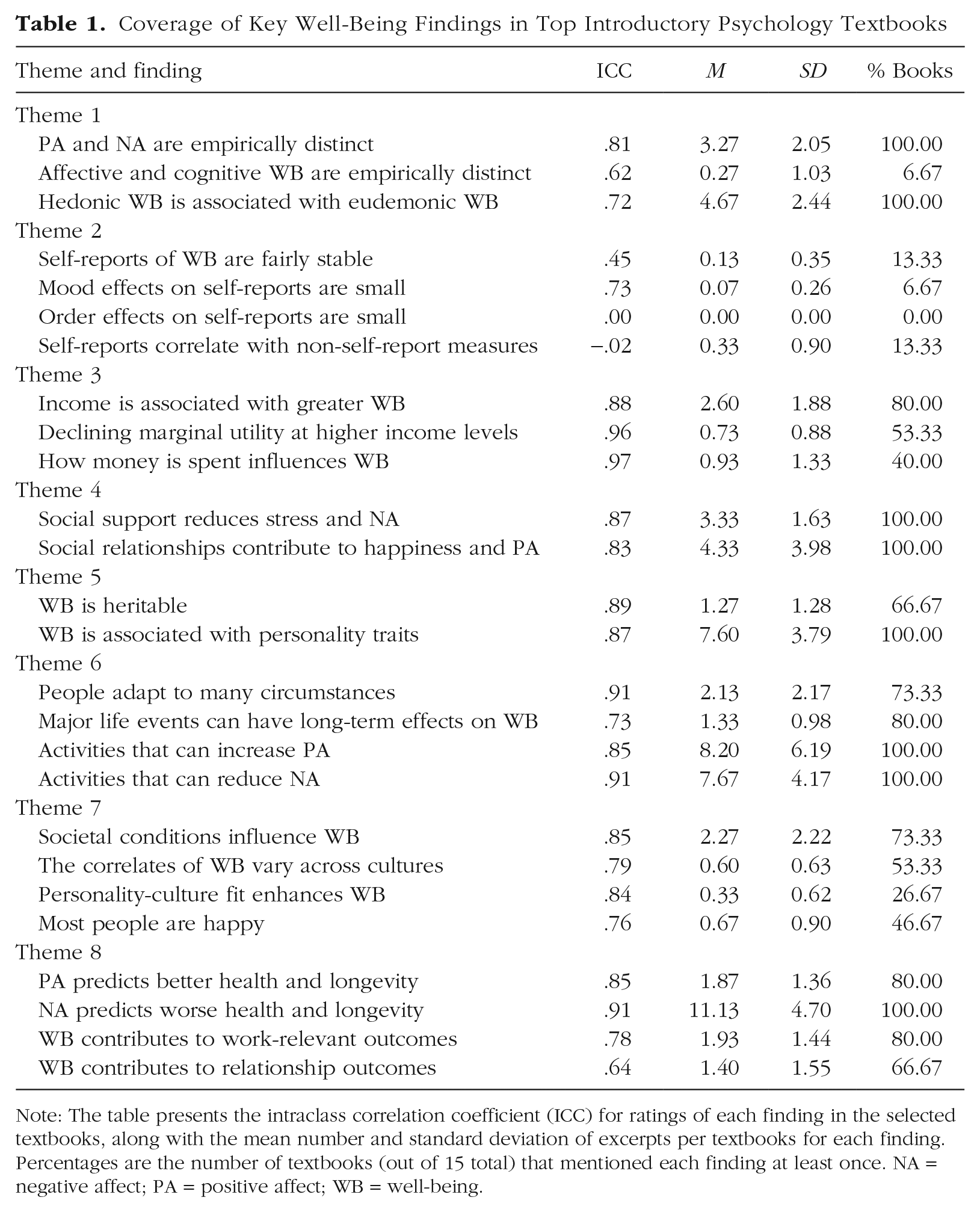
Note: The table presents the intraclass correlation coefficient (ICC) for ratings of each finding in the selected textbooks, along with the mean number and standard deviation of excerpts per textbooks for each finding. Percentages are the number of textbooks (out of 15 total) that mentioned each finding at least once. NA = negative affect; PA = positive affect; WB = well-being.
Table 1 presents the average number of excerpts that were relevant to each finding and the percentage of textbooks that mentioned the finding at least once. Several findings were covered by all textbooks, including empirical distinctions between positive and negative affect, links between personality traits and well-being, the importance of social support for well-being, the effects of activities on reducing ill-being and enhancing happiness, and the impact of negative affect and stress on physical health. Other findings were seldom emphasized. For example, textbooks rarely discussed the validity of self-reported well-being measures. In actuality, many of the well-being findings already reported in textbooks bear on the validity of these measures—but explicit discussions were extremely rare. 2
The positive relationship between income and well-being was reported in the majority of textbooks (80%). However, other key aspects of the money-happiness relationship such as declining marginal utility at higher levels of income (53.33%) and spending effects (40%) were less frequently covered. Broader societal (73.33%) and cultural influences (53.33%) on well-being were also covered less frequently. This is interesting, particularly when contrasted with the coverage of personality and well-being (100%). In some ways, this is not surprising given psychology’s historical focus on the individual. Still, most textbooks include discussions of culture and social psychology that could include these topics. In addition, links between personality and well-being could be expanded by discussing the phenomenon of person-culture fit effects on well-being—another topic that was rarely covered (26.67%).
Most textbooks discussed potential benefits of well-being. The effects of positive and negative affect on health were mentioned in 80% to 100% of textbooks, but coverage was uneven with excerpts discussing the impact of negative affect (M = 11.13) outnumbering those that discuss the impact of positive affect (M = 1.87) by a ratio of 6 to 1. Other possible benefits of well-being such as relationship outcomes were mentioned less often. We note that interrater agreement was lower for this subcategory. One possible reason is that much of the literature covered in textbooks is correlational, making it difficult for coders to determine whether a finding illustrates the effects of well-being on social relationships or vice versa. Finally, we note that the percentage of these findings that are discussed in textbooks varies greatly from 42.3% to 88.5% (see Table S3 in the Supplemental Material).
General Discussion
We described eight broad findings that we believe are important and replicable enough to warrant coverage in introductory and other psychology textbooks. We then examined the top 15 introductory psychology textbooks to evaluate the extent to which these well-being findings were currently covered. Our analysis revealed that coverage was uneven across the different findings. On a positive note, current textbooks may teach learners to appreciate the value of their social relationships and provide insights into behaviors that manage stress and enhance their well-being. However, other important topics were not discussed as often.
First, the validity of self-reported well-being measures was seldom discussed. To be fair, some authors discussed validity and measurement issues more broadly as they pertain to psychological research. However, the validity of well-being measures deserves special treatment because of the interest and attention that such measures have attracted from policymakers and the general public. As governments become interested in measuring well-being and using such measures to inform policy decisions, it will be essential for citizens to understand what the current science says about their validity as well as empirical distinctions among different components of well-being. A lack of understanding may undermine the perceived legitimacy of policymaking that relies on well-being indexes. It is also important that citizens appreciate the role that societal conditions and cultural norms play in shaping well-being—two other topics that deserve more coverage. Indeed, the topic of culture and well-being (either happiness, positive affect, or subjective well-being) has been included in more than 2 million publications and touches on diversity issues that have become pivotal.
Most textbooks acknowledge that wealthier individuals do tend to be happier than those who are less wealthy. The majority of texts (53.33%) also note the declining marginal utility of high income though many texts did not. Fewer still discussed the role that spending can play in promoting happiness. This is a missed opportunity given the pertinence of this topic for many learners. Although declining marginal utility can be used to illustrate that more money does not always equal more happiness, it also illustrates how money does matter for incomes below the satiation point. For students concerned with debt, this may resonate more with their experience. Skepticism about the impact of money on well-being should be qualified by an understanding of how spending can influence happiness.
The detrimental effects of negative affect on health were mentioned much more often than the health benefits of positive affect. This likely reflects a longer history of research on stress and physical health and therefore a more established canon of theoretical models and research studies for textbook authors to draw on. By comparison, theoretical models linking positive affect to health are more recent and continue to be developed (Boehm & Kubzansky, 2012; Pressman & Cohen, 2005). That said, the potential benefits of positive well-being for health deserve more attention from learners because stress management alone is not likely to be sufficient for maintaining good health. This may present an opportunity for instructors to expand on discussions of well-being and health beyond what textbooks currently offer.
Other topics that were discussed by all textbooks might be better organized. For example, empirical distinctions between positive and negative affect, and links among hedonic and eudemonic well-being concepts were often scattered across different sections of textbooks. Learners might appreciate these concepts more if they were organized within a single section on well-being. Several of the textbooks we examined already include dedicated sections on well-being and happiness.
Are there additional topics that textbook writers and professors should cover? We debated several topics in addition to finding other topics in the textbooks we perused that might be covered, although we decided not to include them in our list for a variety of reasons. These topics include optimal levels of well-being and ill-being for effective functioning; spirituality, religion, and well-being; affective forecasting; age, gender, ethnicity, and well-being; children and well-being; leisure and well-being; and helping others and well-being. The evidence on some of these topics is mixed or preliminary, but professors might choose some of them for coverage and are referred to Nobascholar.com for chapters on these and other well-being topics.
The psychological study of happiness and well-being has emerged as a vibrant and rapidly expanding area of psychological inquiry. With its quickly accumulating findings come the challenge of whether—and how—to feature its findings within psychology textbooks and to teach its findings in psychology curricula. On the former question, “Should we teach well-being findings?” we believe the answer is an enthusiastic “yes.” First, the study of well-being is grounded in sophisticated, methodologically sound research. In the current article, we have identified findings supported by large and representative samples, by experimental and longitudinal data, and through meta-analyses. Second, the study of well-being informs our understanding of human thought and behavior. Well-being transcends areas such as personality, social, cognitive, and developmental psychology and provides a potential narrative theme for linking these topics. Third, well-being findings are of interest and relevance to students. Happiness and well-being are overwhelmingly a goal that people seek, and students are no exception. Beyond this point, we note that concern for the well-being of students has become a priority at colleges and universities, and the psychological science of well-being has much to contribute to our understanding of student well-being.
We have argued that the task of textbook writers and teachers in broad, introductory-level survey courses in psychology is particularly challenging. Underscoring this challenge is the goal of summarizing the entire field of psychology—raising questions of what to include, in what depth, and how to organize many seemingly disparate findings at biological, psychological, and social levels of analysis. Our goal—as researchers and teachers of well-being—was to outline well-supported, major findings from the study of happiness and well-being, to facilitate their integration into foundational psychology texts and courses. The teaching of disordered states, as well as therapeutic approaches to alleviating maladaptive, personally distressful thoughts and behavior, receive significant attention within the teaching of psychology—as we believe they should. However, as the study of human thought and behavior, psychology naturally also includes within its scope the study of happiness and well-being, of flourishing and optimal functioning.
A few limitations of these findings and our suggested approach are worth considering. An important point in the teaching of well-being is to recognize that the science of well-being is excellent at identifying average results and that these will not apply to every individual. Further, although many of the findings we report are supported by a wide range of evidence, it remains important to note that long-term investigations of the causes and consequences of well-being are relatively few—and more are needed. And, finally, the current article aims to facilitate the inclusion of well-being findings throughout psychology texts and curricula by presenting a broad synopsis of major findings. There are more nuanced aspects of many of the findings we present here and we encourage instructors to think critically and to access reputable research databases on well-being, such as Noba Scholar, for a more sophisticated review.
Supplemental Material
sj-pdf-1-pps-10.1177_17456916211046946 – Supplemental material for Well-Being Science for Teaching and the General Public
Supplemental material, sj-pdf-1-pps-10.1177_17456916211046946 for Well-Being Science for Teaching and the General Public by William Tov, Derrick Wirtz, Kostadin Kushlev, Robert Biswas-Diener and Ed Diener in Perspectives on Psychological Science
Footnotes
Appendix
Textbooks included in the content analysis of well-being findings.
Ciccarelli, S. K., & White, J. N. (2019). Psychology (6th ed.). Pearson.
Coon, D., Mitterer, J. O., & Martini, T. (2022). Introduction to psychology: Gateways to mind and behavior (16th ed.). Cengage.
Gazzaniga, M. S. (2017). Psychological science (6th ed.). W. W. Norton & Company.
Gross, R. D. (2020). Psychology: The science of mind and behaviour (8th ed.). Hodder Education.
Hockenbury, S. E., & Nolan, S. A. (2019). Discovering psychology (8th ed.). Worth Publishers.
Huffman, K., Dowdell, K., & Sanderson, C. A. (2017). Psychology in action (12th ed.). John Wiley & Sons.
Kalat, J. W. (2022). Introduction to psychology (12th ed.). Cengage.
King, L. A. (2020). The science of psychology: An appreciative view (5th ed.). McGraw-Hill.
Lilienfeld, S. O., Lynn, S. J., & Namy, L. L. (2017). Psychology: From inquiry to understanding (4th ed.). Pearson.
Myers, D. G., & DeWall, C. N. (2018). Exploring psychology (11th ed.). Worth Publishers.
Nairne, J. S. (2014). Psychology (6th ed.). Cengage.
Spielman, R. M., Jenkins, W. J., & Lovett, M. (2020). Psychology 2e. OpenStax College, Rice University. https://openstax.org/
Weiten, W. (2022). Psychology: Themes and variations (11th ed.). Cengage.
Wood, S. E., Wood, E. R. G., & Boyd, D. R. (2018). Mastering the world of psychology (6th ed.). Pearson.
Zimbardo, P. G., Johnson, R. L., & McCann, V. (2016). Psychology: Core concepts (8th ed.). Pearson.
Acknowledgements
Ed Diener passed away before the final version of this article was completed. He conceptualized the original idea for the article, contributed significantly to the initial submission, and suggested several revisions in response to reviewer comments, many of which were incorporated into the final article. We express our gratitude for his contributions to this article and to the field more generally through his life’s work in subjective well-being. We also thank Rebecca Maniates and her team at the SMU Li Ka Shing Library for assistance in locating and acquiring textbooks and Jonathan Louis Chia, Jun Sheng Keh, Rachel Kok Chian Yee, Gloria Lai Junyan, Clement Lau Yong Hao, Elizabeth Lim Xiao Pei, Madeeha Shanaaz binte Mohammed Yousoff, Remee Rose Quintana Ocampo, and Wynn Tan for their assistance extracting and coding excerpts.
Transparency
Action Editor: Joshua Hicks
Editor: Laura A. King

Notes
References
Supplementary Material
Please find the following supplemental material available below.
For Open Access articles published under a Creative Commons License, all supplemental material carries the same license as the article it is associated with.
For non-Open Access articles published, all supplemental material carries a non-exclusive license, and permission requests for re-use of supplemental material or any part of supplemental material shall be sent directly to the copyright owner as specified in the copyright notice associated with the article.
