



Abstract
Advertising branded pharmaceuticals to consumers with chronic illness is big business; half of all direct-to-consumer advertising money is for drugs to treat chronic diseases. This research investigates the impact of emotional appeals in ads targeted to consumers with chronic disease. In an online experiment with over 240 average consumers either living with a diagnosis of arthritis or diabetes or not, our results suggest that positive emotional appeals are more effective at eliciting feelings of hope and generally result in more favorable attitudes, although level of consumer involvement impacts the perceived credibility of the ad and behavioral intentions.
Introduction
Direct-to-consumer (DTC) advertising totaled US $3.8 billion in 2013 (excluding the Internet) and is one of the largest spending categories in the US advertising. 1 Although DTC advertising is an important component of communication plans for pharmaceutical marketers, there are arguments both for and against the effectiveness of DTC advertising. Proponents argue that DTC advertising educates consumers, making them more likely to participate in health care decisions,2–4 while opponents argue that risks are minimized and medication benefits are exaggerated in such advertisements.5–7
There is growing interest in investigating noninformational aspects of DTC advertising for branded pharmaceuticals and medical products, such as prescription drugs and medical testing. Ego strategies (from Taylor's Strategy Wheel) 8 and emotional appeals, both positive and negative, are common in these types of ads.9–11 Studies have only just begun to address the impact of such appeals on consumer reactions, e.g. fear, 12 humor, 13 coupons. 14 This research will investigate the impact of emotional strategies in DTC ads among consumers with chronic illness.
Literature review
Emotional appeals and ego-based appeals have been proven effective in many product categories, especially low-involvement products 15 and when consumers do not perceive many differences at the product level, for example laundry detergent or breakfast cereal. 16 But what makes these appeals and strategies effective for DTC ads for branded pharmaceuticals? One possible explanation is that consumers simply do not have the knowledge required to differentiate among different brands of medication, in which case infusing drug brands with distinct emotional meaning might be more effective than presenting detailed product information. In other words, following the elaboration likelihood model (ELM), consumers lack the ability to process the message centrally and, therefore, revert to peripheral processing in spite of high levels of involvement. 17 Although pharmaceutical companies create brands for prescription drugs, they do not engage in traditional brand building among consumers given that pharmaceutical companies largely stop investing in brands once the patent expires on a prescription drug. 18 This practice could make it more difficult for consumers to differentiate among the different brands of medication.
A second explanation is that the emotional appeal is used in a more strategic manner by consumers viewing DTC ads and less as a peripheral cue. As predicted by the cognitive functional model first proposed by Dillard and Nabi, 19 an emotional appeal, to the extent that it is successful in eliciting discrete emotions, can determine how a consumer processes a persuasive message. So kindly provide new text citation for reference.19 If the emotional appeal elicits an approach response, that is a willingness to engage with the source of the emotional appeal and a willingness to think about the context and potential solutions, consumers are likely to engage in central processing. Rather than simply transferring affect from the ad to the brand, emotional appeals in DTC ads may activate consumers' central processing of the message in the ad by causing them to consider their future wellbeing and the prospect of increasing their quality of life. Essentially, emotional appeals may activate the hope for positive outcomes in the future.20 Hope is a very important concept when it comes to medical products and treatment. Hope plays a central role in the lives of people with chronic disease. 21 One of the greatest emotional challenges of people living with a chronic disease is the struggle with, and against, hope. “While hope is alive, the mood is frustration and anger. When hope fails, hopelessness sets in … the core of depression” (p. 6). 21 In the case of chronic disease, the hoped-for goals are generally not to cure, but to enhance physical, cognitive, and social functionality, and quality of life; prevent secondary conditions; and minimize distressing symptoms. 22
For people with chronic diseases like cancer, emotional stress can result in chronic mood disturbances; psychological responses can be influenced by patients' perceptions of stress and burden, as well as resources to help them cope with their disease. 23 Hope is thought to be a significant resource for newly diagnosed patients 24 and impacts quality of life. 25 Setting future goals is an important component of hope,26,27 and DTC ads often portray healthy, happy, and active people 28 —something those with chronic illness may strive to be. Positive emotion has been shown to improve patient adherence to prescription medication treatment plans. 29 The concept of hope, however, may differ in older versus younger adults affected with the same chronic disease based on patients' disease experiences. 30 For chronic diseases like arthritis and diabetes, much of a patient's disease experience could be related to pharmaceutical medications.
Hope is thought to play a role when consumers purchase products. Charles Revlon, founder of Revlon Cosmetics, famously recognized that while his company manufactured cosmetics, what they actually sold in stores was hope, not simply lipstick. Certain products are acquired by consumers because they provide the illusion of control and promise to make the impossible possible, and thereby enhance yearning for an uncertain but hoped-for outcome. 31 In addition to cosmetics, products such as dietary supplements promising a buff physique or weight-loss aids promising a slim figure are examples of these types of products. When consumers' confidence in attaining a hoped-for outcome, e.g. the buff physique or slim figure, is threatened, consumers give less weight to goal inconsistent information, e.g. lack of scientific studies backing the effectiveness of the supplement or the small font at the bottom of the weight-loss ad explaining that advertised results are not typical. 32
The valence of the emotional appeal employed by DTC ads could influence the resultant impact on processing and ultimately persuasion. Previous studies have found that when consumers experience a negative feeling state they are more likely to engage in systematic, central processing of a message than when experiencing a positive feeling state. 33 In contrast, research on DTC ads and memory found that ads with a positive emotional tone resulted in higher levels of both recognition and recall than ads with a negative emotional tone. 34 The authors suggest that the negative emotional information in addition to the risk information present in all the DTC ads was too arousing and may have led to defensive processing. Other studies have also found positive mood to result in more sophisticated processing of information in the DTC ads. 35 Although as a whole the results on emotional valence and persuasion seem mixed, the results from research on DTC ads suggests that a positive valence is more likely to increase thoughtful processing of information in an ad.
Level of involvement has been shown to impact consumers' reactions to DTC ads.
36
While the prescription drugs are clearly complex products, not every consumer is likely to exhibit high levels of involvement with the product category. Consumers who have been diagnosed with the particular medical condition treatable by the advertised drug should view the ad as more personally relevant than consumers not diagnosed with the condition. In this research, diagnosis with a particular medical condition was used to differentiate among high and low involvement consumers, similar to Limbu et al.
37
In addition to investigating the health status of consumers, we specifically chose to investigate DTC ads targeting consumers with a serious chronic disease, to ensure the enduring involvement with the product category. See Figure 1 for our proposed model.
Proposed model.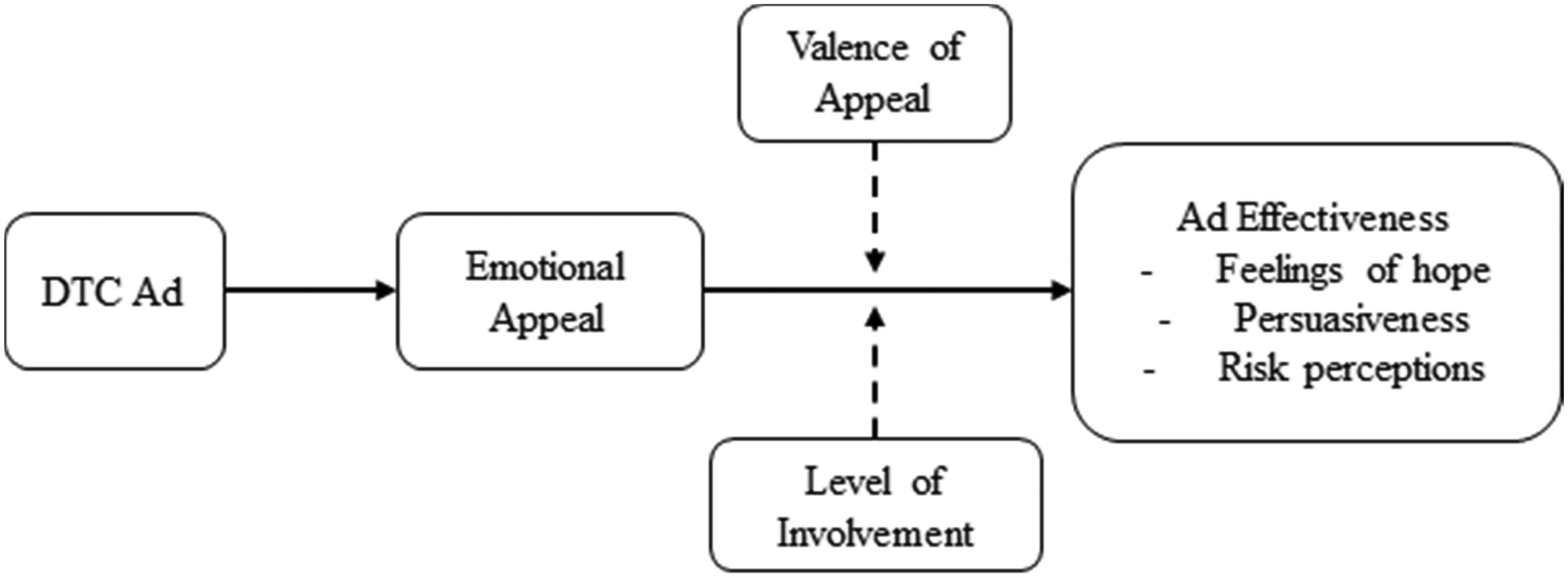
The effectiveness has long been debated, and research shows that the benefits and consequences of pharmaceutical campaigns are balanced. The DTC ad campaigns have been shown to inform, educate and empower patients,38,39 encourage contact with a physician and promote dialogue about health issues. 40 Other research has found that DTC advertising campaigns reinforce and strengthen the doctor–patient relationship. 41 The DTC advertising has also had an effect on patient compliance with drug treatment plans. 42 However, there are consequences to DTC advertising campaigns. Some argue that DTC advertising misinforms patients 43 and omits important information. 44 Patients may lack the skills needed to evaluate comprehensive medical information, 45 and DTC advertising often exceeds the eighth-grade reading level. 46 Research also shows that consumers place unwarranted trust in DTC ads, many often thinking the government approved the ads. 47 The DTC ads overemphasize potential benefits 48 which could lead patients to believe the exaggerated claims and have false hope.
This research will investigate the impact of emotional strategies in DTC ads among consumers with chronic disease. Chronic diseases, like heart disease, diabetes, and arthritis, are among the most common and costly of all health problems in the United States, accounting for US$3 of every US$4 spent on health care. 49 Half of all DTC advertising dollars in 2005 was spent to promote 20 drugs, most for chronic diseases. 50 For almost half of all Americans, chronic disease is a reality of life. Forty-five percent of Americans have at least one chronic disease and many suffer from co-morbid conditions. 51 This research focuses on arthritis and diabetes, two chronic diseases that affect a large proportion of the US adults. A diagnosis of either of these chronic diseases requires the patient self-manage his or her disease, controlling disease symptoms and disease affect. 52 For most, self-management is a lifetime task where only the patient can be responsible for his or her day-to-day care. The DTC advertising plays an important role in influencing patients' health behaviors.53,54 Little research has examined DTC advertisements in niche health magazines that target people with chronic disease. The current study's experimental study will explore the consequences of emotional strategies on levels of hope, perceptions and behavioral intentions and whether the valence of the emotional appeal, e.g. friendship or fear, has a differential impact.
Research questions
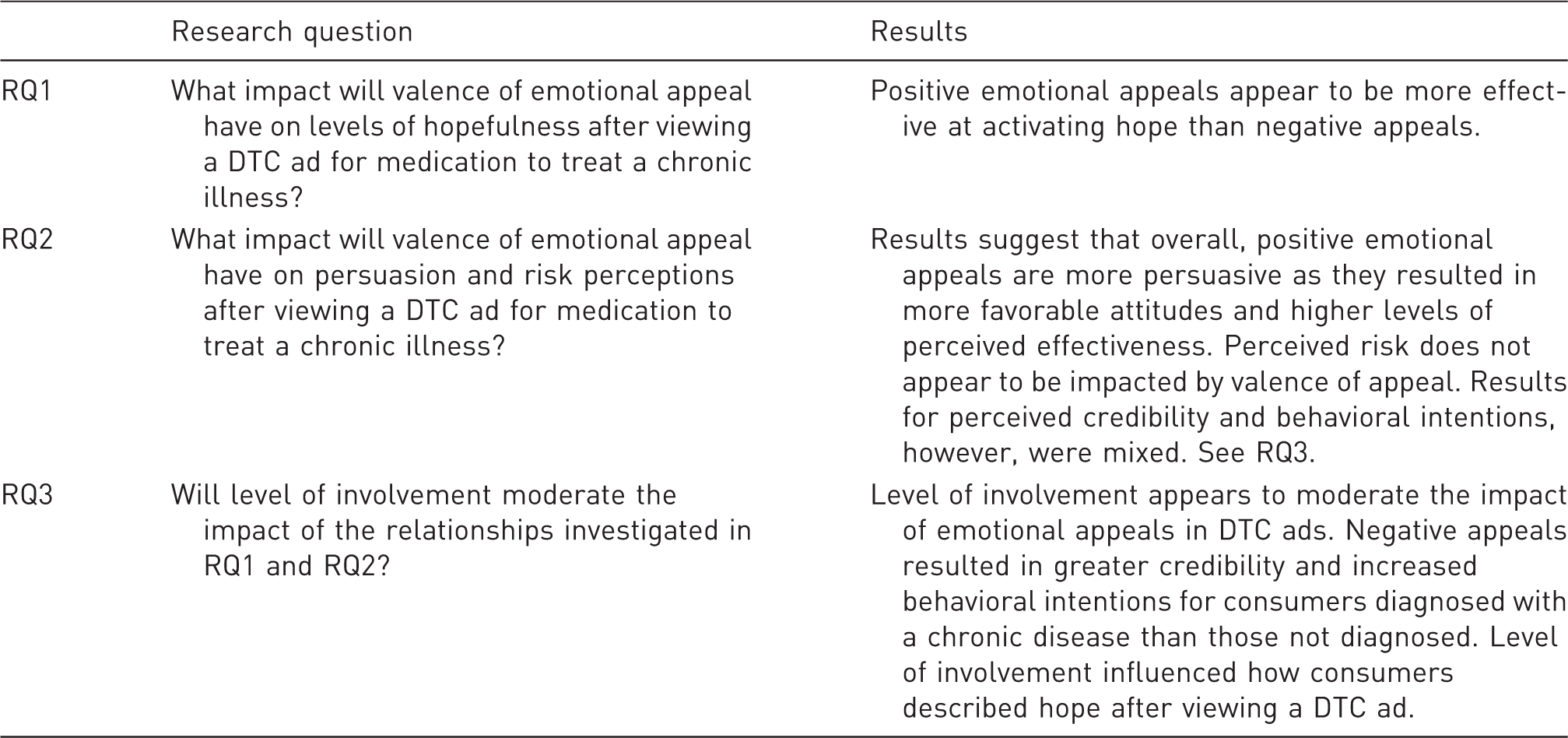
Research Question 1: What impact will valence of emotional appeal have on levels of hopefulness after viewing a DTC ad for medication to treat a chronic illness? Will there be an impact on other specific emotions, such as feeling downhearted?
Research Question 2: What impact will valence of emotional appeal have on persuasion and risk perceptions after viewing a DTC ad for medication to treat a chronic illness? Specifically, will attitudes to the ad and the brand be more or less favorable for positive emotional appeals versus negative emotional appeals? Will behavioral intentions be higher or lower for positive versus negative appeals? Will risk perceptions be higher or lower for positive versus negative appeals?
Research Question 3: Will level of involvement moderate the impact of the relationships investigated in RQ1 and RQ2?
Study design and methodology
This research employed an experiment to investigate the reactions of consumers living with chronic disease to ads employing emotional appeals. Arthritis and diabetes were used as the focal chronic diseases. Arthritis is the leading cause of disability in the United States and affects 52.5 million adults; it is a chronic disease that affects the joints, and causes inflammation, pain, stiffness, and disability. 55 In comparison, diabetes affects 29.1 million adults, and is a chronic disease that occurs either when the pancreas does not produce enough insulin or when the body cannot effectively use the insulin it produces. 56 We chose to examine two chronic diseases to determine whether the type of disease had an impact on consumers' reactions to the DTC ads. While arthritis and diabetes are both chronic diseases with potential serious long-term consequences, they are different in a few important ways. Arthritis is a chronic disease in which some of the symptoms are visually apparent due to the resultant changes to joints that can result in deformities, for example arthritic hands with swollen joints. Diabetes, on the other hand, is a chronic disease that is not obviously apparent at first glance. Most people would not visually recognize that someone is suffering from high blood sugar levels. In addition, lifestyle changes can have a greater impact on some diabetes symptoms than on arthritis symptoms.
Method
Stimuli
Ads for the experiment were selected from an online database of ads for pharmaceutical products (www.adpharm.net). We used real ads for branded medication to maximize the realism of the stimuli as well as to employ actual appeals used by pharmaceutical advertisers. To control for previous exposure to the advertised brands we asked all participants to report their level of familiarity with each brand. Ads that showed how the use of the advertised medication results in the experience of positive emotions were categorized as employing a positive emotional appeal. In contrast, ads that showed how the use of the advertised medication results in the avoidance of negative emotions were categorized as employing a negative emotional appeal. The authors examined all ads for arthritis and diabetes listed on the www.adpharma.net website and selected all ads that were clearly employing either a positive or negative appeal for each disease. Results from an expert panel were used to distinguish which ads employed the strongest appeals, either positive or negative. To minimize the effect of previous experience with the brands on participant responses, we selected multiple brands for each disease and we selected both a positive appeal ad and a negative appeal ad for each brand. Unfortunately, we were only able to balance the ads for one brand in the arthritis condition. Instead of including two ads from a second brand, we used two different brands, but ensured that they had similar characteristics both in terms of properties and in terms of elements appearing in the ads. The eight ads used in the study were actual ads that had appeared in print media in North America. A subset of the stimuli is included in Appendix 1.
For arthritis, one ad in the positive emotional appeal category was an ad for Celebrex (a prescription nonsteroidal anti-inflammatory – NSAID) featuring a man walking up a path on a hill met at the top by his wife/partner. The headline read “For arthritis patients, it's simple physics: A body in motion tends to stay in motion”. The other arthritis ad with a positive emotional appeal was for the drug Xeljanz, a Janus kinase inhibitor used to treat people with rheumatoid arthritis (RA). The ad featured a man's hand playfully petting a puppy. The headline read “Your body was made for better things than RA”. The arthritis ads employing a negative emotional appeal were for the brands Celebrex and Remicade. The negative Celebrex ad featured an image of a woman rubbing her hands together with the headline “Pain is a thief”. The negative Remicade ad featured an image of a snarling dog on a leash composed of various words to described the pain felt by people suffering from RA, e.g. inflammation, pain, swelling. The headline read “An aggressive disease demands aggressive control”. Remicade is a chimeric monoclonal antibody used to treat RA and other autoimmune diseases.
The diabetes ads were for the brands Lantus and Lyrica, with both a positive and negative emotional appeal for each brand. Lantus is an insulin injection used to treat adults with type 2 diabetes. Lyrica is a diabetic nerve-pain treatment. The Lantus ad employing a positive emotional appeal featured an image of a woman with a confident facial expression and her hand on her hip with the headline “Pack your bags, high blood sugar”. The Lyrica ad with a positive emotional appeal featured a woman walking hand-in-hand with two children with the headline “Having less diabetic nerve pain … it's a wonderful feeling”. The Lantus ad employing a negative emotional appeal featured an image of a woman standing at the ocean's edge with the headline “I chose to address my fear”. The Lyrica ad with a negative emotional appeal featured an image of a man's feet with push pins stuck into his feet. The headline read “There's relief for pain like this”.
Participants
Participants were recruited from a North American online panel and were first asked a screener question to determine whether they had been diagnosed with either arthritis or diabetes. These participants were randomly assigned to one set of ads for their specific illness, i.e. either the set of ads employing a positive emotional appeal or the set of ads employing a negative emotional appeal. Participants who answered no to both screener questions were randomly assigned to either the set of all ads with a positive emotional appeal or the set of all ads with a negative emotional appeal (arthritis and diabetes together). The order of the ads within a set was randomized to mitigate demand effects. There were 243 participants in total: 82 in the arthritis condition, 80 in the diabetes condition, and 81 in the neither arthritis nor diabetes condition. Of the participants with a chronic disease, 60.5% were currently taking prescription medication to treat the illness and 70.4% had been prescribed medication by a physician within the last three years. Women made up 56.8% of the total sample and more than half of the participants were 55 years or older in age.
Examining the participant characteristics within each experimental condition reveals a slightly different pattern. Of those participants diagnosed with arthritis and viewing either positive or negative emotional appeals, 66% were female and 68.5% were 55 years or older. According to the Centers for Disease Control and Prevention (CDC), 57 60% of all people with arthritis are women and the risk of developing arthritis increases with age, so our sample is a fairly accurate representation of the population. About 35.4% were currently taking a prescription medication to treat arthritis and 51.2% had been prescribed medication by their physicians within the last three years. Over half (51.2%) of these participants had been diagnosed with arthritis more than 10 years ago.
In contrast, the majority of participants diagnosed with diabetes were male (55%) and 86.3% of them were currently taking a prescription medication to treat diabetes, with 90% having been prescribed medication within the past three years. While it is possible to treat arthritis symptoms with over-the-counter medication for many people, the vast majority of people diagnosed with diabetes take prescription medication to treat the disease. 58 According to the American Diabetes Association, 59 in 2011 85.3% of adults diagnosed with diabetes reported taking pills or insulin to manage their diabetes. A smaller percentage of participants with diabetes were living with a long-term diagnosis as only 32% had been diagnosed with the chronic disease more than 10 years ago. Age distribution was similar to participants with arthritis with 63.7% 55 years of age or older. Participants not diagnosed with either arthritis or diabetes, however, were on average younger with only 29.6% 55 years or older and 42% between 18 and 34 years of age.
Measures
To capture the emotional reaction to the ads, a modified version of Edell and Burke's scale was used, 60 with the addition of the emotion “hopeful” as well as the emotions “remorseful” and “fearful”. After viewing each ad, participants were asked to indicate the extent to which the ad made them feel each of the listed emotions on a 7-point scale (1=very slightly or not at all, 7 = extremely). The instructions emphasized that we were interested in how the ads made the participants feel, not how they would describe the ads. While this cannot completely separate out the effect of emotions felt prior to viewing the ads, it did serve to at least direct participants' to reflect on the specific ad they viewed and not their general affective state. We captured attitudes to the ads by having participants evaluate each ad on a series of 5-point semantic differential items (items were good–bad, interesting–boring, annoying–not annoying, likeable–unlikeable, pleasant–unpleasant). Following the attitude to the ad items, we asked two open-ended questions: (1) what did you think the advertiser was trying to communicate, and (2) what makes you think so? Participants were also asked their attitude to the brand, their perceptions of drug effectiveness and riskiness, in addition to intentions to talk to their doctor and to other consumers about the advertised drug (all 7-point scales). Participants were asked to respond to questions adapted from de Mello et al. 61 to capture individual differences in perceived confidence in attaining the hoped-for goals, specifically managing symptoms and improving quality of life. All measures are listed in Appendix 2.
Results
Thematic analysis of open-ended responses
A thematic analysis of participants' responses to the open-ended questions was conducted. The analysis revealed notable differences among consumers diagnosed with a chronic disease and those not diagnosed. After viewing the arthritis ads employing a positive tone (Lyrica “body in motion” ad and the Xeljanz “puppy” ad), participants frequently referenced hope, stating “the advertiser is communicating hope for arthritis sufferers”. Many participants referred to improving life and gaining freedom, in addition to enjoyment and comfort. Participants not diagnosed with arthritis frequently mentioned that the advertised drug will allow users to continue with a “normal” life and that the drug will “reduce pain from arthritis”. Participants with arthritis frequently mentioned that the drug “might make your life a little easier”, and that the drug will relieve symptoms, but that there will still be pain and limitations.
Participants with arthritis who saw the arthritis ads with a negative emotional appeal seemed to identify with the pain and fear mentioned in these ads. The imagery had less meaning to participants without arthritis; they frequently referred to the images and words in the ads, but did not express the same understanding of the severity of the pain. They saw the drug more as a cure for the disease, while people with arthritis saw the advertised drug as something that could help get their pain “under control”. There was less focus on hope for the future, although some participants did mention that the advertised drugs could provide relief and could “fight back” at the disease.
The diabetes ads also resulted in differences among participants diagnosed with the chronic disease and those not diagnosed. After viewing the positive emotional appeal ads (Lantus “pack your bags” ad and Lyrica “wonderful feeling” ad), participants not diagnosed with diabetes described the products more like cures for diabetes, while participants with diabetes described the products as reducing, but not eliminating, symptoms of the disease. Participants referenced hope as well, referring to the potential to “get your life back”.
After viewing the diabetes ads employing a negative emotional appeal, participants referred to hope for the future, mentioning “don't be afraid”, “you can save your life”, and “there is hope”. Participants without diabetes tended to focus on the type and severity of pain, while participants with diabetes focused more on controlling the pain and relief of the pain.
Quantitative analysis of arthritis ads
Levels of familiarity with brand names

Participants expressed the most favorable attitudes toward the Celebrex “stay in motion” ad (3.43 on a 5-point scale) and significantly less favorable attitudes toward the Remicade “aggressive” ad (2.88 on a 5-point scale) than all other ads (F = 4.45 p = 0.005). Attitudes to the brand were significantly more favorable for the Celebrex “pain is a thief” ad (4.1 on a 7-point scale) than either the Xeljanz “puppy” ad (2.99) or the Remicade “aggressive disease” ad (3.05), F = 5.43, p = 0.001. Attitude to the brand was not significantly lower for the Celebrex “stay in motion” ad (3.89). Participants also perceived the advertised medication as significantly more effective for the Celebrex “pain is a thief” ad (4.28) than both the Xeljanz “puppy” ad (3.34) and the Remicade “aggressive disease” ad (3.44). There was no significant difference with the Celebrex “stay in motion” ad. The likelihood that participants would speak to other people they know about the advertised drug was highest for the Celebrex “stay in motion” ad (3.53) and lowest for the Remicade “aggressive dog” ad (2.24).
In terms of comparing responses between participants diagnosed with arthritis and those not diagnosed, significant differences emerged only for the Celebrex ad employing a negative emotional appeal. The Celebrex “pain is a thief” ad elicited significantly higher levels of feeling hopeful in participants diagnosed with arthritis (2.83) than those not diagnosed (2.02), F = 5.21, p = 0.025. Overall people diagnosed with arthritis experienced more positive emotions when viewing this ad than those without arthritis (2.15 vs. 1.65, F = 4.98, p = 0.028). Participants with arthritis were also significantly more likely to talk to other people about the advertised drug in the Celebrex “pain is a thief” ad (3.17 vs. 2.14, F = 6.71, p = 0.011). Although there were no significant differences in terms of attitudes to the ad, people with arthritis perceived the Celebrex “pain is a thief” ad as more credible than people without arthritis (4.62 vs. 3.72, F = 7.05, p = 0.01) and expressed more favorable attitudes to the brand (4.1 vs. 3.43, F = 4.70, p = 0.033). Participants with arthritis also perceived the medication in this ad as significantly riskier than those without arthritis (4.62 vs. 3.92, F = 4.51, p = 0.037).
Quantitative analysis of diabetes ads
Participants diagnosed with diabetes reported similar levels of familiarity with both advertised brands, Lyrica and Lantus (see Table 1), with no significant differences (F(3, 156) = 0.85, p = 0.471). For ads viewed by these participants, the highest mean level of positive emotions was elicited by the Lantus “pack your bags” ad (2.66 on a 7-point scale). The Lantus “pack your bags” ad also elicited significantly higher levels of feeling hopeful (3.77) than the other three ads, Lyrica “wonderful feeling” (2.95), Lantus “I chose” (2.93), and Lyrica “pins in feet” (2.38). In addition, the Lantus “pack your bags” ad elicited significantly lower levels of feeling downhearted (1.55) than the Lyrica “wonderful feeling” ad (2.5). Participants expressed the most favorable attitudes to the ad for Lantus “pack your bags” (3.63 on a 5-point scale) and significantly less favorable attitudes to the ad for Lyrica “pins in feet” (3.09). In addition, the likelihood that participants would talk to other people they know about the advertised drug was highest for Lantus “pack your bags” (3.07 on a 7-point scale) and significantly lower for Lyrica “wonderful feeling” (2.3). There were no significant differences between the other ads, Lantus “I chose” (2.98) and Lyrica “pins in feet” (2.93). The advertised medication was perceived as significantly more effective for Lantus “pack your bags” (4.12) than for Lyrica “wonderful feeling” (3.46) and Lyrica “pins in feet” (3.44).
When examining the differences in responses to ads for diabetes medication between participants diagnosed with diabetes and those not, significant differences emerged for both the positive and negative Lantus ads. Participants with diabetes reported significantly higher levels of feeling hopeful for the positive Lantus “pack your bags” ads than participants not diagnosed with diabetes (3.77 vs. 2.82, F = 6.39, p = 0.014). Participants with diabetes also expressed significantly more favorable attitudes to this ad than those without (3.63 vs. 3.23, F = 5.79, p = 0.019). After viewing the negative Lantus “I chose” ad, participants with diabetes were significantly more likely to talk to others about the advertised drug (2.98 vs. 2.17, F = 4.64, p = 0.034), but still experienced greater levels of feeling stressed (2.2 vs. 1.5, F = 6.64, p = 0.012) and overall felt greater levels of negative emotions than participants without diabetes (2.11 vs. 1.49, F = 6.64, p = 0.009). The only other significant difference between the groups was that participants with diabetes were significantly more likely to talk about the drug advertised in the Lyrica “pins in feet” ad than participants without diabetes (2.93 vs. 2.19, F = 4.03, p = 0.048).
Summary of research questions and results
Discussion
For people living with chronic disease, an emotional appeal speaks to consumers' desire to control disease symptoms and to convince consumers that with the advertised drug it is possible to live a “normal” life, thereby increasing yearning for this hoped-for outcome. High involvement consumers reacted differently to the ads for medication to treat chronic disease than low involvement consumers.
Ads employing a positive emotional appeal appear to be more effective in activating hope than ads featuring a negative emotional appeal. The positive Celebrex “stay in motion” ad resulted in higher levels of feeling hopeful, more favorable attitudes to the ad and greater likelihood of talking to others about the brand than the Remicade “aggressive disease” ad featuring a negative emotional appeal. The only ad to result in differential impact on reactions between people diagnosed with arthritis or not diagnosed was the Celebrex “pain is a thief” ad. It appears that a negative emotional appeal might be more persuasive in consumers living with the chronic disease treatable by the advertised brand. Acknowledging the painful reality of the disease resulted in greater levels of perceived credibility of the ad among consumers living with arthritis.
For the diabetes ads, the Lantus “pack your bags” ad employing the positive emotional appeal was more effective on most variables than the other ads, resulting in higher levels of hopefulness, more favorable attitudes and higher levels of perceived effectiveness. When examining differences in reactions between people diagnosed with diabetes or not diagnosed, the two ads employing a negative emotional appeal resulted in significant differences. Participants diagnosed with diabetes were significantly more likely to talk to other people about these advertised brands, even though the Lantus “I chose” ad resulted in higher levels of negative emotions.
Hope was mentioned by both people with and without arthritis or diabetes but in very different ways. People with the disease understand they will never be “cured” or “normal”, but that the drug can help them alleviate symptoms and limitations. In contrast, people without the disease understand hope to be more like a “cure” or “freeing of the symptoms”. Disease experience influences consumers' perceptions of the DTC drug being advertised. Text and imagery play a role in conveying a strategic message that provides hope for less pain/limitation, and yearning for the “normal” life lived before disease diagnosis. Pain prevents patients from living their “normal” life, and since chronic disease affects emotional health it stands to reason that in ads for these types of products, the only option is to convey hope because the disease and its symptoms are not going to disappear. The only hope is to be able to live in less pain, with less uncertainty, and do as much as possible physically and keep a healthy mind.
The ads used in this study were targeted to consumers with chronic disease and appear in niche publications such as Arthritis Today and Diabetic Living. These ads are at heart forms of persuasive communication with the goal of increasing use of one particular drug. While the purpose of the ads is to sell products, these ads appear to be serving an additional function. Most people with chronic disease have tried a few different drugs so they are familiar with multiple brand names. They also know how these products worked for them in the past or how the brands are currently performing. These consumers look at the ads in niche health magazines, and regardless if they are currently in the market for the medication advertised, they are learning something and taking away an argument from the ad. The argument is that medication will relieve symptoms, increase your control, lessen the pain and allow you to do live your life more fully. A person with arthritis or diabetic nerve pain knows she or he will likely never run a marathon or climb a mountain, but seeing a person finish a race or reach the summit in an ad might provide hope that having arthritis is not that bad and keeping it controlled allows them to get through their day in an acceptable way.
The results of this study have several practical implications. For pharmaceutical companies, better patient education about medications may help facilitate realistic expectations of medication effects and guide patients in their self-management goal-setting. Drug advertising and marketing should aim to empower patients in this regard. This study also holds practical implications for health care professionals. Physician–patient communication should address what patients are seeing in DTC advertisements, and discuss the differences in prescription medication options and the expectation of results. Additionally, physicians should work with patients to create a self-management program based on patients' personal goals.
Limitations and future research
Although care was taken to ensure that the ads used as stimuli in the study were similar, they were not equivalent on all aspects. It is possible that prior knowledge of brand names influenced participants' responses unevenly across the different ads. Using actual ads increased the realism of the stimuli, but it may have compromised the internal validity of our analyses. Going forward it would be beneficial to create matched ads with a fictitious brand name to ensure high level of equivalence across all experimental conditions.
While all ads employed an emotional appeal, in general the ads did not elicit strong emotional reactions on the part of participants. This could have to do with the online nature of the study and the fact that the participants were viewing the ads outside of the context of a magazine. It might also have to do with the specific ads chosen for this study. More extensive pre-testing might have resulted in ads able to elicit stronger reactions. The fact that we were able to find significant differences between these ads and between participants with a chronic disease and those without points to the existence of an even stronger relationship than what we uncovered.
Future research should investigate how ads for chronic disease are processed by consumers in general health magazines versus targeted niche health magazines. It is possible that the saturation of content in the articles and the ads related to a specific disease in niche magazines might influence the persuasiveness of the ads and whether the ads result in increased feelings of hope.
Footnotes
Declaration of conflicting interests
The author(s) declared no potential conflicts of interest with respect to the research, authorship, and/or publication of this article.
Funding
The author(s) received no financial support for the research, authorship, and/or publication of this article.