



Abstract
To what extent does social origin impact the disposition of students toward becoming politically involved in their future adult life? Using Chilean data from Civic Education Study, 1999 (N = 5688), and International Civic and Citizenship Education Study, 2009 (N = 5192), the present research analyzes, on the one hand, the impact of socioeconomic variables on attitudes toward future political participation and, on the other hand, explores to what extent the association between social origin and participation has changed over time. The analysis is performed in a multilevel framework, to account for both family socioeconomic status and individual school characteristics. The results support the hypothesis that social origin continues to have a strong influence on students’ attitudes toward political participation, in the context of the two measurement points. The resulting discussion focuses on the role of schools in reducing socioeconomic differences, an issue that acquires additional relevance in societies with high inequality such as Chile.
Introduction
Empirical research in the area of political participation has consistently shown that higher levels of participation are associated with a high socioeconomic status in general, and with higher educational levels in particular (Brady et al., 1995; Dalton, 1988; Han, 2009; Lijphart, 1997; Marien et al., 2010). This association would be accentuated in contexts of high economic inequality, given that inequality implies that a small portion of the population possesses the larger part of the income and privileges, which in turn reproduces a polarization of socioeconomic status. Through this circular process, high economic inequality reproduces inequality in political terms, which threatens not only the principle of equality, which is a cornerstone of democracy (one citizen = one vote), but also the legitimacy and stability of the democratic system itself.
Reducing the inequality gap is one of the fundamental purposes of education, which it supposedly accomplishes by serving as the main mechanism for social mobility. However, based on the different results from academic achievement tests, it is known that this goal is far from being reached: students’ socioeconomic background continues to be a fundamental predictor of academic performance (Bravo et al., 2008; Manzi et al., 2007; Mizala et al., 2004, 2007; Mizala and Romaguera, 2002). Given that schools transfer values that extend beyond the realm of academic knowledge, this study will concern itself with the following questions: To what extent does a student’s socioeconomic background influence his or her future political participation? Are the schools able to reduce this association? To what extent has this association changed over time?
In order to answer the questions raised above, this article uses data from the International Association for the Evaluation of Educational Achievement’s (IEA) civic and citizenship education studies, applied in Chile in both 1999 (CIVED—Civic Education Study) and 2009 (ICCS—International Civic and Citizenship Education Study). The availability of these studies provided the researchers with the possibility to analyze civic knowledge and political attitudes among eighth grade students, representing a unique opportunity at a national level. In this study, we focused on expectations of political participation, a topic present in both studies and which therefore allows for comparisons across time. In the context of this study, the term ‘political participation’ refers to the dimension of participation that relates to engagement with formal political institutions and practices, such as voting and registration with political organizations (Chanan, 2003; Putnam, 1993; Schulz et al., 2010). To contextualize the analysis, this article begins by introducing the Chilean context with regard to economic inequality and political participation, as well as the role of civic and citizenship topics in the Chilean school curricula.
Political participation in Chile between 1999 and 2009: the sociopolitical context
Chile’s socioeconomic situation has significantly changed during the last 20 years. Indicators of this change include the reduction of poverty from 38.4% in 1990 to 15.1% in 2011, as well as the increase in per capita income from US$4400 in 1990 to US$14,500 in 2010. Furthermore, there have been improvements regarding the consolidation of institutional democracy. According to the Polity IV Project’s 1 data, Chilean democracy has experienced a positive evolution since 1988, ranking among the higher levels of institutionalized democracy in the last electoral processes (see Figure 1).
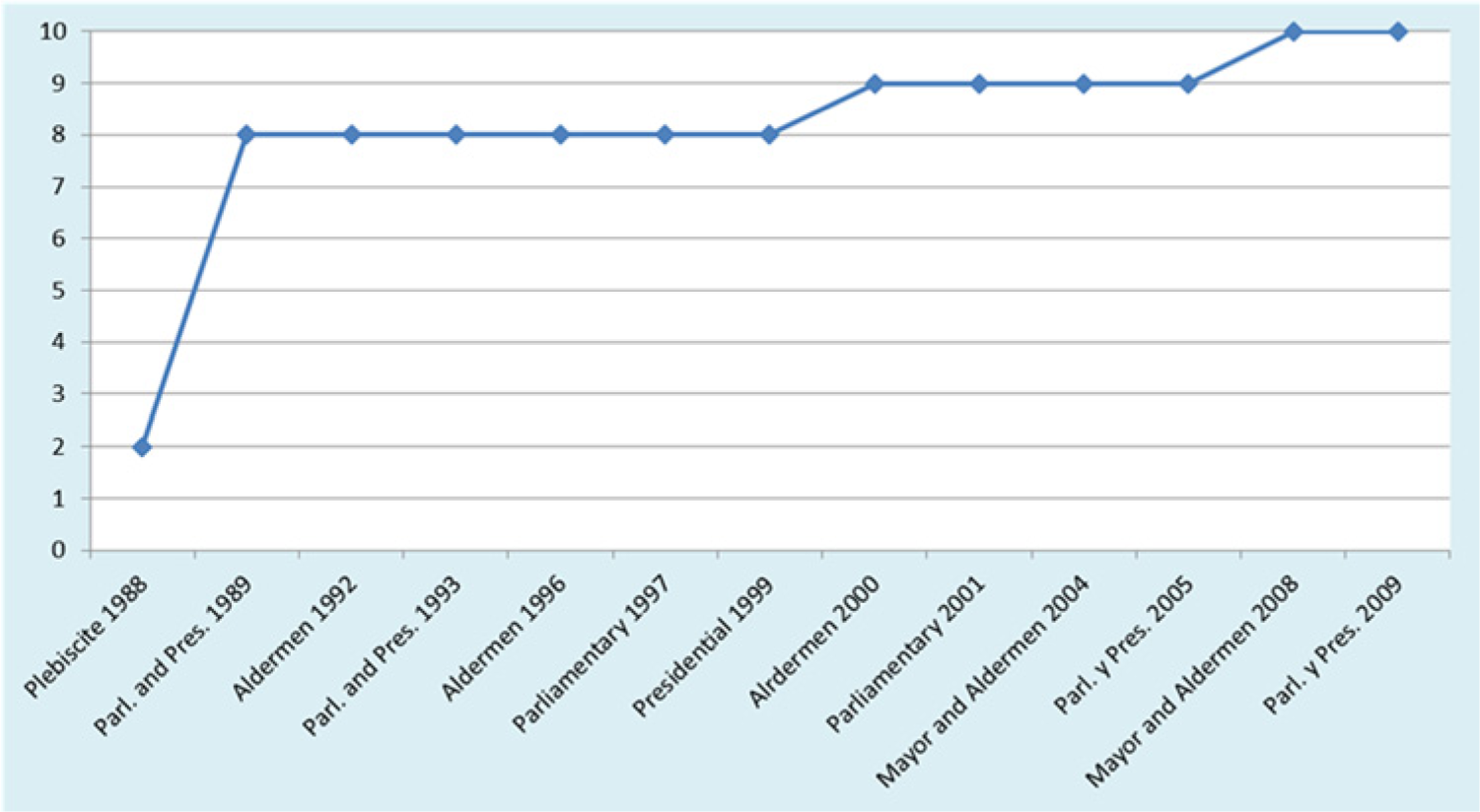
Evolution of institutionalized democracy.
In contrast to the indicators of economic growth and democratic improvement, indicators of economic distribution locate Chile as one of the most unequal countries in the world, a situation which has remained stable over the last few decades. The evolution of economic inequality indicators between 1990 and 2009 can be seen in Table 1, which displays the distribution of income in deciles of autonomous income. The decile that corresponds to the lowest income is around 1% of the total country income—a figure that has even decreased in the last measurement point—whereas the richest decile controls above 40% of the total income.
Evolution of income distribution in Chile according to household deciles.

Source: Ministerio de Planificación y Cooperación (MIDEPLAN, 2007, 2010), CASEN (Caracterización Socio-Económica Nacional) survey.
Political participation rates are another aspect of the Chilean context where unequal distribution can be observed. As shown in Figure 2, the rate of electoral participation among young adults under 30 years of age has continually decreased since the 1988 plebiscite, when Chile recovered democracy. This pattern is more noticeable among respondents aged 20–29 years, among whom participation has decreased from over 15% in 1988 to less than 5% in the last election. Only the participation of those over 40 years old has experienced a steady increase over time, which indicates a clear pattern of an older electorate. These figures are also consistent with public opinion data from surveys such as the Latinobarómetro, which indicate a generalized low interest in politics during the last two decades.

Evolution of the electoral participation in the last 20 years, according to age groups.
Policymakers in Chile have not been indifferent toward Chile’s high economic inequality, low political participation, and low interest in politics. Considering the fundamental role of the school in the process of political socialization, much research has been focused on the relationship between education and political participation (Espinoza and Madrid, 2010; Garretón, 2003; Ministerio de Educación de Chile (MINEDUC), 2005). This concern has been fed by both the low and declining indexes of young electoral participation, as well as by the results of such international tests of civic education as CIVED (1999) and ICCS (2009), studies in which Chilean eighth grade students obtained scores below the international average (MINEDUC, 2010; Schulz et al., 2010). In such a context, in 2004 the government organized a politically plural commission of Citizen Formation (Formación Ciudadana) coordinated by the Ministry of Education, which published a report (MINEDUC, 2005) that emphasizes the relationship between citizenship formation and the official curricula.
The introduction of a ‘National Program for Citizen Formation, Education for Democracy and Human Rights’ in 2004 had decisive consequences on several curricular adjustments. First, a progress map was developed as a way of establishing standards regarding the contents required in order to cover the basic topics of democracy and citizenship that all students should know, understand, and/or be able to perform in a determined phase of their school. This document was officially published in 2010. Second, achievement scores in citizenship formation were introduced into the SIMCE test (Quality of Education Measurement System) in order to evaluate the progress in the application of the new curriculum content. Third, in 2009, the academic curriculum was adjusted to include civics and citizenship topics, which came to modify the prior curricular orientations of both 1996 (in primary education) and 1998 (in secondary education) (MINEDUC, 2009). All these modifications suggest that the political opinions and attitudes of the students cited in the two surveys discussed in this research were formed based on different curricular orientations regarding civics and citizenship.
Until now, there are no available studies regarding how changes in education policies have influenced students’ civic and citizenship formation. This study aims to bridge this gap by focusing on a specific aspect of participation, namely, the expectations of future political participation. Thereby, we are interested in exploring how these expectations have changed between 1999 and 2009, focusing in particular on the role played by the student’s socioeconomic background.
Socioeconomic background and political participation
The formal political participation of the majority of the citizens, especially with regard to voting, is considered a central and necessary condition for the adequate functioning of democratic systems in terms of legitimacy, stability, and quality (Levinson, 2010). However, several studies indicate that this type of participation demonstrates a clear association with socioeconomic status, where those with higher socioeconomic and/or educational status tend to be more likely to participate in the political system (Brady et al., 1995; Dalton, 1988; Han, 2009; Lijphart, 1997; Marien et al., 2010). The resources approach (Brady et al., 1995) proposes that socioeconomic status is associated with several resources necessary to political involvement—such as time availability, money, and civic abilities—which in turn facilitate participation. Along the same lines, Leighley’s (1995) theory of mobilization puts the focus on the opportunity to participate associated with socioeconomic status. The explanation for this connection lies in that more advantaged groups have more opportunities to be a part of, and participate in, political groups, campaigns, and discussions (Verba et al., 1978), which is a position supported by Putnam’s (1993) theory of social capital. This theory points out that organization, trustfulness, norms, and social networks can improve the efficiency of society by facilitating coordinated actions, as in the case of ideal participation in the political system. Despite the fact that this theory does not theorize the relationship between social capital and socioeconomic status, it can be assumed that social capital plays a significant role in political involvement (Whiteley, 2005). Finally, another theory that fits in this group is that of cognitive involvement (Dalton, 2008; Whiteley, 2005), which states that individual exposure to political information and public issues, along with the ability and disposition to respond to this information, is a primary explanatory factor leading higher levels of political commitment and activity. This theory suggests that the control of the political rules has been massively increased in most developed societies, allowing a broader degree of participation. Although it is not explicitly stated that there has been a clear bias in participation toward more advantaged groups, it is expected that these groups are more likely to be socialized in the rules of the game, leading to a higher rate of involvement in politics.
These theories that indicate a positive relationship between socioeconomic status and participation all fall under the more general category of the relative power model (Solt, 2008), which suggests that political participation—especially formal participation—is determined by position in the social structure. Thereby, those who possess higher socioeconomic status mobilize their concentrated power to promote their collective interests, while the poorer groups, on the contrary, have less ability to mobilize their agendas.
In contrast to the relative power model, a second set of theories propose that those who are more motivated to participate in the political system are those who belong to the more disadvantaged social groups. The theory of rational action (Downs, 1957; Whiteley, 2005) is based on the idea that people will only become involved in an activity if the benefits outweigh the costs. For example, if this theory is applied to voting, it would indicate that a reduced number of people will vote because the act of voting itself does not imply significant individual benefits. However, it also has been argued that in conditions of great inequality, the poorest would demand a redistribution of wealth, because the potential benefit from participating would outweigh the costs (Meltzer and Richard, 1981). Along the same lines, the equity fairness theories of participation suggest that individuals’ behavior and attitudes can only be understood in relation to the groups they belong to (Whiteley, 2005). Group identity determines the relative expectations people hold concerning the political system, as well as the action necessary to provide for the groups’ needs. In this sense, groups that feel more disadvantaged in comparison to other interest groups—in what is referred to as relative deprivation—have greater reason to participate, especially in protests. Additionally, this perspective could explain electoral preference for political opposition as a product of their discontent with the incumbent. The association between low socioeconomic status and greater participation rates can be grouped into the conflict model (Solt, 2008), which states that in conditions of high inequality, there will be more social mobilization. Essentially, those groups with less access to resources will be more willing to become politically involved in order to put pressure on the government to provide them with better conditions and a redistribution of wealth.
The hypotheses formulated for the present research are mostly based on the relative power model, in accordance with prior evidence regarding the role of socioeconomic background characteristics on the participation of students at school level (Castillo et al., 2012). In order to specify the hypotheses based on this model, we distinguish between two levels of analysis: the individual and school levels. At the individual level, there are several existing studies that concern the possible determinants of different types of participation, covering a series of individual and political attitudes such as political efficacy, knowledge of political topics, confidence, self-esteem, control locus, and personality types (Bekkers, 2005; Cohen et al., 2001; González et al., 2005; Schneider and Castillo, 2009; Segovia et al., 2008; Velásquez et al., 2004). However, this research field is mainly focused on adult populations, and has not yet considered students. With regard to studies at the school level, there is significant evidence to suggest a positive association between civic knowledge and pro-participation attitudes, even when the degree of association varies. A large part of this evidence comes from large-scale studies, such as the CIVED 1999 (Torney-Purta, 2004), the Citizenship Education Longitudinal Study (CELS; Kerr et al., 2004), and more recently, the ICCS 2009 (Schulz et al., 2010), all of which place emphasis on civic knowledge. This particular research project is focusing on the impact of socioeconomic background variables, such as the parents’ educational level and their cultural capital (Brady et al., 1995). Although there is some prior evidence of this association based on the analysis of the CIVED (Torney-Purta, 2002), the interest here is to test this hypothesis in the context of high socioeconomic inequality. Given that economic inequality has remained stable over the last 10 years (Ministerio de Planificación y Cooperación (MIDEPLAN), 2010), the hypothesis in this research predicts students’ socioeconomic background to play a predominant role in the formation of their expectations of political participation, which besides would remain stable between 1999 and 2009.
A second area of inquiry concerns the influence of students’ general political attitudes on their attitudes toward participation. It would be expected that students’ conceptions regarding community involvement and about the value of participation have an impact on their motivation to participate in the future, which at the same time could be affected by their current opportunities to participate in their communities (Biesta et al., 2009). Therefore, this research suggests that those students who express positive attitudes regarding citizen engagement—in terms of involvement with others and in political decisions—would express a higher expectancy of future political participation.
In attempting to account for potential variations in student political participation across different school contexts, past research has emphasized the study of different pedagogical approaches to civics topics, as well as their impact on different areas of participation (Lopes et al., 2009). In that context, the evidence is mixed and mainly shows that the school has little impact on these variables when compared to individual level variables (Lopes et al., 2009). Despite this evidence, at the school level our main interest is studying the impact of socioeconomic background on participation, based on the resource model described above. Hence, it is expected that students from schools with a higher socioeconomic level will, on average, report higher levels of future participation.
The model for analysis and hypotheses can be summarized in the following schema.
Figure 3 shows the main associations to be assessed within the framework of this study. First, two levels of analysis can be distinguished: the individual and school levels. At the individual level, this research considers two main types of variables that could be influencing expected political participation: the student’s family social status and the perception of what it means to be a ‘good citizen’, which correspond to the value of citizen engagement mentioned above. At the school level, variables associated with socioeconomic level are considered, in accordance with the resources-model hypothesis. Expectations of political participation at the school level are represented in the schema by an oval, according to the multilevel model specifications suggested by several scholars (Heck and Thomas, 2009; Muthén and Muthén, 1998–2007), where the dependent variable is considered latent since it corresponds to an estimation of the variance of the individual variable at the school level (random intercept).
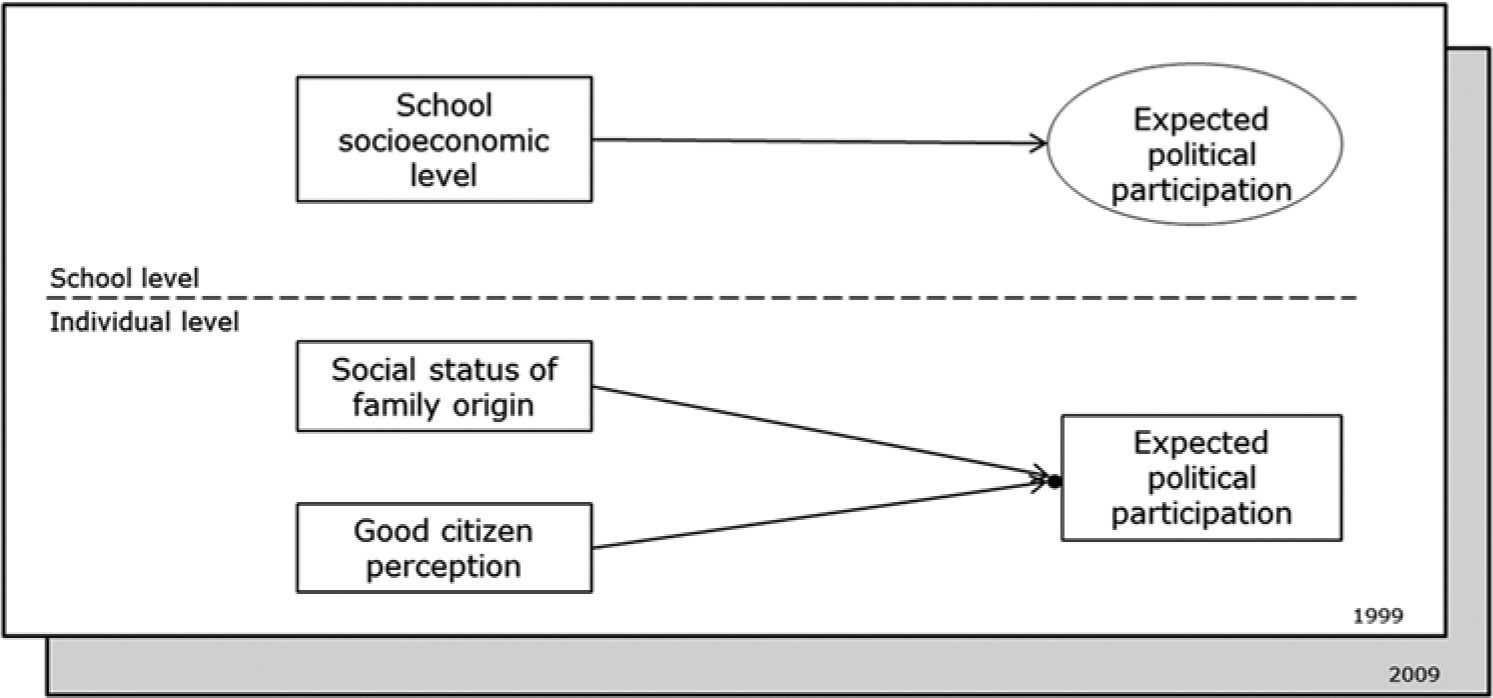
Model of students’ expectations of political participation.
Data, variables, and methods
The data correspond to the CIVED and the ICCS, both coordinated by the IEA. CIVED was implemented in 1999 with eighth grade students from 28 countries, achieving a sample close to 90,000 students, as well as 9000 professors and 4000 directors. Regarding the ICCS, 38 countries participated, with a total sample of more than 140,000 students in the eighth grade, as well as 62,000 professors and 5300 directors (Schulz et al., 2010). In Chile, 5688 students from 180 schools participated in the CIVED in 1999, while in the ICCS, in 2009, the number of participants reached 5192 students from 177 schools.
The dependent variable in this study corresponds to the factorial score of the common items in CIVED and ICCS, which refer to the expectations of future political participation. Table 2 shows the items and their correspondent factor loadings.
Dependent variable: expected political participation.
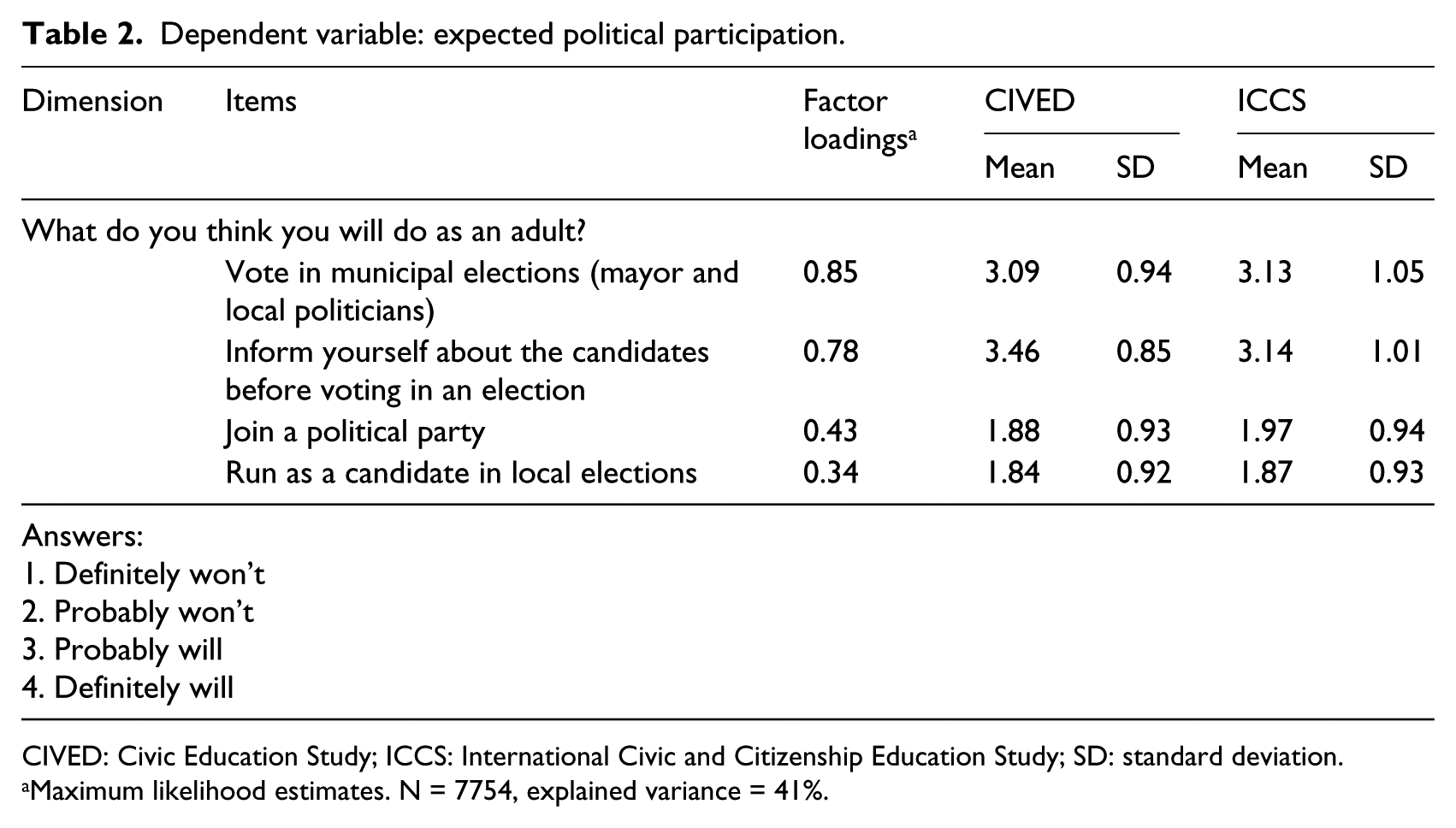
CIVED: Civic Education Study; ICCS: International Civic and Citizenship Education Study; SD: standard deviation.
Maximum likelihood estimates. N = 7754, explained variance = 41%.
Table 3 shows the independent variables that are related to the characteristics of students and their families, while Table 4 describes the variables at the school level. The socioeconomic background variables correspond to the family’s education and the number of books at home, as these variables have been shown to serve as a proxy of cultural capital.
Independent variables (CIVED/ICCS) (Level 1).
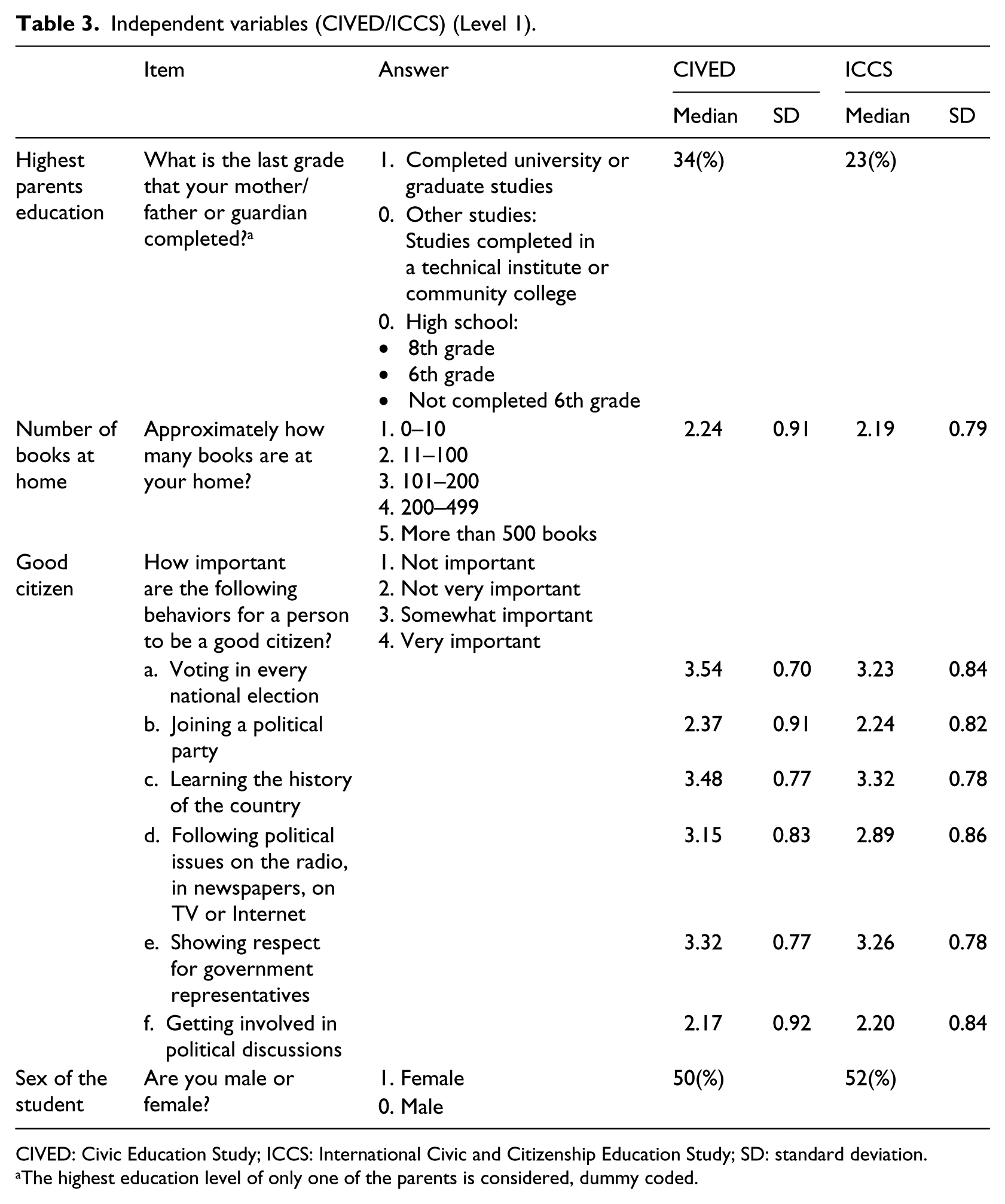
CIVED: Civic Education Study; ICCS: International Civic and Citizenship Education Study; SD: standard deviation.
The highest education level of only one of the parents is considered, dummy coded.
Independent variables (CIVED/ICCS) (Level 2).
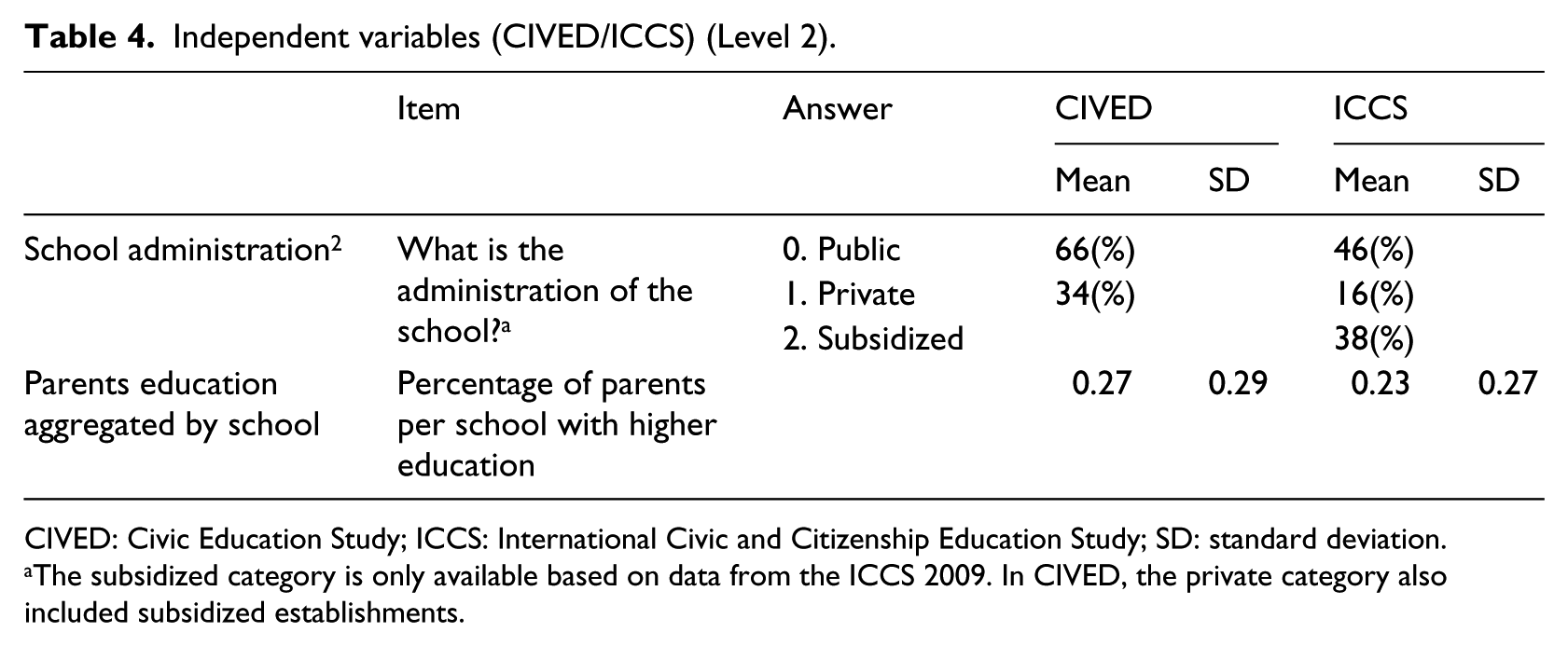
CIVED: Civic Education Study; ICCS: International Civic and Citizenship Education Study; SD: standard deviation.
The subsidized category is only available based on data from the ICCS 2009. In CIVED, the private category also included subsidized establishments.
Analysis
Starting with some descriptive analysis, Figure 4 illustrates the comparison of the expected future participation items in 1999 and 2009. In both years, the most relevant dimensions in terms of averages are the future expectations of being informed and voting, while the least relevant were running as a candidate and enrolling in a political party. Another interesting aspect to highlight is that in general, the averages remained similar in both studies.
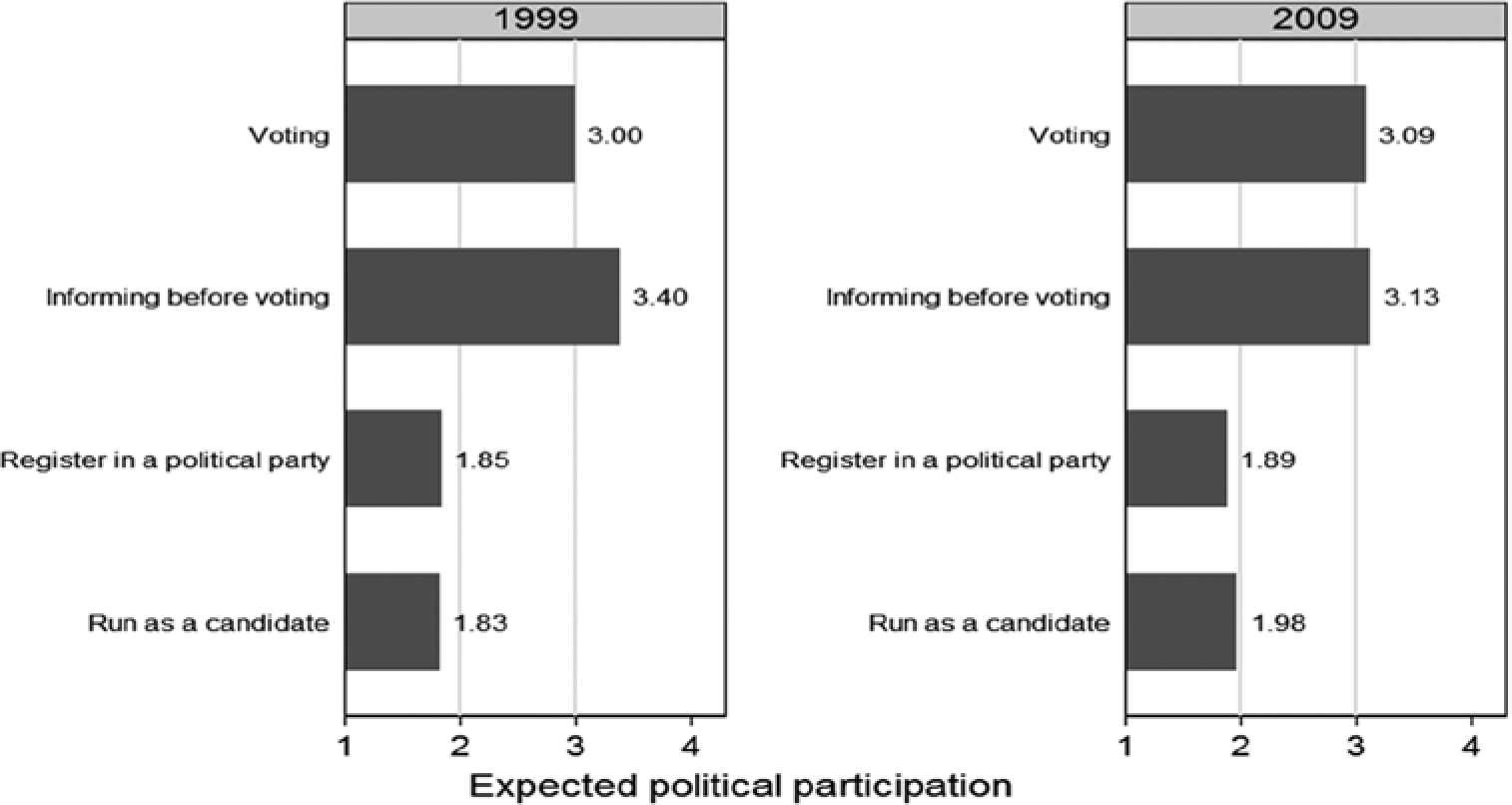
Expected participation in 1999 and 2009.
Attending now to the impact of the socioeconomic background variables on the students’ expected political participation, Figure 5 shows the variations of expected participation according to students’ family educational level. In both years, having parents with higher education tended to produce higher levels of expected political participation.
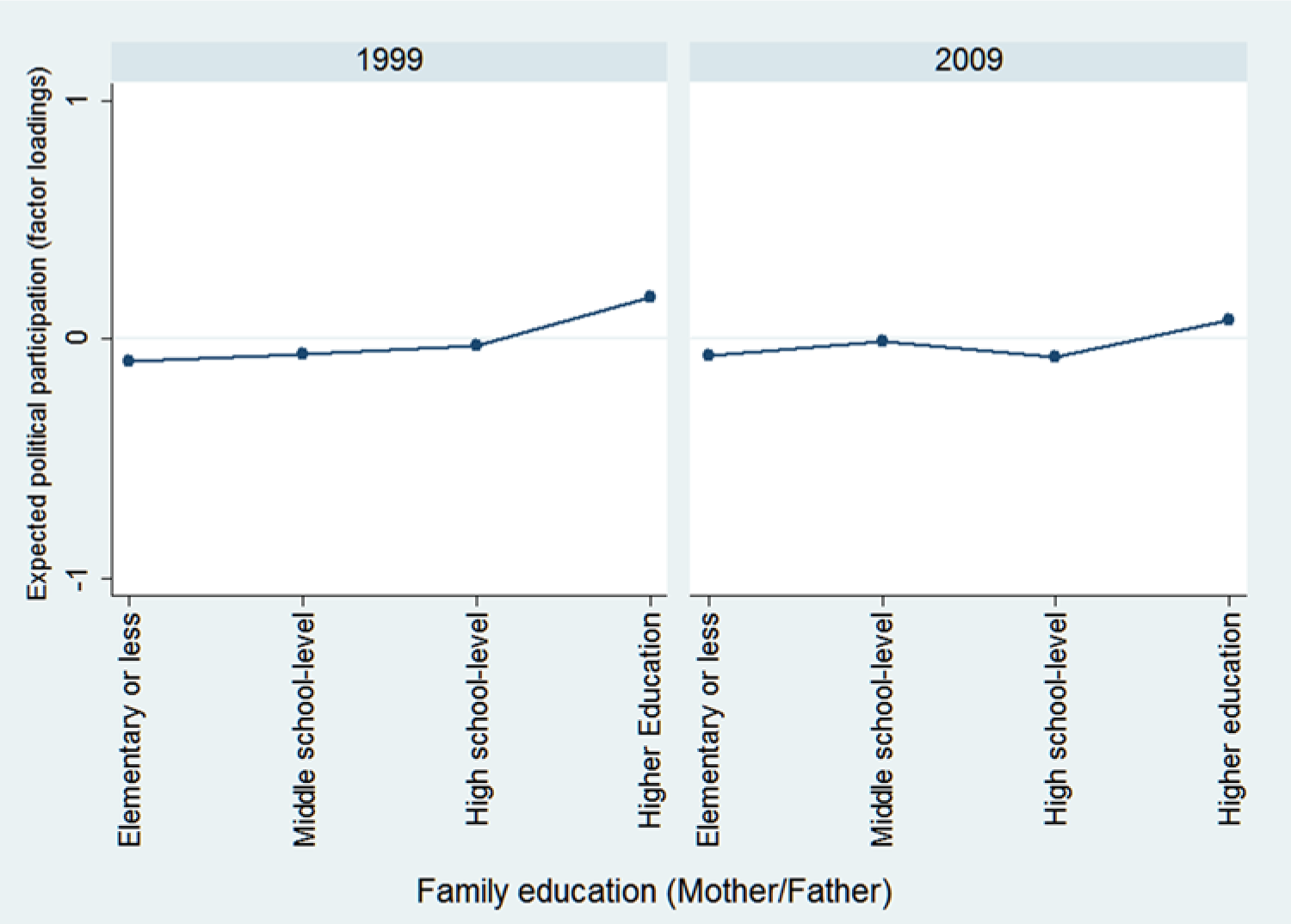
Expectations of future political participation, according to the educational level of the family.
Table 5 shows the results of the multilevel estimation for the expectation of political participation in 1999 and 2009. Model I shows the influence of school administration on participation. In the CIVED, students in public schools have lower expectations of political participation than their peers in private and subsidized schools. (Note that the reference category in this case is a combination of both.) This situation is replicated in ICCS, where both the municipal and subsidized schools have lower expectations of political participation than paid private schools. Further analysis revealed that there were also significant differences between subsidized and public schools (t(4003.79) = 2.50, p < 0.05).
Multilevel models of the expected political participation in 1999 and 2009.

CIVED: Civic Education Study; ICCS: International Civic and Citizenship Education Study; df: degrees of freedom.
Maximum likelihood estimation, nonstandardized coefficients. The reference for the R2 is the null model.
p < 0.05; **p < 0.01, t values in parenthesis.
Model II shows that aggregate parents’ education per school has a positive effect on students’ future participation. It is worthwhile to note that once this variable is introduced into the model, the effect of the school administration loses its statistical significance. This result indicates that school administration itself is not associated with predicted future political participation. Rather it is the composition of the school with regard to the average parent’s educational level that appears to predict perceptions of future political participation.
At the individual level, it can be observed in Model III that the number of books at home—an important proxy of cultural capital—is positively associated with the expectation of political participation in both the CIVED and ICCS. Similarly, parents’ educational level also showed a positive effect, which is only significant in the ICCS. Furthermore, it is also observed that the variable related to the notion of being a ‘good citizen’ has a significant effect on the levels of expected participation in both studies.
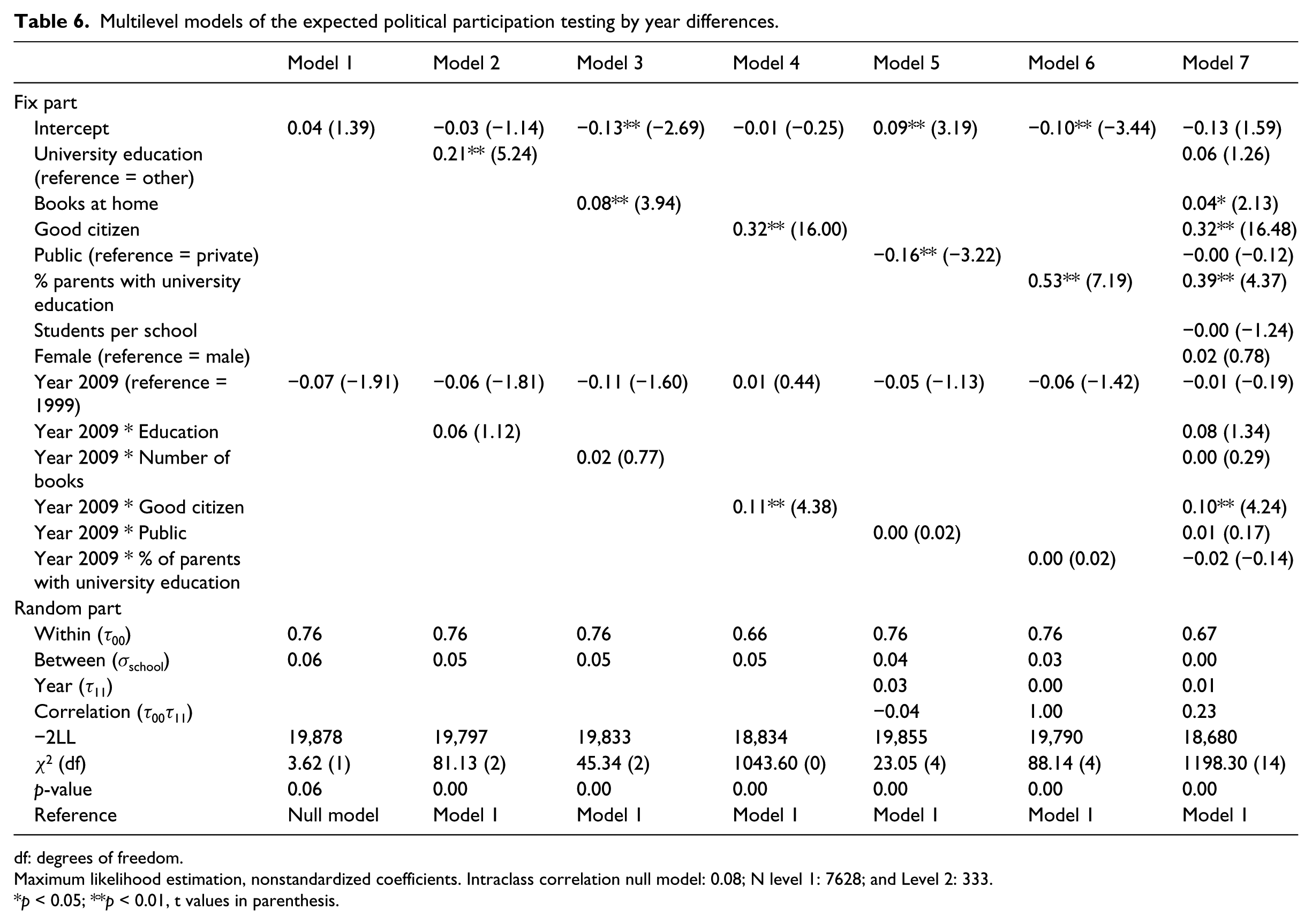
Even though it is possible to describe several differences when comparing the analysis for 1999 and 2009, the following question remains: Are these differences statistically significant? In order to answer this question, Table 6 presents a series of models that include the year as a variable, to test the differences between 1999 and 2009. Model 1 introduces the year as a dummy variable. It is found out that the effect of the year is not significant, which indicates that the levels of expectation of political participation do not differ between these two years of measurement. However, when performing the analysis only at the individual level (i.e. without multilevel), the differences between the two years are found to be significant (t(7064.49) = 4.38, p < 0.01), whereby the average is lower in 2009. Substantively, this implies that belonging to one specific school does not significantly influence lower levels of participation. That is, the decrease in 2009 at the individual level would be an effect that transcends schools. At the individual level, it is also observed that parent’s education, number of books at home, and the perception of being a good citizen are all positively associated with the expectation of participation. However, upon evaluating the interactions between these variables and year of the study, the only significant effect is that of the good citizen scale. This indicates that the effect of this variable on the students’ expected political participation increased in the 2009 study, as compared to 1999.
Multilevel models of the expected political participation testing by year differences.
df: degrees of freedom.
Maximum likelihood estimation, nonstandardized coefficients. Intraclass correlation null model: 0.08; N level 1: 7628; and Level 2: 333.
p < 0.05; **p < 0.01, t values in parenthesis.
Attending now to school level variables, the observed effects do not differ much from the estimations presented in Table 5, wherein average schools with a lower status (public schools) showed lower expectations of political participation than private schools. Furthermore, schools in which more parents had achieved a high level of education were positively associated with student’s expected political participation. Upon evaluating the interaction between each of these variables and the year, there were no significant results, showing that there are no differences between the effects of school administration and parents aggregated education in 2009 and 1999 in the parameter estimated.
Finally, all the variables involved in the study are included in Model 7, where it is possible to observe no large differences when compared to the previous models. However, it is worthwhile to note that school administration is no longer significant, which would be related to the association of this variable with status predictors (particularly parents’ education at both the individual and school levels).
Discussion
The purpose of this article was to analyze the relationship between expected political participation and the socioeconomic background of students from Chilean schools, comparing data from 1999 (CIVED) and 2009 (ICCS). Accordingly, it first briefly contextualized the evolution of the country with regard to economic development, inequality, political participation, and educational policies over the last 20 years. Chile presents a particular combination of evolution of democratic indicators and poverty reduction, yet these positive developments have come accompanied by a steady decrease in political participation indexes. Within this framework, the main interest of this research lies in comparing students’ expectations of formal political participation at the end of the second cycle of primary school in both 1999 and 2009. The central hypothesis established a relationship between students’ future political participation and their socioeconomic background according to the resources model of political participation.
Based on the results of the analysis, first it is observed that a school’s socioeconomic composition influenced the expected future political participation of its students in both 1999 and 2009. Belonging to a public school in both years implied lower expectations of formal involvement in the political system. This finding supports the conclusions of previous studies considering achievement in civic knowledge tests, where public schools presented lower average scores when compared to private schools (MINEDUC, 2010). However, when considering the percentage of parents with completed higher education per school, the effect of the school administration disappears. In other words, rather than administrative dependency itself, it is the socioeconomic composition of schools that matters most in predicting future political participation. This association occurs in both time points considered for the analysis, which suggests that socioeconomic inequalities associated with the educational context impact students’ expectations of participation. This effect seems relevant for the Chilean case, since the high socioeconomic segregation of the educational system (Mizala and Torche, 2012) implies that the students from the few schools with high socioeconomic status will be eventually overrepresented in terms of political voice in the future, thereby economic inequality breeds political inequality. This not necessarily means that reducing school socioeconomic segregation will increase students’ expected participation, but that political participation opportunities will be more equally distributed among students from different socioeconomic backgrounds.
This effect seems relevant for the Chilean case, since it is probably related to the high level of socioeconomic segregation that characterizes the educational system of this country (Mizala and Torche, 2012). Students’ evaluation of the importance of participation in order to be a good citizen turned out to be highly associated with their disposition to participate politically in the future. Furthermore, this association appeared more significant in 2009 than it did in 1999. As mentioned, the CIVED and ICCS were carried out 10 years apart in different curricular contexts, so these results should be prefaced with the fact that the higher association between these variables may be related to different curricular contexts, particularly in consideration of the democratic components of the later curriculum, since the one applied in 1999 was still framed in the dictatorship.
Several findings of this study highlight the complexity of the role of the educational system in reducing the impact of the inequality gap on political participation. On the one hand, a tendency to reproduce the impact of the family status and the schools’ socioeconomic characteristics is observed. Although this association is far from being new in terms of academic achievement in the country, the contributions of this study go beyond the academic success, taking us to the political arena: students from schools and families with lower socioeconomic background have fewer expectations of participation and, hence, it can be anticipated that they will have less possibilities to translate redistributive demands into political mobilization. On the other hand, in addition to this conclusion, there are attitudinal components that play a relevant role, such as the notion of being a good citizen. This notion positively impacts the expectations of participation even when controlling for differences at both the individual and school socioeconomic levels. Given that these attitudinal components could possibly be reinforced in the official curricula, it seems relevant to raise the following question: In which kind of school contexts might it be possible to intervene at the school level to mitigate the influence of socioeconomic differences on future political participation? In this sense, further research may point to identifying the differing characteristics of various schools that make them more or less capable of reducing the effects of students’ socioeconomic background on future participation.
Footnotes
Funding
This work is supported by Chile’s Fondo Nacional de Desarrollo Científico y Tecnológico (FONDECYT) (grant number 1120630) and the Centre for Social Conflict and Cohesion Studies (grant number CONICYT/FONDAP/15130009).