



Abstract
The study investigated whether adults rely on the cues of shared cultural knowledge when forming social category representations. We used a modified version of the memory confusion paradigm, where participants are presented with the photographs of people differing along social category distinctions while listening to utterances associated with the pictures. In the test phase, the task is to match the utterances to the photographs. When category representations are formed, more within-category errors than between-category errors are expected. Experiment 1 contrasted two cues in social category representations: race and shared cultural knowledge. In Experiment 2, categorisation based on shared cultural knowledge was tested without any competing cue. Experiment 3 replicated previous results about automatic race encoding when no competing social distinction was available. Experiment 4 contrasted gender with cultural category membership. The results indicate that people encode information about race, gender, and cultural background; however, the latter two are more fundamental dimensions of social categorisation.
Both common intuition and extensive scientific study suggest that humans have a strong and pervasive propensity to think of fellow humans in terms of categories. Even though one of the most prominent features of social categorisation processes is the tendency to form group affiliations based on any trivial or incidental cue (Tajfel et al., 1971), it has been proposed that there may be a number of dimensions that enjoy primacy in the hierarchy of social distinctions. In particular, three properties have been suggested to be encoded automatically when encountering another individual: sex, race, and age (Fiske, 2000). While the claim that sex and age have special relevance in social category representations is widely accepted, the claim about race has raised significantly more controversy among researchers (e.g., Cosmides et al., 2003; Kinzler & Spelke, 2011). From an evolutionary point of view, Cosmides and colleagues (2003) have argued that since our ancestors did not have the opportunity to encounter people from different racial groups, the human mind could not have evolved any special faculty that would be selectively sensitive to racial features. Rather, it has been suggested that the seemingly automatic encoding of race may simply be the by-product of the mind’s tendency to sort the social environment into groups based on other, more meaningful, distinctions (Cosmides et al., 2003; Kurzban et al., 2001). Specifically, researchers argue that when it comes to the structure of the society, the human mind first and foremost aims to map out the complex and often dynamically changing coalitional relations between individuals. The reason that race seems to behave as a primary distinction is that throughout history, it has been correlated with coalitions and direct cues of coalitional affiliations may sometimes be less available (Cosmides et al., 2003). Using the so-called memory confusion paradigm (Taylor et al., 1978), the researchers have shown that when race is contrasted with the direct cues of coalitional relations, people primarily attend to the latter. However, coalitional relations may not be the only social distinction that the human is specifically adapted to encode. Using the same paradigm, a handful of studies have highlighted other dominant dimensions of social categorisation that have the power to overshadow the relevance of race and are not part of the “Big 3,” such as kinship (Lieberman et al., 2008) and language (Pietraszewski & Schwartz, 2014a; Pietraszewski & Schwartz, 2014b). In this study, we explore the possibility that shared knowledge may similarly be a powerful dimension of social categorisation and is spontaneously encoded by the human mind.
The unique nature of human group living lies in humans’ tendency to form complex cultures that are characterised by a vast amount of culture-specific accumulated knowledge and a number of institutional norms that guide individual behaviour (Herrmann et al., 2007; Richerson & Boyd, 1998). In fact, anthropologists tend to define culture as a body of knowledge shared by members of a group (e.g., Kroeber & Kluckhohn, 1952; Romney, 1999). Thus, it is crucial to understand where the boundaries of the validity of cultural knowledge lie. On the one hand, shared knowledge helps govern everyday interactions with other individuals (e.g., understanding what it means when the other person shakes their head) and fosters large-scale cooperation through adherence to norms (e.g., driving on the correct side of the road). In fact, the violation of the established norms generally evokes the retaliation of the society, but they are judged less harshly when committed by out-group members who are less likely to share knowledge of cultural practices (Shinada et al., 2004). On the other hand, making a distinction between knowledgeable and ignorant individuals in terms of cultural knowledge provides guidance for information transfer as well. This is of special importance as cultures would only be transient phenomena without appropriate mechanisms that help the transmission of knowledge through generations (Henrich & McElreath, 2003).
There are many cues in human behaviour and communication that may potentially serve as an indicator of cultural group membership (and thus, shared cultural knowledge). Arguably, the most prominent of these cues is linguistic markers as language itself is a product of culture and tends to co-vary with other elements of cultural knowledge. Moreover, humans are able to detect subtle differences in language use from infancy (e.g., Nazzi et al., 1998). In fact, lately, a large body of evidence has been accumulated that suggests that language-based social categorisation emerges very early in development and guides social interactions well before children start to pay attention to other cues, such as race (Liberman et al., 2017). For example, Kinzler et al. (2007) have shown that infants as young as 6 months of age show a preference for linguistic in-group members and interact differentially with people based on the language they speak already at 10 months. These preferences are also observable when children are faced with people differing only in accent (Kinzler et al., 2011) and they override preferences based on race (Kinzler et al., 2009). Information about linguistic group membership modulates children’s learning processes as well, as shown by the fact that toddlers are more willing to endorse information coming from in-group members about food (Shutts et al., 2009) or object functions (Buttelmann et al., 2013; Howard et al., 2015; Kinzler et al., 2012; Oláh et al., 2016); and even infants selectively attend to information presented by a native speaker (Begus et al., 2016; Marno et al., 2016).
The prominent role of linguistic markers in making sense of the social world remains evident in adulthood as well. Pietraszewski and Schwartz (2014a, 2014b) have shown that adults spontaneously encode linguistic group membership and language as a dimension of social categorisation is independent, and not a by-product of, categorisation in other domains, such gender or coalitional relations.
Empirical evidence also suggests that impressions formed about a person based on linguistic cues tend to drive expectations about other facets of shared cultural knowledge, such as tool-using habits or knowledge of songs, both in children and adults (Esseily et al., 2016; Kinzler et al., 2012; Oláh et al., 2014; Soley & Aldan, 2020; Soley & Spelke, 2016). Consequently, it is possible that language is used as a proxy for shared cultural knowledge in a broader sense. If that is the case, other cues that effectively signal that an individual shares knowledge in relevant domains with oneself should similarly evoke categorisation.
In this study, we set out to investigate whether adults would spontaneously encode information about cultural group membership based on cues of shared cultural knowledge, other than language. With the help of these experiments, we wanted to (1) provide support for the notion that shared cultural knowledge in general—and not just linguistic information—can be regarded as a primary dimension of social categorisation; (2) direct cues of shared cultural knowledge would still robustly influence social category representations in adulthood, despite the vast socialisation effects that accentuate the relevance of other distinctions (such as race). Similarly to other studies exploring priorities in social categorisation in adults (e.g., Kurzban et al., 2001; Pietraszewski & Schwartz, 2014a, 2014b, Lieberman et al., 2008), we used the so-called memory confusion paradigm (Taylor et al., 1978). In the classic version of the paradigm, participant views a discourse between people who can be categorised as members of two different social groups along one fundamental social category (in the seminal study: racial or gender groups). Each person has a number of distinct utterances and following the presentation of the discourse, participants’ task is to match the utterances to the speakers. Researchers make inferences about social category representations based on the errors participants make during the matching task. The idea is that if people categorise others along a certain dimension, they will make more errors where they mistakenly attribute an utterance to a person who belongs to the same category as the person who actually uttered the sentence. In the extension of the paradigm, a second dimension of categorisation (e.g., coalitional relations) is added that cross-cuts racial groups. In such cases, the question is whether both dimensions will be attended to or one has the power to suppress the encoding of the other. Thus, in Experiment 1, we contrasted cues of sharing cultural knowledge with race, while Experiment 2 investigated the effects of shared cultural knowledge without any competing dimensions. Experiment 3 tested whether our paradigm would elicit racial categorisation in the absence of competing cues of shared cultural knowledge. Experiment 4 contrasted cues of shared cultural knowledge with those of gender instead of race.
Experiment 1
Method
Participants
Overall, 49 adults between the ages of 18 and 35 years (M = 23.21 years, SD = 4.58 years, female = 26) took part in the study. All participants were Caucasians and monolingual Hungarians. A power analysis using the G*Power software showed that assuming a moderate effect size (d = 0.5), an alpha value of .05, and power of 0.8, the adequate sample size would be 34. However, since there are no prior studies to inform us about the robustness of categorisation by shared cultural knowledge, we decided to increase the sample size of Experiment 1—which can be considered the first exploratory study—and it was determined to approximate that of Kurzban and colleagues (2001).
Stimuli
For the stimulus, photographs of six males and six females were selected from the Facity database (facity.de). To avoid the confounding effect of another category distinction (sex), separate stimulus sets were created with female and male faces. Importantly, out of the six faces of each sex, three depicted Caucasian and three depicted African American individuals (although within these broader categories, ethnicities were varied; to our participants, half of the protagonists could thus be construed as racial “in-groups,” while the other half were “out-groups”). The group membership based on shared cultural knowledge was indicated by the content of the utterances. We used individual utterances (as opposed to parts of a discussion) that were related to eating habits. Altogether, 42 recorded utterances were used, out of which 12 were statements indicating adherence to the cultural norms of the participants’ native country (Hungary) or knowledge of trivia relating to the Hungarian culture (e.g. “When friends come over for dinner, I often welcome them with a glass of palinka” or “Chicken paprikasch is one of our traditional dishes”). These sentences are henceforth referred to as “in-group sentences.” Another 12 utterances described habits or knowledge that were unfamiliar to participants (“out-group sentences,” e.g., “When we have guests over for dinner, the wife and the husband cannot sit next to each other”). Furthermore, the remaining 18 sentences were neutral in the sense that they contained no cues about the cultural group membership of the participant but were still associated with the topic of eating (e.g., “I tend to get sleepy after a meal”). These sentences are referred to as “neutral sentences” in the following parts of the description. Each face was semi-randomly allocated seven utterances by a computer programme (for details, see the “Procedure” section) in a way that a photo was either paired with four of the “in-group” sentences or four of the “out-group” sentences and three of the neutral sentences.
Procedure
Participants were tested in various locations, but always in a quiet room where no one else was present but the experimenter and the participant. Tests were conducted by three different experimenters (two females and one male). On arrival to the testing area, participants were informed that they would be taking part in a study exploring certain aspects of memory related to social stimuli and their task was briefly explained to them. They were informed that they would hear statements about eating habits that come from six different individuals and while they are listening to the utterances, they will see the photograph of the person who made the given statement. They were not given any information about the subsequent task, but were simply instructed to pay close attention.
The stimuli were presented on a laptop with the help of the PsychoPy software. The software assigned half of the faces to be “cultural in-groups” and the other half to be “cultural out-groups” randomly with the following constraint: the groups had to be racially mixed, and for half of the participants, the in-group team consisted of two Caucasian faces and one African American face, while for the other half, the pattern was reversed (one Caucasian face in the “in-group” team).
During the presentation of the stimulus, the photographs appeared on the screen one by one while the recording of the utterance was heard from the speakers. Each face appeared seven times, presenting the seven statements assigned to the face. The same face could not appear more than twice in a row. The first part of the presentation constituted the induction phase, where only statements indicating group membership were presented (three for each face). In the second phase, faces were paired with the neutral sentences. The remaining “in-group” and “out-group” sentences (one for each face) were inserted into the second phase, as a reminder of group membership. The phases were not ostensibly separated for participants, and their attention was not brought to the distinction between the statements. Apart from the limitations mentioned above, the presentation order of the statements and the statement–face pairings were randomised. The voices belonging to each face were also randomised across participants.
After the presentation, participants received a sheet on which the six faces could be seen and the faces were numbered. They were told that their task would be to match the sentences to the faces and they were instructed to make a choice even if they were not certain they had the correct answer. After that, the sentences appeared one by one on the screen, and participants were required to indicate which face it belonged to by pressing a number key from 1 to 6.
Data analyses
To assess categorisation processes, we analysed the erroneous responses of participants. Specifically, we analysed whether participants would make more within-category errors (mistakenly attributing a statement to another person belonging to the same social group) than between-category errors (mistakenly attributing a statement to a person belonging to the other social group). We conducted separate analyses for the two social categories contrasted in the experiment (cultural group membership and racial group membership). For both types of social category distinctions, we performed two analyses. The first one only focused on the neutral sentences. This provided the more stringent test since in this case, there were no remembrance cues available for the participants when matching the sentences to the faces. The content of the statement was not informative regarding cultural habits and there were no perceptual correlates of cultural group membership either that could help participants make the decision. Note that since race cues are present both at encoding and retrieval, this provides an extremely stringent test of cultural knowledge encoding. The second analysis included all of the statements used in the experiment. In this case, for 24 of the sentences, the statement contained direct cues to cultural group membership, thus even if participants were not absolutely sure about the correct answer, they could have used an overt strategy to choose randomly between the three faces that had been paired with sentences with similar content. This would increase the likelihood of committing within-category errors, but only if the category representation of cultural groups had been formed during the demonstration. To assess the number of within-category errors, we simply counted the number of times participants committed this kind of error. However, for between-categories errors, the sum of erroneous choices was multiplied by 2/3 to correct for the factor that the chance of committing a between-category error was higher. This is because in the case of within-category errors, there were only two potential incorrect answers as the third option was the correct answer itself. This correction method has been used for this paradigm since the publication of the seminal study when only one category dimension is presented (Taylor et al., 1978) and has been proven to be the ideal way of baseline correction for studies using multiple dimensions as well (Pietraszewski, 2018).
Analyses were performed with the SPSS 26.0 software. In all cases, we conducted paired samples t-tests with the number of errors as the dependent and error type as the independent variable. Moreover, we report Bayes factors for all analyses as well. Bayesian t-tests were performed with the JASP statistical programme.
Further information about the data and the materials can be found on the Open Science Framework page of the study: https://osf.io/469gw/.
Results
Social categorisation by race
When the analyses were limited to the neutral sentences, results showed that on average, participants committed 5.3 (SD = 1.93) within-category (WC) errors and 4.64 (SD = 1.49) between-category (BC) errors. The difference was marginally significant, t(48) = −1.792, p = .079, Cohen’s d = 0.253, BF10 = 0.682. The analysis, including all of the sentences, yielded no significant differences between within-category (M = 11.98, SD = 3.91) and between-category (M = 10.98, SD = 3.54) errors, t(48) = −1.251, p = .217, Cohen’s d = 0.179, BF10 = 0.323. The results of the analyses on racial categorisation are depicted on Figure 1.

Occurrence of different error types when race is used as a dimension of social categorisation (Experiment 1).
Social categorisation by shared cultural knowledge
The analysis only including sentences with neutral content revealed that participants did not commit more within-category errors (M = 4.78, SD = 1.97) than between-category (M = 4.99, SD = 1.69) errors when matching the sentences to the faces, t(48) = 0.518, p = .607, Cohen’s d = 0.071, BF10 = 0.176. However, significantly more within-category errors (M = 12.74, SD = 3.96) than between-category errors (M = 10.48, SD = 4.5) were found when the sentences with cultural content were also included in the analysis, t(48) = −2.206, p = .032, Cohen’s d = 0.316, BF10 = 1.412. The results of the analyses on categorisation by shared cultural knowledge are depicted on Figure 2.

Occurrence of different error types when shared cultural knowledge is used as a dimension of social categorisation (Experiment 1).
Discussion of Experiment 1
Experiment 1 tested whether social categorisation by shared cultural knowledge would be manifested in adults using the memory confusion paradigm. Following the methods of similar studies comparing the relevance of social category distinctions with the same paradigm (e.g., Kurzban et al., 2001; Pietraszewski et al., 2014), we contrasted cues of sharing cultural knowledge with another quality that has been traditionally viewed as a primary dimension of social categorisation: race. Since in similar paradigms, racial categorisation is often not completely suppressed (Kurzban et al., 2001; Pietraszewski & Schwartz, 2014a; Pietraszewski et al., 2014), we hypothesised that categorisation both by race and shared cultural knowledge would be manifested; however, categorisation by shared cultural knowledge would be more robust. The results only partially support these hypotheses. First, we found no clear evidence of categorisation by race. When the analysis was restricted to the neutral sentences, where the content of the statements provided no cue to cultural group membership, the index of racial categorisation just fell short of reaching significance, showing only a marginal effect. This marginal effect disappeared altogether when the induction sentences were also included in the analyses. Bayesian analyses further supported the conclusion that no clear evidence of race encoding could be found. Regarding categorisation by shared cultural knowledge, we found a significant—although not strong—effect but only when both the induction sentences and the neutral sentences were included in the analyses. Note that while cues of racial category were continuously present both in the demonstration and in the test phase, this was not true for cultural categories. In the second part of the demonstration phase, where the neutral sentences were presented, for participants to use cultural group membership as an anchor for organising incoming information, participants would have had to rely on memory. Similarly, in the second phase, no perceptual cues highlighted cultural group membership, but racial group membership was apparent. Thus, social category representations based on shared cultural knowledge would have had to be significantly stronger to elicit the expected effect on the neutral sentences alone.
The fact that categorisation by shared cultural knowledge was demonstrated when all of the sentences were included suggests that participants have formed representations about group membership based on cultural knowledge. However, these representations were not strong enough to guide information processing when direct cues of group membership were no longer available but another (conflicting) perceptual cue was present. Importantly, we did find modulatory effects of adding information about knowledgeability of cultural practices on the perception of racial categories. In the case of the neutral sentences, the index of racial categorisation did not reach significance, even though the effect has been proven quite robust in other studies (e.g., Maddox & Chase, 2004; Stangor et al., 1992; Taylor et al., 1978). Thus, we suggest that this reduction is due to the fact that information processing about the other dimension of social categorisation (cultural group membership) interfered with the encoding of race and the previous one proved to be stronger.
To further clarify whether participants encode social categories based on shared cultural knowledge, in Experiment 2, we removed the competing social category distinction. The faces used in this version of the task did not differ along any of the social dimensions classified traditionally as “primary” (sex, age, race—see, e.g., Fiske, 2000). However, the content of the statements still provided information about the person’s familiarity with and adherence to cultural practices.
Experiment 2
Method
Participants
Overall, 31 adults participated in the study between the ages of 19 and 43 years (M = 25.39, SD = 5.83, 15 females). An additional two participants were tested, but later excluded from the sample due to the fact that they had spent a considerable time living in a foreign culture.
Stimuli
The stimulus used in the experiment was in most part identical to that used in Experiment 1 with the modification that all protagonists were Caucasian. Again, two different stimulus sets were created: one containing female and one containing male faces.
Procedure
Testing was carried out by two female experimenters at various locations, but on all occasions in a quiet room where no one was present but the participant and the experimenter. Besides the identity of the experimenters, all other aspects of the procedure were the same as in Experiment 1. Half of the participants received the male and half received the female version.
Data analyses
Data analyses followed the methods of Experiment 1. Thus, we first calculated the index of social categorisation (between-category and within-category errors) for the neutral sentences only and then, we performed the analysis including all of the sentences. However, in the absence of cues to racial categorisation, the analyses were limited to categorisation based on shared cultural knowledge. For statistical analyses, paired samples t-tests were conducted.
Results
The analysis yielded no significant difference between within-category (M = 4.45, SD = 1.95) and between-category (M = 4.28, SD = 1.58) errors when only the neutral sentences were included, t(31) = 0.372, p = .712, Cohen’s d = 0.065, BF10 = 0.203. As in Experiment 1, when the analysis was extended to the sentences with cultural content as well, we found that participants made significantly more within-category (M = 13.26, SD = 3.78) than between-category (M = 7.83, SD = 2.87) errors, t(31) = 6.471, p < .001, Cohen’s d = 1.145, BF10 = 25672, suggesting that category representations have been formed. The results are depicted on Figure 3.
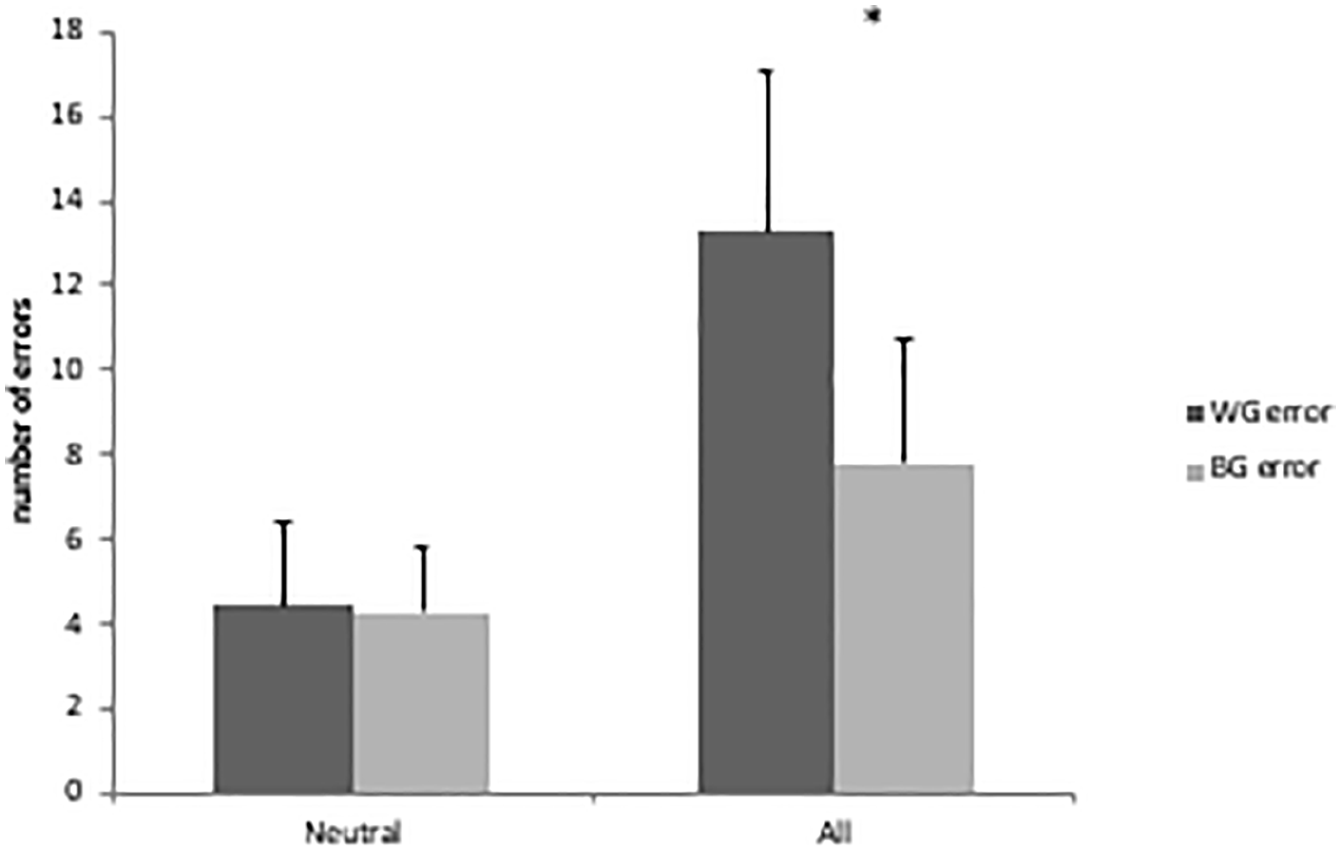
Occurrence of the different error types for shared cultural knowledge as a dimension of social categorisation (Experiment 2).
Discussion of Experiment 2
In Experiment 2, we tested categorisation based on shared cultural knowledge alone, i.e., without any potentially interfering other category dimensions. The results show that category representations based on shared cultural knowledge have been formed; however, when no direct cues to cultural group membership were available, the representations were not strong enough to effectively organise information relating to the person. This is shown by the fact that when analysing all of the statements used in the experiment, we found evidence of categorisation by shared cultural knowledge, but this effect was not present when the statements provided no direct cue to cultural group membership. These results replicate the findings of Experiment 1, suggesting that the lack of effect on the neutral sentences does not result from the interference of the visually available cue of race, but may be explained by participants’ inability to access or use information about cultural group membership as an anchor in encoding incoming information.
Nonetheless, the fact that social categorisation based on shared cultural knowledge was manifested both in Experiment 1 and 2 when all the sentences were included suggests that humans view cultural differences as a relevant cue to group membership. Together with the result that in Experiment 1, we did not find robust evidence of racial categorisation (the result was merely marginally significant and only when the analysis did not include the “in-group” and “out-group” sentences) suggests that group similarities and differences in shared cultural knowledge may constitute a more fundamental dimension of social categorisation than race. However, the present results leave open the possibility that it is not the presence of cues about cultural group membership that lead to the suppression of race encoding but some other specific feature of our version of the paradigm. Therefore, Experiment 3 was designed to replicate previous results about race encoding. We used the exact same stimulus set as in Experiment 1, however, the allocation of sentences (“in-group,” “out-group” and neutral) to protagonists was completely random; therefore, no obvious cultural groups could have been formed.
Experiment 3
Method
Participants
In total, 37 people participated in Experiment 3 (20 females, age: M = 24.73 years, SD = 4 years). All participants were Caucasian and monolingual Hungarians.
Stimuli and procedure
The stimulus sets were identical to the one used in Experiment 1. The only difference was that the software completely randomised the allocation of sentences to the participants, thus none of the protagonists could have been unambiguously categorised based on shared cultural knowledge. Testing was conducted by three—two female and one male—experimenters at various locations, but always in a quiet, secluded room. Apart from the difference in sentence allocation, the procedure closely followed that of Experiment 1.
Results
Data analyses followed the methods of Experiments 1 and 2 with the exception that we only focused on racial categories. When analysing all of the sentences, we found that participants made more within-category (M = 13.05, SD = 3.75) than between-category (M = 9.21, SD = 2.95) errors, t(36) = 4.276, p < .001, Cohen’s d = 0.701, BF10 = 190.28, showing that they represented social categories based on the race of the protagonists (Figure 4). This pattern of result was also observed when the analyses were limited to the neutral sentences, within-category: M = 5.78, SD = 2.55, between-category: M = 4.2, SD = 1.82, t(36) = 2.57, p = .015, Cohen’s d = 0.42, BF10 = 3.234. Note that the latter distinction was not meaningful anymore, since the neutral sentences and the ones indicating cultural knowledge were no longer structured to create group distinctions but were randomly assigned to the faces. However, the consistency of the results in the two types of analyses suggests that—apart from their role in signalling cultural groups membership—the different sentence types did not contain any systematic differences that would affect memory performance.

Occurrence of different error types for race as a dimension of social categorisation (Experiment 3).
Discussion of Experiment 3
The results of Experiment 3 are in sharp contrast to those obtained in Experiment 1, where in the corresponding analyses, we could not find any evidence of race encoding. Since the only difference between the two experiments was whether cues of shared cultural knowledge could be used to create meaningful categories, we conclude that it was the competing category distinction that was responsible for the suppression of racial categorisation.
The results of the first three experiments suggest that race encoding is indeed suppressed when a competing and potentially more relevant category distinction (cultural differences) can be detected. However, methodologically, comparing racial and cultural groups is challenging since the cues to group membership perceivable at test are different. While racial groups are evident on the photos, cultural groups are not marked by visually perceivable cues. However, in the case of sentences with cultural content, the sentences contain direct cues about cultural, but not racial category membership. Thus, to further support our argument, in Experiment 4, we contrasted cultural categories with gender categories.
Experiment 4
With the aim to further support our argument, the contrast of cultural categories with gender categories was introduced as we hypothesised that gender encoding, in contrast to race, should not be affected by the cues of shared cultural knowledge. We base this argument on the studies of Kurzban and colleagues (2001) and Pietraszewski and colleagues (2014) who suggest that race tends to lose its significance in such cases because it is regarded as a proxy for more meaningful category distinctions, whereas gender categories are relevant on their own and are independent of cultural affiliations. Thus, the finding that gender encoding would not be similarly affected by the competing cultural group distinction would provide compelling evidence that the results of the previous experiments indicate the primacy of cultural group encoding over race encoding and cannot be explained by methodological factors.
Method
Participants
In total, 31 people participated in Experiment 4 (12 females, age: M = 26.16 years, SD = 5.84 years). All participants were Caucasian and monolingual Hungarians. In addition, one participant was excluded from analyses because he gave uniform responses throughout the test phase.
Procedure
The procedure of Experiment 4 followed those of the previous three experiments. The sentences included in the presentation were exactly the same; however, the protagonists were all Caucasians. Three of the protagonists were females, while three of them were males. The allocation of cultural group membership to protagonists was random with the constraint that for half of the participants, the cultural in-group included two women and one man, while for the other half, it included one woman and two men. Everything else in the procedure, the stimuli and analyses were identical to the other experiments.
Results
When all of the sentences were included in the analysis, we found that participants committed more within-category than between-category errors both when the protagonist were grouped based on cultural background, t(30) = 2.760, p = .01, M(WC) = 11.23, M(BC) = 8.32, Cohen’s d = 0.497, BF10 = 4.548, Figure 5, and gender, t(30) = 9.218, p < .001, M(WC) = 14.32, M(BC) = 6.26, Cohen’s d = 1.654, BF10 = 36100000, Figure 6. When only the neutral sentences were analysed, we only found such a difference in the case of gender categories, t(30) = 4.944, p < .001, M(WC) = 6.29, M(BC) = 3.18, Cohen’s d = 0.888, BF10 = 838.63, but not cultural background, t(30) = 1.106, p = .277, M(WC) = 4.74, M(BC) = 4.19, Cohen’s d = 0.199, BF10 = 0.335.

Occurrence of different error types for shared cultural knowledge as a dimension of social categorisation (Experiment 4).

Occurrence of different error types for gender as a dimension of social categorisation (Experiment 4).
Discussion of Experiment 4
These results replicate the finding that when all of the sentences are included in the analyses, there is evidence of participants encoding the cultural background of the protagonist. Moreover, as in the previous experiments, the test sentences must include cues about shared cultural knowledge for this effect to be manifested. However, contrary to racial categories, the encoding of gender categories was robustly exhibited in the results, even when the analyses were limited to sentences that directly contained information about the competing cultural group distinction. The Bayesian analyses also suggest that gender encoding was the most robust phenomenon throughout the four experiments. These results confirm theories claiming that gender and race are not equally relevant social distinctions and while gender may be a primary dimension of social categorisation that is encoded in a potentially automatic fashion irrespective of other available social information, race is not (Kurzban et al., 2001; Pietraszewski et al., 2014).
General discussion
The studies presented here provide evidence that shared cultural knowledge is an important dimension of social categorisation. Both in Experiment 1 and 2, participants encoded the cultural background of the protagonists indicated by the pattern of errors when all of the utterances were included in the analyses. Moreover, the considerably weakened effect of racial categorisation in the face of cues of shared cultural knowledge further supports the claim that shared cultural knowledge is viewed as a fundamentally important information when classifying people. The results of Experiment 3 and 4 further confirm that the weakened effect of racial cues on categorisation is due to the presence of a different and potentially more relevant social cue: shared cultural knowledge. First, Experiment 3 showed that in the same paradigm, racial categorisation is observed when the protagonists cannot be meaningfully sorted into cultural in-groups and out-groups. Second, Experiment 4 showed that the suppression of the visually salient category is specific to racial cues since no similar suppression of gender categorisation occurred.
Note, however, that we did not find any evidence that participants had used categories based on shared cultural knowledge when matching the neutral sentences to the faces. Although no follow-up questions were asked about the strategies participants used in answering the questions, we can speculate that this may be explained by the fact that “in-group” and “out-group” sentences inherently contained direct cues of shared cultural knowledge that could have been used for a specific strategy at retrieval. That is, by the end of the demonstration, participants may have classified half of the participants as “cultural in-group” and the other half as “cultural out-group.” When they were presented with a sentence that could be classified as “in-group,” e.g., they simply had to retrieve the three faces that belonged to the “cultural in-group” category and make a guess based on that. Such a strategy at the retrieval phase would not work equally well with racial distinctions as the sentences themselves do not contain any cue about race. Klauer and colleagues (e.g., Klauer et al., 2014; Klauer & Wegener, 1998) have termed this process reconstructive category guessing and argue that differences between within-category and between-category errors in the paradigm may stem from this rather than from actually encoding the group membership of the source of the given statement. Our results suggest that participants indeed relied on this reconstructive guessing mechanism; however, this could not have been the case if they had not used the cues embedded in these sentences to form coherent group representations of the protagonists in the first place. Thus, evidence of reconstructive guessing in itself suggests that participants have categorised based on shared cultural knowledge and these category representations had to be formed as a result of our manipulation on the content of the sentences since shared cultural knowledge was not inferable from visual cues. Note also that a similar effect was found in the study of Pietraszewski and colleagues (2014) when contrasting coalition cues with racial categories: participants only gave evidence of using categories formed on the basis of coalitions to organise information when the sentences at recall were relevant to coalitional group membership. Similarly, in a study using the memory confusion paradigm to test the detection of free-riders in a cooperative situation, only those sentences elicited the categorisation effect at test were diagnostic about the category membership of the target (Delton et al., 2012). The fact that the results are dependent on the available strategies at retrieval is in line with the finding that the suppression of racial categories happens at retrieval and not encoding (Pietraszewski, 2016). Thus, it seems that participants encode multiple social categories at the same time; however, they will use the most relevant one when they have to retrieve information about fellow humans.
A remarkable finding is the lack of evidence of racial categorisation in Experiment 1. Although when analyses were limited to the neutral sentences, results just fell short of reaching significance, this effect disappeared altogether when all of the sentences were included in the analysis, suggesting that the encoding of shared cultural knowledge has the power to reduce the relevance of racial categories. While it may be argued that such a pattern could arise because reconstructive category guessing (Klauer & Wegener, 1998) elevates the error difference for cultural groups, it is important to consider that the same diminishing effect was not observed for gender categories in Experiment 4, despite using the same methodology. Thus, the weakened effect of race encoding in Experiment 1 cannot be attributed to purely methodological factors as in that case, the same should have been observed for gender encoding as well. Importantly, the difference between within-category and between-category errors for race did not reach significance even when the analyses were limited to the neutral content sentences (where reconstructive guessing would fail) in Experiment 1, whereas the effect of race encoding was robustly manifested even with a lower sample size in Experiment 3. These results provide suggestive evidence for the claim that race is not a primary dimension of social categorisation, rather it gains relevance through associations with other primary distinctions (Cosmides et al., 2003; Kurzban et al., 2001). Thus, race encoding may not be an independent, primary dimension of social categorisation, whereas gender is. These results also corroborate findings in developmental psychology, showing that children do not necessarily treat people differently based on skin colour until around 5 years of age (Kinzler et al., 2009; Kinzler & Spelke, 2011; Krieger et al., 2016). 1
It is also important to highlight a conceptual difference between most of the studies on coalitional psychology and our study. Namely, in our experiments, the representational space was created in a way that both dimensions involved self-categorisation: our participants could make “in-group” and “out-group” judgements based on both distinctions, whereas in the studies on coalitional categorisation, this is only true about racial (or gender) categories. The more pronounced self-relevance of the competing social distinction could potentially accentuate the need to focus only on one or the other dimension when participants expect the cues to be correlated—but in fact, they turn out to be crossed in the paradigm. Specifically, we would expect participants to have assumptions about race and cultural group membership being correlated but not gender and cultural group—which is in line with the differences in the results between Experiments 1 and 4.
Note, however, that the current results cannot answer the question whether cultural group membership is independently encoded from coalitions. It may be argued that similar results would be predicted by the coalitional psychology model as well: participants would take shared knowledge as a better proxy to coalitions than race and would therefore preferentially encode that about individuals. Further studies could clarify this question. However, suggestive evidence to the contrary comes from the study of Pietraszewski and Schwartz (2014a) who have found that accent is independently encoded from coalitions in the same paradigm. Since language also constitutes a part of culturally shared knowledge, we would predict that other aspects—such as the ones used in our study—would similarly be encoded separately from coalitions.
Since linguistic cues can also be considered markers of shared cultural knowledge, the question arises whether participants could have been confused by the fact that all of the sentences—even the ones about unfamiliar cultural practices—were presented in participants’ native language. Since we specifically wanted to test whether such representations of cultural groups would be created based on cues other than language, this methodological choice was necessary. The fact that simply based on linguistic cues, all of the protagonists could be represented as “in-group” could have potentially weakened the results. Note, however, that it is not uncommon in societies that people speaking the same language nonetheless form different subgroups, each characterised with their own cultural practices. Our results support the idea that humans view language as an overarching category distinction that can further be divided.
This study provides the first piece of convergent evidence that social categorisation happens based on differences perceived in cultural knowledge not just in children but also in adults. We suggest that assessing similarities and differences in knowledge states is a key, adapted function of social categorisation as it provides invaluable information about how to adjust our behaviour to conduct successful interactions with others. If one of the main functions of representing the social world in terms of categories is to efficiently assess the knowledge states of fellow humans, then it also explains why social categorisation is such a flexible process: during a social interaction, it can prove useful to rapidly activate shortcuts to assessing the knowledge states of the partner with the help of information stored in the form of social category representations. For example, conversing with a colleague during the lunch break about work-related topics is made smooth by both parties relying on certain background knowledge they know they share as colleagues. However, if they switch to a topic not related to work (e.g. one person’s hobby), this assumption will have to be suspended and participants will have to take into account that to successfully convey a message, they have to be more elaborate (in other words, view each other as “out-group”). This demand of flexibility is also consistent with the finding that the memory confusion effect is elicited at retrieval (Pietraszewski, 2016): many different kinds of distinctions may be useful to encode; however, at retrieval, one has to be able to select the most relevant one and efficiently suppress the others until contextual cues suggest a change in relevance.
The human mind’s tendency to assign special relevance to social categories created based on cultural knowledge resonates well with recent proposals about the role social categorisation plays in mentalisation processes. It has been suggested that social category information constitutes important input for mentalisation as it allows us to efficiently make inferences about the mental content and processes of others even in information sparse contexts or when an in-depth analysis of the behaviour of others is not possible (Oláh et al., 2019; Spaulding, 2018; Westra, 2019). Knowledge-based social categories provide direct shortcuts to assess certain parts of fellow humans’ mental states.
In sum, our study has highlighted that cultural knowledgeability constitutes another facet of the fundamental and independent dimensions of social categories. This distinction has the power to diminish the relevance of racial categories and possibly results from an evolutionary adaptation that helps us to navigate an immensely complex social environment.
Footnotes
Acknowledgements
The authors thank Soma Hajdú, Ágnes Sipos, Lilla Sipos, Noémi Pataki, Zsófia Zrubecz, Janka Korinek, László Pál, Edina Nikoletti, and Alexandra Paál for their help with data collection and Anita Lencsés for her help with data analyses. Furthermore, they thank David Pietraszewski for his helpful comments on the manuscripts.
Declaration of conflicting interests
The author(s) declared no potential conflicts of interest with respect to the research, authorship, and/or publication of this article.
Funding
The author(s) disclosed receipt of the following financial support for the research, authorship, and/or publication of this article: This work received financial support from the Momentum programme of the Hungarian Academy of Sciences under the grant agreement LP-2017-17/2017.
