




Abstract
Reading is an essential skill that requires focused attention. However, much reading is done in non-optimal environments. These days, reading is often done on digital devices or with a digital device nearby. These devices often introduce momentary distractions during reading, interrupting with alerts, notifications, and pop-ups. In two eye-tracking experiments, we investigated how such momentary distractions affect reading. Participants read paragraphs while their eye movements were monitored. During half of the paragraphs, distractions appeared periodically on the screen that required a response from the participants. In Experiment 1, the distractions were arrows that the participant had to respond to and then could immediately forget. In Experiment 2, the participants performed a 1-back task that required them to remember the identity of the last distractor. Compared with the no-distraction condition, the respond-and-forget distractors of Experiment 1 had minimal impact on reading behaviour and comprehension, but the working-memory-load distractors of Experiment 2 led to increased rereading and decreased reading comprehension. It seems a simple pop-up does not disrupt reading, but a message you must remember will.
Reading is a complex task. While readers can “go through the motions” of reading without attention, they cannot successfully comprehend what they are reading if they are not focused on the task at hand (Reichle et al., 2010; Steindorf & Rummel, 2020). However, much reading is done in environments where many distractions are present, distractions which can draw attention away from the reading task. Some of these distractions are deliberately designed to draw a readers’ attention away from the text: digital devices constantly present alerts, notifications, and pop-ups to the user. The purpose of this article is to explore how such sudden-onset distractors might affect reading. While research on distraction in reading is not new, it has tended to focus on static or continuous distractors; little is known about how sudden-onset distractors might influence reading.
Researchers have been exploring the effects of auditory distraction on reading for nearly a century. Fendrick (1937) observed better test scores in a group of students who studied without music than students who did. By contrast, Freeburne and Fleischer (1952) observed no effect of musical distraction on reading rate and comprehension. A study by Henderson et al. (1945) explored the effect of music distraction on reading. They observed that “popular music” was more disruptive to reading than classical music. Perhaps more relevant to the present study, they observed that a paragraph reading task was more disrupted than a single-word vocabulary task. Henderson et al. concluded that the paragraph reading task was more susceptible to disruption because “the paragraph materials are meaningfully related and require sustained effort” (p. 317). This dynamic of varied findings continued into the 21st century, when Vasilev et al. (2018) attempted to assess the impact of auditory distraction with a meta-analysis. They observed small but consistent disruptions in reading from auditory distraction, with spoken language and music with lyrics producing the most distraction.
There is also a body of literature exploring the effect of visual distractors (text and pictures) during reading. Connelly et al. (1991) interspersed distractor text into longer passages. This distractor text consisted of words related to the overall passage, unrelated words, or x-strings. They had younger and older adults read these texts for comprehension. Connelly and colleagues found that younger adults were slowed by all types of distractors, but the disruption was greater for words than for x-strings. Older adults showed the same pattern, although they were much more disrupted by the presence of distractors overall and showed an increased slowdown when the distractors were text relevant. Reading comprehension was impaired for texts that contained content-relevant distractors. Connelly et al. interpret these findings as suggesting that working memory decline associated with ageing made the older adults more susceptible to distraction.
Kemper and McDowd (2006) followed up on the work of Connelly et al. with an eye-tracking study using similar materials—sentences with a distractor word which participants were instructed to ignore. Participants read sentences more slowly when they contained distractors. The presence of a distractor word influenced the reading of words around the distractor, notably increasing later measures of rereading.
The studies reviewed thus far include standing, continuous distractors that are present for the duration of reading. Only a handful of studies have examined the effects that sudden-onset distractors have on eye movements. Vasilev et al. (2019) went beyond the investigation of continuous auditory distractors to explore the influence of sudden-onset sounds using eye tracking. They observed that deviant sounds led to a lengthening of the fixation during which the sound occurred, but they found no evidence that word processing was disrupted. Similarly, Cauchard et al. (2012) found that a 60-s auditory interruption in reading increased overall reading time on a passage, but that this time was focused on rereading earlier portions of the text; reading times on words after the interruption were actually faster than the no-interruption control condition. In their research on saccadic inhibition, Reingold and Stampe (2002, 2004) observed that a briefly presented visual stimulus causes a momentary disruption in eye movements: saccade frequency was significantly reduced in a brief time window following the visual onset. Auditory distractors did not have this effect in their studies.
Taken together, these studies suggest that sudden-onset distractors might have an influence on eye movements, but it is less clear what effect they might have on comprehension. Neither Vasilev et al. (2019) nor Cauchard et al. (2012) observed any effect of interruptions on reading comprehension. Based on the literature, it appears unlikely that simple distractors have noticeable effects on reading comprehension, but distractors that tax working memory in some way might. However, no study to date has manipulated the nature of sudden-onset distractors to directly contrast simple respond-and-forget distractors to distractors that tax working memory. The two experiments reported below test this hypothesis directly. Experiment 1 employs a simple sudden-onset distractor that should not tax working memory, while in Experiment 2 participants are required to keep the contents of the distractor in working memory to compare it to a subsequent distractor. Together, these experiments should reveal how a reader’s eyes respond to a sudden-onset distractor, how the incidence of distractors affects reading the rest of the text, whether reading comprehension is affected by distractors, and whether the nature of the distractor (taxes working memory or not) has any bearing on these effects.
Experiment 1
In this experiment, participants read short texts while their eye movements were tracked. For half of the texts, reading was normal. For the other half, reading was repeatedly interrupted by a distraction, a “notification” consisting of an audible beep and a small box with an arrow that appeared on the right edge of the screen. Participants were instructed to look at this box and press a button corresponding to the direction that the arrow was pointing. Then they were to continue reading. After each passage, participants answered a yes/no comprehension question.
The goal of this experiment was to examine (1) the immediate impact of the distractor: reading times on the word being read when the distractor appeared, as well as saccade patterns to and from the distractor; (2) overall patterns of reading disruption in the text caused by the presence of distractors; and (3) any impact of distraction on reading comprehension.
Method
Participants
Thirty-seven participants (16 male) from Brigham Young University completed the experiment. All participants were native English speakers with 20/20 corrected or uncorrected vision.
Materials
Forty-four short texts (40–60 words) were taken from the Provo Corpus (Luke & Christianson, 2016, 2018). Four target words were selected from each text. These words were content words with a mean length of 6.3 (SD = 2) letters and were on average 11.8 words apart (SD = 5.1).
Apparatus
Eye movements were recorded via an SR Research Eyelink 1000+ eye tracker (spatial resolution of 0.01°) sampling at 1,000 Hz. Subjects sat 60 cm away from a 24″ LCD monitor with display resolution set to 1,600 × 900 (refresh rate 120 Hz). Text was displayed in Courier New 15-point font, so that ~3 characters subtended 1° of visual angle. Head movements were minimised with a chin/head rest. Although viewing was binocular, eye movements were recorded from the right eye. The experiment was controlled with SR Research Experiment Builder software.
Procedure
Participants completed a 9-point calibration procedure at the start and after every 12 paragraphs. Participants were told that they would be reading short paragraphs on a computer screen while their eye movements were recorded. They were further told that they should read normally and try to understand what they were reading. After a practice trial, the experiment began. Each trial began with a gaze trigger, a black circle presented in the position of the first character in the text. Once a stable fixation was detected on the gaze trigger, the text was presented.
For half of the trials, participants read normally. For the other half, participants were instructed to respond to distractors that would appear as they read. Up to four distractors could appear in each paragraph. These distractors were triggered when the participant fixated on predetermined words in the text (see Materials). Once a trigger word was fixated, the participants heard a beep (1/4 s, 70 decibels) and a 50 × 50 pixel black box appeared on the right edge of the screen (box’s left edge at 1550 px) at a random Y position (box’s upper edge between 0 and 800 px). This box contained an arrow that pointed either left or right. This arrow was small enough that it required fixation to determine the direction it was pointing. The participant was instructed to press a button on the button box to indicate which direction the arrow was pointing and then to continue reading. This same code was executed in the no distraction condition, but the beep was replaced by silence and the box and arrow were white and thus invisible against the background.
The participant read the text, pressing a button when finished. A yes/no comprehension question appeared, which participants answered by pressing buttons on a button box. Then, a new gaze trigger appeared, and the next trial began. Order of task (distraction, no distraction) was randomised for each subject, with a calibration and practice trial in between. Participants were offered a break before each calibration procedure. The session lasted less than 1 hr.
Results
Prior to analysis, fixations less than 80 ms and greater than 800 ms were excluded from the data (~5% of fixations). After cleaning, there were 1,628 question responses (44 per participant) and 5,657 triggered distractors, indicating that on average 3.5 target words were fixated per participant per text. This number was approximately equal in the distraction and no-distraction conditions (3.4 vs 3.5, respectively). Comparing these numbers to the standards put forward by Brysbaert and Stevens (2018) suggests that our eye-tracking analyses were adequately powered, but that the question accuracy and response time analyses were somewhat underpowered, limiting our ability to detect smaller effects of the distraction manipulation on these dependent variables.
Question response time and accuracy were analysed, as were three standard reading variables: first fixation duration, gaze duration, and total time. Continuous dependent variables were log-transformed prior to analysis where appropriate. Data were analysed using linear (or logit, for question response accuracy) mixed-effects models (Bates et al., 2015) in R (R Core Team, 2020). p-values were obtained using the lmerTest package (Kuznetsova et al., 2017; see Luke, 2017, for a justification of this approach). Fixed effects (predictors) included Distraction Condition (Distraction vs No Distraction). Random effects in all models included by-participant and by-text intercepts and random by-participant slopes for Distraction Condition.
Comprehension measures
Question response accuracy was about 79% and was statistically equivalent in the distraction and no distraction conditions (78.6% vs 78.9%; z = 0.18, p = .85). Question response times were also statistically equivalent (2,825 ms vs 2,819 ms; t = 0.039, p = .97). These data provide no evidence that the distractions had an impact on gist comprehension.
Responding to the distractor
The mean time to respond to the distractor was 1.2 s (SD = 0.7 s). The majority of saccades to the distractor were launched from Word N (see Figure 1, top). Most saccades from the distractor back to the text returned directly to word N or one of the immediately following words (see Figure 1, bottom). These findings indicate that the participants’ saccades were, overall, precisely targeted.
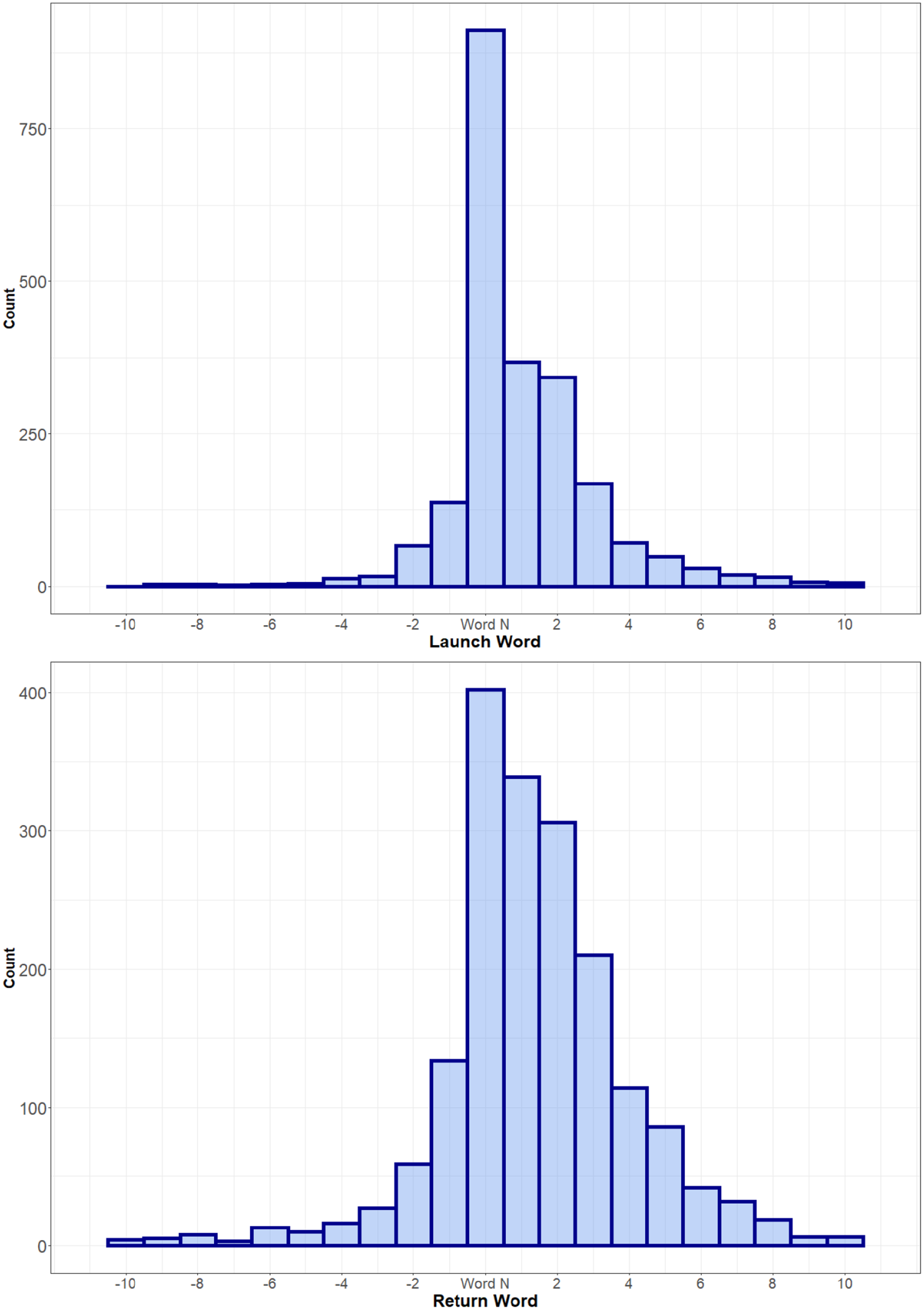
Histogram showing the launch word (top) and return word (bottom) when moving the eyes to a distractor in Experiment 1.
Reading around the distraction
Figures 2 to 4 show the first fixation duration, gaze duration, and total reading time (respectively) at Word N and the surrounding words as a function of distraction condition. From these figures, it appears that first fixation duration and total time were inflated at word N. For following words, earlier reading measures were shorter in the distraction condition, but total reading times were longer.
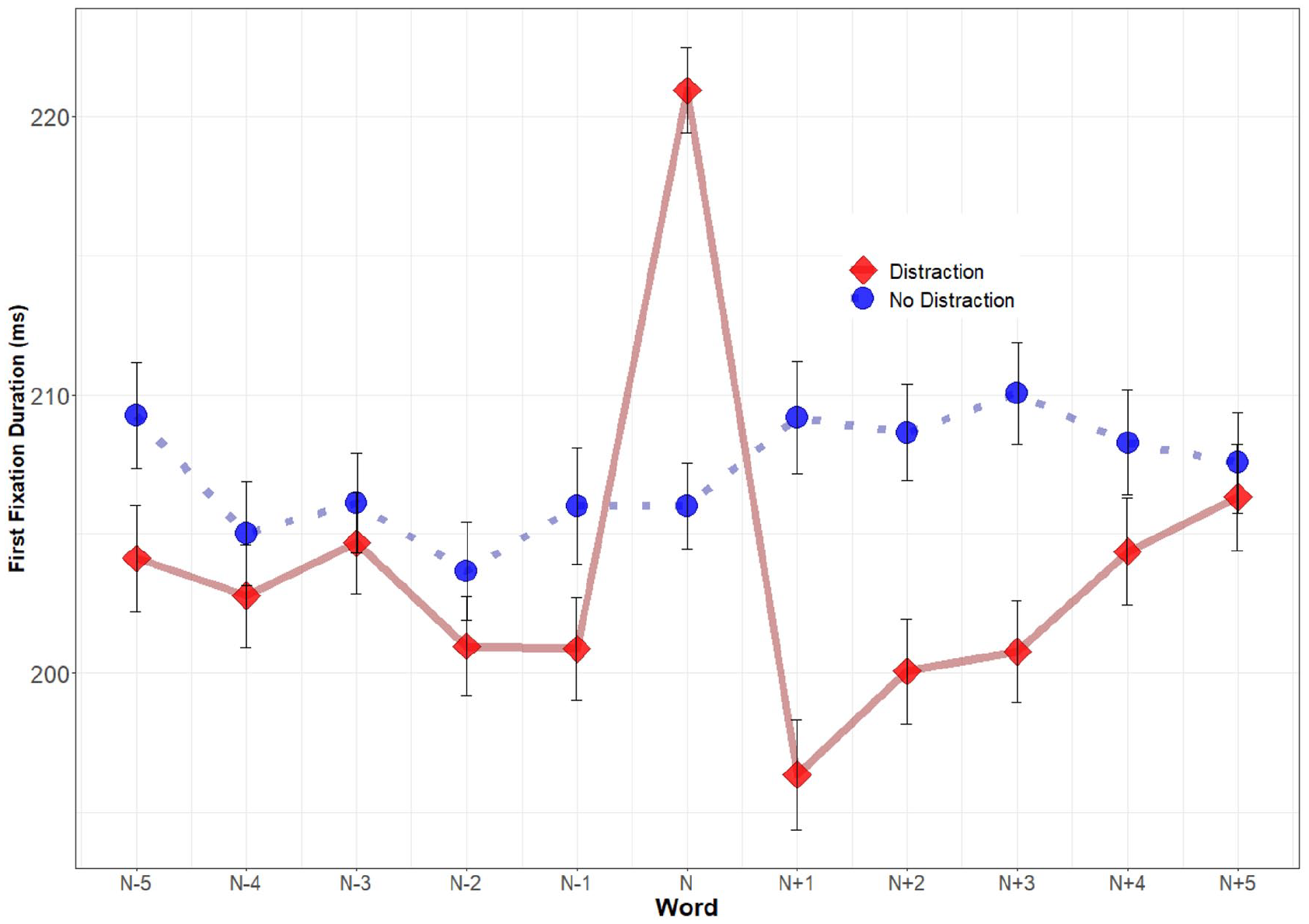
First fixation duration at word N and surrounding words as a function of distraction condition in Experiment 1.
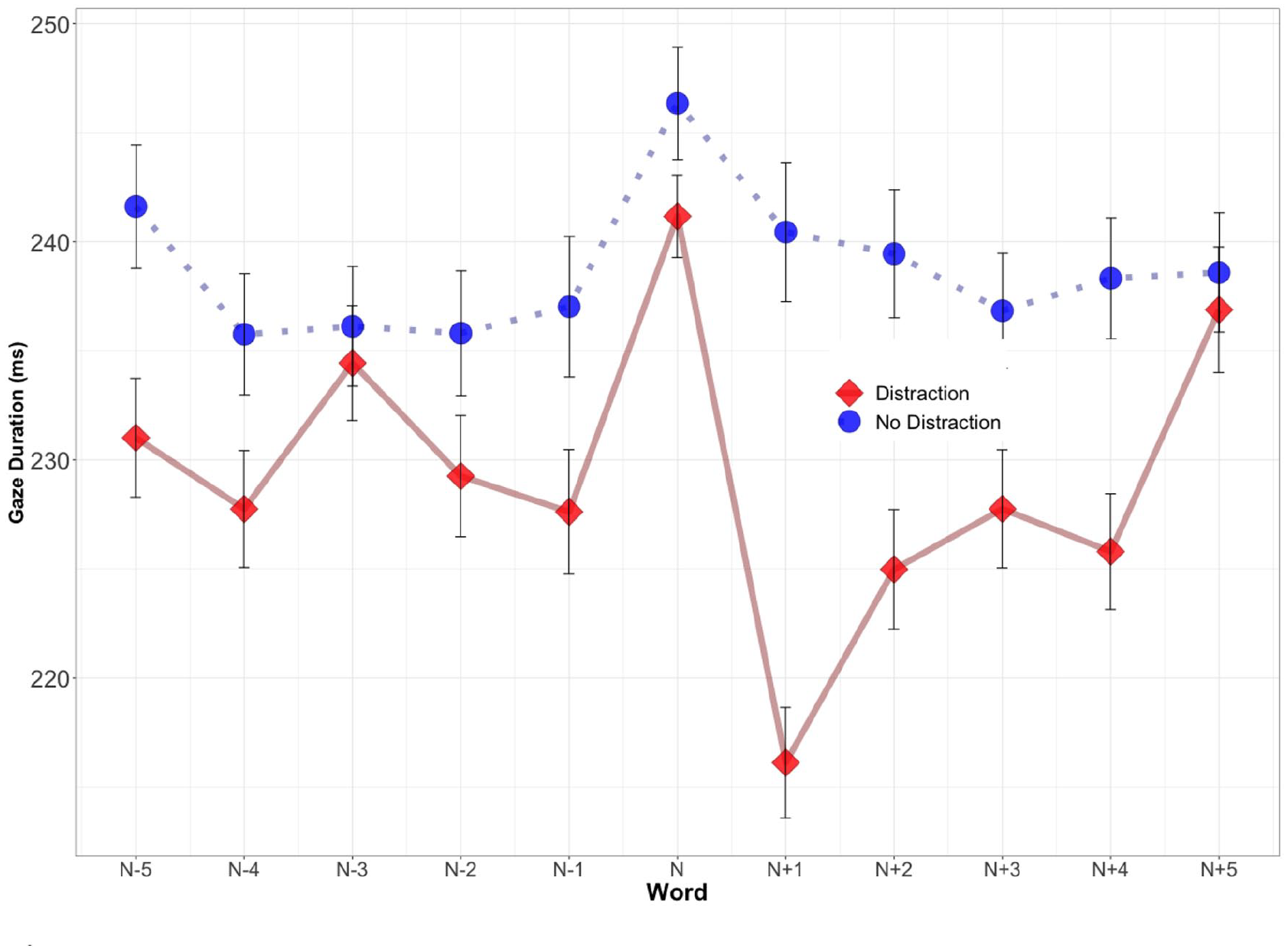
Gaze duration at word N and surrounding words as a function of distraction condition in Experiment 1.
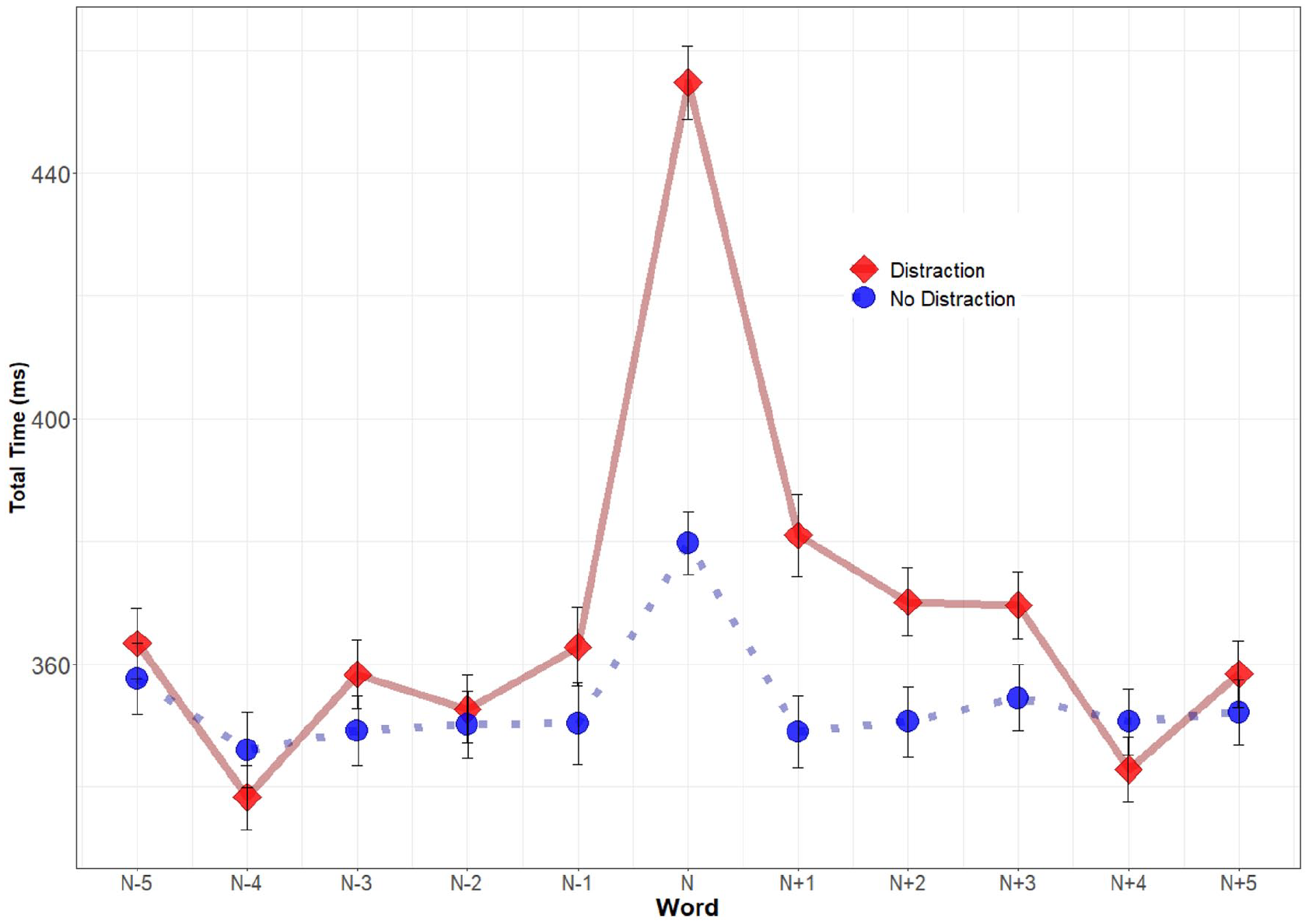
Total reading time at word N and surrounding words as a function of distraction condition in Experiment 1.
Word N
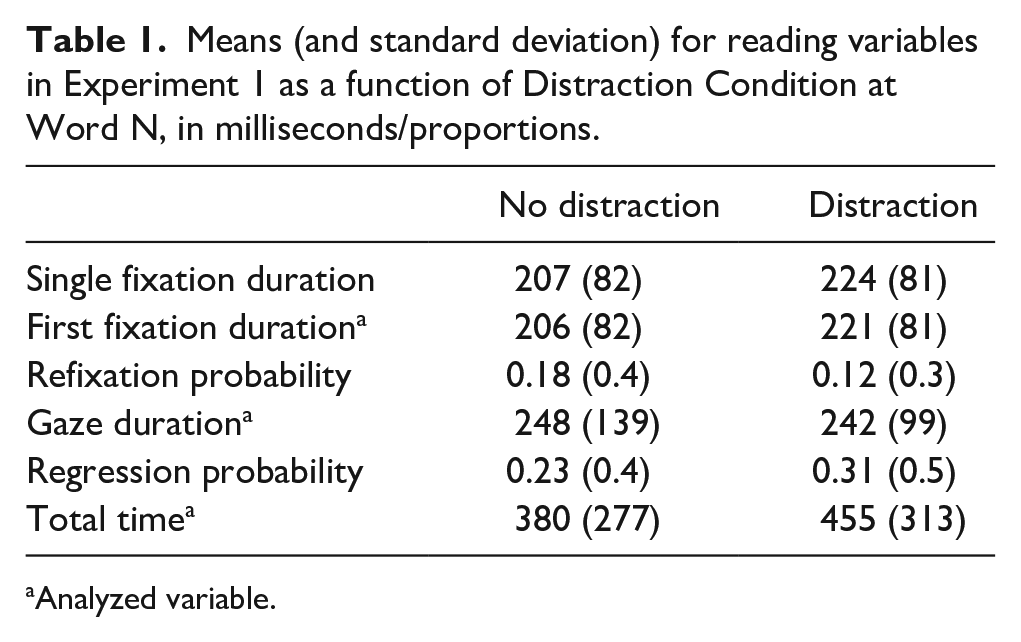
Table 1 shows several standard reading variables at Word N as a function of distraction condition. Analyses revealed significant effects of Distraction Condition in the analyses of first fixation duration (b = 0.071, SE = 0.012, t = 5.98, p < .001), with longer first fixations in the distraction condition. The effect was not significant in the analysis of gaze duration (b = 0.013, SE = 0.012, t = 1.08, p = .29), but it was in the analysis of total time (b = 0.17, SE = 0.025, t = 6.97, p < .001), again indicating increased reading times in the distraction condition.
Means (and standard deviation) for reading variables in Experiment 1 as a function of Distraction Condition at Word N, in milliseconds/proportions.
Analyzed variable.
Words N + 1 to N + 4
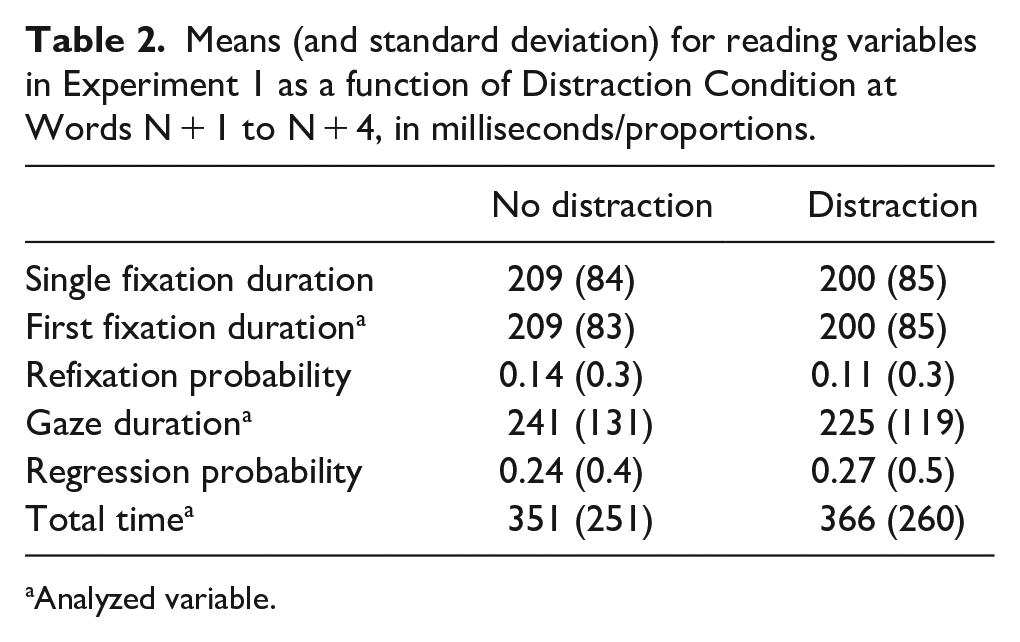
Table 2 shows several standard reading variables at Words N + 1 to N + 4 as a function of distraction condition. Analyses of these data included Distraction Condition and Word Number (1 to 4) as fixed effects, as well as their interaction. The analysis of first fixation duration showed a significant effect of Distraction Condition (b = –0.05, SE = 0.006, t = –8.9, p < .001), with shorter first fixations in the distraction condition. This effect interacted with Word Number (b = 0.015, SE = 0.005, t = 2.91, p = .005), indicating that it weakened as distance from Word N increased. A similar pattern was observed in the analysis of gaze duration, with shorter reading times in the distraction condition (b = –0.067, SE = 0.01, t = –6.33, p < .001) and an interaction with Word Number (b = 0.014, SE = 0.006, t = 2.34, p = .02). The opposite pattern was observed in the analysis of total time, with longer reading times in the distraction condition (b = 0.033, SE = 0.091, t = 3.63, p < .001) and an interaction with Word Number (b = –0.028, SE = 0.0083, t = –3.33, p < .001) indicting that this effect weakened as distance from Word N increased.
Means (and standard deviation) for reading variables in Experiment 1 as a function of Distraction Condition at Words N + 1 to N + 4, in milliseconds/proportions.
Analyzed variable.
Reading times on other words
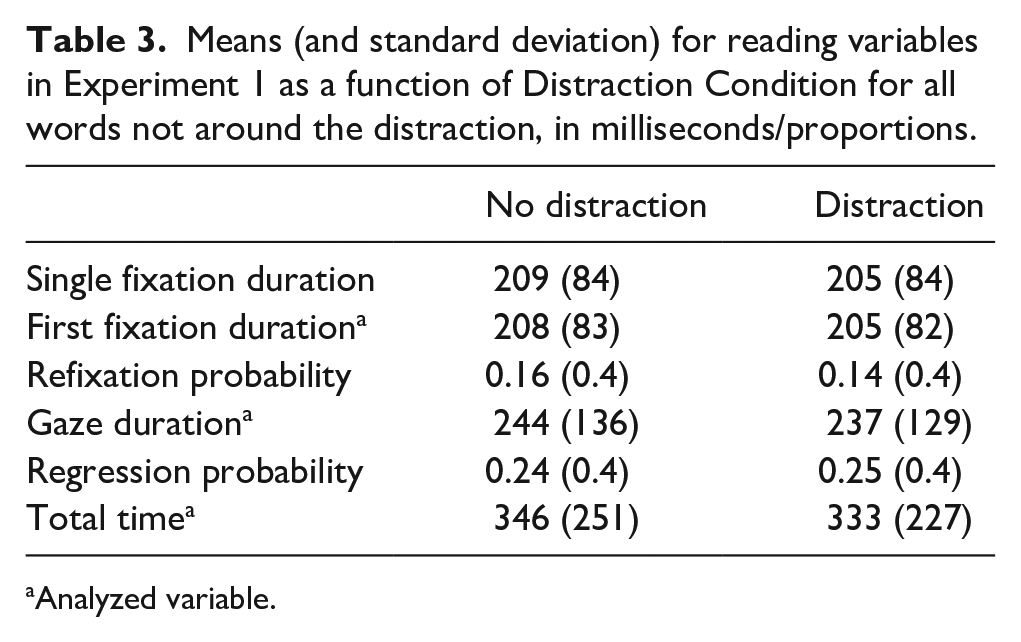
Table 3 shows descriptive statistics for standard reading variables for the words that were not directly disrupted by the distraction itself (more than 6 words away from any target word N). There were significant effects of Distraction Condition in the analyses of first fixation duration (b = –0.017, SE = 0.0056, t = –2.99, p = .005) and gaze duration (b = –0.028, SE = 0.0077, t = –3.66, p < .001), but not in the analysis of total time (t = 1.54, p = .13). In both first fixation duration and gaze duration, times were shorter in the Distraction condition.
Means (and standard deviation) for reading variables in Experiment 1 as a function of Distraction Condition for all words not around the distraction, in milliseconds/proportions.
Analyzed variable.
Discussion
In Experiment 1, the onset of a distractor led to longer first fixations on Word N. Participants most often made saccades directly from Word N to the distractor and then returned directly to Word N or one of the immediately following words. Other words in the text besides Word N had shorter first-pass (first fixation and gaze duration) reading times in the distraction condition. This suggests that readers attempted to compensate for the distraction by reading through the paragraph faster, or perhaps that they had adopted a strategy of speeding through first-pass reading to trigger the distractors and then rereading. However, total reading times were inflated in the distraction condition for Word N and the words immediately following, indicating that the participants strategically reread those portions of the text around the distraction. No significant impairment in comprehension was observed. Taken together, these findings suggest that a momentary distraction that can be quickly dealt with and then forgotten has minimal impact on reading.
Experiment 2
The results of Experiment 1 suggest that sudden-onset distractors have a minimal impact on reading beyond the time needed to respond to the distractor. However, the distractor used in Experiment 1 was simple and immediate: the participant could look, respond, and then forget the distractor and proceed with reading. Not all distractions are like this, however. Some distractions, such as an ongoing text message conversation, require a portion of the readers’ working memory. Experiment 2 tests the impact of such distractors on reading behaviour.
Method
Participants
Forty-four participants (28 male) from Brigham Young University completed the experiment. All participants were native English speakers with 20/20 corrected or uncorrected vision. None had participated in Experiment 1.
Materials and apparatus
The materials and apparatus are the same as Experiment 1.
Procedure
The procedure for Experiment 2 was the same as Experiment 1, with one significant change. In Experiment 2, the distractor arrows were replaced with numbers (between 1 and 5). When a distractor appeared, the participants were instructed to indicate by button press whether the current number was the same or different than the previous number (a 1-back task). This task requires the participant to retain some information in working memory in between the distractors, and so could have a larger impact on reading than the respond-and-forget distractor employed in Experiment 1.
Results
Data cleaning and analyses were identical to Experiment 1. After cleaning, there were 1,958 question responses (~44 per participant) and 6,730 triggered distractors, indicating that on average 3.4 target words were fixated per participant per text. This number was approximately equal in the distraction and no-distraction conditions (3.38 vs 3.41, respectively).
Comprehension measures
Question response accuracy was lower in the distraction condition (78% vs 85% in the no distraction condition; b = –0.58, SE = 0.15, z = 3.95, p < .001). Question response times were statistically equivalent (2,922 ms vs 2,820 ms; t = 0.31, p = .76).
Responding to the distractor
The mean time to respond to the distractor was 1.8 s (SD = 2.3 s). The majority of saccades to the distractor were launched from Word N (see Figure 5, top). Most saccades from the distractor back to the text returned directly to Word N or one of the immediately following words (see Figure 5, bottom). These findings indicate that the participants’ saccades were, overall, precisely targeted.
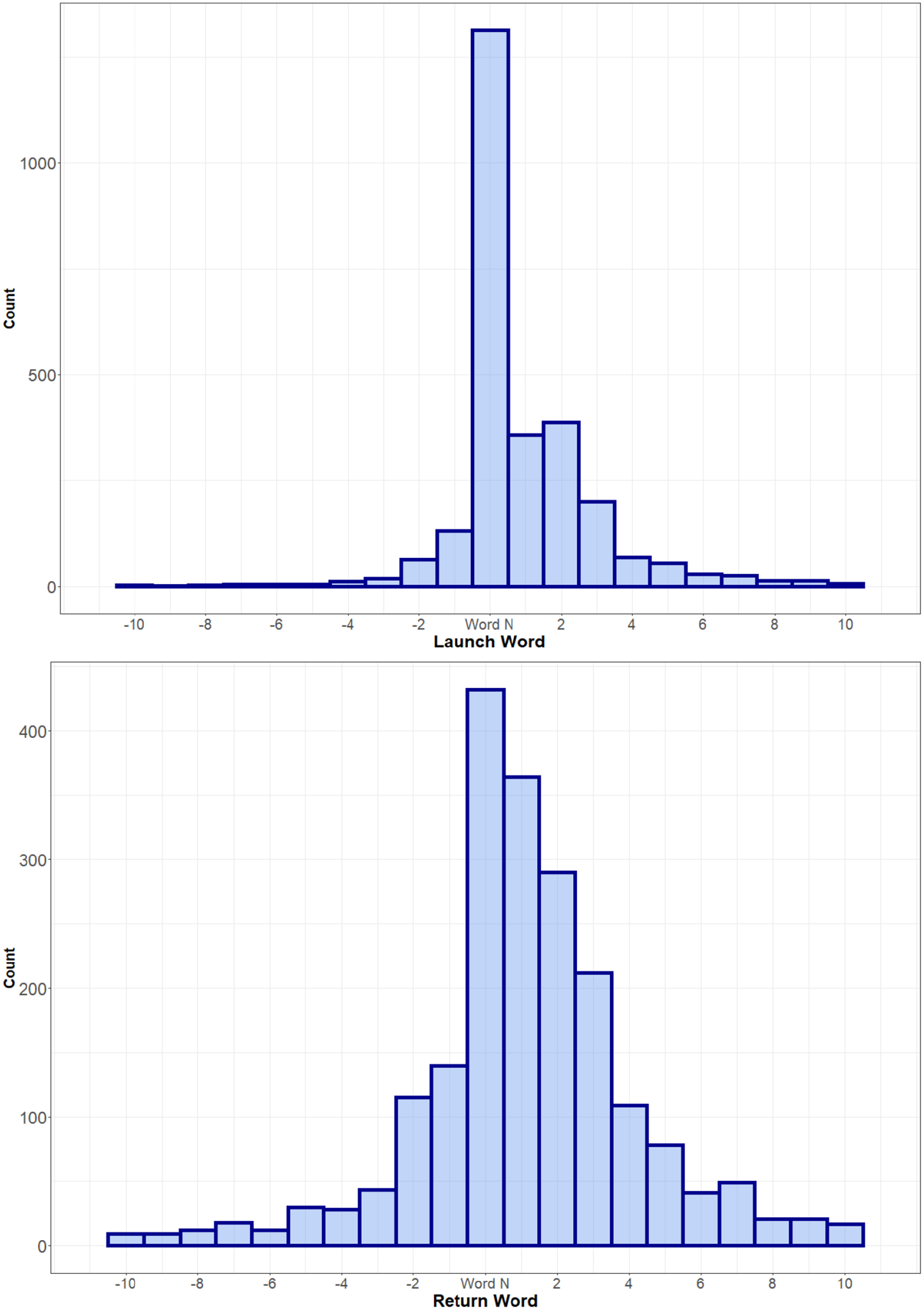
Histogram showing the launch word (top) and return word (bottom) when moving the eyes to a distractor in Experiment 2.
Reading around the distraction
Figures 6 to 8 show the first fixation duration, gaze duration, and total reading time (respectively) of Word N and the surrounding words as a function of distraction condition. From these figures, it appears that all reading times were inflated at Word N. For following words, gaze duration was shorter in the distraction condition, but total reading times were longer.
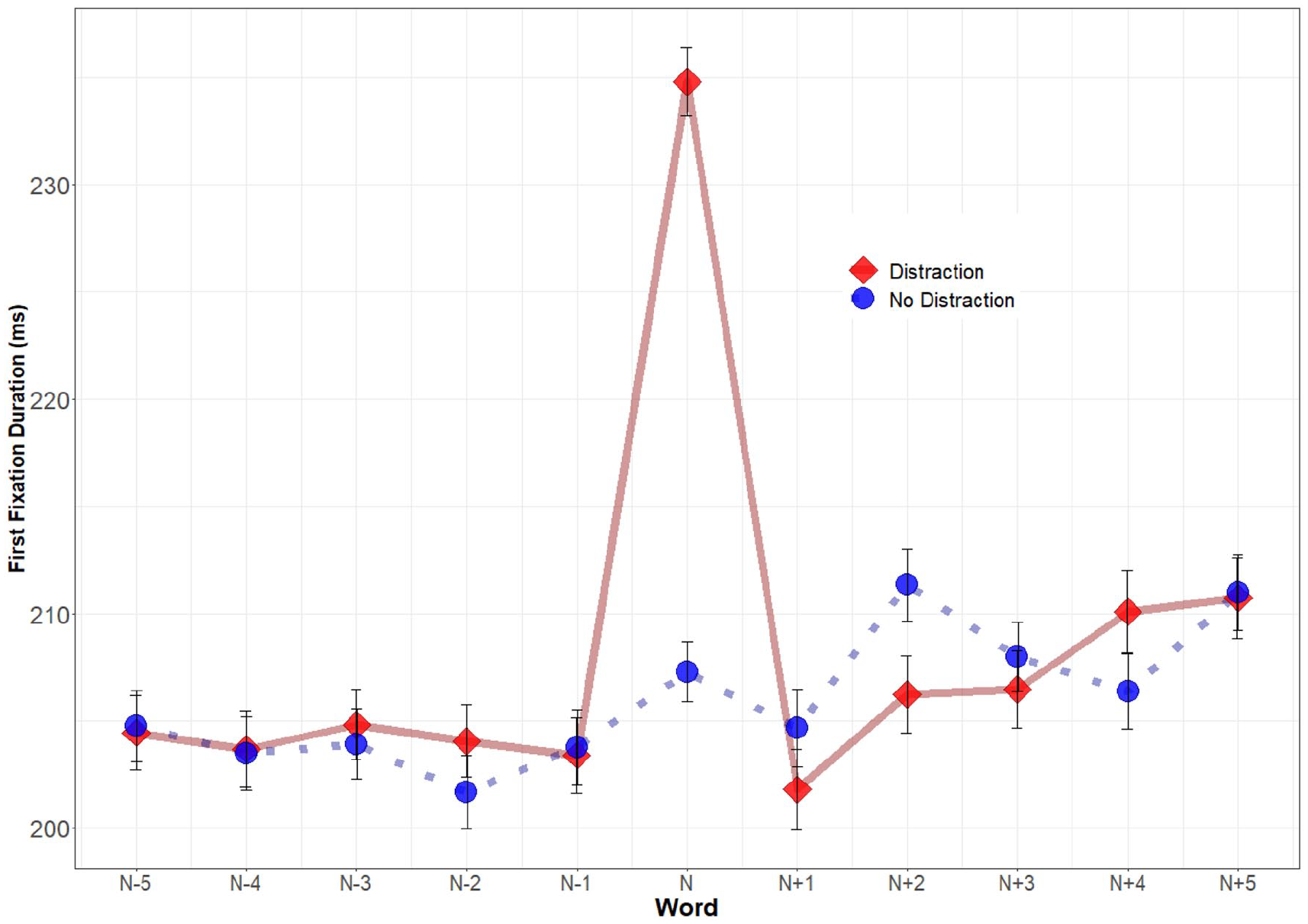
First fixation duration at word N and surrounding words as a function of distraction condition in Experiment 2.

Gaze duration at word N and surrounding words as a function of distraction condition in Experiment 2.
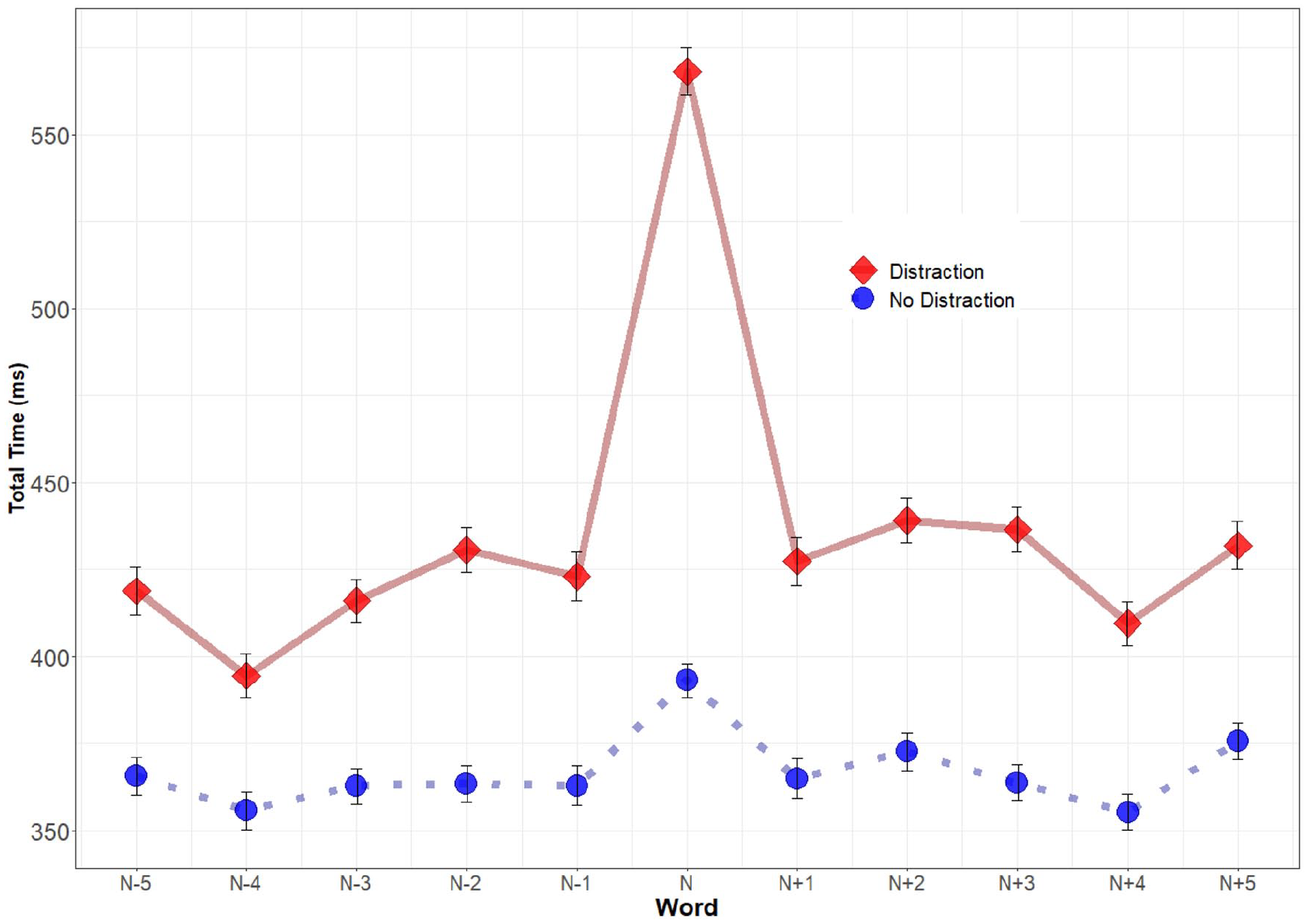
Total reading time at word N and surrounding words as a function of distraction condition in Experiment 2.
Word N
Table 4 shows several standard reading variables at Word N as a function of distraction condition. Analyses revealed significant effects of Distraction Condition in all analyses: in first fixation duration (b = 0.12, SE = 0.013, t = 8.95, p < .001), gaze duration (b = 0.067, SE = 0.013, t = 5.13, p < .001), and total time (b = 0.35, SE = 0.025, t = 14.24, p < .001). In all analyses, reading times were inflated in the distraction condition.
Means (and standard deviation) for reading variables in Experiment 2 as a function of Distraction Condition at Word N, in milliseconds/proportions.
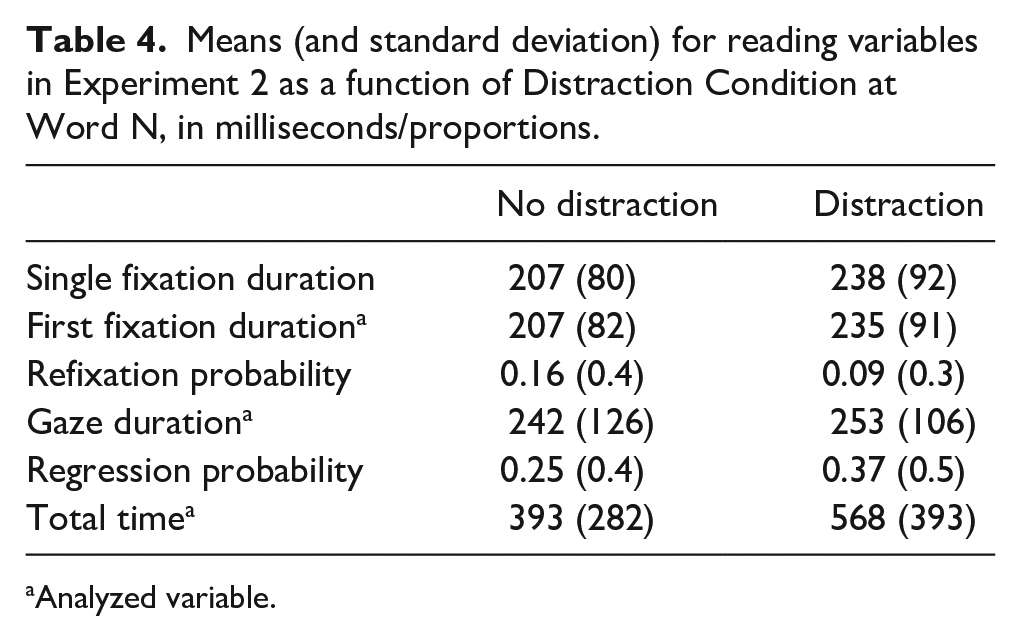
Analyzed variable.
Words N + 1 to N + 4
Table 5 shows several standard reading variables at Words N + 1 to N + 4 as a function of distraction condition. Analyses of these data included Distraction Condition, Word Number (1 to 4), and their interaction. The analysis of first fixation duration showed a significant effect of Distraction Condition (b = –0.02, SE = 0.005, t = –3.75, p < .001), with shorter first fixations in the distraction condition. This effect interacted with Word Number (b = 0.011, SE = 0.0048, t = 2.39, p = .017), indicating that it weakened as distance from Word N increased. A similar pattern was observed in the analysis of gaze duration, with shorter reading times in the distraction condition (b = –0.038, SE = 0.01, t = –3.89, p < .001) and an interaction with Word Number (b = 0.02, SE = 0.006, t = 3.53, p < .001). The opposite pattern was observed in the analysis of total time, with longer reading times in the distraction condition (b = 0.13, SE = 0.009, t = 14.81, p < .001). Unlike in Experiment 1, the interaction with Word Number was not significant (b = –0.0017, SE = 0.008, t = –0.2, p = .84) indicting that total reading time remained inflated as distance from Word N increased.
Means (and standard deviation) for reading variables in Experiment 2 as a function of Distraction Condition at Words N + 1 to N + 4, in milliseconds/proportions.
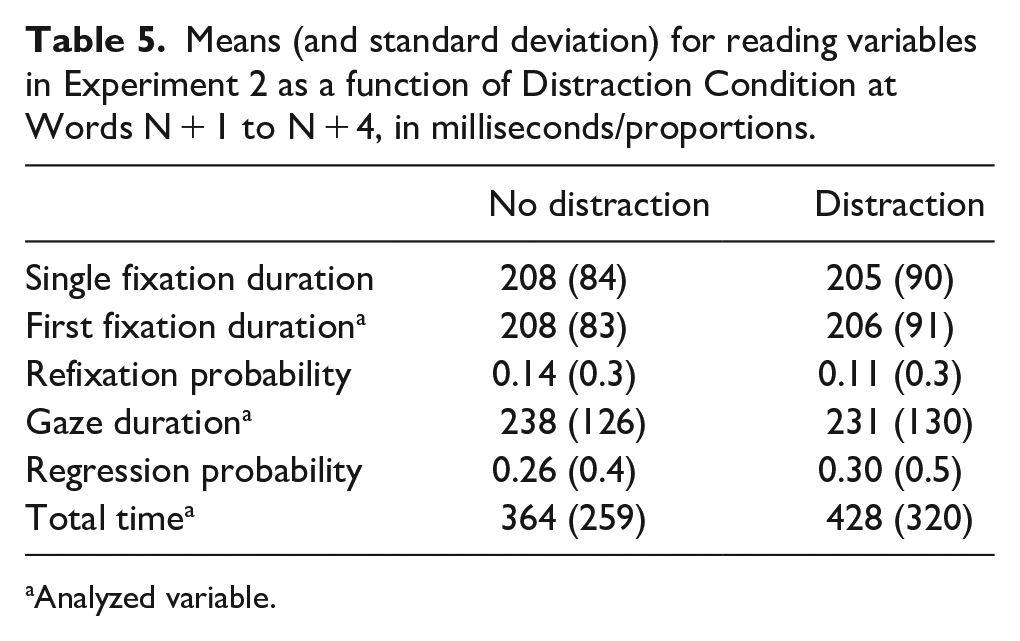
Analyzed variable.
Reading times on other words
Table 6 shows descriptive statistics for standard reading variables for the words that were not directly disrupted by the distraction itself (more than six words away from any target word N). There was no significant effect of Distraction Condition in any of the analyses (all ts < 1.78, all ps > .081), although there was a trend towards increased rereading in the distraction condition.
Means (and standard deviation) for reading variables in Experiment 2 as a function of Distraction Condition for all words not around the distraction, in milliseconds/proportions.
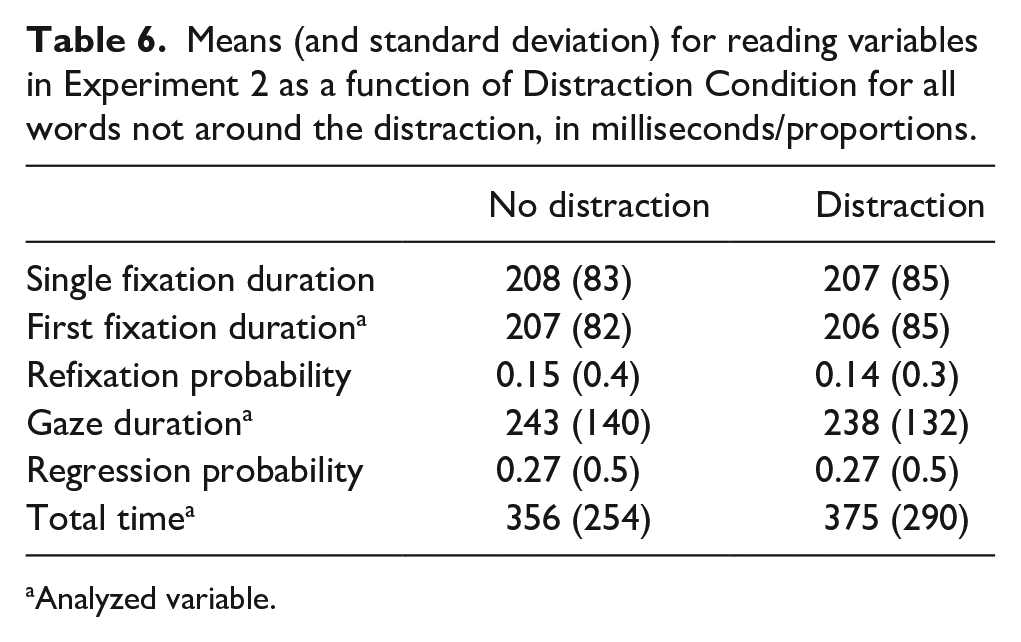
Analyzed variable.
Discussion
In Experiment 2, the nature of the distractors was different: participants were completing a 1-back task, so they had to hold the identity of each distractor in working memory to compare each new distractor to the previous one. This has three significant effects on reading. First, question response accuracy was significantly lower in the presence of distractors. Second, there was a robust increase in reading times around the distractor, with longer first fixation and gaze durations in the distraction condition. Third, there was more rereading around the distractor.
General discussion
In two experiments, we explored the impact of sudden-onset distractors like notifications or pop-ups on digital devices. These distractors had some immediate and some long-term influences on reading. Distractors led to inflated first-pass reading times on the triggering word and following words. There words were also reread more. Some compensating behaviour was also observed in Experiment 1—the rest of the text was read faster. This faster first-pass reading is likely strategic, reflecting a desire by the participants to trigger the distractors and then read the paragraph. When the distractor could be dismissed after a simple response, these changes in eye movement behaviours did not negatively affect comprehension.
When the distractor involved working memory by requiring participants to remember the content of the distractor, participants also spent longer reading the triggering word and more time rereading the triggering word and following words. In spite of this rereading, reading comprehension was significantly impaired by the working-memory distractors. The idea that working memory is involved in reading has been around for some time (Daneman & Carpenter, 1980), and research supports the role of working memory in reading comprehension and development (Peng et al., 2018; Spencer et al., 2020).
The present results show that a simple distraction has a transitory effect on decoding, while a distraction that imposes a working memory load affects both decoding (as measured by eye movements) and comprehension. With regard to decoding, the most notable effect of distraction was observed in the later measure of total reading time. That distraction mostly influences later reading measures is consistent with other research investigating distraction effects (Cauchard et al., 2012; Hyönä & Ekholm, 2016; Meng et al., 2020; Yan et al., 2018; Zhang et al., 2018). This measure remained inflated longer after a working memory load distractor (Experiment 2) than after a simple distractor (Experiment 1), which is consistent with other research which has shown that individual differences in working memory span are associated with later stages of cognitive processing in reading and other tasks, such as integration (Luke et al., 2018). With regard to comprehension, it is unclear whether working memory contributes uniquely to reading comprehension or whether this relationship is mediated by decoding (Nouwens et al., 2021; Spencer et al., 2020). Researchers have observed no clear link between more rereading and better comprehension; rather, rereading serves as an index of comprehension difficulty (Christianson et al., 2017). Thus, it is possible that rereading is strongly correlated with offline comprehension measures simply because it is also an index of confusion, without being a true mediator.
There is a long-standing body of work on the effect of distraction on reading, but most of this research has focused on continuous auditory distractors such as music or background conversations (see Vasilev et al., 2018, for a meta-analytic summary). A handful of studies have explored the influence of sudden-onset distractors (Cauchard et al., 2012; Reingold & Stampe, 2002, 2004; Vasilev et al., 2019) and have observed fleeting effects on eye movements but no discernible effects on comprehension. The present study went beyond these earlier investigations to manipulate not just the presence but the content of these distractors. When the distractor imposes a working memory load, it does appear to affect comprehension. While continuous distractors are certainly a common occurrence, the increasing prevalence of sudden-onset distractors, especially those associated with reading on computers, tables, and phones, makes them an important research topic as well.
In sum, sudden-onset distractors have a momentary impact on reading, but if the distractor can be responded to immediately and then forgotten, the disruption is relatively easy to recover from and readers can pick up where they left off and continue without too much difficulty. If, on the contrary, the distractor requires the reader to hold information in working memory—such as an ongoing text conversation or a reminder about a task that should be completed in the near future—reading efficiency and comprehension will be more impaired.
Footnotes
Declaration of conflicting interests
The author(s) declared no potential conflicts of interest with respect to the research, authorship, and/or publication of this article.
Funding
The author(s) received no financial support for the research, authorship, and/or publication of this article.
