




Abstract
Background:
Despite major advances in the prevention and treatment of stroke, many stroke trials have yielded neutral or modestly positive results due to multiple factors, including patient heterogeneity, small treatment effects, inadequate statistical efficiency, and in some settings limited biological efficacy or insufficient early-phase validation of interventions.
Summary of review:
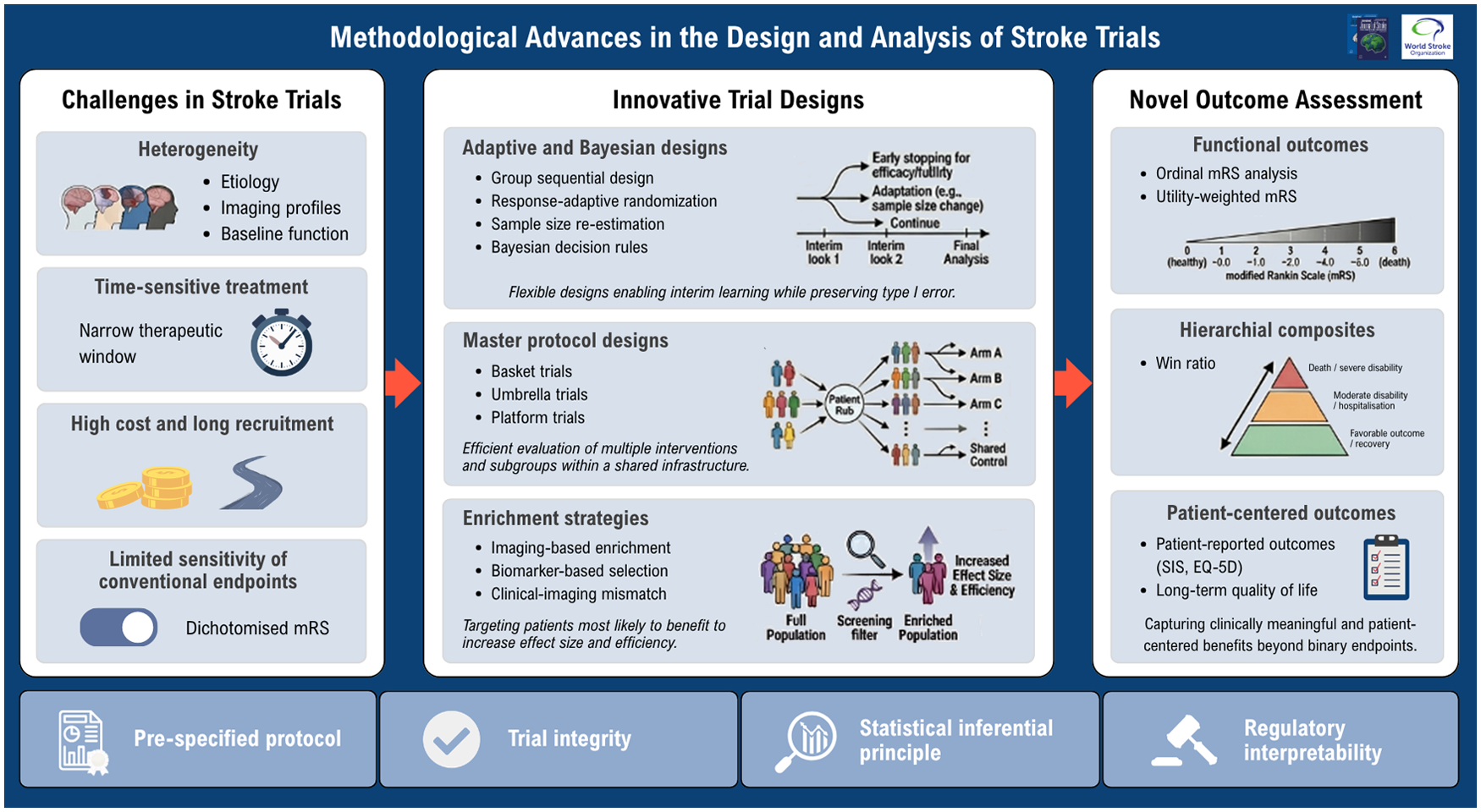
This review summarizes emerging methodological innovations relevant to contemporary stroke trials, including group sequential methods, adaptive design (response-adaptive randomization, sample size re-estimation, enrichment strategies), Bayesian designs, and master protocol frameworks (basket, umbrella, and platform trials). We also discuss advances in outcome assessment, including hierarchical composite endpoints analyzed using the win ratio, ordinal and utility-weighted analyses of the modified Rankin Scale, and the growing role of patient-reported outcomes in capturing patient-centered benefits across the recovery continuum. Finally, we highlight stroke-specific methodological challenges and outline future opportunities enabled by advances in imaging, digital health, and data-driven approaches.
Conclusion:
Together, these innovations have the potential to improve the efficiency, interpretability, and clinical relevance of stroke trials, provided they are implemented within rigorously pre-specified protocols that preserve trial integrity and valid statistical inference.
Get full access to this article
View all access options for this article.