




Abstract
Background:
Tiny unruptured intracranial aneurysms, defined as ⩽ 3 mm, are increasingly detected due to advancements in imaging. However, the optimal management approach remains uncertain. Studies have questioned the necessity of long-term radiological monitoring because of presumed low risks of growth, yet robust data are limited.
Aims:
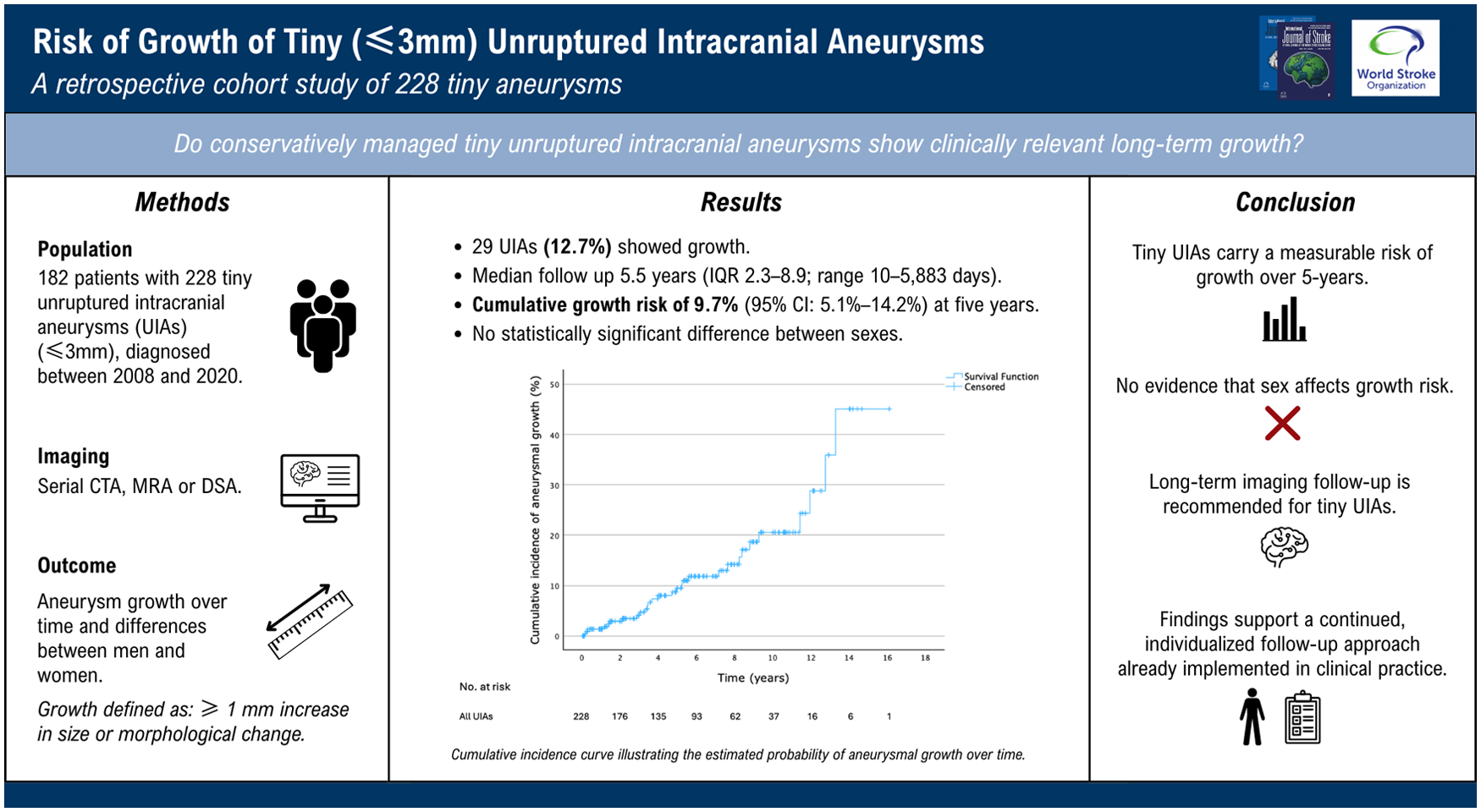
This retrospective cohort study aimed to estimate the 5-year growth risk of conservatively managed tiny unruptured intracranial aneurysms and assess potential differences in growth between men and women.
Methods:
We conducted a single-center retrospective cohort study including adult patients diagnosed with one or more tiny saccular unruptured intracranial aneurysms at a tertiary academic hospital between 2008 and 2020. Patients were included if at least two imaging studies (baseline and ⩾1 follow-up) were available. Growth was defined as a ⩾1 mm increase in size or a morphological change. Growth risk was calculated, and cumulative incidence was estimated using the Kaplan–Meier analysis. Sex differences were analyzed using the log-rank tests.
Results:
A total of 182 patients (142 women; median age = 54 years) with 228 tiny unruptured intracranial aneurysms were followed for a median of 5.5 years. Growth was observed in 29 unruptured intracranial aneurysms (12.7%). The Kaplan–Meier analysis showed cumulative growth of 9.7% (95% confidence interval = 5.1–14.2%) at 5 years. Growth rates were comparable between men and women (p = 0.63).
Conclusions:
Approximately one in eight tiny unruptured intracranial aneurysms demonstrated growth over long-term follow-up, indicating a clinically relevant growth risk despite small initial size. No sex-related differences in growth were observed. These findings support the importance of long-term radiological monitoring. Future studies should investigate whether tiny unruptured intracranial aneurysms may be safely followed with longer surveillance intervals than larger unruptured intracranial aneurysms.
Data access statement:
The data underlying this study are not publicly available due to institutional and ethical restrictions but may be accessed upon reasonable request and subject to approval by the appropriate review committees.
Keywords
Get full access to this article
View all access options for this article.