



Abstract
Goal setting is an effective and frequently used tool for performance enhancement in sports. However, in the previous studies, the focus has been on goal effectiveness among individual male athletes and at one point in time. Therefore, the purpose of this longitudinal study was to examine goal setting practices in women’s sport teams across a competitive season from players’ individual and team perspectives. A total of 146 female players representing 24 teams in ice hockey, ringette, or floorball completed three online surveys. Surveys focused on setting outcome, process, and performance goals, as well as evaluating the follow-through of setting goals and actually reaching these goals across the season. The results indicated that teams set collective outcome goals, and several process, and performance goals at the outset of the season. One-third of the participants reported that these goals were recorded. Furthermore, results revealed that after the season, the achievement of the outcome goal was evaluated, whereas the attainment of process and performance goals was evaluated only occasionally. It is argued that the lack of follow-through in evaluating process and performance goals may be attributed to setting too many goals and not writing them down. It appeared that one-third of the teams did consistently follow the goal setting principles, and although this resulted in increased goal evaluation, it did not result in increased goal attainment. A number of future directions for research are offered and it is recommended that coaches should be made more aware of these guidelines and the importance of following them to achieve maximum benefits of a goal setting program.
Introduction
Over 30 years ago, Locke and Latham 1 suggested that setting specific and difficult, long- and short-term goals is an effective way to enhance performance in sport. Since then goal setting has been a widely examined area in the field of sport and exercise psychology. Previous studies have strongly focused on the effectiveness and prevalence of goals. Several reviews and a meta-analysis have demonstrated moderate to strong goal setting effects in sport and exercise context.2–3 In addition, findings from earlier studies suggest that goal setting is a frequently used tool for athletes and coaches in team and individual sports.4–6 In all, the sport and exercise literature provides strong evidence-based information how goal setting should be implemented. Conversely, it is not known if sport teams follow these goal setting principles, nor how players perceive the goal setting process. Therefore, the primary aim of this study was to investigate the perceived goal setting practices of athletes across a competitive season.
Based upon the empirical research, goals alone do not guarantee performance improvements or increased effectiveness.2,7 Goal setting guidelines presented in both sport and exercise psychology1,8–11 and coaching literatures12–14 suggest that there are certain principles coaches and athletes should follow to increase goal effectiveness. These guidelines include (a) using outcome, process, and performance goals;15,16 (b) setting goals in a collaborative manner; 3 and (c) follow-up and evaluating goals to ensure feedback. 7
Guidelines for goal setting
In most competitive sport settings, the ultimate goal is typically an outcome goal such as winning. It should be noted that achieving the outcome goal depends, at least in part, on the opponent’s performance and is thus out of one’s control. However, achieving process and performance goals is under athletes’ and teams’ control. In the sport context, using outcome, process, and performance goals together have demonstrated positive effects on acquiring new skills and increasing goal effectiveness among tennis 15 and soccer players. 16 These results and goal setting principles8–10,12,17,18 suggest that it would be beneficial to set combined outcome (e.g., win the championship), process (e.g., keep the stick on the ice), and performance goals (e.g., increase assists from 50 to 60 across the season) to achieve maximum benefits of a goal setting program.
In sport, goal setting seems to be more effective at improving performance when individuals are allowed to participate in setting the goals. 3 One suggested mediator of the participation–performance relationship is goal commitment. In Klein et al.’s 19 review of literature, participation in goal setting was positively related to goal commitment. Locke et al. 20 argued that commitment is one of the essential parts of goal effectiveness, and without commitment, a goal has no motivational effect. In essence, goal setting guidelines suggest that it would be beneficial to set goals in a collaborative manner to enhance athletes’ commitment toward goals.8,10,18
Findings from previous studies suggest that goal setting will be most effective when there is feedback showing the degree of progress in relation to goals.1,7 Therefore, the past literature suggests that the follow-up and goal evaluation should be done throughout the season, as well as after the season.8.9,11,12 In the former case, when progress toward goals is consistently monitored, it is possible to adjust the action plan when needed. Conversely, the evaluation of goal achievement after the season may provide an opportunity to shape the action plan for achieving the goals in the following season. Furthermore, several goal setting primers encourage athletes to write goals down and display them on an easily seen place, such as on the wall of the locker room.8,10,14 Results from previous studies suggest that publicly posted goals, together with publicly posted goal evaluations was an effective technique to increase correct performances in ice hockey, 21 soccer, 22 and football. 23 In conclusion, the key element seems to be that the goals are written down and kept in a place where players can see them. Goals can be recorded and shared with team members, for example, as an online document. In addition, it would be important to ensure that goals are evaluated on a regular basis and that players can observe their progress toward goals.
Anderson et al.’s 21 study is one of the few studies examining the effectiveness of previous goal setting guidelines. In their study, among one male ice hockey team, players set individual performance goals (difficult but achievable hit-rate) that would help the team to increase the mean hit-rate (collective performance goal). Individual hit-rates were evaluated after every four or six games, and results were publicly presented in a goal setting chart. The hit-rate was the action considered by the team captains as most in need of increase for winning games. During the intervention, the mean hit-rate increased 82%, and the team achieved its first winning record in 5 years. These results indicate the effectiveness of using goal setting practices such as setting outcome and performance goals and systematically evaluating the progress toward goals.
Goal setting in team sports
As noted earlier, the coaching literature provides us with information of effective goal setting procedures supported by findings from previous studies. However, the past research has mainly focused on the goal variables of frequency, effectiveness, commitment, barriers, and difficulty of goals.4,24–26 Unfortunately, there are only a few studies describing the goal setting practices actually employed by sport teams. Along these lines, Dawson et al. 27 investigated the number of team goals, perceived goal clarity, goal commitment, and goal influence among intercollegiate sport teams. The data were collected from 12 male teams (n = 155) and 5 female teams (n = 80). The results revealed that teams set multiple team goals for practice and competition situations. In Brawley et al.’s 28 study, the nature of team goals in sport teams was examined. The data included responses from 131 male athletes and 56 female athletes. It appeared that teams set collective outcome and process goals for both practice and competition situations and that an overwhelming majority of the goals were general in nature. These results suggest that teams set multiple collective goals for games and practices. Burton et al. 29 examined perceived goal practices of athletes from individual and team sports. They found that athletes set performance (on the average 6.9 on a Likert-scale from 1 = not often to 9 = extremely often) and outcome (6.5) goals with approximately equal frequency. In addition, athletes reported using only occasionally goal implementation strategies such as evaluating goals, writing goals down, and publicly disclosing or posting goals. It can, thus, be argued that athletes did not consistently follow the goal setting practices suggested in the literature. Previous studies did not examine the effectiveness of goal setting practices within teams; therefore, in the present study, the perceived effectiveness data were also analyzed on a team level.
Coaches and goal setting
Goal setting is a widely used coaching method to enhance athletes’ performance. For example, Weinberg et al.5,6 found in their studies that practically all of the coaches used some type of goal setting with their athletes. Therefore, it is valuable to explore the goal setting practices used by coaches from individual and team sports. Côte and Sedgwick 30 examined perceptions of effective behaviors of expert rowing coaches through in-depth interviews. They summarized that other than focusing on outcome goals, goal-setting practices of coaches were in a line with goal setting guidelines found in the coaching literature and supported by empirical studies. In Weinberg et al.'s 6 study collegiate coaches (N = 14) from individual and team sports set goals for competition and practice situations and emphasized short-term goals. Goals were both dictated by coaches and the other times set in a collaborative manner. Coaches evaluated the goals both subjectively and objectively but not after the season was over. It appeared that coaches wrote goals down only inconsistently. Weinberg et al. 5 also examined the goal setting practices of high school coaches’. They found that coaches (N = 14) set long- and short-term goals, and goals were both dictated by coaches or set in collaboration. Goals were evaluated during the season but not at the end, and again only inconsistently written down. Based upon the earlier studies, it appeared that coaches primarily know and follow some, but not all, of the evidence-based goal setting principles.
Although goal setting is a widely used performance enhancement technique in sport, there is only a little information regarding the actual goal setting practices, especially among team sports. In the present longitudinal study, the focus was on the perceived goal setting practices in sport teams. Thus, the purpose was to examine players’ perceptions of setting, monitoring, and evaluating team goals throughout an entire competitive season among women’s floorball, ice hockey, and ringette teams. Since most previous studies used mainly male athletes, the present study focused on female athletes. In addition, players on the Finnish female’s national league teams are amateurs, and work or study full time, whereas national league level male athletes are professionals (ice hockey) or semi-professionals (floorball). The focus on amateur players provides for more generalizability of the findings since many more players participate at this level.
Methods
Design and participants
Finnish female amateur players (N = 146) from three different sports completed three online surveys during the 2011–2012 competitive season. Players represented ice hockey (n = 27), floorball (n = 29), and ringette (n = 90) teams competing at the Finnish women’s national leagues. Floorball and ringette are similar sports to ice hockey and are played in a rink with five field players and a goalkeeper on each team. Floorball is played on the floor with sticks and a ball, whereas ringette is played on the ice with sticks and a ring. The mean age of the participants was 21.9-years old (SD = 4.4 years) and they had played their sport for 11.7 years (SD = 4.4 years). The first survey was delivered to the players via head coaches (N = 29) and players from 27 teams responded to that survey.
The first survey was conducted after the first game of the regular season in September (Time 1). All of the 29 head coaches of the national league teams were sent an information letter and were asked to share the survey instructions with all of the players on his/her team. Along with the letter, there were written survey instructions to share with the players. Coaches were not contacted again before sending out the letter. In the instructions, players were given information about the aims of the study and contact personnel. In addition, players were informed that participation was voluntary, and that by responding to the survey, players acknowledged their participation in the research. Players were also informed that their names and email addresses were required for the longitudinal data aggregation, and for delivering the subsequent surveys via email but they would not be used for any other purposes. Finally, there was an Internet-link to the online-survey in the players’ instructions. Players completed the surveys during their free time and the coaches did not know which of their players participated. A total of 231 players completed the survey in Time 1. The second survey was conducted in the middle of the regular season in December (Time 2). The survey was emailed directly to those players who had completed the first survey. A total of 168 players (72.7%) stayed in the study from Time 1 to Time 2. Finally, the third survey was conducted in March and April, 2 weeks after each team’s last game (Time 3). The survey was emailed directly to those 168 players who had responded to the first and second surveys. A total of 146 players (86.9%) from 24 teams stayed in the study from Time 2 to Time 3. Those 146 participants had also completed the first and second surveys and their responses are used in this study.
The first survey was delivered via head coaches, and we do not know which players actually received the survey instructions. However, a total of 231 players responded at least to one survey, whereas there were 409 players who played at least one game during the season but did not complete any of the surveys. Consequently, this study reached 36.1% of all of the national league players. The participants (N = 146) played on the average in 85.3% of the regular season games (ice hockey 13.7/16, ringette 24.5/28, and floorball 18.1/22), but the nonparticipants played only on the average of 52.6% of the games (ice hockey 9.8/16, ringette 10.5/28, and floorball 14.4/22). Accordingly, it can be argued that this study reached a representative sample of active members of the national league teams.
Instrumentation
Three questionnaires were developed, and four experts reviewed survey questionnaires to ensure that important areas of goal setting were included, such as monitoring and evaluating the goals, and recording goals. Experts were coaching directors from Finnish floorball and ringette Associations, a researcher from the field of sport and exercise psychology from KIHU Research Institute for Olympic Sports, and a coach of the Finnish ringette national team. Questionnaires were pilot tested with a group of 13 players for the final refinement of questions.
The following brief definitions for different types of goals were provided to the participants in players’ instructions in Time 1. “In this study the focus is on group goals. A Goal is the object or aim of an action, what an individual or group is trying to accomplish. A Group goal is collectively shared with group members, and it directs the group toward the desired outcome. A group goal is not the sum of individual goals of group members. Group goals can be both outcome and performance and process-oriented goals and teams can set those goals for both practice and competition situations. Outcome goals typically focus on a competitive result of an event, such as winning a game or a race, or earning a medal. Achievement of these goals depends not only on team’s own performance but also the performance of the opponent. Performance and process-oriented goals refer to all of the collective group goals that the team is focusing on while trying to achieve their outcome goals. For example, performance-oriented goals included such things as improving players’ strength levels, shooting skills, passing skills, and attendance at practices. Examples of process goals included such things as having more fun in games and practices, improving team spirit and enhancing players’ motivation and concentration. Teams can set multiple performance and process-oriented goals.”
Measures
Means regarding setting of (Time 1) and evaluating the progress (Time 2) and the achievement (Time 3) of 25 different process and performance goals (N = 146).

Note: The scale was from 1 (totally disagree) to 5 (totally agree).
In Time 3, a total of 64 players reported that the achievement of goals was evaluated, whereas 82 players reported their team did not evaluate the achievement of process and performance goals. The means in Time 3 includes only 64 players.
In Time 2, players were asked to choose, if the progress toward the outcome goal was evaluated (1) by the players, (2) by the coaches, (3) in collaboration with players and coaches, or (4) progress toward outcome goal was not evaluated. Players were asked to assess each of the 25 process and performance goals on a Likert scale from 1 (strongly disagree) to 5 (strongly agree), if the team had evaluated the progress toward the goal in question (see Table 1). Players were asked if the team’s outcome goal was written down and shared with all of team members. Players were also asked if the team’s process and performance goals were written down and shared with all of team members. Both questions regarding recording different goals were answered either “yes” or “no.”
In Time 3, players were asked to choose if the achievement of the outcome goal was evaluated (1) by the players, (2) by the coaches, (3) in collaboration with players and coaches, or (4) achievement of outcome goal was not evaluated. In addition, participants were asked if the achievement of process and performance goals were evaluated after the season (yes/no). If there had been evaluation, players were asked to assess each of the 25 process and performance goals on a Likert scale from 1 (strongly disagree) to 5 (strongly agree) if the team had evaluated the achievement of the goal in question (see Table 1). Finally, based on their perceptions, players were asked to assess on a Likert scale from 1 (strongly disagree) to 5 (strongly agree), if team had achieved its outcome goal, and goals related to physical, tactical, technical and psychological skills, and team rules.
Analyses
Fisher’s exact–Boschloo unconditional tests were used to investigate potential differences in the prevalence of outcome goal evaluation between Time 2 and Time 3, and whether outcome goals were written down or not.An independent sample’s t-test was used to compare the prevalence of evaluating the progress toward process and performance goals between players who reported that goals were and were not written down. A paired samples t-test was conducted to investigate the potential differences in the evaluation of the achievement of process and performance goals between players who reported that goals were, and were not written down, and in the prevalence of evaluating of those goals between Time 2 and Time 3.
The number of participants from the teams varied from 1 to 20. Due to the low number of players from some of the teams, the team level analyses required exclusion of some of the data. It was decided that the teams with four or less respondents be excluded from the analyses. Conversely, one team involved 20 participants, and thus, it was possible for a large sample from one team to also skew the results. Consequently, a random sample of 10 players from that team was included for the analyses. Team level analyses included a total of 114 players from 13 teams. Teams were divided into three groups (explained later in the results) based on their goal setting practices. One-way analysis of variance (ANOVA) was conducted to determine if goal setting groups differed on evaluation of the progress toward goals during the season, and on perceived goal achievement. A chi-square test of independence was performed to examine the prevalence of evaluating goal achievement after the season between the three goal setting groups.
Results
Outcome goals
Setting a collective outcome goal for the competitive season was an often-used practice among the teams participating in this study. In Time 1, a total of 125 participants (85.6%) reported setting an outcome goal, whereas 21 participants (14.4%) reported that their team had not set an outcome goal. The goal was set in a collaborative manner (84%), by the players (9.6%), or dictated by the coaches (6.4%). In Time 2, a total of 134 participants (91.8%) reported setting a collective outcome goal, and 12 participants (8.2%) reported not setting an outcome goal. A majority (n = 125) of the participants reported that the team had evaluated the progress toward the outcome goal. Evaluation was conducted in a collaborative manner (57.6%), by coaches (25.6%), or by players (16.8%). Teams did not consistently record outcome goals. A total of 34 players (23.3%) reported that the outcome goal was written down and shared with all of the players on the team. In Time 3, 138 participants (94.5%) reported setting a collective outcome goal, and 8 participants (5.5%) reported not setting an outcome goal. A total of 108 participants reported that team had evaluated the achievement of the outcome goal. Evaluation was conducted in collaboration with players and coaches (72.2%), by coaches (13.8%), or by players (13.8%). In summary, the majority of teams set and evaluated the progress, and the achievement of outcome goals in a collaborative manner, but only inconsistently wrote down outcome goals.
Fisher’s exact–Boschloo unconditional tests were conducted to test the differences in the prevalence of outcome goal evaluation between Time 2 and Time 3, and whether the goal was written down or not. Results indicated a significant difference in the outcome goal evaluation with a prevalence of 85.6% (125 out of 146 players reported evaluation) in Time 2, compared to 74% (108 out of 146 players reported evaluation) in Time 3 (P < 0.01). The result suggests that evaluating the progress toward the outcome goal during the season was done significantly more often than evaluating the achievement of the goal at the end of the season.
In Time 2, Fisher’s exact–Boschloo unconditional test indicated no significant differences in the prevalence of goal evaluation whether the goal was written down or not. Goal evaluation was reported by 94.1% (32 out of 34) from players whose team had written their goals down, compared to 83% (112 out of 131) whose team had not written their goals down. However, in Time 3, Fisher’s exact–Boschloo unconditional test indicated a significant difference in the outcome goal evaluation with 88.2% (30 out of 34 players) reporting evaluation in Time 3 if goals were recorded in Time 2, compared to 69.6% (78 out of 112 players reported evaluation in Time 3) if goals were not recorded in Time 2 (P < 0.05). In essence, players who reported recording the outcome goal in Time 2 reported evaluating the achievement of the outcome goal significantly more often in Time 3.
Process and performance goals
In Time 1, high means (over 4.0 on a 5-point scale) regarding physical, psychological, technical, and tactical skill goals and team rules suggest that participants perceived practically all of the 25 suggested goals in the survey as their team’s collective goals (see Table 1). More specifically, participants reported on the average of 21.7 collective process and performance goals.
Differences in the prevalence of evaluating progress in process and performance in Time 2 between players whose team had, and had not written the goals down (N = 146).
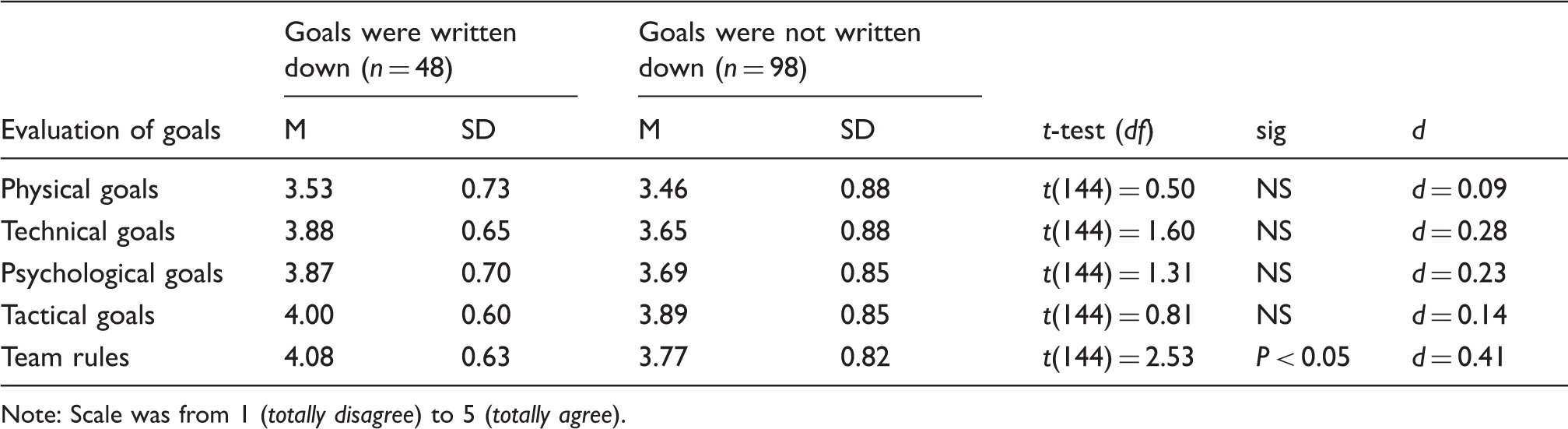
Note: Scale was from 1 (totally disagree) to 5 (totally agree).
Results of a paired sample t-test comparing the prevalence of goal evaluation between Time 2 and Time 3 (N = 64).
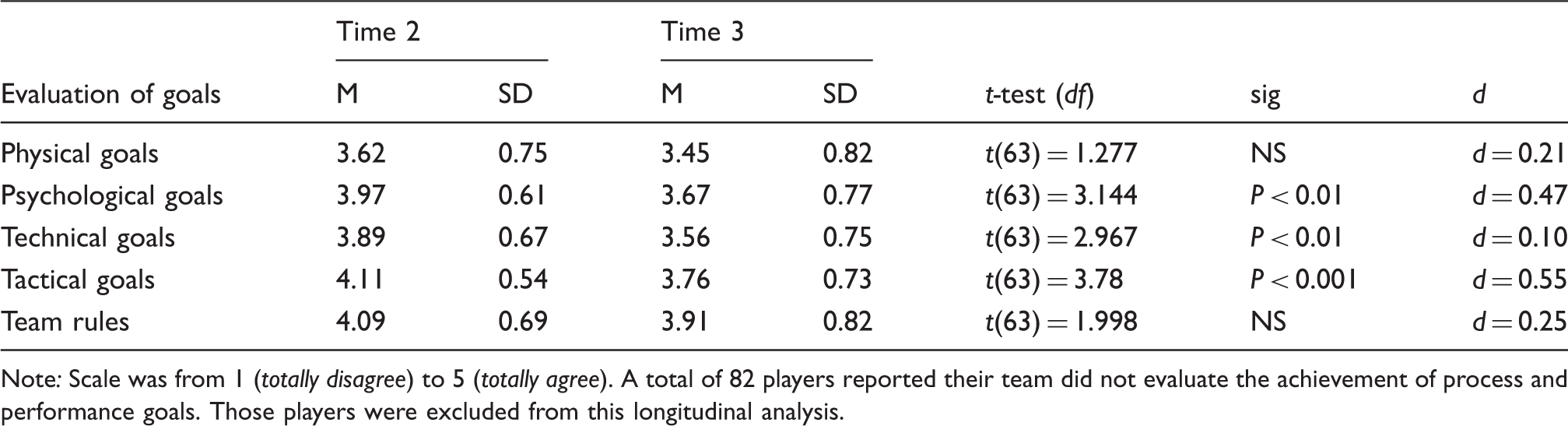
Note: Scale was from 1 (totally disagree) to 5 (totally agree). A total of 82 players reported their team did not evaluate the achievement of process and performance goals. Those players were excluded from this longitudinal analysis.
In Time 3, Fisher’s exact–Boschloo unconditional test was conducted to test the differences in the prevalence of process and performance goals evaluation between players whose team had (n = 48), and had not (n = 98) written the goals down in Time 2. Results indicated a significant difference (P < 0.001) in the evaluation of process and performance goals in Time 3 with 64.7% (31 out of 48 players) reporting evaluation if goals were written down in Time 2, compared to 33.7% (33 out of 98 players) reporting evaluation if goals were not written down in Time 2. This result suggests that achievement of process and performance goals was evaluated significantly more often in Time 3, if team had recorded those goals in Time 2.
Goal setting within teams
Three different goal setting groups based on the goal setting practices within teams.
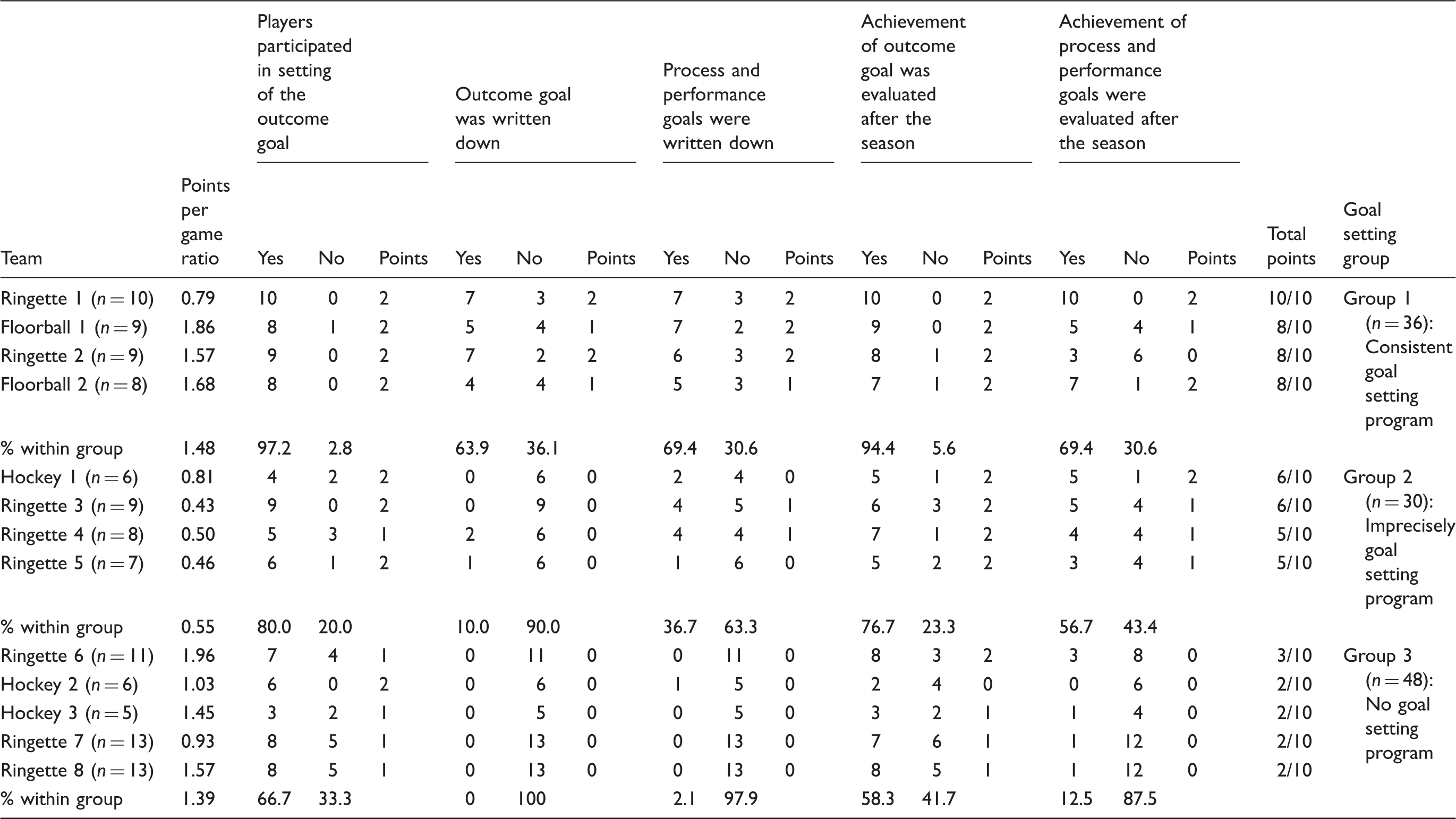
The differences between the three groups in evaluating the progress toward goals (N = 114).

SS: sum of squares; df: degrees of freedom; MS: mean square; n.s.: nonsignificant.
A chi-square test of independence was performed to examine the prevalence of evaluating the achievement of outcome goals, and process and performance goals after the season between the three groups. There were significant differences in evaluating the achievement of outcome goals between Group 1 and Group 2 (χ2 (1, N = 66) = 4.391, P < 0.05), and between Group 1 and Group 3 (χ2 (1, N = 84) = 13.877, P < 0.001). Teams in Group 1 were more likely (94.4%) to evaluate the achievement of outcome goal after the season, than teams in Group 2 (76.7%), and teams in Group 3 (58.3%). There were not any significant differences between Group 2 and Group 3 in evaluating the achievement of outcome goals. In addition, there were significant differences in evaluating the achievement of process and performance goals between Group 1 and Group 3 (χ2 (1, N = 84) = 28.648, P < 0.001), and between Group 2 and Group 3 (χ2 (1, N = 78) = 17.320, P < 0.001). Teams in Group 1 (69.4%) and Group 2 (56.7%) were more likely to evaluate the achievement of process and performance goals after the season, when compared to teams in Group 3 (12.5%). There were not any significant differences between Group 1 and Group 2 in evaluating the achievement of process and performance goals (see Table 4).
The differences in perceptions of outcome, process, and performance goal achievement between the three groups.
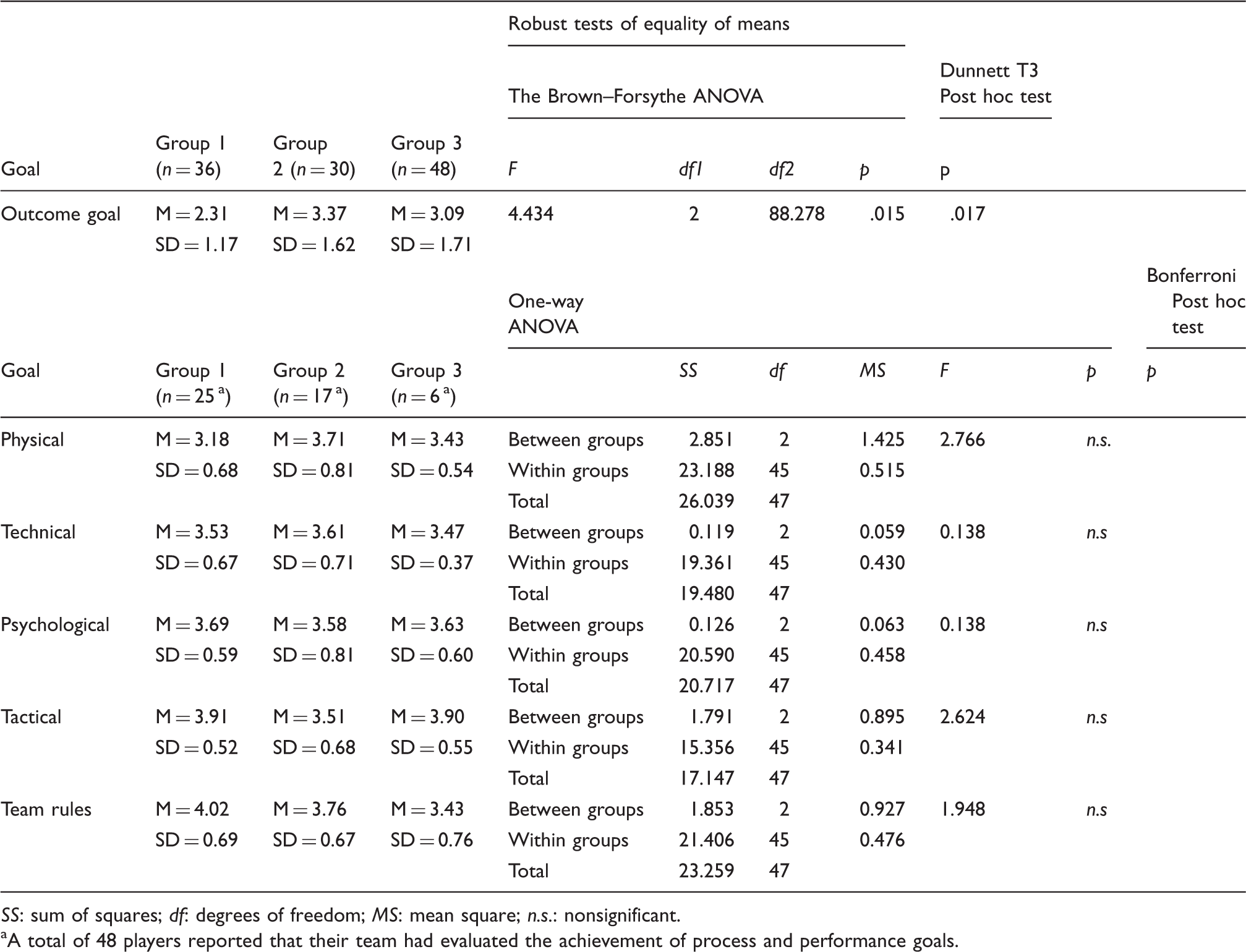
SS: sum of squares; df: degrees of freedom; MS: mean square; n.s.: nonsignificant.
A total of 48 players reported that their team had evaluated the achievement of process and performance goals.
The points per game ratio were used to compare the three groups. During the regular season, teams in ice hockey played 31 games, in floorball 22 games, and in ringette 28 games. Teams earned two points after a win, one point after a tie or an overtime loss, and zero points after a loss in the regulation time. Each team’s total amount of points after the regular season was used to calculate the points per game ratio. In Group 1, the teams earned on the average of 1.48 points per game, compared to 0.55 points per game ratio among the teams in Group 2, and 1.39 points per game ratio among the teams in Group 3 (see Table 4). These results indicate that teams in Group 1 and Group 3 earned approximately 70% of the maximum amount of points, compared to teams in Group 2 that earned approximately 30% of the maximum amount of points.
Discussion
The purpose of the present longitudinal study was to examine collective goal setting from the players’ perspective. The results revealed that teams followed some of the practices suggested in the goal setting primers, such as setting collective outcome, process, and performance goals, and letting players participate in setting, and evaluation of progress and attainment of outcome goals. In addition, it appeared that teams monitored the progress toward outcome, process, and performance goals during the season. However, the players reported that collective goals were not consistently recorded, and the achievement of process and performance goals was not systematically evaluated after the season.
Setting outcome, process, and performance goals
Almost all of the players perceived that their team had set a long-term outcome goal. In the beginning of the season 85.6%, and at the end of the season, as many as 94.5% of the participants reported that their team had set a collective goal related to team’s final standing in the league. In Brawley et al.’s 28 study, the data showed that 75% of the sample provided at least one goal for competition, and 82% reported at least one goal for practice. Dawson et al.’s 27 results indicated that 92% of the sample reported having multiple team goals for competitions, as well as for practice situations. It appears that the result of the prevalence of outcome goals is consistent with previous research.
In the present study, athletes reported on the average of 21.7 collective process and performance goals, in addition to team’s outcome goal. Interestingly, Dawson et al. 27 found that athletes provided on the average of 2.55 collective goals for practice and 2.86 collective goals for competition situations. The higher number of goals in our study may be because of different methods were used to study the process and performance goals. In an earlier study, 27 participants listed multiple team goals for the team (collective goals), as well as their own goals for the team. In the present study, athletes were asked to assess if 25 suggested goals were their team’s collective goals. It is possible that athletes assessed their personal aspirations for the team as collective goals, in addition to actual collective process and performance goals, leading to the high amount of goals evident in this study. Future research needs to carefully distinguish between goals that are perceived as team goals versus goals that are perceived as individual goals.
The majority of players reported that the outcome goal was set in a collaborative manner. This finding is similar with earlier studies, where more emphasis was placed on collaborative goal setting instead of merely dictating the goals by coaches.4–6 However, in these studies, the data were collected from coaches and athletes from both individual, and team sports. This study provides more specific information on setting of collective goals, indicating that women’s teams follow the principles of setting different types of goals in collaboration with coaches.
Goal evaluation
The progress toward the outcome goal, and process- and performance-oriented goals was monitored during the season. The results indicated that players participated in evaluating the progress toward achieving outcome goals during the season. These results support the findings of Weinberg et al.'s4–6 studies, suggesting that coaches and athletes evaluate their goals during the season. Thus, it appears that teams followed guidelines emphasized in the coaching literature and goal setting primers regarding evaluating goal progress during the season.9,11,12
The results revealed that teams systematically monitored and evaluated their outcome goals, as suggested in the literature.8,9 Outcome goals refer to team’s final standing in the league and can be assessed by looking at the scoreboard. This might explain systematic monitoring and evaluation of these goals. However, participants reported that teams monitored their outcome goals during the season more often than they evaluated the achievement of those goals after the season, even though most standings are not clinched until the last games of the season. Perhaps, some of the teams did not have a formal meeting after the last game of season explaining the differences in the prevalence of outcome goal evaluation. Future research should try to assess why outcome goals are not generally assessed after the end of the season.
More than half of the participants perceived that their team had not evaluated the achievement of any collective process and performance goals after the season. As noted above, it might be that some of the more than 20 process and performance goals reported by the athletes were individuals’ goals for the team, rather than team goals for the team, and for that reason were not evaluated. Conversely, if teams had actually set 20 different process and performance goals, it may be difficult to evaluate the attainment of so many goals. It can be considered that evaluating the attainment of outcome goals (e.g., final standing in the league) is easier than evaluating the achievement of process- and performance-oriented goals (e.g., improving shooting skills), and this may be one explanation for inconsistent evaluation of process and performance goals after the season. Furthermore, perhaps some of the goals were vague in nature and because of that, the attainment of those goals was not possible to evaluate. The results of Burton et al.’s 29 study suggested that athletes evaluated the attainment of goals occasionally, yet the frequency of evaluating different types of goals was not examined. The present study provides additional information suggesting that women’s sport teams did not systematically evaluate the achievement of collective process and performance goals. Future studies might simply focus on a few process/performance goals as these would be easier to follow and evaluate.
From the practical viewpoint, the evaluation of process and performance goal attainment would be important for the following reasons. First, achieving process and performance goals are under one’s own control, whereas the achievement of outcome goal depends, at least partly, on the opponent’s performance. Evaluating the achievement of the goals that are under athletes’ control after the season would seem to be more valuable because they can change their behavior to help reach their goals in the future. Second, the information of improved skills and attributes, as well as possible weaknesses of players, would be helpful for coaches when planning for next season. In addition, the athletes would benefit from the knowledge of improved skills and possible reasons for achieving or failing to achieve the outcome goal, even if they would not represent the team on the following season.
The majority of the players reported that the team did not write outcome, process, or performance goals down. This result is consistent with previous studies4–6 suggesting that coaches and athletes use this procedure only occasionally, yet the goal setting primers emphasize the importance of recording goals. Athletes consistently monitored their goals whether they wrote them down or not. However, recording goals after the season was positively related to evaluating the achievement of outcome goals, and some of the process, and performance goals. Therefore, it appears that recording goals could help coaches and teams to maximize goal evaluation after the season.
Goal setting within teams
This study provides us novel information suggesting that based on the separation of teams into three categories, one-third of women’s teams followed evidence-based goal setting practices, whereas one-third of the teams did not follow these practices. This result suggests that many of the teams did not consistently implement goal setting practices suggested in the literature. In one-third of the teams (Group 2), the practices were followed, although not consistently. It appeared that there were contradictory opinions between team members if goal setting practices were followed, or not. There are at least two possible explanations for the contradictory perceptions among team members. First, it is possible that coaches discussed setting of the goal or goal achievement only with some of the players, for example, with team captains. That might explain different perceptions of goal setting procedures within teams. Second, all of the participants in the study were amateur players. Perhaps, some of the players were more interested in the development of team performance and placed more emphasis on following the goal setting procedures. Conversely, it might be that some of the players were more interested on other things (e.g., social cohesion) than things related to goal setting.
It appeared that teams in Group 1 consistently followed the goal setting practices, whereas teams in Group 2 followed some, but not all of the practices. However, the means regarding perceived outcome goal achievement were significantly higher in Group 2, when compared to Group 1. It is possible that some goal setting practices are more important than others in the terms of outcome goal achievement. For example, writing goals down is a widely suggested practice in the coaching literature,10,14 yet there is little evidence-based empirical studies regarding the effectiveness of this practice. In this study, teams in Group 1 wrote outcome goals down, but teams in Group 2 perceived significantly higher outcome goal achievement, even though they did not write their outcome goals down. This result suggests that writing goals down does not appear to be positively related to perceived outcome goal achievement. It should be noted, however, that in this study, the evaluation of outcome goal achievement was based on players’ perceptions. Therefore, in the future, it would be valuable to examine the effects of writing goals down on the actual goal achievement.
Even though the teams in Group 1 did not have higher perceptions of the process and performance goal achievement, when compared to Group 2 and Group 3, many positive effects of goal setting practices were evident. First, teams in Group 1 evaluated the progress toward tactical goals and technical goals, significantly more than teams in Group 2. It can be argued that both tactical (e.g., improved forechecking) and technical (e.g., improved shooting technic) goals have a direct effect on team’s performance. Evaluating the progress toward these goals provides information regarding what has been done well and what should be improved and would appear of vital importance for improving the team’s performance during the season. Second, the Group 1 teams evaluated the outcome goal achievement significantly more than teams in other two groups. Third, teams in Group 1 evaluated the achievement of process and performance goals significantly more than teams in Group 3. Due to evaluating the achievement of outcome, process, and performance goals, teams in Group 1 were able to revise their goals and action plans for the following season. That is harder for the teams in other groups since the lack of goal evaluation. Future studies should investigate whether goal evaluation at the end of the season actually leads to revised action plans for the following season.
Teams in Group 1 followed the goal setting procedures and had the highest points per game ratio in the regular season games. This finding supports the hypothesis that it would be beneficial to follow the evidence-based goal setting practices. However, the points per game ratio in Group 3 was notably higher than in Group 2, and nearly as high than in Group 1, yet the teams in Group 3 did not consistently follow the suggested goal setting practices. This contradictory finding is worthy of further investigation. Future studies might employ a case-study approach, comparing 4–5 teams with a high range of variance in their adherence to their goal setting practices. It would be important that the teams had equal possibility to have success in the terms of level of players in the teams (i.e., same amount of national team players). A range of methods, such as interviews and observations, could be used to examine adherence. In addition, more specific outcome measures would provide us valuable information on the effectiveness of different types of goal setting practices. This is one of the first longitudinal studies examining the goal setting practices in sport teams across a season from the players’ perspective. Based on the earlier research, there is a lot of information regarding how goal setting should be implemented yet there is little knowledge of how it is actually implemented in the practice of sport teams. This study provides novel information on what goal setting practices were followed, as well as where teams failed to follow the evidence-based procedures.
There are some limitations that should be noted when generalizing the findings from this study. First, all of the participants were national league level female athletes. In the future, it would be beneficial to replicate this study with a larger sample size, which would include male athletes and also their coaches with different levels of experience. However, this is one of the few studies of implementation of a goal setting program in female team sports. Second, there were limitations in the recruitment of participants. Specifically, players were contacted via head coaches, and the researcher was unable to control which of the coaches actually gave the survey instructions to their players. Sending surveys directly to the players after getting coach approval would allow a more precise count on how many athletes actually received the questionnaires.
Results of this study provide coaches and teams practical information for revising their goal setting practices. First, it would be important to set only a few process- and performance-oriented goals, and emphasize them on a daily basis. This would help to narrow focus on a few important goals and change behavior accordingly. Second, coaches and players should record goals, criteria for reaching goals, and evaluation timelines on a goal setting sheet. With these procedures, teams could ensure consistent evaluation of goals. Finally, it would be valuable for the teams to have a plan to especially evaluate goal setting results after the season, as this seems to be often forgotten by coaches and athletes. Evaluation of the attainment of goals after the season provides valuable information on what was done effectively, and what should be done differently for the upcoming season.
Footnotes
Declaration of conflicting interests
The author(s) declared no potential conflicts of interest with respect to the research, authorship, and/or publication of this article.
Funding
The author(s) received no financial support for the research, authorship, and/or publication of this article.