




Abstract
Prior research did not provide data on acute adaptations to changes in saddle height as commonly performed in bicycle fitting. This study assessed the acute responses from recreational cyclists to changes in saddle height using dynamic bicycle fitting. Ten recreational cyclists completed five trials using three saddle heights (Preferred, High and Low), one Sham-height trial and a final repeated trial for assessment of intra-session reliability. High and Low saddle heights were determined based on dynamically measured knee flexion angles (±10° from their Preferred height). Trials were performed for 30-s at 90 ± 2 rpm and 2.5 W/kg (181 ± 32 W). Perceived comfort and discomfort and rating of perceived exertion were assessed at the end of each trial. Significant differences were determined when p < 0.05. Increased comfort was observed at the preferred saddle height compared to a lower saddle height (p = 0.03) but no differences were observed between Preferred and High (p = 0.69) or High vs. Low (p = 0.06). The Sham height was also not different from its equivalent saddle height (p = 0.77) and rating of perceived exertion did not differ between saddle heights (p = 0.33). Recreational cyclists were generally sensitive to changes in saddle height given they reported different levels of comfort between their preferred and a lower saddle height. Similar levels of comfort were observed when a Sham height was introduced, showing that recreational cyclists identified that no change in saddle height was conducted. However, these cyclists could not report differences in comfort when cycling at a High compared to a Low saddle height.
Introduction
Fitting a bicycle to a cyclist involves changing the configuration of different components in order to maximise the work done by the muscles and to optimise comfort. 1 Likewise, minimising the forces in the joints can be important particularly for cyclists who are not largely interested in maximising their performance. As an example, recreational cyclists and commuters use bicycles for improving their health and/or as a mode of transportation, 2 which may require less attention to maximum performance in relation to greater comfort whilst cycling.
Although changes in bicycle set-up have been extensively studied, there is minimum consensus in the literature on optimal parameters for bicycle fitting. As an example, amongst the methods used to determine appropriate saddle heights, the use of anthropometric methods, 3 static 4 or dynamic 5 assessment of a cyclist have been implemented. More recently, research has demonstrated that the assessment of movement patterns should be the best possible alternative to ensure consistency in lower limb kinematics. 6 This method involves determining knee joint flexion angles at the bottom of the crank cycle to attempt obtaining a knee angle close to 30–33°, in order to optimise comfort. 7
Determining an optimal saddle height has been attempted aiming for maximising efficiency 8 but only three studies looked at perceived comfort and discomfort7,9,10 and conflicting findings were reported. Whilst a group of recreational and competitive cyclists pedalling for 30–40 min reported less comfort when using a low saddle height,7,9 non-cyclists pedalling for 10 min reported less comfort when using a high saddle height. 10 In addition, Kruschewsky et al. 9 observed that recreational cyclists indicated larger rating of perceived exertion (RPE) at a low saddle compared to their preferred saddle height. Similarly, Priego Quesada et al. 7 demonstrated that recreational and competitive cyclists reported more perceived fatigue and pain when cycling with a low saddle height, which could be interpreted as a potential analogue to RPE. However, these studies usually opted for longer cycling in each saddle height, which is different from the time available during bicycle fitting sessions, when 30–40 min are unlikely to be used to trial each saddle height. Therefore, acute responses to each saddle height are important to be explored to better inform bicycle fitting.
Placebo effect is a well-known interfering element when conducting interventions in exercise science. 11 In the case of bicycle fitting, it is unclear how much the prior expectation for changes in saddle height could affect comfort and RPE, given prior studies7,9,10 did not report a placebo-type of intervention (i.e. when no changes are performed). Therefore, it is not possible to determine what is the sensitivity from cyclists to changes in saddle height and if they would be aware when changes in saddle height are pretended. This information is important to provide evidence if cyclists can or cannot perceive changes in saddle height. In addition, it is important to determine if cyclists can consistently reproduce their perceived comfort when saddle heights are introduced in a random order. Addressing this gap is also important, particularly when cyclists are exposed to a different saddle height for a short duration whilst cycling (i.e. less than 10 min), in order to better align to time constrains observed during bicycle fitting (i.e. when multiple elements of the bicycle and the cyclist body have to be assessed in 60–90 min).
Therefore, the present study aimed at assessing the acute responses from recreational cyclists to changes in saddle height in perceived comfort and discomfort during cycling, using dynamical bicycle fitting. Due to the short duration and random order of the proposed exposure to different saddle heights, we hypothesised that recreational cyclists would not be able to distinguish different saddle heights.
Methods
Experimental approach to the problem
This study used a cross-sectional design in order to assess acute responses from recreational cyclists to changes in saddle height. We employed a real-time motion tracking system to assist in determining individualised changes in saddle height required to elicit a change of ±10° in minimum knee angle, in line with current recommendations for bicycle fitting.5,6 We also used work rates normalised to cyclists’ body mass in order to provide individualised exercise intensity for each cyclist. 12 Each saddle height was tested for 30 s, to provide an acute response, in line with time constrains from commercial and clinical bicycle fitting. A ‘sham’ saddle height was also tested which consisted of asking cyclists to stand from the saddle and look forward whilst no changes in saddle height were effectively conducted. This trial allowed the assessment of prior expectation of changes in saddle height in terms of comfort and discomfort. RPE was also assessed in all trials in order to gauge cyclists’ response in terms of perceived exertion against comfort and discomfort.
Participants
The sample size was estimated using GPower statistical package 13 for an analysis of variance (ANOVA) with within-subjects design aiming for an effect size (f) of 0.50 (large effects), alfa of 0.05 and power of the test of 0.80 assuming a minimum of five measures per session. This calculation resulted in seven participants required, which we deemed small. Therefore, 10 recreational cyclists (four females and six males: 24.4 ± 5.9 years, 175 ± 8 cm, 72.5 ± 12.8 kg) volunteered for this study. This research complied with the Declaration of Helsinki and was approved by the University Ethics Committee (HEC 19-001). All cyclists were riding a minimum of 30 km with their bicycles and/or a minimum of three cycling training sessions or commuting trips per week and were cycling for 30–90 min per session at the time of the study. They were all apparently healthy and free from any neurological or musculoskeletal illnesses that could limit their pedalling pattern.
Protocol and data collection
Cyclists attended one laboratorial session which involved initial measurements of body mass, standing height, arm span, shoulder and pelvis width, should, hip, knee and ankle heights to the floor and foot length. The anthropometric procedures were completed according to instructions provided by the motion tracking system manufacturer (Xsens, the Netherlands). After which, 15 wireless motion tracking sensors were placed on pre-defined body segments as per instructions provided by the manufacturer for tracking full body motion followed by a static pose and a walking calibration. For this study, we monitored feet, lower and upper legs, pelvis, torso, upper arms, forearms and the head. The validity of the Xsens system to determine lower limb joint angles has been confirmed for a range of activities14–16 with standard error of measurement smaller than 5° when compared to an optoelectronic system. 15
Each cyclist’s bicycle was measured (i.e. saddle vertical and horizontal positions and height and reach of the handlebars) and replicated in a cycle ergometer (Model A; WattBike, UK). All cyclists were using unpadded sports shorts and the cycle ergometer was fitted with manufacturer Comfort Saddle (https://wattbike.com/au/product/comfort-saddle). Cyclists then pedalled at 90 ± 2 rpm and maintained 100 W for 5 min for warm-up purposes. After that, power output was increased to 2.5 W/kg of body mass (181 ± 32 W), in order to provide individualised exercise intensity for each cyclist. 12 Cyclists pedalled at their preferred saddle height (as per their bicycles) in this intensity for 30 s whilst the right knee flexion angle was assessed in real time using a motion tracking software (MVN Analyse, Version 2018.2., Xsens, the Netherlands). The minimum knee angle (±2°) was identified and used to determine a lower (i.e. +10° of knee flexion) and a higher (i.e. –10° of knee flexion) saddle height (see Figure 1). Once the intended knee flexion angle was identified, the height of the seat tube was recorded.
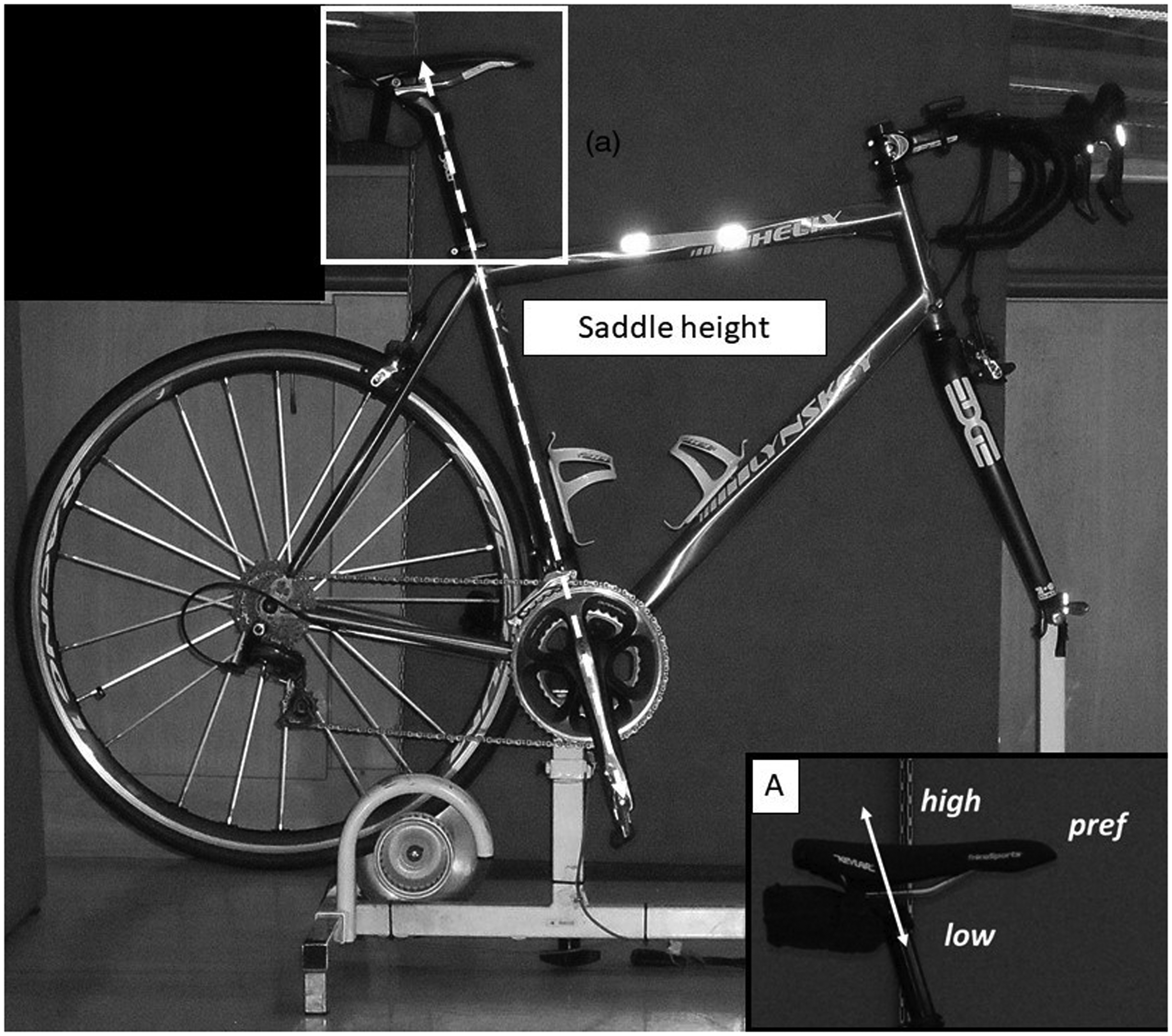
Illustration of definition of saddle height and changes in height performed in this study.
After this process, in random order determined prior to the commencement of the protocol, cyclists performed 30 s of cycling at 90 ± 2 rpm and 2.5 W/kg (181 ± 32 W) at three saddle heights (Preferred, Low and High). In addition, a ‘sham’ saddle height was performed which consisted of asking cyclists to stand from the saddle and look forward whilst no changes in saddle height were effectively conducted. For this trial, the investigator pretended to adjust the seat height. The purpose of this sham trial was to provide a placebo intervention, randomised with other saddle heights, which ensured that each cyclist had a different Sham height. Finally, the first saddle height tested was re-tested in the last trial for the analysis of intra-session reliability of the outcomes. All trials were interspaced by a minimum of 30 s of passive rest to allow for changes in saddle height and to minimise fatigue during the protocol, whilst cyclists remained on the bicycle (i.e. standing on the pedals). The outline of the experimental protocol is illustrated in Figure 2.

Outline of the experimental protocol.
During all trials, three-dimensional motion was collected for the last 15 s using a motion tracking software (MVN Analyse, Version 2018.2., Xsens, the Netherlands). At the end of each trial, cyclists were asked to rate their overall perceived comfort and discomfort using a bespoke five-point scale, as shown in Figure 3. This scale ranged from 1 to 5, with more points indicating greater discomfort, which intends to facilitate use during bicycle fitting as it would provide a general perspective on how cyclists perceived their comfort and discomfort during a trial. After that, cyclists were asked to rate their RPE using a 6–20-point scale. 17
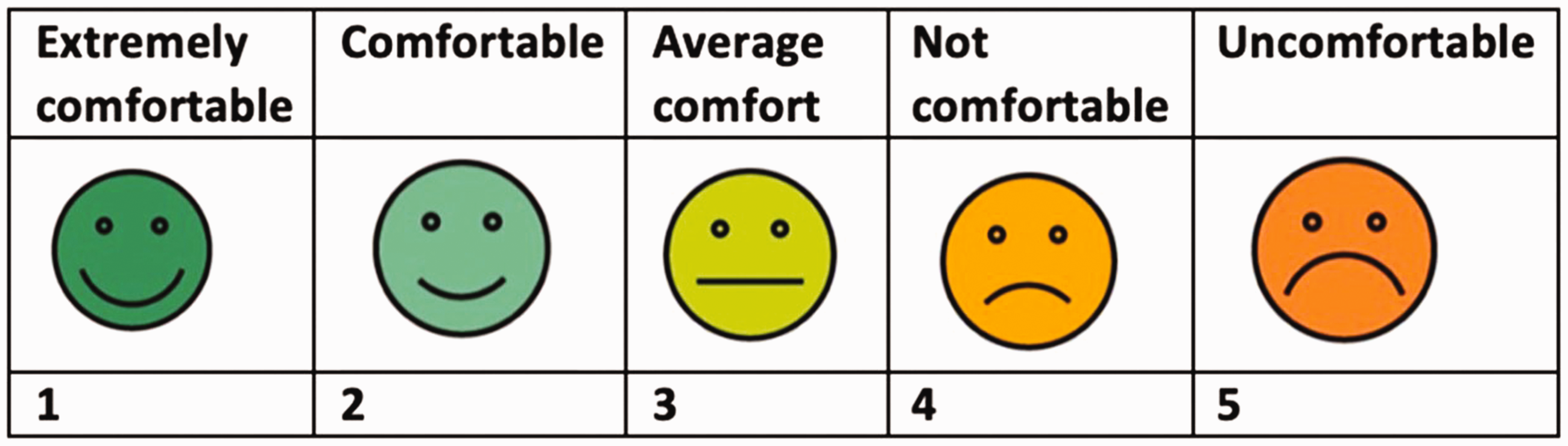
Five points perceived comfort bespoke scale.
Data analysis
Three-dimensional angles were exported from the motion analysis software to determine the mean value for knee flexion angle, bilaterally, at the 6 o’clock and the 3 o’clock crank positions from 10 consecutive cycles to allow for comparison with prior studies,5,12,18 using a customised program in MATLAB (R2019a; MathWorks, USA).
Statistical analysis
Due to the ordinal nature of the comfort and RPE scales, results from comfort and RPE are presented as median ± range, and Friedman’s ranking tests were employed to determine effects from changes in saddle heights (Preferred vs. Low vs. High) followed by Conover’s Post Hoc tests for pairwise comparisons. For comparisons of comfort and RPE between the Sham height and its equivalent saddle height, Wilcoxon signed-rank tests were performed given the Sham was paired with a different saddle height for each cyclist. For the assessment of intra-session reliability of comfort and RPE scales, the first and the last trial were analysed using Cronbach’s α, which were ranked as poor (0–0.5), moderate (0.5–0.75), good (0.75–0.90) and excellent (>0.9) adapted from Koo and Li. 19
For demonstrating the effects from changes in saddle height on knee angles at the 6 o’clock and the 3 o’clock crank positions, after determining the normality of the distribution using Shapiro–Wilk’s tests, repeated measures ANOVAs were used followed by Holm’s Post Hoc tests. Cohen’s effect sizes were computed for significant differences, and large effects (d > 0.80) were determined. A statistical package (JASP, Version 0.11.1, University of Amsterdam, the Netherlands) was used for statistical analysis, and differences were determined significant when p < 0.05.
Results
In order to elicit the intended changes in saddle height, 3 ± 0.9 cm of changes in height were performed between the Preferred and the High saddle heights, 3 ± 0.9 cm were performed between Preferred and Low saddle heights, resulting in 6 ± 1.1 cm between High and Low saddle heights. Right knee flexion angles at the 6 o’clock crank position was larger for the Preferred than the High saddle height (p < 0.01, d = 2.64), for the Low compared to the Preferred (p < 0.01, d = 2.41) and for the Low compared to the High saddle height (p < 0.01, d = 5.51). Left knee flexion angles also followed similar patterns with greater angles for the Preferred than the High saddle height (p < 0.01, d = 2.64), for the Low compared to the Preferred (p < 0.01, d = 2.54) and for the Low compared to the High saddle height (p < 0.01, d = 4.31). For the 3 o’clock crank position, the right knee presented increased knee flexion for the Preferred compared to the High saddle height (p < 0.01, d = 1.08), for the Low compared to the Preferred (p < 0.01, d = 1.32) and for the Low compared to the High saddle height (p < 0.01, d = 5.33). The left knee, at the 3 o’clock crank position, also presented increase flexion for the Preferred compared to the High saddle height (p < 0.01, d = 2.63), for the Low compared to the Preferred (p < 0.01, d = 2.41) and for the Low compared to the High saddle height (p < 0.01, d = 5.56), as shown in Figure 4.
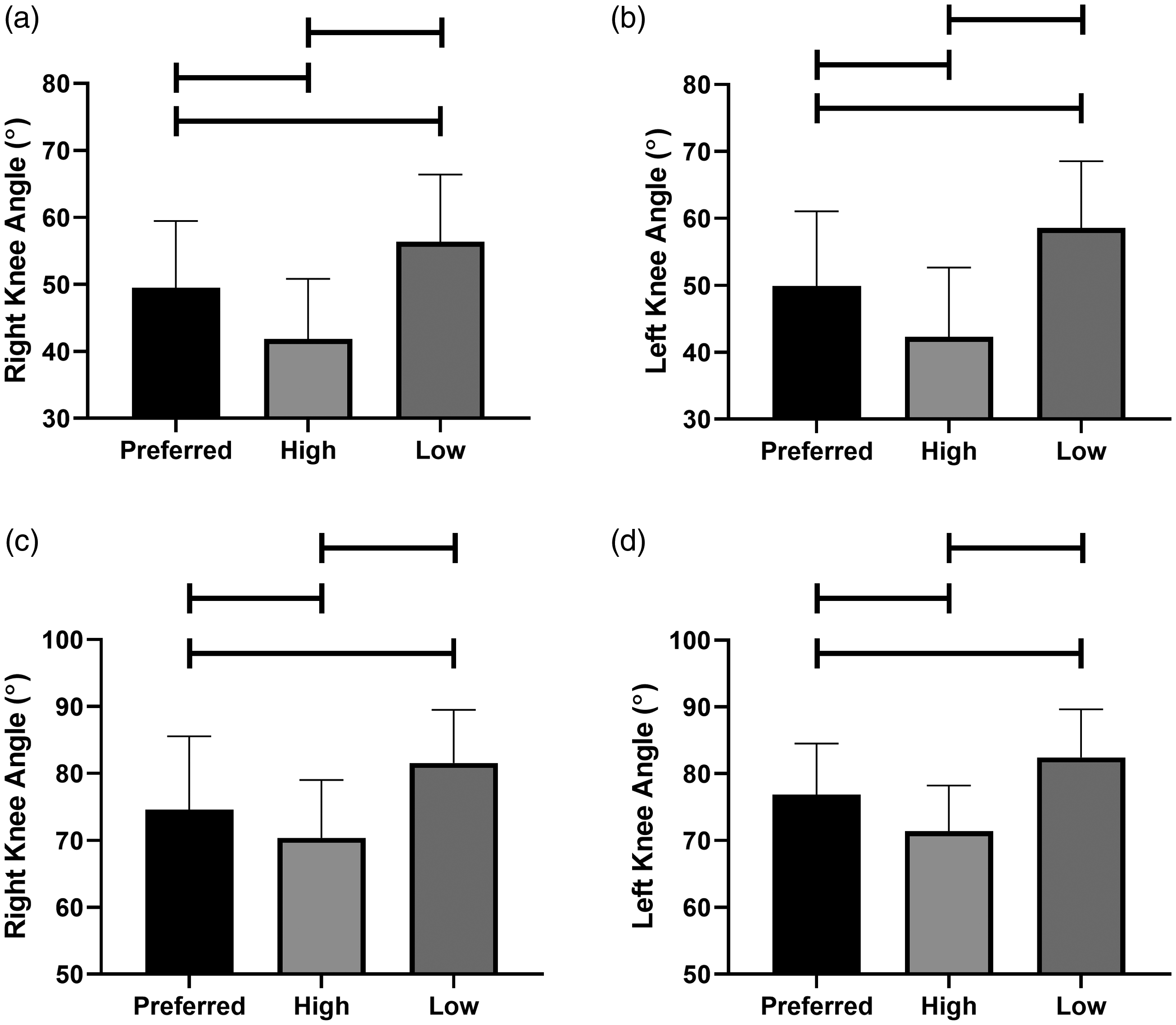
Mean + SD for knee flexion angles obtained at the Preferred, High and Low saddle heights at the 6 o’clock (a – right knee and b – left knee) and at the 3 o’clock (c – right knee and d – left Knee) crank positions.
Cyclists reported more comfort using their preferred saddle height compared to a lower saddle height (p = 0.03) but no differences were observed between Preferred and High (p = 0.69) or High vs. Low (p = 0.06). The Sham height was also not different from its equivalent saddle height (p = 0.77), and seven cyclists reported same level of comfort cycling with the Sham height in relation to its equivalent saddle height. For RPE, no difference was observed between heights (p = 0.33), as shown in Figure 5, and seven cyclists reported same RPE when cycling with the Sham height in relation to its equivalent saddle height.
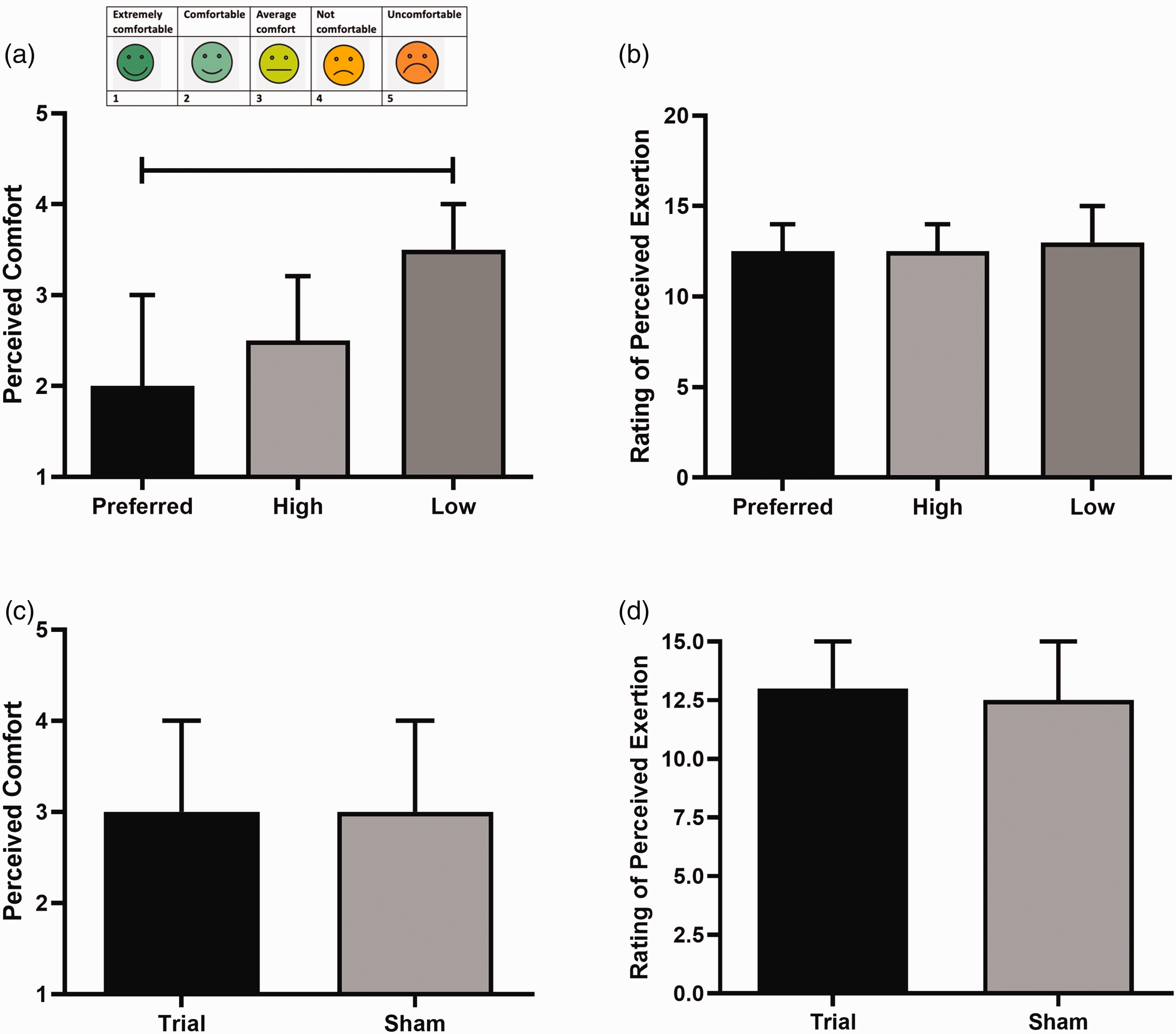
Median + range for perceived comfort (a and c) and rating of perceived exertion (b and d) obtained at the Preferred, High and Low saddle heights and at the Sham and its equivalent saddle height (Trial). Inset illustrates the bespoke comfort/discomfort scale.
Cronbach’s α for perceived comfort and discomfort indicated a good intra-session reliability (0.83) but poor reliability for RPE (0.35). For perceived comfort, the first trial presented 3 ± 2 (median ± range) whilst the last trial was rated at 3 ± 3 (i.e. average comfort). For RPE, the first trial presented 13 ± 6 whilst the last trial was rated at 13 ± 3. The range of differences between trials was two points for perceived comfort and five points for RPE.
Discussion
The primary finding from this study was that recreational cyclists were sensitive to changes in saddle height given they reported different levels of comfort and discomfort between their preferred and a lower saddle height. In addition, they provided similar levels of comfort when a Sham height was introduced, demonstrating that they properly identified that no change in saddle height were being performed. However, these cyclists could not perceive comfort or discomfort differently when cycling at a higher compared to a lower saddle height. These findings are new as no prior study attempted to compare different saddle height using short-duration trials with a Sham saddle height using dynamic bicycle fitting. In addition, this study utilised knee flexion angles relative to cyclists’ anatomical posture, which has been demonstrated to provide more individualised outcomes when determining intended saddle heights. 20
Finding from the current study mostly contrast with prior studies assessing comfort and discomfort in longer sessions (i.e. 30–40 min) with saddle heights compared across multiple sessions.7,9 These studies observed less comfort reported by cyclists pedalling at higher or lower saddle heights in relation to a reference height. In the current study, High and Low saddle heights were compared to cyclists preferred saddle height (as per their bicycles), to provide a more realistic scenario to bicycle fitting, when cyclists present with an existing bicycle set-up. As an example, Kruschewsky et al. 9 compared their High (+2.5%) and Low (–2.5%) saddle heights with a reference height determined by 109% from inseam leg length, reporting reduced comfort for all heights in relation to the reference. However, this method has been shown to increase variability in knee joint angles 21 and limits consistency in movement patterns in relation to dynamic bicycle fitting. Likewise, Verma et al. 10 determined a reference height based on 106% of the inseam leg length for males and 107% for females, comparing this setting to a High (+2%) and a Low (–2%) saddle height. Their findings indicate that the reference saddle height was more comfortable than the High with no differences in relation to the Low. Therefore, multiple elements (i.e. duration of trials and criteria for determining saddle heights) seem to contribute to the differences in findings from the current study in relation to prior studies.
The study by Priego Quesada et al. 7 demonstrated that a saddle height eliciting 30° of knee flexion angle at the 6 o’clock crank position optimised comfort in relation to a High and a Low saddle height, which aligns with recommendations for improving cycling efficiency. 22 This finding is important because cyclists from the current study presented a knee flexion angle of ∼49° at the 6 o’clock crank position (see Figure 4a and b). This suggests that they were using a relatively low saddle height, which also indicates that their High saddle height (∼41°) was still not at the recommend for improvements in efficiency and/or comfort. It is possible to speculate that these cyclists somehow adapted to this bicycle configuration, which would be expected to optimise their muscle force–length–velocity relationships. This possibility is supported by the fact that cyclists from the current study rated the High and Low heights similarly less comfortable, suggesting that their sense of comfort was potentially affected by the height that they were adapted to. However, further studies are needed to determine the time course for adaptations to a different bicycle configuration and how this adaptation would impact perceived comfort and efficiency.
The secondary key finding from this study was that recreational cyclists responded partially different in terms of comfort and RPE, with comfort presenting better intra-session reliability. This last finding suggests that cyclists can rate comfort and effort differently and can provide more reliable outcomes for comfort, which conflicts with a prior study showing changes in comfort during a single session. 10 It is important to note that Verma et al. 10 did not determine a minimum training volume for their cyclists, which limits comparison with cyclists from the current study. In addition, their cyclists were tested in pre-determined saddle heights, rather than using their preferred height as a benchmark for comparisons with other heights. This comparison with cyclists’ bicycle configuration is beneficial as, during bicycle fitting, cyclists normally present with a self-selected set-up that could be changed with the aim of improving efficiency, performance or comfort. However, the short duration of each trial may have affected cyclists’ capacity to fully appraise their perceived exertion.
The analysis of intra-session reliability for levels of comfort and RPE also provides additional evidence that comfort seems to be a reliable measure during short-duration bicycle fitting. This information is beneficial as, anecdotically, bicycle fitting’s key aim is to improve comfort, 4 particularly in recreational cyclists that may direct less attention to maximum performance in relation to comfort whilst cycling. However, it is important to note that cyclists from the current study could not provide fully reliable measures of RPE, even though power output and pedalling cadence were closely controlled between saddle heights. This finding is somewhat unexpected, particularly because RPE has been shown reliable 23 and cyclists from the current study reported similar RPE for the Sham height in relation to its equivalent saddle height. It is possible that cyclists were not familiar with the intermittent nature of the protocol, given it was critical that they stopped and stood up from the saddle to allow for changes in saddle height, which is different from the continuous nature of commuting cycling. A longer duration trial (i.e. ∼6 min) could have provided more time for cyclists to rate their RPE.
This study was limited to a certain extent. Our protocol did not involve measurements of comfort and discomfort or RPE in a saddle height aligned with recommendations for improving cycling efficiency (i.e. 30° of knee flexion angle at the 6 o’clock crank position). This could have provided further clarity on the level of adaptation from our cyclists to their preferred saddle height. In addition, the protocol was conducted using a cycle ergometer, which does not fully replicate the perception of cycling in a bicycle outdoors. Future studies could attempt assessing comfort and discomfort during short-duration cycling in outdoors-simulated trials, which could be applicable to mail delivery. 24 In addition, changes in saddle height also resulted in some fore-back movement of the saddle in relation to the bottom bracket due to the 75° of seat tube angle for the cycle ergometer. For this seat tube angle though, each 1 cm of change in saddle height results in 0.25 cm of fore-back movement of the saddle, which should have potentially minimum effect in the data from the current study.
Data from this study provide novel information on acute responses from changes in saddle height in terms of comfort and perceived exertion. This evidence is important because time constrains in commercial and clinical bicycle fitting do not allow for longer cycling trials in multiple saddle heights. Therefore, evidence from prior research using 10–40 min of cycling across multiple sessions7,9 is prohibitive to bicycle fitter and clinicians, particularly when multiple components of the bicycle (e.g. handlebars and cleats) should be assessed along with saddle height. Therefore, it is evident from the current study’s data that recreational cyclists are generally sensitive to changes in saddle height and may be able to determine when no changes in saddle height (i.e. sham) were pretended. However, these cyclists could not identify differences in comfort when cycling at a High compared to a Low saddle height, which suggests that their perception of comfort may be benchmarked in relation to their preferred/current saddle height. Therefore, it may be beneficial to transition cyclists from their preferred/current saddle height, if needed, using minimum number of trials within the same session, as this may hinder any misjudgement from cyclists in terms of comfort and discomfort.
Conclusions
This study demonstrated that recreational cyclists were generally sensitive to changes in saddle height given they reported different levels of comfort between their preferred and a lower saddle height. Similar levels of comfort were observed when a Sham height was introduced, showing that recreational cyclists identified that no changes in saddle height were conducted. However, these cyclists could not report differences in comfort or discomfort when cycling at a High compared to a Low saddle height. In addition, measures of comfort presented good intra-session reliability and provided different responses from RPE, showing that cyclists could distinguish levels of comfort from perception of exertion.
Footnotes
Acknowledgements
Thanks to Ryan Watson, Chloe Carr and Thomas Doidge for assistance in data collection. Thanks to all cyclists who volunteered for this study.
Declaration of conflicting interests
The author(s) declared no potential conflicts of interest with respect to the research, authorship, and/or publication of this article.
Funding
The author(s) received no financial support for the research, authorship, and/or publication of this article.
