



Abstract
The objective of this study was to examine the direct and indirect relationships between abusive coaching behaviors and athletes’ satisfaction and affective organizational commitment through interactional justice and to explore the differences in the relationships between Hong Kong and Korea. A total of 521 student-athletes (Hong Kong: 232; Korea: 289) in intercollegiate athletics participated in the survey. The results of structural equation modeling (SEM) indicated partial mediations of interactional justice between abusive and supportive coaching styles and satisfaction and commitment. Although the multigroup SEM results revealed no differences in terms of the directions and levels of significance of the relationships among the variables between two countries, there was a significant difference in the size of the effect of abusive leadership on the outcomes between the two groups.
Introduction
Sports are interwoven into the fabric of life in societies throughout the world. Taking part in sports or physical activities can provide participants with positive outcomes, such as enjoyment, well-being, and physical or mental health. 1 Based on the belief that sports participation plays an important role in the psychological and social development of youths, parents often encourage their children to experience organized sports because sports participation can play a pivotal role in the social, psychological, and physical development of youth sports participants. 2 A pair of recent studies indicated that approximately 50% of youths and adolescents in Hong Kong and Korea participated in at least one organized sport.3,4
As athletes mature into adulthood, the coach-athlete relationship tends to be more influential in the development of athletes’ physical and psychological well-being than the relationship between athletes and their parents. Athletes leave home for college, and in the absence of direct parental oversight, it is not uncommon for coaches to become their caregivers and unofficial guardians.5,6 Indeed, once in college, student-athletes will often spend more time with their coaches than with their parents. 7 Therefore, considering both the amount of time student-athletes spend with their college coaches and the impact these individuals can have on student-athlete development, it should come as little surprise that the dynamic between coaches and their athletes is the subject of an extensive body of scholarship.
Numerous researchers8–12 in sport management have studied how college coaches with a variety of leadership styles (e.g., transformational, transactional, servant) impact their athletes’ well-being, attitudes (e.g., satisfaction and commitment), and performance. Though a multitude of studies in sport sciences focus on coaching, comparatively few studies explore the “dark side” of coaching, which is a phrase often used to describe the the negative elements of coaching. Consider abusive leadership. This style of leadership encompasses followers’ perceptions of the extent to which a leader engages in sustained displays of hostile verbal and nonverbal behaviors, such as derogatory language and physical intimidation. 13 Although abusive leadership has been linked to several undesirable outcomes, including follower dissatisfaction, stress, and even a desire for athletes to cease participation in sports,14,15 relatively few studies have explored the consequences of destructive coaching behaviors on college athletes. Accordingly, the purpose of the current study was to examine the extent to which the abusive leadership of college coaches influences levels of satisfaction and commitment between college athletes in Hong Kong and Korea. This study also examines the mediating effect of interactional justice. The concept of interactional justice, which is the perceived levels of fairness in the relationship between coaches and athletes, 16 may serve as a substantive link between coaching behaviors and athletes’ attitudinal outcomes.
Collegiate sports in Hong Kong and Korea
The current research compares student-athletes’ perceptions of coaches’ behaviors and attitudes in Hong Kong and Korea. The student-athletes in these two countries, though present in an East Asia subregion of Asia, are expected to differ in their perceptions and attitudes due to the distinct structures and cultures of collegiate sports in Hong Kong and Korea. Consider the following explanations.
In Hong Kong, the University Sports Federation of Hong Kong (USFHK), formed in 1961, creates programs for students among eleven institutions in Hong Kong to compete annually in collegiate sports. The main role of the USFHK is to provide college students with opportunities to cultivate sportsmanship as well as promote more physical activities through sports as a critical part of the academic curriculum. According to the USFHK, in the 2014-2015 academic year, approximately 3,700 (2,050 males; 1,650 females) student-athletes from 16 different sports participated in USFHK competitions. This number accounted for approximately 4% of all university students in Hong Kong. Eight public universities in Hong Kong provide relatively fair and well-balanced opportunities for males and females to participate in 16 individual or team competitions provided by the USFHK. Given that the USFHK organizes and governs its own leagues for various sports, it is very similar to the National Collegiate Athletic Association (NCAA) in the United States.
Unlike the USFHK and the NCAA, the main role of the Korea University Sport Federation (KUSF), formed in 2010, is limited to promoting and supporting university sports as an advisory organization for various university competitions, which are mainly organized by each sports association. The KUSF offers an annual league of six sports, inclusive of basketball, football, baseball, ice hockey, volleyball and soft tennis. The USFHK offers the same opportunities for male and female student-athletes to participate in annual leagues for 16 different sports. In comparison, the KUSF provides female student athletes with only basketball leagues, which accentuates the male-dominant sports culture in Korea.
Additionally, the Korean Olympic Committee (KOC) reported there were approximately 7,900 (5,800 males; 2,100 females) registered university student-athletes in 2014, accounting for .03% of all university students in the country. This has not notably changed in 2020. Most universities in Korea do not have sports teams or, if they do offer sports, it is only a few sport teams for elite-level student-athletes. Korea’s elite sports-oriented policy on athletic competition prioritizes winning. This aim is pursued by developing each sport’s international competitiveness based on a policy of fewer elite athletes of superior ability, which then overlooks the country’s overall sports participation levels based on school and/or club sports. 17 Given this situation, the system and the distribution of resources in Korean collegiate sports can be understood as providing intensive training and support to a few elite student-athletes in collegiate athletics rather than focusing on the collective health and sport development of the general student population.
In the sports world, as athletes progress to higher levels of competition, they are often required to have higher levels of dedication to their sport. This may require the athletes to sacrifice time spent on non-sport interests (e.g., hobbies) and limit social interactions to a small circle of friends, families, and coaches who will help them achieve success on their athletic journeys.1,18 As a result, young student-athletes in Korea’s elite-oriented system are typically required to sacrifice their academic opportunities for athletic careers due to the rigorous training expectations at the elite level.19,20 Indeed, a consequence of the elite-level focus in Korea is that students in secondary schools are often absent from class due to training during class time and weekday competitions. 17 Thus, school sports in Korea, especially collegiate sports, are generally viewed by Koreans as more semiprofessional than amateur and educational.
The system of school sports, with its emphasis on elite-level athletics, has created many social problems in Korea. 17 For example, Korean student-athletes who have intensive training and competition schedules tend to experience difficulty meeting educational expectations and adjusting to their school social lives, with many abandoning their studies altogether to solely focus on sports. Further, when athletes are severely injured or unsuccessful in their sport, they have to retire from their sport at an early age. When that happens, these students may have additional difficulty adjusting to Korean society because of their inadequate and incomplete education, which limits the ability of these individuals to excel in social and educational activities outside of sports. 21
In addition to problems arising from how the education system in Korea is structured for elite versus non-elite athletes, there is also the matter of coaching behaviors in Korea. The media in Korea often report on stories involving young athletes being emotionally, physically, or sexually abused by their coaches. 17 Indeed, according to the National Human Rights Commission, 22 74% of 1,122 secondary school student-athletes in Korea reported they experienced physical and verbal abuse by coaches. Ultimately, coaches engaging in antisocial behaviors toward their athletes (e.g., verbal and physical abuse) appear to be more widespread in Korea than in Hong Kong, which may in part be explained by the vastly different structuring of school sports between the two nations. 2 In short, coaches have near complete authority over their athletes and athletes who fail or refuse to abide by the rules and expectations of their coaches have limited athletic or educational alternatives. 17
Theoretical foundations
The proposed relationships between abusive leadership and athletic satisfaction and commitment are illustrated in Figure 1. The research model includes five variables: (a) abusive leadership, (b) supportive leadership, (c) interactional justice, (d) athletic satisfaction, and (f) athletic commitment. Social exchange theory emphasizes the norm of reciprocity,23,24 which means athletes will return the favorable treatment received from their coaches by trying to equalize the exchange with constructive attitudes or behaviors such as helping behaviors. Analogously, athletes who experience abuse from their coaches will repay this unfavorable treatment from their coaches by showing less commitment to their team and counterproductive behaviors like absenteeism. Accordingly, transformational coaching behaviors are expected to be positively associated with athletic satisfaction and team commitment, while abusive coaching behaviors should be negatively related to those outcomes.23,24
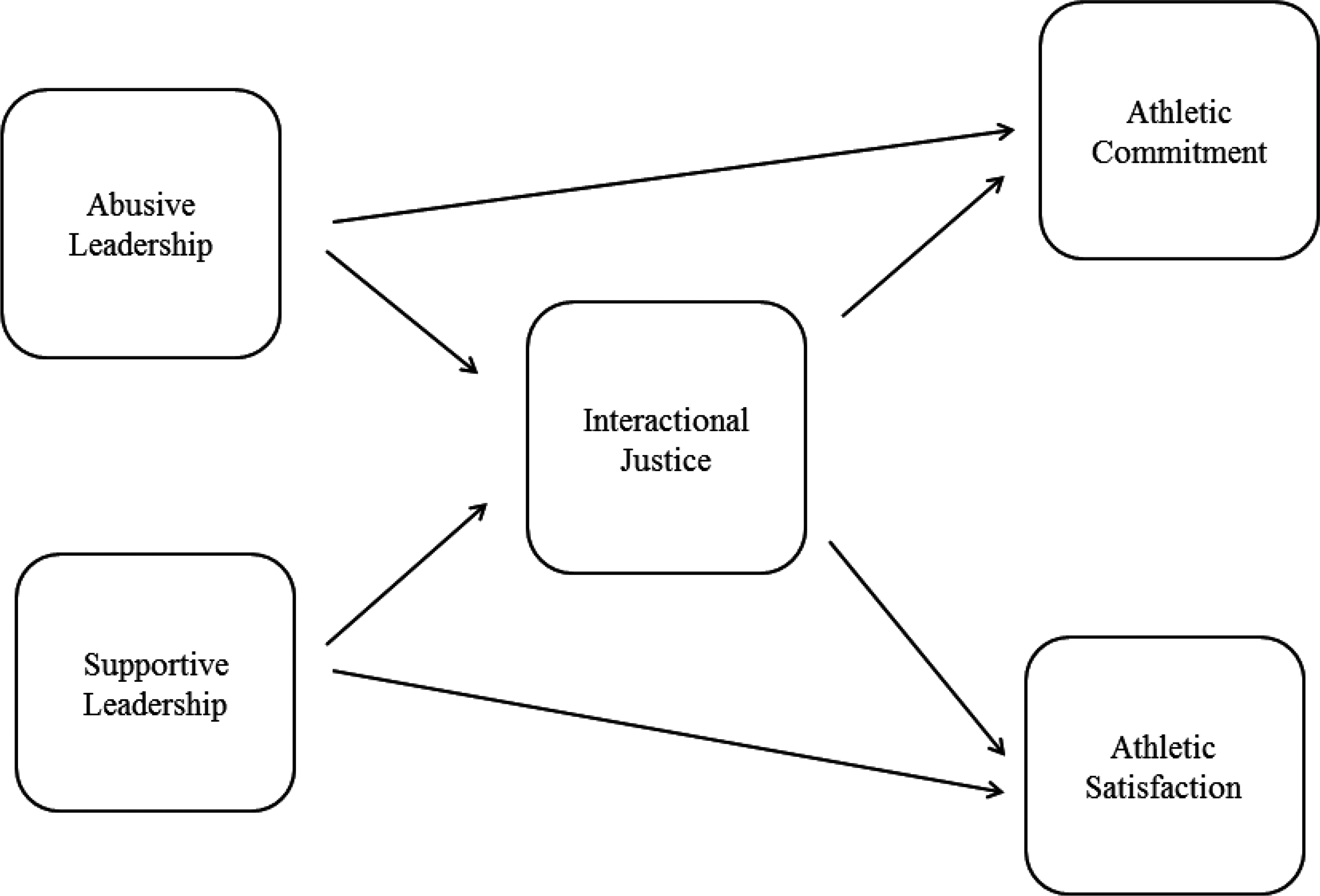
Proposed conceptual model of abusive and supportive leader behaviors influencing athlete satisfaction and commitment.
Transformational leadership, in the form of constructive and supportive leader behaviors, has strong associations with coaching effectiveness and follower satisfaction.25,26 Conversely, abusive leader behaviors are destructive and stressful for followers.27,28 Both styles of leadership are important to study and practice of coaching, 29 but existing sport research has not adequately examined these styles together and how they differentially impact athlete-focused outcomes. Accordingly, in this study, both supportive and abusive styles of leadership are explored.
Coaching style
In this study, two forms of leadership are proposed to connect to the outcomes of athletic satisfaction and commitment through the mediator of interactional justice perceptions. Abusive leader behaviors can refer to myriad types of behaviors, but herein are defined as followers’ perceptions of the extent to which leaders engage in sustained displays of hostile verbal and nonverbal behaviors, excluding physical violence. 13 Though there are four major recognized types of abusive behaviors in sport, including emotional abuse, physical abuse, sexual abuse, and neglect, 30 emotional abuse was chosen to represent abusive leadership in this study. Abuse other than emotional can happen from coaches, but emotional abuse between athletes and coaches has been noted to be (a) common practice in sport, 31 especially in an Asian context such as Korean, 17 and (b) often accepted as a method of athlete development despite the high potential for negative outcomes for athlete well-being. 31
In the coach-athlete relationship, Stirling and Kerr 6 deemed abusive leader behaviors as emotional abuse, i.e., “a pattern of deliberate non-contact behaviors within a critical relationship between an individual and caregiver that has the potential to be harmful” (p. 87). Athletes experiencing emotional abuse tend to show unhappiness, depression, eating disorders, and social withdrawal. 32 Gervis and Dunn 33 found that shouting, belittling, threatening, and humiliating elite child athletes are the most common forms of emotional abuse that elite athletes receive from their coaches. Stirling and Kerr 34 also categorized coaches’ detrimental behaviors into three types of emotional abuse: (a) physical behaviors (e.g., acts of aggression such as hitting, throwing objects and punching walls), (b) verbal behaviors (e.g., yelling and shouting at athletes, making belittling and degrading comments, and humiliating athletes), and (c) denial of attention and support (e.g., ignoring athletes and expelling and excluding them from practice).
In stark contrast to abusive behaviors, supportive leader behaviors refer to followers’ perceptions of the extent to which leaders engage in the provision of emotional, informational, instrumental, and appraisal support to their followers. 35 Supportive leaders are able to recognize their roles and responsibilities to assist their followers as well as have a keen interest in their followers’ needs, preferences, and levels of satisfaction with their work environments. 35 Leaders who are supportive should promote trust, respect, cooperation, and emotional support by building a constructive and empowering working environment. 36 Further, supportive leadership can be categorized into instrumental and emotional styles of supportive behaviors. 37 For example, though transformational leadership and servant leadership are both considered supportive coaching styles10,12 and share similar characteristics, 38 they are also different. Transformational leaders are supportive, but the focus of these types of leaders is on vision and motivating followers to accomplish the vision. In this sense, these types of leaders are more instrumental in focus. Comparatively, servant leaders are supportive and focused more on the emotional development and empowerment of their followers than organizational outcomes.12,39
Outcomes of leadership
Two attitudinal variables, job satisfaction and commitment, were included in the study to assess the effects of leader behaviors on important athlete psychological outcomes. Athletic satisfaction is defined as athletes’ global feelings about their athletic career, 40 and athletic affective commitment refers to the affective bonds athletes form with their teams. 41
Athletes who participate in high-level competitions often consider their athletic careers as part-time or full-time jobs, 42 which is why it is appropriate to apply terms and research from management and non-sport contexts to a sport context. Indeed, numerous studies1,43,44 in sport management have adapted various concepts from organizational behavior research and theory, and the findings of such scholarship have shown the relevance and importance of these concepts to sport settings.
In the organizational behavior literature, supportive leadership has been shown to have an impact on affective outcomes such as job satisfaction and affective commitment to the organization because this style of leadership may enhance followers’ positive affect and enjoyment in their workplaces.45–49 Research has also revealed that abusive supervision can have detrimental effects on an organization by decreasing members’ organizational commitment and job performance as well as by increasing psychological distress, depression, and turnover. 15 Additionally, individuals who are abused by their leaders (e.g., supervisors) tend to have high levels of dissatisfaction with their jobs and develop low levels of commitment to the organization.13,14 Further, in the context of sports, researchers have found that when athletes perceive higher levels of physical and verbal aggression from their coaches, they respond with higher levels of negative sport participation perceptions.50,51
Mediating effect of interactional justice
Organizational justice is defined as members’ perceived fairness within organizations. 52 Several different types of justice have been identified by researchers, including distributive, procedural, and interactional. Distributive justice is the perceived fairness of members regarding outcomes, such as pay and promotion in organizations. 53 Procedural justice is the perceived fairness of members regarding processes or procedures when management (leadership) makes an outcome decision. 53 Finally, interactional justice is the perceived fairness of the methods and the attitudes employed by management in delivering outcomes, including dignity or respect. 16
Organizational justice may play an important role in the relationship between coach behaviors and athlete outcomes. Indeed, in a study by Lee, Murrmann, Murrmann, and Kim, 54 organizational justice was found to mediate the relationship between leadership and subordinates’ attitudinal and behavioral outcomes. Herein, only interactional justice was incorporated into the research design because this study focused on the interpersonal relationships between coaches and athletes within teams rather than procedural or distributive justice elements. Thus, those two aspects of justice were not applicable to the current study.
Perceived injustice from abusive leader behaviors may lead to frustration among subordinates and translate into a decrease in job satisfaction and organizational commitment. 13 What is more, perceptions of justice may mediate the relationship between abusive leader behaviors and job satisfaction and affective organizational commitment. Indeed, though Tepper 13 did not explicitly discuss the differential effects of each dimension of organizational justice, interactional justice was shown to influence job satisfaction and affective organizational commitment. Further, in a study by Aryee et al., 14 interactional justice fully mediated the relationships between abusive leadership and affective organizational commitment.
The work of Aryee et al.
14
is complimented by several other studies,55–57 all of which have found a mediating effect of interactional justice on the relationship between supportive leadership (e.g., transformational leadership) and follower outcomes (e.g., trust, attitudes, and organizational citizenship behaviors). Such results also make theoretical sense. For example, the norm of reciprocity offers an explanation as to why the levels of fairness individuals perceive from leaders (individuals with positional authority) contribute to whether these individuals experience positive or negative consequences.
58
The norm of reciprocity focuses on repayment in that people will respond negatively to hostility and positively to fairness and kindness. Accordingly, individuals who perceive fair treatment by their leaders should be more likely reciprocate in positive ways, such as job satisfaction, commitment, and organizational citizenship behaviors.52,59 Therefore, based on both research and theoretical evidence about the relationship between leadership style and follower outcomes, several research hypotheses are proposed. Hypothesis 1a: Abusive leadership will have a significant relationship with athletic satisfaction through interactional justice. Hypothesis 1b: Supportive leadership will have a significant relationship with athletic satisfaction through interactional justice. Hypothesis 2a: Abusive leadership will have a significant relationship with athletic commitment through interactional justice. Hypothesis 2b: Supportive leadership will have a significant relationship with athletic commitment through interactional justice
Hong Kong and Korea: The basis for a cross-cultural comparison
This research examined the extent to which the behavior of college coaches influence athletes’ levels of satisfaction and commitment. The current study also compares student-athletes in Hong Kong and Korea. Additionally, given the variance in who student-athletes are organized and coached by in two different Asian sport cultures, the current study compared student-athletes in Hong Kong and Korea. The different athletic situations traditionally present in Hong Kong and Korea may alter the nature and outcomes of coach-athlete relationships because organizational goals, the norms of particular social settings, and the nature of groups are all situational characteristics that can influence leader behaviors.60,61 For instance, student-athletes in Korea may perceive higher levels of abusive coaching behaviors than student-athletes in Hong Kong given that previous studies31,62 have shown how athletes competing at elite levels are more likely to experience abusive coaching behaviors than athletes at lower levels of athletic competition. Thus, the distinctive sport cultures in Hong Kong and Korea provide an interesting cross-cultural opportunity to evaluate and compare the research model. With that in mind, several hypotheses are offered. Hypothesis 3: Student-athletes in Korea will report significantly higher levels of abusive leadership than will student-athletes in Hong Kong. Hypothesis 4: The mediated relationships between coaching leadership styles and athletic satisfaction and commitment via interactional justice will differ between the two countries.
Methodology
Participants
The current study consisted of student-athletes participating in intercollegiate athletics in Hong Kong and Korea. Data collection was completed via convenience sampling. The participants were asked to take approximately 10-15 minutes to complete questionnaires. Prior to the data collection, appropriate approval was obtained by the host university because this study involved human participants.
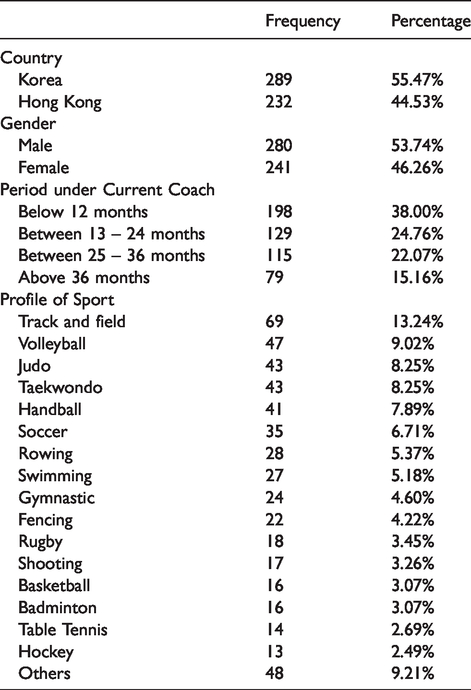
A total of 350 survey questionnaires were distributed to student-athletes in each country. A total of 554 questionnaires were returned (79.1% response), and 521 were usable. Of the respondents providing usable data, 232 were from Hong Kong (44.5%), and 289 were from Korea (55.5%). In addition, 280 male (53.7%) and 241 female (46.3%) student-athletes from 21 different sports, such as track and field (13.2%), volleyball (9.0%), taekwondo (8.3%), judo (8.3%), handball (7.9%), soccer (6.7%), rowing (5.4%), and swimming (5.2%), participated in the survey. More detailed participant information is provided in Table 1.
Frequency and percentage of participants.
Instrumentation
Demographic information (e.g., gender, type of sport, and period under the current coach) as well as 30 items from previously validated scales were adapted to measure the variables of abusive leader behaviors, supportive leader behaviors, interactional justice, athletic satisfaction, and athletic commitment. The student-athletes’ perceptions of abusive leader behaviors were measured with five items from a 15-item scale created by Tepper. 13 Ogunfowora 15 used the same shortened form of Tepper’s scale and reported a sufficient Cronbach’s alpha (α) = .86 for internal consistency reliability. Supportive leader behaviors were assessed with seven items from the Global Transformational Leadership (GTL) scale developed by Carless, Wearing, and Mann. 63 The internal reliability of the GTL scale was reported as (α) = .93.
Next, four items from the interpersonal justice scale developed by Colquitt 64 were used to assess student-athletes’ perceptions of the fairness, respect, dignity, and courtesy that they received from their coaches. In a sports context, Kerwin, Jordan, and Turner 65 used Colquitt’s scale. The internal reliability they reported for the scale was (α) = .92.
The satisfaction levels of student-athletes were assessed using a 5-item scale created by Judge, Locke, Durham, and Kluger. 66 The reported internal reliability (α) was .88. Athletic commitment was measured using 6 items from a scale created by Meyer, Allen, and Smith. 67 Previously, Andrew et al. 43 used the scale to measure student-athletes’ affective commitment; the internal reliability they reported was (α) = .97. All variables were measured using a 7-point Likert-type scale.
Additionally, considering the cross-cultural nature of the study, the process of back translation was employed. This process includes several steps. First, the survey questionnaire was produced in English because all scales were originally created in English. The English version was then translated into Korean and Cantonese, which are the native languages of the student-athletes in the two countries participating in this research. The Korean and Cantonese versions were produced using the same procedure. The Korean/Cantonese versions were prepared by two individuals with doctoral degrees in sport management who also possess a comprehensive understanding of the related literature (i.e., their areas of expertise align with the focus of the current study) and fluency in Korean/Cantonese and English. The Korean/Cantonese versions were then back-translated into English by two different individuals who possessed credentials similar to those of the individuals who produced the Korean/Cantonese versions. Finally, 20 student-athletes (10 from Korea and 10 from Hong Kong) were recruited to check the questionnaire’s ease of use and clarity. No concerns or issues were raised by the 20 student-athletes.
Data analyses
A confirmatory factor analysis (CFA) was conducted to assess the measurement model. Maximum likelihood estimation with robust standard errors (MLR) was employed to address the potential violation of multivariate normality frequently identified in the use of Likert scale items. To evaluate the overall fit of the measurement model, the chi-square to degree of freedom ratio (χ2/df), comparative fit index (CFI), Tucker-Lewis index (TLI), root mean square error of approximation (RMSEA), and standardized root mean square residual (SRMR) were used.
Next, structural equation modeling (SEM) was used to test the proposed structural model, focusing on the mediating role of interactional justice in the relationship between negative and positive leadership styles and both athletic commitment and satisfaction. For mediation analysis via SEM, the current study adopted the procedure recommended by Iacobucci, Saldanha, and Deng. 68 First, the proposed structural model was tested, including both a direct path between the independent variable and dependent variable and an indirect path through a proposed mediator. Second, a Sobel z-test was conducted to determine the relative size of the indirect (mediated) versus direct paths. Based on the z-test results, complete mediation is confirmed if the z value is significant and the direct path is not. Meanwhile, if both the z and the direct path are significant, the mediation is partial. Third, an independent-samples t-test was employed to compare abusive leadership, supportive leadership, athletic satisfaction, and athletic commitment between the two countries (Hong Kong and Korea). Finally, multigroup path analysis was performed to compare each group’s structural model.
Results
Test of the measurement and hypothesized structural models
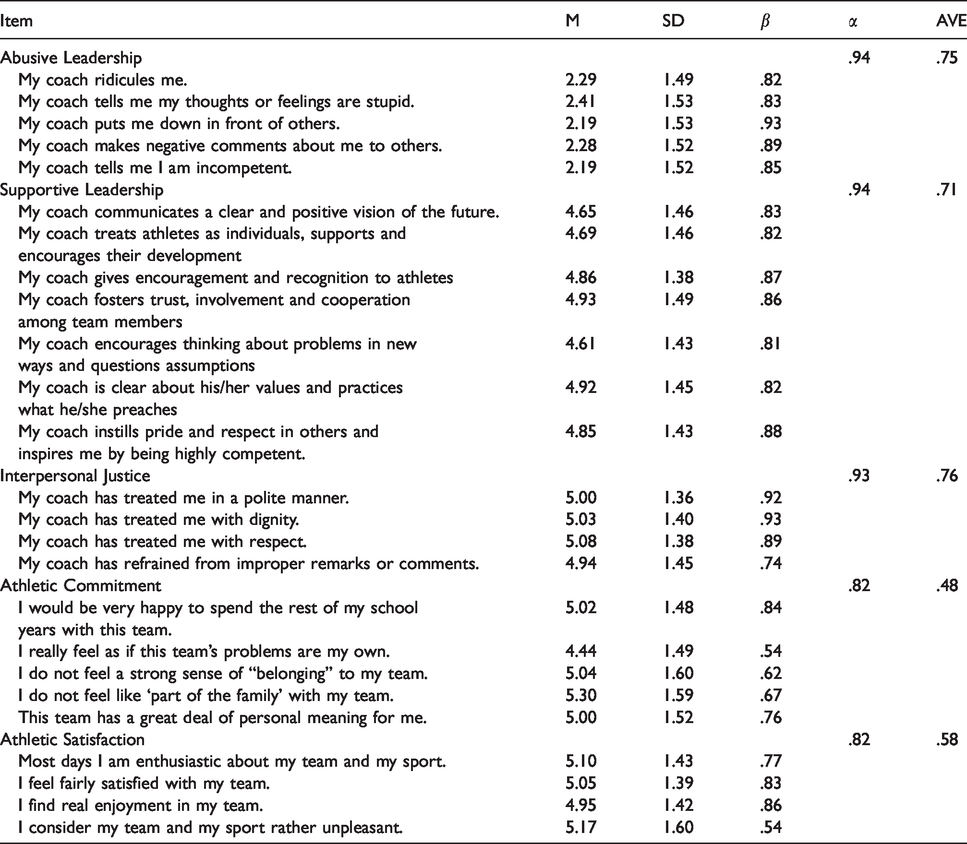
The CFA revealed the overall fit of the measurement model to be adequate (S-B χ2/df= 898.27/265 = 3.46; CFI = .94; TLI = .93; RMSEA = .07; SRMR = .05). Table 2 shows the means, standard deviations, standardized factor loadings, Cronbach’s alpha (a), and average variance extracted (AVE). The estimated values of Cronbach’s alpha, ranging from .82 to .94, support internal consistency by exceeding the recommended benchmark of .70. 69 The AVE values were greater than the squared correlation between the constructs, demonstrating acceptable discriminant validity. 70 All standardized factor loadings ranged from .54 to .93 and were positively significant, indicating that the measures possessed acceptable psychometric properties. For multivariate normality, Mardia’s coefficient for kurtosis was used to examine multivariate normality. The estimate for multivariate normality (Mardia’s coefficient = 188.18, CR = 58.45) indicated the data were multivariate normal because the value exceeded a cutoff of 3.0. 71 Therefore, in the subsequent data analysis, a modified maximum likelihood estimation was performed to account for this result. 72
Mean (M), standard deviations (SD), standardized factor loadings (β), Cronbach’s alpha (α), and average variance extracted (AVE).
The overall fit of the hypothesized structural model indicated that the structural model provided acceptable values for all indices (Satorra-Bentler (S-B) χ2/df= 941.30/267 = 3.53; CFI = .94; TLI = .93; RMSEA = .07; SRMR = .05). The direct paths from abusive leadership to commitment (β = −.22, p < .01) and from abusive leadership to satisfaction (β = −.15, p < .01) were significant and negative. These results were as expected. The direct paths from supportive leadership to commitment (β = .43, p < .01) and from supportive leadership to satisfaction (β = .58, p < .01) were significant and positive. Further, abusive leadership and supportive leadership explained 43.1% of the variance in athlete satisfaction whereas abusive leadership and supportive leadership explained 31% of the variance in athlete commitment.
The results from the Sobel z-test (used for examining the effect of interactional justice as a mediator) indicated that interactional justice partially mediated the relationships between abusive leadership and commitment, between abusive leadership and satisfaction, between supportive leadership and commitment, and between supportive leadership and satisfaction. These results were taken from the significant direct paths (abusive leadership → interactional justice → commitment: z = -4.73, p < .001; abusive leadership → interactional justice → satisfaction: z = -5.21, p < .01; supportive leadership → interactional justice → commitment: z = 4.85, p < .001; supportive leadership → interactional justice → satisfaction: z = 5.90, p < .01), thus supporting Hypotheses 1a, 1 b, 2a, and 2 b.
Test of multigroup differences
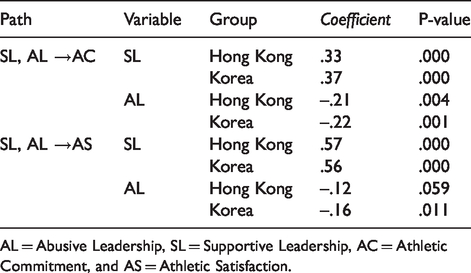
Hypothesis 3 was supported. The results of the t-tests yielded significant differences in all of the variables, with the exception of supportive leadership, for student-athletes in Hong Kong and Korea (abusive leadership: t(519) = -2.99, p<.001; supportive leadership: t(519)= .612, p = .738; athletic commitment: t(519) = 6.44, p<.001; athletic satisfaction: t(519)=8.41, p<.001). However, the results of the structural model for each group showed no differences in terms of the directions and levels of significance of the relationships (abusive leadership→ commitment: Korea: β = −.24, p < .001; Hong Kong: β = −.19, p < .01; abusive leadership→ satisfaction: Korea: β = −.15, p < .05; Hong Kong: β = −.13, p < .05; supportive leadership→ satisfaction: Korea: β = .55, p < .001; Hong Kong: β = .58, p < .001; supportive leadership→ commitment: Korea: β = .37, p < .001; Hong Kong: β = 46, p < .001).
A separate test of the invariance of the structural paths was performed to test the differences in the path coefficients for Hong Kong and Korea. Despite an absence of differences in terms of the directions and levels of significance of the relationships, as displayed in Table 3, the results from the two separate chi-square difference tests indicated a significant difference in the effects of both leadership styles on commitment and satisfaction between student-athletes in Hong Kong and Korea in Table 4. Such results support Hypothesis 4.
Invariance tests of structural model for multiple group difference.

AL = Abusive Leadership, SL = Supportive Leadership, AC = Athletic Commitment, and AS = Athletic Satisfaction.
Comparisons of coefficients between Hong Kong and Korea student-athletes.
AL = Abusive Leadership, SL = Supportive Leadership, AC = Athletic Commitment, and AS = Athletic Satisfaction.
Discussion
The findings of this study yield insights into the sources of athletes’ emotions based on their athletic experiences, which then offer several important implications for sport administrators and coaches seeking to enhance the sport conditions and athletic experiences of student-athletes. First, the descriptive statistics show that student-athletes reported average scores of 2.27 for abusive leadership, 4.41 for supportive leadership, 5.01 for interactional justice, 5.07 for athletic satisfaction, and 4.96 for athletic commitment. What these results show are that student-athletes generally perceived high levels of athletic satisfaction and commitment, with the midpoint reported for the scales being 4.00. These findings, which are positive, also makes sense considering the difference in average scores between abusive and supportive leadership behaviors. Still, though positive, there is still room for improvement with respect to the average score for abusive leadership, especially considering the noticeable impact that coaches will have on the student-athletes they coach and mentor. 5
Change within athletic department cannot happen without coaches and administrators first realizing that change is truly needed. The short- and long-term consequences of abusive and supportive leadership styles need to be made known to coaches and sport administrators via informal and formal interventions. Formal approaches might include new rules, evaluation metrics, and reward systems. For instance, coaching success could be evaluated on more than just win/loss record. Informal approaches are interactions, such as causal meetings between sport organizational personnel that allow for constructive and open dialogues to take place without fear of judgment and repercussions. Interventions such as these, so long as they connect to coaches and administrators, emotional interests (e.g., pride) and self-interests (e.g., gaining a promotion, increased financial rewards) should help athletic departments shift from unhealthy to healthy sport cultures. 73
Second, general support was found for the effects of abusive and supportive coaching behaviors on athletes’ levels of satisfaction and affective commitment. These effects were also consistent with previous studies.14,15,45–47 In addition, the results supported the mediating role of interactional justice between leadership style and attitudinal outcomes. Specifically, the SEM analysis results indicated that abusive and supportive coaching behaviors had both direct and indirect effects on athletic satisfaction and commitment via interactional justice. Consider how student-athletes’ satisfaction with their athletic experience and affective commitment to their university teams were directly influenced by both perceived abusive and supportive coaching behaviors and indirectly impacted through their perceived fairness of the means and attitudes employed by their coaches. The mediation results showcase the important role of interactional justice in the relationship between leadership and athletes’ attitudes.
Interactional justice is about how individuals in work situations connect with and treat each other. It is the extent to which subordinates perceive fairness coming from their team or organizational leaders. 16 Interactional justice can enhance individual and team trust, commitment, and satisfaction. A simple way it can be improved is through more effective communication methods, such as open, clear communication and detailed explanations as to why decisions about playing time or improving sport-specific skills are being made. Another way it can be improved is through increased subordinate participation in decision-making processes. 74 Thus, it is important for coaches to not only understand the salience of interactional justice, but realize how they can better incorporate in into their coaching routines so as to enhance their leadership style. High quality, frequent communication between coaches and athletes as well as giving athletes a voice in their training are simple ways coaches can enhance athlete perceptions of interactional justice.
Finally, several interesting results were found when comparing the data for Korea and Hong Kong. The results of the t-test identified differences with four variables, except supportive leadership, between the two countries. Student-athletes in Hong Kong reported higher levels of interactional justice, athletic satisfaction, and commitment and lower levels of abusive leadership. However, the multigroup path analysis results revealed that the effects of supportive leadership and abusive leadership on the commitment and satisfaction of Korean student-athletes were larger than the effects on the commitment and satisfaction of student-athletes from Hong Kong. Notably, the greatest difference was in the effect of abusive leadership on satisfaction between student-athletes from Korea and Hong Kong, which indicated that athletes’ unpleasant experiences with their abusive coaches could have greater impact on satisfaction in Korea. This finding is very important because the consequences of abusive coaching behaviors on satisfaction may negatively impact performance 40 and diminish athletes’ desires to continue participating in sport. 75
Overall, the results of the cross-cultural comparison were as expected. The cultural expectations and structuring of sports in Korea and Hong Kong are very different. Whereas the former is focused on elite-sport preparation and competition, the latter is focused on general sport participation and wellbeing through athletics. The highly demanding and intense collegiate sport environment in Korea encourages, if not demands, coaches focus solely on winning. This has in part contributed to coaches engaging in rigorous training methods that may include abusive leadership behaviors. Unfortunately, in such circumstances, abused athletes are unlikely to raise concerns for fear of having their athletic careers derailed by their coaches. 17 Consider the case of Shim Suk-hee, one of the biggest short track speed skating stars in the world having won two gold, one silver, and one bronze Olympic medals.
Shim Suk-hee made accusations that her coach, starting in 2014 (when she was only 17 years old), had physically and verbally abused her. Even so, she was afraid to speak about the abuse. According to her lawyer, “Shim had been hesitant to speak up over the past four years since she was afraid the incident would affect her career. Cho is accused of using his authority as a coach to threaten Shim and ensure her silence”. 76 Three other elite athletes also accused the coach of abusing them. Given the findings of the current study, Shim’s story of abuse, and many other similar stories, there is a critical and urgent need for Korea’s Ministry of Culture, Sports, and Tourism to review existing policies and measures related to abuse in sports to examine their actual effectiveness. Changes may be difficult to achieve because of Korea’s sport culture where it is natural for young players to obey their coaches in order to make their careers successful.17,20 Even so, an effort needs to be made at the grassroots level – inclusive of concerned athletes, administrators, coaches, and parents – to open a dialogue with the ministry and petition them to revise existing policies or create a new policy to prevent further coaching abuses and protect student-athletes.
Limitations and future study
The present study expanded the existing coaching leadership literature by exploring the impact of abusive leadership in conjunction with supportive leadership and interactional justice on student-athletes’ satisfaction and commitment. Even so, further research about leadership behaviors and interactional justice in sport is needed. This line of scholarship can be improved in several different ways. First, recent studies on abusive leader behaviors revealed that leaders tend to be selective among subordinates when they choose their targets of abuse.77,78 In other words, an abusive coach may not be abusive with all their athletes, but with only a select few of them. Thus, future studies on abusive leader behaviors should examine the moderating effects of variables (e.g., age, gender, and leader-member exchange) on coach-athlete relationships in sports. Gender, for example, might be a particularly interesting area to examine in a Korean sport context because Korean sport culture is male dominated.Second, this study examined the mediating effect of interactional justice on the relationship between leadership style and athlete outcomes. Previous research13,14 on abusive leader behaviors has examined the mediating effects of different types of organizational justice other than interactional justice. Accordingly, though this study had a logical reason for only including interactional justice, future studies might consider how other forms of organizational justice impact the coach-athlete dyad.
Third, the current study was conducted in the context of intercollegiate athletics. This was the case for both the Korean and Hong Kong samples. In the future, researchers should examine the proposed relationships in different contexts such as youth, recreational, and professional sports since competition levels could affect athletes’ perceptions of emotional abuse.33,62 Lastly, future studies should attempt to identify other important outcomes of leadership styles, such as parental perception, expectation, and satisfaction with coach behaviors. Indeed, though not often examined, it is important to explore the triad relationship that exists between coaches, athletes, and athletes’ parents. Coaches as well as parents can have a tremendous influence on athlete attitudes and behaviors, such as participating in sport or withdrawing. 79 Thus, a worthwhile study moving forward would be to investigate mediating effects of parental expectation and satisfaction with coaching style on athletes’ attitudes and behaviors.
In closing, this study sought to better understand the relationship between abusive and supportive coaching behaviors and athletes’ attitudes in intercollegiate athletics in a cross-cultural context. Along with exploring coaching behaviors, interactional justice was considered as a likely mediating variable in the relationship between coaches’ behaviors and athletes’ responses. Four research hypotheses were formulated. To recap, Hypotheses 1a and 1 b stated abusive and supportive leadership will have a significant relationship with athletic satisfaction through interactional justice. Hypotheses 2a and 2 b posited that abusive and supportive leadership will have a significant relationship with athletic commitment through interactional justice. Hypothesis 3 stated student-athletes in Korea will report significantly higher levels of abusive leadership than will student-athletes in Hong Kong. Lastly, Hypothesis 4 stated the mediated relationships between coaching leadership styles and athletic satisfaction and commitment via interactional justice will differ between Hong Kong and Korea. All research hypotheses were supported.
Footnotes
Declaration of conflicting interests
The author(s) declared no potential conflicts of interest with respect to the research, authorship, and/or publication of this article.
Funding
The author(s) received no financial support for the research, authorship, and/or publication of this article.
