



Abstract
Objective
To analyze intensity levels, modalities, types of physical activities, ambient temperature, and hydration levels during stimuli performed in training and competitionof studies that reported episodes of rhabdomyolysis in athletes.
Method
We conducted a systematic review following the PRISMA guidelines and registered on PROSPERO, as number CRD42020126107. MedLine (via PubMed), Cochrane, LILACS, SciELO, Web of Science, Scopus, CINAHL, SPORTDiscus, ScienceDirect, and PEDro databases were searched for case reports in which professional athletes, who had a technical team as support, were affected by rhabdomyolysis induced by the practice of physical activity. The descriptors and their synonyms “rhabdomyolysis”, “exercise”, and “athletes”, available in the Health Sciences Descriptors (DeCS) and Medical Subject Headings (MeSH), were used.
Results
After the screening process, 10 studies were includedand analyzed according to the CAse REport (CARE) guidelines.The sports of the case reports were soccer, football, swimming, wrestling, 24-hour cross-country skiing, and mixed martial arts (MMA).The age range of the athletes varied between 16 to 41 years old. The case reports described a total of 17 athletes (14 male and three female).The main aspects related to the diagnosis of rhabdomyolysis were ambient temperature, creatine kinase (CK) levels, the occurrence of renal impairment, and one or more signs of the classical triad (myalgia, dark urine, and muscle weakness).
Conclusion
It was observed difficulty in identifying concrete parameters to prevent and diagnose the rhabdomyolysis of premature form, however, controlling these variables may increase the chances of treatment success and decrease the risk of sequels.
Keywords
Introduction
Rhabdomyolysis is increasingly recognized by its causes and clinical conditions that may predispose to muscle necrosis. 1 This syndrome is defined as the set of clinical symptoms and laboratory findings resulting from the extravasation of myocytes intracellular contents into the bloodstream, especially electrolytes, myoglobin, and sarcoplasmic proteins. 2 This is due to physical exertion, caused by the injury of skeletal muscle cells, followed by the release of their intracellular contents, toxins produced by myocytes, such as myoglobin, into the circulatory system. 3 The occurrence of acute renal failure (ARF) indicates a worse prognosis. The mechanisms involved in the pathogenesis are mainly direct aggression to muscle fibers (e.g. trauma and intoxication) and depletion of adenosine triphosphate – which leads to intracellular ionic imbalance and consequent cytotoxic mechanisms.4,5
In the USA, approximately 26,000 cases of rhabdomyolysis are reported annually. 6 Approximately 85% of patients with traumatic lesions will develop a clinical picture of rhabdomyolysis. Of these cases, 10 to 50% end up developing ARF. 7 Although there is a significant deficit in epidemiological surveys of the syndrome, its overall prevalence appears to be underestimated. Rhabdomyolysis is estimated to account for 7 to 10% of ARF cases in the United States. Mortality due to rhabdomyolysis is dependent on the cause, previous state of health, and access to treatment, justifying its wide oscillation between 2 to 46%. Most patients recover renal function within a few months, even though alterations may remain, increasing the subsequent risk of nephropathies. 3
Although the basic mechanism of ARF under conditions of rhabdomyolysis has not yet been fully elucidated, one proposal is that the myoglobin released by the destroyed muscle is responsible for renal damage. Constriction and renal ischemia, the formation of myoglobin cylinders in the distal tubules, and direct cytotoxic action of myoglobin in proximal tubule epithelial cells are probably the main mechanisms for ARF. 8 In patients with rhabdomyolysis, the ARF induced by myoglobin deposits in the renal tubules represents by 10% of all cases.This type of renal dysfunction associated with concomitant pathologies leads to mortality in 20% of these patients. 9
Physical exercise is often considered beneficial. However, it can lead to harmful consequences, ranging from simple plantar fasciitis to severe cases of ischemic colitis or even sudden death. 10 Unplanned and excessive physical activity is already among one of the most common causes of rhabdomyolysis. Hence, precise and prudent prescription is also the most efficient form of prevention. The clinical presentation of rhabdomyolysis is variable.In conscious patients, the main complaint may be muscle tenderness, pain, stiffness, and cramps accompanied by weakness. However, myalgia may be absent or mild. The physical examination can reveal muscle edema that may be reduced after parenteral rehydration. 11
Rhabdomyolysis can be induced by prolonged and high-intensity exercises or by sudden and excessive contractions of the skeletal muscles, with a typical appearance of prominent clinical manifestations between 24 and 48 hours after physical activity. 12 Delay of more than six hours in the diagnosis can cause irreversible muscle damage or death. 13 Among the main causes are high and low-intensity resistance training, endurance, military training, high-intensity multidisciplinary activities, indoor cycling, and training with vascular occlusion. 14
Therefore, knowing the state of the art related to studies that report cases of athletes who were affected by rhabdomyolysis, as well as the degree of involvement and how it occurred, becomes important to understand the disease process and to propose alternatives of prevention. Thus, the present systematic review aimedto analyze intensity levels, modalities, types of physical activities, ambient temperature, and hydration levels during all stimuli performed in training and competition studies that reported episodes of rhabdomyolysis in athletes.
Methods
This study is a systematic review conducted in accordance with the methodology and recommendations of the Preferred Reporting Items for Systematic Reviews and Meta-Analyses (PRISMA). 15 The research protocol was previously registered on the International Prospective Register of Systematic Reviews (PROSPERO), 16 as number CRD42020126107.
Inclusion criteria
The present systematic review included case reports in which professional athletes, who had a technical team as support, were affected by rhabdomyolysis induced by the practice of physical activity, regardless of nationality, ethnicity, age, and sex. We excluded studies that brought associated diseases and/or genetic alterations for the cause of rhabdomyolysis, with non-specific diagnosis of rhabdomyolysis, and studies with individuals that were not athletes indeed.
Search strategy
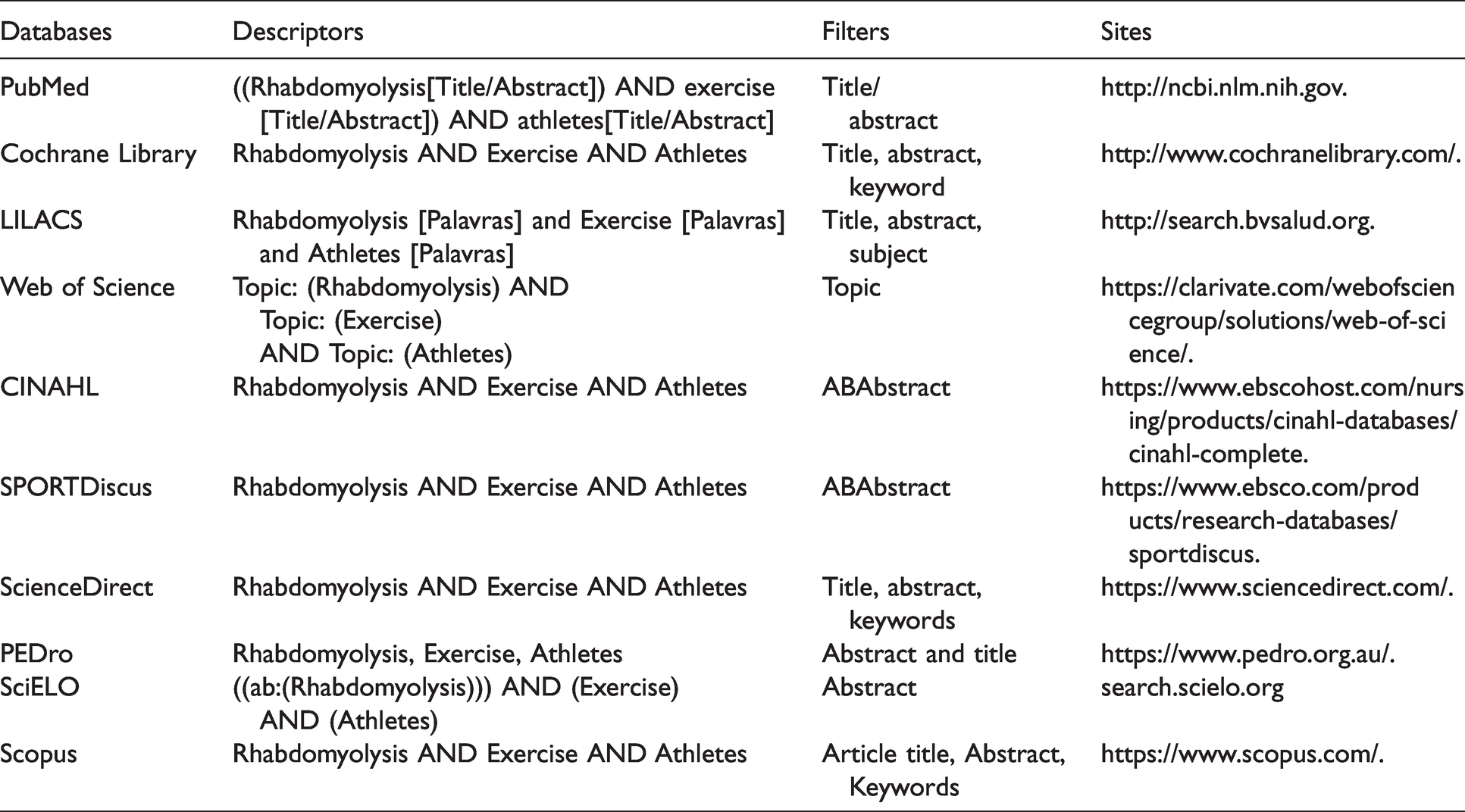
The descriptors and their synonyms “rhabdomyolysis”, “exercise”, and “athletes”, available in the Health Sciences Descriptors (DeCS) and the Medical Subject Headings (MeSH) were established. The Boolean operators [OR] between the synonyms and [AND] between the descriptors were used. The searches were carried out in the electronic databases MedLine (via PubMed), Cochrane, LILACS, SciELO, Web of Science, Scopus, CINAHL, SPORTDiscus, ScienceDirect, PEDro,from inception until November01, 2020, with no language filter.The references of the included studies and other sources were screenedto maximize the search.
The studies that met the inclusion criteria previously defined were further analyzed and separated for a full reading. The synthesis of the studies’ searching process is presented in Table 1.
Stages of the search strategy.
Selection criteria
Aiming for a more rigorous, standardized, and qualified selection, the recommendations of the Enhancing the QUAlity and Transparency Of health Research (EQUATOR), available at <http://www.equator-network.org/>, were adopted. These procedures aim at the reliability and value of published research literature in health, through the standardization of guidelines, methodological tools, and writing recommendations.
In the absence of a methodological evaluation scale for case reports, the information recommendations to be considered during the writing of a case report from The CAse REport (CARE) Guidelines: Consensus-based Clinical Case Reporting Guideline Development, available at <https://www.care-statement.org/>, were followed. The studies were analyzed through a checklist by two independent evaluators. In case of disagreement between the evaluators, a third evaluator was consulted.
Assessment of CARE recommendations
The items 8c, 8d, and the items in the topics “Therapeutic Intervention” and “Follow-up and Outcomes” were removed from the analysis list of the selected studies, since they deal with information strictly related to medical staff and the medical field. Additionally, these items were not described in the studies and were not relevant to the purpose of this systematic review. The analysis of each topic of all studies is presented in Table 2.
CARE analysis.
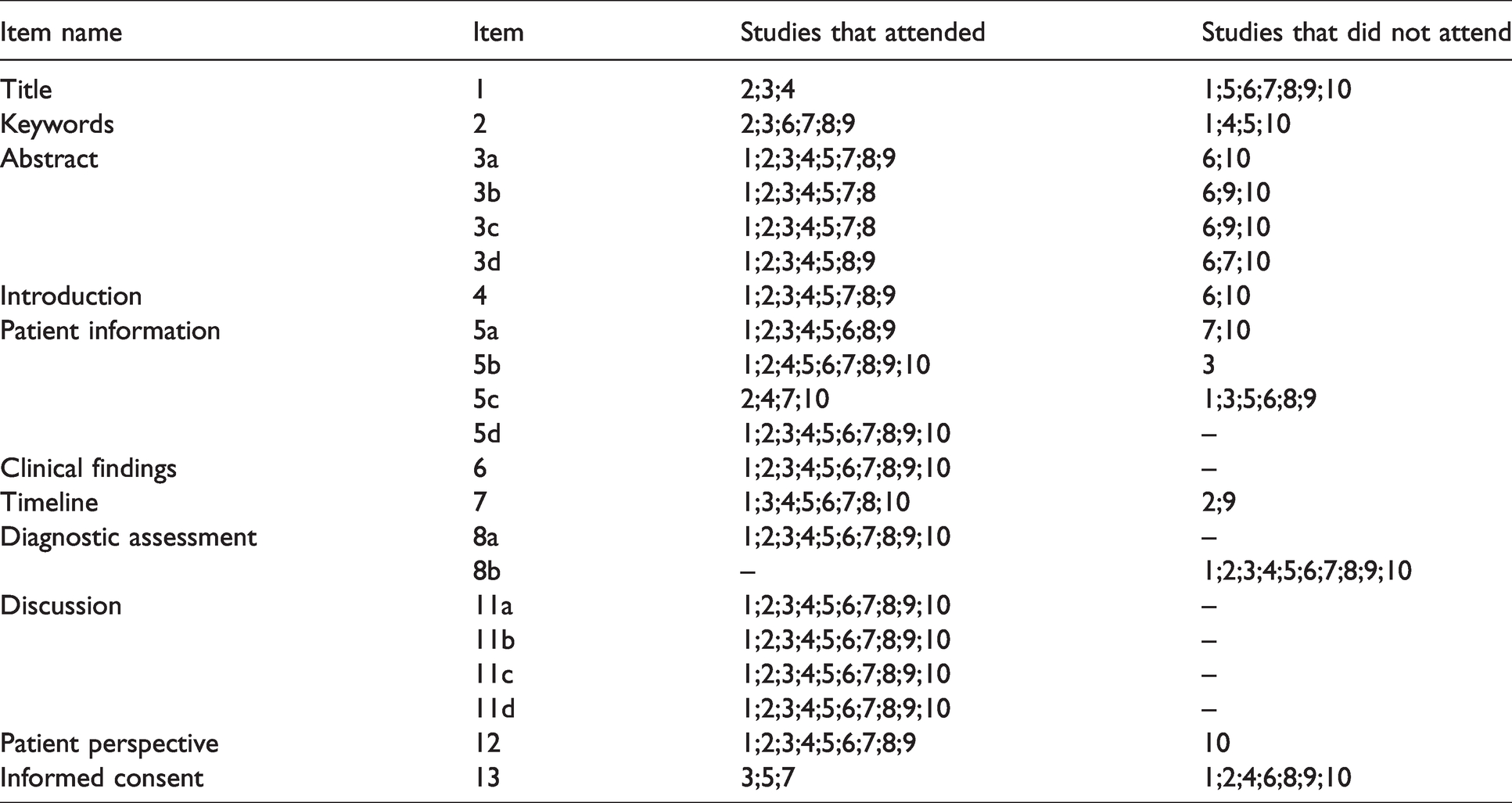
According to the CARE drafting recommendations, the studies were read and classified into three categories, as follows.
▪ Category A - Studies that met ≥80% of CARE criteria:
▪ Category B - Studies that met 50 to 80% of the CARE criteria:
▪ Category C - Studies that met less than 50% of the CARE criteria:
Results
We found 122 studies following the proposed search methodology (CINAHL = 14; Cochrane = 0;LILACS = 0; PEDro = 0; MedLine/PubMed = 22; SciELO = 0; ScienceDirect = 4; Scopus = 46;SPORTDiscus = 1; Web of Science = 35) and four articles were manually included. After using the selection criteria, 10 studies were included in this review and were evaluated according to the recommendations proposed by the CARE guidelines. Figure 1 presents the selection process of the studies.

Flow chart of the selected studies.
Of the 126 studies found through the search strategy, 10 met the proposed inclusion criteria and were in compliance with the CARE recommendations.Of the 10 articles selected to compose the present review, two reported cases of soccer athletes,23,25 three of football,17,19,21 two of swimming,22,24 one of wrestling, 20 one of 24-hour cross-country skiing, 18 and one of mixed martial arts (MMA). 26 Of the six modalities described in the studies, four presented characteristics of physical contact sports (soccer, football, wrestling, and MMA) and two were related to individuals sports (skiing and swimming).The age range of the athletes varied between 16 to 41 years old. The case reports described a total of 17 athletes of whom 14 were male, and three were female.The characteristics of participants included in the case reports are summarized in Table 3.
Characteristics of participants included in the case reports.
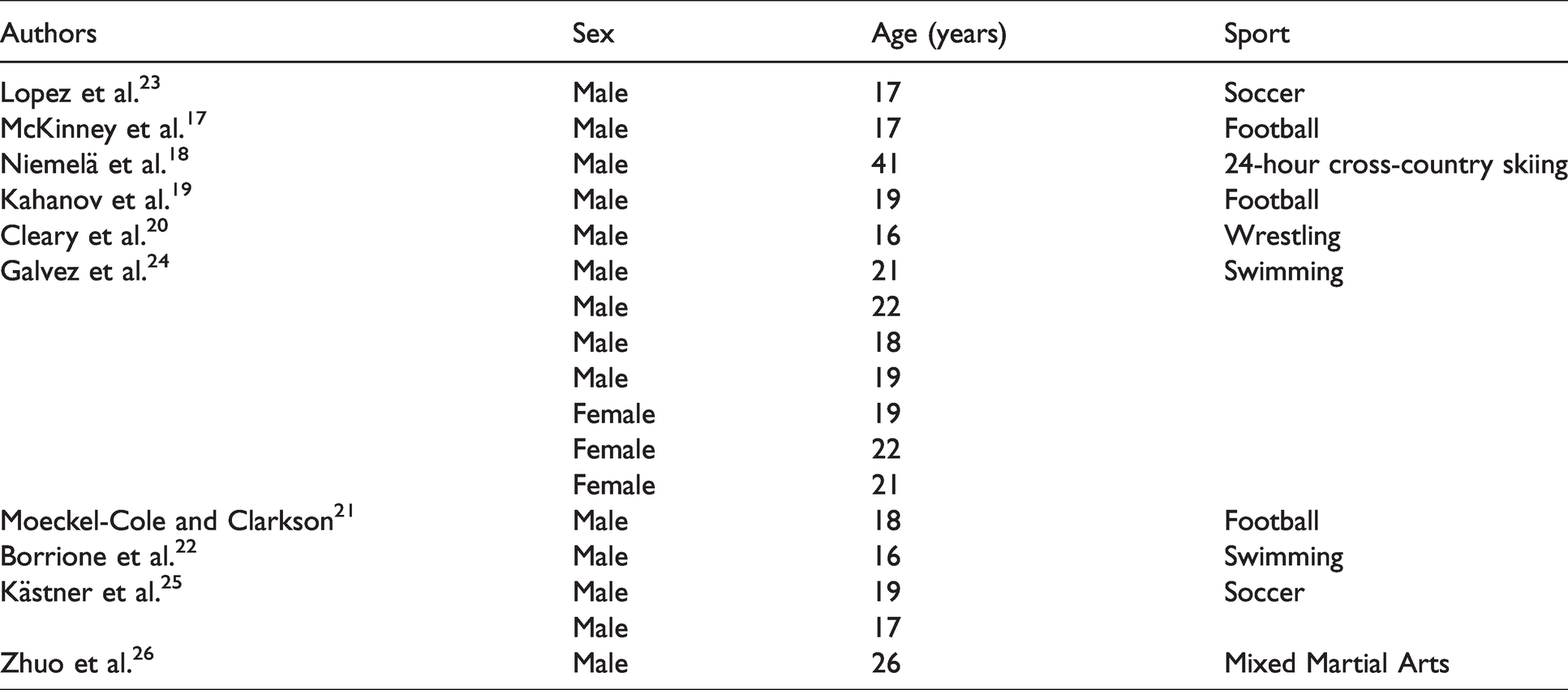
Table 4 presents the main aspects related to the diagnosis of rhabdomyolysis as ambient temperature, creatine kinase (CK) levels, the occurrence of renal impairment, and the presence of the classical triad. In this table, only the study by Niemelä et al. 18 presented extreme conditions for temperature, specifically for cold. CK levels showed great variation. Only thestudies by Lopez et al. 23 and Zhuo et al. 26 reported renal impairment. No studies have reported the simultaneous presence of muscle pain (myalgia), dark urine, and muscle weakness.
Results of the main aspects related to the diagnosis of rhabdomyolysis.
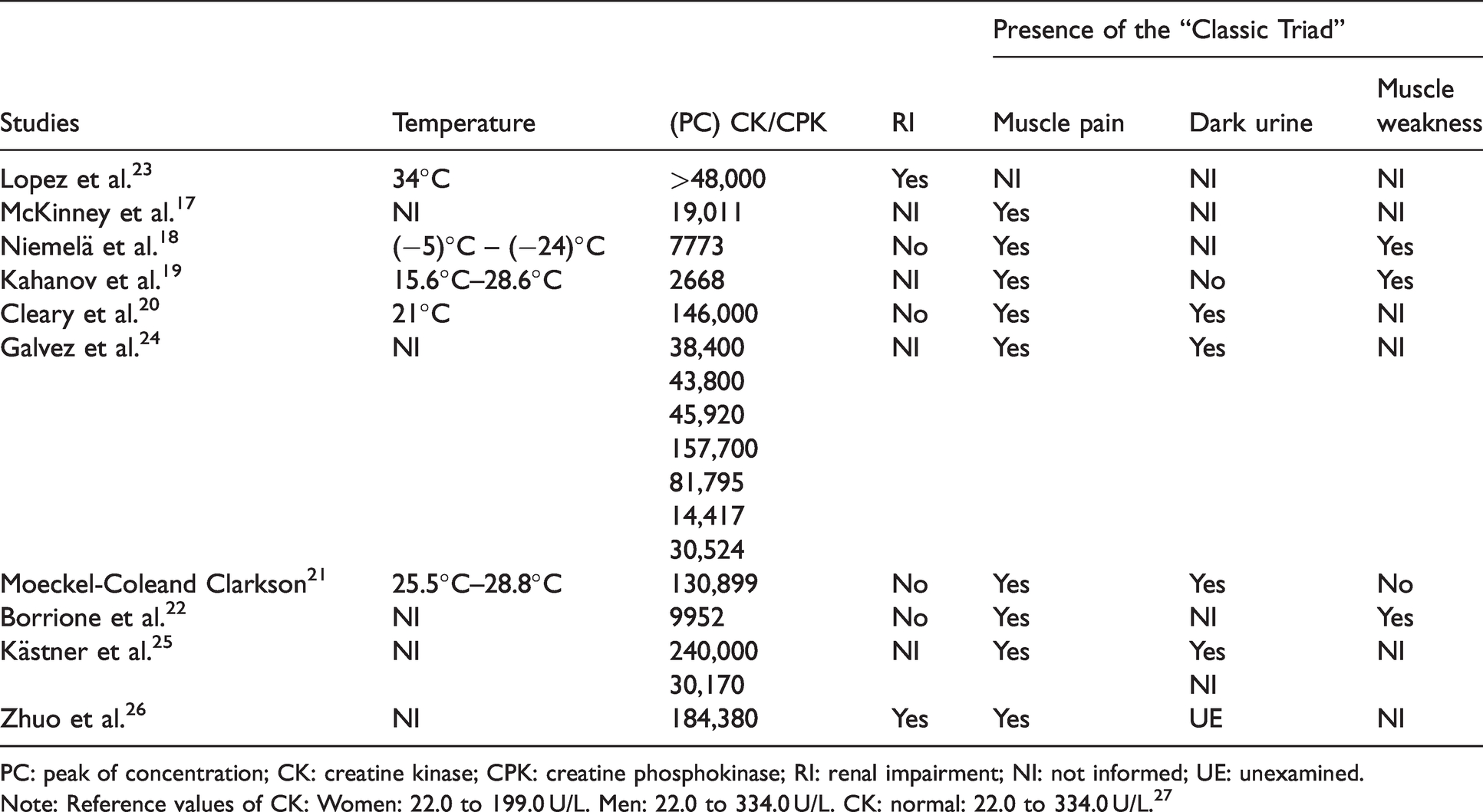
PC: peak of concentration; CK: creatine kinase; CPK: creatine phosphokinase; RI: renal impairment; NI: not informed; UE: unexamined.
Note: Reference values of CK: Women: 22.0 to 199.0 U/L. Men: 22.0 to 334.0 U/L. CK: normal: 22.0 to 334.0 U/L. 27
Discussion
The present systematic review analyzed episodes of rhabdomyolysisin athletes submitted to physical exercise stimuli during training and competition. Different factors related to rhabdomyolysis events were analyzed in the present study. High ambient temperature has been listed as one of the main factors for the development of rhabdomyolysis. However, of the 17 cases reported in this review, only five studies reported individual cases with the description of temperature at the time of the activity. Only in the case report described by Lopez et al., 23 the temperature of 34 °C was considered as very hot, although the relative humidity of the air was normal at 53%. In the study by Cleary et al., 20 the temperature was mild. In the study by Kahanov et al., 19 the temperature ranged from mild to hot (15.6 °C – 28.6 °C),and Moeckel-Cole and Clarkson 21 reported the temperature as hot (25.5 °C –28.8 °C). On the other hand, low temperatures can also stimulate the mechanisms that trigger rhabdomyolysis. Niemelä et al. 18 described the ambient temperatures as very cold, with negative values during the case report (−5°C to −24°C).
Another important factor for the detection and severity of the development of rhabdomyolysis is the CK level. Analysis of CK levels in plasma may guide or justify certain behaviors, developments, and involutions of the organism’s functioning. 27 However, the values presented in the included studies showed a wide variation in CK levels. Thus, the analysis of this marker should be done with caution to observe the functioning of the nephrological system. The highest CK reference values are 340.0 U/L and 199.4 U/L for men and women, respectively. 27 In the reported cases of the 10 selected studies, only one presented a CK peak of fewer than 10 times this reference value. This occurred in the study by Kahanov et al., 19 in which the CK value was 2.668 U/L, approximately 7,9 times higher than the upper threshold of the normality reference. The other studies described values greater than 10 times the reference value. Of these, the lowest value among all studies was described by Niemelä et al. 18 that corresponds to 23,2 times higher than the reference limit and the highest value was found by Kästner et al. 25 that corresponds to 718,5 times higher than the reference limit.
Torres et al. 28 point out that CK serum levels greater than 5.000 U/L can be associated with the development of acute renal failure. Huerta-Alardín et al. 29 has indicated that levels above 5.000 U/L are associated with a 50% risk of evolution to the same condition. One of the studies 19 selected for the present systematic review presented cases with CK levels lower than or equal to 5.000 U/L.Nonetheless, two other studies reported the occurrence of impaired renal functions.23,26 The first one 23 was not clear about the impairment and whether renal failure actually occurred, while the second one 26 classified as “acute kidney injury”.
Other signs and symptoms such a muscle pain, dark-colored urine, and muscle weakness characterize the classic triad. These occurrences may favor the identification and signal for the evolution of rhabdomyolysis. Most athletes affected in the present review showed at least one of the components of the classical triad.However,the study by Lopez et al. 23 did not report any of the symptoms of the triad. It is common in case reports, the association between the involvement of rhabdomyolysis and the use of substances that aim at the improvement in sports performance. Yet, no study included in the review reported the use of any substance by the athletes. The study by Borrione et al. 22 was the only one who analyzed the athlete’s dietary history, revealing an adequate diet in carbs, but deficient in proteins related to the age of 14 years. Protein sources were 100 ml milk in the morning and soy derivatives one or twice a week. Thus, it is possible to suggest that the unbalanced intake of these macronutrients associated with the physical training routine could have been a triggering factor for rhabdomyolysis since protein supplementation or protein combined with carbs is effective in protecting against muscle injuries induced by exercise. 30
Rhabdomyolysis often happens silently, developing rapidly with high harmful potential, as occurred in the study by McKinney et al., 17 in which the athlete analyzed evolved from mild muscle pain to rhabdomyolysis rapidly. This athlete underwent a surgical procedure of fasciotomy to release the pressure into muscle tissue to preserve blood circulation, although the stimulus intensity and CK values were low when compared to the other studies included in this review. In addition to the nature of the sport practiced by the athlete, another factor that deserves attention is related to alternative strategies aimed at improving performance. Procedures that may somehow lead to the destruction of muscle tissue fibers may release myoglobin in plasma and consequently induce episodes of rhabdomyolysis. This may justify the cases of rhabdomyolysis that occurred in the study by Kahanov et al., 19 in which the athlete immersed in cold water (15.6 °C) from the lower limbs to recover from muscle damage. In the study by Kästner et al., 25 the athletes underwent training with electromyostimulation to increase the recruitment of motor units.
Procedures for fast bodyweight loss seem to contribute to the occurrence of rhabdomyolysis. Zhuo et al. 26 investigated a case of an MMA athlete who went to a sauna aiming at losing weight.The next day, he was hospitalized. This athlete obtained a loss of 7 kg of body weight associated with strenuousphysical exercise, impacts arising from strokes of the modality, extreme heating, and dehydration caused exertional rhabdomyolysis. The athlete presented severity of the symptoms and required hemodialysis and fasciotomies of the four limbs, but died two days after entering the hospital.
Some studies did not present information on all factors commonly associated with rhabdomyolysis episodes, as the presence of the classic triad, room temperature at the time of training, characteristic of the activity practiced, control of supplement intake, and control of the volume and intensity ratio of the stimulus performed by the athlete. These data can be a factor of involvement by the syndrome in isolation and should be considered as a limitation of the studies included in this review.
Conclusion
The studies analyzed, which reported episodes of rhabdomyolysis in athletes, showed a great variation of effort intensity in the different types of modality, CK levels, ambient temperature, and hydration level during all stimuli performed, both in training and in competition. Thus, it was observed difficulty in identifying concrete parameters to prevent and diagnose the rhabdomyolysis of premature form, however, controlling these variables may increase the chances of treatment success, and decrease the risk of sequels. Therefore, studies investigating the association between intense physical exercises are recommended, with the degree of muscle damage through non invasive methods such as ultrasound, skin temperature, and biochemical markers, such as specific muscle compromise proteins excreted in the urine, and more specific analysis of their staining.
Footnotes
Declaration of Conflicting Interests
The author(s) declared no potential conflicts of interest with respect to the research, authorship, and/or publication of this article.
Funding
The author(s) received no financial support for the research, authorship, and/or publication of this article.
