




Abstract
The study compared the tactical behaviour and skill efficacy of young novice basketball players during small-sided games (SSGs) in situations of numerical equality (3vs.3), numerical superiority (3vs.2), and a non-scorer floater (3vs.3 + 1). A total of forty-five schoolchildren (11.55 ± 0.49 years) from both sexes with no previous experience in basketball participated in ten four-minute SSGs of each format for four 1-h sessions. The Game Performance Assessment Instrument was used to analyse tactical behaviour and skill efficacy. Friedman’s test, Dunn’s post hoc test, and r effect size were used to compare the variables between SSGs. Pass inefficacy (3vs.3 > 3vs.2; p = 0.004; large effect), rebound efficacy (3vs.2 > 3vs.3 + 1 and 3vs.3; p = 0.002; large effect), support (3vs.3 > 3vs.3 + 1 e 3vs.2; p = 0.002; medium effect), and guard/mark (3vs.2 > 3vs.3 and 3vs.3 + 1; p = 0.001; medium effect) showed significant differences between SSGs. The results support the hypothesis that an unbalanced SSG is less complex than an SSG with numerical equality, as the technical-tactical performance is higher in unbalanced SSGs.
Introduction
Small-sided games (SSGs) can be used to simultaneously develop the physical, physiological, and technical-tactical aspects of players of various team sports. 1 , 2 Previous studies on basketball investigated the effect of practising SSGs among elite athletes 3 and youth academies, 4 but few data are available on the effects of SSGs in the early stages of practice. Comprehending how novice children behave in different SSGs may facilitate the planning of the teaching-learning process in youth groups.
The influence of the number of players in basketball SSGs on the physical and physiological variables has been extensively investigated.5–8 However, only a few studies have analysed the impact of changing the number of players on technical-tactical behaviour. Basketball is a team sport in which decision-making (tactical)9–12 and motor (technical) skills 7 , 13 are required from the players, and the SSG can potentially stimulate the development of these skills. Knowledge of the effects of changing the number of players on the technical-tactical behaviour during SSGs supports the prescription of SSGs in the early stages of basketball teaching, adding importance to research in this area.
Coaches can use SSGs with different numbers of players, including situations of numerical equality (e.g. 3vs.3 or 4vs.4) or inequality (e.g. 3vs.2 or 4vs.3). Numerical inequality can be created by adding a floater player, allowed to perform the same actions as regular players, characterising an offensive numerical superiority. 5 , 14 Previous studies on basketball suggested that numerical superiority enhances the technical-tactical performance of novices during SSGs, as a better decision-making and a lower percentage of incorrect technical actions has been reported in numerically unbalanced SSGs. 14 Besides, numerical unbalance impacts the intensity of the effort made. 5 , 15 In addition to numerical superiority, the floater may also be forbidden to score points (non-scorer floater), acting only as an offensive support player, as investigated in soccer. 16 , 17 The results obtained by Padilha et al. 16 show that non-scorer floaters facilitate offensive actions such as ball circulation. In addition, Praça et al. 17 showed a decrease in players’ physical and physiological responses in SSGs with non-scorer floaters. Non-scorer floaters can also facilitate individual and group tactical actions, as they work as supporting players to offence when there is high defensive pressure. As the non-scorer floater plays only as offensive support, not allowed to score points, the way this player impacts the game dynamics is different in comparison to the traditional numerical unbalanced SSGs. Therefore, both numerical superiority and non-scorer floaters may impact the tactical and technical performance of young novices, although this hypothesis has not been tested.
The Game Performance Assessment Instrument (GPAI) is commonly used to evaluate the tactical behaviour in SSGs. 18 This instrument was initially proposed to evaluate scholar students; its conceptual framework is based on contemporary models for teaching sports, such as the Teaching Games for Understanding. 19 The GPAI allows the assessment of players’ tactical behaviour with and without the ball, which is essential to understand the individual performances. The Instrument for Assessment of the Individual Technical-Tactical Performance in Basketball – IAD-BB 20 also allows the assessment of individual technical-tactical performance based on actions’ decision-making and efficacy, which are relevant for a satisfactory tactical behaviour in basketball. Simultaneously adopting these instruments, for different purposes, enables a good comprehension of offensive (with and without the ball) and defensive actions within a basketball context.
The comprehension of the impact of different task constraints and their suitability to emphasise specific technical-tactical content can improve the teaching-learning process in basketball, especially in the early stages. Therefore, this study aimed to compare the tactical behaviour and skill efficacy of novice young basketball players during three SSGs: numerical equality (3vs.3), numerical superiority (3vs.2), and a non-scorer floater (3vs.3 + 1). Based on the facilitated scenario raised by numerical superiority and the non-scorer floater, we expect a better technical-tactical performance in numerically unbalanced formats in comparison to numerical equality.
Methods
Participants
A total of 45 schoolchildren from both sexes (26 girls and 19 boys) with no previous experience in basketball took part in the study (11.55 ± 0.49 years). The final analyses included only the participants who played at least two SSG of each format. All participants and legal guardians consented to participate in the study. Participants also filled in a form with personal data and information about previous sport experience. The study was approved by the local ethics committee and followed the principles of the Declaration of Helsinki.
Procedures
Pilot study
A pilot study was conducted to allow for an a priori sample size estimation. Data from the pilot study were inserted into the GPower software (Version 3.1.9, Universitat Kiel, Germany) and suggested a minimum of 49 individual observations within each protocol to assure an alpha of 0.05, a power of 0.08, and an effect of 0.49.
In addition, the pilot study was carried out to define the playing area and to compose balanced teams for the main data collection. Three different playing areas and rules were tested in the pilot study: (1) 3vs.3 in a 9x9m court, in which the goal was keeping the ball possession; (2) 3vs.3 in a half-court with one hoop, excluding the lateral corridors (14 × 9m) to approximate the area per player (42 m2) and the width per player near the basket (1.5 m2) in the formal game, with the same rules of the formal basketball game; (3) 3vs.3 in full court with two hoops, excluding the lateral corridors (28x9m) to replicate the area per player and the width per player near the basket presented in the formal game and also with the same rules of the formal basketball game. In Games 2 and 3, players should score on the basket, while game 1 was a ball-possession drill. During the games, there were no timeouts, free throws, or a shot-clock. The hoops’ height was 3.05 m (the only hoops available in the school). Forty-one SSGs were conducted during the pilot study. We considered the 3vs.3 in half-court (14 × 9m) with one hoop to be more appropriate to participants’ level due to greater participation in the game, a higher number of ball contacts and technical-tactical actions, and a reduced number of errors in comparison to the other formats. The mean number of passes performed by each participant in the two SSGs in the pilot study was used to rank players according to their participation and form 15 balanced teams of three players. The teams had similar mean number of passes per player, which mean they had similar technical-tactical skills (see Figure 1), according to the criterion established for this study.

Team composition procedures. The numbers indicate the classification of the students according to the mean number of passes performed in the pilot study (3vs.3 with no hoop). The smaller the number, the higher the performance (mean number of passes).
Main data collection
The 3vs.2, 3vs.3, and 3vs.3 + 1 SSGs were performed two weeks after the pilot study was conducted for two 1-h sessions. Each team performed the three SSGs at least once per day in a random order, totalling 30 SSGs (10 of each format) and 170 individual observations. All SSGs were filmed for further analysis of tactical-technical behaviour. The SSGs are shown in Figure 2. The SSG with numerical equality (2 A) (3vs.3) was altered regarding the number of players and function of the additional player to configure the SSGs with offensive numerical superiority (3vs.2 – 2B) and non-scorer floater (3vs.3 + 1 – 2 C). In the 3vs.2 SSG, one player used a different colour vest and participated in the offence of both teams inside the playing area. This additional player could shoot on the basket but did not perform defensive actions because he/she always supported the team with ball possession. All the players were analysed during two 3vs.2 SSG bouts in which they played as a regular player (SSGs in which they played as floaters were not considered). Every time the ball possession changed, the player automatically played for the team who gained ball possession. This format was classified as numerical superiority because the team in defence always had more scoring players to mark the available defenders (three scoring players against two defenders). In the 3vs.3 + 1 SSG, an additional floater player used a different colour vest and participated in the offence of both teams inside the playing area, as in the 3vs.2 SSG. However, this floater player could not shoot on the basket, acting only as a support player (non-scorer floater). In these SSGs, six participants that did not meet the inclusion criteria at the beginning of the study but were available in the school were selected to play as non-scorer floaters. These players alternately participated in the SSGs and were not included in the final analysis. This format was adopted to ensure numerical equality concerning the number of scoring attackers (three) and defenders (three) while providing the team with ball possession with a facilitated passing option through a non-scorer floater. In all SSGs, (a) the ball was smaller (mini-basketball); (b) the duration of the game was 4 min with at least 2 min of passive rest in between; (c) there were no timeouts; (d) after all fouls, the ball was put back into the game from the sidelines by the team who suffered the foul; (e) when a team recovered ball possession or performed a defensive rebound, they should start the offence from outside the lane.
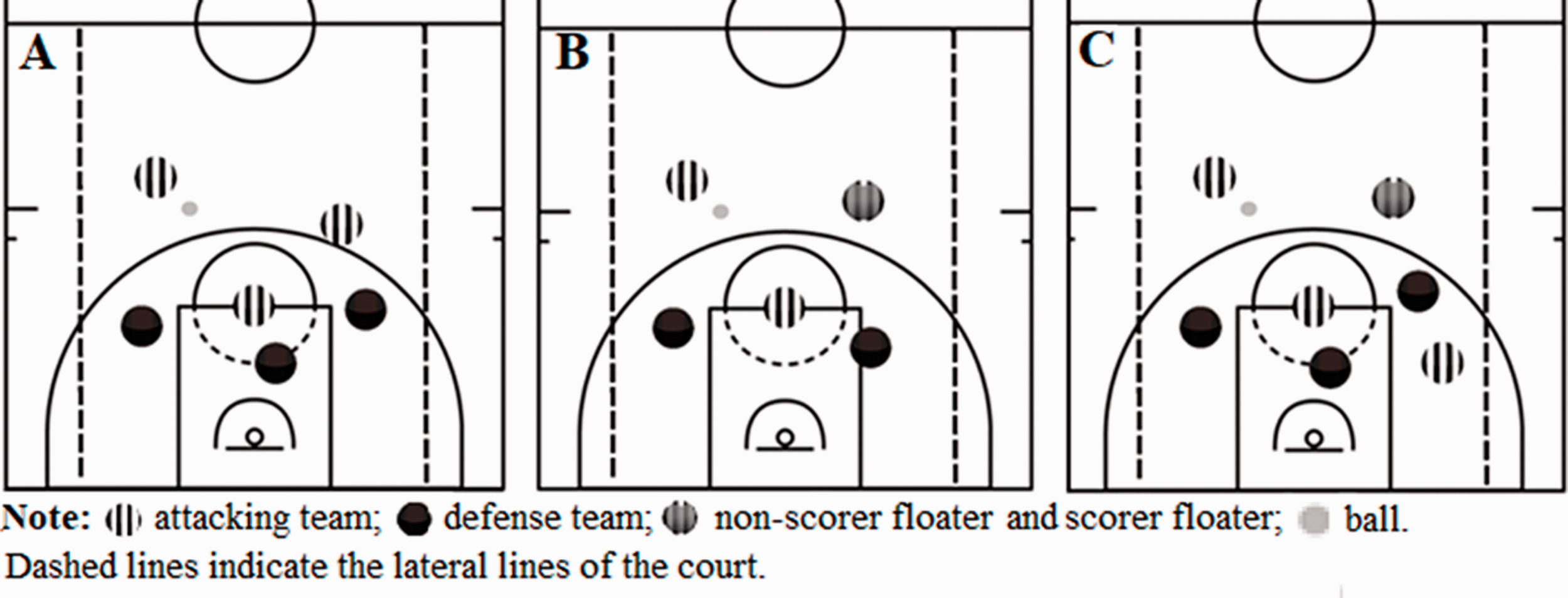
Small-sided games analysed in the study.
Instruments
Instrument for assessment of the individual technical-tactical performance in basketball (IAD-BB)
The IAD-BB is an instrument of observation that assesses players’ actions during a game. The observer assesses each action by assigning 1 to 3 points within two or three components of efficacy (adapting, decision-making, and efficacy), 20 as shown in Table 1.
Components and items of the instrument of assessment of the individual technical-tactical performance in basketball.
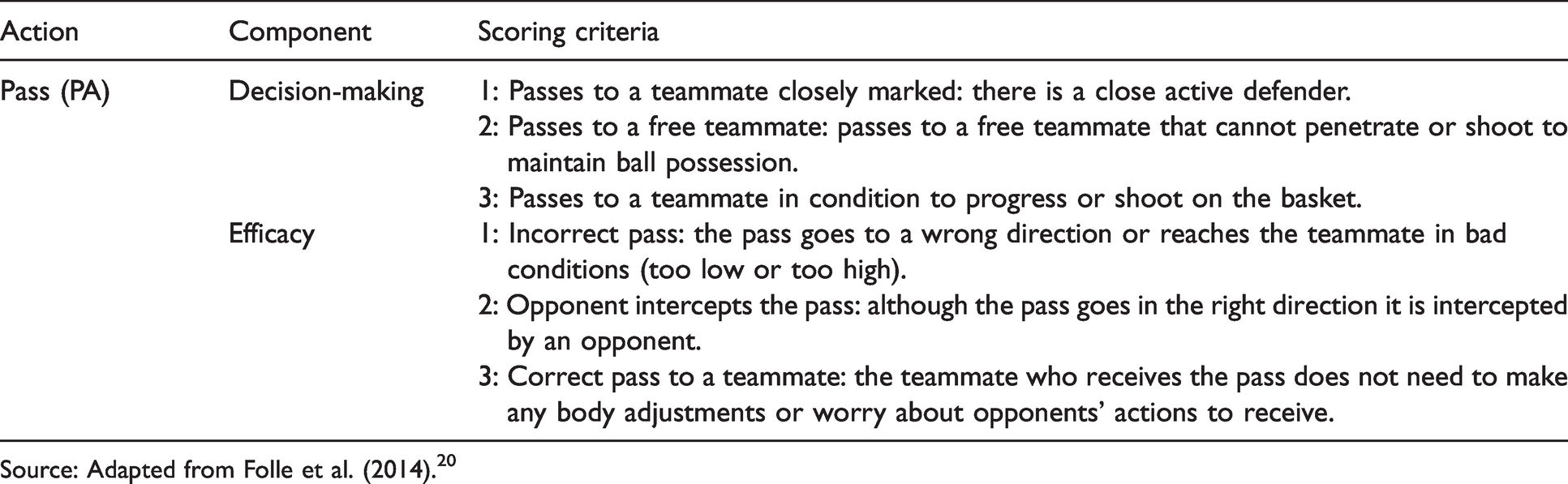
Source: Adapted from Folle et al. (2014). 20
In this study, for sample size estimation, we used the coefficient of variation of the variable ‘pass’, regarding the decision-making and efficacy components. The IAD-BB was used only in the pilot study to make choices regarding the SSG settings used in the main study.
Game performance assessment instrument (GPAI)
The GPAI is an instrument of observation developed for coaches and Physical Education teachers to assess players’ actions during various games, regarding two components: decision-making and skill execution. 18 We selected four items from the GPAI (Table 2): decision- making, skill execution, support, and guard/mark. The decision-making and skill execution variables have been previously investigated in studies with SSGs. 21 – 23 The variables “support” and “guard/mark” were also included in this study because of their importance in assessing the tactical behaviour of the players without the ball. The items ‘decision-making’ and ‘skill efficacy’ were analysed considering the result of the action, while for the items ‘support’ and ‘guard/mark’ only the frequencies were recorded. The technical-tactical actions analysed for decision-making were pass, shoot, and dribble, classified as appropriate or inappropriate. Skill efficacy was analysed for pass, shoot, dribble, reception, and offensive and defensive rebounds, which were classified as effective or ineffective. A more detailed description of the criteria is available in the supplementary material.
Components and items of the Game Performance Assessment Instrument (GPAI).

Source: Adapted from Oslin et al. (1998). 18
In the current study, only the mark/guard actions performed by the defender marking the attacking player with the ball were considered. This was needed because we observed a near-to-zero frequency of mark/guard in the player without the ball by the defender in the pilot analysis. These items allow the assessment of players when they are with and without the ball and present objective criteria based exclusively on observable behaviours, facilitating the analysis of performance. 22 Two observers were well acquainted with the items of this instrument and analysed the videos of the SSG. The variables obtained from the GPAI were adopted as the main outcomes in the current study.
Data analyses
The intraclass correlation coefficient (ICC2,1) was calculated to check for within and between observers’ reliability, 24 based on the reanalysis of 10% of all SSGs. The results were reported as medians and interquartile ranges and were compared using a repeated-measures non-parametric ANOVA (Friedman’s test) and Dunn’s post hoc test. Statistical significance was set at 5% (p ≤ 0.05). The r effect size was calculated and classified as small (0.10), medium (0.30), or large (0.50). 25 All analyses were performed using the software SPSS® (SPSS Version 19.0 for Windows, SPSS Inc., Chicago, IL, USA).
Data quality
For calculating the within and between-observers agreement in the pilot study and the main data collection two observers reanalysed 10% of the SSGs. The within-observer agreement procedures were conducted after a minimum of 30 days from the end of the first analysis to reduce the familiarity with the scenes. Both observers were previously trained and familiarized with the instruments before starting the analysis.
Results
Within and between observers’ reliability showed acceptable ICC values, all above 0.80. The frequencies of the technical-tactical actions are shown in Figures 3 to 5. Some of the actions (appropriate and inappropriate reception, inappropriate shot, effective dribble, ineffective reception, effective shot, ineffective rebound, and cover) presented a very low frequency and were not reported.
Figure 3 shows the medians of the items related to the decision-making component of the GPAI. There were no significant differences between appropriate passes (p = 0.09, 0.02 <r < 0.20, small effect size), inappropriate passes (p = 0.09, 0.09 < r < 0.29, small effect size), appropriate dribbles (p = 0.45, 0.04 < r < 0.36, small-to-medium effect size), inappropriate dribbles (p = 0.26, 0.03 < r < 0.17, small effect size), appropriate shots (p = 0.13, 0.03 < r < 0.36, small-to-medium effect size), and inappropriate shots (p = 0.60, 0.07 < r < 0.21, small effect size).
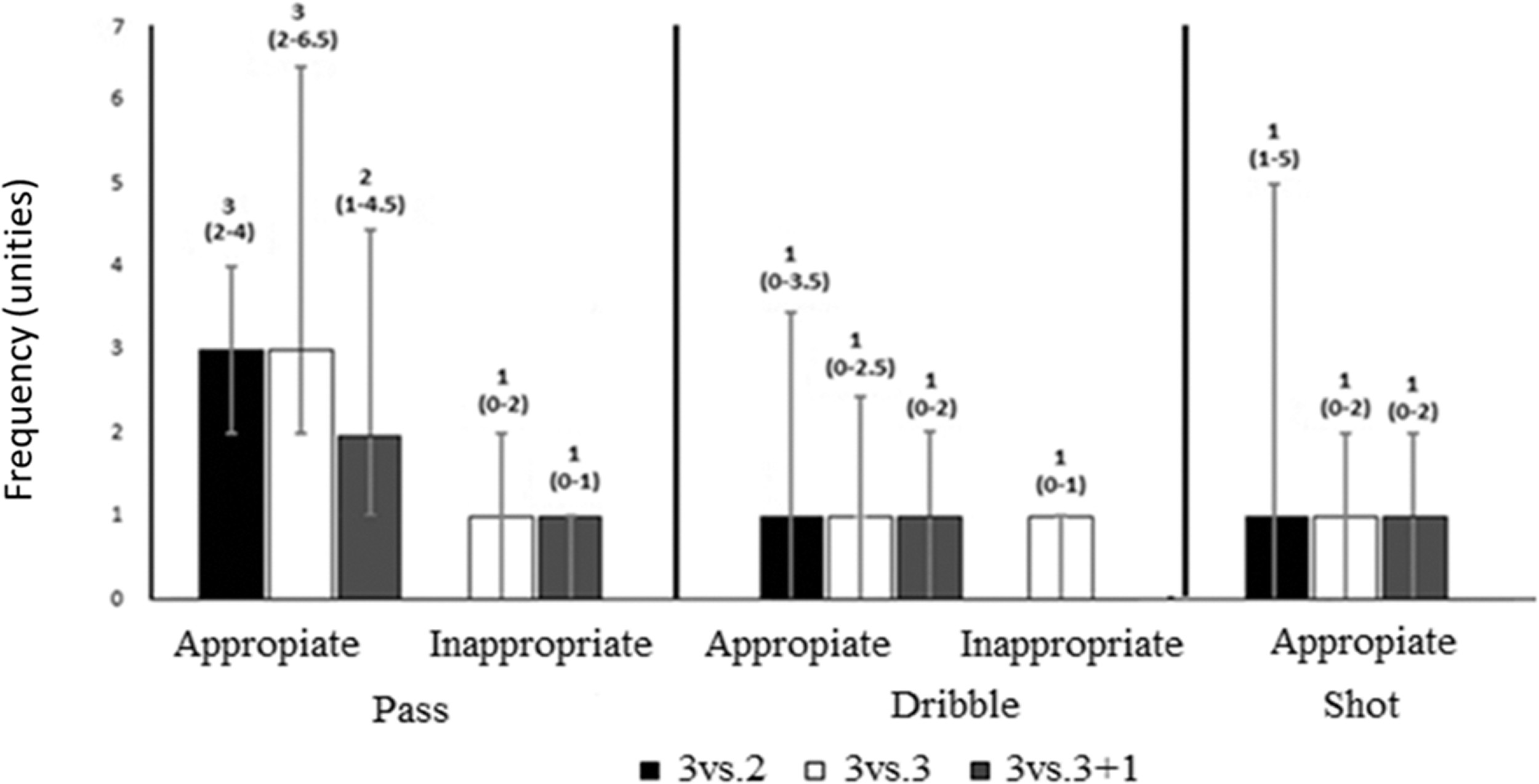
Medians and interquartile ranges of the decision-making scores assessed with GPAI.
Figure 4 shows the efficacy of the technical-tactical actions analysed using the GPAI. Pass inefficacy was significantly higher (p = 0.004) in 3vs.3 and 3vs.3 + 1 SSGs compared with 3vs.2 SSGs (r = 0.54; large effect size). Rebound efficacy was significantly higher (p = 0.002) in 3vs.2 SSGs compared with 3vs.3 + 1 (r = 0.62; large effect size) and 3vs.3 SSGs (r = 0.53; large effect size).
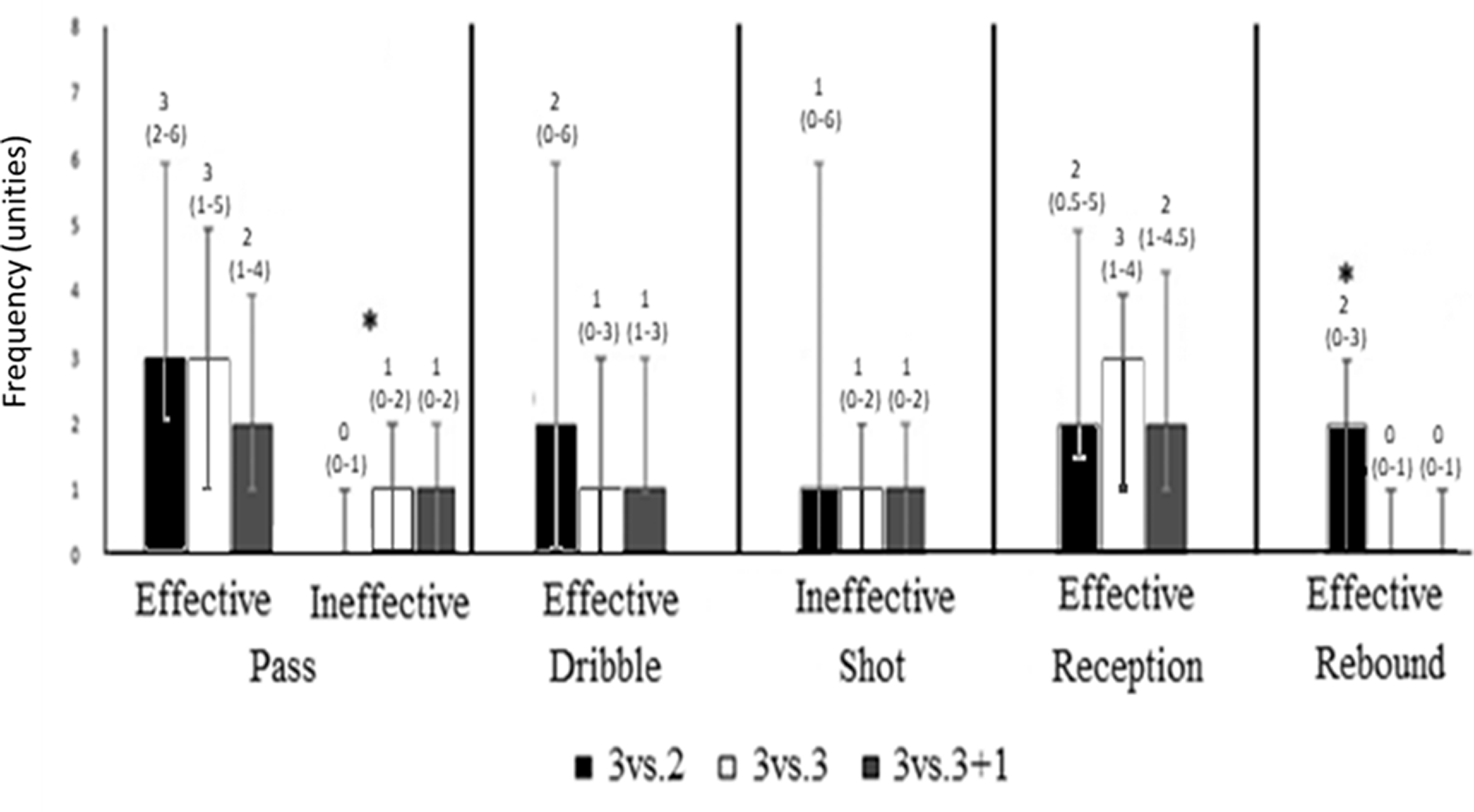
Medians and interquartile ranges of the efficacy and inefficacy scores for technical actions assessed with GPAI.
Figure 5 shows the defensive and offensive technical-tactical actions without the ball included in the GPAI. The 3vs.3 SSG presented significantly higher values (p = 0.002) of support compared with the 3vs.2 (r = 0.41; medium effect size) and 3vs.3 + 1 SSGs (r = 0.11; small effect size). There were also significantly higher values (p = 0.001) of guarding/marking in the 3vs.2 SSG compared with 3vs.3 (r = 0.37; medium effect size) and 3vs.3 + 1 SSGs (r = 0.38; medium effect size).

Medians and interquartile ranges of the tactical actions performed without the ball assessed with GPAI.
Discussion
This study aimed to compare the tactical behaviour and skill efficacy of schoolchildren performing three basketball SSGs: 3vs.3, 3vs.2, and 3vs.3 + 1. We expected lower efficacy in the 3vs.3 SSGs compared with the 3vs.2 and 3vs.3 + 1 SSGs. The results partially confirmed this hypothesis, with the 3vs.3 SSG presenting the lowest values for rebound efficacy, but being statistically different only compared with the 3vs.2 SSG. We also expected a lower frequency of offensive actions without the ball in the 3vs.2 SSG compared with the other SSGs, which was confirmed by the results that showed the lowest values of support actions. The hypothesis that the 3vs.3 SSG would present the highest frequency of defensive actions was rejected. The 3vs.2 SSG showed significantly more defensive actions than the other SSGs. No significant differences were found for decision-making between SSGs.
This study aimed to provide information on the use of SSGs in the early learning phase of basketball. We expected more appropriate decisions in the 3vs.2 SSGs compared with the other SSGs due to the lower complexity created by the advantageous offensive numerical superiority and the lower number of players. However, participants’ lack of experience and familiarity with numerical imbalances may have hindered their perception of the structural, functional (especially floater), and logical differences between SSGs, corroborating with a previous study that showed that novices present difficulties identifying environmental sources of information that support appropriate decision-making 26 leading to an absence of differences in decision-making between SSGs. 27 Therefore, we recommend novices to experience more simplified SSGs that evidence the differences between situations of a non-scorer floater and numerical superiority (e.g. 2vs.1 and 1vs.1 + 1 SSGs), with floaters acting in a restricted area). Furthermore, future studies should address the influence of players’ experience on tactical behaviour and examine participants with different levels of experience in SSGs similar to the formats used in this study.
Regarding complexity, the 3vs.3 is the most complex SSG investigated in this study. We expected the lowest efficacy in this format due to greater difficulty in getting unmarked in a numerical equality situation, which was confirmed by the results that showed the highest frequency of ineffective pass actions and the lowest frequency of effective rebound actions. Previous studies reported similar results, with numerical imbalances showing a better performance compared to numerical equality situations, with lower frequencies of technical mistakes and inappropriate decisions 14 and demanding a lower physical effort, 5 , 28 which may have contributed to a lesser need of constantly getting unmarked and creating spaces to receive. In addition, the 3vs.2 presented fewer support actions compared with the other SSGs. The constant presence of a free player in the 3vs.2 required fewer displacements to get unmarked (players without the ball), thereby facilitating participation in the game. In addition, this assumption supports the notion that the complexity of the game is related to the number of players because, in games with fewer players, there is more space to perform actions, ensuring a higher engagement of players. Clemente et al. 29 showed that in SSGs with fewer players, the volume of play, number of attacking balls, efficacy, and performance were higher. This supports the rationale that games with numerical imbalance are less complex than those with numerical equality if this imbalance is created by removing one or more players (e.g. 3vs.2 is supposed to be less complex than 3vs.3).
We also expected a higher frequency of defensive actions in the 3vs.3 than in the other SSGs. However, the results showed a higher frequency of mark/guard in the 3vs.2 than in the other SSGs. Ortega et al. 30 observed that individual defensive actions (with no coordination between teammates) are more common in mini-basketball players than in U-14 players. This suggests that young basketball novices, as in the present study, aim to follow the ball and the player who possesses it, due to a lack of knowledge regarding actions of fluctuation and switch and the limited skill to perform effective man-to-man marking. In addition, Clemente et al. 31 observed that younger (U-14) players presented more turnovers than older (U-16) players. In the present study, the 3vs.2 presented fewer one-on-one situations because there was always a free player in the offence. The absence of a clear man-to-man defence in the 3vs.2 SSG led the defenders to move towards the player in possession more frequently, mainly when the player in possession lost control of the ball, which increased the incidence of mark/guard in the 3vs.2 SSG. These findings corroborate previous results, 30 , 31 indicating that novices’ play styles are different from those of more experienced players. Moreover, as 1vs.1 situations are more common in numerical balanced formats, these SSGs may be useful for emphasizing some defensive and offensive individual tactical actions such as the fake, the individual defence, or the players’ ability to get unmarked. In this sense, future studies must address different issues related to the use of SSGs during the teaching-learning process of young novice basketball players.
This study presents novel data on the technical-tactical actions of young novice basketball players. However, one limitation of the present study is related to the limited number of SSGs investigated (only three). Future studies should investigate how other SSGs could facilitate the comprehension of the role of the non-scorer floater (e.g. restricting the player’s playing area) to enhance participants’ perception of the differences between SSGs. In addition, longitudinal studies should test the influence of practising different SSG types (numerical superiority, numerical equality, non-scorer floaters) on the comprehension of the game’s logic and tactical learning.
We conclude that a 3vs.2 SSG is less complex than 3vs.3 and 3vs.3 + 1 SSGs, providing higher participation and comprehension of game logic. This result supports the potential use of this type of SSG for teaching tactical principles related to the maintenance of ball possession for young novice players. The constant presence of a free player in this type of SSG may also stimulate the development of basketball skills, such as shooting and rebounding. The 3vs.3 and 3vs.3 + 1 SSGs are recommended for practising offensive actions without the ball such as getting unmarked and creating passing lanes. These SSGs may also stimulate more one-on-one situations, leading players to create faking strategies and improve their understanding of individual offensive and defensive tactical actions.
Geolocation information
South America; Brazil
Supplemental Material
sj-pdf-1-spo-10.1177_17479541211021986 - Supplemental material for Influence of non-scorer floater and numerical superiority on novices’ tactical behaviour and skill efficacy during basketball small-sided games
Supplemental material, sj-pdf-1-spo-10.1177_17479541211021986 for Influence of non-scorer floater and numerical superiority on novices’ tactical behaviour and skill efficacy during basketball small-sided games by Laura Beatriz Faleiro Diniz, Sarah da Glória Teles Bredt and Gibson Moreira Praça in International Journal of Sports Science & Coaching
Supplemental Material
sj-pdf-2-spo-10.1177_17479541211021986 - Supplemental material for Influence of non-scorer floater and numerical superiority on novices’ tactical behaviour and skill efficacy during basketball small-sided games
Supplemental material, sj-pdf-2-spo-10.1177_17479541211021986 for Influence of non-scorer floater and numerical superiority on novices’ tactical behaviour and skill efficacy during basketball small-sided games by Laura Beatriz Faleiro Diniz, Sarah da Glória Teles Bredt and Gibson Moreira Praça in International Journal of Sports Science & Coaching
Footnotes
Declaration of Conflicting Interests
The author(s) declared no potential conflicts of interest with respect to the research, authorship, and/or publication of this article.
Funding
The author(s) received no financial support for the research, authorship, and/or publication of this article.

References
Supplementary Material
Please find the following supplemental material available below.
For Open Access articles published under a Creative Commons License, all supplemental material carries the same license as the article it is associated with.
For non-Open Access articles published, all supplemental material carries a non-exclusive license, and permission requests for re-use of supplemental material or any part of supplemental material shall be sent directly to the copyright owner as specified in the copyright notice associated with the article.
