



Abstract
The purpose of the current study was to develop a valid and reliable scale to measure organizational citizenship behavior in sport. The current research consisted of a three-stage scale development and validation process: (a) item generation and content validity, (b) construct validity and reliability, and (c) criterion validity. Qualitative and quantitative methods were used to generate and analyze scale items. The results of Exploratory Structural Equation Modeling revealed appropriate goodness-of-fit indexes for the finalized 22-item scale including five dimensions: bonding, encouraging, helping, community service, and extra work. Finally, correlations between each dimension of organizational citizenship behavior and athlete satisfaction and team commitment confirmed the criterion validity. The newly developed organizational citizenship behavior in Sport Scale is expected to help researchers empirically examine the potential relationships between psychological antecedents and identified dimensions of organizational citizenship behavior in sport as well as provide practical guidance to professionals working with athletes.
Introduction
Athletes commonly devote a substantial amount of time and effort to their sport beyond what is formally “required” by their coaches. One way of understanding this voluntary effort is the concept of organizational citizenship behavior (OCB). As a pioneer in developing the concept, Organ
1
formally defined OCB as: Individual behavior that is discretionary, not directly or explicitly recognized by the formal reward system and that in the aggregate promotes the effective functioning of the organization. By discretionary, we mean that the behavior is not an enforceable requirement of the role or the job description, that is, the clearly specifiable terms of the person's employment contract with the organization: the behavior is rather a matter of personal choice, such that its omission is not generally understood as punishable. (p. 4)
OCB has received substantial attention from practitioners and researchers in the field of organizational behavior and industrial psychology since Organ and his colleagues initially coined the term in two foundational studies.2,3 This work represented a groundbreaking attempt to understand the ways in which seemingly minor prosocial behaviors have a cumulatively beneficial impact on the effectiveness of individuals and organizations. 4 In particular, numerous studies have investigated OCB-related variables (e.g. personality, organizational definition, job satisfaction, leadership style) to understand why members in an organization perform OCB. 5
Such voluntary behaviors can be widely observed in the context of sport. For instance, a veteran basketball player on a team may share details about their training regimen with young teammates, initiate extra work outside of required practices, or organize social gatherings with teammates to foster team bonding. In turn, these prosocial or voluntary behaviors, which are not formally mandated by coaches, may improve other teammates’ skills and performance as well as team cohesion, ultimately leading to a positive impact on team performance. 6 Following the belief that examining OCB can be illuminating in the sport context, several studies in sport psychology and management have applied the concept. In particular, such research has focused largely on two sport contexts: sport associations and sport teams. Several studies7–9 examined OCB and related variables with respect to sport associations’ staffs, while other research10–13 investigated OCB among athletes on sport teams. As the result of insight generated in pioneering work, Wagstaff et al. 14 called for further research on OCB in elite sport by emphasizing the key impact of OCB on organizational effectiveness.
There are numerous ways in which sport organizations (e.g. athletic departments and teams) are unique compared to organizations in other areas. For example, members of a sport team must work together to compete against other teams head-to-head in a competitive arena where there is generally a clear winner and loser. The competitive nature of sport and often binary outcome of competition (i.e. winning or losing) may impose demands on athletes and other staff members that are different from non-sport contexts. However, researchers have frequently adopted constructs and scales developed in non-sport contexts (e.g. leadership, organizational support, organizational justice, job satisfaction, organizational commitment) to investigate factors that impact individual and team performance in sport. Such an approach has been used under the belief that sport managers working or athletes competing in sport may have similar psychological processes and behavioral outcomes. However, as we elaborate on below, such an approach may fail to account for unique aspects of sport organizations and athletes’ experiences. In some instances, sport management scholars have created their own scales in applying leadership, 15 athletic and coaching satisfaction,16,17 and organizational justice 18 in order to investigate specific sport settings. However, many studies have been limited to using scales developed by organizational behavior researchers in mainstream business settings by modifying original items or dropping sub-dimensions or items inapplicable to the context of sport. Due to the limitations of such approaches, there remains a need for sport psychology and management researchers to develop their own measurements attuned to the nuances of sport. Fletcher and Wagstaff, 19 for example, urged scholars to create scales that more precisely reflect the unique nature of organizational culture, climate, and environment in sport organizations.
Given this background, the purpose of the current study was to develop a valid and reliable scale to measure OCBs in the context of sport. Developing such a scale will help researchers empirically examine the potential relationships between psychological antecedents and newly identified dimensions of OCB that account for the unique nature of sport.
Conceptual background and dimensions of OCB
The initial development of OCB was based on the notion that employees’ job satisfaction could influence organizational effectiveness through behaviors that managers cannot (or do not) technically require. 20 Organ 1 stated that the definition of OCB does not necessarily exclude behaviors that are tangibly rewarded, while also recognizing that OCB, in the long run, could influence an organization's impressions and evaluations of its employees. Therefore, employees could potentially receive tangible rewards from the organization in exchange for non-required behavior. In fact, similar studies21,22 found that managers subconsciously or deliberately considered the OCB of employees when evaluating their performance. However, the original concept of OCB defined by Organ 1 only emphasized task performance—activities that specifically contribute to an organization's productivity—ignoring contextual performance, which includes activities related to the social and psychological context of work identified by Borman and Motowidlo. 23 Organ 24 admitted that the original concept of OCB overlooked the idea of contextual performance, and defined OCB as being “behavior that contributes to the maintenance and enhancement of the social and psychological context that support task performance” (p. 91).
Researchers have suggested several classifications of OCB in the literature since Bateman and Organ 2 and Smith et al. 3 developed the first scales to measure the concept and identify its types. For example, Bateman and Organ's 30-item scale was not unidimensional, but its factor structure was not well identified, while Smith et al.'s 16-item scale supported two dimensions of OCB: altruism and general compliance. According to Smith et al., altruism refers to behaviors “helping a specific person in face-to-face situations (e.g. orienting new people, assisting someone with heavy workload)” (p.657), and general compliance represents behaviors “not providing immediate aid to any one specific person, but rather is indirectly helpful to others involved in the system. The behavior (e.g. punctuality, not wasting time) seems to represent something akin to compliance with internalized norms defining what a good employee ought to do” (p.657).
Based on Organ's conceptual framework, 1 Podsakoff et al. 25 developed a 24-item OCB scale with five dimensions: altruism, conscientiousness, sportsmanship, civic virtue, and courtesy. Organ's definition of altruism was narrower than Smith et al.'s 3 because Organ's altruism behaviors included only helping others with organizationally relevant problems. Conscientiousness, a narrowed concept of Smith et al.'s 3 generalized compliance, refers to “discretionary behaviors on the part of the employee that go well beyond the minimum role requirements of the organization in the areas of attendance, obeying rules and regulations, taking breaks, and so forth”. 25 , p.115 Sportsmanship was defined as willingness to bear unavoidable trouble, “avoid complaining, petty grievance, railing against real or imagined slights, and making federal cases out of small potatoes”. 1 , p.11 Civic virtue was defined as “behavior on the part of an individual that indicates that he/she responsibly participates in, involved in, or is concerned about the life of the company”. 25 , p. 115 Finally, courtesy refers to “behavior on the part of an individual aimed at preventing work-related problems with others from occurring”. 25 , p. 115
Van Scotter and Motowidlo 26 developed a 14-item OCB scale for contextual performance consisting of two dimensions: interpersonal facilitation and job dedication. In their scale, interpersonal facilitation “included cooperative, considerate, and helpful acts that assist coworkers' performance,” while and job dedication included “self-disciplined, motivated acts such as working hard, taking initiative, and following rules to support organizational objectives” (p.525). Compared to Podsakoff et al.'s 25 scale, interpersonal facilitation encompassed altruism and courtesy, while job dedication included the dimensions of sportsmanship, civic virtue, and conscientiousness.
While a majority of studies attempted to identify dimensions of OCB using a type-based approach, several studies27,28 adopted a target-based approach to explore dimensions of OCB. Williams and Anderson 28 proposed two classifications: (a) individual targeted OCB (OCBI) and (b) organizational targeted OCB (OCBO). Specifically, OCBO pertains to “behaviors that benefit the organization in general (e.g. gives advance notice when unable to come to work, adheres to informal rules devised to maintain order)” and OCBI refers to behaviors that “immediately benefit specific individuals and indirectly through this means contribute to the organization (e.g. helps others who have been absent, takes a personal interest in other employees)”. 28 , p. 601–602
Facets of OCB in sport
Love and Kim 13 provided one of the foundational efforts to examine the unique nature of OCB in sport through qualitative interviews with current and former college athletes in the United States. The study did identify a number of connections between existing research on non-sport organizations and the ways in which athletes perceive the role of “voluntary” behaviors in sport. For example, facets of OCB identified by Love and Kim, 13 such as “motivating and supporting teammates,” “giving good effort,” and “getting extra practice,” aligned with forms of OCB identified in non-sport settings by Organ et al., 4 such as “helping,” “organization compliance,” and “self-development,” respectively.
However, one area of OCB identified in non-sport contexts which was not salient to athletes in the Love and Kim 13 study was Organ's 1 “sportsmanship.” One explanation for athletes not identifying this type of “sportsmanship” as constituting an example of OCB in sport stems from the amount of power that coaches often have over the athletes on their team. Whereas an employee in a non-sport organization may view their decision to refrain from complaining as a “voluntary” behavior, the power dynamics of sport may lead athletes to strongly internalize the need to accept coaches’ directions without question as a normative, unconscious behavior. 29
Further, some elements of OCB identified in sport were absent from prior research in non-sport contexts. For example, athletes frequently spoke of bonding with teammates through social activities outside of sport (e.g. getting together with teammates for a meal over the weekend) as an important element of OCB in sport. 13 Due to a strong emphasis placed on “team bonding” in sport, 30 athletes may view social bonding activities as important yet voluntary actions that can strengthen team cohesion and improve performance. Employees in non-sport organizations, meanwhile, may not sense the same level of emphasis on team bonding and cohesion as do athletes.
Ultimately, Love and Kim 13 identified the existence of a high degree of ambiguity (i.e. a “gray area”) with respect to what is and is not formally required of athletes in sport contexts. Some athletes even questioned whether it was possible for any sport-related activity to be truly “voluntary.” As a volleyball player suggested, for example, “nothing is voluntary unless no one knows that you’re doing it and you’re just doing it for yourself.” 13 , p. 33 While employees in a variety of organizations may engage in OCB because they want to impress their supervisors and be seen as “good soldiers,”31,32 the pressure to be a “good soldier” may be particularly strong in sport. As Love and Kim 13 explain, “athletes may always feel some level of pressure to impress their coaches, and any activity that a coach might be aware of could potentially influence coaches’ assessments of their athletes. In this vein, athletes may face particular uncertainty about what activities are and are not voluntary” (p. 33). The existence of such pressure and uncertainty supports the need for a scale attuned to the unique nature of sport in order to better understand and assess the ways in which OCB is perceived and experienced by athletes.
Method
Item generation procedure
To generate a large pool of potential items for inclusion in a newly developed scale to measure and evaluate OCB in sport, the current study utilized both deductive and inductive approaches. 33 For the deductive approach, we reviewed existing OCB scales used in the field of organizational psychology3,21,24–26,28,34,35 to develop an initial list of potentially applicable items in the context of sport.
To complement items drawn from previous research outside the context of sport, an inductive approach was adopted to identify additional items derived from responses of athletes and coaches. For the inductive approach, two investigators conducted qualitative interviews with 15 current or former athletes who participated at the National Collegiate Athletic Association (NCAA) Division-I level, which is the highest classification of collegiate competition in the United States. During the interviews, investigators asked participants to recall their observations of OCB in sporting contexts and reflexively discuss the types of OCB provided the most important contribution to their sporting successes. As a result of the deductive and inductive approaches, the investigators compiled an initial list of 44 items under six potential dimensions (i.e. bonding, community service, courtesy, encouraging, extra work, and helping) for possible inclusion in a scale to measure OCB in sport. Figure 1 shows the six potential dimensions of OCB in sport and their definitions.
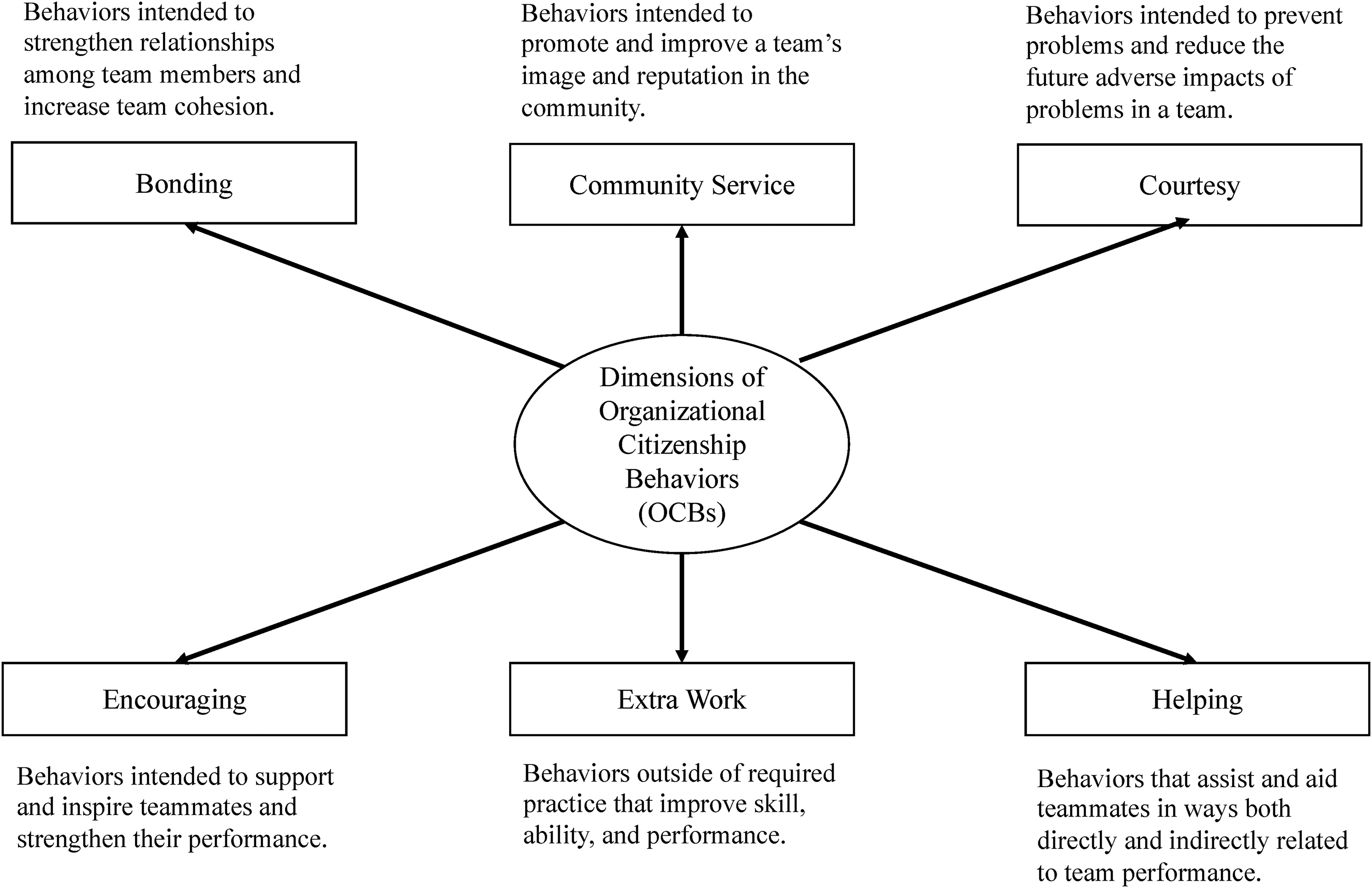
Potential six dimensions of organizational citizenship behavior (OCB) in sport.
A panel of experts (n = 5) reviewed the initial pool of items. The panel members were asked to indicate the extent to which the items assigned to each of the dimensions were appropriate, using a 4-point scale (1 = not relevant; 2 = somewhat relevant; 3 = quite relevant; 4 = highly relevant). The rating scales were computed using the content validity index 36 of each item; this was used as a reference for deciding whether to retain, delete, or revise each item. In addition, the experts were asked to suggest additional items if appropriate. After this item generation process, 42 items under the six dimensions remained. The items, sources of each item, and potential dimensions are as shown in Table 1. These items were converted into survey items that participants would respond to using a 7-point Likert-type scale (1 = not at all likely; 7 = extremely likely).
Original 42-item scale.
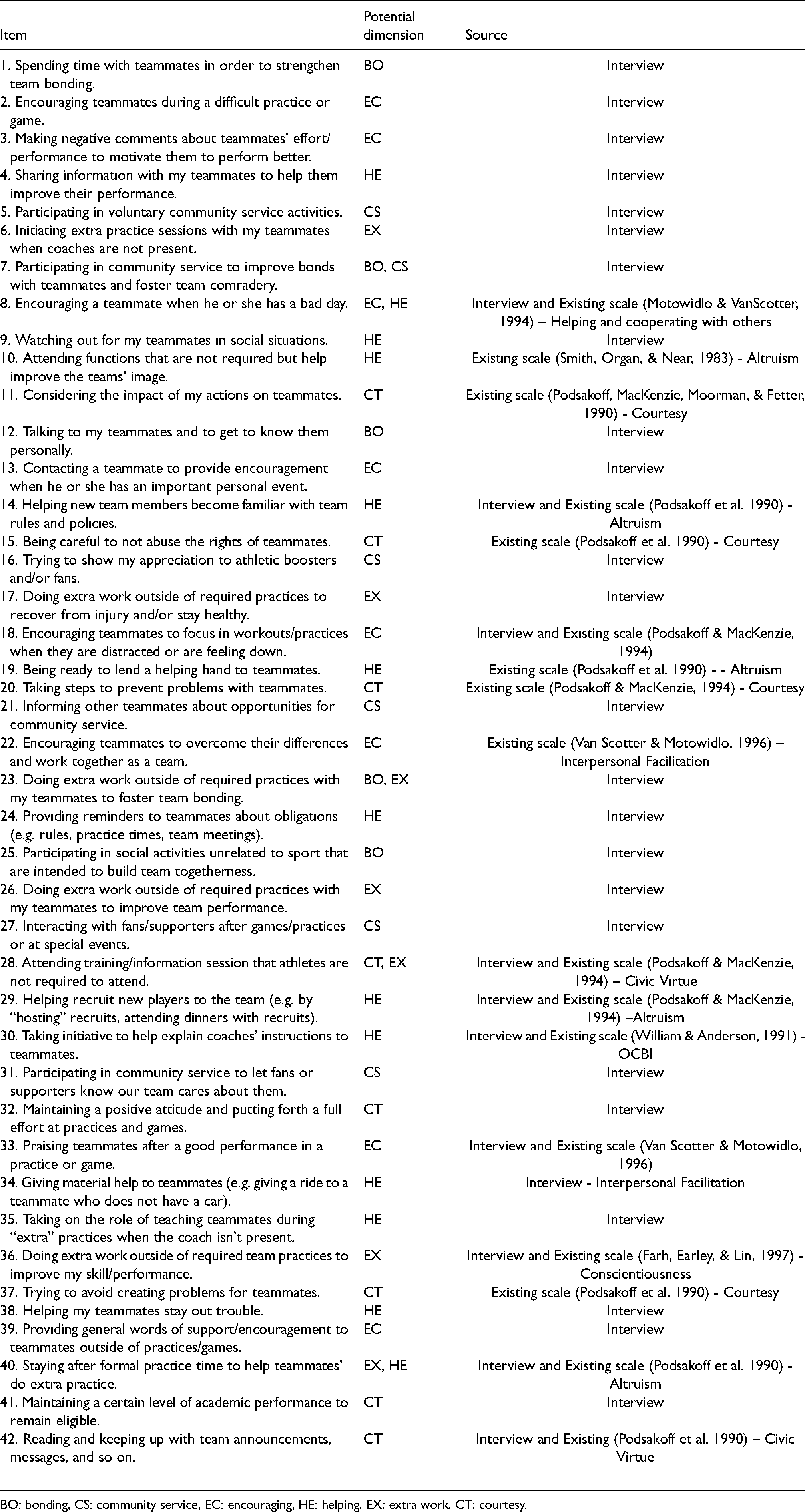
BO: bonding, CS: community service, EC: encouraging, HE: helping, EX: extra work, CT: courtesy.
Participants and procedure
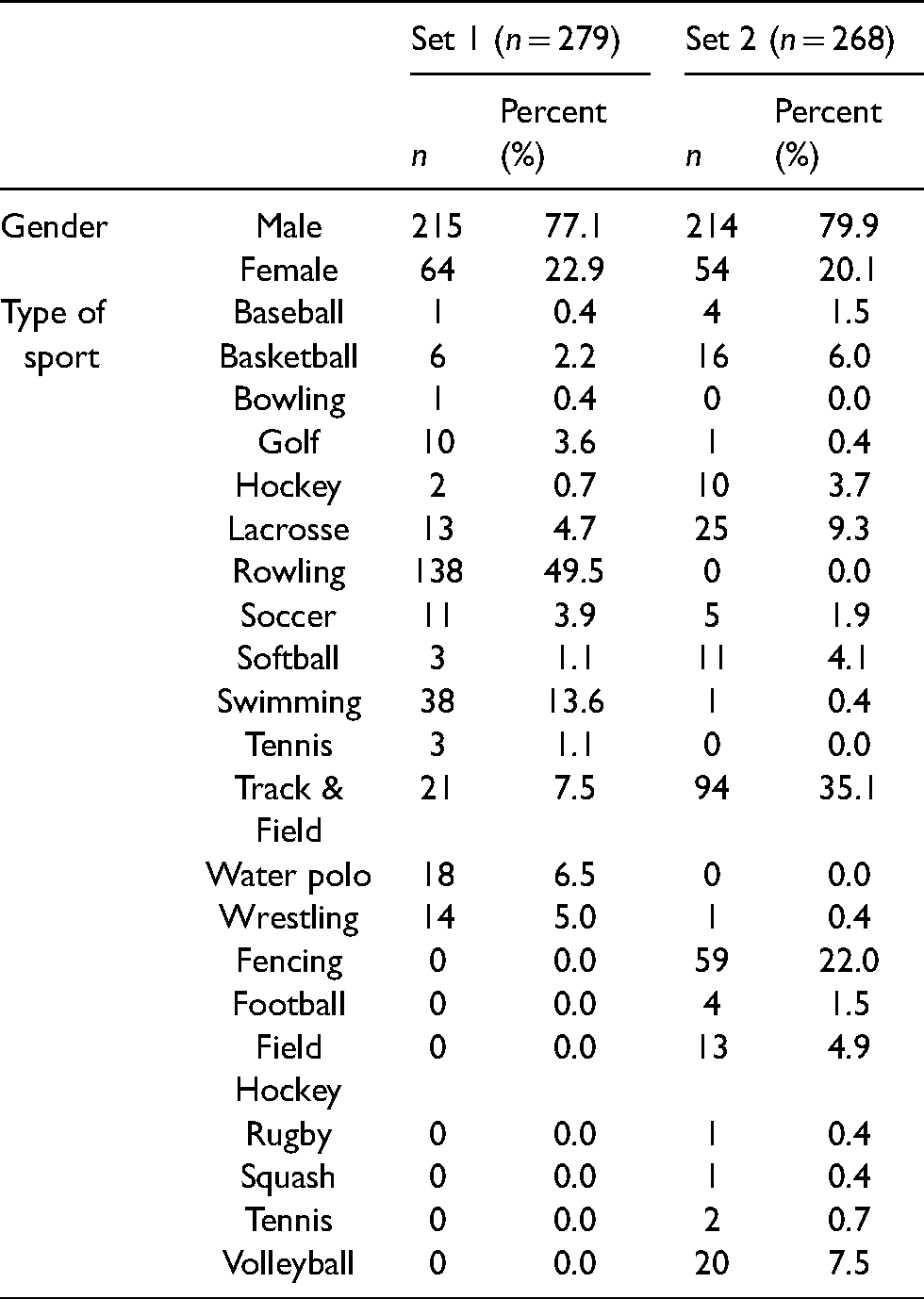
The current research involved collecting two sets of data from current and former athletes at NCAA Division-I institutions in the United States via an online survey. The first data set (i.e. initial 42-item questionnaire) was collected between January and April 2018, while and the second data set (i.e. refined 23-item questionnaire) was collected between September and December 2018. Participants were recruited via messages sent over email and social media. The recruitment messages included a hyperlink to an online questionnaire along with detailed information and instructions for the survey (e.g. the purpose of the study, the survey procedure, and the tools used to protect participants’ confidentiality). The invited current/former athletes voluntarily agreed to participate in the study by completing and submitting the questionnaire. For the first round of data collection, a total of 279 participants completed the survey. Among the participants, 215 (77.1%) were men and 64 (22.9%) were women from 14 different sports, such as rowing (49.5%), swimming (13.6%), track and field (7.5%), and water polo (6.5%). For the second data set, a total of 268 questionnaires were completed. Of the respondents, 214 (79.9%) were men and 54 (20.1%) were women from 17 different sports, such as track and field (35.1%), fencing (22.0%), lacrosse (9.3%), volleyball (7.5%), and basketball (6%). More detailed participant information from the two data sets is provided in Table 2.
Demographic statistics of participants in data set 1 and 2.
Measures
The survey for the first data set included demographic information and the initial 42 items pertaining to OCB in sport, which were developed based on the aforementioned inductive and deductive approaches under six potential dimensions (i.e. bonding, community service, courtesy, encouraging, extra work, and helping). The survey used for the second data set consisted of basic demographic information and 23 items pertaining to OCB in sport, which was a refined version based on the results of the first survey under five potential dimensions (i.e. bonding, community service, encouraging, extra work, and helping). In addition, this second survey included two variables (i.e. athlete satisfaction and team commitment) to test criterion validity. The five items used to measure athlete satisfaction were adapted from Judge, Locke, Durham, and Kluger. 37 Example items included “Most days I am enthusiastic about my team and my sport” and “I find real enjoyment in my team.” Team commitment, meanwhile, was measured by eight items adapted from Bishop and Scott. 38 Example items were “I talk with friends about this being a great team to be a part of” and “I really care about the fate of this team.” These items were measured by 7-point Likert-type scales (1 = strongly disagree; 7 = strongly agree).
Data analysis
The current study used Exploratory Structural Equation Modeling (ESEM) to develop and refine a scale measuring OCB in sport. Many researchers have recognized the utility of ESEM, initially proposed by Asparouhov and Muthén, 39 as it provides a more realistic outcome than confirmatory factor analysis (CFA) when evaluating unspecific multidimensional structures. Further, factor structures of psychological instruments are better defined by exploratory factor analysis (EFA) than CFA. 40 In a typical CFA model, each observed variable (indicator) is allowed to load onto only one latent factor; namely, each observed variable is never explained by two latent variables. 41 This strict constraint may result in misspecification and low fit index values of a model.39,42 However, ESEM is a useful approach, as it combines the strengths of both EFA and CFA. In particular, ESEM allows researchers to define more flexible underlying factor structures of their constructs as estimating cross-loadings, as is the case with EFA. However, like CFA, ESEM offers several fit indexes, such as Chi-square, Tucker Lewis index (TLI), comparative fit index (CFI), root mean square error of approximation (RMSEA), and standardized root mean square residual (SRMR) to evaluate a hypothesized model. Given these benefits, ESEM offers significant methodological advantages in evaluating unspecific multidimensional structures. 43 Other studies42,44 in sport also utilized the ESEM due to the same reason.
In evaluating the ESEM models from the two data sets collected in the current study, CFI, TLI, RMSEA, and SRMR were examined using Mplus 7.0. 45 It is commonly accepted that thresholds of >0.90, close to (or less than) 0.08, 46 and up to 0.08 47 for the CFI, SRMR, and RMSEA, respectively, are indicative of acceptable model fit. Excellent fit between the hypothesized model and the data are indicated by thresholds of >0.95 for the CFI, and close to (or less than) 0.08, and 0.06 for the SRMR and RMSEA, respectively. 48 The internal consistency reliabilities of the identified OCB subscales after performing the second ESEM model were evaluated using Cronbach's alpha coefficient. 49 A value of 0.70 or above for the Cronbach's alpha coefficient is generally considered acceptable. 50 Finally, criterion validity was tested by performing correlation analysis. 51
Results
First data set
ESEM was performed with the first data set of 42-items under six potential dimensions of OCB in sport. The original six dimensions included: (a) bonding, (b) community service, (c) courtesy, (d) encouraging, (e) extra work, and (f) helping. The results of ESEM revealed “courtesy” was not a proper fit with the data because most items intended to load on courtesy were either insignificant or significantly loaded on other dimensions. Thus, we removed the “courtesy” dimension. All eight items (Items 11, 15, 20, 28, 32, 37, 41, and 42) that were expected to possibly load on courtesy were also removed. Additionally, some items had loadings on non-target dimensions or had much higher cross-loadings on their secondary dimensions than their primary loadings. Thus, we removed an additional eight items (i.e. items 7, 9, 16, 18, 19, 27, 29, and 38). Further, items 10 and 22 were also deleted because the items performed poorly with weak factor-loadings on the targeted dimensions (<0.30). 39 Finally, item 3 was removed because the factor loading of the item was negative.
After dropping these 19 items from the original survey, 23 items were retained for further analysis with five remaining dimensions. However, we identified some additional issues with respect to low loading and cross-loading with the remaining 23 items. For example, some items (i.e. talking to my teammates and to get to know them personally, doing extra work outside of required practices with my teammates to foster team bonding, doing extra work outside of required practices with my teammates to improve team performance, staying after formal practice time to help teammates’ do extra practice, and providing reminders to teammates about obligations) had high cross-loadings (>0.3). However, since the ESEM model allows such cross-loadings, we retained those items for further investigation using the second data set. In addition, Item 34 “giving material help to teammates (e.g. giving a ride to a teammate who does not have a car)” had cross-loadings for helping (0.276), bonding (0.119), community service (0.149), and encouraging (0.269). Although the loading for helping, a targeted dimension, was less than 0.30, we retained this item for the second data collection because its loading was near the cutoff. As shown in Table 3, the results of the 23-item ESEM with the first data set showed acceptable model fits with the Chi-square statistic = 256.712, p = 0.000, CFI = 0.960, TLI = 0.932, RMSEA = 0.051(0.041–0.062), and SRMR = 0.028.
Factor loadings for 23-item ESEM (data set 1).
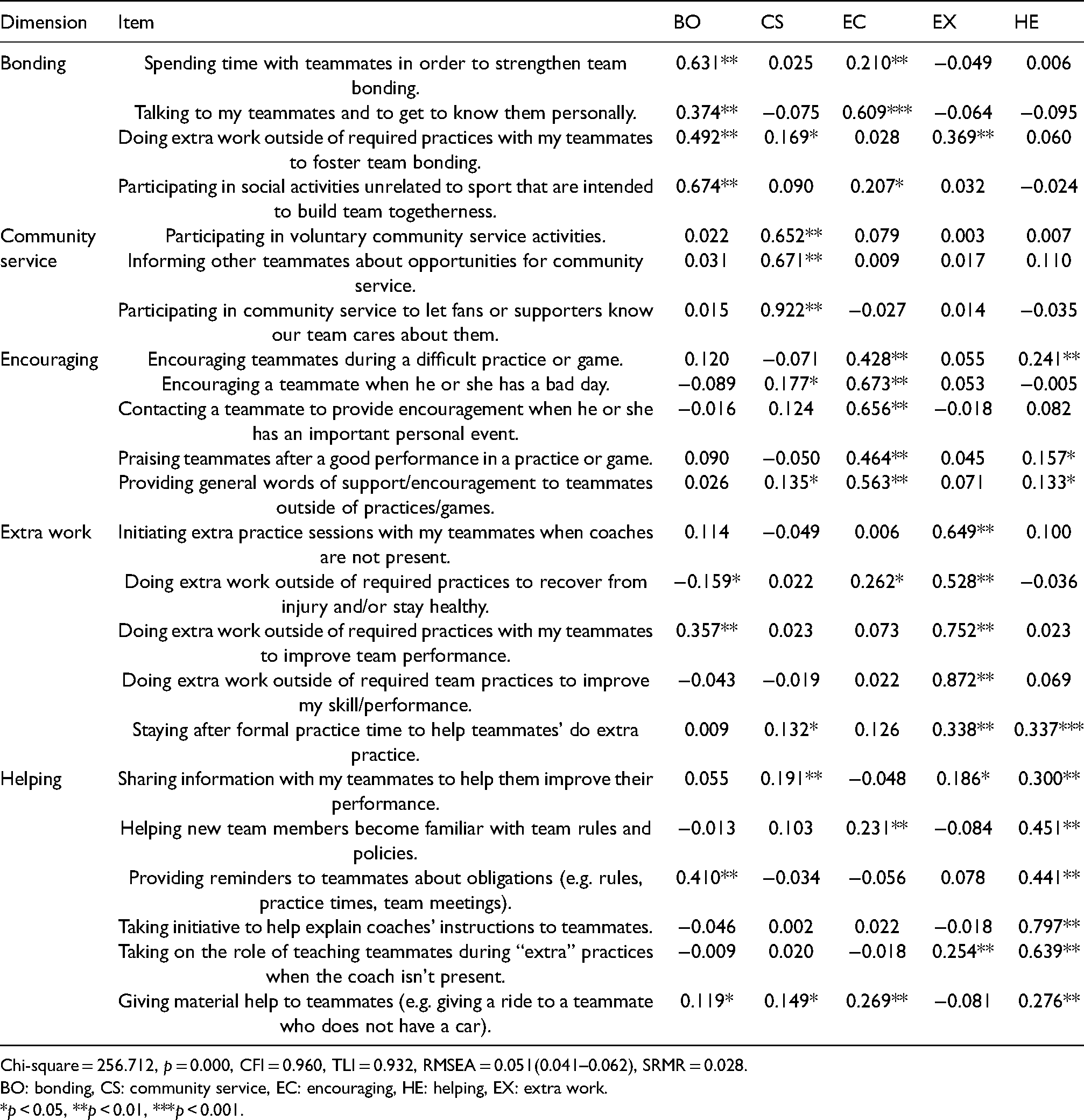
Chi-square = 256.712, p = 0.000, CFI = 0.960, TLI = 0.932, RMSEA = 0.051(0.041–0.062), SRMR = 0.028.
BO: bonding, CS: community service, EC: encouraging, HE: helping, EX: extra work.
*p < 0.05, **p < 0.01, ***p < 0.001.
Second data set
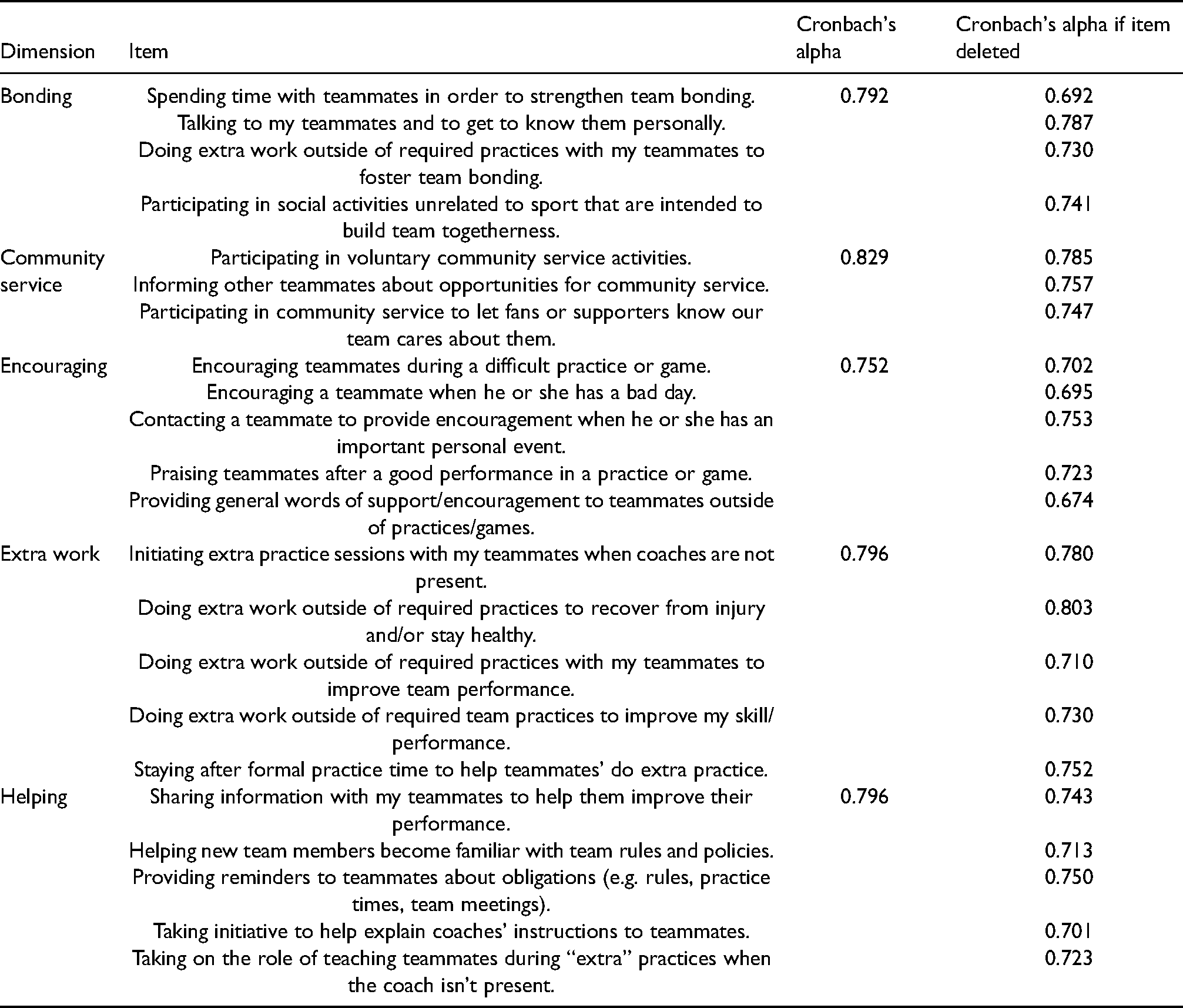
ESEM was performed with the second data set of 23-items under five dimensions from the revised instrument. The results revealed that one item, “giving material help to teammates (e.g. giving a ride to a teammate who does not have a car),” had low factor loadings for its primary and secondary dimensions (<0.30). Thus, the item was removed from further analysis. As shown in Table 4, there was only one item (i.e. “taking on the role of teaching teammates during ‘extra’ practices when the coach isn't present”) which had cross-loadings for helping (0.591) and extra work (0.340) in this data set. Since the ESEM model allows cross-loading and the item was loaded higher on its intended dimension (i.e. helping) than non-targeted dimension (i.e. extra work), the item was retained. After removing the one aforementioned item, the results of the 22-item ESEM with the second data set showed acceptable model fits with Chi-square = 224.302, p = 0.000, CFI = 0.948, TLI = 0.909, RMSEA = 0.052(0.040–0.063), and SRMR = 0.029. Correlations among the five dimensions of OCB were significant and positive as shown in Table 5. The Cronbach's alpha coefficients of the five dimensions were greater than 0.7 as presented in Table 6.
Factor loadings for 22-item ESEM (data set 2).
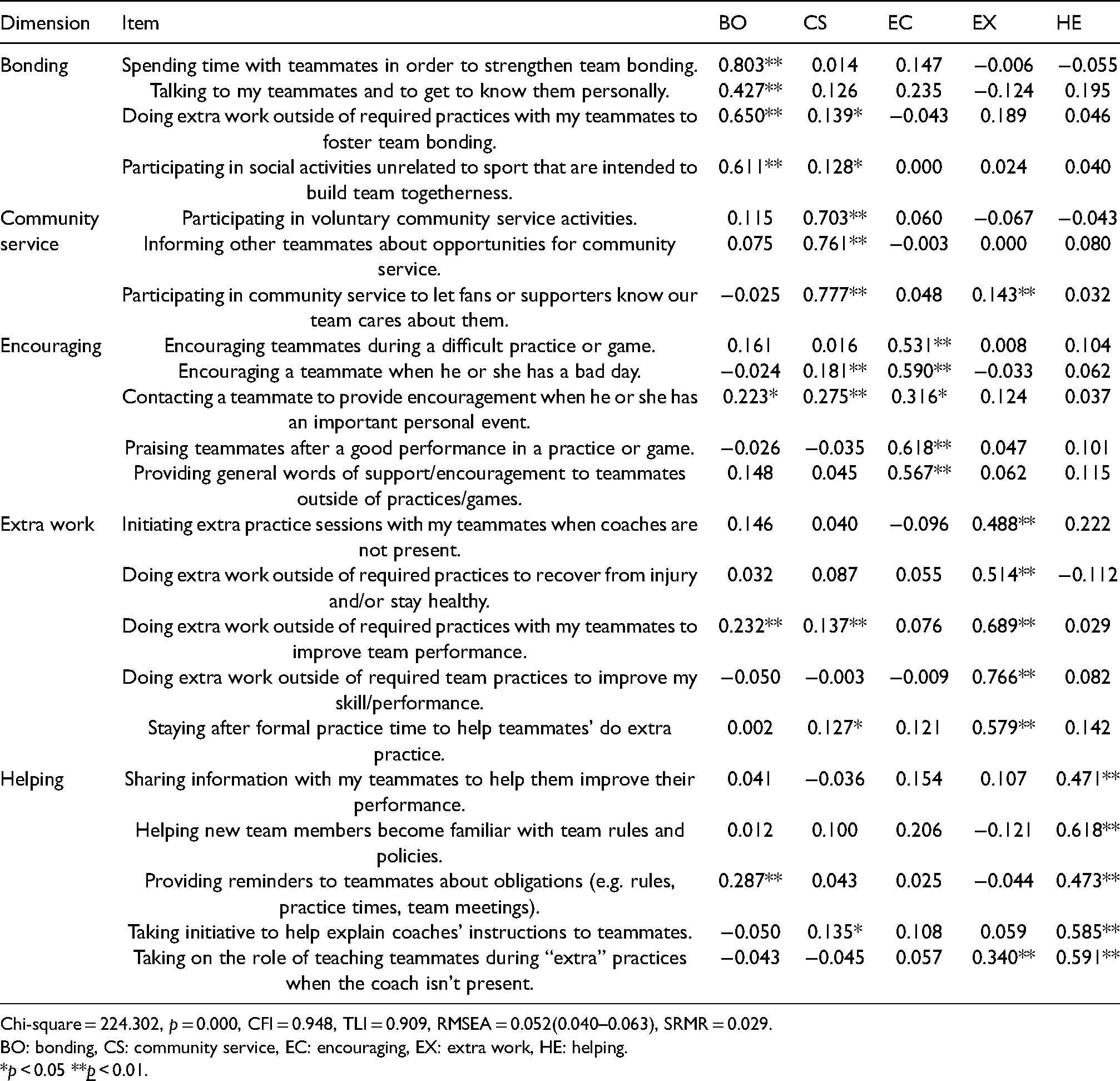
Chi-square = 224.302, p = 0.000, CFI = 0.948, TLI = 0.909, RMSEA = 0.052(0.040–0.063), SRMR = 0.029.
BO: bonding, CS: community service, EC: encouraging, EX: extra work, HE: helping.
*p < 0.05 **
Correlation coefficients among factors in ESEM 2.
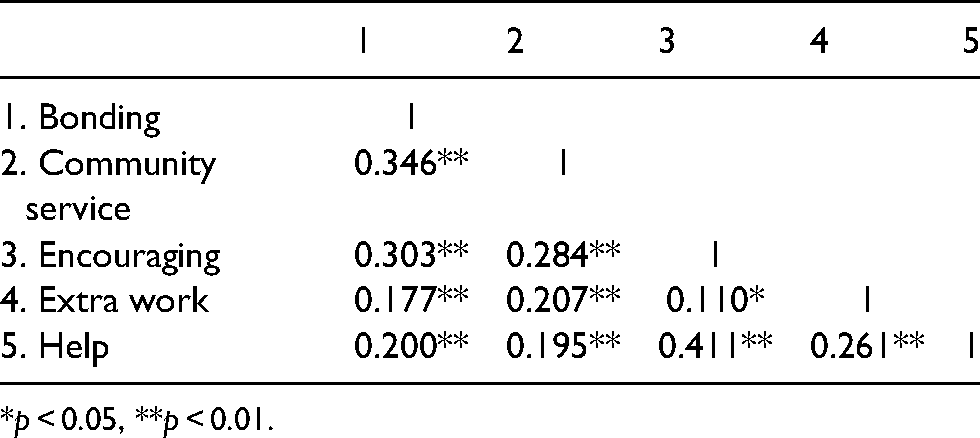
*p < 0.05, **p < 0.01.
Reliability analysis.
Criterion validity of the finalized OCB scale with 22 items under five dimensions was tested by examining correlations between the five dimensions of OCB and relevant outcomes (i.e. athlete satisfaction and team commitment). The results of the correlation analysis revealed all correlation coefficients between the OCB dimensions and athlete satisfaction were significant, ranging from 0.135 to 0.412. In addition, all correlation coefficients between the OCB dimensions and team commitment were significant, ranging from 0.213 to 0.484. The fact that that all five dimensions of OCB were significantly associated with two well-established outcome scales (i.e. satisfaction and team commitment) supported the criterion validity of the newly developed OCB in Sport Scale with 22 items under five dimensions shown in Table 7.
Criterion validity.
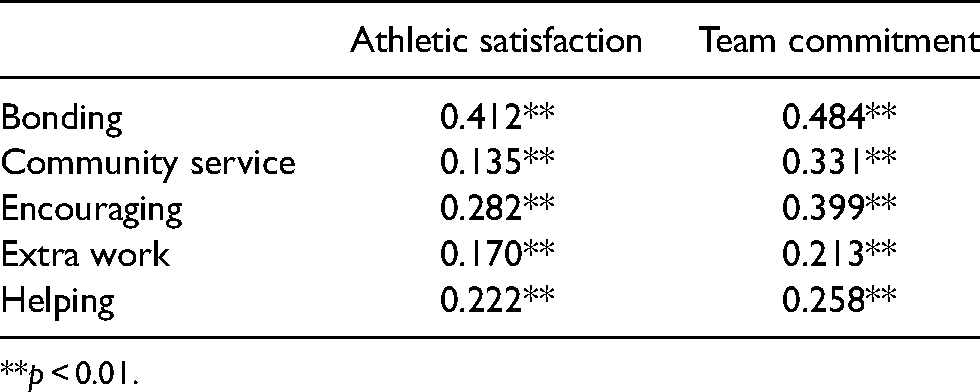
**p < 0.01.
Discussion
Several studies in sport psychology and management have used existing OCB scales developed in the field of organizational behavior and industrial psychology. However, while the concept of OCB appears to have strong applicability to sport, 14 the absence of an OCB scale attuned to the unique characteristics of sport has hindered researchers’ ability to explore causal relationships between OCB and other important variables in sport settings. Therefore, the purpose of the current research was to develop a valid and reliable measurement to assess OCB in the context of sport (Table 8).
Final OCB in sport scale (22 items).
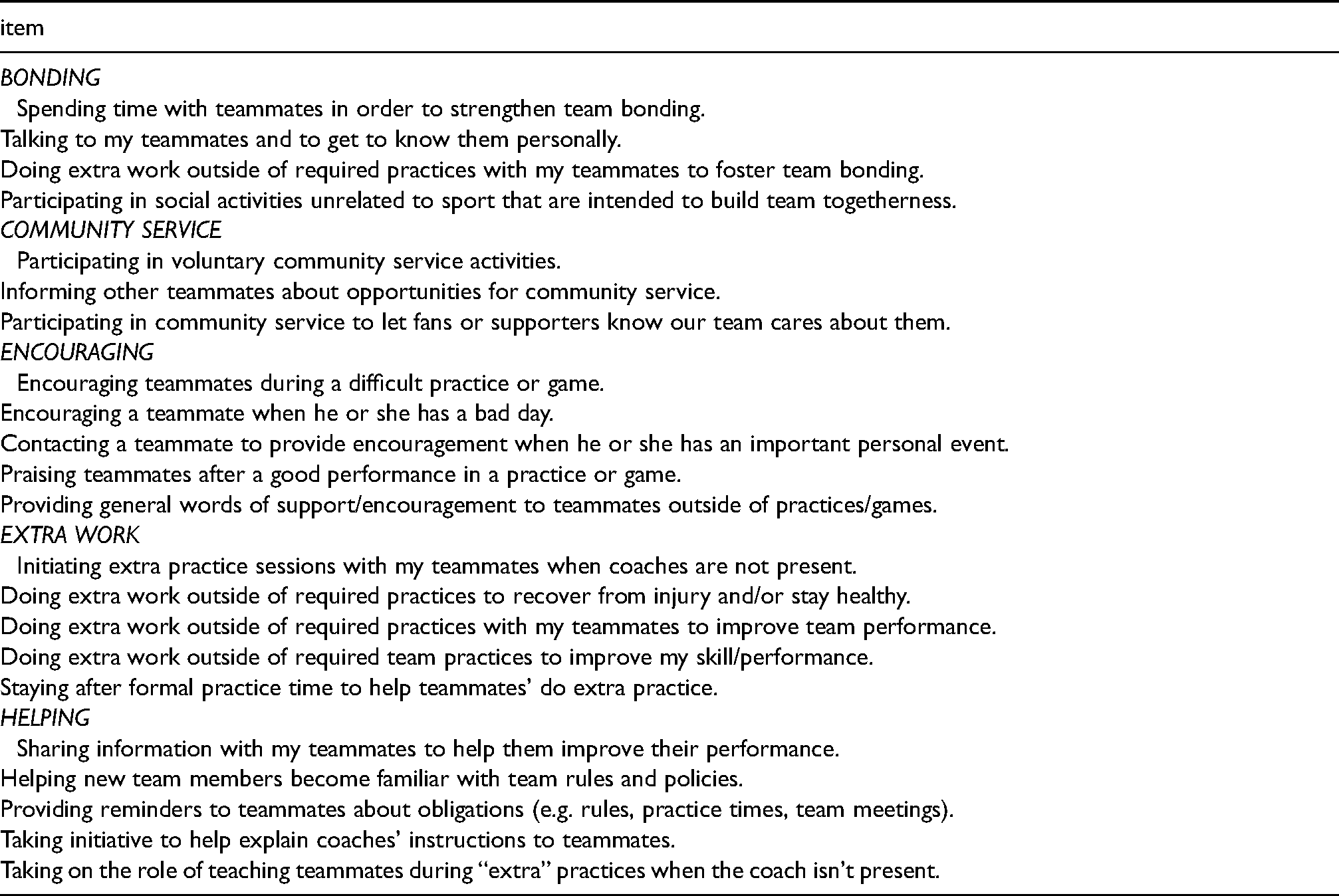
In developing the OCB in Sport Scale, the current study used ESEM, which allows items to cross-load on multiple dimensions, in order to overcome the theoretical shortcomings of CFA, which allows each item to load on only one factor. The decision to utilize the ESEM model was made because OCB in sport was expected to have a multidimensional structure like OCB in other contexts, and the dimensions were assumed to closely relate to one another given the nature of the concept. The results revealed the ESEM model presented an excellent fit to the data. As expected, there were positive correlations among the five dimensions of OCB when the ESEM model was used to evaluate the factor structure of the multi-dimensional OCB model. In addition, the weak to moderate associations confirmed the five dimensions to be sufficiently distinct from each other.
The results of ESEM revealed that the dimension of courtesy, which refers to organization members’ behaviors that prevent problems and reduce the future adverse impacts of problems in a team, 25 did not work well in the context of sport. Although there were eight items, such as “Considering the impact of my actions on teammates,” “Being careful to not abuse the rights of teammates,” and “Taking steps to prevent problems with teammates” that were expected to possibly load on courtesy from the initial 42-item survey used in the first data set, all items were either insignificant or loaded on other dimensions. The data suggested that the participants in this study might consider such behaviors as part of their required roles or duties rather than OCB. Other OCB studies have argued that some items in OCB scales could be considered a required part of the job depending on the pressures and vulnerabilities in a particular work setting. 4 In fact, Love and Kim 13 also highlighted this “gray area” between what is “required” as opposed to voluntary in the context of sport.
Regarding the dimension of helping, a total of 13 items were initially included in the original 42-item survey. However, the results revealed that only helping behaviors directly related to practice and performance were considered OCB behaviors by respondents. Other non-practice and non-performance related behaviors, such as “watching out for my teammates in social situations;” “helping recruit new players to the team (e.g. by ‘hosting’ recruits, attending dinners with recruits);” “being ready to lend a helping hand to teammates;” “giving material help to teammates (e.g. giving a ride to a teammate who does not have a car;” and “helping my teammate stay out trouble” were not supported as examples of OCB in the current study. However, items that more directly related to the team's practice and performance, such as “sharing information with my teammates to help them improve their performance;” “providing reminders to teammates about obligations (e.g. rules, practice times, and team meeting;” and “taking initiative to help explain coaches’ instruction to teammates” did significantly load on the helping dimension. One explanation for the failure of items indirectly related to performance or practice to load onto the “helping” dimension is that some athletes may simply view these types of behaviors as “part of the job” given the strong emphasis placed on team bonding in sport. 30 However, this matter also merits further scholarly attention, as interview participants did cite such activities as examples of OCB. Therefore, research should further investigate this potential “gray area” regarding OCB in sport by considering various contexts, such as team versus individual sports.
Several items in the final 22-item scale loaded on more than one dimension, as shown in Table 4. For example, the item “doing extra work outside of required practices with teammates to foster team bonding” was generated based on athletes’ comments in qualitative interviews and expected to possibly load on the factors of extra work and bonding. As expected, the item had cross-loadings on bonding (0.492) as well as extra work (0.369) in the first data set and cross-loadings on bonding (0.650) and extra work (0.189) in the second data set. Given the focus of the item's wording on bonding, the results indicated the item should belong to bonding over extra work, emphasizing the role of such activities in building comradery among members of the team.
The existence of these cross-loading items confirmed our expectations, because while each dimension of OCB is distinct, the factors also have connections with one another. Notably, all cross-loading items loaded higher on their intended dimensions than on non-targeted dimensions.
The initial 42-item instrument included one negatively worded item, “making negative comments about teammates’ effort/performance to motivate them to perform better.” The item was generated based on qualitative interviews in which athletes differentiated positive comments intended to motivate (e.g. “come on, you can do it!”) from negative comments intended to motivate (e.g. “if you’re not gonna play, stay in the locker room!”). In other words, while both types of comments were intended to motivate teammates to perform better, participants had differentiated between the nature (i.e. positive or negative) of the motivation. However, the usage of the negatively worded items has been seen as problematic because the factor loading for this item was negative rather than positive for the dimension, leading the item to be excluded from the final scale.
Results of the ESEM revealed significant associations between five dimensions of OCB and athletic satisfaction team commitment, which supported the criterion validity of the newly developed OCB scale. These findings were consistent with previous studies on OCB and the relevant variables. 52 In prior non-sport research, OCB has demonstrated significant associations with other important variables (e.g. leadership, organizational justice) in organizations. 4 Therefore, the newly-developed OCB in Sport Scale can not only help researchers empirically study the potential relationships between psychological antecedents and the identified dimensions of OCB in sport, but also provide practical guidance to professionals working with athletes. This is important given the amount of resources that are often dedicated to elite sport by governments and national sport organizations. With an improved understanding of OCB in the context of elite sport, government officials and administrators with sport organizations may be able to make more effective use of the resources available to them.
Theoretical contributions
The current study, based on an organizational psychology approach, provides a number of theoretical contributions for sport psychology and sport management. First, the current study made an academic contribution to the sport literature by identifying facets of OCB unique to sport organizations. As shown in Figure 2, the finalized scale consists of five dimensions—(a) bonding, (b) community service, (c) encouraging, (d) extra work, and (e) helping—which are additional extra-role behaviors particular to the context of sport due to the nature of physical, mental, and social involvement and interaction required between teammates before, during, and after competitions. For example, the current study revealed community service as one dimension of OCB in sport. Given the public nature of sport and team performance, building and maintaining good relationships with fans in a community is particularly important for a team's long-term success, 53 as many sport organizations rely on community support in the form of attendance. Therefore, athletes view these types of community service activities as important ways to help the team succeed by promoting a positive image within a local community. In addition, the current study confirmed Love and Kim's finding that team bonding through social activities outside of sport constitutes OCB in sport, which is a departure from OCB studies in non-sport settings. Because team cohesion may be seen as particularly important in competitive sport, athletes perceive such social activities as voluntary behaviors that may positively influence team performance via improved cohesion among teammates. In addition, the current study revealed that courtesy and helping behaviors unrelated to practice or performance were not perceived as OCB by athletes, although such behaviors are commonly seen as OCB by employees in other business sectors. In turn, it can be interpreted that athletes only recognize extra behaviors that directly relate to team effectiveness and performance as constituting OCB.
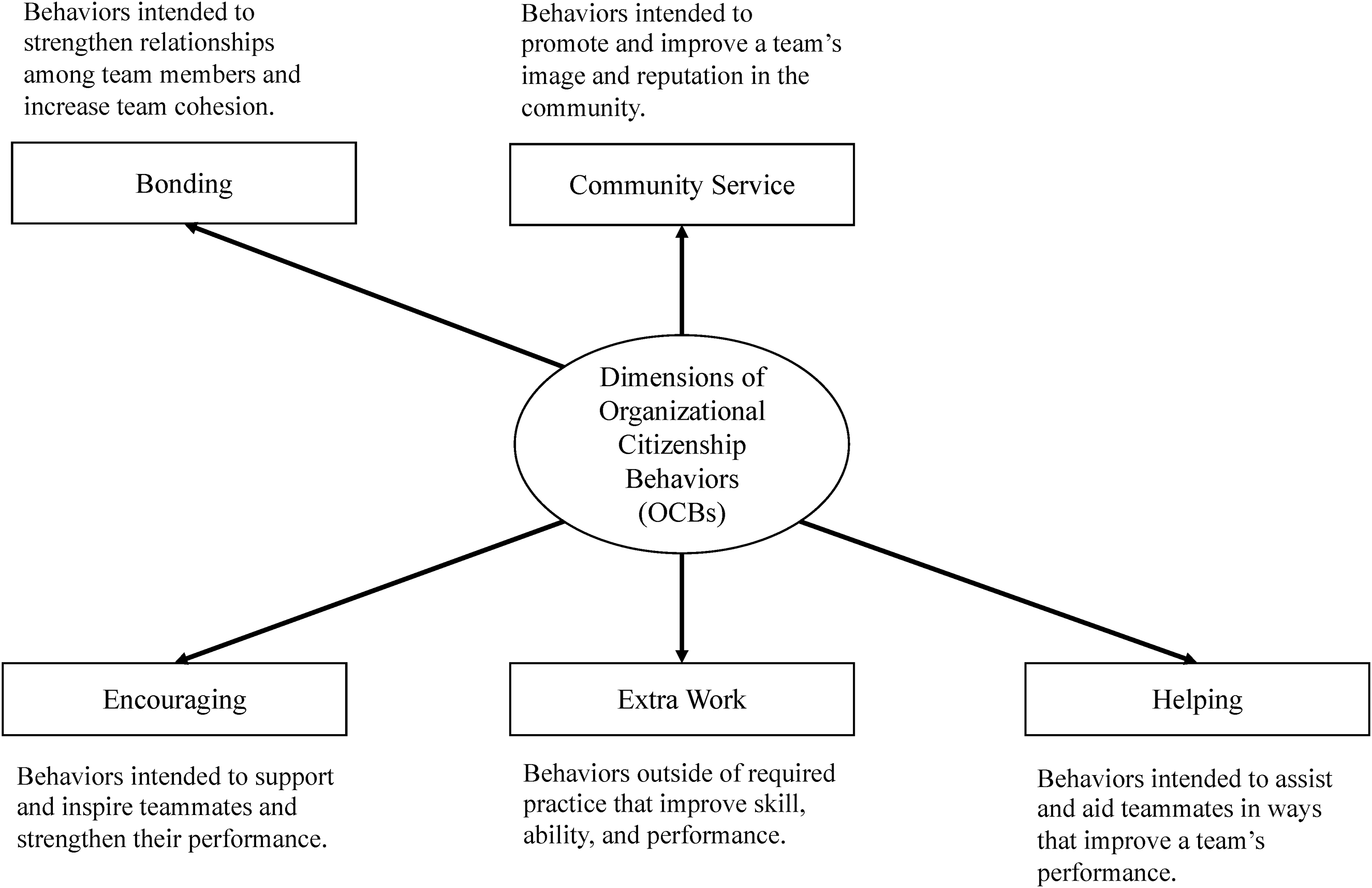
Finalized five dimensions of organizational citizenship behavior (OCB) in sport.
Second, the OCB in Sport Scale provides sport psychologists with a useful tool to identify potential antecedents (e.g. organizational justice, leadership, organizational support, cohesion, satisfaction, and commitment) of OCB in elite sports and examine the relative effects/contributions of these variables on OCB, which can, in turn, positively impact teams’ performance. Third, the new scale could be utilized by researchers in sport psychology and management to measure behavioral outcomes. Notably, most studies in organizational psychology have used attitudinal outcomes (e.g. job satisfaction and organizational commitment) rather than performance outcomes as their final outcome variables due to the difficulty of measuring organizational performance with a scale. Therefore, the new scale provides an important contribution by allowing researchers to examine behavioral effects of relevant constructs in sports. Fourth, a strong need for additional research regarding OCB and its relevant variables in sport has been recognized by several scholars.10,13,14 The current study may encourage researchers to conduct more studies on this topic in sport science by providing them a valid and reliable instrument with which to do so. Finally, the current study attempted to encourage researchers in sport psychology and management to place increased focus on organizational psychology in elite sports, which could improve organizational effectiveness.
Practical implications
The results of the current study have important implications for coaches and managers in sports. For example, the findings of the current study confirmed that citizenship behaviors are present and important not only in business settings, but also in the context of sports. Therefore, coaches should be aware of the concept of OCB and its importance in developing a successful team. Coaches, as leaders, must recognize the wide range of potential elements that may have negative or positive impacts on their team success. Given that OCB entails voluntary behaviors that may positively impact organizational effectiveness, 4 coaches should recognize and understand different types of athletes’ citizenship behaviors. In particular, the current study identified five types of citizenship behaviors that may contribute to team success: (a) bonding, (b) community service, (c) encouraging, (d) extra work, and (e) helping. Therefore, coaches may use the findings of the current study to identify particular type(s) of athletes’ citizenship behaviors and be aware of which type(s) of OCB are most important on their team and in their particular sport. Understanding such factors may help create an environment in which athletes focus on key OCB activities that are most relevant in their unique team and sport contexts. For example, the current study revealed that athletes viewed social activities, such as getting together for a meal, as important citizenship behaviors to build team bonding. Therefore, coaches in some contexts may find that encouraging their athletes to engage in social activities together or providing opportunities for social bonding outside of practice can increase the level of team cohesiveness, in turn resulting in better performance.
Limitations and future studies
Whereas this study provides initial psychometric evidence for the utility of the OCB scale in sport, there are several limitations to be considered. First, the current study only collected data from athletes at the highest level of college sport in the United States; therefore, the generalizability of the scale may be limited and merits further exploration. Future research should verify the applicability of the scale for various groups from diverse contexts (e.g. gender, race, culture, nationality, and levels of competition). Second, this study attempted to comprehensively examine OCB in the context of sport by including participants from a wide variety of sports. However, a limitation exists because the sample sizes for each particular sport are small. Therefore, future studies should recruit samples to reflect the characteristics of various sports to further clarify the generalizability of the scale (e.g. by comparing individual and team sports). Finally, the current study only examined the correlations between five dimensions of OCB and two related variables (i.e. athletic satisfaction and team commitment). Additional research using the new OCB scale is needed to analyze relationships between OCB and other variables, especially for variables known to have causal relations with OCB, in the context of sport.
Conclusion
Sport psychology and management scholars have adapted and applied numerous organizational behavior concepts that were originally developed in non-sport settings. Given the unique aspects of sport contexts, sport researchers have developed sport-specific scales to examine several constructs of organizational behavior, such as leadership, 15 athletic and coaching satisfaction,16,17 and organizational justice. 18 However, while several sport scholars have made foundational efforts to examine OCB in sport, a scale to measure OCB that is attuned to the unique facets of sport does not yet exist. The current study serves a pioneering role by developing and validating the OCB in Sport Scale, consisting of 22-items organized in five dimensions. Ultimately, it is our hope that the development of this scale can help drive future research about OCB in a variety of sport contexts, bringing a more nuanced understanding of the unique ways in which OCB operates in sport.
Footnotes
Declaration of conflicting interests
The authors declared no potential conflicts of interest with respect to the research, authorship, and/or publication of this article.
Funding
The authors received no financial support for the research, authorship, and/or publication of this article.
