



Abstract
In this study we analysed the differences in verbal behaviour of coaches during matches. A total of 9739 verbal behaviours issued by 26 male handball coaches in 26 matches, 1 for each coach, were classified into the categories established by the Coach Analysis and Intervention System (CAIS). These behaviours in turn were grouped according to the type of coping expressed by the coach (task-oriented, emotional positive and emotional negative). Coaches were then classified into high or low emotional intelligence, and high or low self-determined motivation, using the mean of these scores. Differences in verbal behaviour percentages were analysed by Chi-square based on coach membership in groups of emotional intelligence and self-determined motivation. Coaches with greater self-determined motivation and emotional intelligence used more verbal behaviours showing positive emotional coping. Results are discussed based on the impact on the health and performance of athletes, as well as possible interventions to improve the leadership of the coach in a match situation.
Coaches, through their words and actions, influence athletes’ performance, and well-being, for which it is relevant to delve into the knowledge of the behaviours and cognitions that mediate this relationship.1–8 Fletcher et al.9,10 proposed a meta-model of stress, emotions, and performance, which can help us understand the relationship between what the coach does and the behavioural and affective consequences in his athletes. The model describes the theoretical relationships between key processes, moderators, and consequences of the stress process. It emphasizes the transactional nature of stress as a dynamic process, determined by the situation and personal variables.10,11 From the perspective of sports training, the model postulates that stressors arise from the environment, are mediated by perception, evaluation, and coping processes, and result in variables such as anxiety and sports performance. This ongoing process is tempered by various personal and situational characteristics.
Competition is one of the most stressful situations that coaches must face, and their beliefs, values, and interpersonal competencies are of critical importance to the overall style of leadership they adopt.12,13 Regarding personal characteristics, emotional intelligence and motivation have shown evidence of their effects on anxiety and performance. Emotional intelligence has been proposed as one of the personal variables of the coach that determine the experience of stress and coping behaviours in sport. 14 It is defined as the ability to perceive, monitor, use and manage the emotions of oneself and of others.15,16 In other settings, such as business, some studies have verified that leadership behaviours are directly determined by the emotional intelligence of leaders, and that these behaviours determine the ability of employees to respond appropriately to challenges in the workplace and thus their performance, satisfaction, and commitment.17,18 Other works have communicated that leaders with a high level of emotional intelligence set clear direction and purpose for followers and establish an environment of mutual trust and respect in which employees value team membership, and motivate and activate positive emotions in others to support creativity in the workplace.19–23
In sport, Thelwell et al. 14 analysed the relationships between perceived emotional intelligence and coaching efficacy in a sample of ninety-nine coaches, finding that most emotional intelligence subscales correlated positively with coaching efficacy in terms of motivation, development of the game strategy and development of the character of their athletes. In their discussion, they indicated that the mechanism that could explain this relationship could be related to the way in which emotional intelligence conditioned the coach's experience of stress and coping with stress. Other studies24,25 had verified the existence of a relationship between the behaviour of the coaches and the stress caused by them on their athletes. These results justified the sequence: Emotional intelligence of the coach → behaviour of the coach → stress of athletes.
On the other hand, self-determined motivation indicates the extent to which a person has reasons to perform an activity, and these are internalized.26,27 Several studies28–30 have shown that it leads to a more positive and flexible estimation of stress, and the use of better coping strategies. Specifically, Amiot et al. 28 verified that self-determined motivation of athletes positively predicted the use of task-oriented coping strategies (TOC), while non-self-determined motivation predicted the use of distancing coping strategies (DC). However, despite the existing evidence of the relationship between motivation and coping in athletes, we did not found studies that analysed it in coaches.
Lazarus and Folkman 31 defined coping as the constantly changing cognitive and behavioural efforts to meet external or internal demands when it is estimated that they exceed the resources of the person. They offered a theoretical framework for the study and classification of the different coping strategies, identifying two large functional dimensions: (1) task-oriented coping, which encompasses strategies to change or control the aspects of the situation that arise. perceived as threatening, such as increased effort, planning and logical analysis of the problem; and (2) emotion-oriented coping, which encompasses strategies aimed at regulating the emotions felt in the face of the stressor, such as accepting responsibility, seeking social support, positively reassessing the situation, or exercising self-control. Endler and Parker 32 have completed this classification by proposing a third functional dimension, avoidance or distancing coping, representing the strategies that seek to disengage from the task and redirect attention to other stimuli not relevant to it, including strategies such as denial, and drug use. The use of any coping strategy does not guarantee its effectiveness, rather, it depends on the context in which it is employed, although some coping strategies have shown to be more often better than others.33,34 Task-oriented coping strategies are the most used by athletes and are associated with better performance and psychological health than those focused on emotions or avoidance.35–38 However, there are few studies that have studied the use of task-oriented coping behaviours of coaches.
Olsen et al. 39 conducted a review of six studies that analysed coping of high-level coaches using Fletcher et al.'s meta-model of stress, emotions, and performance as a basis for the review. They reported that research had merely analysed perceived stressors and the use of coping strategies, finding that emotion-focused coping was less frequently reported than problem-focused coping. Finally, they encouraged researchers to further investigate coping amongst elite-level coaches and to do so by treating it as a concept affected by appraisals and personal and situational characteristics that exist in the context of a larger stress process. This study was therefore intended to analyse how the personal variables emotional intelligence and self-determined motivation related to verbal coping of coaches in competition. In the present study we hypothesized that perceived emotional intelligence and self-determined motivation in coaches would predict the type of coping used by them in the game, which would be manifested through the behaviours exhibited in it. Coaches with higher emotional intelligence and self-determined motivation would show a higher percentage of task-oriented and positive emotion-oriented coping behaviours, seeking to create positive emotions, and lower percentage of negative emotion-oriented coping behaviours, seeking to avoid negative emotions.
Method
Participants
In the study participated a total of 26 male handball coaches, aged between 21 and 62 years (M = 29.15; SD = 10.19). Their experience as coaches varied, therefore, depending on their age. They were coaching teams of category under 14 (n = 1), under 16 (n = 3), under 18 (n = 3) and senior (n = 19). Teams competed at non-professional sports level. After being informed about the characteristics of the research and the anonymity of the data, they voluntarily agreed to participate in the study, which was approved by the University Ethics Committee.
Sample
We analysed the behaviour of each coach during a match, registering a total of 9.739 behaviours, with an average of 374.58 behaviours per game, with 204 being the lowest number of behaviours issued and 856 the highest number.
Instruments
Measure of coach motivation
The Motivation Scale for Coaches 40 was used, composed of 32 items measuring 8 dimensions, and answered on a 7-point Likert-type scale. A specific analysis to study the reliability of the measure was not feasible because the limited number of observed coaches (n = 26) and items in each dimension (n = 4), being Cronbach's alpha coefficient largely determined by them. That is why in this study we used previously validated measures.
For data analysis, the self-determination index (SDI) was calculated, as proposed by Vallerand with an equation of the 8 measured dimensions: (((Intrinsic motivation -IM- of knowledge + IM of achievement + IM of stimulation)/3) × 2) + ((Extrinsic motivation -EM- integrated + EM identified)/2) − ((introjected IM + EM of external regulation)/2) − (Amotivation × 2)). 41 The index allows to calculate a score that includes the importance given by the person to the types of motivation according to their degree of self-determination. The motivations are weighted so that the most self-determined add up positively and are multiplied by a corrective factor and the less self-determined ones subtract and are also multiplied by a corrective factor. This index has shown relationships with cognitive and behavioural variables in different studies.41–43 The normality analysis showed an adequate adjustment (Shapiro-Wilks = 0.927; g.l. = 26; p = .065), so the score obtained was factored into highs and lows using the mean as a reference (M = 3.80).
Measurement of emotional intelligence of coaches
To measure the emotional intelligence perceived by the coaches, the Spanish translation of the Scale of Emotional Intelligence in Sports (BEIS-10) 44 was used. This scale is composed of 10 items answered on a 5-point Likert-type scale. Their authors reported that confirmatory factor analysis supported a five-factor solution, but the factors were highly correlated further providing support for a total score. Although a problem associated with this measure has been the lack of test-retest stability in an interval of two months, 44 the BEIS-10 has been used in previous studies with a single factor, showing adequate reliability and test-retest stability.45,46 In our study the problem of stability was avoided by making the measurement around an hour before the match. Thus, emotional intelligence was calculated as the measure of the scores obtained on the items on the scale. For the same reasons expressed in the measure of self-determined motivation, to this extent we did not perform reliability analysis either.
Due to the non-normality of the distribution of scores, these were normalized following the fractional rank method and subsequently factored into highs and lows using the mean for this.
Measurement of verbal behaviour of coaches
Each coach's behaviour was recorded during a randomly selected match. To do this, a camera placed in front of it, on the other side of the field, and a recorder with a microphone were used.
Behaviour was coded with the modified version of the Coach Analysis and Intervention System (CAIS), 1 proposed by Guzmán et al., 47 characterized by the incorporation of two primary behaviours: “Alert” and “Inform” (Table 1). The coding reliability was adequate, both intra-observer (kappa coefficient = .89) and inter-observer (kappa coefficient = .84), with a total of three observers participating.
Description of primary behaviours of the modified CAIS, and grouped categories according to coping.
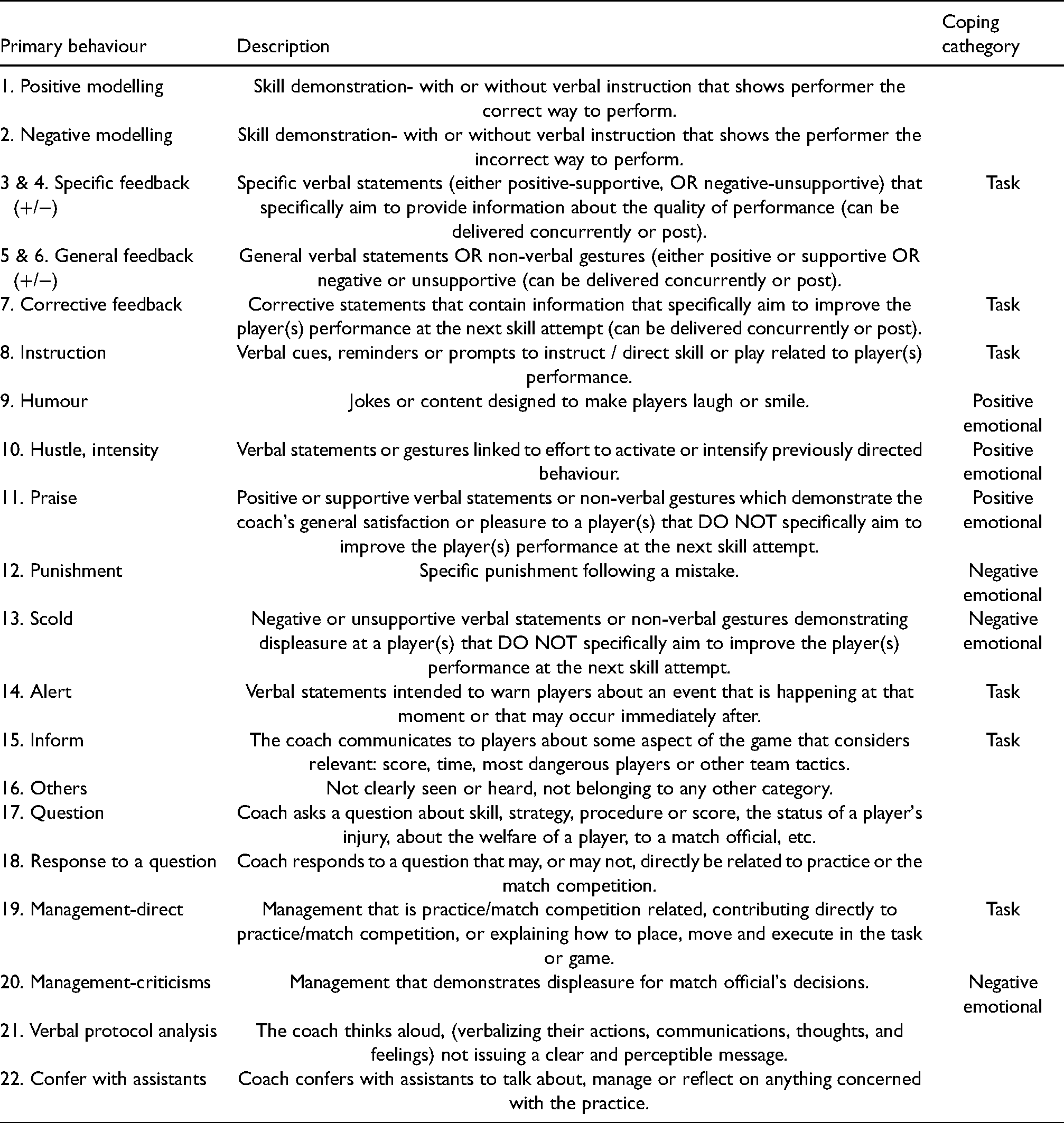
Behavioural categories were classified into three types of coping: task-oriented, positive emotion-oriented, and negative emotion-oriented. For this, a list with the primary coding categories of the coach's behaviour was administered together with their definition (Table 1) to a sample formed by 5 expert coaches, national coaches of collective sports and doctors of sports sciences with specific knowledge in sports psychology, who had to choose to what type of coping they thought each category corresponded. Those categories that obtained an acceptable degree of agreement among the experts (kappa coefficient ≥ .80) were included in the analysis. The task coping was made up of the categories: specific feedback (positive and negative) and corrective, instructions, alert, information, and direct organization. The positive emotional coping was made up of for the categories humour, encouragement, and praise. Finally, the negative emotional coping was made up of for the categories: punishment, scolding, analysis of verbal protocol, and criticism of the organization. The rest of the categories were not consistently associated with a type of coping and therefore were not included in the analysis.
Procedure
Prior to perform the study it received the approval of the Ethics Committee of the University. Participants signed the consent after informing them that the data obtained would be confidential and used for research purposes.
Coaches were selected through the data available on the websites of teams and federation. We contacted them via email and phone and agreed with them on the date of data collection and measurement. They completed the measurement scales at least an hour before the match, which was considered of intermediate importance, and played on own court to facilitate the study. During the game coaches verbal behaviour was recorded with a voice recorder they carried in their pocket, and a camera arranged across the field, in front of the coaching area. The verbal behaviour of each coach was coded by one researcher, with three researchers participating in this process.
Results
Data analysis
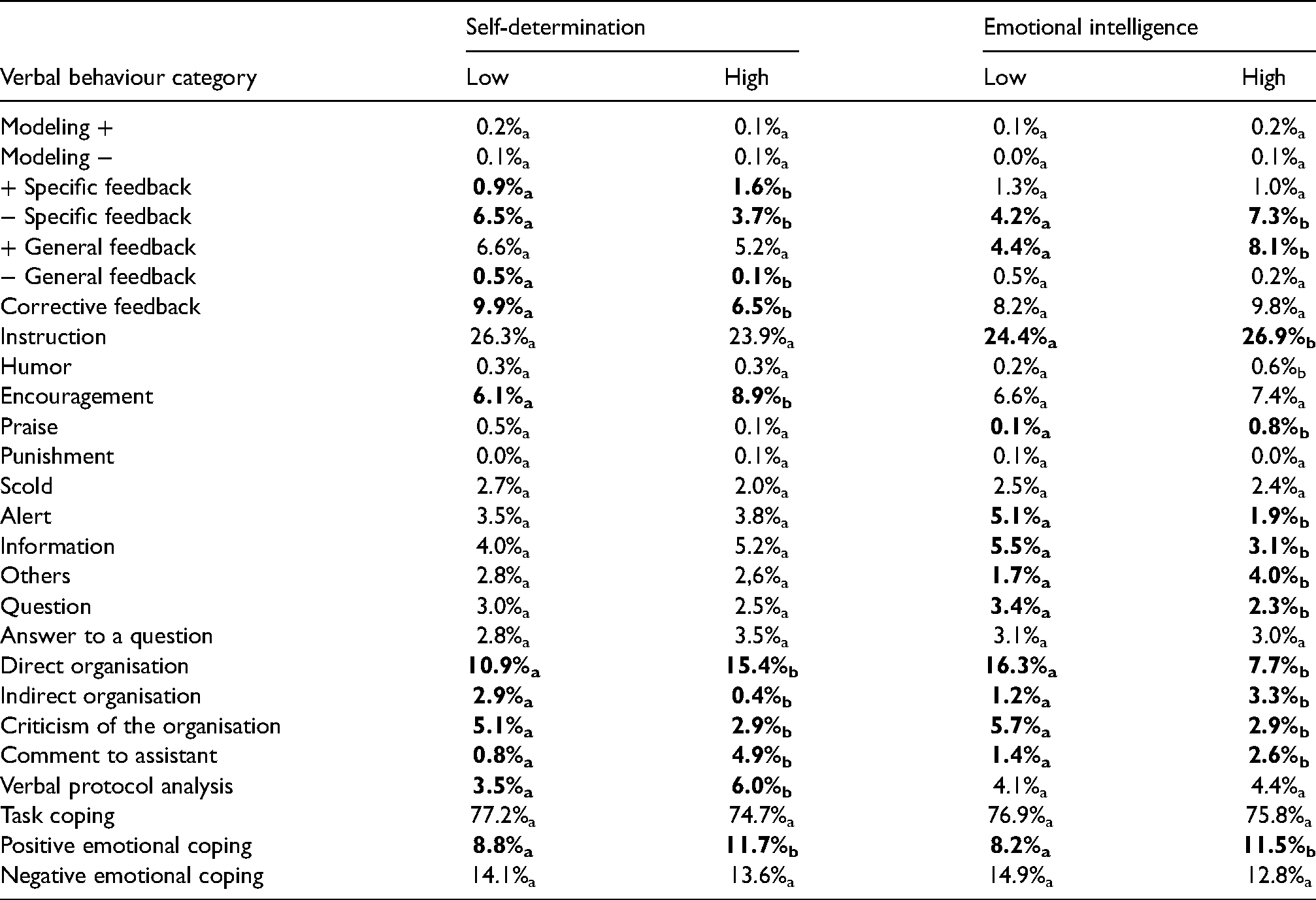
Firstly, we checked that there were no differences in the coping behaviour of the coaches depending on their age, the age of the athletes, the level of play, or the match result. Then two Chi-square analysis were carried out with the SPSS program. In the first, the differences in percentages of verbal behaviour of coaches (primary dimensions and grouped according to type of coping) were analysed depending on self-determined motivation (high or low). In the second, the differences in percentages of verbal behaviour (primary dimensions and grouped according to type of coping) were analysed depending on emotional intelligence (high or low). The results of these analysis are shown in the Table 2.
Differences in percentages (Chi-square) in verbal behaviours and coping styles of coaches, based on their self-determination and emotional intelligence.
Classification of coaches and descriptives in emotional intelligence and self-determined motivation
We calculated the mean in emotional intelligence: M = 3.754; and self-determined motivation: M = 15.941. The emotional intelligence descriptives of the coaches classified as high in this variable were: N = 12, M = 4.28, SD = .27, Min = 3.80, Max = 4.80; and those classified as low: N = 14, M = 3.30, SD = .83, Min = 1.00, Max = 3.75). The self-determined motivation descriptives of the coaches classified as high in this variable were: N = 11, M = 19.99, SD = 4.05, Min = 16.25, Max = 27.25; and those classified as low: N = 15, M = 13.05, SD = 3.76, Min = 3.75, Max = 15.94. Emotional intelligence and self-determined motivation showed no significative correlation (r = −.051).
General communication profile
Overall, the most frequent communicative behaviour was instruction (25.38%), followed by direct organization (12.58%), corrective feedback (8.6%), and mood behaviour (7.25%).
Regarding type of coping, task behaviours were the most used (76.15%), while positive and negative emotional coping behaviours showed similar percentages (10.05% and 12.85% respectively), showing greater fluctuations in positive emotional coping, as will be seen in the analysis based on the variables self-determined motivation and emotional intelligence.
Coping behaviours based on self-determined motivation
Coaches with higher self-determined motivation showed higher percentages of positive specific feedback, encouragement, direct organization, comment with an assistant, and verbal protocol analysis. Conversely, they made a lower percentage of negative feedback (general and specific) and corrective, indirect organization and criticism of the organization. Regarding the behavioural categories according to the type of coping (Figure 1), the coaches with higher self-determined motivation showed greater positive emotional coping. These results do not agree with the results of Amiot et al., 28 which verified that the self-determined motivation of athletes positively predicted the use of task-oriented coping strategies. We believe that coaches in the sample managed to be focused on the task during the game, showing high competence and self-control, however, the emotional part was more difficult to control for those with a more extrinsic or less self-determined motivation and therefore we found differences in this aspect. It would be convenient to replicate the study in other samples of coaches to verify if this trend is maintained.
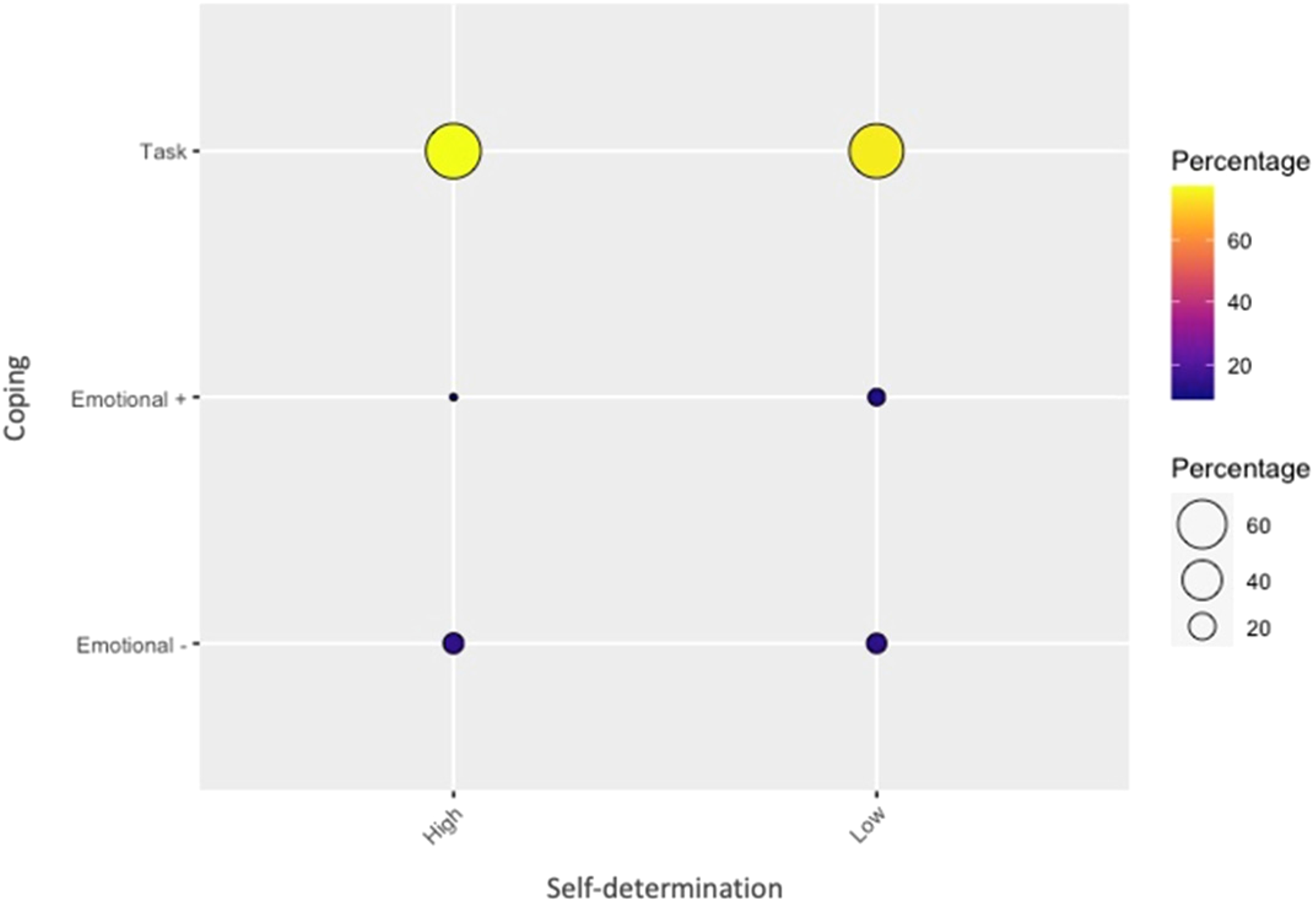
Percentages in coaches’ coping styles based on their self-determination.
Coping behaviours based on emotional intelligence
Coaches with higher emotional intelligence showed higher percentages of specific negative and general positive feedback, instruction, praise, indirect organization, and comment with an assistant. On the other hand, they made a lower percentage of alert, information, question, direct organization, and criticism of the organization.
Regarding the behavioural categories according to the type of coping (Figure 2), the coaches with higher emotional intelligence showed greater positive emotional coping.
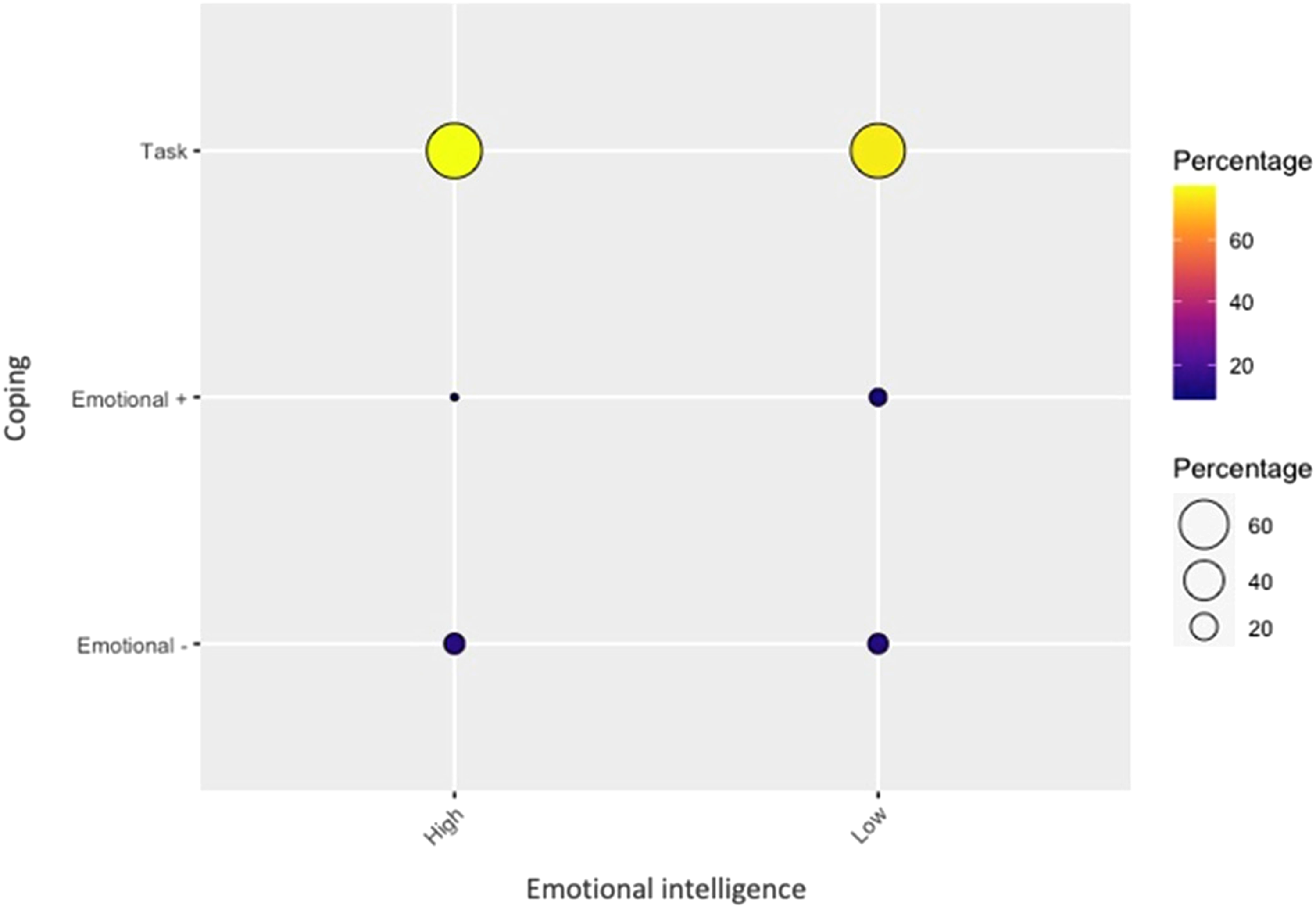
Percentages in coaches’ coping styles, based on their emotional intelligence.
Discussion
The present study allowed characterizing the communicative profile of coaches in competition based on their self-determined motivation and emotional intelligence, showing significant differences in various variables.
Coaches in general showed high percentages of behaviours focused on task coping, so that the most widely used: instruction, direct organization, and corrective feedback, are framed within this category. On the other hand, the next most used behaviour, encouragement, corresponds to positive emotional coping oriented towards positive emotions. These types of coping are those that have shown positive relationships with sports performance and negative with anxiety.
Although there were no quantitative differences in task coping depending on the emotional intelligence and self-determined motivation of the coaches, there were differences in the frequency of different verbal behaviours within this category. These differences show that not all task coping verbal behaviours are performed in the same way by coaches based on their personal variables, which may have different impact on the satisfaction and performance of the team's players. We analyse them separately based on emotional intelligence and self-determined motivation.
The analysis of verbal behaviour of coaches as a function of self-determined motivation showed that more self-determined coaches, in addition to the general tendencies indicated above, gave great importance to the direct organization of the team, thus showing interest in the overall functioning of the team and therefore in collective tactics. They also spoke more with the assistant, showing interest in contrasting their perceptions and ideas and therefore showing a more collective conception of team management. Regarding the differences depending on the type of coping, there were no global differences in task coping, although there were differences in specific behaviours. More self-determined coaches provided more positive specific feedback and less negative and corrective specific feedback, and more direct organization. On the other hand, there were differences in positive emotional coping, which was greater in coaches with higher self-determined motivation. This behaviour could lead to lower levels of anxiety in athletes, consequently facilitating their performance.
Verbal behaviour of coaches also showed differences based on their emotional intelligence. There were no global quantitative differences in task coping, but they did take place in specific behaviours within this category. The most emotionally intelligent ones provided more negative feedback and instructions and less alertness, information, and direct organization. Alert can act as a distractor during the game while being able to convey mistrust in players’ perceptual and reaction capabilities. For example, a player might be pretending to forget an opponent's marking to anticipate an interception of the pass towards the opponent and this strategy could be thwarted if the coach alerts him during the game. On the other hand, over-reporting can also convey some insecurity in the ability of athletes to be aware of certain situations of the game. Ultimately, greater use of behaviours aimed at direct team organization can also show an approach focused on general problems, without specific issues that may be emerging to specific players. Therefore, coaches with greater emotional intelligence, who performed less of these behaviours could be conveying to their athletes more confidence in their ability to self-regulate in the game. On the other hand, these coaches also provided more specific negative feedback, based on telling the player what needs to be improved, which could negatively affect the athlete's confidence. However, the fact that these coaches provided further instructions might make us think that they also gave solutions to the problems that arose. Specific negative feedback and instructions were not given in time continuity since in that case they would have been classified as corrective feedback, which showed a non-significant tendency to be superior in coaches with greater emotional intelligence. However, they make us think that these coaches identified problems and provided solutions, specifically, by targeting specific players. These differences in specific categories of task coping verbal behaviour should be specifically analysed, with the use of qualitative methodology being appropriate, through interviews to understand the concerns and intentions of coaches.
On the other hand, the smartest coaches showed a higher positive emotional coping, showing more praise to athletes and less criticism of the organization. In addition, there was a tendency, though not significant, to decrease the negative emotional coping. This situation leads us to think that through their behaviour they contributed to generate more positive emotions and satisfaction in their athletes.
Comparing the differences in verbal behaviour of the coaches based on their self-determined motivation and emotional intelligence, we found important similarities since coaches who scored higher in both variables were especially predisposed to perform behaviours that preserved the positive emotions of their athletes. Nevertheless, although in both cases there were no overall differences in task coping, they did appear in specific behaviours. We think that coaches with greater emotional intelligence used more negative specific feedback because of their increased confidence in providing it without diminishing player confidence or generating negative feelings. In turn, they tried to a greater extent not to interfere with their players’ self-regulation processes during the game, showing confidence in their ability to manage their behaviour and emotions. In other words, they hoped to a greater extent that their athletes were also emotionally intelligent. Instead, coaches with greater self-determination motivation tried to minimize negative and corrective feedback, perhaps because they were very concerned about keeping their players’ perception of competence high during the match. On the other hand, they provided more direct organization showing concern about the functioning of the team, which could facilitate the perception of affiliation of their athletes if they perceived that this behaviour enhances teamwork. In other words, they tried to facilitate the satisfaction of their players’ needs, preserving their perception of competence through providing less negative-corrective, and more positive feedback, and protecting their perception of affiliation by favouring collaboration through direct organization behaviours.
From these results we could deduce some recommendations for verbal behaviour from coaches based on trends shown by those perceived as emotionally intelligent and more self-determined. First, they should be focused on the task, so that task coping verbal behaviours predominate. The frequency of behaviours within this category should be more like that of coaches with high emotional intelligence, providing negative and corrective feedback and instructions, and being able to perform these behaviours without adversely affecting the confidence and feelings of athletes. They should also minimize verbal behaviours that could interfere with player performance or convey mistrust of their ability to self-regulate during the match. On the other hand, they should ensure that athletes had an emotional state as positive as possible, which implied a high positive and low negative emotional coping.
Limitations
Regarding the measurement instruments used, the CAIS, 1 has shown to be reliable in various studies,47,48 but the classification of behaviours in categories corresponding to coping styles is novel and should be viewed with caution. In our study, the reliability of the coping dimensions was acceptable according to the experts, but more research is needed to explore their application. The measure of emotional intelligence, the BEIS-10, 44 has a limited number of items, so its ability to differentiate between the different facets of emotional intelligence is restricted, although it allows a general estimation of the emotional intelligence that we considered appropriate for the objectives of the present study.
On the other hand, the present study focused on the analysis of verbal behaviour based on the internal dispositional variables of the coaches. We are aware that the situational variables of each match are determinants of their specific behaviours as shown by different studies. 48 Nevertheless, others have shown that the communicative style of coaches is quite stable regardless of the situation and therefore, it can be studied independently of concrete situations. 49 On the other hand, ensured that the sample of matches and coaches were enough to collect a wide range of situations (win or lose, play at home or away) and behaviours (successes and mistakes in the game) that could influence coaches’ verbal behaviour.
Finally, the study analysed the relationship between the coaches’ dispositions (motivation and emotional intelligence) and their behaviours in competition. However, when it comes to calibrating the impact of these behaviours on the anxiety and performance of athletes, the perception and interpretation they have of them are more important. Therefore, it would be important to carry out studies that analysed how the different behaviours of coaches are processed by their athletes, and how athletes’ dispositional characteristics influence their processing and the resulting anxiety and performance.
Conclusion
Coaches with greater self-determined motivation and emotional intelligence used more verbal behaviours showing positive emotional coping, which could contribute to create positive emotions in athletes that could help them to reduce their anxiety and improve their performance. These results help to establish recommendations to improve the communicative style of coaches during competition.
Footnotes
Acknowledgements
This research was subsidized by the Spanish Ministry of Science and Innovation (DEP2009-10253).
Declaration of conflicting interests
The author(s) declared no potential conflicts of interest with respect to the research, authorship, and/or publication of this article.
Funding
The author(s) disclosed receipt of the following financial support for the research, authorship, and/or publication of this article: This work was supported by the Ministerio de Ciencia e Innovación (grant number DEP2009-10253).
