



Abstract
Strength and conditioning (S&C) is implemented across various sports and levels, but there is limited understanding of the personnel responsible for this, including their S&C practices and perspectives. Whereas recent evidence has shown that coaches and players are often tasked with the responsibility. Therefore, this study aimed to investigate: 1) the personnel responsible for delivering S&C across different levels of soccer, 2) the practices and perspectives of soccer coaches and players, and 3) to ascertain whether the practices employed align with contemporary evidence and guidelines. Forty-two soccer coaches and 30 soccer players completed an online survey with six sections: (a) informed consent, (b) background information, (c) education, qualifications, and prescription, (d) views on S&C, (e) exercise selection and preferences, and (f) issues and improvements. Frequency analysis was used to report responses to fixed-response questions and thematic analysis for open-ended questions. Most respondents reported S&C to be ‘important’ to ‘very important’ for all soccer, physical fitness, and injury parameters, with perspectives being predominantly aligned with S&C guidelines and research in soccer. Although S&C coaches were mostly responsible for delivering S&C sessions, over 60% of respondents disclosed S&C sessions were delivered independently or by support staff. This is problematic given only four coaches held S&C qualifications, and issues and improvements were mostly regarding a lack of S&C expertise and education. This study provides valuable information for S&C and soccer organizations. Particularly regarding the additional support required to ensure those responsible for delivering S&C in soccer have the appropriate knowledge and qualifications.
Introduction
To be successful as a soccer player, a range of technical, tactical, psychological, physical, and physiological attributes are required. 1 Recently, there has been growing interest in the physical and physiological demands of soccer, which is characterized as a high-intensity intermittent contact sport. 2 Consequently, possessing strong aerobic and anaerobic conditioning, speed, agility, strength, and power, are considered advantageous for soccer performance. 2 To appropriately develop such attributes, personnel responsible for the implementation of strength and conditioning (S&C) are encouraged to use relevant guidelines and evidence-informed recommendations.2,3 For example, repeated sprint ability and change of direction drills, in conjunction with small-sided games can enhance players' aerobic and anaerobic capacities, while resistance training and plyometric exercises can improve strength, power, and agility.2,4
To effectively train and compete as a soccer player, remaining injury-free is also of great importance and a collective concern for coaches, players, and support staff.5,6 Due to the competitiveness of match play, injury incidence in competition is more prevalent than training across youth and adult populations. 5 A recent systematic review demonstrated that youth soccer players sustained 9.5 to 48.7 injuries per 1000 h of exposure in competition, and 3.7 to 11.14 injuries per 1000 h of exposure in training, while adult professional soccer players sustained 8.7 to 65.9 injuries per 1000 h of exposure in competition and 1.37 to 5.8 injuries per 1000 h of exposure in training. 5 Whereas, to reduce the likelihood of injury, players are recommended to undertake evidence-informed injury prevention programs (e.g. FIFA 11 + ), implement comprehensive S&C programs that include strength training, and manage training load. 6
Yet, the application of such recommendations may be problematic for coaches and players, who do not possess the required knowledge or experience. 7 This issue was recently emphasized in volleyball, where coaches and players considered S&C to be ‘highly important,’ but due to various constraints (e.g. finances, resources, availability of S&C coaches), S&C provisions were predominantly delivered independently, despite a lack of expertise or expertise in this field. 7 Conversely, research suggests at the elite level S&C coaches are commonly employed in various sports, 8 inclusive of soccer.4,9 Whether this is also the case at sub-elite levels of soccer or in regions where S&C is still being established within mainstream sport, 7 remains uncertain. Developing this understanding is important as it will provide national sports associations and S&C governing bodies, with the relevant information to best support the safe (e.g. reduction of injuries) and effective (e.g. improving performance) implementation of S&C within soccer. Furthermore, to help upskill those delivering S&C to obtain relevant education and qualifications.
Therefore, this study aims to investigate the S&C practices and perspectives of soccer coaches and players. To the authors’ knowledge, this is the first study to specifically address this. Results from this study will help ascertain whether coaches' and players' practices align with current guidelines and evidence in S&C, and support the further development of S&C education, practice, and research in soccer.
Methods
Measurements
This study used an anonymous online survey to investigate the S&C practices and perspectives of soccer coaches and players. The survey was adapted from previous research 7 and developed using the open-access survey application, Google Forms. All information within the survey was presented in English and Chinese for clarity and understanding for the surveyed population. The survey comprised of six sections, (a) written informed consent; (b) background information; (c) education; qualifications and prescription; (d) views on S&C; (e) exercise selection and preferences; and (f) issues and improvements. The coaches’ survey included 26 fixed-responses and 26 open-ended questions, and the players' survey included 24 fixed responses and 26 open-ended questions (see appendix). The coaches' additional questions were regarding the age range of soccer players coached and their predominant role in coaching (i.e. head coach, assistant coach). Some questions allowed the selection of multiple responses, meaning some questions had more responses than others. The survey was reviewed for content validity and pilot tested by each member of the research team, three soccer coaches, and three soccer players, for three rounds before the survey was finalized. This led to slight modifications to the wording and structure of the survey to ensure its validity for use with this population.
Participants
Forty-two soccer coaches and (n = 38 male, n = 3 female, n = 1 non-disclosed; mean age 40 ± 11 yrs; mean coaching experience 19 ± 14 yrs) and 30 soccer players (n = 17 male, n = 13 female; mean age 27 ± 7 yrs and playing experience 12 ± 5 yrs) participated in this study. A survey instrument was distributed via email to all coaches and players registered with the Hong Kong Football Association (HKFA). All participants were explained the inclusion criteria, purpose, aims, required time-commitment, and confidentiality of information, before providing consent and completing the survey. The inclusion criteria for coaches were, 1) currently coaching in competitive level soccer in Hong Kong, and 2) players coached currently perform resistance training practices. For players, the inclusion criteria were, 1) currently playing in competitive level soccer in Hong Kong, and 2) currently performing resistance training practices. The study was approved by the Human Subjects Ethics Sub-Committee of The Technological and Higher Education Institute of Hong Kong (THEi).
Statistical analyses
All responses from Google Forms were downloaded into a Microsoft Excel Spreadsheet. Fixed-response questions were assessed using frequency analysis. Open-ended response questions were assessed using a thematic analysis approach, 10 using the following six-stage process, (a) familiarization with the data; (b) generating initial codes; (c) searching for themes; (d) reviewing themes; (e) defining and naming themes; and (f) producing the report. This method of thematic analysis has been previously used in studies surveying sports coaches, athletes, and S&C coaches.4,7,9,11,12 Thereafter, overarching clear and identifiably distinct themes, representing the main ideas or patterns emerging from the raw data were generated for each question. Some responses provided sufficient information where more than one overarching theme could be identified.
Results
Participant information
The highest level of competition coaches and players had been involved in is presented in Figure 1.
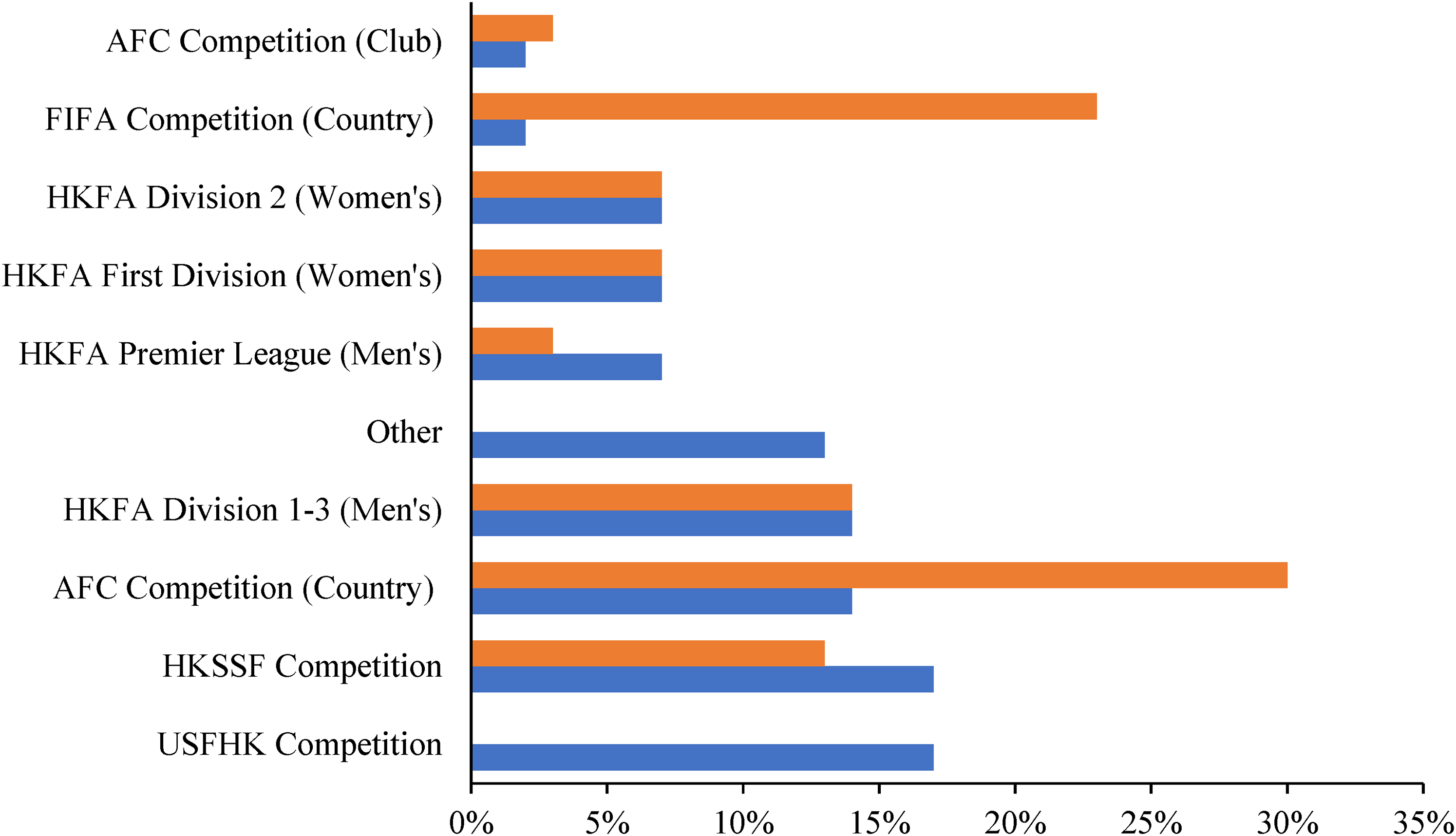
The highest level of competition that coaches (blue) and players (orange) had been involved in. The University Sports Federation of Hong Kong (USFHK); The Hong Kong Schools Sports Federation (HKSSF); Asian Football Confederation (AFC); The Hong Kong Football Association (HKFA); Federation Internationale de Football Association (FIFA).
The current roles of coaches consisted of head coach (48%), assistant coach (40%), and trainer (5%), with other (7%) responses including team director, team manager, and goalkeeper coach. The age groups coached were below 12 years (41%), above 18 years (27%), 12–14 years (17%), and 15–17 years (15%). Players' predominant positions were defender (47%), attacker (30%), midfielder (13%), and goalkeeper (10%).
Education, qualifications, and prescription
Coaches' highest level of education were bachelor's degree (48%), secondary school (21%), associate degree/higher diploma (19%), and master's degree (12%), with 52% of qualifications being in a sports-related field. Players' highest level of education were bachelor's degree (63%), secondary school (20%), and higher diploma/associate degree (17%), with 23% of qualifications being in a sport-related field.
Overall, only four coaches (10%) held recognized S&C qualifications, with the United Kingdom Strength and Conditioning Association (UKSCA) (5%) or the National Strength and Conditioning Association (NSCA) (5%).
Soccer coaching qualifications were held by 95% of coaches, with the highest level of qualification obtained with the following organizations, Hong Kong Football Association (HKFA) C Coaching Certification (31%), HKFA D Coaching Certification (31%), Asian Football Confederation (AFC) Professional Diploma (9%), HKFA B Coaching Certification (7%), Union of European Football Associations (UEFA) Pro Licence (5%), UEFA A Licence (2%), UEFA B Licence (2%), AFC A Coaching Diploma (2%), AFC B Coaching Diploma (2%), AFC C Coaching Diploma (2%), and Bank of China Hong Kong (BOCHK) Grassroots Football Planner Other (2%).
For players, 52% held coaching qualifications, with the highest level of qualification obtained with the following organizations, HKFA C Coaching Certification (13%), HKFA D Coaching Certification (13%), HKFA Youth Leader Award (13%), BOCHK Grassroots Football Planner Other (7%), HKFA B Coaching Certification (3%), and English Football Association (FA) Level One (3%).
The percentage of coaches and players reporting where they predominantly source S&C information and personnel responsible for prescribing S&C exercises are presented in Figures 2 and 3, respectively.
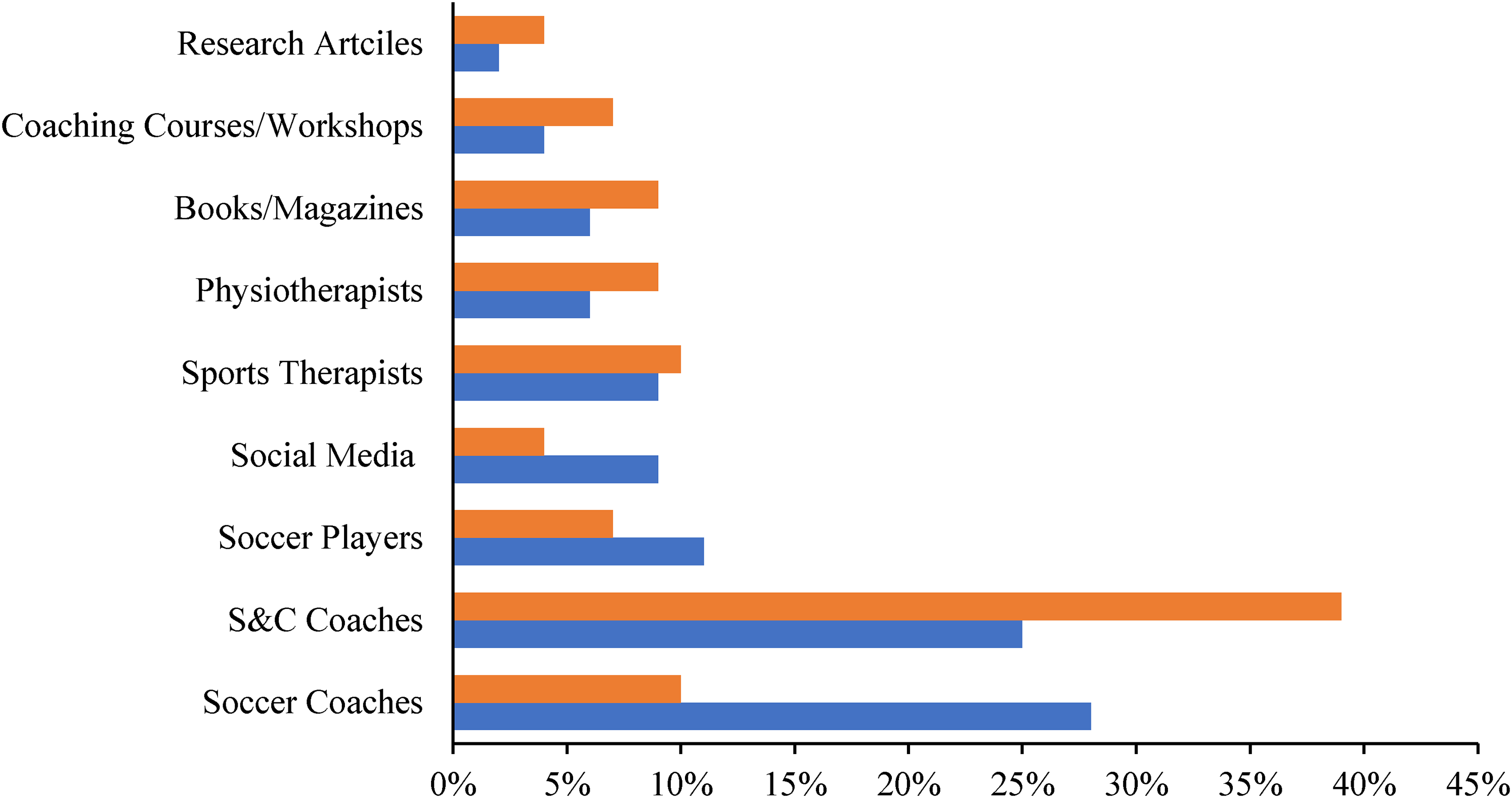
Percentage of coaches (blue) and players (orange) who obtain strength and conditioning information from different sources.

Percentage of coaches (blue) and players (orange) reporting the personnel responsible for prescribing and conditioning exercises.
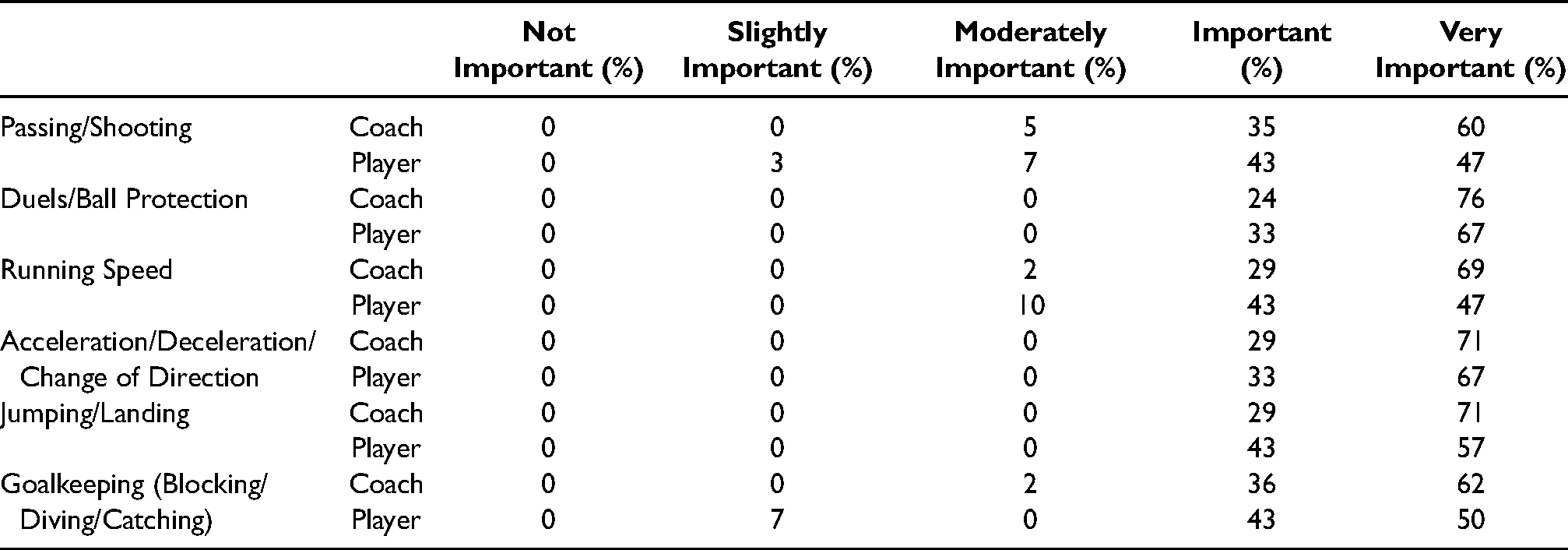
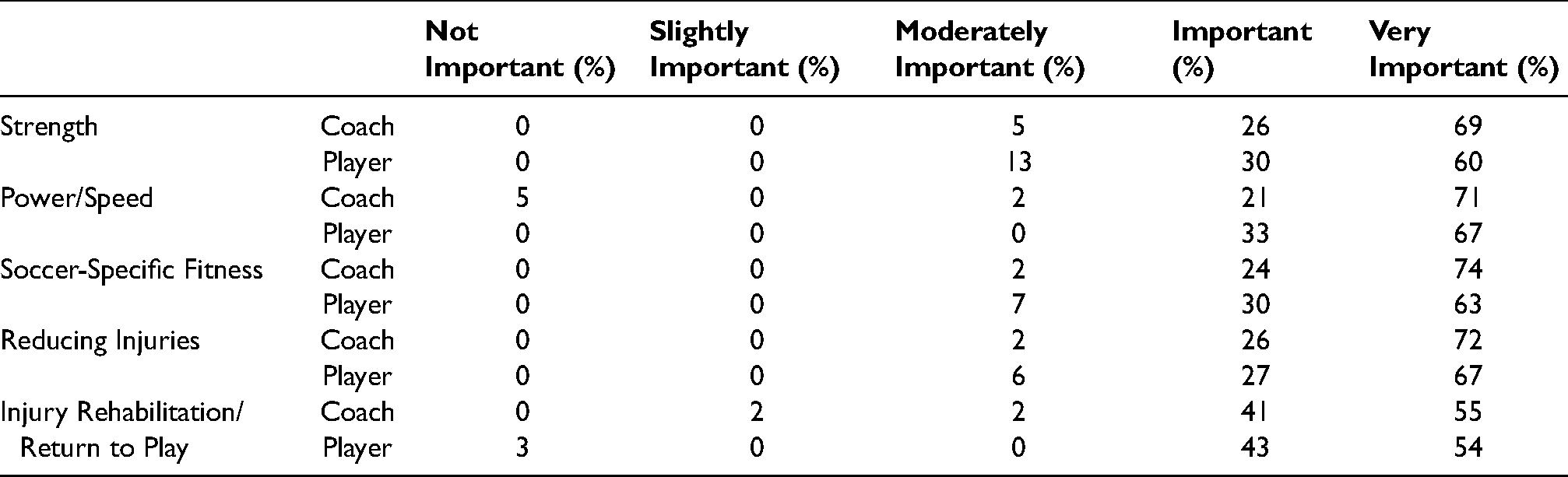
The percentage of coaches and players reporting how important S&C is for different soccer skills, physical fitness, and injury parameters is presented in Tables 1 and 2, respectively.
The importance of strength and conditioning training for soccer skills reported by coaches and players.
The importance of strength and conditioning training for different physical fitness and injury parameters, reported by coaches and players.
Views on strength and conditioning
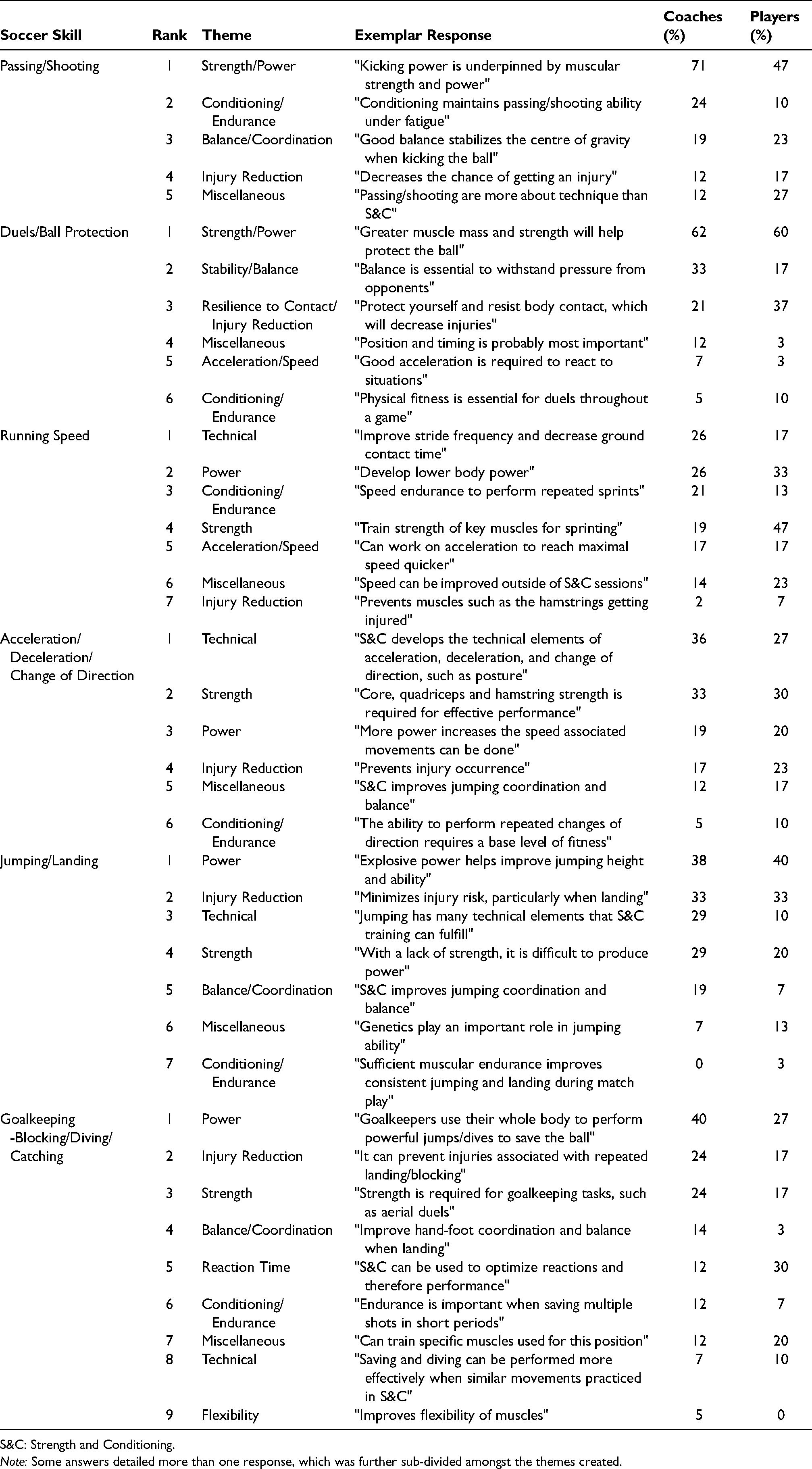
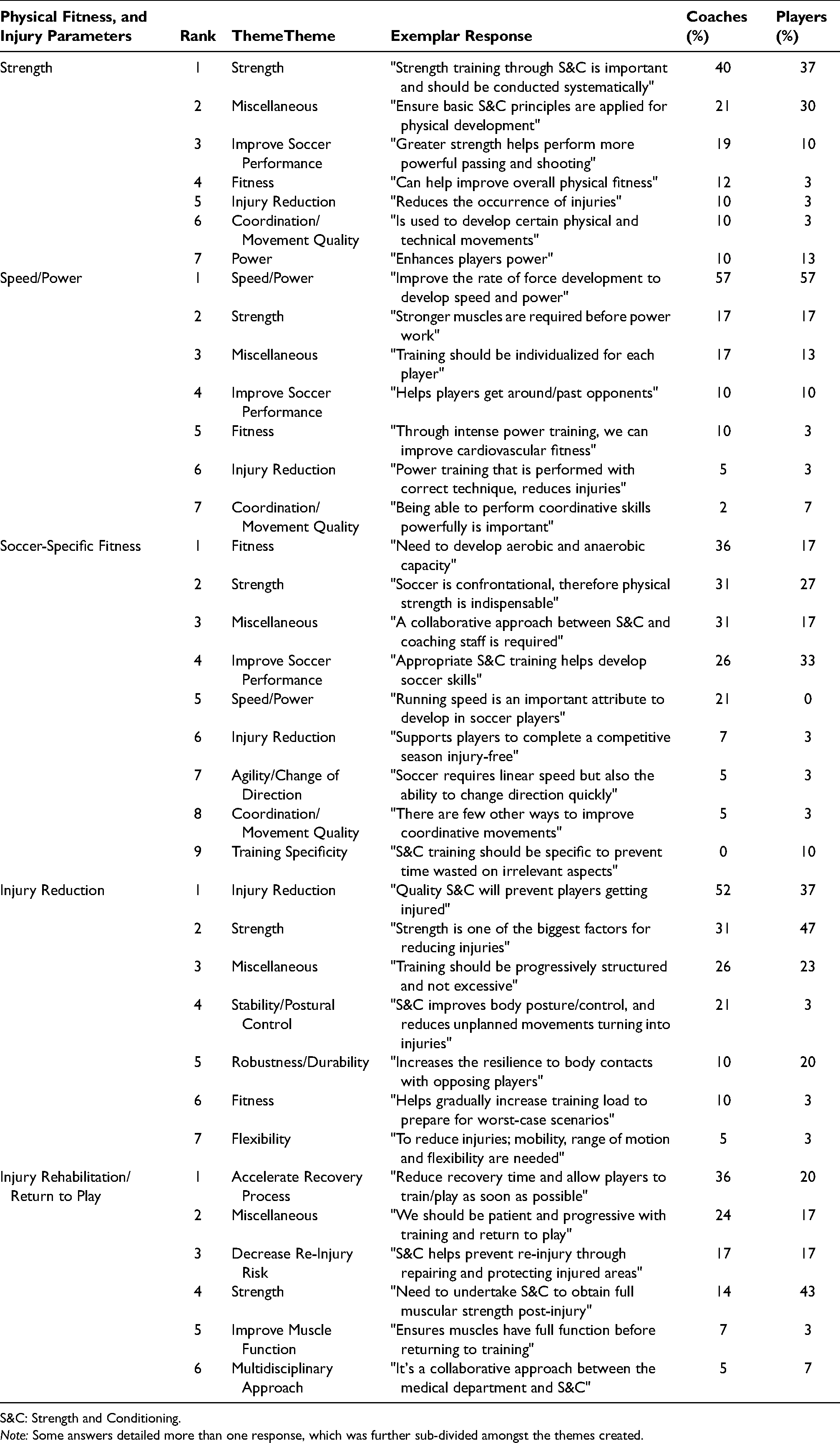
The perceived areas that S&C is important for regarding soccer skills is presented in Table 3, and for physical fitness and injury parameters is presented in Table 4.
Perceived areas that strength and conditioning is important for different soccer skills, reported by coaches and players.
S&C: Strength and Conditioning.
Note: Some answers detailed more than one response, which was further sub-divided amongst the themes created.
Perceived benefits of strength and conditioning for training different physical fitness and injury parameters, reported by coaches and players.
S&C: Strength and Conditioning.
Note: Some answers detailed more than one response, which was further sub-divided amongst the themes created.
Coaches reported the effectiveness of their current S&C programs used with players to be: ‘moderately effective’ (47%), ‘effective’ (29%), or ‘very effective’ (24%). Players reported the effectiveness of their current S&C programs to be: ‘moderately effective’ (50%), ‘effective’ (43%), or ‘very effective’ (7%).
Exercise selection and preferences
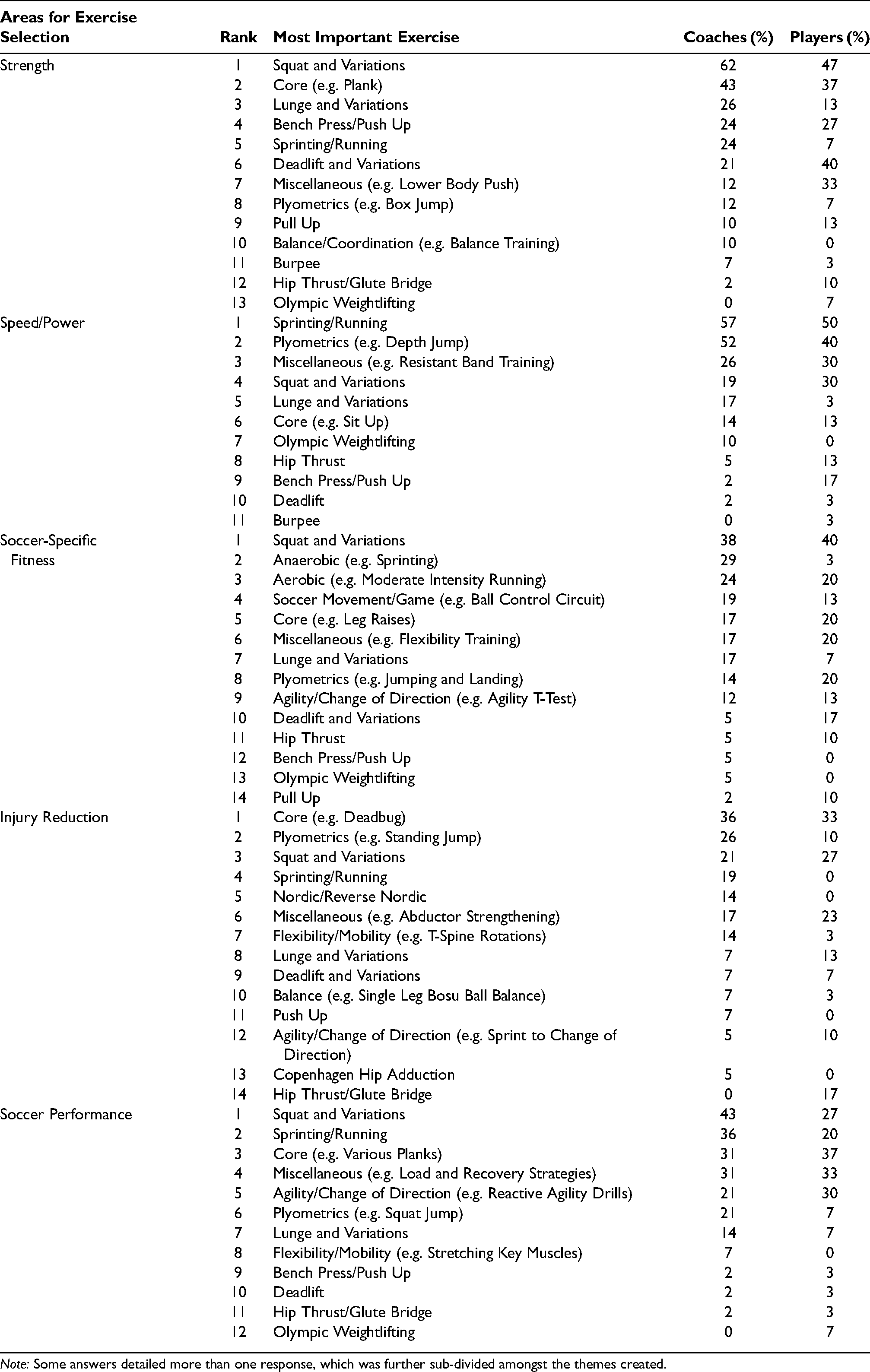
The exercise preferences of coaches and players to develop different physical fitness, soccer skills, and injury parameters are presented in Table 5.
Preferred exercises of coaches and players for developing different physical fitness, soccer skill, and injury parameters.
Note: Some answers detailed more than one response, which was further sub-divided amongst the themes created.
Issues and improvements
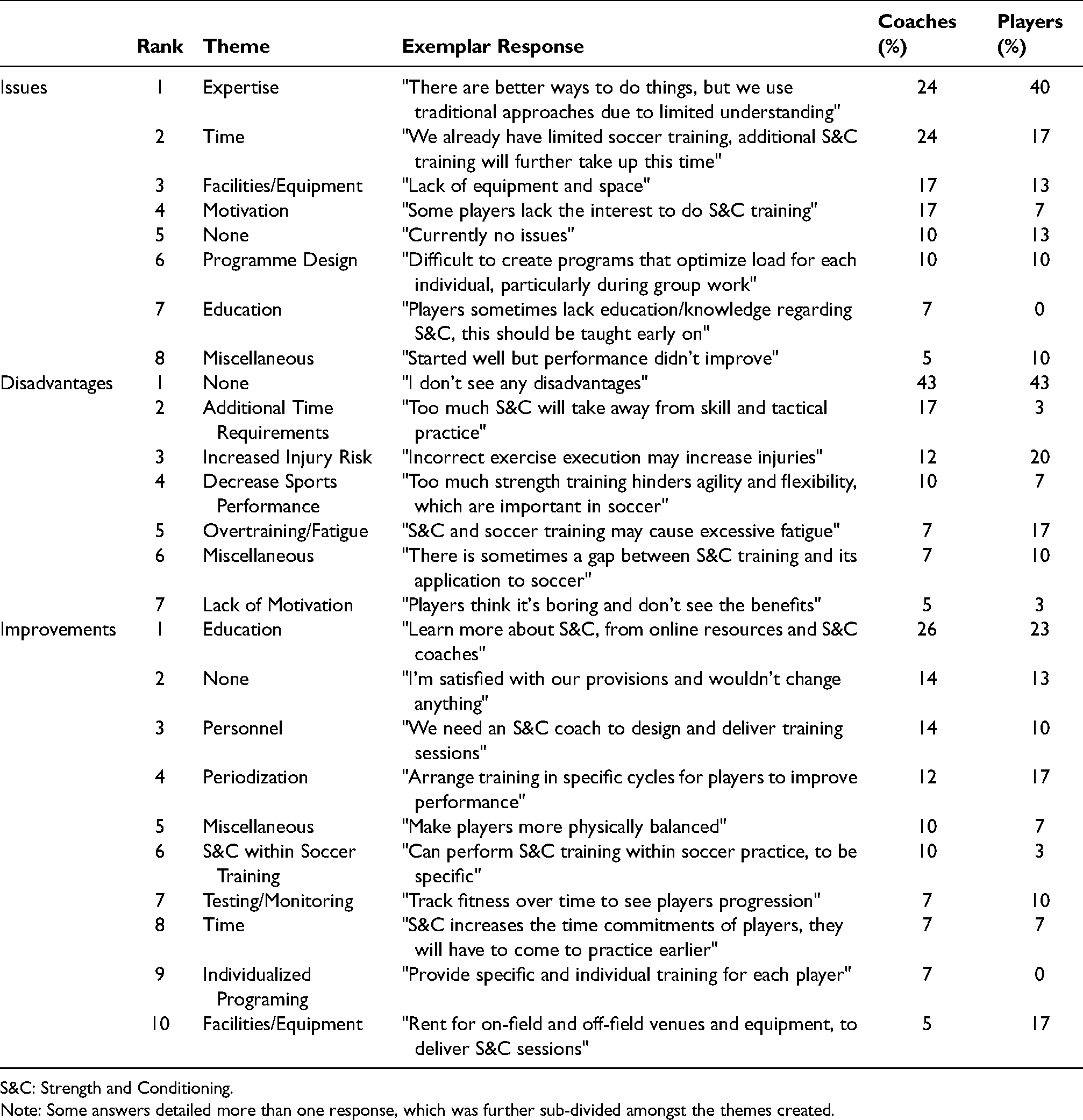
Issues, disadvantages, and desired improvements coaches and players reported concerning the delivery of S&C programs are presented in Table 6.
Coaches and players' responses to issues, disadvantages, and desired improvements for strength and conditioning provisions.
S&C: Strength and Conditioning.
Note: Some answers detailed more than one response, which was further sub-divided amongst the themes created.
Discussion
To the authors' knowledge, this is the first study to address the S&C practices and perspectives of soccer coaches and players. A key finding was that coaches and players predominantly source S&C information from S&C coaches and that S&C coaches are the main personnel responsible for prescribing S&C training. Contrastingly, research in volleyball showed coaches were the main source of S&C information, and coaches and players were mostly responsible for independently delivering S&C training. 7 Although this finding appears to be positive, still, 64% of coaches and 60% of players did not employ or have access to a S&C coach, with S&C training being mostly conducted independently or by head coaches. This is problematic given the high importance placed on S&C, and the role S&C coaches play in optimizing physical and sports performance while reducing the likelihood of injuries.13,14 Furthermore, only four coaches held recognized S&C qualifications, demonstrating a disparity between the requirements of coaches and players to conduct S&C training and their level of education to do so. As such, the main reported issues preventing the quality delivery of S&C was a lack of available expertise, time, facilities, and equipment. In turn, approximately half of coaches and players deemed their S&C provisions to only be ‘moderately effective.’
Most coaches and players believed S&C to be ‘important’ to ‘very important’ for the performance of various soccer skills. Winning of duels (e.g. a player attempting to dispossess an opponent) and protecting the ball, was considered areas S&C training was most beneficial, primarily through improving players' resilience to injury and developing strength and stability. A two-season epidemiological study of 6038 youth soccer players aged 7–12 years old, revealed that 57.3% of injuries sustained were as a result of contact. 15 Whereas, it has been reported that 38% of training time in youth soccer practice is in situations where duels may occur, resulting in players being involved in one duel every 6.4 min. 16 Similarly, in adult football, it is estimated that 50% of all injuries are due to contact or foul play.17,18 Although injuries resulting from contact cannot be prevented, research suggests that improving strength and stability will increase players' resilience to injuries across youth and adult populations. 17 In this study, the squat (including variations) and core training were seen as key exercises for strength development and soccer performance. Research recommendations also support including such exercises within S&C programs for soccer players.4,9 Specifically in elite youth soccer players, predicted one-repetition maximum squat strength has been significantly correlated (r = 0.61) with winning of duels and tackling success. 19 Whereas, the inclusion of core training (e.g. plank and bridging exercises) in conjunction with regular soccer training, has demonstrated improved core muscle strength, athletic performance, and reduction of contact and non-contact injuries.20–22 Therefore in support of the responses by coaches and players in this survey, it is recommended that players in all positions should conduct appropriate training to prepare for the physicality of duels when protecting or attempting to win the ball. 23
Strength and conditioning was deemed ‘important’ to ‘very important’ for developing passing and shooting skills, with strength/power and conditioning/endurance being perceived as the most essential areas for physical development. Research has demonstrated that a six-week weightlifting and plyometric programme can improve the strength, power, and subsequent kicking velocity of adult recreational players, determined via maximal knee extension velocity during a soccer kicking task. 24 Furthermore, the development of core strength using a nine-week core training programme on stable and unstable surfaces demonstrated significantly improved (p < 0.01) shooting velocity from the penalty spot in elite youth soccer players. 22 Although kicking velocity may be improved through relevant physical training, recent literature in elite youth soccer players revealed no significant relationship between strength and power scores and the accuracy of passing and shooting performance. 19 It was suggested that technical ability, cognitive function, and sensory awareness were more important for soccer performance. 19 Another important factor to consider is fatigue, where simulated and competitive match play, has been associated with reduced kicking performance (i.e. accuracy).25–27 Furthermore, soccer players with inferior aerobic ability determined through intermittent yoyo recovery test scores demonstrated a significant correlation with lower performance in the Loughborough Soccer Passing Test (r = −0.51 to −0.65). 26 So it is logical that coaches and players in this study believe conditioning/endurance to be of high importance for passing and shooting performance, but also that fitness (e.g. aerobic training) to be the most specific mode of training for soccer players.
Similarly, for goalkeepers (e.g. blocking, diving and catching), S&C was seen as ‘important’ to ‘very important,’ with the main component to be improved through S&C from the coaches' perspective being power, and from the players’ perspective being reaction time. From a developmental viewpoint, research has shown that various measures of power determined through a range of cycle ergometer and vertical jump assessments, significantly increases in goalkeepers from under 16, to 16–19, and over 19 age groups. 28 It is further suggested that goalkeepers should develop above-average power characteristics to perform faster blocks, dives, and catches. 28 In professional soccer players, goalkeepers have demonstrated significantly higher vertical jumping ability compared to outfield players, except for attackers. 29 Whereas, in addition to power development, it has been determined to be highly relevant for goalkeepers to also train reaction time. 28 Regarding reaction time ability, goalkeepers tend to have quicker reaction times than outfield players and is something that can be systematically improved through neuromuscular training. 29 Therefore, although coaches and players in this study have varied opinions on the importance of different S&C training methods for goalkeeping performance, these are collectively in line with research recommendations.
The physical capacities of speed and power, which include sub-components of acceleration, deceleration, change of direction, jumping, and landing were all deemed ‘important’ to ‘very important’ for soccer players, that can be enhanced through S&C training. The development of such attributes are all considered essential for soccer performance and can be improved through a range of general and specific S&C training methods. 2 Recent research on professional soccer players has shown the interrelationship between various speed and power characteristics. 30 For example, those players who had superior maximum acceleration rates were faster over short distance sprints, achieved greater change of direction velocities, and could jump higher. 30 Particularly for coaches in this study, S&C was seen as ‘very important’ to develop the technical ability of movements associated with speed and power (e.g. sprinting, jumping), which is in line with the exercises preferred to develop these characteristics being sprinting, running, and plyometrics (e.g. jumping). It is stressed within S&C guidelines that technical instructions and demonstrations should be used to support athletes in learning key skills and movements, with athletes being able to meet certain pre-requisites or competencies before an exercise can be introduced or progressed, to improve subsequent performance, and reduce the likelihood of injuries. 31 But given the lack of education and expertise of a large proportion of the personnel responsible for delivering S&C provisions within this study, it is uncertain whether such recommendations are appropriately applied.
When injuries do occur, coaches believed S&C was most important to assist in accelerating the recovery process, whereas players believed it was to improve muscular strength to pre-injury levels and to prevent future occurrence of injury. The integral role of S&C in rehabilitating injuries is well documented, particularly in assisting physicians and physiotherapists in the recovery process, rebuilding strength, and supporting players in restoring general and sport-specific functions. 32 Similar to prior research, 33 although there was some consensus between coaches and players in this study regarding the importance of S&C for injury reduction and rehabilitation/return to play strategies in soccer, there were still some areas where this was not the case (i.e. strength). It was interesting that coaches placed less importance on strength concerning injuries when compared to players, given the wealth of evidence from governing body initiatives (e.g. FIFA 11 + ) and research across different soccer populations.34–36
The importance of S&C from the perspective of coaches and players in this study was prevalent. Whereas perceived issues from a coach's perspective were related to the additional time requirements to implement S&C, and that this may reduce the time afforded to soccer practice. While this is problematic, careful planning and integration of soccer practices that promote the concurrent development of physical fitness and sport skills such as small-sided games may be a viable option. 37 However, regarding potential improvements, only 10% of coaches and 3% of players suggested integrating S&C within soccer training. Players in this study were primarily concerned with an increased injury risk when S&C practices were poorly applied, exercise techniques were taught incorrectly, or additional physical training leading to overtraining/fatigue. This is a valid concern, particularly with the high number of coaches and players administering their own S&C training, most of which are without the relevant expertise. Although qualitative answers in this study generally allowed the production of relevant themes, the depth of knowledge and understanding expressed was sometimes limited or ambiguous. For example, “Quality S&C will prevent players getting injured” and “Jumping includes many technical elements that S&C training can fulfill.” Nonetheless, it was reassuring to see that the main area for improvement related to the delivery of S&C was education. This demonstrates that although coaches and players may not be able to hire a S&C coach due to various constraints (e.g. finances, availability of S&C coaches), they are eager to develop their knowledge. These findings are similar to those reported by volleyball coaches in Hong Kong, where a lack of formal education led to misconceptions regarding S&C (e.g. increased injury risk), with coaches and players also reporting that a major improvement to their S&C provisions would be self-education. 7 Therefore, similar to the recommendations from Weldon and colleagues 7 in volleyball, there is a need for general and sport-specific S&C education and accreditation opportunities, in countries such as Hong Kong, to develop the practices and implementation of S&C.
Conclusion
Soccer coaches and players predominantly deemed S&C to be ‘important’ to ‘very important’ for various soccer, physical fitness, and injury parameters. It was observed that perspectives were mostly in line with guidelines and research in S&C and soccer. Strength and conditioning coaches were reported as the main personnel responsible for delivering S&C sessions, but still, more than 60% of respondents, conducted their own S&C sessions. This was despite a lack of formal education and experience in doing so. However, it was promising to see that respondents were willing to undertake S&C education if sporting and S&C governing bodies made this more relevant and accessible.
Practical applications
It is advised to employ or consult with a qualified S&C coach, who can design and implement S&C programs, aligned with appropriate guidelines and research. If this is not feasible (e.g. lack of accessibility or financial constraints), coaches, players, and support staff responsible for delivering S&C should undertake relevant education and professional development. But it is important that local (i.e. Hong Kong) and international governing bodies in S&C and soccer, provide appropriate opportunities for education. In turn, this will likely increase the safety and efficacy of S&C programs delivered in soccer, mainly through optimizing sports performance and reducing injuries of players.
Limitations
The sample size for this study is reasonable for the level of coaches and players surveyed in Hong Kong, but it may not be representative of all coaches and players in this region or be extrapolated to those in other countries. The required number of surveys needed for valid analysis was not determined before data collection, it was aimed to obtain as many responses as possible within this purposive sample. Overall, 73% of coaches reported coaching players below 18 years old, which may have influenced their perspectives and implementation of S&C.
Footnotes
Acknowledgements
The authors’ would like to acknowledge the time and contribution of participants in this study.
Declaration of conflicting interests
The author(s) declared no potential conflicts of interest with respect to the research, authorship, and/or publication of this article.
Funding
The author(s) received no financial support for the research, authorship and/or publication of this article.

Appendix
▪ Refers to questions with multiple choice answers • Refers to questions with single choice answers
• Agree • Disagree
Q1. Gender?
Male Female Prefer not to say Q2. How old are you? (must be over 18 years old to enter this survey) Q3. Number of years’ experience as a soccer coach? Q4. What is the highest level of competition that you have coached?
Federation Internationale de Football Association (FIFA) International Competition International Asian Football Confederation (AFC) Competition (Country) Continental Asian Football Confederation (AFC) Competition (Club) Hong Kong FA Premier League (Men's) Hong Kong FA Division 1-3 (Men's) Hong Kong FA First Division (Women's) Hong Kong FA Division 2 (Women's) The University Sports Federation of Hong Kong, (USFHK) Competition The Hong Kong Schools Sports Federation (HKSSF) Competition Other Q5. Refer to Q4, what was your role?
Head Coach Assistant Coach Trainer Other: ______ Q6. What is the current level of competition that you coach?
Federation Internationale de Football Association (FIFA) International Competition International Asian Football Confederation (AFC) Competition (Country) Continental Asian Football Confederation (AFC) Competition (Club) Hong Kong FA Premier League (Men's) Hong Kong FA Division 1-3 (Men's) Hong Kong FA First Division (Women's) Hong Kong FA Division 2 (Women's) The University Sports Federation of Hong Kong, (USFHK) Competition The Hong Kong Schools Sports Federation (HKSSF) Competition Other Q7. Refer to Q6, what is your role?
Head Coach Assistant Coach Trainer Other: ______ Q8. What age range do you predominantly coach?
Below 12 years old 12-14 years old 15–17 years old Above 18 years old
Q9. What is your highest level of education?
Secondary School Higher Diploma/Associate Degree Bachelor's Degree Master's degree Doctor of Philosophy (PhD) Other Q10. What was the subject area of your highest level of education? Q11. Do you possess a strength and conditioning qualification with any of the below organizations or any other related fitness qualification?
▪ Australian Strength and Conditioning Association (ASCA) ▪ National Strength and Conditioning Association (NSCA) ▪ Collegiate Strength and Conditioning Coaches Association (CSCCa) ▪ United Kingdom Strength and Conditioning Association (UKSCA) ▪ None ▪ Other Q12. What professional soccer coaching qualification(s) do you hold?
▪ UEFA Pro Licence ▪ UEFA A Licence ▪ UEFA B Licence ▪ AFC Professional Diploma ▪ AFC A Coaching Diploma ▪ AFC B Coaching Diploma ▪ AFC C Coaching Diploma ▪ HKFA B Coaching Certification ▪ HKFA C Coaching Certification ▪ HKFA D Coaching Certification ▪ HKFA Youth Leader Award ▪ BOCHK Grassroots Football Planner Other ▪ Other Q13. Where do you predominantly source strength and conditioning information? Rank the following in order of importance. (1 will be your 1st source; 10 will be your last source)
▪ Soccer Coaches ▪ Soccer Players ▪ Strength and Conditioning Coaches ▪ Sports Therapists ▪ Physiotherapists ▪ Coaching Courses ▪ Research Articles ▪ Social Media ▪ Books and Magazines ▪ Other Q14. Who is mainly responsible for prescribing strength and conditioning exercises for you?
▪ Manager ▪ Head Coach ▪ Assistant Coach ▪ Independently (Yourself) ▪ Trainer ▪ Strength and Conditioning Coach ▪ Sports Therapist ▪ Physiotherapist ▪ Other: ______
Q15. How important is strength and conditioning for Not Important Slightly Important Moderately Important Important Very Important Q15a. Refer to your previous answer, please explain why?
___________ Q16. How important is strength and conditioning for Not Important Slightly Important Moderately Important Important Very Important Q16a. Refer to your previous answer, please explain why?
___________ Q17. How important is strength and conditioning for Not Important Slightly Important Moderately Important Important Very Important Q17a. Refer to your previous answer, please explain why?
___________ Q18. How important is strength and conditioning for Not Important Slightly Important Moderately Important Important Very Important Q18a. Refer to your previous answer, please explain why?
___________ Q19. How important is strength and conditioning for Not Important Slightly Important Moderately Important Important Very Important Q19a. Refer to your previous answer, please explain why?
___________ Q20. How important is strength and conditioning for Not Important Slightly Important Moderately Important Important Very Important Q20a. Refer to your previous answer, please explain why?
___________ Q21. How important is strength and conditioning for Not Important Slightly Important Moderately Important Important Very Important Q21a. Refer to your previous answer, please explain why?
___________ Q22. How important is strength and conditioning for Not Important Slightly Important Moderately Important Important Very Important Q22a. Refer to your previous answer, please explain why?
___________ Q23. How important is strength and conditioning for Not Important Slightly Important Moderately Important Important Very Important Q23a. Refer to your previous answer, please explain why?
___________ Q24. How important is strength and conditioning for Not Important Slightly Important Moderately Important Important Very Important Q24a. Refer to your previous answer, please explain why?
___________ Q25. How important is strength and conditioning for Not Important Slightly Important Moderately Important Important Very Important Q25a. Refer to your previous answer, please explain why?
___________ Q26. How effective is your current strength and conditioning program?
Not Effective Slightly Effective Moderately Effective Effective Very Effective Q26a. Refer to your previous answer, please explain why?
___________ Q27. Do you have any other views on strength and conditioning in soccer?
___________
Q28. Name up to ‘ Q28a. Explain why you have listed the Q29a. Name up to ‘ Q29a. Why have you listed the Q30. Name up to ‘ Q30a. Explain why you have listed the Q31. Name up to ‘ Q31a. Explain why you have listed the Q32. Name up to ‘ Q32a. Explain why you have listed the
Q33. Explain the biggest issues you face when implementing strength and conditioning? Q34. Explain any disadvantages associated with strength and conditioning? Q35. Given unlimited time and resources, how would you change or improve your current strength and conditioning provisions?
Q1. Gender?
Male Female Prefer not to say Q2. How old are you? (must be over 18 years old to enter this survey) Q3. Number of years’ experience as a soccer player? Q4. What is your predominant position?
Goalkeeper Defender Midfielder Attacker Other Q5. What is the highest level of competition that you have played in?
Federation Internationale de Football Association (FIFA) International Competition International Asian Football Confederation (AFC) Competition (Country) Continental Asian Football Confederation (AFC) Competition (Club) Hong Kong FA Premier League (Men's) Hong Kong FA Division 1-3 (Men's) Hong Kong FA First Division (Women's) Hong Kong FA Division 2 (Women's) The University Sports Federation of Hong Kong, (USFHK) Competition The Hong Kong Schools Sports Federation (HKSSF) Competition Other Q6. What is your current level of competition that you play in?
Federation Internationale de Football Association (FIFA) International Competition International Asian Football Confederation (AFC) Competition (Country) Continental Asian Football Confederation (AFC) Competition (Club) Hong Kong FA Premier League (Men's) Hong Kong FA Division 1-3 (Men's) Hong Kong FA First Division (Women's) Hong Kong FA Division 2 (Women's) The University Sports Federation of Hong Kong, (USFHK) Competition The Hong Kong Schools Sports Federation (HKSSF) Competition Other
Q13. How important is strength and conditioning for Not Important Slightly Important Moderately Important Important Very Important Q13a. Refer to your previous answer, please explain why?
___________ Q14. How important is strength and conditioning for Not Important Slightly Important Moderately Important Important Very Important Q14a. Refer to your previous answer, please explain why?
___________ Q15. How important is strength and conditioning for Not Important Slightly Important Moderately Important Important Very Important Q15a. Refer to your previous answer, please explain why?
___________ Q16. How important is strength and conditioning for Not Important Slightly Important Moderately Important Important Very Important Q16a. Refer to your previous answer, please explain why?
___________ Q17. How important is strength and conditioning for Not Important Slightly Important Moderately Important Important Very Important Q17a. Refer to your previous answer, please explain why?
___________ Q18. How important is strength and conditioning for Not Important Slightly Important Moderately Important Important Very Important Q18a. Refer to your previous answer, please explain why?
___________ Q19. How important is strength and conditioning for Not Important Slightly Important Moderately Important Important Very Important Q19a. Refer to your previous answer, please explain why?
___________ Q20. How important is strength and conditioning for Not Important Slightly Important Moderately Important Important Very Important Q20a. Refer to your previous answer, please explain why?
___________ Q21. How important is strength and conditioning for Not Important Slightly Important Moderately Important Important Very Important Q21a. Refer to your previous answer, please explain why?
___________ Q22. How important is strength and conditioning for Not Important Slightly Important Moderately Important Important Very Important Q22a. Refer to your previous answer, please explain why?
___________ Q23. How important is strength and conditioning for Not Important Slightly Important Moderately Important Important Very Important Q23a. Refer to your previous answer, please explain why?
___________ Q24. How effective is your current strength and conditioning programme?
Not Effective Slightly Effective Moderately Effective Effective Very Effective Q24a. Refer to your previous answer, please explain why?
___________ Q25. Do you have any other views on strength and conditioning in soccer?
___________
Q26. Name up to ‘ Q26a. Explain why you have listed the Q27a. Name up to ‘ Q27a. Explain why you have listed the Q28. Name up to ‘ Q28a. Explain why you have listed the Q29. Name up to ‘ Q29a. Explain why you have listed the Q30. Name up to ‘ Q30a. Explain why you have listed the
Q31. Explain the biggest issues you face when implementing strength and conditioning? Q32. Explain any disadvantages associated with strength and conditioning? Q33. Given unlimited time and resources, how would you change or improve your current strength and conditioning provisions?