



Abstract
Background
One of the most sought-after skills for performance in team sports is change of direction. Training the physical qualities of strength, speed, and power has been used to improve change of direction. These qualities of change of direction have been studied extensively for the last 20 years, and their influence is still questioned. Additionally, it is currently unknown how moderating training variables affect COD performance.
Objective
This study examines the impact of strength, power, and speed training on change of direction performance.
Method
Following the PRISMA guidelines, a meta-analysis was conducted. Electronic databases were searched for studies conducted from 1991 to April 2021. All studies identified for inclusion were peer-reviewed and published in English and Spanish and used an athlete population as participants. For all analyses, a significance level is set at p < 0.05.
Results
Sixty-six articles were included in this meta-analysis. Two hundred fifty-one effect sizes were calculated, representing 2056 participants aged between 12 and 25 years. The global effect size (ES) for each quality is reported and Cochran's Q test: Strength (N = 48) ES: 0.844 Q = 77.63 (95%CI: 0.65;1.07); Speed (N = 17) ES: 0.70 Q = 5.69 (CI95% = 0.35;1.05); Power (N = 49) ES: 0.85 Q = 47.58 (CI95% = 0.64;1.06); Agility (N = 57) ES: 1.05 Q = 79.63 (CI95% = 0.86;1.24); Combined training (N = 13) ES: 0.51 Q = 13.79 (CI95% = 0.14;0.93), and the Control Group (N = 67) ES: 0.53 Q = 47.40 (IC95% = −0.12;0.23), all ES were statistically significant except control group. The ANOVA-LIKE presented a statistically significant difference between physical qualities and the control group (Sig = 0.000 Q = 69.18).
Conclusion
The training of strength, speed, power, and agility, are effective training methods for improving change of direction ability. Each of these qualities has one or more moderating variables that influencing its development.
Introduction
Team sports are characterized as being intermittent in nature, whereby players are required to frequently transition between brief bouts of high-intensity running and more extended periods of low-intensity activity.1–3 More specifically, the running demands in intermittent team sports require frequent accelerations, decelerations, and changes of direction.2,4
Change of direction (COD) refers to a movement where no reaction to a stimulus is required and, therefore, is preplanned. 5 In comparison, the definition of agility is “a rapid whole-body movement with change of velocity or direction in response to a stimulus.” 1 Due to the necessity of a sport-specific stimulus to truly assess agility, most agility tests are preplanned. They, therefore, are indeed testing the athlete's change of direction ability. Due to change of direction tests being preplanned rather than reactive, the athlete completing the test can better adjust their footwork and body positioning to optimize the technique of COD leading force production. Therefore, these tests’ performance is underpinned by the athlete's strength, power, and speed capabilities.1,6 Enhancing athletes’ COD performance is a frequently noted targeted priority in many physical preparation programs for team sports athletes. 7
The physical qualities of strength, speed, and power directly affect change direction.2,6,8 In the case of strength, force-generating capacity is required any time an athlete must overcome inertia, which concerns deceleration and acceleration.9,10 For example, Núñez et al. 11 indicated that after 6 weeks of strength training utilizing an eccentric exercise program on 27 young team sports male players, COD was significantly enhanced by statistically significant ES = 0.75 from the baseline, being a moderate effect. However, some research has reported a decrease in COD performance from strength training. For example, Raya-González et al. 12 reported a decrease of 0.07 s in COD test following 6 weeks of strength training on 16 soccer players, on horizontal and vertical strength training in nature. This result indicates that not all strength training translates to enhanced COD performance.
The development of speed qualities is often emphasized in training programs. Researchers have observed a positive correlation between speed and changes of direction, such is the case of the study by Sheppard et al., 13 which indicates an r = 0.74 and concludes that speed and COD are related. So, speed is important during the acceleration, sprint, and braking phases of a COD task. Likewise, different studies have explored the effects of speed training on COD performance. However, within this body of literature, the results are conflicting. The conflict is because of the different results in the studies, for example, a study by Beato et al. 14 demonstrated that 2 weeks of repeated speed training in soccer players resulted in trivial effect size (ES) of 0.04 to improve COD. Another study by Brocherie et al. 15 reported 5 weeks of repeated speed training in soccer players had an ES of 1.33. The ES's differences may be due to different moderator variables that are not being taken into consideration for the analysis.
The other quality that underpins COD is power. A meta-analysis by Assadi, et al., 5 investigated 24 articles on the effect of plyometric training on COD performance and reported this modality of training as an effective method to improve task outcome with an ES of 0.96. Also, two types of power training methods are used to enhance COD ability: plyometric targeting a short and fast stretch-shortening cycle, and more general power training such as a jump squat targeting a long and slow stretch-shortening cycle. The first power training method is plyometric training; it is the most common way to improve power for team sports due to its specificity to movements like jumping and sprinting.1,5 The second is general power training with a jump squat to enhance high-velocity actions, which provokes maximal power output. 16 Both power training methods are effective for improving COD; however, no study has directly compared plyometric training's effectiveness to more general power training such as a jump squat or Olympic weightlifting movements to improve COD performance.
Due to the substantial body of literature in training to improve COD and the conflicting results, a meta-analysis would be an appropriate methodology. To date, no meta-analysis has covered the range of training methods to develop the underpinning physical qualities of COD. Therefore, this study aims to examine the effect of strength training, power training, speed training, agility training (specific skills training for COD: pre-planned routes where the participant makes changes of direction), and combined training (two methods in the same treatment) on COD performance. Through a meta-analysis of each quality as a training method: strength, power, speed, and agility training as a specific method, a more comprehensive understanding of how to better enhance COD will be available to inform coaching practice. Likewise, the coding of moderating variables for each method was carried out. An attempt will be made to answer questions related to training to improve this ability's performance.
Method
Protocol
This study followed the Preferred Reporting Items for Systematic Reviews and Meta-analysis (PRISMA) statement checklist. 17
Information sources and search
A systematic literature search with meta-analysis was conducted from the 12th of February to the 25th of April 2021 using databases: Academic Search Complete, Education Research Complete, Educational Resource Information Center (ERIC), Fuente Académica Premier, MEDLINE, OmniFile Full Text Select (H.W. Wilson), SPORTDiscus, E-Journals, Proquest. Also, each included study's reference list was reviewed to find potential studies that could be used in this review. The search strategy combined terms for change of direction (“agility” AND “change of direction” AND “team sports” AND “effect” AND “training” AND “strength” AND “speed” AND “power” AND “agility training”). Heterogeneity was examined via the Q statistic and I2. Pooled effect sizes were calculated using a random-effects model, with Egger's regression test used to assess small study bias (inclusive of publication bias).
Eligibility criteria and study selection
The criteria for a study to be included in the meta-analysis were the following by using PICOS: (a) subjects being athletes of a team sport, (b) the study must employ at least one of the physical qualities (strength, speed, power, agility (specific skills training)) as a treatment intervention and details of the training method, (c) Pretest–postest comparison, (d) the use of COD as a depended variable, (e) pre-experimental, quasi-experimental, or experimental design. All articles had to be published in English or Spanish and have full-text availability. Regarding training programs, no restrictions were made regarding physical quality combination, time, sex, or sport. Studies were excluded if they did not meet the minimum requirements for describing training variables or did not report results adequately (mean and standard deviation).
Coding of studies
Each study was read and coded independently by two investigators, RC and WS, using the following classification of variables: (a) study design, (b) characteristics of participants, (c) training characteristics, (d) training methods, (e) COD performance, (f) season (sports planning period), and (g) study quality.
Each coding difference was scrutinized by the investigators and was resolved before the analysis. In some cases, we contacted the authors to provide the necessary data. Four out of six authors responded to our queries and subsequently sent the missing data to calculate the intervention's ES.
Data extraction
The main study characteristics (i.e., cohort, age, intervention program, training variables, relevant outcomes) were extracted in an Excel template/spreadsheet (Microsoft Corporation, Redmond, WA, USA). Two investigators performed data extraction, and discrepancies were reviewed in conjunction with the three investigators. The Excel sheet compiled the information of each article according to the moderating variables. The excel template had 65 columns; each study's variables of interest were recorded in the searches. The template included formulas to determine each article's ES and the global ES. Given the unit is on time, the final ES’s charge was changed to a positive charge for a better understanding of an improvement. All the studies were taken on the same sheet and were divided according to the treatment carried out.
Assessment of study quality
The quality of the studies was assessed using the TESTEX scale, 18 the scale has a range from 0 to 6 points, where higher scores reflect higher internal validity. This evaluation was included as a moderating variable to determine if the study's quality affected the treatments’ effect size.
Statistical analyses
The effectiveness of an exercise intervention on COD performance, the correction index g by Hedges and Olkin (1985), 19 was computed. Effect sizes were calculated for both the experimental and control groups of the study. Following each group's analysis, groups were compared to determine the effects of an intervention on the dependent variable. Also, the weighting of the studies was applied according to the magnitude of the respective standard error. The random-effect model was used to calculate the overall ESs. The dependent variable is measured as time (s), so an improvement would decrease the test execution time. This result would produce a negative ES; therefore, for a better understanding of the results, the sign was changed to observe a positive ES Hopkins et al. 20 suggest interpreting ES thresholds as: <0.2, trivial; 0.2–0.6, small; >0.6–1.2, moderate; >1.2–2.0; >2.0–4.0, large; >4.0, very large.
Once the global and the individual ES were calculated, a metaregression was applied to determine the ES's relationship with the continuous moderator variables. An Analog of Analysis of Variance (ANOVA-LIKE) of one way for independent groups was applied to determine statistical differences between the levels of discrete moderator variables. The IMB-SPSS version 21, Microsoft Excel, and OPEN MEE program from National Science Foundation was used for the respective analysis.
Analysis of heterogeneity and bias
Q's Cochran test assessed the heterogeneity of studies, while the inconsistency was evaluated using the statistical test I2. The Q test's significance was computed with a p < 0.01; this is for the fault of statistical power. The values considered less than 25% present very inconsistent, between 25% and less than 50% represent low consistent and between 50% and 75%, moderate; with values over 5% is very high. Bias risk was assessed using Egger's funnel plot, Egger's test, and the “file-drawer effect.” 21
Results
Sixty-six studies fulfilled the eligibility criteria to be included in the meta-analysis. We calculated one hundred and eighty-four ES, representing 1990 participants with mean ages of 18.46 ± 3.87 years in both genders. Figure 1 shows the flow chart of the review process of the studies. The characteristics of the studies of the meta-analysis are represented in Table 1.
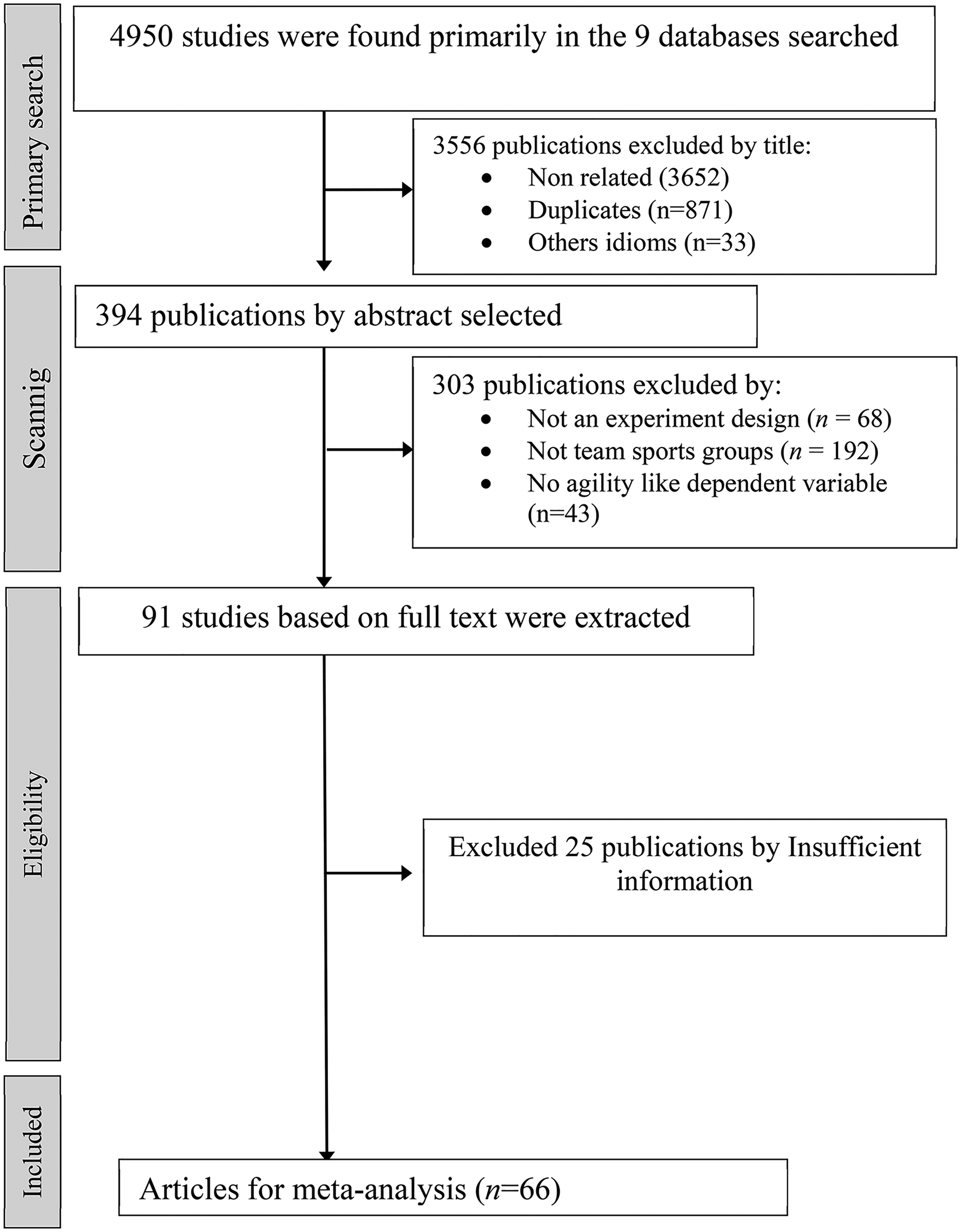
Flow diagram of the studies that underwent the review process.
Summary of articles included in the meta-analysis.

Global effect size
The sixty-seven studies’ coding generated 184 ES for the experimental group and 67 for the control group. This Meta-analysis analyzed the different physical qualities targeted to improve COD. The ES for each quality (strength, speed, power, agility, and combined training) and its respective global ES were separated. The experimental group's global ES was moderate ES of 0.89 (95% CI 0.77–0.99) sig: 0.001 (Figure 2). The global ES for the control group was a statistically significant ES = 0.05; (95% CI −0.090–0.195) sig: 0.616. The ANOVA-LIKE presented a statistically significant difference, and it presents a Q = 6.218; sig: 0000 p < 0.05, the individual Q for groups was 228.230 and 46.684 for the experimental group and the control group, respectively. The analysis indicated a statistically significant difference existed between the experimental group and the control group (Figure 3).

Forrest plot. Effect sizes (ES) of experimental groups with the confidence interval (95%) (continued).
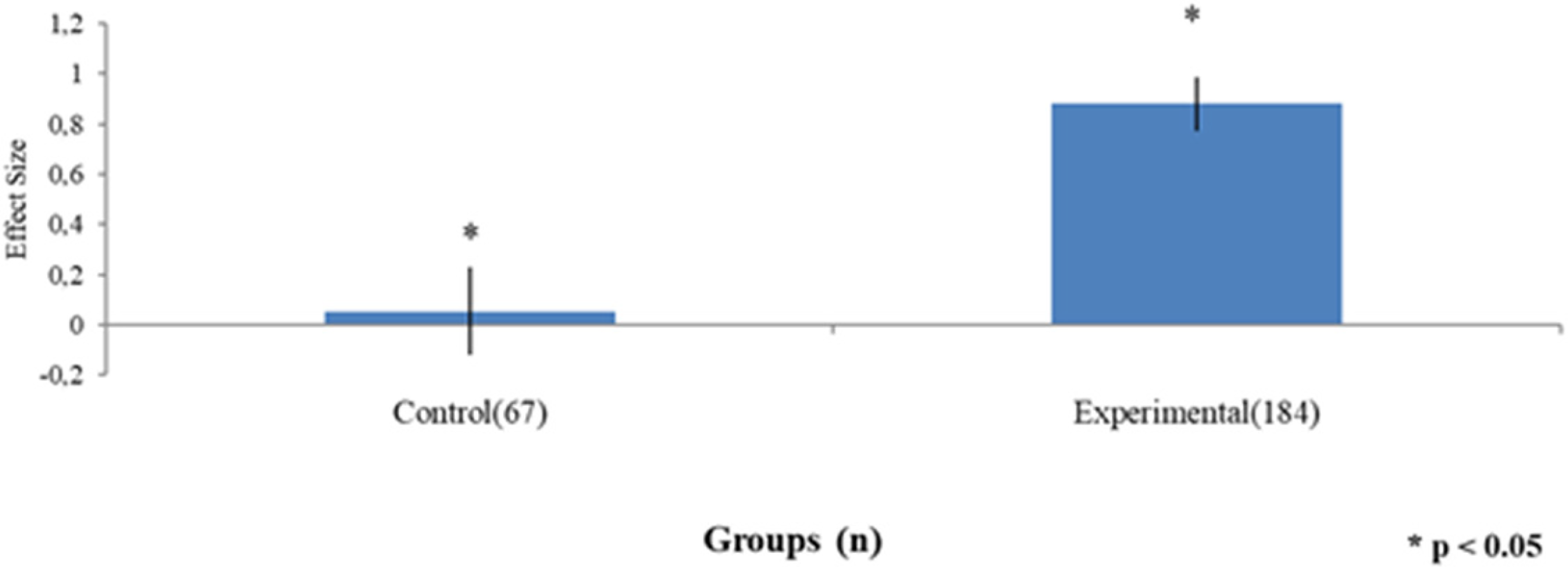
Global effect size. Lines represent confidence intervals (0.05).
The calculation of Orwin's test resulted in a need of 569.967 no significant ES for reducing the global ES of 0.84 to a global ES of 0.2. The Cochran's test presents a calculated value of 662.28 (gl 183; p < 0.05) and I2 = 72.36% (high heterogeneity) for the experimental group and the control group, the value of Cochran's test was 157.13 (gl 67; p < 0.05) and I2 = 57.99% (median heterogeneity), 73 which indicated both groups are heterogeneous. When considering the heterogeneity of the effect sizes, the moderating variables were analyzed.
Bias analysis
The Egger`s linear regression (Figure 4) shows an asymmetry in funnel plot (Figure 5), the results were t = 4.44, df = 183, p-value = 1.537 × 10–05. The result may indicate an absence of studies included in the meta-analysis due to publication bias. Ko's assessment indicates the number of articles necessary to reduce the global ES to a trivial ES; for this study, the Ko = 560.70 ES is necessary to reduce global ES (Figures 4 and 5).
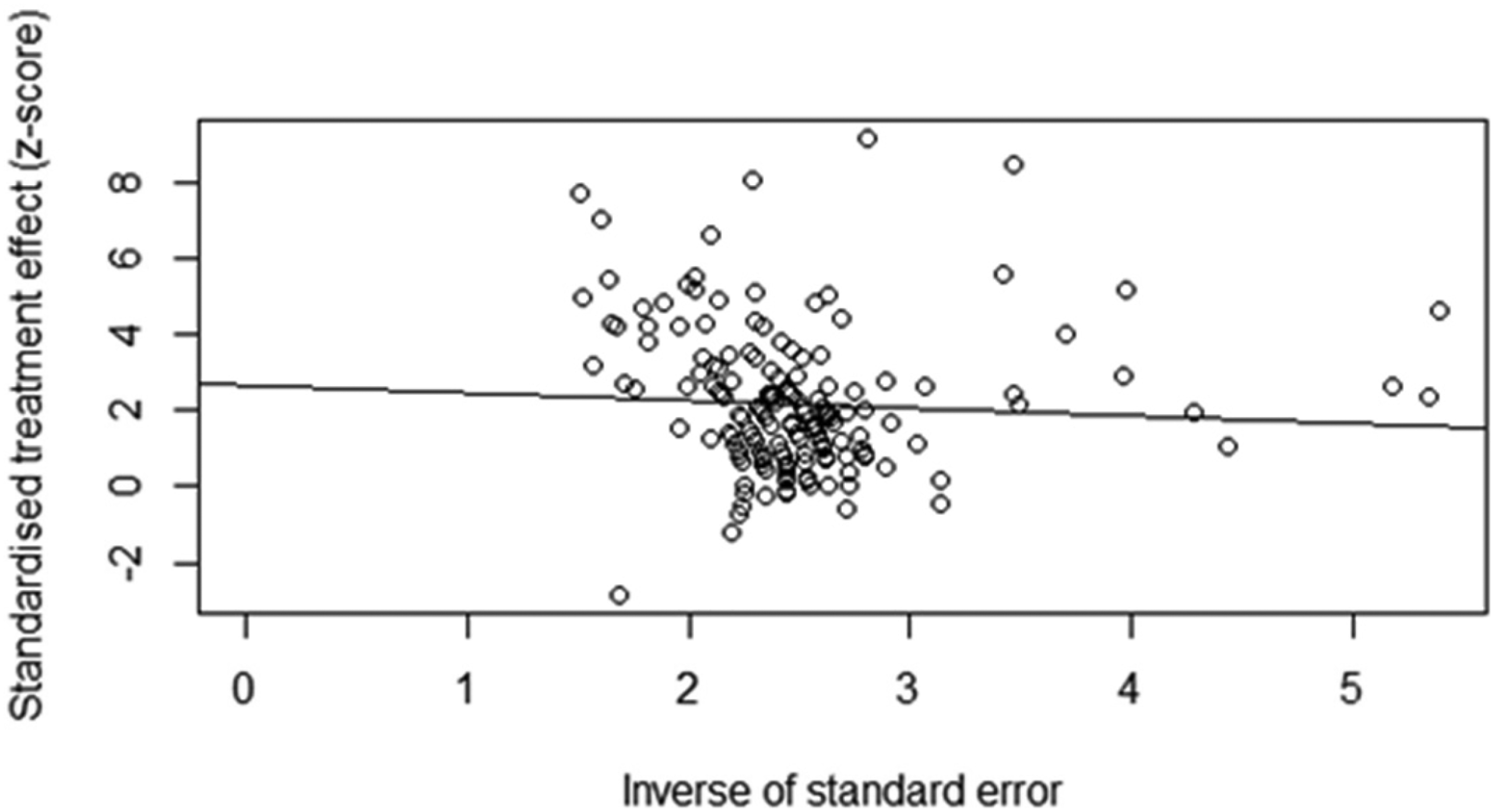
Egger's regression.
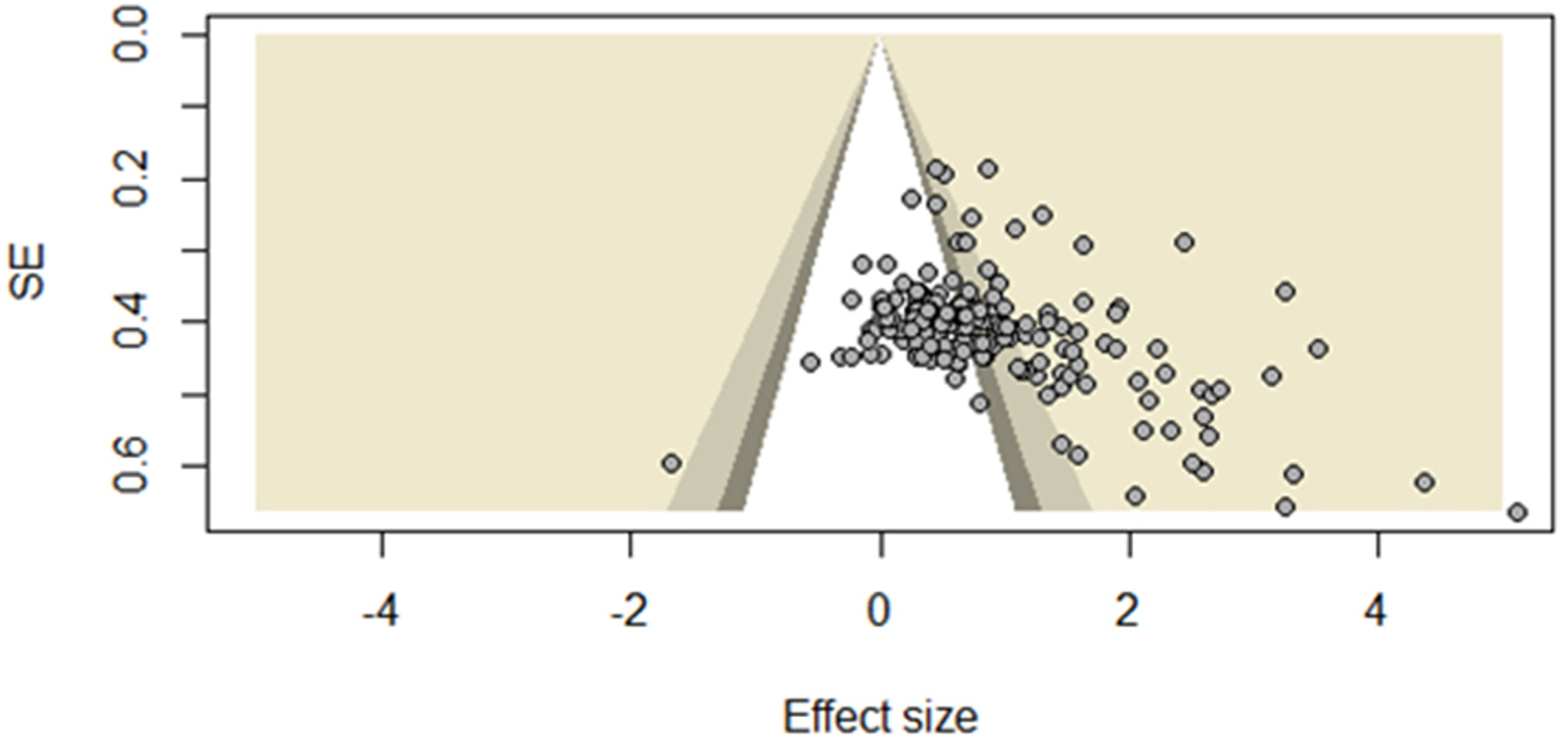
Funnel plot.
Moderator variables
Sex
The Anova-like show no significant difference between group Q = 1.13 df = 1 and p = 0.29. The individual results for groups were: Men Q = 145.49, ES = 0.90 CI 95%: 0.77; 1.04. Female Q = 51.64 ES = 0.76, CI 95% = 0.55; 0.98. This indicates the sex of participants is not an influencing factor in obtaining an improvement in the COD performance (Figure 6).
Level of Competition
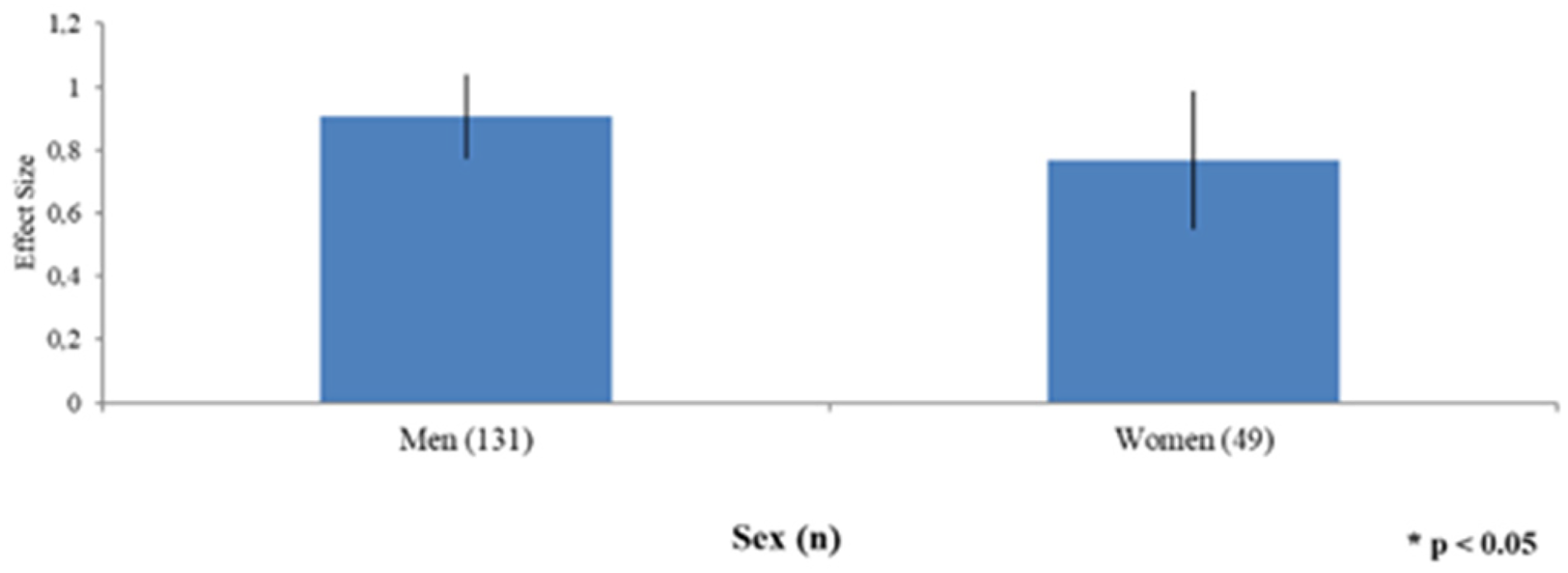
Difference between sex on COD performance. Lines represent confidence intervals (0.05).
This category refers to the condition of competition (Amateur, Junior, College, and Elite), the ANOVA-LIKE shows no difference between categories (p = 0.49) Q = 2.38, df = 3.0. The results by group are Amateur ES = 0.74, Q = 10.87, and CI95%: 0.43; 1.05. The Junior group ES = 0.97 Q = 101.85 and CI95% = 0.81;1.14. College had an ES = 0.78, Q = 20.71 and CI95% = 0.49; 1.14. The Elite group show an ES = 0.84 Q = 67.78 and CI95% = 0.63; 1.06. This result indicates no influence of level competition on the gain in COD performance (Figure 7).
Sport

The difference among levels of competition on COD performance. Lines represent confidence intervals (0.05).
This category is about the sport of the study participants. The ANOVA-LIKE indicates no significant difference among sports for obtaining a change in COD performance (Q = 16,91 and sig = 0.08). The individual analysis shows a statistically significant effect for Handball is ES = 1.45 Q = 15.15 CI95% = 1.01; 1.90. Basketball: ES = 0.91 Q = 9.25 CI95% = 0.58; 1.27. Volleyball: ES = 1.04 Q = 24.55 CI95% = 0.36; 1.71. Rugby: ES = 1.42 Q = 13.83 CI95% = 0.83;2.01. Soccer: ES = 0.87 Q = 115.90 CI95% = 0.72;1.02. And a not statistically significant effect for Football: ES = 0.38 Q = 0.17 CI95% = −0.35;1.12. Hockey: ES = 0.66 Q = 0.01 CI95% = −0.32;1.64. Various sports: ES = 0.78 Q = 18.45 CI95% = 0.48;1.07. Australian Football: ES = 0.01 Q = 0.01 CI95% = −1.03;1.05. Water polo: ES = 0.47 Q = 2.01 CI95% = −0.28;1.22. Indoor Soccer: ES = 0.35 Q = 0.01 CI95% = −0.72;1.42 (Figure 8).
The phase of training
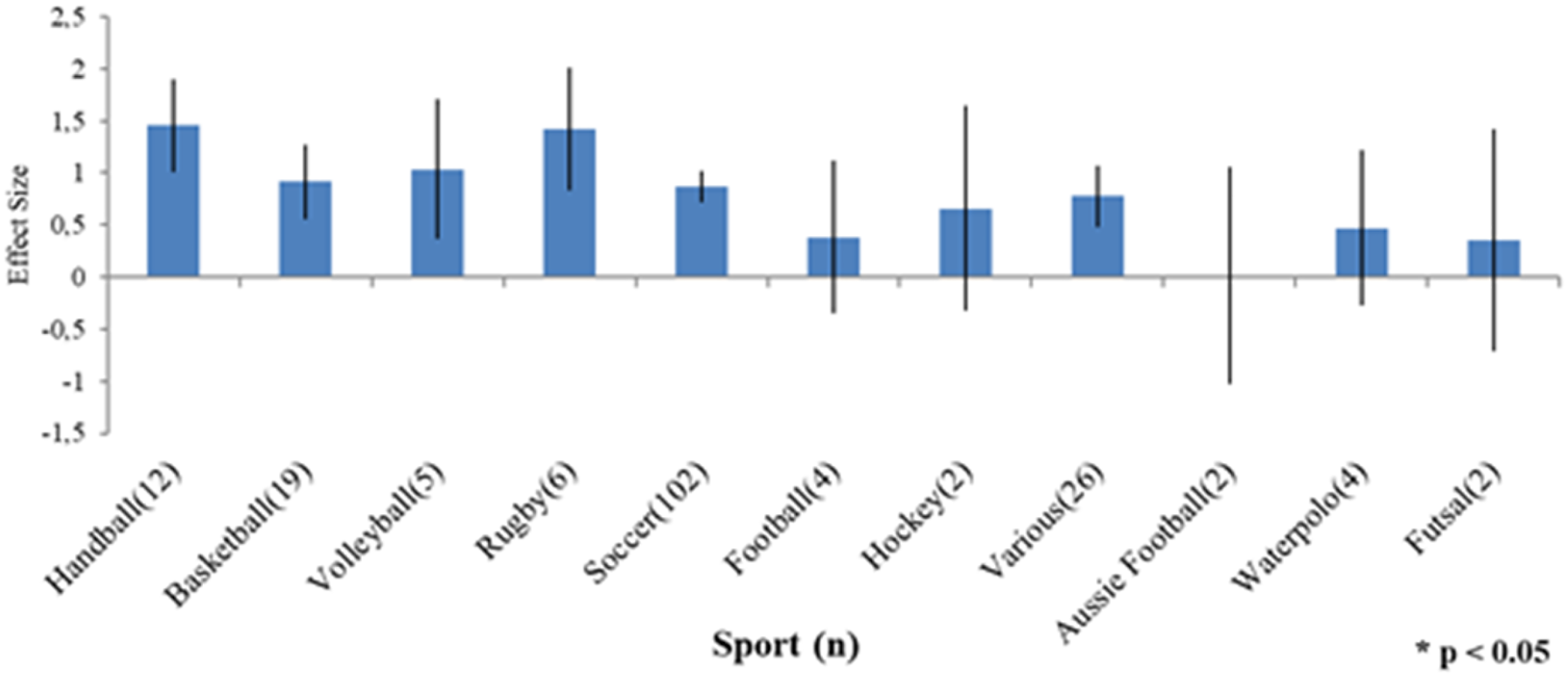
The difference among sports on COD performance.
The season category is about the phase of planning training. The ANOVA-LIKE shows a significant difference between these phases (Sig = 0.01 Q = 11.90) being a better gain on COD performance in the In-season versus Off-season. The results had a statistically significant effect for each phase: Off-season: ES = 0.46 Q = 15.65 CI95% = 0.18; 0.74. Pre-Season: ES = 0.84 Q = 67.09 CI95% = 0.62;1.06. And In-Season: ES = 1.05 Q = 91.12 CI95% = 0.87;1.23 (Figure 9).
Method
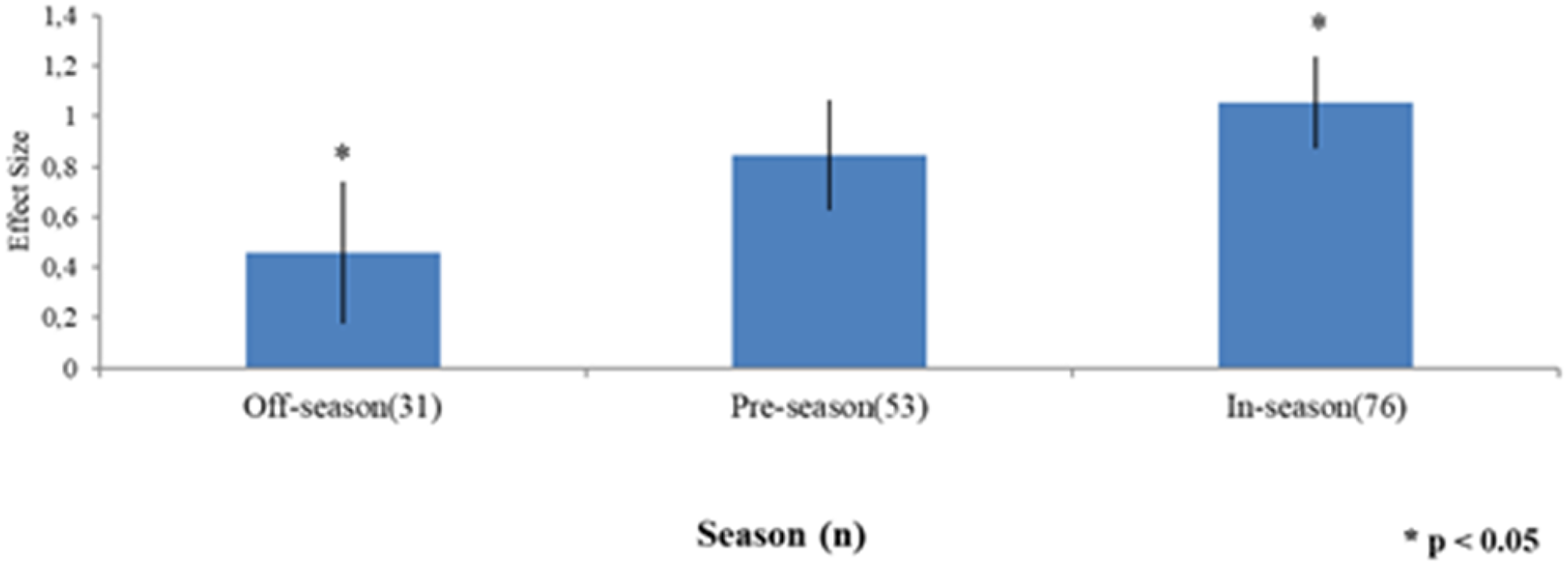
Difference between phases of training on COD performance.
The method is about the physical ability trained for the change in COD performance. The ANOVA-LIKE indicates a statistically significant difference among methods (except the combined method) with the control group (Sig = 0.01 Q = 69.19). The strength method had an ES = 0.86 Q = 77.63 CI95% = 0.65;1.07. Speed method: ES = 0.70 Q = 5.69 CI95% = 0.35;1.05. Power method: ES = 0.85 Q = 47.58 CI95% = 0.64;1.06. Agility method: ES = 1.05 Q = 79.63 CI95% = 0.86;1.24. Combined method: ES = 0.53 Q = 13.79 CI95% = 0.14;0.93. Control group: ES = 0.05 Q = 47.40 IC95% = −0.12;0.23. All ES were statistically significant except control group (Figure 10).
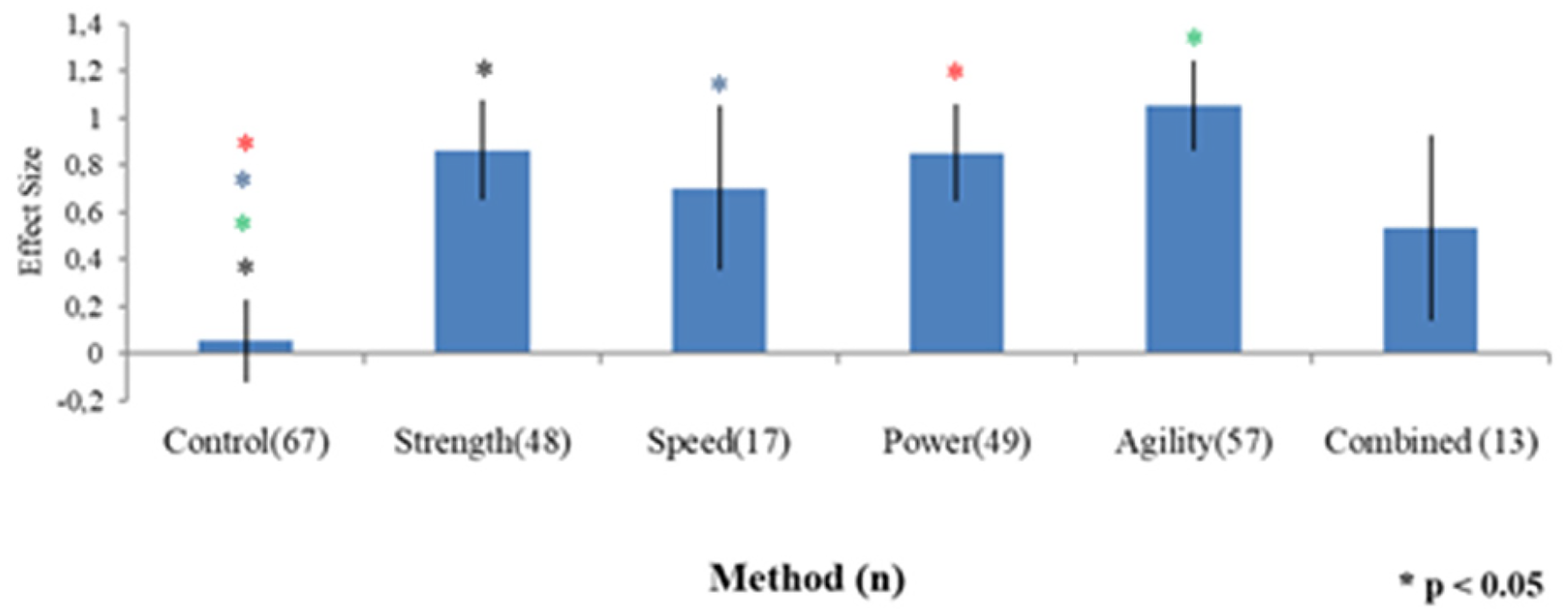
The difference among methods and control groups on COD performance.
Metaregressions of moderatoring variables
The model for the variable age displayed a small statistically significant regression (Sig = 0.03 R2 = 2.57%). This result indicates an athlete's age is an influencing factor for enhanced COD performance. More specifically, a younger athlete is better able to capitalize on training than an older one. The variable weight shows a statistically significant model (sig = 0.02 R2 = 2.83%). When participants had less weight, their gain in the COD performance was better. When analyzing the variable of frequency (times per week of treatment) (Figure 11), weeks (number of weeks of treatment), and total sessions (total number of treatment sessions), the results were statistically significant (sig = 4.69 × 10−09 R2 = 17.09%; sig = 0.01 R2 = 31.99%; sig = 1.89 × 10⁻¹⁰ R2 = 18.51%, respectively), which indicates more sessions per week and more weeks it indicates more gain on COD performance. The variables of height and study quality, the metaregression present a non-significant model for those two variables (sig = 0.39 R2 = 0.01% and sig = 0.54 R2 = 0.01%, respectively) (Figure 12).
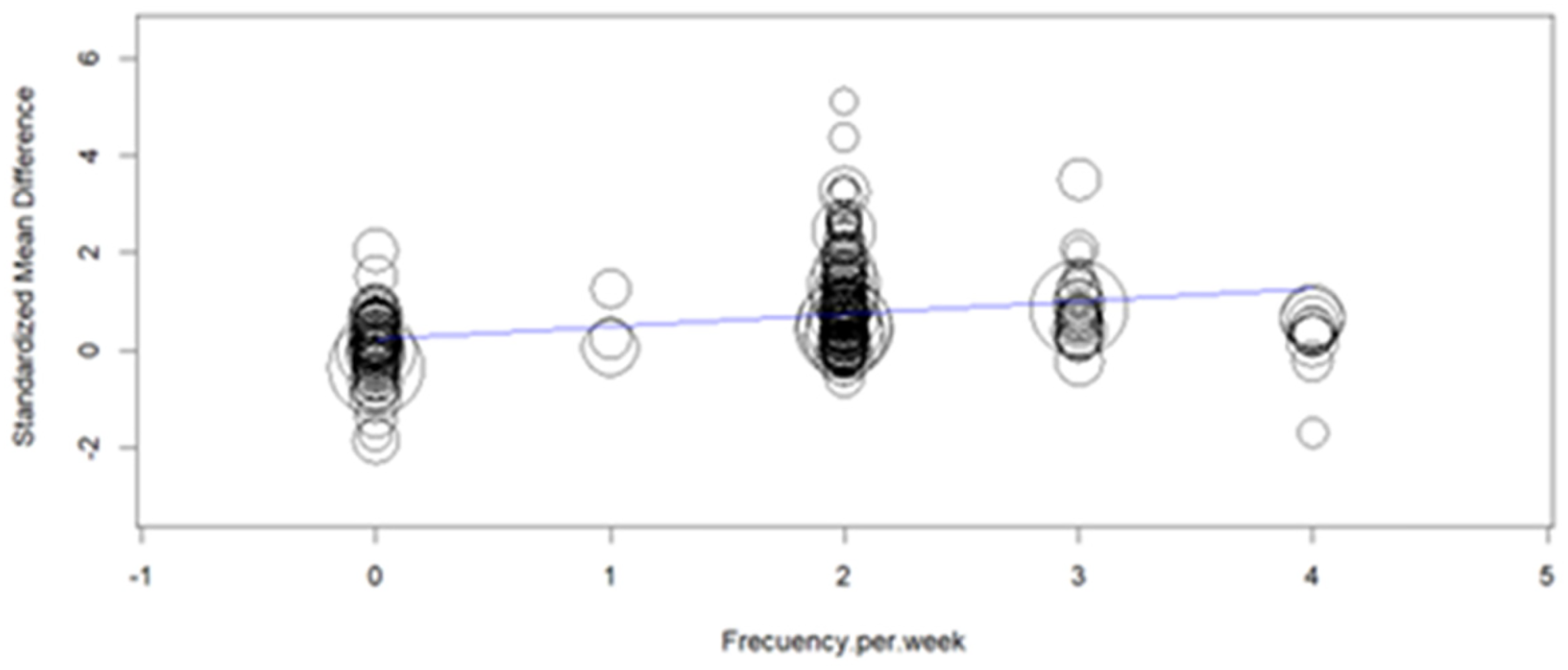
Metaregression for frequency (sessions per week) on COD performance.
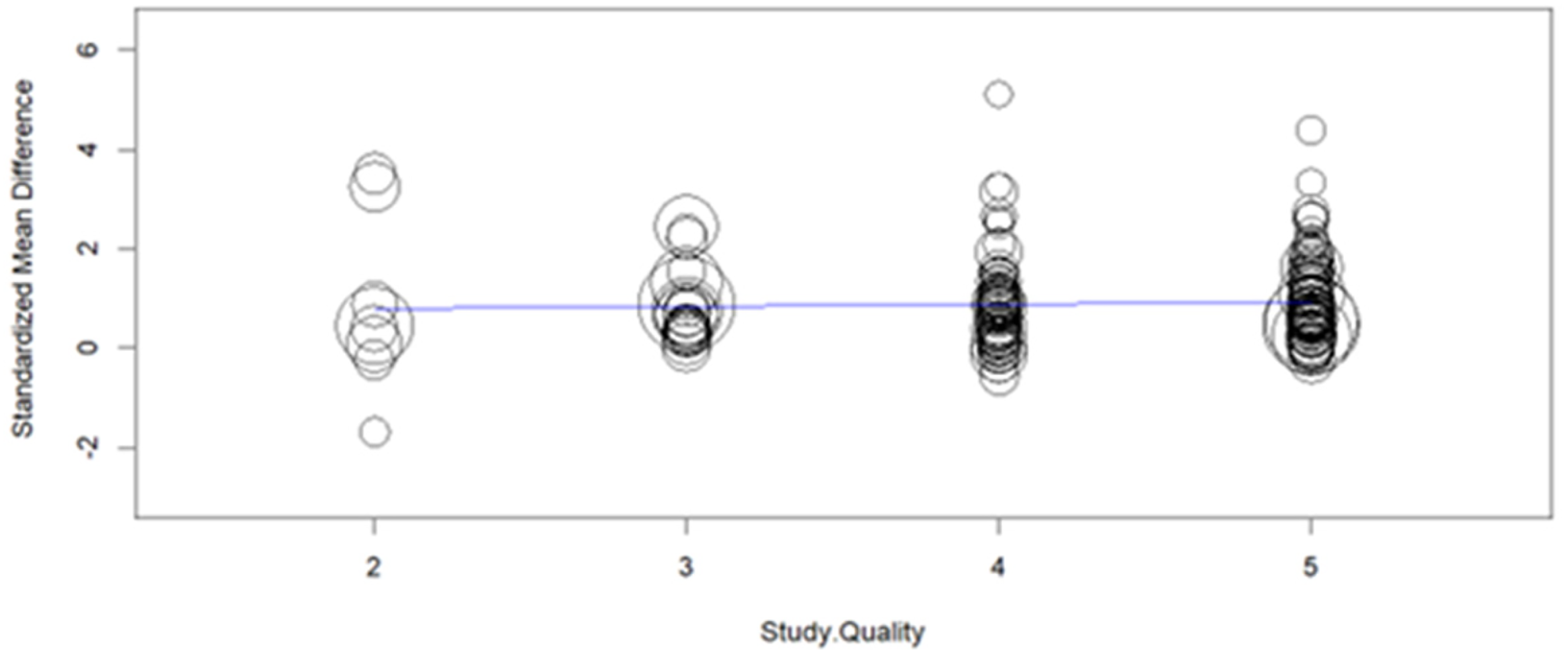
Metaregression of study quality on COD performance.
Discussion
The purpose of this meta-analysis was to determine which of the physical qualities of strength, speed, power, agility, or combined training improve performance in COD ability. The results prove that training physical qualities (strength, speed, power, and agility) improves performance in COD. Previous studies agree with this result, which indicates that each of these physical qualities can improve COD ability.5,74–77
Within the analysis of the moderating variables, one of the most important findings is that there is no difference in the improvement of COD regardless of the physical quality trained. Each of the physical qualities, including combined training, improves COD performance. This result contradicts the meta-analytic findings by Pardos et al., 77 which indicates that power training is better than strength training. This difference can be explained because Pardos et al. study includes only 12 studies, while the present study consists of 66 studies.
When the training methods are compared, a higher ES is found for the agility method. Although not statistically different from the other methods, This result aligns with findings from previous studies indicating that training methods with greater specificity will have a greater transfer to COD performance.6,74,76,78 Within this meta-analysis, the agility category included studies of small sided-games and other specific methods of training directly related to the technical aspects of COD in team sports.
Regarding the characteristics of the participants, age and weight were found to be significant variables related to improvements in COD performance. Many studies related to age and weight are descriptive, which does not directly compare with this study.79–81 Results of this meta-analysis component can be linked back to the “law of diminishing returns.” Younger athletes and those less trained have greater possibilities for improvement and therefore are likely to respond more favorably. However, more studies comparing biological and training ages are needed. 82
When different sports were compared, there was no statistically significant difference in COD performance improvements. This result is similar to Freitas et al., 83 which compared the COD ability in three sports: Rugby, Handball, and Soccer. The authors found no significant difference in COD performance between players in each sport. Although the Freitas et al. study is descriptive and this meta-analysis is on experimental investigations, it guides the influence of this variable. This finding may also highlight that COD ability is a closed skill that does not require athletes to perceive any sport-specific environmental cues to improve their change of direction.
Studies comparing training between phases of training are oriented towards describing the performance of physical quality.84–86 Regarding COD training in team sports, this is the first study to indicate significant differences in the training effect observed in different training phases. This meta-analysis certainly demonstrates a greater performance gain in COD during the competition period than in others. The hypothesis that would explain this result is that the level of COD gain is proportional to the level of physical condition the subject has. It is likely that having gone through the training phases before the competition period, such as the pre-season, the players could obtain a better physical condition that leads to greater profit in the next phase. However, future studies are needed to directly investigate the improvements in COD ability in different phases of a periodized training program.
When analyzing the quality of the studies, no relationship was found between the quality scores and the ES scores. This result may be because some included studies do not report enough information (experimental death, equal groups at baseline, or randomization) to determine a certain level of study quality. Studies that analyze the relationship between quality scores and effect size indicate that this association is influenced by the study area of the meta-analysis to be performed. For example, the case of epidemiological studies requires an exhaustive analysis of the methodological procedures to find a valid ES.87–92 The analysis shows that it is unnecessary to eliminate the low-quality studies from this study due to not finding a significant meta-regression between the quality assessment and the ES. Studies in the training of physical qualities should improve the reporting of methodological aspects to better analyze the study's quality.
Variables related to training volume (weekly sessions, weeks, total sessions) are shown to be related to improvement in COD. This result is different from those found by the meta-analysis of Asadi et al. 5 ; in this study, it is indicated that the number of sessions is not an influencing factor in the COD gain, but it does corroborate the weekly frequency variable where it presents similar results. This different result may be due to Asadi et al. meta-analysis solely from plyometrics training on COD performance. In contrast, this study uses various types of COD improvement training. Studies regarding training volume should be more specific in the mentioned variables and how many studies analyzed training volume as a moderating variable.
These meta-analysis results are expected to clarify the importance of training qualities in a complex skill such as COD. Each of the qualities has been found to represent a trainable factor with a similar magnitude to improve COD ability within team sports.
The following studies in this line of research could be oriented to post-meta-analytical experimental studies that confirm these results. Likewise, the training of perceptual factors is a factor to be investigated, necessary to analyze agility in its entirety, making designs with training groups in COD and others in agility.
Practical applications
Physical qualities, strength, speed, power, and agility construct are effective training methods for improving COD ability. Each of these qualities has one or more moderating variables that influence its development, which must be considered when planning training sessions to enhance this quality. Coaches, trainers, and strength and conditioning coaches are the ones who, with their skills, can obtain the best performance with the strategic planning of sessions related to COD. This work will be possible to improve the physical qualities and especially the COD ability of team sports players.
Footnotes
Declaration of conflicting interests
The author(s) declared no potential conflicts of interest with respect to the research, authorship, and/or publication of this article.
Funding
The author(s) received no financial support for the research, authorship, and/or publication of this article.
