




Abstract
One of the biggest challenges facing sport worldwide is putting fun, player-centered experiences at the core of programming in ways that drive participation, and in turn, retention. Determinants of fun in youth-based, team sports have been investigated, however, individual sports, like tennis, also need sport-specific, data-driven information on which to position action plans and retention strategies rooted in optimizing fun. The current study used group concept mapping, an innovative mixed-method research design, and engaged a well-represented sample of junior tennis players (N = 667), aged 6–19, in the United States to investigate determinants of what makes tennis fun and the relative importance of those determinants to having fun. They identified 120 fun determinants, organized in 11 overarching thematic clusters, that they rated in three tiers of importance: primary importance (Match Play, Positive Coaching, Working Hard & Learning, Developing Mental Strength, Staying Active, Sportsmanship, Training with Coach), secondary importance (Ways of Playing, Hitting the Ball, Skill Building), and tertiary importance (Bonuses). These findings are considered in light of a (fun)damental sport ecosystems framework that extends the fun integration theory through an understanding of various environments and subsystems that influence fun. Overall, the findings can be used to inform actionable plans and strategies, i.e., coach education, parent support, program planning, and policies, to deliver fun tennis experiences that facilitate junior players’ athletic and personal development in ways that, ultimately, promote participation retention and prevent dropout.
Keywords
Introduction
The immediate and consequent benefits of positive sport experiences are well established.1–4 Further, the right children have to such experiences has been recognized at global (e.g., United Nation's Convention on the Rights of the Child), 5 national (e.g., Norway's Rights of the Child), 6 and organizational levels (e.g., Aspen Institute Children's Bill of Rights in Sports), 7 including sport national governing bodies (NGBs). In the United States, sport NGBs including US Soccer, USA Hockey, and USA Football, among others, have endorsed the Aspen Institute's (2021) Children's Bill of Rights in Sports. 7 Included in the Bill is children's right to participate in sport activities that are fun. Yet, among the biggest challenges facing sport NGBs, worldwide, is delivering programs that promote and optimize having fun. Consequently, most children dropout of organized sport between ages 9 and 13 8 , 9 for reasons cumulatively described as not having fun.10–12
In the United States, the American Development Model (ADM) is an effort between the United States Olympic and Paralympic Committee (USOPC) and its sport NGBs to utilize long-term athlete development principles and quality coaching concepts to promote age-appropriate development, athlete safety, and ultimately sustained participation. 13 Key to realizing these outcomes is centering play and practice activities on having fun, an evidence-based recommendation for promoting athletes’ participation, performance, and personal development. 14 As such, identifying what makes sport fun has been an important area of scientific inquiry and theoretical development, i.e., fun integration theory via FUN MAPS, that has been investigated in team-based sports including youth soccer, ice hockey, and basketball.15,16 The findings of these studies have provided an evidence base of fun determinants for bolstering team sport participants’ athletic potential, e.g., learning new skills, being challenged to get better, improving skills to play at the next level, playing well together as a team, and personal development, e.g., learning from mistakes, trying hard, keeping a positive attitude, supporting teammates. Together, the fun determinants coalesce and culminate in having fun, a pleasurable hedonic and eudemonic experience17,18 that has been found to motivate and encourage continued participation in organized sports.19–22 Through an evidence base, research has identified key structural concepts of the fun integration's theoretical framework: fun determinants that directly affect the nature or outcome of having fun nested within fun factors and high-order fun domains, along with fundamental tenets that have informed a fun ethos for systematically directing prioritization and integration of the fun determinants and factors in program planning and implementation based on the magnitude of their importance, respectively.15,16,23 Theoretically, an underlying assumption is sport participants who experience a greater number of the highest importance determinants would presumably have more fun than those who experience fewer of them.
Empirical investigation of what makes individual sports fun should be of equal consideration. Though individual sports and team sports share similar athletic elements in relation to skill acquisition, development, and competing, the composition and execution of participating in each of them are also discernably different. For example, in a team sport like soccer, a player's focus is on cooperative teamwork and coordinated performance with teammates and achievement of shared goals, whereas in an individual sport like tennis, a player's focus is inward on the development and performance of their own skill and achievement of personal goals. Furthermore, research examining team and individual sport participants’ personality characteristics, 24 motives,25,26 motivational processes, 27 motivational responses, 28 and perceptions of coaching behaviors 29 have found differences by sport type. Given the aforementioned distinctions, advancement in understanding fun across sports necessitates focused empirical exploration that includes individual sports. Among the most participated individual sports, worldwide, is tennis. 30 Correspondingly, the purpose of this study was to engage youth-aged tennis players, commonly recognized in the sport as junior players, as expert informants of what makes tennis fun. An innovative group concept mapping 31 research design was used to illustrate their collective thinking in a unified framework and elucidate key findings on which tennis programming can be designed to enhance and optimize fun.
Method
Study design
Group concept mapping is a mixed-method research design that integrates participants’ qualitative ideas and quantitative inputs to illustrate their combined thinking through the aggregation of three independent participant-driven activities. 31 These included: (a) brainstorming determinants that make playing tennis fun; (b) sorting the determinants, thematically, to distinguish their relatedness; and (c) rating the importance of each determinant. Participants included junior tennis players, aged 6–19, recruited in the mid-Atlantic and southeastern areas of the United States. Targeted sampling was used to engage players represented across sexes, ages, skill levels, and racial ethnic identities from a broad array of tennis facilities and programs with the aim of including the ideas and inputs from as many different players as possible. The goal of each study activity is distinct; therefore, group concept mapping is flexible, allowing for independent samples, or for participants to complete multiple activities. 31 Players were recruited from the same tennis facilities and programs, as feasible, for brainstorming, sorting, and rating; however, fiscal constraints prohibited inclusion of a national training center for brainstorming and greater time-intensiveness required of sorting and rating made inclusion of afterschool programs challenging.
Procedures
Approval was obtained from The George Washington University's Institutional Review Board. Parents/guardians were notified of the study taking place at their child's tennis facility via an information sheet that provided details regarding what voluntary participation by their child involved and given the opportunity to opt their child out of participating. During or around scheduled practices, camps, or tournament match play, players who had not been opted out of participation by their parent/guardian were presented with the opportunity to participate. The study activities and their rights as research participants were explained to them. Players who volunteered to participate provided their verbal assent.
The mixed-method study design was completed in three phases: (1) brainstorming, followed by (2) idea synthesis, a form of qualitative content analysis, and finally (3) sorting and rating. At the start of each study activity, participants completed a short demographic measure to describe the sample obtained, and as a token of appreciation following completion of the activity, they received United States Tennis Association Net Generation merchandise, such as a grip, ball cap, or bag tag, with the option to enter a raffle to win a tablet.
Phase 1: brainstorming
Participants (n = 262) were invited to generate, on their own, as many ideas as they could think of that completed the sentence stem: “One thing that makes playing tennis fun is…”. They were asked to be as specific as possible and write their ideas on a brainstorming worksheet.
Phase 2: idea synthesis
Participants generated 1207 statements in response to the sentence stem. Statements were pooled together, in a raw statement list, and refined by: (a) parceling statements containing multiple ideas into singular statements so each statement represented one idea; (b) collapsing redundant ideas into a single statement; (c) omitting statements that described affective states, such as ‘the feeling of the ball hitting the racquet’ and retaining statements describing the actionable event, like ‘hitting the ball’; and finally, (d) discarding statements unrelated to the sentence stem. Altogether, 120 unique determinants were identified. To prepare the 120 determinants for sorting and rating by participants, the syntax of each statement describing the determinants were refined, where needed, to facilitate readability, comprehension, and coherency. Determinants were randomized and then listed in numerical format, i.e., 1–120. Each numeral served as the identification number for the fun determinant.
Phase 3: sorting & rating
Participants (n = 107) were instructed to sort a deck of laminated index cards, where each card included a single determinant and its corresponding identification number, in as few, or as many, piles as made sense to them. While sorting, they were asked to: (a) not sort by preference or value, (b) not create a miscellaneous pile; meaning, a card could stand alone in its own pile, and (c) place each card in one pile, therefore a card could not sit between two piles. Participants were also asked to name each pile, writing the name on a post-it note and placing it next to, or on top of, the pile. Participants sort piles were recorded. Finally, participants (n = 304) were asked to rate the importance each determinant had to having fun on a 1-to-5 ordinal numeric rating scale from 1 (not important) to 5 (extremely important).
Statistical analysis
All sorting and rating data were manually entered into groupwisdomTM, a multifunction group concept mapping platform. Data were reviewed for quality, i.e., adherence to sorting activity guidelines, normality, and completeness – and either approved or rejected. The sorting rules were not adhered to in six cases and thus rejected and excluded from analysis. Rating data were negatively skewed on the 1-to-5 ordinal numeric rating scale. Cases in which a large majority of the item response observations were 4 or 5 were examined. Sixty-seven cases included item responses in which 70% of the observations were 4 or 5. Data were exported from groupwisdomTM into R (version 4.3.3) and the non-parametric Wilcoxon Rank Sum test was used to determine if these cases were significantly different from the remaining 237 cases. Results indicated the two samples were not statistically significantly different from one another (p > .05) and therefore all rating cases were approved for inclusion. In total, 101 of the 107 sort cases were approved and 304 of the 304 rating cases were approved, yielding 99% of the data approved for analysis.
Descriptive statistics were performed to describe characteristics of the participants across brainstorming, sorting, and rating. Generation of the concept maps were conducted using groupwisdomTM. Data were analyzed in an iterative process that generated a series of concept maps, i.e., JUNIOR TENNIS FUN MAPS. First, a point map was generated using multidimensional scaling (MDS). The point map's goodness-of-fit was measured by the stress value, which was .22, indicating the point map represented the observed data well and was not random or without structure. Generally, maps with a stress value below .39 have a less than 1% probability of the MDS matrix having a random structure or no structure 32 and a pooled study analysis 33 found group concept mapping studies, on average, yield a stress value of .28.
Following the point map, hierarchical cluster analysis was performed on the MDS solution using Ward's algorithm, which partitioned the points on the map into thematic clusters to produce a series of point-cluster map solutions. Maps with as few as 6 and as many as 18 clusters were examined for conceptual fit. Among them, maps with 11, 12, and 13 cluster solutions appeared to be better fitting. These were examined more closely, quantitatively, using spanning analysis that computed a bridging index (BI) value for each point on the map, i.e., each fun determinant. BI values range from 0 to 1. Values closer to 0 indicated narrowly focused thematic content, meaning a determinant was sorted with greater frequency with nearby determinants, and therefore considered anchors on the map. Values closer to 1 indicated broader thematic content, meaning there was greater variability in how the determinants were sorted by participants. This quantitative input, along with expert judgement, aided in identifying the 11-cluster solution as the best fitting point-cluster map. Next, a list of the most common monikers given by participants for each cluster, i.e., pile names, were examined. The best fitting moniker was selected and subsequently all clusters were named. Finally, a cluster-rating map was generated, which displayed the average importance value for each cluster based on the mean value of the determinants within it. The number of cluster layers was proportional to how it was rated; hence, a greater number of cluster layers indicated a higher degree of importance.
Finally, from the cluster ratings, a grouping effect was observed that suggested the 11 clusters were bundled into three tiers of importance: primary (Match Play, Positive Coaching, Working Hard & Learning, Developing Mental Strength, Staying Active, Sportsmanship, Training with Coach), secondary (Ways of Playing, Hitting the Ball, Skill Building), and tertiary (Bonuses). Wilcoxon Signed Rank (WSR) tests were conducted to test whether each cluster of the tiers were significantly different from one another of different tiers. To account for the number of tests conducted in these post-hoc comparisons, significance was adjusted using the False Discovery Rate 34 (FDR). R was used to perform analyses of descriptive statistics and comparisons, and an FDR-adjusted p-value < 0.05 was considered statistically significant.
Results
Participants
Characteristics of participants (N = 667) for brainstorming (n = 262), sorting (n = 101), and rating (n = 304) are shown in Table 1. Across all study activities, the sample was racially and ethnically diversified and generally balanced across the sexes. More than half the participants played at pay-to-play tennis facilities, though the types of facilities represented spanned recreational afterschool programs, to both free/subsidized and pay-to-play parks and recreation centers, to a national training center.
Participant characteristics.
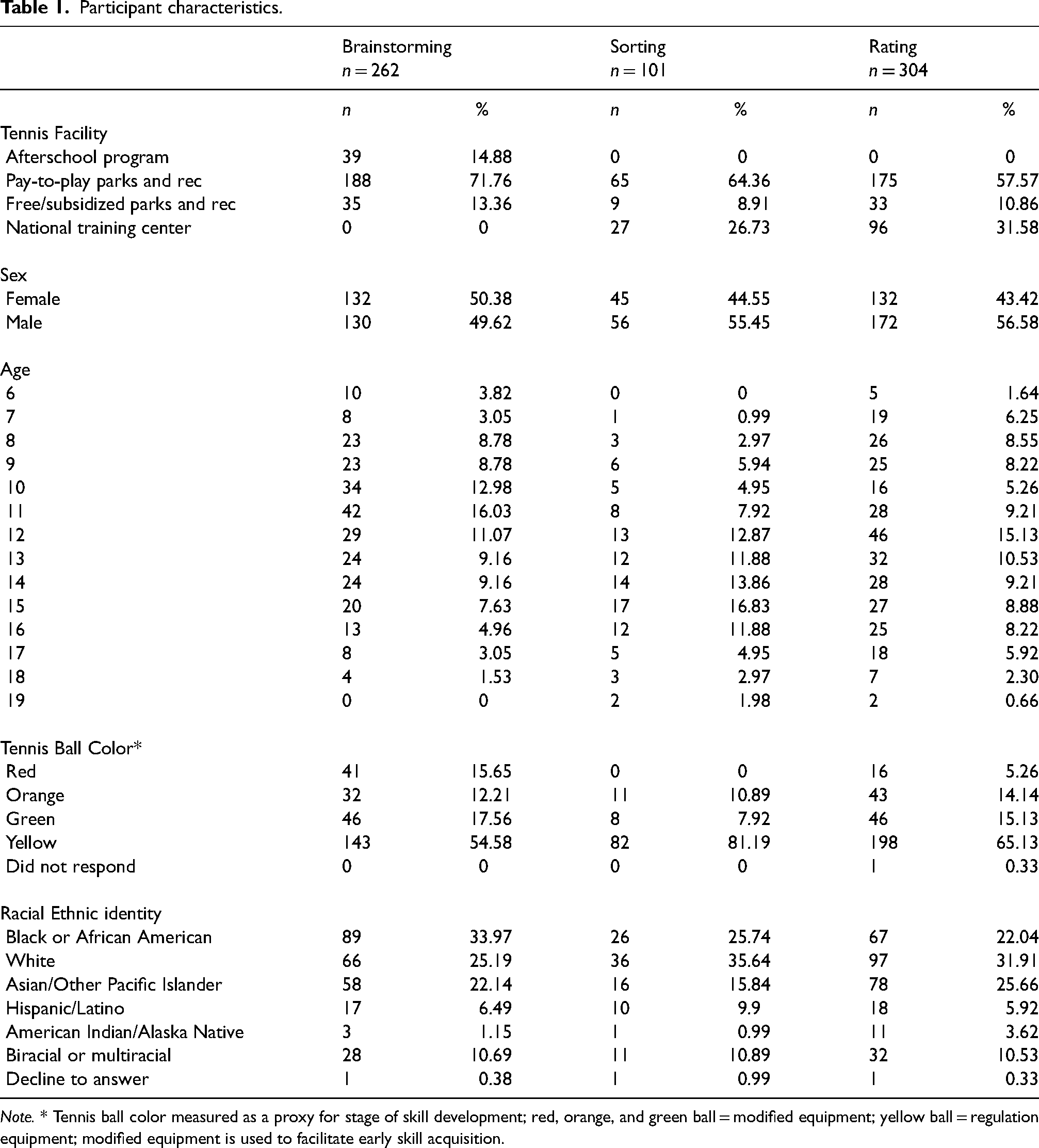
Note. * Tennis ball color measured as a proxy for stage of skill development; red, orange, and green ball = modified equipment; yellow ball = regulation equipment; modified equipment is used to facilitate early skill acquisition.
JUNIOR TENNIS FUN MAPS
The point-cluster map (see Figure 1) represents how participants collectively conceptualized the 120 determinants in 11 overarching thematic clusters. Each point on the map corresponds to one of the 120 determinants identified through brainstorming; and its placement on the map represents its thematic relationship to all other points. Said another way, points closer to one another were sorted together more often as compared to points further apart from one another. Clusters with the lowest BI values that anchored the map thematically with tightly focused determinants included Positive Coaching (0.14), Hitting the Ball (0.22), and Match Play (0.28). Clusters with the highest BI values that bridged the map with broader heterogenous determinants included Training with Coach (0.58), Sportsmanship (0.66), and Bonuses (0.70). See Table 2 for a list of the BI values for all determinants organized by cluster.
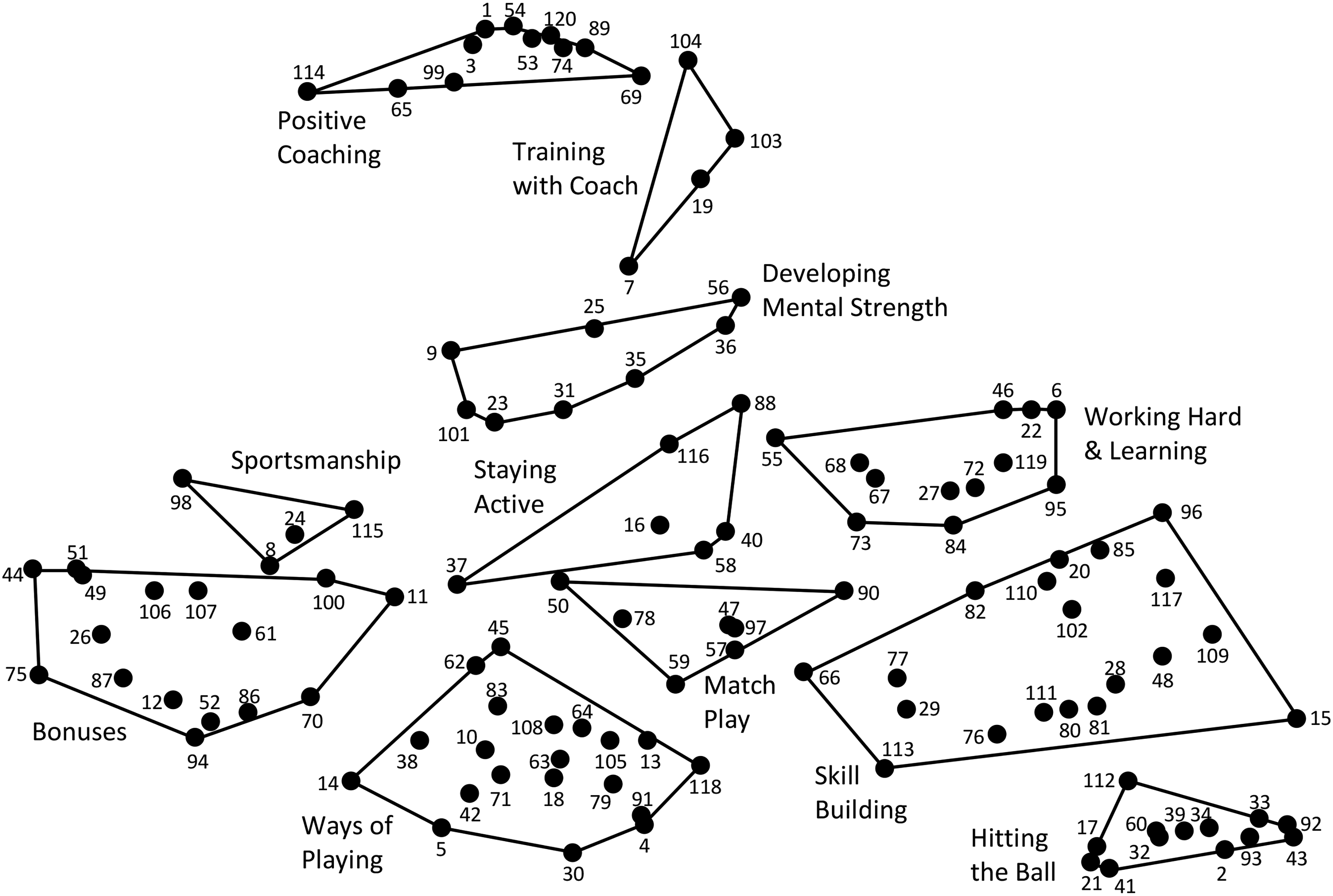
Point-Cluster Map. Note. The point-cluster map illustrates the 120 fun determinants (points on the map) within an 11-cluster solution.
Clusters and determinants’ bridging Index and mean importance.
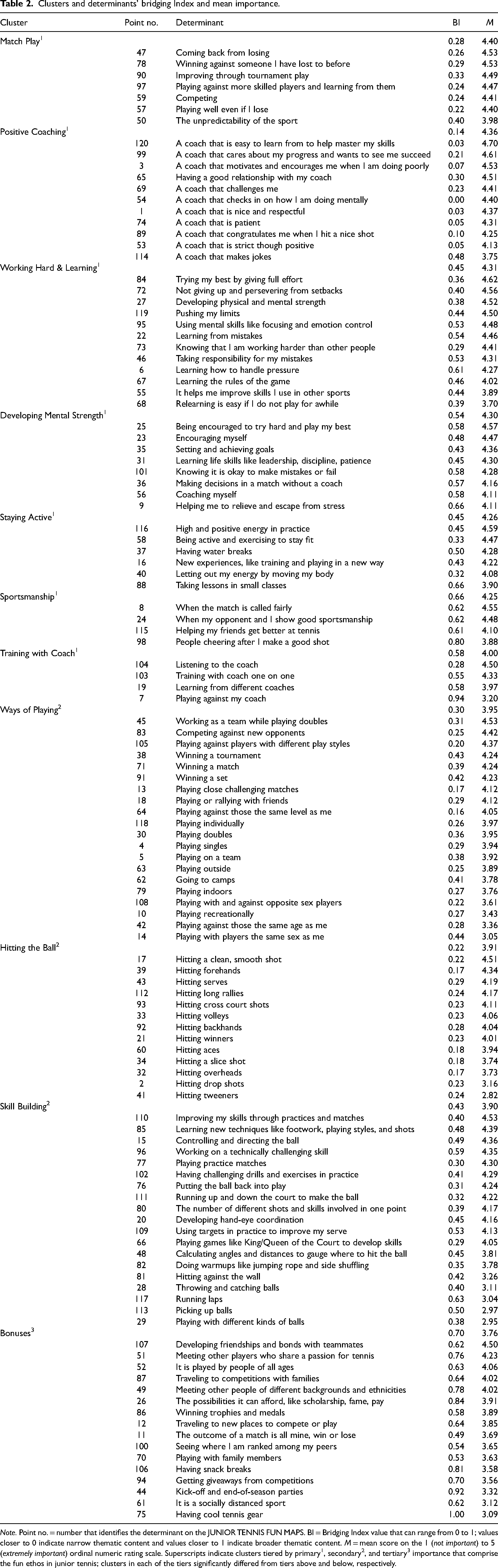
Note. Point no. = number that identifies the determinant on the JUNIOR TENNIS FUN MAPS. BI = Bridging Index value that can range from 0 to 1; values closer to 0 indicate narrow thematic content and values closer to 1 indicate broader thematic content. M = mean score on the 1 (not important) to 5 (extremely important) ordinal numeric rating scale. Superscripts indicate clusters tiered by primary1, secondary2, and tertiary3 importance that comprise the fun ethos in junior tennis; clusters in each of the tiers significantly differed from tiers above and below, respectively.
The cluster-rating map (see Figure 2) displays the reported importance (mean value) of the clusters using a cluster-laying effect. WSR tests indicated clusters of primary importance (values ranged from 4.00–4.40): Match Play (4.40), Positive Coaching (4.36), Working Hard & Learning (4.31), Developing Mental Strength (4.30), Staying Active (4.26), Sportsmanship (4.25), Training with Coach (4.00), significantly differed from those of secondary importance (values ranged from 3.90–3.95): Ways of Playing (3.95), Hitting the Ball (3.91), and Skill Building (3.90), and tertiary importance: Bonuses (3.76); p < 0.05 for all comparisons. Similarly, that of tertiary importance significantly differed from those of secondary and primary importance, respectively; p < 0.05 for all comparisons. Table 2 lists the means and standard deviations of the clusters, and the determinants within each cluster, in order of importance. Table 3 provides a list of all determinants, from highest to lowest reported mean, in relative rank order of importance.
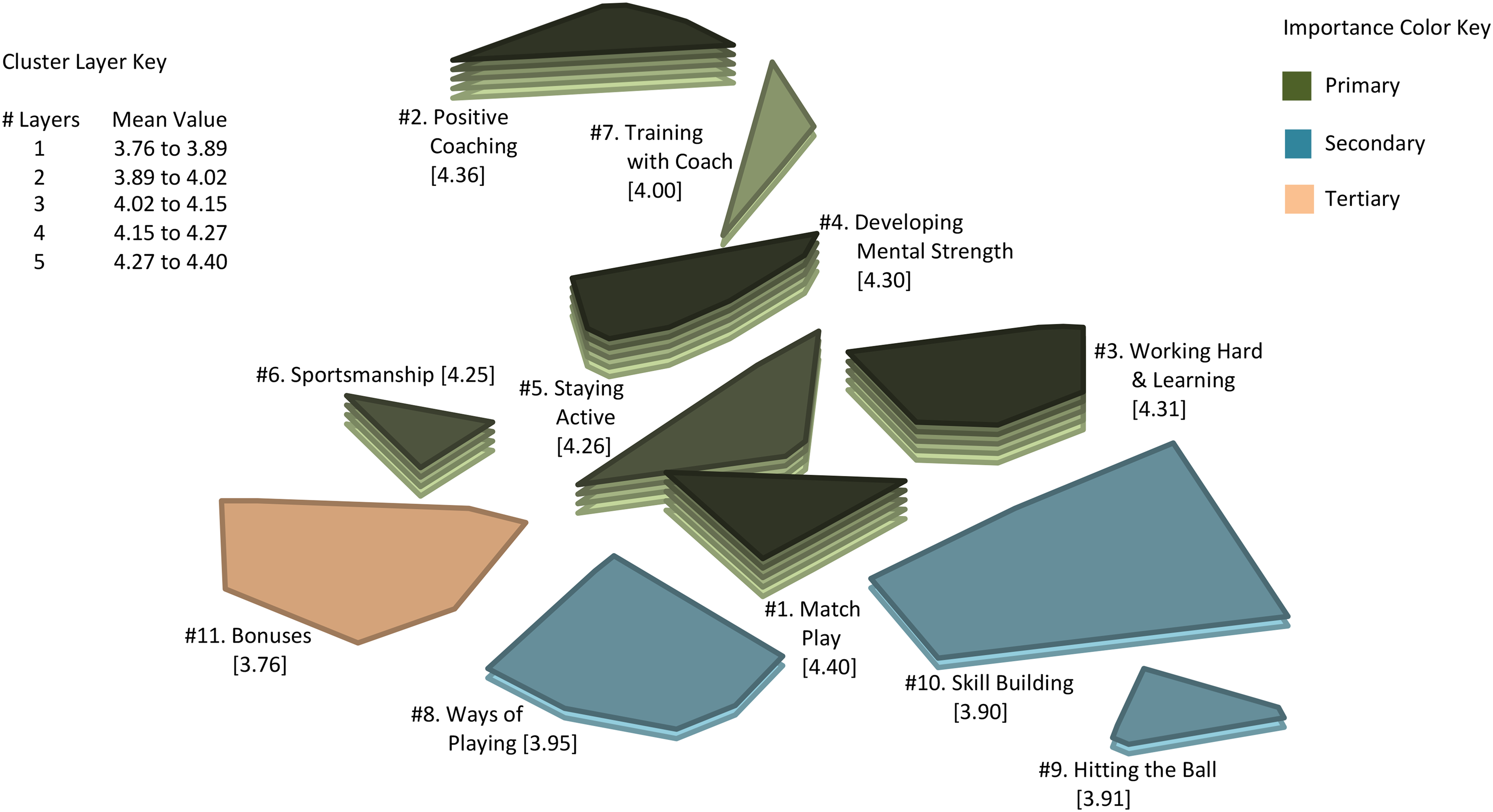
Cluster-Rating Map. Note. The cluster-rating map illustrates the mean importance of all the determinants within each cluster. The rank order of each cluster is followed by its mean importance value in brackets; mean importance was measured on a 1 (not important) to 5 (extremely important) ordinal numeric rating scale. Clusters of primary, secondary, and tertiary importance that comprise the fun ethos in junior tennis denoted by color.
Determinants’ rank order by mean importance.
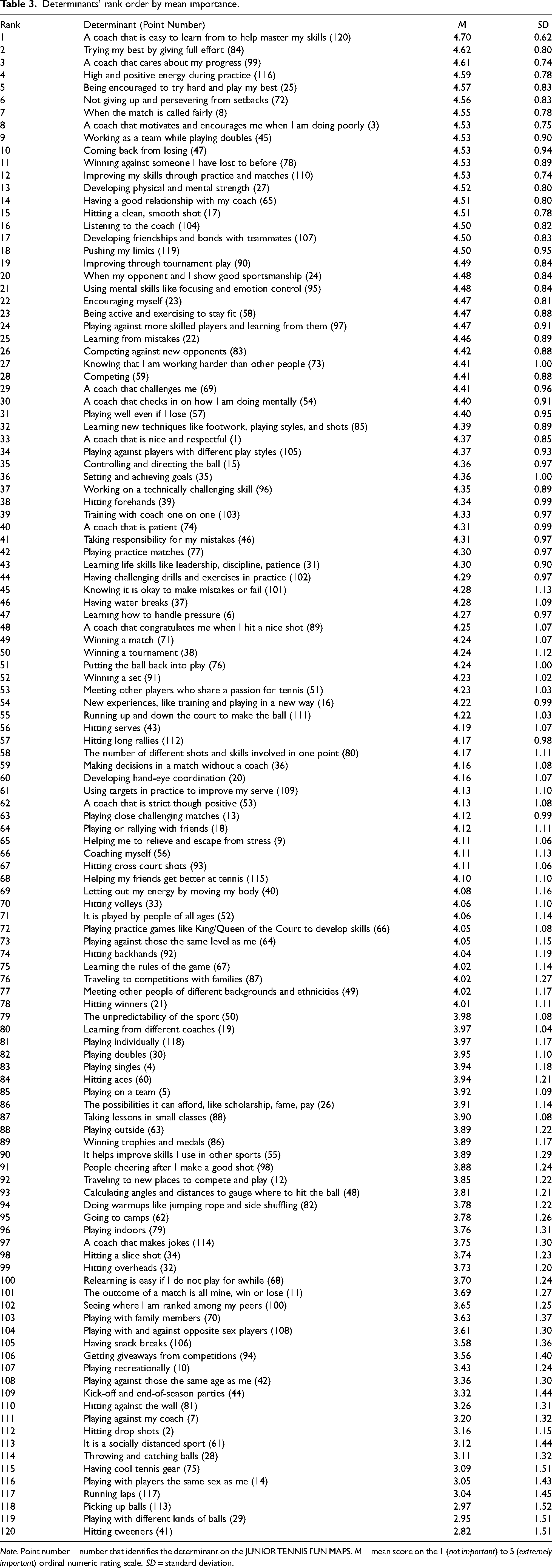
Note. Point number = number that identifies the determinant on the JUNIOR TENNIS FUN MAPS. M = mean score on the 1 (not important) to 5 (extremely important) ordinal numeric rating scale. SD = standard deviation.
Discussion
Efforts to develop an evidence base for making tennis fun among junior players requires research regarding the programming they are involved in include them as research participants.35–37 As such, this study engaged junior players, from a variety of tennis facilities and programs as research participants and expert informants in what makes tennis fun. Overall, the composite framework illustrated through the JUNIOR TENNIS FUN MAPS present big picture overviews, with multifactorial understanding of an array of determinants that make tennis fun for junior players. The findings augment previous research in team sports and advance understanding of fun through new empirical insights that extend the fun integration theory.
What makes junior tennis fun
In total, the JUNIOR TENNIS FUN MAPS identify 120 fun determinants within 11 distinct clusters or factors as referred to within the fun integration theory, that offer turnkey solutions for putting fun, player-centered experiences at the core of junior tennis programming. These determinants spanned sport-specific actions from Hitting the Ball in a myriad of ways, e.g., serves, forehands, backhands, volleys, to developmental aspects of the game including Skill Building techniques, e.g., developing hand-eye coordination, using targets in practice, controlling and directing the ball, to Staying Active in practice, e.g., exercising to stay fit, keeping high and positive energy, to Working Hard & Learning, e.g., giving full effort, not giving up, learning from mistakes, and Developing Mental Strength, e.g., learning discipline and patience, making match decisions without a coach, setting and achieving goals. Additionally, determinants spanned the broad spectrum of different Ways of Playing the game, e.g., singles/doubles, on a team, inside/outside, to Positive Coaching, e.g., being challenged, receiving encouragement, making learning easy, to Training with Coach, e.g., listening to the coach, training one-on-one. Determinants also included competition aspects of Match Play, e.g., coming back from losing, playing against highly skilled players, playing well even if the match is lost, to fair play through Sportsmanship, e.g., matches being called fairly, helping other players improve, people cheering. Finally, determinants included Bonuses which ranged from social and familial aspects of being involved in the sport, such as meeting new people, developing friendships, and playing with family, to novelty experiences, such as traveling to new places to play and compete, to material gains such as competition giveaways and having cool tennis gear.
On the whole, what makes an individual sport like tennis fun for junior players shares more similarities than it does differences with team sports like soccer, ice hockey, and basketball. Nonetheless, the results of this study extrapolate the nuances of fun in tennis, a sport that is played with others, though generally regarded as highly individual in nature. Determinants specific to the individuality of tennis included hitting against the wall, coaching oneself, and seeing where one is ranked among their peers. Additionally, the outcome of a match, win or lose, was identified as a fun determinant. During data collection for brainstorming, players explained part of what made tennis fun was it did not involve depending on others. Many had previously played team sports and remarked they did not enjoy relying on teammates – and for that reason found greater joy in a sport like tennis in which performance outcomes were entirely theirs to win or lose.
Perhaps because of the individuality tennis demands, the role of mental skills in having fun – both in developing those skills, and executing them, was more pronounced than found in previous team sport studies. These fun determinants ranged from: learning how to handle pressure, to developing mental strength, to learning life skills including patience, discipline, and leadership. Grace around accepting and handling errors were also determinants of fun, including taking responsibility for mistakes and learning from them. These findings are aligned with owning all performance outcomes as previously mentioned. Additionally, pushing one's limits, coming back from losing by not giving up and persevering from setbacks, and using mental skills like focusing and emotion control make tennis fun. These determinants are largely exemplified by Working Hard & Learning, which emphasized the role of effort, development, and competence, and Developing Mental Strength, which calls direct attention to the role of mental skills in making tennis fun. These findings, when coupled with mental health awareness and advocacy as a determinant of fun, i.e., having a coach that checks in with a player about their mental health, highlights the psychology of sport performance and the important role of sport psychology service providers, i.e., Certified Mental Performance Consultants®, sport psychologists. As support personnel, they aid in facilitating players’ mental performance and wellbeing. Indeed scholars have forwarded a literature base on the role of sport psychology for youth athletes, 38 alongside best practices for sport psychology service provision with youth.39,40 From junior to professional ranks of tennis, mental training plays an essential role in the game. Tennis stars including Iga Swiatek, Ons Jabeur, and Jannik Sinner have spoken openly about their mental training regimens, which demonstrates the value mental training, and subsequently mental strength, has in tennis.
Alongside mental skills, determinants underpinned by psychological safety that make tennis fun included: creating safe spaces in which players know it is okay to make mistakes and fail, being encouraged to try hard and play their best, having coaches that care about their progress and want to see them succeed, having a good relationship with a coach who demonstrates patience and respect, and having coaches who encourage them when they are doing poorly. Psychological safety, in sport, has been defined as “the perception that one is protected from, or unlikely to be at risk of, psychological harm” (p. 530). 41 Such harms include fear, threat, and insecurity. Importantly, Vella and colleagues’ recent systematic review and concept analysis 41 suggest psychological safety is an antecedent to athletes’ personal development, mental health, and motivation to continue playing. Extant literature also suggests psychological safety enhances enjoyment and engagement in the sport experience, 42 boosting athletes’ capacity to thrive 43 and succeed in sport. 44 In fact, scholars have remarked psychological safety is just as important as physical safety in sport, 45 and the findings of this study provide evidence that psychological safety is also what makes it fun.
The visual topography of fun determinants, as depicted in the JUNIOR TENNIS FUN MAPS, and their clustered factors, innovatively capture players’ insights and the interrelatedness of their ideas. Moreover, the magnitude of importance the individual determinants have in making tennis fun, and broadly the factors, establishes a fun ethos for junior tennis – that is, an understanding of the role and relative significance that each play. On the whole, and listed here in order of importance, Match Play, Positive Coaching, Working Hard & Learning, Developing Mental Strength, Staying Active, Sportsmanship, and Training with Coach, were of primary importance. These top factors provide an understanding of the determinants, on average, most critical to the experience. Ways of Playing and Hitting the Ball, along with Skill Building, were of secondary importance. These factors underscore notable aspects of tennis, its structure, and how it is played, that contribute to having fun on the court. Lastly, Bonuses, were rated of tertiary importance. Overall, the implications of these findings are sizeable. The fun ethos offers critically needed directional insight. It is not enough to merely know what is fun. Rather, program design can be most effective when what is fun is calculable and measured. The fun ethos, therefore, sets the standard for fun as a focal point in promoting athlete participation, performance, and personal development in play and practice environments that are age-appropriate and safe. As a standard, the fun ethos should inform, or perhaps reform, long-term athlete development principles and quality coaching concepts. More specifically, the fun ethos can inform key pedagogical approaches that shape coaching practices and by consequence affect player learning. In addition, the fun ethos provides parents with a structural approach for assessing the quality of their child's experience in tennis. This can help parents navigate their child's tennis experiences and maximize the benefits of parental involvement.
(Fun)damental sport ecosystems framework
The JUNIOR TENNIS FUN MAPS present a player-authored conceptual framework. However, this framework, and by extension the fun integration theory, can be further interpreted through ecological system models to understand and appreciate the scale of influence multiple interacting and inter-related systems in the environment have on shaping a player's experience in tennis or an athlete of any sport for that matter. Bronfenbrenner's ecological system model 46 emphasizes a process-person-context-time perspective conceived as nested levels of a person's environment to explain the impact on a person's development, learning, and growth on an intrapersonal, individual level. The systemic levels surrounding a person include the microsystem (most proximal and influential on a person that includes individuals closest to the person), mesosystem (interactions among a person's microsystems that assert influence upon one another), exosystem (formal and informal social structures that exert influence on microsystems), macrosystem (cultural elements that affect a person including ideologies, attitudes, social conditions, and norms), and chronosystem (historical events and transitions over time).
With respect to these systems and an understanding of the impact they have on a person's human movement development, learning, and growth, is Agans and colleagues’ Four Domains for Development for All 47 (4D4D4All) physical literacy framework. 4D4D4All recognizes human movement contexts, including but not limited to organized sport, occur as part of a larger ecological system that, over time, influences the quality of human movement experiences through four domains: physical, psychological, social, and creative. Ideally, human movement environments intentionally integrate the four domains in every movement experience and across all contexts that promote, rather than hinder, the development of physically active, flourishing individuals. Perhaps of particular usefulness toward understanding an individual's movement experience, for example having fun playing sports, is the 4D4D4All emphasis on intentionality in the design of the experience such that it culminates in a positive, meaningful internal valuation of the movement experience on an intrapersonal, individual level. This, in turn, facilitates development of physically literate, active young persons who remain involved in organized sport, and continue to engage in active pursuits over their lifetime.
Specific to sport, Dorsch et al.'s integrated youth sport model 48 applies a systems approach to identify interdependent persons and contexts in the youth sport domain that influence, or are influenced by, a player's behaviors, attitudes, experiences, and outcomes. These include the family subsystem (parents and siblings), team subsystem (peers, coaches), and environmental subsystem (organizations, communities, societies). Dorsch and colleagues’ model is meant to improve understanding of the youth sport system, in an integrated and unified approach, that meaningfully informs research designs in ways that will contribute to advancement of both theory and practice in organized sport contexts.
What is similar about Bronfenbrenner, Agans et al., and Dorsch et al.'s models, and systems models generally, is the assumption of holism – that is, there are individuals and contexts that surround a person, and these should be viewed collectively as they exert bidirectional influence on one another. Such models recognize a person is not a self-contained unit. 49 Rather, the person exists in a dynamic system of proximal and distal forces that affect them innumerably. Figure 3 introduces the (fun)damental sport ecosystems framework, an amalgamation of the abovementioned three models to illustrate the cumulative and complex interactions that operate in dynamic systems and fun determinants within them to influence an athlete's experience having fun. At the intrapersonal, individual level, characteristics including an athlete's biology, age, sex, gender identity, racial ethnic identity, socioeconomic status, and attitudes and values coalesce to shape lived experiences including development, learning, and growth. In sport, additional intrapersonal characteristics can include athletic identity 40 and abilities and aspirations. 48 These characteristics intersect with proximal and distal environments within the sport ecosystem, and the stakeholders within them, to influence an athlete having fun. Furthermore, determinants within proximal and distal environments can have direct, and indirect, influence on intrapersonal fun determinants actioned internally by an athlete. In other words, independent and interacting aspects of a player's ecosystem can facilitate, or diminish, fun determinants such as trying my best, pushing my limits, learning from mistakes, working harder than others, encouraging myself, coaching myself, and listening to the coach. Indeed, interacting social subsystems, including coaches, peers, and family, and the institutions and organizations they belong to, with societal and cultural factors, will impact play and practice settings to motivate and encourage athletes’ learning and development in ways that are fun and promote participation retention, or diminish the experience in ways that are not fun and lead to dropout. What follows next is an overview and application of the (fun)damental sport ecosystems framework using the findings from this study in junior tennis to demonstrate the framework's theoretical and real-world utility.
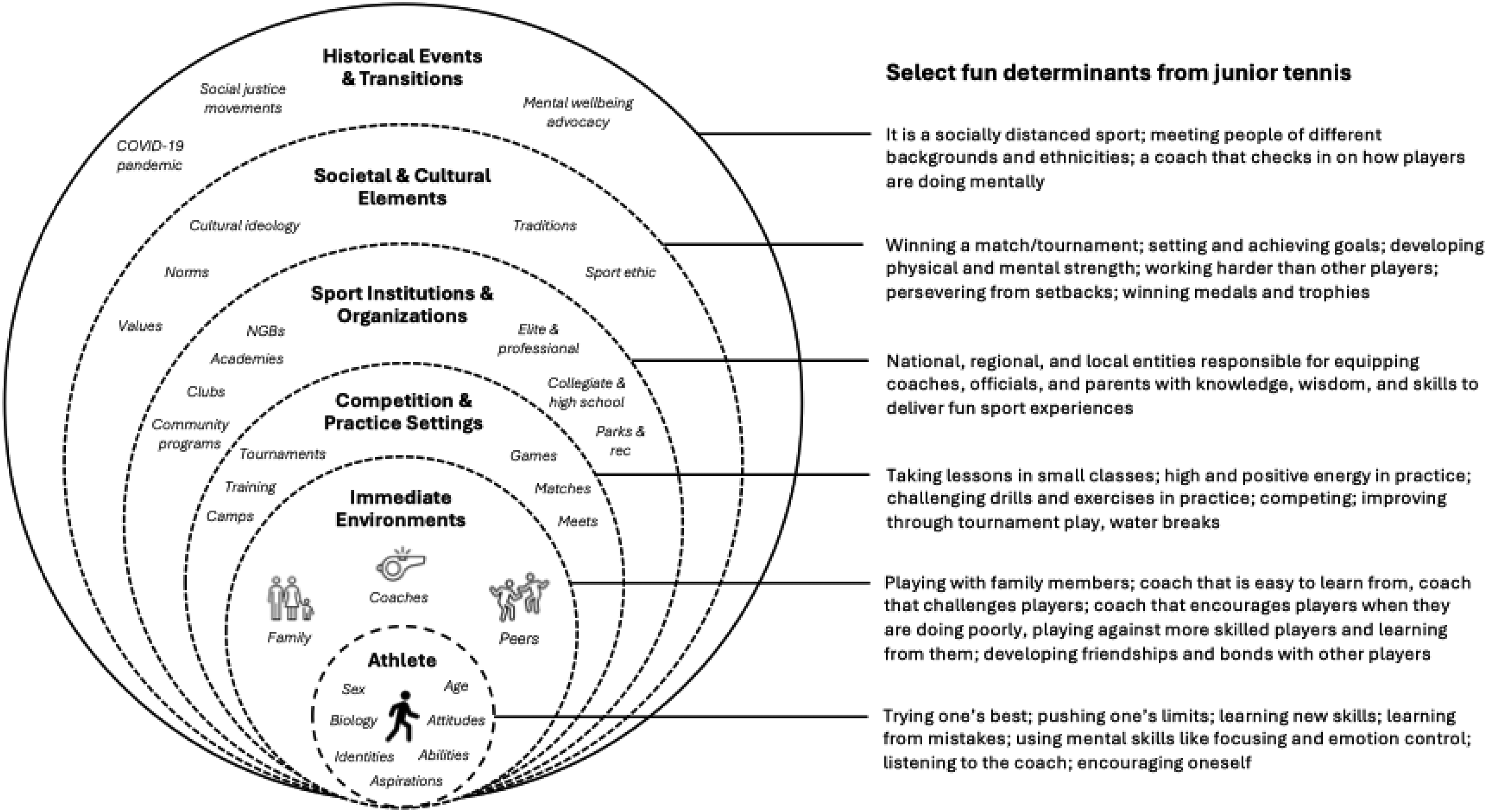
(Fun)damental Sport Ecosystems Framework.
Immediate environments
The junior player's most immediate environment includes multiple micro-interpersonal subsystems. These involve direct interaction with the player, including the coach subsystem, peer subsystem, and family subsystem, respectively.
Of note, fun determinants within a player's coach, peer, and family subsystems do not occur in vacuums. Indeed, a feature of systems models is “both-and” thinking over “either-or” thinking. 49 That is, the individual and the group operate as organic, interdependent units in organized complex patterns. 55 For example, traveling to new places to compete or play, and other sport-specific contexts, are likely to involve dynamic interactions among two or more subsystems that will affect a player's experience. 48 Meaning, they are interconnected and assert influence on one another on and off the court.
Competition & practice settings
The two primary settings for junior tennis players are competitive match play and practice.
Similar to the fun tenets found in team sports,15,16 what makes competitive match play fun in tennis transcends contextual (characteristics of the competition setting), internal (processes or outcomes specific to the player), social (communal factors), and external (things peripheral to the player) domains. Contextually, these included, though were not limited to: competing against new opponents; playing close, challenging matches; coming back from losing, winning against an opponent a player has lost to before, and the unpredictability of the sport. Internally, select determinants included: competing and improving through tournament play; making match decisions without the coach; learning to handle pressure; and the outcome of a match, win or lose, being entirely on the player. Socially, select determinants included showing good sportsmanship, having people cheer after a good shot, and being congratulated for hitting a nice shot. Externally, determinants ranged from having a match called fairly, e.g., by the players competing, the roaming umpire, or chair umpire officiating a game, to more superfluous determinants like getting competition giveaways.
Much like match play, determinants of fun in practice or training camps are task-oriented and skill focused. These include, though are not limited to: doing warmups; playing practice games; doing challenging drills and exercises during practice; using targets in practice; working on a technically challenging skill; playing practice matches; learning new techniques, e.g., footwork, playing styles, shots; and taking lessons in small groups – which, the latter allows for small-group learning that benefits knowledge acquisition and transfer 56 that facilitates players’ tennis skill acquisition and growth. 57 Finally, there are fun determinants applicable to both competition match play and training practices. These include, though are also not limited to different ways of playing the game; playing against same sex and same age peers; playing against the opposite sex; being encouraged to try hard and play well; and having water breaks.
Sport institutions & organizations
The fun determinants discussed, so far, are largely observable processes, actions, and behaviors of persons in the various subsystems with whom junior players regularly interact, i.e., coaches, peers, and family. Consequently, those determinants are most recognizable to junior players. However, such persons exist as part of formal and informal social structures. These include large institutions, such as sport NGBs, and organizations, like tennis clubs, academies, and parks and recreation programs. These institutions and organizations are responsible for setting the standard for program planning, delivery, and outcomes at national, regional, state/provincial, and local levels, respectively. This includes educating coaches and officials, providing parent support and resources, and informing player development pathways. Consequently, systems models would be remiss not to recognize the role of institutions and organizations, and hence the authority and responsibility they have to equip coaches, officials, and parents with the knowledge, wisdom, and skills to effectively deliver on determinants of fun. 18 Viewed through a systems lens, the findings from this study highlight the role, and therefore, the obligation tennis institutions and organizations have in realizing players’ right to have fun.
Societal & cultural elements
There are societal and cultural norms, traditions, and values that shape organized sport broadly that, in turn, affect determinants of fun. For example, the United States is deeply rooted in individualism, a cultural ideology that favors independence and self-reliance over collectivism, which favors interdependence and group solidarity. 58 The value of individualism and distinction, along with the mere structure of organized sport and its goal to “win” by being victorious, undoubtedly shapes and informs what athletes of any sport find fun. These included fun determinants fixed on player development and growth in pursuit of competence and confidence, and ultimately, triumph over opponents in a match or tournament. Further, social comparison determinants, e.g., seeing where one is ranked among their peers, provides referent information that mirrors the values and norms that define individualism and success in sport. Such values and norms permeate broader sport culture and the sport ethic, that is, a cultural ethos of striving for distinction and accepting no limits in the pursuit of possibilities. 59 As a result, the sport ethic certainly influences determinants of what makes tennis fun. Determinants such as, though certainly not limited to: learning new skills, developing physical and mental strength, setting and achieving goals, working harder than other players, persevering from setbacks, and winning medals and trophies define what it means to be an athlete striving for success. In addition, for athletes in countries dominated by capitalism, like the United States, athletic scholarships can be a pathway to obtain university education. Accordingly, the possibilities tennis affords, such as scholarships, fame, and pay, are aspects of the game that make it fun to play and pursue.
Historical events & transitions
Recent historical events and transitions have had wide-reaching influence on junior tennis players, and all athletes for that matter. Throughout the COVID-19 pandemic, sport was one area of life that faced significant challenges from abrupt, long-term sport cancellations during the pandemic lockdown to isolation and loss of access to important others, including coaches and peers.60–62 While many sports were limited or halted all together, tennis, a sport that was already socially distanced was able to thrive. In the United States, tennis participation among people ages 6 and older experienced considerable growth. 63 Today's junior players lived through the COVID-19 pandemic, which is why socially distanced play, an inherent characteristic of how tennis has always been played, was likely identified as a determinant that contributes to it being fun.
Other historic events during the COVID-19 pandemic also challenged and changed the world. Numerous social issues that existed pre-pandemic around immigration, police brutality, health care inequity, tenants’ rights, women's rights, transgender people's rights, and voting rights, to name a few, experienced reckonings. Social inequalities based on race and class, in particular, were further intensified during the pandemic and resulted in changing social movements, 64 e.g., Black Lives Matter, Queer Youth Walkout. These and other momentous social justice movements contributed to important shifts around equity, diversity, and inclusion worldwide. In the sports world, tennis had historically been regarded as a sport of affluence predominately played by elite classes. 65 However, through the pandemic and in recent years, tennis has observed growth in participation among more diverse populations. 66 In this post-pandemic era, a notable finding of this study was meeting people of different backgrounds and ethnicities. This suggests, when combined with other fun determinants such as meeting other players who share a passion for tennis, strategic efforts to grow tennis across communities would be an effective method toward attracting, engaging, and retaining players in the sport.
The historic events and transitions that have, and continue, to characterize recent times has also contributed to heightened mental health awareness. This has led to monumental shifts in recognition of the prevalence of mental health concerns and conditions including mental wellbeing advocacy. In fact, scholars have recognized the range of ways sport participants’ mental health has been affected by events and transitions that defined the COVID-19 pandemic.67–69 This was accelerated, in part, by prominent tennis players coming forward and sharing personal stories of struggle and self-care during the pandemic, e.g., Nick Kyrgios, Naomi Osaka, Maria Sakkari, and by tennis players before the pandemic, e.g., Mardy Fish, Paula Badosa. In this post-pandemic era, scholars have discussed how sport must be reimagined and adapted to better meet the whole athlete needs of sport participants.40,70 Hence, unsurprisingly, checking in on how a player is doing mentally, is an important part of looking after a player's wellbeing and a determinant toward making tennis a fun and protected space for them to train and compete.
Conclusion
Giving players a voice in matters that involve them is both imperative and necessary for delivering organized sport in ways that optimize the highest quality experiences, and outcomes, possible. 18 This study galvanized the wisdom of a broad range of junior tennis players that were well-represented across sex, age, skill level, and racial ethnic identities from a variety of tennis facilities. As research participants, they served as principal authorities in their lived athletic experiences, and through their shared ideas they conceptually tendered the first player-derived framework of collective determinants that put fun, athlete-centered experiences at the core of junior tennis programming. When viewed through an ecological lens, the fun integration theory is further extended through identification of (fun)damental sport ecosystems and subsystems that affect an athlete's experience having fun in sport. Furthermore, the fun ethos in tennis, alongside the fun ethe previously found in soccer, ice hockey, and basketball provide directional insight into athletes’ prioritization of the fun determinants and fun factors. When situated within the ecological systems and subsystems affecting sport governance, policy, and programming, the fun ethe, and the fun factors and determinants themselves, provide sport stakeholders with knowledge and data-driven information across organized sport contexts and environments for promoting meaningful player-centered experiences that are fun. If enhancing sport participants’ athletic and personal development with the goal of promoting continued participation are aspirations of the USOPC's ADM and its sport-specific NGBs, then sport environments must be intentionally designed for fun player-centered experiences – with an obligation to equip sport administrators, coaches, officials, and parents with the knowledge, skills, and ability to do so.
What is evident from the 120 fun determinants identified from this study in junior tennis, and previous studies in soccer, ice hockey, and basketball is regardless of whether the sport is individual or team in nature, having fun has a clear throughline: it is a whole-person sport experience, rich with positive challenges that enhance an athlete's development, learning, and growth. Further to understanding fun and its significance in sport is Pekrun's control-value theory,71,72 alongside movement studies by Simonton 73 and Wooley. 74 Together, they explain how an athlete's appraisal of their movement experiences interact to determine the valence and intensity of emotions in movement contexts. Positive emotions, like having fun, will enhance learning and athletic performance, which fuels competence and confidence, especially in social environments that are collaborative and well-coordinated with shared decision-making. The high valuation attached to the hedonic and eudemonic tone, having fun, drives motivation and continued participation. Perhaps too it accounts for the transition from sport sampling to sport specialization, or switching from one sport to another, like athletes who had played team sports previously but found the individual aspects of tennis were more fun and thus had greater valuation which solidified their commitment and pursuit of tennis. Likewise, the strong valuation fun athletic experiences have, may in part explain why former athletes go on to pursue coaching and sport administration positions, or other interdisciplinary realms of sport including sport science, sport psychology, and sports medicine – and if, and when they become parents, why they are apt to enroll their child(ren) in organized sports.
Future directions
Organized sports are just that, highly systematized establishments that arrange coordinated movement experiences across competition and practice settings based on methodical classification of its sport participants by sex, age, and skill level attributes. A notable strength of the current study was its use of group concept mapping that captured the combined insights from a broad spectrum of junior tennis players that ascertained a fun ethos in junior tennis. This, however, was based on an aggregated consensus of the collective sampled, which does not necessarily assure determinants and clustered factors of primary, secondary, and tertiary importance is applicable to all. What remains to be discerned is whether the fun ethos in junior tennis formed as a result of the findings of this study are corroborated in accordance with how tennis organizes its players by sex (i.e., female, male), age (e.g., U9, U10, U11, U12, and so on), and skill level (i.e., red, orange, green, yellow ball). An obvious next step in this area of research is to examine female players compared to male players, younger players compared to older players, and early skill players compared to advanced skill players. Doing so would extricate nuanced understanding of the individual experience based on isolated characteristics of distinction that define organized sport. The findings of such a study could have far-reaching implications for how recreational and performance tennis pathways are designed, or re-imagined, and how coaches are educated and trained to deliver on tennis programming optimized for fun depending on characteristics of the players they are coaching. Prior research examining sex, age, and skill level comparisons in team sports found players were overwhelming more similar rather than different in their fun priorities across the fun determinants and clustered factors.16,23 However, this must also be empirically investigated in tennis, as well, to understand if, and how, those priorities shift in light of the ways junior tennis is organized and coordinated based on its participants’ attributes.
Future research should also consider characteristics beyond how sport is organized that may impact athletic experiences and consequently players’ fun priorities, including racial ethnic identity, and other intersecting identities such as gender identity and athletic identity. Likewise, examining other variables, for instance, developmental age versus chronological age, may shed new insights as well. Opportunities to undertake research studies in countries beyond the United States, and in other individual sports, would also significantly contribute to the evidence base toward understanding fun. This study included junior tennis players in localized regions of the United States, which certainly limits its generalizability. Notwithstanding, this study's findings have paralleled previous findings in the United States, 15 i.e., soccer, and Sweden, 16 i.e., ice hockey and basketball, both Western cultures. Nonetheless, additional studies in other countries and cultures are needed to strengthen the evidence base sports around the world can turn to for data-driven information that can guide sport-specific program planning and implementation.
Finally, critical to understanding fun is an understanding of what is not fun – meaning, what hinders development, learning, and growth that evokes negative emotions, diminishes sport valuation, and leads to sport dropout. While the fun integration theory, and the empirical science supporting it, provide a north star and blueprint of turnkey solutions for athlete-centered, developmentally appropriate, and safe movement experiences – addressing negative movement experiences that evoke erosion of competence and confidence, and opportunely intervening on those and other negative experiences could be indispensable toward promoting positive movement experiences in sport. What amounts to sport being not fun is probably not the mere absence of fun determinants, but the cumulative effect of fun determinants that meaningfully adds valuation to the sport experience, coupled with the presence of impeding hindrances that subtract from it. The result being an overall net effect that is either valuation positive, neutral, or negative. Further advancement of the fun integration theory will require rigorous mixed-method research studies that identify hinderances and determine the deleterious magnitude such hinderances have in impeding positive sport experiences.
Footnotes
Acknowledgements
Thank you to the participating tennis clubs and programs and especially to the junior players who contributed their ideas and insights. Also, thank you to Dr Karl Davies for the technical support he provided in execution of the study.
Funding
This research was sponsored by the United States Tennis Association and competitively awarded to the first author, Amanda J. Visek, PhD.
Declaration of conflicting interests
The authors declared no potential conflicts of interest with respect to the research, authorship, and/or publication of this article.
