




Abstract
The purposes of the study were to identify the key components of injury prevention exercise programmes (IPEPs) used by football coaches during training sessions, to explore the association between personal characteristics and IPEPs component use, and to examine coaches’ self-perceived competence in injury prevention. Football coaches from the French-speaking region of Belgium were invited to participate in a cross-sectional online survey. They were asked to report the components of the IPEPs they used in their training routines. Additionally, they were invited to self-assess their perceived level of expertise in injury prevention and to suggest potential avenues for improving this expertise. A total of 356 coaches fully completed the questionnaire. Among the injury prevention exercises used at least once a week, aerobic warm-ups were the most commonly used (96%), followed by stretching (74%), balance/agility exercises (66%), running/plyometrics (65%), core stability exercises (51%), and lower limb muscle strengthening (46%). Chi-squared tests indicated that higher levels of coach education and higher competitive levels of the teams coached were associated with a greater use of preventive exercises. More specifically, only 21% of respondents reported using the FIFA 11 + programme. A large majority (77%) of coaches reported feeling insufficiently qualified in the area of injury prevention. In conclusion, the core components of IPEPs used in Belgian football clubs were identified and their use appears to be primarily associated with the coaches’ level of education. Coaches indicated that they perceived themselves as insufficiently qualified with regard to injury prevention.
Introduction
Football (soccer) is associated with a high risk of injury due to the physical demands of the sport, including sudden accelerations, high-speed changes of direction, jumping, and frequent player-to-player contact. As a result, injury incidence - particularly to the lower limbs1–3 - has been reported to reach up to 36 injuries per 1000 h of match exposure, 4 making football one of the most injury-prone sports. Beyond their health consequences, injuries also have a negative impact on team performance, as player unavailability has been consistently associated with poorer competitive outcomes.5,6 To mitigate the occurrence and consequences of football-related injuries, several preventive strategies have been developed. Among these, injury prevention exercise programmes (IPEPs), such as FIFA 11+, have received considerable attention. FIFA 11 + is a structured neuromuscular warm-up programme incorporating cardiovascular activation, strength exercises, running technique drills, balance training, and plyometric components, 7 and has been shown to reduce overall injury incidence by approximately 39%. 8
Despite this strong evidence base, real-world adoption and adherence to IPEPs remain limited among football players and teams.9–11 The implementation of such programmes is a complex, multi-level process influenced by factors ranging from policy and organisational context to socio-cultural and individual determinants. 12 Among these, coaches play a central role, as they are primarily responsible for planning and delivering injury prevention exercises during training sessions. 13 Recent evidence, including large-scale reviews across multiple sports, has consistently identified higher competition levels, greater coach education, and stronger knowledge as key facilitators of IPEP implementation.14,15 These findings are supported by earlier sport-specific studies showing that coaches’ attitudes, knowledge, and perceptions are critical determinants of successful programme uptake.16–20 Nevertheless, despite generally positive perceptions of injury prevention, relatively few coaches report consistently implementing IPEPs in their daily practice. 20 Reported barriers include the perception that such programmes offer limited added value compared with existing practices, lack alignment with coaching needs, and difficulties adapting them to specific training contexts.21,22
These challenges are particularly striking in football, which represents one of the most extensively researched and widely funded contexts for injury prevention. Evidence-based programmes such as FIFA 11 + have been globally disseminated and are freely accessible, yet awareness, adoption, and sustained use remain suboptimal. 23 This apparent disconnect between widespread dissemination and limited real-world implementation highlights the need for ongoing evaluation of current practices and for more active, context-sensitive implementation strategies. 16 In this regard, programmes such as FIFA 11 + are often used in an adapted rather than standardised form, suggesting that “one-size-fits-all” approaches may not fully meet the practical needs and constraints of coaches, and that contextual tailoring may be essential to support long-term adherence. 24
In addition, certain geographical and organisational contexts may remain underrepresented in the literature, including countries such as Belgium, where implementation patterns may differ due to specific structural and cultural factors. Furthermore, while previous research has primarily focused on players’ characteristics (e.g., age, experience) as determinants of adherence to preventive practices, 25 the influence of coaches’ characteristics on the implementation of IPEPs remains insufficiently explored.
The aims of this study were therefore to: (1) Identify the key components of IPEPs currently used by football coaches in French-speaking Belgium; (2) Explore the association between personal characteristics and IPEP component use; (3) Investigate coaches’ self-assessed competence in injury prevention and how they propose to improve it.
Methods
Design
This cross-sectional survey was conducted in collaboration with the Association des Clubs Belges Francophones de Football (ACFF). Data were collected using an online questionnaire distributed through the platform www.sondageonline.com (Enuvo GmbH, Zurich, Switzerland). The usability and technical functionality of the electronic questionnaire had been tested before fielding the questionnaire. This study was approved by the Ethics Committee of Liege Hospital Faculty prior to data collection.
Participants
The questionnaire was distributed to all coaches registered with the ACFF at the time of the study, representing approximately 1000 individuals. Given that the ACFF is the official governing body for football in French-speaking Belgium and maintains an official registry of coaches, it appears reasonable to consider that the respondents were broadly representative of the population of French-speaking Belgian coaches (without any geographical or other distinction within French-speaking Belgium). While the majority of these coaches worked in amateur clubs, coaches from professional clubs were also included. The sole inclusion criterion was being an active coach at an ACFF-affiliated football club during the 2021–2022 season. No restrictions were applied regarding coaching experience or the competitive level of the teams coached. Participants’ level of education was categorized using a scale developed in collaboration with ACFF coach education officers: 0 = no formal training; 1 = basic level; 2 = intermediate level; 3 = expert level.
Procedure
Coaches received a personalized email invitation to complete the web-based survey via a secure online platform. The email outlined the objectives of the study, provided instructions for completing the questionnaire, indicated the estimated completion time (approximately 10 min), and assured participants that all responses would remain anonymous and confidential. It was also made clear that participation was voluntary and that respondents could withdraw from the study at any time. The invitation included a direct link to access the questionnaire. Following the initial email (sent in spring 2022), participants had 75 days to complete the survey. Three reminder emails were sent at regular intervals during this period. At the end of the data collection phase, all responses were downloaded from the platform for statistical analysis.
Questionnaire
The initial version of the questionnaire was developed in French language by two experts in sports injury prevention and subsequently reviewed by a panel of eight specialists, comprising four injury prevention experts and four experienced football coaches from various competitive levels. Based on their feedback, the questionnaire was revised, and a pre-final version was approved by all panel members. The primary objective of the expert panel was to establish an overview of the preventive practices used by coaches in their daily routines, specifically in French-speaking Belgium, in order to subsequently adapt strategies for developing coaches’ competencies in this field (in collaboration with ACFF). To this end, the experts agreed on the development of a short questionnaire (with the objective of fewer than 12 main questions and requiring less than 10 min to complete), composed mainly of multiple-choice questions to allow for quantitative analysis of the results. Subsequently, this pre-final version was submitted to a representative panel of 10 football coaches with varying characteristics in terms of age (36,7 ± 8,1 years), sex (4 women, 6 men), level of qualification (no education (n = 3), basic level (n = 2), medium level (n = 3), expert level (n = 2)) and the competitive level of the teams they coached (amateur level (n = 5), medium level (n = 3), elite level (n = 2)). Following two minor comments from coaches regarding the clarity of two questions (specifically comments on the wording of a sentence perceived as overly complex), the final version of the questionnaire was used for the study. The finalized questionnaire consisted of 11 main questions, some of which included sub-questions. The questionnaire was structured into three main sections
Data analysis
Only fully completed questionnaires were included in the statistical analysis. Upon completion, data were exported to a Microsoft Excel™ spreadsheet. Descriptive analyses were performed based on coaches’ profiles, with means and standard deviations reported for quantitative variables, and counts and frequencies for categorical variables. Chi-squared tests were applied to categorical variables to examine the influence of coaches’ personal characteristics (age, experience, qualification level, competitive level of coached team(s), and the age and sex of trained players) on the key components of injury prevention exercises (warm-up, core stability exercises, muscle strengthening, balance and agility exercises, plyometrics, stretching). Statistical significance was set at p < 0.05. When significant associations were identified, post-hoc analyses of standardized residuals and their corresponding p-values were conducted to determine which specific groups differed significantly from others.
Results
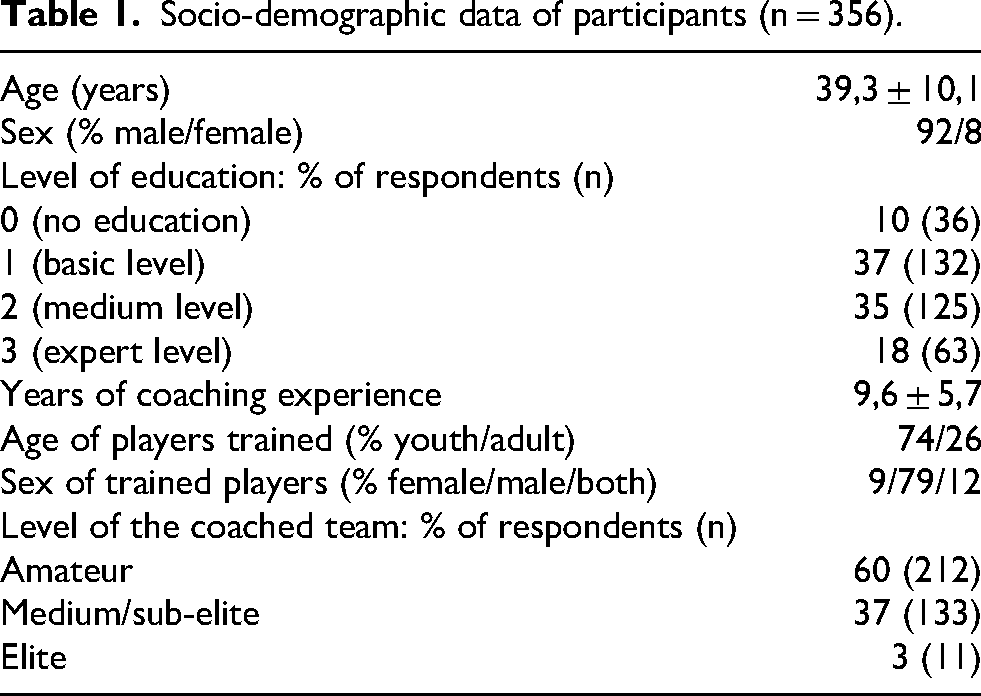
A total of 417 participants opened the survey, but 39 of them did not answer a single question. Of the 378 respondents, 22 did not complete the survey in full, and all of them stopped before reaching the halfway point; the completion rate is therefore 85%. A comparative analysis found no sociodemographic differences between the 22 coaches who did not complete the entire survey and the 356 who answered all the questions. The socio-demographic characteristics of the respondents are presented in Table 1. Almost all participants (98%) agreed that coaches should contribute to injury prevention. Eighty-eight percent of coaches (n = 313) reported implementing preventive measures during their training sessions. Among the 12% who did not apply preventive exercises, multiple reasons were cited: 66% attributed this to a lack of knowledge about what to implement; 18% reported insufficient equipment and/or infrastructure; 16% believed that injuries could not be prevented regardless of the measures taken; and 12% considered that preventive work wasted time better spent on technical-tactical training.
Socio-demographic data of participants (n = 356).
Actual use of IPEPs core components
As shown in Table 2, 96% of coaches reported using an aerobic warm-up as a preventive exercise. Stretching was implemented by 74%, balance and agility exercises by 66%, plyometrics by 65%, core stability exercises by 51%, and muscle strengthening by 46%. Chi-squared analyses revealed no significant differences in the use of these key components according to coaches’ age, years of coaching experience, or the sex of the players coached (p > 0.05). The age of the players coached did not influence preventive strategy content, except for lower limb muscle strengthening (p = 0.002): post-hoc analyses indicated that coaches training players younger than 15 years old reported significantly lower use of lower limb muscle strengthening exercises (22%) compared to those coaching adults (43%; p < 0.001) or players aged 15 to 17 years (41%; p = 0.008). Significant differences in the content of preventive measures were observed according to coaches’ level of education and the competitive level of the club. Stretching and, particularly, structured warm-ups were consistently supported across all qualification levels and club levels. In contrast, the use of core stability, lower limb muscle strengthening, balance/agility, and plyometric exercises varied substantially. Coaches with lower qualifications or working in amateur clubs reported significantly lower implementation of these components compared to expert-level coaches or those coaching elite clubs. Figures 1 and 2 illustrate these differences based on coaches’ level of training and team competitive levels.
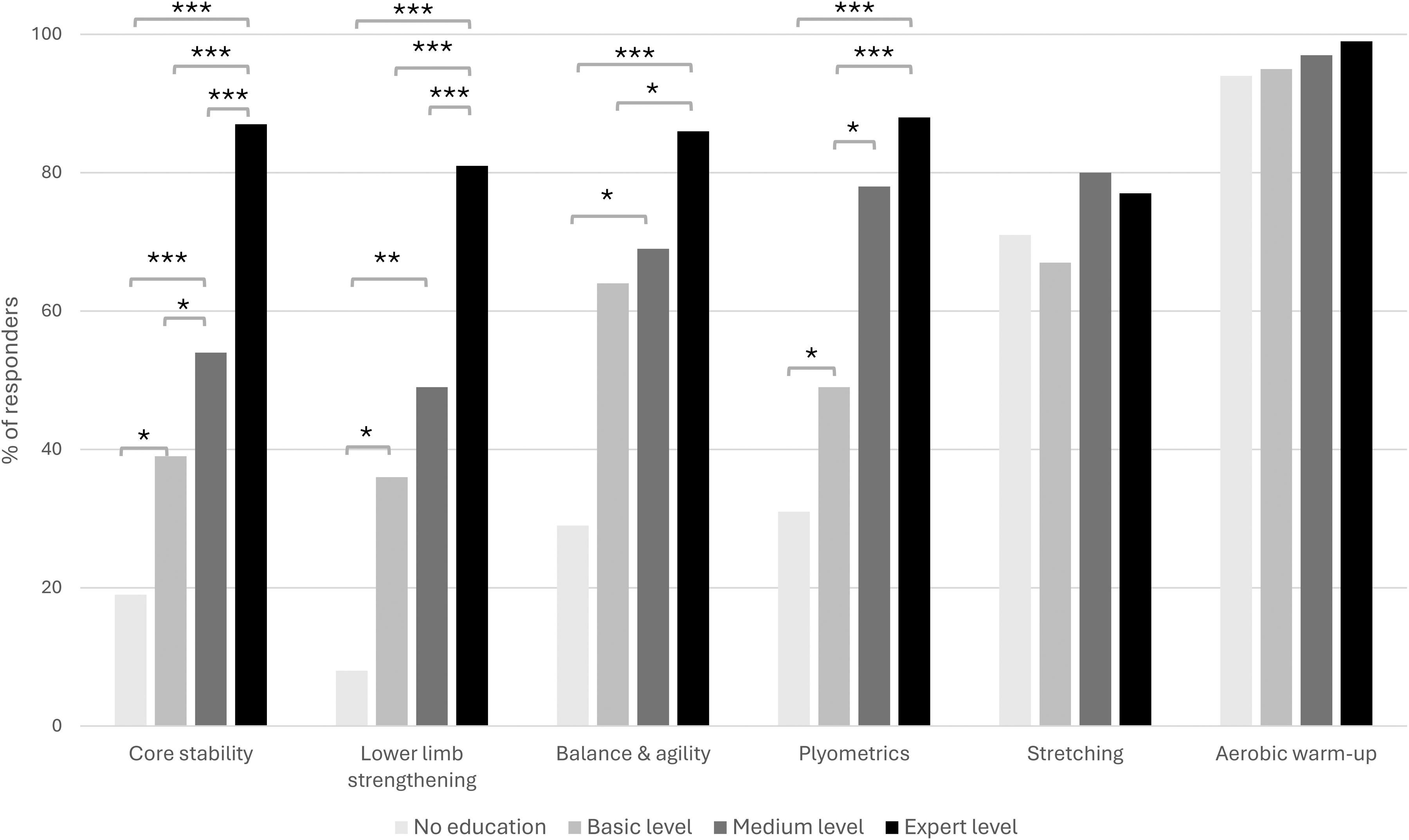
Content of the preventive exercises as applied in the field, according to the coaches’ level of training.
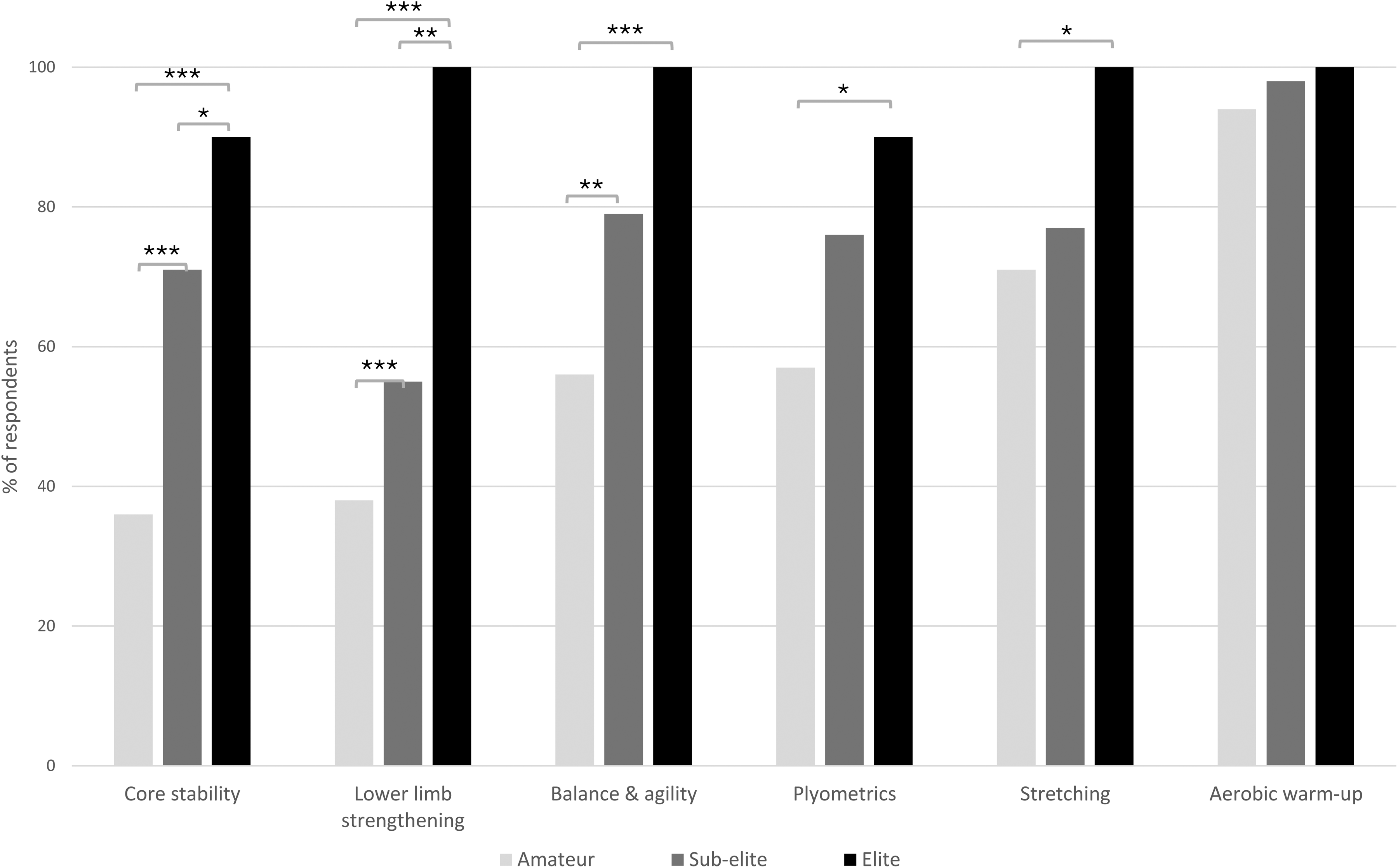
Content of the preventive exercises applied on the field based on the playing level of the team being coached.
Content of preventive exercises applied on the field according to respondents’ characteristics (n = 313).
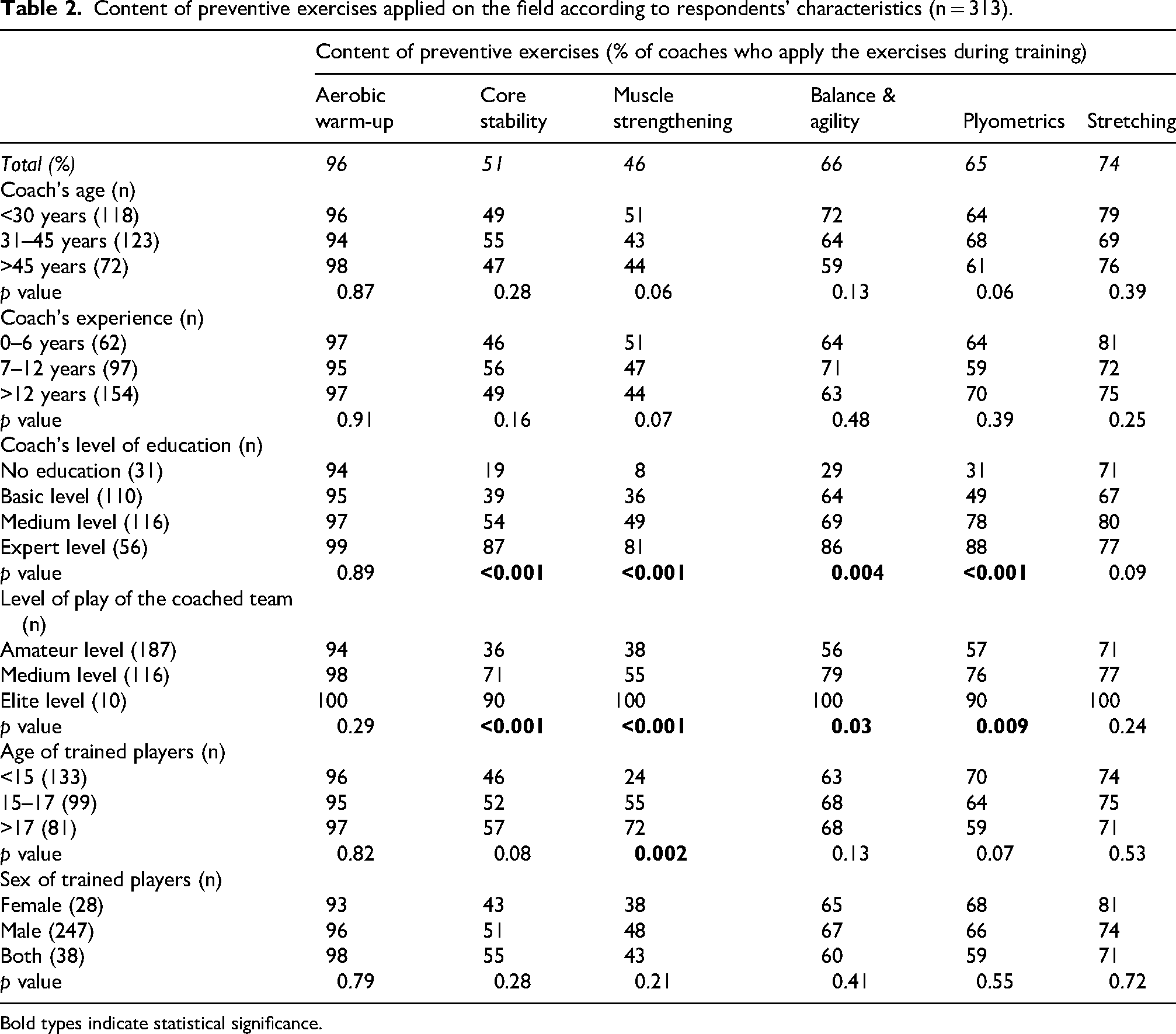
Bold types indicate statistical significance.
Awareness and use of FIFA prevention programmes
Among the respondents, 57% (n = 203) stated that they were aware of FIFA IPEPs — including FIFA 11, 11+, 11+ Kids, or 11+ Shoulder — whereas 43% (n = 153) were unaware of any of these programmes. Table 3 summarizes respondents’ characteristics according to their awareness of a FIFA programme, with a significant over-representation of coaches with lower education levels among those unaware of these programmes (p < 0.001). Of those aware of a FIFA programme, 37% (n = 75) reported currently implementing one, meaning that only 21% of all coaches surveyed actually apply FIFA programmes during training. Conversely, 63% of coaches aware of FIFA programmes (n = 128) cited reasons for not using them: perceived lack of attractiveness (51%), use of alternative preventive programmes (39%), insufficient knowledge (26%), and lack of time (21%). No significant socio-demographic differences were observed between coaches who applied FIFA programmes and those who did not (p > 0.05).
Respondents’ characteristics according to the knowledge of the FIFA programmes.
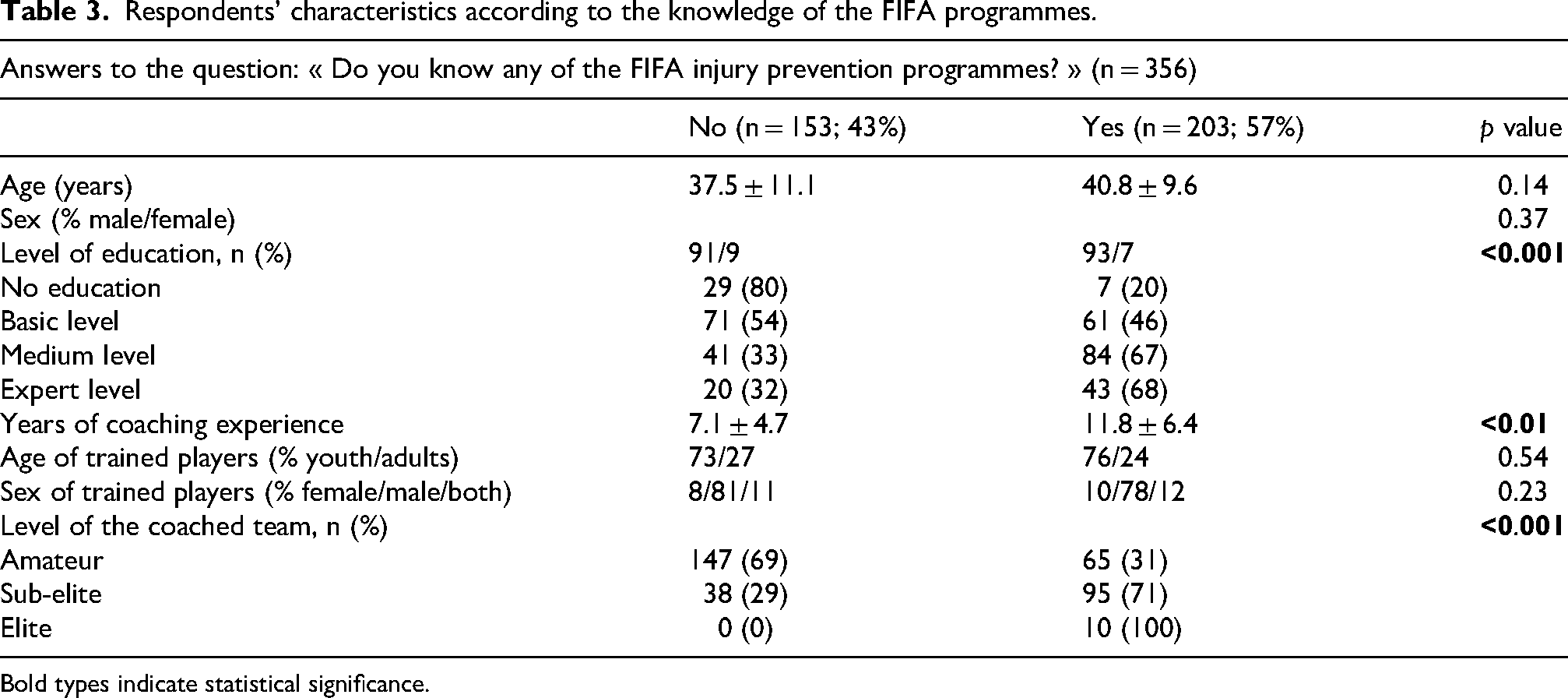
Bold types indicate statistical significance.
Self-Assessment of injury prevention expertise
A clear majority of coaches (77%) felt insufficiently trained in injury prevention, compared to 23% who felt adequately trained. Among those seeking further training, the most frequently suggested measures were: more ongoing training opportunities (59%), dedicated coaches’ conferences on injury prevention (55%), and more in-depth coverage of injury prevention during official coaching courses (48%).
Discussion
The study highlighted that although football coaches in French-speaking Belgium rarely used the complete standardised FIFA 11 + programmes, they often incorporated key elements of these protocols into their regular training sessions. Additionally, a higher level of coach education was found to be positively associated with the on-field application of preventive exercises, underscoring the importance of early and structured education in injury prevention within coach development.
Key components of IPEPs
Given the low adoption rate of “universally applicable” IPEPs such as the FIFA 11+, a more effective strategy for promoting practical implementation in the field may be to integrate the core components of these programmes into training sessions, while encouraging coaches and players to adapt them to their specific contexts.24,27 In football, these core components primarily include strength training, core stability, balance and agility exercises, plyometrics, stretching, and a properly conducted warm-up, although the optimal balance between these elements remains unclear. The results of this study suggest that these key components of IPEPs are implemented in Belgian French-speaking football clubs at varying rates — ranging from approximately 50% for muscle strengthening and core stability exercises up to 96% for warm-ups — and notably at substantially higher rates than the original FIFA programmes themselves (21%). This observation leads to two important reflections: 1) Evaluating field-based preventive practices solely based on adherence to FIFA programmes likely underestimates the true extent of injury prevention activities being implemented; 2) Consistent with findings from other studies, it appears evident that most coaches report using the core components of IPEPs into their training practices, likely involving adaptations of existing evidence-based programs.20,28
It is noteworthy that strength training was the least utilized component among coaches. This finding can be partly explained by the relatively low implementation of strength training programmes by youth coaches — only 24% of coaches working with players under 15 years of age reported using such exercises, compared to 72% of coaches training adult players. This disparity may reflect a persistent misconception highlighted in the scientific literature: some coaches believe that strength training is unsafe for young athletes and may inhibit bone growth. 29 However, high-quality studies have demonstrated that resistance training during youth can increase bone mineral density, improve cardiometabolic health, support weight management, and reduce the risk of sports injuries. 30 Based on this evidence, the World Health Organization recommends that children and adolescents engage in progressive, supervised, and appropriately adapted strength-building activities at least three times per week. 31 In young athletes, lower training frequency and shorter session duration may act as practical barriers to IPEPs implementation. Concerns around strength training may be less relevant in this context, as exercises are often performed on the pitch (not in fitness rooms) without or with light external loads. Other factors, such as limited coaching experience (e.g., parent-coaches), time constraints, and lower competitive demands, may also influence implementation, consistent with our findings related to coach education and competition level.
Coach-Specific personal factors & self-assessment of injury prevention expertise
Our findings indicate that the higher the coach's level of education, the more frequently the core components of IPEPs are implemented in practice. While the cross-sectional nature of this study does not allow for causal inference, this observation may suggest that more highly qualified coaches are more effective in injury prevention, as reported in other sporting contexts. 32 Given that nearly three-quarters of the coaches surveyed reported feeling insufficiently trained in this area, it appears essential to integrate injury prevention more thoroughly and at an earlier stage within coach education pathways. We propose two foundational pillars to structure coach training in relation to injury prevention. First, beyond acquiring familiarity with standardised programmes such as FIFA 11+, coaches must develop a sound understanding of the key components of injury prevention and their specific contributions to athlete health and safety. 24 Second, it is equally crucial to foster pedagogical and reflective skills that enable coaches to tailor these exercises to their unique practice contexts. Coaches should be encouraged to engage their own creativity and that of their players, 33 to innovate by designing original, context-specific exercises, 34 and to collaborate in co-creation processes with injury prevention experts and athletes.35,36 Such approaches can help improve player engagement and enjoyment, which are key to sustained adherence.33,37,38 Ultimately, coaches must be encouraged to evaluate the effectiveness of their adaptations. While contextualisation may enhance adherence, its impact on actual injury reduction remains uncertain. Accurate monitoring of injury incidence is necessary to assess whether these adapted practices translate into meaningful preventive outcomes. 34
Knowledge of FIFA 11 programmes
The FIFA 11 + programmes and their various adaptations were designed to provide a simple and universally applicable solution for coaches aiming to reduce injury risk among football players. 7 Despite widespread global dissemination efforts, it is concerning that 43% of the coaches surveyed in this study reported being unfamiliar with any version of these programmes. Although player adherence to IPEPs often remains suboptimal, a thorough knowledge and understanding of such structured protocols may represent a critical first step toward the successful implementation of injury prevention strategies. We advocate for the systematic integration of FIFA 11 + programmes within formal coach education pathways from the earliest stages. Currently, this does not appear to be consistently achieved, as a significant proportion of coaches undergoing training in French-speaking Belgium report limited or no awareness of these programmes.
The results of this study show that coaching experience and level of formal coach education are significantly associated with awareness of at least one FIFA injury prevention programme. This highlights a key challenge for governing bodies and federations: raising awareness and providing education on injury prevention, particularly through accessible, evidence-based programmes such as FIFA 11+, targeting novice coaches and those operating outside formal training pathways. This study provides a strong rationale for implementing concrete measures, such as mandating a minimum level of coach education—explicitly including injury prevention—prior to assuming responsibility for a team. Doing so could help bridge the current knowledge gap and enhance the effectiveness and consistency of injury prevention efforts across all levels of play. Nevertheless, it is important to bear in mind that online resources alone are often insufficient to drive behaviour change or implementation when not accompanied by active dissemination strategies, such as education, engagement, or ongoing support.39,40
Practical implications
The findings of this study underscore a critical need to strengthen coach education in the field of injury prevention. We propose that governing bodies responsible for coach development in French-speaking Belgium embed injury prevention as: 1) A central pillar of the coaching curriculum—on par with technical, tactical, physical, and psychological domains. Coaches must be made aware that preserving the athlete's general and musculoskeletal health is not only essential for player well-being, but also a prerequisite for optimal performance. Furthermore, the coach's level of knowledge and engagement in this area may directly influence injury risk among players. 2) A foundational element introduced early in the coach education pathway. Emphasizing injury prevention from the outset can help ensure that its importance is fully recognized and systematically integrated into coaching practices across all levels. By placing greater emphasis on both theoretical understanding and the practical application of injury prevention strategies, these educational initiatives could foster improved adherence, player safety, and long-term performance outcomes.
Limitations
Several limitations must be considered when interpreting the findings of this study. First, not all football coaches in French-speaking Belgium are registered with the ACFF, and only those listed in this database were eligible to participate. Nevertheless, since the ACFF serves as the official governing body for football in French-speaking Belgium and maintains a formal registry of coaches, it is reasonable to assume that the respondents were broadly representative of the population of French-speaking Belgian coaches, without distinction based on geography or other factors within the region. This exclusion may have introduced a selection bias, though its magnitude is unknown. Second, it is plausible that coaches who chose to respond were those already more interested or knowledgeable about injury prevention, which could have led to an overestimation of knowledge levels, positive attitudes, and implementation rates. Finally, although the overall number of respondents was substantial, only a small proportion of coaches (3%) worked at the elite level. As such, the findings primarily reflect the practices and perceptions of coaches operating in amateur contexts, limiting the generalizability to professional settings.
Conclusion
This study revealed that while football coaches in French-speaking Belgium implement standardised FIFA 11 + programmes relatively infrequently, they do apply the core components of these programmes (mostly aerobic warm-up, stretching and balance/agility exercises) to a much greater extent within their training sessions. Furthermore, the level of coach education appears to be positively associated with the integration of preventive exercises on the field, underscoring the critical role of structured and early education in injury prevention within coaching curricula. A large majority of coaches reported insufficient training in injury prevention and identified ways to enhance their qualifications. These insights call for the reinforcement of injury prevention content as a central and foundational element in coach education, to promote more widespread, context-sensitive, and sustainable implementation of preventive strategies in football settings.
Supplemental Material
sj-docx-1-spo-10.1177_17479541261457556 - Supplemental material for Injury prevention in football: Coaches’ practices, perceived expertise, and influencing factors
Supplemental material, sj-docx-1-spo-10.1177_17479541261457556 for Injury prevention in football: Coaches’ practices, perceived expertise, and influencing factors by François Delvaux, Cédric Schwartz, Jean-François Kaux and Jean-Louis Croisier in International Journal of Sports Science & Coaching
Footnotes
Acknowledgements
The authors warmly express their gratitude to the Association of Francophone Football Clubs (Belgium) and to all participants for their valuable contributions.

Ethical considerations
Institutional ethical approval (2021115) was obtained from the Ethics Committee of Liege Hospital Faculty.
Consent to participate
Research participants completed and signed an informed consent form after reading a participant information sheet.
Funding
The authors received no financial support for the research, authorship, and/or publication of this article.
Declaration of conflicting interests
The authors declared no potential conflicts of interest with respect to the research, authorship, and/or publication of this article.
Data availability statement
The data that support the findings of this study are available on request from the corresponding author.
Supplemental material
Supplemental material for this article is available online.
References
Supplementary Material
Please find the following supplemental material available below.
For Open Access articles published under a Creative Commons License, all supplemental material carries the same license as the article it is associated with.
For non-Open Access articles published, all supplemental material carries a non-exclusive license, and permission requests for re-use of supplemental material or any part of supplemental material shall be sent directly to the copyright owner as specified in the copyright notice associated with the article.
