




Abstract
Player selection for representative teams is often based upon subjective assessments of player ability and potential (i.e., the 'coaches’ eye'), which may be confounded by individual difference in biological maturation (Fitzgerald et al., 2024). Little is known about coaches’ perceptions and understanding of growth and maturation, particularly in relation to the processes of player selection and development. This study explored coaches’ knowledge, beliefs and experiences related to the impact of growth and maturation upon player selection and development in Gaelic football. Using qualitative methods, 12 coaches from an academy in Ireland participated in focus groups to explore their beliefs and experiences related to this topic. Data were analysed using reflexive thematic analysis. The findings indicated that coaches were aware of the physical and functional changes that occur during puberty and the differing performance trajectories of early- and late-maturing players. Similarly, they identified challenges in initial selection of players, including maturity and size-based biases, and the long-term implications of maturation upon success at the adult level. A gap emerged between coaches’ knowledge of growth and maturation and their ability to design and implement effective support strategies, with approaches varying among coaches. Additionally, all coaches expressed a strong desire for further education on this topic. There is a need for bespoke educational initiatives for academy coaches focused on developing a rich set of strategies to support players of varying maturation through identification and development, as well as a process for identifying the optimal strategy for the context.
Introduction
Talent development programmes exist in many sports to provide prospective elite players with additional training and support to accelerate their development. 1 These programmes often coincide with periods of accelerated growth and maturation during adolescence, with the average age of peak height velocity (PHV) approximately 13.8 years, 2 and entry into talent programmes typically from age 9, with exit around 16 years.3–5 Thus, in addition to knowledge of the sport and of coaching, talent development coaches need to understand growth and maturation and practical strategies to deal with the challenges that adolescence brings.
Biological maturation refers to the structural and functional changes that occur as an individual progresses toward the adult state. 6 It can be understood through three key aspects: status, timing, and tempo. Status indicates the maturity stage reached at a specific point in time (e.g., pre-, circum-, or post-pubertal). Timing relates to the age at which key maturational milestones, such as puberty or peak height velocity (PHV), occur (i.e., early, on-time or late relative to the general population). Tempo describes the rate at which maturation unfolds. Variation in the status, timing and tempo of maturation is especially significant in talent development programmes, where children of the same chronological age can vary by upwards of six years in terms of biological maturation. 7 Recent research has highlighted the influence of maturation timing on selection in Gaelic football 8 and similar sports such as soccer,5,9,10 Australian rules football, 11 rugby 12 and basketball. 13 Early-maturing players are disproportionately represented in academy squads, particularly at key selection ages (U14–U16), while late maturing players are often underrepresented or absent from mid-adolescence. 4 This imbalance highlights the need to better understand how practitioners recognise and manage maturation-related differences within talent development systems.
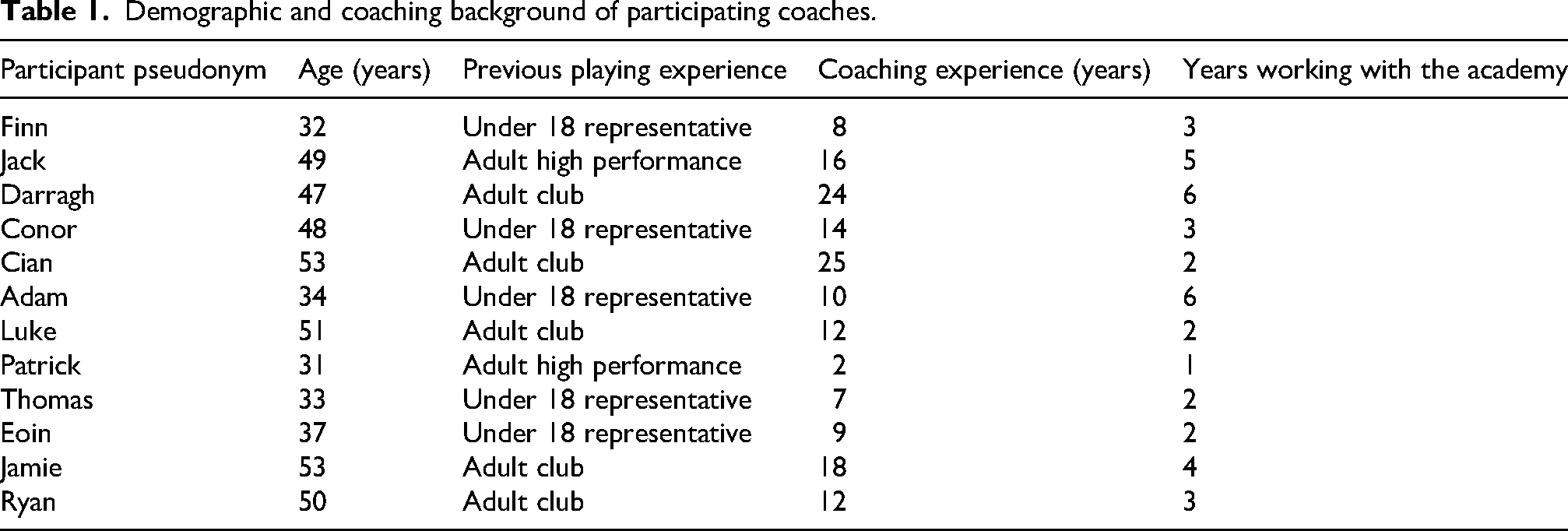
Demographic and coaching background of participating coaches.
Selection into academy development squads coincides with a period of development at which the influence of growth and maturation is heightened, posing significant challenges for coaches. In relation to maturation status and tempo, injury risk is heightened during periods of rapid growth such as peak height velocity, requiring careful load management and monitoring to avoid overuse and growth-related injuries.14–16 The physical changes associated with puberty can also lead to temporary reductions in coordination and movement efficiency, referred to as adolescent awkwardness, 17 which may be misinterpreted as a lack of ability, complicating selection and retention decisions. 18 Furthermore, the optimal form of training varies with maturational status. 19 Beyond physical considerations, effective talent development during adolescence requires a more holistic approach that integrates technical, psychological, and physical development. Early maturing players may have physical advantages in terms of body size, strength, and athletic performance 20 yet require targeted technical and psychological challenges to ensure long-term progression, whereas late maturing players need patience, support, and appropriate opportunities to bridge the physical gap. 5 Despite these challenges, there is limited understanding of how practitioners practically adapt their coaching, training, and selection approaches to account for these maturation-related differences.
While research interest in maturation4,8,10 and performance profiling21,22 has increased, few studies have examined coaches’ knowledge and practices related to growth and maturation. Those that have highlight critical gaps and variations in coaches’ understanding of growth and maturation, and its impact on selection practices. For example, Patel et al. explored gymnastics coaches’ awareness and experiences of maturation, training load, and injury. 23 Coaches recognised the physical changes and injury risks associated with the adolescent growth spurt yet lacked systematic approaches for monitoring training load or growth. In contrast, Johnson et al., 14 investigated training load and injury risk in soccer, involving multiple academy stakeholders. Their study described how staff collectively managed injuries during periods of rapid growth and outlined strategies to reduce risk. Similarly, Hill and colleagues highlighted how coaches perceived both advantages and disadvantages related to players’ maturity timing, noting its influence on selection and deselection decisions.18,24 These findings emphasise the ongoing challenge of developing, managing, and selecting adolescent players in elite male youth football and underscore the need for targeted coach education to address gaps in growth and maturation monitoring and the selection biases that exist in amateur coaching environments such as Gaelic football academies.8,22
The Gaelic Athletic Association (GAA) is Ireland's largest sporting body, with Gaelic football as its most popular sport. 25 However, as most coaches are volunteers, they lack expertise and formal education in youth growth and maturation, and selection decisions are typically made under time and resource constraints. As a result, coaches may place greater emphasis on readily observable characteristics such as physical size, strength, and current performances, rather than long-term developmental potential, which may exacerbate maturity-related selection biases. 9 Research in Gaelic football has established a maturity bias in favour of early developing players within talent academies.8,22 Furthermore, Gaelic football coaches generally rely on subjective estimates (i.e., ‘coaches’ eye’) of maturation status, despite known inaccuracies in these judgments. 26 Insights into Gaelic football academy coaches’ knowledge, beliefs, experiences and practices regarding growth and maturation may prove a valuable stimulus for reflection for coaches and coach developers and inform more practical strategies to support players throughout their talent journey.
While previous research has largely focused on coaches’ understanding of growth and maturation, particularly within professional environments,23,24 this study places greater emphasis on the applied practices coaches use to support players at different stages of maturation. By examining not only coaches’ knowledge but also the strategies used to manage maturity-related differences within an amateur context, this study offers a novel contribution to the applied literature on youth sport and talent development.
The GAA presents several unique features when studying talent development. Strict geographical restrictions limit players to representing their own county, resulting in smaller player pools in less populated areas. 27 In contrast to Premier League academies, where the academy environment serves as the primary developmental setting, 28 the Gaelic football academy experience is supplementary, with most playing and training occurring at club, school, or district level. 29 Many young players play both of the popular Gaelic games, Gaelic football and hurling. 30 In some counties, highly talented players may represent more than ten teams in a season across multiple age groups, a workload reflecting the GAA's cultural and organisational norms. 31 Additionally, academy involvement typically begins at U14, compared to as early as U9 in soccer. 4 The selection process is also unique: in Gaelic football, club coaches typically nominate players for trials, a process potentially biased toward early maturing athletes, whereas in professional sports, player identification is managed by dedicated scouting teams. Together, these contextual factors highlight why examining talent academy practices within Gaelic games offers an important and underexplored contribution to the literature. Accordingly, this study explored Gaelic football academy coaches’ knowledge, beliefs, experiences and practices regarding growth and maturation and their influence on player selection and development.
Methodology
Context and research design
This study took place during the 2023 season within a county development Gaelic football academy. While the academy was convenient in terms of its location, it was purposively selected due to its history of consistent national-level competitiveness. The academy squads examined presented a strong maturity bias with only 1% of players classified as late-maturing. 5
A qualitative approach, underpinned by a pragmatic philosophy, was adopted to generate practical, context-specific insights. 32 Pragmatism was particularly suited to exploring how coaches understand and manage growth and maturation within real-world academy settings, valuing their lived experiences and prioritising what works in practice. Data were collected using focus groups, allowing for in-depth discussions and rich exploration of coaches’ knowledge, experiences and strategies, aligning with the study's applied, practice-oriented aims. Ethical approval for the study was obtained from the Institution's ethics committee (2020_10_09), with additional approval from the county academy manager.
Participants
Twelve coaches working with Under 14 (U14) to U16 squads were recruited by the lead researcher as part of a multi-phase project related to growth and maturation; these groups were chosen as the academy starts at U14 and growth and maturation is anticipated to have the most influence on academy player development at these ages. Each squad was supported by a manager or head coach and at least one assistant coach, all of whom were invited to participate. Fourteen days prior to data collection, an email invitation, including a participant information sheet, consent form, and invitation to join a focus group, was sent to each coach. One coach could not attend due to scheduling, and another assistant coach was invited in their place, resulting in 12 participants in the focus groups. The study employed the concept of information power to guide sampling. Prior to data collection, the narrow aim, high specificity of participant experiences and focused analysis strategy suggested that a single academy should be sufficient; the richness of interview dialogues confirmed that the focus group discussions provided adequate depth and variation to address the study aims.33,34
Focus groups were chosen due to coaches’ familiarity with each other, which alleviated concerns regarding group dynamics, and the topic under discussion – especially relating to practical applications – being well-suited to coaches comparing and reacting to each other's strategies. Four focus groups were conducted: one with four participants, two with three participants, and one with two participants, with group sizes determined by participant availability and scheduling constraints. Each focus group included a coach from a different age grade to capture perspectives across the development stages. Coaches were male, 31 to 53 years of age with averages of 13 years coaching experience and 2 years’ experience in the academy (Table 1). Pseudonyms have been used throughout the manuscript.
Interview guide
A focus group interview guide (Supplementary File 1) was developed through consultation with similar research.23,35,36 discussion among the research team, and one pilot focus group with former academy coaches. This led to minor adjustments, rewording two prompts for clarity and reordering questions to improve flow, while confirming the overall structure and content. The final interview guide focused around four types of questions: (a) opening questions to encourage relaxed and open discussions; (b) main questions, to explore key topics; (c) probes to expand responses; and (d) a ‘clean up question’ to allow participants to finish by raising any important issues that had not already been brought up. 37 The questioning schedules focussed on three broad areas: (1) coaches’ understanding of growth and maturation; (2) potential impact of maturation upon player development; and (3) strategies used to address maturational differences.
Procedure
All data were collected by the first author, who acted as interviewer. Focus groups were conducted in a meeting room within the talent academy's training facilities. Focus groups were recorded using a dictaphone and transcribed verbatim for data analysis. Focus groups ranged in length from 52 min to 65 min (56 min average).
Data analysis
An inductive approach using reflexive thematic analysis was employed. Inductive reasoning is particularly suitable for novel, open-ended, and exploratory research questions. 38 Thematic analysis followed established guidelines39,40 and the six-stage process described by Braun and Clarke: (1) familiarisation with the data, (2) generating initial codes, (3) searching for themes, (4) reviewing themes, (5) defining and naming themes, and (6) writing up the analysis. To ensure familiarization with the data, the lead author listened to the recordings and read the transcripts twice. To generate initial codes, transcripts were systematically and inductively coded, with meaningful text highlighted and codes assigned to each quotation at the semantic level (i.e., describing the explicit meaning of participants’ words as they appeared in the transcript).
The dataset was managed with the aid of Microsoft Excel. 41 Codes were examined for patterns of shared meaning, and related codes were grouped into initial lower-order themes.42,43 For example, codes ‘coach positive support of bio-banding’ and ‘bio banding offering a more level playing field’ were clustered under the theme ‘bio banding’. To develop the themes, several steps were undertaken. First, a provisional theme label was attached to each group of related codes. Second, to help capture the diversity and nuance of views expressed by participants, a matrix was created within Excel with each row representing a participant and each column representing a provisional theme. This table was then populated with illustrative quotations from each participant and aided in identifying contrasting or minority perspectives. Third, the preliminary themes were discussed within the research team to ensure that they adequately represented the codes and there was no overlap. This phase of theme development involved repeatedly reviewing and refining the grouped codes, combining or removing them as needed to ensure each theme was clear, meaningful, and focused on a central idea rather than a loose collection of points. A definition was created for each theme, and the points within it were sequenced. This recursive process continued until the themes offered a robust and credible representation of the dataset in relation to the research questions. The writing process further refined the analysis, including the ordering of points within themes.
Rigour
Researcher positioning: The interviewer had previous experience conducting focus groups, in addition to the pilot focus group, and had a background in academy Gaelic football as a former adult high-performance player, leading to pre-established relationships with the participants. Their role as a member of the organisation demonstrated commitment and investment, which helped build trust and rapport, encouraging participants to share openly. This insider status also ensured familiarity with local terminology, 37 facilitating clearer communication. Participants were aware of the interviewer's role, interest in the topic, and the potential impact of the research findings on academy practices and the broader association.
Strategies to enhance rigour: Thematic analysis inherently entails both judgement and interpretation on the part of the researcher. Rigour was strengthened using a “critical friends” approach, wherein the second, third, and fourth authors regularly challenged the lead author's analytic process and emergent interpretations, fostering reflexivity and deeper insight. For example, two subthemes (‘impact of growth-related injuries’ and ‘impact of coordination challenges on performance’) were merged into a single theme (‘Impact of growth-related injuries and coordination challenges on performance’) due to the overlap in commentary around these issues. Additionally, the lead author maintained a reflexive journal, which was consulted throughout the research process to support ongoing critical reflection on both content and methodology. Reflections included how coaches understood and interpreted the concept of bio-banding and how their explanations might shape the data collected. Finally, we incorporated ‘member reflections, 44 by sending participants verbatim transcripts of quotations where the research team felt additional detail or clarification was needed, as well as inviting them to comment on aspects of the of the focus group that resonated with them. Participants responded with the requested clarifications, and their comments on what resonated were broad rather than specific, which were incorporated into the analysis.
Findings & discussion
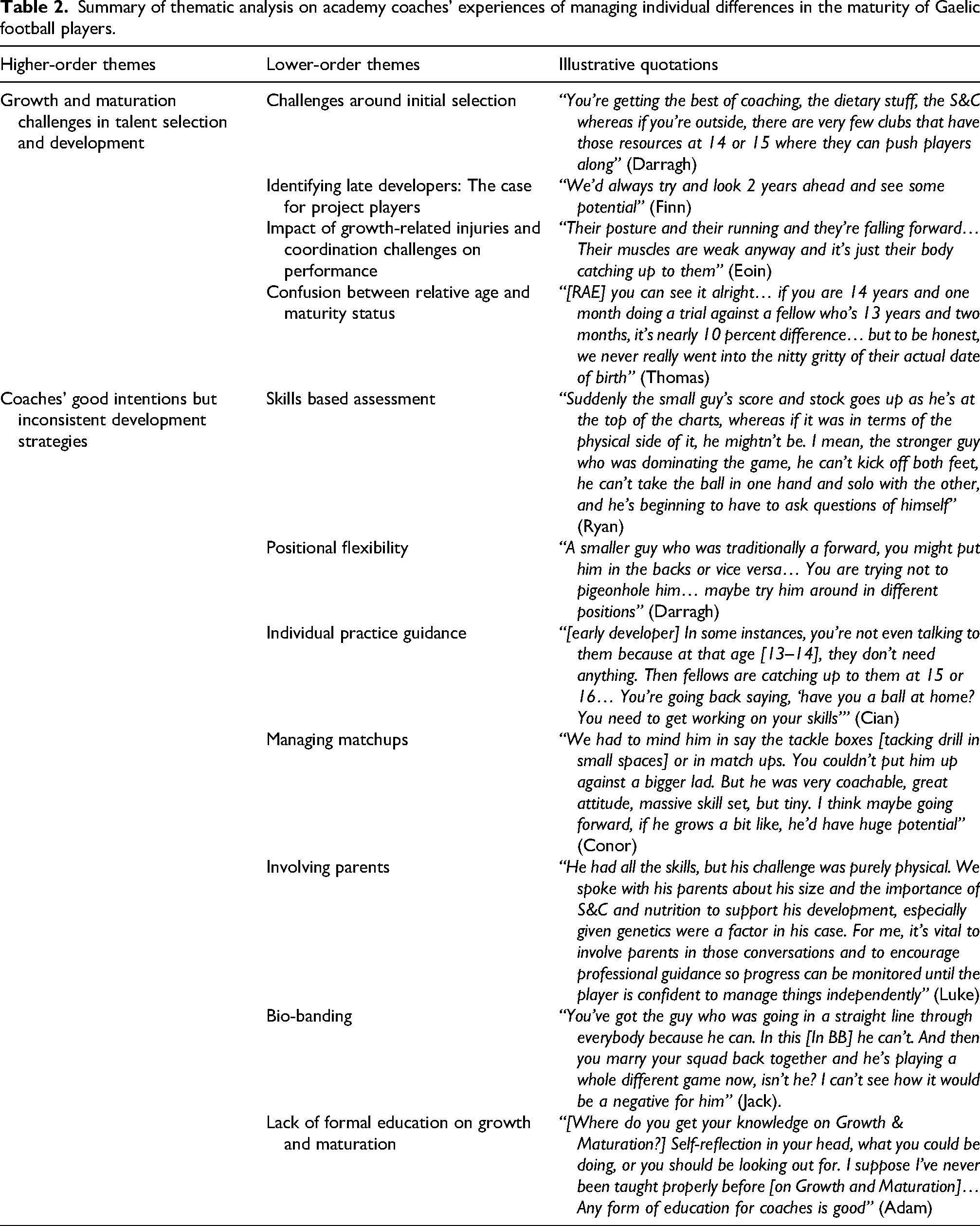
Table 2 presents the themes developed through the analysis. The first higher order theme expresses the challenges coaches faced in managing growth and maturation within talent selection and development. These challenges centred on issues such as the complexities of initial selection, identifying and supporting late developers, and managing the impact of growth-related injuries and coordination difficulties on performance. The second higher order theme reflects coaches’ good intentions but inconsistent development strategies, which often lacked sophistication and were constrained by limited formal education on growth and maturation within the academy environment.
Summary of thematic analysis on academy coaches’ experiences of managing individual differences in the maturity of Gaelic football players.
Growth and maturation challenges in talent selection and development
Coaches described the complex process of selecting and developing players at academy level as heavily influenced by both growth and maturation and subjective judgments of talent (i.e., coaches’ eye), summarised by Finn as “an imperfect science”. Challenges around initial selection was a central issue. The majority of coaches felt that early selection at U14 is crucial for future success, marking an entry point into the academy system where players have access to additional resources supporting their development. As Jack put it: “if you're getting in, it is giving you a serious leg up”. Coaches described initial selection decisions as challenging due to limited exposure to players, especially when these selections required fine distinctions between players. This difficulty was most evident at U14, where differences between players were often marginal: “when you're presented with a list in U15, or U16, then you work from that. But I found it taxing at U14s, because you were trying to split hairs between guys” (Jack). Jack's example suggests making the initial squad at U14s provides more favourable opportunities for future selection, as some coaches focus more on players already in the system.
Selection decisions were further complicated by the variation in physical development.8,22 Several coaches reported marked variability in physical development, especially at U14 level: “The difference in physicality, it stands out more at under 14 level” (Conor). Coaches were aware that size and physicality heavily influenced selection decisions, both in terms of coaches’ initial impressions and how late developers would have to deliver exceptional performances to be noticed. Several coaches acknowledged how quickly physical impressions shaped decisions: “If 20 lads walk in and you have a tiny guy. You are going to say, he's going to get blown away. And the big, tall guy that's bursting out of his shorts, we're going to say, ‘we'll stick him at centre back, or we’ll do something with him. But he's staying anyway. So, he's [bigger player] definitely getting an advantage” (Cian).
Coaches in this study observed that physically larger and early-maturing players not only had a selection advantage but were more often placed in central roles, increasing their involvement in games and provided more developmental opportunities. 45 In contrast, smaller or late-maturing players were given reduced roles, limiting their opportunities to showcase potential. These observations extend previous research in soccer where growth and maturation was shown to influence coaches’ evaluations of ability, selection decisions and allocation to playing positions,18,45 highlighting the need for more objective, evidence-based selection methods to avoid disadvantaging late developers. 20
In soccer, coaches have advocated for interdisciplinary collaboration between stakeholders (i.e., coaches, medical team, scouts etc), where knowledge is exchanged on the monitoring of growth and maturation. 35 However, in Gaelic games, where most coaches are volunteers, such structures are lacking. 8 Consequently, player nominations for county trials may rely heavily on short-term performance and physical dominance, with limited consideration of long-term potential. Coaches may implicitly assume linear progression, expecting players who are taller, stronger, or more physically developed at younger ages to maintain this advantage into adulthood. The talent selection process may be further complicated as club coaches often nominate players for county trials, and minimal communication exists between clubs, academy coaches, and games development officers, limiting knowledge sharing and consistency in selection. More systematic, longitudinal player tracking, player labelling, 46 and improved communication between club and academy coaches would support more informed, and equitable selection.
Despite recognising that early maturing players were advantaged, several coaches emphasised the importance of identifying late developers: The case for project players. Coaches highlighted the need to be attentive for late maturing players, who may struggle to compete physically in the short term but had the potential to excel in the future. 47 Adam captured this concern: “the most difficult part with the U14s is picking a panel and it's trying to make sure you don't miss the smaller guy that has potential but is just not standing out yet and just gets lost”. Coaches emphasised the importance of maintaining an open mind and a forward-looking mindset, describing a flexible approach to avoid overlooking late developers: “It's to have an open mind and it's never a closed thing… because there will be guys who will develop late” (Luke). However, they also recognised the difficulty of predicting future success: “Maybe you could say a player is going to play U18, but I don't think [you could predict] senior. There's a huge gap … How many minors are going to play senior inter-county football [adult high performance]?” (Patrick).
Coaches described taking a ‘project player’ strategy within talent identification to avoid over-looking late developing players: “in a development squad that there should be room for a wild card, or somebody shouldn't be dismissed because they're smaller” (Finn). Such project players were seen as worth the investment, as late-maturing players often develop tactical, technical, and psychological advantages through perseverance, an observation supported by research.
48
Patrick explained: “If a fella is physically smaller, to get in there, he has to work and it doesn't come as easy to them maybe in terms of getting on the ball or imposing themselves on a game. So, they must show more drive and perseverance, which possibly down the line stands to them as they get older. I think you have a considerable advantage if you're coming into it as a late developer” (Patrick).
Coaches frequently discussed ‘project’ or late maturing players in the current academy, suggesting they were a regular presence within the squads, albeit in a minority. Objective analysis of the squads these coaches support, 8 revealed only three of 150 players assessed were found to be late maturing, suggesting difficulty in subjective maturity estimation and a disconnect between perception and reality. 26 It is likely that many project players identified as late maturing were on-time but misclassified by coaches due to the preponderance of early maturing individuals in the system. Viewing late developers as long-term prospects requiring time and patience may not align with coach or club philosophies that prioritise short-term success, such as winning at U14, rather than focusing on holistic player development to enable long-term progression to adult high-performance level. Sliding benchmarks to adjust physical and skill testing results could help coaches more accurately identify and support these players by accounting for maturity, ensuring those with strong technical and tactical potential are not overlooked due to their current physical disadvantage. 49 Tools such as sliding benchmarks are only likely to be used effectively however when coaches and academies have developed and adhere to a philosophy for coaching which is aligned with holistic player development.50–52
Coaches also reflected on the differing developmental trajectories of early and late maturing players as a rationale for supporting project players. Several coaches noted that early maturing players progress may plateau as their peers catch up physically: “There's guys that definitely would have regressed, we would have thought that would have kicked on, and they were invariably the big guys much better than those around him and it became too easy” (Darragh). These reflections suggest that early maturing players may not be sufficiently challenged to develop other performance areas, limiting their learning and psychological, technical, and tactical development.53,54 In contrast, late developers, though initially at a disadvantage, were perceived to develop greater resilience, game intelligence, and long-term potential, through overcoming adversity. This dynamic reinforces the importance of patience and a long-term perspective in talent identification.
Coaches described the impact of growth-related injuries and coordination challenges on player performance and development. Coaches frequently linked coordination disruptions and injury to rapid growth. For example, Adam described how: “If you're watching a guy going through a growth spurt, his individual skill set and even the basics of running with the ball, his speed, agility, all changes because his centre of gravity has changed.”. These perceptions align with research showing that growth-related declines in neuromuscular control, often referred to ‘adolescent awkwardness’, can temporarily hinder athletic development in young athletes.18,23,36 While adolescent awkwardness is widely recognised by practitioners and described in qualitative studies, quantitative research findings remain inconsistent and sometimes contradictory.17,18 The current study findings suggest that many coaches observe signs of adolescent awkwardness in their players, highlighting the need to systematically monitor growth and adapt training and expectations during the growth spurt, and provide tailored support to manage performance fluctuations and reduce injury risk.
Several coaches identified rapid growth as a contributing factor to injuries, impacting players’ ability to play and perform. These injuries were particularly prevalent at U14/U15, with several coaches noting that this coincided with the most pronounced period of pubertal growth: “You'd notice more players being injured with growing pains such as Osgood-Schlatter's and things like that … and they can’t train. At one stage this year we had 3 or 4 players out with injuries related to growth. In particular, it's the U14/15 years” (Jack).
Research in both soccer 36 and gymnastics 23 found that coaches recommend monitoring growth and modifying training load during periods of rapid growth to reduce injury risk and support long-term development. The challenge for coaches is managing these injuries while allowing for the continued development of young athletes. Recent work in volleyball suggests that reducing training load during periods of greater risk can lead to equivalent performance development. 55 However, practical guidance on implementation remains limited, 56 particularly regarding how coaches should identify rapid growth, which training loads or activities to adjust, and how to balance temporary modifications with ongoing skill and physical development.
Coaches demonstrated a confusion between relative age and maturity status, often conflating relative age with physical development alone, highlighting limited understanding of the distinction between the two: “I don't know does the weaker player who is born later in the year get into the squads. They are just not able for the physicality of the squads, and they just get lost” (Conor). While coaches recognised relative age effects, they showed little consistent consideration or structured intervention in response. This lack of distinction appeared across focus groups as described by Luke: “I've never thought of [RAE] in the squads. I'm sure it probably is an issue, but you just don’t have the time. Because, obviously, if there's an 11- or 12-month gap, you know, between the end of December and the start of January, physically fellas can grow”
These reflections suggest that while coaches recognize the potential disadvantages for later-born players, there is no systematic approach to addressing these disparities in selection or development. Research suggests that relative age effects (RAE) and maturity selection bias exist and operate independently.8–10 RAEs are present and are relatively stable from early childhood, whereas maturity selection biases only emerge at puberty and increase in magnitude with age. 5 This suggests that RAE is more likely to result from age-associated variance in cognitive, motor and/or neural development. A lack of education or awareness surrounding both effects may contribute to their ongoing influence, as highlighted in recent work exploring the intersection of RAE and maturation (e.g.,8–10). This underscores the importance of targeted education, focusing on relative age effects at younger club levels, while increasingly emphasising maturation-related factors at club and especially academy level as players’ advance.
Coaches’ good intentions but inconsistent development strategies
Coaches described an intention to provide individualised support to players: “When I started [coaching], they were all getting the same approach, whereas now you'd be giving them more of what they need individually” (Cian). This intention reflects key principles of the SÍOL na nÓige framework 52 for psychologically informed coaching in Gaelic Games. This framework emphasises holistic development, player-centred coaching that adapts to each athlete's needs and stage of maturity and fostering a positive learning environment where all experiences are viewed as opportunities for growth. For instance, coaches described tailoring training based on each player's maturity and supporting psycho-social development alongside physical skills. These examples illustrate how SÍOL na nÓige principles are enacted in practice, reinforcing its relevance while also highlighting areas where additional guidance or resources could further support individualised, developmentally-appropriate coaching.
Building on these principles, several specific approaches to account for individual differences in growth and maturation were mentioned by the coaches: skills-based assessments, positional flexibility, targeted practice guidance, managed matchups and parent involvement Illustrative quotations detailing these strategies are presented in Table 2. However, these strategies were not consistently described and often lacked sophistication. Skills-based testing offered an alternative lens for assessing players beyond physical attributes, challenging traditional size-based selection biases57,58; however, only an isolated example of this strategy was described. By evaluating decision making and technical competence, coaches may gain new perspectives on both late-maturing players who may have temporary physical disadvantages and early developers whose limitations may be disguised by their temporary physical advantages.59,60 However, the sporadic and unsystematic implementation of such assessments means that player potential can often be overlooked and restricts their effectiveness in guiding player development. An agreed definition of skill within the context of Gaelic Games 61 and a model to guide skill assessment 62 would support coaches to maximise the potential of such assessments.
Managing training matchups was seen as one way of balancing challenge and protection for smaller, late-maturing players but examples typically did not extend beyond the act of matching players based on key characteristics: “in every training session, you'll probably end up with a game and you're going to match up players of the same ability, same size; you won't be putting a small fella against a six foot two guy” (Conor). Educational research on within-session ability grouping offers transferable insights here, showing small but positive effects on attainment and self-confidence when groupings are flexibly managed.25,63,64 Academy coaches would benefit from giving greater consideration to and taking inspiration from questions that have already been posed within the education literature (e.g., How flexible should within-session groupings be? Are grouping labels necessary?). 25 Despite intentions to protect late developers and foster confidence, effective application of training match ups remains a challenge, particularly given difficulties in adapting session structures at academy level. 20
Coaches emphasised the need to avoid pigeonholing players, instead encouraging positional flexibility, which supports a broad base of technical, tactical, psychological skills in both early and late maturing players, while also helping reduce injury risk during periods of rapid growth. 65 However, this strategy was mostly emphasised for late developers, with little discussion on its importance for early-maturing players. Consequently, early maturers often received less guidance and challenge during their formative years, as coaches tended to mistake physical dominance for overall ability, leading to less emphasis on technical and tactical development during key formative years. 35 As a result, early maturing players may not receive targeted guidance until their physical advantage diminishes, by which point technical and tactical deficiencies may have become more pronounced. 11 This challenge is compounded by time constraints, as coaches may prioritise late developers who appear to need more immediate support, or by the absence of structured assessments (i.e., skills testing), to systematically identify and support the needs of early-maturing players. 66 Additionally, some coaches may lack the motivational strategies to proactively engage early maturing players, a topic on which there is also limited practical guidance.
Coaches were largely unfamiliar with bio-banding but generally viewed it positively as a means to address disparities in physical maturity. Eoin summarised this: “It addresses the discrepancy between players and allows us to judge them based on their talent and guarantees a more level playing field”.
While bio-banding is increasingly used in professional sports such as soccer, cricket, and rugby, its introduction to Gaelic games has been recent and largely ad-hoc. 67 Coaches highlighted that bio-banding may prevent physically dominant players from relying solely on size and encourages them to engage with shortcomings and focus on skill development, which is similar to research in soccer.54,68
Coaches saw bio-banding as a way to better understand players’ developmental needs and to engage early developers through reflection and challenge. Jamie described this shift: “The real early developers, the really good guys, putting them into those situations a lot quicker, will make them realize: ‘I have to work for this, this isn't as easy as I thought’. It benefits the stronger player as much as the smaller guy”.
These observations are noteworthy, as most coach strategies identified have focused on late maturing players. However, these results suggest bio-banding could also benefit early maturing players by providing greater challenge and exposing them to higher technical and tactical demands and rating of perceived exertion, complimenting existing research in soccer on workload management and showing that early developers experience comparable growth when deliberately challenged.69,70
While coaches recognised the potential benefits of bio-banding, these approaches are not consistently applied within Gaelic football. This reflects a general awareness of the concept, but not of the mechanisms required for effective implementation. Informally grouping players relies on subjective assessments (i.e., coach's eye), reduces accuracy and often results in players being matched by size rather than true maturity status. 26 In Gaelic football, ‘playing up’ is traditionally more common, particularly in clubs with lower player numbers, provide appropriate challenge, or reflect a coach's focus on winning.71,72 In contrast, the use of ‘playing down’, 73 where an older but less mature player competes at a younger age group for developmental reasons, is rarely employed. This may be due to cultural norms within Gaelic football, concerns over fairness or safety, or a lack of awareness around the potential benefits of matching by maturity rather than chronological age.
Coaches highlighted several challenges bio-banding may present. These challenges considered player, coach and parent perspectives as well as both physical and psychosocial development. One coach described how less mature players may feel misplaced in smaller groups, affecting their self-esteem: “The only issue I would foresee with it; I suppose was that you had the odd weaker guy [player] saying - Why am I being lumped in with these guys? I shouldn’t be here at all” (Eoin). This coach's concern aligns with research showing that, while bio-banding can have positive psychological effects for late-maturing players, particularly regarding self-esteem and perceived competence, it may also lead to feelings of singling out if players perceive it as a demotion.53,74 Similarly, coaches had concerns around parents’ perceptions of player groupings. Conor explained: “Why is he training with the U14's if he's good enough to be with the U15's in the first place?”. These insights extend the literature by showing that bio-banding implementation must consider both developmental and psychosocial dimensions, particularly in volunteer-driven, community-based sports contexts. These concerns can stem from fears about the impact on their child's development, social integration, and how coaches might view their ability. Together, these reflections extend the literature by highlighting that education, clear communication and sensitive implementation are crucial, not only to help players view bio-banding as a positive developmental tool, but also to ensure parents understand the rationale and intended benefits behind the approach.68,71
The consideration of training age, in addition to chronological and biological age, to match players appropriately was also raised. Ryan noted: “you would have to get your matchups right because if you didn't a 14-year-old that could be big he's going up to 16s could be meeting the guy that's 2 years of conditioning ahead of him”. This aligns with research on bio-banding in soccer, where players highlighted not only physical age-related differences but also variations in psychological and social development, game knowledge, experience, and the challenge of integrating with new teammates. 53 Older players within bio-banded groups often possess greater training age, leading to superior tactical and technical proficiency. 75 A 14-year-old with advanced biological maturation yet limited training age may struggle against a 16-year-old with two additional years of experience and training. Nevertheless, the struggle may encourage the younger player to work on their technical/tactical abilities. Regularly reassessing groupings based on maturation and training progress is essential to maintain developmental equity and minimise the risks of mismatched physical or technical readiness.
Coaches discussed how bio-banding might be implemented in practice, with Thomas suggesting it be integrated periodically to observe player adaptation rather than full implementation: “I think it'd be a very interesting exercise to do one session a month or one session every two months or something, even just to have a look at it, see how they react to the different environment”. This recommendation would align with research in bio-banding where it would serve as an adjunct to age group competition and not as a replacement.54,68 However, unique logistical challenges exist in Gaelic Games, where players often train and compete across multiple settings (academy, club, district, school). These overlapping commitments present significant time constraints that complicate consistent application. While the primary goal of talent academy squads is player development, rather than solely competition, 29 they could offer an ideal setting for periodic exposure to bio-banding. This would give players the chance to reflect on the experience of playing up or down as part of their holistic development.
Coaches acknowledged a lack of formal education on growth and maturation, instead relying heavily on personal experience: “[Where do you get your knowledge on growth & maturation?] Experience. You try to educate yourself as much as you can from a coaching point of view but ultimately, it's all experience” (Adam). This informal approach, emphasising self-education, may contribute to knowledge gaps that may limit coaches’ capacity to effectively support developing athletes. Despite this, all coaches expressed a strong desire for scientific, formal education to support their instincts: “We have a lot of experience of course, but it would be good if you have the science to back up your suspicions. Something formal would be great as long as it wouldn't take too long” (Cian). Similar findings have emerged in other sports, such as in gymnastics, where coaches have requested further education on training modifications and injury prevention during puberty. 23
While coaches demonstrated some knowledge on growth and maturation and some isolated strategies, these remain underdeveloped. Strategies such as bio-banding are gaining interest within the GAA; however, a more measured and evidence-based approach is needed before widespread implementation. There is a need for bespoke educational initiatives for all stakeholders (i.e., coaches, players, administrators, and parents), focusing on developing comprehensive strategies to support players at varying stages of maturation. Educational content should be accessible, relatable, and tailored to each group. For players and parents, this may involve simplified, age-appropriate explanations of growth-related changes and their implications, using videos, infographics, and team talks. 35 For coaches, structured workshops, already commonplace in academy soccer15,76 and gymnastics, 23 should be complemented by formal coach education pathways 30 incorporating video content, resources, and mentoring. Recognising this need, the GAA's Athletic Development Group designed a bespoke online Growth and Maturation module, which is to be delivered across club and county coaching networks. 77 Future research should evaluate the effectiveness of such educational programmes within Gaelic football, in particular exploring cultural and organisational barriers to their implementation and players’ experiences of maturity-related challenges.
Alongside education, several practical strategies have been proposed to better support players of differing maturity status. These include: delayed selection; using maturation data and sliding benchmarks to contextualise performance, which may reduce premature deselection49,78; bio-banding 54 ; player-labelling 46 ; extended talent windows 12 ; and late-maturing or “future” groups. 10 In addition, implementing longitudinal monitoring systems within clubs and academies would allow for timely identification of players undergoing rapid growth and ensure more informed, equitable selection and development decisions. 54 Longitudinal studies will be key to understanding how players at different stages of maturation progress over time and respond to strategies like bio-banding.
Limitations
This study reflects the perceptions of coaches from a single region and sport, working exclusively with male Irish players, resulting in a relatively homogeneous sample. The findings, both in terms of coach knowledge of growth and maturation and practical strategies to support identification and development are not intended to generalise but should stimulate reflection from coaches and sport scientists in other contexts as to whether similar questions and issues are also relevant to their practice. As the research was conducted in partnership with the GAA, which is the governing body of the male game, female players were not included. While evidence suggests maturity biases occur in female sport, they appear less pronounced than in males. 79 Further investigation is required to explore knowledge and strategies of practitioners supporting female populations.80,81 This research could adopt longitudinal designs, include multiple stakeholders such as parents and administrators, and involve female players to compare findings with coach perceptions.
Conclusion
In conclusion, this study explored coaches’ knowledge, beliefs and experiences related to the impact of growth and maturation upon player selection and development in Gaelic football. By focusing on amateur and volunteer-run academy environments, an under-researched area in sport science and coaching literature, this research complements existing literature from professional and elite environments, 36 in particular by focusing on practical strategies to deal with maturation-related challenges relevant to young athletes. Our results indicate that the coaches in this study were aware of the physical and functional changes that occur during puberty and the differing performance trajectories of early and late-maturing players. Coaches identified challenges in the initial selection of players, including maturity and size-based biases, and the long-term implications of maturation upon success at the adult level. However, the analysis revealed coaches’ knowledge gaps and barriers to implementing suitable strategies to mitigate maturation-related biases. The results suggest that coaches’ intentions are good but there is scope for more nuanced understanding of maturation and more sophisticated practical strategies to support players.
Supplemental Material
sj-docx-1-spo-10.1177_17479541261460816 - Supplemental material for Academy coaches’ experiences of managing individual differences in the maturity of male Gaelic football players
Supplemental material, sj-docx-1-spo-10.1177_17479541261460816 for Academy coaches’ experiences of managing individual differences in the maturity of male Gaelic football players by F Fitzgerald, MJ Campbell, PE Kearney and S Cumming in International Journal of Sports Science & Coaching
Footnotes
Acknowledgments
The authors gratefully acknowledge the participants and coaches in the county talent academy for their assistance in completing this study. No funding was received for this research. The authors declare no conflict of interest in the production of this research.

Ethical considerations
This study was reviewed and approved by the Research Ethics Committee of the Faculty of Education and Health Sciences at the University of Limerick (2020_10_09).
Consent to participate
Written and verbal consent was obtained from all coaches that participated in the present study.
Consent for publication
Not applicable.
Funding
The authors received no financial support for the research, authorship, and/or publication of this article.
Declaration of conflicting interests
The authors declare that the research was conducted in the absence of any commercial or financial relationships that could be construed as a potential conflict of interest. Philip Kearney serves in an unpaid role on the Gaelic Games Player & Coach Development Advisory Group. Fionn Fitzgerald and Sean Cumming served in an unpaid capacity on a Gaelic Games Sports Science working group focused on Athlete Development.
Data availability statement
The data are not publicly available due to ethical considerations relating to interview transcripts but may be available from the corresponding author upon reasonable request and subject to institutional approval.
Supplemental material
Supplemental material for this article is available online.
References
Supplementary Material
Please find the following supplemental material available below.
For Open Access articles published under a Creative Commons License, all supplemental material carries the same license as the article it is associated with.
For non-Open Access articles published, all supplemental material carries a non-exclusive license, and permission requests for re-use of supplemental material or any part of supplemental material shall be sent directly to the copyright owner as specified in the copyright notice associated with the article.
