



Abstract
This study investigated match-level (260 matches) and shot-level (3725 saves and 675 goals) factors associated with goalkeeper performance in professional futsal. Match-level variables included competitive division, match location, outfield-player defensive actions, outfield-player saves, and missed shots. Goalkeepers save percentage was calculated for each match and analyzed using generalized linear mixed models (GLMM). Shot-levels analysis investigated the variables associated with goal occurrence probability, including tactical context, set-piece situations, shot distance, shot height, and goalkeeper positioning using GLMM. Goalkeepers save percentage averaged 84.3 ± 10.0%. Match-level analysis revealed no significant associations between goalkeeper save percentage and competition level, match location, outfield-player defensive actions, outfield-player saves, or missed shots (all p > 0.05). In contrast, shot-level analysis demonstrated that transition superiority situations (OR = 2.28, p < 0.001), rebounds (OR = 3.71, p < 0.001), sending-off situations (OR = 2.77, p < 0.02), flying-goalkeeper attacks (OR = 1.58, P < 0.05), penalties (OR = 6.10, p < 0.05), 10-m free kicks (OR = 3.0, p < 0.01), and direct free kicks (OR = 2.83, p < 0.001)significantly increased goal occurrence probability. Medium (OR = 0.38, p < 0.001) and long-distance (OR = 0.21, p < 0.001) shots were associated with lower scoring probability, whereas high shots (OR = 1.62, p < 0.001) increased the likelihood of conceding a goal. Goalkeeper interventions outside the penalty area (OR = 0.33, p < 0.001) were associated with reduced goal occurrence probability. These findings suggest that goalkeeper defensive performance in professional futsal is primarily influenced by the immediate tactical and situational characteristics of individual shooting scenarios.
Introduction
Futsal is an intermittent high-intensity team sport characterized by rapid transitions, reduced playing space, and frequent goal-scoring opportunities, imposing substantial perceptual, tactical, and technical demands on goalkeepers.1–3 Unlike in traditional soccer, futsal goalkeepers are frequently required to participate in defensive and offensive phases beyond goal-line protection, including actions performed outside the penalty area, due to the tactical and regulatory characteristics of futsal.4,5 Consequently, goal occurrence and goalkeeper performance in futsal are influenced by contextual and tactical factors, including shot characteristics, transition situations, numerical imbalance scenarios, rebounds, and set-piece dynamics.1,3,5,6
Despite the critical role of goalkeepers in futsal performance, the available literature has predominantly focused on offensive patterns associated with goal occurrence, such as passing sequences, positional attacks, attacking sequences involving the flying goalkeeper, and the spatiotemporal interactions between attacking players and defenders.1,5–8 In these studies, the primary emphasis is generally placed on collective attacking technical-tactical behaviors and contextual factors associated with offensive success rather than on the defensive responses performed by goalkeepers.1,6,7,9 Limited attention has been given to goalkeeper-specific factors, particularly goalkeeper positioning, defensive actions outside the penalty area, and the interaction between shot characteristics and goalkeeping responses.
Previous studies have estimated that 2.9% of attacking plays result in goal occurrence, with approximately 0.21 to 0.29 shot attempts performed per minute of play, including goals, shots on target and missed shots.8,10 Despite the high number of shots and goal-scoring opportunities inherent to futsal matches, the specific tactical and defensive situations requiring direct goalkeeper intervention to prevent shot execution or goal occurrence remain insufficiently investigated in the scientific literature. Consequently, limited attention has been directed toward the defensive perspective of goal prevention, particularly regarding how goalkeepers respond to different shot characteristics and tactical contexts during match play. This limitation restricts a more comprehensive understanding of the contextual demands imposed on futsal goalkeepers and the factors associated with successful defensive performance. Bridging this gap is essential for developing evidence-based coaching interventions that move beyond general drills toward context-specific performance preparation.
Therefore, this study aimed to analyze contextual and tactical factors associated with goalkeeper performance in elite futsal across three competitive divisions using multivariate mixed-model approaches. Specifically, we examined match-related contextual variables associated with goalkeeper and defensive performance indicators, as well as factors associated with goal occurrence at the shot level. Our findings may provide coaches and sports scientists with objective information to develop more representative goalkeeper training tasks and support tactical decision-making in elite futsal.
Materials and methods
Study design
This study employed an observational design to analyze performance in elite futsal. We examined 260 official professional matches from the 2024 Paraná State Championship (Brazil), which is recognized as one of the most competitive regional leagues globally, often featuring athletes and coaches of international caliber. The sample encompassed 12 teams from First (Gold division, n = 4, 25%), Second (Silver, n = 4, 25%) and Third (Bronze, n = 4, 9.7%) Divisions. A total of 27 goalkeepers (starters and substitutes) participated in the matches analyzed. Four teams from each of the three divisions were randomly selected using a lottery method before the beginning of the season. Consequently, the final number of matches analyzed per team depended on their respective tournament progression. All selected teams completed the regular season; across the divisions, the sample included a balanced range of performance outcomes, with teams eliminated in the Round of 16 as well as teams that progressed to the tournament finals.
Sample size estimation and justification
The required sample size was determined based on a pilot study of nine professional First Division futsal matches, which yielded an average of 14 shots on goal per match and a mean goalkeeper save percentage of 85%. Because no previous studies had reported goalkeeper-specific save frequencies and shot incidence under comparable professional futsal conditions, these pilot data were used to provide the parameters required for an a priori sample size estimation. To detect a minimum absolute difference of 5% in goalkeeper save percentage across different match contexts and situations, with a statistical power of 80% and a significance level of α = 0.05 (two-tailed), a minimum of 490 save events, corresponding to approximately 35 matches, was required.
Importantly, this calculation was used to establish a conservative minimum sample requirement during the planning phase of the study rather than to determine the final analytical framework. Given the multilevel structure of the data and the objective of examining contextual, technical, positional, and tactical factors associated with goalkeeper performance and goal occurrence, the final sample was expanded to include all official matches played by the randomly selected teams throughout the season. Consequently, the final dataset substantially exceeded the minimum requirement and comprised 260 matches and more than 4400 shot situations, providing a robust observational sample for the generalized linear mixed-effects analyses.
Ethical considerations
The study exclusively analyzed publicly accessible footage and statistical data from official competitions. No direct interaction with athletes or collection of personally identifiable information was performed. Official match broadcasts were publicly available according to the Paraná Futsal Federation competition regulations, which require open-access transmission and availability of full match recordings to participating teams. According to Brazilian National Health Council Resolution CNS No. 510/2016 (Article 1, items II and III), studies exclusively using publicly accessible or public-domain information are exempt from evaluation by institutional Human Research Ethics Committees and the National Research Ethics Commission (CONEP). Data sampling followed the principles outlined in the Declaration of Helsinki. 11
Data acquisition and video analysis
The data collection protocol was developed by three professional futsal goalkeeper coaches with extensive experience in performance analysis. All matches were recorded and subsequently analyzed. Publicly available footage from official broadcasts, accessed via social media platforms, was used for data collection.
All shots directed toward the goal were identified and coded by two futsal performance analysts. For each event, detailed technical and contextual variables were recorded.
Match-level variables
For each match, the following contextual variables were recorded:
Match outcome: win, draw, or loss. Match location: home or away match. Competitive level: The Paraná State Professional Futsal Championship is organized into a hierarchical three-division structure, including the Bronze Division (Third division), Silver Division (Second division), and Gold Division (First Division). Number of shots: shots saved by goalkeeper, shots blocked by outfield players and missed shots. Number of attacking plays interrupted by outfield players before shot execution.
Goalkeeper percentage saves were calculated at the match level as the proportion of saves relative to total shots on goal faced.
Shot-level variables
Each shot was classified according to:
Shot distance: short (≤6 m and penalty), medium (≤10 m and free kick), and long (>10 m), adapted from Lapresa et al. (2013).
12
The reference study categorized shot areas in 10-m intervals based on official futsal court dimensions (20 × 40 m). However, considering the specific defensive demands imposed on futsal goalkeepers, short-distance shots were defined as attempts performed inside the penalty area (6 m), whereas shots performed from distances greater than 10 m were classified as long-distance attempts. This adaptation also considered the court dimensions permitted in the Second and Third Divisions, which may range from 36 × 18 m to 40 × 20 m according to competition regulations. Shot height: high (above shoulder level), medium (shoulder to knee level), and low (below knee level).
13
Goalkeeper positioning: close to goal line; inside area: 2-meter advanced from goal line and inside the penalty area; or outside area: outside the penalty area (adapted from FIFA Futsal Goalkeeping Coaching Manual).
13
Set-piece situations: corner kicks, free kicks, penalties and kick-in.
13
Attack context: positional attack, transitional superiority, flying goalkeeper, sending off (red cards).
13
Rebound: an attacking scenario that occurs immediately after the goalkeeper makes an incomplete save (e.g., parrying or blocking the ball back into the court) or the ball strikes the goal frame, allowing an attacking player to gain possession and execute a subsequent shot. Match location: home or away match. Match half: first or second half time. Competitive level: The Paraná State Professional Futsal Championship is organized into a hierarchical three-division structure, including the Bronze Division (Third division), Silver Division (Second division), and Gold Division (First Division).
Reliability procedures
Inter- and intra-rater reliability were assessed using Cohen's kappa coefficient. Two independent researchers (performance analysts) analyzed five matches, which were not included in the final dataset. A second evaluation was conducted after a 30-day interval to assess intra-rater agreement. Inter-rater agreement was classified as almost perfect (κ = 0.98), while intra-rater agreement was perfect (κ = 1.00), indicating excellent consistency in data coding. 14 Discrepancies between observers were resolved through discussion until consensus was reached.
Statistical analysis
Statistical analyses were performed using R statistical software (version 4.5.2; R Foundation for Statistical Computing, Vienna, Austria). Descriptive data are presented as mean ± standard deviation (SD) or absolute and relative frequencies.
Goalkeeper percentage saves across matches were analyzed using generalized linear mixed models (GLMMs) with binomial distribution and logit link function. The dependent variable was defined as the number of goalkeeperś saves relative to goals conceded, allowing the estimation of save probability during matches. Match location, competition division, outfield-player saves, outfield-player defensive actions before shot execution, and missed shots were included as fixed effects, while team identity was included as a random intercept to account for repeated observations within teams. Continuous predictors were standardized (z-score transformation) prior to analysis to improve model convergence and parameter estimation stability. Additionally, goalkeeper save percentage across match outcomes was examined using linear mixed models with team identity included as a random intercept. Pairwise comparisons between match outcomes were performed using estimated marginal means with adjusted p-values.
Shot-level analyses were conducted using generalized linear mixed-effects models (GLMMs) with binomial distribution and logit link function to examine factors associated with goal occurrence (goal = 1; save = 0). Fixed effects included attack context, rebound situations, shot distance, shot height, goalkeeper positioning, set-piece situations, competitive division, match location, and match half. Random intercepts for matches and goalkeeper were included to account for the hierarchical structure of the data and repeated observations within matches and goalkeepers.
Odds ratios (OR) and corresponding 95% confidence intervals (95% CI) were calculated for the GLMM analyses.
To assess model adequacy, multicollinearity among predictors was examined using variance inflation factors (VIF) calculated with the performance package. Model diagnostics were performed using simulation-based residual analyses implemented in the DHARMa package, including tests for overdispersion and outliers. For both models, residual diagnostics and multicollinearity assessments were performed. Model explanatory power was quantified using marginal and conditional R2 values. All VIF values were below 1.5, indicating low collinearity among explanatory variables. Statistical significance was set at p < 0.05.
Results
Match demands
A total of 260 matches were analyzed, including 73 (28.1%) matches from the First Division, 92 (35.4%) matches from the Second Division, and 95 (36.5%) matches from the Third Division. Additionally, 132 matches (50.7%) were played away from home. Across all matches, teams faced an average of 35.2 ± 10.0 opponent shots per match, while goalkeepers performed 14.3 ± 5.4 saves per game, resulting in a mean save percentage of 84.3 ± 10.0%. Defensive line interventions averaged 45.7 ± 11.8 actions per match, including 8.1 ± 4.7 shots blocked by outfield players. Teams conceded an average of 2.6 ± 1.7 goals per match.
Goalkeepers save percentage was significantly lower during draws (84.9 ± 7.1%; p = 0.020) and defeats (77.6 ± 9.5%; p < 0.001) compared with wins (88.2 ± 9.3%).
The generalized linear mixed model revealed no significant associations between match-level contextual variables and goalkeeper save probability (Table 1). Match location, competition division, outfield-player saves, outfield-player defensive actions, and missed shots were not significantly associated with goalkeeper save probability (p > 0.05). Furthermore, the inclusion of match-level contextual variables produced only limited improvement in overall model fit compared with the null model (χ2 = 6.37, p = 0.383). Model diagnostics indicated no evidence of overdispersion (dispersion = 1.01, p = 0.70), excessive outliers (p = 1.00), or multicollinearity among predictors (all VIF < 1.16). Model explanatory power was moderate, with fixed effects accounting for 20.8% of the variance (marginal R2 = 0.208), increasing to 23.5% when team-level random effects were included (conditional R2 = 0.235).
Generalized linear mixed model examining factors associated with goalkeeper save percentage per match in professional futsal.
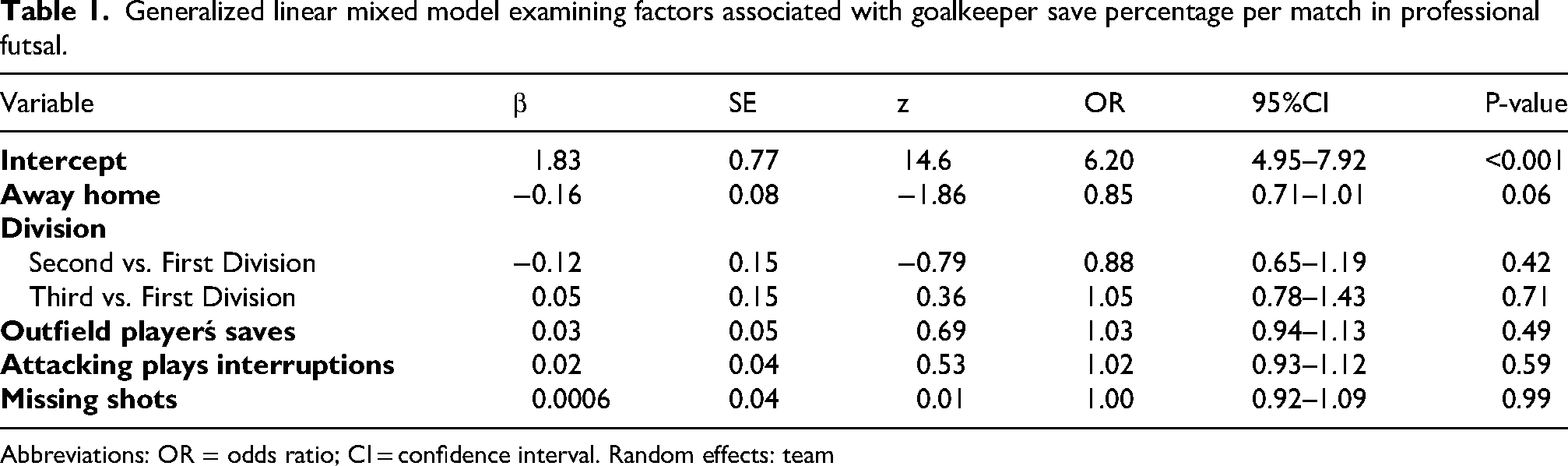
Abbreviations: OR = odds ratio; CI = confidence interval. Random effects: team
Shot-level analysis
A total of 4400 shots were analyzed, including 3725 (84.7%) goalkeeper saves and 675 goals (15.3%). Results from the generalized linear mixed-effects model are presented in Table 2. Transition superiority situations (p < 0.001), rebounds (p < 0.001), sending-off situations (red cards; p = 0.017), and the use of the flying goalkeeper (p = 0.009) were associated with increased likelihood of goal occurrence. Additionally, penalties (p = 0.030), 10-m free kicks (p = 0.015), and direct free kicks (p < 0.001) also increased scoring probability (Table 2).
Generalized linear mixed model examining factors associated with goal occurrence in professional futsal.
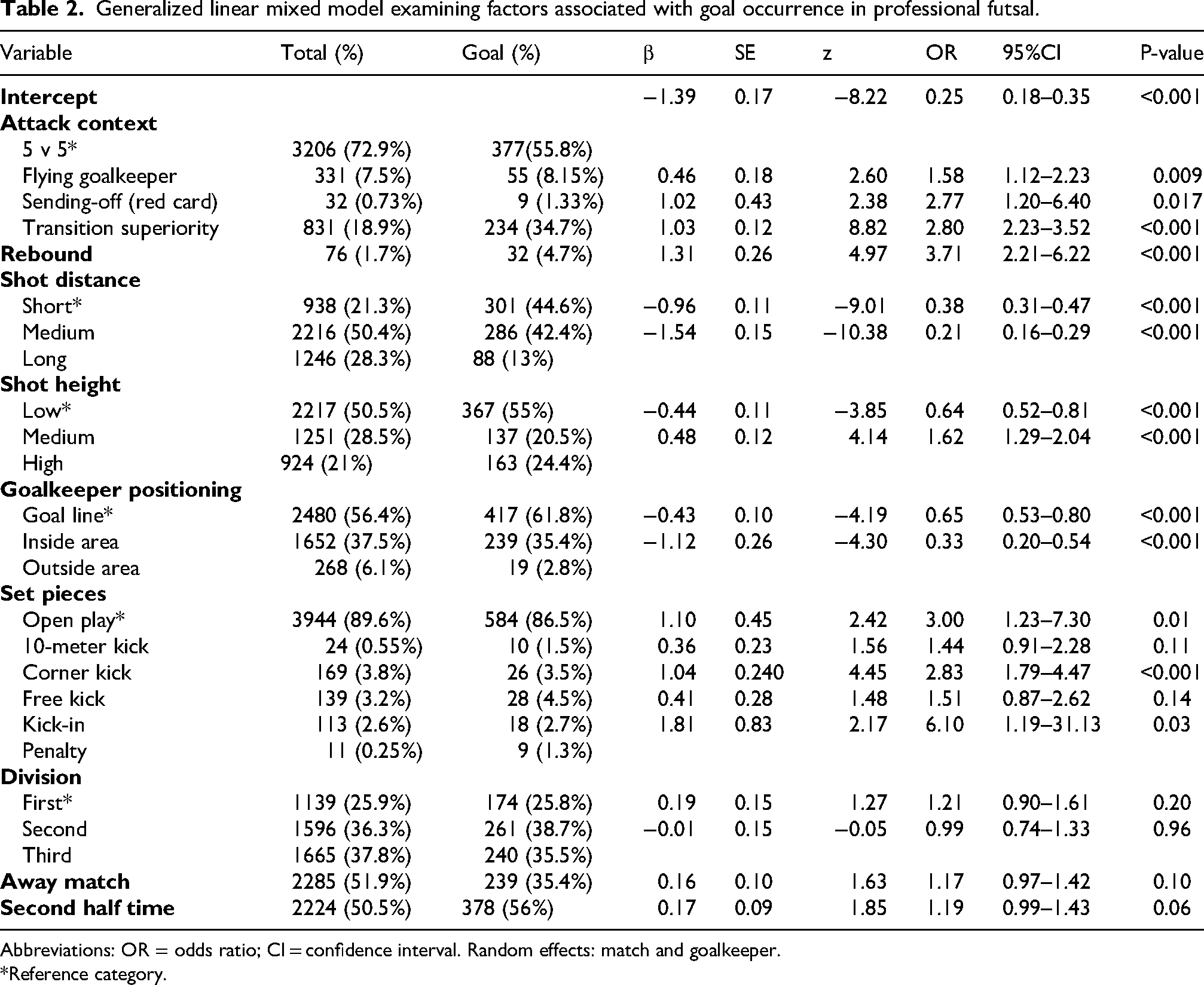
Abbreviations: OR = odds ratio; CI = confidence interval. Random effects: match and goalkeeper. *Reference category.
In contrast, shots performed from long distances (p < 0.001) and medium distances (p < 0.001) were associated with lower odds of goal occurrence compared with short-distance shots (Table 2). High shots increased the likelihood of goal occurrence (p < 0.001), whereas medium-height shots reduced scoring probability (p < 0.001).
Similarly, goalkeeper interventions performed outside the penalty area were associated with reduced scoring likelihood (p < 0.001, Table 2). Importantly, a substantial proportion of these outside-area defensive actions (n = 114, 42.5%) represented anticipatory goalkeeper interventions aimed at preventing shot execution, particularly during opponent counterattacks and numerical disadvantage situations.
No significant effects were identified for competition level, match location and half time (Table 2).
Model diagnostics indicated no evidence of overdispersion (dispersion = 0.99, p = 0.896), excessive outliers (p = 0.865), or multicollinearity among predictors (all VIF < 1.5). The mixed-effects model explained 19.1% of the variance according to the marginal R2 and 21.2% according to the conditional R2, indicating that the random effect of team contributed only modestly to the overall explanatory power of the model.
Discussion
The present study investigated contextual and tactical factors associated with goalkeeper defensive performance in elite futsal using both match-level and shot-level analyses. As expected, goalkeeper save percentage was lower in drawn and lost matches than in wins, suggesting that reductions in goalkeeper efficacy are accompanied by less favorable competitive outcomes. While this observation does not explain why performance changes occur, it highlights the practical relevance of identifying the situational and tactical factors associated with goalkeeper success. Accordingly, the present study focused on understanding which match contexts and shot characteristics are most strongly related to goal concession. The main findings demonstrated that aggregated match-level contextual variables showed limited association with goalkeeper save probability, whereas situational and tactical characteristics at the shot level were strongly associated with goal occurrence. Specifically, transition superiority situations, rebounds, flying goalkeeper scenarios, set pieces, shot distance, shot height, and goalkeeper interventions outside the penalty area emerged as significant contextual factors related to scoring probability.
The match-level analysis suggests that match contextual indicators may insufficiently capture the highly dynamic and situational nature of goalkeeper performance in futsal. Although the phenomenon of home advantage has been consistently reported in futsal and other team sports, affecting match outcomes, technical performance, and goal-scoring patterns.15–20 match location did not significantly influence goalkeeper save probability in the present study. Similarly, despite previous studies reporting differences in physical performance and technical-tactical behaviors across competitive levels in futsal players,21–25 no significant differences were identified in goalkeeper defensive efficacy across the three competitive divisions analyzed. These findings may indicate that goalkeeper performance presents a distinct performance profile compared with outfield players. However, although the sample included a substantial proportion of teams from the First and Second Divisions and encompassed all official matches played by the selected teams throughout the season, caution is warranted when generalizing these findings across all competitive levels. Additional studies including a larger number of teams and competitions from different regions, may help to further clarify the influence of competitive level on goalkeeper performance.
In futsal, attacking and defensive tactical behaviors are collectively organized by teams but continuously adapted during matches according to different situational demands.1,7,26,27 Interestingly, goalkeeper defensive efficacy appeared to be relatively independent of characteristics of team defensive organization, including the number of attacking plays interrupted before shot execution and defensive saves performed by outfield players. Likewise, the overall volume of shot attempts and missed shots were not significantly associated with goalkeeper save probability. Collectively, these findings suggest that aggregated match-level metrics may have limited sensitivity to explain goalkeeper defensive performance, which appears to be more closely associated with the immediate situational and tactical characteristics of individual shot scenarios than with broader collective match indicators.
The shot-level analysis showed that defensively unstable situations with less time and space for defensive organization were linked to a higher likelihood of conceding a goal. Specifically, in the present study, transition superiority, rebounds, and flying-goalkeeper situations significantly increased scoring probability, suggesting that immediate tactical context had significant influence on the defensive demands placed on futsal goalkeepers. Although these factors had been documented in the literature, previous investigations have predominantly examined only offensive sequences ending in goals or have described the frequency of goals occurring under specific tactical scenarios, such as flying goalkeeper situations or numerical imbalances, without considering the total number of shots or goalkeeper saves.1,3,5,6,17,28
Previous studies reported that positional attacks accounted for approximately 23.3 to 42% of goals scored, whereas transition superiority situations originated from counterattacks represented approximately 26.8 to 27% of attacking plays resulting in goals.1,3 However, by incorporating both successful and unsuccessful shooting outcomes, the present study demonstrated that transition superiority situations substantially increased scoring probability (OR = 2.80), despite occurring less frequently than positional attacks. According to previous investigations, positional attacks generally occur against an already organized defensive system, whereas transition superiority situations emerge before defensive reorganization is completed.1,17 This finding suggests that transitional scenarios may impose greater defensive instability, spatial disorganization, and temporal pressure on defensive systems and goalkeepers than organized positional attacks.
Numerical attacking superiority may also occur during the two-minute dismissal period following red cards, creating temporary defensive imbalances that increase scoring opportunities for opponents.4,5 The present findings support this interpretation, as sending-off situations were associated with significantly greater odds of goal occurrence. Although red-card situations occurred in approximately 34.4% of matches in official statistics of competition (https://www.futsalparana.com.br/), the temporary nature of the two-minute dismissal period resulted in a relatively small proportion of the total shots analyzed being performed under this condition.
The use of the flying goalkeeper (5 vs. 4 + goalkeeper situations) is commonly employed by teams attempting to create offensive numerical superiority, particularly when trailing in score and during the final stages of matches.5,20,28 Previous investigations suggested that this tactical strategy may increase offensive effectiveness and scoring opportunities, especially when the goalkeeper is replaced by an outfield player.5,20,28 The present results are consistent with these findings, demonstrating that flying-goalkeeper situations increased goal occurrence probability by approximately 58%. The increased scoring probability observed during flying-goalkeeper situations may reflect the numerical superiority created in the attacking phase, which facilitates ball circulation, creates additional passing lanes, and challenges defensive coverage around the goal area.5,20
Interestingly, rebound situations produced the highest odds of goal occurrence among all contextual variables analyzed. To our knowledge, previous futsal investigations have not specifically examined the influence of rebounds on scoring probability. Consequently, direct comparisons with scientific literature remain limited. Nevertheless, rebounds represent highly unstable defensive scenarios in which goalkeepers and defenders have little time to recover their positioning following the initial shot. According to the FIFA Futsal Goalkeeping Coaching Manual, 13 partial saves may generate immediate second-shot opportunities while the goalkeeper is still attempting to re-establish an effective defensive position. Under these circumstances, attackers may exploit second-ball opportunities before defensive reorganization is completed. 13 These contextual constraints may partially explain the substantially greater likelihood of goal occurrence observed during rebound situations in the present study.
Beyond tactical context, the characteristics of the shot itself may also influence goal occurrence probability. Shot distance emerged as a key determinant of goal concession, with short-distance attempts substantially increasing the likelihood of goals compared to medium- and long-range shots. This finding is consistent with previous research indicating that plays ended in penalty area (short distance) increased odds of goal occurrence.3,8,17 Short distance from defender and goal target increased odds of scoring a goal.3,7–9 High shots were associated with increased odds of scoring, whereas medium-height shots reduced scoring probability. Although evidence regarding shot height in futsal remains scarce, a plausible explanation relates to the specific biomechanical and positional demands imposed on goalkeepers. Futsal goalkeepers commonly adopt a low and compact ready position to maximize coverage of the goal area and facilitate reactions to short-distance shots. 13 Consequently, high shots may require rapid vertical movements and greater upper-limb reach, potentially reducing defensive effectiveness. In contrast, medium-height shots may coincide with the zone most effectively covered by the goalkeeper's body and upper limbs during standard defensive positioning. 13 However, given the limited evidence available, these interpretations should be considered speculative and warrant further investigation. Future investigations should examine the influence of shot trajectory and ball height in greater detail, as these characteristics appear to substantially affect scoring probability in elite futsal.
Goalkeeper positioning also emerged as an important factor associated with goal occurrence probability. Specifically, situations in which the goalkeeper successfully intervened outside the penalty area were associated with reduced scoring likelihood. Notably, a substantial proportion of these actions prevented shot execution altogether, highlighting the goalkeeper's role not only as a reactive shot stopper but also as a proactive defender capable of disrupting attacking sequences before a shot occurs. To our knowledge, the influence of goalkeeper positioning on goal occurrence has received limited attention in the futsal literature. However, the FIFA Futsal Goalkeeping Coaching Manual emphasizes the importance of anticipatory positioning and timely decisions to leave the goal area in order to reduce space available to attackers and suppress shooting opportunities. 13 Advanced goalkeeper positioning may be associated with reduced odds of goal concession, possibly due to the reduction of shooting angles and earlier interception of attacking actions.7,9,13 This supports contemporary tactical approaches in futsal, where proactive positioning is used to mitigate scoring opportunities. 13 The present findings suggests that proactive goalkeeper positioning may contribute to reducing goal-scoring opportunities, although causal inferences cannot be established from the present observational design.
Set-piece situations also influenced goal occurrence probability, although substantial differences were observed according to the specific type of play restart. Penalties, 10-metre kicks, and direct free kicks were all associated with increased scoring likelihood, whereas corner kicks and kick-ins were not significantly associated with goal occurrence. These findings suggest that the effectiveness of set plays may depend on the immediate opportunity to perform a direct shot rather than on the restart situation itself. Previous studies have highlighted the importance of set plays as a source of goal-scoring opportunities in futsal.1,3,7,8 The present findings suggest that set-piece situations providing an immediate shooting opportunity impose substantially greater defensive demands on goalkeepers than those requiring additional passes or collective attacking actions before shot execution. This may explain the particularly high scoring probability observed for penalties and 10-metre kicks, 8 where goalkeepers face highly constrained reaction conditions and limited defensive support in short to medium distances.
Contrary to expectations derived from previous studies reporting physical and technical-tactical differences across competitive levels in futsal players,21–23,29,30 competition level was not associated with goalkeeper defensive efficacy in either the match-level or shot-level analyses. These findings suggest that goalkeeper performance may be influenced by factors distinct from those typically used to characterize competitive-level differences among outfield players. While different competitive divisions often exhibit different physical and tactical demands,15,30–32 the probability of saving a shot appears to be more strongly influenced by the immediate characteristics of the shooting situation, such as tactical context, shot distance, shot height, and goalkeeper positioning, than by the competitive level itself. Therefore, the present findings suggest that goalkeeper defensive efficacy may be less sensitive to competitive-level differences than previously reported for outfield players.
Interestingly, contextual factors that are traditionally associated with team performance appeared to have limited influence on goalkeeper defensive efficacy. As observed for match-level analysis, home advantage also did not reach significancy at shot level-analysis. Likewise, previous investigations have demonstrated reductions in the physical performance of outfield players throughout matches, particularly during the second half.31,33–36 However, neither match location nor match period significantly influenced goal occurrence probability in the present study. These findings suggest that the influence of contextual factors commonly associated with team performance may be less evident for goalkeeper defensive efficacy than for outfield-player performance. Instead, goalkeeper defensive efficacy appears to be more strongly determined by the immediate characteristics of each shooting situation, including tactical context, shot characteristics, and anticipatory positioning.
Some limitations of this study should be acknowledged. First, the analyses were based on observational data obtained from a single professional state championship, which may limit the generalizability of the findings to other futsal competitions and competitive contexts. Second, although a wide range of contextual, technical, positional, and tactical variables were examined, some factors that may influence goalkeeper performance in critical defensive situations were not assessed. In particular, defensive tactical systems,25,27,37 accumulated fatigue,31,36,38 and perceptual-cognitive demands38,39 may affect how goalkeepers respond to situations characterized by defensive instability, such as transition superiority, rebounds, and numerical inferiority. Given that the present study identified immediate situational constraints as the primary determinants of goal occurrence, future investigations should explore how these additional factors interact with tactical contexts to influence goalkeeper performance across different competitive environments and seasons.
From an applied perspective, goalkeeper training in futsal should transcend isolated technical drills and prioritize representative, context-specific scenarios that reflect the tactical instability commonly observed in professional matches. Coaches are encouraged to design training tasks that simulate high-risk situations identified in the present study, including transition superiority, rebound situations, numerical disadvantage, flying-goalkeeper attacks, set pieces, and short-distance shots. Particular attention should also be given to anticipatory positioning and proactive interventions outside the penalty area, as these actions were associated with reduced scoring likelihood. Such representative training environments may contribute to the development of perceptual-cognitive skills, tactical decision-making, and defensive effectiveness under the dynamic constraints of elite futsal competition.
Conclusion
This study demonstrates that goalkeeper defensive efficacy in professional futsal is largely determined by situational and tactical constraints surrounding individual shooting scenarios. While match-level contextual variables showed limited explanatory power, factors such as transition superiority, rebounds, numerical inferiority, set-piece situations, shot characteristics, and goalkeeper positioning substantially influenced goal occurrence probability. These findings reinforce the importance of context-specific training approaches and provide novel evidence to support goalkeeper development and performance analysis in elite futsal.
Footnotes
ORCID iDs

Ethical considerations
This study exclusively analyzed publicly available match footage and official competition statistics. No direct contact with participants occurred, and no identifiable personal data was collected. Therefore, formal ethics committee approval was not required according to institutional guidelines for secondary analysis of publicly available data. All procedures were conducted in accordance with the principles of the World Medical Association Declaration of Helsinki and its later amendments.
Consent to participate
Not applicable.
Consent for publication
Not applicable.
Funding
The authors received no financial support for the research, authorship, and/or publication of this article.
Declaration of conflicting interests
The authors declared no potential conflicts of interest with respect to the research, authorship, and/or publication of this article.
Data availability
The datasets generated and analyzed during the current study are available from the corresponding author upon reasonable request.