



Abstract
Drawing on the agenda-setting and framing literature, this quantitative content analysis examines how le Figaro, the Daily Telegraph, the New York Times, and the Moscow Times covered the Syrian war before and after the chemical weapon attack of 21 August 2013. Overall, the nationalization frame was most frequent, followed by the responsibility and conflict frames. Despite the large impact of the conflict, the morality, human interest, and economic impact frames were hardly present. Although all newspapers followed a similar pattern, the Daily Telegraph was the most heavily framed. Moreover, the stories barely provided any context while discussing several solutions largely in keeping with the suggestions of the governments. These findings raise questions about the neutrality of the newspapers and their impact on public opinion.
Introduction
The year 2011 was a momentous year for the Middle East and North Africa, as an unprecedented wave of protests—the ‘Arab Spring’—shook the foundations of many regimes in the region (Bellin, 2013; Eminue and Dickson, 2013). In January 2011, Syrian President Bashar al-Assad gave an interview to the Wall Street Journal, stating that his government was ‘strongly linked to the beliefs of the people’ and would not be affected by the troubles other countries were undergoing (Wall Street Journal, 31.01.2011). But Assad spoke too soon: a few weeks later the Syrian people revolted against their President. Since March 2011, Syria has been in the throes of a civil war between government and opposition, with the emergence of extremist groups complicating the situation even more.
To keep abreast of this ever-changing and bloody conflict, people deal with a second hand reality that is structured by what journalists tell them about the situations and people involved. As the public cannot firsthand experience these and most other events, the quantity and quality of the media coverage is of utmost importance. Mass media, however, do not report about everything that is going on in the world: they focus our attention on specific topics, which we as a result view as important. They do not only say what we have to think about, they also influence how we think about these topics by highlighting some elements while downplaying others. The goal of this study is to assess the coverage of the Syrian crisis in terms of quantity and quality (attention and tone) in the months before and after Syria’s use of chemical weapons against its own population, in August 2013. We shall focus on six generic frames as well as on diagnoses and solutions put forward and search for potential differences between American, British, French, and Russian news articles.
Theoretical framework
Setting the scene: War in Syria
In March 2011 the popular movement dubbed ‘the Arab Spring’ reached Syria, with the hinterland town of Daraa being the first to stir. A few young boys scrawled some anti-regime graffiti on the walls and were arrested. When they finally came home, it was clear they had been abused and tortured (Ajami, 2012). Such abuse and subsequent ill-treatment of demonstrators sparked many marches and protests. In addition, the protest movement demanded ‘the release of political prisoners, broader political representation, free media, more human rights and the overall overthrow of the Assad regime’ (Eminue and Dickson, 2013: 5). Despite nominal reforms and owing to the regime’s repression of the first protests, a cycle of violence was set in motion, spreading the revolution throughout the country. Since 2011 various rebel forces, government troops and radical Islamists have been locked into a vicious war. With more than 470,000 deaths in February 2016 the Syrian conflict has become the bloodiest of all Arab Spring revolutions (Eminue and Dickson, 2013; Lewis, 2016).
Before the air strikes carried out since mid-2014 by a ‘coalition of the willing’ led by the United States US and those conducted by Russia, the international community disagreed on potential intervention. While the European Union (EU) and the US condemned the authoritarian regime, its brutal repression and human rights violations, they barely left a mark on the conflict in 2013. The EU supported political efforts to find a negotiated solution, but was essentially waging an economic war against Assad because one-quarter of Syria’s trade was with the EU. Concerning military action, there was no unified, goal-oriented European plan 1 (EU Commission, 2013; Lesch, 2011; Seeberg, 2012). The White House also stressed it wanted a negotiated settlement and imposed financial sanctions, but was threatening with and preparing military plans as well. However, until September 2013 Western pressure was largely offset by Russia and China, which continued to shield the Assad regime. President Putin diplomatically supported Assad and bolstered Syria with military supplies on strategic, political, and economic grounds (Eminue and Dickson, 2013; Sharp and Blanchard, 2013; Tabler, 2013).
In August 2013, United Nations (UN) inspectors proved that toxic chemicals had killed some 1,429 Syrians (including 426 children) in the suburbs of Damascus in the largest chemical attack since Saddam Hussein gassed Iraqui Kurds in 1988. There is evidence, though not conclusive, that the regime has used such chemical weapons in addition to conventional weapons to regain ground (Sharp and Blanchard, 2013). This attack produced a wave of reactions around the world, strengthening Obama’s military resolve. On 14 September, US Secretary of State John Kerry and Russian Foreign Minister Sergey Lavrov reached an agreement on quarantining and destroying Syria’s chemical arsenal. This very turbulent time rife with risks of escalation is the focus of this study. It is worth noting that the situation has become more complex with the rise of ISIS, which changed the great powers’ responses and caused Cold War lines to reappear (Cozma and Kozman, 2015).
As is clear from this overview of the Syrian conflict, the (US), Russia, and—to a lesser extent-the EU (represented by key players France and Great Britain) played a pivotal role. Therefore, we elected to analyze articles from one of the leading newspapers in each of these countries. This outline of crucial events and geopolitical stances is also vital for a framing analysis because of the major impact the political structure has on the media’s conflict coverage (Wolfsfeld, 1997). In this study, we assess the way news articles presented the conflict and attempt to connect our results with the geopolitical stances of the countries of publication. However, the scope of this study is limited as it only focuses on one single quality newspaper per country during a specific period.
Agenda-setting and framing
In the case of many international topics, citizens have to deal with a second hand reality structured by mediated information. In other words, media outlets play a key role in keeping the public informed. However, these mass media do not signal the occurrence of all world events owing to time and space limits. One of the most important claims about news in the mass media is the agenda-setting hypothesis, a somewhat inadvertent by-product of the necessity to focus on a few topics in the news. Editors and journalists enjoy a large degree of freedom in deciding what is newsworthy and what is not, and their choices affect the perception of citizens as to what is relevant and the extent of such relevance (Larcinese et al., 2011; McCombs, 2005).
Without denying the complexity of the issue, the use of the agenda-setting power is arguably one of the most influential behaviors of news media—especially if they use this power to suppress information. Theoretical models by Anderson and McLaren (2012), Bernhardt et al. (2008), and Besley and Prat (2006) show how this can affect both policy and public decisions, and possibly lead to suboptimal ones (Larcinese et al., 2011). The power of agenda-setting in shaping readers’ views on the importance of a topic is such that we asked ourselves the following questions: Framing is to ‘select some aspects of a perceived reality and make them more salient in a communicating text, in such a way as to promote a particular problem definition, a causal interpretation, a moral evaluation and/or treatment recommendation’ for the item described. (Entman, 1993: 52, emphasis in the original)
Generic news frames
In order to know how news influences audiences’ interpretation of facts, we have to analyze the way the facts are reported in the first place. Hence, this study scrutinizes the news frames used—the outcome of the production or frame-building process (De Vreese, 2005). Semetko and Valkenburg (2000) made a distinction between issue-specific and generic frames. While issue-specific frames apply to a certain issue, subject or topic, generic frames typically describe structural aspects and general features of news that can apply across different topics, times and cultural contexts. Since incomparability is a major limitation of issue-specific frames, we believe that the identification of generic frames (not limited to a given topic) is more valuable for this study (d’Haenens, 2005). This study therefore focuses on six clearly distinguished generic frames with sufficient representational validity (De Vreese, 2005) postulated by Semetko and Valkenburg (2000) and by Van Cauwenberge et al. (2009): the conflict, human interest, economic impact, morality, responsibility, and nationalization frames. Literature seems to point out such commonly used generic frames when focusing on the portrayal of EU affairs. We wonder whether this still holds true with another topic in an international context: how generic are those generic frames 2 ?
The first frame, the conflict frame, highlights a conflict between individuals, groups, institutions and/or countries in the hope of capturing audiences interest (Valkenburg et al., 1999; Semetko and Valkenburg, 2000). Scholars found that conflict is such a valuable audience attractor (Galtung and Ruge, 1965) and it is often the most frequently applied frame in foreign news coverage (e.g., De Vreese, 2005; Hamdy and Gooma, 2012; Neuman et al., 1992; Patterson, 1993). Owing to this systematic emphasis on conflict, the news media have been criticized for adding to public cynicism and mistrust of political leaders (Cappella and Jamieson, 1997). The human-interest frame is more regularly found in tabloids striving to capture and retain more public attention (Van Cauwenberge et al., 2009). Specific to this frame is an individual’s story or an emphasis on emotions, which adds to the narrative quality of the news. The issue is personalized and dramatized to create an emotional response in consumers based on their own experience (Cho and Gower, 2006). In other words, it brings a ‘human face’ to the news (De Vreese et al., 1999; Semetko and Valkenburg, 2000: 95). The economic impact frame presents an event or problem in terms of its economic repercussions on an individual, a group, an institution, a region, or a country. Stressing the breadth of an event’s impact makes the potential economic impact clear to the public, who can react accordingly. Because of this relevance, the economic impact frame is used quite frequently (Valkenburg et al., 1999; Semetko and Valkenburg, 2000). The morality frame puts the topic in the context of religious tenets or moral prescriptions. Apparent objectivity being a prime requirement in journalism, news story often refer indirectly to moral frames, for instance by quoting someone (Neuman et al., 1992; Semetko and Valkenburg, 2000). The responsibility frame attributes responsibility to specific political governmental institutions, groups, or individuals for causing or solving a problem. It shapes public understanding by assigning credit and blame. lyengar (1991), for instance, argued that television news encourages people to offer explanations for problems and blame certain actors for it. Finally, the nationalization frame illustrates a tendency to look at a foreign issue from a purely national point of view—a time-honored approach in journalism (Gleissner and De Vreese, 2005). This frame highlights a connection between the topic and the country or ideas of national politicians, parties, and/or persons. Previous studies revealed the clear presence of a domestic angle in international news reporting (Van Cauwenberge et al., 2009). Additionally, ethnocentrism—judging other countries by the extent to which they live up to one’s own national practices and values—has always been a crucial value determining the coverage of foreign news (Gans, 1979).
In the case of the Syrian conflict journalists can choose to focus only on the actual fighting or the opposing goals of the government and rebels or various international stakeholders, but they can also highlight human situations and suffering (e.g., victims of the crisis), its economic impact (e.g., impact on oil prices, financial contributions/sanctions, cost of intervention), the morality of the actual actions (e.g., gassing people including children), point fingers towards those responsible for the crisis or its resolution (e.g., what can the international community or the countries involved do?), or they can focus on a connection with their own country (e.g., Obama’s leading role). Thus, we ask ourselves:
Diagnostic and prognostic news frames
Besides choosing a specific angle from which to present media content, journalists should also inform the audience about the larger social, economic, or political context. Lacking such context, the public will focus on isolated events and individuals, without understanding the bigger picture. This is in keeping with Benford and Snow’s diagnostic and prognostic frames (2000), as well as lyengar’s thematic framing (1991). When journalists frame an issue thematically, they emphasize the broader trends, the social context, and the origins of the problem. In other words they provide the audience with diagnostic frames: ‘a diagnosis of some event or aspect of life as troublesome and in need of change’ (Snow et al., 2007: 3). Diagnostic framing involves assignment of blame or causality (the root of the problem)—adding context to a story. In addition to diagnoses, journalists can offer solutions for the problems to their audiences. This ‘articulation of a proposed solution to the problem’ was conceptualized as prognostic framing by Snow et al. (2007: 3). Such solutions include at least a plan of attack and frame-consistent strategies for carrying it out. It addresses the question of what is to be done and refers to remedial strategies or solutions to the problem (Bell and Messer, 2010). It is important to distinguish between the responsibility frame on the one hand and the diagnostic/prognostic frames on the other hand: while the former focuses on general responsibilities and mentions any possible solution, diagnostic/prognostic framing emphasizes detailed external factors and specific solutions.
By providing diagnoses and prognoses for a conflict, a reporter can ensure that the public is connecting the issue to specific causes and solutions. Since the Syrian conflict started as a social movement, it mostly sought to alter a problematic situation. This gave journalists plenty of possibilities to go beyond descriptive coverage and add context by offering plausible causes, responsibilities, and solutions. Such diagnostic and certainly prognostic ways of framing enduring conflicts are crucial because the stakes are extremely high. The way journalists give meaning to the Syrian war in general and the chemical attack in particular may promote a retaliatory or reconciliatory attitude within the general public (including policy-makers), encouraging either escalation of the conflict or peaceful transitions towards stability (Cozma and Kozman, 2015). Since framing could be effective in shaping readers’ thoughts and opinion, we ask ourselves:
Method
We conducted a deductive quantitative content analysis on four months’ worth of news coverage of the Syrian conflict (i.e., July – October 2013). Articles were collected from American, British, French, and Russian quality newspapers as those four countries were politically the most involved in the conflict. Our sample includes Western European views as well as perspectives from non-EU countries with important political ties to Syria. We chose quality dailies owing to their influential and in-depth political coverage, their ability to lead and affect the public and political agenda, and their more diverse political stances and journalistic perspectives (Brosius and Eps, 1995; Golan, 2006; Walgrave et al., 2008). The newspapers were selected based on quality, circulation rates, and pragmatic considerations. The New York Times, the Daily Telegraph and le Figaro are the best-selling quality papers in the US, Great-Britain, and France with a circulation of 1,865,318; 550,325; and 317,614 respectively (2013 figures). No Russian-language paper could be included because of a restricted language repertoire which greatly reduces the representativeness of the Russian newspapers. The Moscow Times is Russia’s leading English-language newspaper, published in Moscow since 1992. It is distributed free of charge to outlets and delivered by subscription to expats, Russian individuals, and corporate clients. Articles containing the following words—or their French equivalents—were selected: uprising, rebellion, revolt, revolution, crisis, rebel, fight, war, or civil war and Syria, Syrian, or Assad. Because the sample covered almost four months, we selected a random sample of 42 days (or seven constructed weeks, Sundays excluded), which yielded 574 articles. Intercoder reliability tests (Cohen’s kappa) were conducted on a randomly selected sample of 10 percent of the news articles and ranged between .63 and 1.00 intercoder agreement.
News frame measurement
Generic frames
Our analysis of the six generic frames involves 21 yes(1)/no(0) questions based on Semetko and Valkenburg (2000) and Van Cauwenberge et al. (2009). The conflict frame was measured through four questions on the contentious situation. In light of our subject the second question was altered: rather than ‘reproach,’ we used ‘fights, riots and confrontation.’ The question whether the story referred to winners or losers only obtained a factor loading of .29 in Semetko and Valkenburg’s analysis (2000). However, we obtained a factor loading of .60. The two studies pertain to very different topics, which probably account for this difference. Unsurprisingly, stories about European politics do not focus as much on oppositions and fighting as those about a civil war. The human interest frame was analyzed through four questions on the extent to which the story was personalized. We did not use Semetko and Valkenburg’s last question (i.e., presence of visual information in the story?) as the databases used did not always include visual information. Additionally, three items on financial impact as well as moral messages or social prescriptions assessed the economic impact and morality frames, respectively. The responsibility frame was investigated through five questions asking who is to blame for the problem. The last question (i.e., whether the story suggests the problem requires urgent action) only obtained a factor loading of .43 in Semetko and Valkenburg’s analysis (2000), while it obtained a factor loading of .80 in our analysis. Again, the explanation may be found in the topics under study: European politics and the introduction of the Euro do not elicit the same level of urgency as a civil war. Finally the nationalization frame was analyzed through two 3 questions about the link between Syria and the country under study.
Varimax-rotated PCA of the 21 framing items.

Diagnostic and prognostic framing
All articles were also examined for suggested causes of and solutions to the Syrian conflict. Based upon a literature study of national policies and the categories listed by Benford and Snow (2000), we developed six questions to measure prevalence of possible diagnoses and nine questions to investigate the prevalence of potential prognoses (see the Appendix). We opted to look at specific causes and solutions instead of overarching ‘diagnostic/prognostic framing’ because this enabled us to draw parallels with the policies implemented by the countries involved. Journalists can point to political, socio-economic, and religious factors, violation of human rights, specific triggers (and/or other causes) as the root of the problem. The rest category was qualitatively examined once more after pre-coding 18 percent of the articles in order to see if new categories emerged. As a result, the chemical weapon attack was added as a separate option. Possible ameliorative steps—hypothetical or actual—could be military action, change in government, diplomacy, financial intervention, internal reforms, elimination of the chemical weapon arsenal (and/or other solutions). Again, the rest category was qualitatively examined after coding in order to see if new categories or sub-elements emerged. By pre-coding 18 percent of the articles we split the broad military action frame in three subcategories that were often mentioned (i.e., military intervention, opposing military intervention, and military assistance). In so doing, we ended up with a comprehensive list of possible prognoses. For each cause of solution, we listed specific elements that needed to be mentioned explicitly in order to be coded as either diagnostic or prognostic framing.
Results
Agenda-setting: Attention for the conflict
RQ1 asked about the attention paid to the Syrian war with a focus on varying treatments across the newspapers. Most striking was the substantial number of articles in the American newspaper (191 articles, 33.3%), the moderate number of articles in the British and French newspapers (167 and 154 articles, 29.1% and 26.8%), and the low number of articles in the Russian newspapers (62 articles, 10.8%). Attention paid to the Syrian war was not only measured in number of articles, but also based on their length. 5 Generally speaking the stories varied in length from only nine words (the oil threat mentioned in passing) to 3,658 words, with an average of 727.75 words (SD = 435.37). There were significant differences among newspapers as to article length, F(3, 570) = 30.45, p < .001. On an average, the New York Times published longer articles (M = 956.40, SD = 433.23) than any other newspaper (all p < .001).
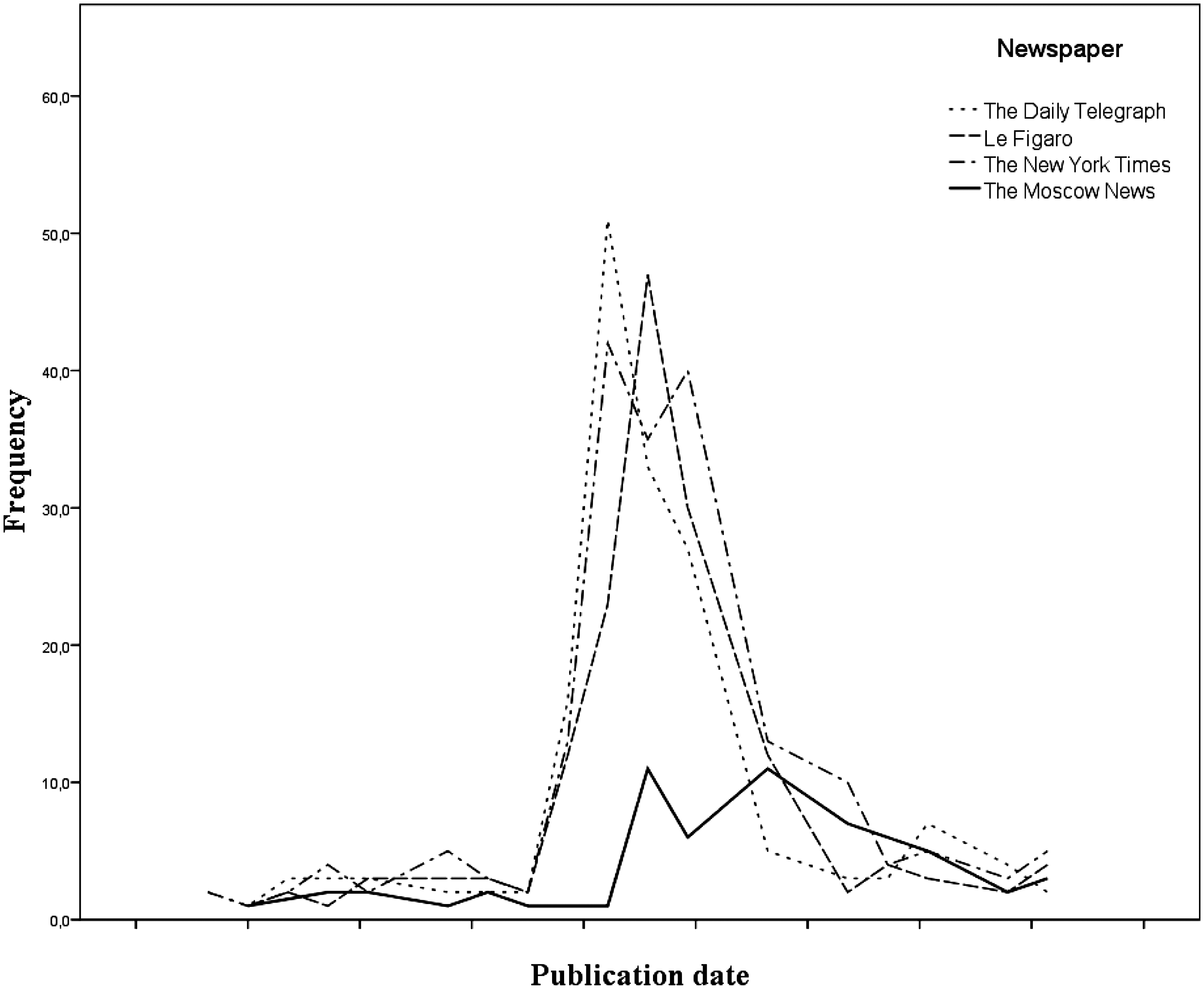
A longitudinal analysis of the articles (see Figure 1) highlighted two major shifts in attention. As could be expected, the sarin gas attack of 21 August 2013 was met with a huge number of articles: while only 61 were published before 21 August on the Syrian crisis, there were 513 thereafter. This can be viewed in the light of the ‘key events concept’—extremely severe accidents or catastrophes that significantly influence news coverage—postulated by Brosius and Eps in 1995. After a while attention fell back to approximately pre-gas attack levels. One can connect this decrease in attention with the period that followed the agreement on the elimination of Syria’s chemical weapon arsenal (14 September 2013). Looking at that period in more detail (Figure 2), one notices that the Moscow Times was the only paper that increased its coverage after the agreement. This difference was statistically significant (χ2(3) = 46.87, p < .001). This is in line with the fact that Russia became a major player in the conflict only after it succeeded in facilitating the agreement- a key diplomatic achievement.
Day-by-day evolution of the amount of articles published. Day-by-day evolution per newspaper.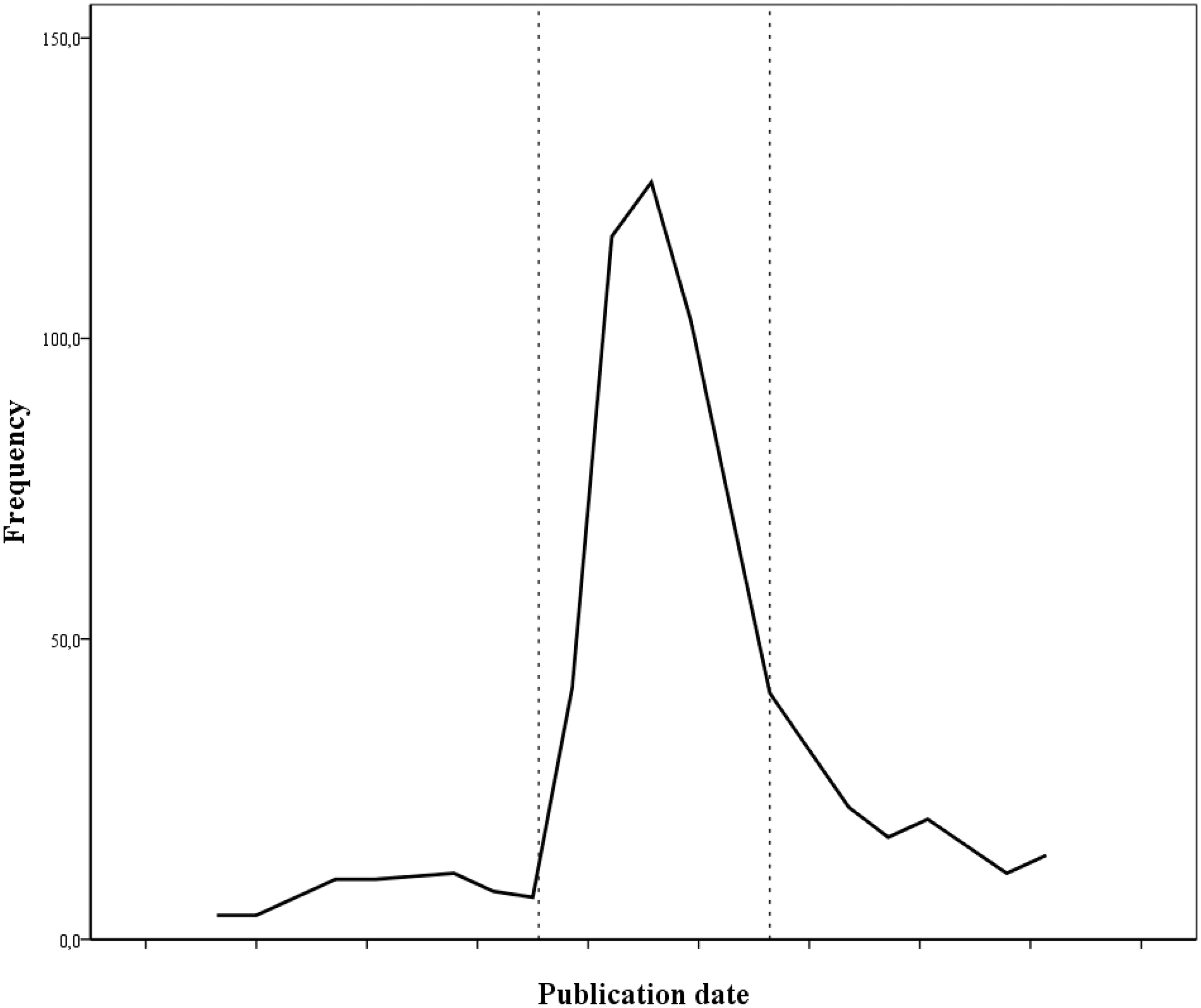
Framing of the Syrian war: Generic news frames
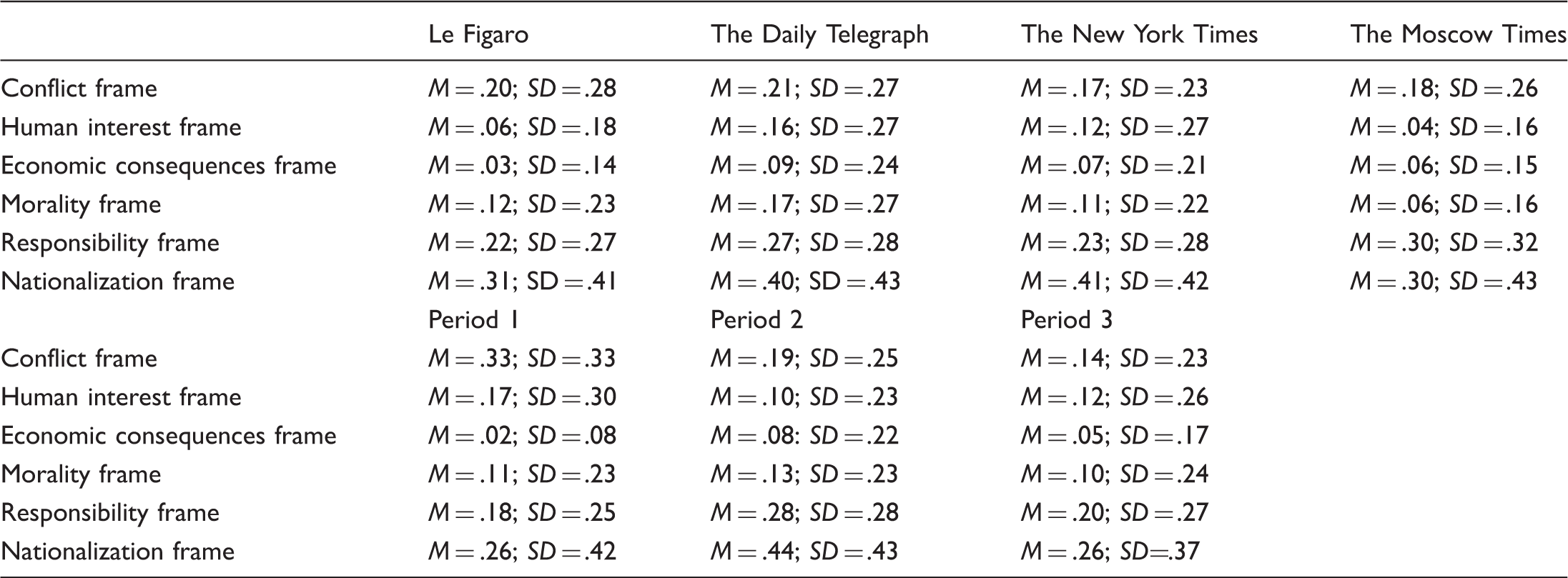
RQ2 investigated the dominant framing of the four newspapers’ coverage of the Syrian war focusing on possible differences between these newspapers. At first, we measured the average prevalence of each of the six frames. Our frequency analysis results showed that the nationalization frame (M = .38, SD = .43) was by far the most common, followed by the responsibility frame (M = .25, SD = .28). The conflict frame (M = .19, SD = .26) was moderately present. The morality frame (M = .13, SD = .24) and human-interest frame (M = .11, SD = .24) were less frequently used (but often together, r = .18, p < .001), while the economic impact frame (M = .07, SD = .20) was virtually absent.
The second part of the research question asked whether there was any variation in the framing among the papers. We therefore conducted a MANOVA with the six news frames as within-story factor and the five newspapers as a between-story factor. This calls for a preliminary remark as the homogeneity of (co)variance matrices assumption was violated. We may presume that Hotelling’s Trace statistic will be most robust (Field, 2009). Moreover, because the interpretation of the significant MANOVAs rested on the interpretation of significant univariate effects, the adjusted post-hoc tests were used. All relations persist when taking article length 6 into account, unless reported otherwise.
There was a significant impact on frame usage, T2 = .10, F(18, 1691) = 3.00, p < .001, η2 = .03. Separate univariate ANOVAs on the outcome variables revealed a significant treatment effect on the human interest (F(3, 570) = 5.52, p = .001, η2 = .03), economic impact (F(3, 570) = 2.93, p < 0.05, η2 = .02), morality (F(3, 570) = 3.42, p < .05, η2 = .02), and nationalization frame (F(3, 570) = 2.82, p < .05, η2 = .02). Differences regarding the nationalization frame among the papers disappeared after controlling for article length, F(3, 569) = 2.57, p > .05, η2 = .01. Human interest-wise post-hoc tests revealed that the Daily Telegraph used this frame significantly more often than le Figaro or the Moscow Times. It also stressed more economic impact items compared to le Figaro—even though all newspapers barely depicted the Syrian conflict in terms of its economic impact. Again, Daily Telegraph reporters used the morality frame more regularly than their Moscow Times counterparts. The New York Times always held an in-between position. There was little evidence of variation in responsibility and conflict framing, the second and third most used frames by all newspapers. In conclusion, although all newspapers followed a similar framing pattern, the Daily Telegraph appeared to make more use of the human interest, economic impact, and morality frames—especially when compared with le Figaro or the Moscow Times.
Means and standard deviations for each frame per newspaper and period.
Framing of the Syrian war: Diagnostic and prognostic framing
Diagnoses
RQ3 measures the average prevalence of each diagnosis with a focus on the differences among newspapers. Journalists quoted a minimum of zero and a maximum of four possible causes for the continuation of the Syrian conflict. The vast majority of the articles (68.6%) did not offer any explanation to their readers. One small fourth of the articles mentioned one cause (24.0%), while less than 10 percent mentioned two or more causes for the continuation of the war. On average, .41 (SD = .69) solutions were mentioned. Frequency analyses showed that, overall, a particular trigger (M = .19, SD = .39) was mostly mentioned. However, it was equally clear that the chemical weapon attack was most frequently cited (as a cause only for the escalation of the conflict), whereas the specific protests that started the uprising or the importance of social media as catalyst were hardly mentioned three years after the protests. Tensions between religious groups or the rise of jihadism and extremism (M = .10, SD = .30) were moderately mentioned. Human rights violations (M = .08, SD = .27) were less frequently cited, while the articles hardly touched on the political (M = .01, SD = .12) and socio-economic causes (M = .01, SD = .10).
Did different newspapers mention other causes? [Controlling for article length 6 ] When looking at the binary category (mention of at least one reason/no mention at all), a significant association within shorter articles was detected, χ 2 (3) = 13.22; p < .01. The New York Times (40.8%) was more inclined to discuss the reasons why the Syrian people revolted in comparison with the other newspapers (less than 29.0%). It also mentioned more causes (M = .55, SD = .81) than the Daily Telegraph (M = .33, SD = .55) and e Figaro (M = .34, SD = .59); F(3, 570) = 4.00, p < .05. The obvious explanation is this newspaper’s longer articles, since the relationship becomes insignificant after controlling for article length, F(3, 569) = .78, p = .503. When looking at specific reasons while controlling for article length, only the mention of ‘human rights violations’ significantly differed between the newspapers, and only for short articles, χ 2 (3) = 15.18, p = .002. In short articles, the New York Times mentioned human rights violations in Syria (17.8%) proportionally more than the other newspapers (less than 4.8%). There were no significant associations between the newspapers and whether or not they mentioned one or more political or socio-economic motives, religious prescriptions, or specific triggers.
Did a key event also cause a change in diagnostic framing? [Controlling for article length 6 ] Although there was no difference in the average number of causes mentioned, there were some differences between periods as to specific causes. As could be expected a gas attack was often cited as a cause for the escalation of the problem after 21 August 2013, mention of which gradually vanished afterwards, χ 2 (2) = 17.48, p < .001. The attack distracted journalists from other possible causes: religious prescriptions were proportionally more cited before the attack than afterwards; χ 2 (2) = 12.10, p < .01. There were no significant differences between periods with respect to political aspects, socio-economic causes, human rights violations, or other unforeseen causes.
Prognoses
RQ4 measures the average prevalence of each prognosis with a focus on the differences among the newspapers. Journalists quoted a minimum of zero and a maximum of five possible solutions to the Syrian conflict. One-third of the articles (30.5%) remained silent about ways to resolve the problem, while most articles (60.5%) did suggest one or more solutions. One-third mentioned only one possible solution, while a large 10 percent suggested three or more solutions to the escalation of the Syrian war. On average 1.20 (M = 1.20, SD = 1.09) solutions were mentioned. Our frequency analyses showed that, overall, a military intervention (M = .38, SD = .49) was seen as the most proper answer to the conflict. At the same time military action was frequently rejected (M = .25, SD = .44), being viewed as bound to worsen things. Diplomacy (M = .21, SD = .41) was mentioned as a potential solution almost equally frequently. Journalists made relatively few mentions of the dismantling of Syria’s chemical weapons (M = .13, SD = .34), followed by military assistance (M = .09, SD = .29) and a change in government (M = .09, SD = .28). There was hardly any mention of financial intervention (M = .02, SD = .12) and internal reforms (M = .02, SD = .12) in the articles.
Did different newspapers suggest other solutions? [Controlling for article length]6 Although there was no difference as to the average number of solutions suggested, there were some differences between periods as to the specific solutions. A significant association between newspapers and the suggestion of destroying the chemical weapons was found for short (χ 2 (3) = 33.76, p < .001) and very long articles (χ 2 (3) = 15.81, p = .005). The Moscow Times (42.4%, 55.6%) mentioned the dismantling of chemical weapons much more often than the New York Times (11.1%, 16.3%), the Daily Telegraph (8.0%, 4.2%), and le Figaro (6.7%, 0%). This is in line with the geopolitical stances of the countries involved as Russia insisted on destroying the arsenal as a first step towards peace and brokered an agreement with the help of US Secretary of State John Kerry. The EU largely stayed out of this discussion. There is also a significant association between a publication and tendency to favor military intervention, χ 2 (3) = 14.83, p < .01. Western papers (all three more than 36.1%) view intervention in a much more positive light than the Moscow Times (19.4%). When controlling for article length the effect lingers for short (χ 2 (3) = 17.70, p = .001) and medium-length articles (χ 2 (3) = 11.81, p < .01). Additionally, one might have expected the Russian paper to resist military intervention even more, but that medium effect failed to reach significance, χ 2 (3) = 4.22, p = .239. There was also no significant difference between newspapers on military assistance, change in government, diplomatic solutions, internal reforms, and other unforeseen solutions.
Did a key event also cause a change in prognostic framing? [Controlling for article length]6 There was a proportionally more frequent mention of at least one solution right after the attack (χ 2 (2) = 53.46, p < .001) and the average number of proposed solutions was also higher right after the gas attack compared to before the attack or after the agreement (F(2, 634) = 11.82, p < .001). When looking at specific solutions there was a significant association between the periods and the three military options, χ 2 (2) = 103.51, p < .001; χ 2 (2) = 23.11, p < .001; χ 2 (2) = 49.57, p < .001. The papers favored intervention after the gas attack (52.1%) more than before the attack (8.2%) of after the agreement (8.0%). In contrast, military assistance was suggested more often before the chemical attack (23.0%) than afterwards (9.0%), almost disappearing as a recommendation after the agreement (1.6%). Military intervention was also more often rejected after the gas attack (34.3%) than before it (4.9%) or than after the agreement (8.0%). Furthermore, there was a significant difference in the number of ‘governmental change’ solutions suggested in long articles, χ 2 (2) = 8.07, p < .05, as such solutions were suggested more before the gas attack (30.0%) than after it (less than 6.5%). As expected, dismantling Syria’s chemical weapons was recommended more often after the chemical weapons elimination agreement had been concluded (42.4%). The articles did not mention this either before the gas attack (1.6%) or between the latter and the agreement (5.7%). This difference was also substantial and significant, χ 2 (2) = 119.03, p < .001. There were no significant differences between the periods concerning diplomatic or financial solutions, internal reforms or other unforeseen options. 7
Discussion
Mainstream news media may not only successfully determine what we think, but also how we think about it. Before scrutinizing possible media effects on the judgments of people and decisions of policy makers, a content analysis should be made. This study is one of the first to examine how prominent newspapers in France, Great Britain, the Us, and Russia covered the Syrian conflict in the period around the chemical weapons attack of 21 August 2013. By means of a deductive quantitative content analysis we examined the attention paid to and the framing of the subject with a focus on differences across newspapers and periods. In addition to shedding light on generic frames (i.e., conflict, human interest, economic impact, morality, responsibility, and nationalization frame) we looked at the causes and solutions suggested by the papers in connection with this conflict that started as civil protests against Syrian strongman Bashar al-Assad and escalated into an all-out civil war. The frame analysis yielded some interesting findings. As this study only relies on one quality paper per country and because of the limited representativeness of the English-language Russian newspaper, other studies should be conducted in order to further interpret and generalize these findings, and to ascertain if the results found in this study are country-specific.
First of all, attention paid by the newspapers to the Syrian issue reflected the geopolitical involvement of their national government. The American newspaper devoted most attention (in terms of both intensity of coverage and article length) to the Syrian issue, followed by le Figaro and the Daily Telegraph, which matched the pivotal role of President Obama in negotiating possible solutions with his French and British partners. Russia did not play a decisive role in August 2013, which coincided with a smaller number of articles. Nonetheless the Moscow Times was the only newspaper paying more attention to the conflict after the agreement, which goes hand in hand with Russia’s higher involvement after its diplomatic success in facilitating the agreement. Newspaper attention also intensified after the gas attack of 21 August 2013—plausibly the most deadly chemical attack since Saddam Hussein’s 1988 attack—which makes it a ‘key event’ leading to ‘an enormous amount of coverage’ (Brosius and Eps, 1995: 393). It is notable that the killing of 100,000 or more human beings with conventional weapons elicits little media attention, while the deaths of comparatively few from poison gas trigger huge press coverage and countless reactions on the geopolitical level. Notwithstanding, this is understandable considering the striking violation of international law by a government. The crisis disappeared from the news again once it had been agreed to destroy Syria’s chemical stockpile. Arguably the agreement tempered the conflict. Less conflict induces less coverage as ‘conflict will be emphasized, conciliation not’ (Galtung and Ruge, 1965: 84) and thus subsequent events had less news value (Gans, 1979).
Second, when covering the Syrian conflict journalists mainly related the issue to their own country and the ideas of their politicians and citizens. Ethnocentrism has often been identified as an important news value for foreign news (Gans, 1979) but it appears to be a dominant news frame too. The responsibility frame—reflecting efforts to assign blame or seek solutions—was also well represented, possibly influencing readers’ perspective on who was responsible. One may thus argue that newspapers can still be viewed as the Fourth Estate playing a crucial role in the management of a representative democracy by holding politicians accountable. To a somewhat lesser extent the papers reported the issue through a conflict lens, reflecting the disagreements among the major players in the crisis. The frequent use of the nationalization, responsibility, and conflict frames is in keeping with previous research on other topics (e.g., Semetko and Valkenburg, 2000; Van Cauwenberge et al., 2009), but also with studies about the Arab Spring (e.g., Cozma and Kozman, 2015; Hamdy and Gomaa, 2012). Despite the sarin gas attack causing a high number of casualties and being recognized as a war crime, our study found barely any morality or human-interest frames (to be expected in the coverage of chemical mass killings and civil wars). This could be due to an inability of the journalists to identify with the Syrians, a group of people from a faraway country with hardly any historical or contemporary relations with one of the countries involved (Cozma and Kozman, 2015). Another explanation could be that journalists often rely on quotes while using such frames owing to the need to appear objective (Neuman et al., 1992; Semetko and Valkenburg, 2000). Because of the dangers inherent to a war—also for journalists—the most useful sources were not interviewed. It is quite troubling that both our research and Semetko and Valkenburg’s landmark study (2000) failed to find a high occurrence of the morality frame. An important question is whether the morality frame should be considered at all in future research. The goal of content analysis is to find a pattern of frequently used frames as a first step in media effect research. But if a frame is barely used, will it still have impact? Several studies already opted to exclude the morality frame (e.g., De Vreese et al., 2001; Van Cauwenberge et al., 2009). Furthermore, journalists barely mentioned any economic impact—notwithstanding the large investments of all authorities involved and the economics of a war. This conclusion is in sharp contrast with those of previous studies (e.g., Semetko and Valkenburg 2000; Van Cauwenberge et al., 2009) and it challenges the generic character of the economic impact frame. One may wonder whether this frame is still applicable in an international, disputed, and violent context. In general, all our frames were not as present as in other studies: average scores of .60 (Semetko and Valkenburg, 2000) or even .87 (Van Cauwenberge et al., 2009) versus a highest score of .37 in our case study. This raises questions about the applicability of generic frames, but further research should be carried out in order to firmly investigate this.
Although all newspapers show this pattern in their coverage, the Daily Telegraph seems to be the most prominently framed one (in terms of human interest, morality, and economic impact), especially when compared with le Figaro or the Moscow Times. In addition, the period also influenced the tone of reporting as the conflict per se took a back seat to national interests, responsibility, and economic impact in the wake of the sarin gas attack. Focus on national interests, responsibility and economic impact gradually disappeared again when the press went back to routine reporting after the agreement on the destruction of Syria’s chemical weapons.
Third, the context was barely outlined three years after the first protests, as a vast majority of the articles did not mention any cause for the conflict. One may then wonder how (or whether) readers are supposed to understand the conflict. Moreover, the gas attack led to even more episodic framing as it shifted coverage from more contextual causes to the actual attack. This is at odds with Cozma and Kozman’s finding (2015) that 98% of the New York Times stories were thematically framed. However, this could be due to their crude distinction between and yes/no-coding of episodic and thematic frames, or to their limited sample (93 articles). In contrast, various solutions were put forward. While military intervention was recommended the most, such a solution was also highly disputed evidencing indecisiveness and discrepancies at the geopolitical level. Diplomacy was almost as often advised as a possible solution. A change in government was suggested less frequently, while financial intervention and internal reforms hardly seem to have been considered at all. This is in contrast with the large economic pressure put on the Assad regime, and it could distort readers’ understanding by leading them to underestimate their country’s economic efforts. Differences among the newspapers reflected the varying political reactions. Western newspapers called for military intervention more often than the Russian paper, which focused more on the destruction of Syria’s chemical weapons. After the sarin gas attack, and in keeping with the political climate, debate on the merits of military intervention intensified as such a solution was more often suggested and rejected. Once the chemical weapons elimination agreement had been signed the papers also focused on this first step towards peace instead of suggesting other possible solutions.
A reader’s picture of the Syrian war will vary according to her/his national daily of choice as well as the period under consideration. This picture is largely congruent with the developments on the geopolitical level. The question then is as follows: what is the impact of such framing on public understanding and judgment of the issue and actors? Does the regular use of the nationalization frame increase people’s involvement? Or does the lack of human interest or morality frames lead to indifference towards the conflict? Does a lack of diagnostic framing cause a lack of knowledge? Another question that may be raised is whether the media just follow geopolitical events, are manipulated by governments or exert an influence on governments as well. Or are journalists and politicians part and parcel of one single culture, thus stressing the very same aspects of any topic since they share the same cultural repertoire? Were frames consciously chosen by journalists or were they present only because the corresponding themes happened to be mentioned by the sources? While such questions were beyond the scope of this content analysis, they delineate an interesting angle for future research.
Footnotes
Declaration of Conflicting Interests
The author(s) declared no potential conflicts of interest with respect to the research, authorship, and/or publication of this article.
Funding
The author(s) received no financial support for the research, authorship, and/or publication of this article.