



Abstract
This article investigates the online comments made by Arab Facebook users on news items posted on the Facebook pages of two very popular TV channels: Al-Jazeera Arabic and Al-Arabiya. This study employs different methods to closely examine over 620,000 comments posted on the two Facebook pages as well as studying the most commented on news stories from a total of 11,685 news reports. The results indicate that commentators expressed some dominant sentiments that are mostly in line with the TV channels’ coverage of certain events, while certain news topics attracted most of the online public’s comments especially on Al Jazeera channel.
Keywords
This research study investigates the online public comments posted on two Facebook pages that belong to two well-known TV channels in the Arab world. There are no previous studies that examined this aspect of social networking sites (SNS) use; there are no other studies that investigated comments in Arabic in such a large scale despite the fact that they have significant importance as part of audience sentiments toward news stories.
The theoretical framework of this research article is based on the selective exposure theory, and this study offers a novel approach in examining the social media audiences of TV stations since previous studies have been largely focused on audiences of traditional media outlets. I argue that the SNS outlets of news organizations offer many research opportunities in terms of studying news dissemination and consumption. As will be explained below, audiences today, especially young people, are spending more time on the Internet and are using various SNS outlets. As a result, these interactive outlets like Facebook and Twitter have been utilized by the majority of news organizations in order to engage the online audiences by encouraging them to read, comment, and share news with other users. Also, a large number of news organizations are currently using SNS to understand the demographics of their audiences in order to target them with advertising, while others attempt to band themselves and establish better connections with their readers through SNS outlets (Ju et al., 2013; Morton, 2010; Muralidharan et al., 2011: 228). Facebook itself realized the importance of news consumption on the platform, so the company signed a deal recently with nine famous news organizations like the New York Times, BBC, and the Guardian in return for part of the ads’ revenues. The deal will allow Facebook to host instant news stories on its platform, and users will not need to browse to other websites in order to read news (Evans, 2015). Before the discussion of the two channels, it is relevant to provide a general background of social media use in the region.
Social media in the Arab world
Social media is growing rapidly in the Arab world with about 125 million individuals using the Internet in the Arab region, and more than 53 million actively using social networking technologies (Dubai School of Government, 2013). In the Arab world where Internet penetration is over 52.2% of the total population (Internet World Stat, 2015a), Facebook reached a 20.9% penetration as of 15 November 2015 (Internet World Stat, 2015b).
Facebook users in particular are rapidly growing since the social networking platform is regarded as a popular one that is followed by Google + and then Twitter (Arab Social Media Report, 2013: 4; Dubai School of Government, 2013: 13). According to the figures provided by Alexa, Facebook is the number one site in eight Arab countries (Algeria, Egypt, Iraq, Jordan, Lebanon, Libya, Syria, and Tunisia) and the top number two site in five other Arab countries (Morocco, Palestinian territory, Qatar, Sudan, and Yemen) and the third top website in three other countries (Oman, Saudi Arabia, and the UAE). Bahrain is the only Arab country where Facebook is the fourth top website (Alexa, 2014). According to a previous study conducted by Dubai School of Government (2011: 4), it was estimated that the “total number of Facebook users in the Arab world stands at 21,361,863 (December 2010), up from 11,978,300 (January 2010).” Egypt comprises about 22% of the total number of users in the Arab world with around 4.7 million users. By the end of May 2013, the total number of Facebook users in the Arab world was about 54,552,875 which is higher than FB users in June 2012 that were estimated to be 45,194,452 with 68% of users being below 30 years old and females constituting around 33.4% (Arab Social Media Report, 2013: 13). It is also worth noting that the highest age concentration remains between 15 and 29 years old, who constitute about 70–75% of users. On average, for every two male Facebook users there is one female user (Dubai School of Government, 2011, 2012). As for the use of Arabic language on Facebook, it is regarded as one of the fastest growing languages in the world (Dubai School of Government, 2012: 7). In the following section, a discussion is given on the two channels examined in this study.
Al Jazeera and Al Arabiya
Al-Jazeera Arabic TV, which started broadcasting in 1996, is supported by the State of Qatar and broadcasts from Doha. It used to have credibility among some segments of Arab TV viewers (Auter et al., 2005) especially before the Arab Spring events. In fact, Al-Jazeera channel caused a great deal of diplomatic tension between Qatar and the United States government as well as many other Arab countries like Jordan, Algeria, Iraq, Saudi Arabia, and Libya because of its reporting of certain political issues and Middle East conflicts, while criticism against Qatar was rarely mentioned on the network (Bahry, 2001; El-Nawawy and Iskander, 2003; Lynch, 2006; Seib, 2008). The channel was also harshly criticized for its alleged biased reporting. For example, the channel largely ignored the Shiite protests in Bahrain against the Sunni monarchy (Al-Rawi, 2015). After toppling Hosni Mubarak, Al Jazeera channel sided with the Muslim Brothers, forcing 22 journalists to resign in July 2013 due to this one-sided coverage (NPR, 2013; Worth, 2013). In the meantime, Qatari authorities showed large support for the Muslim brothers due to ideological reasons (Williams, 2014). In fact, Al Jazeera has had great trouble in Egypt due to this alleged bias, which “made many Arab viewers question its veracity” (The Economist, 2013) and prompted Egyptian authorities to close its offices. In one incident, “Al-Jazeera’s reporters were kicked out of a news briefing held by the Egyptian military in Cairo after the shooting of dozens of supporters of Mohammad Morsi” (Farhi, 2013). Later, several of Al Jazeera journalists like Peter Greste, Mohamed Fahmy, and Baher Mohamed were imprisoned for allegedly supporting the Muslim Brotherhood movement (Al Jazeera, 2015). Despite all of these controversies, Al Jazeera has remained supportive of Muslim brothers movement whose followers lost over 1000 members during various protests against the military regime (BBC News, 2013). This continuous support is also evident in allowing the famous pro-Muslim brothers preacher, Yousif Qaradawi, to air a religious program on Al Jazeera in which he attacked several Gulf countries that supported Sisi, leading to a serious diplomatic crisis (Williams, 2014). The political rift was amended partly after Qaradawi’s program was cancelled on Al Jazeera. In general, the channel has a strong following from Muslim brothers in Egypt because it frequently invites prominent figures to talk about the movement’s activities and concerns.
On the other hand, Al-Arabiya, which began broadcasting in 2003, is a Saudi news channel that is regarded as among the most popular in the Arab world, and together with Al-Jazeera are considered among the important opinion makers in the Arab world (Nisbet and Myers, 2011; Rinnawi, 2006; Wessler and Adolphsen, 2008: 441). Saudi Arabia together with Kuwait and the UAE strongly oppose Muslim Brothers because they regard them as a threat to their monarchies, so they have shown direct support for regime change and the establishment of military rule in Egypt. These three rich countries pledged $12 billion as aid to consolidate the post-Muslim brothers’ rule (Worth, 2013). The three governments especially Saudi Arabia also oppose Bashar Assad’s regime in Syria (Butler, 2015).
Despite the claim that some pan-Arab channels are balanced since they follow journalistic principles, the fact is that the majority including Al Arabiya and Al Jazeera are directly linked to their state sponsors (Mellor, 2011: 17–18). In fact, such channels are used as political tools in the hands of their respective governments to pressure other countries in the region, and the political rivalries and ideological differences between different Arab countries are directly manifested in the media landscape (Fandy, 2007: 39–40). For example, the regional director of the Saudi-MBC which owns Al-Arabiya channel mentioned once to a US diplomat that there were concerns over the Qatari owned Al-Jazeera channel’s influence in the region, so the decision was made to make Al-Arabiya present a new editorial policy that “counters the influence of al-Jazeera and fosters ‘moderate’ perspectives among the country’s youth” (Wikileaks, 2009). Indeed, the two channels follow the policies of the states’ that own them, and there is also a clear competition between them that has been ongoing for a long time (Seib, 2008: 22). These two reasons shed further light on the kind of online audiences that comment on the news posted on Al-Arabiya and Al-Jazeera Facebook pages.
Further, the competition between the two countries and channels has also led to some kind of tension and mistrust. For example, Al Jazeera journalists need to be always vetted by the Saudi Ministry of Interior before being allowed to enter the Kingdom, according to the latest revelations found in the Wikileaks “Saudi Cables” (Wikileaks, 2015a). These cables also revealed that Qatar supported radical movements in Sudan and Syria, and it also backed opposition parties during the 2009 election in Lebanon in contrast to Saudi Arabia, Jordan, UAE, and Egypt that backed moderate parties (Wikileaks, 2015b). Further, Saudi officials repeatedly expressed their concern over the use of Al Jazeera by Qatar as a political tool in the region; for example, they pointed out that Qatar, which hosts the International Union of Muslim Scholars (IUMS), actively tries to promote the “Qatari Project” which emphasizes that political Islam is a better alternative to Arab totalitarian rule and dictatorships (Wikileaks, 2015c). This seems to be one of the reasons that Al Qaradawi heads IUMS from Qatar.
Theoretical framework
According to the selective exposure theory, people tend to look for consistency when they are facing some kind of messages that contradict their core views (Zillmann and Bryant, 2013). As a result, people tend to find information that would agree with their values and beliefs (Cooper, 2007) due to the fact that people are rarely “passive absorbers of data” (Cotton, 2013: 11). Audience fragmentation as well as ideological selectivity are studied in traditional media (Feldman et al., 2012; Iyengar and Hahn, 2009), and the Internet provides what is called an “amplification in selectivity” (Brundidge and Rice, 2009: 150). An et al. (2013) found out in their study of news shared on Facebook that selective exposure exists as “users predominantly share like-minded news articles and avoid conflicting ones, and partisans are more likely to do that.” Also, there is also evidence that selective exposure is linked to partisan news preferences (Chaffee et al., 2001). According to a study conducted by Pew Research Center, there seems to be evidence of selective exposure. “About one-in-four (26%) Facebook users have hidden, blocked, defriended, or stopped following someone on a SNS based on disagreements over political posts” (Mitchell et al., 2014), while slight differences exist between conservatives and liberals when it comes to reading political posts and news for “nearly half of consistent conservatives (47%) say the opinions they see are mostly or always in line with their own views; among consistent liberals, about one-in-three (32%) say the same” (Mitchell et al., 2014). Further, several studies revealed that ideological beliefs have an impact in determining media consumption patterns and preferences (Donsbach, 1991; Galston, 2003; Graf & Aday, 2008; Mutz & Martin, 2001; Stroud, 2010; Sunstein, 2001; Tsfati et al., 2013). Yet, the pattern of selective exposure can result in a “narrowed domain of political discourse” (Brundidge and Rice, 2009) which ultimately affects democracy as different online and offline communities would mostly consume and interact with media outlets that correspond with their beliefs, creating what is called “audience enclaves” (Sunstein, 2009). In this regard, deeply held views can be the defining feature that separates online and offline communities from each other as they condition how “groups and their members view a specific issue or domain of society” (Van Dijk, 1998: 65).
On the other hand, other studies indicated that selective exposure does not always occur especially among people who have strong ideological beliefs. For example, Knoblach-Westerwick and Meng (2008) and Johnson et al. (2011) found that politically active and engaged citizens are more likely to refrain from avoiding opposing views and are more active in searching for information that contradict their own beliefs. This is because they are more confident they can discredit these contradictory views. As for SNS use, Lee et al. (2014) mention that “political discussion moderates the relationship between network heterogeneity and the level of partisan and ideological polarizations,” and Kushin and Kitchener (2009) emphasize that one Facebook ideological groups can be varied with (73%) showing support for a particular position and (17%) showing opposition (2014). In brief, there are two main arguments with the theory of selective exposure. The first is related to people with homogenous or corresponding beliefs who gather online or offline to share their views. In contrast, others with opposing or heterogeneous views gather for the same purpose but are usually more politically engaged and hold deeper beliefs. In relation to this research study, it attempts to answer the following two research questions: RQ1: What kinds of sentiments are expressed by Arab Facebook users commenting on the Al-Jazeera Arabic and Al-Arabiya news articles? RQ2: What kind of news stories attracted most of the online audience comments? RQ3: Which countries generated most of the online audience comments?
Method
Facebook is chosen in this study because it is a popular SNS for news consumption as explained above. Facebook comes ahead of other SNS outlets. For example, about 71% of adult Internet users are on Facebook in comparison to 23% on Twitter (Duggan et al., 2015). According to a study by Pew Research Center, “Facebook draws about twice as many political news consumers among web users as the aggregation sites Yahoo News (24% in the past week) or Google News (22%). And Facebook far surpasses other social media sites, such as YouTube and Twitter, as a source for news about politics and government” (Mitchell et al., 2014).
For this study, a webometric tool called NVivo 10—Ncapture was used to mine the Facebook posts and comments of the Al-Jazeera Arabic and Al-Arabiya Facebook pages in January 2014. Detailed information on the commentators was collected to help understand the demographic variations especially their genders. Information units include Arabic, English, and Latinized Arabic posts uploaded by the news organization as well as comments by the public. All the collected data is available in the public Facebook pages which can be viewed by anyone with an Internet connection, and no personal information has been disclosed in the process that can harm any individual.
The collected comments (n = 626,576) were analyzed using a computer-assisted program called QDA Miner 4—Wordstat which offers accurate classification of large data sets categorized by the numerical frequencies of words and phrases. The researcher is able to examine the most recurrent phrases by adjusting the number of words, for example, 2–6 words as well as identify the ranking of words and phrases based on their occurrence. This method fits well with this study that examines the general sentiments toward the most recurrent topics discussed as the dominant sentiments and issues can be identified through their ranking and occurrence in the data set. Also, the researcher is able to trace the strength of the connection of the most recurrent words and phrases with other terms, whether be negative, neutral or positive, in order to better understand the general sentiments.
This study examines the most recurrent words and phrases used in the Facebook comments as well as their associations which is regarded as a “key element of content analysis because combining such words in a message tends to produce important meanings in a given context” (Park et al., 2011: 293; Xenos, 2008). The identification of phrases and words, their occurrences, and associations assist in the overall sentiment analysis of the public comments posted on the two Facebook pages by the online audience (Pang and Lee, 2008; Taboada et al., 2011). In this regard, sentiment analysis is defined as a scientific method used to identify “positive and negative opinions, emotions, and evaluations expressed in natural language” (Wilson et al., 2009). Sentiment analysis has been used in a variety of studies such as predicting general elections results (Tumasjan et al., 2010), political preferences (Ceron et al., 2014), and the way traditional media as well as blogs describe certain figures (Godbole et al., 2007). Yet, many of these studies are limited to Twitter possibly due to the relative ease in retrieving data (Agarwal et al. 2011; Kouloumpis et al., 2011; Pak and Paroubek, 2010), while sentiment analysis studies involving Facebook as well as Arabic language are rare (Al-Rawi, 2015; Neri et al., 2012). This approach is regarded as an effective one in the analysis of large datasets like the one examined in this study; hence, it is the most suitable method used to answer the first research question.
In this study, Jaccard’s coefficient for the measurement of associations was used to accurately calculate the connections among words and phrases by providing a statistical measurement between regularly occurring keywords and phrases (Sepkoski, 1974). The coefficient ranges between of 0.0 for no co-occurrence and 1.0 for complete co-occurrence (Tan et al., 2006). In order to understand the general sentiments, it is important to examine the strength of association between the most recurrent words or phrases and other terms such as the negative, positive, or neutral attributes. This classification is done by the researcher who needs to make sense of these associated terms and words in order to understand the general sentiments expressed in the text which also involve cross examining the original data set as well as linking the sentiments to the larger cultural and/or political context. Finally, the computer program QDA Miner 4—Wordstat offers accurate statistical connections and an overall ranking of the associated terms linked to the most recurrent words and phrases.
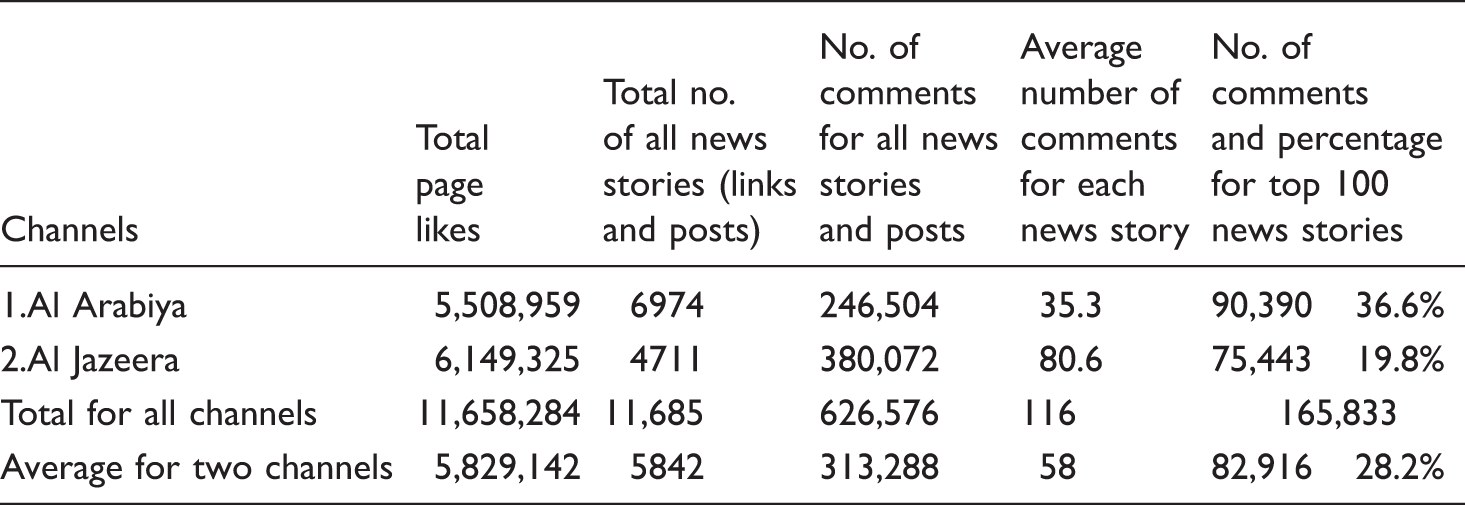
Number of page and news stories comments in the two news organizations.
After identifying the top 100 most commented on news stories, the researcher categorized news topics following Riffe et al. (1986) and Davie and Lee’s (1995) studies on news mix. Six broad news topics were identified as follows: (1) Internal politics and conflict, (2) regional and international politics and conflict, (3) science, culture, and arts, (4) economy and business, (5) sports and human interest, and (6) health and medicine. For internal politics and conflict, the researcher identified the country the news story deals with in order to answer the third research question. Two coders examined over 10% of the sample (n = 30 news stories), and intercoder reliability was measured using Cohen’s Kappa. A .920 agreement was reached that is very acceptable (Landis and Koch, 1977).
Results
As indicated above, this study examined two Facebook pages. The Facebook page administrator posts the news headline, a hyperlink that leads to the online article available at news organization website, and a lead containing a brief description of the whole article. In many cases, a video link or photo accompanies the news article. Before discussing the results, it is important to indicate demographic details on the commenters. For Al-Jazeera Arabic page, there were 4711 stories posted which generated 380,072 comments by the online public. Based on the self-proclaimed information provided by users, males constituted 83.2% (n = 303,569) of the total number of users (n = 364,430), while females made up only 16.7% (n = 60,861). As for Al-Arabiya Facebook, there were 6974 news articles and 246,504 comments. Based on the self-proclaimed demographic description, males made up 73.9% (n = 181,231) of the total number of commenters (n = 245,052), while females constituted 26% (n = 63,821) which is still very low but higher than female users commenting on Al-Jazeera Arabic Facebook page. In total, this study analyzed 626,576 comments generated from 11,685 news stories, and the average percentage of users based on their gender distribution is 78.5% males and 21.3% females.
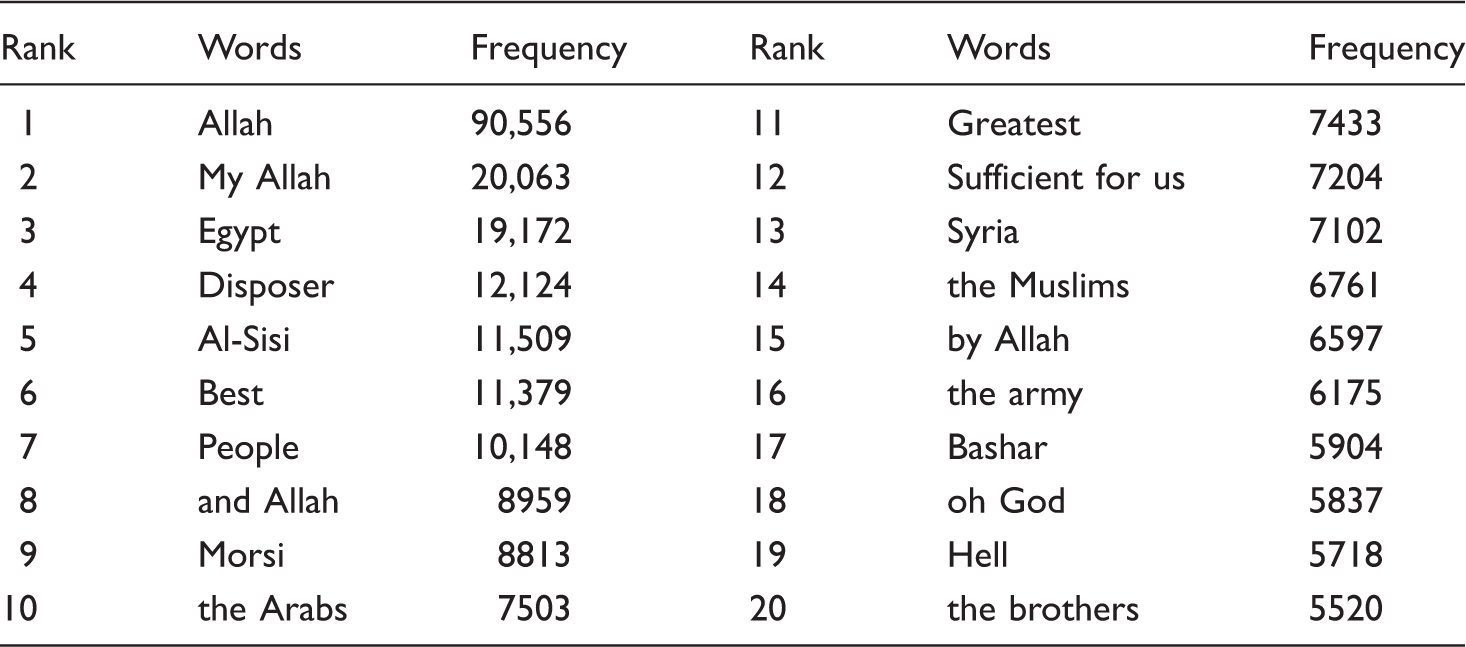
Top 20 most frequent words in the comments on Al Jazeera Facebook page.
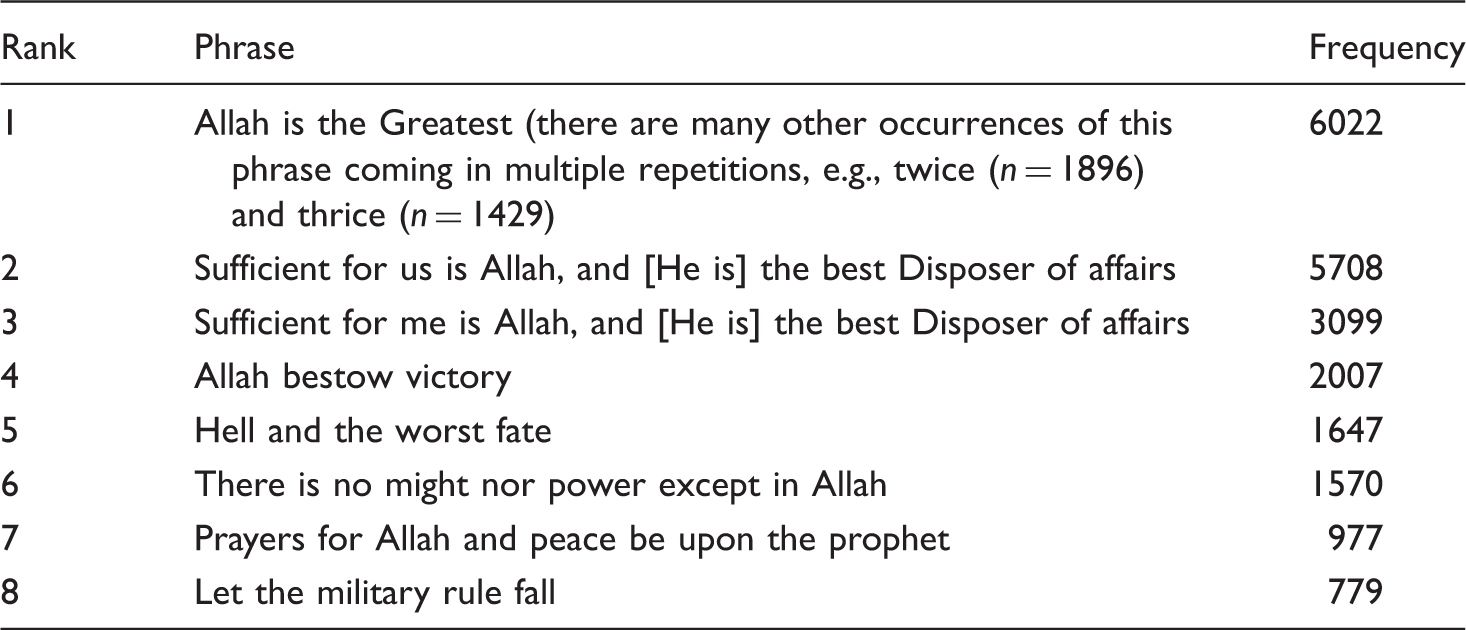
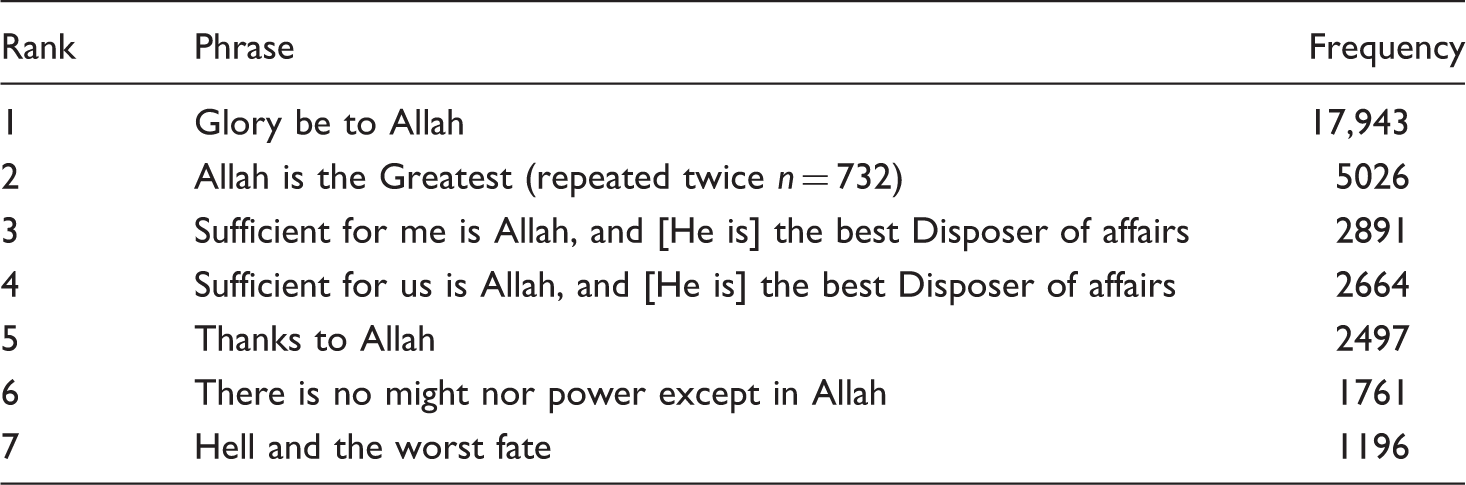
Most frequent comment phrases on Al Jazeera Facebook page.
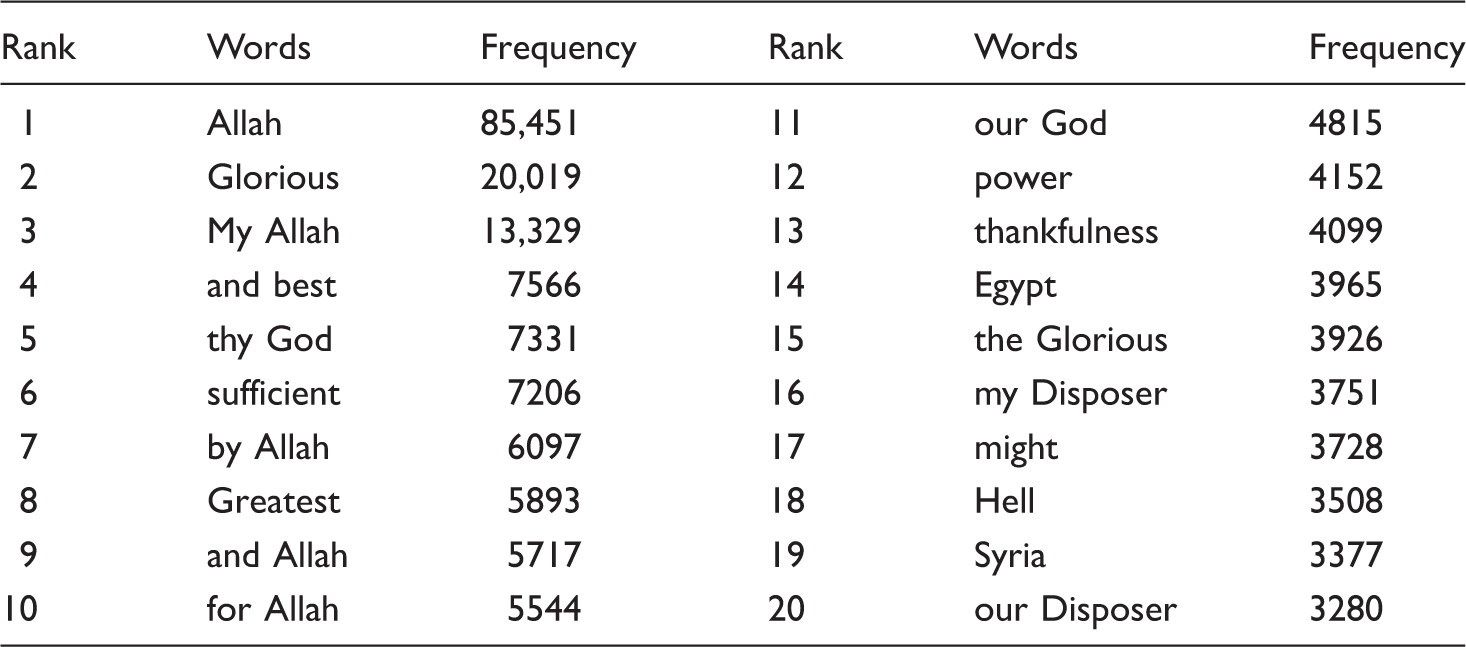
Top 20 most frequent words in the comments on Al Arabiya Facebook page.
Most frequent comment phrases on Al Arabiya Facebook page.
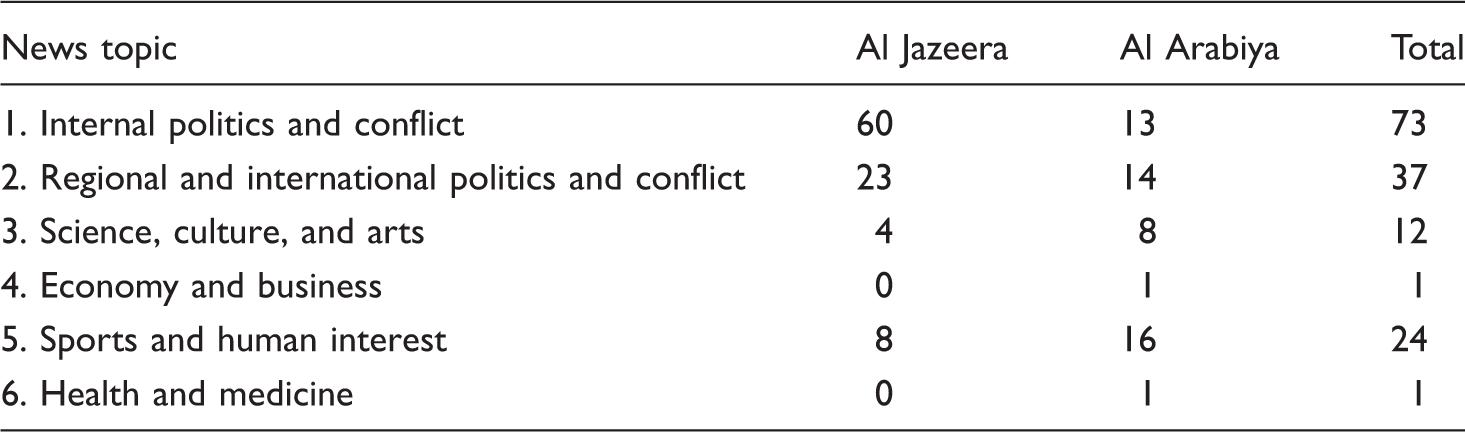
News topics distribution for the top 100 most commented on news stories.
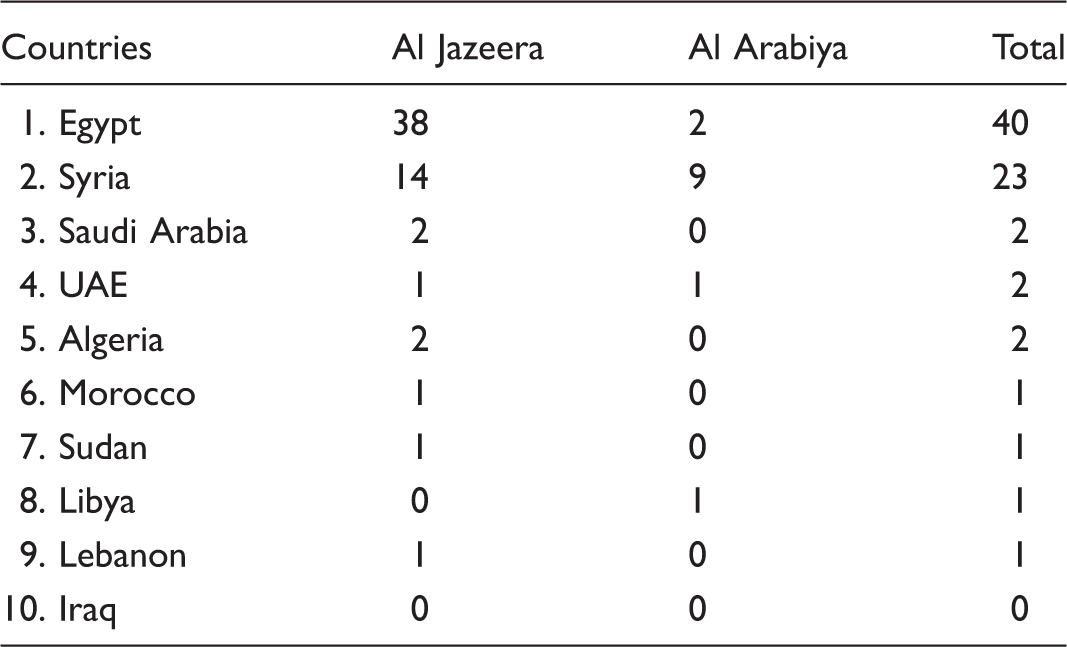
Most commented on countries in news topic.
In relation to the limitation of the study, this research is limited to two Facebook channels only and to a specific timeframe due to the software used which is restricted by Facebook API limitations. Another limitation is that the study did not investigate the photos posted by the Facebook pages’ administrators as the focus is on the commentary of the online news readers and their news preference. Finally, the study examined only top 100 most commented on news stories on Al Arabiya and Al Jazeera Facebook pages in order to answer the second the third research questions.
Discussion and Conclusion
The comments voiced by the online public are not (or at least less) moderated than what is found on the websites of the above news organizations. Hence, the comments examined provide a very good representation of the online public because they give an insight into the general sentiments, having in mind the high amounts of information analyzed. To answer the first research question: What kinds of sentiments are expressed by Arab Facebook users commenting on the Al-Jazeera Arabic and Al-Arabiya news articles? I have to examine each channel separately, but there is a general trend in the two channels represented in the over-use of religious terms which is typical of the daily use of Arabic language.
Starting with Al-Jazeera TV, the most recurrent words include several Arab figures like Sisi, Morsi, and Bashar as well as many words used in supplication and prayers especially to express negative sentiments like cursing or condemning someone (Table 2). In fact, this is one of the main differences found between Al-Jazeera and Al-Arabiya comments which shed light on the kind of online attitudes expressed on Al-Jazeera. For example, when we examine the proximity plot for the word “fall,” we find that it is firstly associated with the other word “rule” and “military” (coefficient = 0.282 and 0.226) after which the words “coup” (coefficient = 0.021), “Sisi” (coefficient = 0.015), and “the army” (coefficient = 0.010) come. Further, if we look at the proximity plot for the word “Bestow victory,” we find that it is first associated with the word “Islam” (coefficient = 0.050), “Muslims” (coefficient = 0.037), and then “Morsi” (coefficient = 0.017). The above is clearly used by the commentators to refer to their dissatisfaction with the current military rule in Egypt and its army chief, Sisi, who removed the former Egyptian president, Mohammed Morsi, from power. Even the phrase “Saddam Hussein” is closely linked to “President Morsi” (coefficient = 0.007) and “Allah have mercy on you” (coefficient = 0.007); online commentators make such a connection allegedly because both Arab presidents were imprisoned and tried. On the other hand, weaker associations with the word “fall” include “Morsi” (coefficient = 0.007) and “the brothers” (coefficient = 0.007) in reference to the Muslim brothers association to which Morsi belongs to. The different and opposing associations with the word ‘fall’ show the kind of opposing strong sentiments available on the same online platform.
In relation to Syria, another associated word with “fall” includes “Bashar” (coefficient = 0.008) in reference to the current Syrian president, Bashar Assad. The same kind of sentiment is evident when examining the proximity plot for the word “[go to] Hell” which is a kind of curse as “Bashar” is closely linked to it (coefficient = 0.010) followed by “Sisi” (coefficient = 0.007). When looking at the word “Bashar” itself, we find that it is closely linked to “take revenge” (coefficient = 0.030) and “kill” (coefficient = 0.016). On the other hand, the word “Bestow victory [to]” is weakly associated with “Bashar” (coefficient = 0.011), indicating the disparity among the online groups who have very opposing sentiments toward Bashar Assad.
As for the most frequent phrases on Al Jazeera (Table 3), we find that the most recurrent phrase is “Allah is the Greatest” which is used in a variety of ways. For example, the phrase is closely related to supporting the Syrian rebels as there are relevant connected phrases like the Syrian “Free Army,” “Nusra Front,” and “Devil’s Party.” The latter is a distortion of the Lebanese Hezbollah which literally means “Allah’s Party” due to its backing of Bashar Assad’s regime due to sectarian reasons. The sentiments clearly indicate the dominant pro-rebels and anti-Assad views found on this platform. Another phrase examined is “Take revenge from” which is a clear form of curse. Interestingly, it seems that the Arab public on Al-Jazeera Facebook page have mostly directed their curses toward “Arab rulers” (coefficient = 0.008), followed by the “Syrian regime” (coefficient = 0.004), and “Egyptian army,” “Saud family,” the rebels’ “Free Syrian Army,” “Hezbollah,” and Sisi’s “military rule” all with the same weaker coefficient of (0.002). Finally, the phrase “let Allah bestow victory” is firstly linked to the phrase “Islamic state” (coefficient = 0.003) which is related to Al-Qaeda in Syria; this is an indication of the kind of extreme religious sentiments available online.
In relation to Al-Arabiya Facebook page (Table 4), if we examine the proximity plot of the word “Hell,” we find it is not used in association with political figures unlike the case of Al-Jazeera channel. Also, the word “oh God,” which is a normally linked to “preserve” as a supplication, is firstly linked to “Muslims” (coefficient = 0.026) in a general sense, followed by “Syria” (coefficient = 0.024) and “Egypt” (coefficient = 0.015). There are a few exceptions though. For example, the word “bestow victory to” is firstly linked to “righteous” (coefficient = 0.063), followed by “Islam” (coefficient = 0.058), “Muslims” (coefficient = 0.029), “Syria” (coefficient = 0.023), “Morsi” (coefficient = 0.011), and “brothers” (coefficient = 0.008) in reference to the Muslim brothers of Egypt. On the other hand, the word “take revenge from” which is firstly linked to “brothers” (coefficient = 0.009) in reference to the Muslim brothers of Egypt followed by “Army” (coefficient = 0.005), and “Morsi” (coefficient = 0.004). Finally, the word “Disposer of affairs” which is a reference to God and is used to express powerlessness and reliance on God’s action in punishing the unjust, is firstly linked to “revenge” (coefficient = 0.011) and “Syria” (coefficient = 0.008) in a general sense. This is a common way of expressing sympathy and prayers for the victims of the conflict in Syria. In relation to the phrases used, we find that there is a great deal of supplication and prayers especially directed toward Syria (Table 5). For instance, the phrase “Allah preserve” is linked to “Syrian people” (coefficient = 0.002) in the fourth rank, while the phrase “Free Army,” which is a reference to the Syrian rebels’ army, is firstly linked to “Allah supports them” (coefficient = 0.003) but has a similar association with “take revenge from [them]” (coefficient = 0.003) which indicates the presence of two opposing sentiments.
The online audiences often express opposing sentiments on Al-Jazeera and Al-Arabiya Facebook pages, but there is a general sympathy and a sense of helplessness toward the events taking place in the Arab and Islamic world specifically in Syria and Egypt. On Al-Jazeera Facebook page, references to Egypt are more dominant than that on Syria, and there is a much stronger positive sentiment and support for Morsi and the Muslim brotherhood, while clear antagonism and negative sentiments against General Sisi and Bahsar Assad are articulated in different ways. There is also evidence that some extreme Islamic views and anti-Shiite sentiments are expressed especially toward support for Al-Qaeda affiliate groups in Syria. As for Al-Arabiya Facebook page, references to Egypt and Syria are more dominant than any other Arab country, and there is much less antagonism toward Bashar Assad and Mohammed Morsi than what is found on Al-Jazeera Facebook page in which the online discussions are more inflammatory.
It is important to note here that Al-Jazeera page has a higher percentage of pro-Morsi sentiments which can be explained by what is known as audience selective exposure (Stroud, 2010; Sunstein, 2001) and their ideological selectivity (Feldman et al., 2012; Iyengar and Hahn, 2009). Users who frequently express with pro-Morsi sentiments chose Al Jazeera Facebook page and its news as a platform for expressing their beliefs. In fact, the current political situation in Egypt has been discussed far more than that in Syria on Al Jazeera commentary despite the ongoing conflict and the dire humanitarian condition. This indicates that Al-Jazeera Facebook page attracts more Egyptians and/or pro-Muslim brothers especially those who sympathize with Morsi and oppose Sisi’s military rule. As mentioned above, Al-Jazeera is banned in Egypt due to its alleged bias toward the Muslim brothers’ movement (Watkins, 2014).
On the other hand, Al-Arabiya Facebook page is almost equally divided among those who express positive sentiments toward Morsi and the Muslim brotherhood in Egypt and others who show negative sentiments toward them. Also, clear antagonism against Bashar Assad is not highly evident as is the case with Al Jazeera. In general, there is clear evidence of opposing sentiments which are linked to the fact that Facebook can be a highly divided online platform due to the ideological differences of its users which is similar to what Van Dijk (1998: 65) emphasized in the way ideology determines the way members of a group perceive and express themselves.
To answer the second research question on the kind of news stories that attracted most of the audience comments and the countries mentioned that generated most of the comments, the results indicate that the news topic of internal politics and conflict which deals with one country attracted most of the online public’s comments (n = 73) followed by regional and international politics and conflict (n = 37), and sports and human interest (n = 24). By examining the individual channels, the online public of Al Arabiya channel mostly commented on sports and human interest news stories (n = 16) followed by regional and international politics and conflict (n = 14) and internal politics and conflict ( = 13). On the other hand, Al-Jazeera online public mostly commented on internal politics and conflict (n = 60), regional and international politics and conflict (n = 23 regional and international politics and conflict, and sports and human interest (n = 8) (Table 6). These variations give an insight into the difference in news preferences and consumption patterns between the online audiences of Al Arabiya and Al Jazeera Facebook channels. Indeed, this is due to the audiences’ selective exposure practices as they choose to read and mostly comment on certain stories, while the majority of other news reports do not receive the same kind of attention. As stated above, audiences usually engage in posts that either conform with their views or contradict them if the users have strong ideological beliefs. It is assumed here that the top 100 comments fall within such a theoretical categorization attributed to differences in ideology. Further, the sentiment analysis of the online comments also showed existing differences and sometimes opposing sentiments that correspond with the selective exposure theory.
To answer the third research question which is related to the most referenced countries mentioned in internal politics and conflict news topic, the results show that Egypt comes first mostly because of Al Jazeera channel news stories (n = 38) with a total of (n = 40) followed by Syria (n = 23). The latter country came first on Al Arabiya news channel (n = 9) followed by Egypt (n = 2). On the other hand, Syria came second on Al Jazeera channel (n = 14). It is important to mention here that the top news stories that deal with Egypt either refer to Sisi, the Muslim brothers, or both, while those dealing with Syria cover Assad’s regime and the ongoing conflict there. This is confirmed by the sentiment analysis phase of the study as indicated above. Further, many other news stories dealing with regional and international politics and conflict cover a variety of Arab countries especially Egypt and Syria, while many human interest stories deal with the plight of Syrian children and refugees. Again, these selective exposure practices of the online audiences indicate differences in the attention given to news stories and varied news preferences. Finally, the above findings are supported by statistics offered by Socialbakers on Al-Jazeera Arabic Facebook page as Al-Jazeera’s fans from Egypt constitute the largest segment 28.4% followed by Tunisia 8.2%, Morocco 7.8%, and Saudi Arabia 5.9% (Socialbakers, 2014).
To sum up, this research, which examined the online public comments and the top 100 most commented on news stories, is one of the first studies that attempted to further extend the theoretical application of selective exposure theory by studying social network news and online audiences’ news preferences. The study revealed that there are some opposing sentiments expressed on these Facebook pages, but some are more dominant than others. Many clusters of sentiments expressed by the online audience show evidence of selective media exposure mostly drawn to the kind of news stories posted and ideological nature of the TV channels. The empirical findings of this study show that voices of pro-Muslim brothers are more dominant on Al Jazeera because they find in it an outlet that convey their political views and general sentiments. As for the top 100 most commented on news stories, internal politics, and conflict news which deals with one country attracted most of the online public’s comments especially on Al Jazeera, and Egypt followed by Syria were the general focus of news stories. These findings closely correspond with the sentiment analysis of the online public comments. Indeed, the SNS outlets of news organizations can offer researchers new venues and chances to conduct further research whether by examining news posted on SNS or interviewing audience and/or news organizations’ staff members who are actively engaged with these outlets.
Footnotes
Declaration of Conflicting Interests
The author(s) declared no potential conflicts of interest with respect to the research, authorship, and/or publication of this article.
Funding
The author(s) received no financial support for the research, authorship, and/or publication of this article.