




Abstract
The link between experiences of care and criminal justice systems is well documented, yet curiously neglected in policy and practice. While the over-representation of care leavers in the justice system is often taken as given, there has been negligible change in policy and practice that appropriately responds to the needs of these individuals. Drawing on interviews with practitioners, this article highlights a series of organizational and institutional barriers to implementing a unique intervention. More broadly, such barriers contribute to the persistence of care(less) practice, facilitating the neglect of care leavers’ needs to a system dominated by risk. It is argued that the continued inertia within this area can only be construed as practice negligence and an affront to justice.
Introduction
Given the increasing evidence of a link between early maltreatment and the onset of later challenging behaviour (Cashmore, 2011) this article is concerned with the perennial problem of the over-representation and the (mis)treatment of care leavers 1 in the criminal justice system (CJS) of England and Wales. It draws upon a study of a unique intervention for care leavers (aged 18–25 years of age) subject to an intensive community order. We focus here in particular on the views of practitioners who were interviewed as part of the study. As far as we are aware, our research is the first to present practitioners’ perspectives of a specialist project for care leavers subject to an intensive alternative to custody order. The central focus centres around the question of how can we account for the continuity of criminalized responses to those young people who hitherto were deemed to be in need of welfare, protection and support? Such questions have wider global relevance as the general issues pertaining to the neglect of children in care in the CJS, and the lack of strategic will centrally to address this problem, can clearly be seen in other jurisdictions (e.g. see Mendes et al.’s (2014) work on Victoria, Australia).
Through our research, we identified a number of personal and social problems generic to the young adult offender population. In addition, we found that for those offenders with care experiences such problems were compounded by complex and acute care-related needs. Furthermore, we unearth a series of practitioner-identified institutional barriers that conspire to inhibit the identification of offenders with prior care experiences. This can unwittingly delegitimize the provision of needs-based interventions and services for care leavers. We argue that the predominance of risk as the focus of contemporary criminal justice practice serves to perpetuate and legitimize a care-less approach to care leavers. In our view, the reclassification of ‘social need’ as ‘risks’ associated with the onset and maintenance of offending behaviour enables the state’s denial of responsibility (cf. Cohen, 2001) and serves to absolve the state as ‘corporate parent’ of its moral obligation to protect, and alleviate the ‘harms’ endured by, care leavers within the CJS.
Background
While only 1 per cent of the under-18 population at any given time are in the care system (DfE, 2014), a sizeable proportion of the offender population comprise people with care experience. Her Majesty’s Inspectorate of Prisons (HMIP, 2011) found 27 per cent of young people in Young Offender Institutions (YOI) they surveyed had previously been in care. When just females are considered, the figure increases to 45 per cent. Remarkably, recent figures highlight a marked reduction in the numbers of young people within YOIs, from just over 3000 in 2006/2007 to the current level of around 1000 young people. Added to this ‘the number of young people convicted or cautioned has fallen by 77% and the number of children entering the youth justice system for the first time is down 81%’ (MOJ, 2016: 3). The optimism aroused by such figures however is thwarted where the report highlights concern at ‘the continued over-representation in the youth justice system of looked after children’ (MOJ, 2016: 12).
That this stubborn over-representation persists clearly marks a systemic failing in the provision of supportive services to those with care experiences, particularly when we consider that a mere 2 per cent of children are in care specifically because of their own behaviour, with 62 per cent in care due to abuse and/or neglect (DfE, 2014). The Harris Review (2015: 90) into self-inflicted deaths by young adults in custody recently noted that ‘we are particularly concerned with the lack of support that care leavers have from family and responsible adults outside of the prison environment’. In relation to the State’s corporate parenting role, the review noted that: ‘[a]t present this corporate parenting role is rarely evident for young adult care leavers who are in custody’ (2015: 90, emphasis added). Indeed, the effective abandonment by local authorities of care leavers in the CJS has been documented elsewhere (Fitzpatrick, 2014; House of Commons Justice Committee, 2013).
Where we explore the onset of offending among children in care, the culpability of the State as corporate parent continues to emerge as pertinent. Firstly, the behaviour of children in care is under far greater official surveillance than the behaviour of many other children. This combines with a lack of tolerance for perceived ‘challenging’ behaviour in some care homes, which can catapult such children unnecessarily into the CJS at an early age (cf. Taylor, 2006). A report by the Howard League for Penal Reform (2016: 1) recently highlighted the persistence of this problem, noting that those living in children’s homes ‘are being criminalized at excessively high rates compared to all other groups of children, including those in other types of care’.
Processes of Criminalization
Despite evidence of good practice in some areas of England and Wales, Schofield et al. (2014: 3) note that the inappropriate criminalization of looked after children remains a serious possibility, and that ‘policy commitments and practice protocols to prevent this are not working well enough’. In short, some children in care remain at far greater risk of being drawn into the criminal justice system and getting a criminal record for minor offences that would never come to official attention if they were living at home with their parents. Shaw (2015: 10–11) has highlighted the potential impact of a routine police presence in some children’s homes:
In a ‘normal’ home, a police presence would be viewed as an attack upon personal freedoms and civil liberties, as well as the integrity of the ‘traditional’ family unit. However, children in official institutions, adrift from the assumed regulation and discipline of the ‘conventional’ family structure, seem to be accorded no such respect.
While policy and practice guidance encourages only sparing use of police contact to deal with problematic behaviour, Shaw (2015: 11) concludes that ‘the youth justice system is in fact viewed by many practitioners as a useful and necessary adjunct to the care system’.
Of course, once in the justice system, individuals who have been in care are far more likely to return to that system, due to a recycling of the ‘usual suspects’ (McAra and McVie, 2007). Furthermore, the presence of the police as a regular feature of corporate family life has more severe and wide reaching implications, and can have a significant impact upon the later assessment of care leavers as ‘risky’. It is largely accepted within criminal justice discourses that the best predictor of future behaviour is the analysis of past behaviour (Durrance and Williams, 2003). Yet translating this into contemporary actuarial risk prediction tools, such as the Offender Group Reconviction Score (OGRS), serves to decontextualize and objectivize the policed experience of some care leavers’ childhoods.
To elaborate, OGRS is an actuarial risk-assessment tool used to calculate the risk of reoffending and hence the risk status of offenders. OGRS forms a critical component of the offender management process by providing criminal justice practitioners with an ‘objective’ indication of the likelihood of future offending behaviour. However, it is noteworthy that OGRS is traditionally made up of seven key variables including ‘age at first contact with the police’ and ‘age at first conviction’ (Williams, 2005). The incursion then of the police into the ‘corporate family’ for seemingly ‘trivial offences’ increases the likelihood of ‘first police contact’ and ‘first conviction’ at a younger age and in turn, increases the calculated ‘risk’ of future offending behaviour. Moreover, actuarial tools such as OGRS are devoid of the context, history and personal, social and emotional needs of those subjected to assessment and simply (re)presents the assessed care leaver as a risk to be managed.
Ironically, despite the evidence cited above of the ‘excessive criminalization’ of some children in care, there are very few interventions designed for care leavers within the CJS. It is within this context that the Clear Approach intervention delivered by the Care Leavers’ Association (a user-led charity) was designed to target 18- to 25-year-old males at risk of a short custodial sentence and subject to an Intensive Alternative to Custody (or IAC) order. 2 Offenders sentenced to an IAC order receive a 12-month Community Order with between three and five requirements (cf. Hansbury, 2011). Clear Approach is a 10-week intervention designed as an empowerment programme (cf. Munro, 2001) for young men with care experience. The programme offers the opportunity to engage (on a voluntary basis) in one-to-one sessions as well as group work in order to explore the significance of their care experience and to consider any possible links between such experiences and later offending behaviour. The intervention is multi-modal consisting of individual one-to-one and later group work sessions. Primarily, Clear Approach aims to ensure that care leavers are aware of their rights and entitlements under the Children (Leaving Care) Act 2000, and receive the support that they are entitled to. Somewhat uniquely for a criminal justice intervention, the project did not have any specific outcomes relating to reducing offending and/or desistance. Instead, the focus was couched in the language of empowerment and support.
Methodology
The following draws upon a wider research study (see Fitzpatrick and Williams, 2014) that examined initial perceptions of the viability and impact of the Clear Approach intervention. In particular, we discuss the findings to emerge from qualitative, semi-structured interviews, conducted with 11 practitioners and key stakeholders between April and July 2014. All interviews were digitally recorded and fully transcribed in order to aid analysis. The data were analysed thematically through a process of reading and re-reading transcripts, enabling us to create memos and codes relating to key themes within individual interviews, which were then cross-referenced across different interviews as we searched for similarities and differences in the data. We acknowledge the relatively small sample of this local study and the implications of this for the representativeness of our findings and generalizing to a wider population. Nevertheless, we believe the data presented below are both important and illuminating.
Interviews were carried out with Probation Officers, Probation Service Officers, Mentors employed by an employment agency and a number of Strategic Managers. 3 The Probation Officers, Probation Service Officers and Mentors worked directly with the young men taking part in the intervention, and we classify these interviewees as ‘practitioners’. Meanwhile, the strategic managers were more likely to have a managerial overview of the Clear Approach programme, and we classify these interviewees as ‘stakeholders’. Because of the relatively small sample of interviewees and our desire to preserve anonymity, we avoid highlighting the specific role of those interviewed when quoting them directly. In addition, case file reading and secondary data analysis of the Offender Assessment System (OASys) ‘risk’ and needs profiles of 15 young people was undertaken for those who met the eligibility criteria for the Clear Approach programme. 4 While a total of 17 young men under the supervision of the IAC were recorded as care leavers, OASys assessments were only available at the time of the research for 15 individuals.
OASys is a dynamic risk assessment tool introduced to prison and probation services in 2002, to assess the risk and criminogenic (crime causative) needs status of offenders. Practitioners are required to assess criminogenic need on 10 distinct dimensions and to ‘score’ (a) the extent to which the offender has a problem within that dimension and (b) the extent to which the problem is related to offending behaviour. 5 The output of the OASys is a calculated score, which serves to inform the practitioner of the likelihood of future reconviction and in turn the ‘risk posed’ by the offender. Despite studies that attest to the inter-rater reliability of the OASys tool (Howard and Dixon, 2012), the use of actuarial and dynamic assessment tools within criminal justice practice is not without criticism (see Farrall et al., 2010; Fitzgibbon, 2008). Critically, such tools represent subjective assessments made on the individual by the ‘professional’ and therefore may reflect various assumptions, which underpin criminal justice practice. Whether OASys is ‘fit for purpose’ or not (cf. Fitzgibbon, 2008), it is a tool that practitioners are statutorily obligated to engage with. An analysis then of the practitioners’ assessment of care leavers permits an explanation of how individual care-related problems are still apparent through a risk-based assessment tool. It is through such processes of assessing risk that the personal needs of care leavers are reconfigured into a ‘risk’ to be managed, which leads practitioners to perceive care leavers as a particularly risky cohort for a variety of reasons.
An increasing emphasis by governments on the need for the management and control of ‘risky’ offenders leaves little space for probation practitioners to address welfare needs, and indeed contributes to the conflation of risk and need. To some extent, the increasing emphasis on risk over need reflects wider debates that have come to characterize the history of probation in relation to the care and control of offenders. As Mair and Burke (2012: 188, emphasis added) note,
The care v control debates that characterised much probation writing from the 1960s onwards demonstrated that control was becoming acknowledged as part of supervision, albeit a not particularly welcome part. The balance has now shifted to control being the primary task of supervision with care left as something that may be done but is most often left unstated. Thus probation work has become more punitive.
Additional challenges facing practitioners today relate to the huge restructuring of probation that has occurred under the government’s Transforming Rehabilitation agenda, resulting in the outsourcing of much of the service to the private sector. 6 As Robinson et al. (2016: 161) have observed, the criminal justice identities of probation staff are now very much in transition, characterized by insecurity and, in particular, by a status of ‘liminality’ which reflects ‘the experience of being betwixt and between the old and the new, the public and the outsourced’. It is against the backdrop of this socio-political climate that our research took place.
The Needs of Care Leavers
Through the analysis of OASys assessments, we found that the needs of care leavers (when compared to the generic IAC population (N = 322)) were more prevalent and pronounced on all OASys dimensions. In particular, assessments pointed towards significant need in the dimensions of accommodation (67 per cent for care leavers vs 29 per cent for the generic IAC population), employment, training and education (80 per cent vs 45 per cent), relationships (73 per cent vs 39 per cent) and emotional needs (53 per cent vs 24 per cent). The cumulative effect of the above problem areas had an impact upon the attitudes (93 per cent vs 55 per cent) of care leavers. There was clearly a multiplicity of acute problems endured by young offenders generally and care leavers in particular (cf. Stein, 2006; Taylor, 2006). Related to this, a reading of the ‘notes section’ within the OASys documents proved insightful of the harmful experiences endured by care leavers under the supervision of the IAC team (see Table 1).
OASys assessment notes (abridged) on care experiences.
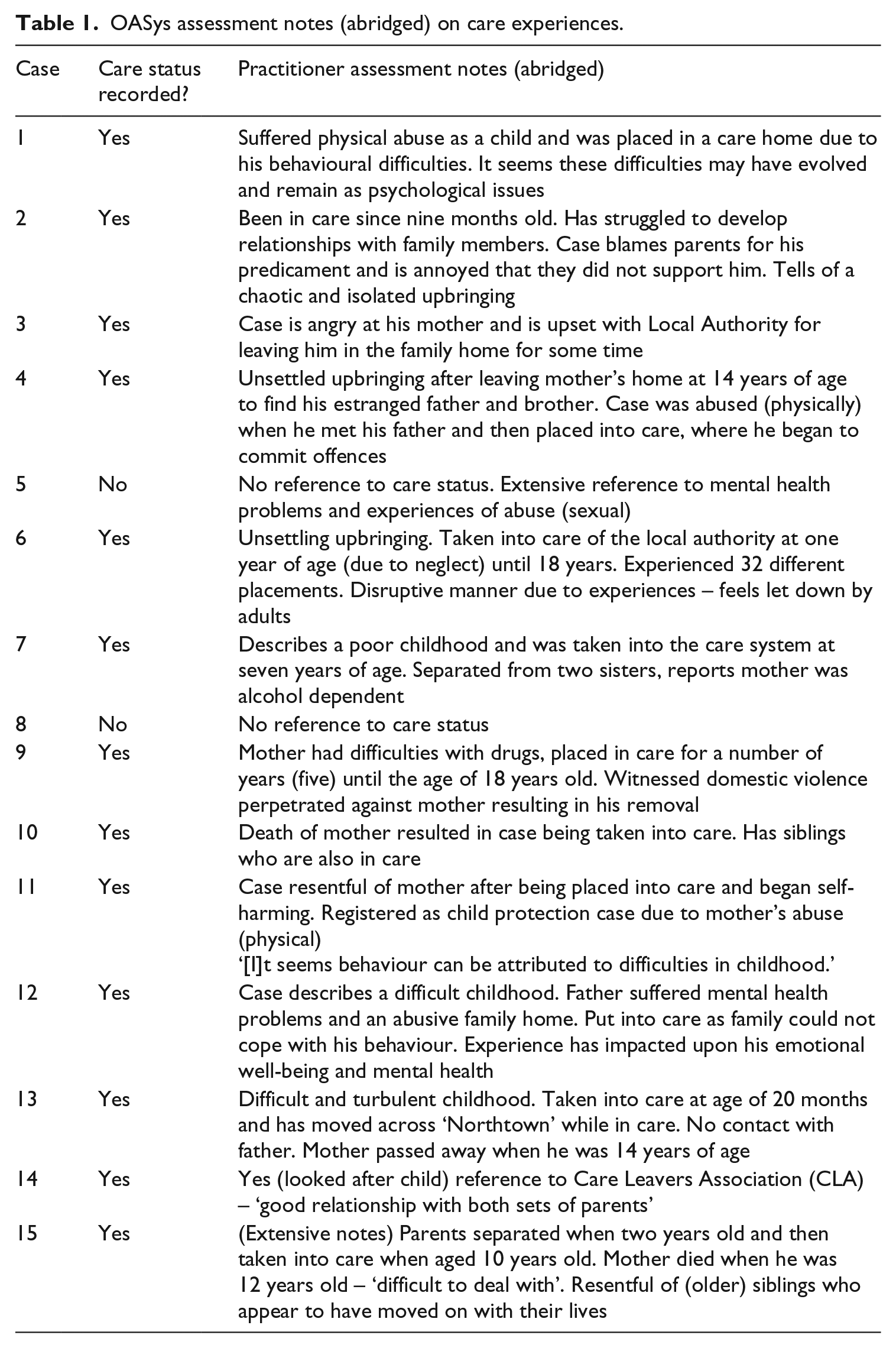
Table 1 offers an insight into the array of personal and emotional problems experienced and endured by care leavers within the CJS. 7 Yet what we found is that this important contextual information recorded by practitioners is not always accounted for in the development of supervision planning where needs are often forsaken for the institutional priority of risk management. The above accounts are illustrative of ‘unsettling’ childhoods, traumatic experiences of abuse (physical, emotional and sexual), neglect and rejection. The practitioners’ documented notes in OASys offer only a snapshot of the significant histories highlighting feelings of anger, resentment to (absent) family members and adults, which in turn may contribute to increased personal and emotional problems. Taken together, our analysis leaves us in little doubt that care leavers as a group are worthy of specific specialist support in the CJS.
What we also detect in the use of actuarial and dynamic risk assessment tools are a series of othering strategies that serve to decontexualize care leavers from their childhood experiences (Krumer-Nevo and Sidi, 2012). The notes taken from the ‘relationship’ section of the OASys assessment appear not to be utilized for developing the context of the offence committed. They are presented as simple statement of ‘facts’ without consideration for how this may contribute to processes of criminalization or the onset of offending behaviour (cf. Hudson and Bramhall, 2005). The centrality then of neglect, rejection and unsettling childhoods as experienced by care leavers is forsaken to the more dominant and organizationally relevant discourse of ‘risky offenders’ (Scott, 2013). This is a theme which also arose in our interviews with practitioners.
Practitioners’ Perspectives: Barriers to Responding to the Specific Needs of Care Leavers
A central problem identified during interviews concerned the absence of wider networks of support to which young people can turn in times of trouble:
so he’s homeless, he’s got a 17-year-old partner who’s expecting their first child. There’s no money, there’s no income, so pretty much he’s come with really complex needs […] [A] lot of the time it’s housing, because they don’t have that support network to fall back on […] They also don’t really have a lot of guidance, a lot of them their relationship has broken down with their Barnardo’s worker, their care leaver worker. So they’re a bit lost really when they come here and they’re the ones that we’ve seen who are not claiming [benefits], have no housing, all the support around them has totally broken down and they’re wandering through the criminal justice system. (Practitioner 1)
There was also some recognition of a need for sustained support for the young men with experiences of care. Yet while criminogenic needs were pronounced for those who have been in care, we found that practitioners were ambivalent as to whether or not there should be ‘specific’ interventions for care leavers. Having stated that there should not be specific interventions for care leavers, the following practitioner explained:
the young person might feel that they’ve been singled out […] So I guess, not that we would, put them in boxes but they may not necessarily want to be put in another box, another ‘we’ll put you in the you’re a care leaver box, but we’ll put you in you’ve come from a stable background box’, as well as an offending box and everything else that other labels they’ve picked up along the way. (Practitioner 11)
For some practitioners then there was a need to minimize what was perceived as the potentially stigmatizing effects of identifying care leaver status. This emerged as a tension, which many practitioners disclosed they had struggled to reconcile. However, while quite possibly unintentional, such explanations enabled practitioners to absolve themselves and the institution of responsibility of appropriately responding to care leavers’ needs. The above comment serves to legitimize the lack of resolve to prioritize care leaver status (e.g. with respect to the need to investigate whether individuals are entitled to support under the Children (Leaving Care) Act 2000). The reluctance then to place care leavers in yet ‘another box’ has particular consequences for offender supervision. Furthermore, practitioner concerns at the stigmatic effects of care identification also serve as a powerful explanation for the inability of practitioners to identify who is a care leaver in the first place.
Our research objective to profile the crime causative needs of care leavers proved challenging as there was no uniform process through which to record care leaver status. Indeed, a failure to identify all relevant young men during their induction represented a major barrier to the participation of young men from the very outset. Paradoxically, some practitioners suggested that the ‘concealment’ of care leaver status by the young person explained the failings of criminal justice identification strategies. Others acknowledged the very low priority afforded to ‘care’ issues in explaining why care leavers’ needs continue to be neglected:
It’s not been high priority or any priority sometimes when it comes to policy and direction and instruction and even assessment systems. It’s kind of like one of the things that’s ignored. Who knows properly why? I think some of it is they thought it wasn’t that important when actually it’s incredibly important. I think some of it is possibly concern about how to do it. When do you ask? Are they going to want to say? Should you be asking? Is it personal? How do you record it? [I] think there’s some genuine concern about labelling, but for me it’s not about saying tick a box that’s someone’s identity. It’s about […] someone’s life experience, which is very different, should be very different. (Practitioner 3)
The UK government in 2014 claimed in their one-year progress report on the ‘care leaver strategy’ that their commitment to ‘develop clear ways of identifying care leavers in adult services both in custody and the community so we can better ensure they receive the right support’ has now been ‘met’ (HM Government, 2014: 24). One way in which they claim to have met this commitment is through developing guidance published by NOMS (2013) issued to staff in probation and prisons on ways of identifying care leavers. While the very publication of such guidance might be deemed a step forward, it is disappointing that the very first sentence of the guidance notes that the guidance ‘imposes no new requirements’ (NOMS, 2013: 1, emphasis in the original). This is certainly not a ringing endorsement for busy, often over-stretched practitioners to sit down and read it. In fact, by emphasizing that the guidance imposes no new requirements, care leaver issues are immediately de-prioritized from the outset. The guidance may well have been produced and disseminated, but the crucial question is has it actually been read, let alone influenced practice? To suggest that there are now clear ways of identifying adult care leavers in all parts of the CJS, is at best misleading, and at worst simply not true. Indeed, the NOMS guidance enables the government to tick a box to say that ‘care leaver’ issues are now being addressed, while simultaneously de-prioritizing their needs.
Perceptions of Care Leavers as a ‘Risky’ Client Group
Related to the above, a key theme to emerge was the general lack of knowledge and understanding about specific care-related needs and issues among practitioners. From the perspective of trying to deliver a unique intervention, addressing this lack of understanding was crucial in terms of identifying who was even eligible for referral:
‘cos if I’m honest, I knew nothing about this as an agenda item until I spoke to Jason about care leavers […] We didn’t even capture this as a piece of information with our clients’ (Practitioner 10).
This lack of knowledge and understanding was one of the things that a specialist project could potentially address:
I think one of the things that Care Leavers’ Association brought was just like better understanding, some of the knowledge of the details of things like legislation which is important, or where to go to get to x, I can never remember, it’s complicated. But some of it is just an understanding about how important it is to take into account personalized history when it comes to care experience. (Practitioner 3)
We acknowledge the alacrity of policy and practice guidance implementation and the difficulty for practitioners in remaining abreast of such guidance, particularly in the context of the seismic changes in the structure of probation services. However, a key factor that contributed to the lack of knowledge about care leaver issues was an apparent fear of raising ‘care’ issues in the first place:
when someone is telling you something that is sometimes quite scary, certainly emotive, emotional. If someone’s saying ‘I was abused, this happened and some of that abuse took place while I was in care, it wasn’t just about before’, then it’s difficult to sometimes know how to reply to that […] [I]t raised an issue for us about training, about how we speak to people now and communicate […] How do we engage? How do we show that we care without reinforcing a particular perspective if someone’s on a downward spiral, if you put your arm around them and go ‘it’s going to be all right’ when it clearly isn’t going to be all right […] so it’s all that. And I remember staff saying ‘oh it’s a real minefield isn’t it’ and it’s all those phrases. And because it’s just couched in all those phrases, I’ve got to say I use them myself, and then it just made us all a bit scared to try and go there. (Practitioner 10)
The above quote is insightful in highlighting how care leavers are frequently perceived as a ‘risky’ client group in that they may carry a background of trauma and harm with them. The question of ‘how do we engage?’ was also posed by other stakeholders, and the notion that ‘it’s a real minefield’ emerged again and again. For Practitioner 10, it is the prospect of traumatic early experiences, such as abuse, that care leavers may carry with them, that made identifying care leaver status a risky business. However, it is interesting to consider where the roots of the ‘uneasiness’ about raising ‘care’ issues may lie. By identifying ‘care leaver’ status and potentially a background of abuse and neglect, practitioners are effectively forced to confront the reality that the CJS ‘houses’ vulnerable young people in need, who are experiencing a plethora of social and welfare problems (cf. Carlen, 2013; Goldson, 2013). Of course, not raising the ‘care’ question can lead to a number of unintended consequences. The responsibility for addressing care issues becomes the prerogative and domain of ‘other’ agencies (such as the Barnardo’s or leaving care worker cited earlier) with the harmful effects inflicted through disruptive childhoods and negative experiences of care abstracted from the offence and the broader risk-focused work of criminal justice practice. (Yet see Mendes et al.’s (2014) work in Australia on the usefulness of a trauma-informed approach to dealing with some of these issues.) The concerns raised by practitioners above undoubtedly contribute to practice that inadvertently neglects care leaver issues within the sphere of criminal justice.
There were various other concerns too that clearly weighed on the minds of practitioners when they encountered individuals for the very first time in the induction process. Staff identified the induction meeting as the point at which to gather information to inform the needs and ‘package of support’ for the young person. However, there was an issue concerning the point at which the practitioner deems it appropriate to introduce the ‘care leaver question’, particularly if more immediate and pressing problems present themselves:
Could be that they’ve got a housing need or they might say to me that they want a job, they really want to look for work but they’re not quite sure how to. But whilst they want that and they’re trying to do that then they have a really big substance misuse issue. So they might come into me and be under the influence of cannabis and smoke heavily every night and day, so that becomes an immediate issue. (Practitioner 11)
Finally, for some interviewees, the exploration of care leaver status presents as too ‘sensitive’ an issue to raise within the constraints of the induction session. The induction is the point at which the practitioner commences the process of offender motivation – seen as critical in facilitating the organizational priority of offender compliance and engagement (Miller and Rollnick, 2002). As such, to raise the matter of care leaver status was thought to be negative and may potentially reduce levels of offender motivation. This of course raises issues about how we assess, identify and respond to the individual needs – not to mention negative stereotypes of what it means to be a child in care (cf. Ofsted, 2009):
People that have been in care […] some people that have been in care have had a traumatic experience, a breakup of families, abuse, mistreatment and all that kind of stuff. So I do not feel I should be touching on those grounds if I’ve only met the guy for the first 20 minutes, he doesn’t know me from Adam, who the hell am I to push him into something which he knows about, which I have no idea about and try and encourage him to do it [the Clear Approach programme] when he doesn’t know me? I’ve got to build that relationship up over a period of time with that person. (Practitioner 8)
The comment about pushing someone into something ‘which I have no idea about’ – is yet another indication that some practitioners felt that they lacked sufficient knowledge in this area. Practitioner 8’s comments also return us full circle to the perceptions of care leavers as a ‘risky’ client group given their potentially ‘traumatic’ prior experiences. What is not directly stated, but is arguably implied by the statement made above, is the uncomfortable recognition that the criminal justice system ‘manages’ vulnerable individuals, whose needs it simply does not have the capacity to respond to.
Conflicts and Contradictions in Responding to Care Leavers in the CJS
Given the above discussion, it is perhaps not surprising that we identified a number of conflicts and contradictions for practitioners in promoting a specialist intervention for care leavers. Running in parallel with the lack of understanding about care leaver issues in general, was a lack of understanding by some about the Clear Approach intervention itself:
It just feels a little bit hushed away the care leavers thing. It felt like a secret group. And I think a lot of staff felt that if you haven’t got someone on it, you didn’t really understand what was going on, whereas [the] cannabis group and things like that, far more transparent. (Practitioner 6)
The idea of Clear Approach being perceived as a ‘secret group’ is of serious concern, particularly given that those delivering the intervention had gone to some lengths to brief practitioners about the aims and purpose. Such attitudes can obstruct the efficient implementation and success of specific interventions for those offenders with experiences of care, and indeed a number of those who were eligible for the programme were not referred:
the relationship between the offender manager and the young person is integral to getting them to come along to meetings, ’cos that relationship is where everything is based […] If that offender manager is not on course with your programme and your work, then they’re not going to be able to persuade that young person. With the best motivation in the world, they cannot persuade a young person to come to a programme they’re not able to inform that young person about. (Practitioner 5)
It was further noted that it was not easy to get all offender managers to ‘buy in’ to the training and awareness session that was delivered to them. Yet from the offender managers’ perspectives, the challenges related to buying in to the intervention and identifying care leavers were compounded further by the resource constraints of time:
We’re pushed for time. I’ve got to say it, we’re pushed. There’s loads of work that we’ve got to go through and this [Clear Approach] was an extra load for us to take on board. Initially it was like ‘yeah ok, we’ll do what we can, we’ll gather the names’, which they did do. But there wasn’t no vigour in it, there wasn’t no excitement about it and I understand that because the amount of work that an OM [Offender Manager] has to go through in a day, it’s quite vast so an extra load to identify, to encourage, to support and so on, on top of what you’re already doing. For some it was a bit of a ‘do we have to do this?’ And I understand that, ’cos I felt like that meself to be honest, do I have to do this? To be honest, it was one of those, we had to do it and it got done. We did it kicking and screaming but it got done. (Practitioner 8)
The above quote offers a valuable insight into the challenges of contemporary probation practice (cf. Mawby and Worrall, 2013) and may indicate the potential challenges that inhibit the systematic identification of care leavers within the CJS. While there can be difficulties in promoting any new intervention, it is important to emphasize the wider policy context in which offender managers were working. The huge restructuring of probation in recent years has resulted in the effective dismantling of the service in its traditional form (see Robinson et al., 2016). Informal discussions with managers revealed that this had created a period of great uncertainty, and in combination with a number of recent staff changes (and associated staff shortages), it was a very difficult climate to be working in.
The narrowed focus of contemporary practice is enshrined within the punishment aim of just deserts with practitioners concerned primarily with the ‘criminal act’ rather than the ‘offender’. Critically, the rehabilitative traditions of the organization have been curtailed despite the proclamations of numerous justice ministers (Lewis, 2005; Whitehead, 2010). Herein lies the crux. The organizational priority to ‘protect the public’ appears at odds with the necessity to facilitate an engagement with the background of care leavers. Serving the offender their ‘just deserts’ minimizes the practice space within which the practitioner can develop their understanding of care issues and carefully identify, detect and resolve the relevant welfare issues. Writing in 1993, Hudson reminded us that welfare and punishment need not be competing objectives of criminal justice: ‘penal policy is a form of public policy and the goal of public policy must always be to work towards human welfare and social justice’ (Scott, 2013: 7). Further, criminal justice interventions which are only concerned with offence-focused work, can only serve to perpetuate the criminogenic problems endured by care leavers.
Conclusion
The research presented here explored attempts to implement a unique intervention for care leavers in the criminal justice system. Such specialist support for care leavers is relatively rare and warrants serious attention, particularly given current concerns over the unnecessary criminalization of some children in care, their treatment within the justice system and their frequent abandonment by local authorities if they enter prison (Fitzpatrick, 2014). Furthermore, as far as we are aware, our research is the first to present practitioners’ perceptions of a specialist intervention for care leavers on an intensive community order. Such perceptions illuminate a range of important issues which reveal something of the complexity of responding to the needs of care leavers in the criminal justice system, and contradict current government claims related to the success of making care leavers more visible within that system. Although based on a relatively small sample, our analysis leaves us in little doubt that care leavers in the criminal justice system could benefit from specific, specialist support.
Our research highlighted a number of key themes, including practitioners’ perceptions of care leavers as a ‘risky’ client group which can inhibit efforts to even ask the ‘care question’ in the first place. This inevitably has a knock-on effect on who is identified as a care leaver and who can be referred for specialist support. Added to the analytical mix is the lack of general knowledge about care leaver issues, as well as concerns over the possibility of labelling and stigmatizing an already vulnerable group. Consequently, a number of conflicts and contradictions arise in attempting to promote a supportive intervention.
Clearly revealed in our discussion are a wide range of different barriers to responding to the needs of care leavers in a risk-dominated criminal justice system. Such barriers operate against the backdrop of an ever-changing policy and practice context for probation practitioners in England and Wales, which has resulted in a huge restructuring, constant staff changes and associated staff shortages. Perhaps it is not surprising that practitioners report that their response to requests to promote a new project is that ‘we did it kicking and screaming’. Yet for us, this very clearly highlights that the criminal justice system is an unsustainable site for the resolution of personal and social problems. The predominance of risk as the focus of contemporary criminal justice practice serves to perpetuate and legitimize a care-less approach to care leavers. Given the recent evidence that some children in care continue to be excessively criminalized at an early age (Howard League for Penal Reform, 2016), and the subsequent impact of this on their assessment as ‘risky’, we argue that continued political inaction within the CJS can only be construed as practice negligence and an affront to justice.
Finally, the findings from the local study presented in this article have wider global relevance as the general issues pertaining to the neglect of children in care in the criminal justice system, and the lack of strategic will centrally to address this problem, can clearly be seen in other jurisdictions such as Victoria, Australia (Mendes et al., 2014). There have also been calls for more cross-system collaboration for children in care in the youth justice system in the USA, so that their particular needs might be more adequately addressed (Bilchik and Nash, 2008). More comparative research on this important topic is greatly needed.
Footnotes
Acknowledgements
We would like to thank Chris Grover for commenting on an earlier version of this article, as well as the three anonymous reviewers. We are also grateful to all the practitioners and stakeholders who gave up their valuable time to be interviewed for this research.
Declaration of Conflicting Interests
The author(s) declared no potential conflicts of interest with respect to the research, authorship, and/or publication of this article.
Funding
The author(s) disclosed receipt of the following financial support for the research, authorship, and/or publication of this article: The research presented in this article was supported by the Lancaster University FASS Enterprise Centre.