




Abstract
Amid rising rates of prison violence, corrective service agencies worldwide are increasingly championing body-worn cameras as a tool with the potential of making the prison environment safer. Little is known, however, whether this technology makes correctional officers feel safer while carrying out their duties in an environment with higher rates of violence than most other occupations. Using survey data and interviews with correctional officers in Queensland, Australia, this study shows that for many correctional officers, body-worn cameras do not improve feelings of safety or have a civilizing effect on prisoner behavior. Most correctional officers do believe, however, that the presence of body-worn cameras reduces the threat of false allegations and thereby improves their “professional” safety. This study also considers whether officers’ perceptions of physical or professional safety vary by officer characteristics, body-worn camera usage, and prison type.
Introduction
Correctional officers are subjected to higher rates of violence than most other occupations (Steiner and Wooldredge, 2017). In fact, recent statistics show that the rate of violent assaults against correctional officers is on the rise in many countries (Department of Justice, 2019; Ministry of Justice, 2019). Exposure to prison violence—particularly when perpetrated against officers—can have serious consequences for corrections staff and agencies more broadly. For correctional officers, ongoing exposure to prison violence can contribute to work stress, post-traumatic stress, and burnout (Butler et al., 2019; Steiner and Wooldredge, 2015). For corrections agencies, prison violence can lead to high rates of absenteeism and poor staff retention (Crews and Bonham, 2007).
Recognizing the need to create safer environments for correctional officers, corrections agencies across the world are increasingly championing body-worn cameras (BWCs) as a potential solution. Indeed, BWC programs have recently been introduced in prisons in the United States, the United Kingdom, Hong Kong, Australia, and New Zealand (e.g. Beales and Marsh, 2016; Hong Kong Correctional Services, 2018; McLennan, 2019; Ministry of Justice, 2017). As in the policing context, the rationale for introducing BWCs behind bars is that the cameras operate “as both a warning sign and a potential objective witness” during encounters between correctional officers and prisoners (Timan, 2016: 145). This increased surveillance is presumed to reduce both prisoner- and officer-perpetrated violence due to the increased risk of that behavior being caught on camera (Ariel et al., 2016). Beyond the purported benefits in improving physical safety, it is also claimed that BWC footage will improve correctional officers’ professional safety by reducing the number of vexatious complaints made against them and by providing more transparency and accountability in prison work (Crime and Corruption Commission Queensland (CCCQ), 2018).
It remains to be seen, however, whether BWCs can make the prison environment safer, particularly given evidence that the camera technology already widely used in prisons (i.e. closed-circuit television (CCTV)) does not deter violent behavior by prisoners (Allard et al., 2008). Furthermore, some corrections agencies have voiced doubts that BWCs can reduce prison violence, with the United Kingdom’s Ministry of Justice (2019) recently claiming that the introduction of BWCs will not, of itself, solve this issue, but instead only “make violence incidents easier to manage or resolve” (para. 9). They further warn that BWCs can have “counterproductive effects if not used wisely” in a corrections environment (Ministry of Justice, 2019: para. 9).
Despite these concerns, only one study to date has evaluated a prison BWC program (Beales and Marsh, 2016). However, that study focused just on the high security units within two New Zealand prisons and involved only a small number of staff who had been equipped with a BWC. Notwithstanding those limitations, that study provided evidence to suggest that equipping correctional officers with BWCs can increase their actual and perceived physical safety (Beales and Marsh, 2016). In addition, officers felt that the BWCs kept them “professionally” safe, by preventing or resolving false accusations or complaints made by prisoners. While that study provides a valuable starting point, much more research is still needed in this area given the likely reliance by corrections agencies on BWCs as a strategy to improve prison safety.
With the recent introduction of a state-wide BWC program in prisons throughout Queensland, Australia, comes the opportunity to more comprehensively explore how this technology may shape correctional officers’ perceptions of safety and whether these perceptions vary between officers. Using a mixed-methods approach, we examine perceptions of both physical and professional safety by drawing on a state-wide survey of correctional officers working in Queensland prisons (N = 548) and in-depth interviews with correctional officers and other key corrections staff (N = 34). Two research questions guide this study. First, we ask whether correctional officers perceive the presence of BWCs to improve their physical and/or professional safety while on duty. Second, we ask whether these perceptions vary by officer demographics, BWC usage, or prison type. In doing so, we can assess not only the general attitudes of correctional staff toward BWCs and safety, but also whether certain groups are more or less likely to report feeling safer when BWCs are present.
BWCs and officer safety: What we know from the policing context
Given the paucity of research on the use of BWCs in corrections, the following summary draws from literature on the use of BWCs by police agencies. In the policing literature, the effect of BWCs on two aspects of officer safety (physical and professional) are examined. We explore each in turn below.
Physical safety
Despite the intention for BWCs to improve officers’ physical safety, studies consistently show that police officers are skeptical of the ability of this technology to achieve that aim (Gaub et al., 2016; Gramagila and Phillips, 2018; Jennings et al., 2014; Katz et al., 2014; Tankebe and Ariel, 2016). Gaub et al. (2016) asked officers from the Phoenix, Tempe, and Spokane police departments whether BWCs “tend to increase officer safety.” Prior to BWC deployment, only a minority of police officers agreed with this statement (ranging from 11% to 23% across departments). Officers remained unconvinced even following the deployment of the cameras, with between 9% and 25% of officers agreeing with this statement. Similarly, Katz et al. (2014) found that over the course of a BWC trial, police officers became less likely to agree that BWCs increased officer safety. Research by Tankebe and Ariel (2016) reported that 7 out of 10 officers did not believe that BWCs made them safer, while a separate study found that less than 1 in 4 police officers (21.5%) agreed that BWCs would reduce assaults on officers (McLean et al., 2015). More recently, officers from the Buffalo and Rochester police departments agreed or strongly agreed (31% and 47%, respectively) that BWCs would actually make officers less safe (Gramagila and Phillips, 2018).
Some empirical research suggests that there may be some basis for police officers’ concerns that BWCs may make them more vulnerable to violence. Ariel et al. (2016) found that the rate of assault against police officers was 14% higher for officers wearing a BWC. To explain this unexpected finding, the authors suggested that police officers may be less assertive when equipped with a BWC, thereby increasing their vulnerability to assault (Ariel et al., 2016). More recent research supports this suggestion, revealing concerns among some police officers that BWCs will lead officers to use less force than is necessary, thereby putting their safety at risk (Newell and Greidanus, 2018; Pearson et al., 2018).
Interview data with police officers also reveal mixed views. During end-of-pilot interviews, police officers with the Toronto Police Service (2016) were divided on whether BWCs made them feel safer. Some officers explained that being equipped with a BWC made them feel more confident when dealing with members of the public as people tended to be less confrontational and more respectful toward officers. Others, though, felt the cameras made no difference to their safety (Toronto Police Service, 2016). They also noted that BWCs would sometimes aggravate a situation when they were dealing with emotionally disturbed or intoxicated individuals (Toronto Police Service, 2016).
Furthermore, police officers’ views on the capacity of BWCs to increase officer safety appear linked to officer characteristics. For example, research by Smykla et al. (2016) showed that officers with less than 20 years’ policing experience expressed greater disagreement with the idea that BWCs would improve officer safety, while more experienced officers (those with more than 20 years’ policing experience) were more neutral in their views. This may suggest that younger officers are less likely to view BWCs as a useful tool for improving their safety. Conversely, other research has found that when asked if they would feel safer wearing a BWC, police officers did not significantly differ in their views across gender, age, or years of policing experience (Jennings et al., 2014).
Professional safety
The second aspect of officer safety commonly examined in the policing literature relates to the impact of BWCs on an officer’s professional safety. Here, police officers generally hold more positive views about the capacity of BWCs to safeguard their job by, for instance, reducing the number of false allegations or complaints made against them and providing reliable evidence of their interactions with members of the public. Research by Smykla et al. (2016) found that a majority (54%) of police officers believed that BWCs would reduce unwarranted allegations made against officers. Similarly, one-half (50%) of officers in McLean et al.’s (2015) study agreed that BWCs would protect police from frivolous complaints, while 66% believed the cameras would reduce the number of settlements over allegations of officer misconduct. Furthermore, on a 4-point scale (where higher scores indicated stronger agreement), police officers in Pelfrey and Keener’s (2016) study had a mean score of 3.15 when asked whether BWCs would “help to prove complaints false,” while in a separate study, 86% of officers agreed that BWCs would “protect officers against false allegations of misconduct” (Tankebe and Ariel, 2016).
Interview data with police officers help to explain these findings, with officers reporting that BWC footage can act as a “safety net” to protect them from complaints by demonstrating that their actions were fair and/or proportionate to the circumstances (Owens and Finn, 2018). Officers also pointed to the ability of BWC footage to quickly identify and resolve unfounded or exaggerated complaints without the need to resort to formal complaint procedures (Grossmith et al., 2015; Owens and Finn, 2018).
As with physical safety, police officers’ views on the ability of BWCs to increase their professional safety also appear linked to officer characteristics, with Jennings et al. (2014) reporting that female police officers were more likely than male officers to believe that BWCs would reduce the number of both external and internal complaints against other officers. In that study, older officers were also less likely than younger officers to agree that BWCs can reduce internal complaints (Jennings et al., 2014).
While these policing studies provide some indication of the utility of BWCs as a tool for police officer safety, the unique setting of a prison environment and the incomparable challenges faced by correctional officers means that we should avoid presumptions that these findings are directly applicable to the use of BWCs behind bars. Correctional officers, unlike police, work in an enclosed environment that is largely hidden from public view (Fathi, 2010). They are responsible for housing dangerous populations of offenders and work in a setting that demands their “constant awareness of surroundings in an effort to maintain the safety and wellbeing of other staff and inmates” (Butler et al., 2019: 84). As such, correctional officers are faced with “unique health and safety risks” (Steiner and Wooldredge, 2017: 324) that, in many ways, are distinct from those faced by police officers or other occupations where BWCs are used. It is imperative, therefore, that we gain a better understanding of how correctional officers view the use of BWCs as a tool for their protection within prisons.
Methods
This study used a mixed-methods research design comprising of two research phases. In Phase 1, we conducted a state-wide survey of correctional officers in Queensland, Australia, which captures, among other things, broad trends in officer perceptions of safety following the commencement of a BWC program. In Phase 2, we conducted a series of follow-up interviews which provide further context and depth to the survey results. Two research questions guide this study:
Do correctional officers perceive that the presence of BWCs improves their physical and/or professional safety while on duty?
Do these perceptions of physical and/or professional safety vary by officer demographics, BWC usage, or prison type?
In the section below, we first describe the research site before explaining the data collection and analysis procedures relating to the quantitative survey data and the qualitative in-depth interviews.
Research site: Queensland prisons
In response to growing concerns surrounding prisoner and officer safety, BWCs were rolled out across several prisons on a trial basis in 2017 (CCCQ, 2018; Queensland Government, 2017). In 2018—following a successful trial—approximately 150 1 BWCs were introduced across Queensland (CCCQ, 2018). The BWCs issued to correctional facilities in Queensland have been described as high-quality digital video recorders, with a field of vision of up to 120° (CCCQ, 2018). The BWCs operate with a buffering system, whereby up to 2 minutes of visual footage (but not audio) is captured by the BWC prior to its activation by an officer (CCCQ, 2018).
The use of BWCs is governed by the directives issued under the Deputy Commissioner Instruction (DCI) titled “Body Worn Camera—Deployment and Use.” As there is currently an insufficient number of cameras to equip all officers on duty, the DCI tasks the general manager of each prison with determining where BWCs should be deployed within the prison (CCCQ, 2018). Through the DCI, correctional officers are directed to activate their BWC to record interactions that occur during, for example, an operational incident, use of force incident, or other circumstances where the officer considers that the prisoner’s behavior suggests the interaction ought to be recorded (CCCQ, 2018). Overall, correctional officers in Queensland were largely receptive to the introduction of this technology in prisons, with the overwhelming majority supporting the use of BWCs in corrections work (Dodd et al., 2020).
Phase 1: Surveys
Phase 1 of the research comprised a state-wide survey of correctional officers across 19 prisons in Queensland. A link to the survey, administered online using the Qualtrics platform, was distributed via email by Queensland Corrective Services (QCS) to all currently employed custodial officers in Queensland (approximately 2500 officers 2 ). Paper-based surveys were also made available, where practicable, for officers if they preferred this method over the online survey. 3 The survey was available for completion for a period of approximately 4 months (November 2018 through to March 2019) and was designed to take approximately 15 minutes to complete. A total of 548 survey responses were received (response rate = approximately 22%). In examining the survey results, we first explore the distributions of the key dependent variables (listed below) before running a series of ordinary least squares (OLS) regression models.
Variable information
Dependent variables
Perceptions of Physical Safety: Items on physical safety were derived from previous research on BWCs in the policing space (Gaub et al., 2016; Jennings et al., 2014) and by the research team. Three questions included in the survey captured correctional officers’ perceptions of physical safety. Specifically, officers were asked their level of agreement with the following statements: (1) wearing a BWC makes me feel safer while on duty; (2) when custodial officers wear BWCs, prisoners are less aggressive; and (3) when custodial officers wear BWCs, there are fewer prisoner assaults on staff. Responses were measured on a 7-point Likert-type scale ranging from 1 (strongly disagree) to 7 (strongly agree).
Perceptions of Professional Safety: Professional safety items were based on previous policing studies (Tankebe and Ariel, 2016) and developed by the research team. Four items included in the survey tap into officers’ perceptions of professional safety. Officers were asked on a scale of 1 (strongly disagree) to 7 (strongly agree) how much they agree with the following statements: (1) BWCs will improve the accuracy of accounts of officer–prisoner interactions; (2) BWCs will improve transparency in prison work; (3) BWCs will protect officers against false allegations of misconduct; and (4) when custodial officers wear BWCs, it improves evidence gathering in incidents involving prisoners.
Independent variables
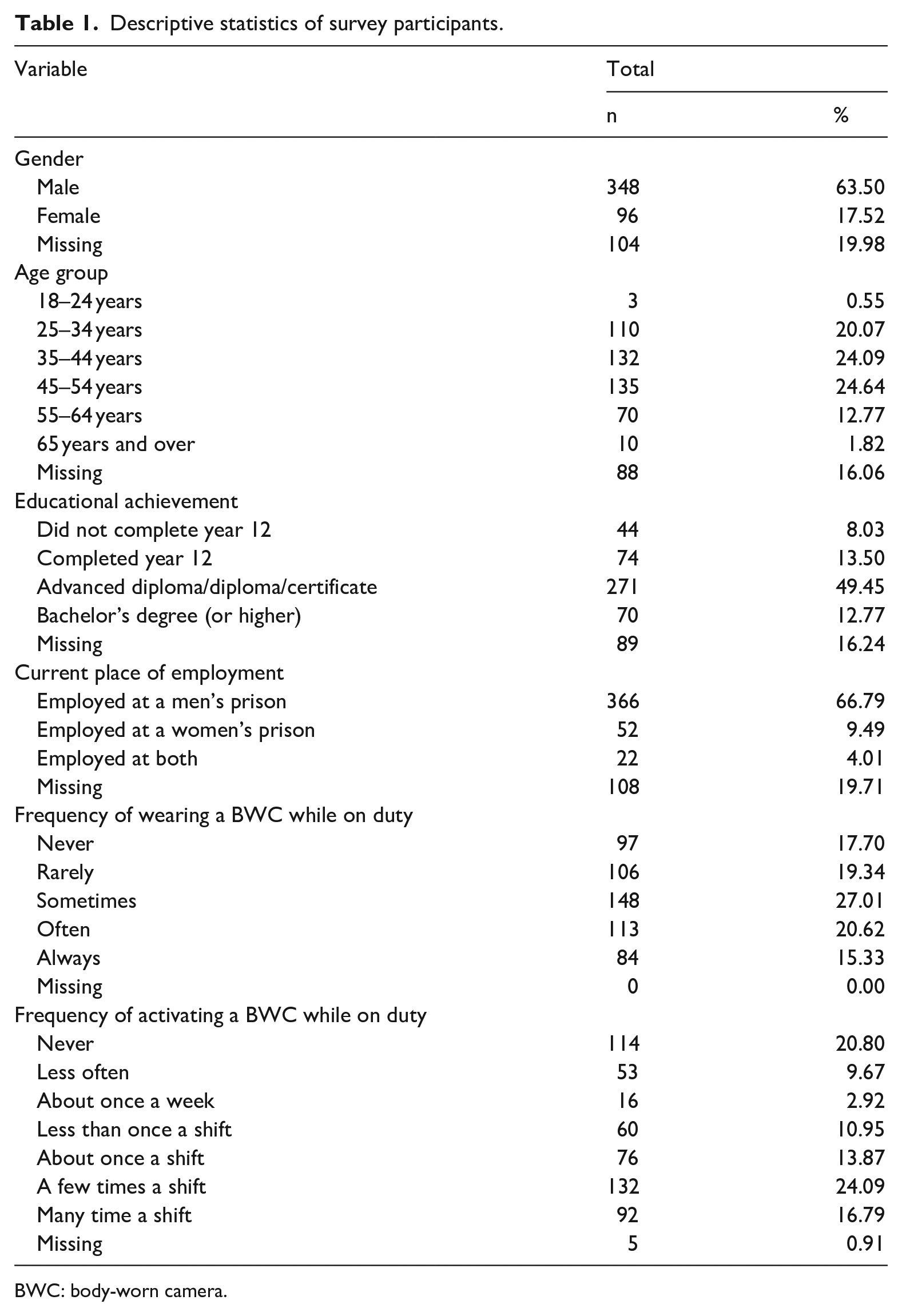
To determine whether officers’ perceptions of safety vary depending on their demographics (as per previous studies in policing, Smykla et al. 2016), BWC usage, or prison type, we conducted a series of regression analyses. Variables included in the regression models include gender (male = 0; female = 1); age (18–24 years = 1; 24–34 years = 2; 35–44 years = 3; 45–54 years = 4; 55–64 years = 5; 65 years and over = 6); education level (did not complete year 12 = 1; completed year 12 = 2; advanced diploma/diploma/certificate = 3; bachelor’s degree or higher = 4); prison type of current employment (male = 1, reference category; female = 2; both 4 = 3); frequency of BWC use 5 (never = 1 to always = 5); and frequency of BWC activation (never = 1 to many times a shift = 7). Descriptive statistics for survey participants are provided in Table 1.
Descriptive statistics of survey participants.
BWC: body-worn camera.
Phase 2: Interviews
The second research phase involved follow-up interviews with a sample of correctional officers and other relevant QCS staff from nine prisons across Queensland (N = 34) to clarify and elaborate on the survey results. Participants were recruited primarily from the sample of individuals who completed the online or paper-based survey and indicated their interest in being interviewed. Further recruitment of interviewees also occurred through word of mouth when the research team were on site at the various prisons. In addition to correctional officers, interview participants also included other corrections staff who were involved in the implementation of BWCs, including General Managers of correctional facilities and other individuals involved in violence prevention, ethical standards, and corrections investigations. Intel staff, who are responsible for viewing the BWC footage, were also interviewed.
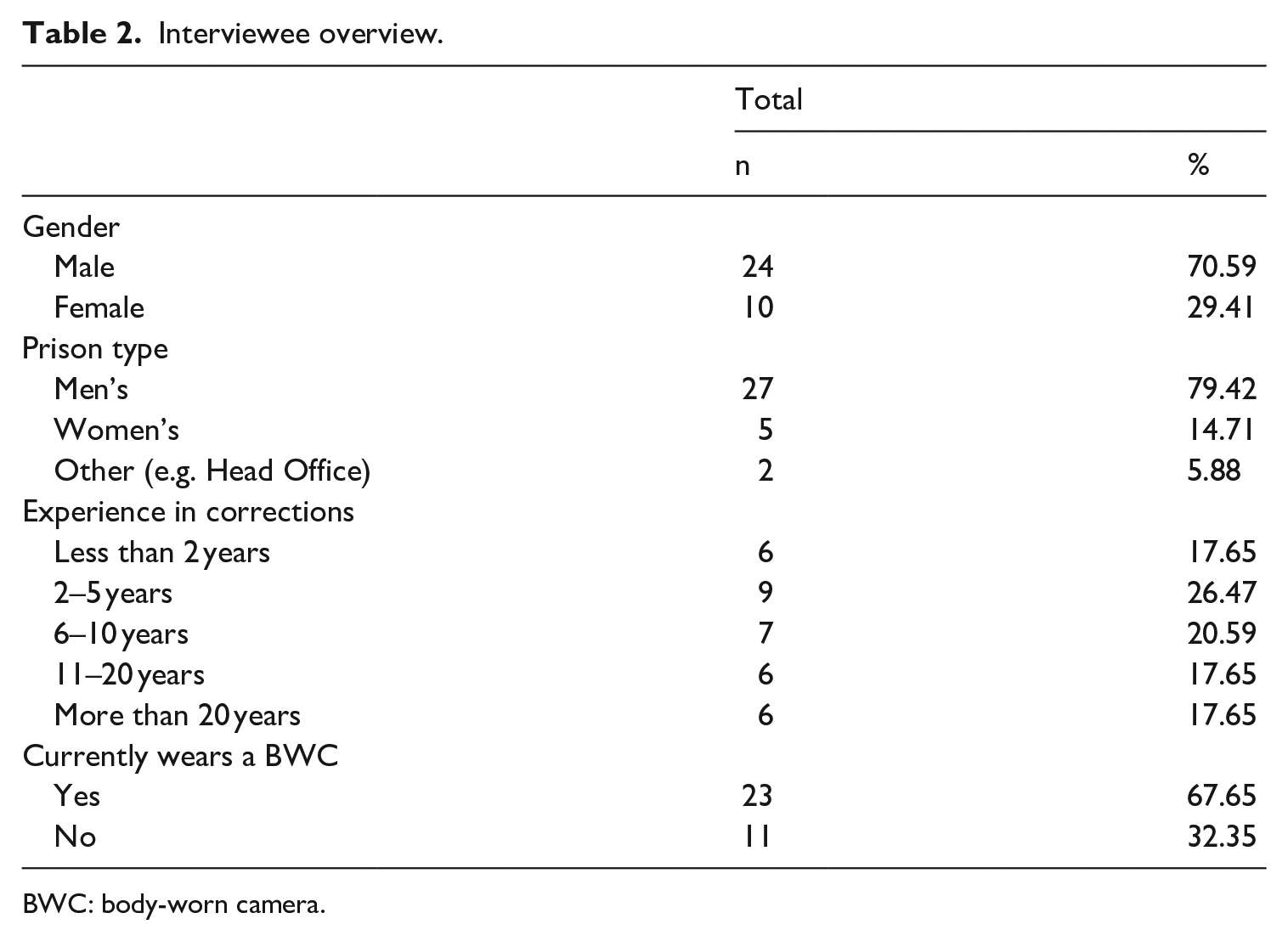
Interviews were conducted in person (n = 27) or by telephone (n = 7), depending upon the interviewee’s availability and preferences. On average, interviews lasted for 35 minutes. Interviewees varied considerably in their corrections experience, with some having worked in this area for 1 year and others for upward of 30 years. On average, interviewees had 10 years’ corrections experience. Both male (n = 24) and female (n = 10) staff were interviewed, and most interviewees had experience wearing a BWC (n = 23), while the remaining staff (n = 11) were in positions where this was not required. For more information on the interview sample, see Table 2.
Interviewee overview.
BWC: body-worn camera.
All interviews were audio-recorded (with the permission of interviewees) and transcribed. A thematic analysis of interview transcripts was carried out using the software program NVivo to identify key themes arising from our discussions with interviewees (Boyatzis, 1998). In the following presentation of findings, we draw from both the quantitative and qualitative data.
Findings
Perceptions of physical safety
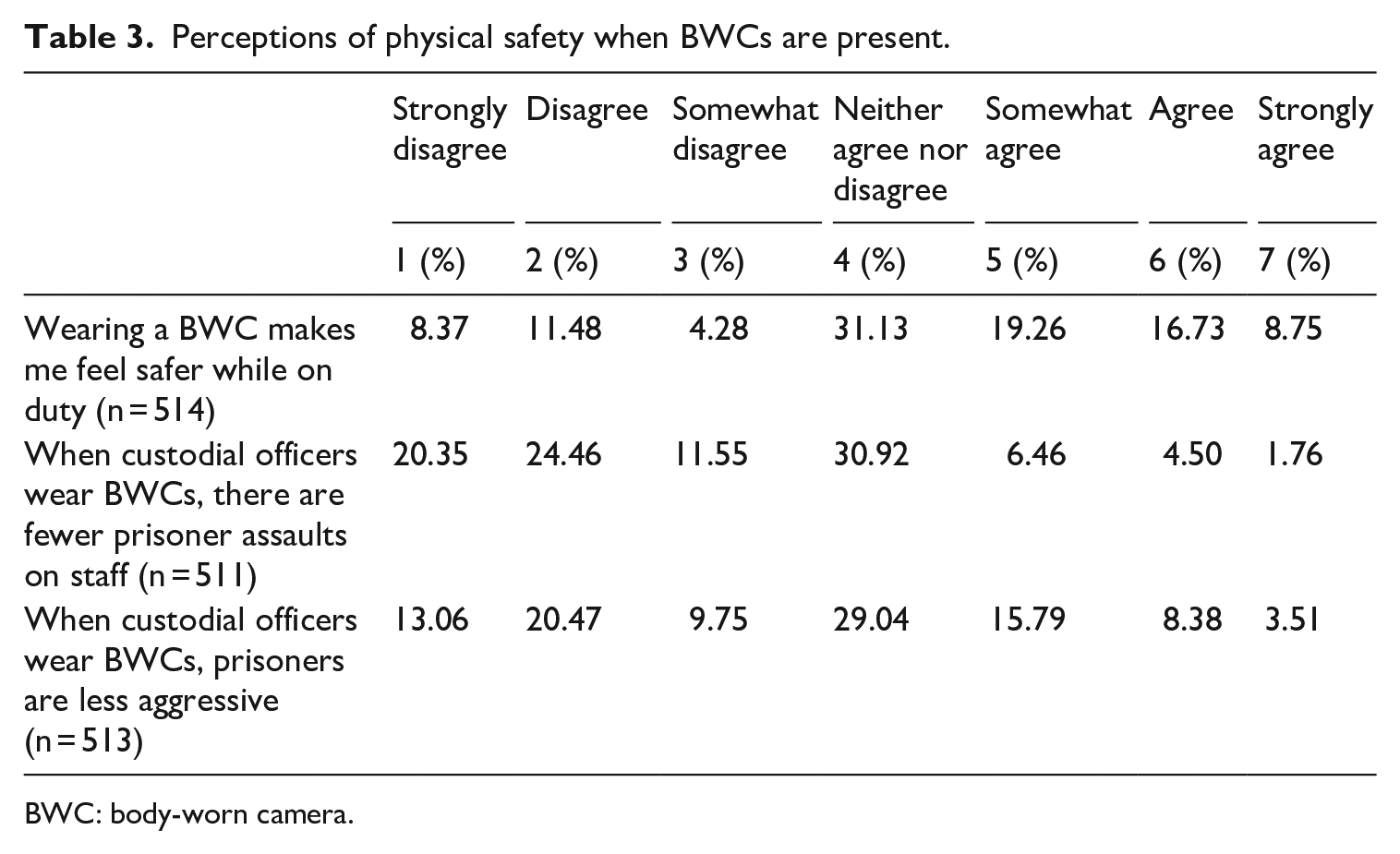
Overall, the quantitative survey results showed relatively mixed views among correctional officers as to whether wearing a BWC increases their feelings of safety or improves prisoner behavior. A significant minority of officers agreed that wearing a BWC makes them feel safer (45%)—while a further 31% neither agreed nor disagreed with the statement (see Table 3). Relatively few officers believed the presence of BWCs had a civilizing effect on prisoner behavior. The majority of custodial officers disagreed that when staff wear BWCs, there are fewer assaults on staff (56%)—with an additional 31% providing a neutral response. Similarly, most felt that BWCs did not reduce aggressive behavior among prisoners with 43% disagreeing with the statement and 29% providing a neutral response.
Perceptions of physical safety when BWCs are present.
BWC: body-worn camera.
Similar findings emerged from interviews with officers and other correctional staff. While many interviewees believed BWCs were introduced to improve officer safety, the majority said they did not feel physically safer wearing a BWC. Several staff recognized that a camera alone would not protect them from an assault:
It’s just a camera, it’s all after the fact. All it’s going to do is prove what happened. [It] doesn’t make me feel any safer. . . . If somebody wants to kick off then they’re going to move pretty quick, and the camera’s not going to save me. It’s not going to jump out of my chest and stop [the attack] . . . like an airbag. (I23)
Correctional staff also had mixed views on whether BWCs impact prisoner behavior. Some staff questioned, for example, the utility of deterrence strategies with a prisoner population:
Nine times out of ten that’s not a deterrent for them; they’ll just keep going with the behavior. They’ll just keep carrying on, swearing, being abusive towards you. (I04)
Furthermore, some officers felt that while the cameras had initially impacted prisoner behavior, the effect had diminished over time as prisoners became more accustomed to the camera’s presence. Others argued that the cameras were unlikely to have any additional impact on prisoner behavior given the long-standing presence of CCTV cameras in Queensland prisons.
However, some officers recognized a change in prisoner behavior when BWCs were activated during the early stages of an escalating incident:
Once you put that camera on and you tell them that you’re taping, it can change their behavior. It can be a key trigger for them to think, “oh, now the supervisor’s turned up and he’s got the camera.” It can change their behavior. (I03)
Alternatively, a small handful of officers felt that activating a BWC during an incident may have a backfire effect, further inciting a prisoner:
. . . from my experience prisoners get a lot more agitated if you’re seen to turn it on, because they take that as a threat, like “now you’re filming me.” It’s a big drama. And then they [get angry or upset] about that rather than the other issue that started it. And sometimes they can play up more because it’s on. (I07)
Who feels safer?
Next we assessed whether officers’ perceptions of physical safety vary depending on officer demographics, BWC usage, and prison type. As demonstrated in Model 1, Table 4, female correctional officers were more likely to report feeling safer wearing a BWC than male officers (β = 0.138, p < .01). In addition, staff who activate their BWC more frequently were more likely to report feeling safer wearing a BWC (β = 0.158, p < .01). This suggests that more frequent use and familiarity with BWCs helps reinforce the benefits of BWCs in improving feelings of safety. Other key characteristics such as age, education level, prison type, or frequency of wearing a BWC were not significantly associated with whether officers felt safer on duty.
Predictors of perceived physical safety when BWCs are present.

BWC: body-worn camera.
p < .05. **p < .01.
Officers who reported currently working across both men’s and women’s prisons were less likely to agree that the presence of BWCs leads to fewer prisoner-on-staff assaults compared to those who work only in a men’s prison (β = –0.100, p < .01). However, other key variables related to officer characteristics and BWC usage were not significantly linked to whether officers perceived BWCs to reduce prisoner assaults on staff (see Model 2, Table 4). Perceptions of prisoner aggression were not significantly associated with officer demographics, BWC usage, or prison type (see Model 3, Table 4). Therefore, while female officers feel safer when BWCs are present than their male counterparts, they were not more likely to perceive the presence of BWCs to be linked to improvements in prisoner behavior. Overall, these findings show that relatively few factors predict perceptions of physical safety when BWCs are present.
Perceptions of professional safety
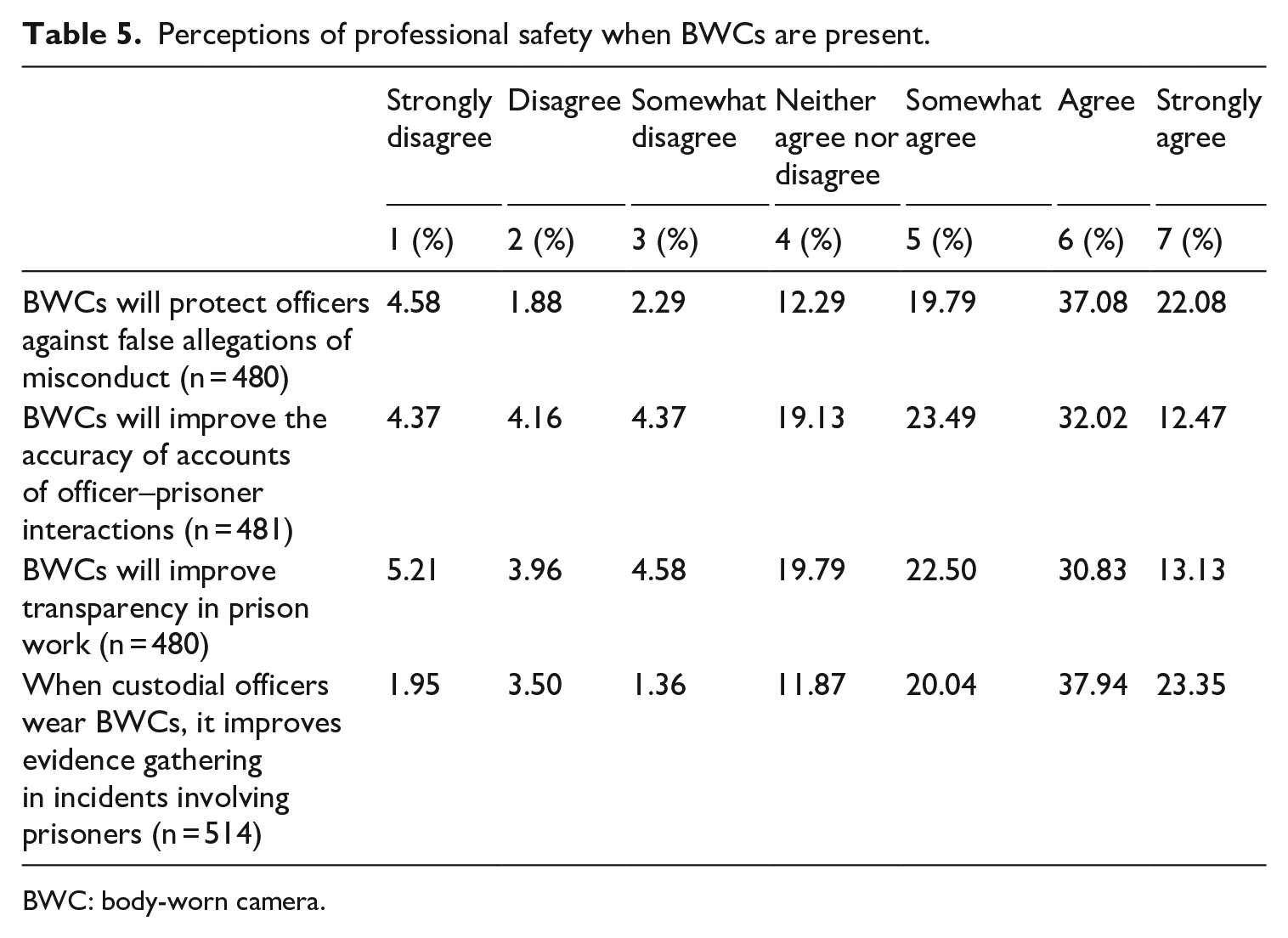
Although many officers did not feel that their physical safety had improved, most believed that the introduction of BWCs improved their professional safety by reducing the threat of false allegations or complaints by prisoners. The majority of survey respondents agreed that BWCs would protect officers against false allegations (79%) and that the cameras would improve the accuracy of accounts of officer–prisoner interactions (68%) (see Table 5). Furthermore, 81% agreed that when officers wear BWCs, it improves evidence gathering in incidents involving prisoners and 66% believed the presence of BWCs improves transparency in prison work. Collectively, these findings show that officers feel BWCs can help improve their professional safety by reducing the threat of false allegations.
Perceptions of professional safety when BWCs are present.
BWC: body-worn camera.
Similar sentiments were shared by interviewees. In fact, when asked whether the presence of BWCs improved their safety, many staff interpreted the question as referring to their professional safety. The overwhelming majority of correctional staff interviewed felt that the introduction of BWCs provided a sense of peace of mind knowing that their interactions with prisoners could be recorded:
As long as you’re doing the right thing, your body worn camera is going to be your first port of call as evidence to essentially save your job. (I10)
One officer recounted an incident in which BWC footage had provided evidence to support his version of events, and had effectively saved his job:
So what’s happened with me is I was in an incident whereby a prisoner made a claim that [he] was assaulted [by me] so I was suspended and stood down for a period of 8 months. I’ve only just returned to work and the only reason that I returned to work is that some footage came to light that showed I didn’t actually do what I was accused of. (I11)
Several officers described using the technology pre-emptively for prisoners known to make vexatious complaints:
I found it really helpful . . . [I] had a difficult prisoner that I was handing a breach to, and I made sure I had a camera on while I’m handing the breach because I thought there would be issues later . . . so that was really handy. (I04)
In addition to reducing the occurrence of vexatious complaints, staff also felt that allegations by prisoners would be dealt with in a more expedited manner when BWC footage is available—alleviating the stress associated with long, drawn out inquiries.
While CCTV cameras have long been used in correctional facilities, several interviewees recognized the benefits of BWCs over CCTVs, with a number pointing directly to the ability of BWCs to assist them in providing clearer evidence regarding incidents with prisoners. For many, BWCs were seen to offer more accurate accounts of prisoner–officer interactions since BWCs capture audio, which many felt was advantageous for providing evidence of their version of an event.
Who feels safer?
Next we examined whether officers’ perceptions of professional safety are associated with their demographics, BWC usage, or the prison where they are currently employed. As demonstrated in Model 1, Table 6, female correctional officers were more likely to agree that the presence of BWCs improves the accuracy of accounts of officer–prisoner allegations than their male counterparts (β = 0.112, p < .05). Other factors such as officer age, education level, frequency of BWC use, and activation or prison type were all non-significant. Compared to male officers, female officers were also significantly more likely to agree that BWCs will improve the transparency of prison work (β = 0.152, p < .01) (see Model 2, Table 6). Furthermore, officers who wore a BWC more frequently were more likely to agree that BWCs increase transparency (β = 0.132, p < .05). However, in relation to whether BWCs reduce false allegations (Model 3, Table 6) or improve evidence gathering (Model 4, Table 6), officers did not vary in their views.
Predictors of perceived professional safety when BWCs are present.
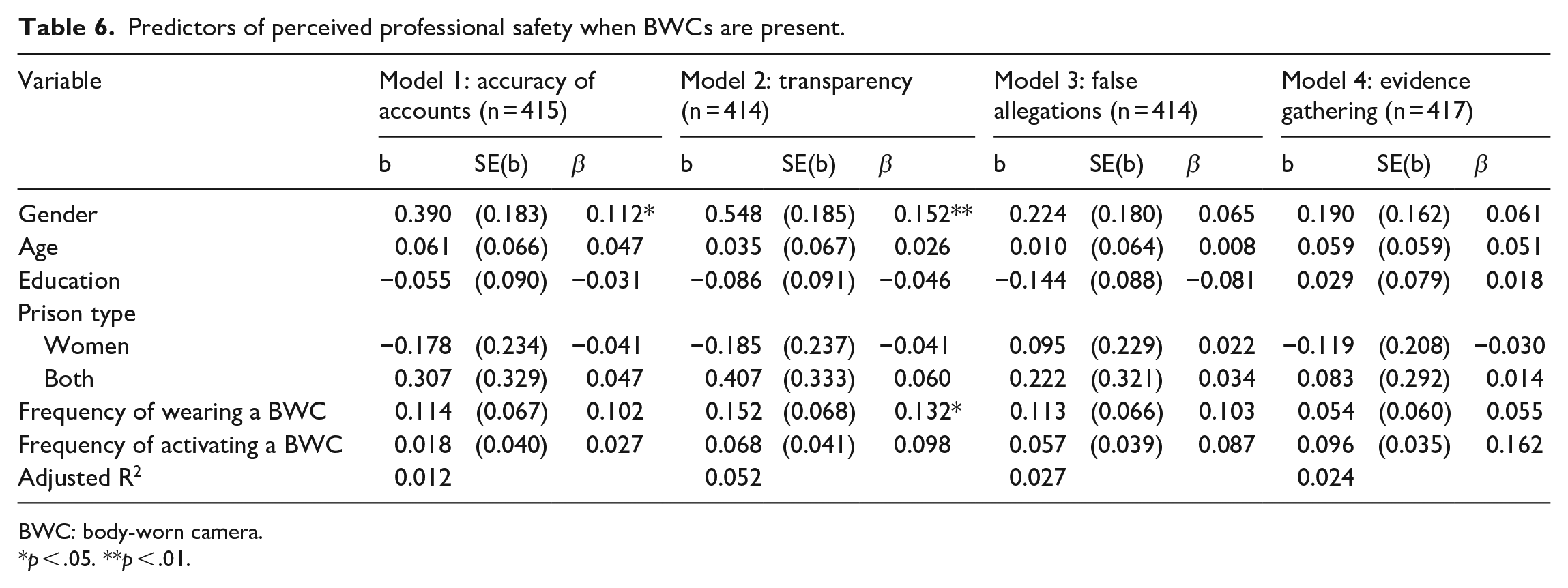
BWC: body-worn camera.
p < .05. **p < .01.
Discussion and future research
Prison violence has long been a concern for corrections agencies globally with correctional officers often victimized while carrying out their duties (Ministry of Justice, 2019). To safeguard staff, a number of initiatives have been trailed by corrections agencies worldwide including the introduction of BWCs. Through surveys and interviews, this study filled a gap in the available literature by providing a comprehensive understanding of correctional officers’ experiences and perceptions of safety when BWCs are used in a prison setting. In terms of physical safety, this study found that while almost one-half of the officers surveyed agreed that wearing a BWC makes them feel safer, relatively few officers felt the presence of BWCs had a civilizing effect on prisoner behavior in terms of reducing aggressive behavior or reducing the likelihood of prisoner-on-staff assaults. In explaining the reasons why they did not necessarily feel safer when BWCs were present, staff recognized that this technology would not offer any additional protection during an incident. Instead, the cameras were seen to merely provide a means of documenting an incident, as some corrections agencies have pointed out (Ministry of Justice, 2019). In terms of changes to prisoner behavior, correctional staff commonly questioned the efficacy of deterrence-based strategies—particularly with a prison population. These findings largely align with policing research which consistently shows that officers are generally skeptical about the ability of BWCs to improve their safety (McLean et al., 2015; Tankebe and Ariel, 2016).
We also assessed whether officer perceptions of physical safety vary depending on officer and prison type as well as BWC usage. Female correctional officers were more likely to report feeling safer wearing a BWC than male officers. This finding was somewhat expected, since studies show that female correctional officers generally report feeling less safe and have a greater perceived fear of victimization than their male counterparts (Garcia, 2008; Gordon et al., 2013). Gordon and Baker (2017) showed, for example, that female correctional officers have significantly higher “emotional” fear within the prison environment than male officers, including a fear of being attacked by a prisoner or being hurt when transferring prisoners between cells. It is possible, then, that female officers, more so than male officers, see BWCs as a tool that may act as a safeguard for their protection as they carry out their duties with prisoners. This finding appears unique to the correctional context, with policing research revealing no difference in male and female officers’ perceptions of safety when BWCs are present (Jennings et al., 2014).
In addition, we find that staff who activate their BWC more frequently were more likely to report feeling safer wearing a BWC—suggesting that greater familiarity with the technology reinforces its benefits. Other factors such as age, education level, prison type, and frequency of wearing a BWC were not associated with feelings of safety. By comparison, while officer characteristics and BWC usage were not associated with perceptions of prisoner-on-staff assaults, officers who worked across both men’s and women’s prisons were less likely to agree that the presence of BWCs leads to fewer staff assaults. One can only speculate as to the reason for these findings. It is possible that correctional officers who work in both male and female prisons are exposed to larger and more varied types of prison violence. They may, therefore, be more skeptical of the ability of BWCs to help to curb that violence. By comparison, officer characteristics, BWC usage, and prison type were not related to perceptions of prisoner aggression. Taken together, these findings are largely consistent with the policing context, with the exception of gender differences in feelings of safety.
In terms of professional safety, the overwhelming majority of survey respondents felt that the introduction of BWCs reduces the threat of false allegations while also improving evidence gathering during incidents involving prisoners, the accuracy of accounts of officer–prisoner interactions, and transparency in prison work. Similar sentiments were echoed in the interviews. Almost all interviewees described having greater peace of mind in knowing that their interactions with prisoners were recorded and that these recordings could be used to provide support for their version of events. These attitudes largely reflect police officer attitudes toward BWCs and professional safety (McLean et al., 2015; Smykla et al., 2016; Tankebe and Ariel, 2016).
In examining whether officer perceptions of job security vary when BWCs are present, we found that female correctional officers were more likely to agree that the presence of BWCs improves the accuracy of accounts of officer–prisoner interactions and improves transparency in prison work—a finding which aligns with work in the policing literature (Jennings et al., 2014). Given that female correctional officers often report feeling ostracized within highly masculinized prison environments, their openness to the ability of BWCs to shed light on potentially harmful practices occurring within that setting is not surprising (Burdett et al., 2018)
We also found that officers who wore a BWC more frequently were more likely to agree that BWCs improve transparency. This is likely because increased exposure to the BWCs provides officers the opportunity to observe the benefits of this technology. Unlike research in policing whereby younger officers were more likely to perceive BWCs as helpful in reducing internal complaints (Jennings et al., 2014), officer age had no impact on perceptions of professional safety—neither did education level or prison type.
Limitations and areas for future research
This study provides one of the first empirical examinations of correctional officers’ perceptions of safety when BWCs are present. However, there are several limitations which require consideration. First, in exploring who feels safer, a number of key variables previously linked to officer safety (such as prior victimization, level of contact with inmates, etc.) are not considered (Steiner and Wooldredge, 2017). Furthermore, we did not capture feelings of safety in prison generally. We also did not account for facility-level differences given that some of the survey respondents work across multiple prisons.
Furthermore, we were unable to determine the actual impact of BWCs on officers’ perceptions of safety as we did not collect baseline measures prior to the introduction of the cameras across Queensland prisons. Thus, future research should include pre/post measures which tap into officers’ feelings of safety both prior to and following the introduction of BWCs in their prison. While our study focused on officer perceptions of safety, future research should also consider the prisoner point of view. To date, no research has explored the impact (or lack thereof) that BWCs may have on prisoner behavior and feelings of safety. Understanding prisoner perspectives will provide a well-rounded view on the use of BWCs in corrections, from both parties who are most affected by the introduction of this technology.
Furthermore, while BWCs were introduced to help reduce the increasing number of incidents in Queensland prisons, particularly staff assaults (DCI, 2017), it is unclear whether the number of officially documented incidents has declined. Future research should therefore evaluate whether the deployment of BWCs is linked to a reduction in prisoner-on-staff assaults, staff-on-prisoner assaults, and prisoner-on-prisoner assaults. This will help to demonstrate whether BWCs are achieving their primary aim of making the prison environment safer.
Finally, a key reason for introducing BWCs in Queensland (and elsewhere) was to reduce the number of frivolous and/or vexatious complaints made against correctional staff (DCI, 2017). However, whether BWCs have had this impact is not yet known. Future research should, therefore, evaluate whether the number of complaints by prisoners has significantly reduced following the introduction of BWCs in correctional facilities, and furthermore, whether complaints are resolved faster when BWC footage is available.
Conclusion
BWCs have recently been introduced across a range of higher risk occupational environments, including prisons. Often, the rationale underpinning the adoption of a BWC program is that the cameras will act as both a deterrent to prison violence and provide a potential witness of interactions between correctional officers and prisoners (Timan, 2016). Given the scarcity of available research, our study examined whether correctional officers perceive the presence of BWCs to improve their physical and/or professional safety. Our findings revealed that many correctional officers did not feel safer or believe that BWCs had a civilizing effect on prisoners. However, they often recognized the camera’s value in preventing or quickly resolving false or exaggerated allegations made by prisoners. While these improvements in officers’ perceptions of professional safety highlight some ancillary benefits of this technology, there remains a need for corrections agencies to explore other avenues or strategies for increasing officers’ perceptions of physical safety. Without identifying effective strategies for improving officer safety, issues of occupational stress, burn out, and poor retention rates are likely to continue.
Footnotes
Acknowledgements
The authors would like to acknowledge the assistance of the QCS Research, Evaluation and Performance group, particularly Sandra Sacre, Jennifer Bell, and Melanie Conway, in facilitating the research. Thanks also goes to Rebecca Taylor for assistance with data coding and report preparation. Finally, we thank the QCS staff who participated in this study. The views expressed herein are those of the authors and are not necessarily those of QCS.
Declaration of Conflicting Interests
The author(s) declared no potential conflicts of interest with respect to the research, authorship, and/or publication of this article.
Funding
The author(s) disclosed receipt of the following financial support for the research, authorship, and/or publication of this article: This project was funded by a 2018 Queensland Corrective Services Research Grant awarded to the authors.
