



Abstract
The discovery of a rock art site in 2008 by an amateur archaeologist spurred a wave of public interest in archaeology in Maragatería, Spain. As new discoveries took place, alternative archaeological discourses thrived facing the inaction of institutional and academic archaeologists. A long-term study of Maragatería carried out by the author serves to explore the construction of archaeological epistemic authority in a context where various social actors compete for dominance. Gieryn’s notion of ‘boundary-work’ serves to analyse the different strategies employed by academic and institutional archaeologists, amateurs and pseudoarchaeologists to build epistemic authority. This article draws on Latour’s affirmation that the legitimisation of scientific objectivity should rely on ‘trust’ rather than on ‘certainty’. Ethnographic research showed that the more archaeologists attempted to legitimise their authority by reclaiming certainty, the more pseudoarchaeology proliferated. In contrast, the work of amateurs restrained the growth of pseudoarchaeology by creating networks of trust.
Keywords
Introduction
The discovery of a prehistoric site with petroglyphs in 2008 by an amateur archaeologist has spurred an unprecedented wave of public interest in archaeology in Maragatería, a county located in the province of León, Spain. The Petroglifos de Peñafadiel became a matter of concern in the area for institutions, journalists and academics, but also triggered the appearance of amateur and pseudoarchaeological narratives that rapidly thrived among the public. As more prehistoric sites were discovered throughout the region and more people were involved in their discovery and diffusion, the production and spread of archaeological knowledge went beyond the boundaries of professional archaeologists working in academia and public institutions.
This situation opened up two main research scenarios that are addressed in this article. First, academic and institutional archaeologists in the region did not respond to the challenge posed by alternative archaeologists to their epistemic authority, thus paving the way for the proliferation of alternative archaeologists and a reshaping of the boundaries of archaeology as a cultural field. As archaeologists usually focus on constructing certainties about the past, they often disregard how non-scientific actors develop alternative knowledge claims, and how their own certainties are conveyed and received by the public. Indeed, archaeologists often ignore the discourses of those labelled as amateurs and pseudoarchaeologists and exclude them from academic debate, despite their being often more successful in conveying their ideas to the public about the past. The moral dismissal by professionals and academics validates alternative critiques and obscures the complex and ambivalent relations between different epistemic authorities and their public reception. This article asks, then, how did different social actors develop strategies to establish their epistemic authority by imposing their meanings upon archaeological objects? Gieryn’s (1999) concept of ‘boundary-work’ is used to answer this question and to analyse the efficacy of the strategies employed by actors in sustaining their claims and challenging the authority of other actors. However, Gieryn’s conceptual framework focuses on how scientists use boundary-work to reassert their authority. Here, I aim to explain why, out of infinite possibilities, some historical and scientific meanings win support at the expense of others.
A second research scenario derives from this analysis. If we are interested in the construction of scientific epistemic authority, it is necessary to explore the criteria non-scientists use to evaluate it, such as trust, reputation or credibility. Thus, this article asks whether archaeological authority is based on claims to objectivity and representational accuracy, i.e. certainty, or on the creation of reputation and credibility among a collective, i.e. trust. In other words, this article examines whether evaluations of the truth or falsity of knowledge claims are more important in building epistemic authority than an assessment of the reputation of the sources of knowledge. Following Latour’s recent reassertion of the role of science against rising public scepticism, I argue that a realistic defence of objectivity ultimately involves not making ‘an appeal to Certainty’ but ‘an appeal to Trust’ (2013: 5) in the institution of archaeology. This involves reformulating the relationships and values that connect the discipline and the public based on lessons learnt from the practices of alternative archaeologists.
Given the growing mistrust in the authority of modern science among the population and the broader context of epistemological insecurity (Harambam and Aupers, 2014), my motivation for pursuing this research is to understand why and how archaeology is being disputed, and the political consequences that stem from it, such as the increase in nationalist and xenophobic interpretations of the past. The analytic implications of this investigation are significant, for the relevance of archaeology as a social science rests on the public reception and spread of its knowledge claims, and other social actors are contesting those. Academics have looked frequently at alternative and popular archaeologies, and explored the potential and deficits of public archaeology in various countries, including Spain (Almansa Sánchez, 2013; Holtorf, 2005). Scholars like Harambam and Aupers (2014) have examined from a cultural sociological how conspiracy theories contest the epistemic authority of science perspective. But no studies have analysed how amateurs and pseudoarchaeologists construct their archaeological epistemic authority in the field, and contest the authority of other actors by formulating alternative accounts of what is ‘truth’ and contesting professionals as the only actors with ‘the legitimate power to define, describe and explain bounded domains of reality’ (Gieryn, 1999: 1).
Maragatería provides a perfect place to analyse this cultural phenomenon and the boundary-work strategies that underpin the constitution of epistemic authority in an ethnographic approach to archaeological knowledge practices. This article addresses one of the topics dealt with in my broader ethnography of the Maragatería since 2008, from the combined perspective of cultural sociology, and science and technology studies. The aim is to explore the construction of archaeological heritage by asking how it is used, defined and managed by different actors. To do so, I draw on ethnographic methodologies, including 72 semi-structured interviews with amateur, professional and alternative archaeologists, and other actors not directly related to archaeology. I also held informal conversations, and carried out a digital ethnography, to follow up on the actors, analysing the public repercussions of the archaeological discoveries.
I consider those within the institutional-academic framework of archaeology to be professional archaeologists supporting and producing what Bourdieu (1984) would consider the dominant order within a specific cultural field. Those are workers making a living from archaeology, including those at the University of León, commercial companies, and public institutions such as the Museum of León and the provincial archaeologist of the Regional Government of Castile and León. This study focuses on those under the umbrella category of non-professional archaeology, including amateurs and pseudoarchaeologists, which I differentiate for analytic purposes. Non-professionals engage in archaeology as a pastime, not for gain – although they can earn money from merchandising and book publishing – and often without educational credentials in archaeology. What differentiates them from other people is not their knowledge of archaeology, but their appreciation and practical interest in it. I refer to amateurs as non-professional individuals inclined to establish relations with the institutional-academic framework and to support the epistemic authority of archaeological science. By pseudoarchaeologists I understand the relatively stable but fluid group of people generally labelled as such, non-professionals that tend actively to deconstruct official ‘truths’ of the institutional-academic framework and to challenge its authority, while promoting and consuming alternative truths and producing interpretations of past material culture based on religious, mythological, commonsensical or ideological discourses.
Scientific Epistemic Authority and Boundary-Work
Accounting for the underpinnings of the epistemic authority of archaeology requires a broader understanding of what makes science authoritative. According to Yearley (2004: 5–15), the essentialist argument, based on absolute criteria of demarcation, affirms that the authority of science rests on its unique values, methods and norms that distinguish it intrinsically from other forms of knowledge. The drawback of this explanation is that not all stakeholders might acknowledge the distinctive authority of science: the constitution of epistemic authority is a relative rather than an absolute process conditioned by social and cultural perceptions of science. In contrast, the constructivist explanation of scientific authority underscores the contextual and socially-mediated processes that underpin the legitimacy of authority (Latour, 2013). Social recognition of the sources of authority and the acquisition of knowledge, however, depends on assessments of competence in the provision of certainties and on the creation of trust in the institution of science. Thus, for people to submit to the authority of science, they require evidential criteria of its usefulness and validity that are meaningful in their interpretative frameworks (Origgi, 2004).
From a constructivist standpoint, then, the development of epistemic authority relies on a variety of contingent circumstances that have to do as much with certainty as with trust (Meyer, 2008: 38). But the relationships between the production of trust and certainty and the definition of the boundaries of scientific authority are not linear and unmediated. Rather, understanding how these relationships are articulated in each scientific field demands specific research in empirical situations bounded to each particular discipline. Hence Gieryn’s (1999) insistence on the need to analyse episodes of boundary-work where social actors demarcate certain activities as non-science, and attribute selected characteristics to the institution of science, including its legitimate practitioners, methods, discourses and values.
While Gieryn’s conceptual framework has been used extensively to account for the strategies employed by scientists to reassert their authority, less attention has been paid to how other actors implement their own boundary-work strategies to expand their authority and influence over scientific domains. Similarly, scant attention has been paid to whether boundary-work strategies are based on trust or certainty, and the significant impact this has on the construction of scientific authority among the public. For instance, scientists might carry out a boundary-work of expulsion by denigrating pseudoscientists on the grounds of their lack of epistemic certainty, and consider their rhetorical strategy successful in academic circles. However, this might also erode the social trust of the public in scientists because of their perceived elitist and paternalistic attitudes, and thus reinforce pseudoscience in practice. It is this complexity I want to tackle here by analysing a series of interrelated processes where the epistemic authority of archaeological science is negotiated.
The Boundaries of Archaeology
Like other modern sciences, the historic development of scientific archaeology was grounded on the work of amateurs. Amateurs devoted most attention to presenting their findings to wider publics and raising awareness about the relationship between archaeology, cultural identity and science. Despite amateurism being an intrinsic part of the historic development of every scientific discipline, histories of archaeology usually present an evolutionary model whereby amateurs are gradually replaced by professionals, and antiquarians by archaeologists (Trigger, 1989). However, amateur archaeology should be better conceived of as a self-legitimising component of the vocabulary of professionals, as ‘there can be no self-defined amateurs until they can be condescended to by self-defined professionals’ (Taylor, 1995: 502).
Since the early 20th century, archaeology has played a fundamental role in the construction of national identity in Spain. In turn, nationalism was essential for the establishment of an institutional and academic framework of archaeology and for the development of its public image (Díaz-Andreu, 1995). Today, however, both processes are reframed in the context of a surge in the public interest in heritage since the 1980s, which threatens the institutional-academic framework of archaeology as the sole producer of authorised knowledge (González Álvarez and Alonso González, 2013). In this context, the 1978 constitution sanctioned the division of Spain into 17 regions with autonomous governments, which started to search for political legitimacy in the past. Although pseudoarchaeology was not a novelty in Spain, this situation has facilitated the re-emergence of pseudoarchaeological narratives that connect regionalist ideologies associated with the new autonomous regions with alternative discourses about the past (Marín Suárez et al., 2013).
Despite the growing appeal of pseudoarchaeology in contemporary Spanish society, as evinced by the popularity of public exhibitions and TV and radio programmes such as Cuarto Milenio (Canosa Betés, 2015), it is usually ignored by academics. Among Spanish professional archaeologists, there is a tendency to dismiss pseudoarchaeology as irrational belief without examining its functioning and social impact. Academic archaeologists have defined pseudoarchaeology as cult, alternative, fringe, fantastic or bullshit archaeology. They affirm that the different strands of pseudoarchaeology have in common the creation of discourses about the past outside the institutional-academic and commercial archaeological frameworks, usually through the partial assumption of methods, theories and analytic tools drawn from scientific disciplines (Derricourt, 2012). Those are mixed with insubstantial arguments connecting otherwise unrelated cultures and civilisations (either historic or alien), often grounded on fabricated evidence and expressed in romantic terms (Fagan and Feder, 2006).
In their critique of pseudoarchaeology as non-scientific, archaeologists normally emphasise the scientific methodology of archaeology and the existence of a real past ‘out there’ that only science can discover objectively: ‘we deserve a veritable past, a real past constructed from the sturdy fabric of geology, palaeontology, archaeology, and history, woven on the loom of science’ (Feder, 1990: 201). For Fagan, contrary to pseudoscience, in the archaeological endeavour ‘new evidences or arguments have to be thoroughly scrutinized to secure their validity’ (2006: 26). Charges of religious belief and superstition are used to create a wider gap from pseudoarchaeology, which is ultimately depicted as the counterpoint of the rational enterprise of archaeology.
The pejorative labelling of alternative archaeologies as pseudoarchaeology by academic archaeologists can be interpreted as boundary-work involving expulsion of competitors and of protection of institutional-academic authority. Archaeologists reinforce the modern divide between rational science and the supposedly irrational beliefs of their counterparts when they criticise pseudoarchaeologists for their alleged lack of rigour or representational accuracy – i.e. for their lack of certainty – in relation to a supposedly clear and distinct past that only they can portray objectively. Others like Holtorf (2005) present a more inclusive attitude towards alternative archaeologists, arguing that the patronising attitude of institutional-academic archaeologists damages the public image and social perception of the discipline. Moreover, alternative archaeologists are usually more successful in creating interpretations that are meaningful for a non-expert public (Holtorf, 2005: 547). For Holtorf, the consonance between the material culture and the representations created by archaeologists in the search for certainty is desirable, but not essential. However, for Kristiansen, Holtorf’s standpoint ‘represents a dangerous attempt to deconstruct archaeology as a historical discipline in order to allow modern market forces to take over the archaeological heritage’ (Kristiansen, 2008: 488). Against Holtorf’s view, he opposes a ‘democratic-political framework of legislation and academia’ striving to investigate the ‘real past’ (Kristiansen, 2008: 488). However, Kristiansen’s argument takes for granted that claims about the objectivity of archaeological science (certainty) can be equated with confidence in the academic-institutional framework provided by public administrations (trust). His stance ignores the question of whether the public agrees or not with this view, and disregards situations where public institutions are weak or non-existent. Kristiansen’s theoretical argument can be interpreted as a boundary-work of expansion that attempts to make the ‘real past’ the sole concern of archaeologists.
Building Trust: The Stone Fever and the Amateur
Although this blog has been created with the aim to disclose the archaeological values of Astorga and its surrounding areas, no one should expect to find here an account worthy of a scholar, because I am not. I am just an apprentice of all which I ignore, which is mostly everything. Having said this, I guess and hope that purists will excuse my inaccuracies. (Juan Carlos Campos, first entry to his blog La Tierra de los Amacos: Campos, 2008a).
Juan Carlos Campos considers himself an amateur archaeologist. He used to visit archaeological remains, using aerial photography and drawing on local knowledge to explore new sites in Maragatería. This is a marginal and depopulated area in the northwest of Spain, known for the distinctive identity of its inhabitants, the Maragatos, and its wealth of archaeological heritage. The presence of two parallel lines of white dots 50 metres long drew Campos to the area of Peñafadiel, where in 2008 he discovered rocks with prehistoric carvings dating back to the Neolithic period. Here started what he calls the ‘stone fever’: the spread of awareness about prehistoric remains in Maragatería (Figure 1).
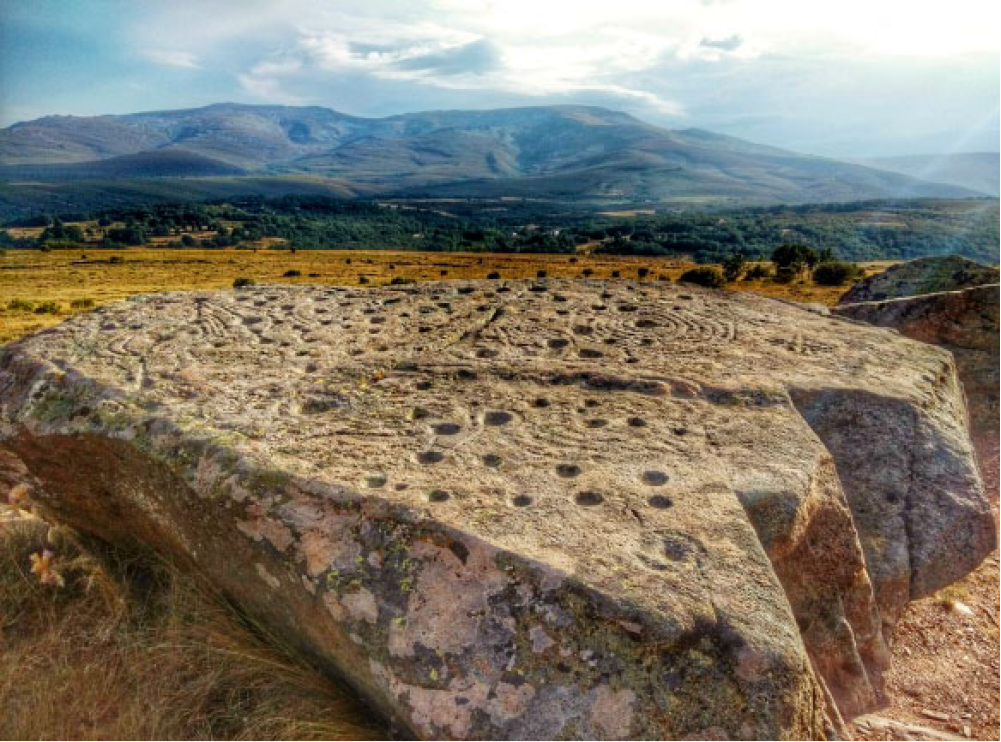
One of the stones of the petroglyph rock art site of Peñafadiel.
Before the discovery, knowledge of prehistory in the area was almost non-existent aside from the well-known presence of Iron Age hillforts. This is due to the weakness of the institutional-academic framework in the area that results in the near absence of archaeological surveys, research, publications and investment in the province of León when compared with other neighbouring regions. The institutional-academic framework that usually exerts control over archaeological heritage in other areas is here almost absent. Aside from professionals in public institutions – one archaeologist working for the regional government in León, and one museologist working in the provincial Museum of León – and four academic archaeologists at the University of León, few commercial archaeology companies operate in the province, with little presence in Maragatería. Thus, professional archaeologists are not in a good position to carry out much boundary-work of any kind in the area regarding the production of archaeological knowledge.
After the discovery, Campos tried to contact academic and institutional archaeologists, but they showed little interest at the beginning. This illustrates a boundary-work strategy of expansion by professional archaeologists: not taking seriously views and opinions other than those of their peers. Although now he has friendly and constant dealings with them, Campos, like most amateurs and people outside the institutional-academic framework I interviewed, considered experts to be unreachable individuals hiding in their offices. This public understanding of professionals partially explains the lack of diffusion of formal archaeological discourses and of straightforward channels of communication between experts and the public. Indeed, the public finds it easier and prefers to engage with online communities and journalists, where processes of exclusion are less likely to occur.
Facing this situation, Campos started a boundary-work of expansion to enrol others in his knowledge claims by publishing pictures of the petroglyphs online. Tellingly, he did not trust academics and institutions, but he did trust the online community where he published his findings: a popular and controversial alternative archaeology website that was afterwards shut down (Celtiberia.net, 2008). Similarly, he contacted the regional media, with whom he developed trustworthy interactions and who have wholeheartedly supported and spread his discoveries since then on.
The discovery rapidly became of national and international interest, with many other sites of lower significance appearing throughout Maragatería. Interestingly from a boundary-work perspective, most discoveries were made by local people who saw the news of Campos’ findings and realised that there were similar sites in their villages. The appearance of new archaeological sites occurred outside the institutional-academic framework, and instead resulted from a higher level of overall social awareness about archaeology, thanks to the role played by an amateur in building trust with the public and spreading news through the media and online forums. This shows that the epistemic authority of amateurs rests on the creation of networks of cooperation based on trust. In addition, it shows how both the amateur himself and a growing number of people pushed the boundaries of science and entered a terrain traditionally restricted to institutional-academic archaeologists.
The lack of authority of the institutional-academic framework was evinced by the phenomenon of the rediscovery of archaeological sites. This means that local people would discover archaeological sites, document them, and make them public online and in the media to claim the authorship of the discovery, even on occasions when they had been previously documented by archaeological surveys and kept in institutional records. For instance, the cultural association Carrubueis claimed the discovery of a rock art site in Andiñuela, which was announced in the cultural section of the main provincial newspaper with great fanfare (Gancedo, 2008a). However, the site had been already documented during the regional archaeological survey in the 1980s and information about it had been published. There were similar occurrences at other sites.
Carrubueis is an association that aims at the preservation and promotion of Leonese culture in the area of Astorga. All members of the association held postgraduate degrees and knew the territory well. However, in our conversations they recognised their ignorance of the existence of an archaeological survey or the works of professional archaeologists. The situation can be partially explained by the fact that the archaeological survey functions as a boundary-work of exclusion: it is not made easily available to the public and is located in León, where permits must be granted by the regional government to consult it. This increases the lack of visibility of institutional-academic archaeology and goes against the advancement of knowledge, as people focus their curiosity on already-known sites. Thus, although archaeology might have remained a visible science since the 19th century with regard to the process of excavation, it largely conceals the other scientific processes from the public (inventory, laboratory work, records and catalogues, etc.).
Networks of trust have largely replaced the institutional-academic framework that defines in theory and by law what should be done with archaeological heritage. Significantly in terms of boundary-work, local people did not follow the procedures established by heritage legislation in terms of discovering new sites – i.e. contacting institutions. Rather, they contacted Campos, who has become a mediator enacting a process of translation of archaeological knowledge between the public and institutions in the area. This is related to what I call the ‘politics of discovery’, which are closely related to ethical decisions that reinforce the creation of trust. The politics of discovery reflect the social perceptions of institutions and experts, but also the consequences of making archaeological discoveries public. For local inhabitants with land, this involves fears of public confiscations and controls. Amateurs and pseudoarchaeologists, instead, negotiate their prestige and social recognition through claiming discoveries and appearing in the media, which is not disconnected from their interest in selling books and giving talks. Thus, falsification procedures and certainty are not an issue for them, as they would be among professional archaeologists.
As the number of amateurs and cultural associations involved in the search for archaeological sites has increased, Campos has been on many occasions hesitant to reveal his discoveries to the public out of concern for the preservation of the sites. However, he also carried out a boundary-work of protection in this regard, as he did not want others to claim the discovery of some remains before him and thus to risk losing social recognition and the capacity to enrol others in his knowledge claims.
As the level of awareness concerning rock art increased, not only did archaeological heritage matter, but so did the consequences of having it recognised by institutions. People in Maragatería tend to overestimate the capacities of institutions and many equate archaeological findings with trouble: land expropriations, accountability or tourists. This is so, as Campos argues, ‘even if they [institutions] have not taken any measure nor done anything even in the [case of the] most important petroglyphs of Filiel … go figure if the institutions are going to do something in the other sites …’ (Interview 36B, July 2009). Campos also recounts the story of a man who showed him a rock art site and made him promise that he would not reveal its existence, because he was afraid that some institution ‘would get rid of the whole area with a bulldozer, to dig, or fence it, or something’ (Interview 36B, June 2012). Campos agreed because there were enough prehistoric carvings all around, and thus announcing the discovery of a new site would be unimportant. This contextual and ethical assessment of each specific situation reinforced the local network of trust he had built throughout the years.
I was also involved in the process. On one occasion, a man asked me to go to his village to see stones. There, his mother, who was a shepherd, recalled having seen stones similar to those appearing in the newspapers nearby the village. Indeed, they took me to the place, which was covered with vegetation and soil. Before I could tell them that we would need a permit to dig it, they did so and the carvings appeared just below a thin layer of soil. They then asked me not to reveal their location. I asked why, and the mother bluntly replied: ‘People here are rough. If they think or know that there is something here, they will destroy it’ (Interview 37, November 2011).
These situations illustrate, first, that some amateurs are willing to cooperate with the institutional-academic archaeological framework, thus preventing the emergence of pseudoscience and indirectly enacting a boundary-work of protection of scientific authority. They talk in plain language, avoid patronising people and, contrary to the institutional-academic framework, are open to ethical negotiations. Second, they show that trust prevails over certainty in the social expansion of archaeological knowledge, the reputation of Campos being more significant than the veracity of his knowledge claims. This is so because trust is based on the recognition that the other person will be reasonable enough to make ethical and political decisions based on local contexts rather than assessments based on the institutional procedures supported by claims to certainty. Third, these situations show how expert knowledge does not enrol the public in its knowledge claims. Conversely, they show that people do not see academics and institutions as sources of knowledge and epistemic authority.
The Search for Certainty: The Institutional-Academic Framework
In different interviews and on his blog, Campos expressed his concern about the lack of academic and institutional concern for the petroglyphs and the numerous other sites that were being discovered. In 2009, a year after their discovery, the regional government of Castile and León adopted measures for their preservation and signalling. At first, the government effected two metallic information panels of a rather shabby appearance, but also misleading and erroneous in terms of content. This process exemplified how the boundary-work of expansion by institutions can breed mistrust among the local population.
For instance, the mayor of Lucillo, where the petroglyphs are located, was surprised by the manner of the panels’ installation. As he told me, two workers approached the city council asking for the location of the petroglyphs. One local inhabitant accompanied them to the site, where they carved out holes in the archaeological area, fixed the panels to the ground with concrete, and then left swiftly. They worked for a signage company hired by the regional government; they had no archaeological knowledge, and no archaeological supervision. The fact that carving holes in archaeological areas without archaeological monitoring is illegal, according to the regional heritage legislation, did not matter because the commissioner of the project was the regional government.
What occurred subsequently provided a clear example of the certainty paradigm assumed by the institutional-academic framework. In 2009, the regional government allocated €18,000 for the study of the petroglyphs to academics from the University of León. The aim was to ensure certainty about the archaeological object, drawing on scientific archaeology to ground decision-making by institutions regarding the signalling and musealisation of the petroglyphs. Thus, the legitimacy of institutions rested on their correct decision-making and bureaucratic performance based on the certainty provided by professional archaeologists. These in turn equated the production of certainty with the generation of accurate and objective representations of archaeological objects. The academic study of the petroglyphs based on processual archaeology excluded local people and equated preservation with an accurate representation of the petroglyphs, which could be interpreted as a boundary-work of protection–expulsion. Accordingly, the paper resulting from the investigation dealt with nine techniques of petroglyph recording.
The publication of the preliminary results of the study took place three years after the discovery (Bernaldo de Quirós Guidotti et al., 2011). This was to the despair of Campos (2012), who had been waiting for these results to advise other amateurs about how to go about the politics of discovery of a new site. For instance, when Mark, a Belgian living in Maragatería, discovered a menhir with inscriptions owing to the directions of a shepherd, he did not call the institutional experts, the University of León or the newspapers. He called Campos, who convinced him not to reveal its location and to wait for expert advice:
Although Mark’s intention was to reveal his discovery as soon as possible, we agreed to wait some weeks, as the outcomes of the study about the Maragato carvings [the petroglyphs] seemed to be imminent and it made sense to wait for the experts to come and see it. However, after months without news from them, Mark decided not to wait anymore. (Campos, 2008b)
The certainty produced by academics in the form of accurate representations of the petroglyphs was employed by institutions in charge of heritage to implement new panels with improved design and content in 2012 (Figure 2). This involved another type of boundary-work related to the representations that appeared in the panels, which could be seen as ‘interpretive walls’ that protect the authority of professionals. The panels purified the petroglyphs from their hybrid contents, dealing with those elements perceived as authentic – i.e. prehistoric – and leaving aside others such as contemporary shepherds’ signatures. This situation is problematic and decreases the trust in scientific epistemic authority for two reasons. First, it questions the ideal of objectivity purported by science and the meaning of ‘discoveries’. Local shepherds knew about the existence of the petroglyphs and many other sites well before the arrival of Campos and professional archaeologists: they just lacked the tools and knowledge to transform them into scientific objects.
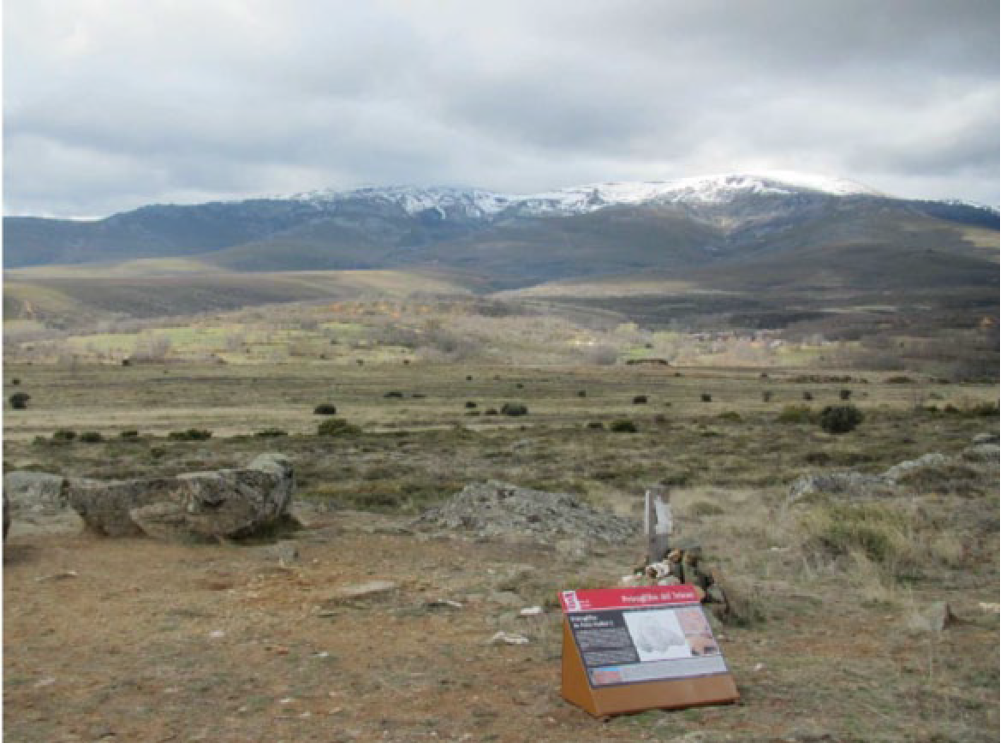
The new signposts at the petroglyphs. In the background, the Teleno Mountain, praised as the god Tilenus during the Roman era.
Second, it avoids addressing the question of the long-term social uses of archaeological sites and their changing social perceptions. Local people are left outside the study and the museological discourse, being considered a threat to the site or as subjects to be educated about the ‘real past’. Indeed, the worldviews of many inhabitants of Maragatería, especially the older inhabitants, differ from modern Western standards, as in other pre-industrial societies. Consequently, they struggle to incorporate the scientific discourse of prehistory into their worldviews. According to local views, the rock carvings appearing throughout Maragatería would be made by their ancestors as passed down by oral tradition in an undetermined past, or by certain mythical characters inhabiting the forests and abandoned archaeological sites: the mouros. However, the boundary-work of the institutional-academic framework excludes alternative understandings of the past from representation, disregarding a different worldview and setting it apart from science. As a result, the museographic panels purify the petroglyphs, only representing the ‘authentic’ prehistoric ones without accounting for medieval or contemporary signatures and their contemporary local interpretations.
Beyond Trust and Certainty: Pseudoarchaeology
The petroglyphs have undergone a wave of appropriations and uses that exceed the work of the institutional-academic framework and Campos. Maragatería has always been a preferred site of study and speculation for many researchers, as the Maragatos are considered as part of the ‘damned peoples’ of Spain and as a differential ethnic group (Alonso González, 2016). The damned peoples are social groups that have been considered as racially or ethnically different historically, which has led to their marginalisation within their national and local societies. Damned peoples include, in France, the Cagots; and in Spain, the Gypsies, the Pasiegos, Vaqueiros and Chuetas.
From the discovery of the petroglyphs in 2008, only one short academic paper has been published, while non-professionals have published at least four books and one paper. Various blogs and online forums have emerged with a focus on archaeological and pseudoarchaeological topics, and there is a steady trickle of archaeological news in the provincial and national media, with famous programmes devoted to pseudoscience often reporting from Maragatería.
The question that emerges here is how to establish the boundaries between amateurs and pseudoarchaeologists. Mainly it is by focusing on their differential practices and boundary-work strategies: their relationships with the institutional-academic framework, their methods and discourses, and their relation to political ideologies. Although Campos initially dabbled with pseudoarchaeology and fringe online communities, he was quick to seek advice and discuss his views on rock art with professional archaeologists (Interview 36B, June 2012). My interviews with him demonstrate his efforts to differentiate himself from pseudoarchaeologists in many ways. In addition, his book provides descriptions and empirically grounded scientific interpretations of rock art (Campos, 2011). This shows that the construction of epistemic authority based on trust does not exclude the existence of claims to certainty, but rather reinforces it.
Contrary to pseudoarchaeologists, his authority does not depend on venturing connections between the petroglyphs and esoteric or political discourses. He actively seeks and respects the opinions and views of academics, and indeed the prologue of his book was written by an academic and was presented in public under the aegis of scholars from the University of León. However, his status as an amateur was not so unambiguous when he initially published his findings in an online pseudoarchaeological forum and referred to the ‘mystery’ of the two parallel lines of white dots (Celtiberia.net, 2008).
Analysis of his publication and the four hundred replies it had in just three months reveals the potential and functioning of pseudoarchaeology. Comment #61 related the white dots with the Maragato villages of Piedras Albas and Lucillo through the etymological relation of their names with meanings of light and brightness. Then #88 established a necessary connection between the dots and the god Tilenus. He argued that the white dots must be related with light, and ‘Tilenus is the God of the Storm and the Thunder, and, I guess, of bolts as well: that is, white light’. The god Tilenus is also connected with other mythical sites like Teleña and Taranis. This is all possible because, according to comment #61 ‘we are speaking about Maragatería here’, implying that Maragatería is a magical place where everything is possible. In fact, the necessary connection between prehistory and the enigma of the origins of the Maragato people was accomplished by comment #80, which linked an 18th-century theory affirming the Carthaginian origin of the Maragatos with a Phoenician site in the area.
Finally, when it was revealed that the white dots were actually quarry test-pits, the debate shifted towards other uncharted terrains. This shows that carrying a boundary-work of expansion and building reputation among pseudoarchaeologists involves the establishment of connections between different mythologies, discourses and essentialist notions of identity, with concern neither for any form of validation based on objective knowledge claims – i.e. certainty – nor for the establishment of trustworthy relationships with local communities.
A key area for the negotiation of epistemic authority among pseudoarchaeologists is the politics of discovery. Indeed, the core group of pseudoarchaeologists in Maragatería accused Campos of making public their own discovery of the petroglyphs and of betraying them for contacting public institutions and the media. Significantly, among them was the director of the culture section of Diario de León, the most read newspaper in León. But the most prominent in questioning the authority of Campos through a boundary-work of expulsion was García Montes, who has since then mounted a public claim on the site and its interpretation as a mysterious area of worship that has received wide media coverage. In his interpretation of the petroglyphs, he ventured that the ‘perimeter of the site is delimited by 15 dots that are visible from the air, which makes it possible to establish a relationship between the site and cosmic references (a cult to the sun maybe?) or maybe religious (a cult to the sacred mountain? To the god Tilenus?)’ (cited in Gancedo, 2008b).
Soon afterwards, García Montes (2008b) published an article about the discoveries without ever mentioning Campos. During a talk he gave in Luyego in August 2012, entitled History of the Present to the Limits of the Unknown, someone sitting next to me in the audience asked him why he had not mentioned Campos, with García Montes replying that there was no need to. This shows how pseudoarchaeologists perform boundary-work to define their field of activity, excluding other subjects such as Campos, perceived as interested individuals and traitors for collaborating with the institutional-academic framework. From another perspective, it also shows how the network of trust created by Campos among the local public restrained the spread of pseudoarchaeological discourse.
Another feature of pseudoarchaeological boundary-work is the combination of epic narratives with an open rejection of the authority of academics and institutions, implying that they conspire to hide the ‘real truth’. García Montes and his group sent a letter to the Museum of León claiming authorship of the discovery which, according to them, should include the mysterious white dots. García Montes reinstated his claim to be the original discoverer of the site against Campos, and argued that he had preferred not to reveal its location because institutions are ‘usually quite inoperative, as they have demonstrated on other occasions’ (García Montes, 2008a).
The director of the museum replied, arguing that their ideas made no sense because the dots were the test-pits of a quarry. After that reply, and in contrast to Campos, García Montes and his collaborators rejected any future contact with the institutional-academic framework. In delimiting the boundaries of their practice, pseudoarchaeologists needed their professional counterparts as a foil against which to constitute their alternative epistemic authority – an attitude that is not necessarily assumed by the amateur. This means that pseudoarchaeologists also actively engage in boundary-work, and this involves assuming a position external or opposed to the establishment that claims monopoly about interpretations of the past over other groups (Bourdieu, 2004).
The methodologies employed by pseudoarchaeologists further distinguish them from other social actors. In Maragatería, those include free archaeological reinterpretation, archaeoastronomy, magnetic pendulums and dowsing. González González, for instance, combines archaeological methods, empirically grounded data and anthropological theory with archaeoastronomy and fictive interpretations. His narratives incorporate multiple mythologies, calendars and magical forces in the interpretation of archaeological remains in Maragatería. This shows that pseudoarchaeologists are not against archaeology as a science; they emulate scientific practices and discourses, but give them a different orientation. For González González:
The meaning and function of the petroglyphs become ever more enigmatic due to the powerful proximity of the Teleno, the sacred mountain of the Astures; they seem indecipherable. Why were these stones carved and not others? Was it an ancestral entertainment for shepherds? Are we dealing with sacred sites for ancient and unknown cults? (2011: Prologue).
To answer these questions, he connects the cult to the Roman god Mars, the petroglyphs and oriental, Celtic and Scandinavian legends. His research assumes the existence of a historic region called Asturia inhabited by the Astures, which comprises the contemporary areas of the provinces of León and Asturias. The existence of these geographic and ethnic denotations has undergone a significant academic critical review since the 1990s (González-Ruibal, 2006). However, academic knowledge does not reach the public, and if it does, it does not matter. The establishment of connections between past and present is a cornerstone of pseudoarchaeology.
This illustrates another instance of boundary-work of expansion by pseudoarchaeologists: the connection of their archaeological interpretations with regionalist ideologies. The notion of Asturia is a cultural-historical concept deriving from the colonialist writings of classic Roman authors after the conquest of Iberia. Today, Leonesist movements try to gain symbolic legitimacy by establishing a genealogy connecting the pre-Roman indigenous peoples (the Astures), the medieval kingdom of León, and contemporary vernacular peasant cultures. This is related with a broader movement in northwest Spain, including Galicia, Asturias and Cantabria, where regionalist movements link their political claims for cultural particularity against the Spanish central state with the Celtic past, (González Álvarez and Alonso González, 2013). The implicit subtext of this discourse and of other León nationalist pseudoarchaeologists and authors is that the authentic identity of Leónese ancestors, the Astures, remained latent after the Roman conquest and reached the contemporary era via vernacular cultures and societies.
The regionalist agenda of González González becomes clear in the introduction to his book The God Tilenus: Master of the Bolt, of the Labyrinth, and of Death:
Drawing on the material, mythological and traditional remains that have come down to us, we will look in depth at the religiosity and worldview of the ancient inhabitants that the Romans would designate centuries after as the Astures, and which constitute the historic and cultural underpinnings of the present-day Leonese people (González González, 2011: n.p.).
The enigma surrounding the origins of the Maragatos provides a way of symbolically connecting the present and the ‘Celtic’ past without any historical evidence (Figure 3). Moreover, González González is presented as a researcher in newspapers, where he provides confident and apparently solid – although empirically and scientifically ungrounded – answers to journalists to the rather complex questions they pose him. The wide media coverage pseudoarchaeologists enjoy in the province of León facilitates their boundary-work. They use the media to blur the distinction between the epistemic authority of professional and non-professional archaeology, while actively disregarding the existence of the institutional-academic framework of archaeology. This discourse is mutually reinforcing: the connection with regionalism reasserts González González’s epistemic authority, while his claims to certainty based on the use of supposedly scientific archaeological methods afford him further legitimacy and control over the politics of discovery.
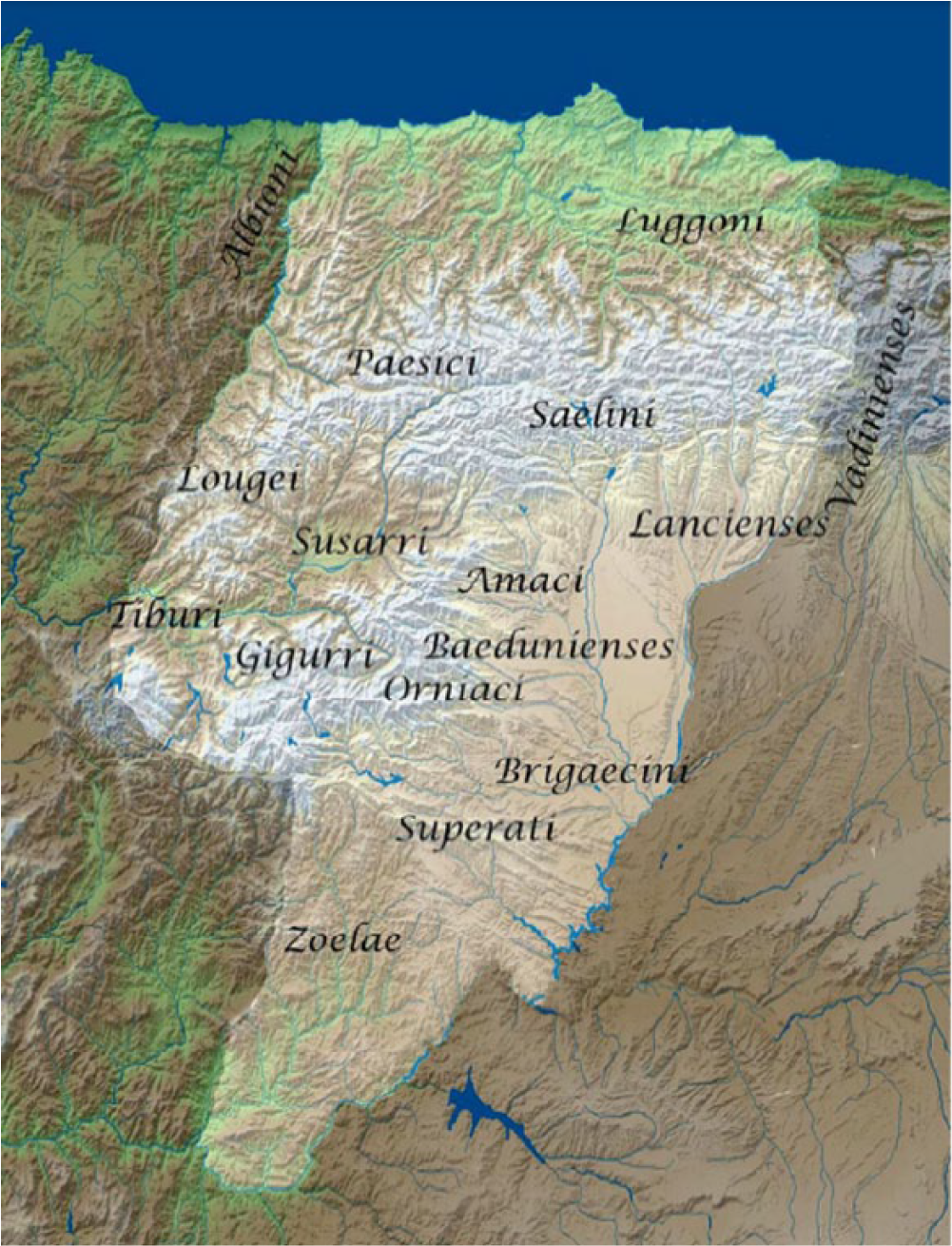
The area of Asturia according to Miguel González González. The notion of Asturia is a historic-culturalist concept deriving from the colonialist writings by classical Roman authors after the conquest of Iberia.
This shows how pseudoarchaeology moves beyond certainty and trust in the construction of epistemic authority. On the one side, pseudoarchaeologists buttress the authority provided by scientific archaeology by making claims to certainty and confusing scientific with alternative methodologies and knowledge claims. However, they also supersede the archaeological institutional-academic framework by making spectacular appearances in the media and expanding their discourses online and through publications with a wide public appeal. On the other side, pseudoarchaeologists do not create networks of personal trust based on cooperation and reputation, but establish connections with imagined communities sharing certain symbols, ideas, beliefs and interests. In the specific case of Maragatería, these are Leonese regionalists and fans of romantic interpretations of the past and archaeological remains. That is, although their connections are not only media- and internet-based, their public is a potentially global community of pseudo archaeology fans, rather than local people and academics.
Conclusion
The aim of this article has been to demonstrate the usefulness of Gieryn’s notion of boundary-work and Latour’s conceptual pair of certainty and trust in examining the construction of epistemic authority in the cultural field of archaeology. From a constructivist perspective about the nature of science, my research has shown that disputes for archaeological epistemic authority go beyond the representations of science made by scientists to comprise an increasingly wide number of social actors. This confirms Meyer’s (2008: 38) insight that the boundaries demarcating science from non-science rely on a variety of contingent circumstances, which have more to do with power and authority than truth or method.
Understanding the construction of epistemic authority is highly significant at a time characterised both by the popularisation of scientific knowledge and by its increasing contestation by different social actors, from conspiracy theorists to religious creationists. In Maragatería and in Spain more broadly, archaeologists and institutions are not different to most others worldwide and often dismiss alternative discourses and practices on the grounds of their irrationality, without actually exploring their functioning and meaning. In turn, academic archaeological theory, mostly produced in northern Europe and the United States, disqualifies alternative archaeologies for their lack of certainty through a form of boundary-work of expulsion, without analysing the reasons for their growing success and public appeal. These attitudes obscure any empirical understanding of non-professional archaeology and its relation with the public, while at the same time leaving unscrutinised the black box of archaeological science.
It has been the aim of this article to counter this tendency. The concept of boundary-work has served to analyse the strategies used by academics and institutions, amateurs and pseudoarchaeologists to build archaeological epistemic authority. Usually, boundary-work is associated with the practices scientists implement to demarcate legitimate scientific from non-scientific knowledge claims. However, this study contributes to the expansion of Gieryn’s conceptual framework by highlighting the agency of amateur archaeologists and pseudoarchaeologists in excluding and enrolling the public in their knowledge claims, exploring whether the construction of epistemic authority is more dependent on claims to certainty or on building trust. This illustrates that claims to certainty and trust can be mutually supportive or can exclude one another. Overall, however, the investigation suggests that the epistemic authority of social actors is expanded whenever they manage to enrol others in their knowledge claims, but especially when they create networks of cooperation based on trust.
This investigation highlights the crucial role played by amateurs in building trust and constructing material culture as heritage objects to be protected and cherished, and in raising awareness among local communities and institutions. While experts and institutions are perceived as threats, people establish trustworthy relations with amateurs like Campos. He talks in plain language, avoids patronising people and, contrary to the cold bureaucratic logic, is open to ethical negotiations – such as not revealing some heritage sites. He enacts the credo of public archaeology, carrying out manifold tasks, such as informing and spreading knowledge among local communities and politicians, blogging, contacting the media, lobbying institutions, and many other practices. As a result, the overall qualitative and quantitative production of common heritage knowledge has increased exponentially.
In turn, pseudoarchaeologists show that the construction of authority based on trust and certainty can be superseded by the use of spectacular techniques, direct exposure to the media, and the combination and blurring of scientific and ideological discourses. Pseudoarchaeologists are not against archaeology as a science. They emulate scientific practices and discourses, but give them a different orientation. Pseudoarchaeology is a practice and a way of doing that produces metaphysical explanations with public appeal, and therefore should not be criticised for its lack of representational accuracy and on methodological grounds – i.e. for lack of certainty. This is why Meillassoux argues that countering pseudo-narratives is a philosophical rather than scientific task, and condemnation should be ‘carried out solely in the name of the practical (ethical-political) consequences, never in the name of the ultimate falsity of its contents’ (2008: 47).
The implications of this analytic insight are, following Latour, that the reinforcement of the epistemic authority of archaeology would require an appeal to the institution of science, rather than science. It is a question of trust, not of certainty. Certainty is epistemological, the institution of science requires much more (Latour, 2013: 3). Contemporary societies have different experiences, opinions and understandings of the past that are valid for the many stakeholders that advocate them, regardless of the views of archaeologists or other experts (Kojan, 2008: 75). Thus, to reinforce its epistemic authority, archaeology cannot escape the global tendency to rethink science in terms of its relations with the public, where science should occupy a more open space made of agoras or hybrid forums (Callon et al., 2009). In other words, the answer to pseudoarchaeology is not to be found in the reaffirmation of the epistemological solidity of the discipline and its institutions, in reclaiming the past as private property, in an anything-goes form of relativism advocating archaeological multivocality, nor in criticising pseudoarchaeology for its lack of representational accuracy – i.e. reclaiming certainty. Rather, we must search for the answer in the shortcomings of the reputation of archaeological epistemic authority among the public – i.e. reclaiming trust, without necessarily establishing authoritative hierarchies or patronising attitudes towards non-professionals and the public. The study of the rise of alternative archaeologies and amateurism in Spain is relevant because it contributes to shedding light on the global increase in public distrust towards science. Given that the archaeological institutional-academic framework disregards these phenomena and consequently facilitates their growth in practice, it is the aim of this article to spark further debate on this significant topic.
Footnotes
Funding
This research was supported by the Ministerio de Economía y Competitividad, Spain, through the project “Patrimonio y participacion social: propuesta metodologica y revision critica” (HAR2014-54869-R) (Heritage and Participation: A Critical Approach).