




Abstract
Awareness of the risks posed by excess nitrogen is low beyond the scientific community. As public understanding of scientific issues is partly influenced by news reporting, this article is the first to study how the British press has discussed nitrogen pollution. A corpus-assisted frame analysis of newspaper articles (1984–2018) highlighted five frames: Activism, where environmental charities and organizations are portrayed as having an active role in fighting pollution; Government Responsibility, where privatization is presented as central and positioned as one of the main causes of pollution; Industry Responsibility, in which industries’ actions are depicted as causing pollution to increase; Pollutions as Politics, in which pollution is not discussed as a problem to be solved but rather as a means to increase votes; and Risk, where readers are warned about the possible effects of pollution on human health, flora and fauna. The analysis also points to the absence of named scientists and sources with the coverage being dominated by politicians.
Keywords
Introduction
The global nitrogen cycle is fundamental to the biogeochemistry of the earth, and human interference in this cycle has massive consequences for the environment. Over the last century, human activity has more than doubled the global cycling of nitrogen (Fowler et al., 2013) with severe impacts on air and water quality, biological diversity, human health and the climate (Stevens, 2019). Researchers now recognize perturbations to the global nitrogen cycle as one of the highest risks in the surpassing of planetary boundaries worldwide (Steffen et al., 2015), identifying nitrogen pollution as having an important role in climate change globally. Nitrogen as a simple element is not considered a greenhouse gas, but some of the gases that derive from its transformations do contribute to trapping heat in the atmosphere. Despite the severity and scale of this environmental problem, 1 public awareness of nitrogen pollution seems low when compared to other global environmental issues such as climate change and biodiversity loss (Sutton et al., 2011: 596). Against this backdrop, this investigation seeks to evaluate whether the lack of knowledge is also related to a lack of popularization of the issue in the press, due to the media’s role in the dissemination of scientific issues. This study is the first to survey how the press covers issues related to nitrogen pollution.
Nitrogen (referred to with the symbol N), is a colourless, odourless and usually unreactive chemical element. It is the fifth most common element in the universe and is exceptionally abundant on earth (Sutton et al., 2011). Most nitrogen in the global cycle is in the form of di-nitrogen gas (N2) and is unreactive, which means it does not react with other elements and is not available to most biological organisms. A portion of it, altered by anthropogenic or natural processes, is in a reactive form, which can be absorbed by living organisms, for which nitrogen is a vital nutrient. The nitrogen cycle is completed when these reactive nitrates are transformed again into nitrogen gas through the process of denitrification. According to the different reactions to which nitrogen is exposed, it can be found in different forms, such as ammonia or nitrate.
Nowadays, humans create more reactive nitrogen than natural processes do, vastly altering the nitrogen cycle (Galloway et al., 2004). Sources of pollutant nitrogen include the overuse of fertilizers, poor management of animal wastes and over consumption of protein and food waste (Stevens, 2019). As a consequence of this abundance, nitrogen has become one of the main causes of air, water and soil pollution worldwide (Stevens, 2019). Excess of nitrogen in the air can reduce air quality, which can lead to respiratory diseases and cancer. It can also cause the pollution of groundwater when expelled into the air and transformed into nitric acid, which is later absorbed in the soil, and loss of terrestrial and freshwater biodiversity. Excess of nitrogen in the water can lead to eutrophication 2 in lakes and coastal areas and the acidification of soils and seas, with accordant risk to marine, terrestrial and freshwater species leading to biodiversity loss (Sutton et al., 2011). Nitrogen pollution is also among the causes of climate change.
Against this backdrop, the aims of this study are twofold. We want to understand how the press represents nitrogen pollution because the news media are considered an important source of information about science issues for the general public (Nelkin, 1995). Because knowledge is understood through specific ‘schemata of interpretation’ (Goffman, 1974: 21), we employed corpus-assisted frame analysis to investigate how the issue has been framed over time. The news place a premium on objectivity (Tuchman, 1972) and are often described as ‘secondhand’ content, meaning that much of the news text is attributed to conventionally authoritative sources such as scientists, politicians and corporate representatives (Bednarek and Caple, 2012: 21). We therefore also looked at how sources (Pan and Kosicki, 1993) are used in the press to construct authoritativeness, and we considered how different sources may frame issues differently, highlighting some aspects while backgrounding others (Pan and Kosicki, 1993).
This study, thus, focuses on the following research questions: (1) How is nitrogen pollution framed in the British press? and (2) Who are the main sources involved in the representation of nitrogen pollution?
In answering these research questions, the following sections (1) review the literature related to frame analysis of environmental issues and demonstrate how the representation and framing of nitrogen pollution is absent within the linguistic community, (2) present the methodological and theoretical framework in which the study is positioned, (3) describe the data collected and the method employed and (4) discuss the analysis and the results.
Literature review
Framing
According to Goffman (1974), human beings make sense of knowledge, life experiences and everything that constitutes society through ‘schemata of interpretation’.
3
Goffman (1974) maintains that these schemata can be labelled as ‘frames’ (p. 21). A frame can be described as the formulation of the main idea that gives meaning to a series of actions unfolding, through which a problem is defined, evaluated, interpreted and understood (Gamson and Modigliani, 1989; Goffman, 1974). In other words, a frame is a device that enables us to organize our ideas around a given topic and provide meaning to it. At the basis of frame theory is the idea that the media focuses the attention on certain events by means of portraying them within a specific frame or field of meaning. In the words of Entman (1993): To frame is to select some aspects of a perceived reality and make them more salient in a communicating text, in such a way as to promote a particular problem definition, causal interpretation, moral evaluation, and/or treatment recommendation for the item described. (emphasis in the original; p. 52)
Frames of environmental issues
As Pan and Kosicki (1993: 70) posit, frame analysis allows the researcher to identify the way in which public discourse about public policy is constructed and negotiated in the media. Frame analysis has been identified as one of the most common approaches in the study of climate change coverage, which has brought valuable insights into media portrayals in different countries and their effects on audiences (Schäfer and O’Neill, 2017). Despite few differences in the exact labelling of frames used, the literature suggests that a number of these recur in the reporting on various environmental issues from climate change to ocean acidification and pollution. Among the most common frames identified in the representation of environmental issues are Economics, 4 Public Health, Scientific Progress and Social Responsibility.
The Economics frame (see Sun-Jin et al., 2012; Zehr, 2009) suggests that environmental issues are framed in terms of the economic impact of environmental changes, such as investments in new technologies or refurbishment of existing environments and equipment, emphasizing the business opportunities they present. The Public Health frame (Nisbet, 2009; Weathers, 2013) presents environmental issues and their consequences as a possible cause of health issues affecting the population, from respiratory problems to child development. The Science or Scientific Progress frame (Meijers and Rutjens, 2014) has been pointed out as a very popular, but also controversial frame in the representation of environmental issues. While it puts hope towards technological development by positing that science/technology will be able to solve environmental problems, it has also been linked to lowered support for policy and individual change because it encourages an understanding that science alone will solve environmental issues. Contrary to this, the Social Responsibility frame (Jaworska, 2018; Xie, 2015) is concerned with how responsibility for climate change or environmental issues is attributed to individuals, the government, industries, or at a more global level (Olausson, 2009). Perhaps, this frame can be valued as the most positive one as it encourages social change.
As these examples suggest, framing ‘defines “horizons of sensemaking” for individual[s] and groups’ (Schäfer and O’Neill, 2017: 2), for this reason it can be considered an excellent means through which to evaluate the stance and importance given by the mainstream press to a specific topic, such as nitrogen pollution.
Sources
In this study, we define sources as the authority that provides a piece of information (see Bednarek and Caple, 2012, 2017; Pan and Kosicki, 1993). It is important to acknowledge sources in news discourse because this is the means through which journalist demonstrate objectivity, a defining characteristic and/or aim of the news, and make the information newsworthy. Tuchman (1972) highlights that using sources is one of the main tools for journalists to display objectivity. This is because by expressing the opinion of a more authoritative and credible source they are not expressing their own.
The identification of sources also puts the representation within a specific discursive pattern by associating it with representatives of given communities, such as politicians or scientists. As Pan and Kosicki (1993) suggest, ‘key rhetorical features of a news story are shaped by sources’ proactive newsmaking’ (p. 62), thus sources help reinforce the legitimacy and authority of the news story. Journalists choose specific people, representatives or organizations as their sources of authority according to the cultural background in which the news will be presented as the reader will have to recognize such figures as authoritative (Pan and Kosicki, 1993). As it often occurs, in the data analysed in this study, sources are mainly identified through the use of ‘high-status or authority role labels such as officials, analysts or executive, and proper nouns referring to leading politicians’ (Potts et al., 2015: 155).
Different sources also frame issues differently. For instance, Trumbo (1996) identifies three different groups of sources in his study of news coverage of climate change in the US media. The sources he identifies are politicians, scientists and interest groups. On the same line, Olausson (2009) points to a resistance to go beyond ‘the field of elite sources [such as] politicians, public institutions, and scientific experts’ (p. 431) in Swedish newspapers discussing global warming. Takahashi (2011) reporting on an analysis of Peruvian media’s coverage of climate change issues identifies one group of sources that is predominantly used in news: scientists.
Data and method
The Nitrogen Pollution Corpus
To investigate the framing of nitrogen pollution in the press, we compiled a corpus of newspaper articles referred to as the Nitrogen Pollution Corpus (NPC). The articles included in the corpus were downloaded from the online platform Nexis. 5 Because of time and space, in this study we chose to focus on the United Kingdom only. Thus, we used the search functions offered by the platform that groups together all sources available identifiable as UK national newspapers. 6 The corpus was collected over a time-span of 35 years with a cut-off in 2018, the closest full year at the time of data collection. Initially, the download was set for all available dates, but the first year to produce a result was 1984. Two additional default criteria were set for the download – to eliminate duplicates and to exclude newswires. The database was searched 3 times and each collection generated a subcorpus. The first search used the following keywords: nitrogen pollution and/or pollutant nitrogen; this generated the Nitrogen subcorpus. The second search was carried out with the following keywords: ammonia or ammonium and pollution; this search generated the Ammonia subcorpus. The last search included the following terms: nitrate or nitrates and pollution, resulting in the Nitrate subcorpus. Together these three subcorpora comprise what we refer to as the Nitrogen Pollution Corpus (see Table 1).
The Nitrogen Pollution Corpus.

Methodology
To answer the first research question, we adopted a corpus-assisted frame analysis approach, which combines the use of corpus linguistics with the systematic qualitative analysis of frames (see Atanasova et al., 2017; Koteyko et al., 2010; Touri and Koteyko, 2015). This approach builds on the long-standing tradition of corpus-assisted discourse analysis (Partington, 2006; Partington et al., 2013) and the linguistic or computer-assisted frame analysis (see Schäfer and O’Neill, 2017). The analysis was carried out in three stages. The first stage included the extraction of a list of keywords. This list was generated by the software Sketch Engine (Kilgarriff et al., 2004) by comparing the most frequent terms in the corpus under scrutiny to the most frequents ones in a different corpus, defined as the reference corpus (Scott, 2009). In this study, we used the EcoLexicon English Corpus (Leon-Arauz et al., 2018) freely available on Sketch Engine as a reference corpus. The EcoLexicon English Corpus contains different types of texts related to science and ecology. The top 100 keywords were considered in the analysis and are displayed in Table 2, from the most relevant to least. Focusing on the top 100 keywords is an established practice in corpus linguistics, which affords a ‘representative overview’ without being overwhelming to the reader (Baker et al., 2013: 72).
Keywords in the NPC.

NPC: Nitrogen Pollution Corpus.
Stage 2 included the categorization of the keywords into ‘semantic sets’ 7 of closely related meaning (Duguid, 2010). This process was facilitated by a concordance analysis of each term, which allowed us to establish the relevance of the term to the designated semantic set. A concordance analysis is carried out through the creation of a concordance list defined as ‘[. . .] a list of all the occurrences of a particular search term in a corpus, presented within the context they occur in’ (Baker, 2006: 71). This type of visualization of the term investigated allows for an in-depth analysis of the context in which the term is presented. Due to the large amount of results, we chose to analyse a sample of 100 concordances for each keyword (McEnery and Hardie, 2012; Tribble, 2010) when the term occurred more than 100 times. We identified nine semantic sets (see Table 3). Two of these nine semantic sets are not indicative of frames, thus were excluded from the analysis presented here: GEOGRAPHIC REFERENCE and OTHER. In the semantic set OTHER, we included two types of keywords: (1) honorifics and newspaper names and (2) words which appear frequently in news reporting such as pronouns and verbs like ‘say’ (see Bednarek, 2008; Bednarek and Caple, 2012; Biber and Conrad, 2009). The semantic set GEOGRAPHIC REFERENCE is comprised of place names, which are a common way to cue the news value of geographic proximity (Harcup and O’Neill, 2017).
Semantic sets.
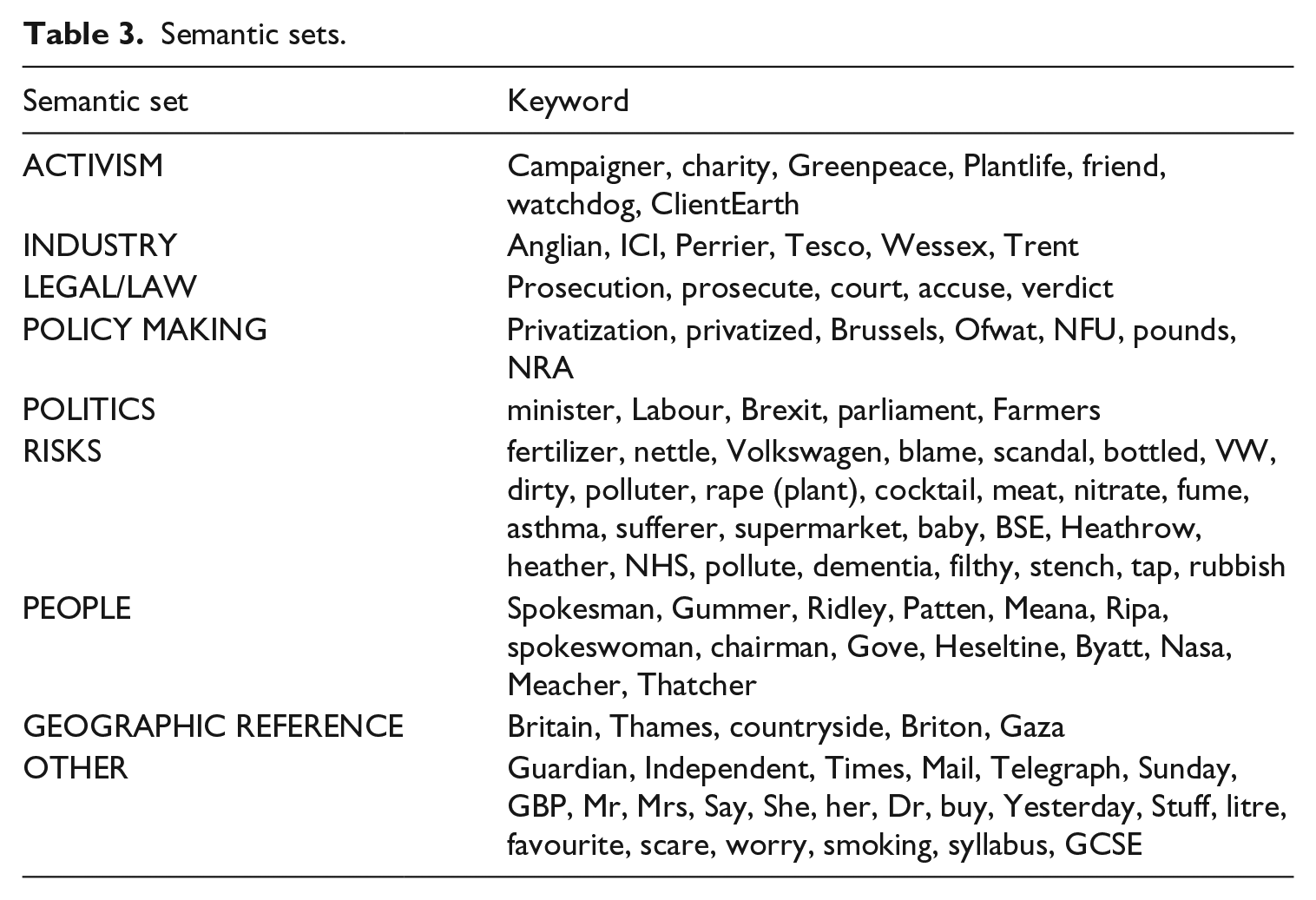
The third and final stage consisted in analysing the concordances of the remaining seven semantic sets following Van Gorp’s (2007) systematic qualitative frame analysis procedure, which builds on Entman’s (1993) seminal definition of the four functional features of a frame (see the previous sub-section on Framing). In other words, this included reading the concordances to identify excerpts of the data which perform the function of defining what the problem is, explaining its causes, offering solutions and/or making moral evaluations.
In the analysis of the semantic sets, we identified one of them as providing information about the sources that the newspapers use rather than frames. We used this semantic set to answer our second research question. In order to address the analysis of the sources employed in the NPC, the keywords included in the semantic set PEOPLE – mainly proper names of persons or organizations – were classified by type (i.e. politician, scientist, non-governmental organization (NGO) representative).
Findings and discussion
Our study is the first to examine the extent to which nitrogen pollution has been covered by the media in the past 35 years. The analysis shows that five frames have mainly been employed in the representation of nitrogen pollution in the British press. These are the Government Responsibility frame, which includes keywords from the LEGAL/LAW and the POLICY MAKING semantic sets; the Risk and Activism frames based on the homonymous semantic sets; the Industry Responsibility frame based on the keywords included in the INDUSTRY semantic set and the Pollutions as Politics frame based on the keywords included in the POLITICS semantic set. We also found that the coverage is dominated by one source type – politicians – while there is complete absence of scientists’ voices.
Nitrogen pollution frames
The five frames, listed in Table 4, are ordered from most frequently employed to least (based on the number of keywords from which they emerged): Government Responsibility (12 keywords), Risk (11 keywords), Activism (7 keywords), Industry Responsibility (6 keywords) and Pollutions as Politics (5 keywords). Table 4 presents a schematic representation, following Van Gorp’s (2007, based on Entman, 1993) model where each frame is identified through the characterization of problem definition, causes, consequences, solution and moral evaluation of the problem.
Frames. 8

NHS: National Health Service.
Government responsibility frame
This frame is concerned with the extent to which policy making and control from legal bodies is involved in the representation of nitrogen pollution. The examples found in this frame are mainly related to the British government and its bodies. Articles within this frame are often concerned with evaluating how well or not the government is doing in controlling pollution.
Within this frame, the problem identified in relation to nitrogen pollution is the contamination of water. The cause of water pollution is associated with ongoing processes of privatization by water companies as the keyword ‘privatisation’ suggests. In fact, ‘privatisation’ is a central issue in the articles analysed and mainly refers to the privatization of water (98% of the examples). Following is an example of the use of this keyword: The main reason for this has been the Government’s deliberate relaxation of standards on sewage works in the run-up to privatisation of the water supply. The result has been many breaches of the EC directive. (The Guardian, December 18, 1991)
The most frequent discursive pattern observed is the one that represents privatization as unpopular and bad for the water quality and the people (30% occurrences of this pattern). Related to this pattern, 8% of the examples suggest that water privatization will allow for illegal behaviours such as polluting to go unprosecuted, and 5% of the examples suggest that politicians are endorsing water privatization (this pattern is reinforced by the concordance analysis of the term ‘privatized’, in which the same pattern is found (17% of the times)). Less present is the pattern that represents privatization as something positive that will improve the system (10% occurrences).
Another of the keywords within this frame is ‘pounds’. 9 There are three main patterns related to nitrogen pollution emerging from the concordance analysis. The most frequent one refers to the amount of money invested by the government or local authorities to prevent or fight nitrogen pollution (20% of the occurrences in the sample). Less frequent (4% each) are the other two patterns. One refers to the amount of money pollution costs to the government due to the diseases it causes, while the other is related to fines paid because of breaking pollution regulations.
The National Farmers Union (NFU), body for agriculture and horticulture in England and Wales, is also included in the representation of the Government Responsibility frame, as one of the bodies endorsing the reduction of the production of nitrogen pollution from agriculture and farming.
These keywords also suggest that the main consequences of water pollution fall on the British population, both because they suffer from health issues due to the drinking of contaminated water, and due to government expenditure on pollution problems, which could be spent otherwise. The data from the NPC do not seem to suggest any solutions to the problem of governmental bodies not taking action to prevent or remediate nitrogen pollution but rather endorsing behaviours, such as privatization, which will increase the chance of nitrogen pollution getting worse.
Risk frame
The data from the NPC show that within the Risk frame two types of problems are discussed: those related to human beings and those related to flora and fauna. The main causes of these risks are related to air and water pollution. The keywords included in this frame describe possible consequences for human health or the British environment because of nitrogen pollution. This focus on actual effects of nitrogen pollution can be interpreted as a sign of making the issue personally relevant. That is to say, representing nitrogen pollution as a concrete and undeniable threat to our lives and the planet. Thirty-two articles in the NPC (although this is just above 2% of occurrences in the entire corpus, we must consider that this is only one of keyword) are related to the Volkswagen scandal which occurred in 2015, when the company had to recall a large number of vehicles from the market due to production defects which made the cars produce high levels of carbon dioxide. The concordance analysis of the three keywords that refer to this (i.e. ‘Volkswagen’, ‘VW’ and ‘scandal’) shows how the issue is used to spread fear and generate panic, as the example below suggests: 30 BRITONS WILL BE KILLED VW FUMES FROM GERMANY THIRTY Britons will die prematurely from pollution produced in Germany by VW diesel cars fitted with ‘defeat devices’, scientists claimed yesterday. (Daily Mail, March 4, 2017)
Some of the examples (27%) point out the fear readers should feel due to uncertainty as to the number of deaths related to pollution caused by VW. These statements, although in theory attributed to a scientist, are not supported by any specific name, institution, scientific data or research. The use of the plural form of the noun and the verb ‘to claim’ makes the statement as alarming as it is vague. It is interesting to note that only 10% of the examples associate the scandal to nitrogen pollution and refer to it with the name NOx. 10
With reference to human health, we find keywords such as ‘asthma’, ‘sufferer’, ‘fume’, ‘baby’, ‘NHS’ and ‘dementia’. When looking at the concordances of these terms, we see a higher number of explicit references to nitrogen pollution in comparison to the other keywords. Nitrogen pollution is identified as a cause of these illnesses and health-related problems. The pollutant is not always ‘nitrogen’, but different labels such as ‘ammonia’, ‘nitrogen dioxide’, ‘nitrates’ or ‘NO2’ are used. The articles point to the fact that an increase in pollution consequently shows an increase in health issues, mainly respiratory problems (the pattern is found in 23% of the examples examined for the keyword ‘asthma’, and in 80% of the examples for the keyword ‘fume’). This is then represented as a burden to the NHS, which is faced with an increased cost to care for patients (26% of the examples analysed suggest this). Linking (mental) health problems to environmental problems is seen as a positive development in climate change communication, as it is believed to encourage people to take action in fighting climate change by making the issue personally relevant (Akerlof et al., 2010). It can be argued that the same is suggested by the Risk frame identified in the NPC.
A number of keywords refer to the British flora and fauna (i.e. ‘nettle’, ‘rape’, ‘heather’, ‘meat’ and ‘fertilizers’). The concordance analyses related to these terms show how much the British landscape has changed due to an abundance of nitrogen, as heavily polluted soils favour the growth of invasive plants or destroy other plants such as heather, often considered symbolic of certain British landscapes.
Some keywords also discuss the way in which pollution is generated, for example, by ‘supermarkets’. The patterns around this term refer to the environmental impact of refrigeration and HFC emissions. Similarly, for the keyword ‘Heathrow’, the articles suggest the airport needs to improve in order not to break air pollution regulations due to nitrogen pollution caused by the aircrafts.
Although no explicit moral evaluation is found with regards to this frame, by making nitrogen pollution personally relevant through the creation of a link with human health and changes in familiar flora and fauna (mainly invertebrates), the articles are implying that it is our moral obligation as good citizens to reduce nitrogen pollution in order to preserve iconic British landscapes and not ‘burden’ the NHS.
Not directly related to the Risk frame but emerging from the analysis of the concordances of one of the keywords related to this frame is a reflection on the use of scientific terminology, similar to the pattern identified earlier related to the use of terms such as ‘nitrogen’, ‘ammonia’ or ‘nitrates’. In fact, a further investigation of the term ‘fertilizers’, depicted as one of the main causes of pollution, suggests that a number of different terms to describe nitrogen fertilizers are found in the NPC. In the sample analysed, the term is pre/post modified by: (6) ammonia, (1) Haber-Bosch process, (16) nitrogen, (5) chemical, (3) natural, (9) nitrate, (2) inorganic, (2) artificial, (1) liquid and (1) fibrophos–eco-friendly. None of these examples explicitly or implicitly suggest that these labels all mean the same/similar things. There is no explicit link between the various definitions and nitrogen pollution. This inconsistency in terminology is confusing for the lay reader and can be seen as an important liability in the understanding of nitrogen pollution. For the reader who does not have the ability to understand this type of scientific language, it will appear as if each of these terms represents something different, rather than different ways of talking about the same environmental problem.
Activism frame
The keywords included in this frame suggest a very positive evaluation from the press towards activism. The articles describe the action being taken by NGOs to inform people about the fight against nitrogen pollution. Nitrogen pollution is clearly identified as the problem in the articles which employ this frame of representation, and the cause of this problem is linked to people not taking action to limit pollution, resulting in sustained environmental damage. In many of the articles, we find encouragement to engage in action to reduce pollution: Anna Jones, clean air campaigner at Greenpeace, said: ‘There’s no room left for doubt or inaction on air pollution. This is a crisis. We know most new diesel cars are pumping out illegal levels of pollution, yet, unbelievably, the government is still incentivising consumers to buy them’. (The Times, January 12, 2017)
A number of studies found in the literature on climate change have focused on environmental NGOs. These studies have shown that articles that discuss the role of NGOs frame them as informants. That is to say that the main role the NGOs have is to inform the general public of the seriousness of climate change and the political implications of the issue (Nisbet and Kotcher, 2009). In addition, these NGOs are described as suggesting different types of behaviours and actions that people can adopt in order to trigger change (Koteyko et al., 2010). Similar findings are available in the NPC.
The main organizations involved in the NPC are ClientEarth, Friends of Earth (represented by the keyword ‘friend’), Plantlife and Greenpeace. These organizations, especially the last two, are also used as scientific references for statements about the environment and quoted as experts in the field. This frame includes terms such as ‘campaigner’, pre/post modified by a number of different nouns (i.e. animal, green, pollution, health, waste, water, environmental, Greenpeace). The examples show the campaigner taking action or calling other people to do so. The frame includes the keyword ‘watchdog’ a term that can carry both a positive and a negative connotation. In some cases, someone who is identified as a watchdog can be perceived as a ‘snitch’. The meaning of the word watchdog suggests that this is a person or a body who guards against loss, waste, theft or undesirable practices. 11 In the NPC, the evaluation for this term seems to be positive, as a figure in need to make sure that environmental rules are respected. In fact, we have identified this as a solution proposed by the articles to limit nitrogen pollution. The moral evaluation suggested by the articles is that pro-environmental charities and organizations have an active role in fighting to solve environmental issues.
Industry responsibility frame
Water contamination and pollution in general are the problems defined by this frame. The keywords included in this frame are mainly names of major British businesses (i.e. water companies ‘Anglian’, ‘Perrier’, ‘Trent’ and ‘Wessex’, chemical company ‘ICI’ and multinational retailer ‘Tesco’). The examples provided within this frame identify industries’ actions as the main cause of pollution as they are framed as one of the main producers of pollutants. In the NPC, these businesses are being presented both as taking action against nitrogen pollution and also as being the cause of said pollution. A more detailed analysis of the keyword ‘Anglian’, a water company that operates in the East of England, shows three different discursive patterns. The first one (6% of the examples analysed) is related to the increased expenses for customers of this company due to investments the company is making to enhance water quality. The representation we get from this pattern is twofold: while the industry is being praised for taking action against pollution, it is also blamed for making the consumers pay for this. The second pattern (15% of the examples analysed) denounces the fact the water from this company does not meet the necessary requirements for drinking, thus stating that the water is contaminated. Here the discursive evaluation is mainly negative. The last pattern (5% of the examples examined) discusses the investments made by the company to make their water and the disposal of sludge better in order to decrease pollution. This last pattern gives a positive representation of the industry. Similarly, a discursive pattern that points to the distribution of polluted water, and thus blames the industry for malpractice, is found with reference to Perrier, another water producer, and to Severn Trent (also a water company).
The Industry Responsibility frame from this study has notable differences compared to the Economics frame in climate change communication (Atanasova, 2019; Diprose et al., 2018; Hellsten et al., 2014; Yacoumis, 2017), which places a positive spin on the role of businesses in addressing environmental problems. In fact, these studies suggest that businesses are doing their best and at times even more than governments to solve environmental problems. In our sample, industries are accused of causing the problem of nitrogen pollution by, for example, not following quality standards and selling contaminated water. ‘ICI’, the Imperial Chemical Industries now known as Ineos Fluer, an industry that produces chemicals is also accused (in 20% of the examples analysed) of polluting the environment by producing and dumping toxic materials. There is also a small pattern (9% of the examples investigated) in which the company advertises itself for the investments made into producing fewer polluting agents. This less frequent pattern retrieved for both ‘ICI’ and ‘Anglian’ in which the businesses try to represent themselves as taking action to solve the problems they have been blamed for resembles the behaviour pointed out by Schäfer and O’Neill (2017), who show that stakeholders tend to frame the issue in a way that is more convenient to their businesses employing strategic representational patterns to create a positive portrayal of themselves (pp. 11–12).
All in all, the Industry Responsibility frame presents industries as the cause of pollution while the press acts as judge and watchdog. Industries are evaluated over and over again as the main cause of pollution.
Pollution as politics frame
This frame emerged from the keywords grouped under the semantic set POLITICS. What clearly emerges from the concordance analysis of the keywords is a type of discourse exemplified by the name of this frame. Pollution and more generally speaking ecological issues are used as a political strategy by political parties either to gain more votes and/or as a way to discredit the opponent parties. This discursive pattern is retrieved from both collective nouns such as ‘minister’ and more specific nouns such as ‘Labour’, with reference to the Labour Party. In this latter case, the analysis of concordances shows two main patterns. Fifteen percent of the concordances analysed shows examples of the Labour Party spokespeople accusing or criticizing other political parties or the government for failing to provide a fair and efficient political plan to fight environmental issues, mainly air pollution and quality of drinking water. In the second pattern (22%), the party is no longer the main actor but is being criticized about broken promises related to pollution and environmental issues.
Similarly, for the keyword ‘Brexit’, there are different discourses being built around the relation between British exit from the European Union (EU) and environmental issues, mainly through the use of two metaphors: ‘green Brexit’ and ‘UK as the dirty man of Europe’ after Brexit. In all, 14.5% of the examples analysed discuss the necessity for a rethinking of farming and other environment-related policies post-Brexit. These changes were presented as positive for the United Kingdom economically, but negative from an environmental perspective. Another pattern related to the discourses around Brexit and nitrogen pollution (11%) relates to how the pro-Brexit campaign is feeding on Europe’s ‘controversial’ pollution regulations, suggesting that leaving the EU is the best choice for the United Kingdom. A small percentage of examples (3%) suggest that the air pollution problem would get better after Brexit. There is also a pattern suggesting (20%) how environmental issues in the United Kingdom will play a fundamental role in the decision taken by the EU with relation to leave or stay. Finally, 20% of the examples suggest that if Brexit is approved the laws will change and this will affect the British environment negatively. There are different discourses regarding the implications of Brexit for environmental issues – in each case, the reporting shows us how environmental issues are being used as a way to do politics rather than politicians taking action to solve them. All in all, we can conclude that the behaviour of politicians using pollution as a way to make politics is framed as one of the causes of increased pollution, as a consequence people are being fooled by the promises made to them, but the problem is not being tackled.
Sources
Differently from the way in which scientists are portrayed in articles related to climate change where they seem to be active participants in framing the issue as means through which legitimize and make the statements presented authoritative (Schäfer and O’Neill, 2017: 13), for nitrogen pollution, this does not happen. In fact, among the names included within the semantic set PEOPLE there are no scientists. The semantic set PEOPLE includes three collective terms, that is, spokesman, spokeswoman and chairman. The concordance analysis shows that in 92% of the sample analysed the articles were specifically about environmental issues, and the spokespeople were representing industries, environment departments, the EU or political parties. There is only one scientific body (i.e. NASA) and one academic (with a background in economics) mentioned in the examples. The first two collective terms are generally followed by a quote used to give an authoritative tone to what is being said (this pattern occurs 115/204 times for spokesman and 30/55 for spokeswoman). The third term (i.e. chairman) is used to modify a proper name (51/148 times), that is to say to give an authoritative role to a specific person. Similarly, Hansen (2010), when discussing frames about climate change reporting, discusses the ‘authority’ orientation of the latter and finds that it is dominated by representatives from business and government. In light of this, the presence of a non-scientific voice seems to be a dominant pattern in the representation of environmental issues in the press. While a number of occurrences of constructions such as ‘scientists said/claim’ can be found in the corpus, there are two main issues with these: (1) they are not statistically significant enough to be considered among the keywords (which was our starting point in the analysis) and (2) these constructions are always vague and open to interpretations (see example in the section about Risk Frame). No information about the scientist or the research body are given, and no specifics about the research that supports the statements are included.
The NPC shows that in the coverage of nitrogen pollution the main sources are represented by politicians (see Table 5) and scientists are mostly absent.
People in NPC.
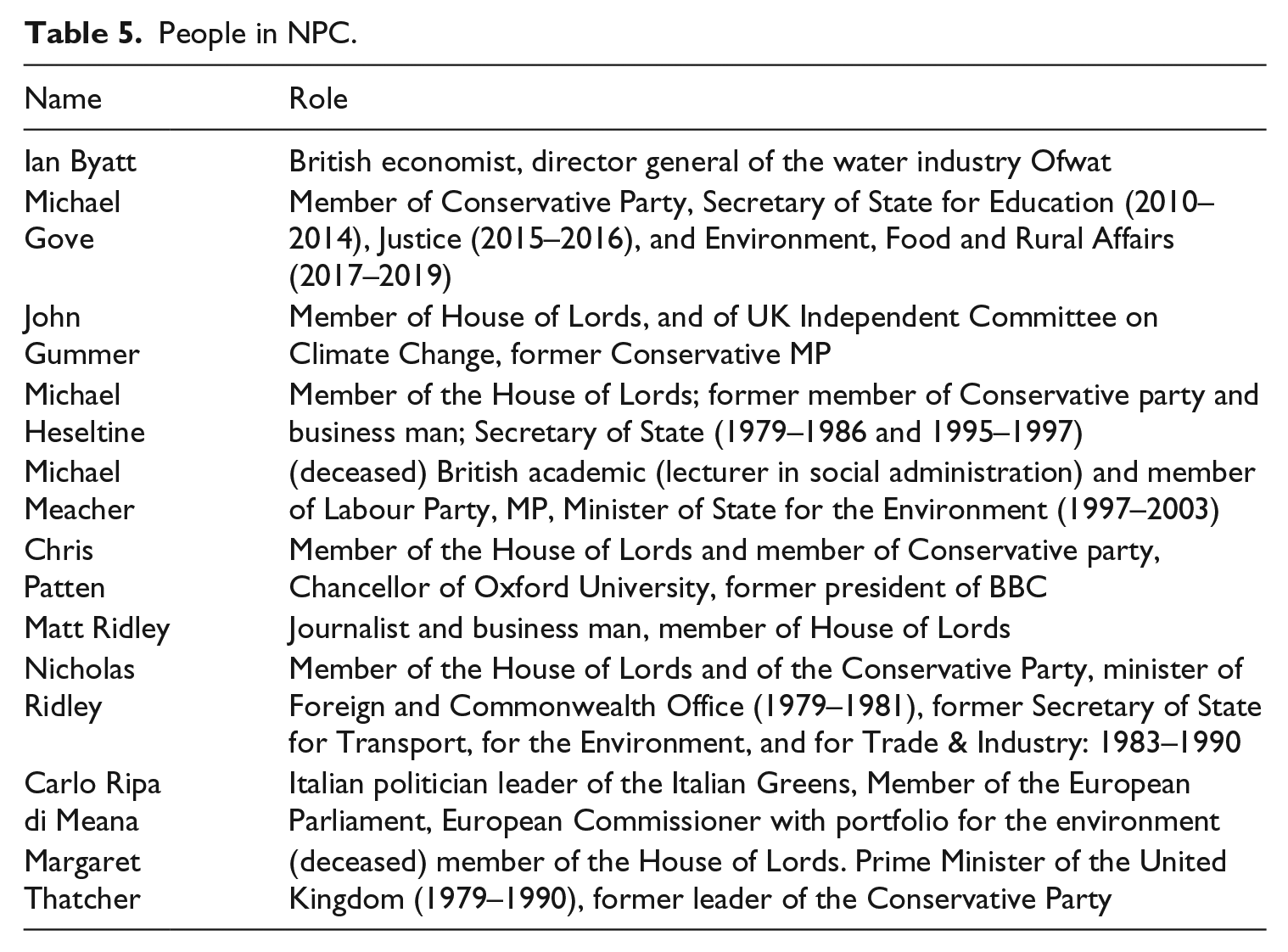
This can perhaps be interpreted as an opportunity for scientists to get more actively involved with the media and seek media opportunities to disseminate and explain the threats the environment is facing due to human behaviour. At the same time, this absence could also mean that the media is not interested in quoting/referring to scientists on this topic, especially in the present, as the data show that people where referred to in relation to nitrogen pollution mainly in the past. What the data analysed definitely suggest is that nitrogen pollution is at the moment, an issue that is being dealt with by politicians and businesses. This underlines the predominant power of economic interests in newspapers coverage of environmental issues.
This absence also opens up further research questions and directions for research which are beyond the scope of this study but can be investigated – for example, by follow-up research interviewing journalists and nitrogen scientists about their sourcing patterns and interactions with the media respectively.
Conclusion
Nitrogen pollution poses a great threat to our planet, and not only is this problem not being properly addressed but also society in general seems unaware of the issue altogether. As news reporting is vital to public understanding of scientific issues, this study presents insights into the way in which the British press contributes to this gap through the representation (or lack of representation) of nitrogen pollution.
Our analysis shows that the press addresses the problem of pollution to a certain extent but fails largely to explain and clarify that one of the principal pollutants involved in pollution is nitrogen.
With regards to RQ1 (How is nitrogen pollution framed in the British press?), the way in which nitrogen pollution is framed within the British press seems to suggest that the articles are mainly aimed at finding a scapegoat to blame rather than providing an explanation to the readership. This is clear in the discussion on the Government Responsibility and Industry Responsibility frames. This last frame, together with the Risk frame which suggests that pollution is posing a tangible threat to health and the landscape of the United Kingdom, appear to be the most important frames in the analysis. In fact, the numerical prominence highlighted in the analysis does not necessarily represent the semantic prominence within the corpus: while some frames are represented by a greater number of keywords, others are represented by keywords that occur more frequently and are more semantically related to nitrogen pollution. Another issue with communication related to nitrogen pollution seems to be that the attention in political scenarios is drawn more to the power that these topics have in political campaigning than to trying to actually address and find a solution for the problem, as the Pollution as Politics frame suggests. Despite the attempt made by environmental NGOs to promote and encourage action against nitrogen pollution, as argued through the Activism frame, this does not seem to be a priority yet, or a type of discourse that the press would foreground. People are not actively encouraged to change their behaviours or to engage in more environmental friendly lifestyles.
As for RQ2 (Who are the main sources involved in the representation of nitrogen pollution?), our study shows that named scientists are not the main sources involved in the discussion about nitrogen pollution, but rather politicians or activists are. Looking at the results presented by our study, we can only speculate on the reason for this absence, and future research is needed to address this issue in more detail, perhaps by conducting interviews with scientists working on nitrogen pollution and journalists who have covered the topic to understand why we may be seeing such a preference for politicians.
In addition, the last category of analysis suggests that there is no real space for scientists to communicate about nitrogen pollution. In light of this, we could say that the main problem might not be the scientific community communicating in a non-effective way, but not communicating at all. A content analysis of US television news has shown that climate change impacts and potential measures that could be taken against it are rarely discussed, that coverage ‘provides an inconsistent efficacy message’ (Hart and Feldman, 2014). Our finding related to the analysis of NPC confirms this trend.
This study, as we hinted at previously, leaves room and sets the ground for further future research. First, we present here results based only on British newspapers, and for this reason our findings are only pertinent to the UK scenario. In order to more comprehensively understand the phenomenon of communication and dissemination of nitrogen pollution, it would be necessary to extend the search to other countries. In addition, the semantic set of geographic reference which emerged from the analysis of the NPC is disregarded in this paper due to space constraints, but it would be interesting to further explore the countries and geographic references the press makes with regards to nitrogen pollution.
Footnotes
Declaration of conflicting interests
The authors declare no potential conflicts of interest with respect to the research, authorship, and/or publication of this article.
Funding
The author(s) disclosed receipt of the following financial support for the research, authorship, and/or publication of this article: This research was funded by the N8 Agri Food Programme’s Project Resources & Seed Corn Funding as part of the project: The Language of Nitrogen: Why Is Public Understanding of the Environmental Challenges Caused by Nitrogen From Agriculture So Low? conducted at the Lancaster Environment Centre, Lancaster University.