




Abstract
Portable helicopter landing mats designed for Vietnam have been reused to build large sections of the US–Mexico border wall. The Army Corps of Engineers provided institutional links between these two geographically distant imperial projects. After documenting the historical connections between war and wall, I shift the analytic lens to show how mid-century modernism and imperial foreign policy were entangled aesthetically. General Westmoreland, Agnes Martin, Sol LeWitt, and Richard Serra all draw from the same social imaginary. Substantive political disagreements notwtihstanding, geometric grids animated aesthetic affinities that have made it more difficult to perceive, let alone critique or dislodge, the long tentacles of American imperialism.
Since 1986, the United States has been engaged in a massive public works program building a wall along the US–Mexico border. This is certainly one of the largest public works programs in the last 50 years
The materiality of the wall provides a way into its politics. How is it designed? What is it made of? With what political effects? It is a commonplace nowadays to claim that artifacts have a politics (Appadurai, 1986; Bennett, 2010; Prown, 1982; Scarry, 1985; Sturken, 1997; Winner, 1980). Exactly how do materialist arguments illuminate the border wall? In short, what memories do objects carry? And how do they carry them? My analysis draws together three different kinds of research: institutional and policy histories, material culture analysis, and photography. My aim is not simply to look through three different portals, but to place them in dynamic relation so as to craft a new analytic lens.
In California, where the border wall famously runs over the hills and into the sea (Figure 1), I discovered that large sections of the US–Mexico border wall had been built out of recycled portable helicopter landing mats that the United States used in Vietnam. After first excavating the political history linking Vietnam and the US border wall, I consider the political work the landing mats are doing. At first blush, the connections are quite literal with landing mat movement bringing us face-to-face with the ghosts of Vietnam. On further reflection, I have come to see the indirect connections, rooted in aesthetic affinities, as providing more powerful linkages among Vietnam, border wall, and New York. The mats’ design, essentially a steel grid, echoes now classic minimalist paintings by the likes of Sol LeWitt and Agnes Martin, while the mats’ heavy gage rusted steel, channels Richard Serra. Identifying the mid-century social imaginary that runs from Vietnam landing mats, through the border wall, to post World War II (WWII) modern art reveals aesthetic and affective investments in the modern
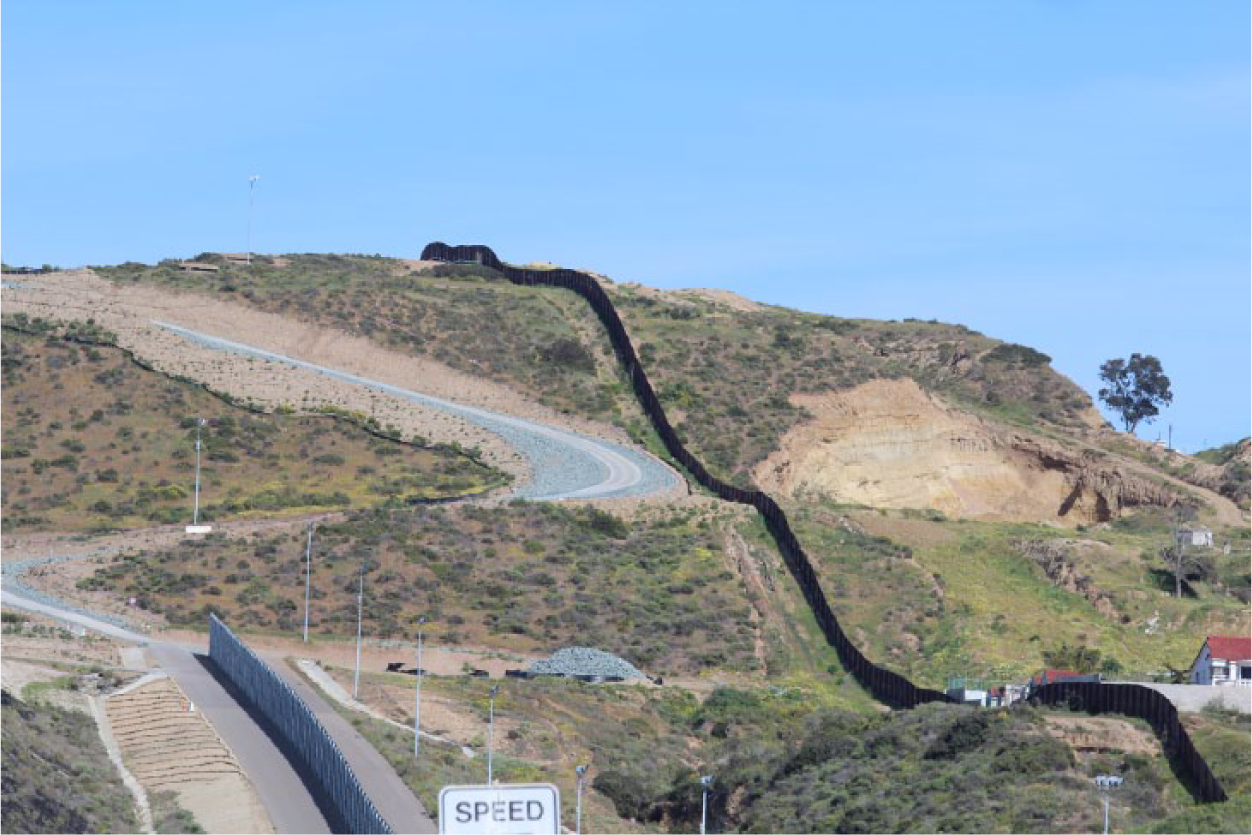
Border walls at Border Field State Park, San Diego.
Putting the argument provocatively, I want to suggest that General Westmoreland and the US Army Corps of Engineers took Sol LeWitt and Agnes Martin, crossed them with Richard Serra, and laid them down in Vietnam. To be sure, I am not arguing that this was literally the case, nor was it their conscious intention. I am claiming, however, that in the decades following WWII, artists, engineers, and generals all drew on a modernist vision, and that carried with it an imperial force. Trips to the Museum of Modern Art (MoMA) reverberate along the border wall; investments in one cannot be easily extricated from the other. The argument proceeds in two steps; I first excavate the landing mats’ history to document the physical connections between Vietnam and border wall. Once the historical linkages have been established, I consider the aesthetic affinities in circulation between the landing mats and mid-century modernism to rethink the political.
Wars and walls
The US Customs and Border Protection Bureau (CBP) and the border wall itself, make readily apparent the wall’s heterogeneity across cities, sectors, and states (US CBP, 2009). 2 Entering the CBP web page is like going to Home Depot where a wide array of fence styles are on display: Normandy, Bollard, Landing Mat, and Aesthetic. Many fence designs are used along the southwest border with different styles being matched to different situations. Blocking vehicles and people requires different kinds of fences, sand dunes yet another. Interestingly, the CBP recommends that the “aesthetic” fence be used in the more sensitive urban areas so as not to antagonize the residents (Koeppel, 2010). Interestingly, several border fence names have military associations: Normandy and Bollard are named after military campaigns and structures from World War I (WWI) and WWII, while “landing mat” is named after the portable helicopter pads used by the United States in Vietnam. Border Patrol officers also make more informal links between war and wall when they refer to the slightly curved mesh fence in the El Paso sector as the “tortilla curtain.” I take the colloquial, if somewhat derogatory name, to be an indirect reference to the Iron Curtain (Cordero, 2013). The curved wire fencing was designed to be more difficult to climb.
Most powerful, for me, are the unexpected links between border wall and Vietnam. I was stunned to learn that surplus portable helicopter landing mats deployed in South Vietnam have been redirected to the US–Mexico border wall. I wanted to know more: When were the landing mats built? Where have they been stored all these years? And how did they get from Vietnam to the southwest border? Typically, both the academy and government separate the foreign and domestic into distinct domains. Bureaucratic departments, cabinet posts, and assessments of presidential performance generally treat the foreign and domestic as distinct arenas, with little or no attention to their interplay. The border wall tells a different story. World War I and II, as well as Vietnam, are brought back to the United States
Portable landing mats were created long before Vietnam. In December 1939, the US Air Corps asked the Army Corps of Engineers to study French and British landing mats and to design one for the United States (Fatherree, 2006: 44; Robinson, 1992: 196–197). The earlier mats, known variously as Marston mats, Marsden mats, or Pierced Steel Planks (PSP) (Figure 2), went into production in November 1941. Marston mats were designed for lightness and portability that was achieved by piercing holes in the steel, making them look like oversized cheese graters (Calumet Industries, 2014; Robinson, 1992). Initially, the US landing mat project was assigned to an Army Corps lab at Fort Belvoir, Virginia. By 1954, the project shifted to the US Army Waterways Experiment Station (WES) in Vicksburg Mississippi where the Army Corps conducted many tests over the next 21 years. WES alone published more than 90 technical reports on the landing mats in this same period, before ceasing landing mat research in 1975 after the United States had withdrawn from Vietnam (Fatherree, 2006: Chap. 3; Robinson, 1992: 196, 199–200, 205; US Army Corps of Engineers, WES, 1951, 1955, 1977).
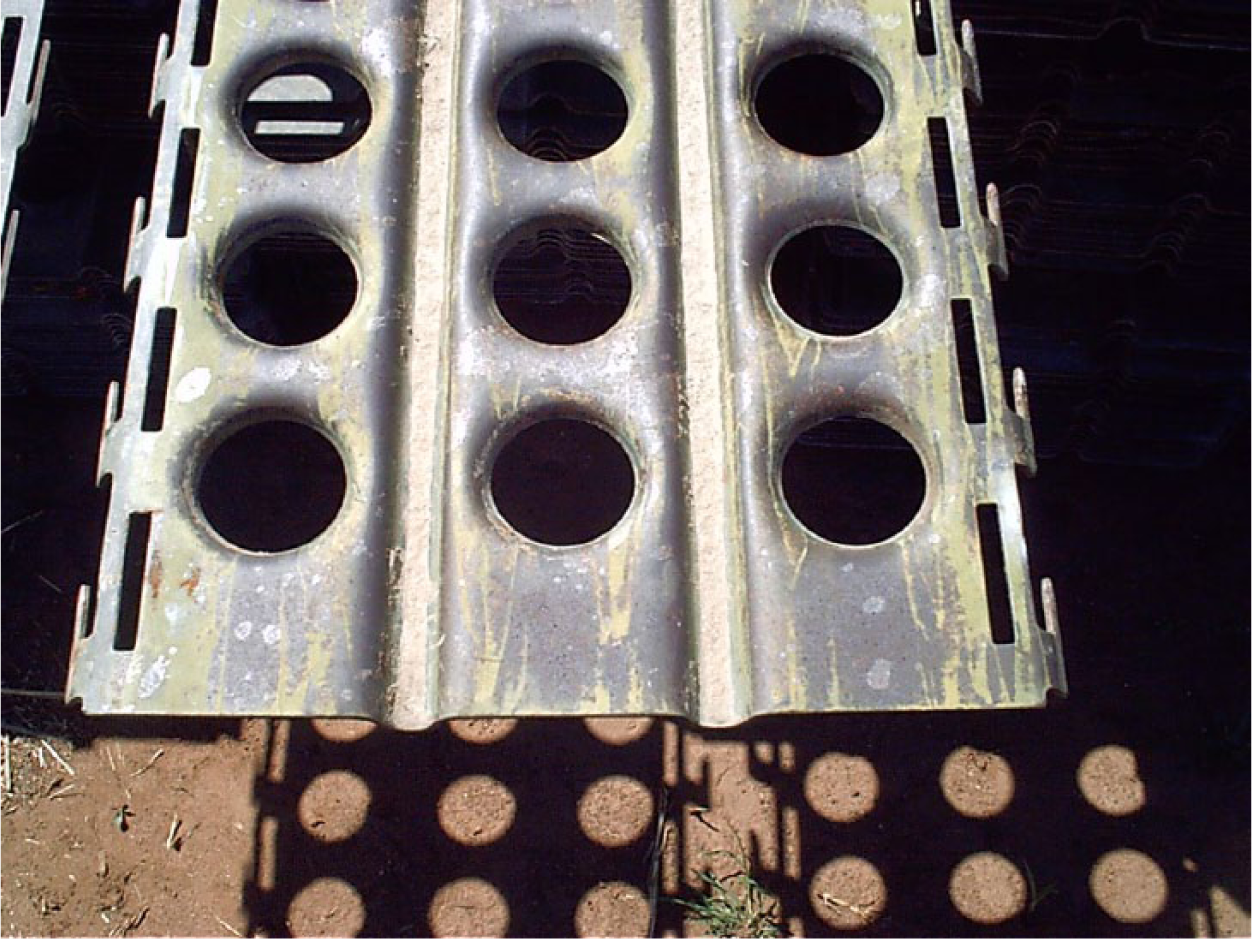
Pierced Steel Planks (PSP).
At the end of 1965, General Westmoreland ordered the deployment of temporary forward airfields in Vietnam to adapt to the fluid nature of the war in which battle lines were more permeable and shifting than in earlier wars. Westmoreland placed a premium on mobility for which the portable landing mats were key (Fatherree, 2006: Chap. 7; Traas, 2010: 187–188). Given the increased size, weight, and power of the Hercules C-130 cargo planes and the Huey helicopters, and the fact that some airfields were receiving as many as 60 sorties a day, the Army Corps of Engineers traded weight for strength and switched from the Marston cheese grater mats to solid, corrugated, carbon steel planks. The idea being that the heavier M8A1 mats, as they were known, could more effectively withstand the more demanding loads than their earlier PSP counterparts (Traas, 2010: 188–189). The M8A1 steel mats had their problems; manufactures often varied production specifications, making it difficult to lock the mats together and the rough edges frequently ripped the tires of heavy transports and helicopters (US Army Corps of Engineers, WES, 1955, 1977). Alternative mat designs were considered with the AM2 aluminum mats eventually becoming the mat of choice, thereby relegating the M8A1 mats for taxiways and aircraft parking lots. Between 1941 and 1975, the US government manufactured several million tons of landing mats of various designs (Fatherree, 2006: 121–123; Robinson, 1992: 205; Traas, 2010: 66, 114, 188–189; US Army Corps of Engineers (WES), 1951).
It is the M8A1 steel planks that were used to build large sections of the US–Mexico border wall. They are substantial: 12 feet long, 22 inches wide, and a quarter inch thick. Each steel sheet weighs 147 lbs (Nuñez-Neto and Garcia, 2007: 16). Their weight, strength, and massiveness demand they not be cast aside. As my colleague, Mahmoud Keshavarz, suggested: they ask to be recycled. Piles of landing mat are still for sale today on websites of army surplus vendors such as Calumet Industries in Oklahoma, Coleman’s Military Surplus (n.d.) in Millersburg, Pennsylvania, and even at Signature Aviation Matting in New York City, although Calumet industries now specifies that M8A1 landing mats (Figure 3) are in short supply.

M8A1 landing mats used in Vietnam.
The mats have an elegance and simplicity in their design: clean straight lines running the length of the mat, the extra rods slotted into the grooves at either end provide variation without disrupting the pattern, all the while signaling strength. The slots and wing hinges on either side make clear that the mats are designed to be reconfigured.
Most popular accounts of Vietnam focus on the origins and style of the war: how did we get involved? What was the nature of that war at home and abroad? To the extent that war’s end comes into view at all, the focus is generally on the fall of Saigon (Kennedy, 2014; Butler, 1985). The landing mats–border connection shifts attention from origins and conflict to the massive materiel task of exiting Vietnam. Enormous high voltage generators, DeLong prefabricated floating piers, tractors, excavators, rock crushers, trucks in all shapes and sizes, and the military bases themselves all had to be dealt with in some fashion. What was to be done with the stuff of war (Braun and Whatmore, 2010)? A variety of pathways were used to disperse the materiel infrastructure of battle; some items were simply abandoned, others were formally handed over to the Republic of Vietnam. Still other equipment was sold off to the highest bidder, while others were sent back
There is an imperial recycling, if you will, at the end of war as massive infrastructures are redeployed. The landing mats were part-and-parcel of this materiel repurposing as mats designed, tested, and constructed for Vietnam were reused to build the US–Mexico border wall. As one military campaign ends, materials are redirected to the next imperial frontier. Exactly how the landing mats got from Vietnam to the border wall is a complicated story. That the landing mats were used in both Vietnam and the southwest border is certain; what remains unclear is the precise passage taken. At a minimum, surplus mats designed and built for Vietnam were redirected to the border wall from army surplus facilities in the United States without having been deployed in Vietnam. Others may have been retrograded directly to the border wall at war’s end, but specific cargo load records have yet to be found. 5 Whatever the pathway, Vietnam landing mats and border wall are linked. The Border Patrol field officers and the agency website readily acknowledge the connection. More important, one can readily see large sections of landing mat fence along the US–Mexico border today at both Border Field State Park on the coast in California and further inland at Calexico, Andrade. In fact, M8A1 landing mats were used in all southwest border-states except Texas (Calumet Industries, 2014; Department of the Army, 1970: Chap. 3; Haddal et al., 2009; Marsh et al., 1999; Traas, 2010: 550, 573, 574; US MACV, 1973, E-26-E-60).
Landing mat border walls
From the outset, landing mats were considered the most cost-effective fencing material because, as army surplus, the mats were made available “without cost to the (border) project” (Marsh et al., 1999: 14). With this enormous economic advantage, it is no surprise that 43,120 mats were used to build 14 miles of landing mat fencing in the San Diego District with each mile of fence requiring 3,080 panels. In 1999, the Army Corps noted that there were enough panels in surplus to construct an additional 60–90 miles of border wall out of the 2.5–3.8 million surplus panels. By 2006, the Congressional Research Service estimated that 62 miles of the US border fence had been built out of landing mats (Calumet Industries, 2014; Haddal et al., 2009; Marsh et al., 1999: 14; Nuñez-Neto and Viña, 2006: 16). 6
The mats have been used in a variety of fence designs. At Border Field State Park and Andrade, the landing mats are positioned horizontally (Figure 4); in Calexico, California, they are welded together vertically (Figures 5 –7). In other locales, the mats are mixed together in a patchwork pattern. Some landing mats are old and rusty, bent over and damaged in ways that give them a special allure, while others appear much newer, almost pristine. In Calexico, some sections of the wall have been painted with an elaborate art project; at other locations, landing mat panels are nestled unobtrusively within the weeds and trees. Many landing mats have numbers painted on them, or large letters hoisted above, to facilitate communication for those policing the wall.
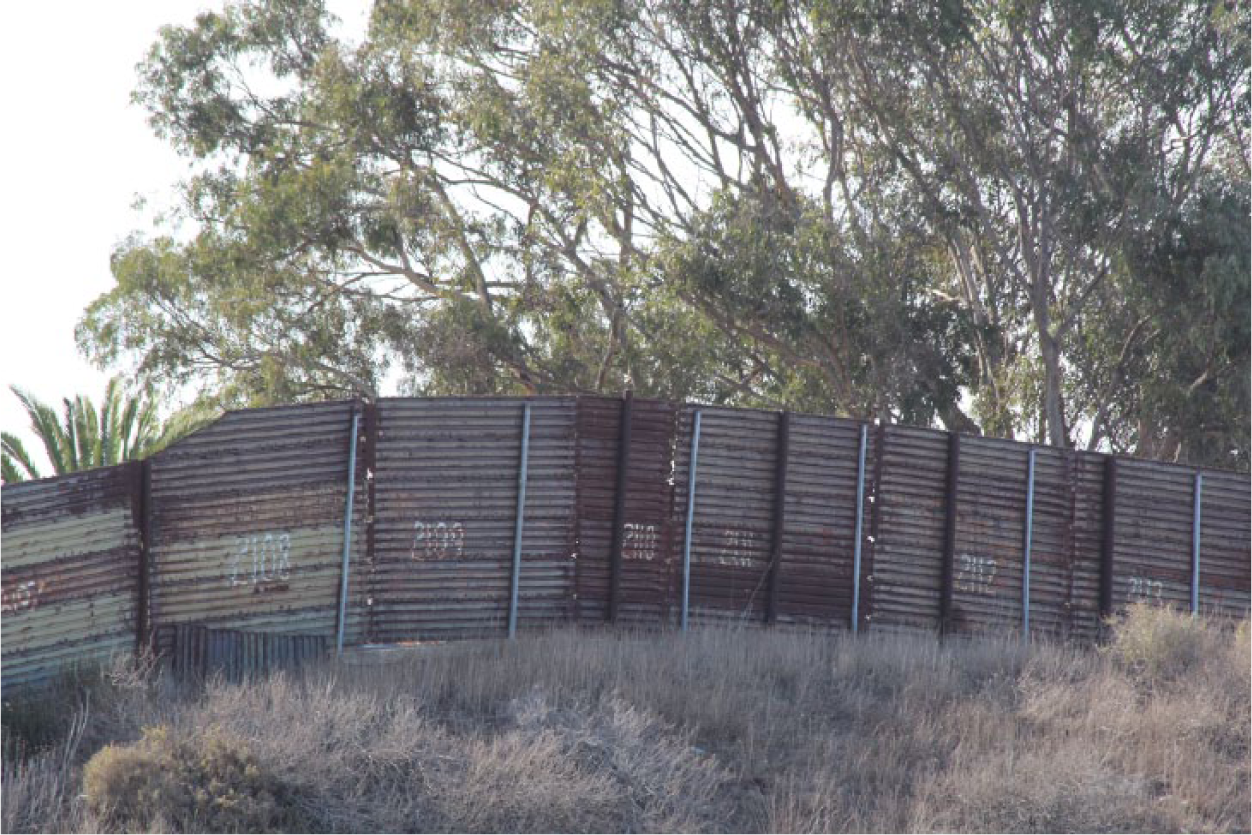
Landing mat fence, Border Field State Park, CA, 15 December 2013.
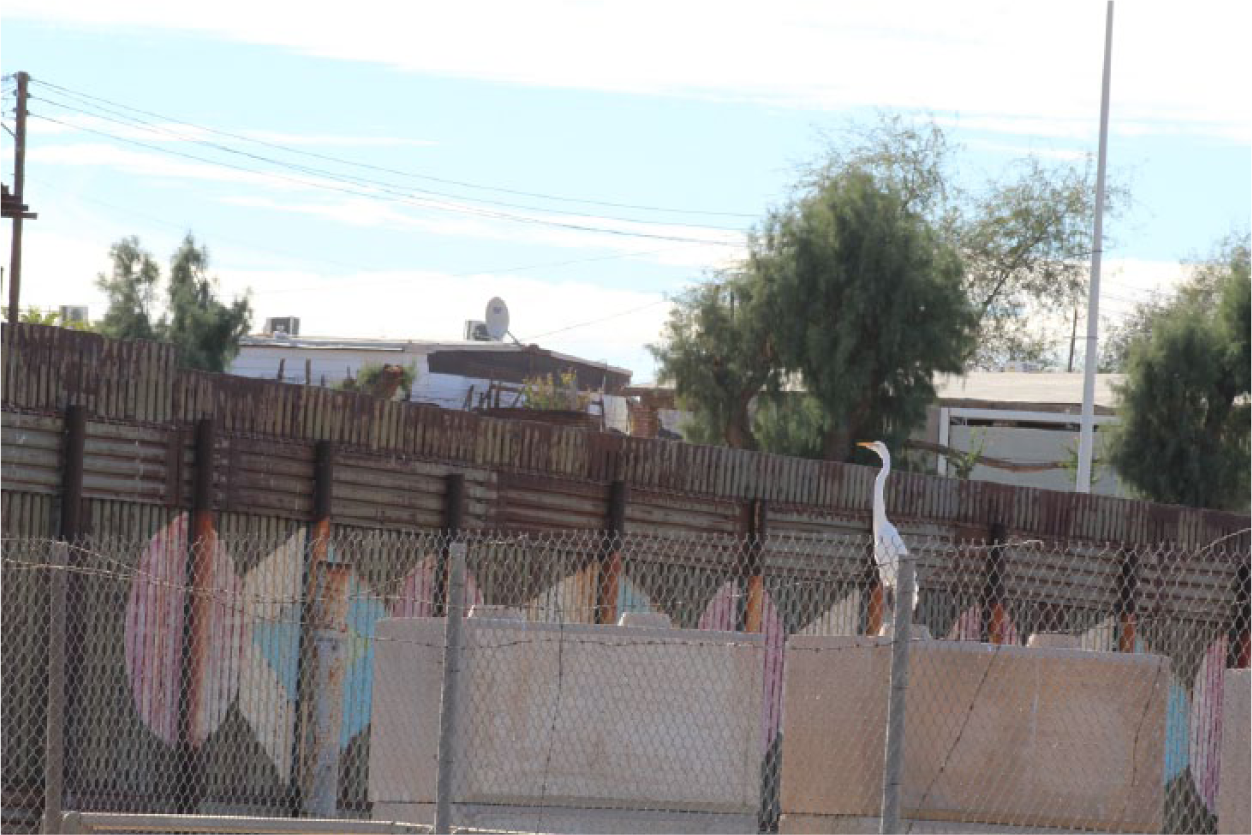
Border wall art project, Calexico, CA, 16 December 2013.
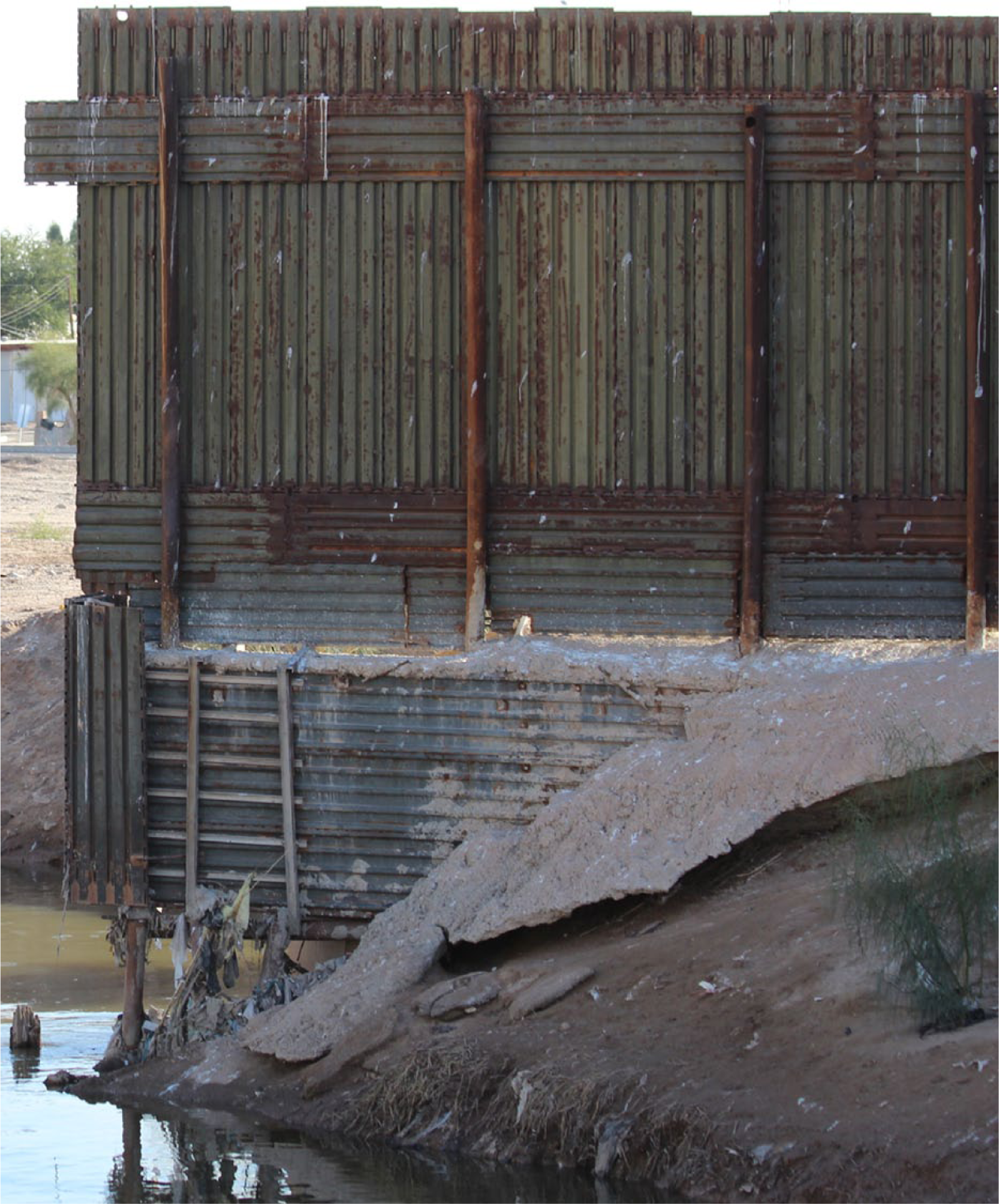
Patchwork wall design, New River, Calexico, CA, 16 December 2013.
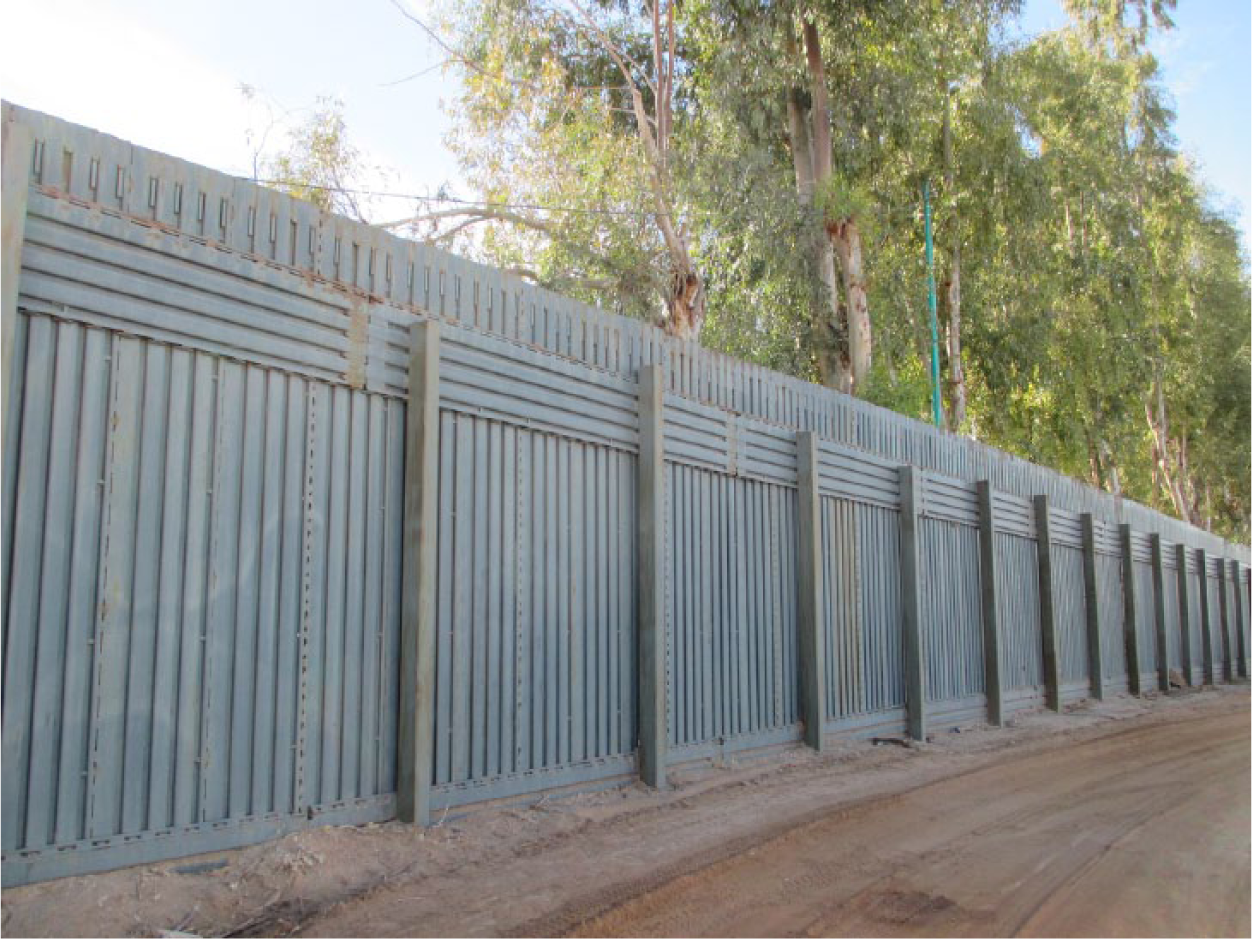
Landing mat fence on the outskirts of Calexico, CA, 16 December 2013.
Interestingly, it is the Army Corps of Engineers that provided institutional continuities between Vietnam and the US southern border, since they were responsible for developing many infrastructural components for both the war and wall. The Corps’ offices in Vicksburg, Mississippi, became the central location for designing and testing the portable mats for Vietnam, in part because the flood plain experience along the Mississippi was thought to provide excellent grounds for testing landing mat performance for the monsoonal conditions in Vietnam (Fatherree, 2006: 123–125; Traas, 2010: 114). No doubt Congressional politics also had a role to play in the allocation of Federal jobs and resources. Fifty years later and half a world away, the Army Corps of Engineers is now playing an equally important role in designing, developing, and testing the US–Mexico border wall (Frisinger, 2009; Marsh et al., 1999).
Object memory: haunted by empire
What memory work are the landing mats doing? How do objects witness? How do landing mats remember? Two issues require attention: disavowal and the aesthetics of identification. For almost a half-century now, a wide range of social and institutional forces in the United States have kept the Vietnam War from view. Apart from the Vietnam memorial in Washington DC, which is situated in the Constitution Gardens, adjacent to, but off the more prestigious central axis of the National Mall, one can live in the United States without having to reckon with the forgotten war. There is no special day of remembrance, little or nothing to keep us alive to the war in Vietnam. No Berlin-style stumbling stones here (Harjes, 2005). The landing mats disrupt the familiar political landscape by bringing Vietnam back into view. The mats re-activate memories that have slipped, or been pushed aside; the absent made present through the wall.
If historical links between the Vietnam War and border wall are not widely known how exactly do the landing mats prompt a reckoning with Vietnam? Do those looking at the mats even know what they are seeing? To address these questions, I first extend William Hirst’s and his collaborators’ memory research from speech to vision to underscore the significance of looking as an important component of remembering (Cue et al., 2007; Hirst and Echterhoff, 2008). In addition, I shift the lens from memory to design. The shape of things, many have argued, holds the key to the political dynamics at work (Appadurai, 1986; Brody, 2010; Colomina, 2004; Fry, 2011; Harris, 2006; Scarry, 1985; Winner, 1980). Here, I consider the ways in which objects exceed designers’ intentions, thereby allowing a glimpse of larger social imaginaries speaking through things. Doing so opens up the cultural unconscious as a crucial domain of the political (Ahmed, 2004; Bollas, 2009; Cho, 2006; Howes, 2005; Hustvedt, 2012; Merleau-Ponty, 1992; Schwab, 2004).
Hirst and his colleagues have found that not speaking not only removes specific events from public discourse, it displaces the memories themselves at a deeper level so that we forget that we are forgetting. There is a double forgetting that is particularly powerful and difficult to circumvent without first addressing the unspoken/unseen elements (Cue et al., 2007; Hirst and Echterhoff, 2008). Following Hirst, the landing mats not only bring Vietnam quite literally back into view, their presence reminds us that we have been forgetting. The mats’ presence halts second order memory displacements and prompts a long overdue reckoning with Vietnam. Remembering, however, is by no means immediate or consensual. In fact, the landing mats reanimate disagreements over the war. The mats hold, rather than resolve, the contested memories of Vietnam. While some are shocked by their presence along the southwest border, the Border Patrol is by no means embarrassed by the connection and readily acknowledges the links to war and wall on the agency’s official website. There is no sense of embarrassment or shame. On the contrary, as one Border Patrol officer explained, there is considerable movement of personnel among the army, police, and border patrol: “we are all in the law enforcement family” (Cordero, 2013). Websites like Honor First further attest to these connections as it aims to recruit decommissioned army personnel from Afghanistan into the Border Patrol (Honor First, n.d.). The landing mat movement is not an isolated phenomenon, but rather is one instance of a wider circulation of people and things through the circuits of US law enforcement. The landing mats bring these imperial circuits into view. Once war and wall are reconnected, memories are re-activated, and political disagreements resurface. Appearing in public is just the beginning of the story.
Hailed by design: the lure of the grid
Landing mats do more than confront us with longstanding acts of disavowal; there is an allure to the wall as well
Before unpacking the aesthetics of identification, let me be clear about what I am not saying. First, I am reversing, rather than following, James Scott’s Seeing Like a State (Scott, 1998). For Scott, political authority shapes perception so that states impose grids to secure legibility. From my perspective, the most interesting political dynamics flow in the opposite direction; aesthetics bind us to state projects with which we might quite explicitly disagree. Rather than collapsing aesthetics and politics, I focus on the ways aesthetic attachments bind us politically in unexpected ways. Second, I am not replacing nationalism, whiteness, and settler colonialism with aesthetics. On the contrary, I am suggesting that aesthetics are one of the central vehicles through which these identifications get installed in us somatically. I find the mats beautiful not simply because I am a crude nationalist, rather, a nationalism is vested in me via a sense of modernism and its aesthetic principals. One might say that the central trope of the, so-called, American Century has been a defense of the modern in its various forms. Modernization theory, economic and political development, abstraction, minimalism, and the grid
One final caveat is needed before returning to the landing mats directly. I do not take the equation of New York (or the United States more generally) with modern art at face value. There is much evidence documenting the presence of similar artistic movements across Latin America at the same time, or even before, they appeared in New York. The 2007 Grey Gallery exhibition, Geometry of Hope, documents the reach of Latin American abstraction before it made its name in New York (Pérez-Barreiro, 2007). Nevertheless, the idea of Modernism, modernism as a brand, is linked closely with New York City and its artistic institutions, especially the MoMA, whose founding in 1929 forever twinned modernism and Manhattan.
One might say that during the middle decades of the twentieth century, modernism became the aesthetics of the hegemon
To push the landing mat–grid comparison further, consider for a moment the Sol LeWitt Wall Drawing and sculpture above and below (Figures 8 and 9). There is an insistence and power contained in grids as they push back aggressively against nonlinearity. Their authority is at once unbending and autocratic; one might say imperial, yet the repetition and modularity also suggest nascent democratic impulses. Each cube the same as the others. The rule of man, not of nature. This multi-vocality of the grid, that Koolhaas (1997) captured so brilliantly many years ago, is part of its allure; a doubling that echoes the brutality and beauty of the landing mats that I want to address here.
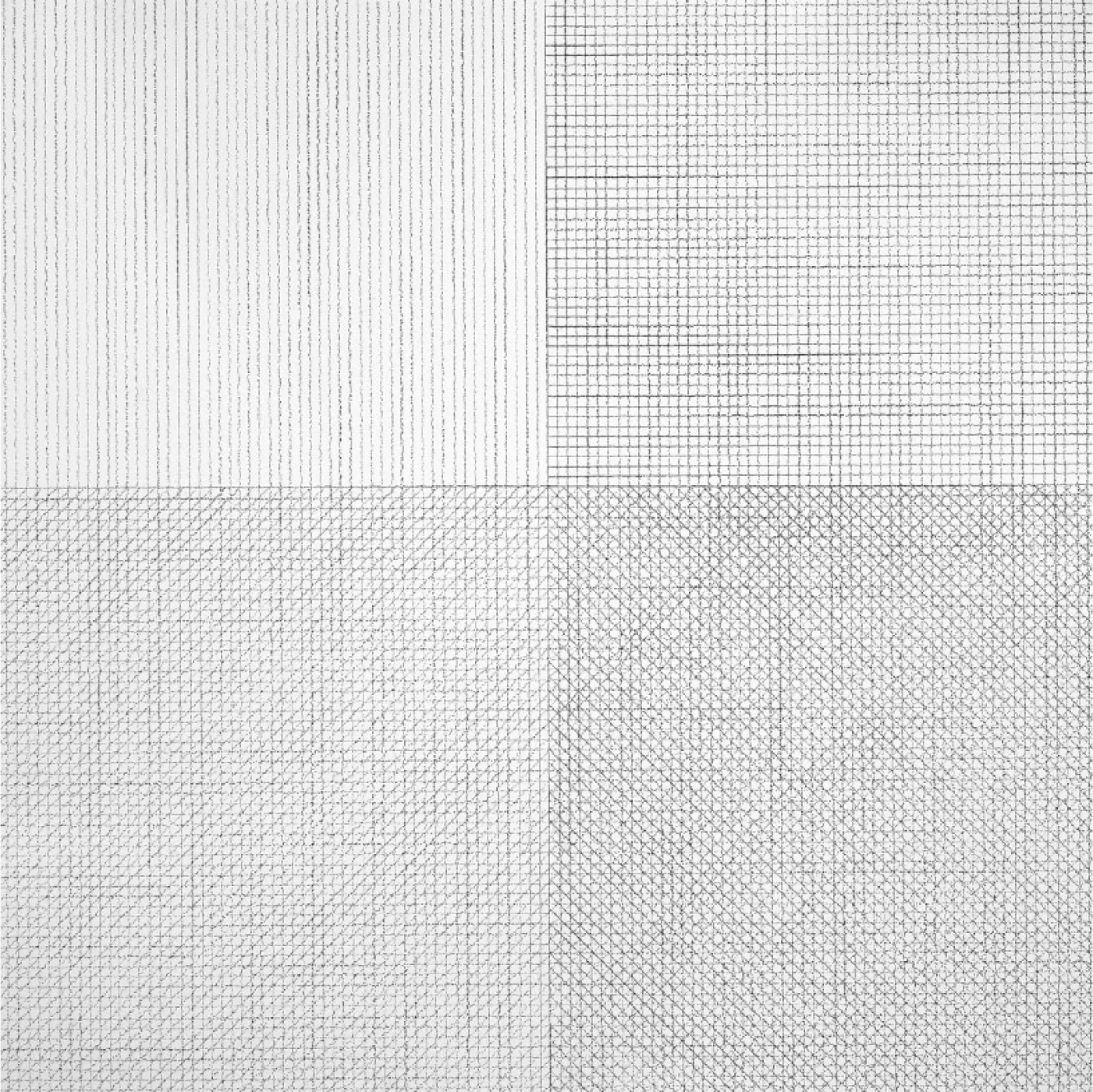
Sol LeWitt, Wall Drawing 56. August 1970.

Sol LeWitt, 1 2 3 4 5 4 3 2 1 Cross and Tower. 1984.
Interestingly, there is a quite direct connection between LeWitt’s Wall Drawings and the antiwar movement against Vietnam as one of LeWitt’s early pieces (Wall Drawing Number 11) was first shown at the Paula Cooper Gallery in New York in 1968 in an exhibition to benefit the Student Mobilizing Committee to end the Vietnam War. And in a very different political vein, some scholars have tried to document a link between the Central Intelligence Agency (CIA) and modern art by examining the funding sources for MoMA (Saunders, 1995). Although worth noting, I do not see these direct links as the most important way of understanding the connections between art and politics or grid and wall. Rather the analytic action lies in the aesthetic affinities running through these geographically dispersed sites; affinities that undergird the many faces of American nationalism. In short, I am arguing that the most powerful political analysis comes from following images rather than the money or proximate social relations.
Agnes Martin’s work, perhaps even more than LeWitt’s, has deep resonances with landing mats and border wall. Consider the drawings “Aspiration” (Figure 10) and “Untitled” (Figure 11) from 1960 and 1979 respectively. The doubling of every other line in “Untitled” or the repetition of dark lines in “Aspiration,” creates grooves that have an eerie similarity to the Calumet landing mat photo. But there is more to these grids than rigid lines. Look carefully along the right hand side of “Aspiration”; there is a quirky extension of the lines beyond the grid and an irregularity among the panels in which the insistence and regularity are relinquished ever so slightly. Similarly, in the 1979 “Untitled,” the uneven and slightly mottled surface, created through the mixed media of pencil, ink, and watercolor on paper creates a splotchy surface that complicates the grid by allowing variability to creep into the otherwise tightly scripted space. There is a little unruliness to these Martin grids that compliments the landing mats’ beaten up quality (Cook, 2011; Glimcher, 2012). 8
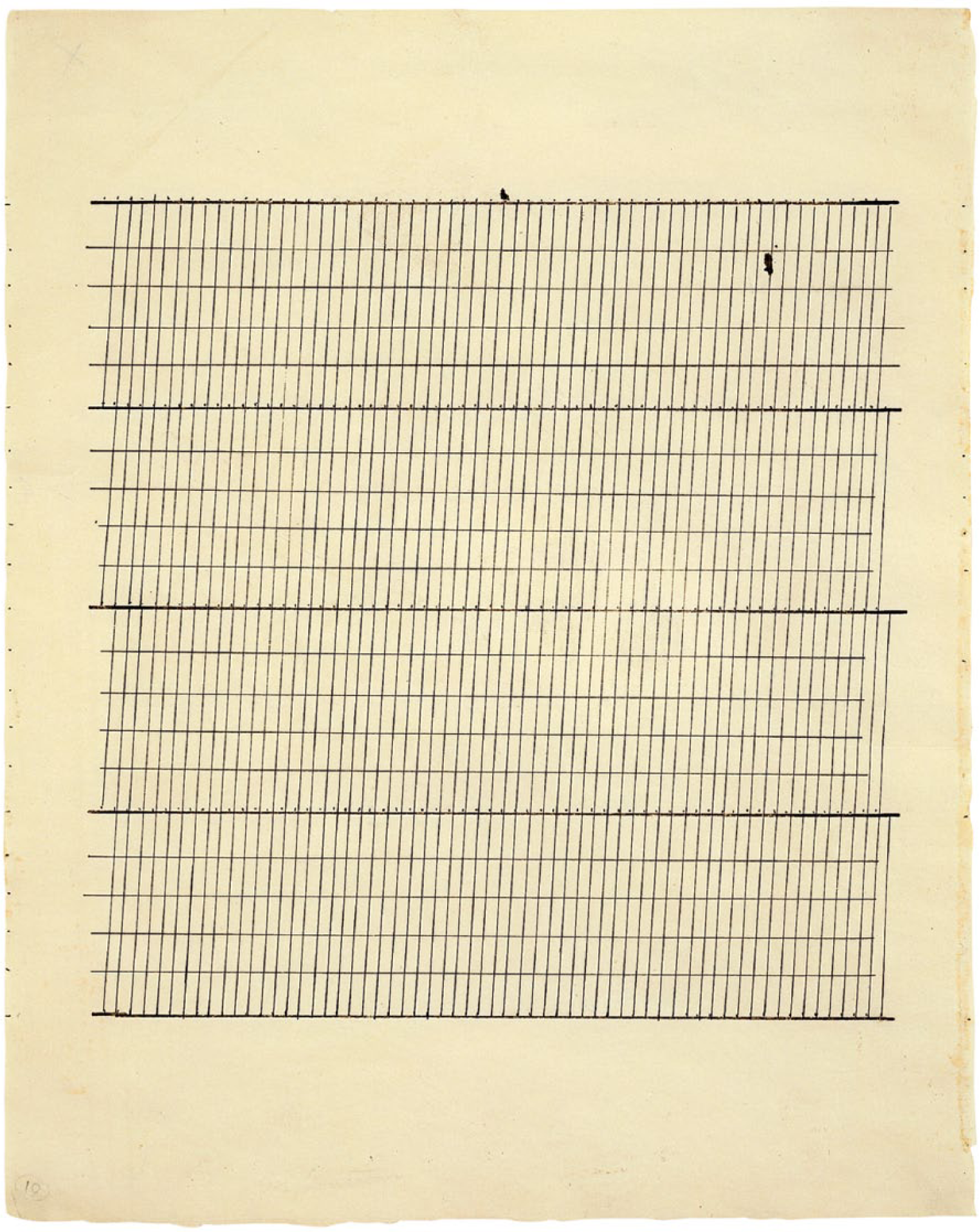
Agnes Martin, “Aspiration,” 1960, ink on paper, 113/4 × 93/8 inches.
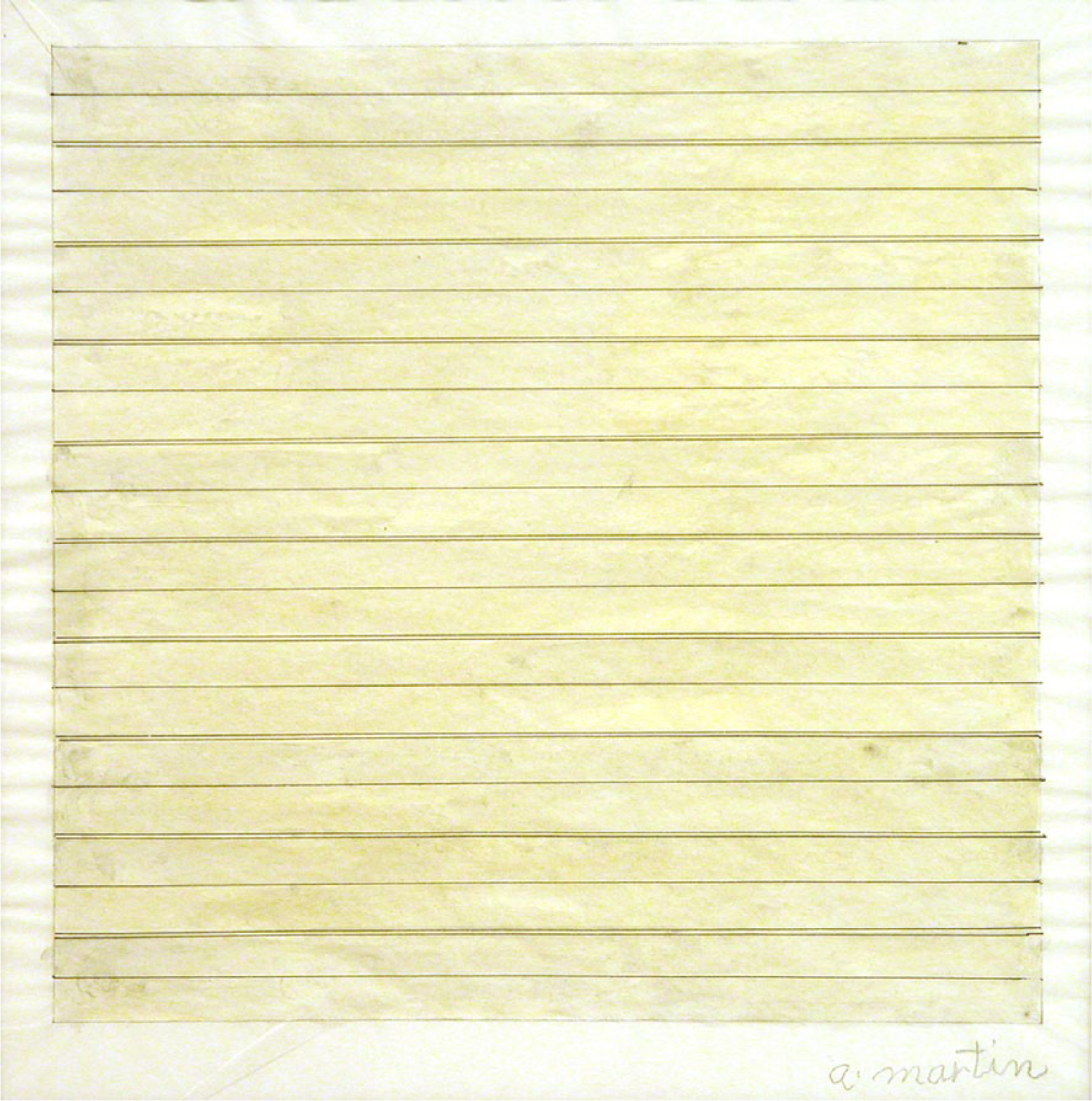
Agnes Martin, Untitled Drawing, 1979, pencil, ink, and watercolor on paper, 10½ × 10½ inches.
Although the landing mats and Martin’s art works are created out of radically different media (steel and paper respectively), resonances among them are clear. Once one attends to the trope of the grid, connections erupt across social and cultural domains that have hitherto been sequestered in separate realms. The reverberations across fields illuminate powerful forces at work that are by no means easily anchored geographically. Circuits connecting Vietnam, California, and New York become visible, dramatically expanding conceptions of the political.
The landing mats’ geometric design is complemented by the heft of the carbon steel. Richard Serra sculptures also come to mind; color, texture, and weight are critical (Figures 12–13). Both mats and sculptures are heavy to the look, solid, and industrial. The strength and weight of the mats evident to the eye is softened by their muted colors
The sure-footed criticism of Vietnam and border wall are unsettled by the sinews connecting war and wall to modern art. Some of the sinews are literal
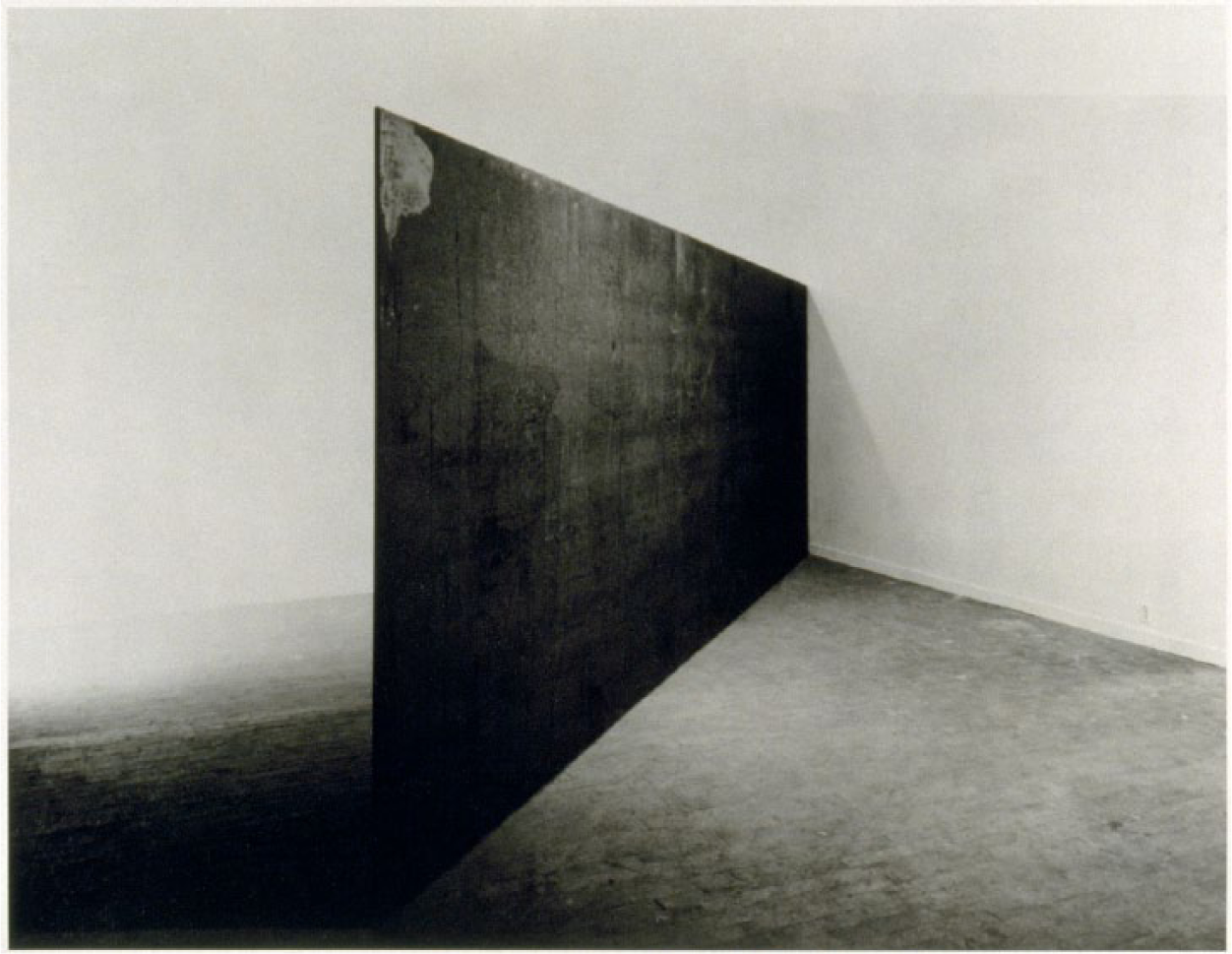
Strike: To Roberta and Rudy. 1969–1971.
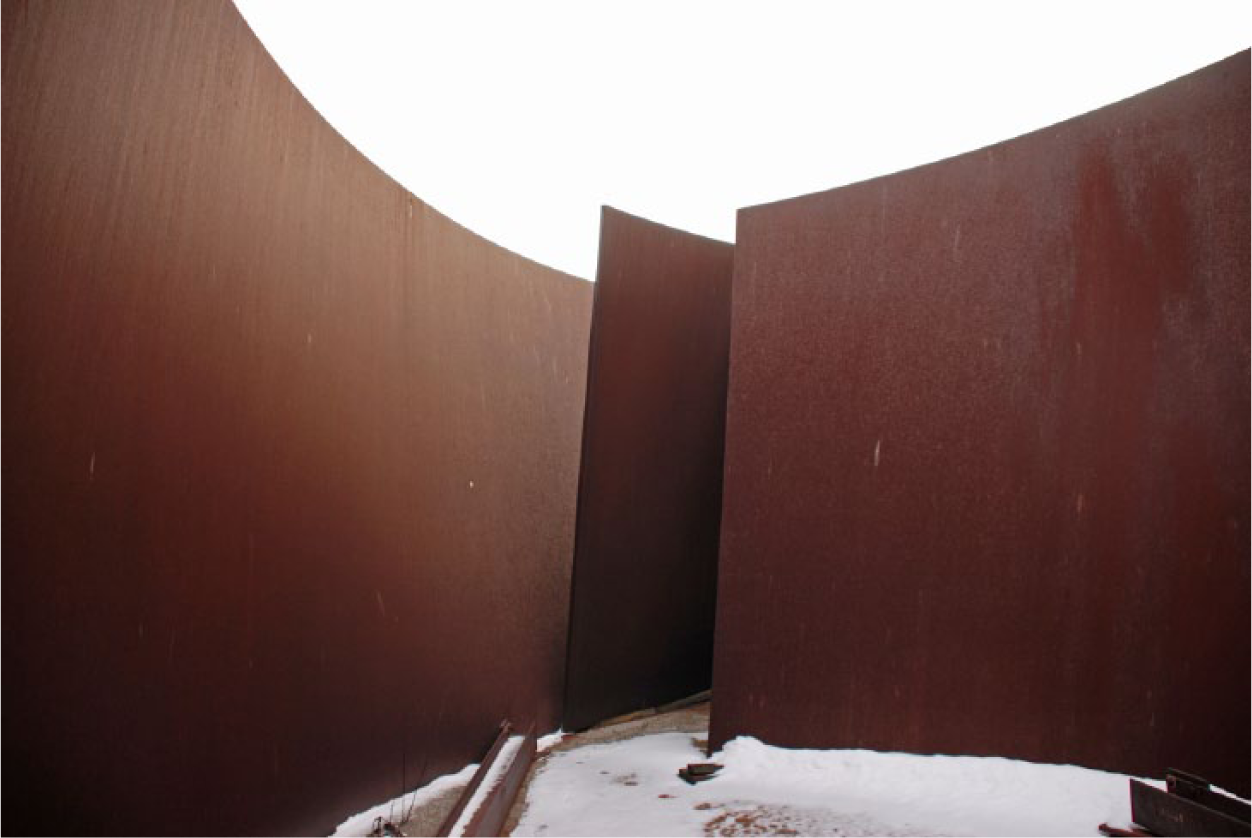
Richard Serra sculpture in the Bronx, date unknown.
I will not be able to go back to DIA Beacon, where one inevitably encounters Sol LeWitt, Agnes Marin, and Richard Serra in all their glory, without simultaneously thinking of the border. Attending to aesthetic affinities across fields makes clear that critiques of one require rethinking the other. The affective entanglements that emanate from the materiality of the wall and the affective pull of the images call for a different kind of politics than repudiation and disidentification. My position might be sharpened by contrasting it with Ariella Azoulay’s stunning archive of Israeli–Palestinian border images in her Civil Imagination. After encountering one devastating image after another, Azoulay (2012) concludes by declaring the “right not to be a perpetrator” (epilogue). If only political change could be secured through such a simple gesture. From my perspective, Azoulay undercuts the massive archiving project by failing to theorize affective investment in her own visual archive. Doing so would require grappling with the untidy assemblage of imperial identifications. The landing mats reveal the deep multi-sensory threads that make disidentification an insufficient politics.
The argument I have advanced here calls for coming to terms with our affective investments in the modern. Ignoring the aesthetic affinities at work makes critique simpler, but ultimately ineffective since it avoids engaging identifications as they are lived in the body. The landing mats are powerful analytically, because the objects, and the images of them, capture both the horror and beauty of mid-century modernism (Figures 14 and 15). The pressing question becomes one of discerning how tightly the various elements comprising American modernism are synched. Might we dislodge some elements while holding onto others, or must we engage in more wide ranging acts of dismantling? Attending to the affective pull of images and to their circulation expands conceptions of the political in ways that provoke a rethinking of subjectivity, political authority, and change.

Landing Mat border fence, Calexico, CA, 16 December 2013.
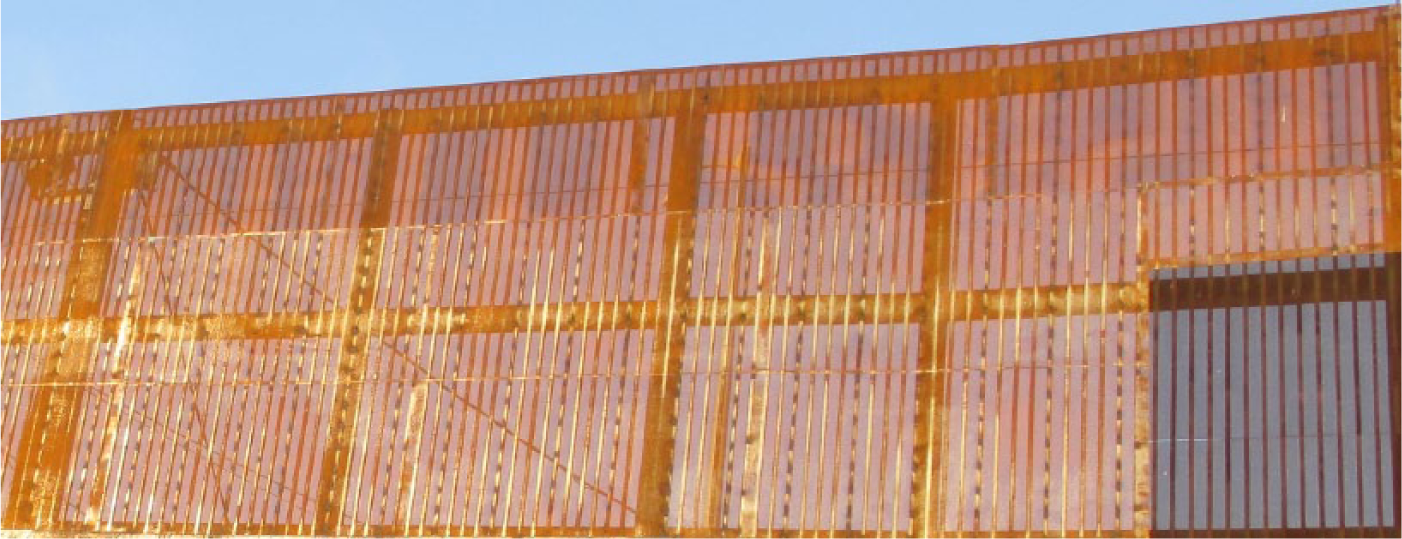
Border fence, Brownsville, TX, 12 February 2015.
Footnotes
Acknowledgements
This essay grows out of longstanding engagements across art, design, and social research. Many have participated in these explorations: I want to thank Shana Agid, Sammy Cucher, Alexandra Delano, Clive Dilnot, Abou Farman, William Hirst, Siri Hustvedt, Andreas Kalyvas, Mahmoud Keshavarz, Laura Liu, Tim Marshall, Benjamin Nienass, Arthur Ou, Ross Posnock, Radhika Subramaniam, Miriam Ticktin, Cameron Tonkinwise, Mark Reinhardt, Ann Snitow, and Carlos Yescas. Eric Reinert, from the Office of History at the US Army Corps of Engineers, Adrian Traas, and Marilyn Young were very generous with their knowledge of the Army Corps and Vietnam. I have benefited from four collegial groups in New York: The Political Theory Group at New York University; The Visual Culture Lab; Migration Memory and Materiality; and the Multiple Mobilities Group all at the New School. Nick Fiori has been a fantastic research assistant and Nellie Gilles helped me enormously with my photographs. Finally, I am indebted to Gerald Berk, Margaret Bowland, David Brody, Kevin Bruyneel, Jane Cohan, Thomas Graham, Gary Herrigel, Katherine Hattam, Nora Krug, Anne Norton, Jack Powers, George Shulman, Jilly Traganou, and Rafi Youatt for their friendship and illuminating discussions of grids and other matters.
Declaration of Conflicting Interests
The author(s) declared no potential conflicts of interest with respect to the research, authorship, and/or publication of this article.
Funding
The author(s) received no financial support for the research, authorship, and/or publication of this article.