



Abstract
Emotion is critical for cultural dynamics, that is, for the formation, maintenance, and transformation of culture over time. We outline the component micro- and macro-level processes of cultural dynamics, and argue that emotion not only facilitates the transmission and retention of cultural information, but also is shaped and crafted by cultural dynamics. Central to this argument is our understanding of emotion as a complete information package that signals the adaptive significance of the information that the agent is processing. It captures an agent’s appraisal about the relationship between themself and the object of emotional focus, as well as action orientation and allostasis in context. We discuss implications of this perspective in the context of the changing natural and geopolitical environment, and future cultural dynamics into the 21st century.
What is the role of emotion in cultural dynamics? By cultural dynamics, we mean the formation, maintenance, and transformation of culture over time (Kashima, 2008, 2014a; Kashima, Bain, & Perfors, 2019). With contemporary theorists of cultural evolution (e.g., Boyd & Richerson, 1985; Campbell, 1975; Cavalli-Sforza & Feldman, 1981; Dawkins, 1976; Sperber, 1996), we understand culture as the set of socially transmittable information that can potentially influence human behaviour. Thus, cultural dynamics are concerned with the processing of cultural information within a human population. The question at hand, then, amounts to asking how emotion forms, maintains, and transforms culture, and how cultural dynamics form, maintain, and transform emotion. Despite its relative neglect in the contemporary theorizing in cultural evolution (cf. Nichols, 2002), we argue that emotion is pervasive in cultural dynamics. Emotion is not only a product of cultural dynamics, but also a concomitant process deeply intertwined with, or possibly even a driving force behind, cultural dynamics. Therefore, emotion should be a critical element in theories about the stability and change of human culture over time. In what follows, we first outline our approach to cultural dynamics, then clarify our conceptualization of emotion, and make a case for the assertion that emotion has a profound impact on the information processing in a human population, and therefore the formation, maintenance, and transformation of human culture.
Niche Construction, Human-Made Environment, and Cultural Dynamics
Living organisms modify their environment to construct their niche to meet a variety of challenges that they face (Laland, Odling-Smee, & Feldman, 2000; Odling-Smee, Laland, & Feldman, 2003). Humans are no exception, they have made use of what is available in their environment, turned available objects and substances into tools, clothes, shelter, and other resources, and constructed their own niche, that is, the human-made environment. The human niche certainly enables humans to adapt to the rest of nature; however, the human-made environment itself has become the environment to which humans need to adapt. Many of us would agree with engineer and historian Henry Petroski’s observation, “Other than the sky and some trees, everything I can see from where I now sit is artificial” (Petroski, 1992, p. ix). Modern humans mostly live with other humans, surrounded by the material artefacts in the human-made environment.
Macro-Level Cultural Dynamics
Arguably, all life forms engage in niche construction (Lewontin, 2000); however, the extent and impact of human niche construction is staggering. What has enabled this feat is cultural information—information transmitted from prior generations and cumulated over time. Without a doubt, genetic information too has contributed to human adaptation. Genetic evolution has enabled humans to develop extensive cultures (e.g., Maslin, Shultz, & Trauth, 2015; Richerson & Boyd, 2005), but the gene–culture coevolutionary models suggest that cultural practices may in turn influence genetic evolution (e.g., Boyd & Richerson, 1985; Laland et al., 2000; Moya & Henrich, 2016), as we will discuss later. The combined process of genetic and cultural dynamics has made it possible for humans to construct the world that they live in.
For humans, therefore, the totality of their environment is made up of not only nature (e.g., natural disasters, predators, microbes—and probably it is more appropriate to say, “the rest of nature,” because humans are no doubt part of it), but also their own human-made niche including its physical and built environment (e.g., houses, roads, bridges), social environment (e.g., family, social networks, ingroups, outgroups), and psychological environment (e.g., existential questions, communication). Furthermore, the social environment involves complex economic activities (e.g., resource extraction, distribution, waste disposal), intragroup relations (e.g., free riding, social cohesion), as well as intergroup relations (e.g., cooperation, conflict, war; e.g., Kashima, 2019; Kashima et al., 2019). These different environments present challenges to a human population, and culture is a significant aspect of what makes it possible for humans to adapt to, and often thrive in, the diverse complex social-ecological systems that this planet harbors.
Cultural dynamics can facilitate adaptation through three processes at the macro level (e.g., Kashima et al., 2019). First is the generation of variability in cultural information. By importing it from other populations or creating it endogenously within a population, novel information can be added to the pool of cultural information available to the human population. This process may be blind (i.e., without foresight or planning; Campbell, 1960) or guided by intentional planning (Boyd & Richerson, 1985). Either way, if there is no variability, there are no cultural dynamics. Diversity is a sine qua non.
Second is the social transmission of cultural information. Once cultural information is available, it needs to be transmitted from one individual to another. Cultural transmission can occur vertically from parents to offspring just like genetic transmission or reverse-vertically from offspring to parents; furthermore, cultural information can be transmitted obliquely from one generation to the next even without genetic connection and horizontally within a generation (e.g., Cavalli-Sforza & Feldman, 1981).
Third is the selection process. Cultural information is selected out if its use incurs costs, and selected in, and therefore retained, if its use results in benefits in the environments with which a human population interacts. In other words, if a cultural practice results in a negative outcome given the environmental circumstances, it tends to fade away, but if it produces a positive outcome, it tends to be retained in the population. This process is akin to the law of effect (Thorndike, 1927) or reinforcement (Skinner, 1981) in its abstract form—typical consequences of the use of cultural information determine its retention. The resultant changes in the population distribution of cultural information are macro-level cultural dynamics—the formation, maintenance, and transformation of culture over time.
Micro-Level Cultural Dynamics
The trajectory of culture over time is driven by micro-level processes that individuals in the population engage in. Transmission and retention—central mechanisms of cultural dynamics—can be broken down to four subprocesses at the micro individual level (see Figure 1; Kashima, 2016a). Note that cultural information is retained in a variety of forms (e.g., brain, body, artefacts) and then transmitted. We start our description from the left of Figure 1: cultural information p (where p represents a proposition) is stored in the memory of an individual (sender). Although we talk about a proposition (e.g., Bill of Rights) here for ease of communication, we note it is entirely possible that cultural information takes a nonpropositional form (e.g., music, visual art). To be transmitted, however, cultural information needs to be produced in a form that is observable by another individual (receiver).

Schematic representation of transmission (based on Kashima, 2016a).
This produced information is grounded between the sender and the receiver (e.g., Clark & Brennan, 1991; Kashima, Klein, & Clark, 2007). Grounding is the process of interpersonal communication by which the sender and the receiver of cultural information establish a mutual understanding about the information. This is typically understood to involve a form of recursion, where both the sender and the receiver know (believe, accept, etc.) that they both know that they both know, etc. ad infinitum that the information means p (for further formal explications of this concept, see Miller, Pfau, Sonenberg, & Kashima, 2017). The critical element of this process is intersubjectivity, that is, it does not only involve the receiver’s subjective understanding that the information means p, but the sender also understands that the receiver understands that the information means p, and so on. That is to say, the sender’s and receiver’s subjectivities are interlinked in a meaningful way. This mutuality of understanding is critical for the sender and the receiver to coordinate their actions (e.g., Kashima, 2014b).
The grounded information is interpreted and may be stored in an individual’s memory. In some cases, however, produced cultural information may be represented in artefacts (e.g., YouTube videos), which can be interpreted by other individuals exposed to them. These artefacts constitute the human-made environment in the niche construction process. Thus, these processes vary from the most subjective and personal (memory) to the most intersubjective (grounding) and interpersonally available (artefacts).
In horizontal transmissions where cultural information is communicated between those who are equally knowledgeable, grounding is likely to be particularly critical—this makes transmission truly collaborative (Tomasello, Kruger, & Ratner, 1993). The sender who has particular cultural information (e.g., a research colleague who has made a new discovery) communicates it to the receiver who does not have the information. The sender can assume their shared knowledge (common ground) as a cognitive resource to communicate this new information to the receiver, and the receiver can ask questions for clarification or make comments about the information to facilitate their understanding. In contrast, when transmission occurs vertically or obliquely from older, more knowledgeable, or more experienced individuals to the younger, less knowledgeable, or less experienced, grounding may not be so critical, or the sender and receiver may even skip grounding altogether. This can happen in imitation or instruction (Tomasello et al., 1993). In imitation, the receiver simply interprets the unwitting sender’s behaviour and learns to perform it. In instruction, the sender tries to get the receiver to learn the cultural information, presumably with the latter’s willingness to do so (but perhaps even without it).
Micro-to-macro cultural dynamics
As a general principle, any micro-level factor that facilitates or inhibits the generation, transmission, or selection of cultural information shapes the macro-level trajectories of cultural dynamics. If its effects occur systematically, regularly, or pervasively, its consequences on a population’s culture are likely to be enduring and profound (Kashima et al., 2019). As we will argue in what follows, emotion is one of the factors that does exactly that.
Caveat
Before moving on, we would like to make a terminological caveat. The term cultural evolution is often used to describe the processes we call cultural dynamics here. We nonetheless prefer to avoid the term evolution because it runs a risk of being conflated with the 19th-century notion of social evolution à la Spencer and others. Social evolutionary theories were often used as a pretext for justifying racially and culturally discriminatory discourse and practice (Kashima, 2019). Although we certainly acknowledge with others (Claidiere, Scott-Phillips, & Sperber, 2014; Mesoudi, 2016; Richerson & Boyd, 2005) that contemporary theories of cultural evolution differ from the Spencerian social evolution, we still see a value in avoiding the term evolution at this point in history. See Kteily, Bruneau, Waytz, and Cotterill’s (2015) recent research on blatant dehumanization. They showed silhouettes depicting a gradual ascent from ape to modern human, and asked adults in the US recruited via Mechanical Turk to indicate “how evolved you consider the average member of each group to be,” followed by a sliding scale (0–100) located next to group labels such as Americans, Chinese, and Muslims. The average ratings varied from 91.5 for Americans, to 88.4 for Chinese, and 77.6 for Muslims. They aptly called this measure “Ascent.” Evolution still connotes ascent in everyday parlance and often implies a rank ordering of human groups. We believe it is still prudent to avoid the term for this reason.
Emotion and Cultural Dynamics
To discuss the role of emotion in cultural dynamics, let us turn to how we understand emotion in the present context.
Emotion as Complete Information Package
We understand emotion as a class of relatively short-lived affective response tendencies directed towards a specifiable object. This draws on James’s (1884) classical treatment while informed by contemporary understandings of emotion as a type of affect with an intentional object (object to which affect is directed; e.g., Forgas, 1995; Frijda, 1986; Peters & Kashima, 2015b), which has a relatively short duration (e.g., Keltner & Gross, 1999; Levenson, 1994), and typically occurs in response to events that present threats or opportunities to the organism. Thus, emotion is distinguished from other types of affect such as mood and sentiment in its intentionality and temporality.
For instance, as one learns about devastations caused by extreme weather events like Typhoon Mangkhut in the Pacific and Hurricane Florence in the Atlantic, one feels a mixture of fear, sadness, and sympathy, perhaps with a touch of relief that one is safe for now. As one’s thoughts turn to climate change and the appraisal of a lack of sufficient progress in international (and at times domestic as in the cases of Australia and the US) mitigation efforts, one feels anger, with one’s sensation of rising blood pressure, then turns to one’s partner and complains about the politics (for a nuanced discussion about cultural variability in anger, see Shweder, Haidt, Horton, & Joseph, 2008). In contrast, if one is confronted by a blasting wind and pouring rain, one may feel fear as one recognizes one’s vulnerability in the face of this “wrath of nature.” These scenarios seem uncontroversial—there is consensus that an instance of emotion typically contains a configuration of information (see Figure 2) including,
Appraisal of the event that has triggered the emotion including: a) Object towards which the emotion is directed. b) Relation of the object to the agent that experiences the emotion. c) Context in which the object and the agent are situated.
Interoception, that is, sensation of the internal bodily state.
Action readiness and action.
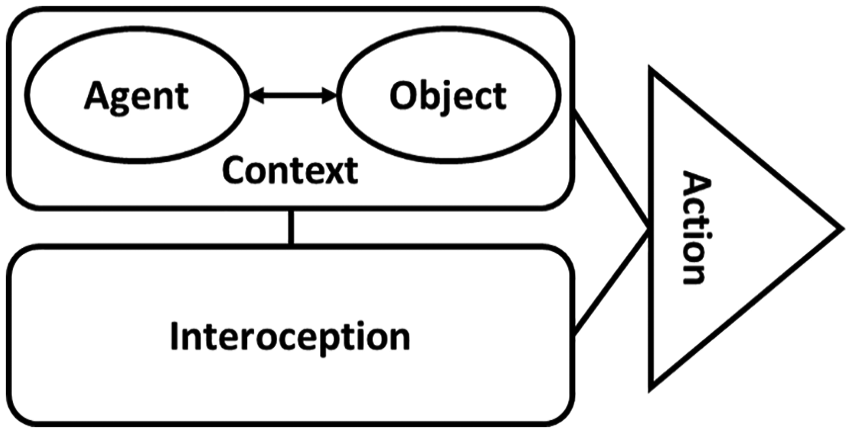
Schematic representation of an emotion instance.
An emotion instance includes appraisal and action readiness, as suggested by appraisal theories (e.g., Ellsworth & Scherer, 2003; Fernando, Kashima, & Laham, 2017; Roseman, 1991; Scherer, Schorr, & Johnstone, 2001; C. A. Smith & Ellsworth, 1985) and by action readiness and embodiment theories (Frijda, 1986, 2004; Niedenthal, 2007; Niedenthal, Barsalou, Winkielman, Krauth-Gruber, & Ric, 2005) of emotion. Indeed, studies of emotion concepts have shown that appraisals and actions are often included as antecedents and consequences of an emotional experience, respectively (e.g., Frijda, Kuipers, & ter Schure, 1989; Roseman, Wiest, & Swartz, 1994; Shaver, Schwartz, Kirson, & O’Connor, 1987). For example, anger prompts the agent to move against the object, whereas fear spurs movement away from it (Frijda et al., 1989), thereby regulating the agent’s relation with the object (for a similar characterization of stereotype, prejudice, and discrimination, see Yzerbyt & Demoulin, 2010). In this sense, emotion has been argued to be adaptive—it helps the agent to respond to the event in ways that are likely to increase the benefit and decrease the cost for the agent in the context (e.g., Keltner & Gross, 1999; Levenson, 1994). One caveat here is that we are not committed to any theories that postulate a set of specific emotions and emotion categories. We are suggesting that an instance of emotion typically contains an appraisal about an agent–object relation in context, as well as action readiness and action in context—we are agnostic about whether a specific emotion underlies an emotion experience.
In addition, an instance of emotion often includes interoception, that is, sensation of the internal bodily state, although there appear to be cross-cultural differences in the extent to which interoception is part of emotion concepts and experiences (e.g., Chentsova-Dutton & Dzokoto, 2014; Ma-Kellams, Blascovich, & McCall, 2012). Barrett (2017a, 2017b) argues that interoception captures the agent’s allostasis, which is a collection of physiological processes hypothesized to regulate a variety of bodily functions in anticipation of future demands. As an example of allostasis, Sterling and Eyer (1988) suggest a blood pressure rise in the morning as we get out of bed—blood flow is thus maintained especially to the brain, so that we won’t be light-headed when we stand up. Sterling (2012) argues that, when an event occurs, the brain predicts likely future demands for the organism, and adjusts effectors to match the anticipated demands. For example, when a future need for oxygen is predicted, the brain modulates heart rate, constricts some blood vessels and dilates others, and adjusts kidney functions to match the anticipated demand. Blood pressure is adjusted to ensure that oxygen is delivered to the body parts predicted to need it most. According to Sterling (2012), this type of predictive regulation of physiological processes is an adaptation for efficient foraging, predator detection and avoidance, and reproductive success in the dynamic environment, and even for effortful skill acquisition and social cooperation. The argument here is that the interoception of the physiological processes that often go with an emotional experience (e.g., sensation of rising blood pressure) is an allostatic response to the predicted change in the agent’s relation to the object in context.
If this understanding is correct, emotion is a complete information package which signals the adaptive significance of the information that the agent is processing (for a similar argument, see Storbeck & Clore, 2008). We use the term “complete” to emphasize our understanding that emotion encapsulates most, if not all, of the information relevant for the adaptation of a social agent—agents living in a group or social context—to their anticipated environment for themself and others around them. This claim rests on the following three observations.
First, emotion encapsulates most, if not all, of the information relevant for an agent’s adaptation to the environment given the agent’s evolutionary, cultural, and developmental history. Note that emotion predictively signals the relevance of an event to the agent’s future needs (e.g., survival, reproduction) for well-being and goal pursuit (e.g., Frijda, 1994), and typically involves an ongoing change in bodily processes and action readiness “to maintain or change one’s relationship to an object or event [emphasis added]” (Frijda, 2004, p. 158). That is, in the face of an unfolding event that is likely to impact on the agent’s relationship with an object in context, emotion is experienced as the agent constructs a predictive model of the unfolding change in the agent–object–context nexus. Emotion produces actions for the agent to intervene into the unfolding event in the world, and adjusts the agent’s relationship with the object in question. Thus, the agent’s emotional experience is concomitant with the regulation of the agent–object relation in context in adaptation to ongoing environmental dynamics.
Second, this type of emotion information is often available to other agents—those who are physically copresent—around the focal agent through facial expression, bodily posture, tone of voice, prosody, speech style, word choice, propositional content of the speech, etc. So, for instance, imagine your friend Sam muttering about the stalled climate mitigation efforts with a reddening face and a clenched fist. For one thing, this information is available to you, the observer, who may categorize Sam’s experience as anger. When an emotional experience is recognized as an instance of a certain category of emotion like anger, it provides information critical for predicting what the agent is likely to do. That is, the categorization of Sam’s experience as anger allows you, the observer, to predict what Sam might do and to adjust accordingly (e.g., to be ready for his tirade about climate inaction). This is van Kleef’s (2009) point. Some of this information is available even to those who are not physically copresent—text and image data transmitted through a variety of media, including Internet social media. Some have called these cyberemotions (Hołyst, 2017)!
Third, emotion is a complete information package because the agent’s predictive model of the world, that is, the agent–object relation in context, and the adaptation relevant information become available to the agent themself via introspection (Barrett, 2017a). The basic idea here is largely congruent with Schwarz and Clore’s (2007; see also Schwarz, 2012) feeling as information theory, although much of this research emphasizes the fallibility of introspectively available emotion information. The agent may predict their own likely course of action whether the emotion information is accurate or inaccurate given the agent’s recognition of their own experience. Depending on what the agent makes of the predicted future agent–object relation in context, the agent may regulate their own emotion—this is emotion regulation as opposed to emotion generation (Gross, Sheppes, & Urry, 2011)—and adjust their action (or at least attempt to do so) if the agent deems it desirable or necessary.
Emotion in Micro-Level Cultural Dynamics
Given that emotional experience packs so much information about the agent for themself and others around them, it is not too surprising that emotion—particularly emotiveness, that is, emotional arousal or how arousing information is—plays a significant role in all aspects of the micro-level cultural dynamics. This is because, we surmise, arousal signals the adaptive significance of the information being processed. In contrast, valence may signal the implication of the information for the agent—whether it is beneficial or costly. It is possible that agents tend to be more attuned to negative than positive information (e.g., Baumeister, Bratslavsky, Finkenauer, & Vohs, 2001; Rozin & Royzman, 2001), and therefore valence may also play a role. It should also be noted that there are dimensions other than arousal and valence that significantly influence cultural dynamics (Fontaine, Scherer, Roesch, & Ellsworth, 2007). At any rate, there is evidence to suggest that emotion facilitates the processes by which cultural information is interpreted, stored in memory, and produced for others, that is, the process of converting intersubjectively available cultural information to subjectively coded information, and back to intersubjectively available form (see Figure 1).
To begin, emotive stimuli tend to attract attention more than emotionally neutral stimuli (for general reviews, see e.g., Vuilleumier, 2005; Yiend, 2010). For instance, emotion-relevant visual stimuli (e.g., snakes) tend to grab attention—this has been well supported with different types of visual attention tasks (e.g., Lipp & Derakshan, 2005; Most, Chun, Widders, & Zald, 2005; Öhman, Flykt, & Esteves, 2001). More relevant to cultural transmission, words—one of the main carriers of cultural information—that are emotive have been shown to attract attention more than neutral words. For instance, there is a well-known phenomenon called attentional blink (Broadbent & Broadbent, 1987). When a series of visual stimuli are presented in rapid succession, the identification of one stimulus tends to impair the detection of a subsequent stimulus presented up to approximately 500 ms later, as if the viewer’s attention blinked after the identification of the first stimulus. Using English words as stimuli, Anderson (2005) showed that attentional blink was reduced among undergraduate students when the second stimulus was a negative arousing word (e.g., anus, incest, piss) or a positive arousing word (e.g., aroused, erotic, sensual) relative to a neutral word (e.g., aunt, icicle, pond), suggesting that arousal is associated with decreased attentional prerequisites for awareness.
Other studies have shown that emotionally toned words were more easily processed and understood than neutral words regardless of their valence. For example, Kousta, Vinson, and Vigliocco (2009) found that undergraduate students in the UK were faster at recognizing emotive English words as words (vs. nonwords) than neutral words. Scott, O’Donnell, and Sereno (2012) used an eye tracker to monitor English speakers’ eye movements while reading sentences (rather than isolated words) and found that again both positive and negative words were fixated on more quickly than neutral words. The only exception was high frequency negative words, which were no different from high frequency neutral words. More generally, there is a robust effect of mood and other emotional states on the interpretation of information (Forgas, 1995).
The effects of emotiveness on intrapersonal information processing do not stop at attention and interpretation. There have been robust findings that emotion impacts memory. First, emotional states influence the type of information we encode and therefore later remember (Levine & Pizarro, 2004). The emotion experienced at encoding impacts memory for the experienced event. At a general level, mood has been found to impact information processing, with negative moods leading to item-specific processing and positive moods triggering relational processing (Storbeck & Clore, 2005). More specifically, different emotions (e.g., fear, anger, sadness) have different effects on how people process, encode, and retrieve information (Levine & Pizzaro, 2004). This is because they are associated with different appraisals and so depending on the emotion that people feel at encoding, different stimulus features are attended to and later remembered. For instance, Levine and Burgess (1997) found that students who were induced to feel sadness at encoding remembered information about outcomes from a story involving student adjustment to college, whereas students who were induced to feel anger were more likely to remember information about the goals of the protagonist.
Emotive information tends to be better remembered than nonemotive information (e.g., Christianson, 1992; LaBar & Cabeza, 2006). Research suggests that both positively valenced (Charles, Mather, & Carstensen, 2003; de Quervain et al., 2007) and negatively valenced (Cahill, Prins, Weber, & McGaugh, 1994) information is remembered better than neutral information. For instance, after studying a story about a car accident, participants recalled the emotional parts of the story better than the neutral pieces of information or a control, nonemotional, story. Of note, pharmacological interventions aimed at reducing the physiological arousal experienced at encoding eliminate the advantage of emotional over neutral information. Generally, emotionally arousing events tend to result in enhanced memory (Ochsner, 2000); however, in studies comparing the recall rates of positive and negative memories, the results are mixed. In paradigms that involve immediate recall, negatively valenced information appears to be recalled better than positively valenced information (Rozin & Royzman, 2001). However, studies involving autobiographical memories reveal a positivity bias such that positive memories are remembered better than negative memories, especially for older adults (Mather & Carstensen, 2005).
But while emotion generally enhances memory, it also has a paradoxical effect: it diminishes memory for peripheral or surrounding information. In other words, an emotional event triggers focused attention on specific features, while at the same time leading to poorer memory for nonemotional information in the surrounding context (Holland & Kensinger, 2010). For instance, witnesses of robberies tend to remember pieces of information about the knife or gun used during the crime, but tend not to recall information about the robber’s face, clothing, or the vehicle involved—a weapon focus effect (Easterbrook, 1959). In more controlled paradigms, participants will remember features of the surrounding forest much better if the focal element is a squirrel than if the focal element is a snake, supporting a trade-off view of memory when it comes to encoding emotional items in complex figure and ground displays (Kensinger, Piguet, Krendl, & Corkin, 2005). Studies employing word lists show similar valence-induced trade-off effects, with participants experiencing both a retrograde and an anterograde amnesia for the items immediately preceding and succeeding, respectively, the negatively valenced target item (Hurlemann et al., 2005).
Once emotive information is committed to memory, it tends to be produced and socially transmitted to others. Rimé and his colleagues (Christophe & Rimé, 1997; Luminet, Bouts, Delie, Manstead, & Rimé, 2000; Rimé, 2020) have shown that the more emotion arousing experiences are (e.g., a scene from a movie where people kill a monkey and eat its brain), the more likely they are to be communicated (for review, see Rimé, 2009). Consistent with this, Heath, Bell, and Sternberg (2001) reported that disgusting urban legends (e.g., animal parts in a popular fast food restaurant) tend to be transmitted to others and also more widespread on the Internet (cf. Eriksson, Coultas, & de Barra, 2016, for cross-cultural variability). More recent studies have corroborated these findings (e.g., Peters, Kashima, & Clark, 2009). For example, emotive information tends to be shared with others for articles in The New York Times (Berger & Milkman, 2012), as well as about German state elections (Stieglitz & Dang-Xuan, 2013), same-sex marriage, and climate change (Brady, Wills, Jost, Tucker, & van Bavel, 2017) on Twitter.
It is unclear whether this social sharing effect is stronger for negative information than for positive information at this stage. Although some studies have found a negativity effect that involves disgust and fear (Bebbington, MacLeod, Ellison, & Fay, 2017; Brennan, Durkin, Wakefield, & Kashima, 2016), others have not (Stubbersfield, Tehrani, & Flynn, 2017) or have found a positivity effect (e.g., Berger & Milkman, 2012). Berger’s (2011) findings suggest that it may be the arousal level that drives social sharing of information. He induced high arousal emotions (amusement or anxiety) or low arousal emotions (contentment or sadness), which vary in valence, by showing film clips. In the next phase of the study, the participants reported their willingness to transmit a newspaper article and a different video to their friends, family members, and coworkers. The ratings for willingness to share were higher for high arousal than for low arousal conditions and there was no effect of valence. Stubbersfield et al. (2017) also found that highly emotive information was more likely to be transmitted than less emotive information. Nevertheless, Choi, Kensinger, and Rajaram (2017) found that when emotionally positive (e.g., kitten), neutral (e.g., cow), and negative (e.g., hyena) information was recalled collaboratively with multiple individuals, negative information was more likely to be recalled than positive information, with neutral information in the middle, suggesting that negative information was best recalled.
Historical research by Nichols (2002) largely corroborates the recall advantage of emotive information. Reviewing Norbert Elias’s (2000) classic, The Civilizing Process, he noted that norms whose violations likely elicit disgust (e.g., not to spit on the table) have become stronger over the past centuries. He then extracted etiquette rules listed in Erasmus’s Good Manners for Boys, a 16th-century etiquette book, and had independent coders evaluate whether their violations were likely to elicit disgust and whether they were part of contemporary manners. He found that etiquette rules prohibiting disgusting action were more likely to be part of the etiquette rules of today, surviving more than four centuries in Western European cultures. Overall, experimental and historical research seems to suggest that emotive cultural information is more likely to be transmitted and retained over generations.
Emotion in Micro-to-Macro Cultural Dynamics
Nichols’s (2002) work illustrates the process of micro-to-macro emergence, that is, how micro-level cultural dynamics can give rise to macro-level cultural dynamics of the formation, maintenance, and transformation of culture at the population level over a long time scale. We suggest that emotion plays a pivotal role in this process. This is because emotion is one of the most significant ingredients of collective adaptation, that is, a group’s adaptation to its environment. As we noted earlier, humans as a group-living species must adapt not only to the natural environment, but also to the intergroup and intragroup environments (see Table 1). Emotion helps a human population to adapt to these environments by facilitating the formation and maintenance of a group and helping group members to cooperate and coordinate their actions.
Types of environment.

Emotion diffusion and group formation
Once an actor experiences an emotion, it can diffuse to others and be collectively shared (e.g., Hatfield, Bensman, Thornton, & Rapson, 2014; Hatfield, Cacioppo, & Rapson, 1994). Peters and Kashima (2015b) suggested that multiple routes can diffuse emotion. First, emotion can diffuse through action synchrony, when the actor’s emotive action (including facial expressions) is imitated by others (e.g., Dimberg, Thunberg, & Elmehed, 2000; Sato & Yoshikawa, 2007), and may further trigger others’ emotions (e.g., Strack, Martin, & Stepper, 1988). However, this may need to be interpreted with caution because Hess and Fischer (2013) reviewed the evidence for the strict form of this mechanism, particularly via facial mimicry, and found that empirical support is rather scarce (also see Peters & Kashima, 2015b). Second, emotion can diffuse through emotion categorization, in which the actor’s actions (including a verbal labelling of one’s emotion) can activate the emotion category, which can further sensitize others to similar emotions (e.g., Halberstadt, Winkielman, Niedenthal, & Dalle, 2009; Oosterwijk, Topper, Rotteveel, & Fischer, 2010). Third, emotion can diffuse by social appraisal (Parkinson, 1996)—the actor’s emotive action can help others to appraise the event and this appraisal can induce similar emotions (e.g., Parkinson & Simons, 2012).
No matter how emotions diffuse, when they do, multiple agents are likely to recognize that their emotions are mutually shared. In other words, emotional experiences are likely grounded. Peters and Kashima (2007) suggested that a grounded emotion is likely to increase the social bonding (also see Hess & Fischer, 2013) between the actors who share emotion, facilitate their action coordination, and help them direct their coordinated action towards the target of the emotion. As Spoor and Kelly (2004) noted, emotion is strongly implicated in communication and social bonding within the group. A case in point is facial expressions of emotion and mimicry. It is well established that facial emotion expressions are more likely to be mimicked by ingroup members than by outgroup members (e.g., Bourgeois & Hess, 2008; van der Schalk et al., 2011), and likely to enhance ingroup solidarity (van der Schalk et al., 2011). More generally, Hess and Fischer (2013) suggested that mimicry of facial expressions of emotions is likely to signal the mimicker’s intention to regulate social relations with the expresser, so as to increase intragroup cohesion, and at times intergroup differentiation.
In addition, according to Echterhoff, Higgins, and Levine (2009), individuals’ mutual recognition that they share similar psychological responses to the target can establish their shared reality about the target by socially verifying their understandings of the emotion-triggering event, including their conceptualization of the agent–object relation in context (also see Shteynberg, 2010). Put differently, those who share their emotions and who mutually recognize that they share emotions are likely to conceptualize themselves as forming a social category (e.g., Kashima, Woolcock, & Kashima, 2000; Turner, 1987), and the category-based group’s relation to the object in the context. This mechanism is all the more powerful as a driver of cultural dynamics because this socially verified understanding about agent–object relation in context is not only shared among multiple individuals, but also mutually known that it is shared and therefore it is likely to underlie collective common ground (Kashima et al., 2007). Mutual knowledge is a critical condition for coordinated action (Lewis, 1969). Without mutually knowing that they share a certain understanding of the situation, people would not be able to count on each other to act on this shared understanding. Indeed, mutual knowledge has been shown to enhance efficient social coordination (e.g., K. A. Thomas, DeScioli, Haque, & Pinker, 2014). Thus, emotion sharing predisposes those who share their emotions to categorize themselves as members of a group that can coordinate their actions and cooperate with each other to pursue their emotion-relevant objectives (e.g., Livingstone, Shepherd, Spears, & Manstead, 2016; Peters & Kashima, 2015a; E. F. Thomas, McGarty, & Mavor, 2009).
Group-based emotion
Therefore, shared emotions can facilitate the formation of a collective. In turn, once a collective is formed, emotion can play a significant role in micro-to-macro cultural dynamics. In particular, individuals can experience group-based emotions—emotions felt on behalf of their group (Kuppens & Yzerbyt, 2014). As shown by Mackie, Smith, and their colleagues (e.g., Mackie, Devos, & Smith, 2000; Mackie & Smith, 2018; E. R. Smith & Mackie, 2015; E. R. Smith, Seger, & Mackie, 2007) and by Yzerbyt and his colleagues (Dumont, Yzerbyt, Wigboldus, & Gordijn, 2003; Gordijn, Wigboldus, & Yzerbyt, 2001; Gordijn, Yzerbyt, Wigboldus, & Dumont, 2006; Yzerbyt, Dumont, Wigboldus, & Gordijn, 2003), group-based emotions are distinct from individual emotions and help regulate the group members’ attitudes and behaviour towards their ingroup and outgroups at the micro-level cultural dynamics, and therefore play a significant role in the maintenance and functioning of the group (van Kleef & Fischer, 2016). As we will discuss later, these behaviours are a significant part of the process of a group’s adaptation to its environment.
Doosje, Branscombe, Spears, and Manstead (1998) provided a classic illustration of a group-based emotion. When Dutch participants were reminded of their nation’s history of colonization and historical wrongdoing, they reported feeling guilty even though they were not personally responsible for their group’s wrongdoing in the past. Intriguingly, when their country was described in an ambivalent way, by presenting both positive and negative aspects of the colonization history, those who identified weakly with their nation acknowledged the negative aspects and reported higher levels of guilt than those who identified strongly. Another study with a minimal group paradigm confirmed that it is possible to elicit feelings of group-based guilt and that those are distinct from feelings of personal guilt. Group-based emotions do not have to be negative. When people who identified with their ingroup learned about their ingroup members’ altruistic acts (for WWII resistance movement: van Leeuwen, van Dijk, & Kaynak, 2013; natural disaster: E. F. Thomas, Amiot, Louis, & Goddard, 2017), they felt group-based pride and reported stronger support for extending their help even to members of an outgroup.
Intriguingly, Yzerbyt and colleagues’ research showed that group-based emotions change dramatically when people change their perception of their ingroup’s position within an intergroup context (for a review, see Yzerbyt & Kuppens, 2009). In other words, when people’s construal of the agent–object–context nexus was changed, where the agent is the group with which they identified, their emotions too changed. For instance, in a study conducted 1 week after the September 11 attacks (Dumont et al., 2003, Experiment 2), Belgian participants learned that their (European) responses were to be compared with those of Arab respondents in one condition, or with those of American respondents in the other condition. In other words, the conditions differed “only” in leading participants to construe their ingroup as aligned with or differentiated from the Americans as September 11 victims. Participants who were led to align themselves with the September 11 victims reported more fear than those who were led to categorize the Americans as an outgroup. Moreover, these participants manifested stronger behavioural tendencies to seek information about the event and its developments, to support and help the victims, and to talk about the event with others. Finally, this alignment with the victims also encouraged participants to more readily communicate their personal data to receive information about terrorist networks, how to support and help the victims, and how to demonstrate for NATO’s intervention. Interestingly, these actions are all sensible, and perhaps adaptive, behavioural reactions in the presence of fear as these actions can reduce the level of uncertainty, regain subjective sense of control over the situation, and improve self-protection. In another striking illustration, University of Colorado students appraised a proposal to raise the tuition fee for nonresidents as more unjust when they were led to categorize themselves as students than as Colorado residents. Furthermore, those that regarded themselves as students felt greater anger than those who categorized themselves as Colorado residents (Gordijn et al., 2006).
However, and despite the wealth of research on group-based emotions (for a review, see Mackie & Smith, 2018), there has been some confusion about the terminology, measurement, and underlying constructs. In light of some controversies about what makes emotions truly social (E. R. Smith et al., 2007), Kuppens and Yzerbyt (2014) argued that a clear distinction between emotions about the group and emotions on behalf of the group is necessary. Whereas the former are better seen as the affective side of group identification (Ellemers, Kortekaas, & Ouwerkerk, 1999), the latter are a genuine consequence of embracing a different social identity when appraising the events. Admittedly, high identifiers of their ingroup feel positive emotions, such as pride, and are unlikely to experience negative emotions, such as guilt, when thinking about their group. This pattern is at the heart of what makes them committed members. Still, upon learning about some wrongdoing of their group, even they might feel strong feelings of guilt on behalf of their group (Doosje et al., 1998). Figure 3 schematically shows the distinction between group-based emotion and group identification, and their hypothesized relations to collective emotion. As we will argue later, collective emotion—group-based emotion shared by group members—plays a significant role in a group’s adaptation to its environment, a critical process in micro-to-macro cultural dynamics.

Group-based emotion and collective emotion.
From group-based emotion to collective emotion
Communication can further facilitate the diffusion and convergence of intragroup emotions. Building upon earlier self-categorization and social identity work showing that group discussion can foster group cognitions and responses (Haslam et al., 1998; Stott & Drury, 2004), Yzerbyt, Kuppens, and Mathieu (2016) examined how interacting with another person can alter the way people appraise and experience emotions. In a first study (Yzerbyt et al., 2016, Experiment 1), they informed students in their classes about a controversial educational policy that affected other members of their group though they were not personally affected. Before reading about the policy, however, participants were subjected to three different conditions. In one condition, the participants were led to regard themselves as members of the same group, and asked to discuss the policy with another participant in the same condition. In a second condition, the participants were induced to regard themselves as individuals, and similarly discussed the policy. In a third condition, the participants were also led to regard themselves as individuals, but discussed a topic unrelated to the educational policy. The students evaluated the policy as more unfair and felt angrier after discussing the controversial educational policy than after discussing an unrelated topic. Importantly, the fact that people had initially been thinking about themselves as group members made no difference, suggesting that the communication triggered emotions felt on behalf of the group (see also Kuppens, Yzerbyt, Dandache, Fischer, & van der Schalk, 2013). To further ascertain the specific impact of the communication, Yzerbyt et al. (2016, Experiment 2) replicated the three conditions but had participants report their emotions both before and after the discussion. In line with earlier work on group-based emotions (Yzerbyt & Kuppens, 2009), before the discussion, those in the group condition manifested higher levels of anxiety and anger than participants did in the other conditions. Confirming the role of communication in shaping people’s emotions, and in contrast to those participants who exchanged opinions about an unrelated topic, participants in the group and the individual conditions who discussed the controversial policy showed the same patterns of anger and anxiety after the discussion. Because the policy had in fact no direct impact on participants, these data go a long way to show that participants’ reactions are a consequence of their seeing the world through a group lens. Interestingly, activating the group in the individual’s head or promoting communication among the members of the group produces the same outcome, namely the emergence of group-based appraisals and emotions (Yzerbyt & Kuppens, 2013).
Corroborating this general trend, Lee, Gelfand, and Kashima (2014) found that when undergraduate students circulated within their ingroup a story about their ingroup members’ conflict with an outgroup, the story became increasingly favourable towards the ingroup and derogatory towards the outgroup, likely exacerbating and increasing the convergence of negative emotional reactions towards the outgroup. Intragroup emotion convergence can enhance ingroup solidarity (Peters & Kashima, 2007). In one of the most intriguing demonstrations, Páez, Rimé, Basabe, Wlodarczyk, and Zumeta (2015) showed that participating in collective activities (e.g., traditional community marches, protest demonstrations) enhanced the social bond to the collective through the perception of emotion synchrony—the perception that the members of the collective synchronously felt the same emotion. Thus, emotion diffusion and communication can form a positive feedback loop (see Figure 3) to increase what von Scheve and others (von Scheve & Ismer, 2013; von Scheve & Salmella, 2014) called collective emotions, “synchronous convergence in affective responding across individuals towards a specific event or object” (von Scheve & Ismer, 2013, p. 406). For large-scale collectives, measurement methods for emotions based on affective meanings of natural language texts have been developed (for recent reviews of these methods, see Küster & Kappas, 2017; Paltoglou & Thelwall, 2017).
Collective adaptation
Collective emotions may help group living humans to collectively adapt to a variety of environments (see Table 1). As Neuberg and his colleagues (Cottrell & Neuberg, 2005; Neuberg & Cottrell, 2008; Neuberg, Kenrick, & Schaller, 2011) have argued, group living has served humanity well in their adaptation to natural (e.g., pathogenic microbes), intergroup (e.g., competition, conflict), and intragroup (e.g., free riding) environments. Humans have collectively managed threats that these environments have posed—fending off predators, protecting themselves against outgroup plundering, and collaboratively achieving goals that cannot be achieved individually. Given our characterization of emotion as a complete information package, collective emotions may help the members of a group to perform a coordinated collective action in response to such threats that the group faces. For instance, suppose that there is an event that can threaten a group or its members—a natural disaster like a typhoon or an intergroup threat like terrorist attacks. Collective fear directed towards the threatening event can coordinate the group members’ collective actions to prepare for the event or to avoid the threat. Collective anger may trigger the members’ actions to retaliate against the intergroup threat. Cottrell and Neuberg’s (2005) research showed that threats posed by the intergroup environment are linked to collective emotions. They asked European American undergraduate students about different types of threats a variety of outgroups pose and got them to rate their emotions toward each group. Their results showed that when outgroups were seen to present obstacles to the ingroup’s goal pursuit, anger was likely to be directed at them; when outgroups were perceived to threaten the ingroup’s health or values, disgust was felt toward them.
Nonetheless, we offer two caveats to their conclusion. First, although Neuberg and his colleagues’ theories are concerned with collective threats and negative emotions, there may be positive counterparts. If an event presents an opportunity or a benefit to a group, this may trigger positive collective emotion and coordinated collective action. Past research on group-based pride has shown that when ingroup members engage in morally praiseworthy acts, people tend to act helpfully toward outgroups under some circumstances (E. F. Thomas et al., 2017; van Leeuwen et al., 2013). This could de-escalate intergroup conflict. Second, although Neuberg and his colleagues’ theories were derived from their evolutionary psychological perspective, the results are equally consistent with cultural dynamics views. Cultural dynamics may have selected in ideas and practices that have helped a human population to adapt to their environments, helping them to meet natural, intragroup, and intergroup challenges. Whereas there may indeed be some genetic basis to group-based and collective emotions, there may also be cultural processes that can contribute to collective adaptation.
Emotion, Emotion Concepts, and Macro-Level Cultural Dynamics
We have so far discussed the role of emotion in micro-level and micro-to-macro cultural dynamics. Here, we extend our discussion to how emotion relates to macro-level cultural dynamics. For this purpose, we first need to place emotion and cultural dynamics within a theoretical framework about adaptation, and then discuss how macro-level cultural dynamics produce emotion concepts prevalent in a population and shape their emotion experiences.
Adaptation, time scale, and emotion
Adaptation works at different time scales. Genetic adaptation results from the process of a relatively long, phylogenetic time scale; cultural adaptations can occur over a shorter historical time; and individual learning is geared towards adaptation over ontogenesis and lifetime development. These mechanisms tend to help humans adapt to the regularities in the environment. To be sure, some environmental challenges are slow changing and tend to stay much longer (e.g., climate) than others (e.g., learning to use social media rather than email), and therefore different mechanisms are better suited for meeting environmental challenges at different time scales; however, many environmental challenges show regular patterns, and the human adaptation mechanisms that we mentioned so far enable organisms to acquire adaptive responses to those regular and patterned environmental challenges (see Figure 4).

Adaptation mechanisms and time scale.
Here is a cross-cultural comparison that can help illustrate what we mean. It is well known that Japanese people have traditionally lived in a largely rice farming agrarian society. By contrast, meet Yakuts, a Turkic people who inhabit Sakha Republic in Siberia, traditionally engaging in fishing, hunting, and animal husbandry. One of the differences between these two populations is dietary—the Japanese regularly have a much larger intake of starch (particularly rice-based) than the Yakuts. This difference in environmental regularities produces variations in cultural adaptation (e.g., cultural practices of cooking and eating rice), and individual proficiency in executing diet-related skills (e.g., use of chopsticks). Furthermore, there is an indication that a certain genetic variability was selected in the starch-rich environment in Japan—a higher number of copies of the salivary amylase gene (AMY1) among Japanese, which appears to help the digestion of starchy food. Perry et al. (2007) found that human populations exposed to starch-rich diets tend to have a greater number of copies of AMY1. Thus, genetic, cultural, and learning mechanisms help adapt to the environmental regularities associated with the prevalent diet. In these way, the challenges posed by the environmental regularities are met by genetic, cultural, and individual adaptation processes at corresponding time scales.
By contrast, emotion works at a much shorter time scale. As we noted earlier, emotion is a relatively short-lived psychological response to an event in context, which is concomitant with (or even an aspect of) an agent’s response to the anticipated agent–object relation in context. This response has typically brought about positive outcomes and helped avoid negative outcomes for the agent in the short term, given the evolutionary, cultural, and developmental history of the agent. Emotion can thus help the agent adaptively respond to the event and the object, and regulate the agent–object relation in context. Emotion is adaptive in this sense. Two points need to be made here. First, when we said “for the agent in the short term,” we meant the agent’s self, broadly conceived. The agent here may be the agent’s individual self, or collective self (i.e., the agent as a member of a collective). The benefits and costs are also short term, and they do not have to coincide with the self’s long-term interests. A second point is the conditional—“given the evolutionary, cultural, and developmental history of the agent.” If the current circumstance has changed greatly relative to the past, emotion may not deliver positive outcomes or to help avoid negative outcomes for the agent even in the short term.
Nonetheless, having the capacity for such short-term adaptation mechanisms (e.g., emotion) is itself adaptive in the long run—it fills the gap in the armament for adaptation. No matter how stable the environment and no matter how well organisms are adapted to the regularities in their environmental niche, there are bound to be some perturbations of the environment—an unexpected weather event, a new predator, a mistake made in an interpersonal relationship, a new aggressive tribe in the vicinity, or an accident. Emotions provide guidance for the agent to flexibly adapt to such environmental disturbances and perturbations. Individual agents can directly experience such environmental perturbations, or indirectly learn about them from others. Analogously, collective emotions provide a mechanism for a group of agents to adapt to unexpected environmental fluctuations. One way or another, emotiveness of the information about environmental fluctuations is likely correlated with their significance for adaptation.
Regularity of environmental perturbation, cultural dynamics, and emotion concepts
It is important to recognize that even environmental perturbations can become environmental regularities. Take Japan for example. This archipelago just off the east coast of Eurasia and the western edge of the Pacific sits on top of tectonic plates and in the so-called Pacific Ring of Fire, a region known for its volcanic activity. Situated in the temperate monsoon area within a typhoon belt, it has faced regular natural disasters due to typhoons, earthquakes, tsunamis, and volcanic eruptions. To wit, both typhoon and tsunami are English transliterations of Japanese words. Take some regions of Eurasia as another example. As Turchin, Currie, Turner, and Gavrilets (2013) noted, the border regions between agrarian societies and the steppe populated by nomadic horse riders have seen regular occurrences of intergroup threats between 1500 BCE and 1500 CE. These sorts of regular environmental perturbations can then become the environment to which a human population needs to adapt. Cultural dynamics perspectives suggest that cultural information that helps individuals and groups to adapt to this environment—the environment in which there are regular environmental disturbances—is more likely to become part of their culture in the form of cultural practices and ideas.
A good example is cultural tightness, a cultural dimension that may have important implications for emotion. According to Gelfand et al. (2011), those human populations that have regularly experienced environmental challenges such as natural disasters, intergroup threats, and potential intragroup conflicts due to high population density tend to have tight cultures, where norms are tightly held and their violations are likely punished. The cultural practice of tightness is theorized to have developed in adaptation to the frequent environmental threats. Tight norms would help a group of individuals to coordinate their actions in response to a threat. A well-coordinated group can presumably respond to a natural disaster better; those who cannot put their act together would not be able to survive in natural-disaster-prone regions of the world. There is also some evidence to suggest that this cultural adaptation may have coevolved with genetic adaptation. Population frequency of serotonin transporter gene allelic polymorphisms (5-HTTLPR) is known to be associated with cultural variation, where its short variants are more frequent in East Asian populations than in European ones (Chiao & Blizinsky, 2010). Mrazek, Chiao, Blizinsky, Lun, and Gelfand (2013) found that populations that experienced a variety of environmental threats (some natural, while others intergroup) tended to have fewer short allelic polymorphisms and tighter cultural norms, suggesting genetic susceptibility to negative emotions in tight cultures (also see de Quervain et al., 2007).
Similarly, we suggest that emotion concepts that help understand and communicate emotional responses to regularly occurring environmental disturbances may also emerge and persist in natural-disaster-prone areas. Note that here we mean emotion concepts rather than instances of emotion experience. Whereas instances of emotion experience are short-lived affective responses, emotion concepts are cultural ideas used to categorize and communicate instances of emotion experience. We are arguing here that human populations that face environmental disturbances regularly would tend to develop emotion concepts that help them cognize and communicate about the emotion experiences that they feel in response to those environmental disturbances. This is because emotion concepts that support their cognition and communication about the environmental disturbances are more likely to help them psychologically and behaviourally adapt to those environmental challenges. This is not to say that cultural dynamics do not impact emotion experiences—in many ways, emotion experiences and emotion concepts are mutually constitutive. So, once certain emotion concepts emerge in a culture, emotion experiences are likely understood in terms of those concepts and experienced as instances of those concepts, and to the extent that regular environmental disturbances generate emotion experiences that fit the given emotion concepts, they further reinforce those emotion concepts.
To illustrate, take for example the Ifaluk, a people of Micronesia who live on a low-lying atoll in a typhoon belt with a current population size of 578 (2010 census). In Unnatural Emotions, anthropologist Catherine Lutz (1988) described the Ifaluk concepts of rus and metagu, which she translated as panic/fright/surprise and fear/anxiety, respectively. On this small atoll, dangers abound, which include typhoons and occupational hazards of fishing, but most notably humans. Ifaluk people speak of metagu when they encounter strangers, possibilities of interpersonal violence, or justifiable anger (the Ifaluk call it song) of others. According to Lutz, they have metagu of supernatural beings like spirits at times, but also rus of spirits or other sudden and often unexpected events arising from natural hazards of approaching typhoons or dangers of climbing up extremely tall trees for coconut and breadfruit. Lutz emphasized that rus differs from the English concept surprise, in that rus connotes unpleasantness, in contrast to surprise which can be either pleasant or unpleasant. In these ways, Ifaluk emotion concepts are embedded in their social-ecological system of living. As Lutz noted, “shared ways of thinking and speaking about emotion . . . is a social and cultural achievement” (1988, p. 210). In the case of the Ifaluk, it is a cultural achievement of those who live with the “social dangers of confronting, alienating or being judged by others when relatively few escapes from or options to living one’s entire life with the same small group of others exist” (1988, p. 214). Emotion concepts that help the Ifaluk make sense of and communicate the everyday experiences of threats are more likely to disseminate within and across generations, and because of their psychological benefits, these concepts are more likely to survive in the Ifaluk population over time.
More generally, the importance of intragroup social interdependence in everyday life appears to be a significant influence on emotion concepts and experiences. Disturbances to the intragroup social environment can be highly consequential in these societies, and cultural dynamics may shape emotion concepts to become highly tuned to the intragroup environment—they may guide the agents to be sensitive to its perturbations and protective of its social fabric. Consistent with this line of reasoning, in those societies where people’s lives and activities are, and have been, highly interdependent with others (i.e., collectivistic societies), emotions are conceptualized as socially embedded and emerging in social context (Mesquita, 2001). People are less likely to value socially disengaging emotions such as pride (Eid & Diener, 2001), more likely to idealize low arousal positive emotions such as calm and relaxed (Tsai, Knutson, & Fung, 2006), and more likely to experience socially engaging emotions (e.g., friendly feelings, guilt; e.g., Kitayama, Mesquita, & Karasawa, 2006). By contrast, in societies where many activities are carried out independently of others (individualistic societies), emotions tend to be conceptualized as events within individuals (Mesquita, 2001). High arousal positive emotions including pride are likely to be valued and idealized (Eid & Diener, 2001; Tsai et al., 2006), and people tend to report experiencing socially disengaging emotions (e.g., pride and anger; e.g., Kitayama et al., 2006).
More in line with our current theorizing, Boiger et al. (2018) examined patterns of appraisals and action orientations in a variety of emotional contexts across three societies (Belgium, Japan, and the US). Their results are complex but revealing. For example, they identified two anger configurations of appraisal-action-in-context. Although these different patterns were observable in all samples, their distributions varied across samples. Type 1 anger, most prevalent in Belgium and the US, showed the strongest aggressive response (other blaming) when close others purposefully harmed the self. In contrast, Type 2 anger, prevalent in Japan, showed the weakest aggressive response when close others were being inconsiderate. In terms of anger reactions to distant others, the Belgian/US pattern showed the weakest other-blaming behaviour when distant others were inconsiderate, but the Japanese other-blaming behaviour was strongest when distant others were purposefully harmful. Although it is difficult to conclude with confidence, this Japanese pattern appears to maintain the interdependent interpersonal relationship when close others have caused harm by mistake or by accident, but to protect oneself when distant others pose a threat. In contrast, the Belgian/US pattern seems to protect oneself in case close others become a threat, but indifferent when distant others cause harm by mistake or by accident. All in all, this study provides a clear illustration of the highly contextualized nature of emotion concepts and their adaptiveness to the social environment.
There is further evidence that cultural dynamics have an implication for the emergence of emotion concepts. In a 31-nation cross-cultural study of emotion display rules, Rychlowska et al. (2015) found that smiling—an expression of friendliness and absence of hostile intent—is seen to be more normative in historically more heterogeneous societies, that is, societies with a history of migration from more diverse parts of the world over the past 500 years (e.g., US). In a separate cross-cultural study, they identified two types of emotion concepts surrounding smiling. One type regarded smiling more as an expression of social affiliation, whereas the other type saw it more as an expression of superior status in hierarchy. Again, using a country-level measure of historical heterogeneity, they found that the affiliative concept of smiling was more likely found among those living in historically heterogeneous countries. Basically, smiling and associated emotions came to signal social affiliation in the historical context where interethnic misunderstandings can easily happen. In all, their research suggests that the past 500 years of cultural dynamics have shaped the cultural conceptions of smiling-related emotions.
In sum, there is evidence to suggest that emotion concepts in contemporary societies appear to be, at least in part, a product of adaptation to regular environmental perturbations at multiple time scales, and cultural dynamics contribute to their production. Emotion concepts that help categorize individuals’ experiences and make sense of them can presumably help their adaptation to their psychological environment. Emotion concepts that help people to communicate about their experiences may help them adapt not only to their own psychological environment, but also to any other environmental challenges (e.g., natural disasters, intergroup or intragroup threats) by assisting their efforts to coordinate their actions in response to the shared sources of emotion experiences. A configuration of such emotion concepts attributed to a collective may be what de Rivera and his colleagues (e.g., de Rivera, Kurrien, & Olsen, 2007) called emotional climate. Once it becomes widely shared within a population, emotional climate could further constitute part of the intragroup environment to which individuals need to adapt—it can begin to have a life of its own, perpetuating itself through intragroup transmission and selective retention because it helps the individuals adapt to their intragroup environment on the average (for a similar perspective, see Bar-Tal, Halperin, & de Rivera, 2007). The processes that trigger emotion diffusion, collective emotion, and collective action may help a group of people collectively adapt to their shared regular environmental challenges. Thus, emotional experiences in response to regular environmental perturbations can then be fed into the adaptation processes at different time scales to shape future emotional experience in the never-ending process of adaptation to the environment.
A final caveat. It is important to emphasize that the current perspective is agnostic to the debate about whether there is a core set of universal emotions. From our perspective, the answer depends on the extent to which environmental challenges and genetic–cultural–individual adaptive responses have been similar across human populations. Emotions are likely similar with regard to those aspects of the human experiences that are similar across the entire population of humanity as a species. What those aspects might be remains an empirical question for future research.
Concluding Comments and Speculative Implications
Emotion is pervasive in cultural dynamics. Existing evidence suggests that emotion is likely to ease the processing of cultural information in every step of the micro-level cultural dynamics. Humans appear to attend to emotive information, encode it, remember it, and reproduce it to others, thus facilitating the transmission and retention of cultural information. Although evidence for the role of emotion in the micro-level facilitation comes largely from the Western industrialized world and further cross-cultural investigation is useful, we suggest that these observations are likely to generalize across cultures because emotiveness of cultural information is likely to signal its relevance for adaptation—opportunities for and threats to the individual agent’s goal pursuit, well-being, survival, and reproduction. When collectively shared, emotion can aid adaptation by helping group members to coordinate their activities and respond effectively to collective threats and opportunities. Whether the opportunities and challenges come from the natural environment or the human-made environment, emotion appears to act as a complete information package that helps the agent gauge the adaptive significance of the information that they encounter—reflecting the relevance of the information for a variety of costs and benefits, including social and psychological ones, to the agent. It would be adaptive to retain and transmit adaptive information for group living animals like humans.
Obviously, however, it does not mean that the first emotional gut reaction (emotion generation, as in Gross et al., 2011) always enables the agent to make an optimally adaptive response to the situation. In the present perspective, emotion is concomitant with a prediction based on the totality of an agent’s adaptive experiences in similar situations in the past, as informed by his or her individual learning, cultural history, and genetic makeup. Prediction can be off if the situation is new and if its eventualities cannot be predicted from earlier experiences with sufficient accuracy. It may be when personal, societal, and natural environments are changing and when the past is no longer an adequate guide for future action that the generated emotions need to be regulated, and alternative courses of action explored both individually and collectively.
Perhaps the current popularity of emotion regulation research (Gross, 2013) is in keeping with today’s dynamically changing world. As the global geopolitical landscape changes from one of the North American and European dominance to the dynamism and uncertainties of the current multipolar world, not only international, but also domestic and local experiences of the human-made environment are changing and changing fast (for discussions on this from psychological perspectives, see Chiu & Cheng, 2007; Hermans & Kempen, 1998). Whether emotion generation and emotion regulation are one and the same thing (Kappas, 2011) or worth distinguishing some of the time (Gross et al., 2011), the complex interplay of multiple emotions is no doubt a significant part of the contemporary psychological experience.
Then, what may be the future implications of the contemporary emotion dynamics? If our perspective is right, the individual and collective emotional experiences should have a significant influence on cultural dynamics and the transformation of culture into the future. Empirical investigations into this relation are scarce, given the complexity of exploring psychologically grounded large-scale dynamics. But recent advances at both theoretical and methodological levels make these investigations much more feasible (Schilbach et al., 2013; Vlasceanu, Enz, & Coman, 2018; Yzerbyt et al., 2016). These proposals advocate for a framework in which we would investigate emotive and cognitive phenomena in social contexts to understand their boundary conditions and then extend the exploration to networks of connected individuals to elucidate the emergent properties of cognition/emotion at a collective level. Manipulating stimulus features, motivational factors in social interactions, and the conversational network structure that characterizes a community’s interactions will give researchers the necessary experimental control to make inferences about how emotion influences cultural-level phenomena. Studies into how emotive information is encoded and transmitted across communities (Harber, 2005), the factors that might attenuate or facilitate this transmission (Kashima et al., 2019), and the network structures that are conducive to convergence across the community (Coman, Momennejad, Drach, & Geana, 2016) constitute meaningful advances in the field. To be sure, unanswered questions abound. Are these findings generalizable across cultural contexts? How will technology, which has drastically altered our social worlds, affect long-term cultural dynamics?
Where these dynamics will take us is perhaps partly our own making. As natural and human-made environmental challenges mount in the 21st century (Kashima, 2016b), individual, collective, and cultural shaping of emotions and emotion concepts may be a critical mechanism for steering the course for the future of humanity. The intersection of emotion and cultural dynamics seems to be a fertile ground for future research with significant practical implications.
Footnotes
Declaration of Conflicting Interests
The author(s) declared no potential conflicts of interest with respect to the research, authorship, and/or publication of this article.
Funding
The author(s) disclosed receipt of the following financial support for the research, authorship, and/or publication of this article: Preparation of this manuscript was supported by grants from the Australian Research Council (DP160102226 and DP160102231) to YK.
