




Abstract
The neonatal mortality rate has fallen significantly over the last 50 years; due in part to increasing improvements in obstetric care, although prematurity complications remain the leading cause of death in children under age 5 years. Almost 10% of neonates born in the UK require special medical care. Although the immediate care of a newborn requiring medical care is often delivered in secondary or even tertiary centres, GPs have a role in providing care following discharge. Awareness of the complications and morbidity that arise from prematurity is essential for GPs at all stages of training and beyond.
The GP curriculum and prematurity
Have a thorough understanding of normal development, and be able to recognise delayed development through childhood and adolescence Manage and appropriately treat common and rare but important paediatric conditions encountered in primary care, such as: Neonatal problems, e.g. birthmarks, feeding problems, heart murmurs, sticky eye, jaundice Understand the importance of promoting health and a healthy lifestyle in women and, in particular, the impact of this on the unborn child, growing children and the family Recognise and intervene immediately when patients present with a gynaecological or obstetric emergency
Introduction
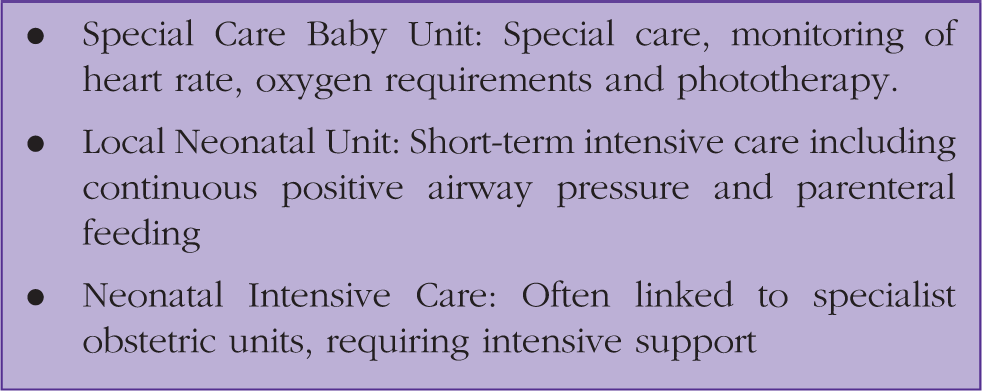
Levels of care.
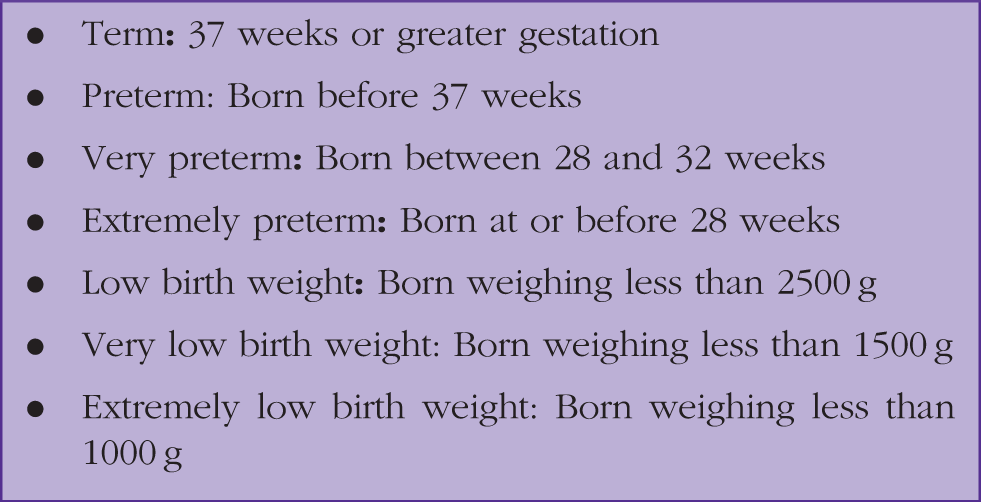
Birth weight and gestation.
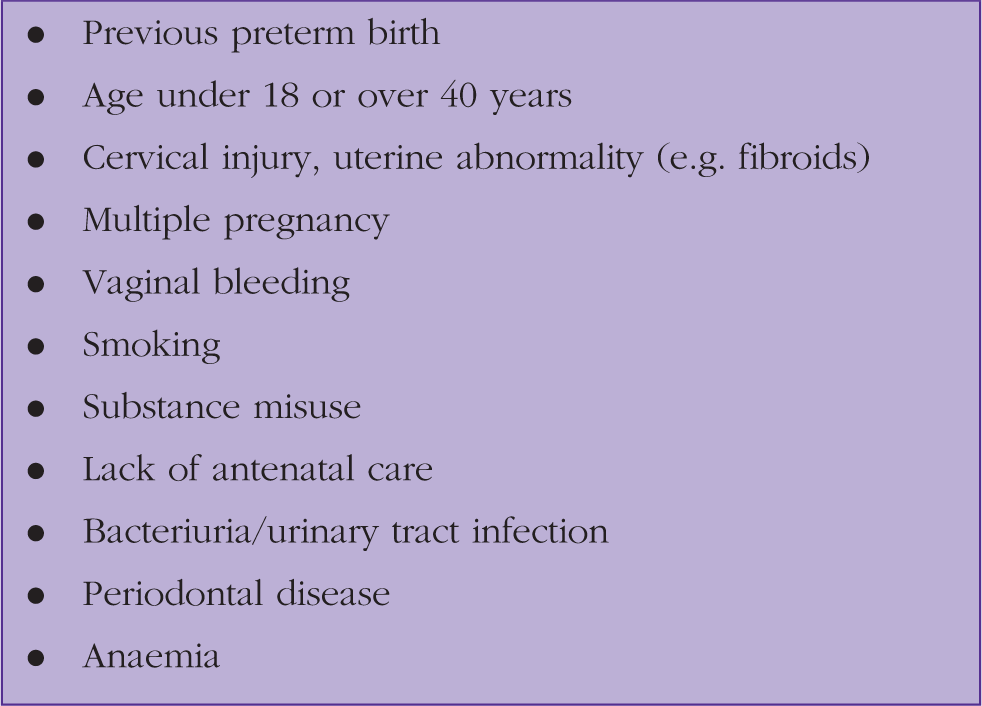
Risk factors for premature birth.
Birth injuries
Given that premature delivery may arise from an obstetric emergency, the urgent need to deliver the neonate increases the risk of various birth injuries. Soft tissue injuries, although not unique to premature births are worthy of mention. Use of forceps may leave a mark to the face, accidental scalpel incisions at Caesarean section and a chignon may arise from the bruising and swelling of ventouse delivery. Caput succedaneum from bruising and swelling of the presenting part usually resolves in a few days. Cephalohaematoma results from bleeding below the periosteum of the skull, and is confined within the skull suture margins. It will feel soft and may take several weeks to resolve. Subaponeurotic haemorrhage may result in diffuse swelling on the scalp, and the blood loss may be severe enough to cause hypovolaemic shock. Brachial plexus injury, causing Erb palsy is more common in breech deliveries or shoulder dystocia. Babies with Erb palsy should be referred to an orthopaedic surgeon, notably if the palsy has not resolved by around 3 months of age, as permanent damage may occur (Abzug and Kozin, 2014). Fractures of the clavicle can occur with shoulder dystocia, more common in term babies due to their larger size, but do not usually require specific treatment. Humeral or femoral fractures may result in reduced movement and pain, but heal with immobilisation. Premature neonates bruise readily, and it is important to ensure any marks and injuries are well recorded to avoid raising unnecessary safeguarding concerns.
Hypoxic ischaemic encephalopathy and brain injury
Preterm neonates may have been subjected to perinatal hypoxia and suffered brain injury. If deprived of oxygen perinatally, either due to maternal factors that disrupt placental bloodflow, or failure of the neonate to breath at delivery, poor brain tissue perfusion may result in hypoxic-ischaemic encephalopathy (HIE). This causes brain damage, disability, and in extreme cases, death, affecting around 0.1% of births. It can take up to 48 hours to show the neurological damage, but in cases where there is delay, there is an opportunity to deliberately induce hypothermia to try to protect the brain and reduce damage (Perez et al., 2015). In mild cases, the neonate may make a complete recovery, but if abnormalities persist beyond 2 weeks, full recovery is less likely. Severe HIE carries a significant mortality, with around a third of babies dying, and survivors at high risk of disability, including cerebral palsy and epilepsy. Significant care is often necessary, including adaptations in the home and later special educational needs schooling and increased medical attention. The extent and range of disability depends which parts of the brain are damaged. GPs have an important role in the longer-term care of babies with brain injuries at birth. These babies have an increased risk of seizures, and behavioural and learning difficulties. There is an increased risk of infections as a consequence of the associated physical disability.
Intraventricular haemorrhage may cause pressure changes that lead to hydrocephalus, and rapid enlargement of the head circumference. Hydrocephalus is often a consequence of intraventricular haemorrhage, and may require ventriculoperitoneal shunts and neurosurgical input. The indicators of progressive hydrocephalus are increasing head size, vomiting, setting-sun sign in the eyes, and dilated scalp veins. GPs should identify babies with rapidly enlarging head circumference readings that cross head circumference centiles and refer for specialist advice urgently.
Retinopathy of prematurity
Premature and low-birth-weight neonates are at risk of retinopathy of prematurity (ROP). Blood vessels proliferate within the retina, which risks fibrosis, retinal detachment and blindness. The administration of high concentrations of oxygen is a risk factor for developing ROP. Neonates born before 32 weeks and/or weighing less than 1500 g require screening by an ophthalmologist. Laser therapy is a well-established treatment (Ng et al., 2002). Neonates affected by ROP may have ongoing ophthalmological problems, including strabismus, refractive errors, cataracts and amblyopia. Even premature neonates without ROP are more likely to have visual problems when compared with term neonates (Jefferies, 2016).
Case study 1.
Baby M was born at 30 weeks gestation by emergency Caesarean section, due to maternal pre-eclampisa. She was born in poor condition, required intubation and ventilation and was transferred to neonatal intensive care. Her initial chest X-ray showed signs of respiratory distress syndrome. She remained ventilated for 96 hours, during which time she received a dose of surfactant, before being extubated onto continuous positive airway pressure to support breathing. Her oxygen requirement was initially quite high, but this was gradually weaned down to 0.1 L/min oxygen at age 2 weeks.
Baby M remained on a special care unit for 4 more weeks to feed and grow. During this period she had her first ROP screen, which showed the initial stages of ROP and was followed up weekly by an ophthalmologist on the ward until the ROP showed regression.
She continued to be on low-flow oxygen, as whenever she was weaned down she would desaturate. A multidisciplinary team discharge planning meeting was arranged and baby M was discharged on home oxygen and supplemental feeds. Community nurses followed up on progress and specifically with weaning off oxygen. She was eventually weaned off by age 6 months, but frequently attended her GP when there were concerns about chest infections and for review of nutritional supplements and growth.
Respiratory problems
Respiratory distress syndrome (RDS) is common in prematurity, especially before 28 weeks gestation, due to a lack of surfactant. Where there are obstetric concerns, expectant mothers may receive steroids that significantly reduce the incidence of RDS, mortality and morbidity (Mwansa-Kambafwile et al., 2010). Babies with RDS may require continuous positive airway pressure, high-flow oxygen or mechanical ventilation. However, oxygen concentrations that are too high can be toxic to the newborn. Pneumothorax is a complication, particularly in ventilated neonates and treated with insertion of chest drains.
If oxygen is required after 36 weeks corrected gestation, neonates may have bronchopulmonary dysplasia (also described as chronic lung disease). This results from poor lung maturation and the effects of ventilation and oxygen toxicity. These neonates will require some form of oxygen and/or ventilation for several months after discharge, and thus GPs may encounter neonates and young children on long-term oxygen therapy who may require several months or even years to be successfully weaned off supplementary oxygen. There is an increased risk of infection and pulmonary hypertension, and even relatively simple viral infections may require admission and intensive care. GPs should have a low threshold for admission in babies with bronchopulmonary dysplasia. Protection from respiratory syncytial virus (RSV) with administration of the monoclonal antibody Palivizumab in the RSV season (from October to February) is usually arranged by the hospital team. It is also important to offer a flu vaccine during winter.
Cardiovascular problems
Patent ductus arteriosus (PDA) is common in premature babies; it may be asymptomatic or result in apnoea and bradycardia. Heart failure may occur due to volume overload, and these neonates will require prostaglandin inhibitors such as indomethacin or ibuprofen. Babies with PDA are monitored with echocardiography to ensure PDA closure. Surgical ligation can be necessary if the PDA fails to close.
Necrotising enterocolitis
Ischaemic damage and bacterial overgrowth can result in necrotising enterocolitis. Necrotising enterocolitis (NE) may be signalled by abdominal distension and blood in the stool with progression to bowel perforation and clinical shock. Treatment requires cessation of oral feeding, parental nutrition, circulatory and respiratory support. Broad-spectrum antibiotics are also often administered, but despite intensive treatment NE carries a high morbidity and mortality. Some neonates with NE where perforation has occurred will require surgery. GP awareness of potential long-term complications relating to malabsorption and bowel strictures alongside neurodevelopmental difficulties can help in identification and longer-term management of morbidity.
Jaundice
Around 80% of preterm neonates develop jaundice within the first week of life. Although jaundice is more common in premature neonates, they are more susceptible to the damage caused by high bilirubin levels, including kernicterus. Treatment nomograms reflect this increased susceptibility with lower thresholds for phototherapy or exchange transfusion in premature neonates. Prolonged jaundice may suggest serious underlying illnesses, which premature neonates are also more likely to have. Jaundice is a common cause for readmission in term neonates, not just in prematurity (Urs et al., 2010).
Feeding and nutrition
Nutritional demands are high in premature neonates, due to rapid growth. However, the ability to swallow may not fully develop until around 34 weeks, and feeding via a nasogastric (NG) tube is therefore required. Enteral feeds are started as soon as possible, which can include breast milk. Feeding with breast milk requires supplementation with breast milk fortifier to increase protein, calories and minerals such as calcium and phosphate. Obstetric complications causing premature delivery may also cause delay in the availability of breast milk. Premature neonates are at risk of hypoglycaemia, as they have low glycogen stores. Formula feeds meet nutritional requirements, but lack the protective immunoglobulins of breast milk. Extremely premature neonates may require parental nutrition until they gain weight and maturity. Risk of iron deficiency is high, as most iron is transferred in the third trimester, with iron deficiency affecting neurodevelopment (Domellöf, 2014). Neonates may be given vitamins, particularly phosphate, calcium and vitamin D to prevent osteopenia of prematurity, and iron supplementation may be required weeks to months after discharge home. GPs should facilitate ongoing nutritional supplementation in neonates where it is indicated, with specialist formula milk and medicines requiring prescription and ongoing monitoring to adjust dosages according to weight gain.
Case study 2.
Baby N was born at 34 weeks gestation by normal delivery, his mother had gestational diabetes. He was born in good condition, cried immediately and had good Apgar scores. He was transferred to transitional care where he was started on the hypoglycaemia policy for low blood sugar level and he was exclusively breast-fed.
On day 2 of admission he was noticed to be jaundiced with a serum bilirubin level that was above the phototherapy treatment line. He was started on phototherapy for 12 hours and had another bilirubin level that was below the line. Subsequently, a rebound bilirubin was revealed and he required further phototherapy.
He remained otherwise well in himself. On examination, he was well and the abdomen was soft with no organomegaly. Bloods showed he was O-positive with a negative Direct Coombs Test and normal renal function. Following another 12 hours of phototherapy his levels were below the line, however, his feeding slowed down slightly, and he required NG feeding with expressed breast milk and formula for 2 days. Once his feeding was back to normal with stable blood sugars he was discharged and with breast-feeding established. He attended his GP for a normal newborn check at around 8 weeks. He continued to grow well followed the same centiles for weight, length and head circumference.
Infection and immunisation
Premature neonates more often require intensive support with ventilation, catheterisation and other procedures in the hospital environment and are, perhaps unsurprisingly, more prone to infections. Immunoglobulin G is mainly transferred across the placenta in the last trimester, and therefore, the protection afforded by maternal transfer of immunity is substantially reduced. This is compounded by any delay or difficulty in establishing breast-feeding associated with prematurity, further reducing the potential for disease protection from breast milk.
Premature neonates should be immunised according to the vaccination schedule, regardless of the extent of their prematurity (NHS, 2016). The first vaccine should thus be given 8 weeks after birth, continue in line with the schedule based on birthday, and not on corrected gestation. The vaccination schedule is reviewed regularly, with the 6-in-1 (DtaP/IPV/Hib/HepB) vaccine replacing the 5-in-1 vaccine for those born on or after 1 August 2017. It is essential to follow the most up-to-date vaccination schedule. An article on the Immunisation Schedule has previously been written that offers more information on the topic of vaccinations (Paul et al., 2012).
Longer-term considerations
Prior to discharge, a multi-professional planning meeting should occur to identify and facilitate the personal support needed at home for continuing care. GPs can play a key role and are welcome to attend, but current hospital and practice pressures make this very difficult or impossible in practice. Improvements in the content of hospital discharge summaries, encouragement of collaboration and cooperation, and improved channels of communication are necessary to help mothers and neonates receive the best care following discharge (Brodribb et al., 2016). Premature neonates are at an increased risk of child abuse and being referred to child protection services, independent of maternal age or socioeconomic status (Spencer et al., 2006). Thus, documentation of any birthmarks, injuries or abnormalities after birth is essential to avoid misplaced concerns about non-accidental injury. Mothers of premature neonates have almost double the rate of postpartum depression and other mental health disorders (Hawes et al., 2016). GP awareness about the emotional stress levels that premature delivery can bring for mothers, and the wider family, can help early recognition of problems. Prematurity is also, for example, associated with an increased risk of attention-deficit/hyperactivity disorder in childhood (Sucksdorff et al., 2015), chronic health conditions and lower educational attainment (Hack et al., 2002).
KEY POINTS
Prematurity affects almost 10% of neonates GP awareness of complications associated with prematurity can help in diagnosis and long-term management of associated problems Respiratory complications from prematurity carry significant long-term morbidity affecting babies long after discharge Retinopathy is a common complication of prematurity affecting vision in later childhood Premature neonates are at greater risk of child abuse and are more likely to have safeguarding needs Prematurity has significant effects on the wider health of children, families and caregivers, and good interdisciplinary communication is essential to maintain and improve healthcare outcomes