




Abstract
Minor problems in pregnancy are very common. Women are encouraged to seek medical advice from their midwife or GP early on to ensure these problems do not significantly affect the pregnancy. This article will detail common medical symptoms and problems encountered in pregnancy.
The RCGP curriculum and common symptoms in pregnancy
The role of the GP in the maternity and reproductive health topic guide is to:
Work with midwives to provide routine antenatal care, and shared care with secondary care for more complicated pregnancies Provide care for medical problems that are present in pregnancy – this may include physical or mental long-term health conditions that may pre-date the pregnancy, or that develop during pregnancy Provide postnatal care including support for breastfeeding, postnatal monitoring and medication management Provide care for medical problems that are present in pregnancy – this may include physical or mental long-term health conditions that may pre-date the pregnancy, or that develop during pregnancy Increasing numbers of women are putting off having a child until later in their reproductive years. Advancing maternal age is associated with an increased miscarriage risk and a higher risk of pregnancy complications Smoking, obesity and lack of exercise remain large, modifiable, risk factors for a range of poor pregnancy outcomes The diminishing role of the GP in routine antenatal care provides challenges in ensuring women receive continuity of care from pre-pregnancy through to after delivery. The delegation of routine antenatal care to midwives is leaving many GPs with reduced experience of caring for pregnant women
The RCGP curriculum maternity and reproductive health topic guide includes knowledge and skills and emerging issues relevant to consideration of common symptoms in pregnancy. For example:
Nausea and vomiting in early pregnancy
Nausea and vomiting are common in early pregnancy, usually starting between weeks 4 and 7 and affecting 90% of women, with 35% suffering significantly. It is seen as a spectrum from mild nausea improved by eating and drinking, to hyperemesis gravidarum. Symptoms can be assessed using the Pregnancy-Unique Quantification of Emesis score. Assessment of clinical fluid status and urinary ketones are also required (Royal College of Obstetrics and Gynaecology (RCOG), 2016). For mild nausea and vomiting, management in primary care is appropriate with advice on diet, fluids, rest, and if required, anti-emetics (Nottingham Area Prescribing Committee, 2018). The National Institute for Health and Care Excellence (NICE) advocates avoiding any foods or smells that trigger symptoms, eating plain biscuits or crackers in the morning and eating bland, small, frequent meals low in carbohydrate and fat but high in protein. Cold meals may be more easily tolerated if nausea is smell-related. Drinking little and often rather than in large amounts is recommended, as this may help to prevent vomiting (NICE, 2018). Most cases of nausea and vomiting in pregnancy are self-limiting and settle without complication as the pregnancy progresses, with 90% of women having no symptoms by 20 weeks gestation.
Hyperemesis gravidarum, an extreme nausea and vomiting in pregnancy, occurs in fewer than 1 in 100 to 1 in 150 pregnancies, but can be extremely distressing and may require hospital admission for rehydration and IV treatment (Pregnancy Sickness Support, 2019).
If medication with anti-emetics is required Cochrane reviews have not found benefit of any one treatment over another (Matthews et al., 2015). A NICE Clinical Knowledge Summary recommends using anti-emetics when dietary advice and rest have failed. Cyclizine, promethazine, or prochlorperazine should be used first-line with reassessment 24 hours later (NICE, 2018). Doxylamine with pyridoxine (Xonvea®) is the first licensed drug for hyperemesis since thalidomide, and can now be prescribed by doctors (Medicines and Healthcare Regulatory Agency (MHRA) 2018). Previously available drugs were off licence due to a lack of trials in pregnancy. Drugs may not entirely relieve nausea, but aim instead to reduce the amount of vomiting in pregnancy.
Vaginal discharge
Due to hormonal changes, women usually produce more vaginal discharge during pregnancy. If there are any changes in discharge such as a strong smell, colour change, itch, pain, or dysuria, infection should be considered. Vaginal thrush is common in pregnancy. NICE recommends treating with intravaginal clotrimazole or miconazole for 7 days, and to avoid oral antifungal treatment. The use of a topical imidazole can also be started if there are vulval symptoms (NICE, 2017a). A pessary can be used, but should be used without the applicator in pregnancy.
Self-management advice should be given:
Avoid washing the vulval area with soap or shower gels (including perfumed products and antiseptics), wipes, and ‘feminine hygiene' products Clean the vulval area more than once a day Wash underwear in biological washing powder and use fabric conditioners Vaginal douching Wear tight-fitting and/or non-absorbent clothing
Women are advised to wash the vulval area with a soap substitute and simple emollient if required (NICE, 2017a).
If the discharge has a strong or unpleasant odour, is associated with itch, soreness or dysuria, then infection should be excluded. Sexually transmitted infections may have serious outcomes in pregnancy. Women should be advised to see their GP or Genito-Urinary Medicine clinic for assessment and treatment.
Fatigue and insomnia
Tiredness and fatigue are common in early pregnancy up to 12 weeks, but can continue throughout pregnancy. If present in later pregnancy, anaemia should be considered. Giving practical advice on rest, doing less, and reassurance can help. The NHS advises resting with feet up, accepting help from work colleagues and family, and eating a healthy diet (NHS Choices, 2018a).
Insomnia is common from a combination of anxiety, hormonal changes and general discomfort at night. Advice on sleep hygiene, taking exercise before bed-time, and relaxation can help to alleviate this situation. Bump-friendly sleeping positions such as sleeping on the left or right side supported by pillows may help, and avoid pressure on the aorta (NHS Choices, 2018a). Sleeping tablets are to be avoided.
Dyspepsia
Dyspepsia is very common in pregnancy, especially in later pregnancy as the uterus enlarges, with hormonal changes and relaxation of muscles around the gastro-oesophageal junction. From 27 weeks onwards dyspepsia becomes more common (NHS Choices, 2017). Simple changes, such as sitting upright after eating, sleeping with the head of bed raised, eating smaller more frequent meals, and eating early in the evening, can help. Dietary changes can reduce symptoms. For example, by avoidance of irritant foods such as fatty or spicy foods, fruit juice, chocolate and caffeine. Keeping a food diary may help to identify triggers. Smoking and alcohol may trigger dyspepsia, and should be stopped along with any medication likely to cause dyspepsia. Symptomatic relief on a short-term basis can be achieved using antacids and alginates containing aluminium and magnesium or calcium (but not those containing sodium bicarbonate or magnesium). If symptoms are severe and not responding to lifestyle, dietary and symptomatic relief then ranitidine or omeprazole can be prescribed (NICE, 2017b).
Constipation
Constipation is very common in pregnancy, affecting up to 40% of women. Lifestyle advice such as increasing fluids intake, eating high-fibre foods (such as wholegrain foods, vegetables, beans and pulses) and doing exercise can help. If this does not work, short-term oral laxative treatment can be tried. Ispaghula, a bulk-forming laxative, is recommended first-line. If this fails and stools remain hard, adding in or swapping to an osmotic laxative such as lactulose may help. If stools are soft, but difficult to pass, a stimulant such as senna may work. Finally, a glycerol suppository can be used if other treatment has failed (NICE, 2017c). Dose, choice, and combination of medication will depend on the patient’s preference and treatment outcomes.
Haemorrhoids
Haemorrhoids are often a problem in pregnancy, usually occurring in the second trimester onwards and often associated with constipation. Measures to alleviate constipation will usually help. Other simple measures such as avoiding standing for long periods and regular exercise may help symptoms. Using iced water can help to ease any pain. Avoiding straining on opening bowels and using a lubricant to gently push the haemorrhoid back inside may be helpful (NHS Choices, 2018b). If women are taking an iron supplement, switching to a slow-release form can help reduce constipation (BUMPS, 2016).
Topical preparations can help, but are not licensed for use in pregnancy. Treatment with simple soothing products is recommended rather than local anaesthetic agents or corticosteroids (BNF, 2019). Anusol may be considered for use in pregnancy (BUMPS, 2016). Most haemorrhoids will resolve after pregnancy, but if they persist referral to secondary care may be indicated, and surgery may be offered.
Back pain
Women may develop lower back pain in pregnancy, usually in the later stages of pregnancy from the fifth month onwards. Management, as for adults who are not pregnant, is with gentle exercise, simple analgesia (avoiding non-steroid anti-inflammatory drugs (NSAIDs)), and rest is appropriate. If the pain persists despite these interventions, physiotherapy referral can help management, and in some regions a self-referral can be made.
Pelvic girdle pain
Pelvic girdle pain (otherwise known as symphysis pubis dysfunction) describes pain in pregnancy from the symphysis pubis joint and sacroiliac joints. Between 14 and 22% of pregnant women will experience this problem, with 5–8% having severe symptoms. This pain is associated with instability and dysfunction within these joints related to pregnancy. Symptoms can affect the lower back, thighs, perineum, and suprapubic area. The severity of the pain can vary from mild to severe, causing difficulty walking, sitting, and lying down. The aetiology of this condition is unclear, with pelvic girdle asymmetry, abnormal pelvic girdle biomechanics (affecting the spinal, abdominal, hip, pelvic girdle and pelvic floor muscles) and hormonal changes being possible contributory factors. Risk factors include high body mass index, multiparity, pelvic girdle pain (PGP) in previous pregnancy, heavy workload, workplace conditions, and joint hypermobility. Management includes referral for physiotherapy and to specialist clinics if available and analgesia (non-NSAID-based, acupuncture, transcutaneous electrical nerve stimulation). It is important to discuss changes around the home, use of additional support appliances, and support group referral, where possible. PGP usually will resolve within 6 months of delivery in the majority of women (Pelvic Obstetric and Gynaecological Physiotherapy (POGP), 2015).
Pelvic pain
In early pregnancy, mild cramping pains are common. This is due to pelvic structural changes, including the growth of the uterus and ligamental change. It is important to consider other causes of pelvic pain, such as miscarriage and ectopic pregnancy when making an assessment in early pregnancy. Other gynaecological causes of pain include ovarian cysts or degenerating fibroids. In later pregnancy, obstetric complications such as preterm labour or placental abruption should be considered.
Leg cramps
Cramping of leg muscles in pregnancy is common and tends to happen later in pregnancy. The symptoms usually worsen at night or when resting. Elevating the legs and stretching may help. A Cochrane review of supplements for leg cramps in pregnancy found that it was unclear if any supplements were beneficial (Zhou et al, 2015).
Varicose veins
Varicose veins can appear or worsen during pregnancy, due to pressure from the gravid uterus on the vena cava, and due to hormonal changes. Typically, varicose veins will form in the legs, especially the lower legs; however, they can also affect the vulva.
Treatment using compression stockings can help (NICE, 2019) and elevating the feet when resting, avoiding tight clothing, keeping active and avoiding long periods of standing. Varicose veins will usually improve within 1 year of giving birth (Cedars-Sinai, 2019).
Peripheral paraesthesia
Nerve compression in pregnancy is common, particularly carpal tunnel syndrome, causing numbness, pins and needles, pain, and tingling in the median nerve supply of the hand that extends up the arm in some cases. Symptoms tend to worsen at night and early in the morning. Depending on symptom severity, wrist splints, analgesia, exercise, changing sleeping position and steroid injections can help (Royal Berks NHS Foundation Trust, 2018). Other peripheral nerves can also be affected, such as the lateral cutaneous nerve of the thigh.
Swelling
Gradual swelling due to fluid retention can affect the hands, feet and ankles, and typically worsens throughout the day and after long period of standing. Exercise, resting with the feet elevated, and avoiding standing for long periods can help. Sudden swelling, changes in vision, headaches, right upper quadrant pain, and vomiting may indicate pre-eclampsia.
Pruritus
Itching is a common symptom in pregnancy, affecting up to 23% of women. Generalised itching can occur in the last 3 months of pregnancy and disappear after delivery. Consider infection when there is more localised itching, such as with fungal infections. There are several rashes that are specific to pregnancy, such as polymorphic eruption of pregnancy, atopic eruption of pregnancy, and pemphigoid gestationis.
Polymorphic eruption of pregnancy lasts 4–6 weeks and does not have any effect on the pregnancy itself. It usually resolves after delivery if present in the last weeks of pregnancy. Treatment involves emollient use and moderate-potent steroids; a sedating antihistamine can also be used off licence to help with sleep. Referral to a dermatologist is recommended if these interventions do not help. Atopic eruption of pregnancy requires similar treatment with emollients, topical steroids, and sedating antihistamines (NICE, 2015a).
Pemphigoid gestationis requires referral to dermatology and obstetrics. Topical steroids, antihistamines, and in more severe cases, systemic steroids are required. There is an increased risk of preterm delivery and reduced fetal growth (NICE, 2015a).
Consider obstetric cholestasis when there is pruritus without a rash and refer to obstetrics the same day. This can occur from 28 weeks gestation onwards. If the woman has an unexplained itch with normal bile acids and liver function tests, these should be monitored every 1–2 weeks (NICE, 2015b). Obstetric cholestasis increases the risk of preterm delivery and stillbirth (RCOG, 2011).
Skin pigmentation
During pregnancy, areas of the skin may become more highly pigmented, such as the linea nigra and melasma may form. Acne can also flare up, and may require topical treatment.
Respiratory distress
Breathlessness may occur as the uterus grows and restricts lung expansion later in pregnancy. Hormonal influences may also exacerbate the feeling of breathlessness. However, it is important to consider other significant problems, such as pulmonary embolism, anaemia and lung conditions when assessing breathlessness in pregnancy.
Bleeding gums
Hormonal changes in pregnancy can cause increase in plaque build-up and inflamed gums which bleed, known as pregnancy gingivitis. Good oral hygiene can help and dental care is free in pregnancy. Women should be actively encouraged to attend their dentists in pregnancy (NHS Choices, 2016).
Increase in urine frequency
Urinary frequency in pregnant women is usually due to the gravid uterus putting pressure on the bladder. Avoiding alcohol and caffeine can help symptoms, as can rocking backwards and forwards while passing urine. This reduces the pressure on the bladder, helping urination (NHS Choices, 2018c). Incontinence is also more likely during pregnancy and after birth, due to changes in the pelvic floor muscles.
Skin and hair changes
Moles, freckles, and birthmarks may become darker or more apparent during pregnancy. Any suspicious change in skin lesions should be assessed and referred to dermatology (NHS Choices, 2018c).
Hair tends to be thicker in pregnancy; it then will shed post-partum for up to 6 months eventually returning to usual thickness.
Conclusion
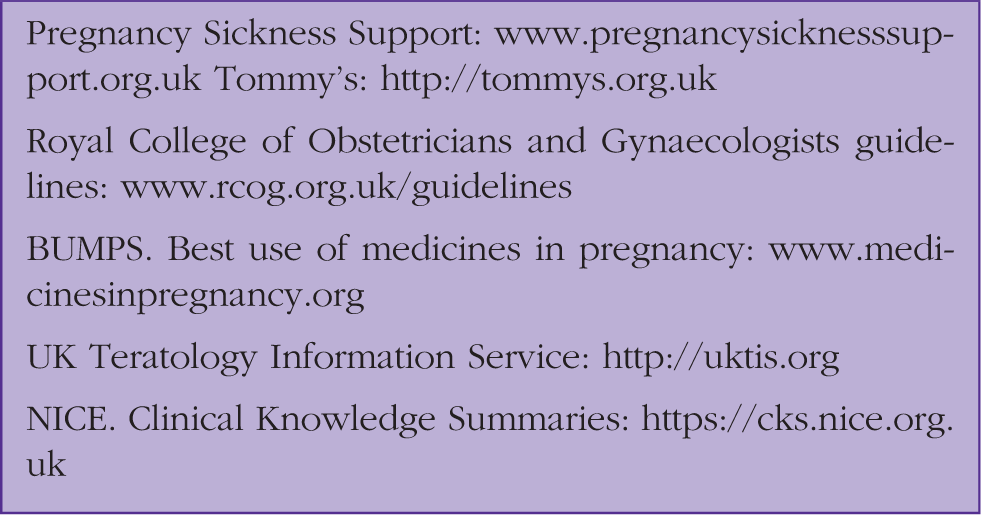
List of useful websites for doctors and patients.
KEY POINTS
Troublesome symptoms and minor medical problems in pregnancy are common and women will often present to GPs for advice GPs will often be able to offer simple advice, remedies and reassurance, but must remain vigilant for more serious conditions Nausea and vomiting affect up to 90% of pregnant women and should be treated with lifestyle changes first, followed by anti-emetics PGP can be debilitating in severe cases and should be managed with a prompt physiotherapy referral When assessing rashes and pruritus, obstetric cholestasis should be considered as a possible cause It is important to check for red flags and seek specialist obstetric advice if a serious underlying problem is suspected
