




Abstract

Life has changed as we know it. Has it changed forever? We are still in lockdown as I write, with much anticipation and hope that when you read this we will be free again. What have we learned? If there is one antidote to the suffering of lockdown it is the compassion shown to others to ease hardship. Small acts of kindness go a long way, not just to give help, but to give us faith in humanity. I am humbled to thank our neighbour for adding our shopping to his grocery delivery throughout the COVID-19 crisis.
Compassionate care is a broad concept that can extend to all walks of life. But what is it in the context of the patient–doctor relationship? You might want to think about the last act of compassion you experienced. What happened and how did it make you and the other person feel? What is ‘your’ definition of compassion? A simple online definition is ‘Sympathetic pity and concern for the sufferings or misfortunes of others’ (Lexico, 2020). Compassionate care encompasses several attributes, including commitment, empathy, listening with fascination and the right mindset.
Compassionate conversations with patients or colleagues can be as rewarding for the giver as for the receiver. How do you use compassion and what makes it difficult to engage in a compassionate conversation? The sudden loss of face-to-face contact with patients has been challenging on many fronts. Is compassionate care a victim of this enforced cultural change? One might ask whether compassionate care can be delivered via telephone or digital consultation. Seuren et al. (2020) conclude that, with good technical quality, we communicate by video in a similar way to a face-to-face consultation. But is it the same and what is the power of human touch?
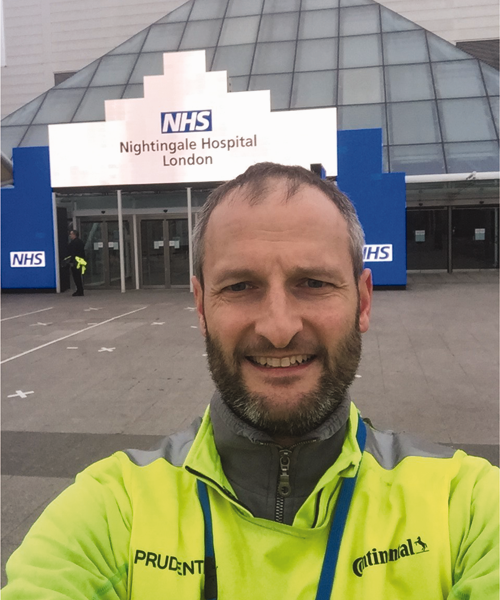
The rapidly built Nightingale Hospital in London has a Family Support and Liaison team, led by Dr David Whittington, that I have been privileged to join. This unique experience ensured we didn't forget our basic principles around communication.
Here, Dr David Whittington reflects on his recent journey through the COVID-19 crisis:
Something happened within the NHS when the need to brutally isolate the sick from their loved ones words, touch and presence. A new challenge drew something wonderful out of the hearts and minds of volunteers and clinicians to craft compassionate care to a level that would nourish the heart, mind and soul of all involved. What started as a desire to comfort the relative with daily updates from a team using the live clinical records, quickly became a dynamic human interface of deep compassion that brought context and connection between the patient, the Intensive Care Unit (ITU) staff and the relatives. Ways were found to express deep love and hope from relatives to the patient via the hands-on nursing teams who were furnished with a steady stream of highly personal messages, pictures, poems and detailed knowledge of the patient. And relatives were given crafted interpretations of complex clinical scenarios about their loved ones. And we who carried these messages to and fro, who cried and laughed with these stranded people, will never be the same again.
We instinctively think of others in the context of compassion, but the concept of ‘self-compassion’ is arguably as important. So, what do you do to look after yourself in times of endurance? Soaking in a nice warm bath, going for a mindfulness walk, listening to soothing music and meditation are some of the ways people look after themselves. Whatever you do, make time for it.
Maya Angelou, the American poet and civil rights activist once said, ‘I've learned that people will forget what you said, people will forget what you did, but people will never forget how you made them feel’. Furthermore, if you believe compassion is a form of love, she also said ‘Love recognises no barriers. It jumps hurdles, leaps fences, penetrates walls to arrive at its destination full of hope’. Both compassion and love are impactful in every encounter they are found, embrace them!
