




Abstract

Recycling
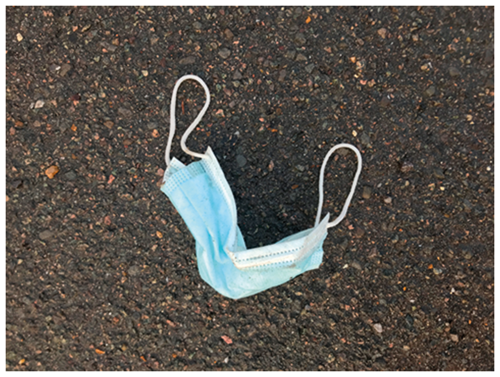
I wonder what has happened to our attempts to recycle at work during the pandemic. We use a pair of gloves, a plastic ‘pinny’ and a disposable cleaning cloth or bleach wipe for each and every patient we see face to face. On my walk to the surgery I always see discarded face masks. It is harder to recycle. I am interested in what we could all achieve if we now explored ways at our surgeries of improving our ‘green’ credentials in small, achievable ways. You could look at the Greenerpractice website or the RCGP climate page, which includes an online toolkit
greenerpractice.co.uk
www.rcgp.org.uk/policy/rcgp-policy-areas/climate-change-sustainable-development-and-health.aspx
Bony metastases
A BMJ Practice Pointer article reminds us that a large percentage of cancer recurrences present in primary care. Red flags for cancer-related bone pain include severe progressive pain that is worse on movement or during the night, inability to weight bear, pain on direct palpation and the signs of hypercalcaemia. Because early treatment can reduce the need for surgery and give better outcomes for the patient, it is important to have a high index of suspicion. Metastases may not show up on X-rays until 50–70% of the bone has been destroyed, so a negative X-ray does not rule out metastases. The article includes a flow chart for history, examination and investigation.
Downie S, Bryden E, Perks F, et al. (2021) Diagnosis and referral of adults with suspected bony metastases. BMJ 322(8277): 160–163.
Sarcoma and bone cancer
July 2021 is Sarcoma and Bone Cancer Awareness month. These are rare tumours, but it is crucial to be aware of the signs and symptoms to look out for. The Sarcoma UK charity offers resources and a diagnostic toolkit for GPs on their website.
Preventing cancers
The World Cancer Research Fund (WCRF) provides a wealth of information about diet, nutrition, physical activity and cancer as part of the ‘Continuous Update Project’. There is updated, evidence-based information for each different type of cancer, which is really useful to review and direct patients to if asked for advice.
Selecting sunscreens
At the height of summer, we also need to be aware of advice we should be giving to patients to help them stay safe in the sun. Regarding sunscreen, the two simple rules for patients are to pick a sunscreen that is factor 30 or above and has a 4-star rating for UVA protection.
RCGP palliative toolkit
I remember being a trainee and then a First5® GP and having some anxiety about palliative care. I was glad to have supportive trainers and colleagues alongside me when looking after patients in the end stages of life. I think it is important to have opportunities during GP training to be directly involved in the care of patients with a palliative condition, and to be well supported in this. A wide range of useful resources to help can be accessed through the RCGP toolkit, link below, and through websites such as Macmillan UK.
A historical view of breast cancer
For those with an interest in medical history and humanities, an interesting paper in Medical Humanities by Dr Noelle Gallagher considers the current culture around breast cancer in the UK, linking it back to female cancers and society’s response in the 18th century.
Gallagher N (2020) Cancer and the emotions in 18th century literature. Medical Humanities 46: 257–266. Available at: mh.bmj.com/content/46/3/257
After Thoughts podcast
There are a range of podcasts available to individuals who have been diagnosed with cancer or have had a relative or loved one receive a cancer diagnosis. The After Thoughts podcast gives the stories of people in young adulthood who have had a cancer diagnosis, with the second series focusing on young people aged 13–24. The podcast can be found in the usual places, but I found it on the TrekStock website, a charity I hadn’t come across before, which focuses on offering support to young adults diagnosed with cancer.
Pulmonary nodules
Online access to results may mean that we sometimes find abnormal results of tests performed by secondary care and need to explain them to our patients. A recent Practice Pointer article outlines the types and management of pulmonary nodules – focal opacities up on 3 cm in diameter, usually incidental findings on chest computed tomography (CT) scans.
Au-Yong I, Hamilton W, Rawlinson, et al. (2020) Pulmonary nodules. BMJ 371(8264): 118–121.
Pandemic fallout
The London Transformation and Learning Collaborative have produced a series of videos (which include subtitles so cater for different learning styles) that focus on the psychological fallout of the pandemic. They are thought-provoking and include useful resources at the end. The original focus was on secondary care settings but some, for example ‘Understanding moral injury’ and ‘Space for connection’, apply across all settings. The films can be accessed on the e-Learning for Healthcare website or the Health Education England YouTube channel.
www.e-lfh.org.uk/programmes/london-transformation-and-learning-collaborative-ltlc/
www.youtube.com/watch?v=AybMPLVbtvg&list=PLrVQaAxyJE3cY1ucwxm8WGObfVChoEWRF
Virtual Balint
One of my partners has joined a virtual Balint group during the pandemic. In our local world of high COVID numbers, and our involvement in running the local hot hub, he has found it very helpful. The Balint Society has devoted a whole issue of its journal to the topic of virtual groups. There are some thoughtful entries by students, and one of our local trainers has authored a piece.
Caring
Validation occurs when a patient experiences acceptance and understanding from their doctor. An article on the power of caring gives an example of a doctor listening to the story of a musician unable to work again in his career, and how the listening was a turning point for actions that have improved his confidence and wellbeing. Some of the tips are written for a world of face-to-face contacts, but the box of ‘tips for caring consultations’ could make a good focus for reviewing some of your own or your learning set’s consultations.
Dieppe P, Fussell I and Warber S (2020) The power of caring in clinical encounters. BMJ 371(8268): 287–289.
OpCourage
OpCourage is the Veterans Mental Health and Well-being Service. It is a collaboration between NHS England and the Office for Veterans Affairs to ensure timely specialist services for veterans and their families. It gives them access to people who can help make sure they get appropriate care for mental health problems, via the lens of either being from the Armed Forces community or experienced in working with service personnel, veterans and their families. The link gives email and phone contact details.
www.nhs.uk/nhs-services/armed-forces-and-veterans-healthcare/veterans-nhs-mental-health-services/
ORCID iDs
Dr Clare Etherington https://orcid.org/0000-0002-1446-627X
Dr Kathryn Steven https://orcid.org/0000-0002-7534-2932