



Abstract
Physical activity can have a transformational positive impact on both individual and public health outcomes. It can be used to positively and proactively manage many common chronic conditions, as well as reducing the risk of developing them. However, in the UK, over one-in-four adults is physically inactive, and one-in-three children do less than half the physical activity recommended for their age. This article looks at the benefits of physical activity, UK government recommendations for physical activity in different age groups, and how to support patients in primary care to become more active.
Clinical case study
Mr John Smith is 55-year-old office worker who has been seen by the practice nurse for an NHS health check. His blood pressure is 130/85 mm Hg. He does not smoke, and drinks only socially. His body mass index is 31 kg/m2 and he does little or no physical activity. The nurse has advised him to increase his physical activity and has given him some leaflets; however, he is daunted by exercise, as he has chronic back pain. He has booked an appointment with you to discuss this issue. How would you approach the challenge of motivating John to become more active?
Why exercise?
Physical activity clearly confers benefits across a large range of conditions including stroke, diabetes, cardiovascular disease, mental health, musculoskeletal (MSK) conditions, and many common cancers, as well as reducing all-cause mortality by 30% (Zhao et al., 2020). The advantages of increased physical activity also extend to improved emotional health and wellbeing. In children, it is a key factor in motor and cognitive development and is associated with higher academic achievement (Booth et al., 2014). Important as individual and public health benefits are, sedentary lifestyles have a negative societal and fiscal impact too. Lack of physical activity is estimated to cost the NHS £1 billion a year. However, this is only the surface cost. Sedentary lifestyles are estimated to cost the UK economy £7.4 billion per year (Scarborough et al., 2011; The Kings Fund, 2014). This cost is a direct consequence of much of the UK population not meeting recommended levels of physical activity, with 25% of adults being physically inactive and less than two thirds meeting physical activity recommendations (Public Health England, 2016). For all these reasons, spanning personal health and wellbeing, population health and the social and financial costs, it is essential that GPs support patients in increasing their levels of physical activity.
Physical activity recommendations
The UK government recommends adults aged 18–64 undertake 150 minutes of moderate-intensity activity or 75 minutes of vigorous activity a week plus two muscle strengthening activities a week (Department for Health and Social Care, 2019a). Although the general public may immediately think of formal exercise such as attending a gym or exercise class, this definition is much broader. Moderate activity includes anything resulting in an increased heart or breathing rate, with vigorous activity requiring rapid breathing and difficulty talking. A typical example of moderate activity might surprise patients, some of which include light gardening, ironing, or carrying shopping in from the supermarket. The recommendations for other groups as well as examples of physical activity are outlined in Table 1.
Recommendations for physical activity adapted from Department for Health and Social Care.
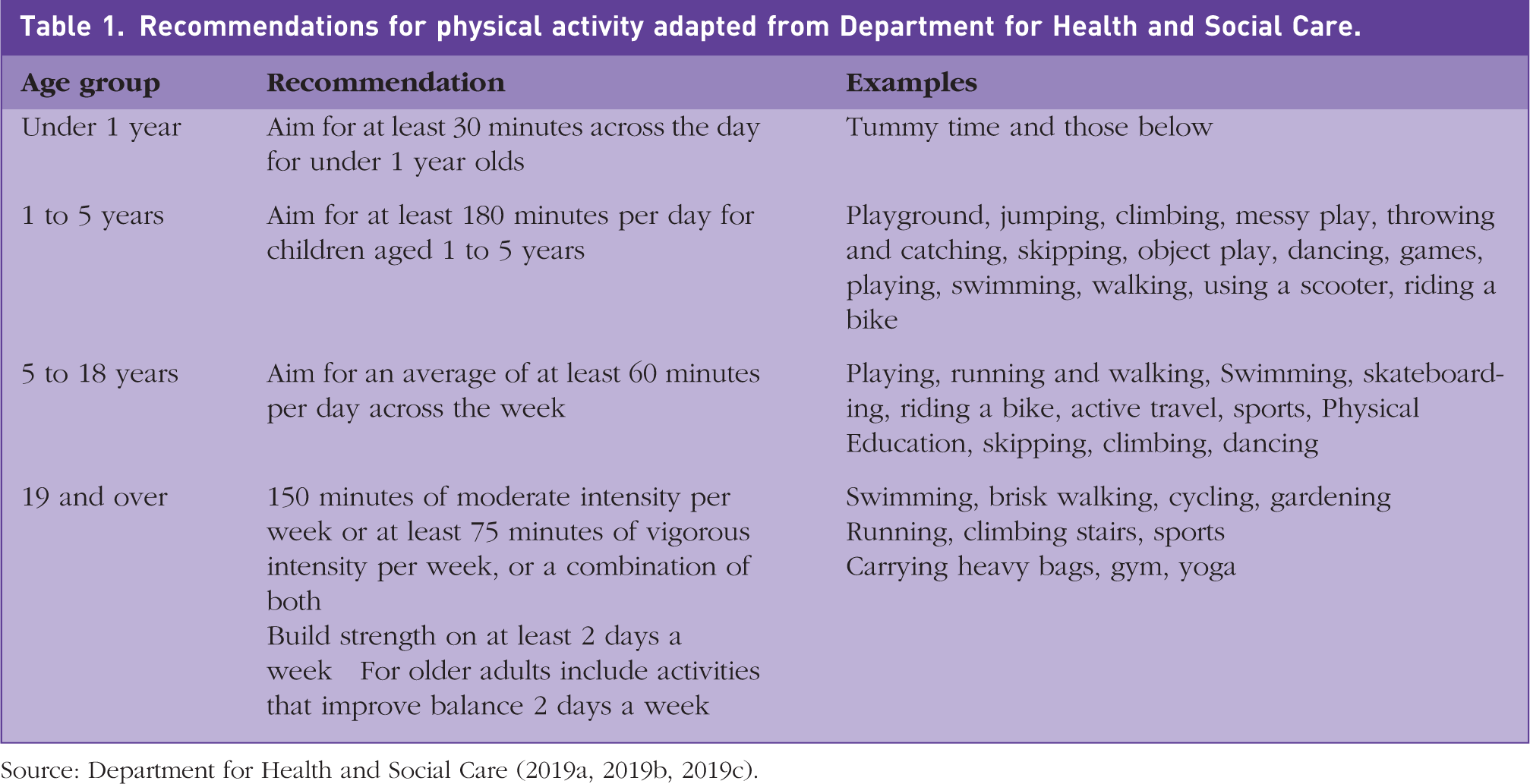
Source: Department for Health and Social Care (2019a, 2019b, 2019c).
For some patients who are inactive, meeting these recommendations may feel impossible. It is important to remember increasing physical activity has a dose-response relationship and the largest benefits are seen for those who are inactive increasing their activity even slightly, even if only by 10 minutes a day (Arem et al., 2015). Encouraging even small increases in physical activity from a low baseline can be very beneficial for physical and emotional wellbeing, and this is particularly valuable to share with patients who might find the UK recommendations daunting, or even scary.
Sedentary activities, such as watching television or prolonged sitting, are independently a risk factor for illness, and avoiding sitting for extended periods and taking regular breaks from sedentary activities is also recommended by the UK Chief Medical Officer (Public Health England, 2016).
Interventions in primary care
Identifying those who are inactive
Identifying those who are inactive in primary care allows for targeting intervention at those who have the most potential benefit from increasing physical activity. This can be done using validated tools such as the General Practice Physical Activity Questionnaire, which might be incorporated into chronic disease reviews or during new patient registration and is recommended by the National Institute for Health and Care Excellence (National Institute for Health and Care Excellence (NICE), 2013). However, many people overestimate their own level of physical activity, and you might want to consider asking people to describe their physical activity. This reduces the overestimation of levels of physical activity, and can therefore, be used to better identify patients who could benefit from increasing it (Smitha et al., 2017).
For those not meeting the government recommendations, an appropriate time should be identified to discuss physical activity – if the patient agrees to do so. This could be in the initial consultation, in a follow up meeting,or a consultation with a different member of the primary care team.
Brief advice
As a GP, time with a patient is undoubtedly limited, which can leave limited time for promoting exercise. Brief advice, while short, can be effective. Encouraging patients to increase their physical activity should be tailored to their motivational goals, current levels of activity and ability, social circumstances and health problems, which are highly variable. Explanations covering the benefits of exercise can be personalised to complement the patient’s goals. GPs should avoid judgement or the possibility of being perceived by the patient as judgemental, as this will likely lead to advice being ignored and damage rapport. Patients may find discussing their levels of physical activity a personal and potentially upsetting conversation and will benefit from empathetic and positive, rather than negative, framing. Advice can be consolidated with further information such as leaflets or signposting to appropriate websites which can provide support for the patient.
Other members of the primary care team may also identify and give advice such as first contact physiotherapists recommending physical activity as part of a treatment regime for many MSK complaints. GPs can also refer to social prescribers to encourage patients to increase physical activity as well as support them to access subsidised exercise groups or gyms.
Barriers to physical activity
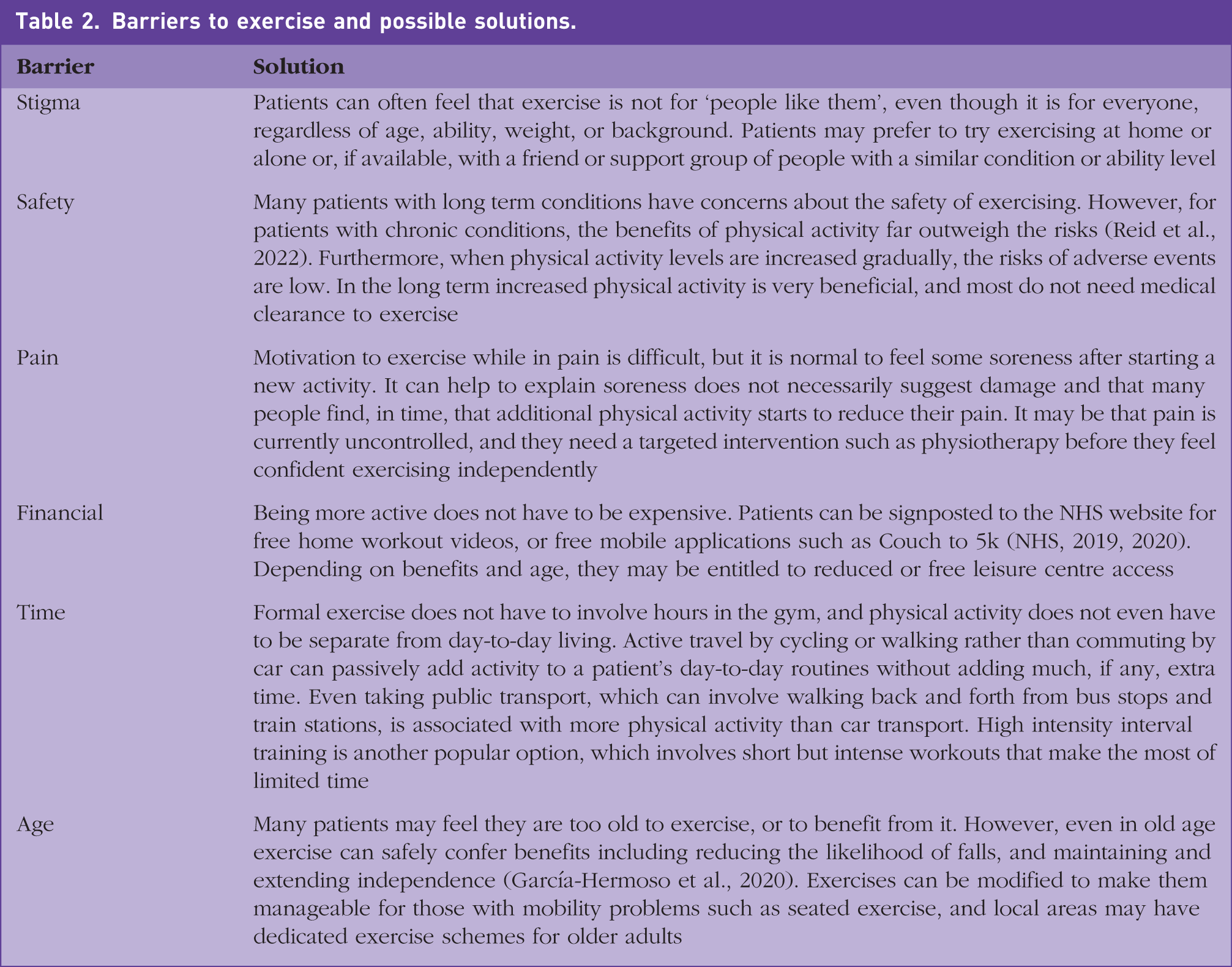
Barriers to physical activity can be highly variable and personal to the patient. It is valuable to explore why patients are not currently active and ask them their feelings one what prevents them being more active. Table 2 shows some examples and possible solutions.
Barriers to exercise and possible solutions.
Further intervention
Many patients will benefit from more than brief advice and require a more tailored intervention. Motivational interviewing is a style of consultation that is patient centred, and can be useful in guiding conversations about change, including regarding physical activity. There is evidence of superior efficacy over more traditional directive advice giving (O’Halloran et al., 2014). It involves four main stages: engaging, focusing, evoking and planning, outlined in Fig. 1 (Miller and Rollnick, 2012).
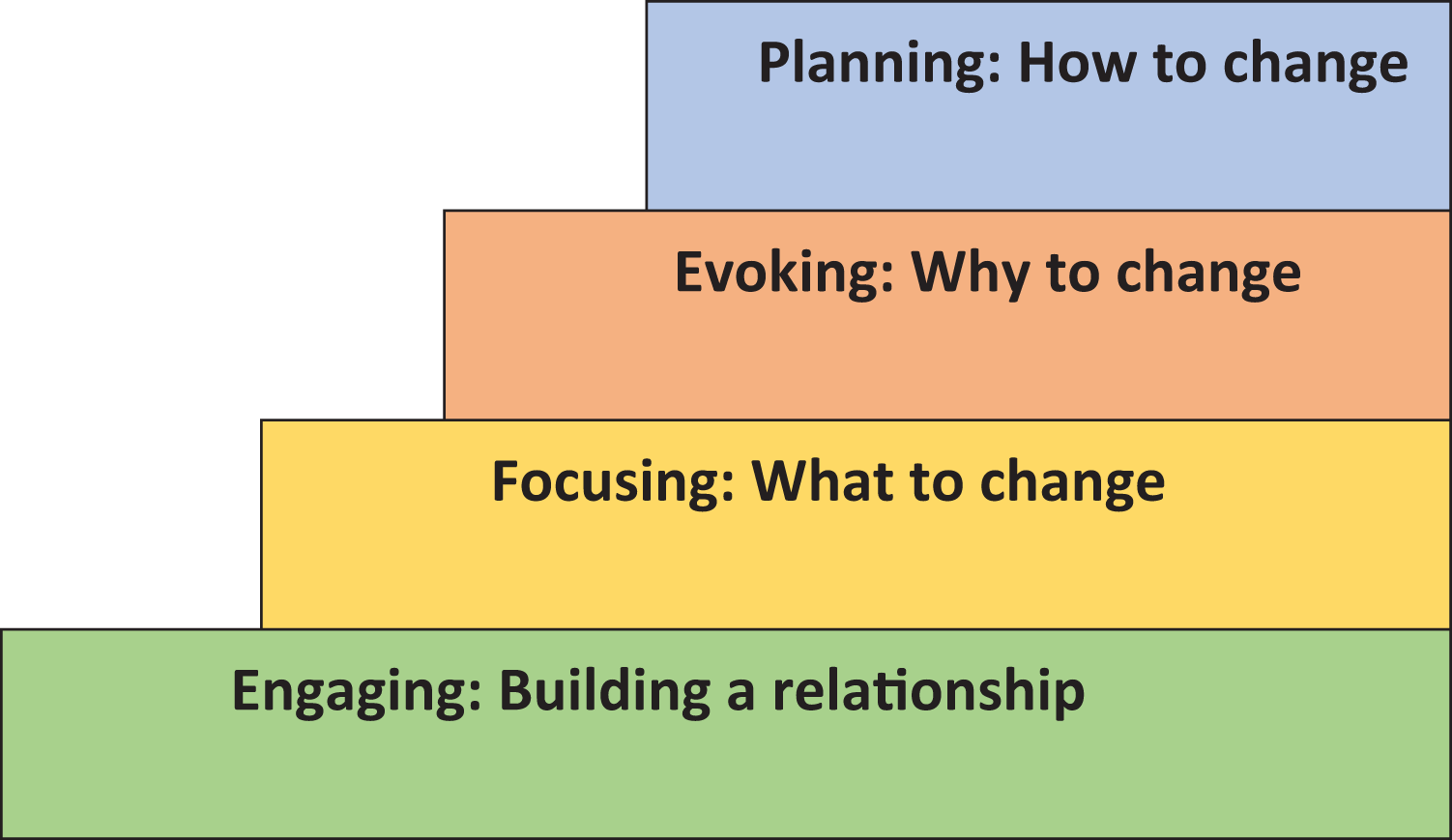
The four processes involved in motivational interviewing.
Engaging requires rapport building and creating an environment that makes the patient feel comfortable to talk about change. With respect to physical activity, once this rapport is established, you may start by asking permission to talk about physical activity and its impact on health and the patient’s conditions.
Focusing on physical activity may start with finding out what a patient knows about the benefits of activity for their condition. If open to it, further benefits can then be shared with the patient. The patient should be encouraged to reflect on these benefits to help start the process of building a ‘why’ for change.
Evoking involves helping the patient build their reasons for change, and what reasons for increasing physical activity might be most meaningful to them and getting the patient ready for change.
Planning involves goal setting. This should be collaborative, with the patient identifying how they might want to get started. Helping them to do this might involve asking them about what they might find easiest to start with or what activities they might enjoy trying. Remember that for those who are inactive, even small changes can be beneficial and immediate targets of meeting government recommendations can be demotivating if too mentally or physically challenging for the patient.
Moving Medicine, an initiative from the Faculty of Sport and Exercise Medicine UK (FSEM UK), has resources on 1, 3 and longer minute consultations on increasing physical activity for patients with a variety of health conditions (FSEM UK, 2022). The shorter consultation templates may be useful for brief advice giving. The longer conversations based on motivational interviewing principles tailored to physical exercise are more appropriate for longer interventions. There are also dedicated information leaflets for a variety of conditions, as well as recommended websites and support groups.
Exercise referral programmes
For those who are inactive and have existing health condition or are at higher risk of ill health, exercise referral schemes are likely to be beneficial and are recommended by NICE (NICE, 2014). Having identified a suitable and consenting patient, a primary care professional can refer them to the scheme and a physical activity professional will formulate a tailored activity programme for the individual. Examples of specific conditions for which schemes have been established include for patients with post myocardial infarction, stroke, and those with long term conditions such as chronic obstructive pulmonary disease (COPD) and low back pain. There are also schemes tailored to the needs of different age groups such as children and older adults. Availability of such schemes is, however, geographically variable, subject to local funding and needs.
Promoting physical activity at the practice level
Practices can also promote activity at a broader level, including for staff. This can, for example, include facilitating active travel among staff and patients by having secure and accessible cycle storage. Other strategies include having readily available resources on physical activity in waiting rooms. You could also consider partnering with a local provider to have exercises classes within the practice. The RCGP have an active practice charter to which practices can sign up to and this can help not just encourage patients to increase activity, but also staff, and can be a way for practices to make impactful changes to activity levels to improve wellbeing (RCGP, 2019). There are many ways to become an active practice!
Key points
Physical activity confers large benefits across a wide range of medical conditions Current UK recommendations for physical activity are not being met There are many opportunities to identify low activity patients and promote physical activity in primary care Motivation interviewing is an effective technique to encourage patients to be more active
