



Abstract

Group picture of the SoTiC 2023 participants in front of the main building of the ETH Zürich.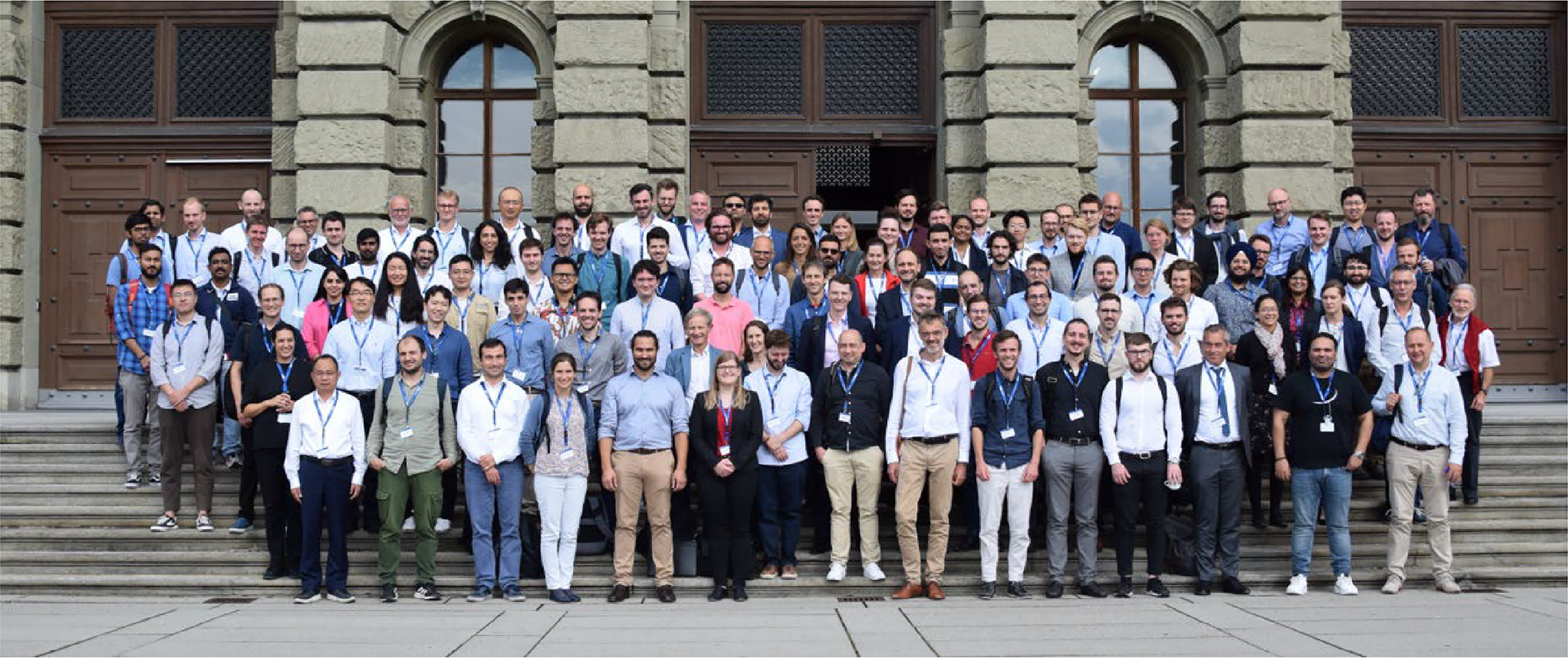
The first SoTiC, which was initiated in 2016 by Thomas Sattelmayer and Bruno Schuermans at the Technical University of Munich, was a great success on several levels: there were a large number of participants in relation to the size of the Combustion Thermoacoustics community; the quality of the presented papers was high; the invited speakers had given an excellent overview of the scientific challenges and successes at that time; a stimulating atmosphere also resulted from the participation of many researchers from industry in the scientific program; and finally, the two communities of researchers working respectively for rocket propulsion and gas turbine technologies were brought together thanks to this new symposium. The second edition, organized by Mirko Bothien and Luca Magri, was for me, and I think for many of the participants, one of the best online conference experiences during the Covid period. The format they had defined was very judicious and enabled this event of high scientific quality to be very productive, lively, and interactive, despite the virtual nature of the exchanges imposed by the pandemic. The bar was therefore set very high when Thomas Sattelmayer, Bruno Schuermans and Mirko Bothien approached me to host the third edition at ETH Zürich. I would like to thank them warmly for their trust and for their support in the symposium organization.
The SoTiC 2023 was very successful, with 60 papers presented in 9 sessions, 8 invited lectures, 3 laboratory and factory tours, and 2 social events which have led to fruitful research exchanges. I would like to thank all the authors from all over the world for their papers and presentations, as well as the eight invited speakers who gave outstanding lectures: Sébastien Candel (Centrale-Supelec, France), James Dawson (Norwegian University of Science and Technology, Norway), André Fischer (Rolls Royce Deutschland, Germany), Fei Han (GE Research, United States of America), Justin Hardi (German Aerospace Center, Germany), Matthew Juniper (University of Cambridge, United Kingdom), Kyu Tae Kim (Korea Advanced Institute of Science and Technology, South Korea), Deanna Lacoste (King Abdullah University of Science and Technology, Saudi Arabia). I am also very grateful to the symposium sponsors for their significant financial contribution. I would like to thank Anna Michailidis for having greatly coordinated the organization of the symposium, as well as Matteo Impagnatiello, Richard Martin and Florian Radack, doctoral students at CAPS, for the high efforts they invested in it. Finally, I would like to thank the reviewers of the papers published in this Special Issue for the time and effort they gave in this peer-review process.