



Abstract
Aims:
The purpose of this novel study was to evaluate the food environment at a Brazilian university, encompassing 6 restaurants and 13 snack bars. The investigation uniquely analyses the food environment (barriers, facilitators, type of foods and prices). This was a food-based analysis of the nutritional quality of the products sold on campus.
Methods:
A cross-sectional descriptive design was used, applying the classic Nutrition Environment Measures Survey–Restaurants (NEMS-R) adapted for Brazil and an original methodology to evaluate and classify qualitatively the nutritional quality and characteristics of the food. A census of all campus food environments was applied.
Results:
The main results show most food and beverage products were made with processed ingredients and had a lower nutritional quality and price when compared with similar products made on premises, that is, processed iced tea compared with fresh tea (p < .001), fried refined flour salgados compared with baked wholegrain flour salgados (p < .001) and refined flour biscuits compared with those made with whole grains (p = .028). Only 16% of the outlets provided food ingredients or nutritional information of products available.
Conclusion:
The overall options for healthy food choices and good nutritional quality on campus were mostly limited by the availability and higher prices of products. These findings could be used to develop new policy perspectives for the offering of healthy food items and to facilitate better food choices among students in a healthier food environment.
Introduction
The food environment is characterised by factors that determine access to food and beverages through an assessment of their nutritional quality and how they are acquired and consumed.1–3 The food environment in schools and universities may influence eating behaviour by encouraging or discouraging a healthier lifestyle. 4 For students, the time spent in school, the educational environment and the nearby environment can have a strong impact on eating habits. 5 Previous research performed in the United States found that university food environments limit the opportunity for students to make healthier food choices.6,7
Modification of the food environment can be a strategy to promote healthier eating habits. 8 Assessing the nutritional quality and cost of products sold, foodservice management could allow changes to improve dietary intake of their dependent consumers. 9 Brazil, as well as other countries, has legislation to promote healthy eating in public and private schools. However, existing healthy eating statutes for schools were framed by the limited research available evaluating the type and nutritional quality of food sold in these settings. In addition, current legislation in Brazil and other countries applies only to primary and secondary children’s schools, not universities.10,11
Many researchers have evaluated the food environment in several scenarios, including colleges. However, there is an apparent lack of research deeply evaluating the university food environment, mainly in Brazil where there are no studies on the food environment at universities. The authors highlight the relevance of this evaluation due to the strong influence of the university’s food environment on student dietary habits, which carry over later into life.12,13 Furthermore, using a novel and qualitative approach, the aims of this study were to characterise the food environment of a large public university in Brazil and to analyse the nutritional quality through an original evaluation. The present pioneering investigation analyses a Brazilian university’s food environment and details the nutritional quality of the foods and beverages available, by a novel perspective to assess dishes in the restaurants, and also the options of snacks, cakes, fruits and beverages in the snack bars on campus. There were no vending machines at the investigated Brazilian university.
Methods
The research was conducted in a Brazilian university with an enrolment of more than 40,000 students. A descriptive cross-sectional study design was used. The data were collected and analysed from the fall of 2013 through the fall of 2014. A census of the food environment was conducted across all 13 snack bars and 6 restaurants located within the university. The researchers used two instruments to perform the data collection:
The classic Nutrition Environment Measures Survey–Restaurants (NEMS-R), 14 which was translated into Portuguese and adapted by accounting for the food products and varieties indigenous to the Brazilian campus milieu.15,16 This data collection tool allowed for the assessment of the food environment by the researchers. The primary constructs encompass the nutritional quality of the foods served and how meals are marketed (see Table 1). The data were entered in Microsoft Excel 2007® and the analysis was performed with the Software Stata® 11.0. Symmetries were found in all variables by the variability coefficient and carried out with descriptive and analytical statistics. The NEMS-R instrument was used to characterise the food environment by identifying by types and nutritional quality of the food and the absolute and relative frequency of the products sold in the snack bars. In addition, the mean and standard deviation (symmetric variables) or median and range (asymmetric variables) were calculated for the number of options for food and beverages sold in restaurants and snack bars. Portions of the processed food and beverages are described in grams (g) or millilitres (mL).
An original qualitative instrument used to evaluate the nutritional quality of products sold in the snack bars based on international guidelines was also developed to add context to the assessment and to classify the food available at snack bars.17–24 This allowed the investigators to gather qualitative information about the cooking techniques, the type of dough used, the ingredients of the fillings and the prices and portion sizes. The qualitative data were then sorted into meal groups classified by nutritional attributes. The same information available to consumers was used for this analysis. The collected data are shown in Tables 1 and 3.
Data collected by instruments used in this study
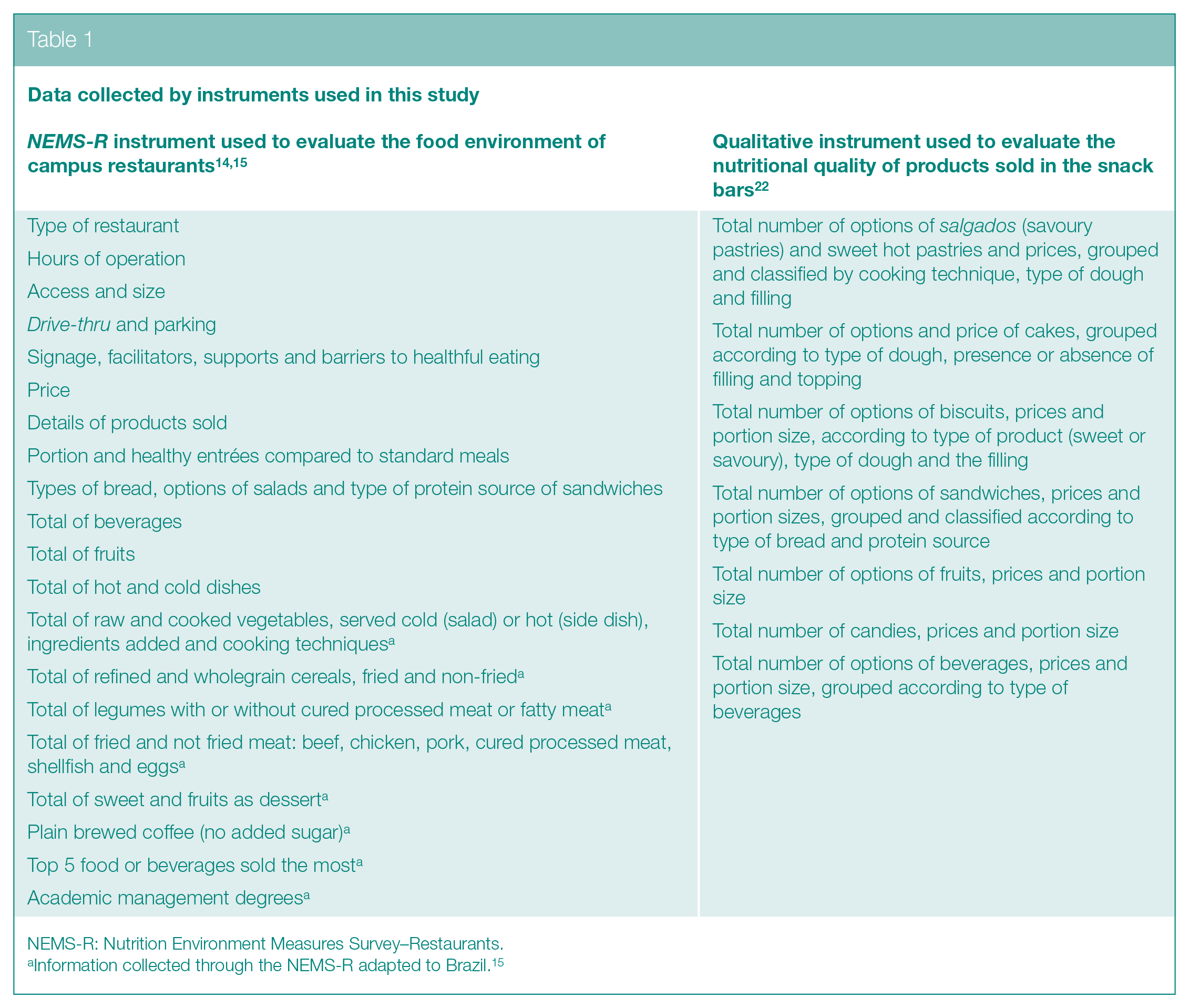
NEMS-R: Nutrition Environment Measures Survey–Restaurants.
Information collected through the NEMS-R adapted to Brazil.15
The instruments were pilot-tested in two similar snack bars located in another public university in the same city and two local restaurants with similar characteristics of the foodservice environments under study. The NEMS-R instruments were slightly modified after pilot tests in consideration of the local Brazilian food milieu. Four questions were added to evaluate local variations in (1) dessert candies and sweets; (2) fresh fruits; (3) shredded cheese, seeds, breads; and (4) various coffees (no added sugar). The nutritional quality instrument was revised for variations in the salgados, fillings and sandwiches. The researchers who collected the data were meticulously trained to follow the modified NEMS-R and the nutritional quality protocols. This was done to standardise the data and ensure the data collection quality.
All of the data were collected by direct observation by the principal investigator, respecting the strict application protocol of the instruments. Two questions were directed to the managers of the foodservice establishments regarding the five most popular food items or drinks served and the qualifications of the managers responsible for making final decisions about acquisitions. The Ethics Committee on Human Research of the Federal University of Santa Catarina, Brazil, approved the research (number 438.564/2013). All subjects signed the written informed consent.
The campus restaurants offered varied menu items, but did not offer sandwiches, snacks or cookies, and offered only a limited selection of desserts. For the environmental analysis, the restaurant selections were grouped into hot or cold items and other categories based on the NEMS-R instrument (Table 1). The researchers grouped the snack bar items into eight categories for a more in-depth nutrition analysis: Salgados (savoury hot pastries), sweet hot pastries, cakes, biscuits, sandwiches, fruit, treats and drinks (Table 1). Salgados, sweet hot pastries and biscuits were classified as refined if they were made with refined white flour. Foods classified as whole grain were made with some percentage of whole wheat flour or whole grain. Puff pastry dough was made with refined white flour and classified as fat-based. The salgados, hot sweet pastries, cakes, cookies, sandwiches and beverages sold in snack bars were classified as healthy or less healthy in each product category, according to dietary and nutritional recommendations.17–21,23,24 The details and descriptions of the nutritional quality of vegetables sold in the restaurants were based on the Healthy Eating Pyramid of Harvard. 19 This guideline was used as a theoretical basis for food recommendations, such as fruits, vegetables and whole grains as basic foods. The classification used for vegetables was based on carbohydrate content (starchy and non-starchy vegetables). A vegetable was categorized as non-starchy if the content of carbohydrates was less than 20%. 25 Generally, a food product was considered healthy if it substantially contained vegetables and/or fruits, and/or whole grains, and/or non-fatty proteins, and/or healthy plant oils (in moderation). A food product was considered unhealthy if it was substantially processed with high levels of sodium, and/or refined grains, and/or unhealthy fats (such as trans-fats), and/or sugars, and/or devoid of nutrients with positive attributes. 19
Dishes offered in the restaurants were grouped as follows: salads (vegetable and fruit), vegetable side dishes, legumes, dishes from carbohydrate sources (also including vegetables with 20% or more of carbohydrates in composition), protein sources, dessert and drinks. 26 The prices of all investigated food and beverage items were originally compiled in Brazilian currency (Reals-R) and then converted into US dollars (US$) for the purpose of international comparison. The tabulated prices were based on the currency exchange rates at the time. The mean, standard deviation, median and range for all prices were then determined. The price difference among healthy and less healthy food and beverage options in each category was assessed using t-tests and the Mann–Whitney test of symmetry of variables, considering the p value < .05 as statistically significant.
Results
The campus was made up of 19 food outlets: 6 restaurants (31.6%) and 13 snack bars (68.4%), which were open from Monday to Friday, except for one university restaurant which was open Monday through Sunday for lunch and dinner. All the restaurants were self-service buffets. Two of the university restaurants (33.3%) were self-service buffets, but employees distributed the protein sources and desserts. The largest restaurant was owned and managed by the university. All other food establishments were outsourced. Only the restaurant owned by the university and one independent snack bar had a certified professional nutritionist on the staff.
There were no menus displayed in any of the locations; however, two of the university restaurants had menus available on the university website. Only one restaurant had a sign describing the weekly menu. The other restaurant operations had no menus posted. The snack bars listed the foods with prices on a board on the wall. According to the snack bar managers, the five most popular products were coffee, baked and fried salgados, cakes and pies, soft drinks and processed juices. For the restaurants, the most popular products offered (after the food buffet, which is daily variable) were reported to be natural fresh fruit juices, soft drinks, juices and mineral water. Table 2 describes the characteristics of the foodservice outlets.
Characterisation of foodservice outlets on campus

The food environment of the snack bars
The researchers found a wide variety of food and beverages. Only one snack bar (7.7% of all snack bar locations) did not sell sandwiches or processed beverages. None of the snack bars offered fresh whole fruits (Figures 1 and 2).
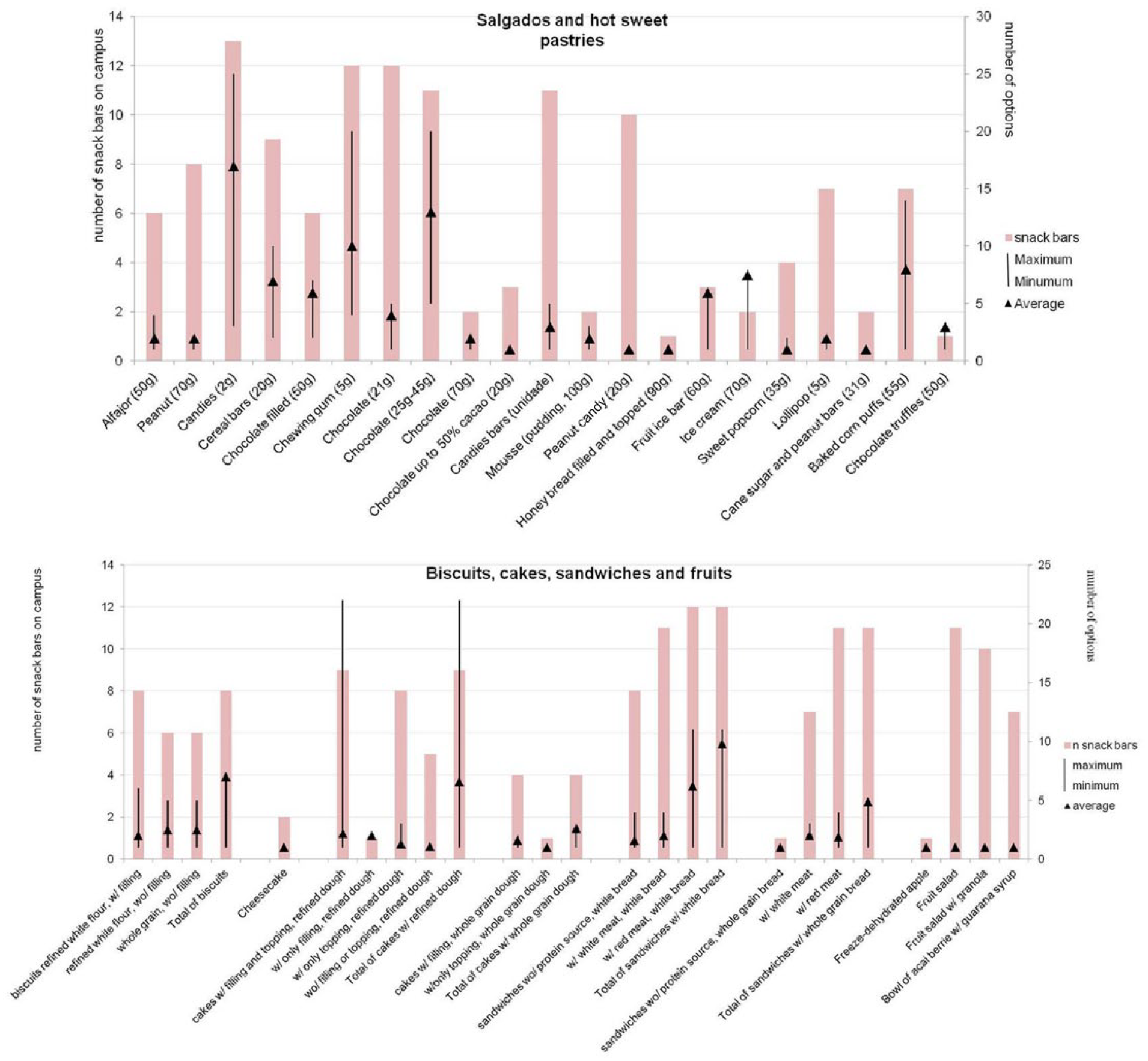
Variety of salgados, hot sweet and biscuits, cakes, sandwiches and fruits sold at the snack bars on campus
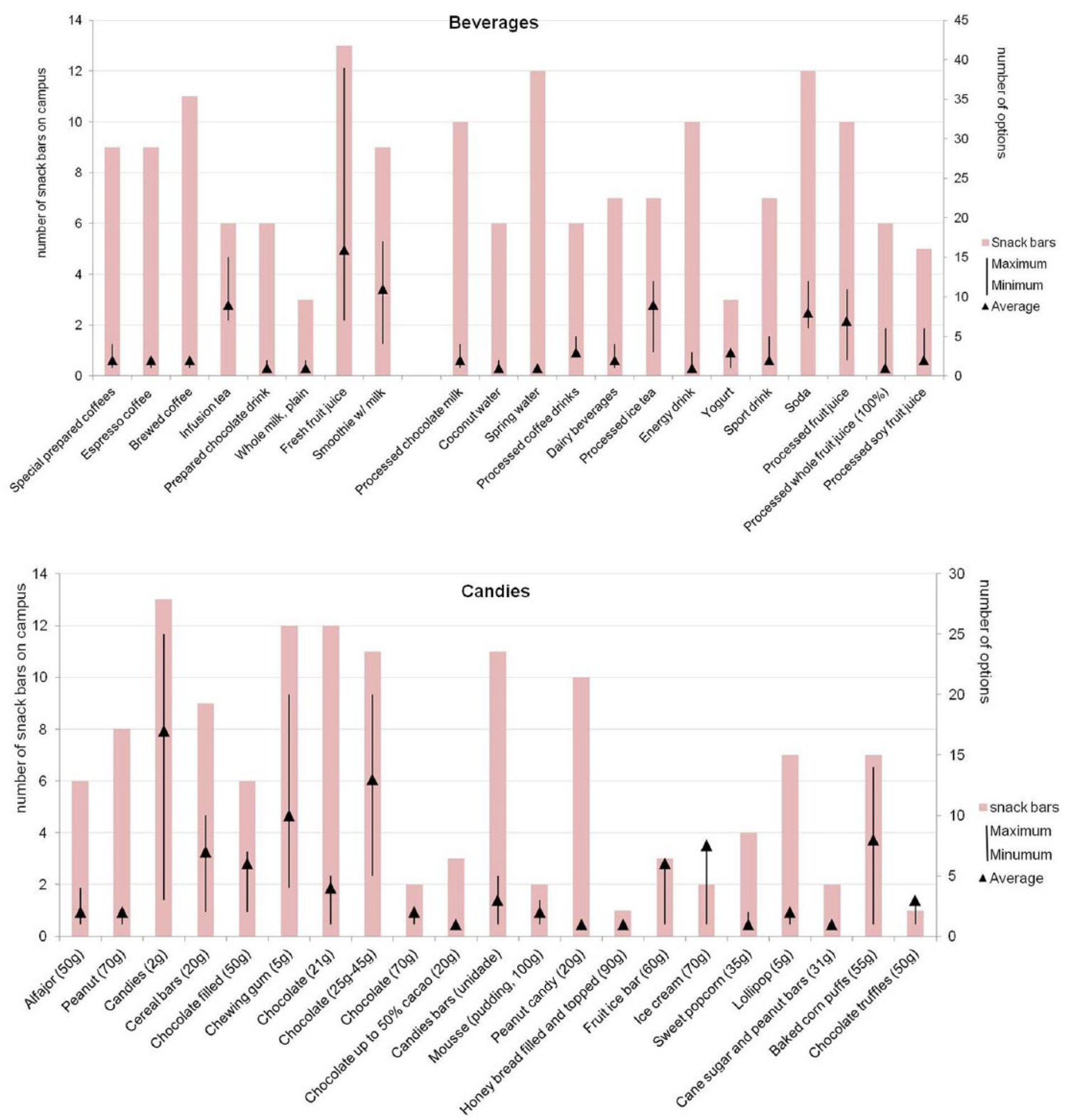
Variety of beverages and candies sold at snack bars
Different portion sizes were available only for beverages (juices, smoothies, hot or cold chocolate drinks, but not food) at 92.3% of the snack bars. One snack bar had nutrition data for the available products, which was displayed on the counter and on the website. Only one snack bar had nutritional information specifically about the sandwiches offerings listed on a sign. Among the 12 snack bars that offered sandwiches, 91.3% of them (n = 11) did not allow the customer to replace refined bread with wholegrain alternatives. Only one snack bar allowed the customer to choose the type of bread at no additional cost. However, no snack bar gave the customer the option of replacing the yellow cheese with a lower fat white cheese on sandwiches. The sandwiches were composed generally of two slices of bread, a protein source, a variety of cheeses, vegetables and a dressing. The sandwich options that did not contain protein from an animal protein were marketed as vegetarian, with some extra greens added as a protein replacement. Most of the vegetarian sandwiches contained preserved dried tomatoes. Table 3 sorts the foods served in the snack bars on campus by nutritional quality classification based on the Healthy Eating Pyramid of Harvard. 19
Assessment of the nutrition quality by cooking technique, type of dough and filling of products sold in the snack bars on campus a (n = 13)

Nutrition categorisation based on Healthy Eating Pyramid of Harvard. 24
The food environment of the restaurants
Four restaurants (66.8% of total) had oil or olive oil for salads. The other two had processed, commercial salad dressings. One restaurant had a variety of seeds and another had Parmesan cheese salad toppings available. Figure 3 shows the number of options of each kind of food available at the buffet restaurants on campus. Only the university’s self-operated restaurant provided signs encouraging healthy choices, stating, for example, ‘Eat more vegetables’ and ‘Drink more water’. These signs were placed above and on the wall next to the buffet stations. Labels were also provided at this location, in front of each dish, listing the ingredients used to produce the food with descriptive symbols, such as ‘does not contain gluten’ and ‘does not contain lactose’.
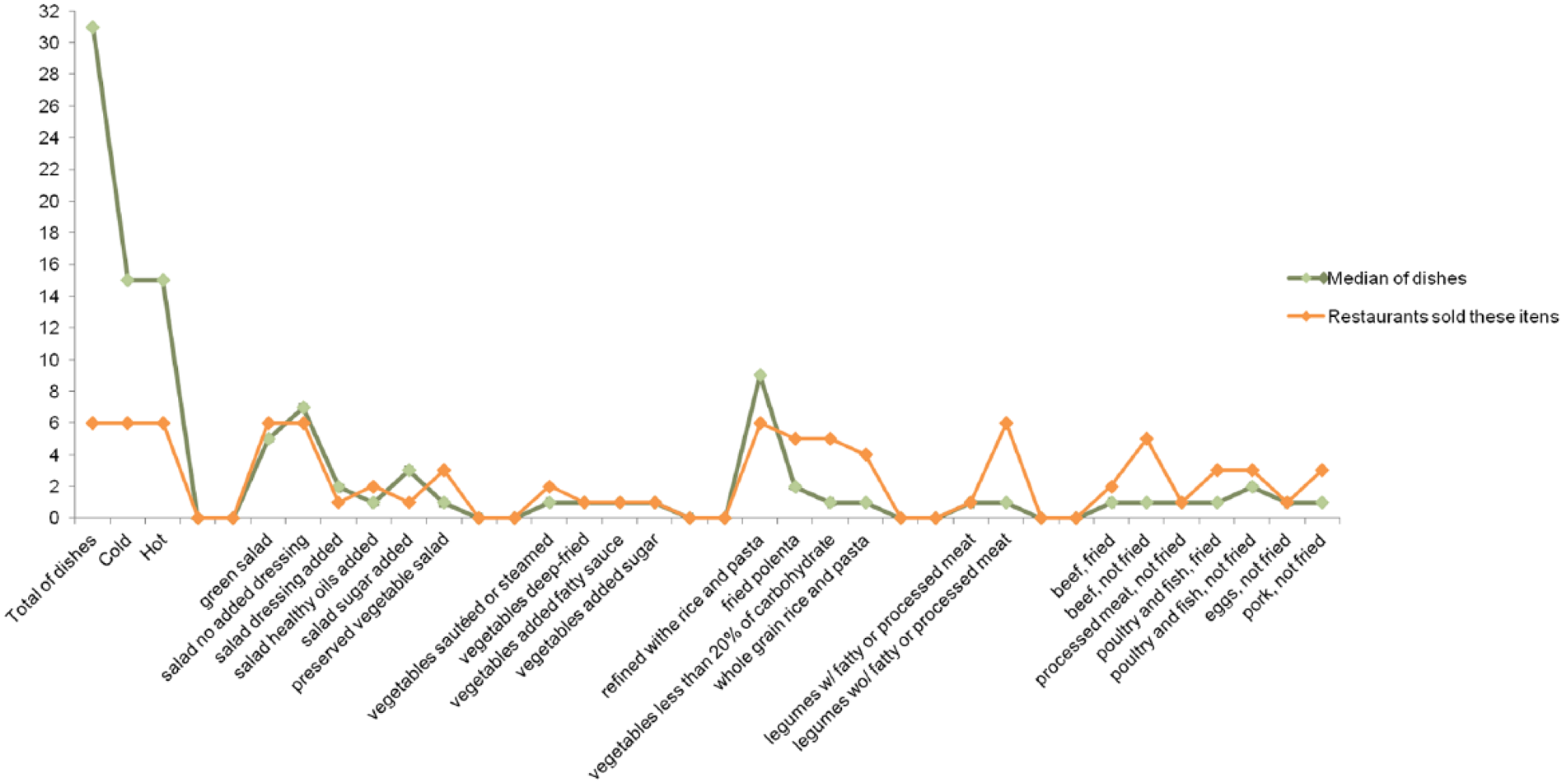
Number of food options available at the buffet restaurants on campus
Prices of products sold in snack bars and restaurants
Three snack bars (23.1%) offered combined food and drink options for one price (combos), for example, soda with a pastel (a fried dough with chicken, cheese or beef) and fresh orange juice with a cheeseburger. One exception (the salgado with vegetable filling) had a lower price when compared to combos with more fatty ingredients. For a small increase in price, five snack bars (38.5% of all) offered larger portions, generally for low-quality nutritional products. This option was offered for coffee with sweetened condensed milk or whipped cream, chocolate beverages, batata frita tipo palha (shredded potato sandwich) or fried protein sandwiches such as fried egg. Higher and lower nutrition categories for foods served in the snack bars can be seen in Table 4. The prices of food and beverages sold are presented in Tables 4 and 5.
Prices in US dollars (US$) of food sold in snack bars and restaurants on campus (N = 19)

SD: standard deviation.
Variety and prices of beverages on campus sold in US dollars (US$) (N = 19)

Prices of healthy and less healthy items were found to be significantly different according to the Mann–Whitney test, among the snack bar foods. This included salgados (whole grain, baked), which were more expensive when compared to the less healthy salgado (refined white flour, fried) (p < .001). With one exception, cakes made with wholegrain flour (with filling or topping) generally cost more than cakes made with refined white flour (with filling or topping), although not significant. A t-test comparison revealed that crackers made with wholegrain flour were significantly more expensive than crackers made with refined white flour (p = .028). Sandwiches made with wholegrain bread and white meat were slightly more expensive than sandwiches made with white bread and red meat, although not significantly. Natural fresh juices at the snack bars (only) were significantly more expensive than sodas (p < .001). However, based on t-tests, infused tea prices at the snack bars were significantly lower when compared to the prices of processed tea (p < .001).
Among the restaurants, 33.4% were price-inclusive, self-service buffets with meat and dessert served by the staff, and 66.6% were pay-by-weight self-service buffets. Among the buffet restaurants selling meals by weight, the median price per kilo was US$9.45 (from US$8.64 to US$14.50). One of the restaurants that sold products by weight also offered an all-you-could-eat option for a fixed price of US$5.68. Two university restaurants offered meals subsidised by both the university and federal government at US$0.68 for students. One outsourced restaurant (16.7% of all) offered dessert at US$0.23 a portion. Three restaurants (50% of all − two self-operated, one outsourced) offered free fresh fruit for dessert. Two university-owned restaurants (33.4%) included water and industrial processed juice (with a high sugar content) in the standard fixed price for a meal. In the other restaurants (66.6%), the drinks were charged separately. Three restaurants (50%) offered non-sweetened brewed coffee (not common in Brazil) free of charge to customers. Based on t-tests, the natural fresh fruit juice prices only at the restaurants were significantly lower when compared with soda prices (p < .001).
In sum, the findings revealed that the university food services. offered limited fruit, vegetable, whole grain (salgados, bread, pasta and cakes) and lean meat (fish and chicken) options, while starchy vegetables, refined grains, sugary drinks, fried foods, and sweet desserts and candies were predominantly available. The foods made with processed ingredients generally were lower in nutritional quality and price.
Discussion
Recent Brazilian food environment investigations (though limited) indicate that the overall nutritional quality falls short of local and international nutritional standards. A prevalence of overweight and obesity has been particularly tied to food offerings in Brazilian foodservice settings. Foods consumed away-from-home during lunchtime was found to be the worst quality meal as the offerings were generally higher in fats and saturated fats, than home-cooked versions.27,28 While the quality of primary and secondary school meals was found to have recently improved with more offerings of fruits and vegetables, national Brazilian nutritional standards have yet to be met. Links among foodservice, local food producers and nutrition educators have been cited as one solution for improving nutritional quality in Brazilian schools. Stronger government leadership working in consort with civic participation has also been recommended for implementation of more effective nutritional policies. 29 In addition, recent investigations have demonstrated that the availability of healthy foods along with price incentives positively affect nutritional outcomes. Food prices and energy density are inherently related.30,31
The findings of the present investigation revealed opportunities for improving the quality of the diet of university students. 32 The availability of free fresh fruits and the requirement for separate payment for sweets (in half of the restaurants) were positive steps that can both stimulate the selection of healthier foods and discourage consumption of less nutritious items. The general availability of healthy oils, such as olive oil, instead of processed salad dressing and the supply of non-sweetened brewed coffee at no charge were strategies for healthy eating.19,33–35 The restaurants had a high available supply of vegetables, fruits and legumes. However, while lean meat were available, they were cooked using techniques that increased the fat content. Whole grains were not offered in all of the restaurants. There was a high availability of refined grain products and dishes with low amounts of fibre and a high content of fat. In addition, there was a low supply of hot dishes based on vegetables and whole grains as compared with the wide availability of items processed with red meat. In the snack bars, the absence of fresh whole fruits limited an overall approach to promote these products to students. There was also a wide availability of food products made with refined flour and filled with ingredients containing high amounts of sugar and fat – not unusual in campus environments within or outside of Brazil.6,7 The healthier nutrition options were sold at higher prices compared with options with lower nutritional quality, such as processed foods. 36 This situation could encourage the excessive consumption of products of lower nutritional quality by students with limited financial resources. 37 Overall, it would be difficult for the students of this university to meet the World Health Organization’s (WHO) goal of 400 g of fruit and vegetables a day without a stronger effort by management to promote these products at lower prices, although the potential to do so has been demonstrated.38,39 The limited availability of food or nutritional information in the food services was also identified. The broad absence of this information in the confined campus food environment did not give students the opportunity to make healthier, smarter and safer choices based on their personal dietary needs. 40
The findings of this investigation also indicate a paucity of minimally processed foods with higher fibre content in the campus food services. There was also no promotion of ‘light’ or ‘diet’ foods or beverages on campus, although these products are not necessarily beneficial to health. 41 On the positive side, all the snack bars offered variable portion sizes for drinks giving the students the option to consume less sugar.42,43 However, the excessiveness of sugary drinks found on campus highlights the need for managers to vigilantly assess the quality of the food offerings. Contingent health issues may arise for students who consume overly sweetened beverages that possibly lead to hyperglycaemia or hyperinsulinaemia. In sum, there is potential for these products to have deleterious effects on the health of students now and later in life.44–46
Considering research findings that show low offering of fruits, vegetables, whole grains and healthy proteins on campus and a preponderance of students who stay on campus all day, it seems urgent to improve how foods are marketed and sold in the university setting. In general, an increased effort to promote higher quality foods might encourage healthier choices of these products among consumers. 47 The nutritional quality classification also can help students make healthier choices among available foods sold by snack bars. The nutritional quality evaluation also can help managers of snack bars to analyse and improve better food choices for the university community.
Conclusion
The present research identified the main facilitators and barriers present in a Brazilian university’s food environment. The nutritional quality of the foods offered was analysed. An extensive marketing of foods and beverages with lower nutritional quality offered by the campus food services was found. While restaurant management typically bases product offerings on market demand, this model does not adequately fit on a campus where the students are almost entirely reliant on the products offered for overall wellbeing. The nutritional quality of products sold at the restaurants researched and evaluated could be improved to increase healthier outcomes by supplying more products made with whole grains, vegetables side dishes, lean meat that is not fried, green salads without dressings containing unhealthy fats, legumes served without cured or fatty meat (to increase its consumption as a pure vegetable option) as well as offering more fruit for dessert. The snack bars could offer more options, including freshly brewed coffee and tea with no added sugar, fresh whole fruits, diced fruit salads without added sugar, whole foods including sandwiches with lean protein sources, green salads and wholegrain crackers, cookies, wholegrain cakes and cakes without fillings or toppings.
Future complementary research should contextually investigate the provision of nutrition labelling on campus, student food choices, student health and nutritional status, as well as the food environment perceived by college students themselves. Studies should be conducted in other university environments in Brazil and around the world. This research should also promote strategies for improvement and help to develop food policies for university food environments that ensure basic and healthy foods are available at all types of food outlets on campuses, offering possibilities for students to help themselves to make smarter and healthier choices.
Limitations
Food labels, ingredient lists and nutritional facts were not analysed in this study. The focus of this research was on the overall food environment and nutritional quality of foods, which many studies show are more important than quantitative aspects. The findings cannot be generalised to other universities in other locations.
Footnotes
Acknowledgements
One of the authors was supported with scholarship from CAPES Foundation, Ministry of Education of Brazil – CAPES number BEX 6864/14-7 – for the revision and the translation of the manuscript.
Ethical Standards Disclosure
This study was conducted according to the guidelines laid down in the Declaration of Helsinki, and all procedures involving human subjects were approved by the Research Ethics Committee of Brazil (number 438.564/2013). Written consent was witnessed and formally recorded.
Funding
The author(s) declared no potential conflicts of interest with respect to the research, authorship and/or publication of this article; it is purely an academic exercise.