



Abstract
Technological developments have a major impact on user behavior. The rapidly evolving communication system and technology have provided numerous choices for people. The ever-shifting changes in the generation of communication networks have posed challenges for mobile network service providers to attract and retain customers. This study aims to prioritize the determinants of the adoption of mobile network service providers using the unified theory of acceptance and use of technology (UTAUT-2). In this study, data were collected from 660 mobile phone users in Haryana, India. A fuzzy analytical hierarchy process (F-AHP) was applied to arrange the priority or rank the factors based on the significance of the factors in explaining the adoption of mobile network service providers. Results of the study reveal that efforts expectancy is the highest-ranked and prioritized factor for the adoption of mobile network service providers followed by performance expectancy and facilitating conditions. However, social influence emerged as the least important factor. The present study provides theoretical implications for future researchers by synthesizing and prioritizing the important factors affecting technology acceptance. The practical implications offer a clearer insight to marketers for developing focused pragmatic strategies to retain customer loyalty. The study has considered only UTAUT-2 model constructs and used the F-AHP technique. Other factors may be considered in future studies. Other priority analysis techniques can also be used such as ISM and MICMAC analysis for further study. The research has been conducted in Haryana, India, and therefore, it needs to be tested in other areas/countries for generalizability.
JEL Classification: O1, O2, O4
Keywords
Introduction
Communication with family, friends, and colleagues is now a basic necessity of individuals (Garg et al., 2020). Day by day demand for effective communication is increasing. As a result of an increase in demand for effective communication, the adoption of personal communication devices is also increasing (Carr, 2003; Patharia & Pandey, 2021; Soriano et al., 2012). Personal communication devices such as cell phones, smart watches, and tablet computers have become very popular now days (McBride, 2014). The purpose of using personal communication devices is different for each individual. The lifestyle of individuals is improving drastically due to a number of potential applications used through mobile phones (Kalinić et al., 2020). Technology has completely revolutionized the business of network service providers.
Nowadays, telecommunication companies are under pressure to provide better quality services to their consumers and meet their expectations (Bhatti et al., 2019). Failure of the business in the telecom sector may be attributed to a lack of strategic steps for meeting customer expectations (Garg et al., 2020). It is very important to formulate proactive strategies to acquire and retain customers by identification of factors affecting the adoption of technology and related services (Kaur & Sharma, 2015). Customers are very smart and more informed with the multiple options they have in this sector. Attracting new customers can be very expensive (Lin & Wang, 2006; Thoumy & Abdallah, 2017), and in the case of mobile network service providers, where lots of competition exists, it is important to keep customers satisfied and ensure their loyalty. In the earlier studies, researchers identified many factors which may affect customer satisfaction and loyalty. Attention has been paid to the factors influencing customer satisfaction and loyalty only and not the importance of these factors in comparison to each other (Kaur & Soch, 2012; Shafei & Tabaa, 2016; Willys, 2018). Companies are focusing on human involvement in making strategies related to customer loyalty and retention (Bhatti et al., 2019; Hapsari et al., 2020). It is very difficult to please them because today’s customers are more demanding, price conscious, brand conscious, always approaching other alternatives for better or equal offers (Nimako et al., 2010). It is very important for the company to attract and sustain the customers in the competitive situation where customers are smart and well-informed regarding market operations after the introduction of the Mobile Number Portability (MNP) facility which allows the customers to retain their mobile number even if they change service providers (Chen & Cheng, 2012).
There are numerous studies available on customer loyalty (Hapsari et al., 2020; Singh, 2020; Ting et al., 2020). But there is a need to resolve the dilemma related to the importance of the factors that have been explored in the previous studies. Unified Theory of Acceptance and Use of Technology (UTAUT)-2 model is one of the most important and popular models related to technology acceptance (Alalwan et al., 2017; Lee et al., 2015; Lin, 2013). But it has not been widely applied with regard to the understanding of customer behavior regarding telecommunications (Bhatti et al., 2019). There is a dearth of studies that resolve the dilemma of the importance of factors affecting the adoption of mobile network service providers. Thus, there is a need to resolve this dilemma using grounded theory and robust analysis.
All the stakeholders will derive benefit from prioritizing the factors affecting customer adoption and loyalty toward mobile network service providers. Therefore, the objective of the study is to deal with the gaps in existing research by finding out the highly prioritized factors in the telecom industry as per the UTAUT-2 model of customer loyalty. The originality of this paper lies in the application of the UTAUT-2 model in the context of customer loyalty toward service providers. This study will help the service providers in developing strategies to compete and sustain in the market for survival and growth. Thus, the present study aims at providing an answer to the following research question.
How to identify the priority and significance of the factors related to customer loyalty toward mobile network service providers?
The research paper has been arranged in various sections. The study starts with the discussion of the interplay of technological advancements and customer behavior in the telecommunication sector. This is followed by the theoretical background and hypotheses development. The next sections elaborate on the research methodology, analysis, findings, and discussions. The paper ends with the implications and limitations of the study.
Theoretical background
Venkatesh et al. (2003) developed the UTAUT. This theory is a combination of many previous popular theories (Theory of Reasoned Action by Ajzen and Fishbein (1975), Technology Acceptance Model (TAM) by Davis (1989); Venkatesh & Davis (2000); Innovation Diffusion Theory by Rogers (2010); Theory of Planned Behavior (TPB) by Ajzen (1991), Combined Theory of Planned Behavior and Technology Acceptance Model by Taylor & Todd (1995); Motivational Model (MM) from Davis (1989); Davis et al. (1992), Model of PC Utilization by Thompson et al. (1991) and Social Cognitive Theory by Compeau and Higgins (1995) core elements from eight models. The UTAUT model had four main factors such as performance expectancy, effort expectancy, social influence, and facilitating conditions. After wide acceptance of the UTAUT model, Venkatesh et al. (2012) added three more factors and extended the UTAUT model into the UTAUT-2 model. Three additional factors of the UTAUT-2 model were hedonic motivation, price value, and habits or experiences. These models have been tested in the context of online banking technology adoption (Alalwan et al., 2017; Lee et al., 2015; Lin, 2013), e-health services (Boontarig et al., 2012), mobile banking usage (Putranto, 2020), and artificial intelligence (Cabrera-Sánchez et al., 2021). But, its relevance and importance in understanding customer behavior toward network service providers are still impending.
Customer loyalty
Use behavior is the dependent variable in the UTAUT-2 model and is affected by behavioral intention as mediating variable with the addition of three more predictors in the UTAUT model such as perceived value, habit, and hedonic motivation. It is one of the most acceptable models for studies focused on continued use and customer loyalty (Castañeda et al., 2019; Nabavi et al., 2016). In the field of marketing, behavioral intention is very frequently measured as conative loyalty (Giovanis et al., 2013). Customer loyalty is measured by both attitudinal and behavioral criteria (Day, 1976). An attitudinal criterion includes preferences, intentions, and commitments (Chaudhuri & Holbrook, 2001), whereas behavioral loyalty comprises the transformation of intention into readiness to purchase and actual purchase behavior. Most researchers use behavioral intentions as a dependent variable. Intention to repurchase and willingness to recommend to others have been used as indicators of loyalty (Chen & Tsai, 2007; Giovanis et al., 2013; Thoumy & Abdallah, 2017). Customer loyalty is influenced by behavioral intention. Performance expectancy, hedonic motivation, and facilitating conditions influence behavioral intention (Putranto, 2020; Rahi et al., 2019; Tam & Oliveira, 2016). Hence, the researchers have used the UTAUT-2 model in this context.
Performance expectancy (PE)
PE may be defined as “the degree to which using technology will provide benefits to customers in performing certain activities” (Venkatesh et al., 2012). Customers prefer to use only those technologies that they find useful in their context (Venkatesh et al., 2003).PE has a direct effect on the intention to use mobile phones (Carlsson, 2006) and is a significant predictor of satisfaction for mobile applications (Marinkovic et al., 2020; Tam et al., 2020). It is also found that PE is one of the most significant factors of user’s behavior intention to adopt mobile health services (Hoque & Sorwar, 2017). In the field of telecommunication, PE may have a significant positive influence on customer loyalty (Bhatti et al., 2019). Thus, it is proposed that:
Effort expectancy (EE)
EE is usually defined as the “degree of ease associated with customer use of technology” (Venkatesh et al., 2012). The effort expectancy (EE) concept was made with the three existing model constructs, perceived ease of use, complexity, and ease of use. Concepts and definitions of these three constructs are similar, and it was noticed and reported in various prior researches (Davis et al., 1989; Moore & Benbasat, 1991; Thompson et al., 1991). When the users of technology feel that using a particular technology is easy, they would prefer to adopt it (Chaouali et al., 2016). It was found in earlier studies that effort expectancy and user intention have a significant relationship (Chaouali et al., 2016; Rahi et al., 2019). EE does not significantly influence customer loyalty toward mobile products and services always (Bhatti et al., 2019). Thus, it is proposed that:
Social influence (SI)
Being a social animal, SI factors are very important in determining the loyalty among the customers. Individuals often get influenced by others' experiences when they receive positive feedback about the compliance of the system and it affects their Behavior (Bhatti et al., 2019; Tandon et al., 2016; Tak & Panwar, 2017; Yang, 2012). But sometimes, people are not bothered about the approval of others (Alalwan et al., 2017; Marinkovic & Kalinic, 2017; Merhi et al., 2019). Thus, it is proposed that:
Facilitating conditions (FC)
Resources and support mechanisms are essential for desired behavior. In the telecommunication industry, various researchers have given their viewpoint on the service quality concept. Although the service industry has features that are different from any physical goods such as intangibility, heterogeneity, inseparable, and perishability, in the telecom industry, it means the service quality and support offered to the customers. According to the UTAUT-2 model, in the present context, customers’ perception regarding the resources and support available by the concerned service provider may affect their behavior. The UTAUT model explained that performance expectancy, effort expectancy, and social influence are important for influencing behavior, whereas behavioral intentions and facilitating conditions determine the technology used by the respective consumer. These facilitating conditions may have a significant impact on the intention to use the services (Raza et al., 2019). But, sometimes facilitating conditions may not be strong enough to affect the intention or behavior of the customers (Bhatti et al., 2019; Baptista & Oliveira, 2015). Thus, it is proposed that:
Hedonic motivation (HM)
It is defined as “the fun or pleasure derived from using a technology” (Venkatesh et al., 2012). HM is based on the experiences of a human being. If the person using any technology experiences some fun or pleasure after using it, it influences the acceptance and use of that technology (Thong et al., 2006; Venkatesh et al., 2012). People are now using telecommunication services not only for conversations as a medium of entertainment but also for social networking, games, knowledge enhancement. Thus, it is proposed that:
Price value
Price value (PV) has a significant effect on customer behavior to use technology. Generally, monetary cost/price is used to determine the price value of any products or services. If the difference between the monetary value paid and the benefits of using technology is positive than customer value has a positive and significant impact on the intention to behave in a desired manner and vice versa. Customer price value may include economic, emotional, and social value (Ariff et al., 2012). Users generally switch toward other providers who offer lesser prices (Ali et al., 2010). Innovation in the pricing strategy is very important (Gijrath, 2017). The price value is an important factor in the determination of customer loyalty toward mobile network service providers. On this basis, it is proposed that:
Habit and experience
Habit is defined as “the degree to which consumers tend to use technologies or technology products automatically because of learning” (Venkatesh et al., 2012). Habit is a combination of three criteria such as the past behavior, reflex behaviors, and individual experience. There is similarity and dissimilarity between the habit (HA) and experience (EX). An experience is needed but not sufficient condition for the formation of habit. Passage of time period may result in the formation of habit to use technology. Habit is usually developed with the result of prior experiences. A study conducted by Ramírez-Correa et al. (2019) suggested that there is a relationship between habit and behavioral intention. Customer satisfaction, frequency of past behavior, and comprehensiveness of usage are the factors that help to develop the habits (Limayem et al., 2007). Customer commitments are influenced by habit or consumer inertia (Ranaweera & Menon, 2013). Feedback from previous experiences is noted. This influences various beliefs (Ajzen & Fishbein, 2005). Thus, it is proposed that:
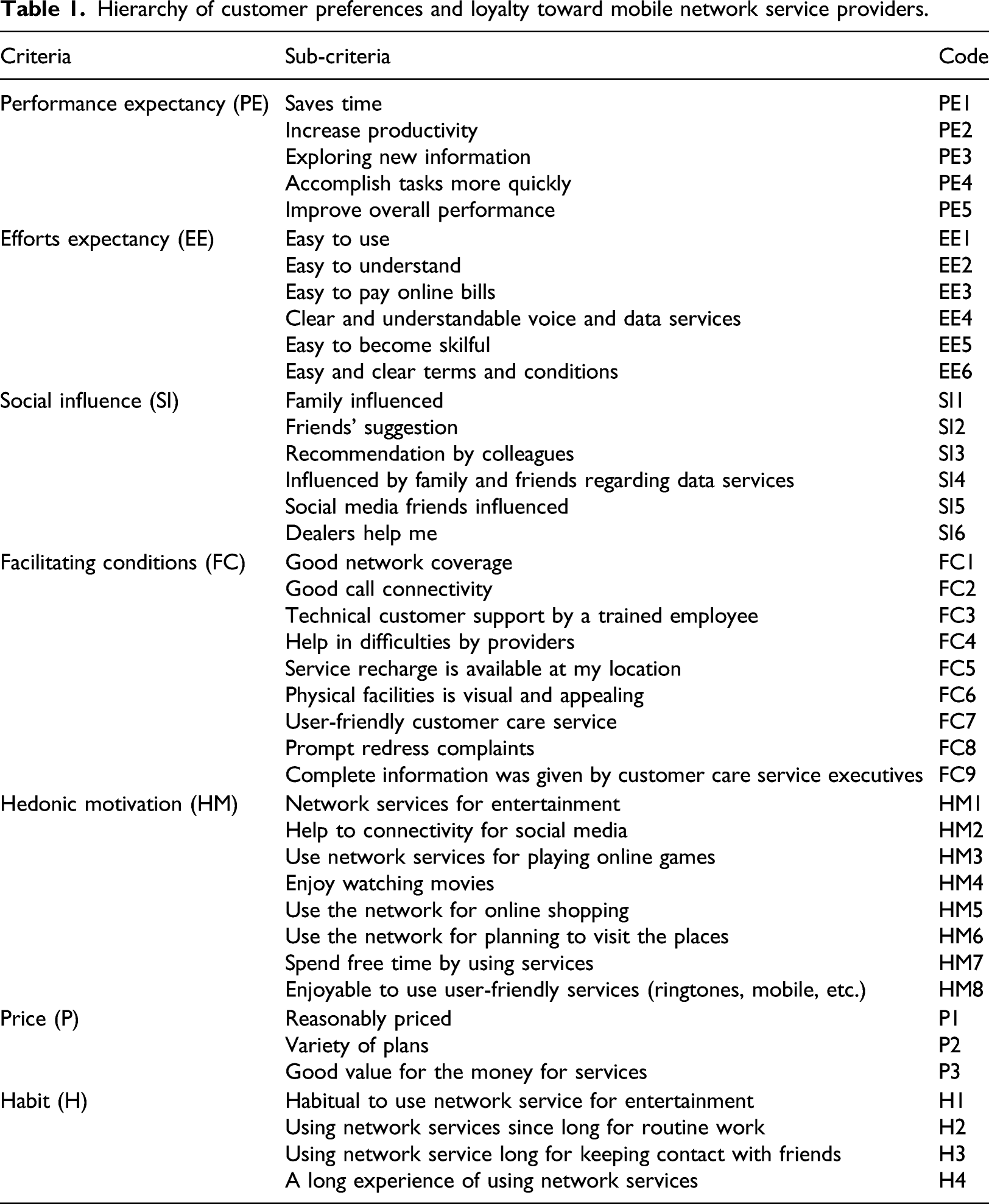
Hierarchy of customer preferences and loyalty toward mobile network service providers.
Research methodology
Designing the questionnaire and participants
Data were collected for the present research; the survey method was used by a self-administered questionnaire from the people who are using a smart phone. The questionnaire is divided into two parts; the first part of the questionnaire consists of questions related to respondents’ gender, age, education, and occupation, whereas the second part included questions related to each variable of the UTAUT-2 model on a seven-point Likert scale.
The quota sampling method was adopted for data collection in this paper because it is considered the best representative non-probabilistic sampling technique (Garg et al., 2020; Sharma, 2017). 22 districts of Haryana have been divided into six divisions for administrative purposes by the government of Haryana. Therefore, the sample was divided into six strata, that is, Ambala, Faridabad, Gurugram, Hisar, Rohtak, and Karnal. Ambala division (15%) is comprised of four districts, that is, Ambala (4%), Kurukshetra (4%), Panchkula (2%), and Yamunanagar (5%). Faridabad division (15%) is comprised of three districts, that is, Faridabad (7%), Palwal (4%), and Mewat (4%). Gurugram division (13%) is comprised of three districts, that is, Gurugram (6%), Mahendragarh (4%), and Rewari (3%). Hisar division (21%) is comprised of four districts, that is, Fatehabad (4%), Jind (5%), Hisar (7%), and Sirsa (5%). Rohtak division (21%) is comprised of five districts, that is, Jhajjar (4%), Charkhi Dadri (1%), Rohtak (4%), Sonipat (6%), and Bhiwani (6%). Karnal division (15%) is comprised of three districts, that is, Karnal (6%), Panipat (5%), and Kaithal (4%). The quota for Ambala division was fixed as 15% (132 respondents), Faridabad division was fixed as 15% (132 respondents), Gurugram division was fixed as 13% (114 respondents), Hisar division was fixed as 21% (185 respondents), Rohtak division was fixed as 21% (185 respondents), and Karnal division was fixed as 15% (132 respondents). The present study fixed the quota of 880 respondents which is ample as per the commonly prescribed minimum sample size requirements (Cochran, 1977; Melillo & Pecchia, 2016).
Descriptive statistics of respondent’s demography (N = 660).

The demographic profile
Fuzzy analytical hierarchy process (Fuzzy-AHP)
Saaty (1980) has given the multi criteria decision-making tool which decomposes the multifaceted problems from higher-level hierarchy to lower level. The Analytical Hierarchy Process (AHP) includes the following four activities: hierarchy building, assessment of local priorities, calculation of global priorities, and verification of consistency (He et al., 2012). The AHP does not allow rationalization of ambiguity in evaluator judgments. According to Meixner (2009), to eliminate ambiguity, the fuzzy mathematical operations and their triangular fuzzy numbers (TFNs) are used to prepare the pairwise judgment matrix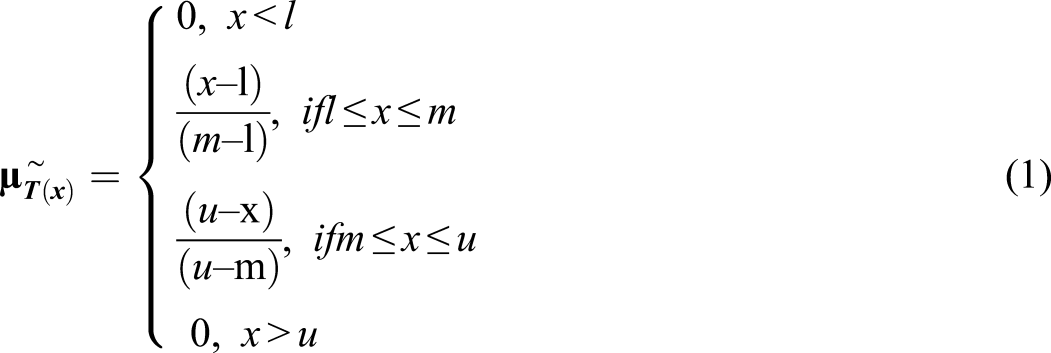
Equation (1) represents the triangular membership function, that is,
In Figure 1, where “l” signifies the likely minimum value of all the criteria and sub-criteria for making the pairwise judgment matrix, “m” signifies the most likely value, and “u” signifies the likely maximum value. Representation of triangular fuzzy numbers (TFNs).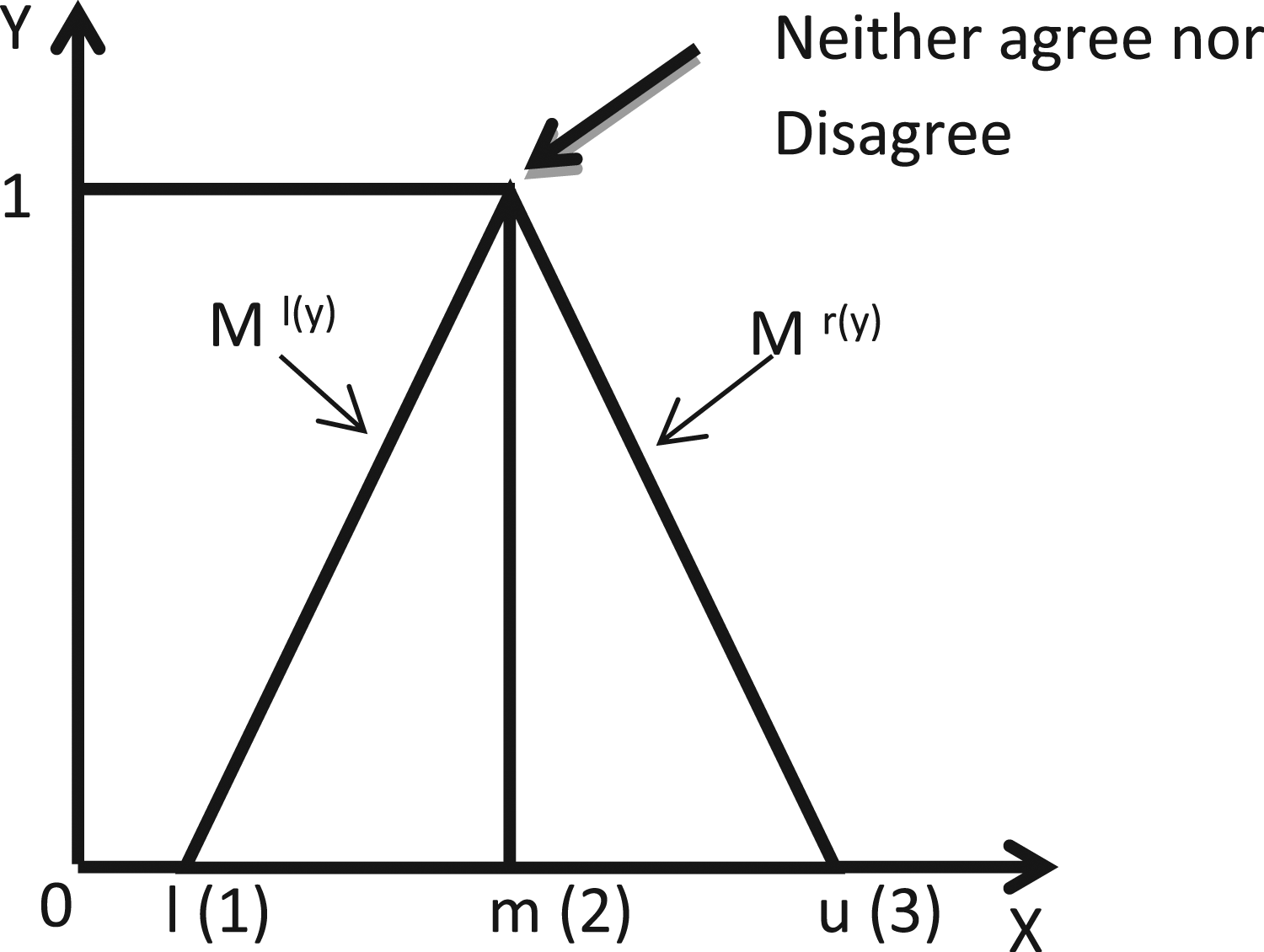
The following steps have been used to calculate global weight and ranking given by Buckley (1985):
Linguistic terms (Table 3) have been used to prepare the pairwise judgment matrix. The fuzzy pairwise judgment matrix 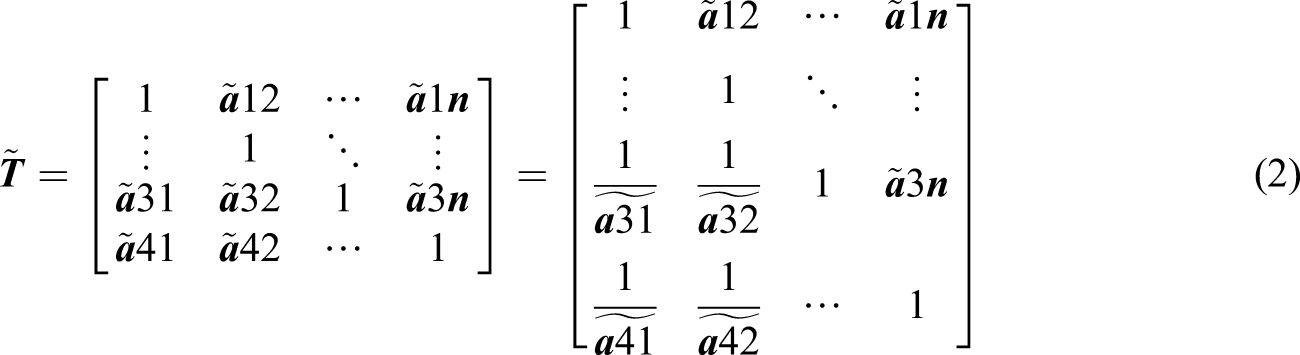
Conversion operations of triangular fuzzy numbers (TFNs).
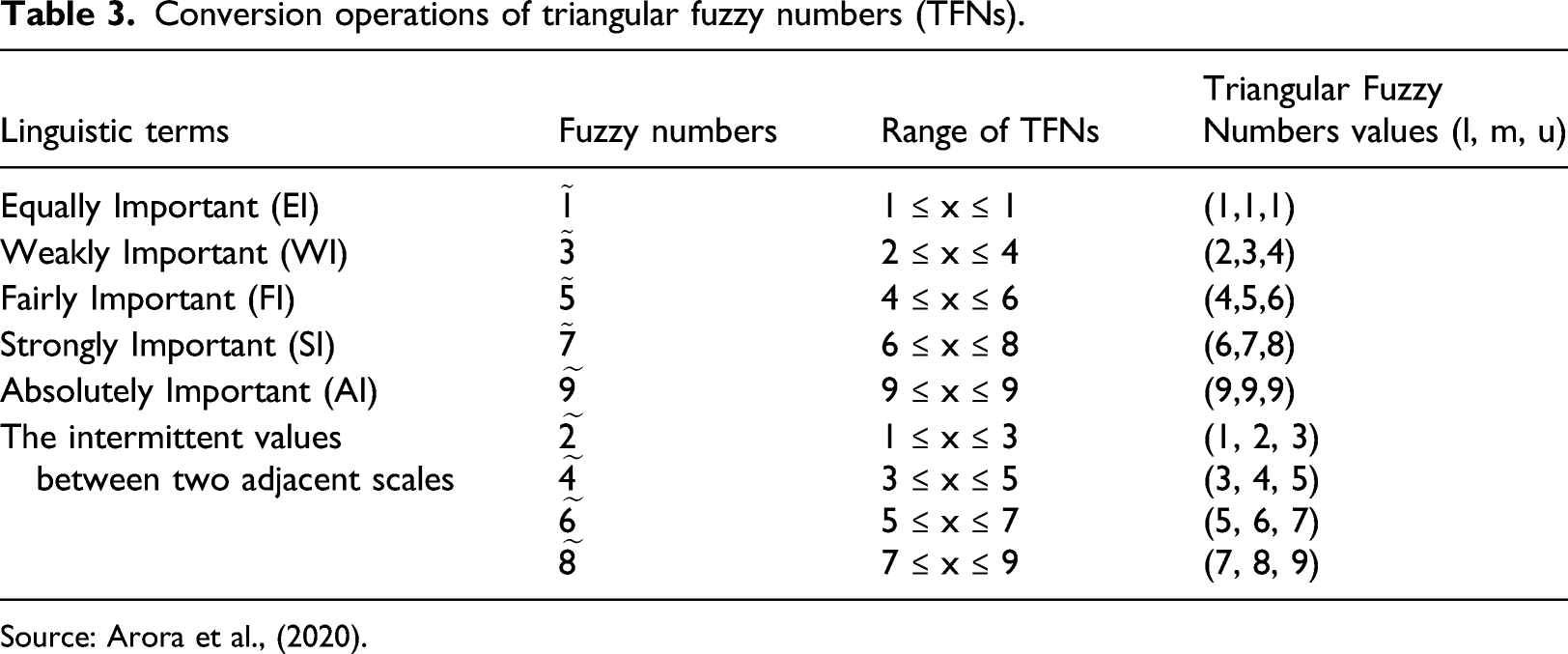
Source: Arora et al., (2020).
Fuzzy weight has been calculated with the help of the geometric mean method suggested by Buckley in 1985(Equations (3) and (4))

To defuzzify, the center of the area method has been applied to check the BNP i.e., best non-fuzzy performance value (equation (5))
Equation (6) has been applied to normalize the defuzzify weight
Analysis of results
Fuzzy pairwise comparisons matrix of criteria and fuzzy weight of criteria.
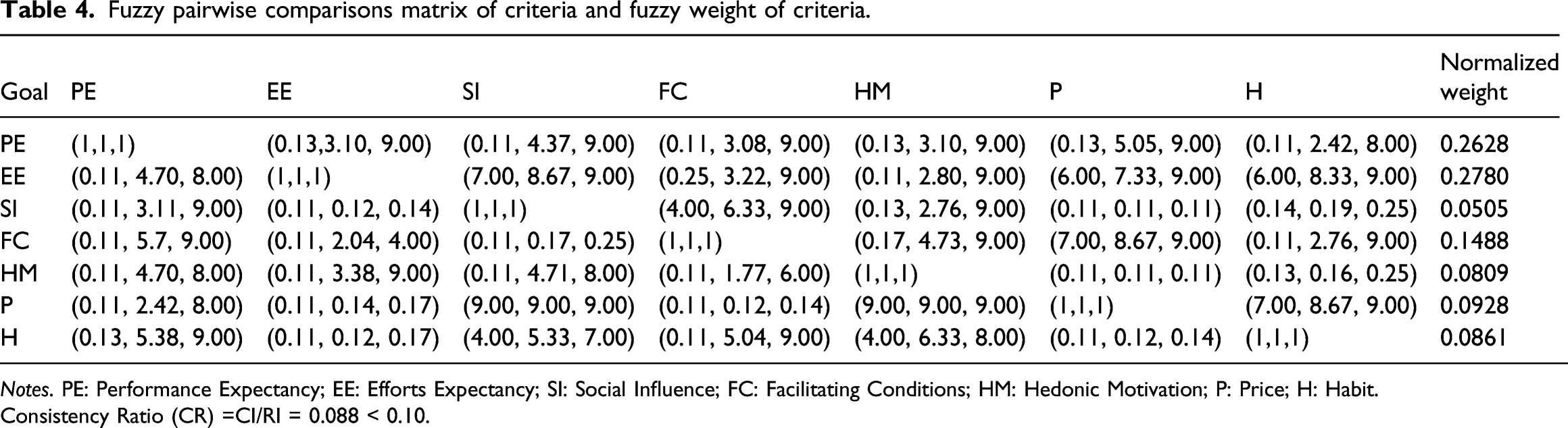
Notes. PE: Performance Expectancy; EE: Efforts Expectancy; SI: Social Influence; FC: Facilitating Conditions; HM: Hedonic Motivation; P: Price; H: Habit.
Consistency Ratio (CR) =CI/RI = 0.088 < 0.10.
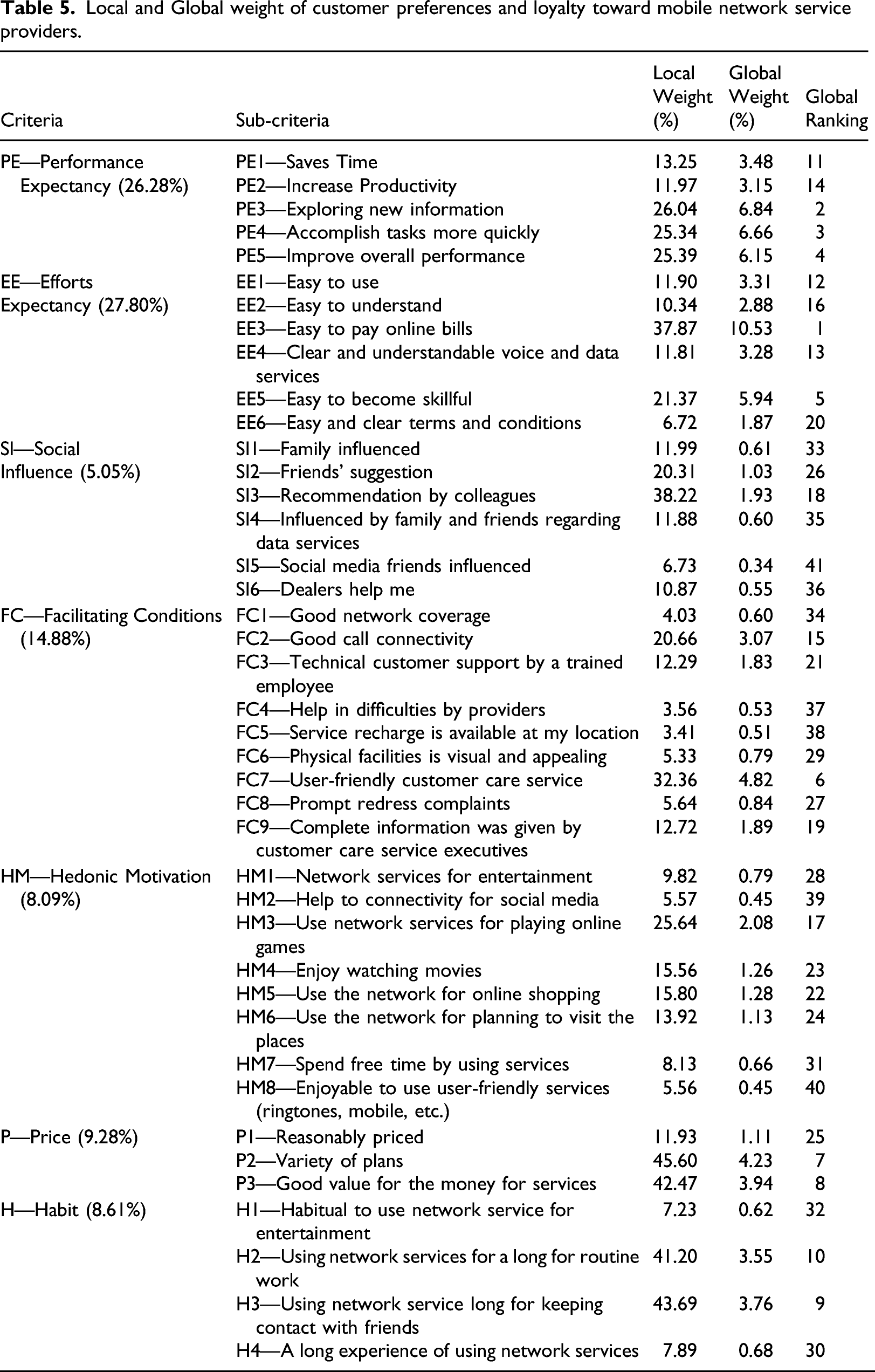
Local and Global weight of customer preferences and loyalty toward mobile network service providers.
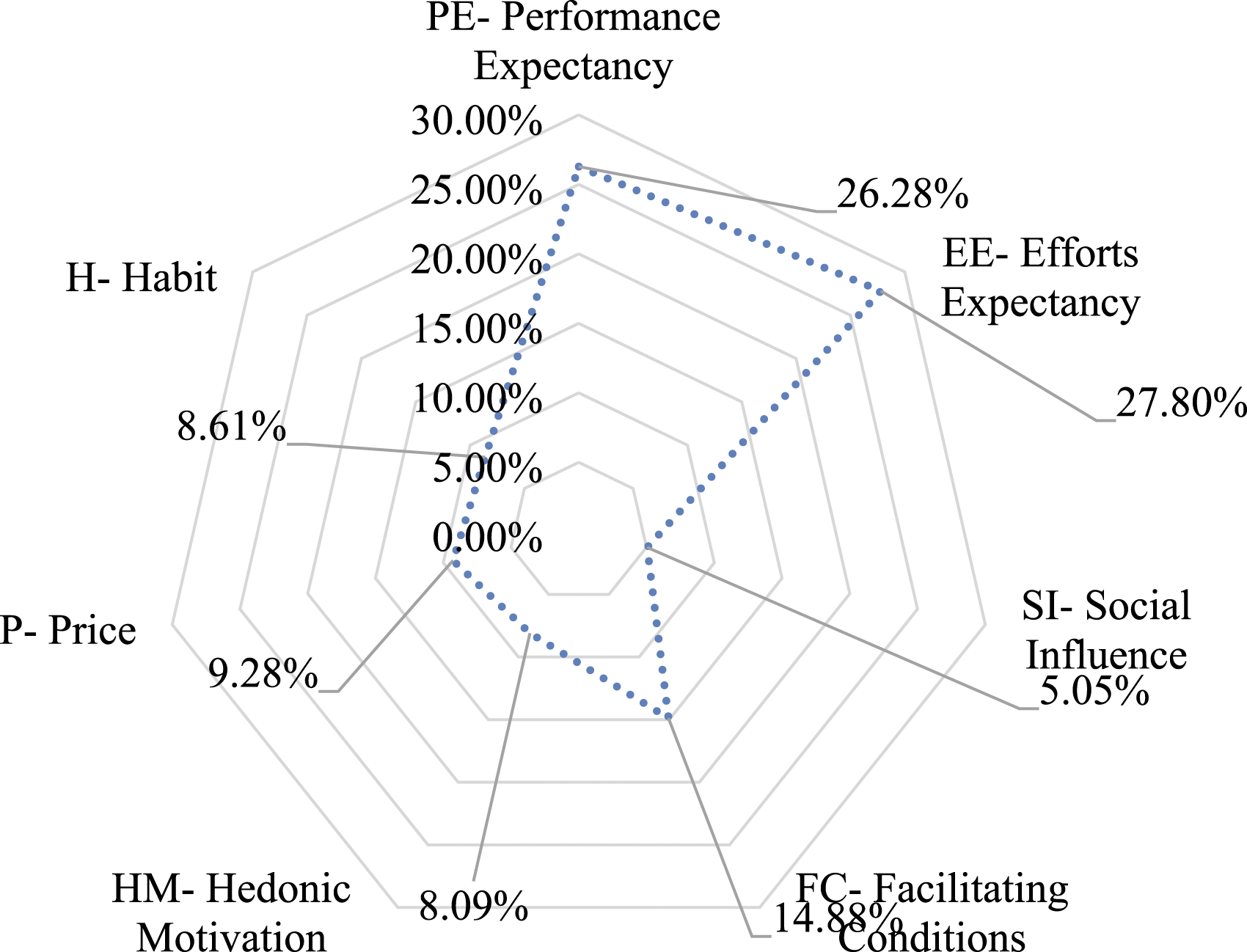
Radar chart representing the normalized weight of the criteria.
Facilitating conditions (normalized weight = 0.1488) came out as a third ranked factor among the various factors and the priority of sub-criteria of this factor came out as FC7> FC2>FC9>FC3>FC8>FC6>FC1>FC4> FC5.The first rank of sub-criteria of FC is “user friendly customer service” (local weight = 32.36%), the second rank is to “good call connectivity” (local weight = 20.66), the third rank is to be given to “customer care executives who provide complete information to the customer” (local weight = 12.72%), whereas the fourth rank is also given to a “trained employee who supports the customer in technical issues” (local weight = 12.29%). “Prompt redressal of complaints” (local weight = 5.64%) came out as the fifth rank of FC, and the sixth rank is given to “physical facilities & visual appealing” (local weight = 5.33%). In the present study, the seventh rank of FC sub-criteria is given to “good network coverage” (local weight = 4.03%), and “help provided by service providers in difficulties” is in the eighth position. However, “service recharge facilities available at the location of the customer” became ninth in the priority list of FC sub-criteria. The fourth ranking factor among the various factors turned out to be the price (normalized weight = 0.928). Priority of sub-criteria as revealed by results was P2>P3>P1. Customers required “a variety of plans” (local weight = 45.60%) as the first rank, “good value of money” (local weight = 42.47%), and the third ranked to “reasonably priced services” (local weight = 11.93%). The fifth rank of criteria is to be given to habit or experience (normalized weight = 0.861). Among the various sub-criteria of habit, H3>H2>H4>H1 came out as order of priority. Customers keep using the same network for “keeping the contact with friends” (local weight = 43.69%) and it is a priority. They also keep using the same network for long time for “routine work” (local weight = 41.20%) as this attribute got the second rank. Whereas, customer has a “long experience of using network services” (local weight = 7.89%) as second last or at third place and the last or fourth rank is given to the “habitual to use network services for entertainment” (local weight= 7.23%). Hedonic motivation (normalized weight = 0.809) came out as the second last criterion among the seven factors of customer loyalty. Among the various sub-criteria of hedonic motivation, the priority order of sub-criteria was HM3>HM5>HM4>HM6>HM1>HM7>HM2>HM8. The results support that the customers use mobile services for “playing online games” (local weight = 25.64%) and it is their priority. Use of the network “for online shopping” (local weight = 15.80%) as second in rank, “watching movies” (local weight = 15.56%) as third in rank. People also use their mobile network “in making plans to visit places” (local weight = 13.92%) as the fourth rank and use the network “for entertainment” (local weight = 9.82%) having the fifth rank. Customer also uses network services “while spending their free time” (local weight = 8.13%), and it is ranked as sixth in position. In the study, the customer who uses the network “for connectivity in social media” (local weight = 5.57%) is in the seventh rank. Customers also “enjoy the user-friendly services” (local weight = 5.56%) of providers as the eighth rank in HM factor. In the study, social influence (normalized weight = 0.0505) emerged as the least important factor. Sub-criteria of priority are coming out as SI3>SI2>SI1>SI4>SI6>SI5. Customers are influenced most by “colleagues” (normal weight = 38.22) while choosing the network service provider or data plan or data services or other related matter, and it is their first priority in sub-criteria of social influence criteria. The second rank is to “given suggestions by friends” (local weight = 20.31%), whereas “influence by family members” (local weight = 11.99%) is third in the ranking. Whenever the data service information or suggestions are required, the customer will be influenced by family and friends simultaneously (local weight = 11.88%), and it is in fourth place. “Dealer” also influences and helps the customers (local weight = 10.87%) regarding the issues of mobile network service providers and it is at fifth rank. The sixth and last rank is given to “social media influences” (local weight = 6.73%). Hence, effort expectancy, performance expectancy, facilitating conditions, and price emerged as the most highly prioritized factors influencing customer loyalty toward mobile network services. Therefore, hypothesis 1, hypothesis 2, hypothesis 4, and hypothesis 7 have been accepted, whereas hedonic motivation, habit, and social influence factors emerged as the least significant factors. Thus, hypothesis 3, hypothesis 5, and hypothesis 6 have been rejected.
The result of global weight is coming out after multiplying the normalized weight of particular criteria with the related calculated local weight of sub-criteria such as the normalized weight of effort expectancy is 0.2780 and the local weight of easy to pay online bills is 37.87%, so the global weight is 10.527 or 10.53 (rounded off) (as in Table 4) and so on. After the global weight results of each sub-criterion were calculated, global ranking is given on the basis of their result of global weight. Top five sub-criteria of global rank emerged as EE3>PE3>PE4>PE5>EE5. On the basis of global ranking, “easy to pay online bills” is a relatively most significant important thing for customers. The second, third, and fourth items are from the performance expectancy criteria. The fifth most significant item is coming out from effort expectancy that “it is easy to become skillful.” The least five sub-criteria are SI5>HM8>HM2>FC5>FC4 in which customers are influenced less by social media friends, and it is the least significant sub-criteria.
Findings and discussion
The present study uses a multi criteria decision making approach (MCDM) to decide the highly prioritized factors of the UTAUT-2 model affecting the customer behavior toward the mobile network service providers. After the detailed literature review, seven criteria and 41 sub-criteria were identified and selected to evaluate the critical success factors (CSFs) by using F-AHP techniques. Results of the study reveal that efforts expectancy, performance expectancy, facilitating conditions, and price were the most significant factors of customer preferences and loyalty toward mobile network service providers. The findings are consistent with the earlier research studies (Bhatti et al., 2019; Chaouali et al., 2016; Rahi & Ghani, 2018; Raza et al., 2019). The results are clearly indicative that rational motives are more important to the customers rather than their social acceptance, enjoyment, or habits.
As effort expectancy is the most prioritized factor in customer behavior toward mobile network service providers, it indicates that the customer always looks forward to ease in using the network and performing functions related to accessing the network. Second, the customers wish to derive delight from the good performance of network service providers, that is, they provide the best services as claimed by them and as expected by the customers. Third, customers wish that they must be provided with a rapid and smooth network along with a support system that ensures problem resolving, query handling, and removing the hindrances that may arise while using the network. Fourth, the results are supportive that customers are price value conscious and want to get the best services at the most economical prices.
The customers are now more agile about the latest developments, offers, and changes occurring in the telecommunication sector. Therefore, they are less influenced by the recommendations of others around them. They behave as per their knowledge, perceptions, and experiences. Similarly, people are more inclined to the virtual world to seek solace and enjoyment. Therefore, once their rational desires are satisfied, they further look forward to satisfying their social and leisure needs. Enjoyment and habits are less important in affecting the customer behavior toward mobile network service providers.
Implications
The findings of this study comprise some imperative theoretical and practical implications. One of the most welcomed theories related to acceptance of technology and technology products, that is, the UTAUT-2 model has not been applied and tested to study the customer behavior toward mobile networks service providers.
Academic implications
Earlier research has examined the UTAUT-2 model in various fields such as in the context of online banking technology adoption (Alalwan et al., 2017, 2016; Lee et al., 2015; Lin, 2013), e-health services (Boontarig et al., 2012), mobile banking usage (Putranto, 2020), and artificial intelligence (Cabrera-Sánchez et al., 2021). It is the telecommunication sector that provides the infrastructure for other such services usually. Therefore, it is imperative to study the relevance of this model in understanding the customer behavior toward mobile network service providers. If they do not perform their duties well then customers will not be able to perform even the basic functions well and have no choice either to switch over or feel helpless and exploited. So, this study helps to identify the priority of factors that are important to the customers and must be taken care of by the network service providers in order to delight the customers and retain them. The present study fills this literature gap through the application of the UTAUT-2 model and multiple-criteria decision making techniques to this research area. Future researchers may use the present study as a reference and test the validity of the results of the present study in their context to derive generalizability. Thus, the present study enhances the literature of customer use behavior studies manifold for reference, comparisons, and generalizability across different geographical areas.
Practical implications
Results of the study show that efforts expectancy has the highest importance (27.80%) followed by performance expectancy (26.28%). The least preference was given to social influence (5.05%). Data indicates that “it is easy to pay bills online” is very important and after that “exploring new information” followed by “accomplishing tasks more quickly” are some of the most important factors sought by the customers. The least preference was given to “social media friends influence” and then “enjoyable to use user-friendly services” followed by “help to connect for social media.” These results have crucial indications for the stakeholders and mobile network service providers to improve their customer loyalty response by developing focused pragmatic strategies.
It is most important for the network service providers to strengthen their bill collection mechanisms such that it is easy for the customers to pay bills online. They must provide multiple payment modes and options to cater to the requirements of the customers. The performance expectations to gather new and ample information must also be the focus area for the network service providers. They should provide more and more avenues for search portals, ease of researching through the windows, and other technological advancements to improve customer experience. Similarly, the speed of the internet and connectivity should be regularly monitored, so that the customers are able to perform the tasks in the blink of an eye. The recent developments like 4G and 5G are great efforts in this direction.
The customers consider ease and performance as the most important factors for using a mobile network. Therefore, the mobile network service providers must ensure that they provide ample knowledge to the customers in the most easy-to-understand format to ease their process of using the network services. The information related to services and packages being offered, payment schemes, and modes must be easily accessible to the customers through various offline and online media. The customer related processes must be simplified to provide comfort to the customers. Apart from this, the claims made by the company should be met well. Feedback mechanisms often help in improving performance. Self-appraisal of service quality and research on improvement in services are essential for improving the network service performance.
Thus, these practical implications derived from the results of the present study will help me attracting and retaining customers. This will help in improving the market share, profitability through higher customer satisfaction.
Limitations and directions for future research
The study has some limitations. Cross-sectional data has been used for the study. Thus, longitudinal studies may be conducted in different cultural backgrounds by using various multi-criteria decision-making techniques. ISM and Fuzzy MICMAC techniques can be applied to find out the interrelationship between the various criteria and sub-criteria. Moreover, comparative studies on the basis of age, gender, and experience can be conducted in the future and also include some other factors to know the preferences of customers’ loyalty toward mobile network service providers such as perceived risk, trust.
Footnotes
Declaration of conflicting interests
The author(s) declared no potential conflicts of interest with respect to the research, authorship, and/or publication of this article.
Funding
The author(s) received no financial support for the research, authorship, and/or publication of this article.
