




Abstract
This study explored strategies for enhancing Grade R mathematics learning by fostering a collaborative teacher–parent partnership through a Participatory Action Research (PAR) approach underpinned by Bricolage theory. Recognizing the foundational importance of early numeracy skills for later academic success, the study addressed persistent gaps in the quality of early mathematics education, particularly in under-resourced contexts. Teachers and parents were engaged as co-researchers to jointly design and implement low-cost, contextually relevant numeracy activities, drawing on locally available resources. Data from reflective journals, collaborative workshops, and participant interviews were analysed thematically. The findings revealed that participatory collaboration enhanced children’ mathematical confidence, promoted creative pedagogy, and strengthened home–school continuity. However, challenges such as initial role confusion and time constraints required ongoing negotiation and reflection. The study concludes that a Bricolage-informed participatory framework empowers communities to co-create sustainable learning innovations and that fostering authentic teacher–parent partnerships is crucial for advancing early mathematics learning. Recommendations are made for teacher training, school practice, educational policy, and future research.
Keywords
Introduction
The reception year, or Grade R (4 to 5 years of age), represents a critical period in a child’s cognitive, social, and academic development. Grade R, a Grade in Foundation Phase which is responsible for the provisioning of school readiness for four-and-a-half to five-year-old children before they start formal schooling. It is particularly pivotal for laying the foundations of mathematical thinking, which has been strongly linked to later school success across subjects (Björklund et al., 2020; Ondog & Kilag, 2023). Early mathematical competencies such as counting, number sense, pattern recognition, spatial reasoning, and problem-solving abilities are significant predictors of academic trajectories well into adolescence (Cui et al., 2019; Silver & Libertus, 2022).
In the South African context, where educational inequalities remain persistent, ensuring equitable access to quality early mathematics experiences is particularly urgent (Alam & Mohanty, 2023; Graven et al., 2024). Yet, despite policy emphasis on Grade R through initiatives such as the Curriculum and Assessment Policy Statement (CAPS) and the National Development Plan 2030, significant gaps remain in the quality of mathematics learning, especially in under-resourced and rural communities (Department of Basic Education, 2011; Fiskerstrand, 2022). These gaps are often exacerbated by a lack of continuity and support between home and school environments, with many parents uncertain about their role in promoting mathematics learning outside the classroom (Grolnick et al., 2021; Panaoura, 2021). Studies demonstrate that when parents are confident to actively engage in numeracy activities at home, children’s mathematical abilities can be significantly strengthened improving school readiness and long-term academic resilience. (Simpson et al., 2017; Nobis & Caparroso, 2024). However, the nature and depth of this involvement are critical: sporadic or surface-level interactions have limited impact, whereas meaningful, sustained collaboration between families and schools fosters deeper learning and positive dispositions toward mathematics (Hidayat & Arini, 2022; Jay et al., 2018).
Despite the recognized importance of parent–teacher collaboration, practical, context-sensitive models for fostering such partnerships in early childhood education are still limited, particularly within marginalized or resource-constrained settings. There is thus a growing need to reconceptualize parental engagement through participatory, empowering approaches that value the cultural, experiential, and material resources available within communities (Bose & Seetso, 2016; Mahlomaholo, 2013). This study responds to this gap by developing and implementing a teacher–parent collaborative strategy to enhance Grade R mathematics learning. Using a Participatory Action Research (PAR) framework underpinned by Bricolage theory, the study engaged Grade R teachers and parents as co-researchers in designing contextually relevant, resourceful mathematics learning activities. As conceptualized by Kincheloe (2001) and Rogers (2012), Bricolage advocates for creative adaptation and the use of locally available materials to construct meaningful learning experiences. In this study, Bricolage served as a methodological and philosophical foundation for navigating material constraints and amplifying community-based knowledge.
Literature Review
The Importance of Early Mathematics Development
Mathematics competence developed during the early years strongly predicts later academic achievement and broader cognitive development (Björklund et al., 2020; Cui et al., 2019). Foundational skills such as number sense, counting, spatial reasoning, and problem-solving are not only critical for mathematics success but also correlate with literacy development and general school readiness (Spencer et al., 2022). In South Africa, persistent educational inequalities necessitate urgent investment in early mathematics interventions to ensure equitable learning opportunities (Alam & Mohanty, 2023). Yet, research highlights a gap between curricular intentions and classroom realities. While policies like the Curriculum and Assessment Policy Statement (CAPS) emphasize early numeracy, implementation challenges remain, particularly in under-resourced and rural schools where material resources, teacher confidence, and parental support are often limited (Fiskerstrand, 2022). This significantly impacts children’s long-term academic trajectories, especially for children from marginalized communities.
Parental Involvement in Early Mathematics Learning
Extensive evidence underscores the positive impact of parental involvement on children’s early mathematics development. Studies such as those by Ata-Aktürk and Demircan (2022) and Mutaf‐Yıldız et al. (2020) reveal that children whose parents engage in home-based numeracy activities perform better in formal schooling. Activities such as counting games, measurement discussions, and board games at home help children internalize mathematical concepts through informal learning experiences. Moreover, parental involvement is associated with developing positive mathematical dispositions, such as persistence, curiosity, and confidence (Jay et al., 2018; Xue, 2023).
For example, instead of formal written assignments, homework in this Grade R context in South Africa primarily refers to easy take-home activities like practicing number recognition, counting objects, or drawing shapes. Although the goal of these activities is frequently to improve the relationship between the home and the school, parents do not always support them. In contrast, meaningful, dialogic interactions, where parents encourage mathematical thinking through everyday experiences, yield greater academic benefits (Grolnick et al., 2021; Hidayat & Arini, 2022). Despite the benefits, several barriers inhibit effective parental involvement, especially in socio-economically disadvantaged contexts. Lack of parental confidence limited mathematical knowledge, language barriers, and competing economic pressures often restrict meaningful engagement (Bantwini, 2012).
Teacher–Parent Collaboration: Towards Co-Constructed Learning
Traditional models of parental involvement often position parents as passive supporters, with minimal influence on pedagogical decisions (Epstein, 2014). However, contemporary research calls for a shift towards authentic partnerships where teachers and parents collaborate as co-teachers (Hidayat & Arini, 2022; Simpson et al., 2017). Collaborative engagement enhances consistency between home and school mathematics practices, fosters shared goals, and promotes children’ confidence (Ata-Aktürk & Demircan, 2022; Björklund et al., 2020). Effective teacher–parent collaboration involves open communication, respect for parents’ experiential knowledge, and shared responsibility for children’ educational journeys (Gaviria, 2023; Lemmer & Meier, 2015). However, fostering authentic collaboration is not without challenges. Teachers often lack the training to engage parents meaningfully, while systemic inequalities can entrench power dynamics that marginalize parents’ contributions (Bartolome & Bin Mamat, 2020; Fiskerstrand, 2022). Thus, structured, participatory frameworks are needed to reposition parents as active agents in their children’s learning.
Bricolage and Participatory Action Research as Enabling Frameworks
In response to resource scarcity and relational fragmentation challenges, Bricolage emerges as a powerful methodological and philosophical approach. Originating from Lévi-Strauss’s (1966) anthropological work and later expanded by Kincheloe (2001) and Rogers (2012), Bricolage emphasizes the creative re-purposing of available resources to construct new realities. In educational settings, Bricolage enables teachers and communities to navigate material constraints by drawing on local knowledge, cultural practices, and everyday materials to support learning (Bose & Seetso, 2016; Mahlomaholo, 2013). When applied to early childhood education, PAR creates spaces where teachers and parents can collaboratively design, implement, and reflect on strategies to enhance mathematics learning. Combining Bricolage and PAR thus offers a flexible, inclusive, and contextually responsive approach to improving Grade R mathematics learning. It empowers teachers and parents to co-create innovative, sustainable solutions tailored to their unique environments.
Gaps in the Literature and Study Rationale
While considerable research has emphasized the importance of early mathematics skills and parental involvement, there remains a paucity of empirical studies that: Employ participatory, co-constructive methodologies to foster teacher–parent collaboration in early mathematics learning; Apply the Bricolage framework to navigate resource-constrained early childhood education contexts creatively; Focus specifically on Grade R settings within developing or marginalized communities. This study addresses these gaps by designing and implementing a participatory, Bricolage-informed collaborative strategy to enhance mathematics learning among Grade R children. It seeks to contribute to theory and practice by demonstrating how flexible, culturally resonant approaches can build sustainable home–school partnerships and improve early mathematics outcomes.
Theoretical Framework
Two interconnected theoretical perspectives underpinned this study: the Bricolage approach and PAR. These frameworks provide a critical lens for understanding and designing collaborative strategies that enhance mathematics learning in the Grade R context, particularly in resource-constrained environments Figure 1. Theoretical framework guiding the study: Integration of bricolage and participatory action research to foster teacher–parent collaboration for enhancing grade R mathematics learning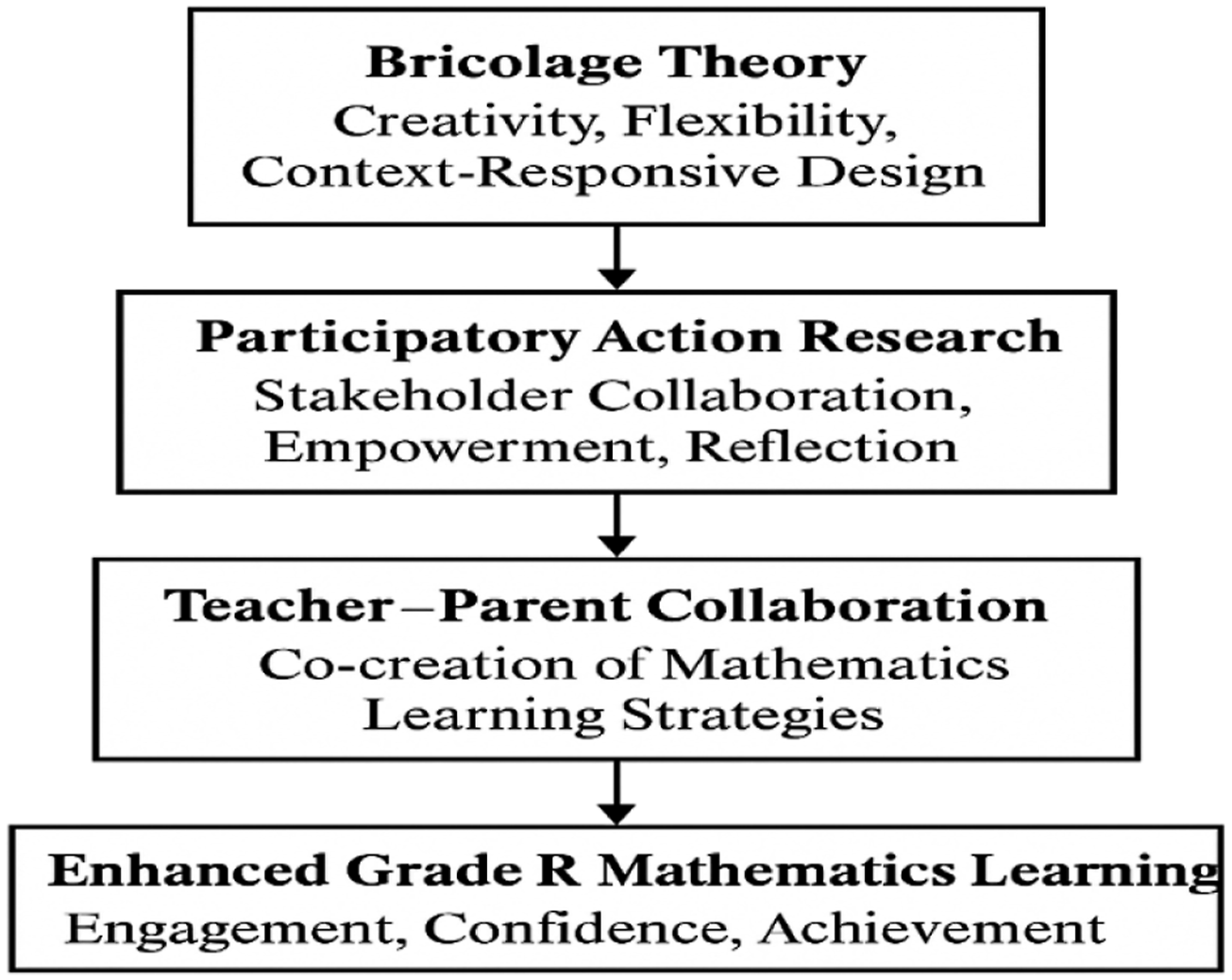
Bricolage as a Framework for Collaborative Innovation
As conceptualized by Lévi-Strauss (1962), Bricolage refers to the creative recombination of available resources and knowledge to solve local problems. In educational research, Bricolage has been expanded by Kincheloe (2005) and Rogers (2012) to describe the flexible, context-responsive assembly of multiple methods, tools, and experiences in addressing complex educational challenges. The bricoleur—one who engages in Bricolage—constructs meaning and solutions by drawing from diverse sources, embracing complexity, and working with what is at hand rather than seeking idealized conditions. Applied to the context of Grade R mathematics learning, Bricolage encourages teachers and parents to collaboratively harness local resources, Indigenous knowledge, informal teaching strategies, and experiential learning opportunities to support children’ numeracy development. This flexibility aligns with the realities of many under-resourced schools and communities in South Africa, where formal materials may be scarce but rich contextual resources abound.
Participatory Action Research as an Emancipatory Methodology
Participatory Action Research complements Bricolage by providing a methodological structure that centres collaboration, reflexivity, and transformative action (Kemmis, 2010; MacDonald, 2012). PAR is distinguished by its commitment to involving participants as active co-researchers who identify problems, generate knowledge, and co-develop solutions in cycles of action and reflection. In the context of this study, PAR facilitates the meaningful engagement of teachers and parents in diagnosing challenges in Grade R mathematics learning, co-designing intervention strategies, and evaluating the effectiveness of the implemented actions. Rather than imposing top-down interventions, PAR emphasizes a bottom-up approach that values local voices, respects experiential knowledge, and fosters collective ownership of change processes. PAR’s cyclical process of planning, acting, observing, and reflecting mirrors Bricolage’s iterative and adaptive nature.
Integration of Bricolage and PAR
The integration of Bricolage and PAR in this study creates a robust framework that is both conceptually flexible and methodologically empowering. Bricolage frames strategy development’s creative, resourceful, and context-sensitive aspects, while PAR provides the participatory processes through which stakeholders co-construct these strategies. Together, these frameworks guide the study towards empowering teachers and parents as knowledge producers, validating local knowledge systems and practices, creating contextually relevant and sustainable collaborative strategies, and fostering a reflexive culture of continuous learning and innovation.
Method
Research Design
This study employed a qualitative PAR design, guided by the principles of Bricolage. PAR was chosen for its emphasis on collaboration, empowerment, and action-oriented inquiry (Kemmis, 2010). Contemporary research emphasises that PAR fosters democratic participation and shared ownership of knowledge, thereby bridging the gap between theory and practice in real-world settings. The use of Bricolage as a complementary approach allowed for the flexible integration of diverse methods, local resources, and contextual knowledge throughout the research process (Kincheloe, 2001). The integration of Bricolage further strengthened the design by enabling methodological flexibility in response to contextual realities. (Denzin & Lincoln, 2018).
Research Context and Participants
The study was conducted in a public primary school in a semi-rural South African district. The school serves a community characterized by limited socio-economic resources, diverse linguistic backgrounds, and varying levels of parental educational attainment. Participants were purposefully selected to include: Two Grade R teachers, with a minimum of five years of teaching experience, and Twelve parents or guardians of Grade R children, representing a cross-section of the community (including unemployed parents, small-scale entrepreneurs, and farm workers).
Data Generation Methods
The use of multiple data generation methods reflects a commitment to methodological triangulation, which enhances the depth, credibility, and richness of qualitative inquiry. Within participatory research, combining visual, narrative, and interactive techniques allows participants to express their experiences in diverse ways, thereby capturing both explicit and tacit knowledge (Denzin & Lincoln, 2018).
Plenary Sessions
Plenary sessions served as collaborative spaces for dialogue, reflection, and collective meaning-making. Such sessions are widely recognised in participatory research as platforms for negotiating shared understanding and fostering democratic participation (Vaughn & Jacquez, 2020). The use of tools such as SWOT analysis, spider grams, mind maps, and problem trees aligns with participatory visual methodologies, which facilitate the structuring of complex ideas and enable participants to critically analyse their contexts (Slavin & Chambers, 2017).
Interactive Workshops
A series of workshops facilitated the co-construction of collaborative strategies, including the use of Indigenous games and household materials to support numeracy development as shown below: Key priority 1: Teacher development Key priority 2: Provision of quality material Key priority 3: Parents’ involvement
Each workshop session lasted for 45 minutes, and the entire process lasted for a month for capacity building workshops.
Transect Walks
Transect walks provided an opportunity for participants to engage directly with their local environment, identifying contextually relevant resources for mathematics learning (Slavin & Chambers, 2017).
Photovoice and Audiovisual Documentation
Photovoice is a participatory visual method that empowers participants to document and reflect on their lived experiences through images. It is particularly effective in amplifying participant voice and fostering critical dialogue (Liebenberg, 2018). In this study, photographs and videos captured by participants served as prompts for reflection and discussion, enabling deeper insights into home-based mathematics practices and parent-child interactions.
Reflective Journals
Teachers and selected parents kept journals documenting their experiences, insights, and observations throughout the intervention process. Each method was chosen to foster participant agency, support multiple modes of expression, and enrich the data corpus.
Role of the Researcher
The researcher adopted the role of facilitator and co-researcher, rather than external expert. Consistent with PAR principles (respect, valued co-researcher’s view and empowerment), the researcher worked collaboratively with participants to plan activities, guide reflection sessions, and adapt strategies as needed.
Data Analysis
Critical Discourse Analysis (CDA) (Fairclough, 2013; Van Dijk, 2009) served as the framework for the data analysis, which was conducted across three interrelated levels: textual, discursive, and social practice. Critical Discourse Analysis (CDA) is particularly appropriate for examining how language constructs social realities and power relations within educational contexts (Van Dijk, 2016).
Transcripts of plenaries, workshops, journals, and photovoice exercises were analyzed at the textual level to determine how participants used language, including vocabulary, recurrent metaphors, and interactional elements like tone, hesitancy, or affirmations (Rogers, 2012, p. 251). These characteristics exposed underlying presumptions regarding authority, roles, and teamwork. As an illustration of the transition from hierarchical to collaborative discourse, teachers in classrooms later re-articulated parent suggestions, such as the use of morabaraba stones.
Ethical Considerations
Ethical clearance for the study was obtained from the ethical committee of the University of the Free State in South Africa. Key ethical measures included: informed consent; all participants received detailed information about the study and signed consent forms; permission to conduct research at the two selected primary schools was obtained from the Department of Education Research Directorate.
Findings
Data were generated through plenary discussions, collaborative workshops, transect walks, photovoice activities, and reflective journals. The findings are organized into three major themes: (1) building sustainable teacher–parent collaboration, (2) impact of collaborative strategies on learner engagement and mathematical thinking, and (3) challenges and enablers in developing collaboration.
Theme 1: Building Sustainable Teacher–Parent Collaboration for Mathematics Learning
Initial Fragmentation and Mutual Misconceptions
At the start of the study, teachers and parents held fragmented and often stereotypical perceptions of each other’s roles. Teachers viewed parents as peripheral supporters primarily responsible for ensuring homework completion, while parents positioned teachers as sole experts, distancing themselves from any direct instructional role.
One Teacher Explained During the First Plenary Session
“Parents care, but they don’t always understand how to teach maths properly, so we don't expect much from them.”
Conversely, a parent noted: The teacher knows best. At home, we just make sure they go to school clean and fed.
These initial discourses reflected deeper socio-historical divisions between formal schooling spaces and home environments, particularly in marginalized South African communities.
Shifting Perceptions Through Participatory Engagement
As the Participatory Action Research cycles unfolded, structured opportunities for co-reflection and co-construction of knowledge began to shift these perceptions. Workshops that involved shared problem identification, local resource mapping, and Indigenous games analysis disrupted traditional hierarchies.
A notable moment occurred during a resource mapping session when a parent suggested using morabaraba (a traditional game that is played using stones and a board with drawing that guides the players on which direction they should move the stones so that they can count how many times they won a game) stones to teach counting. A teacher responded: I had never thought of morabaraba as a maths tool. You opened my eyes today!
Other parents offered suggestions like utilizing market shopping activities, songs with counting patterns, and cooking measurements as organic settings for numeracy education.
Co-Construction of Strategies: From Ideas to Action
The collaboration moved from discussion to tangible action as teachers and parents jointly designed home-based mathematics activities using household items such as beans, bottle tops, pebbles, and sticks.
During a reflective session, one parent shared: “Now I don't just tell my child to finish homework. I sit with her and we count the seeds before we cook dinner.”
This process demonstrated a fundamental tenet of Bricolage: overcoming material limitations through creating resource use while integrating learning into well-known, significant contexts. In her reflective journal, a teacher wrote: “We are no longer awaiting charts from the Department. Together with our parents, we are creating our own. It gives me a sense of empowerment.”
Advancement Through PAR Cycles
The relational shift became apparent by the third PAR cycle. Parents had been reluctant and submissive at first, but they were starting to make suggestions more. For example, teachers incorporated a father’s suggestion to use soccer goal counting during community matches into their lesson plans.
Theme 2: Impact of Collaborative Strategies on Learner Engagement and Mathematical Thinking
Increased Learner Engagement in Mathematics Activities
The collaborative strategies co-developed by teachers and parents yielded observable improvements in learner engagement. Teachers reported that children demonstrated heightened enthusiasm during mathematics lessons that incorporated tangible, locally sourced materials.
One Teacher Journaled
Using stones and bottle tops has completely changed the mood of my classroom. Children eagerly rush to answer, touch, and manipulate numbers now.
Through photovoice activities, children were able to creatively replicate school activities at home using everyday objects. As an illustration of learning continuity across contexts, a child was photographed (face with mask) grouping maize kernels while assisting his mother in the kitchen.
Development of Mathematical Reasoning and Confidence
Beyond engagement, there was evidence of deeper cognitive gains. Children displayed improved number sense, understanding of quantity relationships, and strategic thinking. For instance, children using morabaraba not only counted but also anticipated opponent moves, showcasing emerging mathematical reasoning skills.
Parents also noted increased confidence in their children’s mathematical abilities.
A mother recounted: “Before, my son was shy about numbers. Now he comes running to me, saying, ‘Mommy, I know how to count faster than you!’”
These results imply that consistent involvement in both home and school environments strengthened children’s mathematical activities and self-belief, establishing the groundwork for more comprehensive learning readiness.
Strengthening the Home–School Mathematics Continuum
Perhaps most significantly, parents reported that mathematics discussions and activities became normalized at home.
A parent proudly explained: Even when we go shopping, my daughter now counts items into the trolley. She thinks of everything as a maths problem!
With mathematics positioned as a living, shared practice rather than a subject that is only taught in schools, this merging of home and school practices supported the continuum of learning that the PAR team had envisioned.
Theme 3: Challenges and Enablers in Developing Collaborative Mathematics Strategies
Barriers to Sustained Engagement
Despite notable successes, the collaboration faced three barriers: Time Constraints: Parents, particularly those involved in seasonal farm work, struggled to maintain regular engagement. Role Negotiation Tensions: Some teachers initially resisted shifting from the ‘expert’ role to co-learner, while some parents felt intimidated by structured workshop settings. Resource Gaps: Although Bricolage minimized dependence on formal materials, certain resource shortages (e.g., visual aids) remained persistent.
A teacher admitted: It was hard at first to let go of control and see parents as real partners. It took time to trust the process.
Enablers of Successful Collaboration
Several Factors Facilitated Successful Collaboration
Mutual Respect and Trust: Established through open dialogue and valuing lived knowledge. Cultural Relevance: Using Indigenous games and community-based resources fostered familiarity and ownership. Flexibility of Bricolage: The adaptive use of available materials sustained momentum even amidst constraints.
A Parent Summarized During the Final Session
Working together made me realize: we are all teachers to our children, not just at school but at home too.
This research suggests that long-lasting relationships between teachers and parents can be developed to improve kids’ mathematical learning when cooperation is based on respect, cultural relevance, creativity, and introspection.
Discussion
This study aimed to enhance Grade R mathematics learning through the development of a collaborative teacher–parent strategy grounded in PAR and Bricolage theory. The findings illuminate important insights into how collaboration, creativity, and local resourcefulness can collectively support young children’ mathematical development, particularly in under-resourced settings.
Advancing Early Mathematics Through Home–School Collaboration
The study corroborates prior research affirming the critical role of early mathematics development in shaping children’ broader academic trajectories (Björklund et al., 2020). Engaging parents in intentional numeracy activities at home, such as counting games, spatial tasks, and simple measurements, reinforced classroom learning and strengthened children’ confidence and mathematical reasoning. These findings align with Mutaf‐Yıldız et al. (2020) systematic review, which found that sustained parental involvement significantly improves children’s early numeracy skills. This finding supports the assertions of Lemmer and Meier (2015) that genuine collaboration, rather than top-down parental involvement, leads to more meaningful and sustainable educational outcomes.
The Role of Participatory Action Research in Fostering Collaboration
The use of PAR proved transformative in reshaping relational dynamics between teachers and parents. Regular cycles of planning, action, reflection, and revision enabled participants to negotiate roles, share ideas, and jointly problem-solve (See Figure 2). Initial teacher reservations gave way to an appreciation of parents’ contextual insights, particularly regarding the use of Indigenous games (marabaraba, kgati [skipping robe play], diketo [marbles] and hopscotch), storytelling (my family, my body and my environment), and for everyday tasks to support numeracy. This mirrors findings by Bartolome and Bin Mamat (2020) and Wright (2020), who observed that participatory methodologies in early childhood settings foster mutual respect and dismantle traditional hierarchical structures. The cyclical stages of the PAR process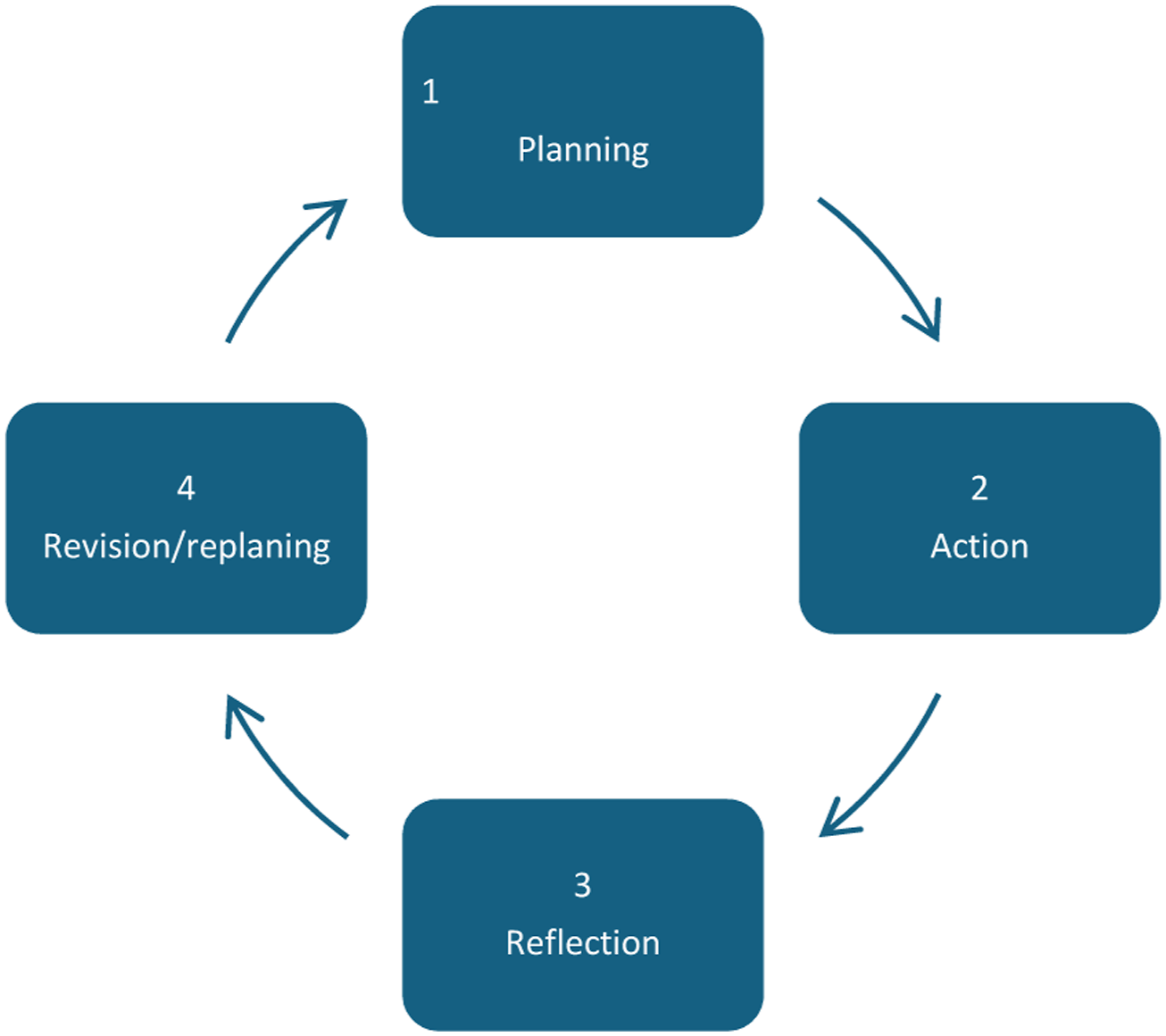
Bricolage and Creativity in Resource-Constrained Contexts
The application of Bricolage was central to overcoming material and systemic limitations. Participants creatively utilized locally available resources to design mathematics learning activities that were culturally relevant and contextually appropriate. This supports Bose and Seetso’s (2016) and Rogers’ (2012) findings that Bricolage empowers teachers and communities to innovate with what is available rather than waiting for externally provided resources. Importantly, Bricolage also fostered pride and agency among participants, as they saw that effective teaching and learning did not depend on expensive or externally sourced materials. This outcome aligns with Mahlomaholo’s (2013) argument that Bricolage promotes sustainable educational innovations within marginalized contexts.
Challenges and Negotiations in the Collaborative Process
Despite the successes, the collaborative process was not without challenges. Initial role confusion, time constraints, and occasional tensions over decision-making were evident, particularly in the early cycles of PAR. These challenges are consistent with previous studies (Hidayat & Arini, 2022) that note the complexity of building equitable partnerships across traditional power divides. Nonetheless, regular reflective dialogues and flexible adaptation mechanisms helped mitigate these issues over time. This adaptive capacity is one of the major strengths of Bricolage-informed participatory methodologies (Kincheloe, 2001; Rogers, 2012).
Implications for Practice and Policy
The findings suggest that fostering early mathematics learning requires moving beyond prescriptive parental involvement models towards participatory, contextually rooted collaboration frameworks. Teacher training programs should integrate participatory strategies and Bricolage principles, equipping teachers to facilitate meaningful parent partnerships even in resource-constrained settings (Gaviria, 2023; Graven et al., 2024). Moreover, curriculum guidelines such as CAPS (DBE, 2011) should more explicitly acknowledge the importance of home–school continuity and encourage schools to create structured opportunities for collaborative curriculum design and implementation.
Conclusion
This study set out to enhance Grade R mathematics learning by fostering a collaborative strategy between teachers and parents through a PAR approach underpinned by Bricolage theory. The findings provided an opportunity for teacher–parent collaboration, grounded in mutual respect, creativity, and context-specific innovation, can substantially enrich young children’ mathematical development. By engaging parents as active co-constructors of knowledge rather than passive supporters, the study demonstrated the transformative potential of participatory practices in early childhood education. These findings contribute to the growing body of evidence that collaboration and flexibility, rather than rigid adherence to external models, are vital for promoting equitable, sustainable mathematics learning in under-resourced contexts (Björklund et al., 2020; Mahlomaholo, 2013; Rogers, 2012).
Recommendations
Based on the findings of this study, several recommendations are proposed to enhance early mathematics learning through sustainable teacher–parent collaboration (Aagard, 2009; Ajayi et al., 2009; Creswell, 2014; Lesupi, 2014; Mahlomaholo, 2012; Mosia, 2016; O'Neill et al., 2023; Westwood, 2021; Wood & Frid, 2005; Yan & Lin, 2005).
Firstly, it is recommended that teacher education and professional development programs incorporate participatory strategies and Bricolage methodologies as core components of early childhood education training. Equipping teachers with the knowledge and skills to foster authentic partnerships with parents, and to creatively adapt available resources for mathematics learning, is crucial for strengthening numeracy foundations, particularly in under-resourced settings. Secondly, schools should create structured opportunities for teacher–parent collaboration beyond traditional meetings. Mechanisms such as co-planning sessions, interactive parent workshops on mathematics activities, and shared reflection meetings can help bridge the divide between home and school learning environments. Thirdly, education policy frameworks, including the Curriculum and Assessment Policy Statement (CAPS), should move beyond broad directives on parental involvement to explicitly advocate for participatory models that promote shared decision-making and co-creation of learning strategies.
Footnotes

Ethical Considerations
The ethics certificate (UFS-HSD2016/0183) was issued by the General/Human Research Ethics Committee of the University of the Free State.
Funding
The author received no financial support for the research, authorship, and/or publication of this article.
Declaration of Conflicting Interests
The author declared no potential conflicts of interest with respect to the research, authorship, and/or publication of this article.