



Abstract
The rapid transmission and mutation rates of viruses necessitate efficient and precise classification methods to aid public health responses. Often constrained by culturing requirements and narrow taxonomic scopes, traditional diagnostic techniques struggle to keep pace with the rapidly expanding genomic landscape. This study introduces an advanced multi-virus genome sequence classification approach utilizing a k-mer-based dictionary for rapid genomic pattern extraction, enhanced by sophisticated natural language processing (NLP) and machine learning (ML) models. Our contributions are threefold: first, we introduce a k-mer dictionary approach that significantly enhances virus classification speed and accuracy by capturing essential genomic patterns; second, we implement a suite of optimized classifiers—Multinomial Naive Bayes, Random Forest, K-Nearest Neighbor, and nu-SVM—that achieve high performance metrics, with accuracy at 0.95, precision at 0.96, specificity at 0.94, and sensitivity at 0.99; third, we provide a comprehensive comparative analysis with advanced deep learning architectures, such as CNN, CNN-LSTM, and CNN-Bidirectional LSTM, wherein our method demonstrates superior performance. These findings validate the effective integration of ML and NLP techniques in viral genome classification, setting new benchmarks in bioinformatics and offering scalable solutions for rapid virus detection and identification.
Keywords
Introduction
Viruses, ubiquitous biological entities that replicate exclusively within the cells of living hosts, present significant health, ecological, and economic challenges globally. It is estimated that over 1.67 million viruses exist on Earth, infecting all forms of life, from humans and animals to plants. 1 Advances in metagenomic research have greatly expanded our understanding of the vast diversity of viruses present in various environments. 2 The recent COVID-19 pandemic, caused by the novel SARS-CoV-2 virus, has underscored the rapidity with which viruses can emerge and spread globally, highlighting the urgent need for advanced techniques in virus identification and classification.3–5
Traditional virus identification methods, often reliant on culturing viruses and observing their morphology under a microscope, face significant limitations. 6 These methods are time-consuming and constrained by the availability of specific host cells and the ability to culture viruses effectively. 7 Moreover, such methods are subject to inherent subjectivity in interpretation and a limited scope in taxonomy representation, which can impede the timely and accurate identification of novel or mutating viruses. 8
DNA, the genetic blueprint for all living organisms, provides a definitive system for identifying and classifying life forms. Viruses, with genomes that may consist of either DNA or RNA, have genomes varying wildly in size and complexity, encapsulating essential information for their replication and function.2,9 Proper analysis of this genomic information is crucial for precisely classifying viruses into families and groups. 10 The DNA structure, fundamental to our understanding of genetic information storage and transmission, underpins the methodologies used in this research for analyzing viral genomes, as illustrated in Figure 1.
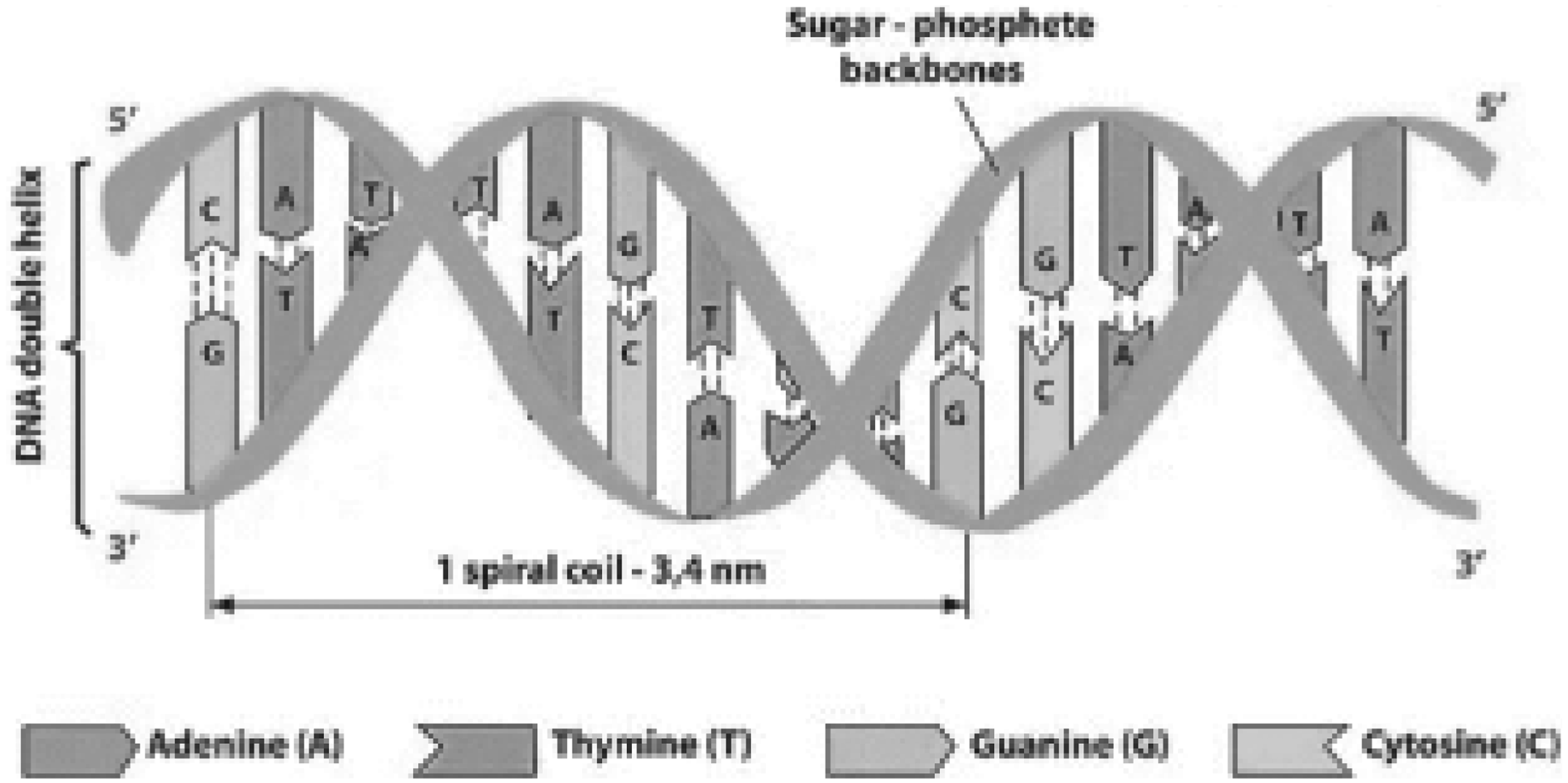
Illustration of the Double-Stranded Helical Structure of DNA, highlighting the nucleotide pairing through hydrogen bonds and the Sugar-Phosphate backbone that forms the structural framework of DNA.
With the proliferation of high-throughput sequencing technologies, such as next-generation sequencing (NGS), researchers can now rapidly obtain detailed genomic sequences from millions of organisms. 11 While these technologies generate vast amounts of data, they also present significant challenges in data management and analysis, commonly called ‘big data’ challenges.12,13 Addressing these challenges requires novel approaches efficiently leveraging big data to enhance viral genome classification and identification.
The onset of global health challenges posed by rapidly mutating viral pathogens underscores the critical need for advancements in virus classification technologies. Traditional methods, while foundational, are often limited by slow processing times and the inability to handle large-scale genomic data effectively. This study pioneers a novel integration of machine learning (ML) and natural language processing (NLP) techniques to dramatically enhance the classification and analysis of viral genomes, representing a significant leap forward from existing approaches.
Machine learning techniques have shown remarkable success across various domains, illustrating their broad applicability and effectiveness in tackling complex real-world challenges. These techniques have not only enhanced agricultural price forecasting 14 and improved predictions in real estate markets, such as house price forecasting, 15 but have also made significant advances in the field of genomic sequence classification. This versatility underscores the potential of machine learning to address diverse and intricate problems.
Our study leverages a k-mer-based dictionary for pattern extraction, enabling rapid and precise identification of viral groups or families, a method not traditionally employed in viral genomics at such a scale. We introduce, develop, and optimize a suite of ML models—Multinomial Naive Bayes, Random Forest, K-Nearest Neighbor, and nu-SVM—each fine-tuned through hyperparameter optimization to achieve unparalleled accuracy, precision, specificity, and sensitivity in virus classification. 16
Additionally, we integrate our approach with the BLAST server at the National Center for Biotechnology Information (NCBI) to manage the vast amount of sequence data available. This server provides a robust platform for comparing nucleotide or protein sequences against a comprehensive database, enabling the identification of sequence homology and functional analysis. The GenBank repository, part of NCBI, contains over 106 billion nucleotide bases from approximately 108 million distinct sequences, continually updated with new sequences annually. 17 This integration ensures that our models can handle and analyze large datasets effectively, maintaining scalability and efficiency amidst rapidly growing data volumes.
Specifically, the contributions of the current research work are the following:
We develop a novel k-mer-based dictionary approach that significantly enhances the speed and accuracy of viral genome pattern recognition, setting a new standard in the field. We synergise advanced ML and NLP techniques to analyze viral sequences, significantly pushing the boundaries of current viral genomics capabilities. We provide a comprehensive evaluation of our classification models on extensive datasets, focusing on achieving high levels of accuracy and efficiency, marking a substantial improvement over traditional methods.
By addressing both computational and biological challenges in virus classification, the approach proposed in this paper enhances genomic sciences’ capabilities to respond to emergent viral threats and also potentially contributes to broader fields, such as computational biology and public health.
The remainder of this paper is structured as follows: Section 2 reviews existing studies and methodologies in the field of genomic sequence classification, highlighting advancements and identifying gaps that our study aims to fill. Section 3 details the computational techniques and algorithms used, including data preprocessing, feature extraction with k-mers, and the implementation of various machine learning models such as Multinomial Naive Bayes, Random Forest, K-Nearest Neighbor, and nu-SVM. In Section 4, we present the experimental setup, the conditions under which the models were evaluated, and the performance metrics used to assess each model, along with a discussion of the results. Section 5 compares the performance of the proposed method with existing models reported in the literature, demonstrating the effectiveness and robustness of the derived solutions based on several key performance metrics. Finally, Section 6 summarizes the key findings, discusses their implications for the field of genomics and bioinformatics, and outlines potential directions for future research to improve and build upon the current research study.
This section synthesizes key findings from recent research studies, systematically highlighting advances and identifying gaps in the application of computational techniques for classifying viral genomes. The reviewed literature demonstrates significant progress in the accuracy, sensitivity, and specificity of various virus classification models, underscoring the growing sophistication of computational approaches in addressing global health challenges posed by viruses.
Recent advancements include the integration of chaotic 1D skew tent map neurons alongside a Support Vector Machine (SVM) classifier in Neurochaos Learning (NL), applied to multiclass classification problems including SARS-CoV-2, achieving high sensitivity (0.998), specificity (0.999), and accuracy (0.998) using leave-one-out cross-validation. Despite its high accuracy rates, NL faces limitations such as not accounting for attribute interdependencies and lacking principled hyperparameter tuning, pointing towards more robust models that can adapt to complex viral data structures. 18
It has been reported that k-mer-based methods for viral sequence classification encounter scalability challenges when dealing with large datasets. 19 Additionally, an approach integrating position weight matrices with minimizers, known as Virus2Vec, has shown superior performance by achieving an accuracy of 86% and a ROC-AUC score of 0.93 on unaligned spike sequences, marking a significant improvement over traditional k-mer methods.
Deep learning has been effectively utilized in a viral genome classifier based on a stacked sparse autoencoder technique, specifically targeting SARS-CoV-2 samples, with reported classification accuracies of 92% on a validation set and 98.9% on a test set. 20 Furthermore, extreme gradient boosting techniques have been utilized to classify altered DNA sequences to determine virus origins with an accuracy of 89.51%. 21 A benchmarking study has assessed the robustness of machine learning models in classifying SARS-CoV-2 genome sequences, employing noise simulations to replicate sequencing errors commonly associated with platforms like Illumina and PacBio. Tests on 8,220 sequences demonstrated varying performance of embedding methods such as k-mers and PSSM Vectors, with accuracies reaching up to 94% under certain conditions. 22 These methods underscore the precision needed for epidemiological studies and the management of novel virus outbreaks. 23
Ensemble methods and advanced modelling techniques are highlighted by a study comparing 13 distinct pre-trained deep-learning models for identifying the monkeypox virus, using majority voting among the best-performing models to enhance classification outcomes. This study achieved average precision, recall, accuracy, and F1-score of 85.44%, 85.47%, 85.40%, and 87.13%, respectively. 24 Similarly, an aided detection test for SARS-CoV-2 combining deep learning with molecular testing distinguished SARS-CoV-2 from other coronavirus strains with an average accuracy of 98.75%. 25
Furthermore, techniques like Relative Synonymous Codon Usage (RSCU) have been employed to enhance the capacity of metagenomic sequencing data for detecting viral sequences, with applications of Random Forest and Artificial Neural Network models achieving an area under the ROC curve of 0.79. 26 ViraMiner, a deep learning-based tool, has demonstrated its potential in clinical diagnostics and public health surveillance by obtaining an area under the ROC curve of 0.923 with 300 bp contigs. 27
A detailed review of 31 publications from 2015 to 2022 has shown that a hybrid K-means model demonstrated high evaluation metrics and could be applied to further studies. 28 The consistent use of NCBI datasets and the success of CNN and hybrid CNN-Bi-LSTM models in achieving nearly 90% accuracy highlight the robustness of deep learning in viral diagnostics. Moreover, label and k-mer encoding used to classify DNA sequences via CNN, CNN-LSTM, and CNN-Bidirectional LSTM architectures have achieved accuracies of 93.16% and 93.13%, respectively. 29
In summary, while the reviewed advancements reflect significant progress in the field, our work addresses gaps such as scalability, model robustness, and the need for advanced handling of complex data structures. By developing a novel k-mer-based dictionary approach and integrating sophisticated machine learning and NLP techniques, our study enhances the accuracy, efficiency, and applicability of viral genome classification, setting new benchmarks and paving the way for innovative diagnostic solutions.
In conclusion, the broad and evolving application of computational techniques in virology lays a strong foundation for our study’s contributions, leveraging machine learning and natural language processing methods for enhanced viral classification. By integrating this comprehensive literature review, the current research seeks to address identified gaps by implementing advanced algorithmic strategies that improve the accuracy of classification models and enhance their ability to handle large-scale genomic data effectively. Including NLP techniques proposes innovative ways to interpret and classify complex genomic sequences, paving the way for more precise and faster viral detection systems crucial for timely public health responses.
Methodology
Data collection
The dataset, comprising DNA sequences from various viral species, was sourced from the public nucleotide sequence database maintained by “The National Centre for Biotechnology Information (NCBI)”. 30 Initially stored in FASTA format, these sequences were converted into Comma Separated Values (CSV) files to facilitate further analysis and preprocessing. The dataset includes 66,153 non-null samples, with lengths ranging from a minimum of 8 nucleotides to a maximum of 37,971 nucleotides. The median length of sequences is notably long, with 75% of the data exceeding 29,000 nucleotides per sample, as detailed in Table 1. These samples are categorized into six class labels: COVID-19 (0), MERS (1), SARS (2), Dengue (3), Hepatitis (4), and Influenza (5).
Statistical attributes of the dataset.

Statistical attributes of the dataset.
The vast range in sequence lengths from the minimal eight nucleotides to the substantial maximum of 37,971 nucleotides underscores the diversity within the dataset. This variability presents significant challenges in sequence alignment and analysis, necessitating sophisticated computational techniques for effective handling. Additionally, the skew in sequence length distribution, with a large proportion of longer sequences, may impact the performance of sequence classification algorithms, which often assume a uniform distribution of input data lengths.
Analysis of the dataset, summarized in Table 1 and illustrated in Figure 2, indicates a non-uniform distribution across class labels, which can lead to potential challenges such as overfitting or reduced prediction accuracy due to imbalanced data. The complex structure and specific pattern rules of DNA sequences, such as base pairing and codon usage for protein coding, further complicate the generation of synthetic DNA sequences that accurately reflect biological realities. To address the data imbalance, a technique was employed to ensure a balanced representation by randomly selecting an equal number of samples from each class during each iteration, accompanied by subsequent cross-validation to ensure robust model training. During initial preprocessing, duplicate samples were identified and removed to preserve the integrity of the dataset.

Distribution of samples across class labels.
The integrity of the dataset used in this research study was thoroughly validated, with particular attention to identifying and removing null values and duplicate samples. The presence of duplicates was meticulously addressed during the initial preprocessing stage; a rigorous identification and removal process was implemented to maintain data integrity and eliminate redundancy. This step was critical in ensuring that the analyses were based on unique genomic sequences, thereby enhancing the reliability of the study’s outcomes.
One notable challenge presented by the dataset was the substantial variation in the lengths of the genomic samples, as illustrated by the bar graphs in Figure 3. Such variability posed a significant challenge for standard preprocessing techniques, which typically assume uniformity in input data length.

Variations in DNA sequence lengths of samples, showing the broad range of sequence lengths encountered in the dataset.
A novel preprocessing technique, the K-mers method, was developed to handle samples of varying lengths and ensure optimal training efficiently. This method involves constructing a dictionary of k-sized slices extracted from individual genomic samples. Segmenting the samples into smaller, consistent units allows the K-mers method to effectively capture the inherent patterns and features in the genomic data.
Furthermore, advanced NLP techniques were integrated during the preprocessing stage. Keywords identified within the constructed K-mer dictionary were vectorized, transforming their textual representations into numerical formats suitable for processing by ML algorithms. This vectorization is essential as it bridges the gap between traditional genomic sequence analysis and modern computational techniques, allowing for more sophisticated analyses.
Combining the K-mers method with NLP enhanced the preprocessing stage, successfully transforming the input data into a format amenable to subsequent training and classification processes. This comprehensive approach ensured that the dataset’s variability in sample lengths did not compromise the performance and accuracy of the classification models. In subsequent sections, a detailed explanation of these preprocessing techniques will be provided, highlighting the key steps involved in preparing the data for optimal training and classification outcomes.
K-mers are subsequences of length

Representation of K-Mers dictionary formation, illustrating how K-Mers are extracted and compiled to create a comprehensive dictionary for genomic analysis.
Consider a sequence Consider a set of genomic sequences Initialize an empty dictionary For each sequence Iterate through all possible k-mers If 


K-mers are invaluable in bioinformatics as they provide a compact representation of sequence information, facilitating tasks such as sequence alignment, motif finding, and similarity comparisons. Moreover, the frequency distribution of k-mers within a sequence offers insights into the patterns and properties of the sequence, aiding in the analysis and classification of biological data.
31
Count vectorization (CV) is a fundamental technique in natural language processing used to transform text data into a numerical vector format. By adopting this concept, genomic sequences can be interpreted as a form of “genomic language,” allowing for a similar transformation. In genomic analysis, CV involves systematically tallying k-mer occurrences within each sequence, effectively translating the complex genetic information into a structured numerical form that is amenable to computational methods.
The CV process can be mathematically described as follows:
Initialization of a Dictionary:
Counting k-mers in Each Sequence: For each genomic sequence Matrix Construction: After processing all sequences, construct a matrix
Mathematically, the updating of k-mer counts in the dictionary 




As depicted in the flow chart (Figure 5), once the genomic sequences are vectorized through count vectorization, they are transformed into a sparse matrix. This matrix is the input for various non-linear classification models employed to analyze and classify the genomic data. Each model is chosen for its unique ability to handle the complexities inherent in genomic sequence data. The training and modeling processes for each are discussed below:
Multinomial Naive Bayes is a probabilistic classifier that operates under the assumption of independence between features, using a multinomial distribution to model the likelihood of each feature given a class. Consider a dataset with Class Prior Probability: First, the prior probability of each class is estimated. Let Likelihood Estimation: Next, the likelihood of each feature given a specific class is estimated. For each class Posterior Probability and Classification: Given a new sample with feature vector Random Forest is an ensemble learning method that integrates multiple decision trees to improve prediction accuracy and robustness. Consider our dataset Training the Random Forest: The Random Forest constructs several decision trees, denoted as Building Decision Trees: Each tree Making Predictions: Each decision tree K-Nearest Neighbor (KNN) is a non-parametric classification algorithm that predicts the class of a sample based on the classes of its nearest neighbors in the feature space. Given a dataset Training Phase: Unlike model-based methods, KNN stores the dataset during the training phase. Each sample Proximity Calculation: To classify a new genomic sequence with feature vector Selecting K-Nearest Neighbors: After computing the distances, KNN identifies the Assigning Class Label: The class label for Nu-Support Vector Machine (nu-SVM) is an extension of the standard SVM that includes an additional parameter, Objective Function: The objective of nu-SVM is to minimize the function:
Constraints: The optimization is subject to constraints for each instance in the dataset:
Parameter Nu ( Decision Function: Once the optimal values of












Flow chart of the classification model, outlining the steps from data vectorization to model training and prediction.
All these models collectively facilitate a comprehensive analysis and classification of the genomic sequences, each contributing uniquely to the advancements in genetic research. By applying these diverse approaches, our study leverages their respective strengths to ensure robust and accurate classifications, thereby contributing significantly to advancements in genetics.
Multinomial Naive Bayes is a probabilistic classifier that operates under the assumption of independence between features, using a multinomial distribution to model the likelihood of each feature given a class. Consider a dataset with
Class Prior Probability: First, the prior probability of each class is estimated. Let Likelihood Estimation: Next, the likelihood of each feature given a specific class is estimated. For each class Posterior Probability and Classification: Given a new sample with feature vector
By applying these steps, Multinomial Naive Bayes offers a robust mathematical framework for classifying samples based on the likelihood of features given the classes, effectively addressing the challenges presented by high-dimensional genomic data.
32



Random Forest is an ensemble learning method integrating multiple decision trees to improve prediction accuracy and robustness. Consider our dataset
Training the Random Forest: The Random Forest constructs several decision trees, denoted as Building Decision Trees: Each tree Making Predictions: Each decision tree Evaluating Feature Importance: The importance of each feature is measured by the decrease in impurity average across all trees when the feature is used for splitting. The mathematical expression for feature importance
By leveraging the collective power of multiple trees, Random Forest effectively mitigates overfitting and provides robust insights into the significance of k-mer features in classifying genomic sequences. This method’s strength lies in its ability to handle high-dimensional data and provide interpretable results regarding feature importance.
33




K-Nearest Neighbor (KNN) is a non-parametric classification algorithm that predicts the class of a sample based on the classes of its nearest neighbors in the feature space. Given a dataset
Training Phase: Unlike model-based methods, KNN stores the dataset during training. Each sample Proximity Calculation: To classify a new genomic sequence with feature vector Selecting K-Nearest Neighbors: After computing the distances, KNN identifies the Assigning Class Label: The class label for Class Prediction: Finally,
The K-Nearest Neighbor algorithm is particularly effective in cases where the decision boundary is not linear and the data distribution is unknown. Its simplicity and effectiveness make it a popular choice for classification tasks, including genomic sequence analysis, where patterns might emerge based on local similarities.
34


The nu-Support Vector Machine (nu-SVM) is an extension of the standard SVM that includes an additional parameter,
Objective Function: The objective of nu-SVM is to minimize the function:
Constraints: The optimization is subject to constraints for each instance in the dataset:
Parameter Nu ( Decision Function: Once the optimal values of
By applying nu-SVM in the current study, we notice that the classifier learns a decision boundary that maximizes the margin between the classes while allowing for a certain proportion of support vectors and misclassifications. This approach is efficient for datasets like genomic sequences where classes are not linearly separable, and some flexibility in the decision boundary is beneficial for achieving high classification accuracy.
35




This section details the computational environment used for training, describes the setup and implementation of the models, and evaluates their performance using various statistical metrics.
The experiments were conducted using Google Colab, which provided a robust platform with an Intel Xeon CPU at 2.20 GHz, 13 GB of RAM, and dedicated GPUs (Tesla K80 and NVIDIA T4 with 12 GB of GDDR5 VRAM). This high-performance environment ensured the efficient handling of computational tasks required for the analysis.
The dataset comprised 5,676 genomic sequences, randomly split into an 80% training set and a 20% testing set using a specific random state of 42. The k-mer size was set at 4, and vectorization was performed using a Count Vectorizer with an n-gram range of (4,4) and a maximum of 10,000 features. The models were fine-tuned using GridSearchCV, an approach that systematically iterates through predefined parameter grids and cross-validates to find the most effective settings:
Multinomial Naive Bayes was adjusted across alpha values of 0.1, 0.5, and 1.0 with 5-fold cross-validation to determine the optimal configuration. Random Forest Classifier was limited to a maximum depth of 3 to prevent overfitting and ensure model simplicity and interpretability. K-Nearest Neighbors was configured with parameters n_neighbors=5, weights=‘uniform’, and metric=‘minkowski’. Nu-Support Vector Machine utilized a nu value of 0.5, with an ‘rbf’ kernel and a polynomial degree of 3.
The evaluation of these models was based on accuracy, precision, recall, F1 score, and specificity, metrics crucial in classification tasks as supported by recent studies in genomic classifications.21,26 These metrics provide a robust framework for assessing the performance and reliability of classification algorithms in handling complex genomic data.

The results illustrate each model’s predictive capabilities and limitations, providing insights into their effectiveness in classifying genomic sequences. Detailed analysis of the confusion matrices and the calculated performance metrics allows for a comprehensive understanding of each model’s strengths and areas for improvement, clearly visualized in Figure 6.
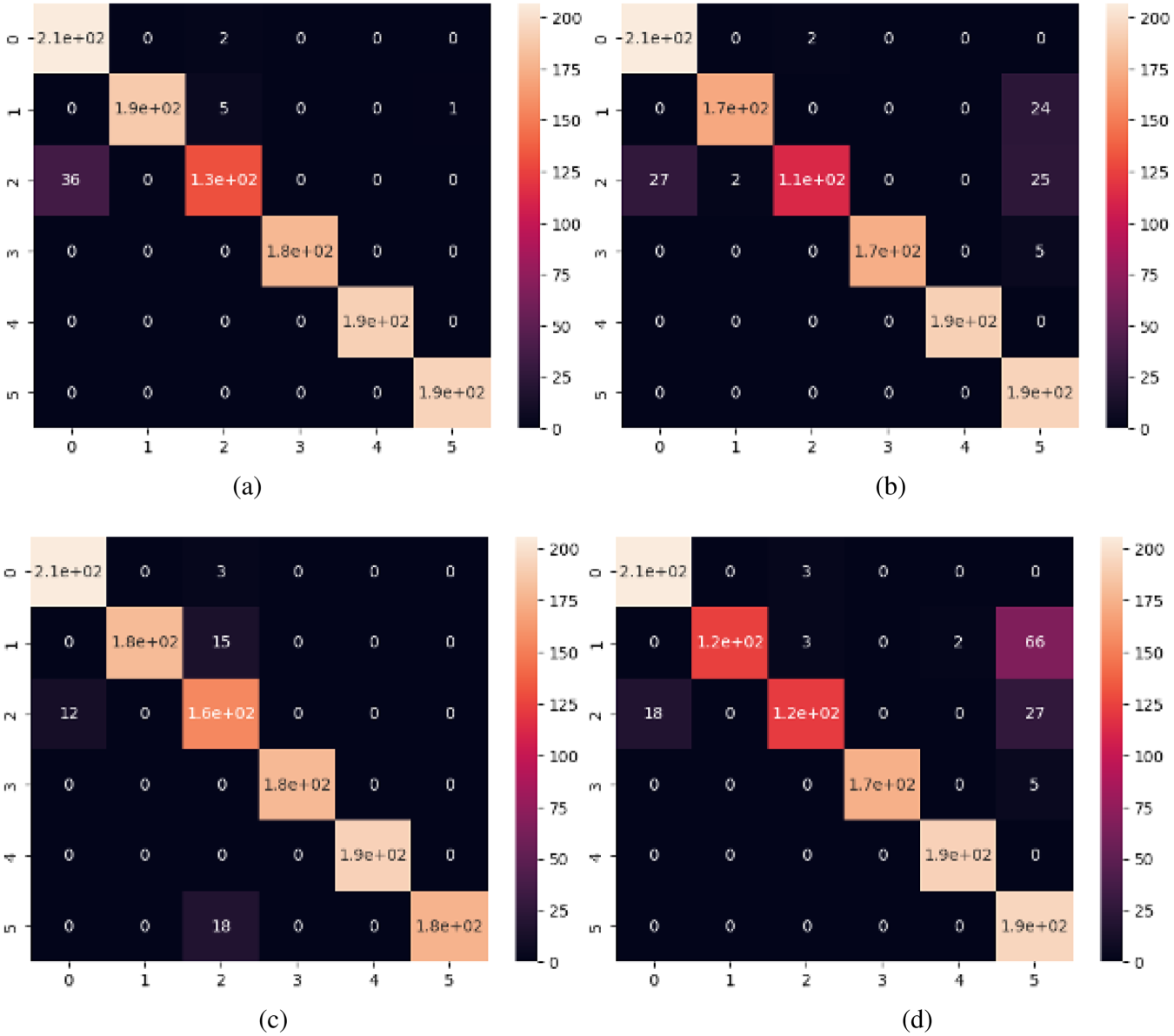
Confusion matrices showcasing the classification performance of each model. (a) Multinomial naive bayes; (b) Random forest; (c) K-Nearest neighbor; (d) Nu-SVM.
Each model exhibited varying levels of effectiveness across the classes they were tested against, indicating strong predictive capabilities where sufficient data was available. However, disparities in precision and recall, particularly noted in Random Forest and Nu-SVM, highlight areas for potential improvement. These variations might be attributed to the models’ sensitivity to parameter settings and the nature of the training data, suggesting that further tuning and broader dataset testing could improve outcomes.
Table 2 presents a comprehensive breakdown of the performance metrics for each classification model used in the study. These metrics—precision, recall, F1 score, and support—offer insights into each model’s ability to classify genomic sequences across six different classes accurately.
Performance metrics of different models.

The performance metrics outlined in Table 2 reveal varying levels of effectiveness across the models and the classes they were tested against. Notably, all models exhibited high performance in classes with high support, indicating a strong predictive capability where sufficient data was available. However, disparities in precision and recall highlight challenges in certain classes, notably where Random Forest and Nu-SVM show reduced precision or recall, suggesting areas for further tuning and investigation.
For instance, while Multinomial Naive Bayes and K-Nearest Neighbor generally maintained high precision and recall across most classes, Random Forest and Nu-SVM displayed variability. This could be attributed to Random Forest’s conservative tree depth, limiting its ability to capture more complex patterns, and Nu-SVM’s sensitivity to the parameter
This analysis provides a deep dive into each model’s strengths and weaknesses, contributing to ongoing efforts to enhance genomic sequence classification techniques. Further explorations could involve adjusting model parameters, increasing dataset size, or experimenting with different feature extraction techniques to improve classification accuracy and robustness.
The current section compares the proposed models against existing studies to demonstrate their effectiveness and robustness in classifying genomic sequences. By benchmarking against notable research in the field, we highlight our approaches’ strengths and areas for improvement, thereby validating our methodologies and results in a broader scientific context.
Table 3 below summarizes our models’ performance metrics—accuracy, precision, recall, F1 score, and specificity—compared to those reported in recent studies. These metrics provide a quantifiable measure of each model’s ability to classify genomic sequences across various classes correctly.
Comparative analysis of model performances, summarizing the accuracy, precision, recall, F1 score, and specificity of our models compared to those reported in recent studies.

Comparative analysis of model performances, summarizing the accuracy, precision, recall, F1 score, and specificity of our models compared to those reported in recent studies.
The comparative results highlight the superior performance of the Multinomial Naive Bayes and K-Nearest Neighbor models, particularly in accuracy and specificity, which are close to or exceed 0.95 and 0.99, respectively. These models outperform the Random Forest and Nu-SVC in most metrics, suggesting better generalizability and reliability in genomic sequence classification.
The comparison also underscores potential limitations in previous studies, such as the possible overfitting in the study by Gunasekaran et al. 29 due to an imbalanced dataset predominantly composed of COVID samples. In contrast, our study employs a balanced dataset approach, likely contributing to the observed more stable and generalizable model performance.
Furthermore, while the study by Lopez-Rincon et al. 25 achieved high accuracy, the specificity of 1.00 and a very high F1 score suggest a highly specialized model that might not generalize well across diverse genomic families other than SARS-CoV-2, especially given the small dataset size. Overall, the performed comparative analysis demonstrates the robustness of our models and reinforces the importance of dataset diversity and balance in training effective genomic classifiers. This ensures that the resulting findings are applicable across a broad spectrum of genomic sequence analysis tasks, enhancing the reliability of predictions in practical settings.
To further elucidate the comparative merits of our approach, the existing benchmark analyses have been thoroughly presented against contemporary and traditional classification methodologies within this section. These analyses underscore our method’s enhanced computational efficiency and accuracy, particularly when handling complex genomic datasets where traditional methods might falter.
Overall, the performed comparative analysis demonstrates the robustness of our models and reinforces the importance of dataset diversity and balance in training effective genomic classifiers. This ensures that the resulting findings are applicable across a broad spectrum of genomic sequence analysis tasks, enhancing the reliability of predictions in practical settings.
The current research provided an extensive analysis of the classification of genomic sequences using various sophisticated non-linear models, including Multinomial Naive Bayes, Random Forest, K-Nearest Neighbors, and Nu-Support Vector Machine (nu-SVC). Each model was meticulously trained and evaluated on a robust dataset of genomic sequences, utilizing advanced computational resources to ensure thorough assessment and validation. The outcomes of the current study demonstrate that all models performed effectively in classifying genomic sequences, achieving high metrics in accuracy, precision, recall, specificity, and F1 scores. These results affirm the capability of these models to support practical applications in genomic research, suggesting their potential utility in furthering bioinformatics and computational biology fields.
Despite these successes, the study encounters limitations regarding the scalability and adaptability of the proposed models when confronted with datasets of increasing size and diversity. 36 Future research should address these limitations to optimise computational efficiency and enhance model robustness across various genomic datasets.
Further expanding the dataset to encompass a wider variety of genomic sequences from multiple organisms would be instrumental in enhancing the generalizability and accuracy of the classification models. 37 Such expansion would test the current models’ robustness across broader biological contexts and potentially uncover novel genomic features that could refine classification techniques.
Exploring additional classification algorithms, particularly from the domains of deep learning and ensemble methods, could provide new insights and improvements in handling the complex nature of genomic data. These methods are renowned for their efficacy in deciphering intricate patterns within large datasets and could lead to predictive accuracy and computational efficiency breakthroughs.
Another promising direction involves advancing feature engineering techniques. Incorporating more sophisticated, domain-specific knowledge into the feature extraction process could significantly improve the models’ ability to accurately interpret and classify genomic data. This could involve more detailed analysis of genomic structures or developing new algorithms that better capture the biological significance of genomic variations.
Finally, a significant opportunity exists to develop real-time genomic sequence classification systems. Such systems could revolutionize clinical diagnostics and personalized medicine by providing rapid, accurate genomic assessments directly applicable to patient care. Developing these systems would require technical advancements in machine learning and integration with clinical data systems and regulatory approval processes, ensuring that the benefits of rapid genomic classification can be realized safely and effectively in medical settings. The findings and recommendations from this study provide a firm foundation for advancing the field of genomic sequence classification, offering both proven results and a clear path forward for researchers and practitioners in bioinformatics and related disciplines.
Footnotes

Funding
The author(s) received no financial support for the research, authorship, and/or publication of this article.
Declaration of conflicting interests
The author(s) declared no potential conflicts of interest with respect to the research, authorship, and/or publication of this article.