



Abstract
This article investigates decentralized blockchain technology to improve the management of sustainability in prefabricated buildings. By utilizing a public blockchain and a private blockchain together, both real-time recording and management of construction-related data, and contract management-applied automation are accomplished. Smart contracts, Merkle trees, and Proof of Work (PoW) consensus mechanisms guarantee the security, reliability, and transparency of data, especially with respect to those categories including material qualifications, construction progress, and quality inspections. The Hyperledger Fabric platform incorporates encryption technology combined with smart contracts for additionally protecting the privacy of financial data, construction progress, and supply chain data through use of the AES-256 algorithm encryption and strict data audit monitoring controls. Moreover, decentralized blockchain technology improves transparency and controllability of data systems, effectively decreasing the risk of data compromise, and optimizing the management of the supply chain through smart contracts, hash value technology, and other means. Tracking time through the average supply chains is 6.1 s, the average accuracy for fulfillment of contracts is 98.36%, the average success rate for smart contract execution is 98.84%, and the average timeliness of information flow is 95.12%. This article promotes the digital transformation and sustainable development of the construction industry by improving the prefabricated construction sector's capacity for sustainable development and offering fresh concepts for data management and monitoring.
Keywords
Introduction
Throughout the world, sustainable development is increasingly a priority. The building industry has a role to play in achieving global environmental goals related to sustainable development because it is among the most significant sectors regarding energy consumption and carbon emissions.1,2 Traditional construction methods tend to be slow, inefficient, and place a substantial burden on the environment and sustainable development efforts. Prefabricated buildings have emerged steadily as a major player in the change of the construction industry due to their advantages related to resource efficiency, improved productivity, and reduced environmental impacts.3–5 Existing research on prefabricated building sustainability usually relies on manual documentation and centralized databases that do not ensure data transparency or the capability to confirm and monitor the true state of each link in real-time. This article supports sustainable development of the construction industry by utilizing comprehensive, transparent, real-time monitoring and management to optimize a selection of sustainability indicators related to the prefabricated building process.
Research on the sustainability of prefabricated buildings has currently progressed to a small extent across multiple aspects. Jia M et al. 6 proposed a building management system based on the Internet of Things to promote the application of Internet of Things (IoT), which may also help to address issues of data transparency and traceability, during the stages of prefabricated building construction, and operation. In addition, Xiao Y et al. 7 proposed the design and optimization of prefabricated building systems through the use of building information modeling (BIM) technology. However, traditional research on the sustainability of prefabricated buildings has often done either manually recorded or single-database collections, leading to inadequate data transparency and challenges in quickly verifying and tracing the actual state of each link. Problems related to information opaqueness and delays lead to unnecessary resource waste, construction delays, and errors in the accuracy of sustainability assessments. There is, therefore, significant practical value in improving data transparency and real-time performances, while optimizing various sustainability indicators, for a prefabricated building.
Blockchain technology can provide significant advantages with respect to data security and transparency. Sigalov K et al. 8 demonstrated that blockchain-based smart contracts can be utilized to automate payments and contract management in the construction industry and resulted in transparent, traceable and automated payment processing for building projects. Oriekhoe O I et al. 9 investigated the potential of blockchain technology to promote supply chain innovation. Ghode D. J. et al. 10 successfully employed blockchain technologies for greater transparency within their supply chain management architecture. However, those studies focused on exploring the employing of a single blockchain and not dual blockchain. To elevate the sustainability management level of prefabricated buildings, this paper proposes a dual blockchain sustainability model for prefabricated buildings, which is aimed at reducing the data transparency and data security challenges of existing literature.
The objective of this article is to optimize various sustainability parameters and adopt dual blockchain technologies that improve the security and transparency of sustainability models in prefabricated buildings. Specifically, the work will automate contract structure management through smart contracts and will byte simultaneously incorporating public and private blockchains to monitor and manage critical data in real-time throughout the construction phase. Research steps involve automating contract structure management, optimizing supply chain management, securing data privacy and security, assessing sustainability parameters, and imposing new accountability methods to improve data transparency and trust. In implementing these steps, the article manages and monitors the prefabricated building process in systematic and transparent real-time. The results show enhancements in sustainability, through reducing the use of resources and the environmental footprint of the construction process, which demonstrates partial support for sustainability in that sector.
Application of dual blockchain in the sustainability model of prefabricated buildings
The prefabricated building sustainability framework illustrated in Figure 1 utilizes dual blockchain technology that integrates public and private blockchains to ensure an effective, secure, and immutable approach to data management and verification. 11 The public blockchain is used to log essential project data, and ensure it is immutable, such as material origins, construction progress, etc., as well as ensure data transparency and trust among stakeholders.12,13 For sensitive data such as financial records and supply chain management, private blockchains provide data security and privacy by utilizing encryption algorithms and strict access control.14,15 This dual blockchain structure provides added benefits of improving supply chain efficiency, contract fulfillment rate, and overall project sustainability management capabilities as well as improving a secure, effective data management process.
Data management process of dual blockchain in the sustainability model of prefabricated buildings.
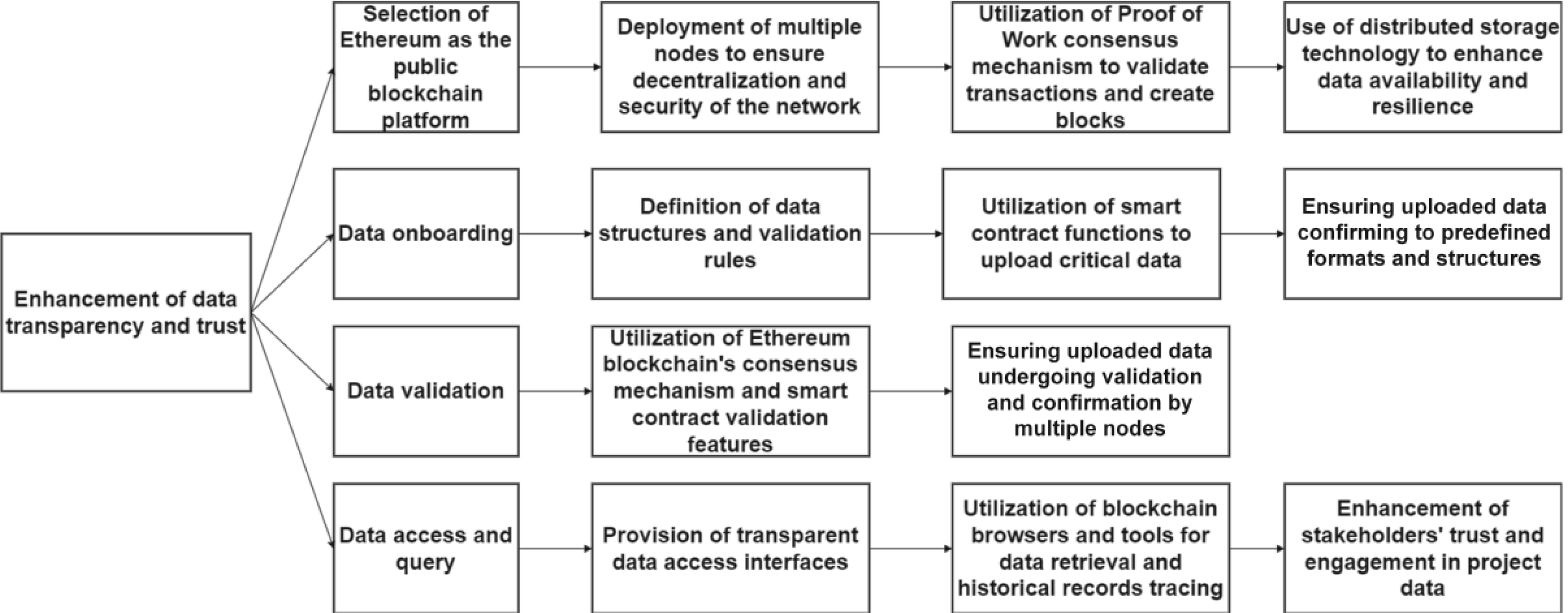
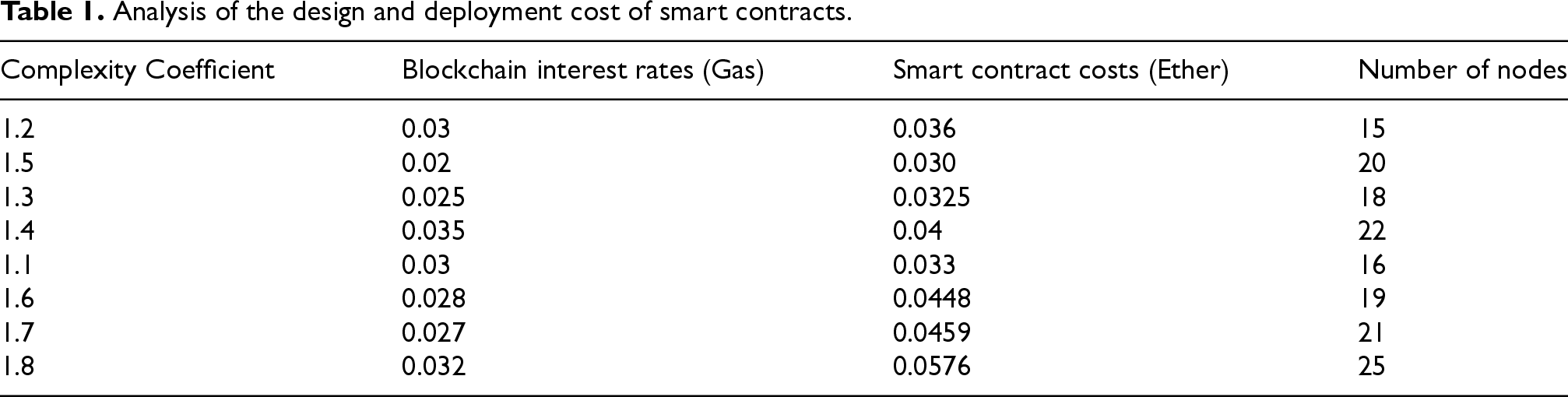
The enhancement of data transparency and trust is achieved through technological means to enhance the openness and credibility of data processing, thereby increasing stakeholders’ trust in the data. Improving data transparency is particularly important in the sustainability research of prefabricated buildings. To improve the transparency and trust of data in prefabricated construction projects, this article chooses Ethereum as the public blockchain platform.16,17 Selection and deployment of public blockchain: in prefabricated construction projects, Ethereum smart contracts are selected as the core tool for data management and validation. Ethereum smart contracts are written in the Solidity language, and the deployment cost of the contract is shown in Equation (1). Among them, C is the cost of smart contracts; K is the complexity coefficient; λ is the interest rate of blockchain. The calculation result of this equation reflects the actual cost of deploying a specific smart contract. The design and deployment cost analysis of smart contracts is shown in Table 1. Table 1 shows the performance of a dual blockchain system across different complexity coefficients, including Gas Price, smart contract costs, and node numbers, reflecting the system's ability to adjust resource allocation as complexity increases. To ensure the blockchain network's security and decentralization, many nodes are created. Equation (2) shows how each node verifies transactions and generates blocks using the Proof of Work consensus algorithm. This equation shows how a specific numeric value is computed that meets the requirements and specifies that value as the target. Distributed storage technology guarantees that each node has a full copy of the chain to provide data availability and attack resistance.


Analysis of the design and deployment cost of smart contracts.
Prefabricated construction projects encompass information about material suppliers, construction status, quality inspection reports, and other relevant data. After being validated by project staff, the project manager uploads each data entry using a smart contract to the Ethereum blockchain. To ensure data immutability and transparency, for example, the results of quality inspections and construction progress are recorded on the blockchain in response to being validated by smart contract logic. In real time, stakeholders can see the ongoing construction process and history of data changes through a blockchain browser, improving data credibility and real-time performance. Data on blockchain: smart contracts are written using the Solidity language, and data structures and validation rules are defined. Key project data, such as material sources, construction progress, and quality inspection reports, is uploaded to the blockchain through the functions of smart contracts. Smart contracts define the interface and calling methods for data upload to ensure that the uploaded data conforms to the preset format and structure. Simultaneously, Merkle trees are used to ensure data consistency and integrity, preventing issues such as data tampering and double-spending. The process of data on the chain is shown in Figure 2.
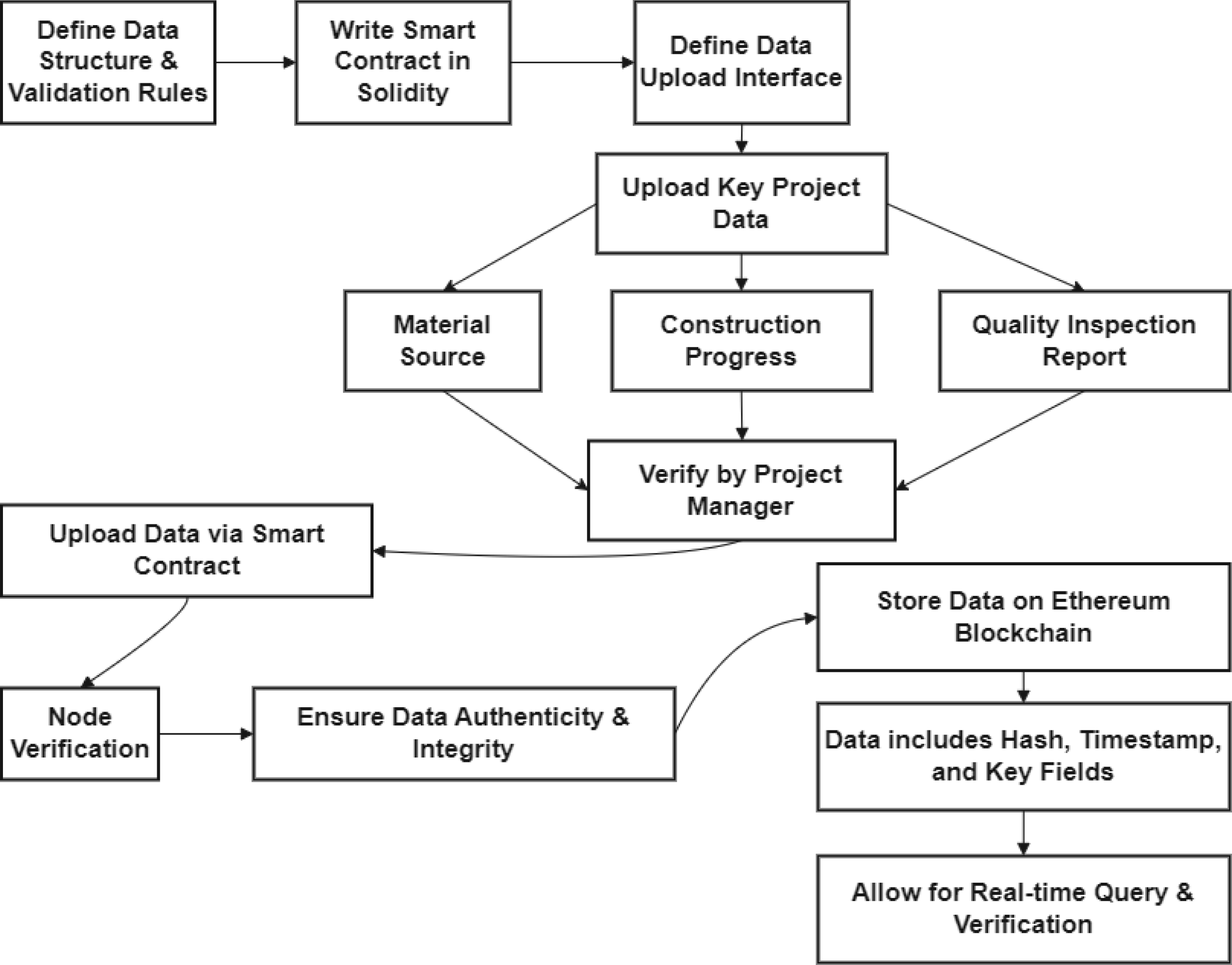
Data on the blockchain process for prefabricated building projects.
Data like supply chain certificates for material sources, qualification certificates for uploaded material suppliers, and real-time construction progress updates are all part of prefabricated construction projects. These data are uploaded to the Ethereum blockchain via the smart contract's data upload feature following project manager review. Equation (3) demonstrates node validation for every data transaction to allow for the verification of the data integrity and authenticity. Data A and B each compute hash values via the hash function H. When the hash function H is applied to the two hashes, the final root hash value Root is generated. Validating data on the blockchain is very reliable and valid because this process shows, and therefore maintains the data integrity and immutability, that any modifications or manipulations of the data can still be verified in the root hash value. In order to query and confirm the data's source and historical records at any time, the uploaded data contains the hash value, timestamp, and important document data fields.
Data validation: using the consensus mechanism of the Ethereum blockchain and the validation function of smart contracts, the uploaded data is verified and confirmed. The PoW consensus mechanism is adopted to ensure that data is verified and confirmed by multiple nodes, and can only be recorded on the blockchain after passing the validation. Smart contracts define the logic of data validation, such as checking data formats, comparing data hash values, etc., to ensure that uploaded data meets preset standards.
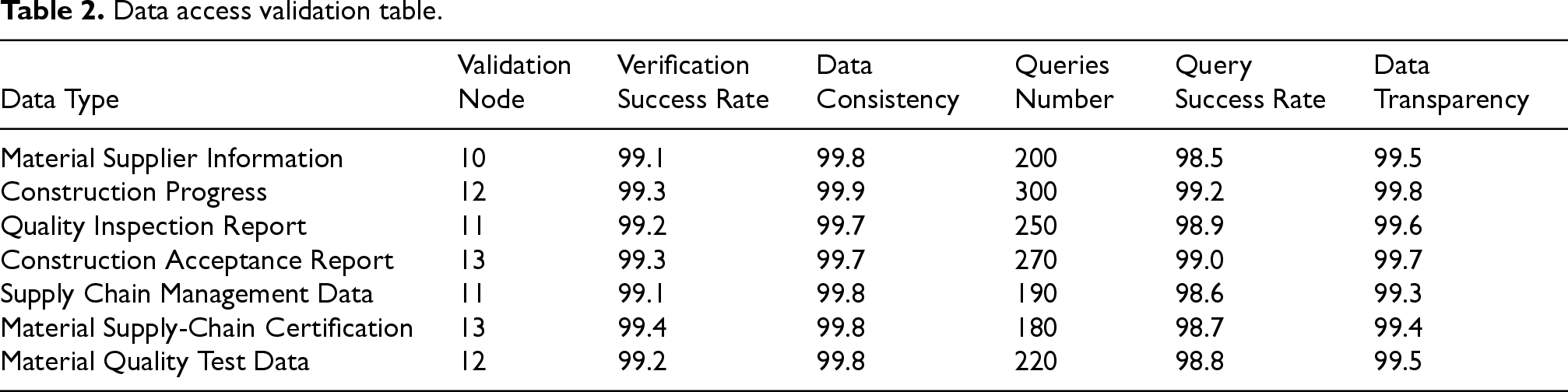
Through an open blockchain browser interface, suppliers, construction teams, and project management teams can access and query real-time data, including quality inspection reports, construction progress, and material procurement records, in prefabricated construction projects. In order to illustrate how dual blockchain can enhance data validation and transparency, Table 2 provides important details such as validation nodes, success rates, consistency, and data transparency and query success rates for different kinds of construction supply chain data.
Data access validation table.
The use of technology to prevent unauthorized access, alteration, or disclosure of sensitive information while it is being stored and transmitted is known as data privacy and security protection. Given the volume of financial data, project management data, and other sensitive data involved in projects, this is especially crucial for the sustainability model of prefabricated buildings. It is essential to safeguard this data's security and privacy. Selection and deployment of private blockchain: in prefabricated construction projects, Hyperledger Fabric18,19 is chosen as the private blockchain platform to protect the privacy and security of sensitive data. Fabric effectively manages and protects data access, authentication, and transmission security through role-based access control (RBAC), independent channel and smart contract chaining code configuration, and end-to-end encrypted transmission, such as the TLS protocol (Transport Layer Security),
20
ensuring that only authorized users can see and manipulate the data to prevent unauthorized access or tampering. The permission access rules of RBAC are shown in Equation (4), and the TLS protocol encryption process is shown in Equation (5). The Permission(u, p) in Equation (4) represents the access permission of user u to resource p, and Role(p) represents the set of roles that have access to resource p. In Equation (5), E represents the encryption algorithm; k represents the encryption key; M represents plaintext; and C represents ciphertext.
Access control RBAC role management is used to assign appropriate access permissions according to the roles and functions of participants in order to guarantee access control and audit supervision of sensitive data in prefabricated building projects. The administrator position is in charge of setting up and maintaining the blockchain network, which includes auditing chaincodes, user registration data, and channel creation and updates. Regular user roles can use client applications to access and query data on the blockchain, but they are not able to edit or remove data. For instance, construction teams can query and update construction progress and hour statistics data, while suppliers can only access purchase orders and the payment details associated with them.



All sensitive data access and operations, including comprehensive details on data modification, data queries, and smart contract execution, are documented through audit logging. To guarantee data integrity and traceability, audit logs are stored in the blockchain's permanent storage as timestamps. The Advanced Encryption Standard (AES) algorithm has three key lengths of 128 bits, 192 bits, and 256 bits to ensure data confidentiality and security. A dedicated Key Management Service (KMS) is used to generate, store, and manage encryption keys. KMS is responsible for securely generating encryption keys and limiting their access through access control mechanisms. Only authorized users and systems can obtain decryption keys. The AES encryption algorithm is shown in Equation (7), and the decryption algorithm is shown in Equation (8).
The financial data of prefabricated construction projects is encrypted using the AES-256 algorithm to ensure that payment amount, payer, and payee information are not stolen or tampered with during transmission and storage. Decryption operations are limited to users and systems with legitimate access permissions. The decryption key is securely obtained through KMS to ensure the secure decryption and use of data. The construction progress report is encrypted using the AES-256 algorithm and stored in specific channels and chaincodes on the blockchain. The construction and project management teams can access and query encrypted data through client applications, but they need to obtain the raw data content through a legal decryption process. The decryption process is subject to strict auditing and monitoring to ensure the security and integrity of the data. The encryption and decryption process is shown in Figure 3.
Data auditing and monitoring: to ensure the compliance and security of sensitive data in prefabricated construction projects, it is necessary to implement data auditing and monitoring mechanisms. An audit is a regular audit of sensitive data stored on the Hyperledger Fabric blockchain to verify its integrity and authenticity. The audit process includes a detailed analysis of data access, operation history, and change records to identify potential security risks and abnormal behavior.

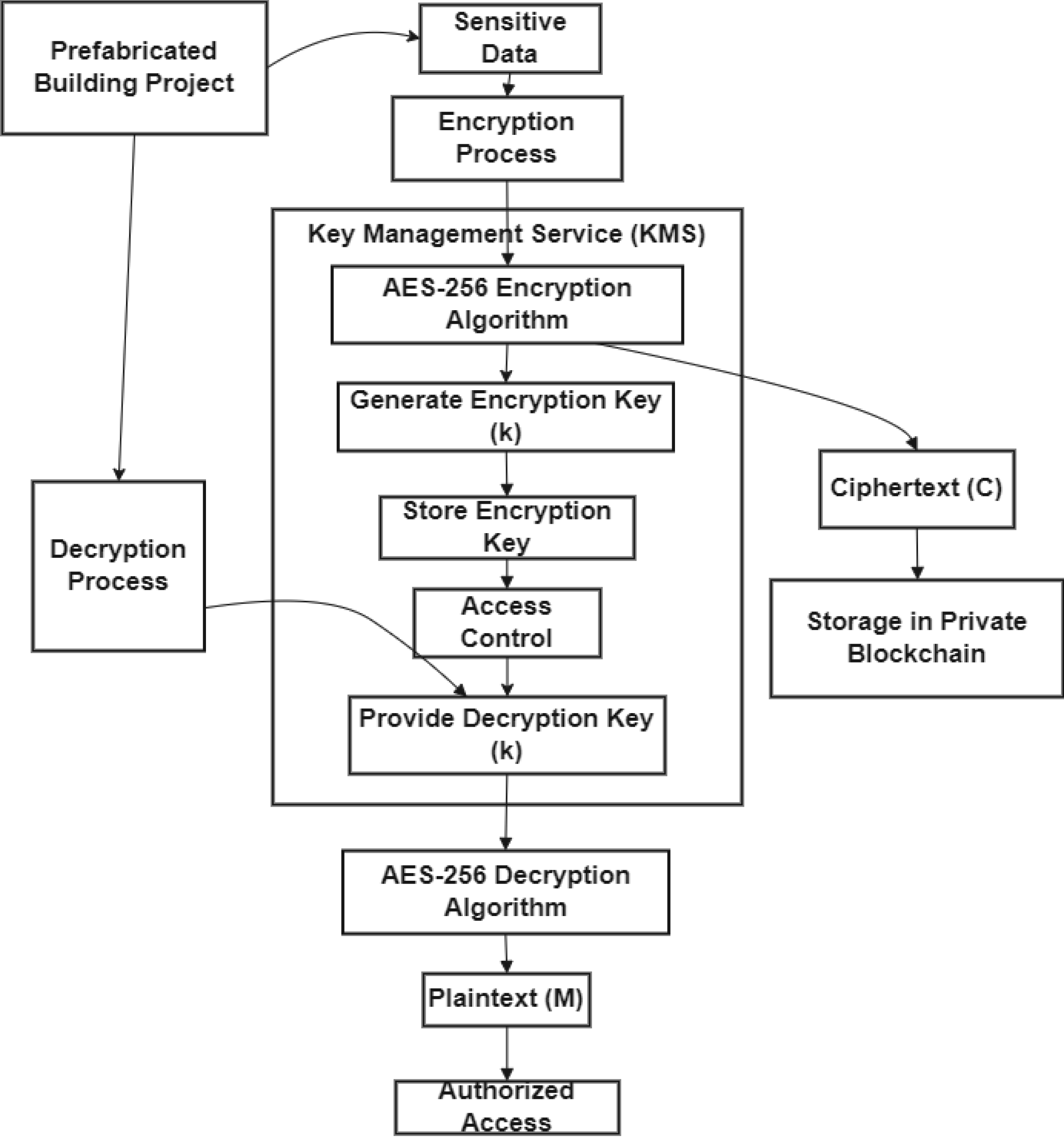
Encryption and decryption of data.
The risk of data breaches and improper use must be minimized, and the security and legality of data operations must be guaranteed.


The improvement of supply chain management is the application of technology and management methods to enhance the effectiveness, transparency and controllability of the supply chain in prefabricated construction projects.21,22 Supply chain management optimization can dramatically reduce resource waste, increase construction speed, and improve quality control in the sustainability model of prefabricated construction building.23,24 Specific implementation methods include supply chain tracking, data recording and tracking, information integration and analysis, supply chain productivity improvement, and information sharing and collaboration. These methods are enhanced by dual blockchain technology for improved controllability, transparency and efficiency in the supply chain. Development of supply chain tracking system: A supply chain tracking system based on dual blockchain technology is developed, including the integration of public and private blockchains. The process is shown in Figure 4. It should be ensured that the system can record and track in real time the procurement, transportation, use, and scrapping of raw materials. In the development process of the supply chain tracking system, the public blockchain and private blockchain are first selected and deployed, and the system architecture is designed for supply chain tracking. The public blockchain is used to record publicly transparent supply chain information, and the private blockchain is used to store and manage sensitive internal transaction data. Public and private blockchain nodes are deployed at key nodes in the supply chain (raw material suppliers, manufacturers, logistics service providers, etc.) to ensure that each node can record and track supply chain data in real time. Smart contracts are developed to automate various operations in supply chain management, including order creation, goods receipt, and quality inspection. Smart contracts are written in the Solidity language for Ethereum and deployed to various related nodes. Data recording and tracking: Supply chain data recording and tracking involves uploading key data from various links of the supply chain and automating data recording and tracking through smart contracts. Data recording and tracking are shown in Equation (11), which represents the merging of key data such as material sources, procurement batches, and quality inspections, and the generation of a unique hash value using the hash function H. This hash value can be used to identify and verify the authenticity and integrity of specific data entries. First, the procurement information of raw materials is recorded on the public blockchain, including supplier names, procurement batches, material specifications, and quality inspection results. A private blockchain records supply chain transaction data, such as payment details, logistics tracking data, and contract execution status. Chaincodes from Hyperledger Fabric are used to define the data processing logic, and it is made sure that only authorized users can see the data.

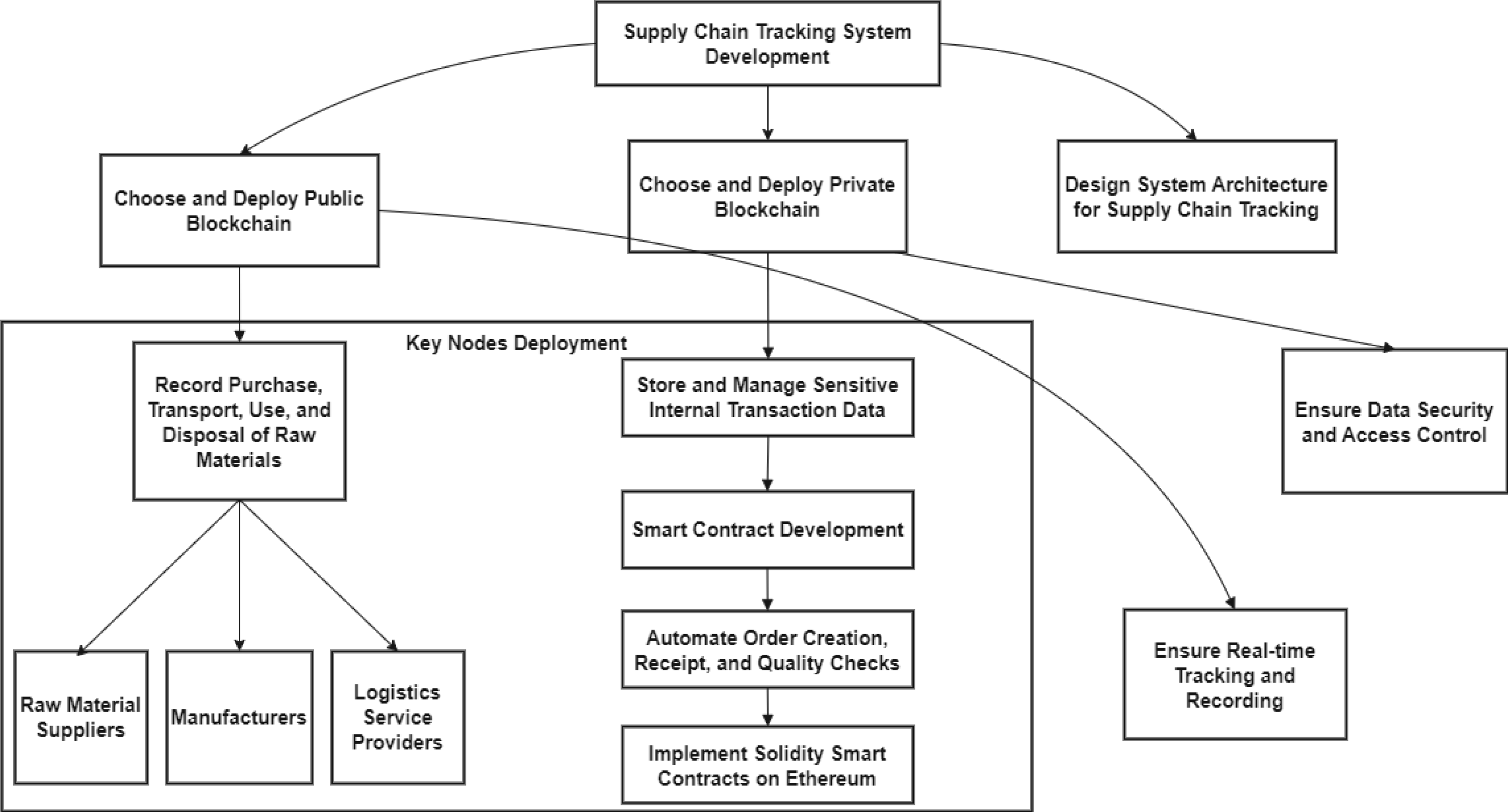
Flowchart of the development of the supply chain tracking system.
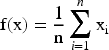
The method for calculating the mean value during data analysis is shown in Equation (12).
The expression for executing smart contracts is shown in Equation (13).
Information sharing and collaboration: through blockchain technology, information sharing and collaboration among supply chain participants are achieved, and a blockchain-based supply chain information sharing platform is developed to enable real-time access and data sharing among all participants in the supply chain. The mathematical model of the information sharing platform is represented by Equation (14). The platform implements distributed storage and management of data through blockchain nodes, ensuring data security and transparency. The immutability and transparency of blockchain are utilized to update and synchronize supply chain data in real time. For example, when raw materials arrive at the manufacturer, the data on the blockchain is automatically updated, and all participants can view the status of the goods and quality inspection results in real time.


In prefabricated construction projects, contract management automation effectively improves the efficiency and accuracy of contract management by using smart contracts and blockchain technology,25,26 reduces human error, and ensures the accurate fulfillment of contract terms. Design and deployment of smart contracts
The contract terms of prefabricated construction projects are converted into a digital format, which involves converting various terms in the contract (such as payment terms, delivery time, quality standards, etc.) into codes and writing smart contracts in programming languages. Hyperledger Fabric is selected as the blockchain platform, and smart contracts are deployed on the platform
27
to ensure transparency and security of contract terms. Automated execution
Both on-chain and off-chain events, such as construction progress and acceptance results, are tracked on the blockchain through smart contracts. When the preset conditions are met, the contract automatically executes the related terms. After certain key activities or milestones are completed, smart contracts trigger payment on their own and tend to eliminate delays and errors from human operations. Smart contracts can also automatically modify contract terms and conditions based on real-time conditions and mutual agreement to facilitate a timely modification and execution of contract terms. Fulfillment and monitoring of contracts
All executions and amendments of contracts are logged in detail for auditing (tracing). These logs include time, parties involved, and execution results, which provide an ongoing review of the contract in an easily verifiable manner. Feedback is provided throughout the contract execution process and any issues can be rectified as they arise. If there is an issue at any point in the chain, the system will automatically send a notification, allowing relevant parties to address the issue in a timely manner.
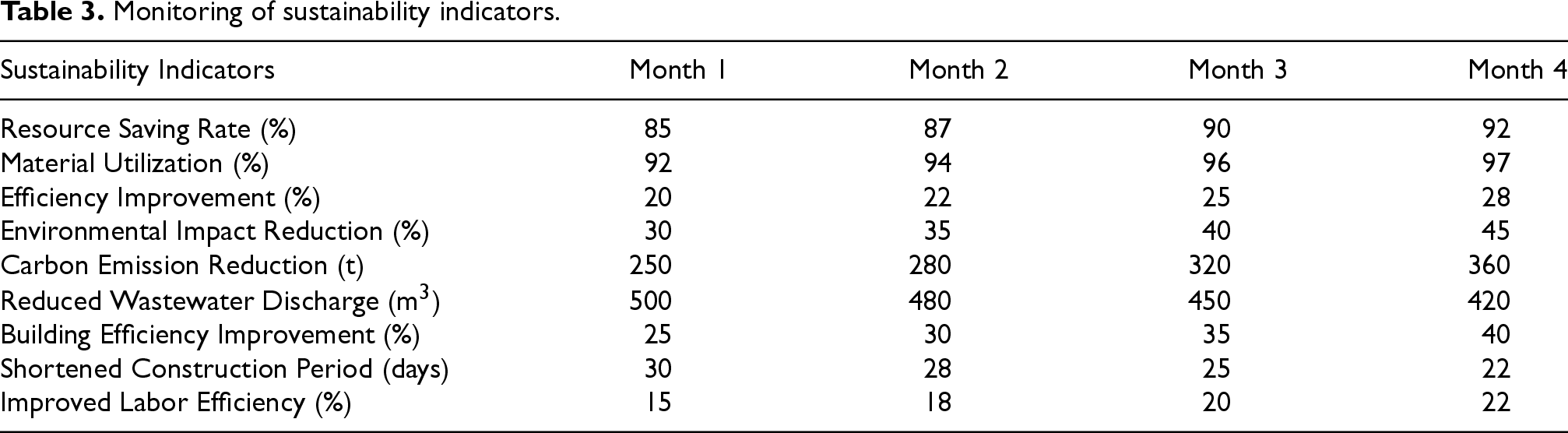
In prefabricated construction projects, key aspects of sustainability indicators are real-time monitoring and management. Sustainability indicator monitoring is the continuous monitoring and management of sustainability indicators in prefabricated building projects, using technology,28,29 to improve overall project sustainability, optimize resource utilization, and reduce impacts on the environment. Table 3 provides a comparison of sustainability indicators in prefabricated buildings focused on conserving resources, reducing environmental impact, and improving building efficiency usable after implementation of a whole system at different time points. This represents the positive effect of the whole blockchain system on enhancing building sustainability. Data collection and processing: IoT technology
30
and sensor devices are utilized to conduct real-time collection of various types of data involved in the project, including but not limited to energy consumption data, waste generation data, material usage data, etc. The accuracy and completeness of data should be ensured during the data collection process, and information omission or distortion should be avoided. Blockchain recording: the collected data is uploaded to a public blockchain platform through smart contracts to ensure transparency and immutability of the data. The node consensus mechanism of a public blockchain can verify and confirm the authenticity of data. Once the data is recorded on the blockchain, it cannot be tampered with, ensuring its the integrity. Real-time monitoring and feedback: With the real-time data update capability of the blockchain platform, real-time monitoring of sustainability indicators can be achieved. Warning and feedback mechanisms are set up. When the indicators reach the set threshold or abnormal situations occur, the system automatically issues an alarm and prompts relevant responsible persons to take corresponding measures to respond to the problem promptly. Continuous improvement: by analyzing data recorded on blockchain, resource waste and environmental impact issues are identified and optimized in the project. Data analysis and mining techniques are utilized to identify potential opportunities for improving sustainability indicators. The execution of relevant improvement measures is automated through smart contracts, and the sustainability improvement of projects is continuously promoted.
Monitoring of sustainability indicators.
Data validation and access
The validation and access of data are shown in Figure 5. The validation nodes for each type of data in Figure 5(a) are represented by a bar chart, and the line chart represents the validation success rate of the data and data consistency, respectively. The number of validation nodes is between 10 and 13. The validation success rate is between 99.1% and 99.4%. The lowest consistency is 99.7%, and the highest is 99.9%. From this, it can be seen that the system has a high validation success rate and data consistency. The line graph in Figure 5(b) depicts the successful data queries and data transparency rates, while the bar graph illustrates the inquiry numbers for each data category. The inquiry numbers for various data cateogories show the widest variance from a low of 180 to a high of 300. Data query and data transparency rates are of moderate concern, with data inquiry success rates between 98–99%, and lowest data transparency rates being 99.3%. Based on these numbers, data accessibility and credibility can be seen as having moderate value.
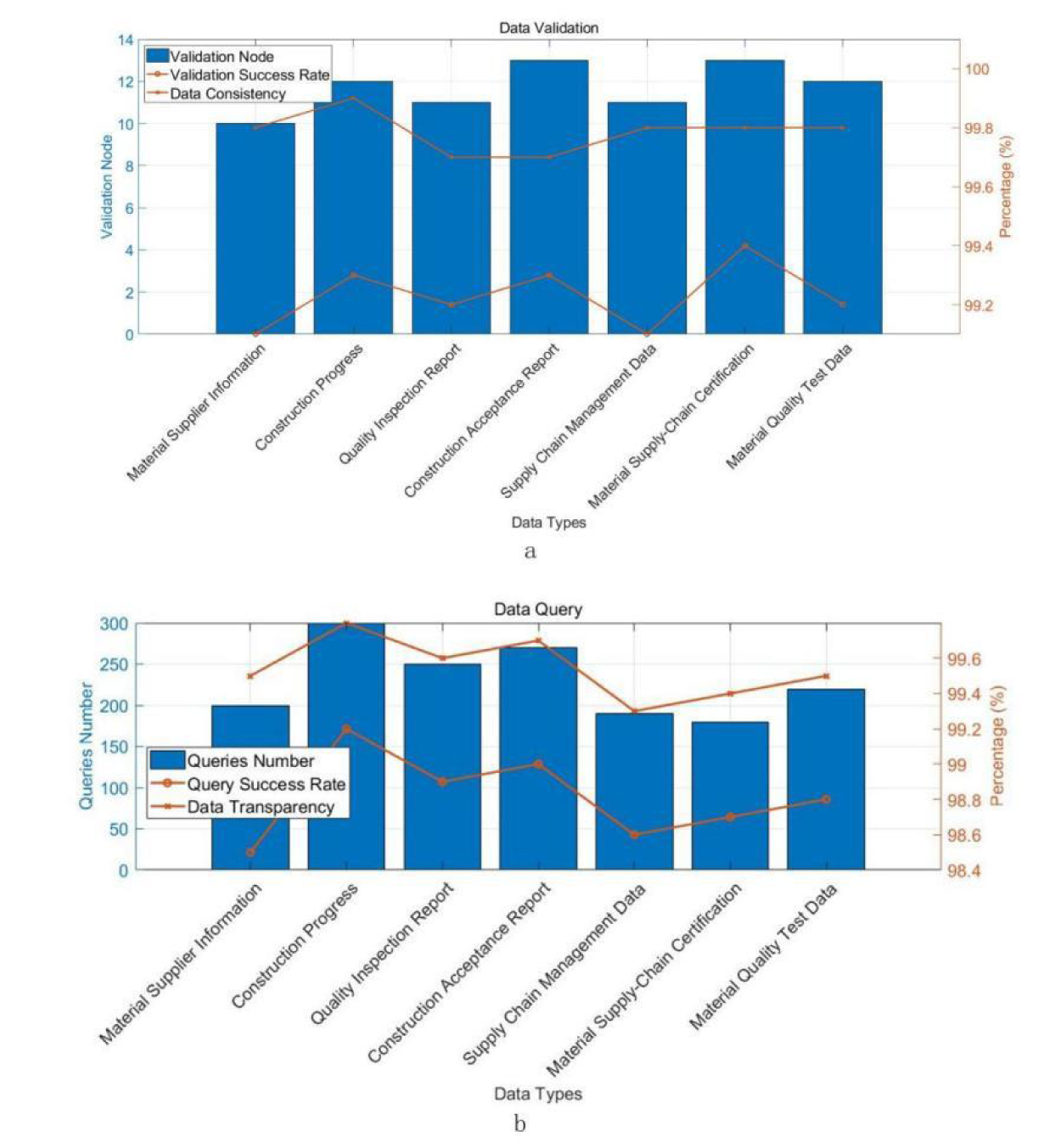
Comparison of data validation and access.
In prefabricated building projects, we use a private blockchain technology to protect sensitive information. The private blockchain is built using Hyperledger Fabric as the private blockchain platform. The private blockchain network is set up, the nodes are configured, and a strong access control mechanism is set up to control who can access or make modifications to, the sensitive data. The sensitive information, which may include financial data, project management data, etc., is stored encrypted on the private blockchain. Strong encryption algorithms such as AES-256 encrypt the financial and project management data to prevent unauthorized users from viewing or disclosing the data. Additionally, encryption keys are managed using a Key Management Systems (KMS) to protect their storage and usage. Log and monitoring mechanisms are set up to log all the access and modification of the data, which we check regularly to monitor for security issues and concerns in our projects. Figure 6 shows the encryption success rate and access control success rate for five projects. The red line log graph reports on the data encryption effect from five projects, and averages 99.82%. The blue line contains the access control success rate from five projects and averages 98.24%.
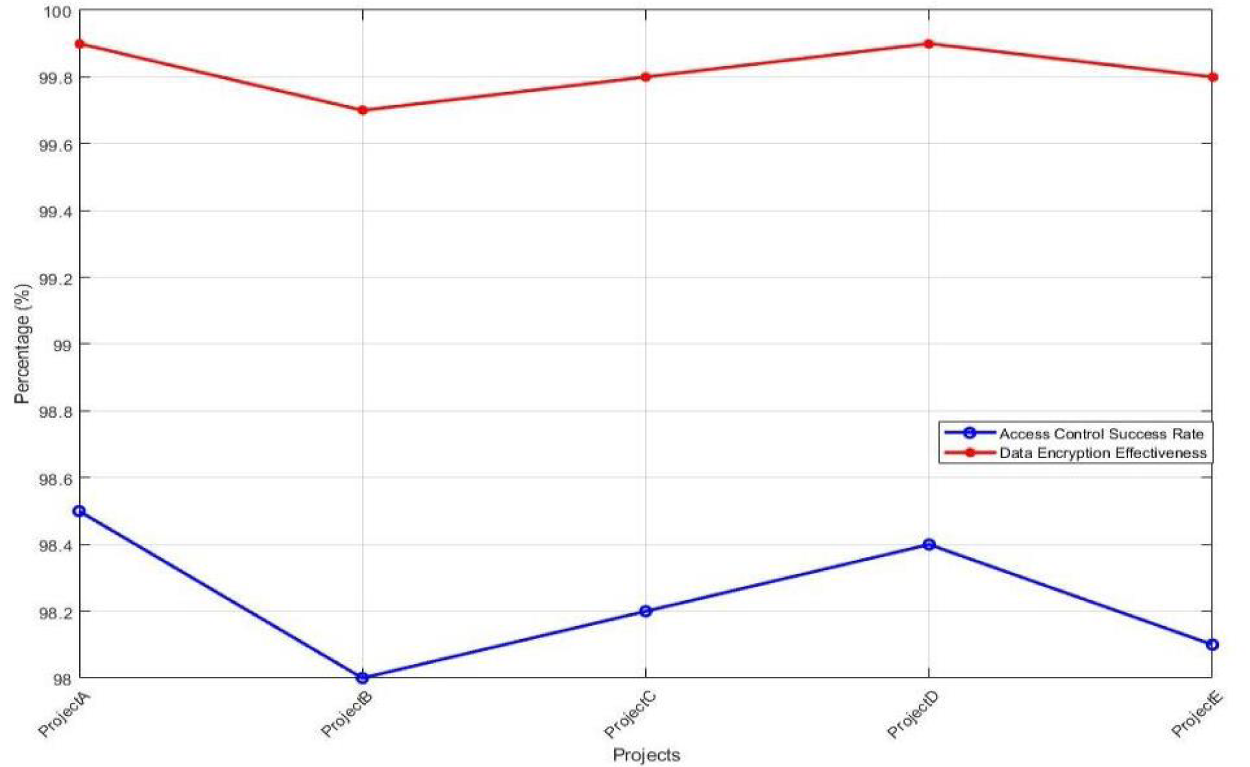
Data security.
To improve the effectiveness of the supply chain in prefabricated construction projects, a supply chain tracking system was created based on dual blockchain technology. The system makes use of public and private blockchain, which will record and track the raw material procurement, transportation, use, and scrapping, and tools will also track this data using the two types of blockchain. Smart contracts were adopted for the automation and monitoring of supply chain service execution and payment documentation, with a goal of reducing human error and delays and improving supply chain efficiency and transparency. Figure 7 illustrates the amount of time tracking the supply chain took for five projects, representing the timeliness of information flow in the form of a line chart. For all five projects, the average tracked time for the supply chain was 6.141 s with an average flow of information timeliness of 95.12%.
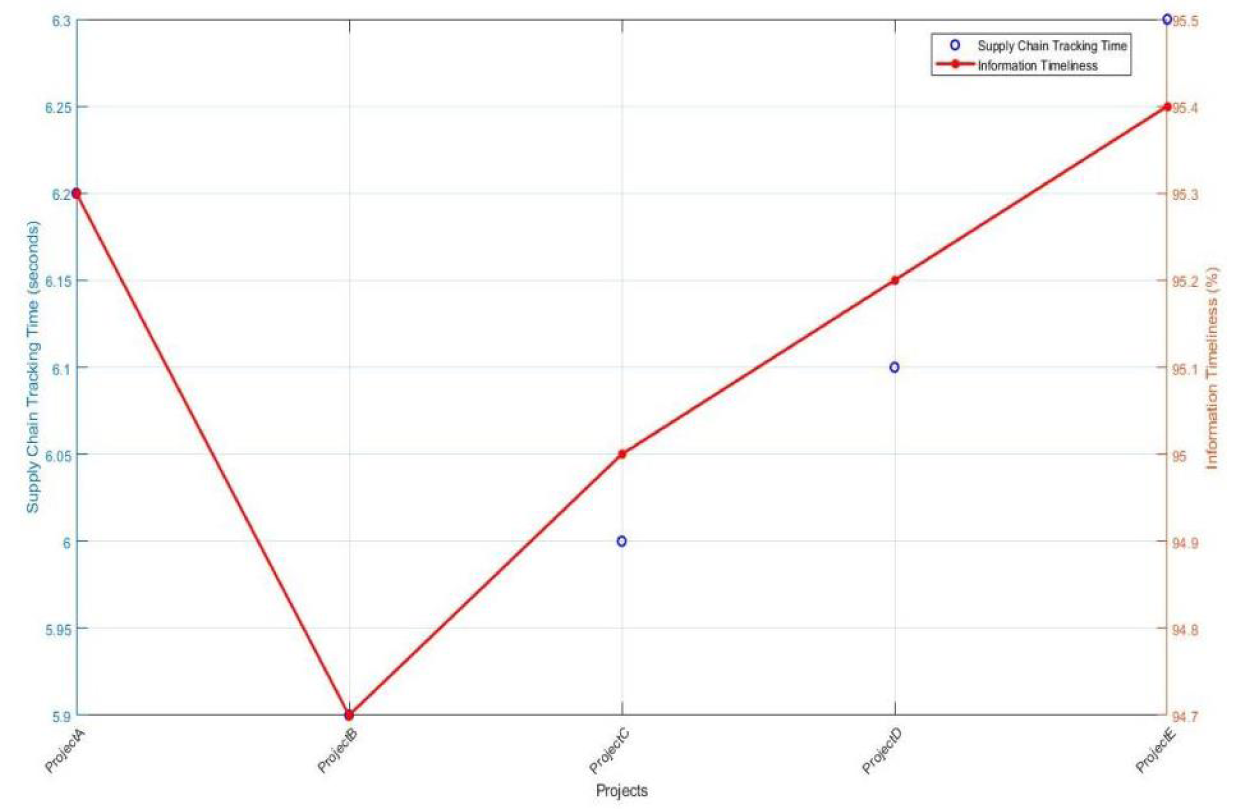
Supply chain efficiency.
To achieve automation of contract management in prefabricated construction projects, smart contracts are designed and deployed on the public blockchain. The contract terms are converted into a digital format and written into smart contract codes. The smart contract is deployed on the Hyperledger Fabric platform. By real-time monitoring and recording of contract execution and utilizing the transparency and immutability of blockchain platforms, the success rate of smart contract execution and the accuracy of contract terms fulfillment are evaluated. As shown in Figure 8, the blue line represents the success rate of smart contract execution for each project, and the red line represents the accuracy of contract terms fulfillment. The average success rate of smart contract execution across project is 98.84%, and the average accuracy in fulfilling contract terms is 98.36%.
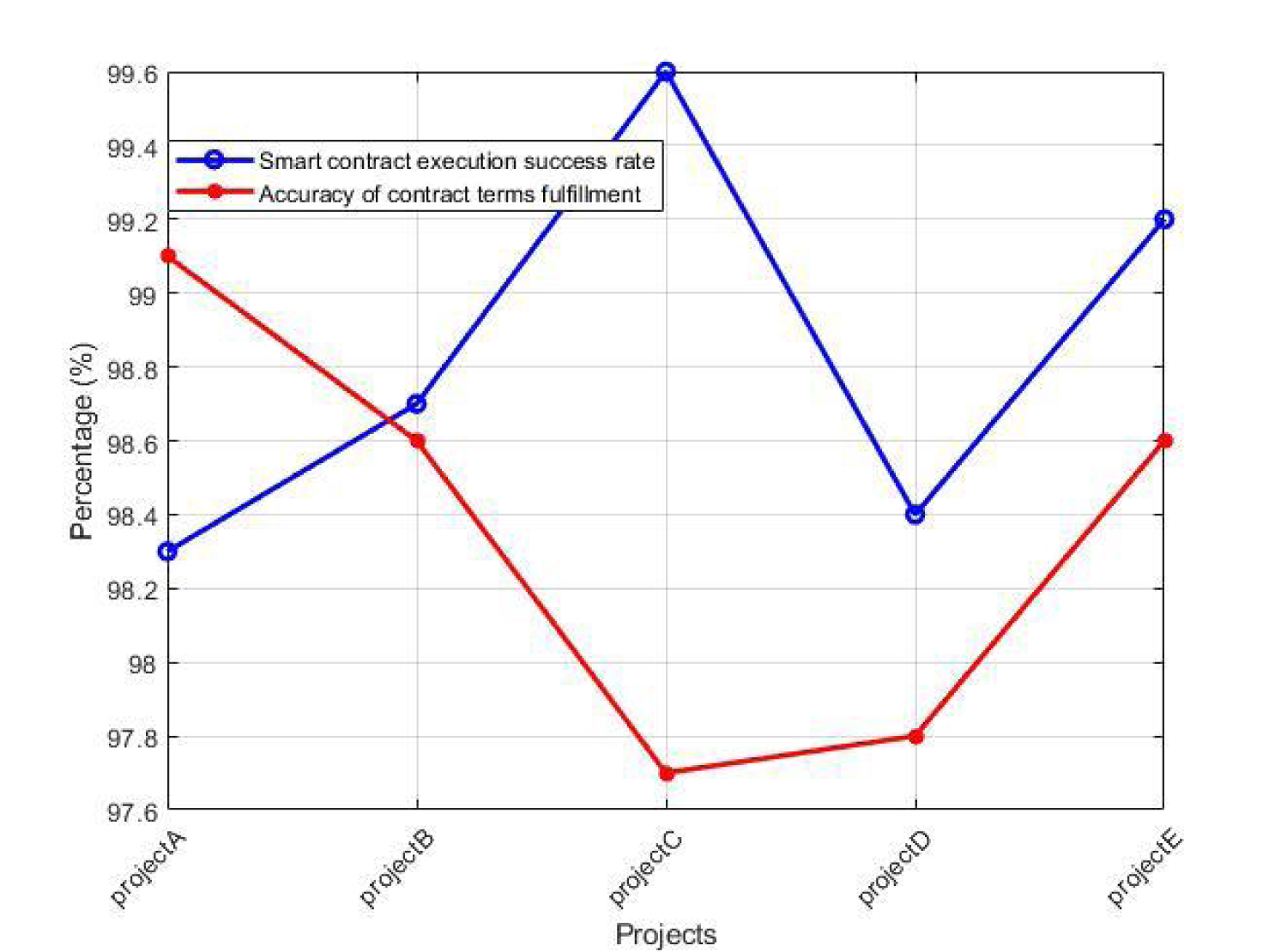
Contract fulfillment rate.
In prefabricated construction projects, the extent of resource waste reduction and environmental impact in the model is assessed by comparing the changes in the various sustainability indicators before and after the model is implemented, as illustrated in Figure 9. Data analysis and machine learning methods that were implemented assist in recognizing and predicting potential problem areas/trends, and in understanding their implications to become part of decision support. A feedback process is established to adjust and enhance the sustainability strategy during implementation as needed based on the results of monitoring and analysis and to continuously improve project sustainability. The implementation of these evaluation methods and technologies greatly improves the management and monitoring aspects of data transparency, data security, supply chain effectiveness, contract compliance rates, and sustainability improvements within prefabricated construction projects, and will ultimately support and provide guidance on the sustainable development of the construction industry.
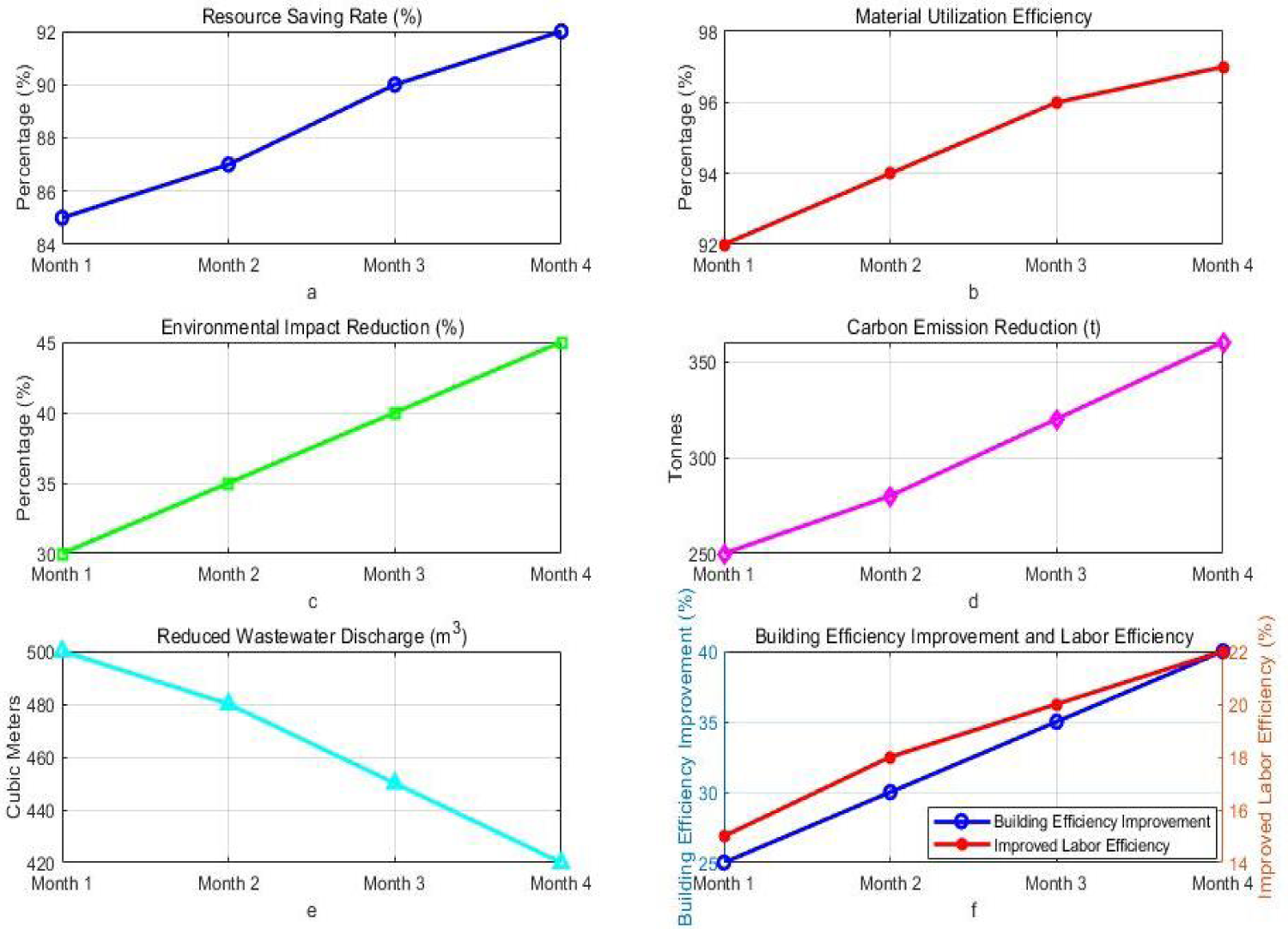
Sustainability indicators.
Figure 9 visually illustrates the progress of several sustainability indicators throughout the construction period after the implementation of prefabricated building projects. These results can be seen on a month-by-month basis from the construction period indicated in Figure 9(a), where we see the resource saving rate increasing exponentially from 85% in month 1 to 92% in month 4. This indeed indicates an effective resource saving for this construction project. Figure 9(b) displays the material utilization rate gradually increasing from month 1 to month 4 to a total of 97%, which shows effectively reducing the wastage of materials. From Figure 9(c) we can evaluate the reduction of environmental impact and we can see a 30% reduction in month one increasing to 45% in month 4. In regards to carbon emissions show in figure 9(d), we can see carbon emissions were decreased monthly, with a total reduction of 360 tonnes in month. Figure 9(e) indicates the reduced wastewater discharge, which gradually decreased from 500 cubic meters in month 1 to 420 cubic meters in month 4. Figure 9(f) shows the percentage increase in building and labor efficiency, with building efficiency increasing from 25% in month to 40% in month 4, and labor efficiency increasing from 15% to 22%.
This paper puts forward a model for sustainability that incorporates dual blockchains technology into off-site construction. Utilizing public and private blockchains together leads to significant advancements in security and transparency of data. This model utilizes smart contracts that can entirely automate real-time contract management, monitoring, and managing essential data in the construction process. Beyond the scope of managing data and the supply chain by applying dual blockchain, research has demonstrated that the dual blockchain approach advances not just the management of the data chain and delivery chain, but comprehensively advances the overall sustainability management level of projects, meaning there was less waste of resources and waste to the environment. Imperfect, as this if for the complexities of smart contract designs and costs, future research will look at better designs of smart contracts to consider costs and also to look further into the potential applications of blockchain technology into offline construction.
Footnotes
Funding
The authors received no financial support for the research, authorship, and/or publication of this article.
Declaration of conflicting interests
The authors declared no potential conflicts of interest with respect to the research, authorship, and/or publication of this article.
Author biography