



Abstract
This framework is a hybrid combination of AI and blockchain for dance performance assessment. The model it uses, the hybrid CNN/LSTM model, evaluates posture accuracy and timing for the posture, while style recognition requires a Transformer-based encoder to learn long-range dependencies. The Expressiveness Index measures the expressiveness and dynamics shown by a performer through a regression head. A blockchain ensures that the performance results can secure and verifiable credentials without forging them. Real-time feedback helps dancers to improve faster and more effectively. The model is trained on a variety of dance styles to ensure that it is flexible and applicable to different forms of dance training. The evaluation achieved high-performance metrics, showing the strength of the system for objective performance measurements, accuracy of 95.52%, Precision 94.56%, Recall 94.87%, and F1-Score of 94.71%. In the exciting angle of enhancing the integration of AI and blockchain into the performing arts and their visual presentation, TransCNN + DSSS signifies a secure, transparent, and scalable means of providing dance education.
Keywords
Introduction
Dance education serves as a powerful vehicle for expressing cultural identity and fostering artistic growth. 1 Due to its long history and worldwide significance, dance provides students with avenues of expression through creativity, physicality, and discipline. 2 The bigger picture, however, has dance education assessed and validated in rather less subject, thereby rendering it non-standardized. 3 This growing need for objective, transparent, and accurate assessment becomes obvious as dance education gains formal recognition and becomes integrated into education systems across the globe. 4
Instructors in dance are the biggest challenge in dance assessment as there are no industry-approved criteria for rating performances. 5 Traditionally, a dance instructor's subjective judgment has accredited evaluation; therefore, one instructor may grade a performance very differently from another, causing students’ assessment to be widely varied and inconsistent as to their actual progress. 6 Subjectivity might always lead to unfair grading, sometimes even unfair feedback, and sometimes even improper transparency. 7 In addition to this, objective evaluation will encourage the student to take objective criticism for his betterment. 8 While the use of technologies like AI and blockchain remains unexplored in dance education, the paper proposes hybrid AI-blockchain that can serve to assess dance performances objectively. AI systems can analyse posture accuracy, rhythm, timing, and expressiveness, while blockchain technology safeguards these performance credentials from being altered in any way.
Background
Depending on being decentralized, secure, and transparent in the handling of transactions, blockchain technology has risen to prominence in several other sectors. 9 In education, the potentialities of blockchain basically promise the presentation of verifiable and tamper-proof credentials so that accomplishments become transparent, immutable, and traceable. 10 Blockchain offers a decentralized platform for the issuance of dance credentials where records cannot be altered and are valid for checking. Through smart contracts and decentralized identifiers (DIDs), learners have their achievements securely and portably recognized. 11 Subsequent to adopting blockchain technology, certificate and credential validity can be at least attested, helping to solve the problem of falsifications and trust-bearing on traditional education platforms. 12
Challenges in dance education
In arts and culture, dance education is said to face several issues limiting its growth and development. 13 The main issues faced are the absence of parameters through which a student's progress or performance can be measured. 14 Dance assessment depended greatly on teachers’ subjective appreciation, which differed widely in evaluation style and was inconsistent. Once these AI-based systems can perform objective judging from motion data, they became increasingly relevant in removing bias and increasing transparency. 15 Hence, a particular bias would result in inconsistency in grading, giving awards, and providing feedback. 16 Moreover, dance education entities are usually not able to install a complete and yet simple system to maintain concrete accounts of the entire student's educational journey. 17 A system like this would allow a student to demonstrate directly their skills in music to potential employers or further educational institutions. 18
Causes of the challenges
Many reasons give rise to challenges in dance education. The lack of standardized digital tools in dance education places evaluation in very incongruent situations. To students, the lack of objective evaluations could deny them the feedback on their flaws without which they cannot truly grow. 19 Without a very objective evaluation, students are denied constructive feedback and consequently lose an opportunity for meaningful growth. 20 Also, other than the technological agents of assessment and credentialing, the rapid advances in technology have yet to be embraced by the dance world. 21 A hesitation to embrace new technologies further leads to inconsistency and lack of transparency. 22
Factors contributing to the issue
Many factors contribute to the continuing saga in dance education. 23 In the first place, the notion of dance education is that it is a physical art, and cannot be tested by traditional academic tools. 24 Artistic performance stands on the other side of standardized assessment methods. 25 Secondly, the lack of resources and funds in many dance institutions inhibits the use of cutting-edge technology such as AI and blockchain, which could have otherwise completely revolutionized education. 26 Thirdly, there is a culture of resistance to change in education institutions, especially in a field rooted in tradition like dance. 27 The addition of technology in dance education faces enormous scepticism, and thus, implementing a modern-day solution that accepts more objective and transparent assessments becomes daunting. 28
Problem statement
While education is getting largely digitized, dance teaching still largely insists on the physical, in-person method, thereby forming a rift between the old and the new. 29 This divide denies students transparent, verifiable credentials and objective assessment. 30 Without such digital tools, there is a huge handicap for any dance learner seeking acknowledgment of his/her skills in a world driven by technology at the global level. 31
Key contributions
Characteristics of the performance like posture, timing, style of performing, and emotion as portrayed by the performers will be fed into the TransCNN + DSSS if AI is to provide an objective performance evaluation.
Use the blockchain-and-music concept to issue certificates for dance performances, ensuring the validity of credentials, i.e., verifiable titles.
Feedback on dance executes is fairly fast, which helps dancers to work efficiently.
Explain stylistic versatility of TransCNN + DSSS along with a clear explanation on its application across various dance training styles.
Literature survey
This section scrutinizes the technical aspects of how blockchain and AI powered performance analytics are related to dance credentialing systems, while simultaneously addressing problems occurring in each domain. Interdisciplinary reviews are also given to investigate how these technologies have been integrated or can be integrated into the dance education domain.
Blockchain in education
Almadadha 32 posits that although the blockchain can provide disruptive mechanisms for secured and transparent record keeping, such potential remains largely unexplored in dance education. Therefore, one area wherein gaps exist is the lack of blockchain integration research into the performing arts. Dance education seems to be underserved with digital infrastructure, with a few scalable systems for performance evaluation and credentialing consistently in place.
Blockchain for transparent credentialing
So far, there are no uses of blockchain in dance. Bridging with blockchain customized to represent artistic performance will go that far. While Ghiurău and Popescu 33 discussed the utilization of blockchain to issue tamper-proof digital certificates, the performing arts and dance education are left out of the discussion. Next, in dance education, a significant area of research remains that investigates the possible concerns arising out of the fraudulent misrepresentation of credentials and dance qualifications by blockchain with that guarantee of public verifiability. Beyond this, the hurdle exists in custom-fitting blockchain to the dance side of things-a specific need for dance performance credentialing.
Blockchain's role in security and trust
Having a decentralized nature, blockchain has brought fame for securing digital credentials. Nonetheless, the question of the customization of such systems for performing arts remains less discussed in the literature. From the conceptual standpoint, Aounzou et al. 34 claimed that blockchain technology has been an injection of trust into credentials, although such a system finds very little use among the performing arts community. While the blockchain technology has enhanced trust in some areas of credentialing, it hardly finds any application in the performing arts. Hence, this paper builds upon some existing frameworks to project a more suitable solution for dance, with a primary focus on decentralized verification but without reiterating any previous model.
AI in performance analytics
While AI in physical education has blossomed, the world of dance, with its highly nuanced and emotional movements, still remains to be developed. This paper introduces AI-based interventions adapted to the artistic requisites of dance. According to Esaki and Nagao, 35 AI can be applied for physical performance evaluation; however, there are no known studies related to attempting to introduce AI into more clearly defined domains of dance, as those became more artistic and more nuanced in their movements. In fact, the classic treatment of dance in the existing literature undermines the artistic nuances of dance, which cannot be confined to mere generic physical metrics. The study leads to AI models that can interpret expressive movement patterns.
AI for personalized learning in dance
This is the intersection of two very ligating fields in education. According to Barbaresi et al., 36 AI can act in monitoring and assessing performances; however, in dance teaching, there seems to be little activity in this respect. Missing, namely, in the scenography are implementations of individualized paths of learning and criteria for objective performance assessment. From here, there is room and motivation to augment AI into adaptive learning on how a dancer moves and develops across time, with feedback offered on an individualized basis for the dancer's further development.
AI and motion capture technology
Motion capture methods have been wielded to great advantage in research and studies dealing with sports and physical movement and biomechanics, while training for dance has not had the same degree of focus on. Mbah and Ezegwu, 37 however, rejected the premise that AI-powered motion capture systems could provide objective evaluation of human movement in dance education. Should this gap be bridged, motion capture systems combined with AI would be able to analyse dance motions very in depth because these motions must conform to rhythm, posture, and spatial flow, all qualities that define the art form.
AI's use in dance training
AI may, indeed, change the face of sports enhancement; however Biró et al. 38 did not accept dance as one application field. The main consideration is to provide corrective feedback on the dancer's movements while they perform-the technology hardly exists. This, then, leads to the investigation of how an AI application can be the medium through which real-time corrective cues are provided during training so that the dancer could use it to further development of the technique with instantaneous and data-driven feedback.
Transparent credentialing with AI and blockchain
For transparent credentialing, thus far an untouched path, has remained quite untraversed, especially with respect to dance education. Shi et al. 39 allude to the potentialities afforded by the integration of these technologies in education but do not hint at any joint applications for dance. The very problem addressed here is that while on the one hand blockchain can certify identities securely, on the other hand, AI can perform an analysis of the performance, yet no research is brought forth to see how both can be implemented in dance education. My paper thus fills the gap by creating a synergistic model for AI performance analysis and blockchain credentialing for dance with full transparency.
Real-time performance feedback using AI
Real-time feedback has been used in sports but is not yet firmly established in dance education. Chen et al. 40 proposed that AI could provide real-time corrections of physical performance, but dance has yet to become the main focus. The challenge is in designing a system that gives dancers real-time correction about their movements so that their training can be more efficient. For this matter, the literature gap discussed in this paper is about AI implementation to provide real-time feedback for dancing performances.
Blockchain in dance performance verification
Dance studies for research in applications have thus far mostly been posited as prime candidates for blockchain opportunities. Nita and Mihailescu 41 discuss blockchain applied to academic credentials-but is scarcely analyzed in dance performance verification-threating it as a major hurdle for dance. Having established now the use of the blockchain for credentialing, this study takes the leap to extend the blockchain to dance performance verification-artistic integrity whereby there are timestamped records and learner-linked identities.
Gamification and AI in dance education
Dance must genuinely be engaging and amusing, yet AI-based gamification has blossomed in other branches of education. According to Fernández-Vázquez et al., 42 gamification with AI improves physical education. So far, none of the studies have directed its attention to dance training. The issue, therefore, lies in how dance can be taught to students with gamified AI systems that keep track of their performance and reward them for their performance. This paper attempts to take a peek behind the question of how to use the AI-gamification duo to increase engagement in dance education.
The role of AI in dance assessment metrics
However, there is yet to exist any method that would constitute an established objective performance criterion for dance through AI. Li and Huang 43 explore such avenues for AI in sports, and how these techniques are taken to dance is still to be worked out. Current dance education systems do not offer quantifiable benchmarks for performance. AI-based metrics are proposed in this paper in order to provide for a formal assessment, without disturbing the free flow of artistic expression.
Blockchain for cross-institutional recognition
Blockchain provides a medium for credential sharing between institutions, while the infrastructure is lacking in dance education. The decentralized system would ensure that dance achievements enjoy universal acceptance. Zou and Chen 44 describe the working of the blockchain for the sharing of credentials between institutions; however, dance applications remain to be seen. Dance institutions may not honor or recognize credentials for achievement by a student of a different school copyright due to the absence of a transparent verifiable system. The authors argue that a blockchain solution would apply here while presenting its potential use for cross-institutional recognition of dance credentials.
AI-Based feedback for dance choreography
AI's potential in choreography generation assistance is a new frontier in dance education. Zhong et al. 45 have postulated that AI can interpret dance performances to generate a new choreography. There has not been much research on applying AI for choreography and performance assessment in dance education. This paper considers the use of AI for the dual purpose of assisting in evaluating student performance as well as choreography production to facilitate the students’ creative development.
Challenges in implementing blockchain and AI in dance education
Some of the hurdles to implementation in dance education with blockchain technologies and AI, in virtue of the very nature of the interplay, would be infrastructure, different cultural barriers, and financial constraints. Uddin et al., 46 state that implementations of these technologies are exorbitantly costly, and educational institutions are resistant to change. This paper is aimed at breaking down these barriers by investigating how blockchain and AI could be integrated into extant dance education systems in a cost-effective and scalable manner.
Methodology
This Dance Educational Assessment Blockchain is a secure and transparent evaluation and credentialing system. It vests AI-scoring and blockchain solutions to the capture of data points of dancing performances in posture accuracy, timing accuracy, style consistency, and expressiveness: these records are tied to the dancers themselves, thus creating an immutable record of their performance history on-chain. The presence of smart contracts to record the metric of the performance and feedback with timestamps provides the integrity of the credential itself to all actors in the past or future. It promises vast exposure and traceability to dance education, so that the dancers are provided with a corruption-resistant portfolio in which the entire progression contemporary programs of their artistic and technical training are documented.
The Figure 1 displays an abstracted diagram of the system analysing and credentialing an interpreted dance performance by AI and blockchain technology. The pipeline is supposed to open with the motion-capture data recorded from the Motorica Dataset and subjected to various preprocessing, root-centred normalization, and segmentation by the metadata. Feature extraction modules had been calculating posture accuracy, fluidity of motion, rhythm conformity, and expressiveness through means such as pose template matching and DDRN mechanisms.
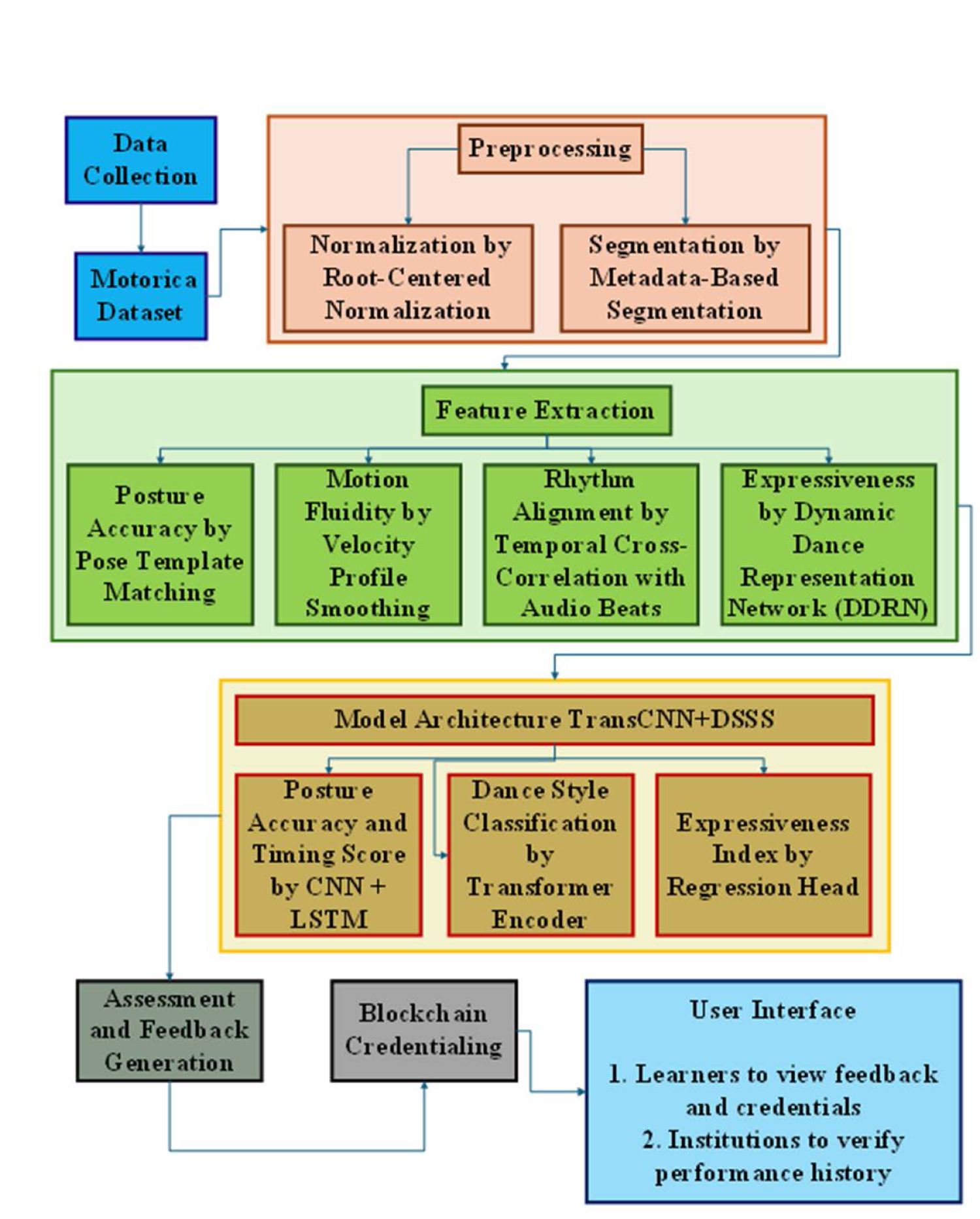
AI and blockchain-enabled architecture for dance performance evaluation.
In these systems of modularized intelligence, this is known as being acted upon by the TransCNN-DSSS hybrid model-an evolutionary fitness-providing method signifying the confluence of the convolutional and sequential layers with dynamic scoring streams. In detail, the CNN + LSTM model is used to analyse posture and timing, whereas the style is ensured by long-range temporal dependencies in a Transformer encoder. To express expressiveness, a regression head quantifies the gestures’ dynamics. These expressiveness scores will be stored securely on the blockchain using smart contracts, together with credentials relating to the learner's identity so that the data is timestamped. These records of scores are collected through the feeding module and conveyed to the front-end interface, from which both the learner and school can verify and trace a performance record.
A key motor of data accumulation was motorized by the Motorica Dance Dataset, with different types and sequences being presented by dance beings; skeleton movements were captured and stored during every session in BVH format representing joint rotation and bone position as they travel through spaces and time. The dataset considers spatiotemporal resolution and thereby allows for investigation into posture, rhythm, and expressiveness. Data further confers metadata concerning various such as dancer information, style classes, and track audio that may be used for segmentation or labelling or contextual analysis. Prominently indexed and heavily structured, the Motorica Dataset is an essentially excellent environment for Miles in the AI rendering of performance evaluation and credentialing pipelines.
Preprocessing
During preprocessing, the raw data are subjected to various transformations and adjustments, making them consistent and interpretable or at least suitable for modelling. In dance-rating applications, the preprocessing algorithm provides a normalized skeletal motion data format that abstracts away from noises and disturbances unessential for dance movement characteristics. The first step involves normalization of the data and alignment of the joint coordinates, and the second step is segmentation, wherein the motion data are segmented into different clips by supplying secondary information such as synchronous time of the dance style, dance musical cues, or the identity of a dancer.
Normalization
Image Normalization is basically a process wherein pixel intensity value is corrected to some scale or range to be compared with some other data of other images. A different type of normalization can be done, called the Root-centred normalization, that works best with image data subject to changes in brightness or contrast. Root-centred normalization processes pixel values by mathematically shifting them with respect to some central tendency concept (e.g., mean) and then scaling these shifted values to suppress the effect of extremely large values or outliers. The root-centred normalization would mean readjusting pixel intensities with the square root of their intensity in order to largely reduce or virtually, in certain cases, completely remove the dynamic range of pixel values to present the image better for further analysis. The general expression for Root-centred normalization is depicted in equation (1).

Here, X is the original pixel intensity value;
It weeds out the effect of values with extremely high or low intensities that could have otherwise distorted the analysis. In fact, it is widely used whenever non-linearities are encountered or a smooth transformation is needed. When the intensity values of the pixels cover a wide range, this helps so that the data can be treated and operated on uniformly in different tasks such as segmentation or feature extraction.
Segmentation is about splitting an image into meaningful or analysable regions or objects. A more sophisticated segmentation could be metadata-driven segmentation, wherein certain additional metadata may serve as a strong and efficient guide in segmentation. Commonly, the segmentation procedure depends on pixel intensity and colour. Yet, cross-product segmentation attempts to incorporate outside information–such as object attributes, localization, size, or labels from higher-level analysis of the area–to define more meaningful and context-aware segments.
The term metadata-based segmentation will be more helpful when describing noisy, cluttered, or complicated images; such cases pose difficulties for more conventional methods like thresholding and edge detection. Ideally, a decision process that combines both segmentation and the relevant metadata would improve the accuracy of the segmentation process. Metadata can include various other types of information: e.g., geographic coordinates, timestamps, or known properties of the objects within the image.
Traditionally, metadata-based segmentation would more or less be a combination of pixel-based segmentation with metadata-driven constraints or filters. For instance, an algorithm may segment an image via some crude procedure, like thresholding, and afterward run refinement on the segmented objects with respect to some appropriate metadata-pixel values with size constraints, known object shapes, or geophysical boundaries. The general expression for Metadata-based segmentation is depicted in equation (2).

Here,
This method helps ensure that meaningful segments are generated based on the usage of domain-specific knowledge or contextual information in cases were applications of interest demand fine context or rough segmentation, depending on the fine requirements of medical imaging, remote sensing, or industrial quality control environment.
Like traditional counterpart, feature extraction is also considered an important stage of the conventional phases of data analysis that include image processing, machine learning, and computer vision. Feature extraction is the selecting and isolating of those attributes or patterns from raw data that are most relevant for the task at hand, be it classification, recognition, or prediction. In the context of image processing, feature extraction is the transformation of raw image data into a specific descriptive set of features that include edges, textures, shapes, or key points that constitute the vital information of the image. Such features may be said to reduce the dimensions of the data while retaining its essential information, thus making it easier for a machine-learning model to understand and interpret. Some instances of feature extraction remain edge detection, histogram evaluation, texture analysis, or key point methods such as SIFT or HOG. The main concern lies in developing a lesser but more meaningful representation of data for the image that characterizes the vital features of the image on which further analysis or decision-making is based.
Posture accuracy
Posture accuracy is the degree to which a pose or body configuration is identified or matched accurately against a predefined set of poses. Posture accuracy is thus used to quantify how closely an observed pose (actual position of subject's body) matches a pose reference (template) while doing pose template matching. This technique finds a great deal of application in computer vision, human-computer interaction, and biomechanics where it is necessary to recognize or track human movements or postures in an image or a video.
In pose template matching, the goal is to align the observed pose with a set of predefined templates that represent various body postures or actions. One usually settles that the degree of matching is asserted through some distance measure such as Euclidean distance or cosine similarity, etc., according to how much the observed pose varies, rather angle-wise, joint-wise, or body-part-wise, from that of the template.
A template matching is usually based on a distance between the relative positions of key points, be these joints or other landmarks, in the observed pose versus the template. The accuracy can be mathematically expressed using equation (3).

Here,
Otherwise, the cosine resemblance among the experimental posture and pattern posture vectors can be used to measure the alignment using equation (4).

Here, A and B are vector representations of the observed pose and the template pose; . represents the dot product, and
High cosine similarity (close to 1) shows correspondingly better alignment and hence higher accuracy of posture in template matching. It is correspondingly widely used in applications like gesture recognition, motion capture, and human activity recognition, where the interaction or analysis depends on knowing and matching a certain body posture.
Fluidity is defined as such motions that pass from one to the other without any suddenness, jitter, or jerk. In velocity profile smoothing, fluidity in motion is understood to mean that the velocity of an object such as a robotic arm, vehicle, or human movement must undergo a smooth transition with no sudden changes that can cause an accidental imbalance or discomfort. Hence, velocity profiles should always be smoothed for controlled and natural motion. This is especially important in robotic control systems, manual animation, biomechanics, and human-computer interaction domains.
Velocity profile smoothing aims to manipulate given velocity data so as to achieve a smooth curve or trajectory, thus reducing the high-frequency components of noise or abrupt changes with speed. One of the common ways of velocity profile smoothing is by using filters such as moving average, Gaussian smoothers, or splines that transform an otherwise spiky velocity curve into a smoother counterpart.
One simpler way for smoothing is to use the Savitzky-Golay filter, which fits a polynomial to windows of data points and then smooths the velocity profile by approximating the local trend. The expression for applying the Savitzky-Golay filter is depicted in equation (5).
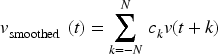
Here,
Alternative technique is Gaussian smoothing, which is grounded on convoluting the rapidity outline with a Gaussian kernel to decrease sudden variations. The expression for Gaussian smoothing is given in equation (6).

Here,
Velocity smoothing is thus applied to ensure that the flow of motion of an object or a system is smooth and continuous, so that the performance is affected in dynamic systems like robotics, animation, and prosthetics where sudden changes in speed would pose problems for stability, efficiency, or comfort.
Rhythm alignment therefore aims to keep continuity in the rhythmic pattern of an audio source relative to reference rhythm or musical tempo. The process is an important working step in the musical process involving beat detection, musical synchronization, and audiovisual synchronization. Rhythm alignment is usually performed to detect beats or align the beats of a particular piece of music with respect to a tempo rhythm pattern.
Rhythm alignment looks at the temporal cross-correlation with audio beats to evaluate to which extent the temporal structure of an audio signal matches a reference rhythm type or beat sequence. The method aims at aligning detected audio beats with a set of reference beats whose source may stem from a musical score, tempo template, etc. The temporal cross-correlation computed would measure the similarity between two time series, one representing the observed audio beats while the other is the reference beats. Not only does this allow for alignment between the beats, but it may also help detect tempo changes and rhythm mismatches.
Similarity between two signals can be measured against time using the cross-correlation function. For rhythm alignment with audio beats, the cross-correlation function between the audio signal

Here,
The highest value attained by
This form of analysis is applied in real-life scenarios: the adjustment synchronization of beat tracking, audio in the production of music, or tempo synchronization in DJing software, or otherwise aural-visual synchronization in music videos or interactive applications. Temporal cross-correlation thus guarantees that the music or the sound is aligned to its expected temporal structure once the rhythmic structure of the audio is aligned to a particular reference. This further enriches the overall listening or viewing experience.
With dancing, basically infinite ranges of emotions, gestures, and movements come into being and are expressed based upon the dancer's conception or style. Expressiveness would be the differentiating factor for generating and modelling dance movements that should convey the intricacy and instant quality of human movement. DDRN, in its regime, is a deep learning axis, intended to train and later render realistic and expressive dance performances by representing the motion in a form that would cover global structure, such as choreography, but would also cover local variations, as individual gestures, or styles. Thus, by the training process, the network will acquire the experience to accurately recognize and generate evolving dance sequences whilst maintaining the dynamics of motion and expression of the dancer.
The expressive quality of dance can be interpreted in DDRN as the temporal evolution of position, velocity, and various joint configurations, all of which may be altered by emotional or artistic expression. These representations are learned dynamically by RNN or extended structures like LSTM to resolve sequential time dependencies. The goal is to generate dance sequences with varying degrees of expressiveness: this could mean differing in the movements themselves or in the movements’ expression of emotion, energy, or style.
A crucial process in DDRN is the temporal representation of motion, which can be expressed in the form of joint angles over time-variously modelled as sequences of vectors. For pose

Here,
The expressivity is mainly learned through a procedure that first trains on a gamut of datasets of dancing movements-best described as motion, having variations in emotion or style-and then is subject to human annotator feedback or the motion capture system's intervention. Such way leads the network to learn how to modify the generated sequences of poses to match the required level of expressed emotion. This is done so as to vary the joint angles and the body movements in the framework of an emotional context.
Under choreography and animation for an interactive performance system, DDRN uses expressivity to design highly energetic and meaningful dance sequences. Depending on the motion dynamics and the parameter setting that describes the expression, DDRN transforms emotionally charged, lifelike dance variations from one style or thematic expression to another.
The model architecture is specifically designed for assessing the dance performance along several dimensions in a modular deep learning framework. Three big modules are there, each analysing one particular phase of motion. The first module concerns the accuracy of the position and time up to the processes of production of mental pictures; the second one is made up of processes concerned with the styles of dancing; and the third computes an expressivity index. They act in parallel on the feature sets extracted through motion capture data to award quantitative scores. Finally, the outputs are combined into one comprehensive assessment profile, which is used for generating feedback and credentialing. This architecture provides scalability, interpretability, and adaptability to various dance styles and learner profiles. CNN + LSTM architecture is shown in Figure 2.
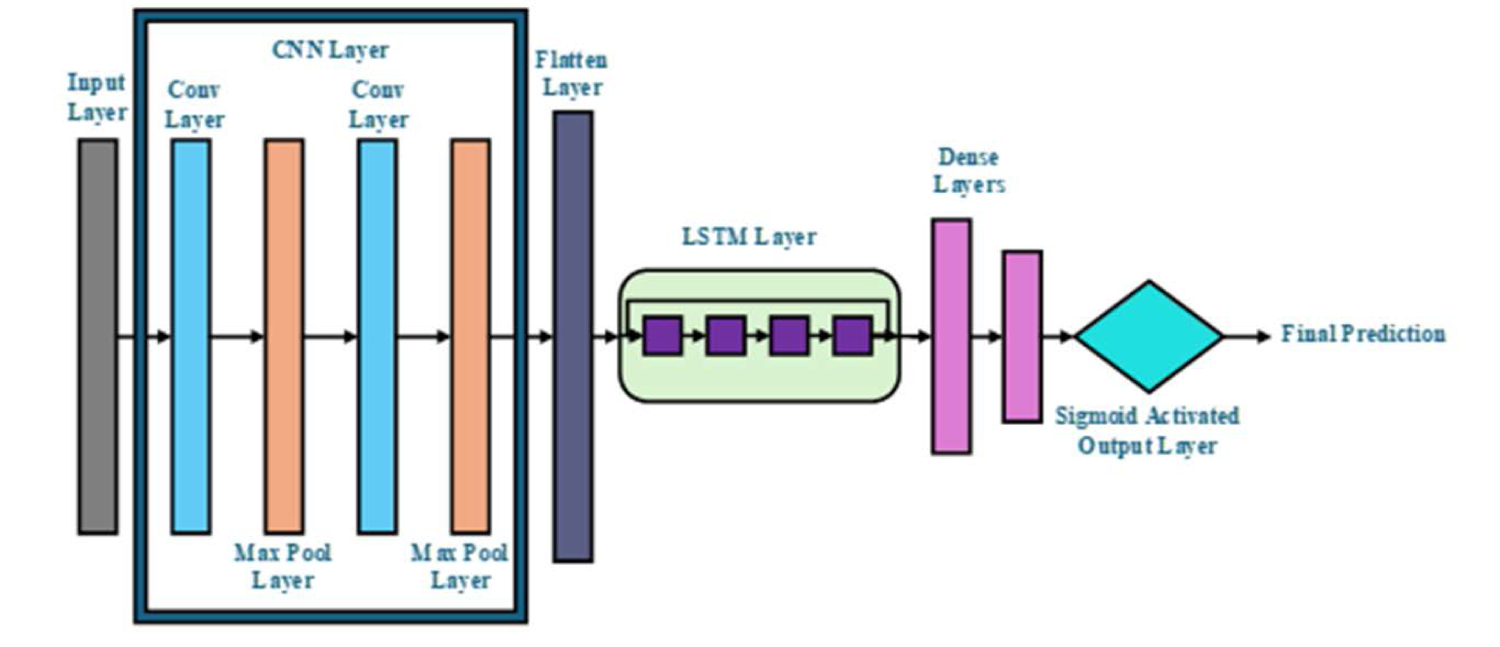
CNN + LSTM architecture.
This module aims to test an individual static body posture alignment approach with a posture reconstruction procedure, which seems to be a very inadequate task, especially interrelating with posture. In the temporal flow concern, the set is without doubt assembled via a deep learning hybrid model, combining CNNs for spatial feature extraction with LSTMs for temporal modelling. CNNs process skeletal pose data frame-by-frame, learning representation of systems of joint configurations, angular relations, and deviations from their viewpoint into ideal templates; therefore, the system assesses the extent to which a dancer maintains the correct posture in each of their positions.
Temporal dynamics and rhythm evaluation
Whereas the CNNs are negotiating spatial accuracy, however, LSTMs aim at understanding sequential dance movements. The LSTMs are best suited in time-series settings, such as when continuity in motion, constancy of rhythm, and respect for time are acknowledged. On the contrary, the LSTM module detects delay, jittery transitions, or off-beat movements from a set of joint coordinate changes to another. Thus, the two-level approach expands upon the somewhat abstract notion of pose appropriateness and time connection to make clear the dancer's ability to stay tied to musical cues and in pace with that line.
Score-generation and interpretability
Generally speaking, the hybrid CNN + LSTM architecture comes up with a single score reflecting posture accuracy and timing precision, which is theoretically computed from learned vectors that describe an ideal movement pattern and how far off the observed one is from the input sequence. This model, therefore, may be trained on annotated datasets using expert judgments as ground truth, and hence, it is learned as performance metrics in a supervised manner. Hence, the score is interpretable and has the important property of scalability for integration within real-time feedback systems, credentialing platforms, and course dashboards for dance students and teachers.
Dance style classification
Transformer-suited dance-style classification leverages understanding long-range dependencies and contextual relationships in sequential motion data. Whereas traditional classifiers accept fixed-length feature vectors as inputs, the Transformer architecture takes complete sequences of joint positions and movements to learn stylistic patterns varying in time. The self-attention mechanism allows the model to weigh different frames and movements by relevance, comprehensively capturing the subtle stylistic cues on the fluidity of movements by tempo or spatial characteristics differing between styles. Figure 3 depicts the illustration of Transformer Encoder.
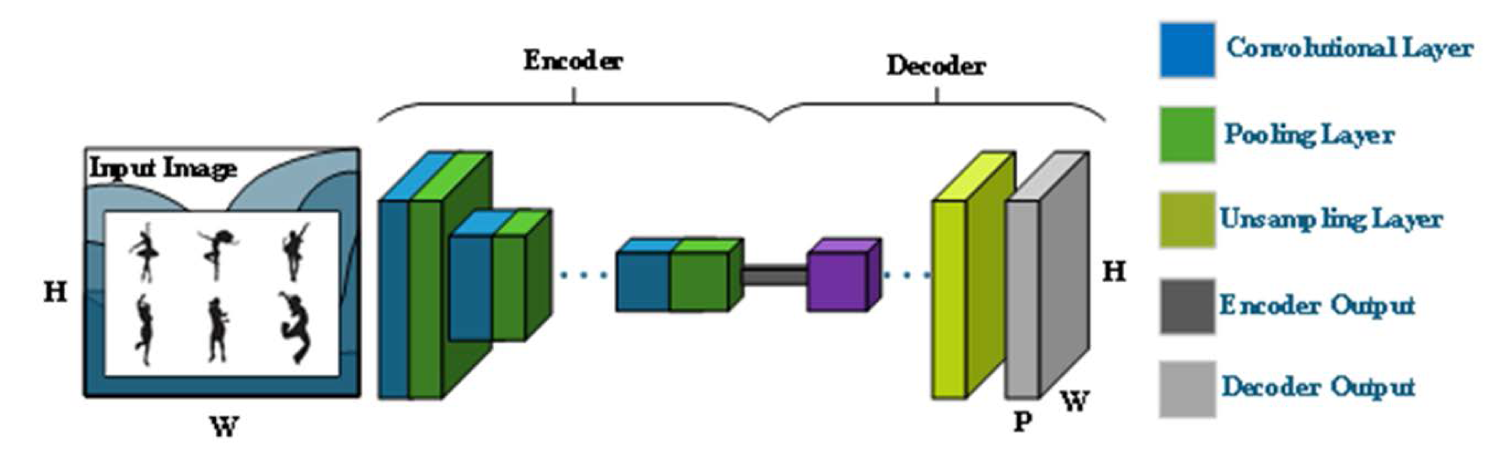
Transformer encoder.
The motion data is input into the system. Usually, it is time series data of joint coordinates fed through the Transformer encoding system to get high-dimension embeddings that describe the stylistic properties of the performance. Subsequently, the style embeddings are directed to the classification head to obtain style labels such as ballet, hip-hop, or contemporary. From the annotated datasets labelled with diverse dance styles, training of the model should be conducted so that other practitioners may further apply its generalizability to a large movement vocabulary for choreographic analysis and instructional feedback.
Interpretation of the Expressiveness Index is done by a regression head, which gives out a continuous score measuring the emotional and dynamic attributes of a movement. This regression head spits out a scalar value for expressivity that reflects things like strength and fluidity based on some high-dimensional motion features such as gesture amplitude, velocity variance, and spatial expansion. Annotations are provided using ground-truth quantifications by experts that help the model learn subtle relationships between movement patterns and human perception of expressiveness. The index is thus used as one fine and soft measure that complements postural and stylistic analysis of artistic performances for a more complete evaluation.
Here, Figure 4 represents stylized line drawings to minimally express figures for dance modelling. Each figure is posed dynamically to reveal varied movements of arms, bends of legs, and rhythmic gestures full of energy and motion. The dancers are placed in two rows, with the design emphasizing how dance styles vary and flow while providing focus on their physicality and the core of emotions. Through minimal lines, the illustrations serve to direct the adherence of viewers toward silhouettes and gaits of each pose as a representation of how movement can be abstracted and analysed. It is extremely useful in motion capture, pose estimation, and artistic interpretations of dance.
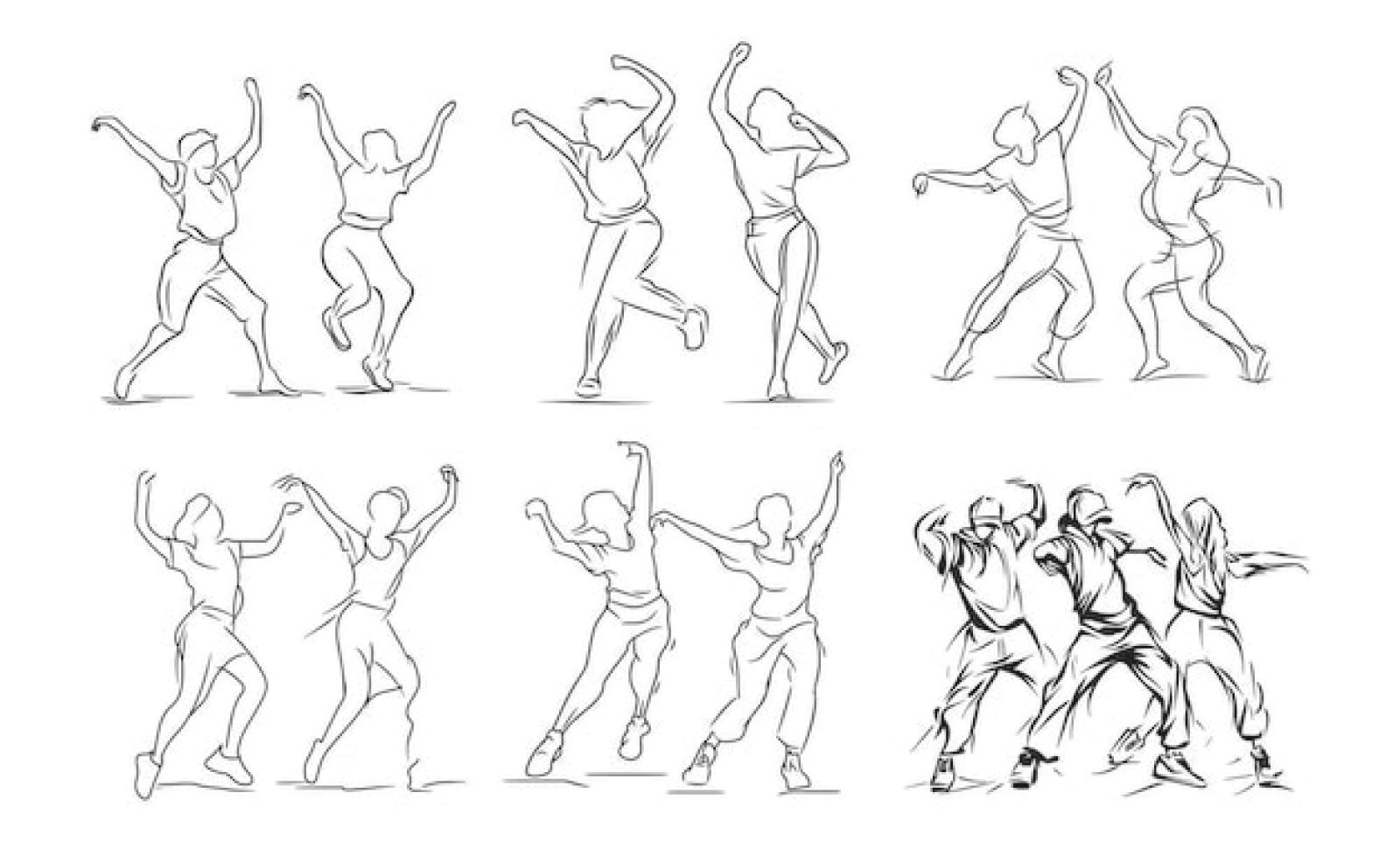
Dynamic dance representation network poses.
Thus, the model is a hybrid-dl system composed of convolutional and LSTM networks interfaced with a Transformer based Dance Style Semantic Stream (DSSS) in the TransCNN + DSSS framework, which carries out a complete evaluation of dancer performance according to the spatial correctness of posture, temporal fidelity in rhythm quantization, classification of style, and interpretability of expressiveness. The approach of M-transCNN + DSSS-dual units for movement scoring, Transformer encoders for style classification, and regression heads for indexing expressiveness-furnishes end-to-end, transparent, measurable, and credential-ready performance analysis suited for application in arts and teaching.
This last stage in the dance evaluation framework transforms the raw AI outputs into proper knowledge. Hence, by consolidating in a systematic way multidimensional scores of spatial alignment, temporal rhythm, stylistic fidelity, and expressive dynamism, the system attains a single global profile for performance. This enables the system to interpret the movement data pedagogically to identify clearly the student's strong points and weak areas.
While numerical scores are generated, drawing the attention of evaluators at the evaluation stage centres around clarity in providing feedback to students and professors. Structured feedback aims to facilitate the process of iterative learning by providing very specific recommendations in areas pertinent to instructional objectives and artistic criteria. An intuitive interface generates visual/text summaries for students/instructors on their performance while providing evaluable records to institutions that may assist in improving the process of assessment, certification, or curriculum. This bifocal design extends solutions that develop educational and skill-building processes and set a path to accountability.
Blockchain credentialing
In practice, the blockchain would time and secure the AI evaluation results to grant credentials for dance performances. This implementation presents how private blockchains work in the storage of verifiable credentials. Each performance evaluation is recorded as the metadata (model file path and cryptographic hash) into a freshly created block, presenting immutability, transparency, and chronological ordering.
Private blockchain implementation
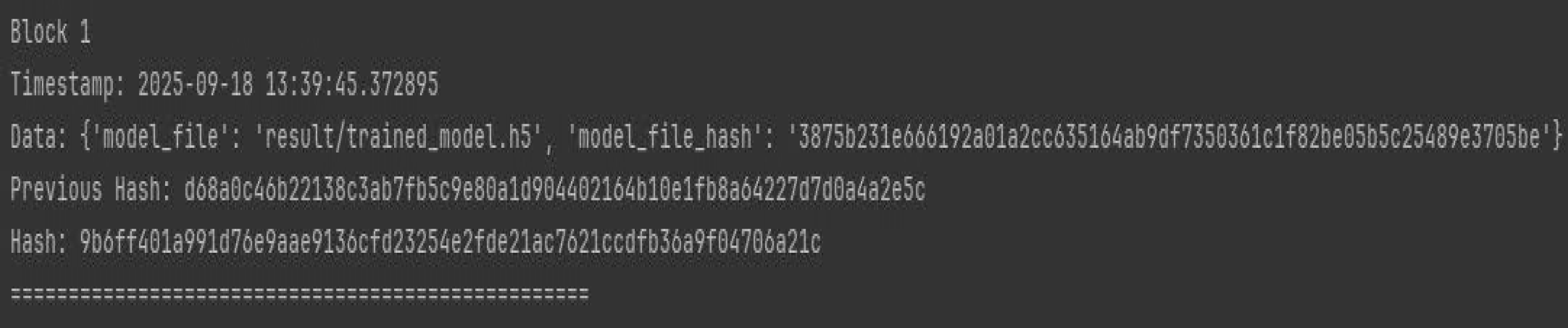
The blockchain records begin from the Genesis Block that initializes the ledger without references. From there onwards, each block contains hash representations of the AI evaluated results that are cryptographically linked to the previous block. For example, Block 1 (Figure 14) holds the reference to the model file (trained_model.h5) and the hash that is chained to Block 0 by including that Block 0 hash as the previous Hash-the extra safeguards for integrity and tampering.
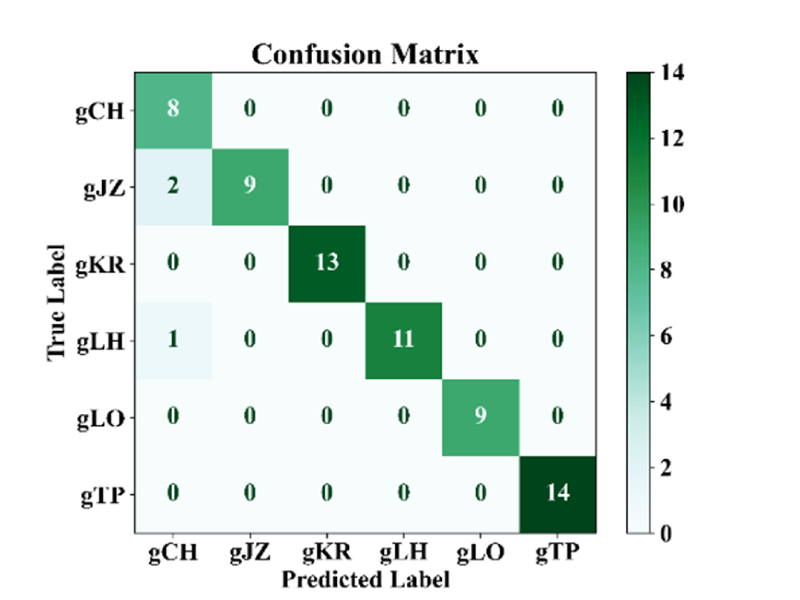
Confusion matrix of classification results for six classes (gCH, gJZ, gKR, gLH, gLO, gTP).
Credential management is created through block-creation rules emulating the behaviour of a smart contract. Upon learner-end-user completion of a performance evaluation, results are hashed and recorded in a new block, with the block externally timestamped.
Credential format

Thus, this code ensures the learners privacy while providing verifiable and tamper-proof performance credentials.
Results
Multiple metrics were calculated for various aspects of performance assessment in multi-class classifications, along with accuracy, loss, ROC curve, precision and recall curve, KS statistics, and error rates concerning six target classes of gCH, gJZ, gKR, gLH, gLO, and gTP. Standing at an empowered 95.52% overall accuracy, the model really turned out to be the most reliable predictor on an individual basis, representing most of the classes with high precision, recall, and F1-score. Few instances of misclassification, strong generalization, and clear class separation as inlaid among Figures 5–12 yielded excellent results especially for gKR, gLO, and gTP.
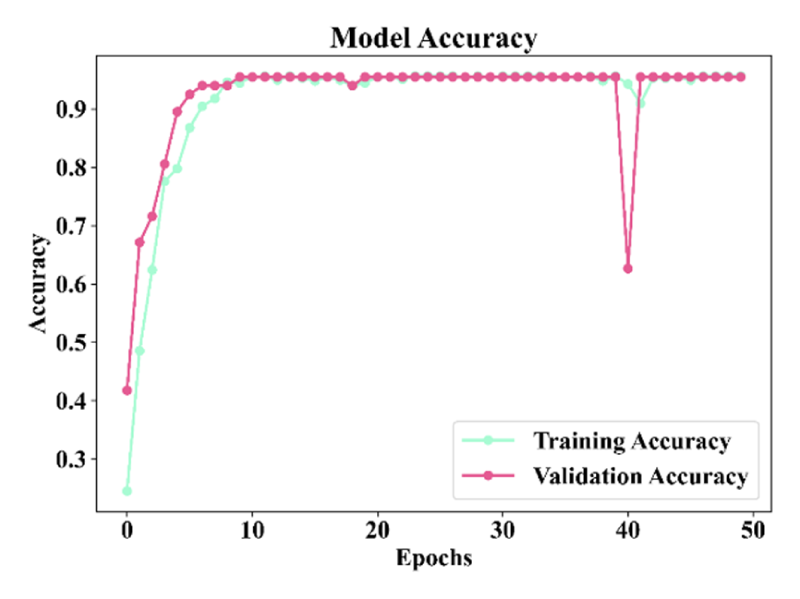
Accuracy trends across epochs for training and validation phases.
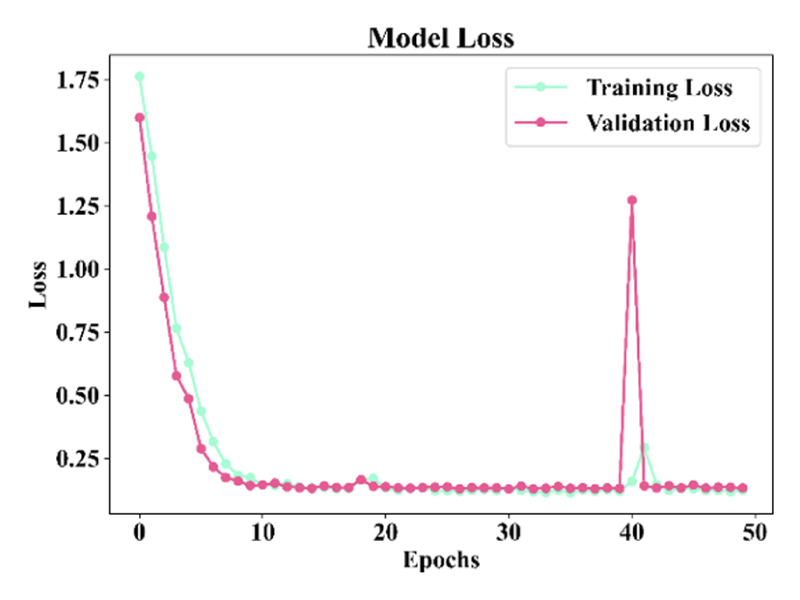
Loss curve over epochs for training and validation phases.
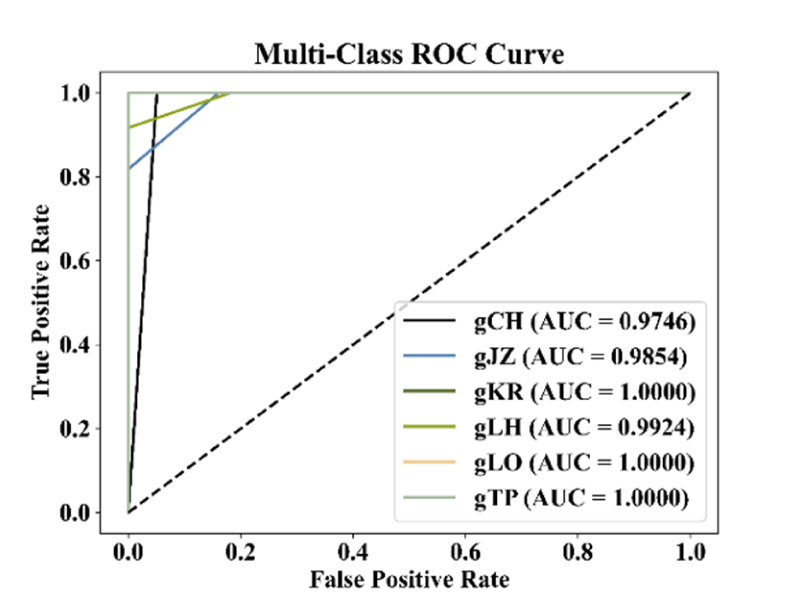
Multi-Class ROC curve with AUC scores for six-class classification model.
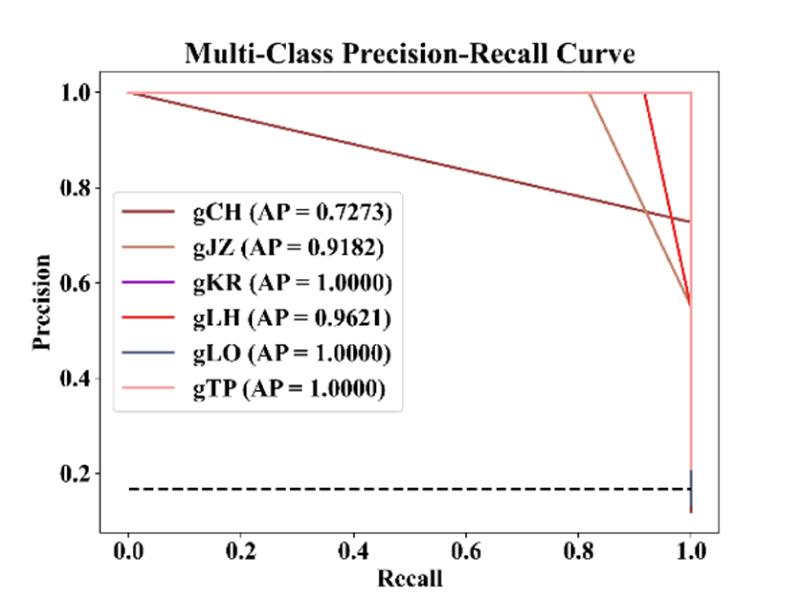
Multi-Class precision-recall curve with average precision scores for each class.
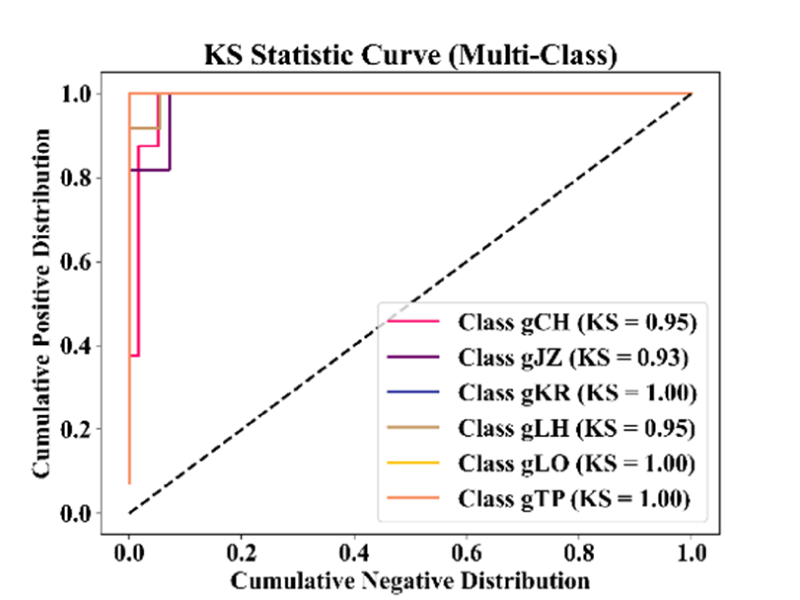
Multi-Class KS statistic curve showing distribution separation across six classes.
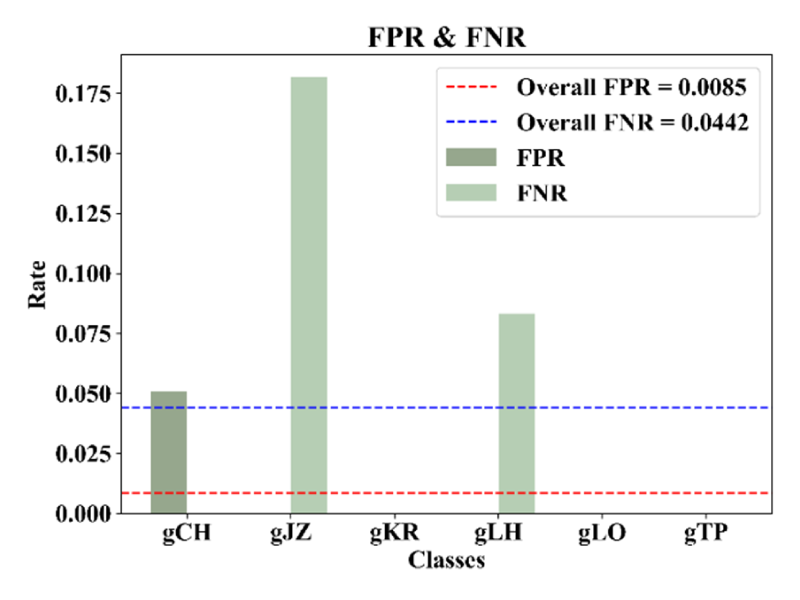
Class-Wise false positive and false negative rates with overall error benchmarks.
Class-Wise precision, recall, and F1-score with overall performance benchmarks.
Blockchain output for block 0.
A confusion matrix is a powerful tool for measuring the effectiveness of a classifier by seeing how predicted labels fit into true labels. As a square matrix, its rows correspond to one true class while columns stand for one predicted class; diagonal elements represent the correct classifications, and off-diagonal elements represent the misclassifications. Hence, it perfectly clears that classes confused for another analysed for accuracy, precision, recall, and finally, error distribution in the model. As such, it constitutes a critical ingredient for studying the strengths and weaknesses of a model in a multi-class classification problem.
Showing the result of such confusion matrix considerations for six classes-gCH, gJZ, gKR, gLH, gLO, and gTP-can be seen in Figure 5. Those entries along the diagonal indicate mostly correct classification, with thirteen gKRs being classified correctly and fourteen gTPs being correctly classified. In contrast, off-diagonal values indicate instances of misclassification-two instances of gCHs being misclassified as gJZs, and one gJZ was misclassified as a gCHR. The green-tone gradient would have been very helpful in identifying the frequency at which certain predictions take place and would have instantly indicated where the model is doing well or on which classes it is sticking; hence, this figure is more suitable to be checked for class-wise accuracies and then used further to derive insights on model improvements.
Model accuracy
Enhanced through training and validation, TransCNN-DSSS gains its greater accuracy by employing Transformer-attention mechanisms integrated with convolutional feature extraction. Being a hybrid model, it detects global dependencies while paying local attention to patterns to accelerate convergence velocity and maintain stability over the range of about a few hundred epochs. Early in training, the training accuracy steadily increased, with validation accuracy following closely behind, and the greatest validation accuracy attained nearly simultaneously with or with little divergence from training accuracy. This is evidence of the generalization ability and robustness of the model. These are exactly the qualities very much needed when handling extremely tricky multi-classification problems where spatial and contextual panoramas take precedence.
The plot in Figure 6 depicts the accuracy of the model for 50 epochs of training with training and validation data. Using the training datasets, the training accuracy was rising sharply at first but slowly became constant at about 0.95 after 10 epochs, thus showing that the training algorithm was successfully working. Curiously enough, the validation accuracy shown in Pink, nearly retraced the very same footsteps until somewhere around the 38th epoch when suddenly it dipped for a brief moment and then climbed back-A very brief sign of overfitting or perhaps some anomaly in the data. So, this is probably to affirm the model's ability to generalize as training and validation are only slightly divergent tests of the model's robustness over the epochs.
Model loss
Whilst training the TransCNN-DSSS, the loss curve experienced some smoothness, and the losses for both training and validation sharply fell during the first few epochs and then stabilized at very low values, which constitutes good learning and model convergence. A mild increase in the validation loss about epoch 41 probably signalled overfitting, due mostly to some anomaly in the data; an overfit model would have gone down in performance, but the model instead managed to come back out pretty well towards good generalization. Attending to great complexities in joint consideration by attention mechanisms and convolutional layers, the model paid attention to patterns enough to actually keep losses to a minimum and be predictive across all classes.
Loss progress for 50 epochs is shown, comparing training with validation time phases on Figure 7. Its pale green line shows that, within the first few epochs, training loss dropped sharply and later remained below at 0.2, which means the network was well trained and converged. The pink line shows a similar approach until around epoch 40 when a sharp rise starts, indicating possibly some overfitting or irregularity in the validation data. While this anomaly does indeed exist, the curves mostly sit low during these epochs, showing that both models fit well and generalized well.
Multi class ROC curve
Multi-Class ROC Curve enlarges the original ROC curve in cases where there are more than two classes to evaluate classification models. Since ROC curves are inherently designed for a binary classification, multi-class problems are tackled by conversion into several binary ones- ordinarily according to the One-vs-Rest (OvR) approach. This, in turn, entails plotting of one ROC curve per class so that each class is taken as positive and all others as negative. Many AUC value averages on a macro and micro level can be provided as a summary of the performances to gain insight into the overall aptitude of distinctions made by the model.
The classification performance concerning six classes, viz., gCH, gJZ, gKR, gLH, gLO, and gTP, is exemplified in the multi-Class ROC curve in Figure 8. The curve plots the True Positive Rate (TPR) against the False Positive Rate (FPR), the one lying contrary to the top left corner holding the instance of better classification ability. To reflect some numbers with some comments, the AUC values for one class, again for half of the five remaining classes, are 1.000 for gKR, gLO, gTP, and more than 0.97 for others, indicating extremely good discriminability of the classes. For reference, the dotted diagonal line signifies random choice, contrastingly complimenting randomly chosen classification ability for all classes.
Multi-class precision-recall curve
This curve graphically shows the predictive power of a classifier for each class in a multi-class setting where class imbalances can exist. Since these conceptual measures of precision and recall are defined for binary classification only, the normal approach for the multi-class setting involves the use of the One-vs-Rest strategy: a separate curve is plotted for each class by considering it as the positive class while all of the remaining classes are considered negative. The curve exhibits trade-offs between precision (how many predicted positives are correct) and recall (how many actual positives are captured) at various thresholds. Performance can then be averaged across all classes, as macro, micro, or weighted, depending on whether the intent is to weigh each class equally, each instance equally, or in proportion to class size.
The curve shown in Figure 9 describes a more detailed classification performance across six classes: gCH, gJZ, gKR, gLH, gLO, and gTP. Each curve expresses precision on the y-axis versus recall on the x-axis; the higher these curves are, the more trustworthy the level of prediction. AP scores show the model to have superior performance on gKR, gLO, and gTP (all with 1.0000), the gLH also performs well, well above 0.9, as does gJZ. The comparatively lesser gCH class, with an AP of 0.7273, thus still supports some improvement for its precision-recall consistency. The dashed black curve near the bottom is a baseline reference line, which also stresses the model's efficiency at class distinction.
Multi-class KS statistic curve
Multi-Class KS (Kolmogorov-Smirnov) statistics are rare but useful tools in the assessment of classification models that have more than two classes. In binary classification, it is used to calculate the maximum separation between the cumulative distributions of predicted probabilities for events and non-events. Different KS statistics are then calculated for each class using the One-vs-Rest approach. For each class, the KS curve plots the cumulative distribution of predicted probabilities for that class against all other classes. The KS statistic is the greatest vertical distance between these two curves. The greater the KS, the better the class separability. Though rarely used in comparison to ROC or Precision-Recall curves, it remains one of the strongest indicators of the discrimination power of a model, especially in imbalanced datasets.
In Figure 10, the curve evaluates the model's ability to discriminate between positive and negative instances of different classes: gCH, gJZ,gKR, gLH, gLO, and gTP. Each curve shows the cumulative distributions for either positive or negative predictions, the KS statistic being the maximum distance between the two. The model is doing fabulously for gKR, gLO, and gTP, where a KS of 1.00 has been secured, with gCH, gLH, and gJZ following closely behind with KS values greater than 0.93. The dashed diagonal is baseline so that the farther the curve is from the line, the more powerful the model's discrimination for that class.
FPR and FNR
The False Positive Rate and False Negative Rate are the major two criteria to measure the performance of classification, especially those working under the binary scheme. The FPR measures the rate at which an actual negative was classified as a positive: it quantifies how often the model produces a false alarm. It is given by the following; FP / (FP + TN). On the other hand, the FNR measures the rate of actually positive events classified wrongly as negatives, thus representing missed detections: it is calculated as FN / (FN + TP). High FPR triggers unnecessary activities, e.g., emails that are completely legitimate are marked as spam; high FNR can be fatal in areas like medical diagnosis, where a patient missing the real case could suffer.
This Figure 11 shows the False Positive Rate and False Negative Rate for six classes, namely, gCH, gJZ, gKR, gLH, gLO, and gTP. These rates show the frequency with which the model erroneously categorized objects of one class as another: more specifically, the FPR shows the rate of false positives within other classes with respect to the designated class, while the FNR indicates the rate of false-negative for the specified class. Class-specific FNR values are provide in a bar chart. For gJZ, class FNR is the highest and, therefore it would seem that the class would be the most difficult for the model to correctly classify. Two dashed lines, a red one for the overall FPR (0.0085) and another blue one for the overall FNR (0.0442), are present for convenience to compare the individual performance of the classes against the respective averages. It provides an insightful view into determining classes that need fixing in the model for lower misclassifications.
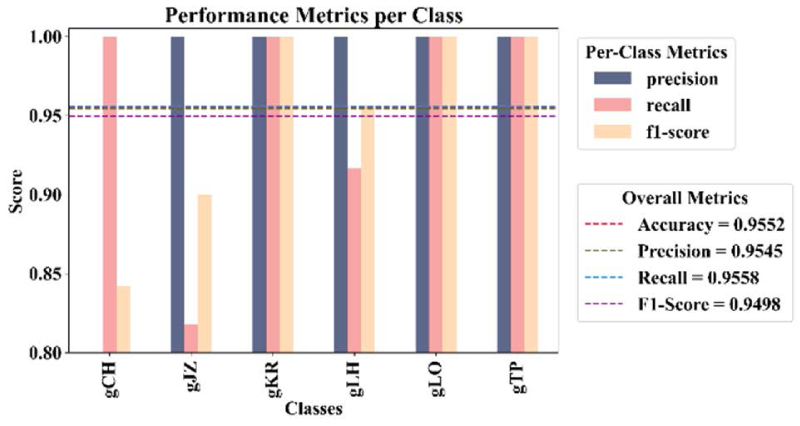
Performance metrics
Performance metrics are used as measures to determine the efficiency of a machine learning model; however, they are applied to classification problems. Some of the mostly utilized metrics are precision, recall, and F1 score. Precision is the ratio of true positive instances to predicted positives: it sees whether the model refrains from raising false alarms. Recall, on the other hand, identifies how many true positives out of all the positive instances that can be detected: it measures the importance of detecting relevant instances. The F1 score is the harmonic mean of precision and recall: it unites the two into a single entity, attempting to balance false positives and false negatives. It is hence used where false positives are considered as bad as false negatives. While doing so, this is very crucial when the dataset analysed is imbalanced since accuracy can prove a nearly meaningless metric in such cases. Recall, precision, and F1 gave researchers invaluable insight into how reliable models are and how decisions are being made.
Here, Figure 12 shows the classification performance amongstthe six classes including gCH, gJZ, gKR, gLH, gLO, and gTP, in terms of precision, recall, and F1-score. The three coloured bars allow us to directly compare model performance across the three evaluation criteria. The overall figures are drawn as dashed lines, with accuracy at 0.9552, precision at 0.9545, recall at 0.9558, and F1 at 0.9498. In this way, they act as references against which performance is evaluated for each class. These classes perform above the benchmark scores in most cases, displaying fairly balanced performances and hence reliable and consistent classification. That said, slight deviations in some performances may pinpoint two or three weak areas to focus on for further improvements.
Blockchain outputs
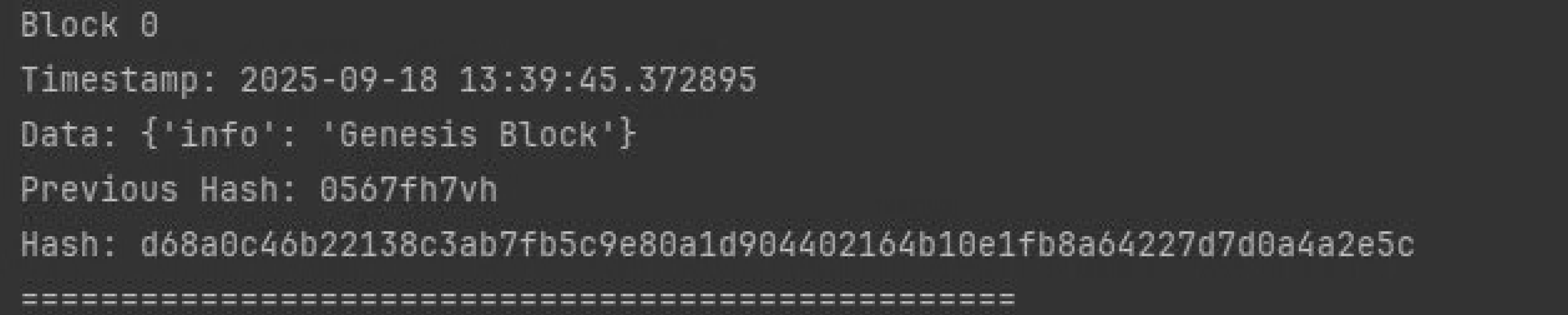
The credentials get transferred from the private blockchain onto the public blockchain, where the dance performance undergoes secure recording. The first two blocks in the chain are shown in Figure 13. Block 0 is the Genesis Block, which initializes the ledger with no references to other blocks. Block 0 is the Genesis Block, initializing the ledger without any references.
Blockchain output for block 1.
The Block 1 of Figure 14 holds the model file as evaluated by the AI, together with its hash (3875b231e6061…), whose previous hash (d68a0c46…) links it cryptographically with Block 0.
The block's resultant hash (9b6ff401…) establishes immutability and prevents a retroactive modification of the credential. These results confirm the provisions of the proposed blockchain layer for verifiable, timestamped, and tamper-proof storage of credentials.
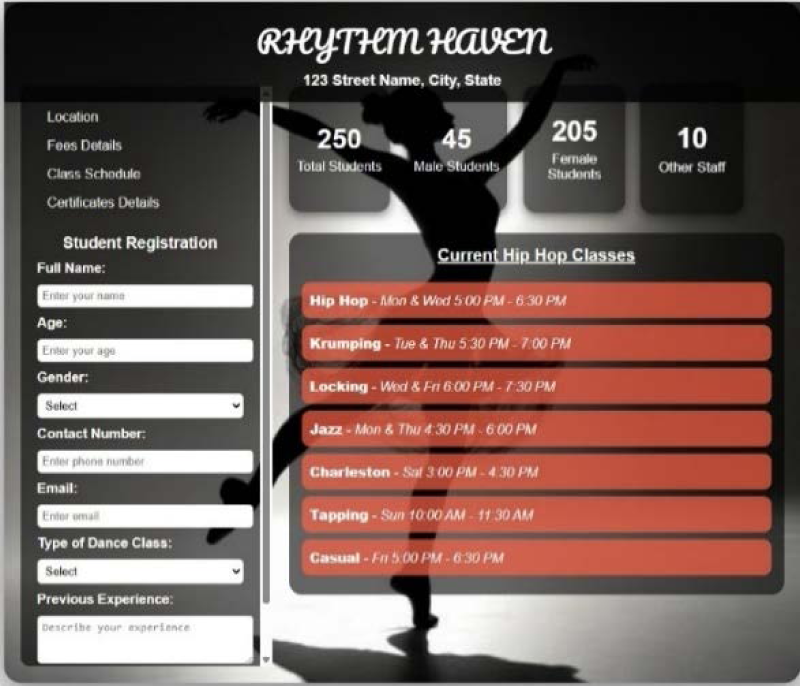
Such an Interface is a unique dynamic engagement channel between budding dancers and the studio mechanism; therefore, it offers a very attractive and intuitive experience. Figure 15 above displays a simple registration form where students enter age, contact info, dance styles they want to study, and experience to ensure the customization of onboarding. The left navigation pane or panel essentially allows quick access to modules on class schedules, fee information, and certificate tracking, while the right-hand panel displays information on a hip-hop class that is currently ongoing for swift enrolment/action. The two-panel interface thus largely makes getting logistical and academic information simpler, with open enrolment and scheduling. Real-time statistics on students and staff provide a feeling of trust among the people looking at this interface and, thus, generate an inclusive feel, whereby Rhythm Haven becomes a joyful working paradise for learners and administrators.
Interactive dashboard of rhythm haven dance studio.
The present study boldly takes the step of working to establish a completely transparent and objective dance evaluation procedure through the integration of AI and blockchain technologies. In dance, evaluations have long been stigmatized with subjectivity and mainly dependent upon the opinion of individual teachers. But we now start entering a new data-driven valuation age, where AI performance analytics will be used to analyse posture accuracy, rhythm consistency, and expressiveness for objective and data-driven assessments. The blockchain then acts as an additional layer that makes it all quite reliable, as it provides a decentralized, immutable record of credentials, such that their evaluations cannot be changed, and these credentials can be verified by other institutions. These two technologies together thus constitute a foundation from which dance education can start working toward standardization of evaluation and credentialing processes, thereby building greater trust in these increasingly formalized systems worldwide.
Some other barriers could be imposed upon dance education. There are plenty of trading and selling points in the dance art where, basically, subjective interpretation and creativity matter. Another constraint stands in deployment and operation costs that may lead to very few people knowing about AI and blockchain in the first place and any cultural shift with in dance institutions if these are to repel dance applications. Yet here in this study, the TransCNN + DSSS approach is illustrating how these technologies could be parametric to the specialty of dance performance analyses-that is giving feedback in real time, open and publicly verifiable recording of accolades, and the like. So, basically, the application goes far beyond dance education on how at least one more art domain can be worked with in emerging technology, thereby carving a furrow for a purer landscape of data-driven creativity and education.
Conclusions
A unified dance performance evaluation system is proposed, within which the TransCNN + DSSS system merges AI-based performance analysis with blockchain-based credentialing. The model analyses various aspects of dancer performance, such as body posture, timing, style, and expressiveness, using a hybrid CNN-LSTM-Transformer architecture. The blockchain ensures that results cannot be tampered with and then provides the verifiable credential to the dancer that can take him or her a step closer to a common goal.
The TransCNN + DSSS method produced an accuracy of 95.52%, precision of 94.56%, recall of 94.87%, and F1-score of 94.71%. All the performance metrics above duly attest to the system's abilities to analyse dance performance, provide it with an objective evaluation, and, in turn, give valuable feedback for teaching both dance teachers and students. The novelty lies here in the merging of AI-based performance analysis with blockchain-enabled credentialing to subjectively and securely address an issue that before was decided upon subjectively.
Future work
In the future, one could envision further development of the Expressiveness Index in the direction of measuring the more dynamic evaluative perspective on physical dance and the more subjective kind. Afterwards, technical support for more demanding dance styles might be included in the framework with the addition of soft-gamification elements. Larger studies will look into the scaling potential in large-scale educational settings and crop up as to whether it could be useful as a professional dance certificate.
Footnotes
Consent to publication
All authors consent to the publication of this work.
Author contribution
Qinglun Shen conceptualized the study, developed the methodology, and drafted the manuscript. Dongxian Yu contributed to the AI modelling, performance analytics, and validation of results. Both authors reviewed, edited, and approved the final manuscript.
Funding
The authors received no financial support for the research, authorship, and/or publication of this article.
Declaration of conflicting interests
The authors declared no potential conflicts of interest with respect to the research, authorship, and/or publication of this article.
Data availability
The datasets generated and/or analyzed during the current study are available from the corresponding author on reasonable request.
