



Abstract
The Istat modernisation programme was focused on the centralisation of cross-cutting functions like data collection and methodology, the development of the Integrated System of Statistical Registers (ISSR) as the foundation of statistical production, and the exploitation of new data sources. The modernisation made it necessary to update the existing quality assurance system. Consequently, Istat defined a five-year quality strategy in 2020–2021, endorsed by top management. Its implementation is coordinated by the Quality Committee and supported by the Quality Manager. The strategy focuses on quality assessment and is differentiated by statistical process type, having regard to the varying availability of quality assurance tools. A checklist was applied to traditional processes, leading either to an internal conformity label or to improvement actions, and was complemented by an internal audit programme covering three processes per year. For the ISSR, an ad hoc quality framework, based on GSBPM and GSIM metadata standards and specific quality indicators, was developed for documentation and monitoring purposes and is currently being implemented. For statistics based on new data sources, efforts focus on identifying the main quality issues and the assessment methodology. The paper highlights achievements and lessons learned and outlines directions for the next quality strategy.
Introduction
Quality assurance frameworks for Official Statistics developed at national and international levels, such as the European Statistical System (ESS) Common Quality Framework,1,2 or the United Nations (UN) National Quality Assurance Framework (NQAF), 3 set general Principles to comply with, and provide generic indications on how to reach such compliance, in the form of Indicators, Methods, Requirements or Elements to be assured. Several methods and tools that can support National Statistical Institutes (NSIs) in the implementation of national quality assurance frameworks have also been developed, e.g., the United Nations Economic Commission for Europe (UNECE) Generic Statistical Business Process Model (GSBPM), 4 the Single Integrated Metadata Structure (SIMS), 5 the ESS Handbook for Quality and Metadata Reports 6 and the Roadmap for the implementation of a National Quality Assurance Framework for Official Statistics. 7
Despite the clarity of the objectives and the availability of useful supporting tools, each NSI should find its own way to build or improve its quality assurance system, depending, for example, on its background in quality management, its quality culture, the commitment of the leadership to quality activities, the available resources, and the organisation and context of statistical production.
As described in section 2, Istat has a long tradition in quality management and could count on a set of currently used and sound supporting tools for quality assurance of traditional statistical processes like sample surveys or statistical compilations. The modernisation programme launched in 2016 caused a substantial change in the Istat statistical production paradigm, whose main characteristics are highlighted in section 3. In 2020 this new context induced top management to renew Istat's commitment to quality by setting up a new organisational structure for coordinating quality management (section 4). A five-year quality strategy was approved and started to be implemented in 2021. An overview of the overall strategy is presented in section 5 while sections 6 to 8 describe the core activities carried out in the context of its implementation, mainly related to quality assessment procedures. Being at the end of the five-year implementation period, it is possible to identify the most relevant achievements obtained as well as lessons learned and remaining challenges. These, together with emerging needs, will be the basis for the definition of the next Istat quality strategy (section 9).
Background
Quality management has a long tradition at Istat. It dates back to the ‘90 s, when Istat adopted a gradual but systematic approach in order to ensure the quality of statistical products, processes and services offered to the community. By “systematic approach” is meant that every innovation introduced in terms of methods or tools to assess or improve quality is designed, developed, tested, finalised and, afterwards, its application is extended to all the Istat statistical products or processes to which it is applicable, and whenever possible also extended further to the National Statistical System.
Process quality orientation has always been an Istat defining trait. Since the early 2000s, tools for statistical quality control, such as control charts, have been introduced in surveys for monitoring purposes.8–10
The documentation of statistical processes and standard quality indicators is another distinctive characteristic of Istat's approach to quality. The availability of documentation allows traceability and it is the base for quality reporting, improving clarity and accessibility of Official Statistics. Quality indicators act as alarm bells that allow prompt interventions in cases of “critical” situations. Process and product oriented standard quality indicators have been defined and their calculation has been, as far as possible, integrated into survey processes. The SIDI-SIQual system11,12 (SIDI stands for the Italian “Sistema Informativo di Documentazione delle Indagini” (Information System for Survey Documentation), SIQual stands for the Italian “Sistema Informativo sulla Qualità dei processi statistici” (Information System for Quality of statistical processes).), which is the Istat official system for reference metadata and quality documentation, firstly released in 2001, represents a precursor of modern metadata systems. It stores metadata and quality indicators related to about 500 statistical processes carried out by Istat in the last 25 years. The system is composed of SIDI, the web application used internally in Istat to collect metadata and quality indicators, and SIQual, the web application allowing the browsing of the information collected through SIDI. SIQual has 2 versions, the first one is available on the Istat intranet and includes quality indicators, while the second one is publicly available online (https://siqual.istat.it) and includes only metadata describing the statistical processes. The internal version of SIQual allows a more detailed assessment e.g., to monitor the timeliness of a statistical process over time as well as to compare the non-response rates of different surveys, or to make more complex analysis to evaluate the impact on quality of specific events or policies.13,14 As an example, in Figure 1 the timeliness of final results for one annual Istat survey over the last editions is reported. The over-time trend is clearly improving, except for the sharp reversal in 2020 that was due to delays caused by the Covid-19 health emergency.
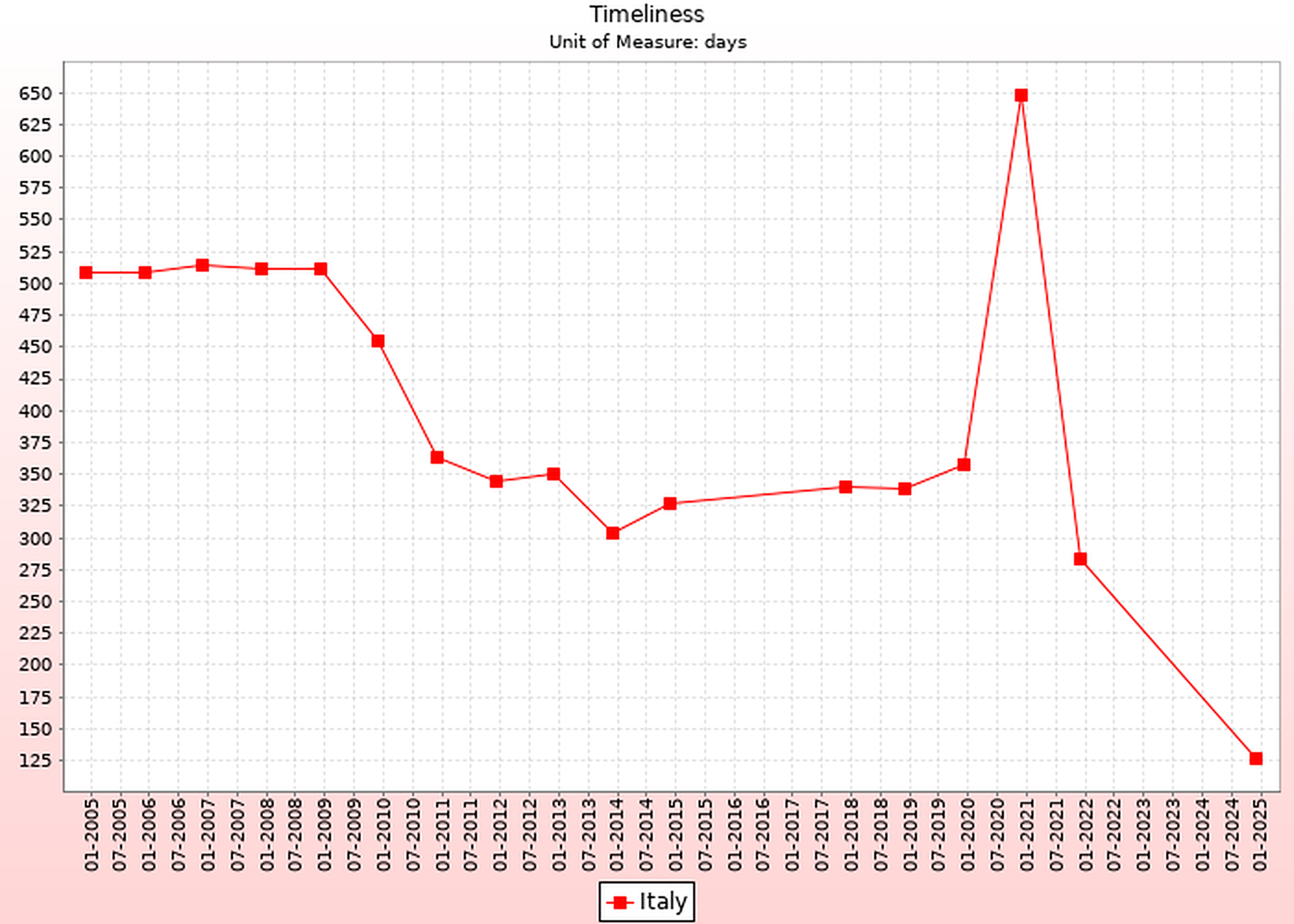
Over-time trend in timeliness of the Istat annual survey EU-SILC - European Union Statistics on Income and Living Conditions.
More recently, the availability of such rich qualitative and quantitative documentation of statistical processes paved the way for the production of quality reports according to the ESS standard SIMS. Indeed, the quality reports required by Eurostat to accompany European statistics could be partially filled in through the information already available in SIDI-SIQual. 15 Similarly, national quality reports published in Italian on the Istat website (named “schede standard di qualità” (https://www.istat.it/classificazioni-e-strumenti/strumenti-per-la-qualita/schede-standard-di-qualita/) are derived automatically from the system and updated annaully. 16 Differently from SIQual, such national quality reports also make quality indicators available to external users, such as the over-coverage rate, the unit non-response rate, the imputation rate, the timeliness and the length of comparable time series.
Beside documentation and quality reporting, the adoption of the European Statistics Code of Practice (ES CoP), in 2005 shifted the focus of quality management towards implementing the Indicators of the Code's Principle 4 on Quality Commitment. 1 A Unit in charge of quality management already existed. Quality Guidelines, first for surveys and afterwards for statistics based on administrative data, were developed.17,18 They contain the Principles for the design and implementation of statistical processes and the guidelines to comply with such Principles. They have been used as a benchmark for statistical processes’ quality assessment. Indeed, from 2010 to 2016 about 80 statistical processes were assessed in a cycle of audits and self-assessments against the Principles of the Quality Guidelines, covering the most relevant Istat statistical processes. 19 A first Quality Committee was created to oversee such assessment procedures. Many improvement actions, mainly connected to updating documentation and improving editing and imputation procedures, were implemented as a consequence of this cycle.
Based on its internal experience, Istat has also strengthened its coordination role within the Italian National Statistical System (Sistan): as early as 2010, the first Italian Code of Official Statistics (https://www.istat.it/it/files/2011/11/codice_statistica.pdf) was issued. Furthermore, from 2018 to 2021, an assessment programme has been implemented for the statistical processes of the Other National Authorities (ONAs) that produce European statistics: in that period 19 statistical processes conducted by the ONAs were audited by Istat experts. The reference for the assessment was the Quality Guidelines for the statistics of the National statistical system, developed, in Italian, by Istat, in 2018. 20
Like many NSIs, facing reduction in human and financial resources and rapidly declining survey response rates, Istat started a modernisation programme about ten years ago,
21
aimed at improving efficiency and exploiting administrative and new data sources. Indeed, the main pillars of the Istat modernisation programme were:
- the centralisation of Data Collection, Methodology, Information Technology (IT) and Data Dissemination, with the creation of ad hoc central directorates, that offer specialised support services to thematic production units, in order to improve efficiency and overcome the stovepipe organisation of statistical processes; - the development of the ISSR as the foundation of statistical production, in order to exploit administrative data sources, reduce response burden and limit the possible impact of survey non-response in statistical output accuracy; - the investment in the use of new data sources for Official Statistics production in order to: complement traditional data sources with auxiliary information to improve accuracy, substitute traditional data sources to reduce response burden, and produce new outputs to improve the relevance, timeliness or granularity of Official Statistics.
These innovations caused a complete revolution in Istat's statistical production organisation that took some years to consolidate. In 2020, the new organisation with the centralisation of cross-cutting functions was consolidated, the main statistical registers of the ISSR were built, and a procedure for publishing experimental statistics based on new data sources or new methodologies was defined. Although the modernisation process was far from being concluded, the situation was stable enough to allow a start to be made in updating and adapting the quality assurance system. Although quite advanced, the existing system was largely oriented towards traditional statistical processes (e.g., direct surveys, statistics based on administrative data, and statistical compilation such as the National Accounts). Similar challenges, connected with the introduction of multi-source statistics and the use of new data sources, are being faced by many NSIs, and Istat's experiences and lessons learned could therefore be helpful for the international statistical community.
Istat organisation for quality
Despite the Istat tradition in quality management, a renewal of the quality commitment was deemed necessary to adapt the quality assurance system to the new production environment. The quality organisation model introduced from 2020 is based on a centralised yet strongly participatory governance model, designed to ensure coherence, effectiveness and continuous improvement of statistical processes and outputs across the Institute and, more broadly, throughout the Sistan. At the core of this model lies a clear separation – combined with strong functional integration – between strategic guidance, coordination and operational implementation. Strategic responsibility for quality is ensured through the Quality Committee (QC), which was reconstituted from September 2020, chaired by the Director of Methodology and composed of middle management representatives from different Istat Departments and Directorates. All the Directorates directly involved in statistical production, both from the thematic (e.g., economic, environmental, social and demographic statistics Directorates) and the supporting (i.e., IT, methodological, dissemination and data collection Directorates) sides are represented, as well as the Directorate for external relations, the Directorate for the coordination of the Sistan, the Directorate for human resources and the President's Office. The QC oversees all the activities related to quality carried out at Istat, acting as the main decision-making and steering body for quality-related initiatives, while operational and methodological responsibilities are entrusted to dedicated structures, namely, the Quality Manager (QM) and a scientific secretariat. This organisational arrangement reflects both the increasing complexity of statistical production and the need to maintain alignment of national practices with the ESS framework and requirements, in particular with the Principles of the ES CoP
1
and, after 2023, with the recommendations emerging from the third round of Eurostat Peer Reviews (Recommendations and improvement actions from third round of Eurostat Peer Reviews can be found at https://ec.europa.eu/eurostat/web/quality/peer-reviews/third-round). Within this framework, the QC plays a pivotal role in defining the Institute's quality strategy, translating high-level principles into concrete objectives, and ensuring that quality considerations are systematically embedded in statistical processes, from design to dissemination. As the QC is conceived as a cross-cutting body, representing different domains, departments and professional profiles within Istat, it is able to reconcile methodological rigor, production constraints and user needs. Its mandate includes overseeing the definition and periodic updating of the quality strategy for Official Statistics, coordinating quality assessment tools such as audits and checklists, monitoring the development of methodological and quality frameworks, guidelines and metadata systems, and promoting harmonisation and standardisation across domains. In this sense, the QC is not merely an advisory body, but a governance instrument endowed with clear responsibilities and decision-making powers, aimed at ensuring consistency and accountability in quality-related choices. Closely connected to the QC's strategic role is the function of the QM, who acts as a key interface between governance and operations. The QM is both a member of the QC and the head of the central team in charge of quality management. The team is placed in the Methodology Directorate and the staff of the team is also included in the scientific secretariat of the QC, together with representatives of other Directorates. The QM supports the QC by providing methodological expertise, ensuring continuity of action over time, and facilitating the implementation of agreed initiatives. This role is particularly relevant in a large and diversified organisation such as Istat, where quality risks fragmentation if not supported by a stable reference point. The QM also plays a crucial role in fostering a shared quality culture, promoting awareness of quality principles, encouraging the adoption of common tools and standards across statistical domains and participating in international institutional contexts related to quality issues, like ESS, UN and UNECE groups. In addition, the QM represents an important link between Istat and the wider Sistan, contributing to the dissemination of quality standards beyond the Institute and supporting capacity-building initiatives for other producers of Official Statistics. The integration of the quality governance model with the Sistan dimension is in fact one of the defining features of the current organisational setup. Istat, as the coordinator of the Sistan, has the responsibility not only to ensure the quality of its own outputs, but also to promote coherence, comparability and reliability across statistics produced by different institutions. The QC furthermore extends its scope of action to initiatives aimed at improving the quality of statistics produced within Sistan, such as the development of training programmes, guidelines and tools tailored to heterogeneous producers. This systemic perspective strengthens the role of the QC as a driver of integration and alignment, but also increases the complexity of its mission, as it must balance the need for flexibility with the enforcement of minimum quality requirements. The benefits associated with this organisational choice are significant (Table 1). First, the existence of a formally established QC ensures visibility and institutional legitimacy to quality issues, preventing them from being treated as purely technical matters confined to specialised units. Quality becomes a strategic concern, explicitly addressed at governance level and integrated into decision-making processes. Second, the participatory composition of the QC fosters dialogue and mutual understanding among different parts of the organisation, facilitating the identification of common solutions and reducing the risk of silo-based approaches. Third, the combination of strategic guidance and operational support, embodied in the interaction between the QC, the QM and the scientific secretariat, enhances the effectiveness of implementation, ensuring that strategic decisions are translated into concrete actions and monitored over time. Fourth, the contribution to international activities related to quality strengthens the credibility of Istat at international level and supports continuous improvement through benchmarking and external assessment. At the same time, this organisational model is not without challenges (Table 1). One of the main challenges concerns the balance between central coordination and domain-specific autonomy. While harmonisation and standardisation are essential for ensuring overall quality and comparability, statistical domains differ significantly in terms of data sources, methods, production cycles and user needs. If not carefully managed, central quality requirements may be perceived as overly rigid or burdensome, potentially generating resistance or compliance-driven behaviours rather than genuine quality improvement. This is often the case when statistical processes are documented for the first time in metadata systems or when quality indicators are provided according to fixed standards. The most common first reaction is
Advantages and challenges of the Istat Organisation for Quality Management.

Advantages and challenges of the Istat Organisation for Quality Management.
The first task assigned to the QC and the QM in their mandate was the definition of a multi-year quality strategy to be implemented by Istat. In 2020–2021 a five-year quality strategy was developed and endorsed by Istat top management in October 2021. 22 The quality strategy was aligned with the ES CoP and formulated taking into account four main principles: continuity with the existing quality approach; innovations to address emerging needs; sustainability, given the limited resources; and collaboration between different Istat structures. Another general characteristic of the quality strategy is the reference to existing international standards. For example, metadata models as well as process quality frameworks are based on UNECE modernisation models like GSBPM, and quality reporting reflects the ESS standard SIMS. The aim is to avoid reinventing the wheel by considering and using existing sound references.
While the core of the quality strategy is related to quality assessment methods and tools for different types of statistical processes, as described in the next sections, other elements were also considered. A summary of the main achievements, lesson learned and remaining challenges related to the implementation of the quality strategy from 2021 to 2026 is reported in Table 2.
Achievements, lessons learned and remaining challenges for the istat quality strategy 2021–2026.
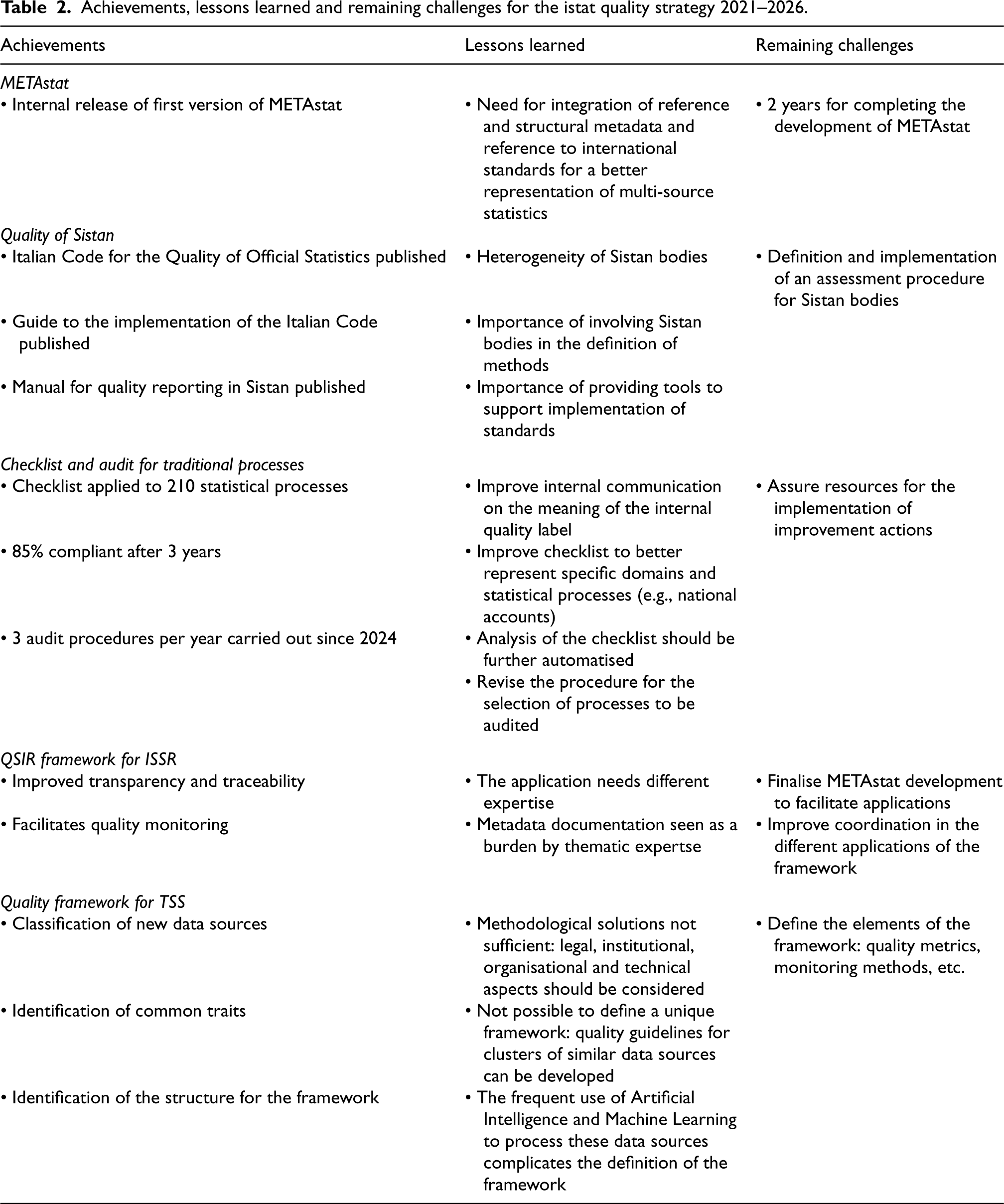
Achievements, lessons learned and remaining challenges for the istat quality strategy 2021–2026.
First of all, the need to revise and update existing quality tools. As mentioned in section 3, Istat had already adopted Quality Guidelines, quality reports and a rich information system with metadata and quality indicators, SIDI-SIQual. However, in 2020, the latter was not only almost obsolete from a technological point of view but also not able to appropriately describe complex multi-source statistical processes such as statistical registers. Thus, the quality strategy promoted the design and implementation of a new and more comprehensive metadata system, including not only reference metadata and quality indicators like SIDI-SIQual, but also structural and semantic metadata. 23 While reference metadata describe the contents, the methodology and the quality of statistical processes and products, structural metadata are needed to identify statistical data. Structural metadata include, e.g., variables names, codelists and classifications. The different modules of the new metadata system, called METAstat, will be released gradually. METAstat development will continue for the next two years when it will replace completely SIDI-SIQual.
The quality strategy also took into account the different stakeholders of statistical production, such as the users, the data providers and the internal staff, respectively with activities aimed at measuring their satisfaction, reducing response burden and improving the quality culture. For most of these activities the collaborative organisation of the QC is fundamental since responsibilities for the relationships with users and respondents rely respectively on the Data Dissemination and the Data Collection Directorates and the QC provides a place for discussion and coordination. Many improvements have been achieved in the relationships with stakeholders in recent years. An example is the establishment of the Contact Centre for users as the single contact point with Istat.
Finally, attention is placed on the coordination and support of the Sistan, that includes ONAs and other bodies (non-ONAs) producing statistics. Indeed, the Sistan is quite complex if compared to many other National Statistical Systems. It was established by law in 1989 and includes not only Ministries or other public administrations like the National Social Security Institute, but also local public administrations like Regions and Municipalities. In total, more than 3,000 Institutions are currently included. Among them, only 13 are ONAs, since they are responsible for the production of European statistics. The ONAs are subject to the European quality framework requirements, which include the ES CoP, 1 the ESS Quality Assurance Framework (QAF) 2 and mandatory quality reporting according to SIMS. For the non-ONAs (e.g., Ministry of Justice, Lazio Region, Rome Municipality, etc.), a specific quality assurance framework was necessary. Accordingly, in recent years an updated version of the Italian Code for the Quality of Official Statistics, 24 a Guide for its implementation 25 and a Manual for quality reporting in Sistan 26 were developed. Such tools reflect respectively the ES CoP, the ESS QAF and the ESS Handbook for Quality and Metadata Reports 6 but a substantial amount of work was necessary both to adapt them to the heterogeneous set of non-ONAs institutions in the Sistan and to facilitate their use. As an example, several workshops with the non-ONAs institutions were organised when developing the Guide for the implementation of the Italian Code for Official Statistics, in which the draft Methods proposed to ensure compliance with each Principle and Indicator of the Code were presented and the feedback from the institutions was collected and then used to finalise the Guide. In addition, to develop the Manual for quality reporting in the Sistan, a thorough review of metadata already published by Sistan institutions was made, in order on the one hand to identify the most relevant items to be included in the template, and on the other hand to collect real examples for inclusion in the Manual. Since all the needed tools have now been developed, the next step will be the definition and implementation of a procedure to assess the quality of statistics produced by Sistan institutions.
As already mentioned, quality assessment procedures are the main focus of the quality strategy, since quality assessment of statistical processes and products is considered as the core of quality assurance and represents the main task implemented by the QM under the QC coordination. Indeed, in a continuous quality improvement approach, the assessment is necessary to identify strengths and weaknesses and to underpin quality improvements.
The quality assessment procedures proposed in the quality strategy are differentiated by the type of statistical process: namely, traditional processes (e.g., surveys, statistics based on administrative data, statistical compilations), statistical registers, and statistics based on new data sources (e.g., Trusted Smart Statistics), since the set of quality tools and methods already available and applied to them varies according to their level of maturity.
Surveys, statistics based on administrative data, as well as statistical compilations like the National Accounts, are considered as sound statistical processes at Istat. Many standard tools, methodologies and procedures are in place to assure the quality of statistics produced by these types of so-called “traditional” processes. For traditional processes, Istat adopted a quality assessment approach that combines breadth of coverage with analytical depth, while recognising that no single tool is sufficient to capture the complexity of all statistical production.
The Istat approach to quality assessment (Figure 2), inspired by the Data Quality Assessment Methods and Tools (DatQAM) map, 27 considers the availability of documentation of statistical processes as a precondition for quality assessment, and Quality Guidelines and sound methodologies as reference standards against which compliance and conformity are assessed. Then the approach is gradual, proceeding towards progressively more advanced levels of assessment (from quality indicators/measurement to labelling/conformity).
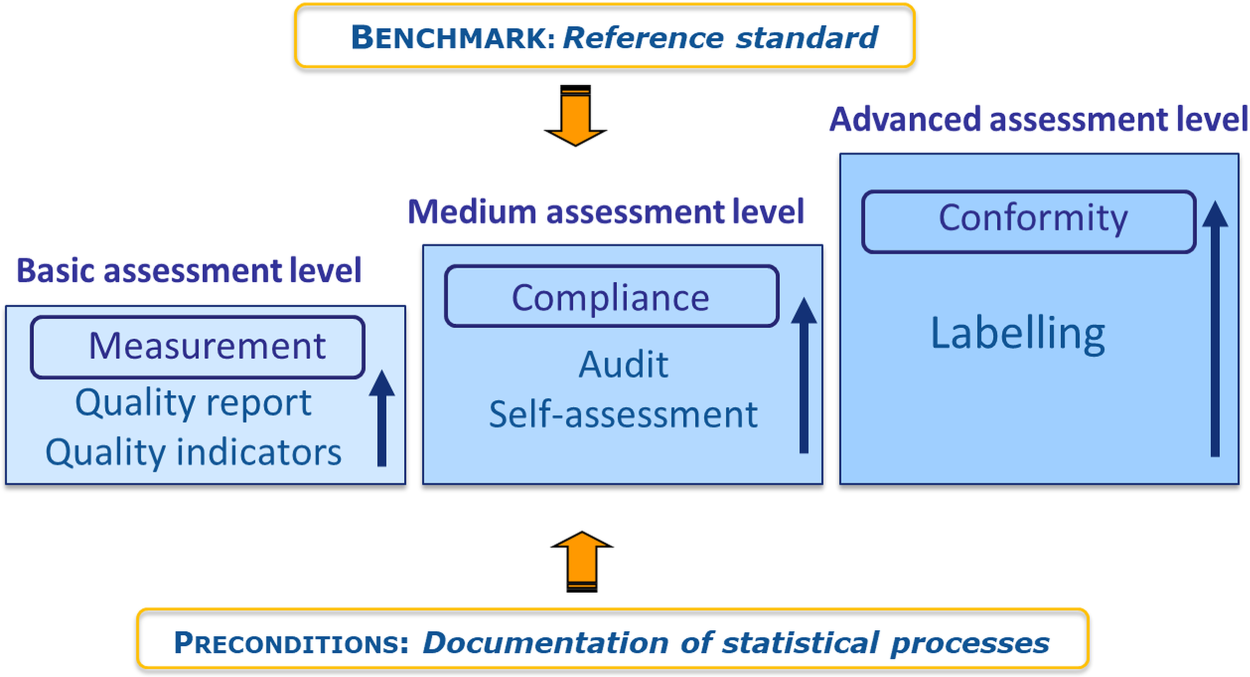
Istat approach to quality assessment.
In 2020, Istat traditional processes already had:
- long series of process and product oriented quality indicators stored in the SIDI-SIQual system; - quality reports according to SIMS transmitted to Eurostat and published on the Istat website in Italian in the form of “Schede standard di qualità”; - an audit or self-assessment procedure in the period 2010–2016.
They seemed ready for the next level of quality assessment that concerns the conformity with respect to specific requirements, leading to labelling. In addition, since the last round of quality assessment procedures ended in 2016, there was the need to make a large-scale assessment involving as many statistical processes as possible. Consequently, it was decided to use a light checklist to verify the conformity of Istat traditional processes to standard methodologies and procedures, with the aim of assigning an internal “quality label” to compliant processes.
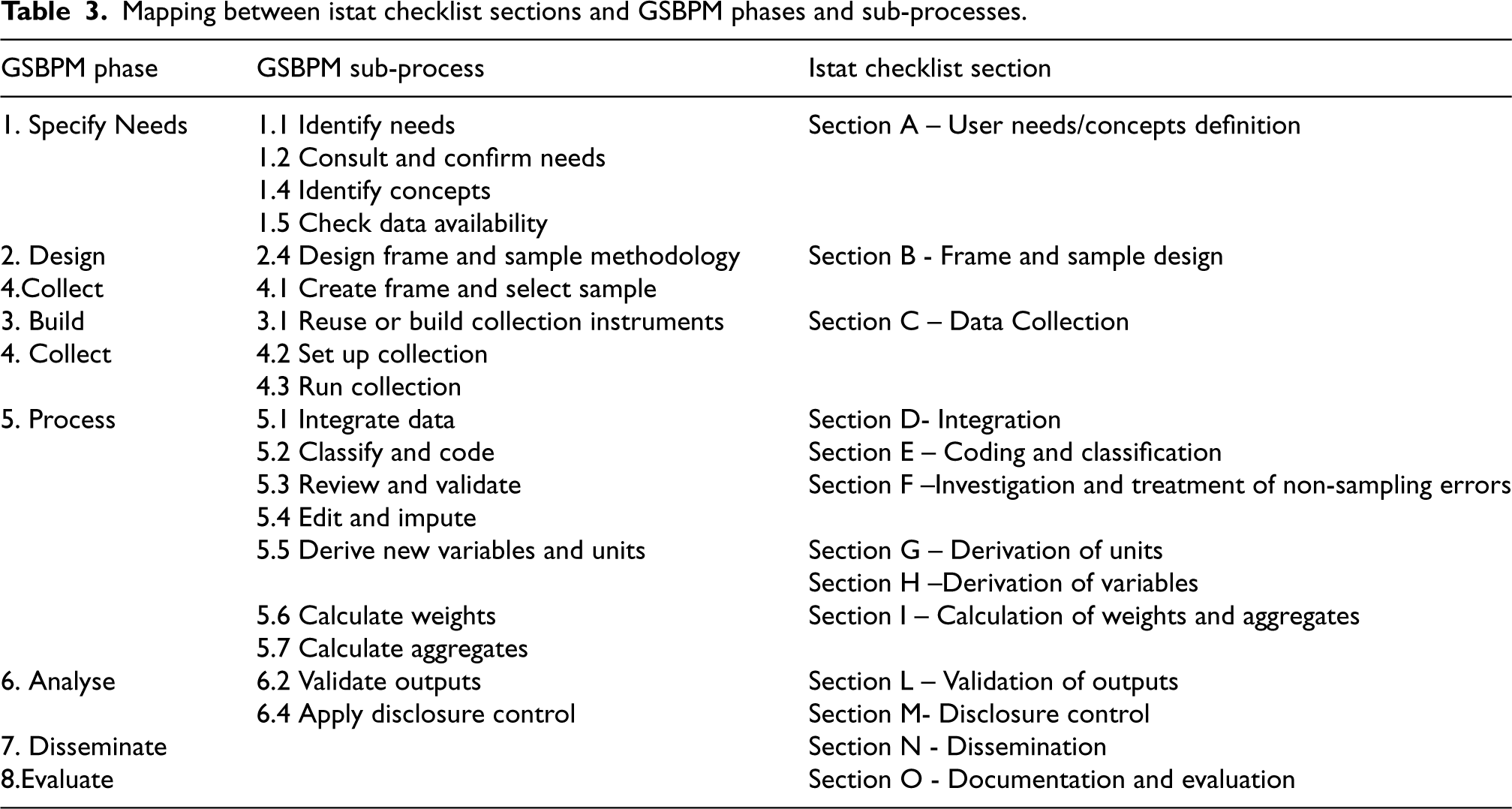
The checklist was developed by the QM supported by experts of the QC and it was organised according to GSBPM (version 5.1) phases and sub-processes, with particular reference to data processing (Table 3). For each sub-process the checklist addressed the application of appropriate methods, the systematic use of quality indicators, the implementation of quality control actions and the availability of adequate documentation. In addition, the use of centralised support services for data collection, methodology and IT was investigated. Finally, for each sub-process also a self-assessment question was included, and used as a check during the analysis of the checklists. 28 The QC defined a set of criteria to analyse the checklist and decided if a statistical process could be considered compliant or not. Compliant processes received a quality label. The list of labelled processes was published on the Istat intranet. When a process was deemed to be non-compliant, improvement actions were assigned that could be implemented within a maximum of 2 years, i.e., by the end of 2025. After implementing the improvement actions a process would then receive the quality label. Thus, the list of labelled processes was periodically updated with an intranet communication.
Mapping between istat checklist sections and GSBPM phases and sub-processes.
In 2022–2023, the electronic version of the checklist was compiled for 210 statistical processes. Before compilation, the checklist was partially prefilled in with information available in the SIDI-SIQual system. 29 About one third of the 210 statistical processes were deemed to be immediately compliant with the established criteria. Gradually in 2024 and 2025 the number of compliant processes increased up to around 85% following implementation of the assigned improvement actions. The remaining 15% was composed of processes that either needed additional time or resources to implement the suggested actions or they were discontinued. As shown in Figure 3, most improvement actions were related to the need for updating the documentation or to the lack of quality indicators in specific phases. Unfortunately, often documentation is still considered as a burden and is given less priority than other current activities.
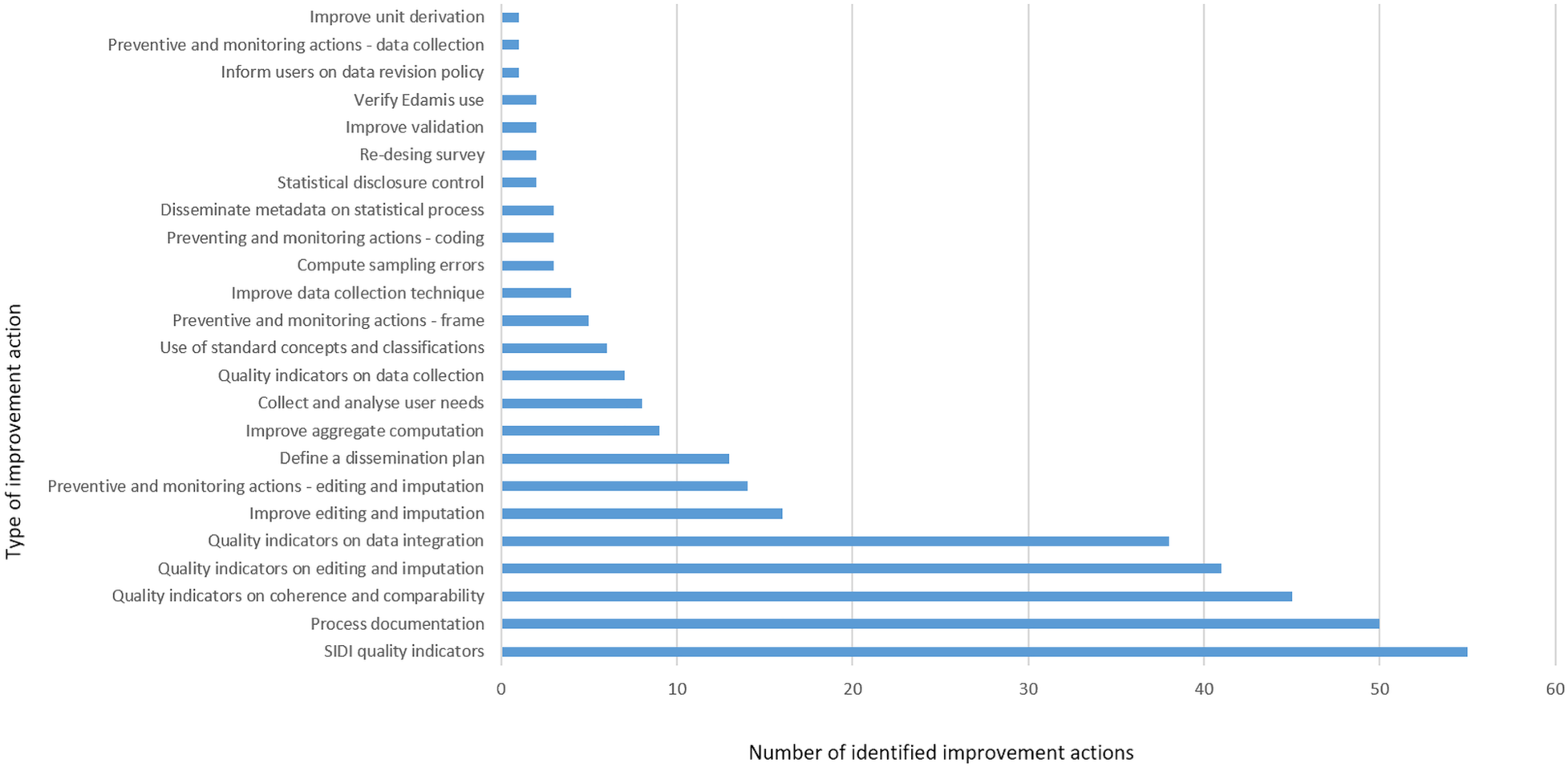
Improvement actions identified through the checklist.
One of the main advantages of the checklist approach was its scalability, which made it possible to assess a large number of processes within a relatively short time frame. In addition, the pre-filling of checklist items using information already available in the metadata system significantly reduced the response burden on production units and enhanced internal consistency. The approach also increased awareness of quality requirements across the Institute and fostered a shared understanding of minimum standards.
However, the analysis proved to be much more demanding than initially anticipated, and it was repeatedly underlined that the checklist was more suited to surveys than to statistical compilations. This is a lesson learned: a thematic expert from the National Accounts domain should be involved in the next revision of the checklist, planned for 2026.
Moreover, the fact that all the traditional processes were already considered of high quality and the assessment exercise was only aimed at a further quality improvement (in a continuous quality improvement approach), should be better communicated. Unfortunately, the intranet communication of labelled processes caused in some cases the perception that the non-labelled processes were blacklisted, while it should only be a stimulus to implement suggested improvements.
While the application of the checklist assured a light evaluation of a high number of statistical processes, it was considered important to obtain a more comprehensive evaluation, even if on a limited number of statistical processes. An internal audit programme was introduced in 2024. 30 Three processes per year are audited through a multidisciplinary approach involving methodological, technical and subject-matter expertise. Audits allow a deeper investigation of critical phases of the process, and there is a focus on evaluating the interaction between production units and centralised support services introduced by the modernisation programme.
Auditors and statistical processes to be audited are selected by the QC on the basis of proposals by the relevant Directors. Auditors are internal Istat experts not working in the process being audited. Both the auditors and the staff of the audited processes are first trained on the procedure. The audit is conducted against the Principles of the existing Istat Quality Guidelines and the checklist is used as a support to drive the audit interview. The result of the audit is a report prepared by the auditors highlighting strengths and weaknesses of the process and suggesting recommendations for improvement. The staff of the audited process finally proposes a set of improvement actions in response to the recommendations. The final report including the improvement actions is submitted to the Director responsible for the statistical process for approval and then presented to the QC. Thus, the QC is at the beginning and at the end of the audit procedure, overseeing its smooth realisation. Afterwards the QM monitors the implementation of improvement actions.
The collaborative nature of the audits has been positively received and has encouraged open discussion of weaknesses and improvement opportunities. The involvement of different expertise is appreciated. Nevertheless, challenges remain, notably in the selection of statistical processes to be audited since the most relevant processes are rarely proposed and in addition, improvement actions related to organisational aspects are often difficult to implement.
The statistical registers of the ISSR posed specific challenges for quality assessment due to their multi-source nature and their central role within the modernised production system. Unlike traditional processes, when the quality strategy was defined, the statistical registers were not properly documented and could not rely on standard quality indicators for monitoring and evaluation. According to the Istat approach to quality assessment represented in Figure 2, the preconditions for quality assessment should be developed as well as methods and tools for a basic level of assessment, thus it was necessary:
- to design models and develop related tools to appropriately document such complex multi-source processes; and - to define an appropriate system of quality indicators for monitoring and assessing the quality of such processes on an ongoing basis.
To overcome these limitations, Istat developed an ad hoc quality framework, referred to as QSIR (QSIR stands for Quality of SIR, where SIR is the Italian Acronym for the Integrated system of statistical registers.), specifically designed for statistical registers.31,32 The framework is primarily intended to be a tool for standard documentation and process quality monitoring. The framework does not include an input data quality evaluation, since the inputs of statistical registers are mainly administrative data sources, and Istat has already adopted its own framework to assess the quality of administrative data sources and developed an ad hoc tool, the Quality report Card for Administrative Data, 33 to monitor the administrative data provisions. Taking into account the multi-source nature and the complex processes underlying the construction of a statistical register, in which it may occur that two variables have completely different sources and processing steps, a metadata model has been defined. First, the most relevant GSBPM sub-processes were identified and afterwards the elements to describe each sub-process were derived by the UNECE proposal for linking GSBPM and the Generic Statistical Information Model (GSIM).34,35 The generic metadata model is reported in the first two columns of Table 4. It was then detailed for all the GSBPM sub-processes identified as relevant. In Table 4 the metadata template for the Data Integration sub-process is reported. Such templates support the registers’ managers in the documentation of the different steps of the production process.
QSIR metadata template for the “data integration” sub-process.
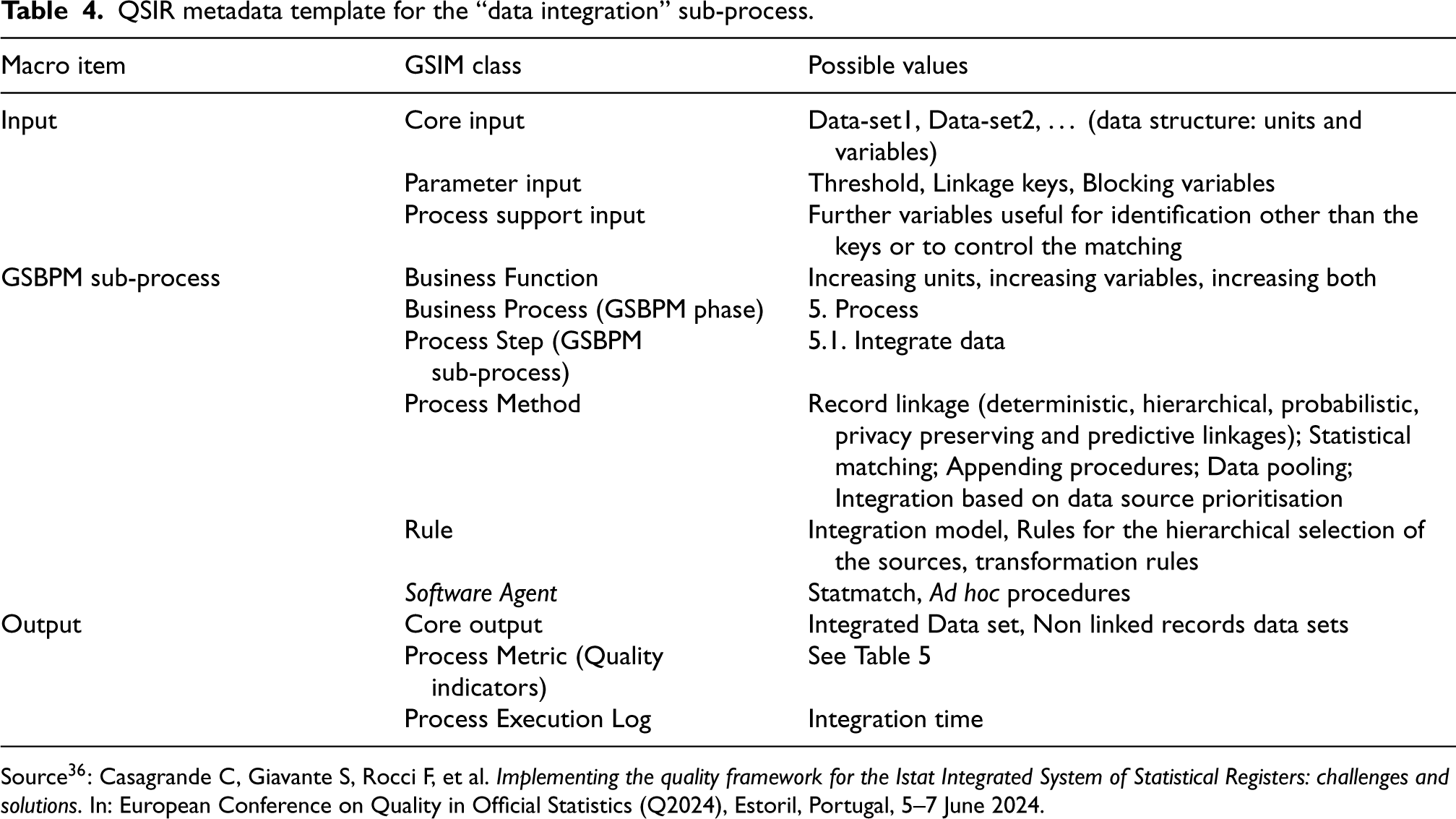
QSIR metadata template for the “data integration” sub-process.
Source 36 : Casagrande C, Giavante S, Rocci F, et al. Implementing the quality framework for the Istat Integrated System of Statistical Registers: challenges and solutions. In: European Conference on Quality in Official Statistics (Q2024), Estoril, Portugal, 5–7 June 2024.
Then, for each sub-process, a set of specific quality indicators was defined to support ongoing monitoring and assessment. As an example, Table 5 sets down the set of quality indicators defined for the Data Integration step.
QSIR Quality indicators for “Data integration” sub-process.
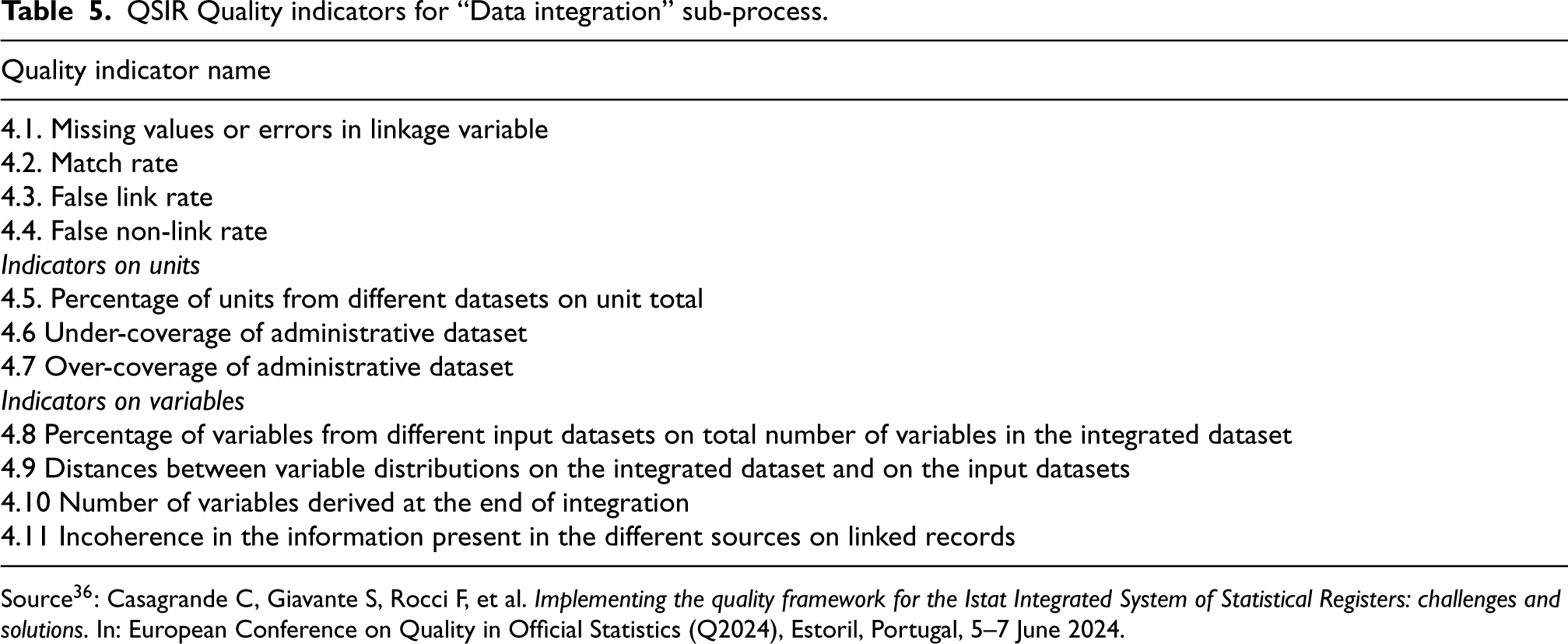
Source 36 : Casagrande C, Giavante S, Rocci F, et al. Implementing the quality framework for the Istat Integrated System of Statistical Registers: challenges and solutions. In: European Conference on Quality in Official Statistics (Q2024), Estoril, Portugal, 5–7 June 2024.
The framework is currently being applied to a first group of registers,36,37 such as the Base Register of individuals and Households, the Thematic Register of Labour, the Thematic Register of Education and Training and the Register of Disability. Quality indicators are implemented directly in IT applications for register management while metadata will be progressively integrated into the new METAstat system.
The implementation of QSIR has highlighted both strengths and weaknesses. On the positive side, the framework significantly improves process traceability and fills a long-standing gap in documentation, enabling a more transparent and systematic approach to quality monitoring. The integration of quality indicators into the IT systems that the register managers use for their daily work facilitates a continuous monitoring rather than episodic assessment. At the same time, the application of the framework is resource-intensive and requires the coordinated contribution of experts with different competences, including metadata specialists, methodologists and thematic experts. While thematic experts tend to focus primarily on quality indicators, metadata documentation is sometimes perceived as less immediately relevant, indicating the need for further investments in communication. In addition, while METAstat development is ongoing, the metadata are collected through spreadsheets and this is not an optimal solution. However, in recent months, managers of statistical registers not previously involved in the QSIR implementation have requested its application, suggesting that it is perceived internally as a valuable tool for quality monitoring.
The use of new data sources, such as “big data”, for Official Statistics represents one of the most complex challenges for quality assurance in the current data ecosystem. 38 Although Istat has already established procedures to evaluate experimental statistics prior to publication, 39 the integration of new data sources into regular production requires a more comprehensive and explicit quality framework that goes beyond case-by-case assessments. A similar issue is currently being faced at European level, after the introduction of the Statistics under Development (SuD) provision in the recent amendment of the European Statistical Law. SuD are defined, according to Article 17 g of Regulation (EC) No 223/2009 on European statistics as amended by Regulation (EU) 2024/3018, as new statistical outputs and insights based on all available data sources and using state-of-the-art technologies, developed with the aim of integrating them into the regular production of European statistics. They shall not be required to fulfil all the quality criteria that European Statistics should fulfil, but can be disseminated explicitly indicating that they are SuD. Concretely, SuD are substituting experimental statistics and Eurostat is developing the framework process they should undergo from their initiation to their integration into regular production including the requirements they should fulfil.
Indeed, for the statistics based on new data sources, there is still the need to consolidate the set of quality requirements to be satisfied and to develop methods to verify compliance with such requirements.
As planned in the quality strategy, Istat has invested a lot in recent years with the aim of developing a reference quality framework for these processes. The investment was twofold.
On the one side, Istat (mainly Methodology Directorate staff) participated actively in several international initiatives involving the definition of a quality framework for new data sources in Official Statistics. For example, Istat was involved in the Subgroup of the UN NQAF Expert Group that developed the Module for Quality assurance of administrative and other data sources. 40 In addition, Istat participated, often with the role of coordinator, in several European projects focused on specific big data sources, that also tried to face the quality issue. For example, within the Eurostat financed project Multi-MNO (Multi-MNO stands for Multiple Mobile Network Operators https://cros.ec.europa.eu/landing-page/multi-mno-project), Istat led the definition of a quality framework to accompany a reference methodological pipeline for the production of Official Statistics based on data from multiple Mobile Network Operators (MNO). 41 In addition, Istat was the coordinator of the ESSNet MNO-MINDS (MNO-MINDS stands for Mobile Network Operator Methods for Integrating New Data Sources. For further details: https://cros.ec.europa.eu/mno-minds), aimed at developing methods to integrate MNO and non-MNO data, often to improve the quality of the statistical output produced. 42 As another example, Istat was also involved in the European project related to the use of Online Job Advertisements in the production of Official Statistics within the ESSnet Trusted Smart Statistics – Web Intelligence Network (https://cros.ec.europa.eu/win). Overall, Istat's active participation in European and international projects has provided valuable methodological insights and practical experience. The results obtained in recent international projects will pave the way for the development of an appropriate quality framework. Nevertheless, further research is needed to develop robust approaches for assessing the overall output quality. In addition, it should be considered that methodological solutions alone are insufficient. Institutional, legal and organisational requirements must also be fulfilled. For example, agreements with private data holders should be established, in order to guarantee the stability and quality of the data provision, and to ensure transparency on the process that generates the data, since it happens outside the control of the NSI.
On the other hand, Istat, through an internal task force followed by an internal working group, is trying to develop its own quality framework for Trusted Smart Statistics (TSS), obviously taking stock of already existing international proposals and internal experiences. Concerning the latter, information has been collected on the different types of new data sources used in experimental statistics or research projects, the statistical processes in which they are or could be used and the main quality issues. The information collected proved to be highly valuable for the development of an initial classification of TSS by source type, for the identification of shared characteristics and key differences, and for the definition of the structure of the framework to be developed.
Three main categories have been identified: electronic transactions, web data, and sensor data. Internal reviews and international experiences have shown that, despite the heterogeneity of new data sources, several quality issues recur systematically. These include conceptual mismatches between the object to which data refer in the data source and the target statistical units, coverage limitations, and, in some cases, lack of transparency in respect of data pre-processing carried out by data owners or third parties. Recognising these common traits is a key advantage, as it allows the development of a general quality framework that can be flexibly adapted to different contexts. Nevertheless, the diversity of data sources and processing methods makes it difficult to define a single fully standardised framework. The initial classification is being further detailed with additional criteria, such as whether raw or pre-processed data are collected or whether the collected data are structured or unstructured. This classification effort is not an end in itself: homogenous data sources tend to present similar quality issues, thus the classification should help also in the definition of methods and measures for quality assessment. However, the work is still ongoing and additional quality measures remain to be identified in most cases.
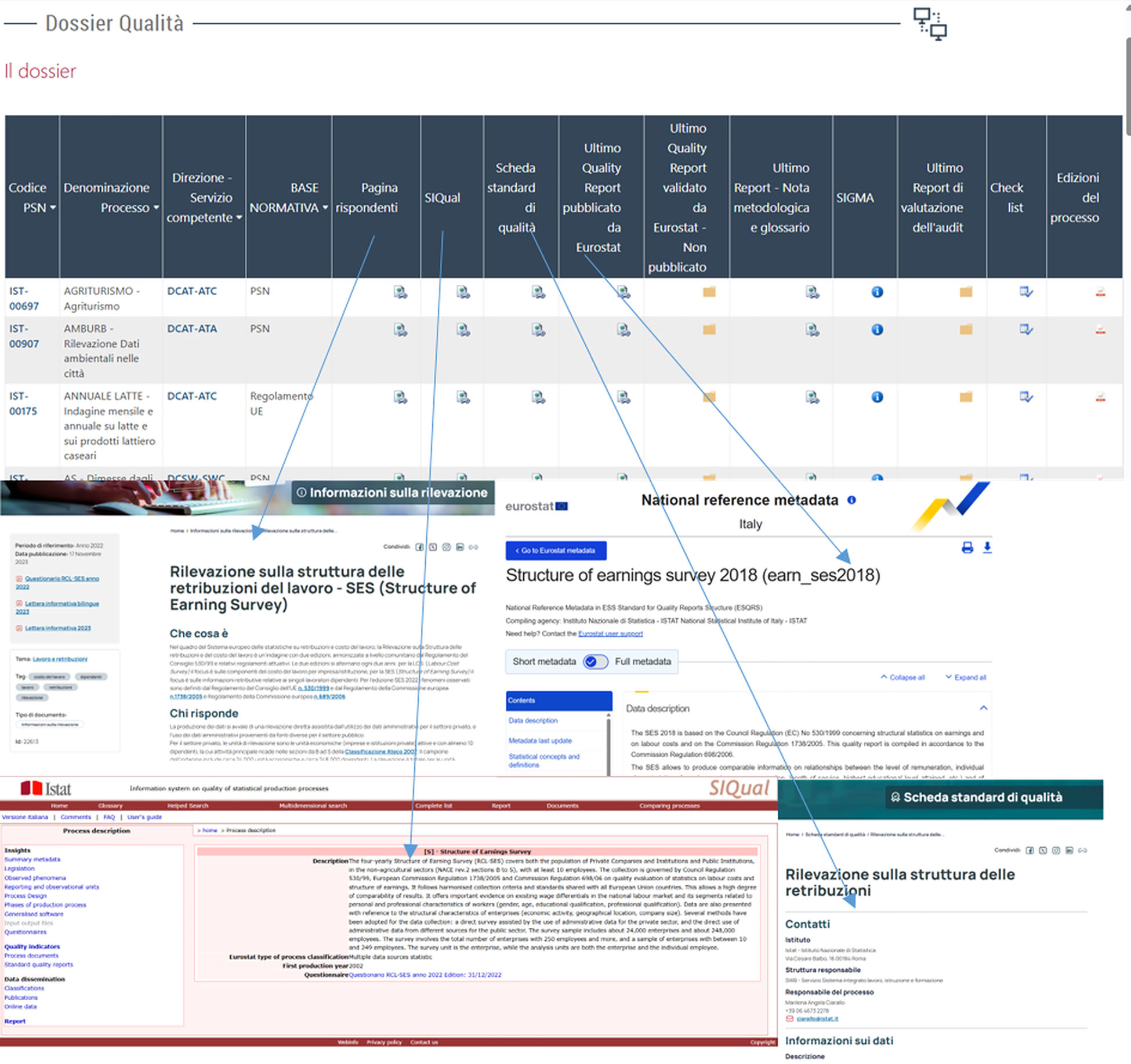
Quality Dossier.
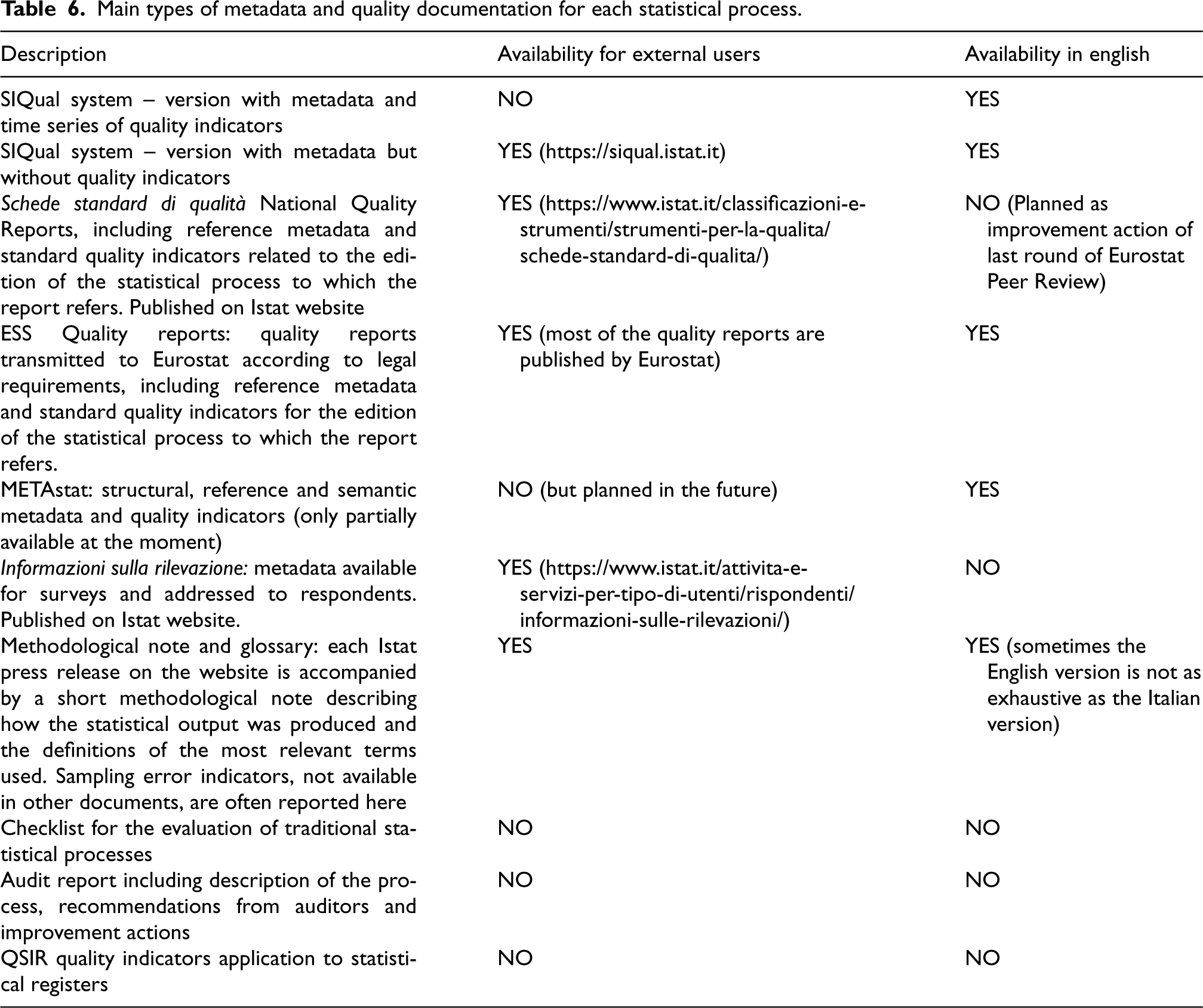
Main types of metadata and quality documentation for each statistical process.
A further challenge is represented by the fact that often the processing of these data sources involves the use of new methods like machine learning and artificial intelligence for which general quality assurance methods have still to be developed or validated.
In any case, Istat's next objective in this field is the production of methodological guidelines for the quality assessment of TSS. The following steps will be followed in pursuing this aim:
- first, the preliminary classification of data sources will be further detailed according to criteria that could identify groups of data sources with similar quality issues; - afterwards, metadata and quality measures to evaluate the input data quality will be defined, paying attention to the different cases in which the input data are raw data as opposed to input data that are pre-processed; and - finally, the processes of different TSS will be documented and analysed, possibly reusing the metadata model introduced for documenting statistical registers, with a view to and identifying specific quality measures, that might be used for monitoring and evaluation purposes.
The quality framework that will be drafted will also support decisions about moving experimental TSS to current statistics.
At this stage, the complexity of coordinating the wide range of quality-related activities undertaken at Istat is evident, as is the central role played by the QC in ensuring a coherent and strategic direction. Through the systematic promotion of quality assessment tools, the QC has contributed to greater transparency, consistency and comparability in the evaluation of statistical processes and outputs. The development and consolidation of differentiated quality frameworks for traditional processes, statistical registers and statistics based on new data sources have strengthened internal monitoring and enhanced the overall quality of statistical production. At the level of the Sistan, the QC has also fostered the dissemination of shared quality principles and tools, supporting other producers of Official Statistics in the adoption of common standards and practices. These achievements clearly demonstrate the added value of a structured and coordinated approach to quality governance.
Looking ahead, the evolution of the QC and its interaction with research and methodological innovation represents a key area of development. The increasing use of new data sources, advanced methods and experimental statistics poses growing challenges for quality management, requiring both the adaptation of existing frameworks and the development of new assessment tools. In this context, closer integration between quality governance and research activities becomes essential. Strengthening the linkage between the QC and research-oriented functions - through enhanced coordination with methodological and research committees or the systematic incorporation of research perspectives into quality governance - should enhance Istat's capacity to anticipate emerging risks and opportunities. This evolution will allow quality considerations to be embedded from the earliest stages of methodological innovation, rather than being applied ex post, supporting a more proactive and forward-looking approach to quality management. Investing in methodological research on quality measurement, reinforcing the analytical dimension of quality assessment, and fostering experimentation within a controlled governance framework are key elements of this perspective.
At the same time, the challenges for quality management are expected to increase further. Ongoing activities - such as audits, checklists, the implementation and maintenance of quality frameworks, the development and day-to-day management of metadata systems, the production of quality reports, the provision of training on quality issues, and the support of statistical production units in the design of quality control systems - will need to be continued and consolidated. In parallel, new activities must be addressed, including the implementation of improvement actions resulting from the latest round of ESS Peer Reviews. Recommendations from the recent ESS Peer Review highlighted, among other aspects, the need i) to strengthen support to, and monitoring of, Sistan producers in the implementation of European standards; ii) to involve the QC more systematically in the redesign of statistical processes, and iii) to improve the availability of meta information and public documents in English on the Istat website. Concerning the latter, as already mentioned the national quality reports (“Schede standard di qualità”) are now available only in Italian and will be translated into English in response to the peer reviewers’ recommendation.
Within this evolving context, Istat intends to further pursue its gradual and differentiated approach to quality management, recognising that statistical processes are characterised by different levels of maturity, complexity and methodological consolidation. The objective is to progressively strengthen quality assurance tools, documentation, indicators and assessment procedures across all types of processes, while always referring to international standards and best practices. As an example, the Istat Quality Guidelines will need to be updated to reflect the evolving production environment.
Over time, this approach is expected to reduce disparities in quality maturity, ultimately bringing traditional processes, statistical registers and statistics based on new data sources to a comparable level of robustness, transparency and reliability.
Finally, new tools will support this evolution. Among them, the recently developed Quality Dossier platform represents an important step towards improved accessibility and integration of quality information. Strongly promoted by the Istat President, the Quality Dossier provides, internally to Istat, a single access point to all quality and metadata documentation currently available for each survey. Indeed, many different documents are available for each Istat statistical process, since they can be addressed to different recipients with different objectives, e.g., SIQual, Eurostat quality reports, national quality reports, methodological notes, “Information for respondents” web page, the checklist with its outcomes and the audit reports. All these documents are linked to or uploaded in the Quality Dossier (Figure 4) allowing Istat staff to reach them easily. The demand for such a tool may also be seen as a sign that a rationalisation of the existing documentation is needed. Table 6 lists the different types of quality documents available internally and/or to external users, in Italian only and/or in English. The table can therefore be the starting point for a reflection on how the fragmentation of documentation can be reduced, e.g., within the development of METAstat. Furthermore, the Quality Dossier is currently available only for surveys, but it could be extended to other types of statistical processes in the future. The coordination and updating of this tool, developed through a fruitful collaboration between the Methodological, Data Collection and IT Directorates, will fall under the responsibility of the QC, further reinforcing its role as the central hub for quality governance at Istat.
Footnotes
Acronyms and abbreviations
Acknowledgements
The authors would like to acknowledge the members of the Quality Committee and all the Istat staff involved in the implementation of the Istat quality strategy.

Funding
The authors received no financial support for the research, authorship, and/or publication of this article.
Declaration of conflicting interests
The authors declared no potential conflicts of interest with respect to the research, authorship, and/or publication of this article.